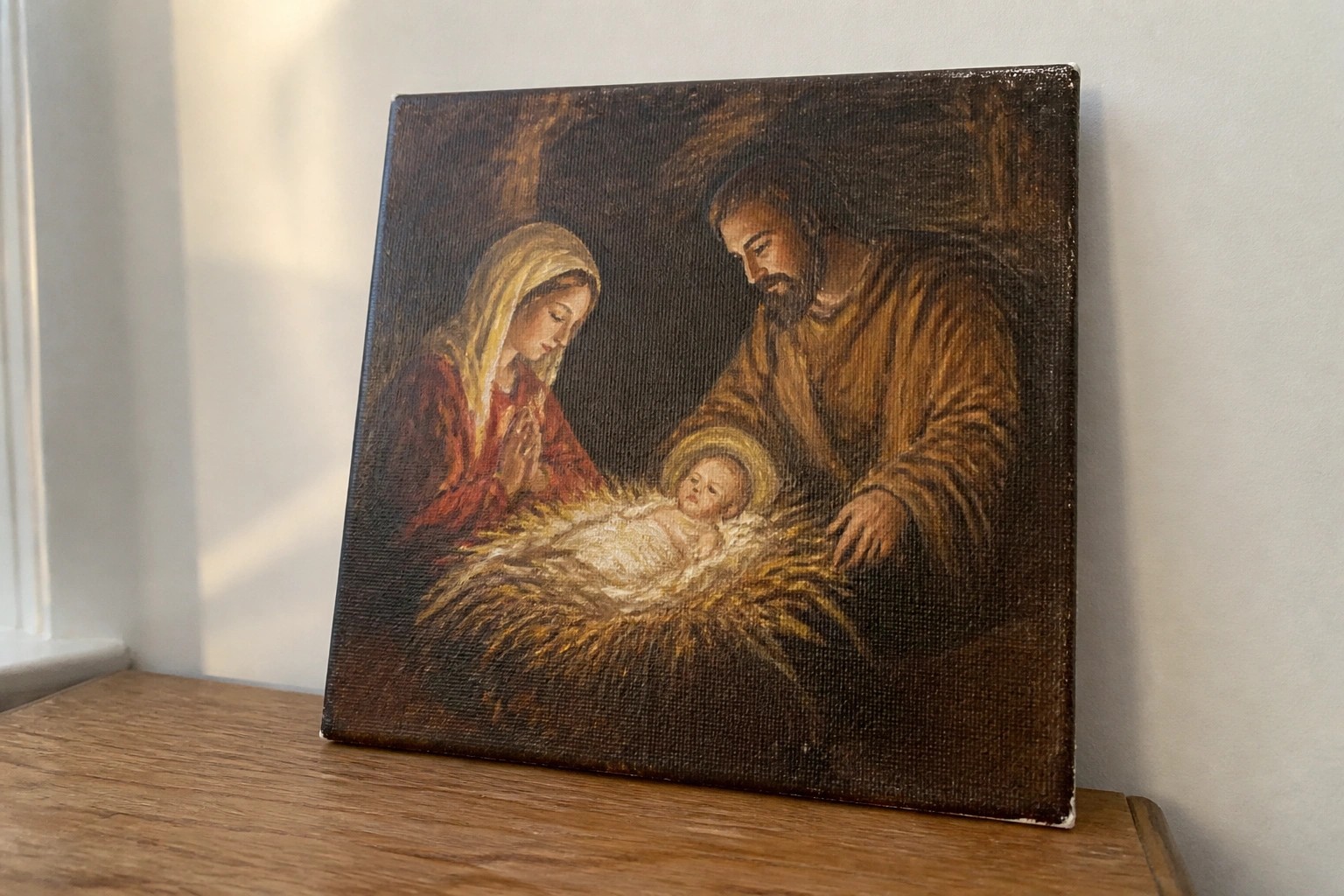
I have always liked looking at oil paintings that show biblical stories with a lot of detail and rich colors.
These pieces remind me of the kind of work I see when I visit museums but they feel closer to what I try to do at home.
In my own painting I focus on building up layers slowly so the light and shadows feel real.
I picked out these twenty one examples because they stand out for their careful technique rather than anything flashy.
They show how old methods can still make these scenes look timeless without needing much explanation.
Nativity Scene with Parents Over the Manger
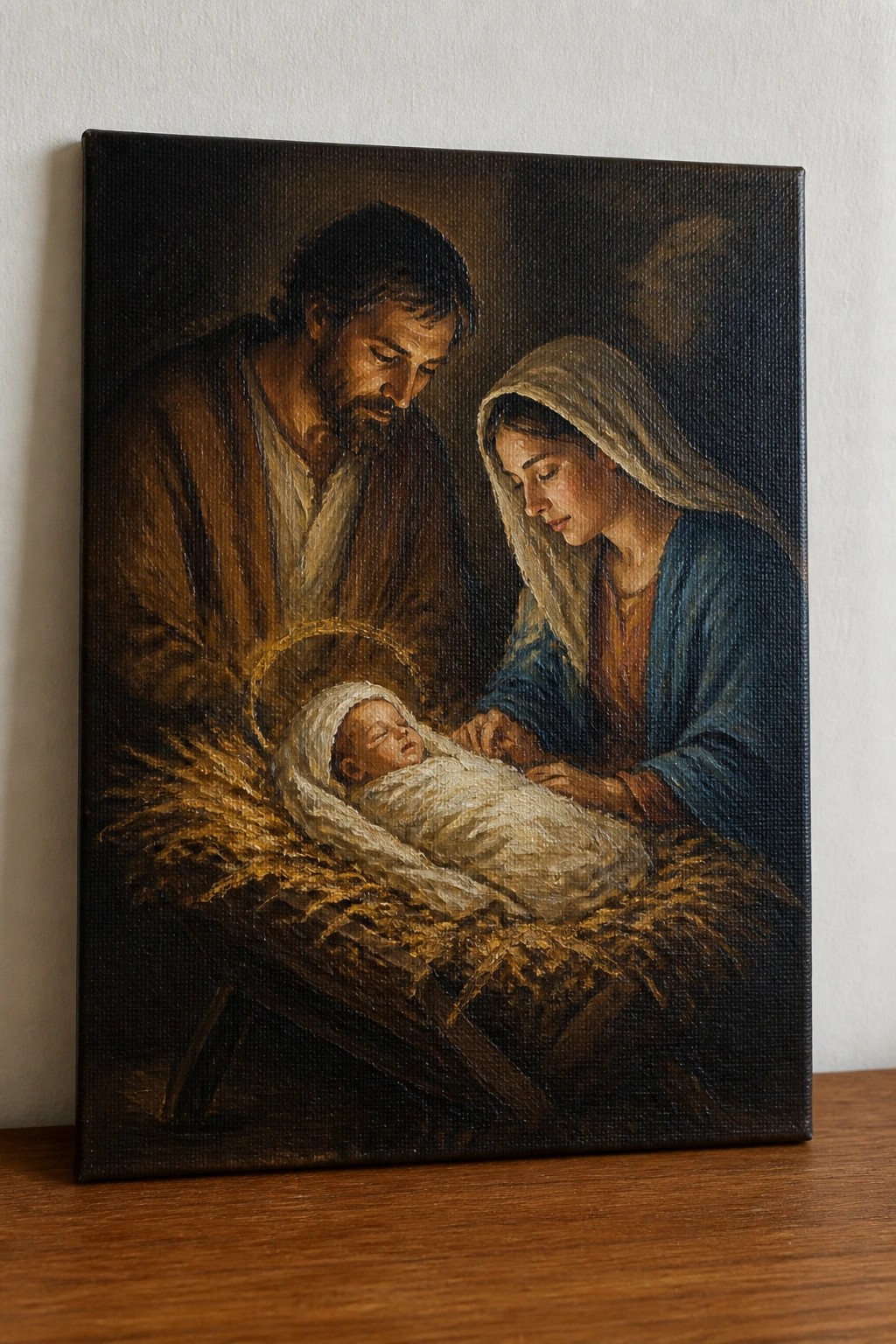
The core idea is a biblical nativity painting built around three figures arranged in a tight triangular composition. Joseph and Mary lean inward over the infant lying in a straw-filled manger, with the baby serving as the clear center point. Warm browns and golds in the clothing and hay contrast against a dark background, which keeps the eye on the group while the loose brushwork adds texture to the fabric and straw without extra detail.
What makes this idea useful is the straightforward grouping of figures that lets you focus on basic proportions and lighting first. The dark background removes the need for elaborate settings, so the same layout works at smaller sizes for cards or larger ones for wall pieces. You can simplify the hay texture or shift the color temperature if you want a version for different seasons or gift projects.
Dramatic Biblical Meal with Shared Bread and Candle
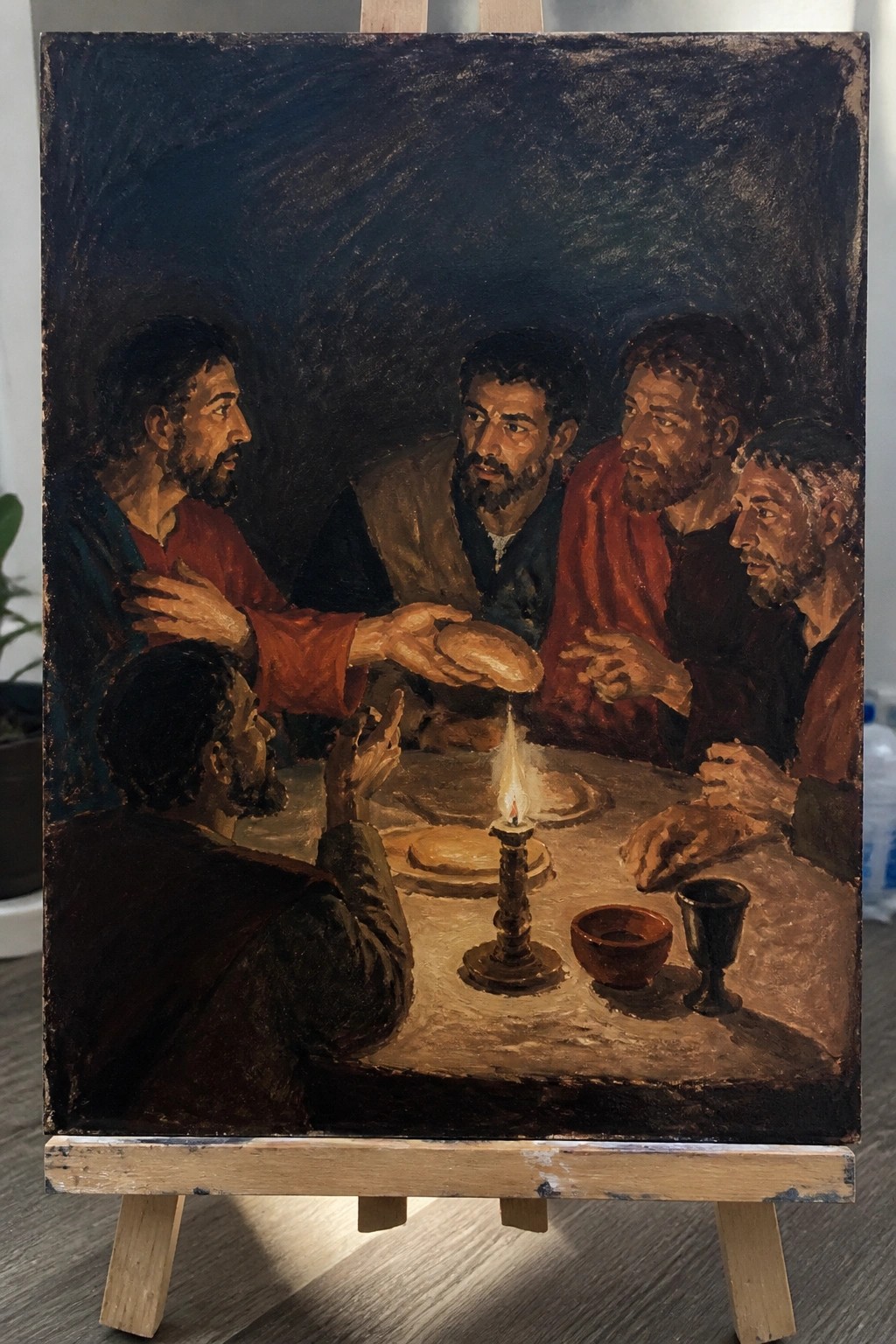
A group gathered around a table for a shared meal makes a strong narrative subject, especially when the central action is one figure breaking bread under a single flame. The idea works as a religious or historical scene painting because the tight circular composition keeps attention on the hands and the bread while the dark surroundings reduce distractions. Warm earth tones against deep shadows create clear focal points without needing extra detail or bright colors.
The composition does a lot of the work here by using the table edge and candle to guide the eye straight to the main action. This subject suits practice with multiple figures because the poses stay simple and the light source helps define shapes quickly. You could scale it down for a smaller canvas or swap in different clothing styles to personalize it for a gift or faith-based wall piece. The limited palette also makes it easy to test mixing and layering without buying extra colors.
David Victorious Over the Fallen Goliath

A strong biblical narrative idea centers on the moment right after the giant is defeated, with the smaller figure standing in clear dominance. The composition uses the standing pose and the fallen figure below to create a simple but powerful vertical line that draws the eye upward. Earthy tones on the figures paired with a bright sky background keep the focus on the action rather than scattered details.
What makes this idea useful is how the basic layout already gives a clear story without needing extra elements. The contrast between the two figures makes it easy to adapt for different sizes or skill levels by adjusting how much detail goes into the armor and clothing. For wall pieces or practice studies, the same setup works if you simplify the background to just a few sky colors or change the time of day. This kind of subject also performs well on Pinterest because the recognizable story grabs attention quickly.
Jonah and the Whale in Churning Waters
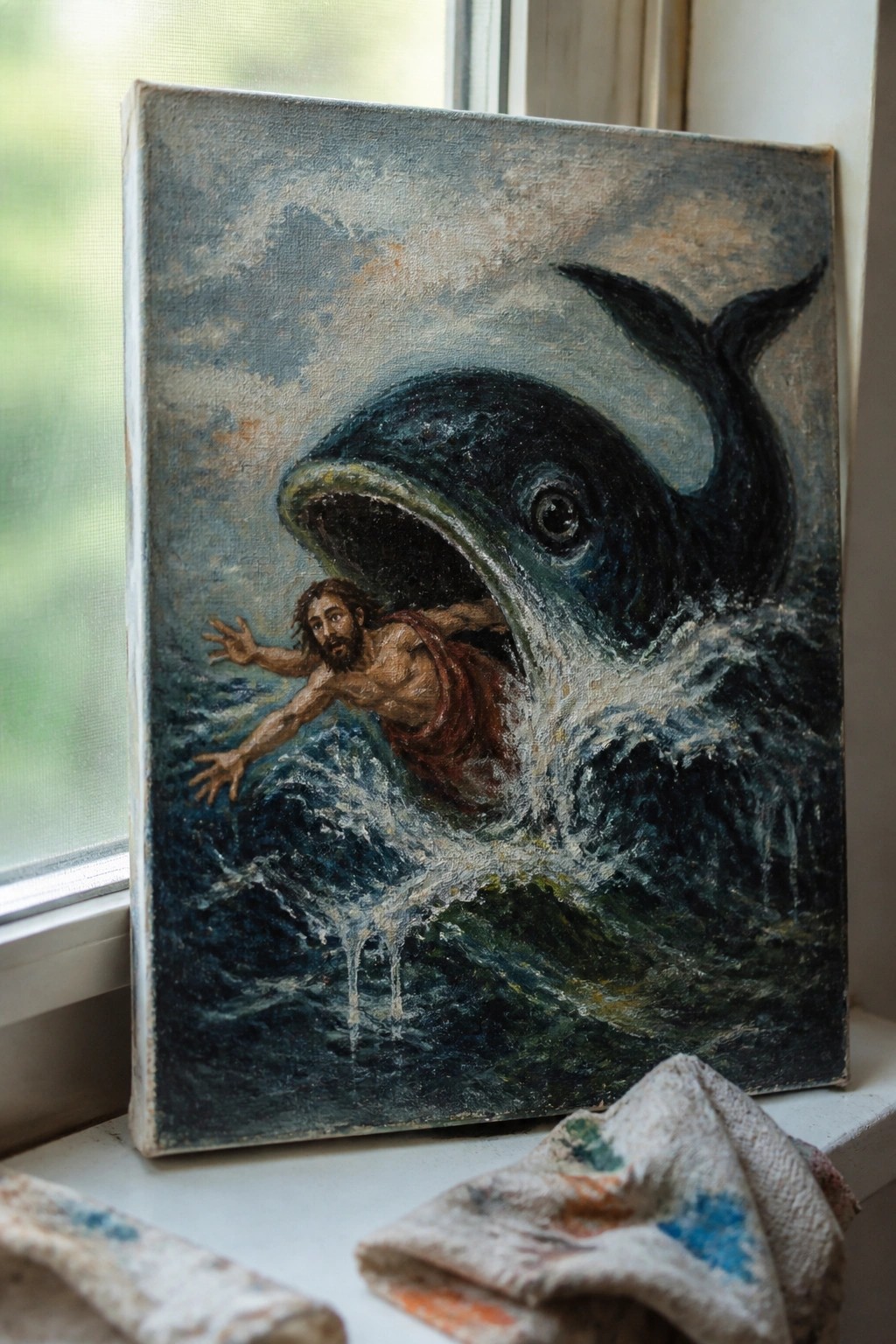
The core idea is a biblical narrative scene built around a large whale rising from rough water to take in a man with outstretched arms. The composition relies on the whale’s curved body and open mouth to create a strong focal point against the moving waves below. Cool blue and gray tones keep the action centered while the textured brushwork on the water gives the whole piece a sense of motion.
What makes this idea useful is the clear size contrast between the whale and the figure, which makes it straightforward to block in the main shapes first. The limited color range stays easy to mix even on a small palette, and the subject works at different scales without losing impact. You could reduce the wave detail for a faster study or keep the same layout on a taller canvas to emphasize the height of the whale.
Dramatic Red Sea Parting Scene
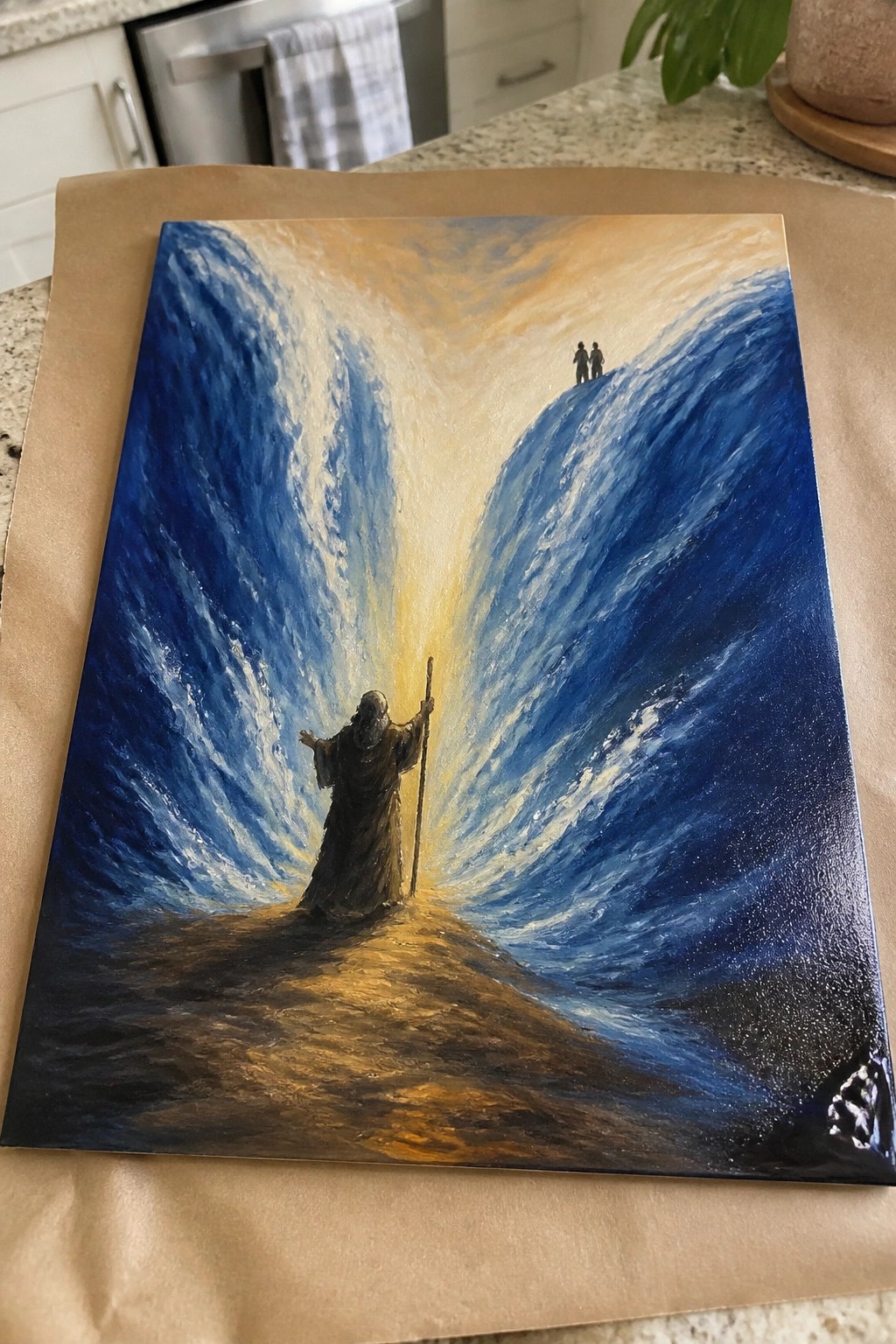
A central robed figure holding a staff stands on a narrow strip of land between two massive curving waves that rise high on either side. The composition uses a strong vertical split with a bright central path leading the eye upward, while the waves are painted in layered blues and whites to show movement and height. This fits the category of narrative landscape painting with a clear focal point and high contrast between the dark water and the glowing middle ground.
The composition does a lot of the work here by using the natural shape of the waves to frame the main figure and create depth without needing extra details. You can adapt the idea by adjusting the wave colors to match a room’s palette or by reducing the number of figures for a simpler version on a smaller canvas. For wall art, this scale of subject stands out because the vertical lines and light path give it presence even from across a room. The background keeps the focus on the central action, so it works well as a practice piece for building contrast and basic layering.
Abraham Stopped at the Altar
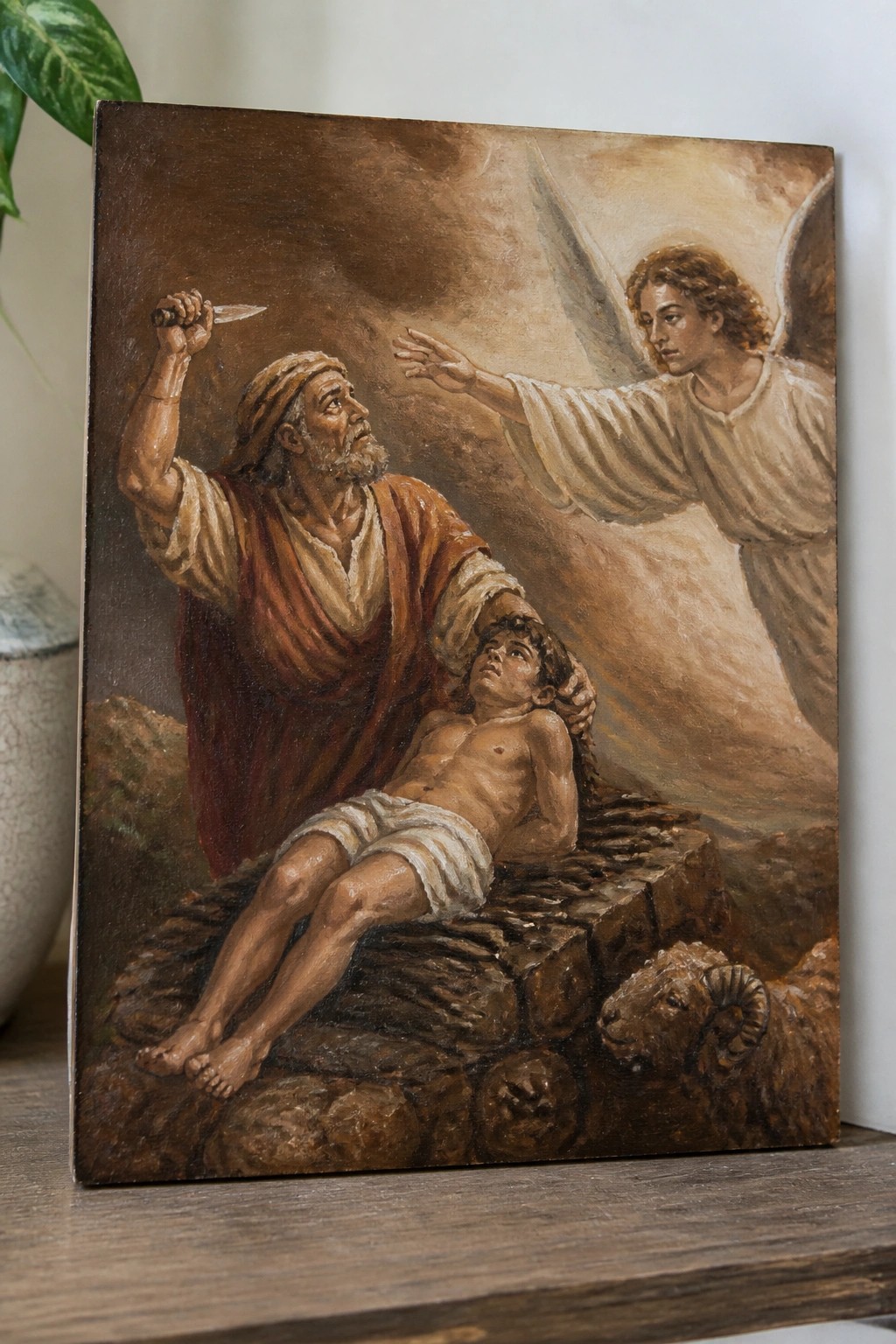
A strong biblical narrative idea centers on the instant an angel halts Abraham’s raised arm before the sacrifice can happen. The scene works by stacking the figures vertically on a rocky platform so the eye moves from the knife to the angel’s open hand and then down to the waiting ram. Earthy browns and muted skin tones keep the focus on the gestures rather than on extra detail or bright color.
What makes this idea useful is the built-in story that most viewers already know, so the painting reads clearly even when simplified. The triangular arrangement of the three main figures creates natural movement that holds up at different canvas sizes. For wall art the same layout can be cropped tighter around the hands and faces to fit smaller frames or turned into a horizontal version that gives more room to the ram. The limited palette also means the idea transfers easily to a smaller study or sketch without losing its impact.
Delilah Cutting Samson’s Hair

The core idea here is a biblical narrative scene showing Delilah actively cutting the hair of a bound Samson as he sits with his head lowered. This type of painting idea works as a historical or religious composition because the two figures are placed in close interaction, with one standing and leaning forward while the other remains seated and passive. The deep red background fabric creates separation from the skin tones and keeps attention on the central action without added elements.
What makes this idea useful is the built-in story through simple props like the scissors and wrist bindings, which can be adjusted in size or detail level for different canvas dimensions. The arrangement of one figure standing over another makes it straightforward to practice figure placement and fabric folds while keeping the focus narrow. For Pinterest, a scene like this stands out when the color contrast between the background and the main subjects is kept strong, and it can be simplified by cropping tighter around the hands and faces for smaller studies.
Good Samaritan Roadside Aid Scene
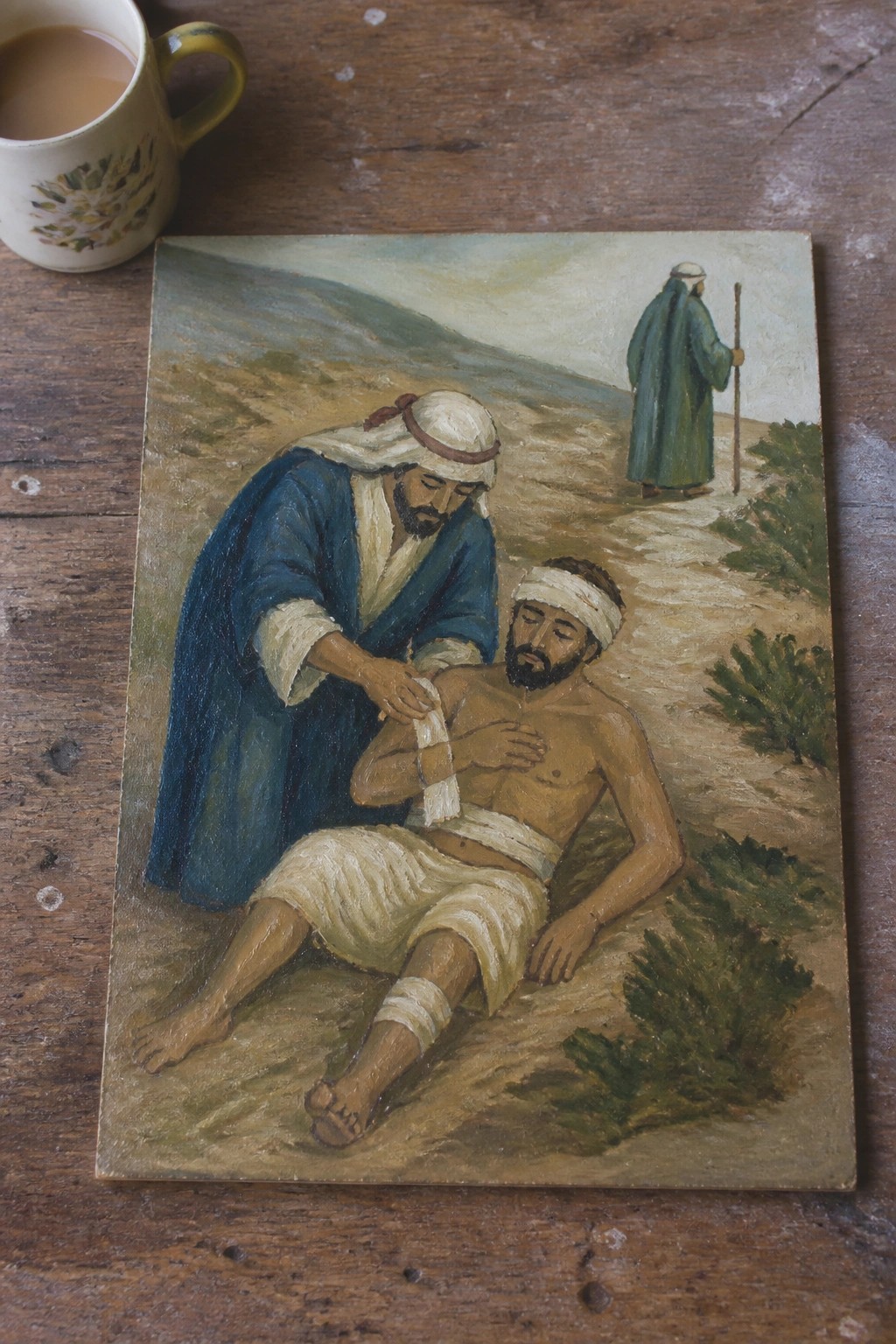
This painting idea centers on the biblical parable of the Good Samaritan, showing one traveler stopping to bandage an injured man while a third figure walks away in the distance. It works as a narrative scene that relies on clear foreground action set against an open landscape to keep the focus on the act of help. The earthy tones and simple division of space between the main pair and the distant walker make the story easy to read at a glance.
What makes this idea useful is the way the background figure adds context without crowding the main action. The limited palette of blues, browns, and muted greens keeps mixing straightforward if you want to try it on a medium-size canvas. You could simplify it by cropping to just the two central figures or swap the desert setting for a different road if you want a quicker version for practice.
Jesus Calling Fishermen From the Shore
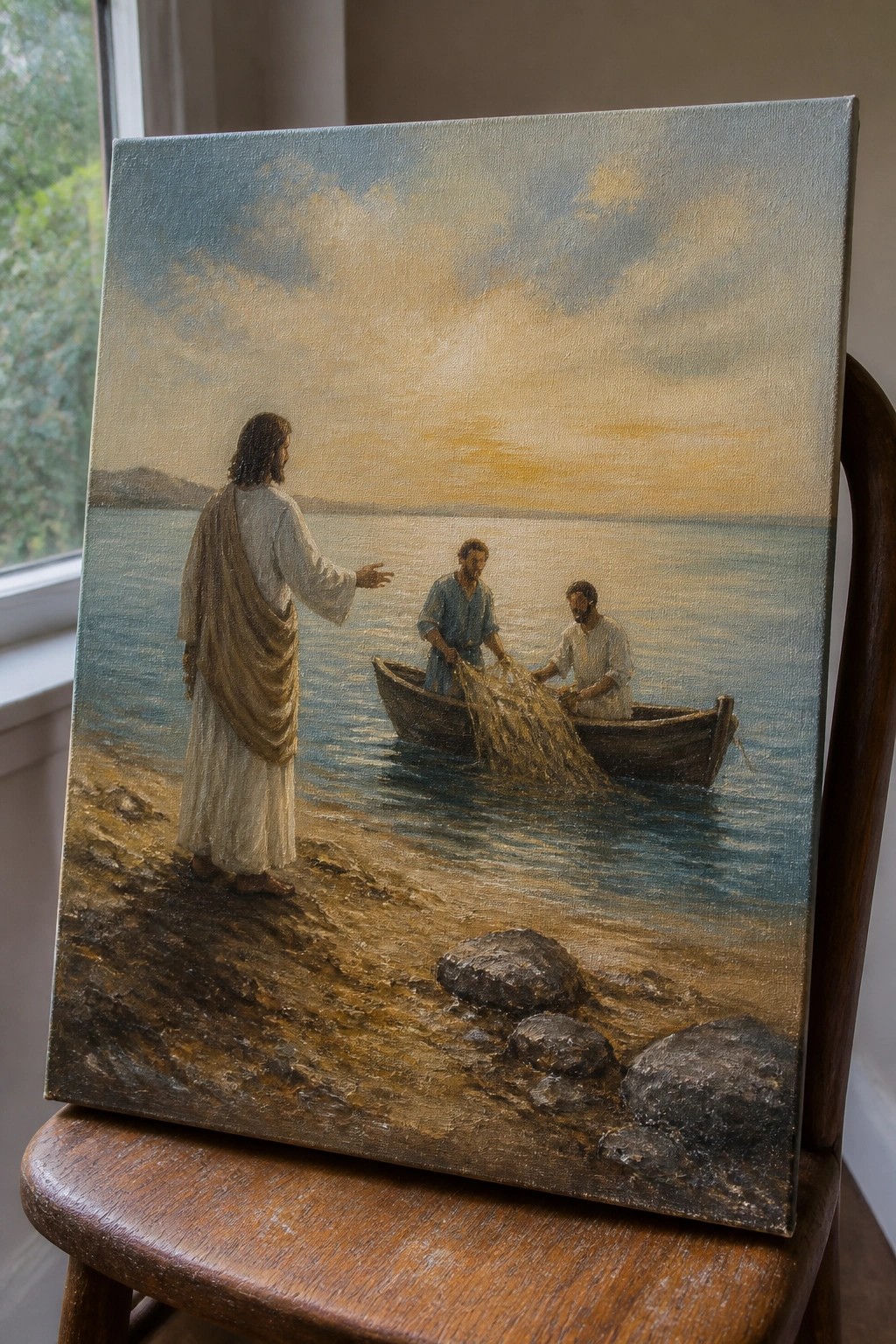
A figure in robes stands on the shoreline with one arm extended toward two men working a net from a small wooden boat. The idea centers on a quiet lakeside moment at sunrise or sunset, using a low horizon line and broad water surface to give the scene space and balance. Warm sky tones blend into cooler water, while rocks and the boat create a simple foreground-to-midground structure that keeps the eye moving between the standing figure and the men.
What makes this idea useful is the clear division between land, water, and sky, which makes it straightforward to block in large areas first. The color shifts in the sky and reflections on the water offer easy practice with soft blending without needing complex details. You could scale it down to a smaller canvas by keeping just the boat and the gesturing figure, or adapt the palette to cooler tones if you want a different time of day. For wall pieces, this kind of biblical scene holds up well in a study or hallway because the horizontal layout fits standard rectangular frames.
Baptism of Jesus with John and the Holy Spirit Dove

A biblical narrative painting idea centered on the moment of Jesus’ baptism, with one standing figure pouring water over the head of the other in a shallow river. The composition places both figures low in the frame so the eye moves upward toward the dove and the beam of light breaking through the clouds. Earthy skin tones against cooler water and sky keep the focus tight on the action while the reflections add depth without crowding the scene.
The composition does a lot of the work here by using the river as a natural stage that frames the two figures. You can adapt the idea by cropping tighter around the upper bodies or by softening the distant hills if you want a faster study. For wall art this kind of vertical religious scene holds up well at larger sizes because the light and water reflections give it presence without needing extra detail. The same setup works as a figure painting exercise where you practice skin tones and water surfaces together.
Annunciation Scene with Gabriel and Mary

This painting idea focuses on the biblical moment where the angel Gabriel delivers a message to Mary, shown through a kneeling figure on the left facing a seated figure on the right. The composition uses a strong overhead light source and a small central table to keep the two figures connected while leaving breathing room around them. Warm earth tones and soft folds in the clothing create a calm, balanced arrangement that fits easily into the category of religious narrative art.
What makes this idea useful is the clear focal line created by the light beam and the dove, which helps organize the whole piece without needing complex background details. The limited color range and simple props like the vase make it straightforward to scale down or adjust for smaller canvases or quicker studies. For practice, the drapery and figure poses offer good repetition without requiring advanced perspective work, and the same layout could be adapted with different clothing colors for a more personal version.
Warm Toned Madonna and Child Portrait
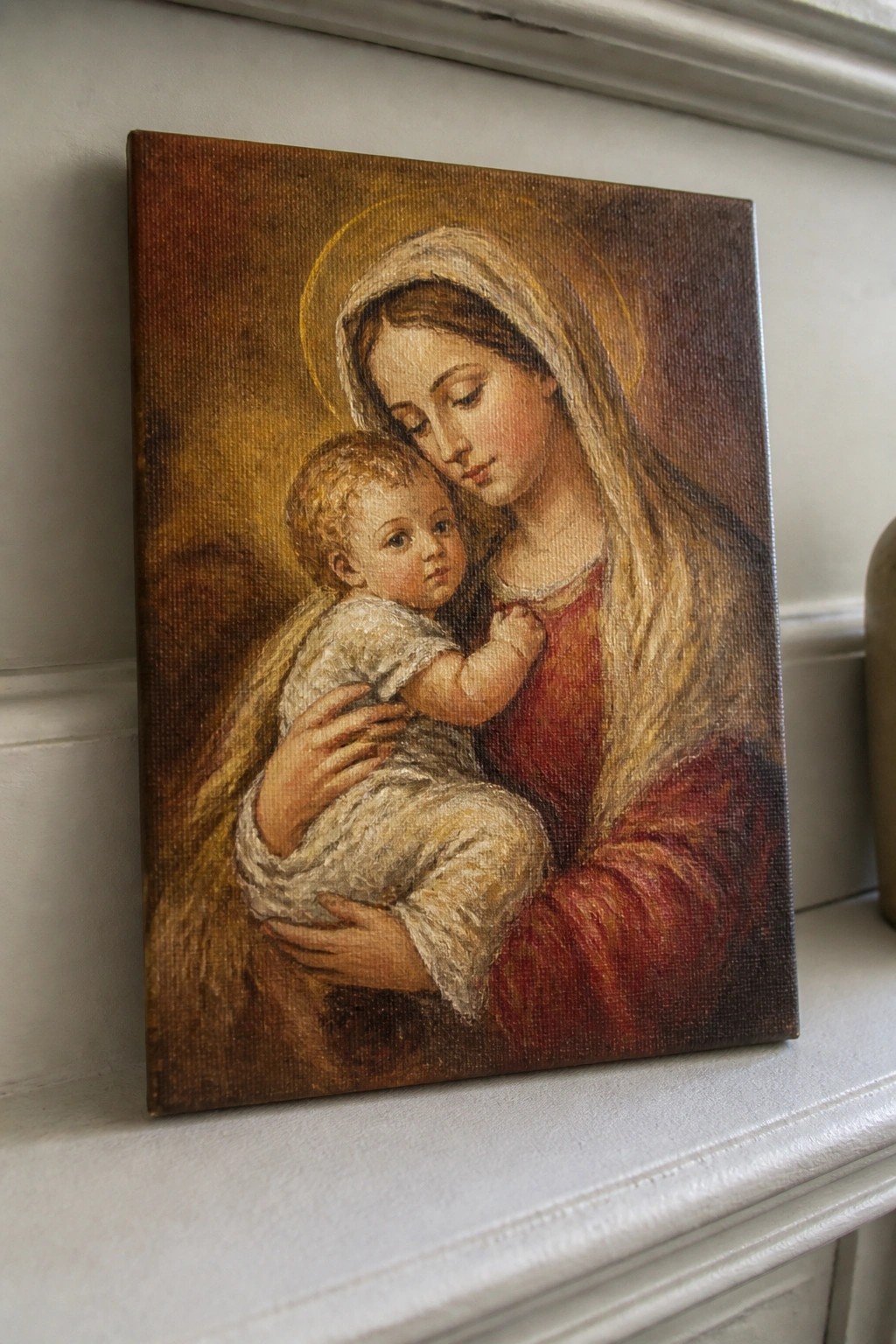
A biblical painting idea that centers on a mother holding an infant close, with a soft halo around her head to mark the religious subject. The figures fill most of the canvas, set against a dark background that blends into deep browns and golds. This layout works because the tight framing keeps the eye on the connection between the two while the limited palette creates a unified, aged look without extra detail.
What makes this idea useful is how the earth tones can be built from just a few mixed colors, making it easy to match without hunting for exact shades. The rounded forms of the heads and the folds in the clothing give clear shapes to follow when blocking in the main areas. For wall art, something like this fits well in traditional or faith-based spaces and can be painted on a smaller canvas by keeping the same close crop on the figures.
Prodigal Son Reunion Embrace
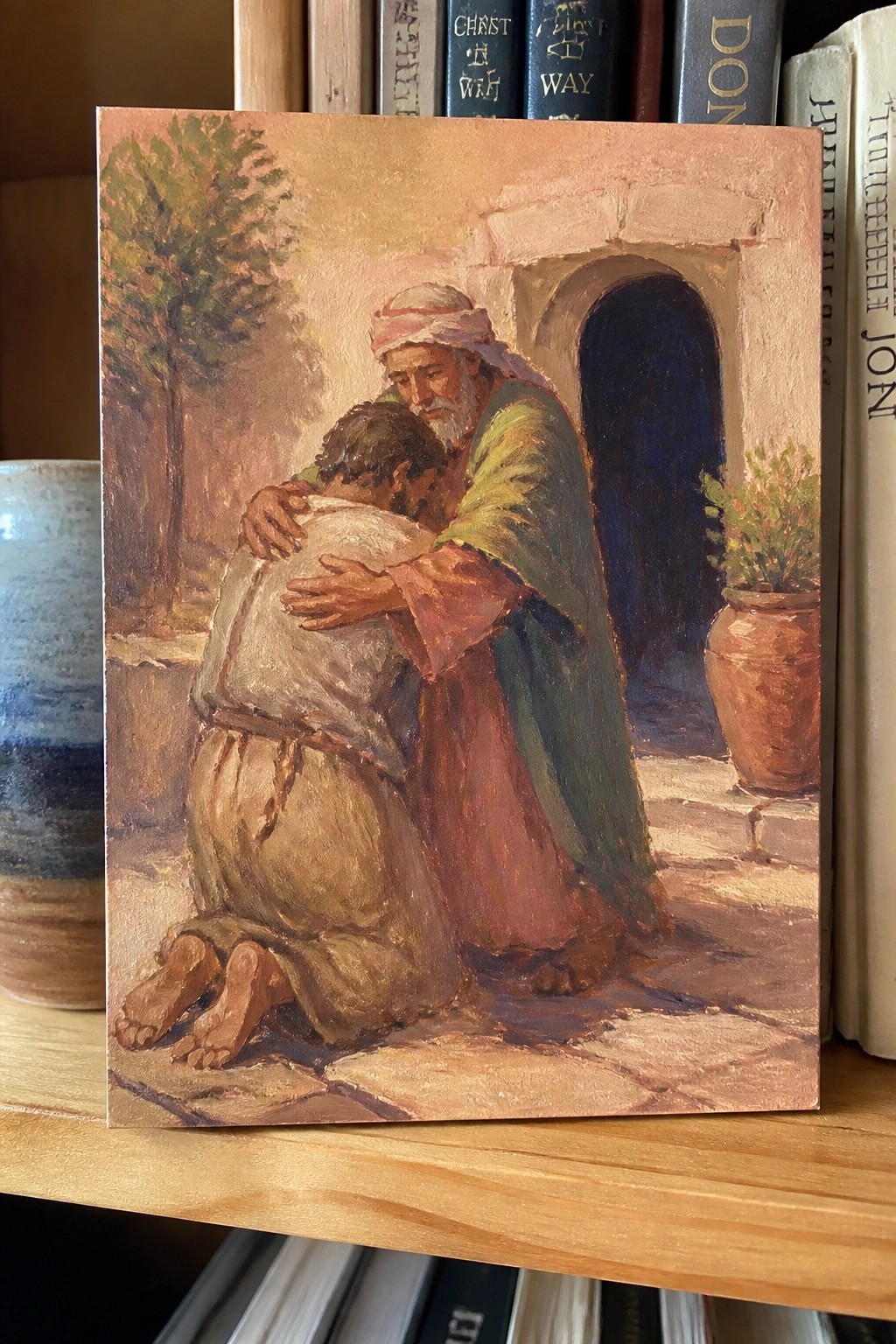
A painting idea built around the biblical reunion shows an older man leaning over to hold a younger kneeling figure in a tight embrace. The composition works because the two bodies overlap to form one clear center of interest while the archway and tree stay pushed back as simple supporting shapes. Warm browns and muted greens tie the figures to the setting without pulling focus away from the gesture itself.
What makes this idea useful is how the embrace can be painted at different sizes while the background stays easy to simplify or leave loose. The color choices stay limited so you can practice mixing and layering without juggling too many hues at once. For wall art this kind of scene fits a study or hallway because the action reads clearly even from a distance. You could adapt it by cropping tighter around the figures or swapping the setting for a plainer wall if you want less detail to manage.
Noah’s Ark Animals Under a Bright Rainbow
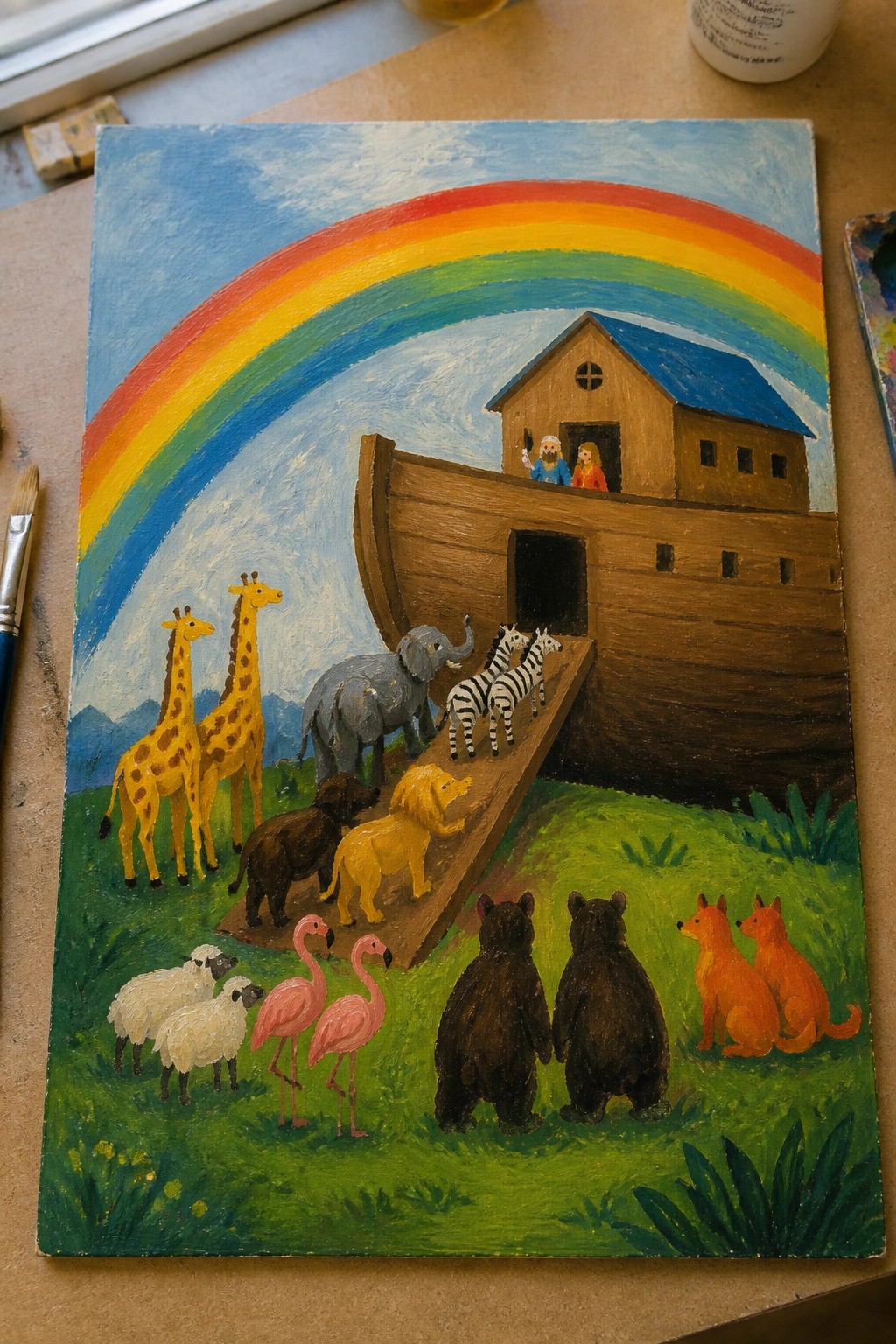
A Noah’s Ark scene works as a straightforward biblical narrative idea that centers on pairs of animals moving toward the boat ramp. The composition places the ark slightly off-center with the rainbow spanning the top half of the canvas, which keeps the focus balanced between the animals in the foreground and the structure behind them. Bright blocks of color separate the grass, sky, and animals, making each group easy to paint in stages without needing fine blending.
What makes this idea useful is the way the animals are grouped by size and type, so you can practice several species on one canvas without overcrowding. The color palette makes this easy to adapt by changing the rainbow stripes or background hills to match other projects. For wall art, something like this works especially well for larger formats because the main shapes stay bold even if you simplify the smaller details like the flamingos or sheep.
Esther Before the King
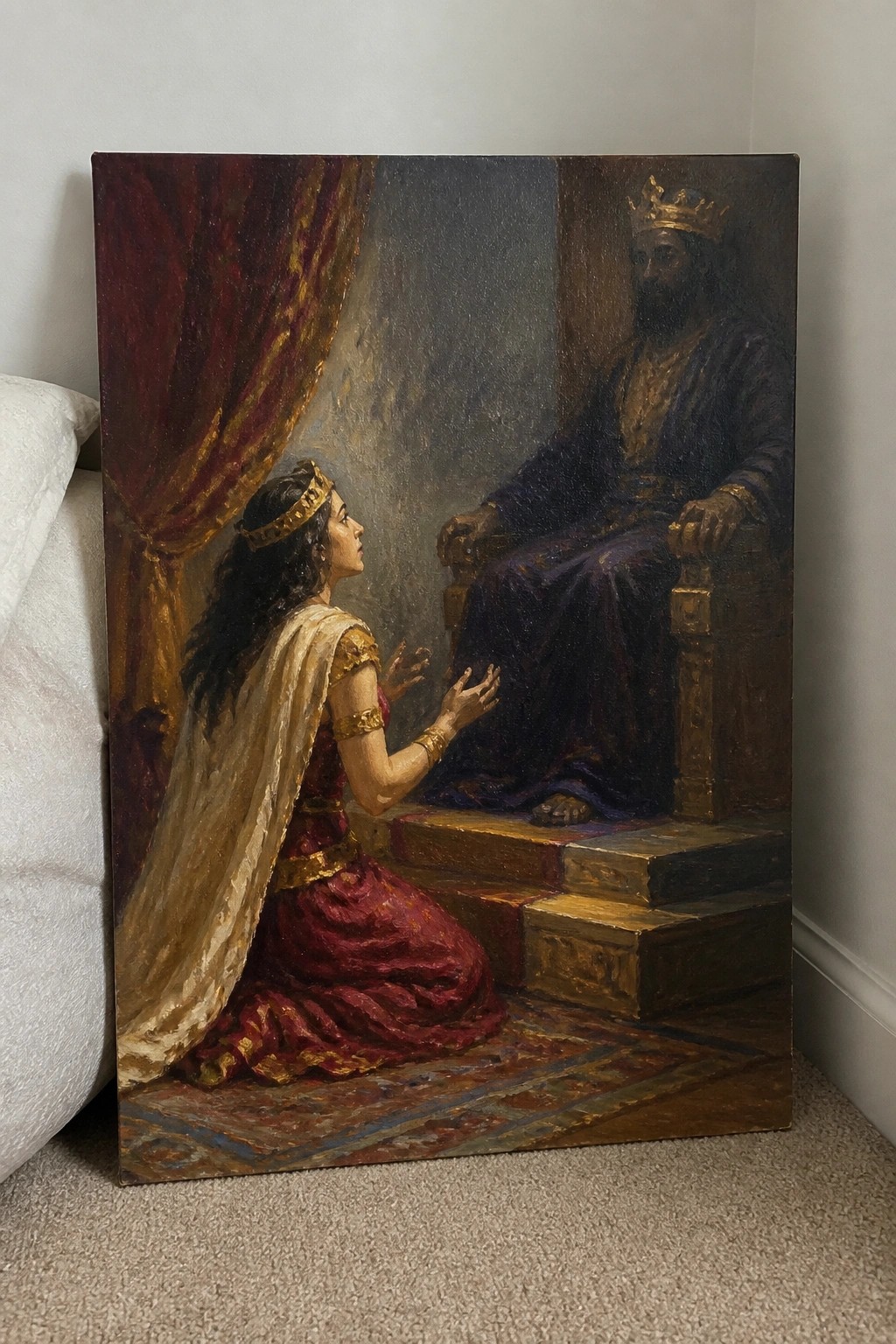
A biblical narrative scene centers on a woman in flowing red robes kneeling on patterned carpet while gesturing upward toward a bearded king seated on a raised throne. The composition builds a clear power difference through the stepped platform and the contrast between the woman’s open pose and the king’s upright, enclosed posture. Deep reds, golds, and dark purples create a rich but limited palette that keeps attention on the two figures and the space between them.
What makes this idea useful is the built-in hierarchy created by the throne height and steps, which gives instant depth without needing complex background details. The drapery on both figures offers good practice for folds and fabric weight while staying focused on just two characters. You could simplify the rug and curtain or shift the color scheme toward cooler tones if you want a different mood. For wall pieces this format works well at medium to large sizes because the vertical arrangement fits standard canvas proportions.
Seated Angel in a Sunlit Stone Passage

A biblical angel resting on a stone ledge inside an arched passageway uses strong light from an open arch to shape the scene. The idea relies on placing the figure against heavy architectural forms like steps and rounded openings so the contrast between dark stone and bright background does the main visual work. Thick brushwork on the walls and floor adds texture while the angel stays relatively simple in form and pose.
The composition does a lot of the work here by using the arch and steps to frame the angel naturally. You could adapt the same setup with a warmer or cooler palette or crop the scene tighter around the figure for a smaller canvas. For practice, this kind of subject helps with light and shadow without requiring complex anatomy. For wall art, the vertical layout and clear focal point make it easy to hang in a hallway or study.
Three Crosses at Sunset
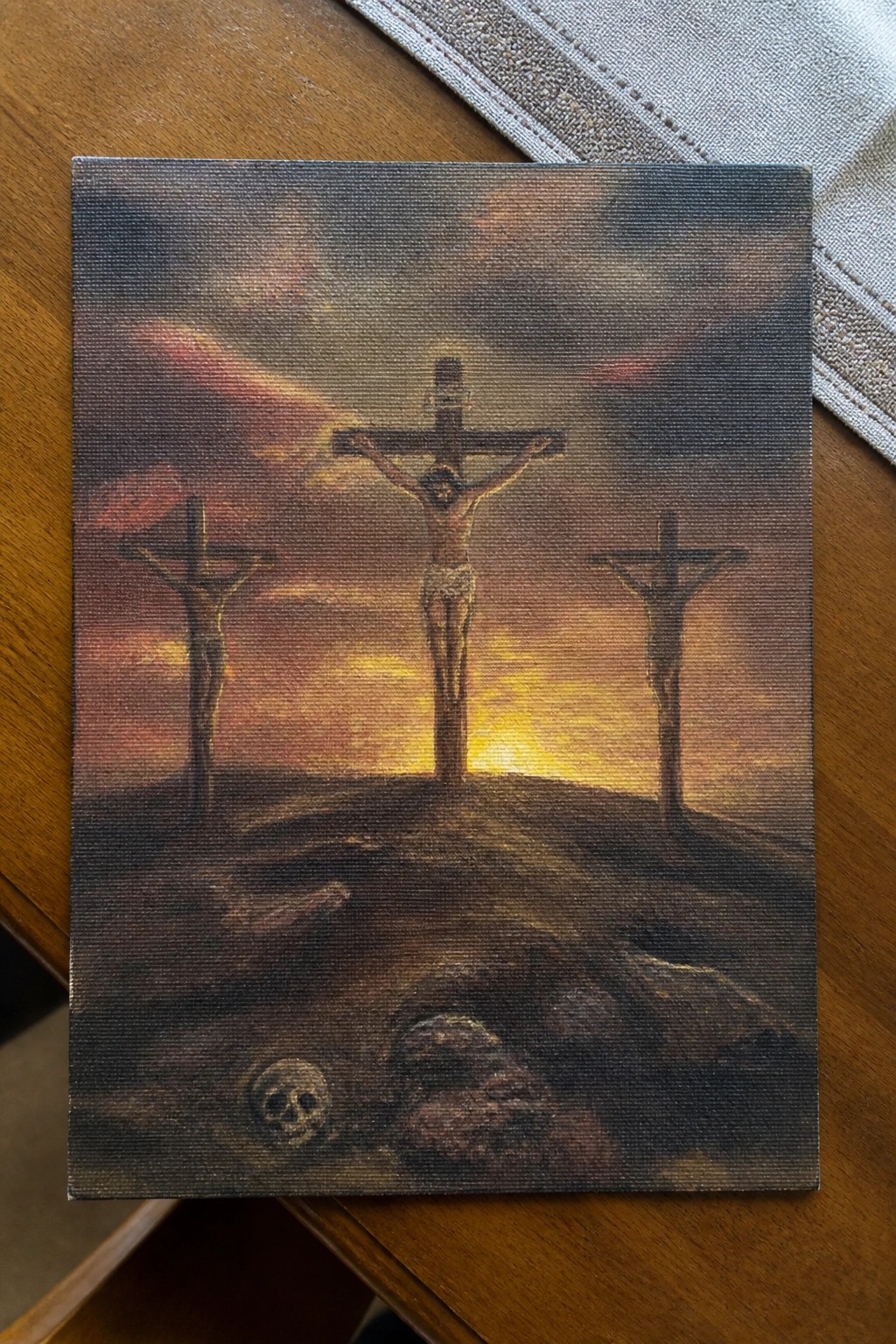
A crucifixion scene with three crosses on a hilltop forms a classic biblical painting idea. The central cross takes the main position while the two smaller ones sit on either side, all placed against a glowing horizon that lights up the lower sky in warm tones. This religious landscape approach relies on a low horizon line and strong light contrast to keep attention on the figures rather than on extra background elements.
What makes this idea useful is how the sky gradient handles most of the atmosphere and depth. You can adapt it by changing the horizon height or swapping the sunset colors for cooler tones if you want a different mood. For practice, the simple shapes of the crosses and the basic hill shape make it straightforward to sketch first, then build up the sky layers. This kind of composition also works well for larger wall pieces where the vertical lines of the crosses can anchor a room.
Pentecost Gathering with Radiant Light and Flames

The painting idea focuses on a biblical scene of multiple figures arranged in a loose circle around a central woman in prayer, each with a small flame above their head and a strong burst of light coming from above. This type of religious narrative painting uses the overhead light rays and the inward-facing poses to keep the eye moving toward the middle while the flames add repeated points of interest. The mix of purple, blue, and orange tones separates the figures from the glowing background without needing extra detail.
What makes this idea useful is the strong central focus created by the light and the praying pose, which works well for vertical canvases or larger wall pieces. You could reduce the number of figures or soften the rays to fit a smaller space or different color scheme. The simple flame shapes and layered background make it straightforward to adapt for other religious themes or to practice grouping multiple people in one composition.
Windblown Biblical Elder in Dramatic Light
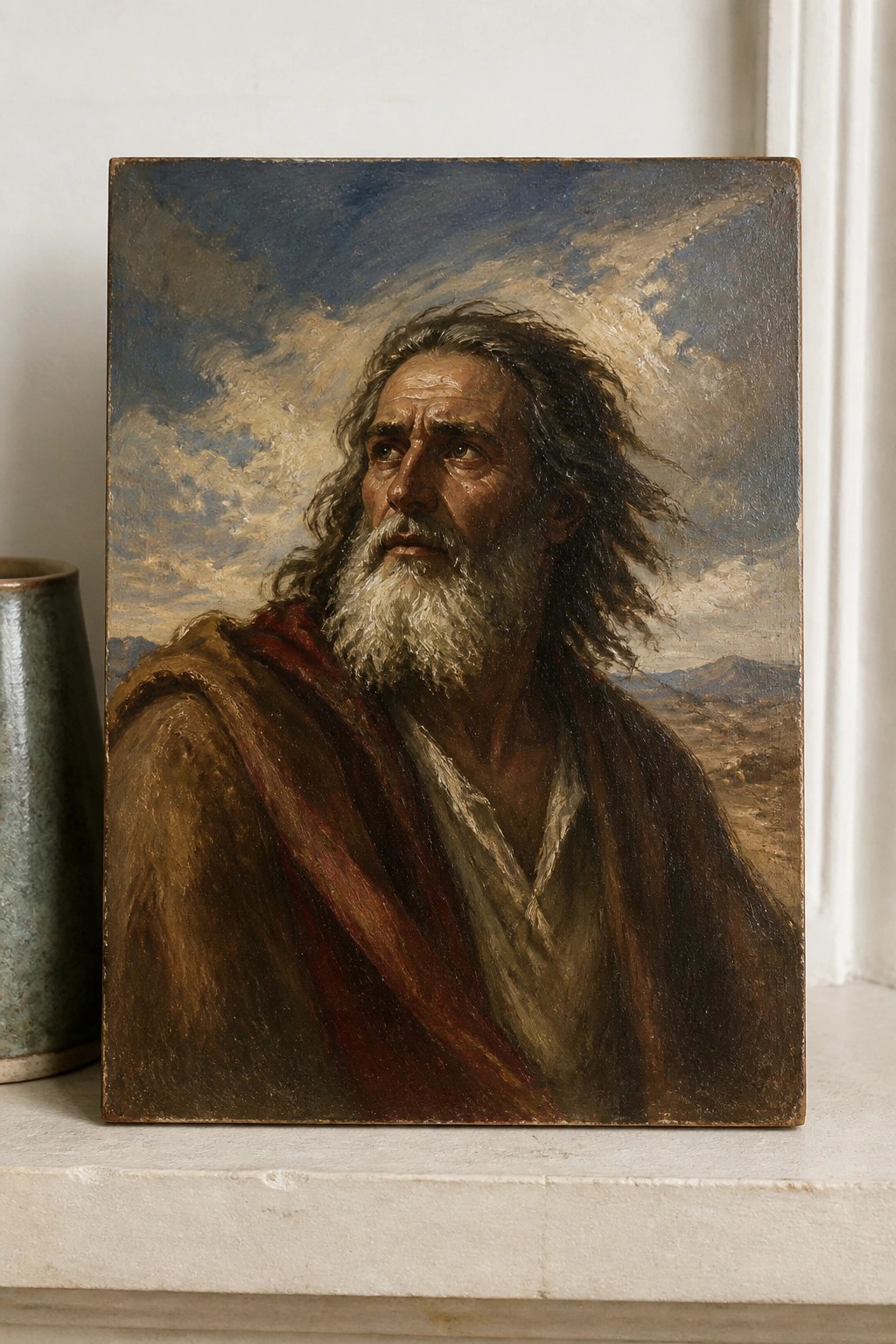
A close portrait of an older man with long, tousled hair and a thick white beard forms the core of this idea. The figure wears layered robes in earthy reds and browns, and the head tilts upward with a direct gaze that draws attention to the face. Strong contrast between the detailed figure and the open desert background with its sweeping clouds keeps the eye focused on the subject while still giving the scene depth.
What makes this idea useful is how the existing background already supplies scale and atmosphere, so you do not need to invent extra elements. You can adapt it by tightening the crop around the face for a smaller canvas or loosening it to include more of the landscape for a larger piece. The limited color range also makes it straightforward to match with other biblical portraits in a series. For practice, the visible brushwork on hair and fabric offers clear areas to study texture without requiring fine detail everywhere.
Biblical Couple Framed by a Rose Covered Arch

This painting idea places a biblical couple in a close embrace inside a curved stone archway that opens onto a distant building with a dome. The surrounding roses and greenery form a natural border that draws attention inward while the soft folds of their clothing and the layered petals add texture without crowding the center. The approach works as a decorative biblical scene because the arch creates a clear frame that balances the floral elements with the figures.
What makes this idea useful is the built in structure of the arch, which organizes the composition and makes it easier to handle detailed flowers without losing focus on the couple. The warm earth tones mixed with pinks and greens translate well to smaller canvases or prints for wall decor. You could simplify it by reducing the number of roses or removing the background building if you want a quicker version for practice or gifts.
Isaiah Portrait with Scripture Scroll
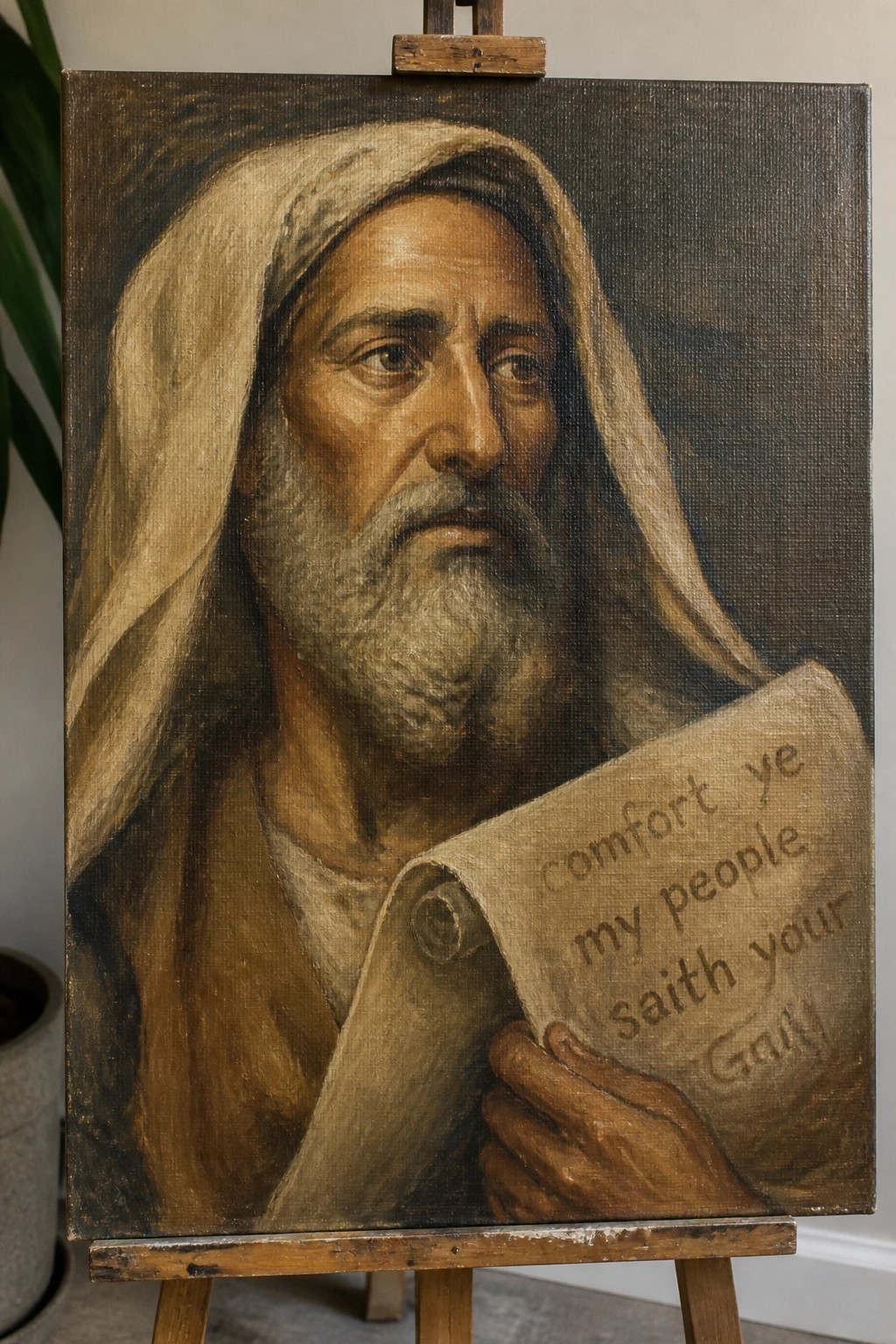
A classical religious portrait idea focuses on a bearded prophet figure holding an open scroll that displays a short Bible verse in handwritten lettering. The composition directs attention to the face through the angled scroll and draped head covering while keeping the overall color scheme limited to muted browns, golds, and skin tones. This approach fits the biblical oil painting category and works as a standalone piece or part of a series of prophet portraits.
The composition does a lot of the work here by letting the scroll carry both visual weight and the actual text so nothing feels added on later. A painting like this works especially well for faith-based wall art because the verse stays legible without needing extra framing or lettering. You could adapt the same idea by swapping the verse, softening the background, or cropping tighter around the hands and scroll to fit smaller canvases.
Frequently Asked Questions
What techniques do these artists use to achieve a museum quality look? These painters rely on layered oil applications, careful glazing for depth, and precise control of light and shadow to mimic the richness of classical works. Studying books on old master methods or taking online courses in oil painting can help you understand and appreciate these approaches.
Where can I find high quality prints or reproductions of the featured paintings? Search reputable art print sites using the exact title and artist name from the article. Many offer canvas or paper options with museum level detail. Always verify seller reviews and licensing to ensure you receive authentic reproductions.
How do the artists select which biblical stories to depict? Artists often choose scenes with strong emotional or visual impact such as miracles or key moments from the Gospels. They draw from scripture and historical art references to create compositions that feel timeless and engaging.
Are these paintings created by contemporary artists or inspired by historical figures? Most are produced by living painters who study and emulate the styles of masters like Rembrandt. The article usually includes artist names so you can explore their other works and training backgrounds for more context.
What steps can I take to learn more about the symbolism in these biblical scenes? Begin by reading the relevant Bible passages alongside each painting. Resources like art history websites or museum guides often explain symbols such as light for divinity or specific colors for themes, helping you gain a richer understanding of the imagery.