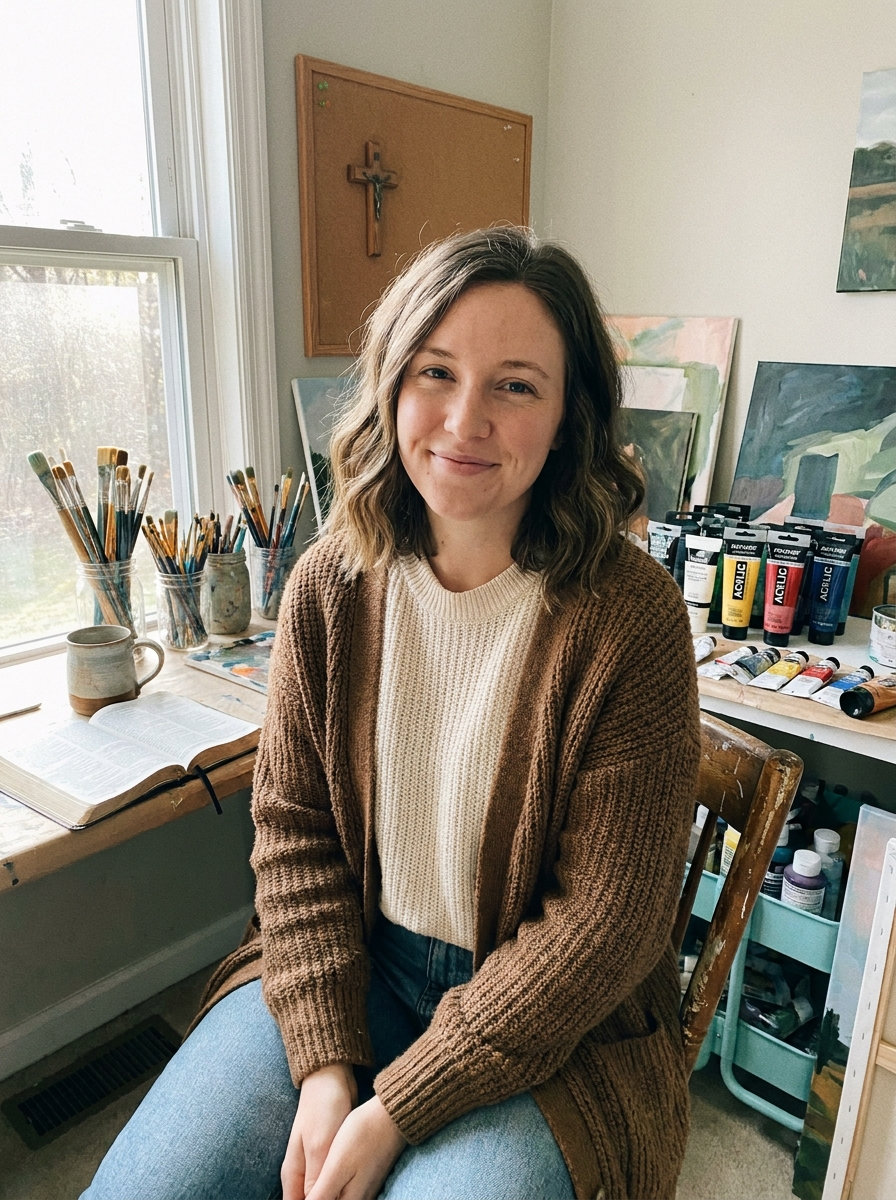
I like to paint Bible scenes because they remind me of things I think about during the week.
Acrylic paint is what I use most since it is easy to handle on canvas.
I have been experimenting with modern looks for these old stories lately.
Some of the ideas turned out better than others but I wanted to share them anyway.
Maybe one of them will give you a starting point for your own work.
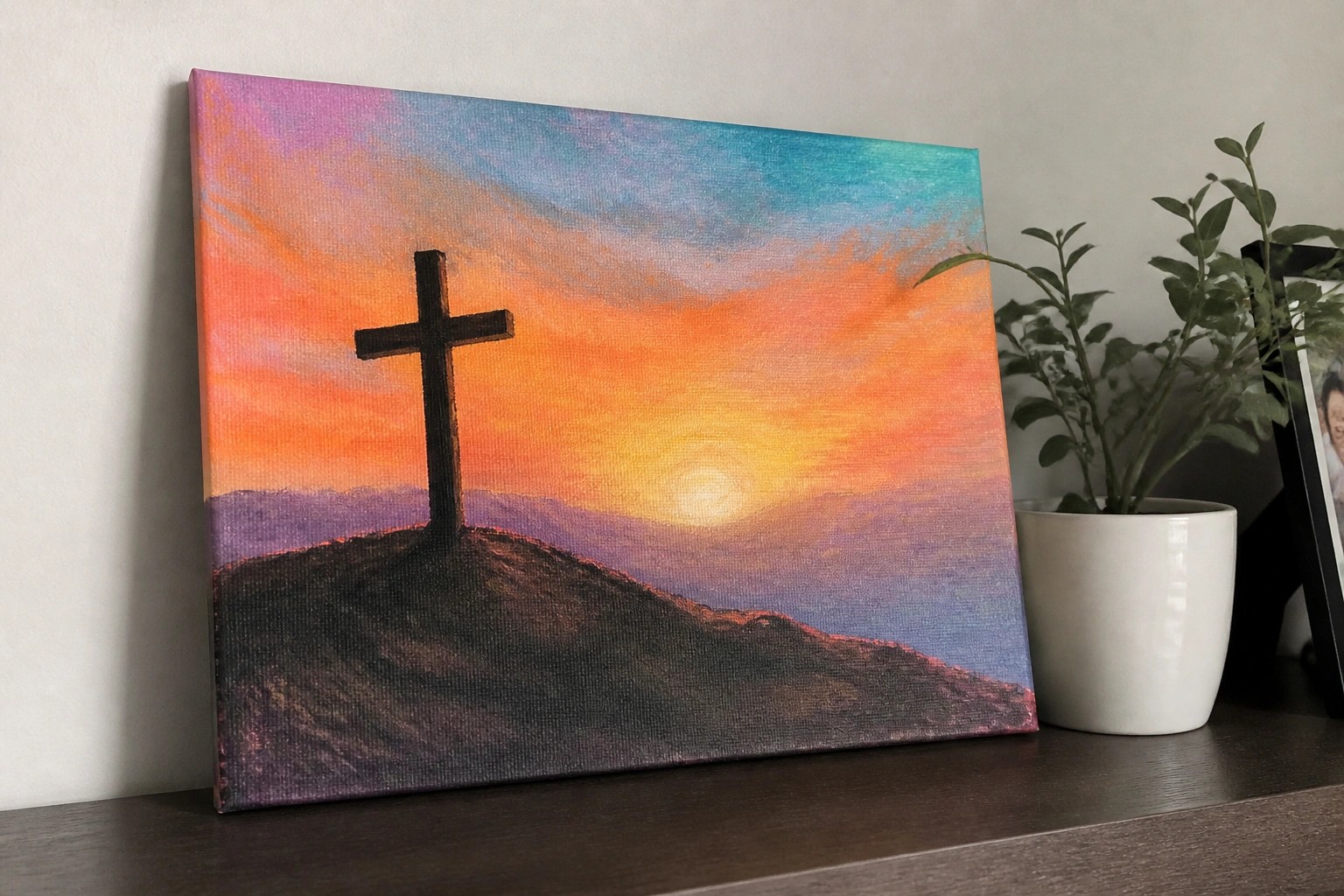
Silhouetted Cross on a Hill at Sunset
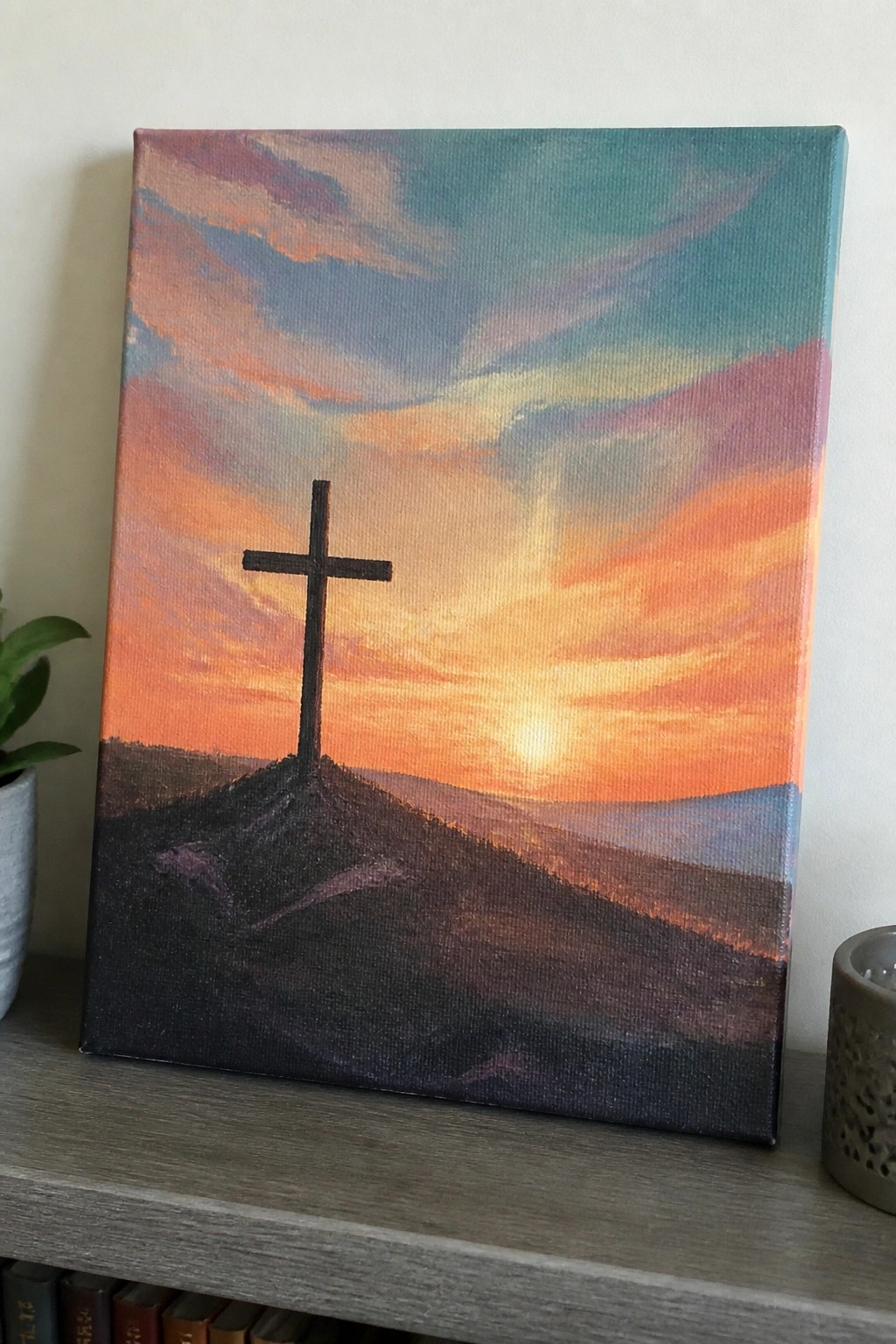
A cross silhouette placed on a low hill forms the main subject here, set against a wide sky filled with blended sunset colors. This landscape idea relies on strong horizontal bands of color and a centered vertical shape to create balance without extra elements. The dark foreground and hill keep attention on the cross while the sky provides the visual interest through simple color shifts.
What makes this idea useful is how the silhouette reduces the need for detailed brushwork on the cross itself. The color palette can be swapped for softer pastels or deeper tones depending on the mood you want, and the same layout works on different canvas sizes. For practice, this kind of painting helps build skills with gradients and basic composition while staying easy to finish in one session.
Flying Dove with Olive Branch

A white dove in mid-flight carrying an olive branch makes a straightforward biblical painting idea that centers on one clear subject. The composition places the bird diagonally across the canvas with wings extended and the branch angled outward, which keeps the eye moving without crowding the space. Light blue brushstrokes form the background while the dove itself uses simple layered white shapes and muted green leaves for contrast.
What makes this idea useful is how the basic bird silhouette lets you practice smooth blending and edge control without needing fine detail work. The limited color palette of soft blues, white, and gray-green works on small or large canvases and can be adjusted by swapping the background tone or leaf shade. For wall art, something like this stands out on Pinterest because the clean layout reads well even when the image is small.
Noah’s Ark with Striped Hull and Animal Rows
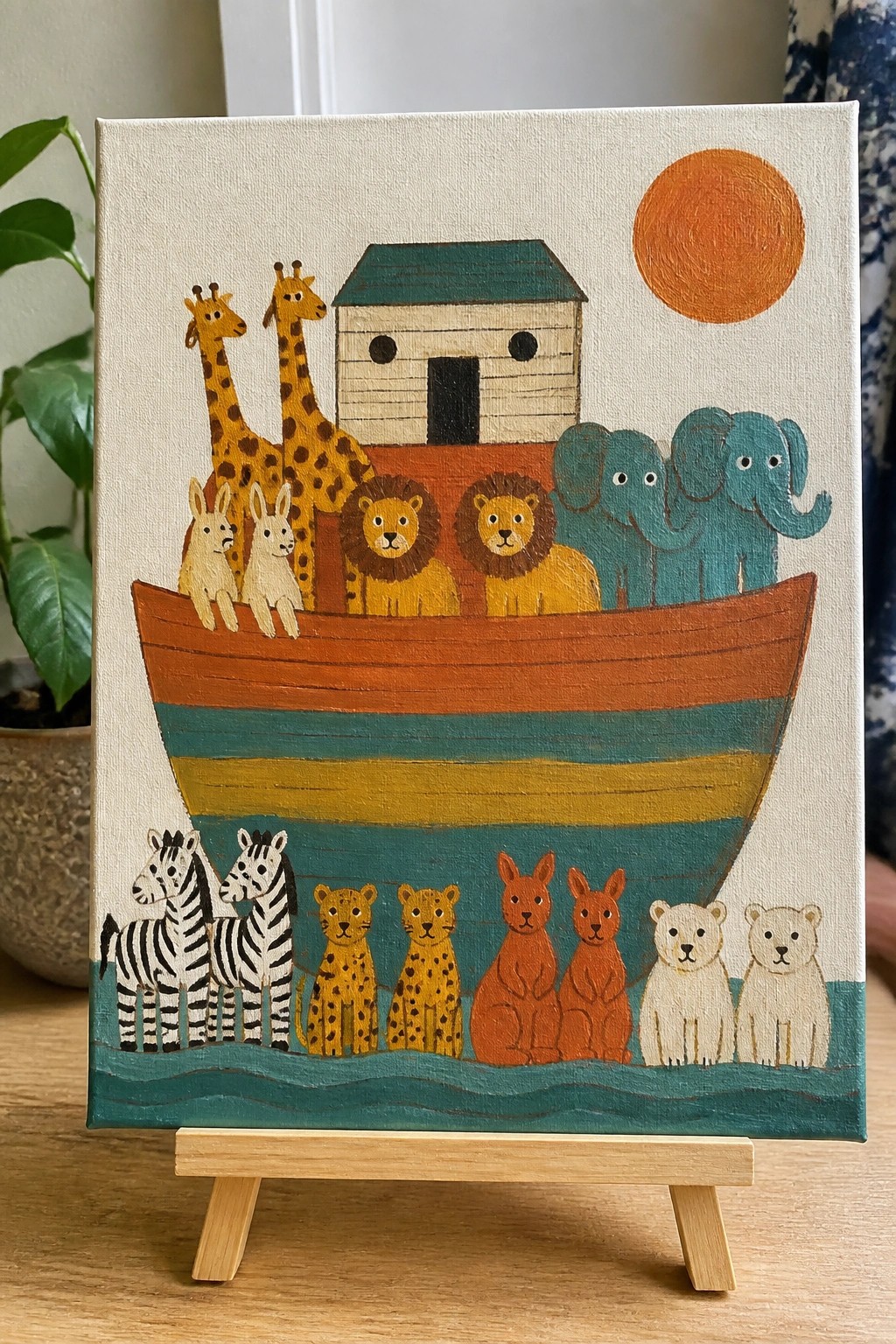
A Noah’s Ark painting idea centers on a boat with bold horizontal color bands and pairs of animals arranged in rows above and below the hull. The main concept uses simple rounded shapes for the animals and a small cabin on deck to create a balanced, symmetrical layout. This approach falls into the decorative animal category because the stripes and repeating forms give the scene structure through color blocks and placement rather than fine detail.
The composition does a lot of the work here by using the stripes to guide the eye and the repeated animal pairs to fill space evenly. You can adapt it by changing the stripe colors, shortening the boat, or swapping in different animals to match a preferred palette or room size. For wall art this kind of piece works especially well as a gift or nursery decor because the subject stays clear while the flat shapes keep it easy to paint at a small or medium scale.
Mustard Seed Faith Canvas with Growing Plant
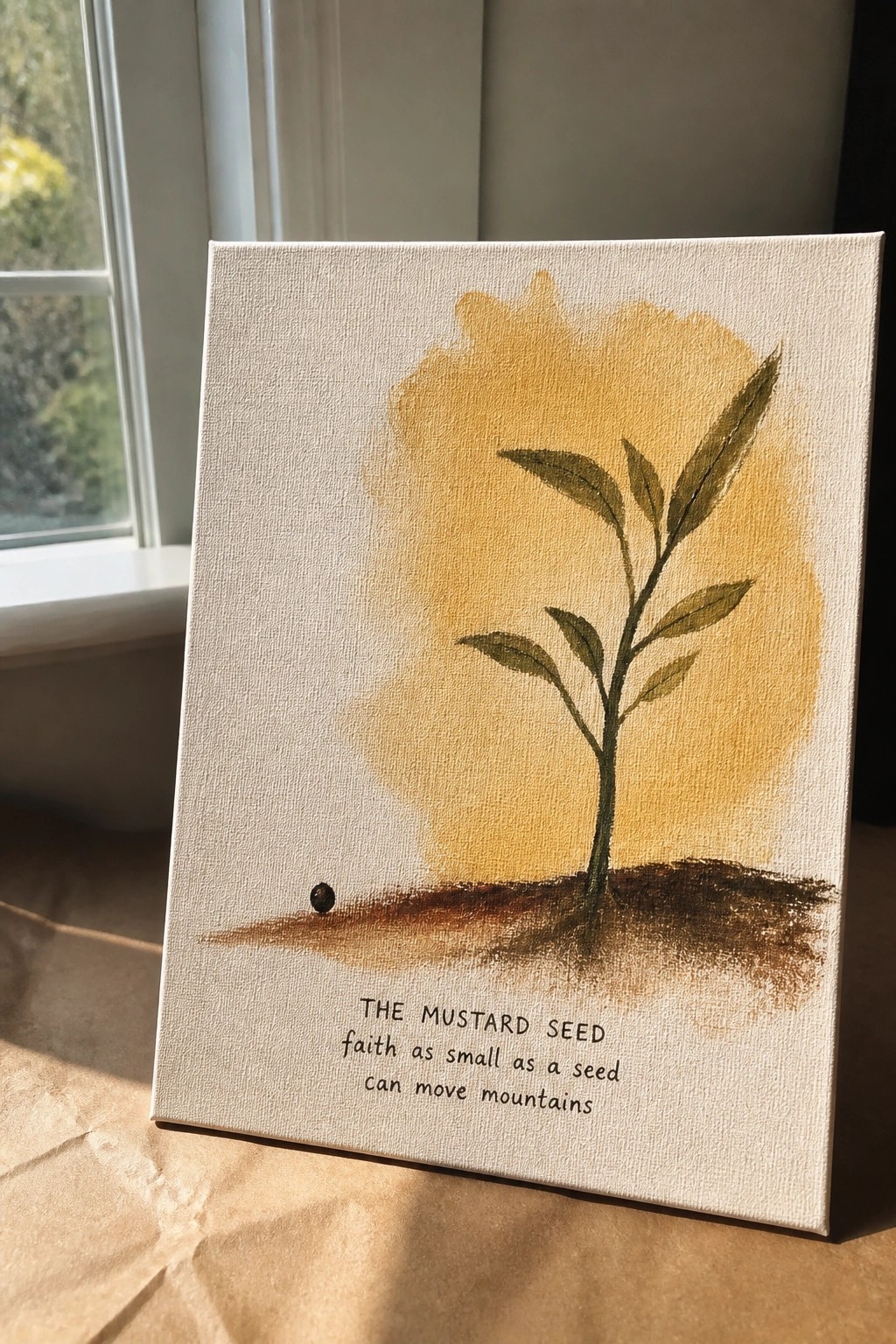
The idea pairs a single small seed with a young sprouting plant to show the contrast between something tiny and its later growth. This works as an illustrative painting that combines a simple still life setup with added text. The layout places the seed on the left and the plant on the right against a soft yellow wash, so the size difference and the soil line at the bottom keep the focus clear.
What makes this idea useful is how the scale contrast between the seed and the plant carries the message without needing extra elements. You can adapt it by changing the background wash to other light colors or adjusting the plant size to fit different canvas proportions. For wall art this kind of piece works well because the text sits naturally below the image and the overall design stays easy to read from a distance. The same concept could be simplified further by using fewer leaves or turned into a series by painting different stages of growth.
Good Shepherd Scene with Sheep and Tree
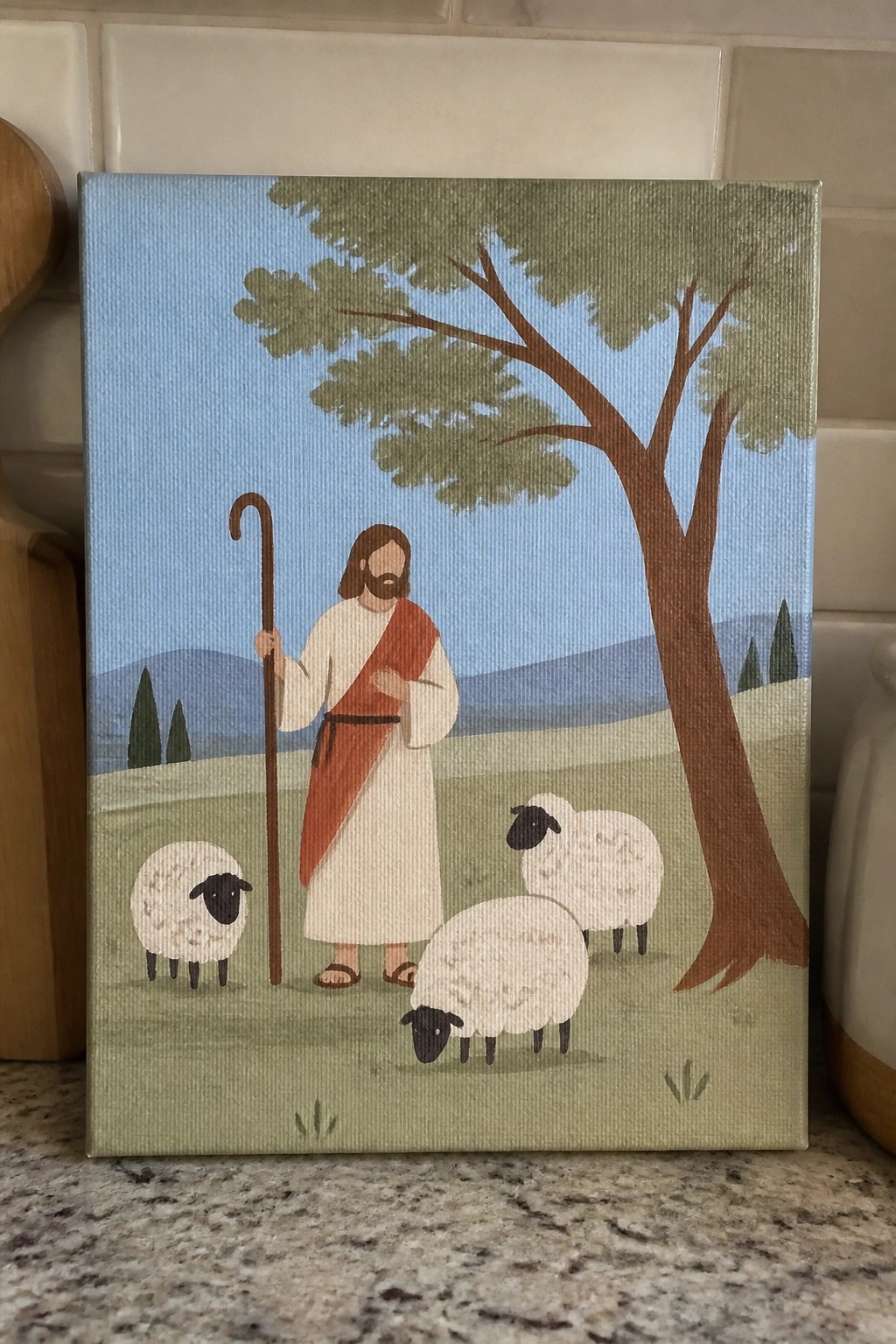
This painting idea shows Jesus as the shepherd standing in a field with a small group of sheep nearby. It combines a central human figure with animal elements and a simple landscape background, making it a narrative biblical piece rather than a pure portrait or still life. The layout places the figure slightly left of center and balances it with a large tree on the right, while the sheep are spaced at different heights and angles to guide the eye across the canvas without overcrowding.
What makes this idea useful is how the few main shapes let you focus on clean color blocks instead of tiny details. The soft green and blue palette can be swapped for warmer tones or cooler shades depending on the room or season you want to match. For practice, this kind of subject works well because the flat areas and limited elements reduce the chance of overworking the paint. You could shrink the tree or move the sheep positions to fit a vertical canvas or a smaller panel for gifts.
Loaves and Fish Beach Arrangement
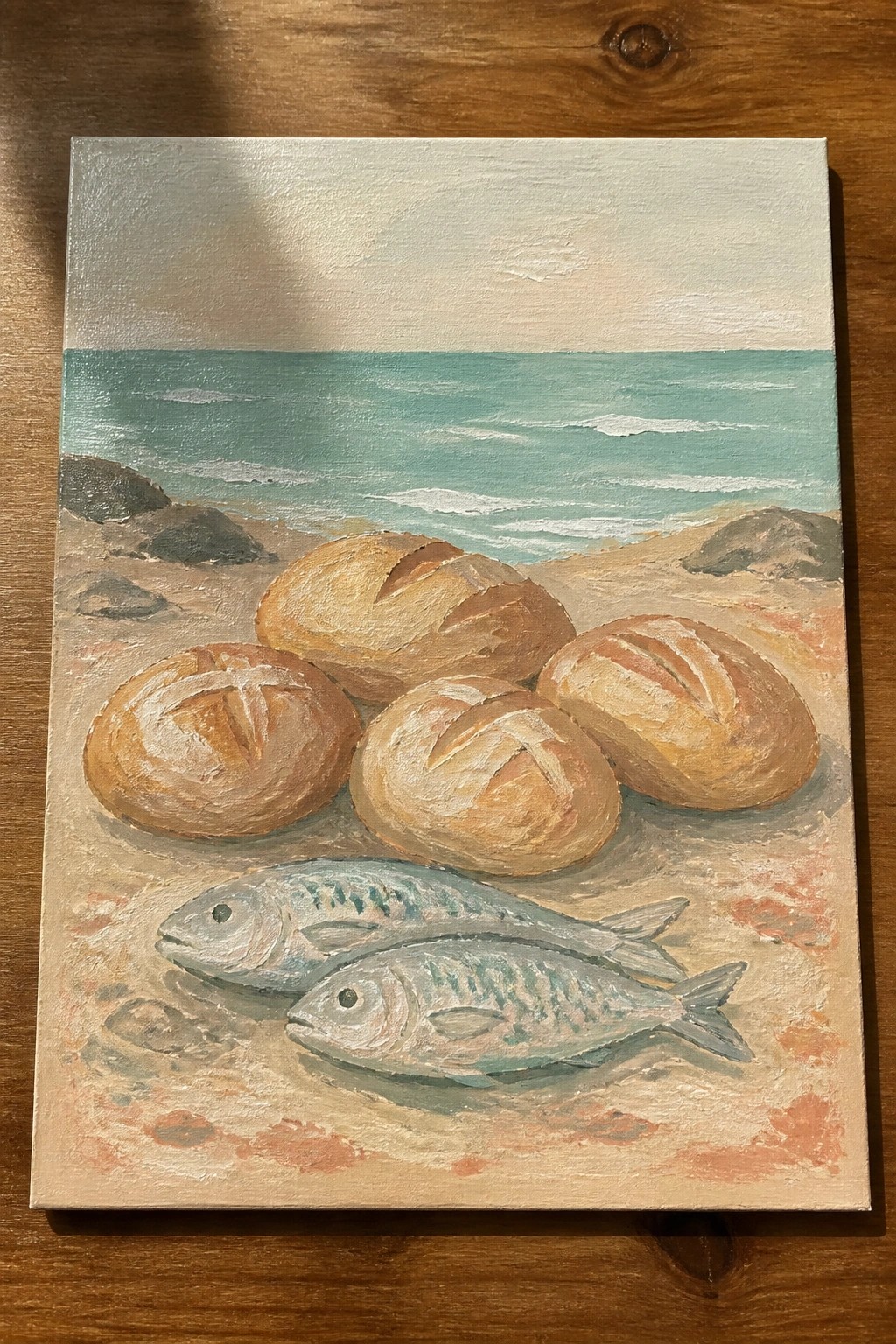
A still life of multiple loaves of bread and two fish placed on sand forms a direct reference to the feeding of the five thousand. The idea works by positioning the food items in the lower half of the frame with a simple ocean and sky above, letting the horizontal layout keep the focus on the objects while the background adds just enough context. Earthy browns and off-whites on the bread contrast with the cooler teal water and pale sand, creating clear visual separation without complicated layering.
The composition does a lot of the work here because the objects sit on a flat surface with minimal overlapping, which makes it straightforward to sketch and paint even if you adjust the number of loaves. A painting like this works especially well for medium-sized canvases meant for kitchen or dining areas, and the same setup could be simplified by using fewer items or changed to a sunset palette while keeping the beach placement. For practice, this kind of subject helps with texture work on the bread crust and fish scales without requiring advanced perspective skills.
Whale and City Skyline from the Jonah Story
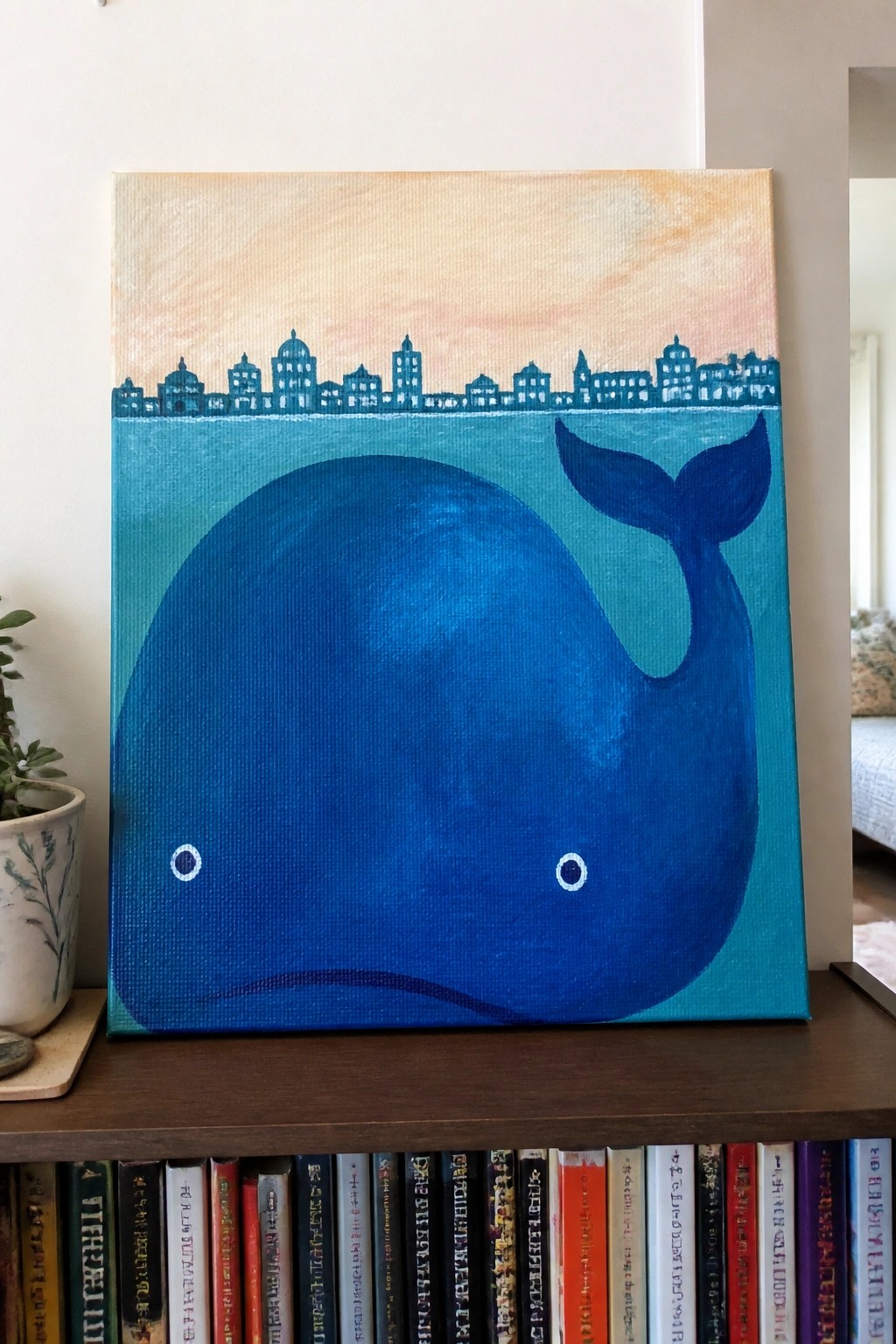
A large blue whale positioned against a simple city skyline on the horizon line gives a clear nod to the story of Jonah without needing extra figures or text. The idea pairs a single animal subject with a flat background element so the composition stays balanced and easy to read. Rounded shapes and a limited color range keep the focus on the overall layout rather than small details.
The composition does a lot of the work here because the whale fills most of the canvas and the skyline rests cleanly along the water line. You can change the sky gradient or swap the city outline for a different skyline to fit your space. For wall pieces this works especially well above bookshelves since the bold shape stays visible from across the room. The same layout can be scaled down for smaller canvases or turned into a series by varying the water tones.
Overlapping Circles for the Trinity
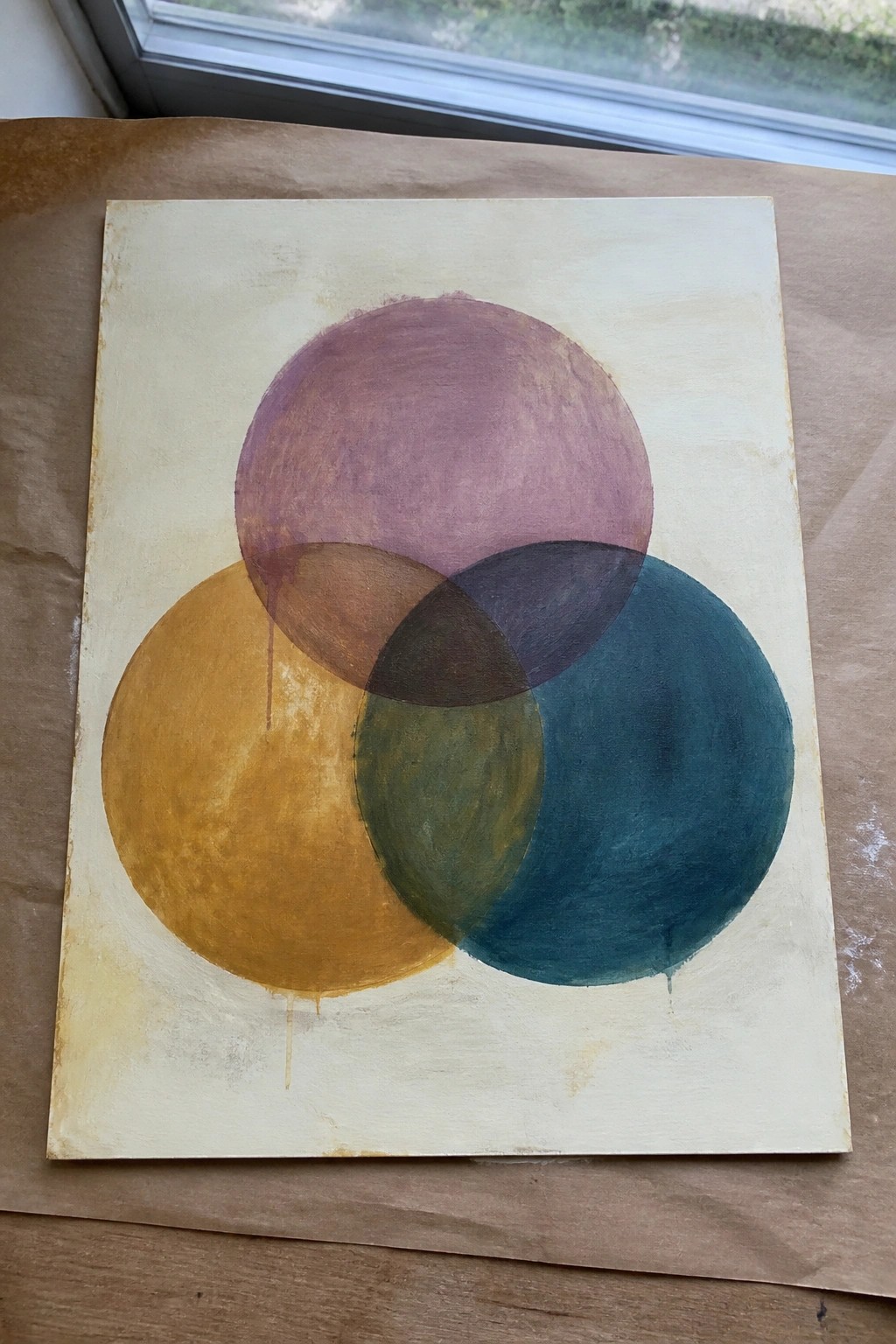
Three circles arranged to overlap in a central area create a direct visual for the Trinity concept. Each circle holds a distinct color while the intersections show blended tones that suggest connection without extra detail. The rounded forms and neutral background keep the composition balanced and easy to read from a distance.
The composition does a lot of the work here since the overlapping layout already carries the idea and needs little else to feel complete. You can swap the colors for ones that fit your space or try different sizes to change the scale. This approach works especially well for practice because the shapes stay forgiving while still letting you experiment with mixing in the overlaps. For wall pieces the clean layout stands out on Pinterest when the colors stay muted rather than bright.
Bread and Chalice Still Life
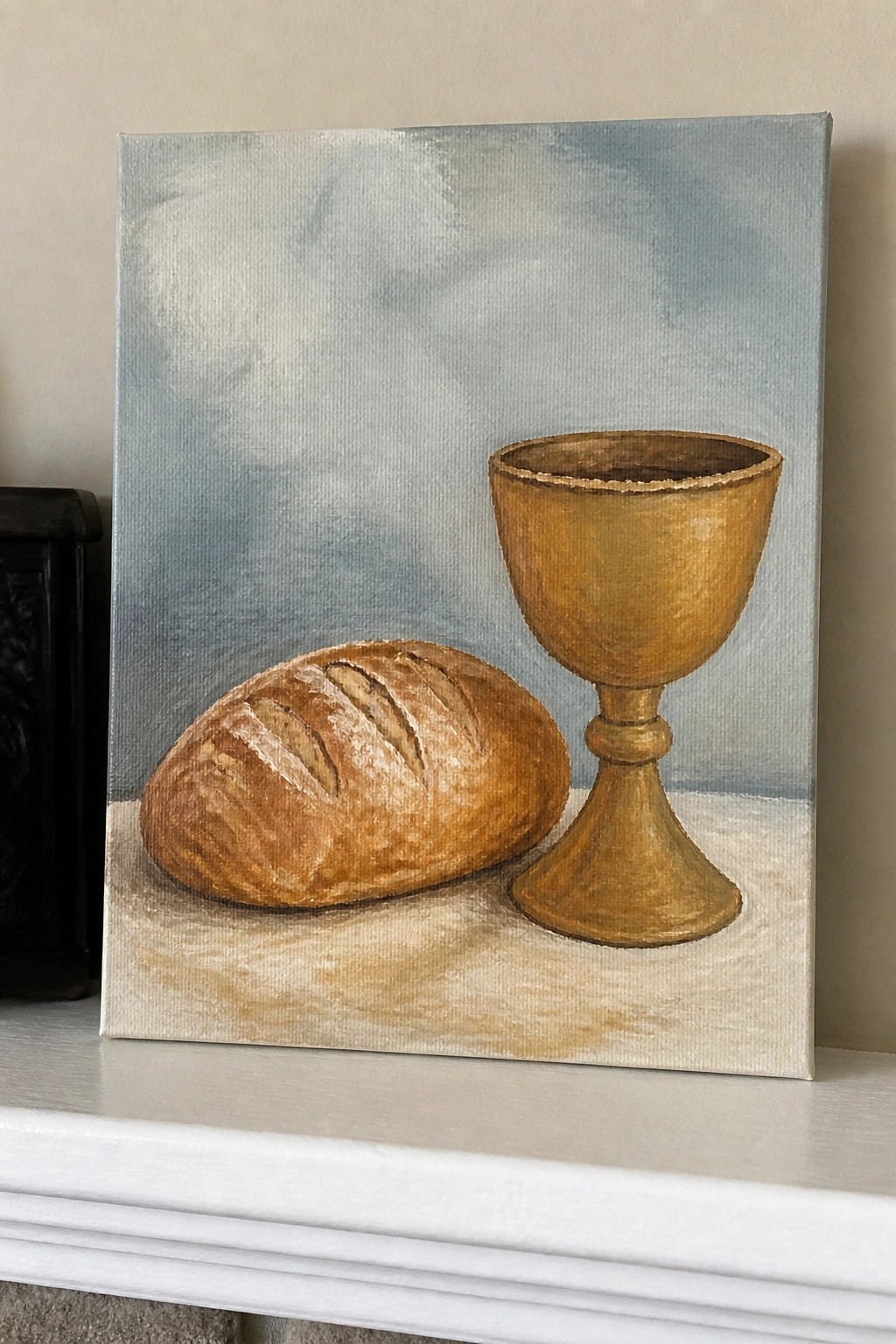
This still life idea pairs a loaf of bread with a chalice on a flat surface. The rounded bread shape sits low and anchors the taller cup, which creates a clear left-to-right balance. A soft blue-gray background and limited warm tones keep the attention on the two objects without extra detail.
What makes this idea useful is how the simple shapes stay readable even when the painting is kept loose. You can swap the chalice for a different cup style or shift the background color to match a room. The composition works for wall pieces because the objects read clearly from a distance and the neutral palette fits many spaces. For practice you can start with the bread alone then add the cup later.
Burning Bush Made from Layered Autumn Leaves
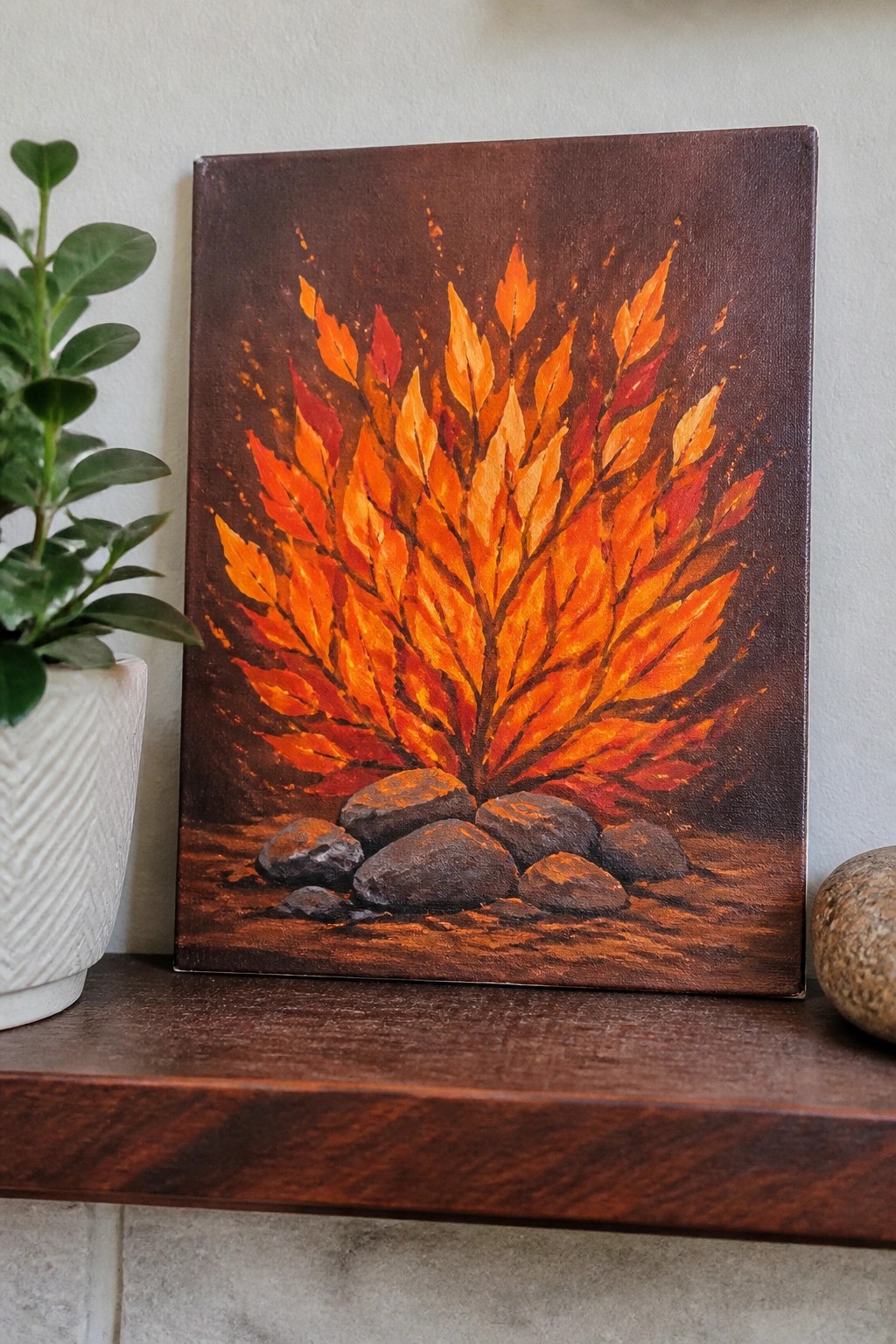
A burning bush idea takes the shape of a central tree built entirely from overlapping leaf forms in bright orange, red, and yellow. The radiating arrangement of the leaves creates the flame effect while the dark brown background makes the warm tones stand out. Stones placed along the bottom edge give the composition a simple base without pulling attention away from the foliage.
The color palette makes this easy to adapt by shifting the leaf shades toward deeper reds or lighter yellows depending on the supplies on hand. You can reduce the number of leaves for a faster version or keep the same layout on a taller canvas for a different proportion. This kind of subject works well for practice because the repeated leaf shapes help build brush control while still producing a clear biblical reference.
Crossed Palm Fronds Over a Sunset Sky

A painting idea built around two palm fronds crossed in the foreground against a gradient sunset sky offers a clean way to combine botanical shapes with a simple landscape. The large sun sits centered behind the leaves while the sky moves through bands of orange and yellow down to low green hills. This approach uses strong leaf outlines and color layering to keep the composition balanced without extra elements.
The composition does a lot of the work here because the crossed fronds give an immediate focal point that holds up even on a small canvas. You can adjust the sky colors to cooler tones or remove the hills entirely if you want a faster version for practice. For wall pieces or gifts, this idea adapts easily to different sizes while still reading clearly from a distance.
Psalm 23 Landscape with Stream and Tree
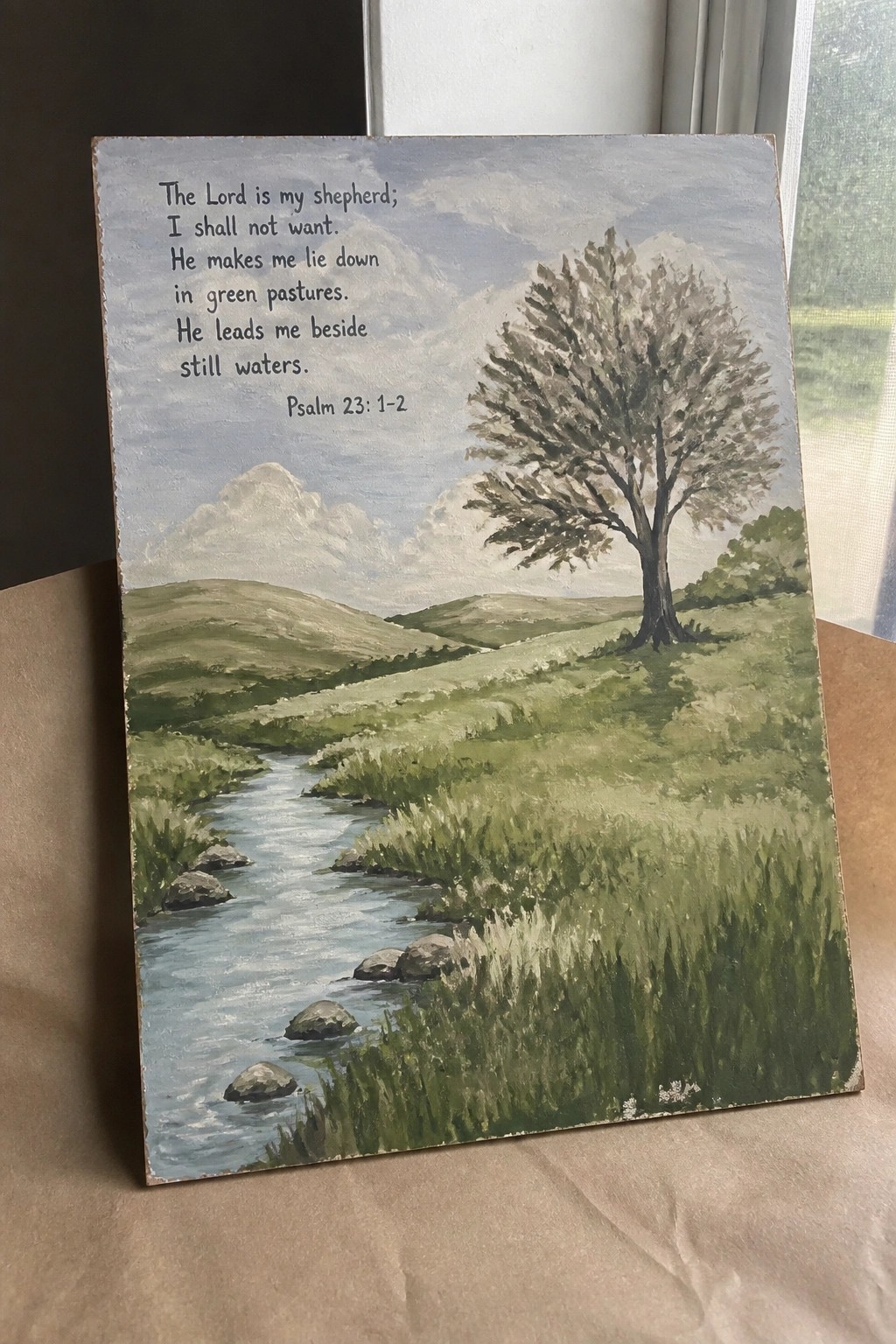
A landscape painting that pairs the opening lines of Psalm 23 with a winding stream, low hills, and a single large tree gives the verse a clear natural setting. The text sits in the upper left while the tree anchors the right side, and the stream leads the eye from the foreground back into the distance. Soft greens and muted sky tones with loose brushwork keep the scene readable and balanced.
What makes this idea useful is how the open layout leaves space for the text without forcing it into a tight corner. The central stream and simple hill shapes make it straightforward to resize for different canvas proportions or swap in a different tree style. For wall pieces or gifts, the same layout works with just the first two verses or a longer passage if the canvas is taller.
Three Figures on a Path Toward Light
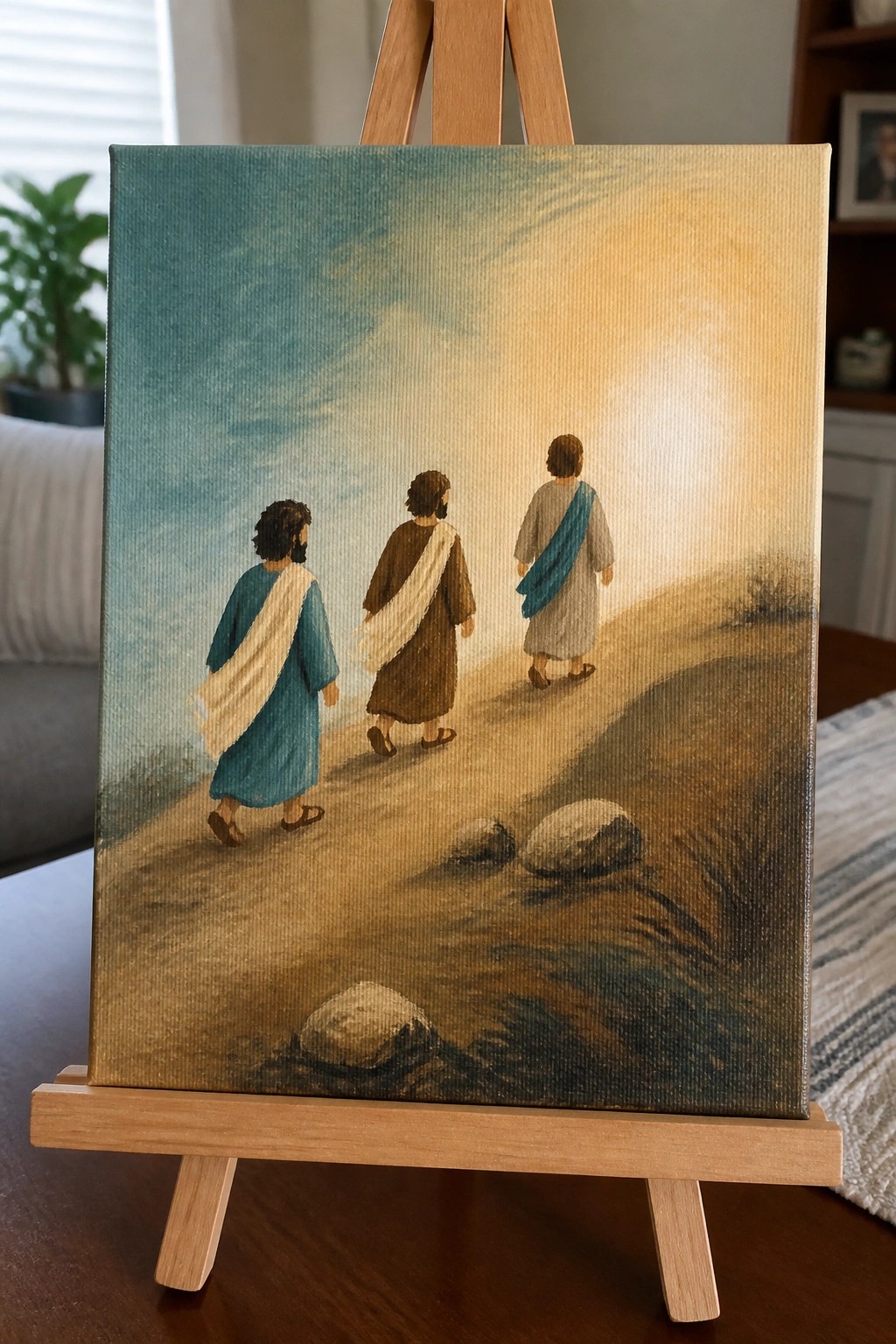
A biblical scene with three robed figures walking away on a path works well as a landscape idea. The diagonal path and side lighting create clear depth while the small scale of the figures keeps the focus on the environment rather than faces or details. Cool sky tones shifting into warm ground colors help the composition feel balanced and easy to read from a distance.
The composition does a lot of the work here by letting the path and light do most of the storytelling. You can simplify the rocks or change the sky gradient without losing the overall idea, and the same layout works at different canvas sizes. For practice this subject is useful because the figures stay basic and the main effort goes into blending the background.
Stylized Crown with Overlapping Shapes
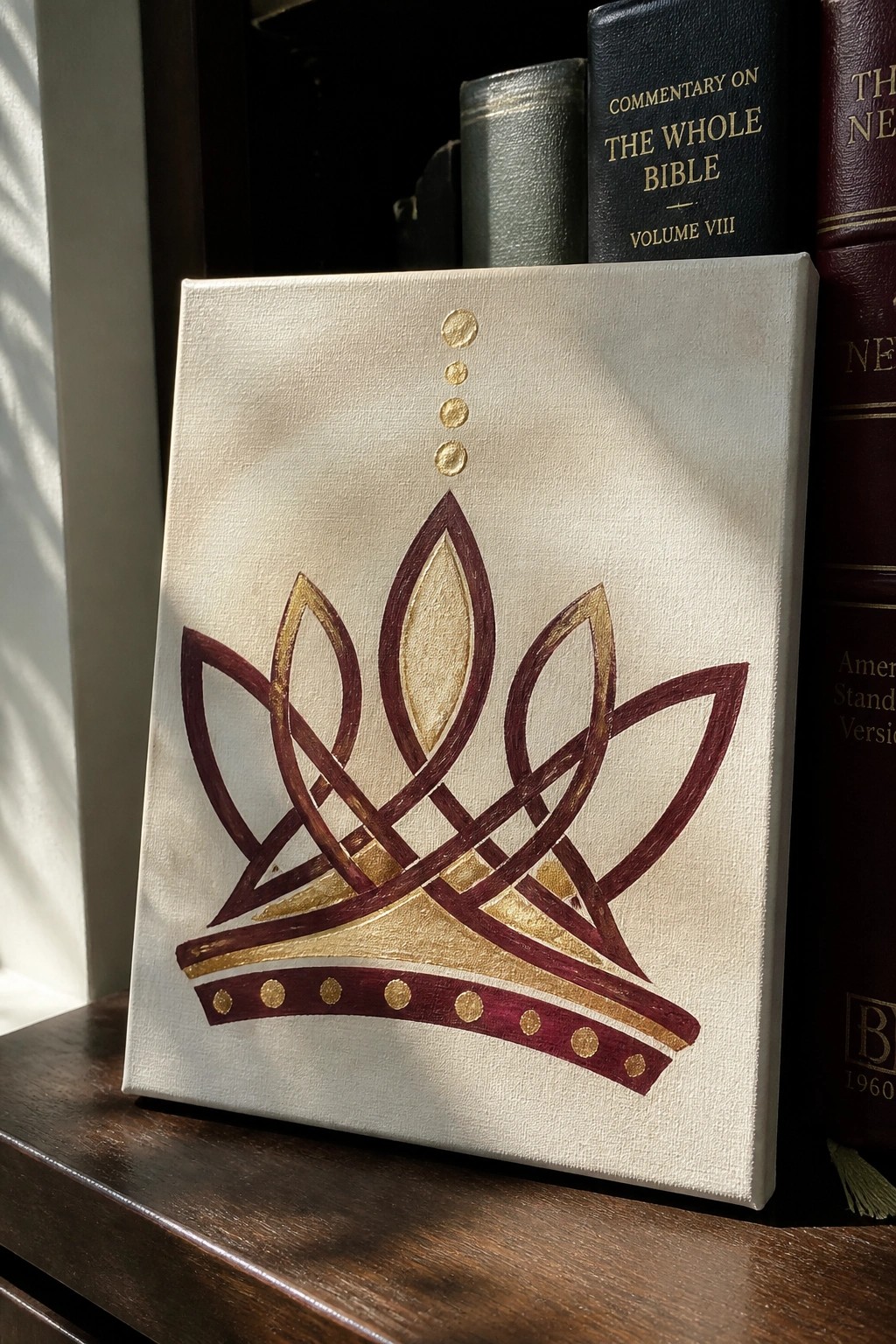
A crown built from interlocking curved forms makes a strong decorative painting idea that stands out through symmetry and negative space. The design relies on a tight palette of deep burgundy with gold accents to define the layers without clutter. Dotted details along the base and a short vertical line of gold circles above the crown add subtle structure while keeping the overall composition clean and balanced.
What makes this idea useful is how the central placement and simple background let the shape carry the whole piece. The same layout works at different canvas sizes and adapts easily if you swap the burgundy for another deep tone or vary the gold intensity. For practice or quick gifts, the limited elements reduce the risk of overworking the surface while still producing a finished look that photographs well for sharing.
Minimalist Nativity with a Bold Central Star

A nativity painting idea built around simplified shapes for the stable, figures, and manger set against a solid dark blue background. The star sits at the top center with straight lines that pull attention straight down to the manger. This approach falls into decorative biblical art because the flat color blocks and limited palette keep the whole piece readable from a distance.
What makes this idea useful is how the stable frame and star placement do most of the compositional work. You can scale it down for small wooden blocks or stretch it taller for a canvas without losing balance. The color choices stay easy to adapt by changing the blue to a deeper navy or swapping the robes for different earth tones while keeping the same layout. This kind of clean design also pins well on Pinterest because the contrast reads clearly even in a small thumbnail.
Overlapping Ichthys Pattern in Bright Colors
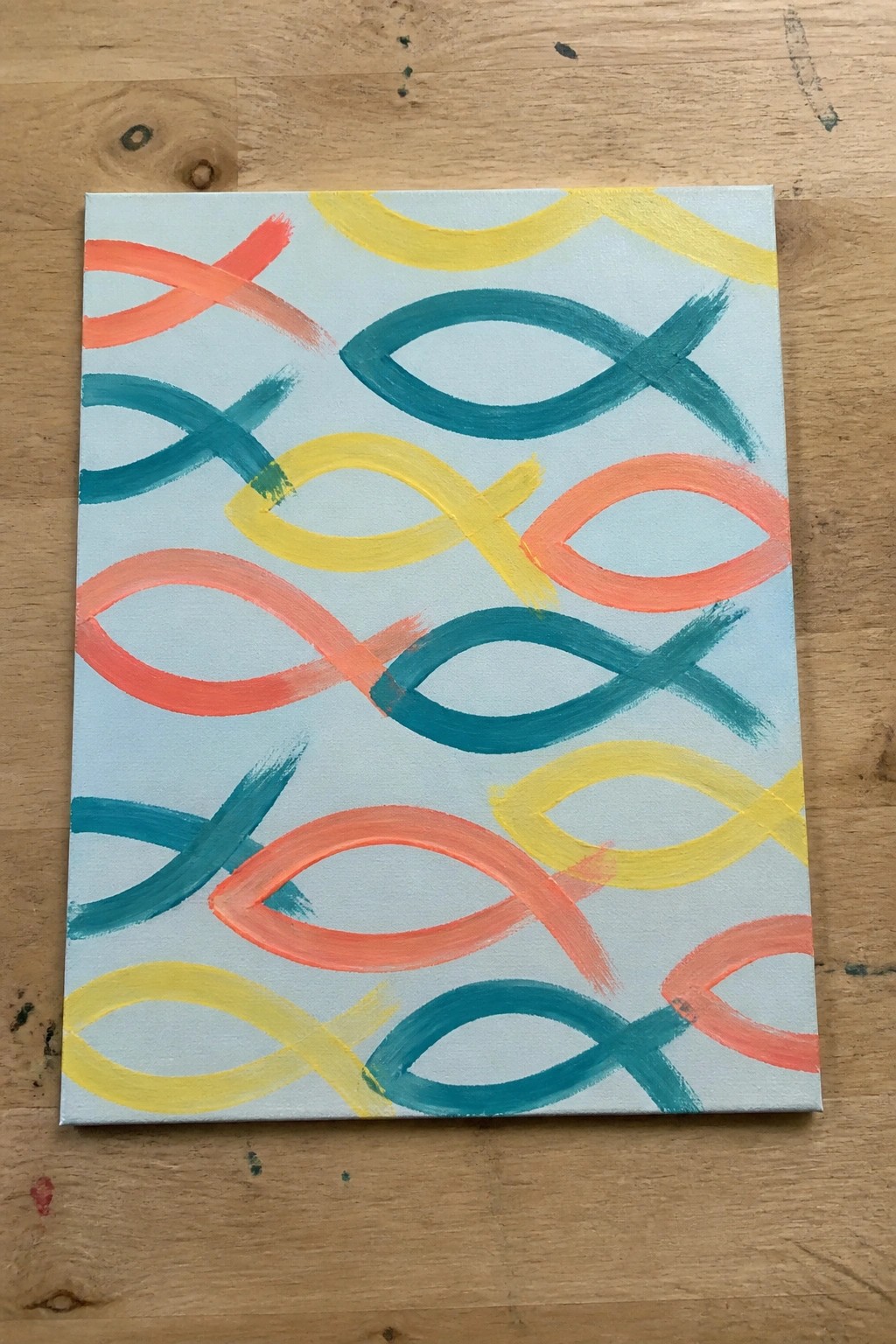
A repeating arrangement of stylized fish symbols forms the core of this idea, with each shape drawn in loose curves and allowed to overlap or cross its neighbors. The design uses four main colors against a pale background to keep the pattern clear and graphic rather than crowded. Simple brush marks and consistent shapes turn the biblical fish motif into a decorative abstract that reads well from a distance.
What makes this idea useful is how quickly the same layout can be adjusted by changing spacing or swapping one color for another. The flat shapes make it straightforward to practice even brush pressure and color mixing on a single canvas. For wall pieces, the pattern works at different sizes without needing extra detail, and it translates easily to smaller studies or greeting card versions by tightening the repeats.
Praying Hands Against a Soft Light Circle
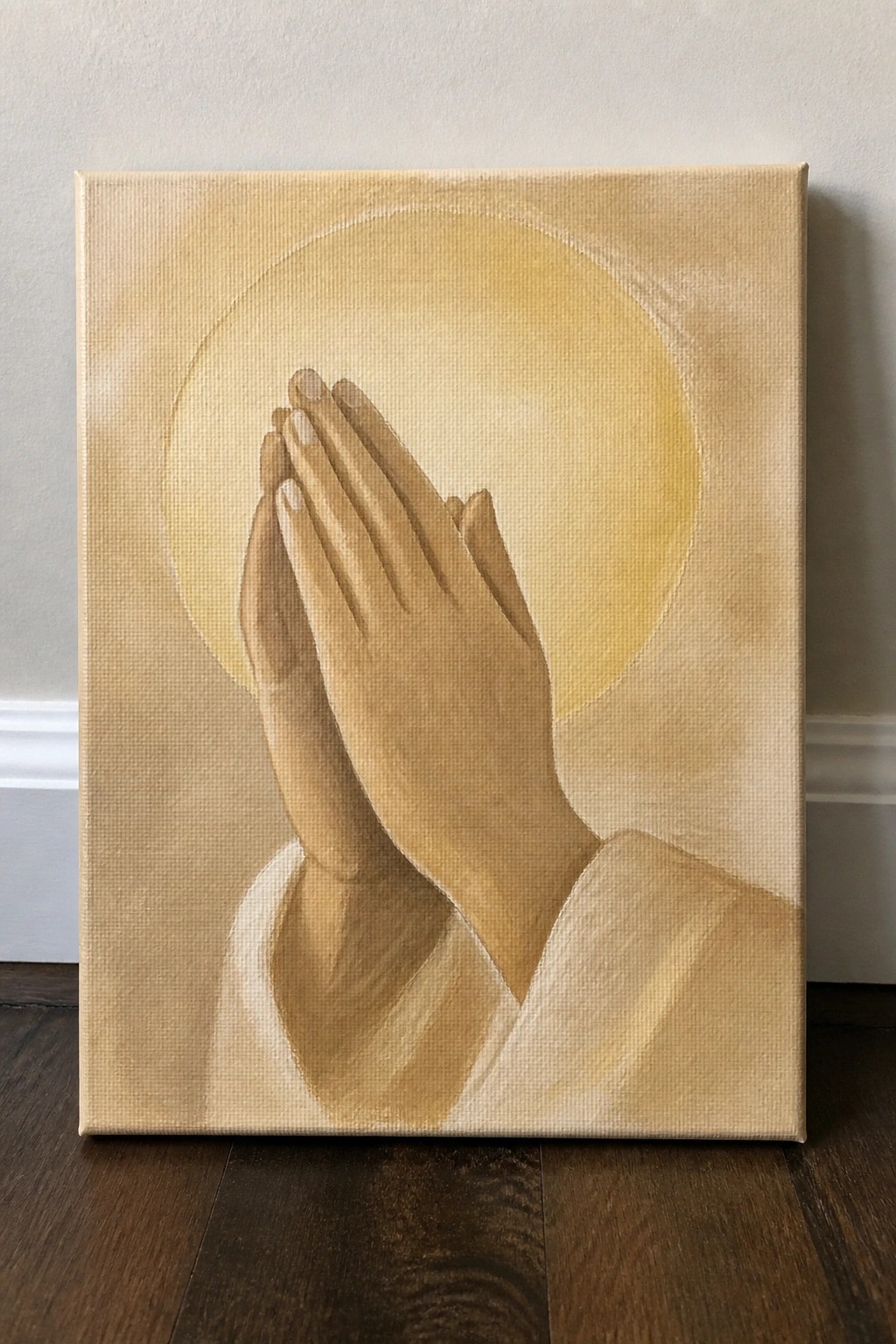
A simple painting idea centers on clasped hands in a prayer pose placed directly in front of a large diffused circle of light. The concept uses a restrained palette of warm neutrals and pale yellows so the hands and the glow remain the only focal points. This approach keeps the composition balanced and works as a clean decorative piece in a religious or devotional category.
The composition does a lot of the work here by letting the circular shape frame the hands without needing extra details or scenery. A painting like this works especially well for small canvas sizes or quick studies since the subject needs only basic hand proportions and soft blending. The color palette makes this easy to adapt by shifting the glow to a different hue or cropping tighter around the hands for a more abstract version. For Pinterest, the minimal layout helps the image read clearly even as a thumbnail.
Faith Quote with Abstract Shapes and Scripture
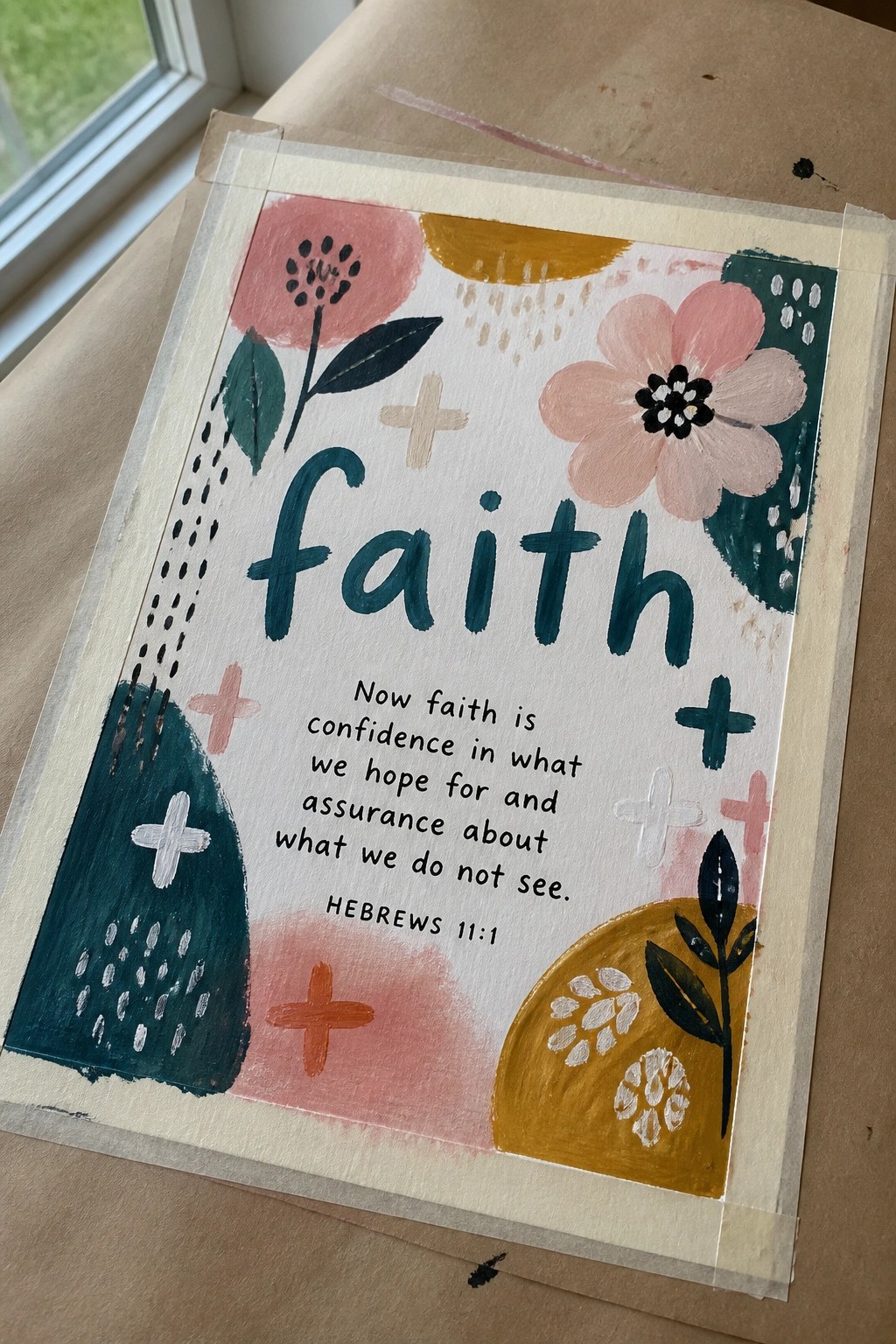
A painting idea built around the single word faith in large brush lettering, placed above the full text of Hebrews 11:1. The layout uses scattered abstract shapes, simple flowers, and small crosses in a limited palette of teal, pink, mustard, and coral to surround the text without crowding it. The approach keeps the lettering dominant while the surrounding marks create a loose frame that feels balanced and easy to read.
What makes this idea useful is how the strong central text does most of the visual work, so the rest can stay simple. You can swap the color palette or change the shapes to match whatever supplies you already have. For wall pieces or quick gifts, the clean structure makes it simple to resize or personalize by adjusting the number of decorative marks around the verse.
Jesus Teaching Along the Shoreline
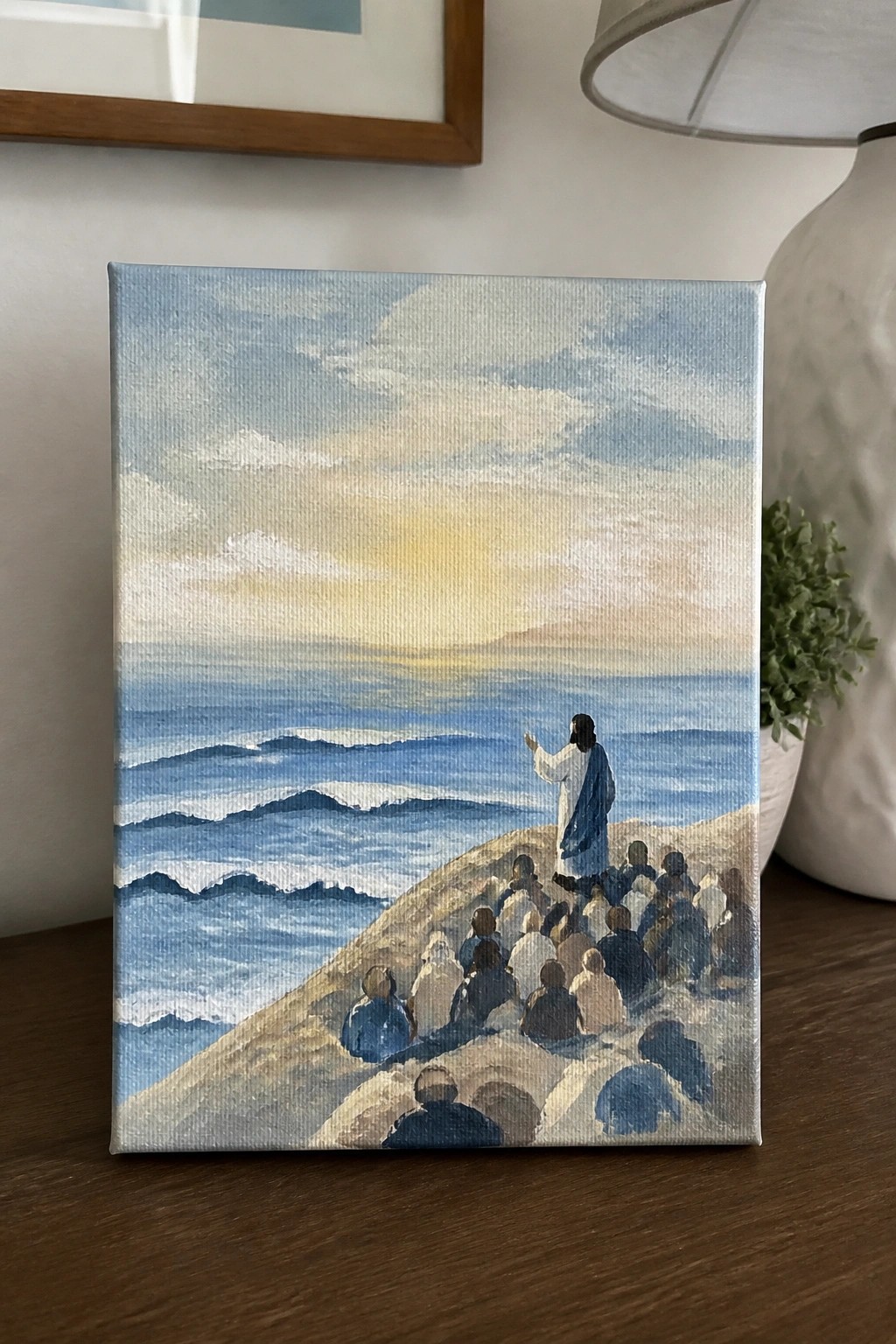
This painting idea shows Jesus standing on a raised slope by the ocean while addressing a seated group gathered below. It combines a landscape with a clear biblical narrative, using the diagonal line of the hill and the horizontal bands of waves to lead the eye toward the main figure. The layered sky with its soft color shifts helps separate the foreground from the distant water without adding extra elements.
What makes this idea useful is how the slope and repeated wave shapes give the composition structure right away. You can adapt it by changing the time of day in the sky or reducing the number of figures for a simpler version. For wall pieces, the horizontal layout works well above a couch or desk because it stays balanced even at smaller canvas sizes. The same setup could also be painted with a different color scheme to fit a living room or office space.
Cross Entwined with Blooming Vines

A cross wrapped in winding vines and dotted with pink flowers gives you a clean way to combine a central religious symbol with natural growth. The vines curve around both arms and the vertical beam to create movement while the flowers stay spaced out enough to avoid clutter. This works as a decorative still life that keeps the cross shape easy to read even with added detail.
What makes this idea useful is how the vine layout does most of the composition work for you. You can swap the flower color or background shade without changing the overall balance. For wall art the strong contrast between the brown cross and solid green keeps the piece readable from a distance. The same idea could be simplified by using fewer flowers or scaled up if you want more room for leaf texture.
Frequently Asked Questions
1. What supplies work best for starting these acrylic painting projects? Acrylic paints in a range of colors, quality brushes of various sizes, primed canvases or wood panels, a palette for mixing, and water for thinning are essential. Add mediums like gloss varnish for protection and texture gels to create depth in scenes such as the parting of the sea or modern interpretations of the Good Shepherd. Start with a limited palette to keep costs low while experimenting with layering techniques mentioned in the ideas.
2. How can I make sure my biblical paintings remain respectful yet creative? Focus on key symbols from scripture like light, water, or olive branches and blend them with contemporary elements such as abstract backgrounds or urban settings. Research the biblical context first and sketch multiple versions before painting. This approach allows modern twists like geometric patterns in a nativity scene while honoring the original story through careful composition and color choices that evoke peace or hope.
3. What techniques help with quick drying and layering in acrylic biblical art? Work in thin layers and use a hair dryer on low heat to speed drying between coats. Apply a base coat first then build details like glowing halos or flowing robes. For vibrant effects in ideas involving miracles or parables, mix colors on a wet palette to maintain moisture longer and avoid muddiness. Always seal finished pieces with a matte or satin varnish to preserve the modern Christian aesthetic.
4. How do I adapt these ideas if I am a beginner artist? Choose simpler compositions from the list such as a single cross with floral accents or abstract faith symbols rather than complex scenes. Practice basic brush strokes on paper first and use reference photos for proportions. Many ideas can be scaled down to smaller canvases and completed in one or two sessions by focusing on bold colors and minimal details to build confidence gradually.
5. Where should I display or share my finished biblical acrylic paintings? Hang them in home prayer spaces, church community areas, or youth group rooms to inspire reflection. For sharing, photograph them in natural light and post on Christian art forums or social media with relevant scripture verses. Consider local galleries that feature faith-based work or create prints to reach a wider audience while keeping the originals for personal use.