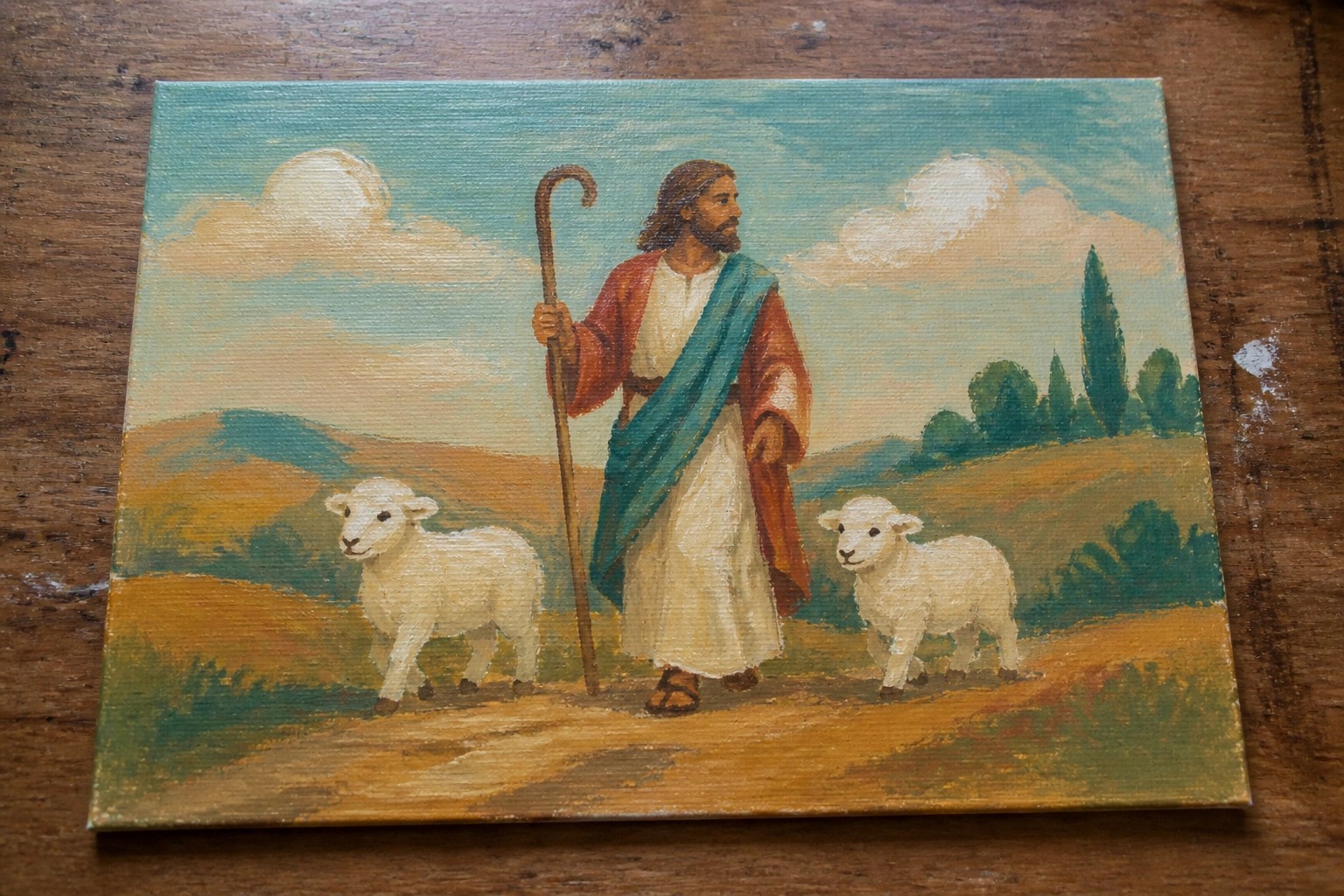
I often turn to biblical stories when I need inspiration for my next painting project.
These themes have been painted many times but they still offer new ways to see them.
I collected 22 ideas that stand out to me for their simplicity and depth.
Some come from well known passages while others are a bit less common.
I think they are worth taking a closer look at if you enjoy this kind of subject matter.
Shepherd Figure with Lambs in a Simple Landscape
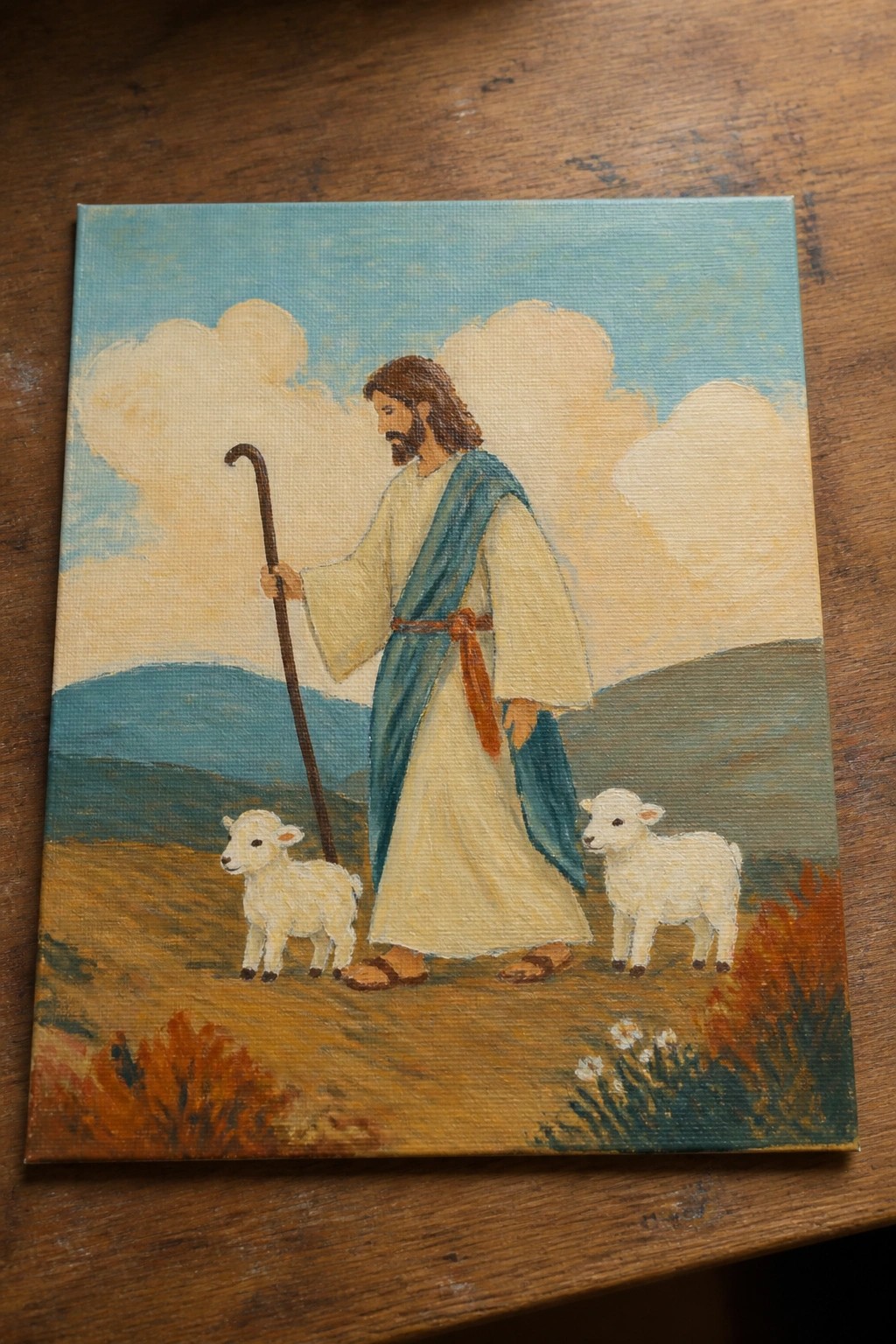
A biblical shepherd scene works well as a landscape idea that places one central figure alongside two small animals against layered hills and a cloudy sky. The composition keeps the focus on the walking figure by positioning the lambs at different distances, which adds a sense of movement across the lower half of the canvas. Earth tones in the ground and clothing contrast with the soft blues and creams in the sky, making the main shapes easy to block in first.
The composition does a lot of the work here because the open background lets the figure and lambs stand out without needing fine detail. This kind of subject adapts easily by changing the hill colors or adding a few more sheep if you want a busier foreground. For practice, this idea helps with basic figure proportions and simple animal shapes, and it translates well to a medium canvas for wall decor.
Dove in Flight Holding an Olive Branch
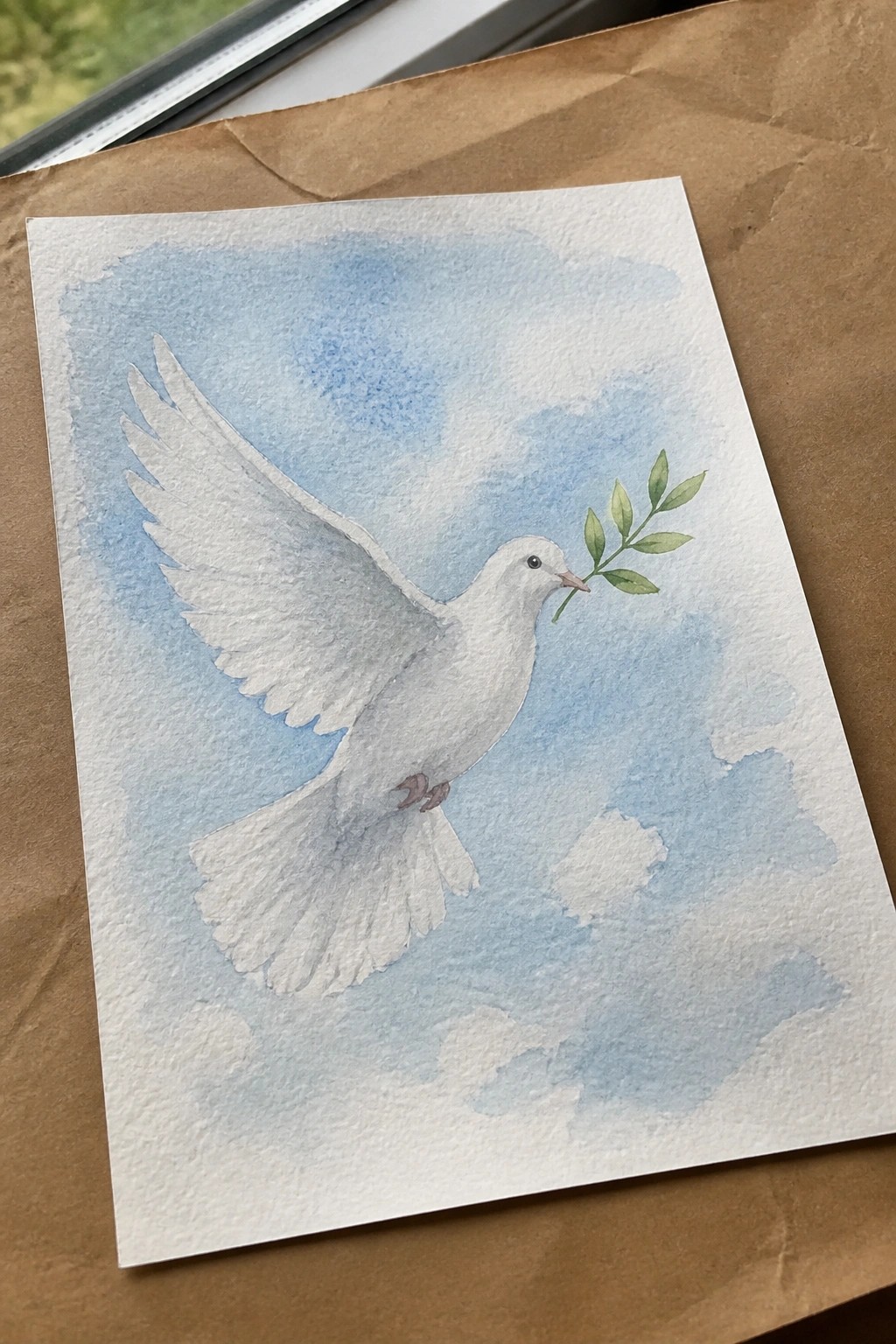
A watercolor painting of a white dove in flight with an olive branch in its beak gives a straightforward animal subject with clear biblical ties. The bird is positioned at an angle that shows both wings fully extended, with the branch adding a small green accent on one side. Soft blue washes form the sky and simple cloud shapes, letting the dove’s form stay the main focus without needing extra details or layers.
What makes this idea useful is how the open wing position creates instant movement while the plain background keeps the work simple to set up. You could scale it down for cards or keep it larger for a framed piece by changing how much sky you add around the bird. The same layout works if you want to practice white subjects on colored paper or try different blue mixes for the background while leaving the dove mostly unpainted for contrast.
Noah’s Ark with Layered Animal Pairs
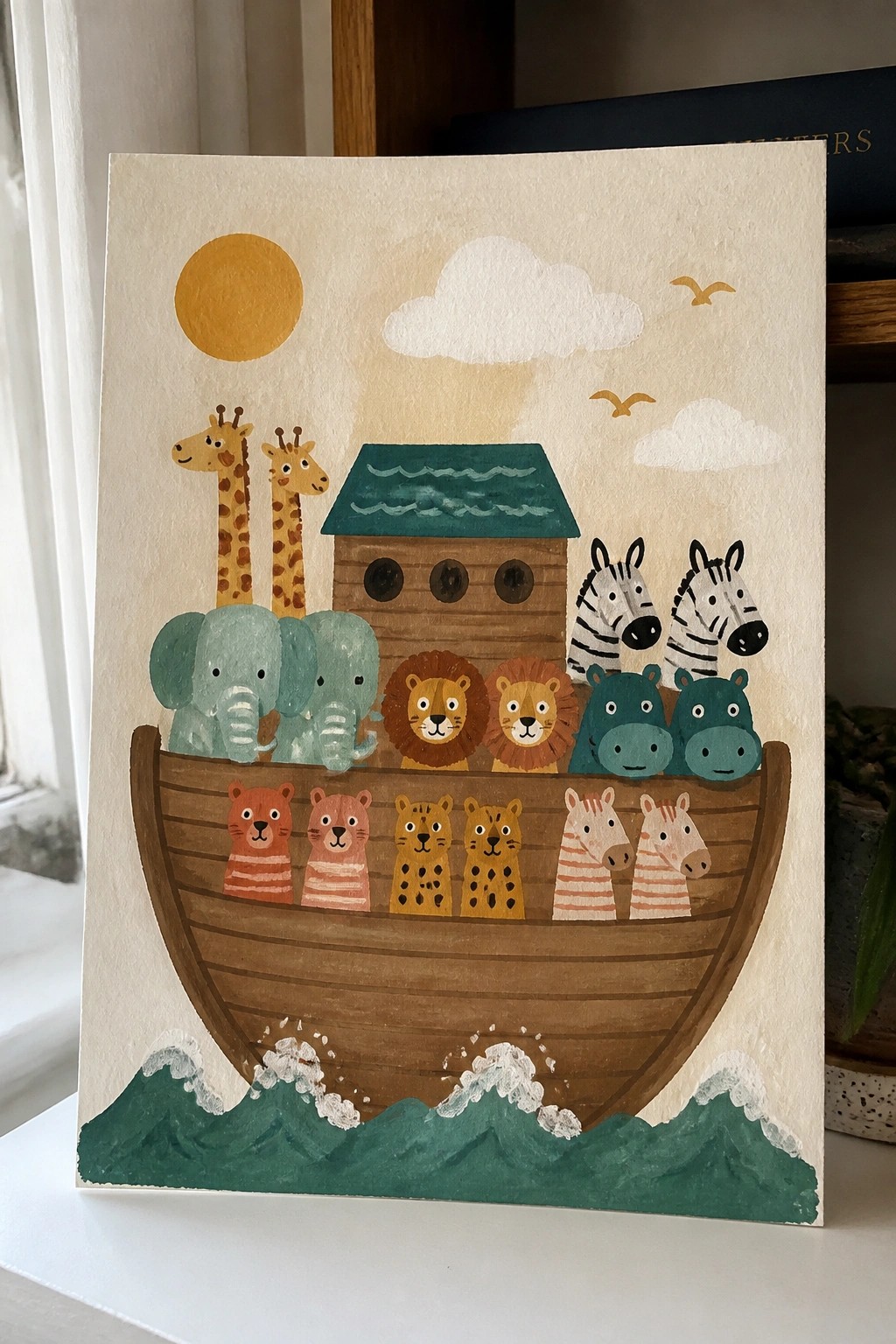
A Noah’s Ark painting idea works by placing pairs of animals at different heights inside a simple wooden boat so each one stays visible without crowding. The boat sits on layered waves with a flat sun and a couple of clouds above to keep the background open and balanced. This fits into cute animal illustration because the shapes stay rounded and the color blocks stay separate, making the whole scene easy to build in stages.
What makes this idea useful is the boat acting as a built-in container that lets you add or remove animals without redesigning the layout. You can shift the palette toward brighter or more muted tones depending on the room, or drop the birds and extra details if you want a faster version for practice. For wall pieces this subject stands out on Pinterest because it reads clearly even at small sizes and works for both kids’ rooms and general decor.
Burning Bush as a Central Landscape Focal Point
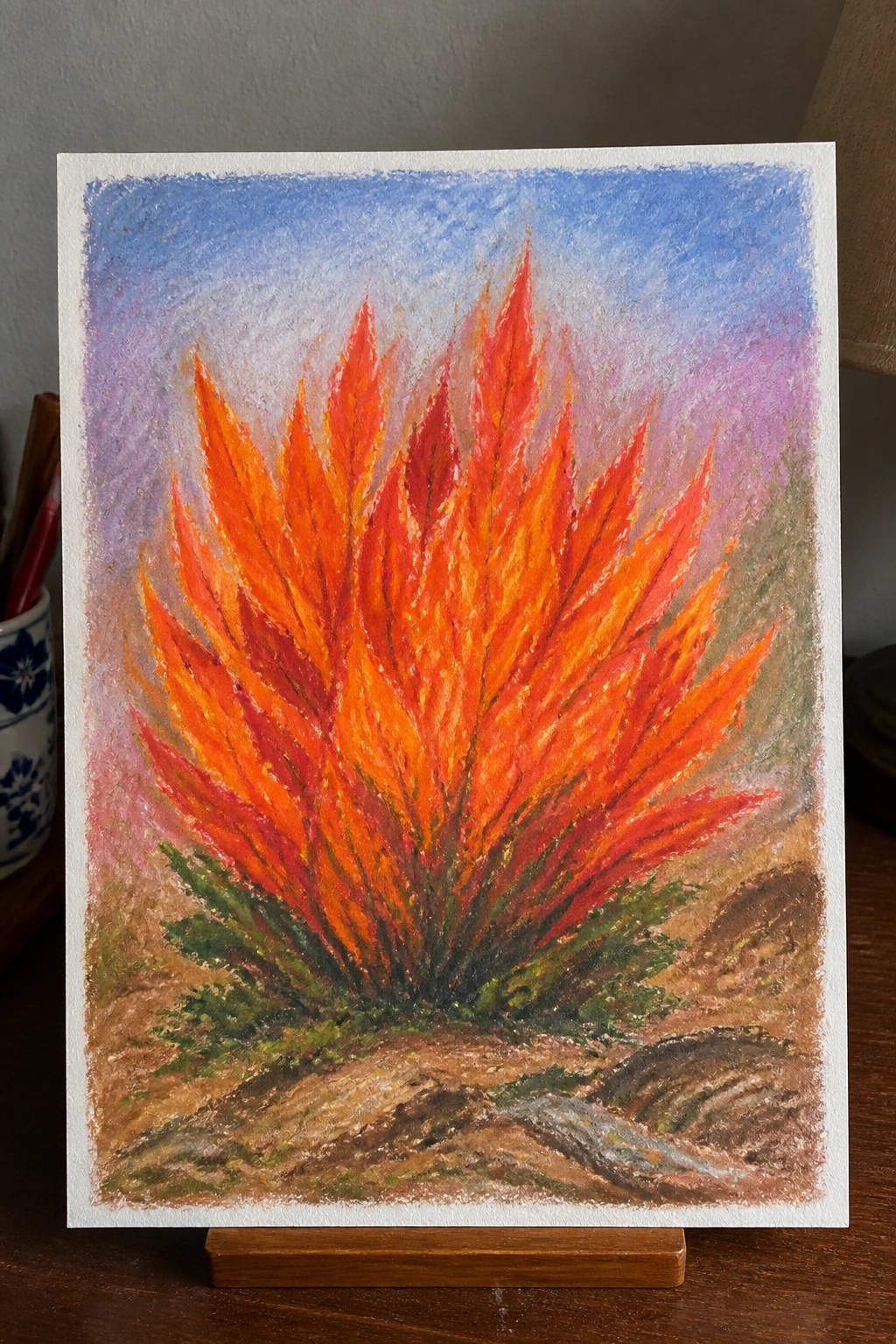
This painting idea uses a single dramatic shrub as the main subject, with layers of orange and red forms radiating upward to fill most of the frame. It works as a landscape piece that places the intense central shape against a simple gradient sky and a textured earthy base. The strong vertical lines and warm-to-cool color contrast keep the eye locked on the middle while the foreground rocks add just enough grounding without pulling attention away.
What makes this idea useful is how the radiating structure does most of the visual work, so you can focus practice on color blending and shape control rather than intricate details. You could easily shrink the foreground or swap the sky tones to fit a smaller canvas or different season. For wall art, the bold central form prints well at various sizes and still reads clearly from a distance. This approach also adapts quickly if you want to change the plant type or intensity of the reds while keeping the same layout.
Ten Commandments Stone Tablets
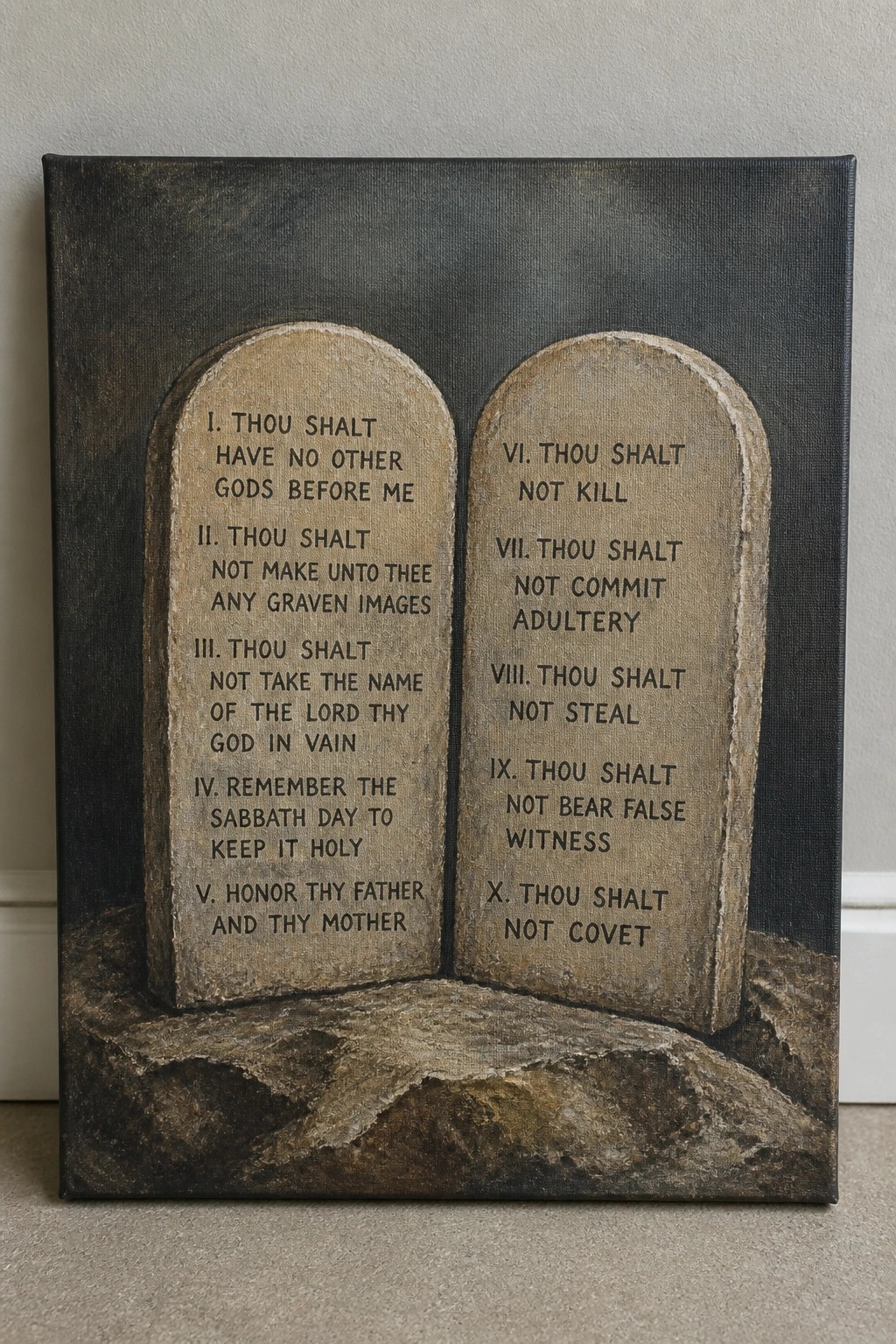
A painting of the Ten Commandments works by rendering the full list of verses across two matching tablets that sit side by side on a dark canvas. The idea centers on clear, readable lettering set into surfaces that look like weathered stone, with the tablets placed on a rough base that suggests rock. The vertical split keeps the eye moving between the two sides while the limited color range of beige, brown, and black keeps attention on the text itself.
What makes this idea useful is the built-in content; you can copy the exact wording without designing new elements. Scale the tablets down for a smaller canvas or swap the dark background for a lighter tone if the piece needs to match a different room. The straight text blocks also give beginners steady practice with lettering and simple texture work before adding more complex details.
Nativity Scene with a Bright Guiding Star
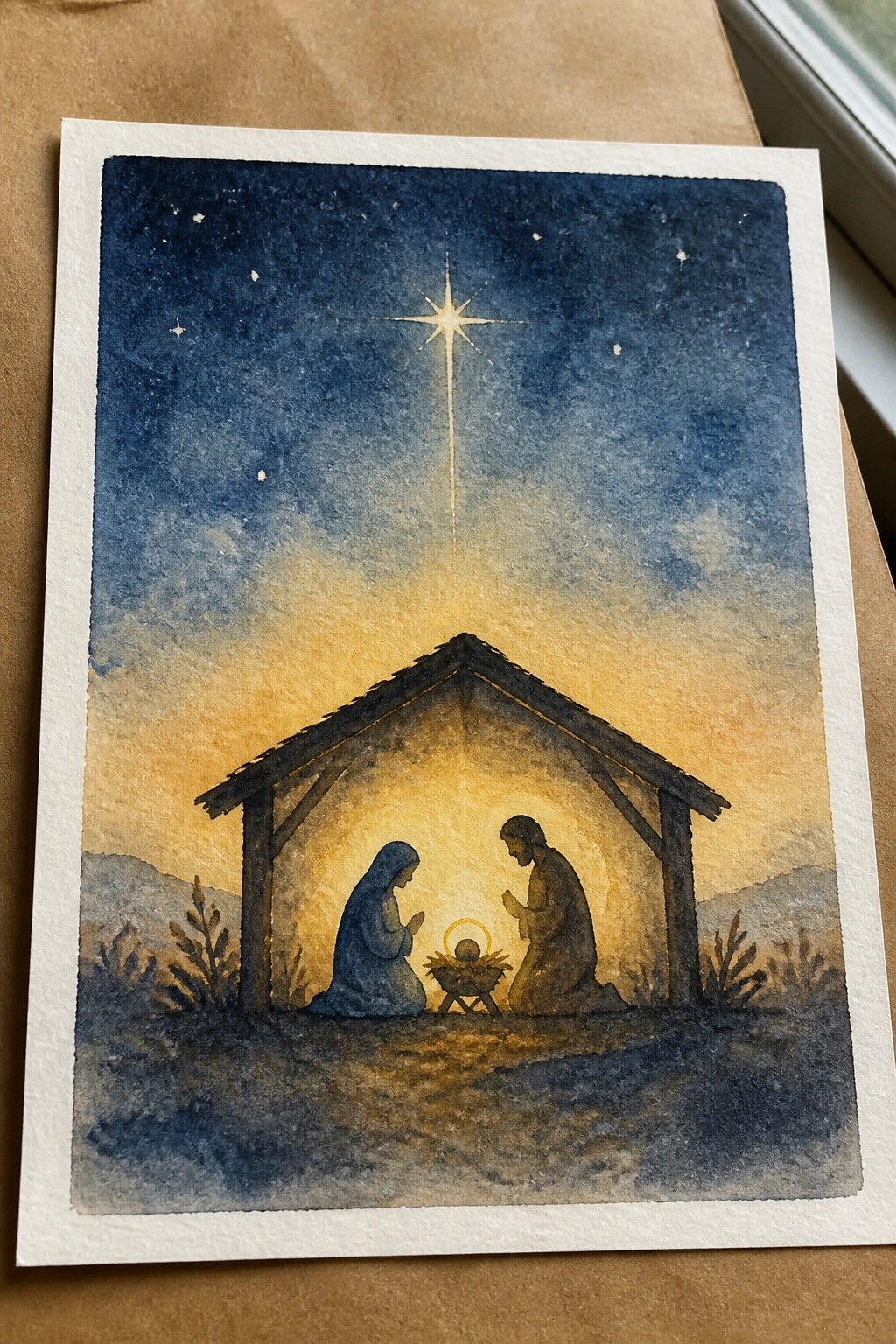
A nativity painting idea centers on the stable with Mary and Joseph kneeling around the manger while a large star dominates the upper half of the composition. The idea relies on a strong contrast between the deep blue night sky and the warm glow spreading from inside the stable. This approach fits into biblical scene painting, where the layout uses the star and light to pull attention straight to the central figures without extra elements.
What makes this idea useful is the built-in focal point from the star and the lit interior, which keeps the rest of the scene simple. The color palette makes this easy to adapt by shifting the sky to softer tones or reducing the number of stars for a quicker version. For wall art, something like this works well at a medium size where the contrast between dark sky and warm light still reads clearly. The simple hill shapes in the background also let you personalize the setting without changing the main subject.
Jonah and the Whale Using Bold Scale Contrast
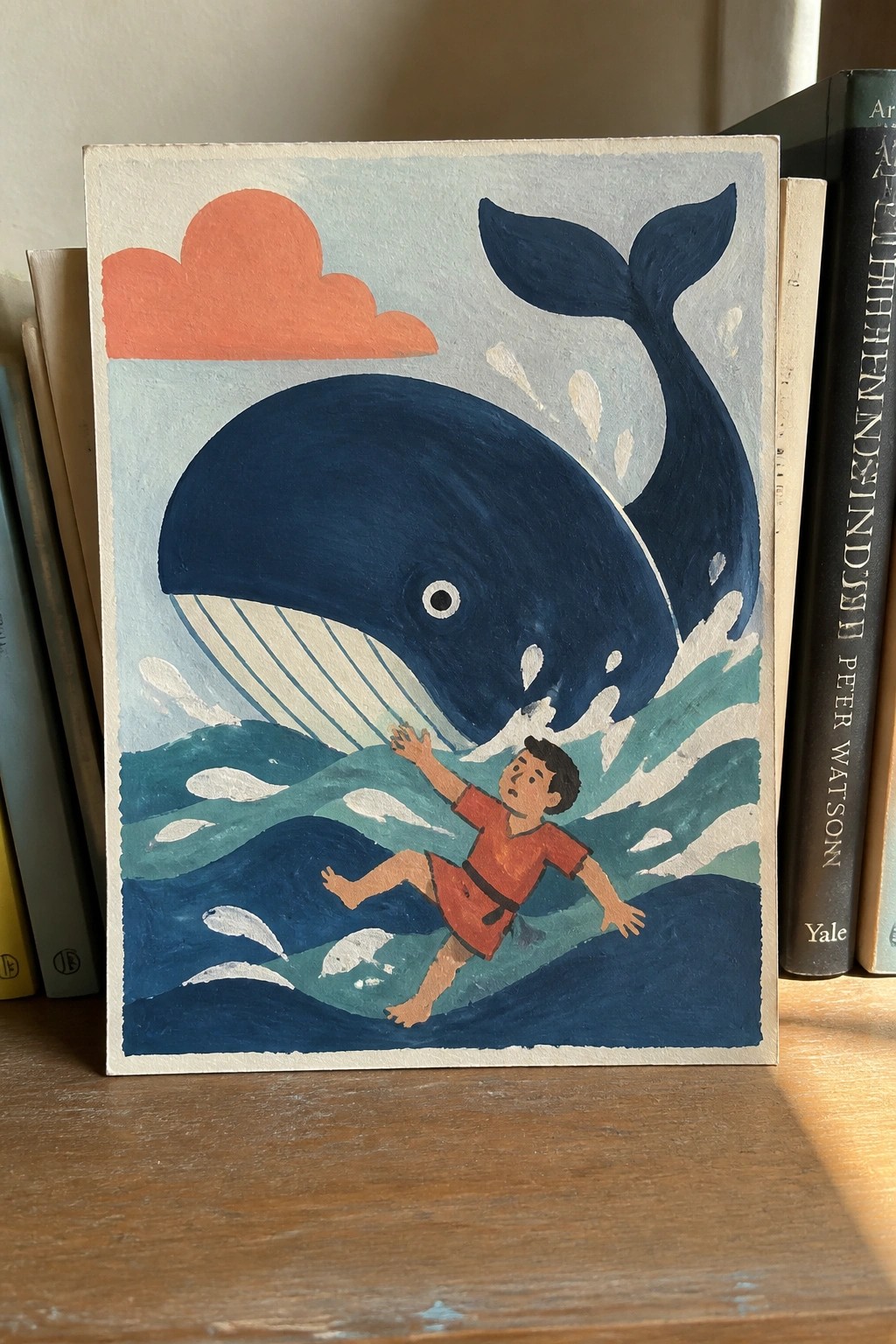
A large whale body placed against smaller waves and a single human figure gives this idea its main impact. The painting idea centers on simplified curved shapes for the whale paired with angular water lines to show size difference and motion. It works as an illustrative animal and figure scene that relies on flat color blocks and limited tones rather than fine detail.
What makes this idea useful is the clear size contrast that makes the subject readable even at small sizes. The layout leaves room to adjust the wave height or shift the figure position without losing balance. A painting like this works especially well for practice pieces or quick studies because the shapes stay large and the color areas stay separate. You could swap the whale for another sea creature or change the figure’s clothing while keeping the same overall structure.
Bread and Fish Still Life
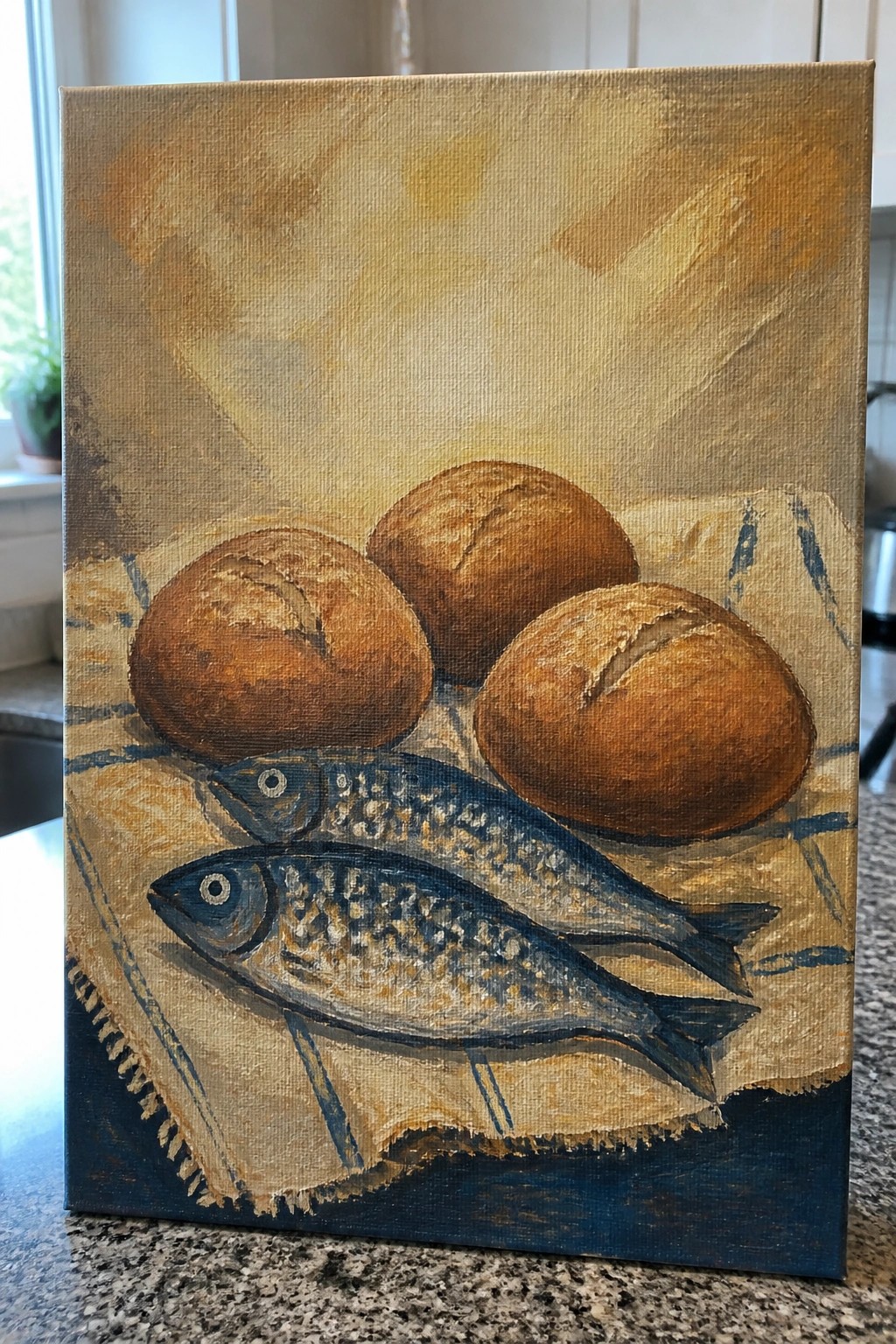
A still life that combines several round loaves of bread with two whole fish arranged on a folded cloth creates a direct reference to a familiar Bible story. This falls into the food and still life category, where the main appeal comes from contrasting shapes—the domed breads against the streamlined fish—and the way the cloth folds create a natural base. The limited palette of warm browns and cooler blues keeps the focus on the objects while the visible brush texture on the crusts and scales adds surface interest without extra elements.
What makes this idea useful is how the overlapping placement on the cloth does most of the compositional work, so the scene stays balanced even on a small canvas. The subject works especially well for wall pieces or gifts because the biblical reference is easy to recognize yet leaves room to adjust colors or drop one fish if you want a simpler version. For practice, the clear shapes and limited color range make it straightforward to try in acrylic or oil while still allowing changes to the background tone.
Embracing Figures in a Warm Landscape
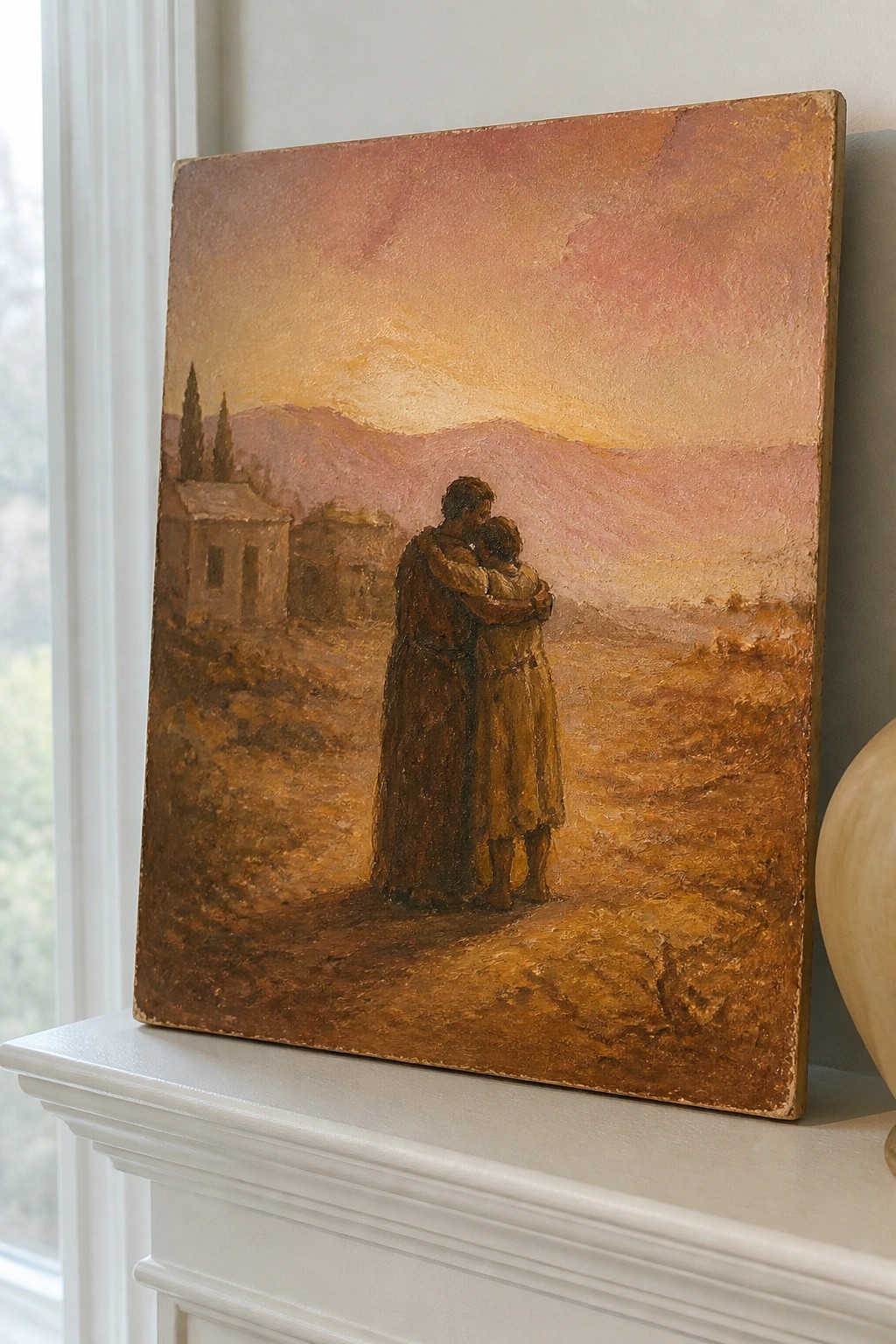
A painting idea built around two people in a close embrace works well when the figures sit low in the frame against a simple rural backdrop. The composition uses a warm, blended color range of oranges, browns, and muted pinks to keep the eye on the central pair while the distant hills and small buildings add just enough setting. This approach fits the figurative landscape category, where the human shapes carry the main weight and the background stays soft and atmospheric.
What makes this idea useful is how the loose handling of the background lets the figures stand out without extra detail work. The vertical layout and warm palette adapt easily to different canvas sizes or even smaller studies focused only on the two shapes. For practice, the same setup works for quick value studies or color mixing exercises, and the overall balance makes it a solid option for a medium-sized wall piece.
Jacob’s Ladder With Figures Ascending Through Clouds
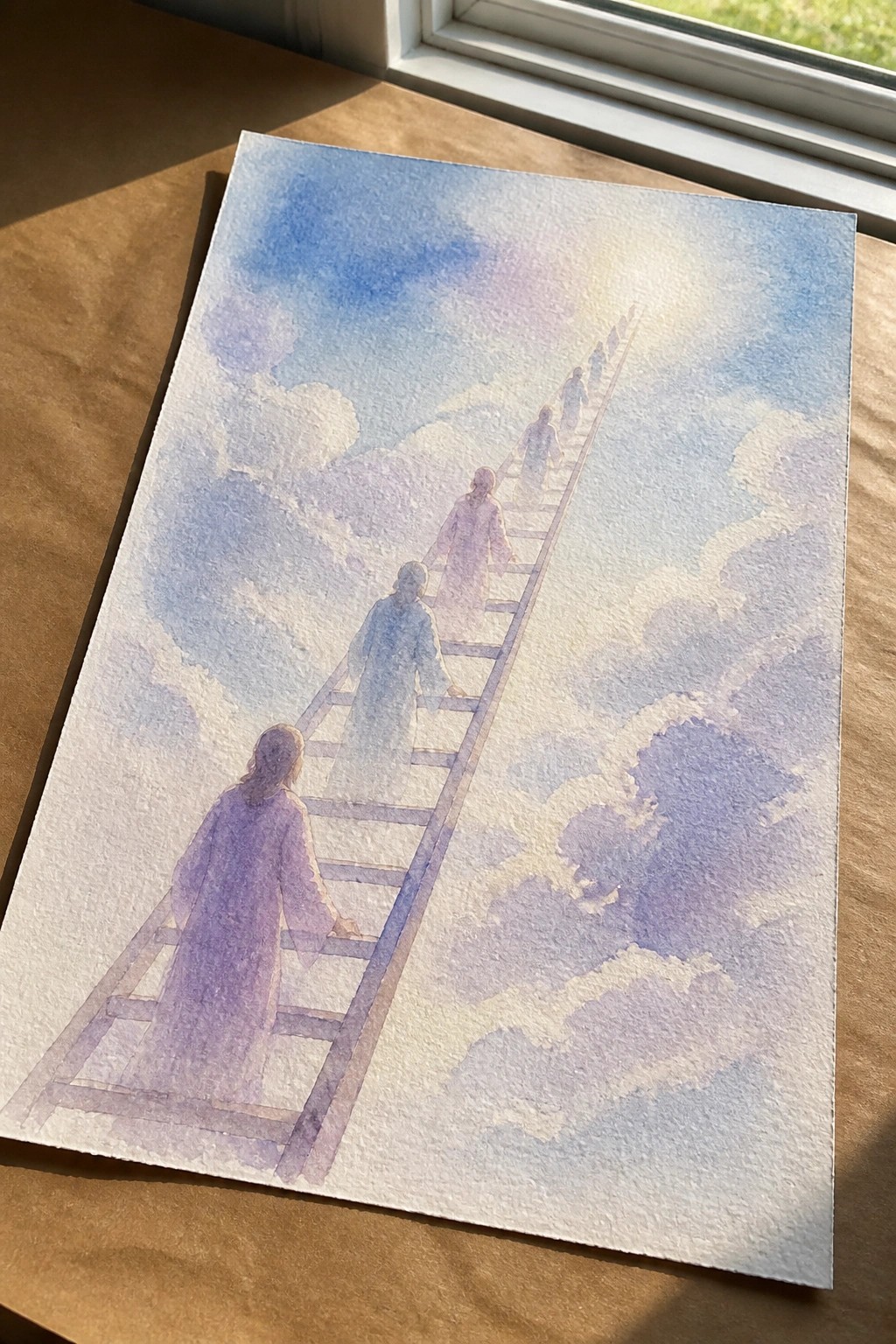
A vertical ladder stretching from the lower left into a bright upper area forms the core of this painting idea, with several robed figures positioned at different heights along its rungs. The concept works as a biblical landscape where the ladder acts as a clear directional line against soft layers of clouds and sky. The gradual fade in color from stronger tones near the bottom figure to lighter washes higher up helps keep the eye moving upward without extra elements.
What makes this idea useful is the built-in structure of the ladder that guides placement of the figures and reduces the need for complex perspective. The color shift from cooler blues and purples to warmer light at the top can be adjusted for different times of day or simplified to fewer figures when practicing. For wall pieces this approach stands out because the strong vertical format and bright focal point at the top create impact even with loose brushwork. You can scale the ladder shorter or change the robe colors to fit a specific room or project.
Layered Golden Orbs Descending Through Flames

A vertical stack of golden circular forms creates the core of this painting idea, with each orb surrounded by red-orange flames and set against soft gray clouds. The composition uses repeated shapes and a narrow warm palette to guide the eye straight down the center, while the lotus-style base at the bottom anchors the whole arrangement. This approach fits decorative symbolic art because the overlapping layers and consistent vertical rhythm give the piece clear structure without needing complex details.
What makes this idea useful is how the repeated circular motifs let you build the painting in stages, adding one layer at a time. The limited color range of golds, reds, and muted clouds keeps mixing simple and helps the piece read clearly even at smaller sizes. This would be easy to turn into a quicker study by dropping the outer cloud shapes and keeping just the central flame path. For practice, the strong central line and overlapping forms give beginners something concrete to follow while still allowing room to adjust spacing or intensity.
Crown of Thorns Still Life

A still life built around a crown of thorns resting on a shallow bowl creates a clear focal point through the contrast of sharp circular lines against the smooth curve of the bowl. The limited earthy palette of browns and muted golds keeps the composition simple while the textured background adds subtle depth without competing for attention. This approach works as a straightforward still life exercise that emphasizes shape and negative space over fine detail.
What makes this idea useful is the way the round forms do most of the compositional work, so you can focus on brushwork and value rather than complex layout. The restrained color range makes it easy to adapt by swapping in different bowl shapes or shifting the background tone for a new mood. For practice, the subject gives you a chance to study texture on the thorns and soft edges on the bowl without needing a large canvas.
Silhouetted Cross on a Sunset Hill
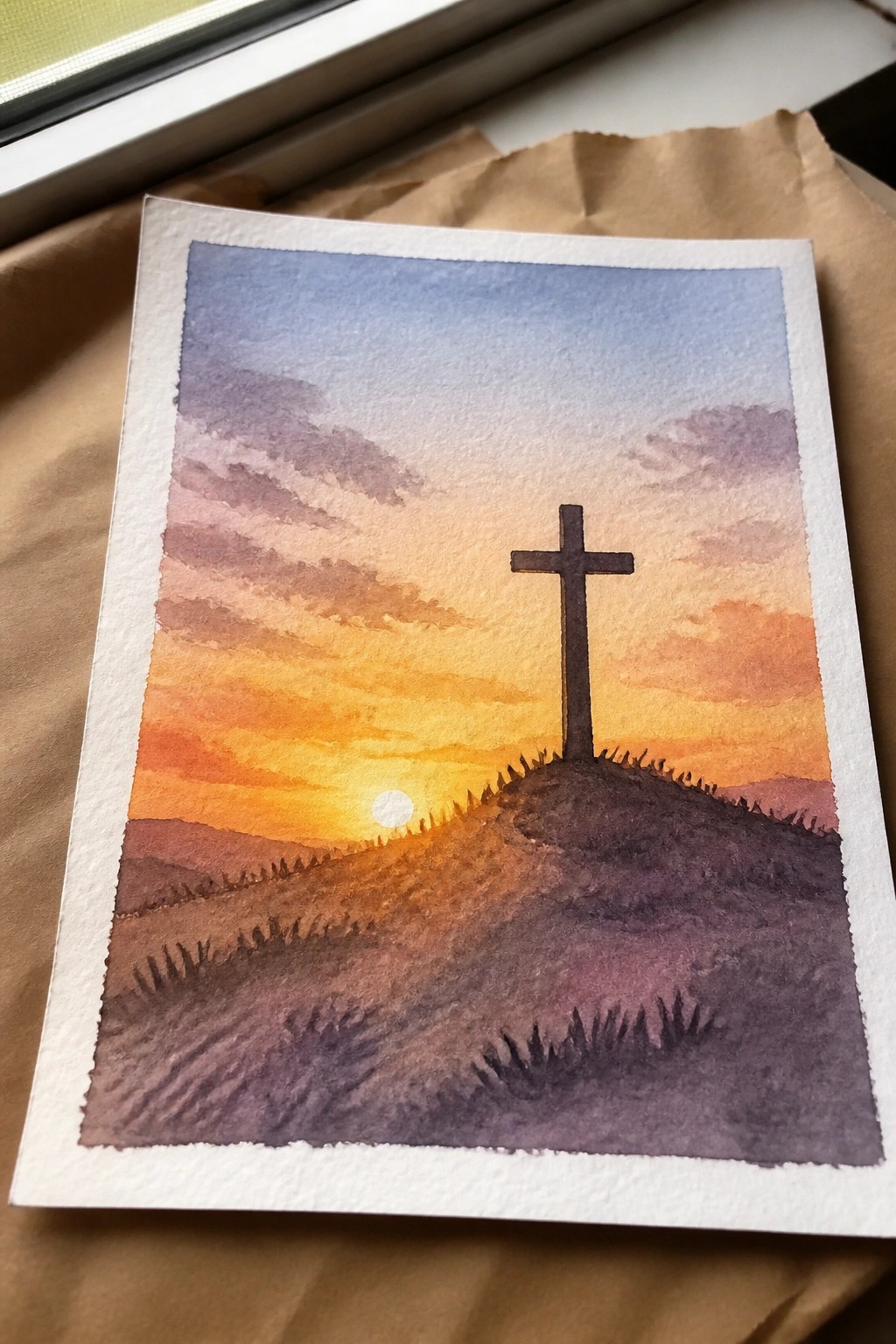
A landscape idea built around a single cross placed high on a hill works well because the shape stands out immediately against the sky. The composition uses layered hills and a strong horizon line to keep the eye moving upward toward the cross, while the gradient sky from blue down through orange gives the scene depth without needing extra detail. This fits into the biblical landscape category and relies on simple shapes and color transitions rather than fine brushwork.
What makes this idea useful is how easily the same layout can be adjusted for different times of day or seasons by shifting the color palette. The dark foreground against the bright sky does most of the visual work, so the painting stays readable even if the brushstrokes stay loose. A version like this works especially well for wall pieces or gifts when you want a clear focal point without overcrowding the paper. You could simplify it further by removing the lower hills or try it in a smaller format to practice gradient washes.
Pebble Field on Sandy Ground
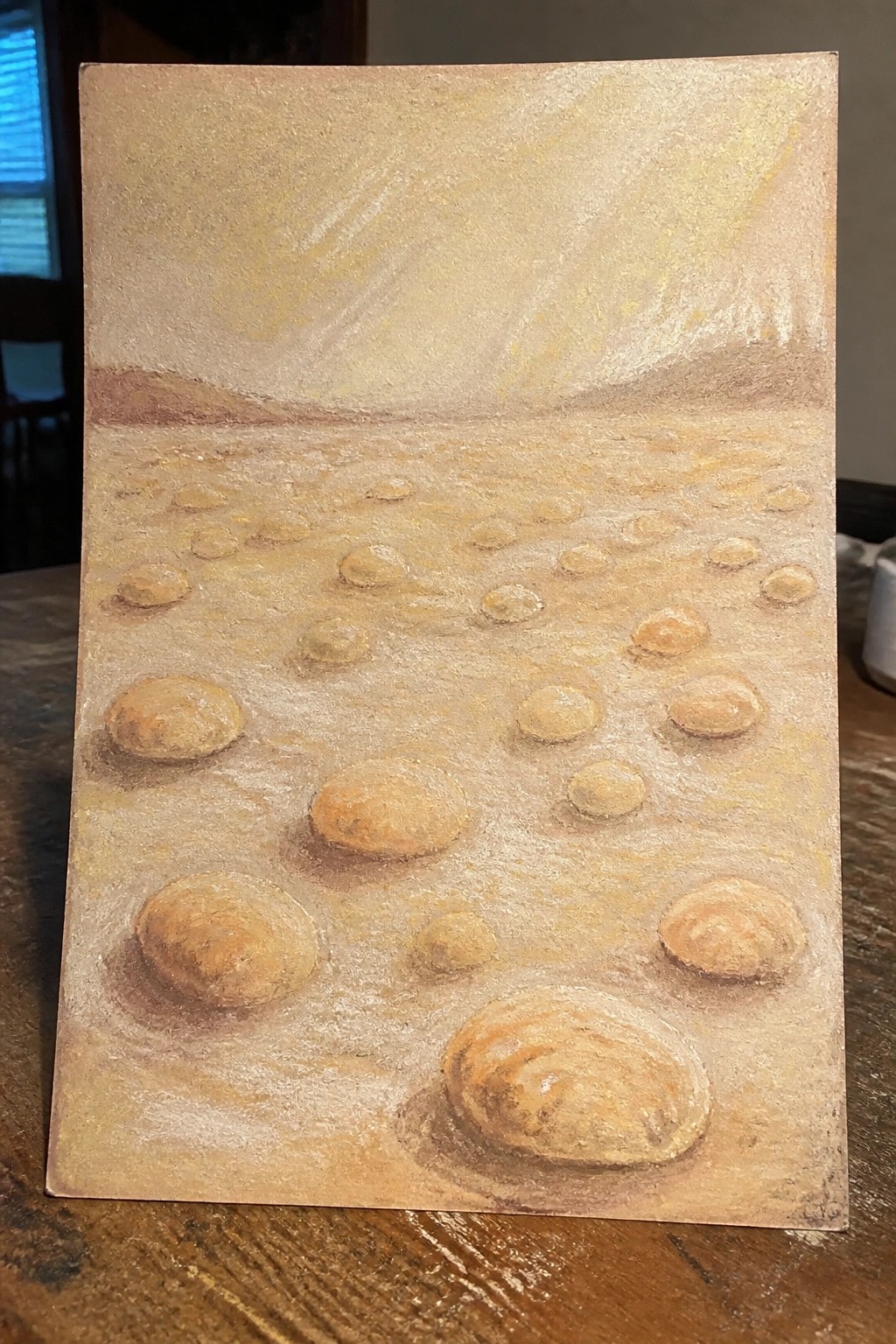
A landscape idea centered on a wide stretch of sand dotted with rounded stones that vary in size and placement. The repeated oval shapes create a natural path that draws the eye forward while the soft horizon keeps the background simple and open. Subtle texture in the sand and gentle shifts in stone color give the scene enough detail to feel grounded without becoming busy.
What makes this idea useful is how the basic stone shapes let you focus on texture and depth rather than complex forms. You could scale it down for a small canvas or stretch the same layout into a wider format for wall art. For practice the subject works well because it builds skill with repetition and distance using only a few tones and simple blending.
Fishermen Casting Nets Over Open Water
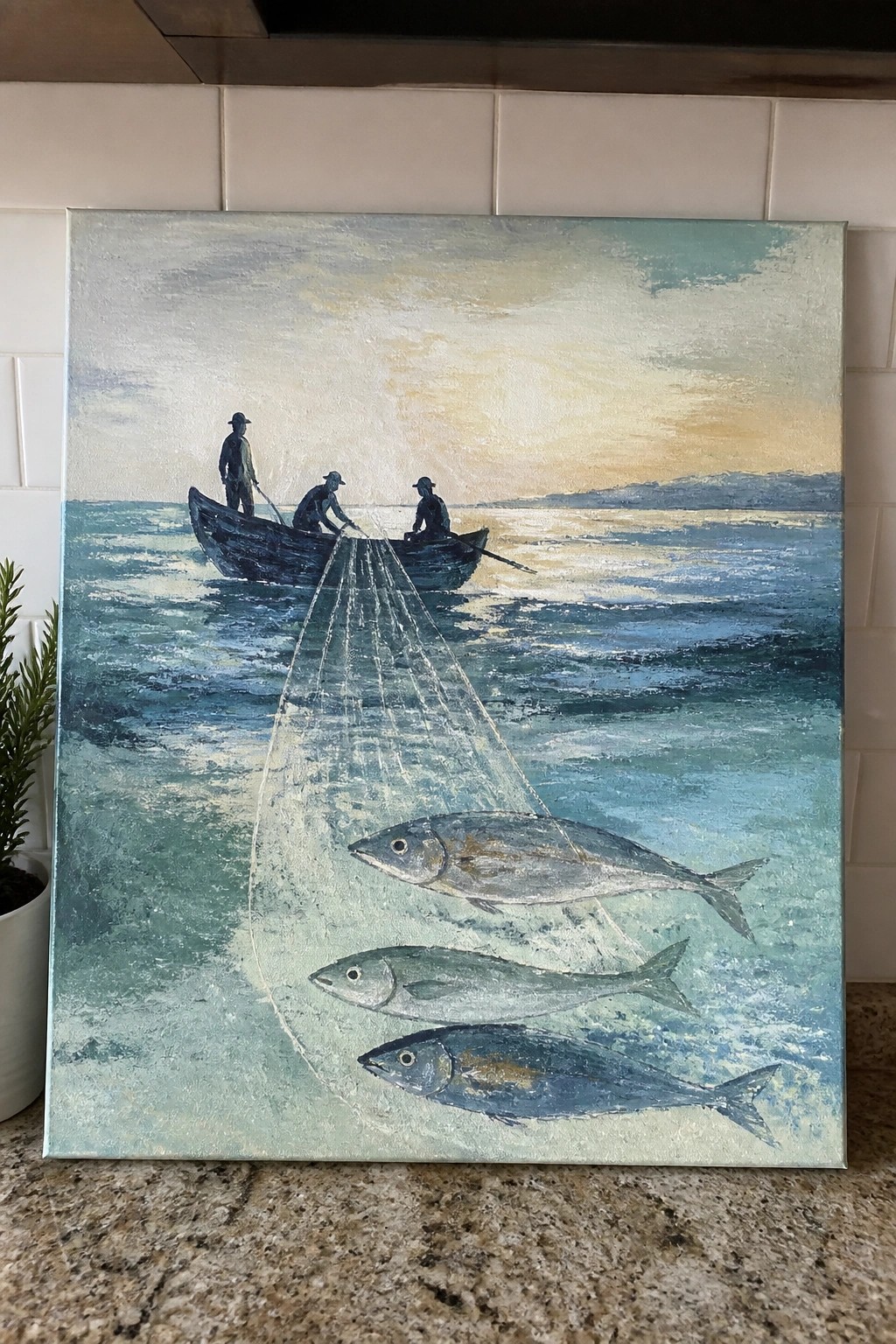
A painting idea centered on fishermen in a boat casting a net over the sea pairs human figures with visible fish below to suggest a biblical story without needing extra symbols. The layout keeps the boat and figures in the upper portion while the fish occupy the lower half, connected by the net lines that guide the viewer through the scene. Loose brushwork and a limited range of sea blues, greens, and pale sky tones create movement in the water while leaving plenty of negative space around the main elements.
What makes this idea useful is how the net itself becomes the main compositional tool, linking the boat to the fish so the story reads clearly even at small sizes. You can easily adapt it by changing the number of fish, shifting the sky colors for a different time of day, or cropping tighter around the boat for a more vertical format. For practice or wall pieces, this subject works well because the water and sky handle most of the background, letting beginners focus on the figures and net without building a complex setting.
Tropical Leaf Bundle Tied with a Ribbon
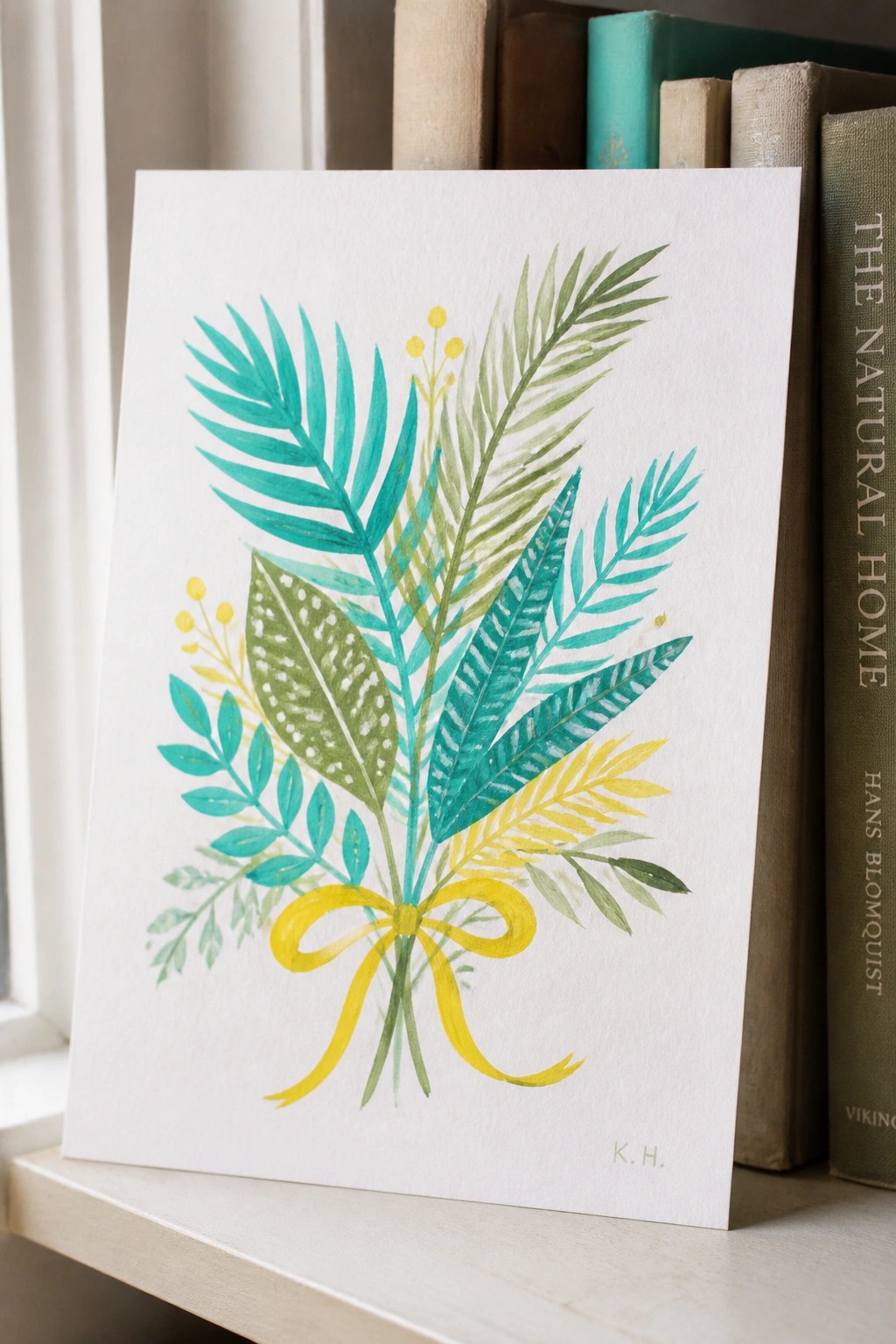
A botanical painting idea built around a fan-shaped cluster of palm-style fronds and varied leaves gathered into a single bundle at the base. The composition works because the leaves radiate outward from a central point while the bright yellow ribbon creates a clear focal line and prevents the shapes from feeling scattered. This approach fits the decorative botanical category, where overlapping layers and a limited palette of greens and yellows keep the piece balanced and readable even at small sizes.
What makes this idea useful is the built-in focal point created by the ribbon, which lets the rest of the painting stay loose without losing structure. The same layout adapts easily by swapping leaf types, changing the ribbon color, or shrinking the whole thing down for cards or journal pages. For wall art it holds up well because the strong central shape and high contrast stay clear from a distance.
Parting the Red Sea with Curving Wave Walls
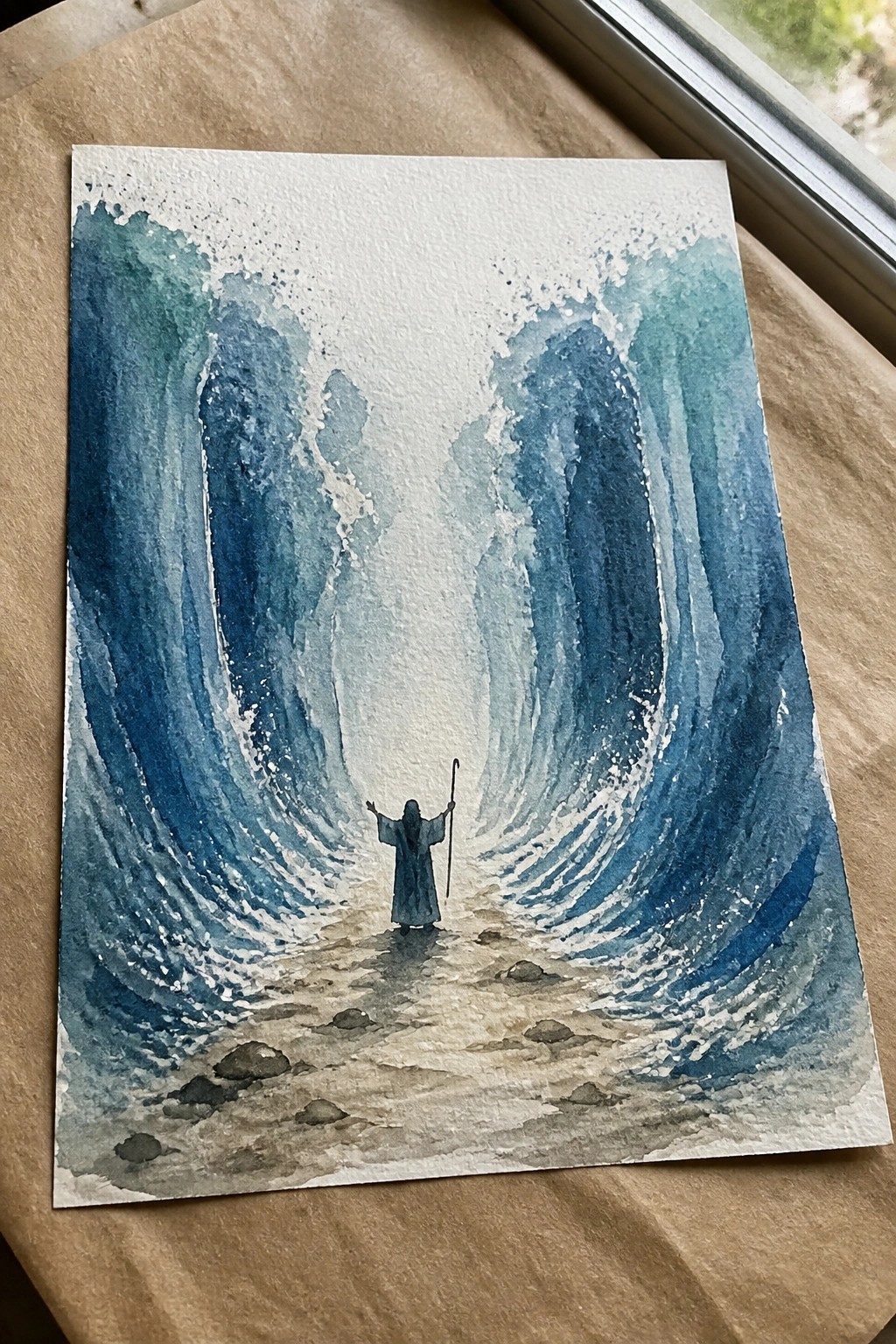
A strong central figure stands on a narrow path while two massive waves rise and curve inward on either side. This biblical scene works as a vertical narrative composition that relies on the contrast between the open center and the heavy blue shapes closing in from both sides. The limited color range and soft edges keep the focus on the path itself rather than on fine details.
What makes this idea useful is the built-in sense of scale created by the wave shapes. You can keep the same layout but change the palette to earth tones or reduce the wave height for a simpler version. The composition also translates well to different sizes because the main shapes stay readable even when the figure is small. For practice, starting with broad washes for the water and adding the path last helps keep the idea clear without getting lost in details.
Simple Trumpeting Angel in Flat Colors

A basic angel figure in profile works well as a decorative biblical painting idea when kept to large flat shapes and a limited palette. The trumpet extends the composition to one side while the solid blue background removes any need for extra scenery or blending. This keeps the focus on the robe folds, wing shape, and instrument without requiring fine detail work.
The composition does a lot of the work here because the single-color background lets the figure stand out even on a small canvas. You can easily change the blue to another shade or swap the gold trim for a different accent color to match a room. The same idea scales down for greeting cards or gets simplified further by dropping the halo and keeping only the robe and trumpet.
Starburst Design Framed by Decorative Borders
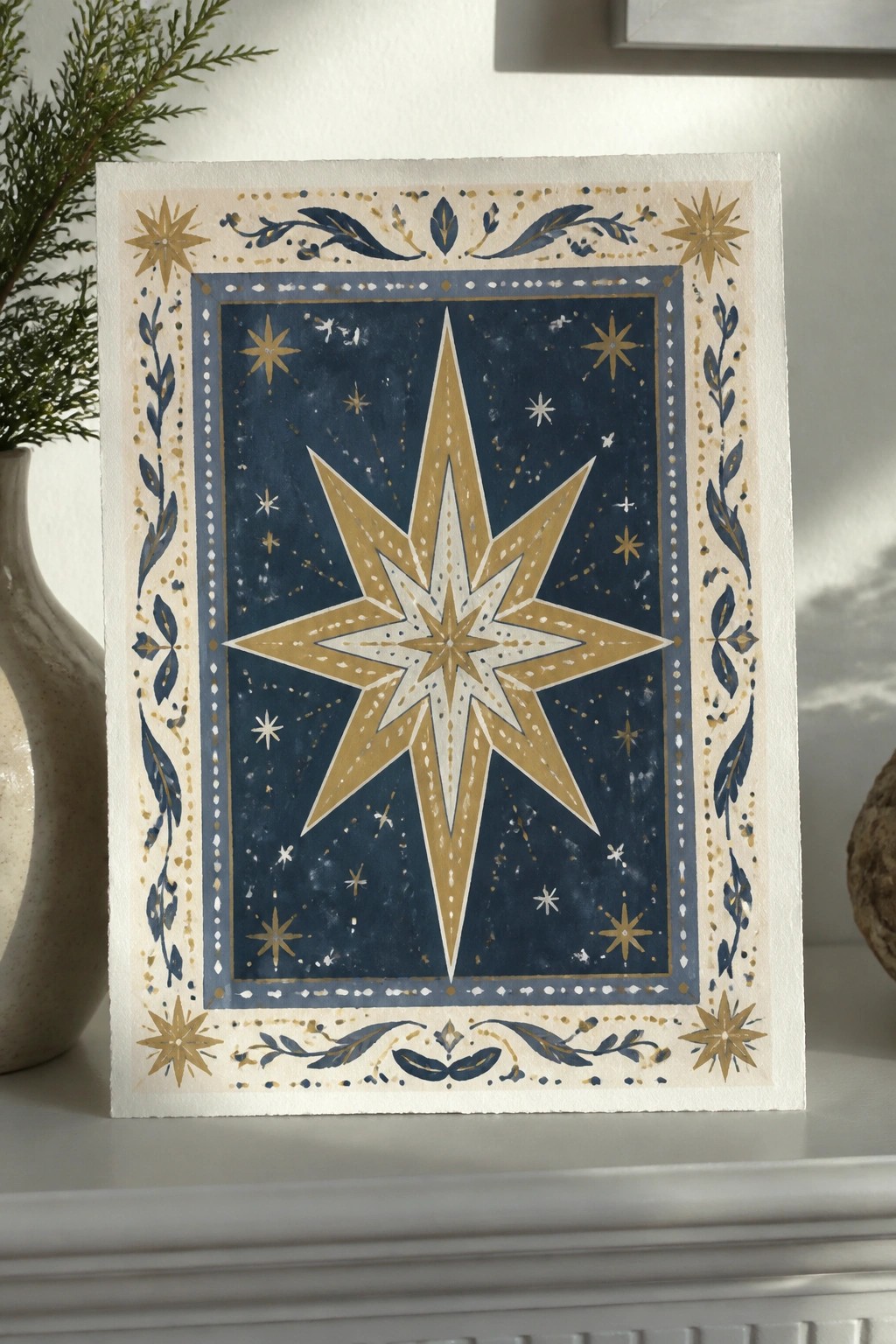
A starburst painting idea places one large multi-pointed star at the center with radiating lines in gold and white over a dark blue field. Smaller stars and dots fill the remaining space inside a bordered rectangle that uses repeating leaf and dot patterns along the edges. The layout relies on strong symmetry and a limited color scheme to keep the focus on the main shape without added clutter.
The composition does a lot of the work here by using the outer border to contain the design and balance the scale. You can adapt it by changing the background color or reducing the number of border layers for a faster version. This kind of idea works especially well for wall pieces because the bold central form remains clear even when viewed from across a room.
Olive Branch and Doves Watercolor

A botanical painting idea that pairs a curving olive branch heavy with green fruit and leaves against two small birds placed in the lower right. The composition uses the branch as a leading line that draws attention downward while leaving most of the paper as open space. This keeps the focus on the natural forms without crowding the surface and fits neatly into the category of simple nature studies with added animal detail.
What makes this idea useful is the way the branch shape already creates movement so the birds only need minimal placement to complete the scene. The limited color range of soft greens and grays makes it easy to adjust for different paper sizes or to swap in other fruit or bird types. For practice this subject works well because the shapes stay recognizable even with loose brushwork and the empty areas prevent the need for complex backgrounds. The same layout can be scaled down for cards or kept larger for a quiet wall piece.
Still Life with Lit Oil Lamp and Clay Pitcher

A still life built around a burning oil lamp and a simple clay pitcher uses strong light contrast to anchor the whole composition. The flame acts as the main light source, casting a warm glow across the rounded forms while the rest of the scene stays in deep shadow. This approach fits the classic still life category and relies on a narrow warm palette plus careful value shifts rather than many objects or busy details.
The composition does a lot of the work here by keeping the two shapes close together so the light connects them naturally. What makes this idea useful is how easily it can be scaled down for a quick study or expanded with extra vessels if you want more practice with reflections. The limited color range makes it straightforward to adapt with different pottery or even swap the lamp for a candle while keeping the same lighting setup. For wall pieces or practice work, the strong focal point from the flame helps the painting read clearly even at smaller sizes.
Open Bible Still Life with Candle and Scripture Quote
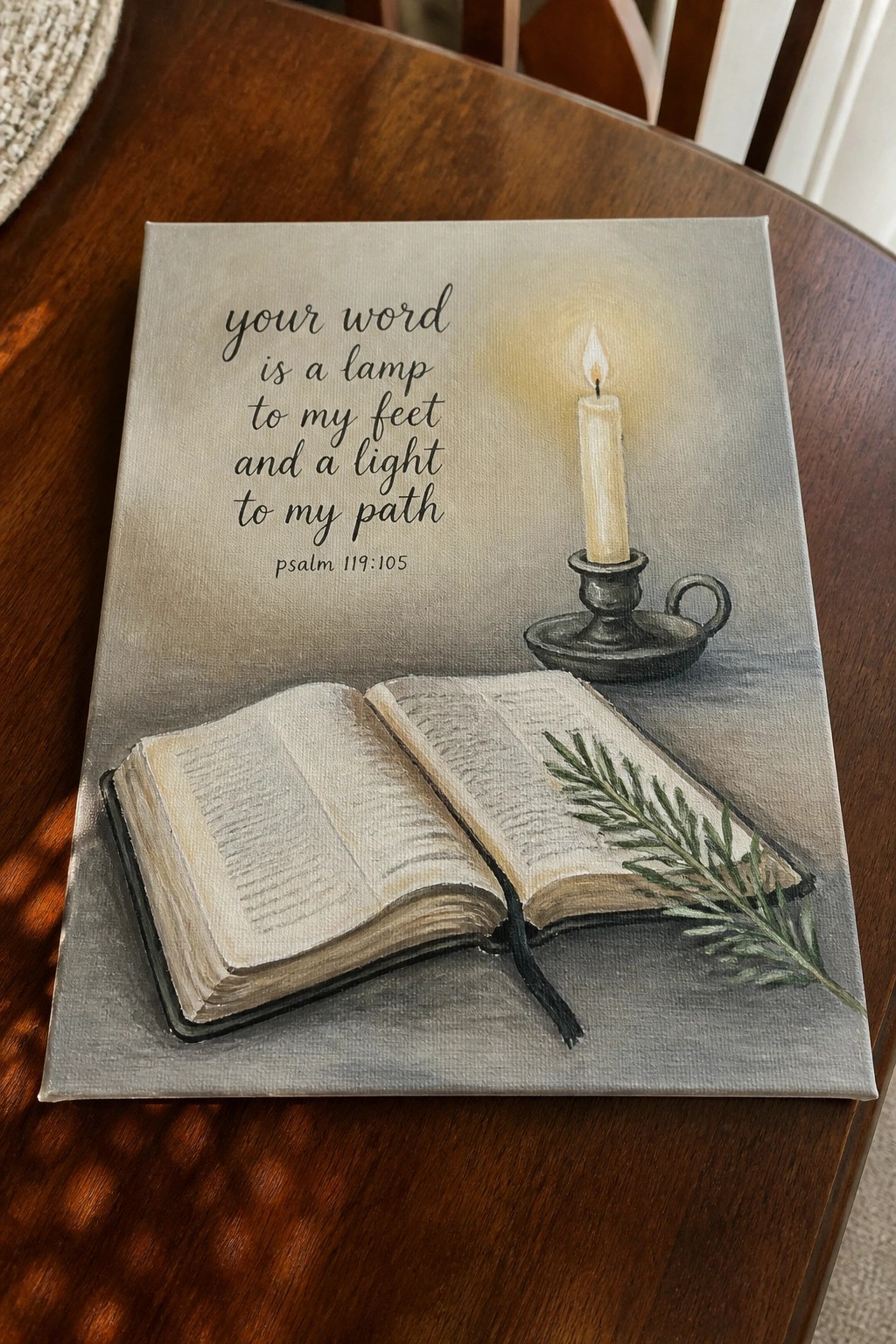
A still life that combines an open Bible with a lit candle creates a direct biblical art idea centered on Psalm 119:105. The verse sits in the upper left in a simple script while the candle’s glow balances the right side of the canvas. Angling the book toward the viewer and adding one small branch of greenery keeps the layout clear and prevents the objects from overlapping.
What makes this idea useful is the way the neutral background lets the text and candle stand out without extra work. You can scale the whole scene down for a smaller frame or remove the greenery if you want fewer elements to manage. The setup works well for wall pieces because the light source and quote give it an immediate focal point. For practice, blocking in the book shape first then adding the candle helps control the values before refining details.
Frequently Asked Questions
Q: Where can I find high quality examples of the 22 timeless biblical art ideas to study in detail?
A: Start with public domain collections from museums like the Metropolitan Museum of Art or the British Museum online databases. Search for specific themes such as creation scenes or the life of Christ to locate classic paintings and illustrations. Supplement these with art books focused on biblical themes from your local library and free image sites that offer clear reproductions for close examination.
Q: How can beginners begin creating their own versions of these biblical art ideas without feeling overwhelmed?
A: Choose one simple idea from the list such as a basic nativity scene and break it down into basic shapes and colors first. Use sketchbooks to practice outlines before adding details like halos or symbolic elements. Many artists recommend starting with pencil drawings and then layering watercolors or colored pencils to build confidence gradually.
Q: What supplies work best for exploring these timeless biblical art ideas at home?
A: Basic options include sketch paper, graphite pencils, and a set of watercolors for soft effects that suit scenes like the Good Shepherd. For more durable projects try acrylic paints on canvas boards or digital tablets with art apps that allow easy revisions. Keep a Bible nearby to reference verses that match each idea for added accuracy in your work.
Q: How might these art ideas help connect with biblical stories on a deeper level?
A: Visual representations often highlight emotions and symbols that text alone may not convey such as the light in a resurrection scene. Spend time comparing your chosen artwork to the original scripture passages and note how elements like posture or background details reinforce key messages. This approach turns art study into a form of personal reflection or group discussion.
Q: Can these biblical art ideas be adapted for use in church settings or educational programs?
A: Yes many of the ideas translate well into murals bulletin covers or craft projects for all ages. Adapt by simplifying complex compositions for children or using projected images during lessons to illustrate stories. Always focus on respectful portrayals that align with the intended spiritual message and involve community input when creating shared pieces.