I enjoy studying Renaissance paintings as part of my own painting practice.
Biblical themes show up a lot in that period and the artists focused on clear storytelling.
I find that some of these pieces still stand out when I see them in books or online.
My list here includes twenty examples that have kept their presence over the centuries.
Gabriel Delivering the Message to Mary

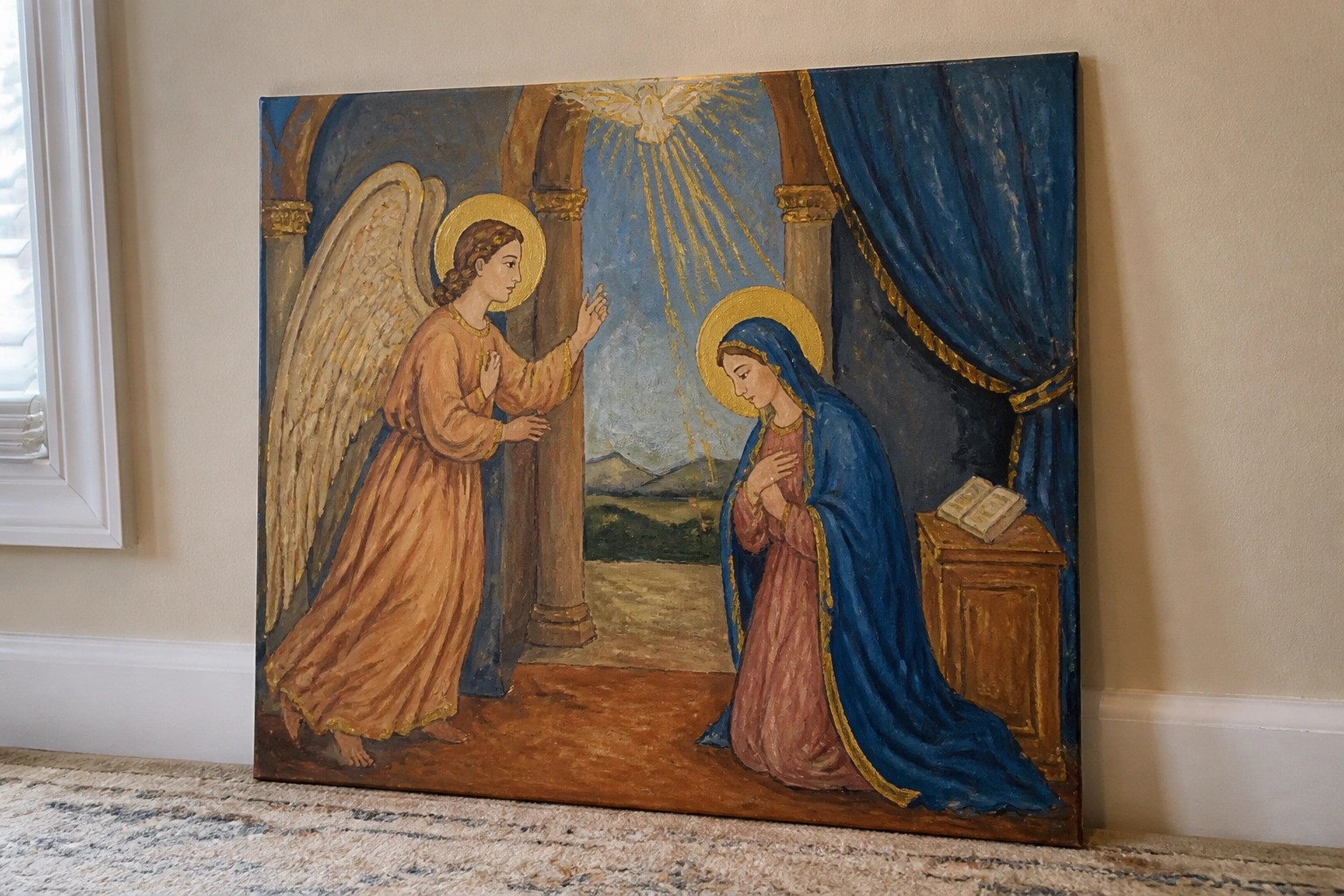
A classic biblical scene shows the angel Gabriel standing and addressing Mary, who kneels with hands clasped while a dove hovers above emitting rays of light. The idea centers on two figures placed in an arched interior that creates clear separation between them, with the dove and light beams acting as the connecting element in the center. This fits into the category of religious narrative painting, where the vertical lines of the architecture and the contrasting red and blue robes keep the focus on the interaction rather than extra detail.
The composition does a lot of the work here by using the arches and central light to frame the two figures without needing complex backgrounds. A painting like this works especially well for practicing balanced figure placement and simple color contrasts that still read clearly from a distance. The idea can be adapted by reducing the architecture to basic shapes or changing the robe colors to fit a different palette while keeping the dove and rays as the main focal point. For wall art, the vertical format and strong central element make it easy to scale down for smaller canvases without losing the main story.
Madonna and Child Icon in Classic Colors
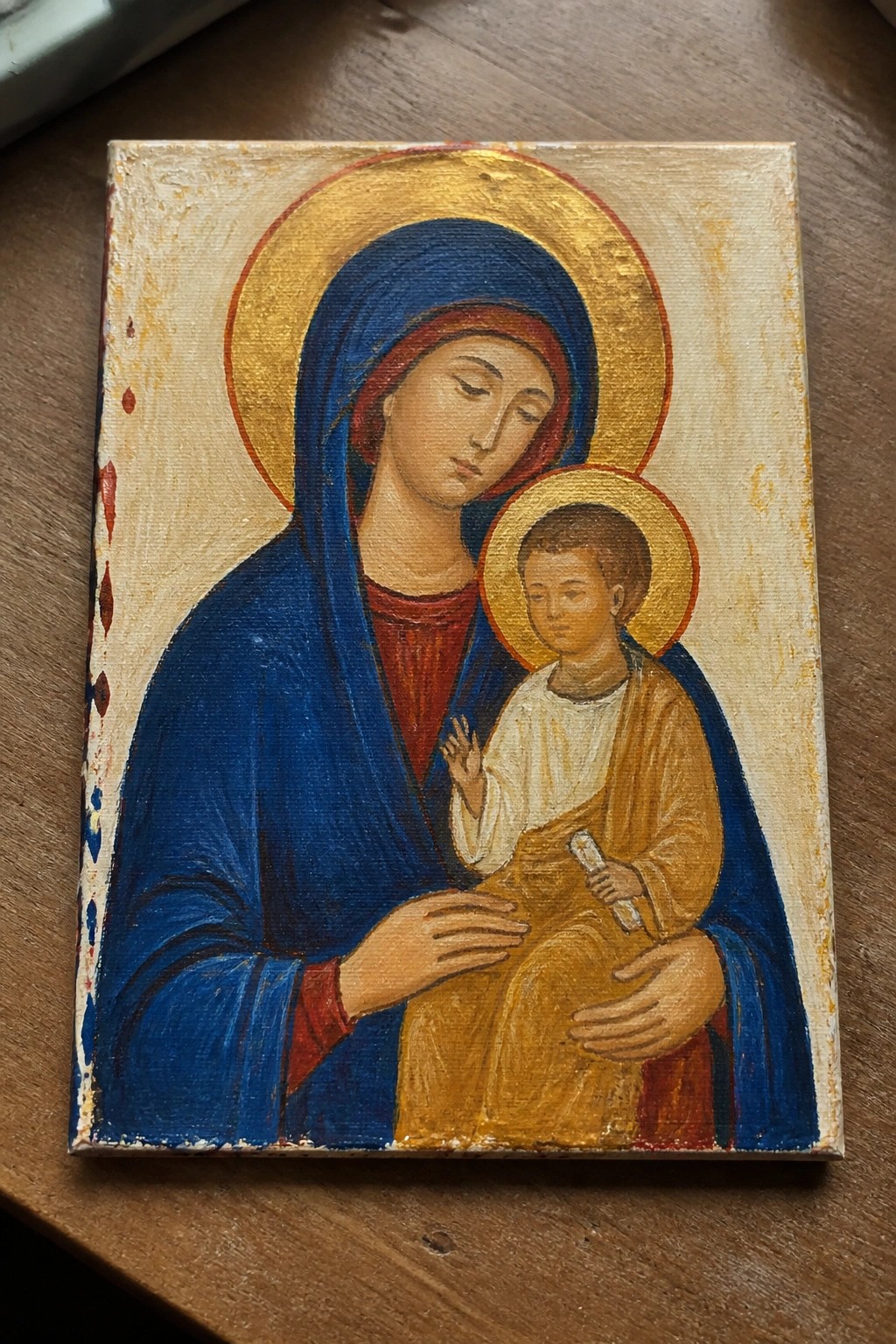
A strong painting idea centers on the mother and child figures from biblical tradition, shown here as Mary supporting the seated infant with one hand while he holds a small scroll. The composition works by stacking the two halos at different heights and letting the deep blue robe dominate the left side to anchor the whole piece. This approach belongs to the biblical portrait category, where simple overlapping shapes and a narrow color range keep the attention on the figures rather than background details.
What makes this idea useful is that the tight framing and flat background remove the need for complex scenery, so the work stays manageable on a small canvas. The same layout adapts easily if you swap the gold halos for thinner outlines or shorten the robe folds for faster sessions. For wall pieces or practice studies, the limited palette of blue, red, and ochre means you can finish with basic mixing and still get a balanced result that holds up next to other religious subjects.
Decorative Last Supper in Flat Geometric Style
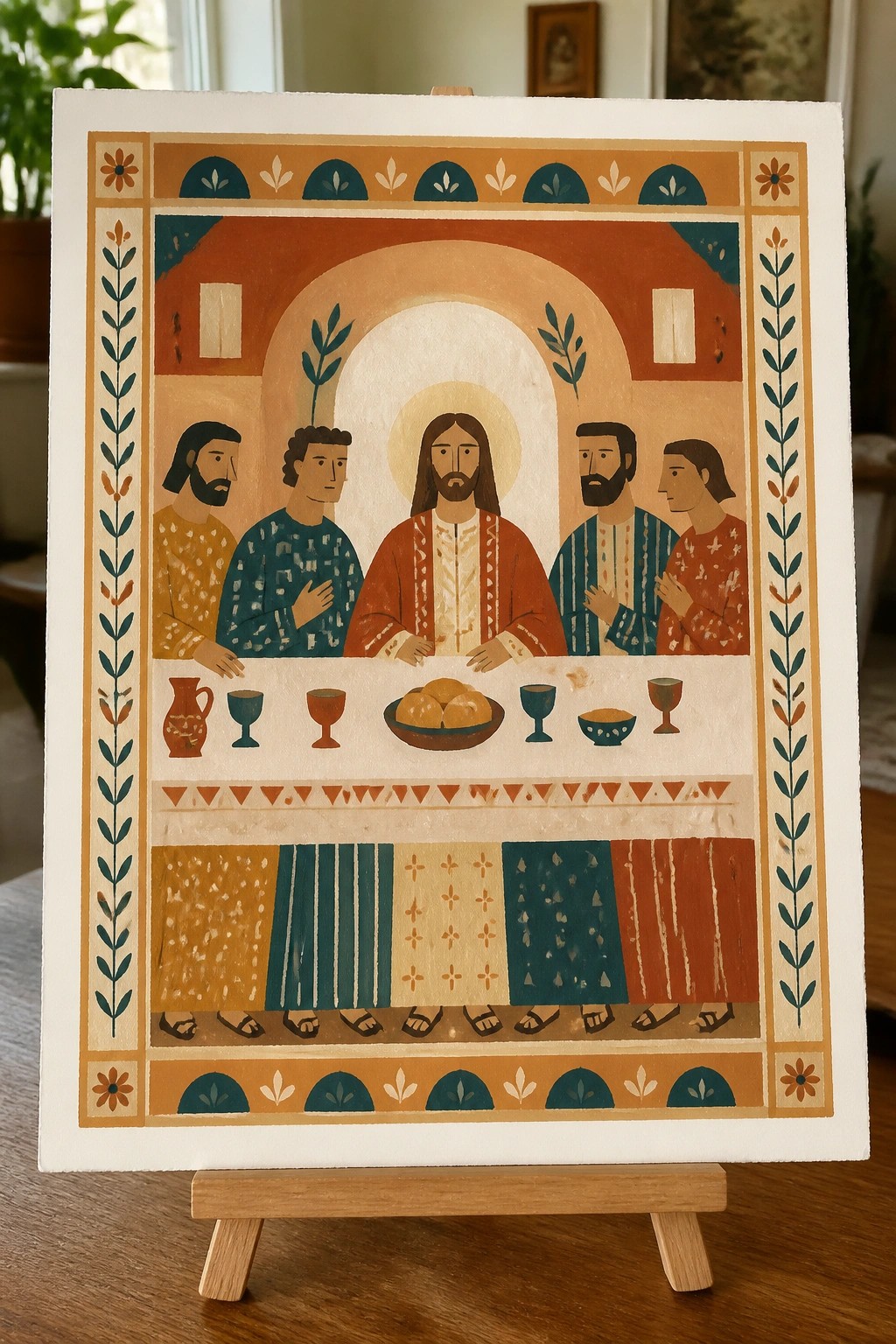
A centered figure of Jesus at a long table with four disciples forms the core idea, using flat color blocks and repeating patterns to create a balanced, symmetrical scene. The composition relies on an arched background and strong horizontal lines from the table and border to keep the focus on the central group. This fits decorative art, where bold shapes and limited warm tones replace realistic shading or depth.
What makes this idea useful is the built-in structure of the table and repeating border that holds the layout together even if proportions shift slightly. The color blocks and simple patterns make it easy to adapt for smaller canvases or change the robe colors to match a room. For practice, this kind of subject works well because the main elements stay readable even when details like the patterns are reduced or redrawn by hand.
Nativity Scene Under a Bright Star
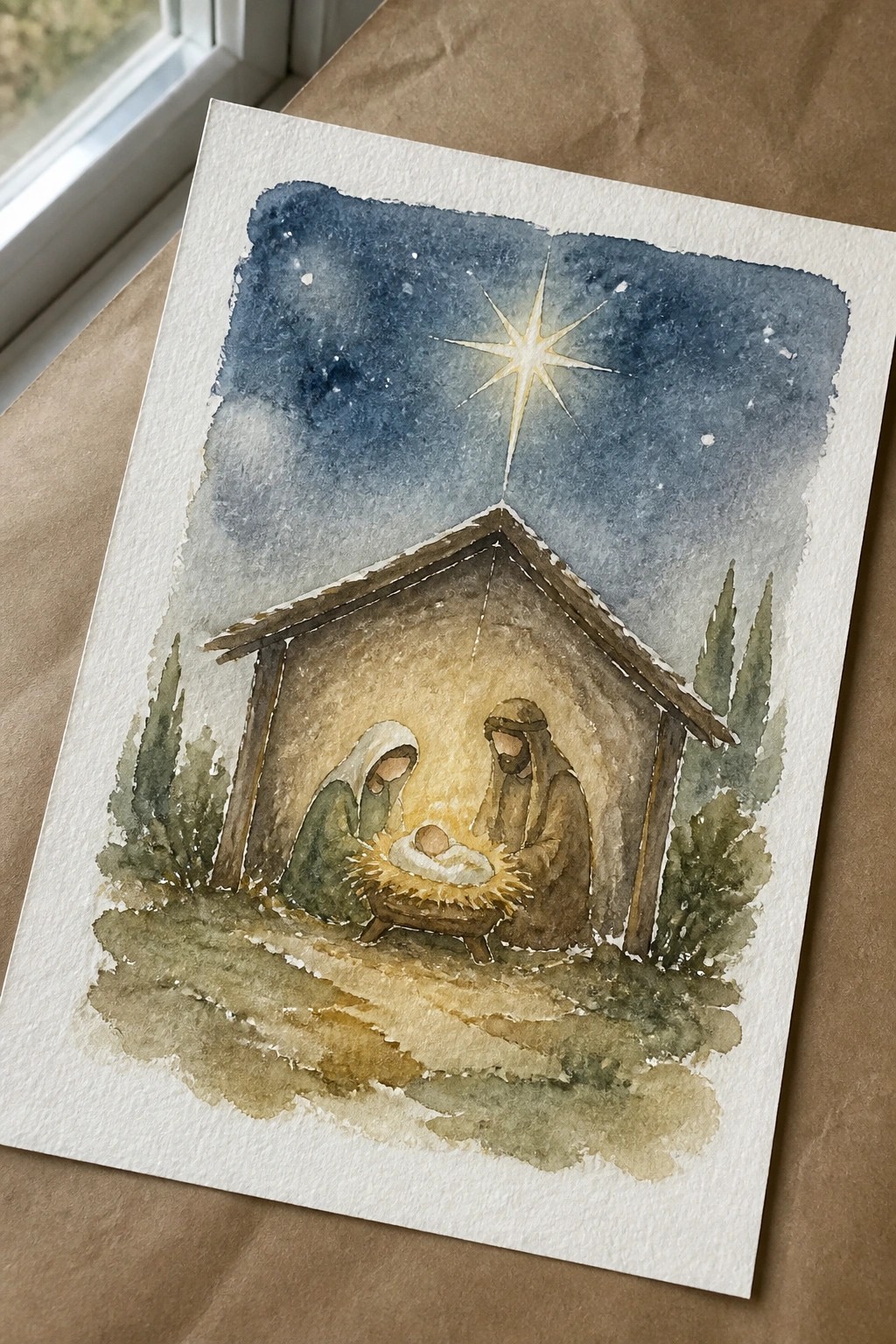
A nativity scene works well when the stable sits low in the frame and a single bright star pulls the eye from the top of the composition straight down to the manger. The idea relies on a cool dark sky against the warmer tones inside the shelter, creating a clear light source without needing many figures or extra details. This type of biblical painting fits seasonal or religious work and stays effective even when kept simple.
What makes this idea useful is the strong vertical focus from star to manger, which helps the layout feel balanced on its own. The color split between deep blues and muted earth tones is easy to adjust for different paper sizes or to turn into greeting cards. You can reduce the background trees or soften the edges if you want a quicker version while keeping the same center of interest.
Central Crucifixion with Two Figures Below
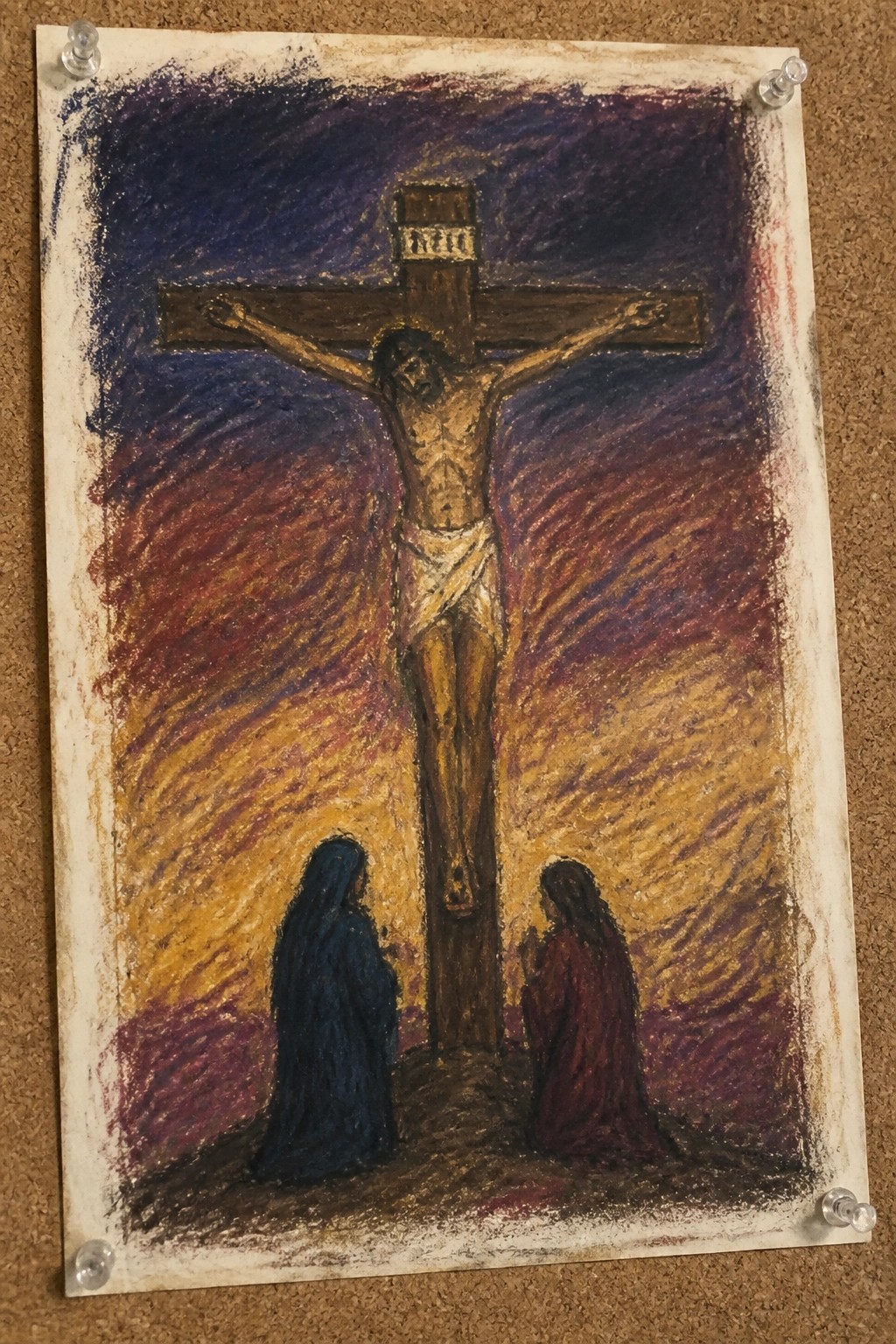
A biblical crucifixion forms the core idea here, with the central figure fixed high on a wooden cross and two robed figures positioned at the base to anchor the lower third of the canvas. The composition relies on strong vertical emphasis from the cross and a background split between cool dark tones at the top and warmer streaked colors below, which creates natural contrast and keeps attention on the main subject. Broad directional strokes in the sky add texture without competing with the simpler shapes of the figures.
The vertical layout makes this straightforward to scale for a tall canvas or even a narrower panel. You could reduce the background to fewer blended layers if you want a quicker version or swap the warm tones for cooler ones to shift the mood. For practice work this subject stays useful because the clear focal point and limited figure count let you focus on proportion and color blocking without needing complex details.
David Faces Goliath Across Open Terrain
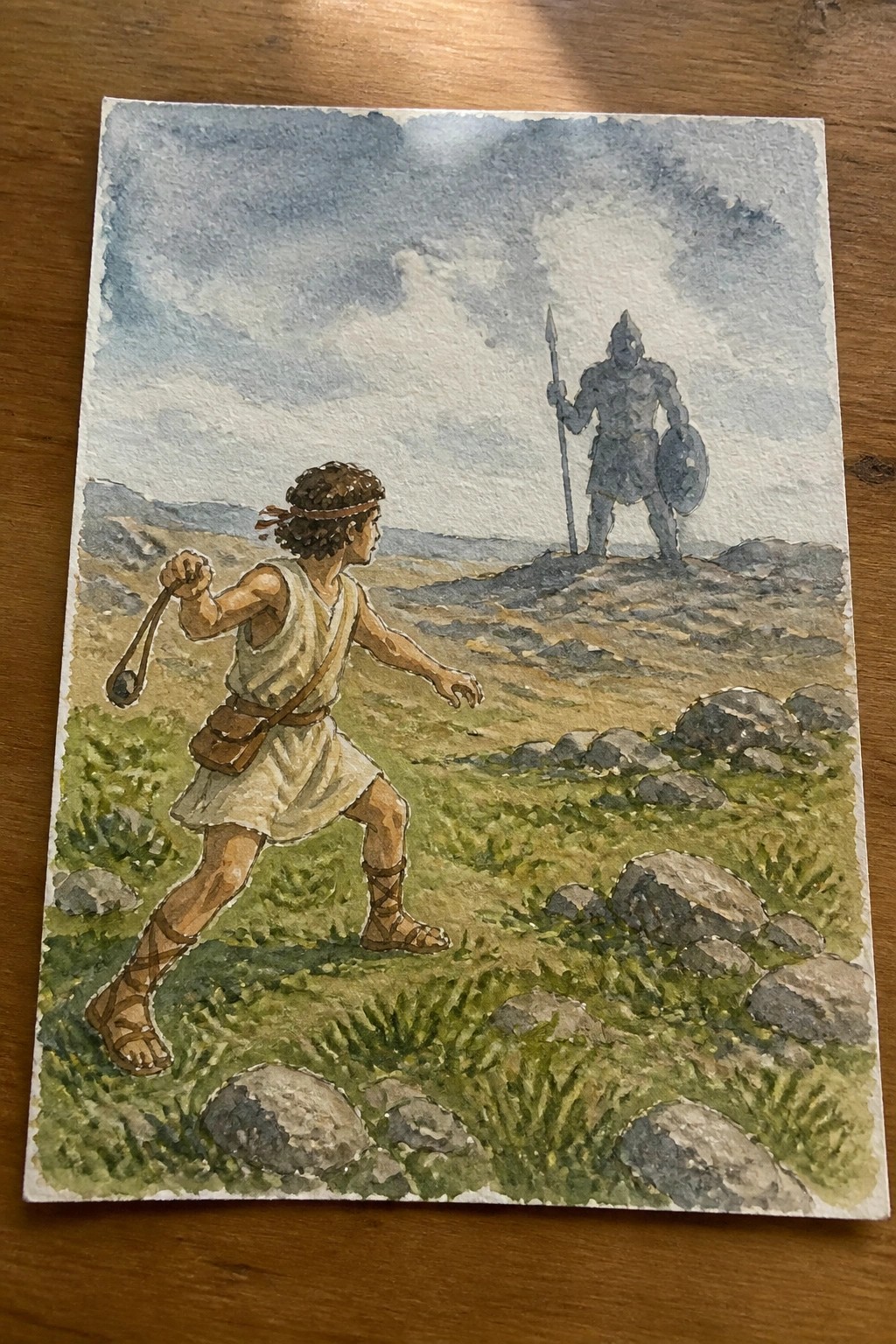
The core idea is a biblical confrontation between an underdog figure and a much larger armored opponent, shown through deliberate scale contrast and an open landscape. The smaller figure advances from the foreground while the giant stands elevated in the distance, letting the size difference carry the narrative without extra symbols or props. This fits the classic Renaissance approach of using landscape and figure placement to stage well-known Bible stories.
What makes this idea useful is how the scale contrast handles most of the storytelling, so you can focus on placement rather than complex details. You can adapt it by moving the figures closer together or reducing the number of rocks in the foreground for a simpler version. For practice, this kind of subject works well when studying proportions and depth in a single scene. The recognizable story also makes it easy to personalize with different clothing or a flatter background if needed.
Parting the Red Sea
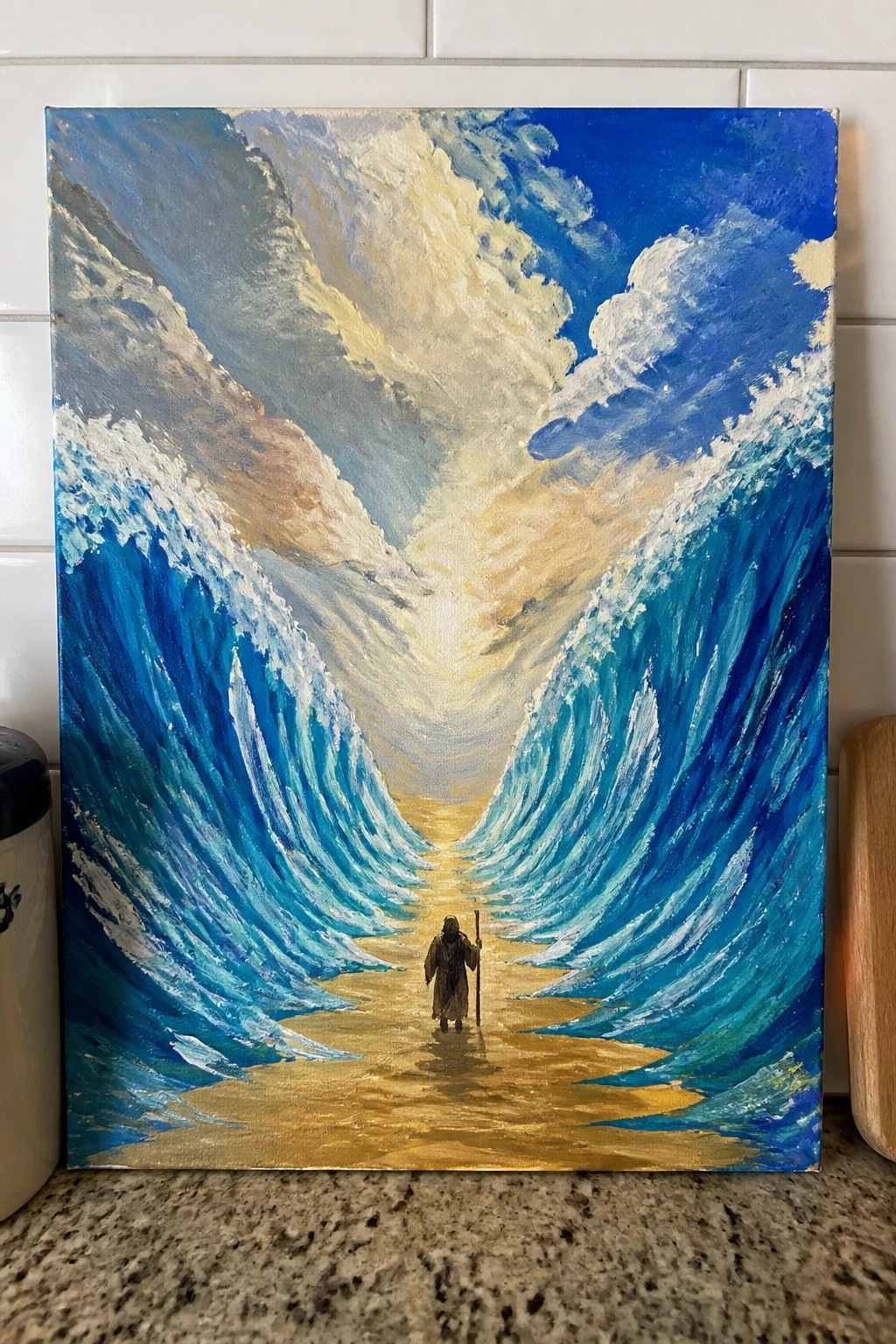
A narrative seascape idea built around a single robed figure walking down a narrow golden path between two towering walls of water. The composition uses the waves as strong vertical frames that pull the eye straight down the center while the lighter sky at the top creates a clear vanishing point. This approach sits in the dramatic landscape category and works because the simple path and repeated wave shapes keep the focus on the central action without extra detail.
What makes this idea useful is the built-in symmetry that holds together even if the waves are painted loosely. The limited blue and gold palette reduces color mixing decisions and lets the same layout scale down for smaller canvases or studies. For wall pieces the tall vertical format stands out on a feed, and the subject can be simplified by softening the wave edges or changing the figure’s stance while keeping the core path-between-walls structure intact.
Jonah and the Whale in Layered Teal and Coral
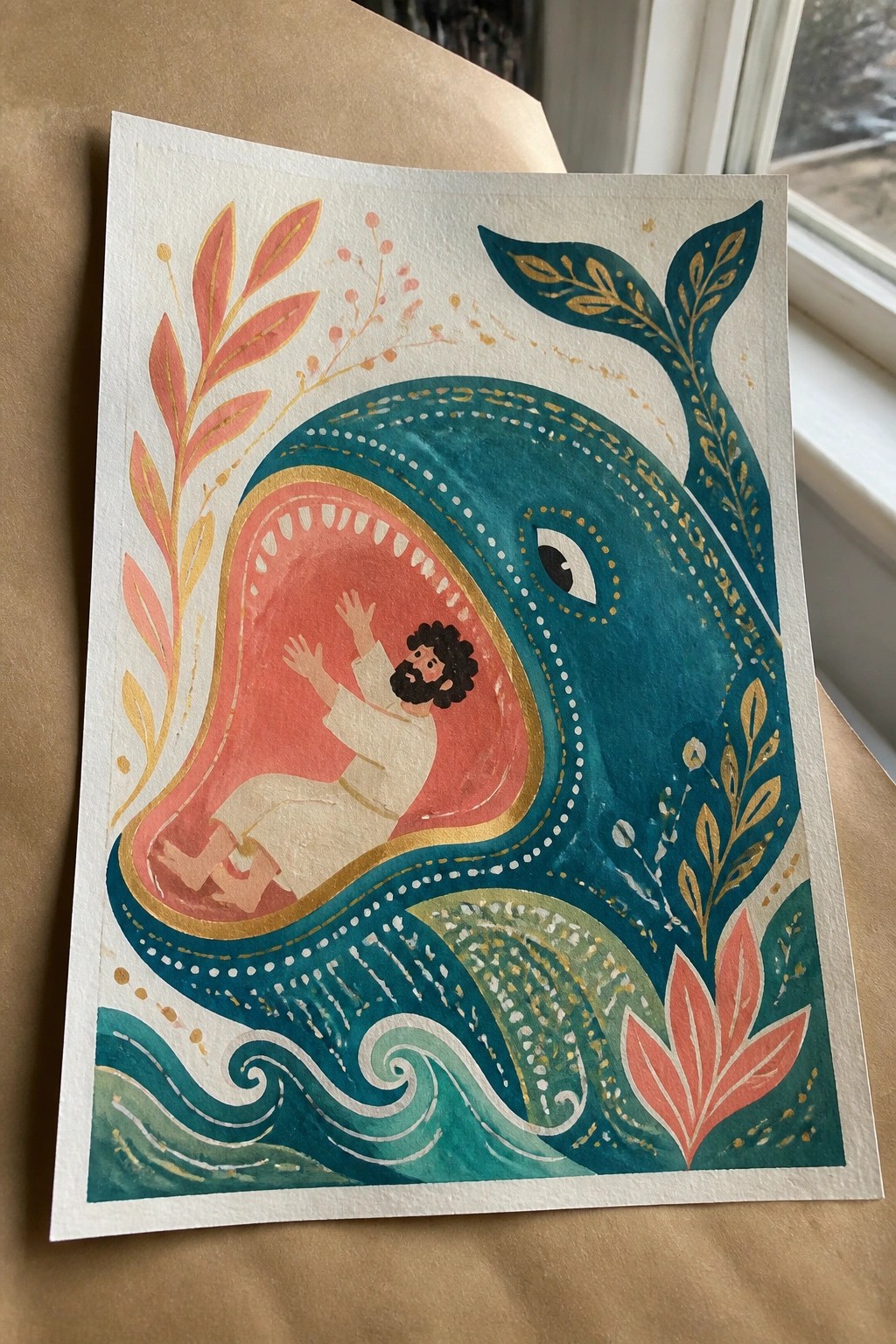
A biblical narrative scene places a single figure inside the open mouth of a large whale, using the curved body and flowing tail to frame the action. Strong color blocks separate the coral interior from the teal exterior while gold trim and dotted lines add definition without crowding the space. The idea belongs to decorative narrative illustration, where simplified shapes and repeated wave patterns keep the focus on the central moment.
What makes this idea useful is the built-in contrast between the open mouth and the surrounding water, which helps the main subject stay clear even in smaller prints. The layout adapts easily by swapping the figure for another story or adjusting the plant details on the sides to match different color schemes. For practice, the large curved forms and flat color areas let you work on shape control and edge work without needing fine detail.
Christ Rising Above the Empty Tomb
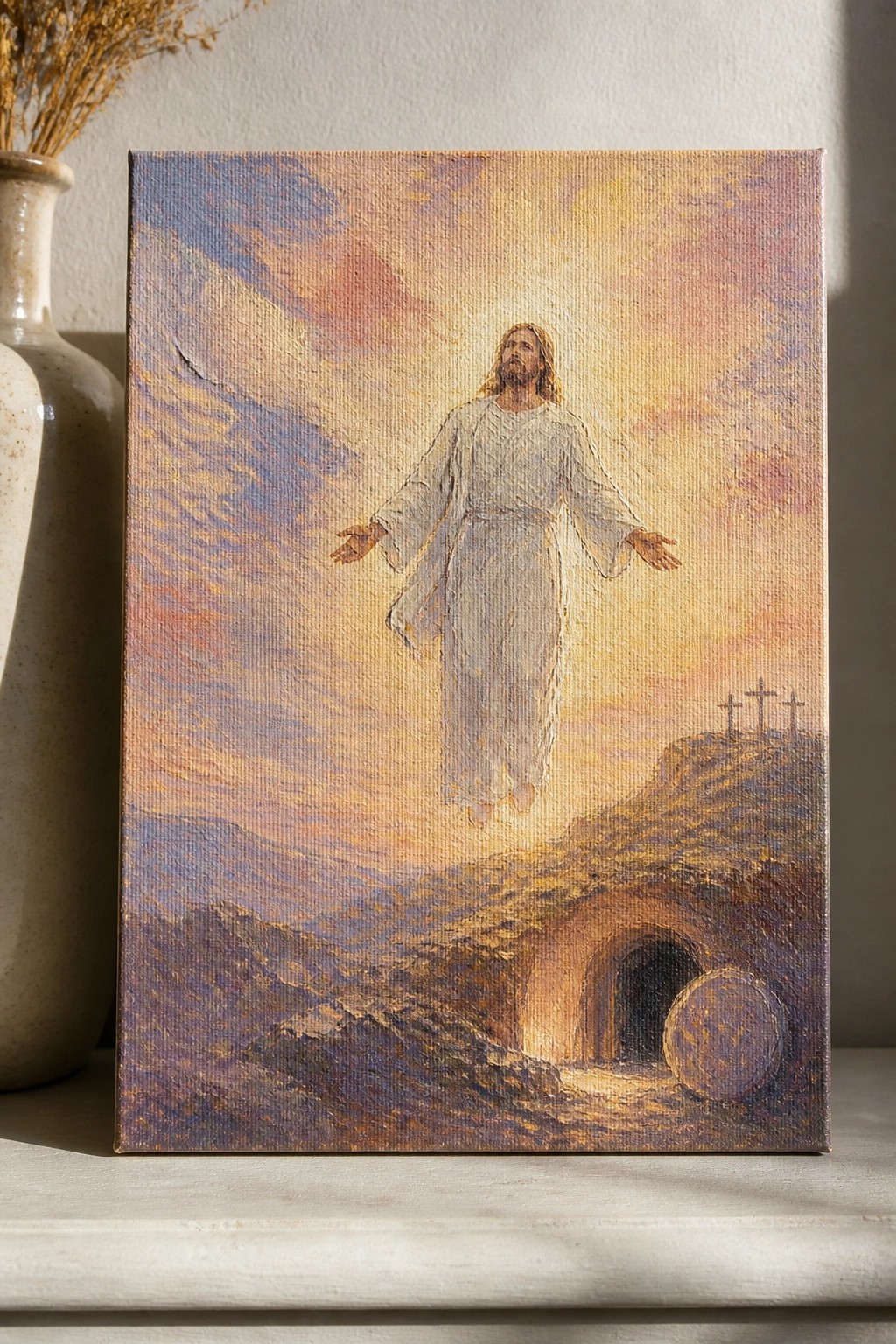
A central ascending figure with arms outstretched hovers above a rocky hillside that features an open tomb entrance and a large stone nearby. The idea centers on a biblical resurrection scene where the sky takes up most of the upper space with soft blended colors that create a natural upward pull. The lower landscape elements stay darker and more grounded so the floating figure remains the clear focal point without extra details crowding the view.
The composition does a lot of the work here by using the sky as negative space that lets the figure stand out even if the brushwork stays loose. You could adapt the same layout for a smaller canvas by keeping the tomb simple and letting the color shift in the sky carry the mood. For wall pieces this kind of vertical split between bright upper area and earthy lower area translates well to prints or larger formats without needing fine detail everywhere.
Reimagined Creation of Adam Hands Against Gold
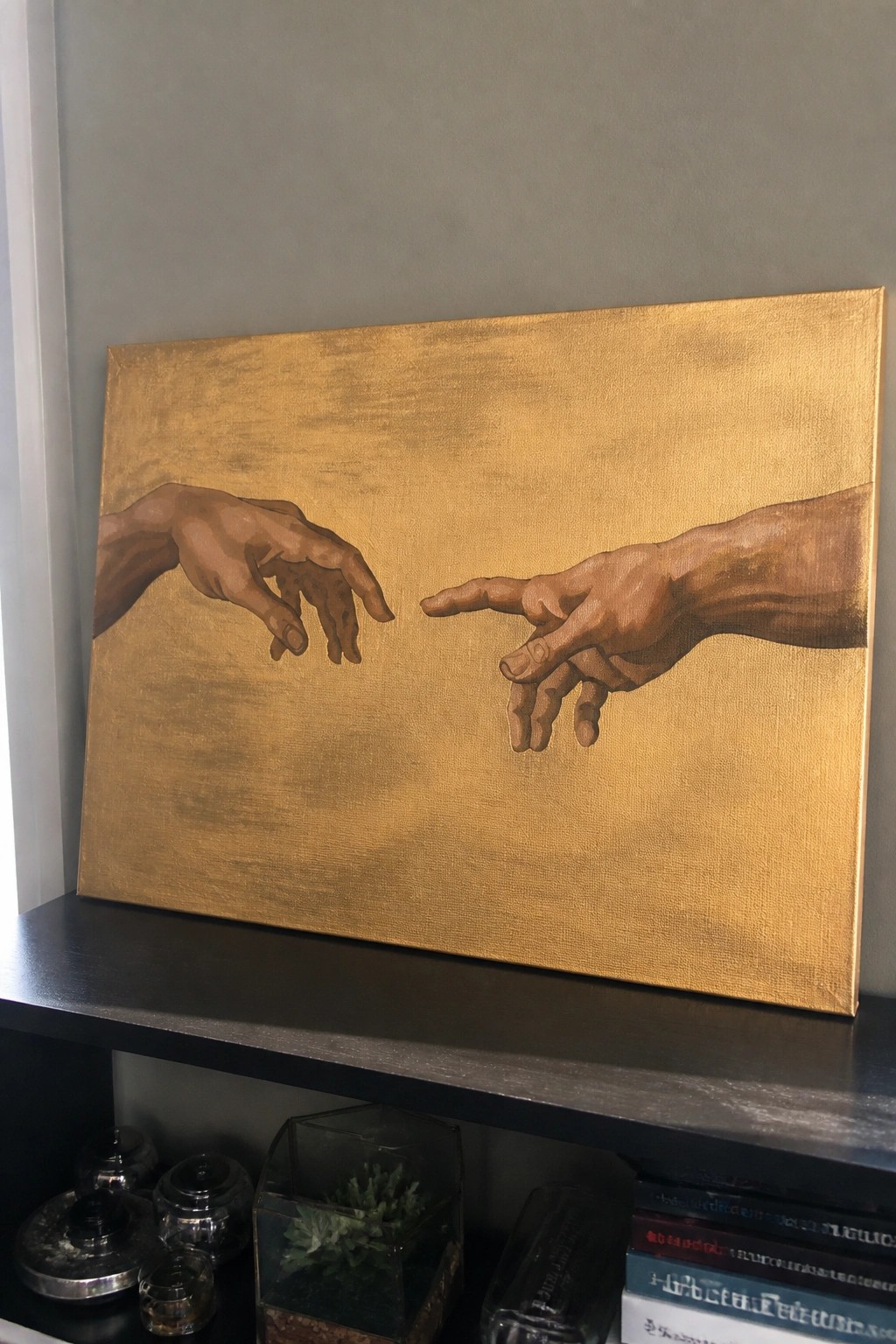
The painting idea takes the central gesture from Michelangelo’s Creation of Adam and reduces it to just the two hands set against a solid gold field. This keeps the focus on the reaching fingers and the small gap between them while the metallic background replaces any architectural or sky detail. The warm brown skin tones against the textured gold create a simple contrast that works as both a biblical reference and a decorative piece.
What makes this idea useful is how the gold background removes the need to paint a full scene, letting the hands carry the composition. You could adapt it by swapping the gold for other metallic tones, adjusting the skin tones, or cropping tighter around the fingers for a smaller canvas. For wall art, the approach stands out because it updates a classic Renaissance image into something that fits modern spaces without losing the original reference.
Baptism Scene With Light Rays Over the River
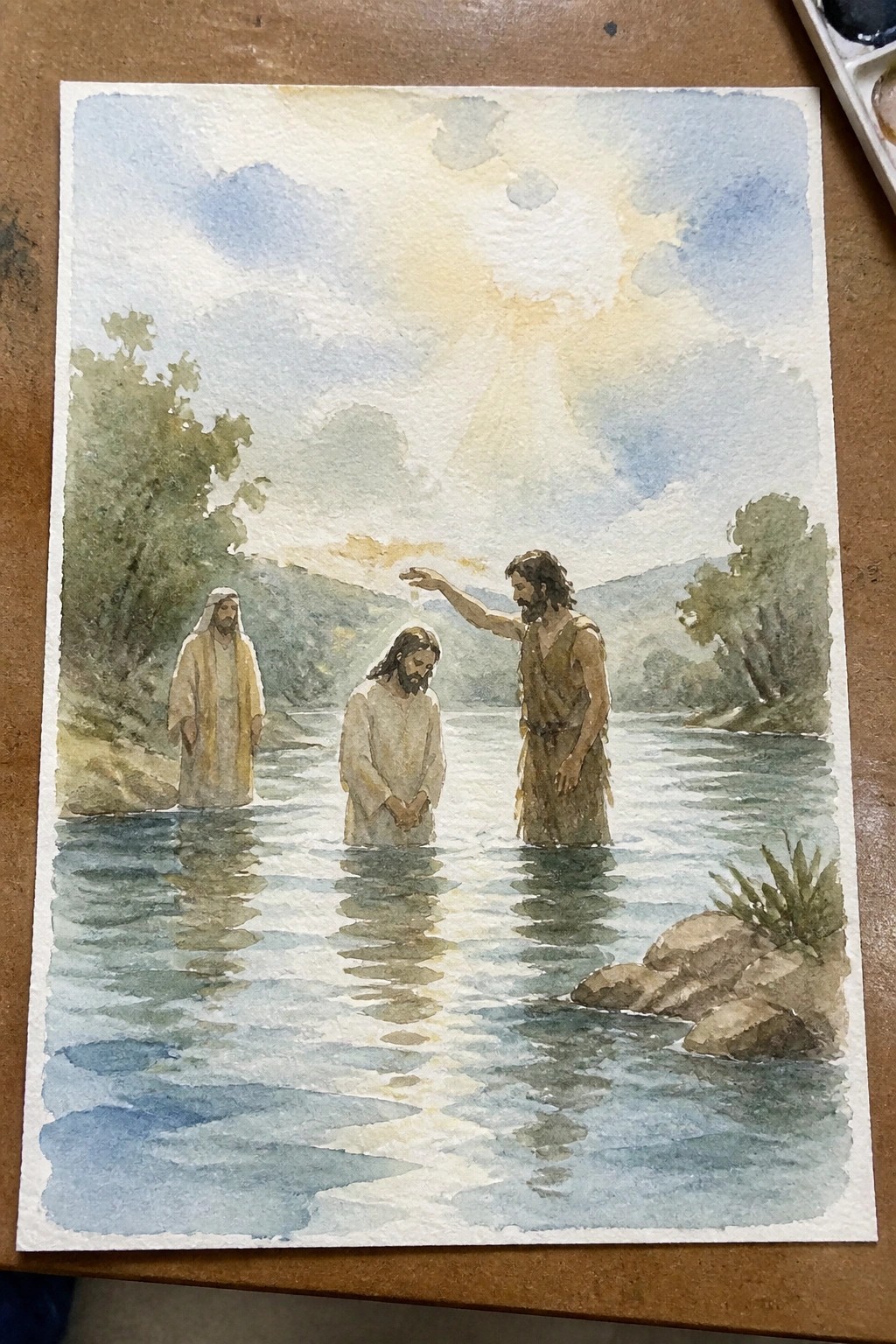
A classic biblical baptism forms the core idea here, showing John the Baptist reaching toward Jesus in shallow water while a third figure stands nearby. The painting idea blends a simple landscape of river and hills with a strong overhead light source to create a clear central moment. The wide water surface and distant trees keep the eye moving toward the figures without extra clutter, and the soft blue-green tones with warm sky accents make the whole scene hold together at a distance.
What makes this idea useful is the built-in focal point from the arm gesture and light beams, which can be scaled down by removing the third figure for a quicker version. The reflective water and open sky layout adapts easily to different canvas sizes or color shifts if you want a warmer or cooler mood for decor. For practice, this kind of subject works well to study light on water and basic figure placement while staying recognizable even with looser brushwork.
The Transfiguration of Christ with Moses and Elijah

A biblical transfiguration scene centers Christ in flowing white robes with arms open, set against radiating gold lines on a blue field to create a clear vertical focal point. Moses appears on the left with tablets and Elijah on the right, both haloed and positioned at equal height, while a single kneeling figure in blue occupies the lower foreground on a rocky surface. The balanced side figures and strong central light keep the eye moving upward without crowding the canvas.
The composition does a lot of the work here by using symmetry and a bright center to organize three standing figures plus one below. You can adapt the idea by scaling it down for a smaller panel or swapping the gold rays for lighter yellow tones if metallic paint is unavailable. This kind of subject suits practice with grouping multiple figures because the rocky ground gives a simple base layer and the side characters can be simplified to basic robes and beards. For wall art it stands out on Pinterest when the gold is kept bold against the blue background.
Flight into Egypt on a Donkey
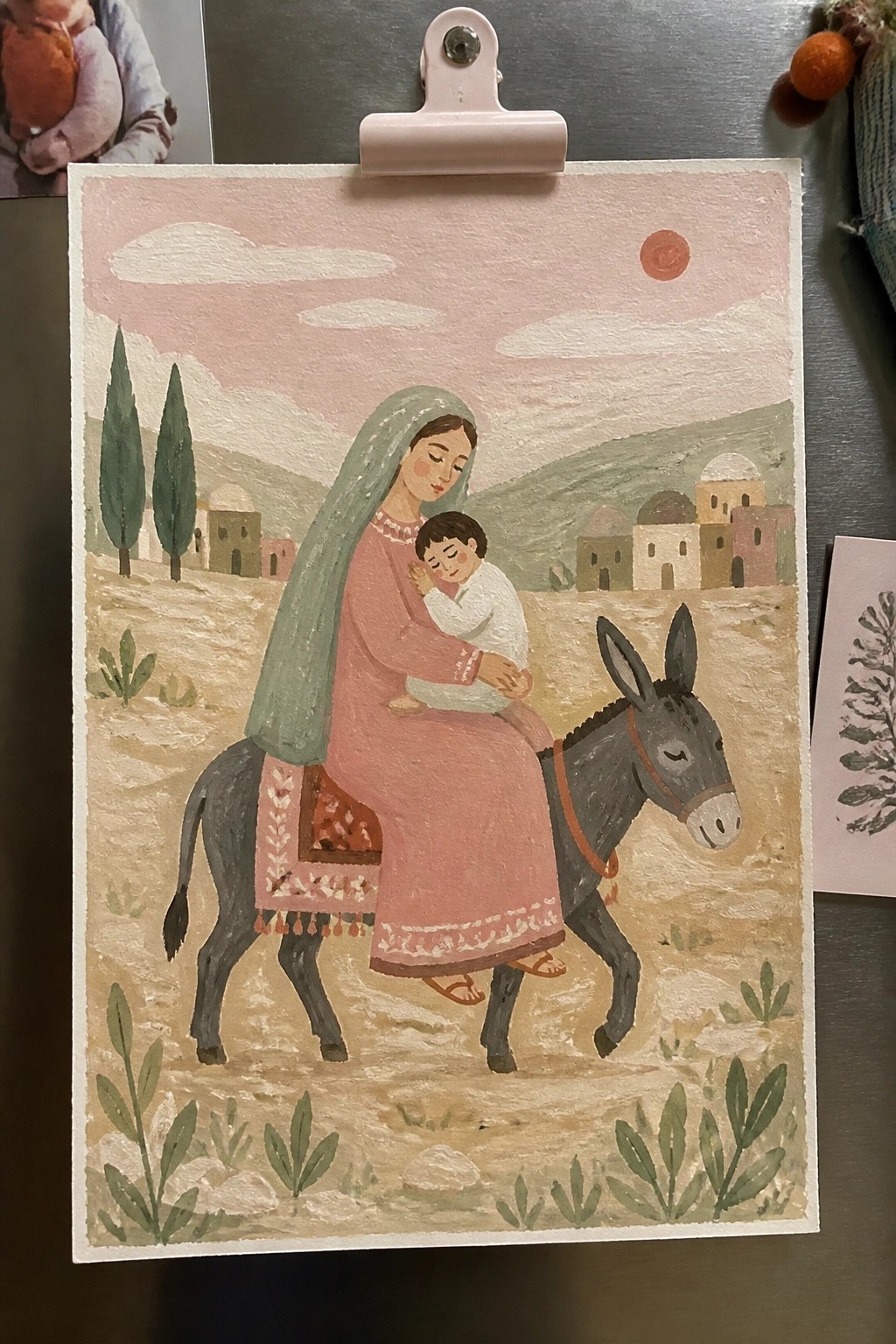
A mother cradling an infant while seated on a donkey creates the main subject in this painting idea. The composition places the pair in the center of a wide landscape with a village and hills behind them, using soft earth tones and rounded shapes to keep the focus steady. This approach works as a narrative landscape where the figures and setting together tell the story without extra detail.
The composition does a lot of the work here by making the central figures the clear point of interest against a simple background. You can adapt the muted pinks and greens to fit different color schemes or canvas sizes. For wall pieces this idea stands out because the limited elements make it easy to scale up or simplify for practice while still reading as a complete scene.
Christ Enthroned Over Rising Figures
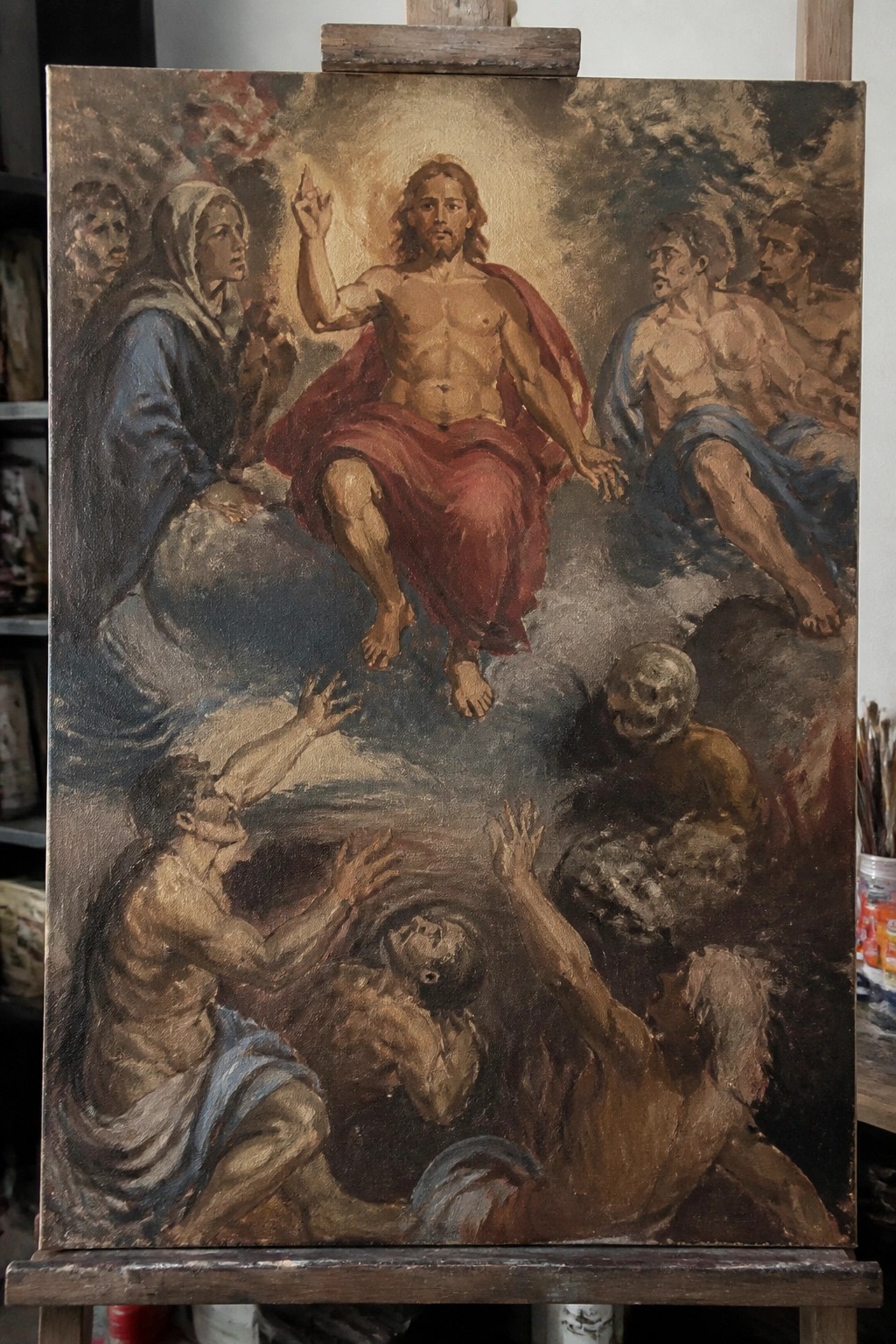
This painting idea places a central divine figure high above a cluster of reaching human forms below. The vertical layout keeps the main subject dominant while the lower figures create upward movement through their extended arms and twisted poses. Earthy browns mixed with red drapery give the scene weight without relying on bright colors or fine detail.
The composition does a lot of the work here by using height and gesture to separate the upper and lower sections. You could adapt it for a medium canvas by keeping the central figure large and simplifying the crowd below to three or four key poses. This kind of biblical scene works well for practicing anatomy and foreshortening while still producing something that reads clearly from a distance.
Abraham and Isaac at the Altar
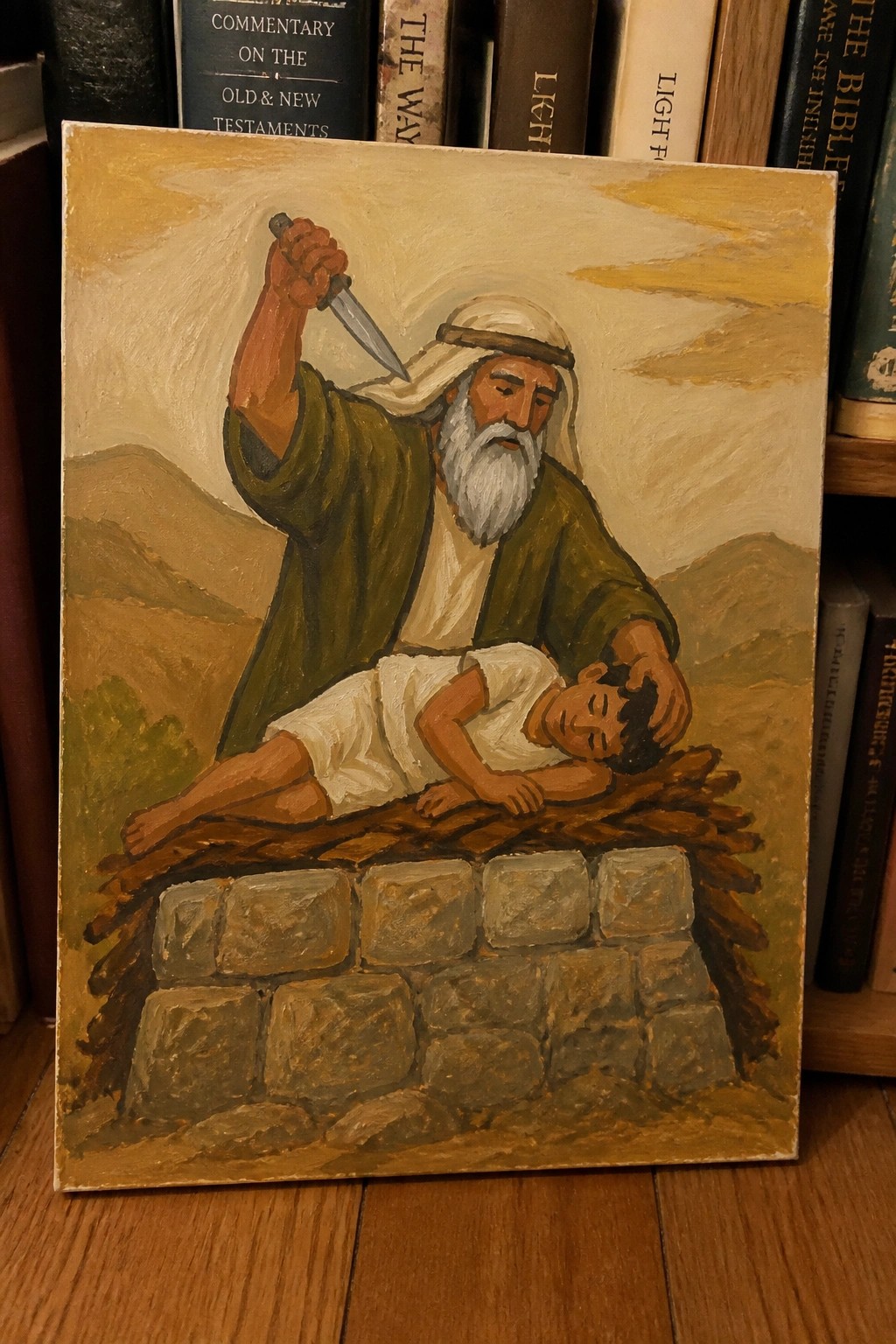
A clear narrative painting idea comes from the biblical story of Abraham preparing to sacrifice his son Isaac on a stone altar. The composition keeps the two figures as the main focus with the raised arm and the boy positioned across the wood, set against basic mountain shapes in the distance. This type of religious narrative scene works through strong central action and a restricted palette of earth tones that hold attention on the key moment without extra detail.
What makes this idea useful is how the stacked altar and simple background let the main figures carry the whole piece. The color choices make it easy to adapt to different canvas sizes while keeping the same layout. You could simplify the hills further for a practice version or keep the full scene for a larger wall piece. For Pinterest, the direct pose and limited background help the subject read clearly even in a small thumbnail.
Return of the Prodigal Son in Loose Watercolor

The core idea is a close embrace between two robed figures to show a biblical father and son reunion. The composition works by placing the heads and hands near the center so the overlapping arms create a natural focal point without needing extra elements. Earthy browns and soft washes keep the shapes readable while the background stays minimal so the figures hold attention.
What makes this idea useful is how the two-figure layout can be sketched quickly on any size paper and painted with a small set of browns and neutrals. The loose edges and simple color range make it easy to adapt into a quicker study or a larger piece for a wall. A version like this stands out on Pinterest because the subject is familiar yet the soft handling gives it a modern feel that still reads as Renaissance-inspired.
The Apostles Gathered Under Tongues of Fire
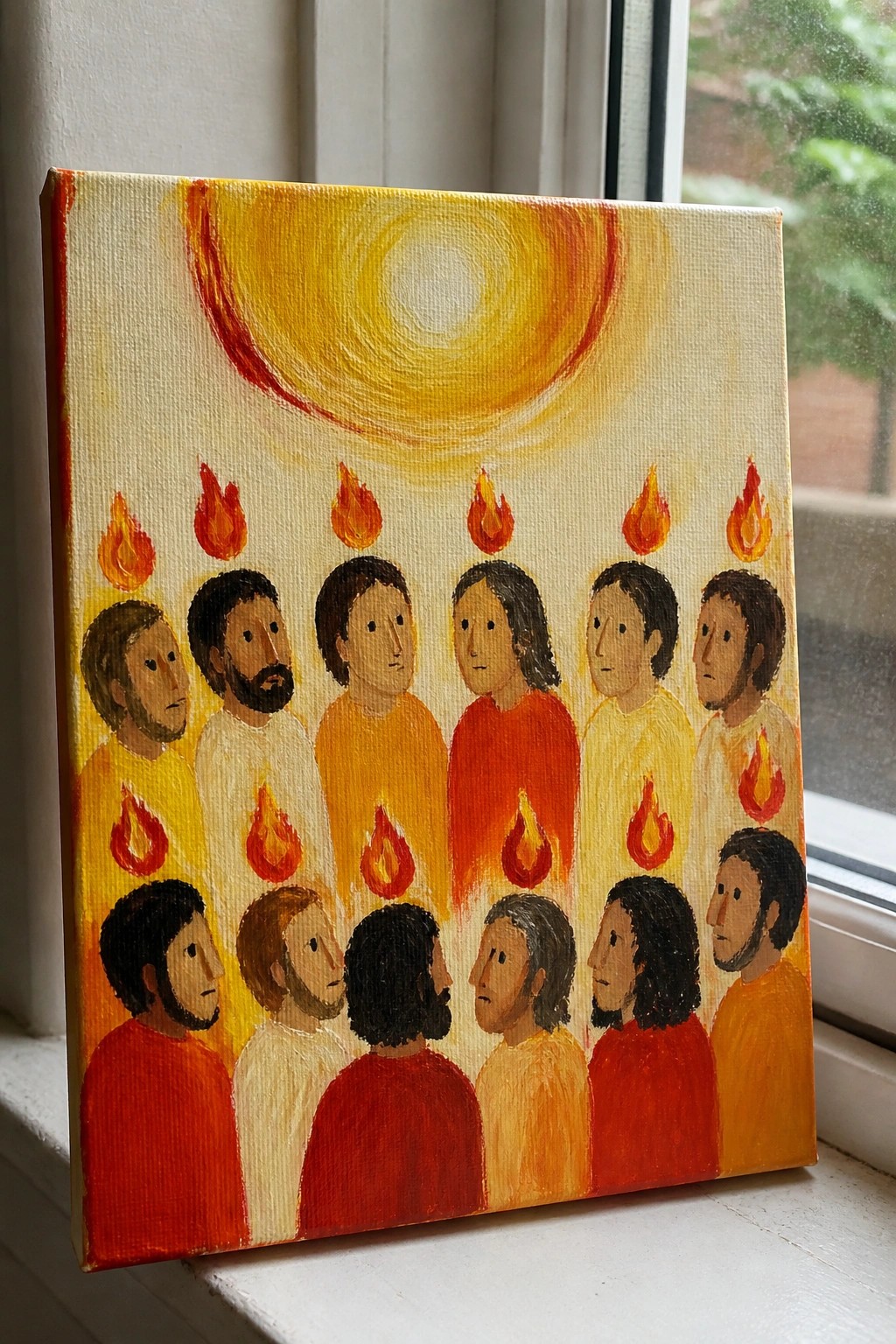
The painting idea shows a group of figures arranged in two loose rows beneath a large central glowing circle, each with a small flame positioned above the head. The layout uses a top-down light source to connect the elements, while the flat blocks of red, yellow, and orange keep the focus on the overall shape of the group rather than individual details. This approach fits a simplified biblical scene that relies on repeated symbolic marks instead of complex backgrounds or expressions.
What makes this idea useful is the clear vertical structure that works on both square and rectangular canvases without much adjustment. The repeated flame shapes and robe colors let you change the number of figures easily if you want a smaller version or a quicker study. For practice, the setup helps with basic figure placement and color blocking before adding more detail.
The Sermon on the Mount on a Hillside by the Sea

The painting idea shows Jesus seated on higher ground teaching a large crowd gathered across a sloping hillside that leads toward the water. The composition spreads the seated listeners in loose rows through the foreground and middle ground, with the sea and distant hills forming a simple backdrop that keeps the focus on the scale of the gathering. Earthy robe colors and soft greens and blues in the landscape give the scene a calm, open feel without crowding the view.
The composition does a lot of the work here by using the slope and water line to guide the eye toward the speaker. A painting like this works especially well for practice with arranging groups of figures since the robes and seated poses can stay simple. The color palette makes this easy to adapt by changing the setting to a different outdoor location or adjusting the number of people to fit a smaller canvas. For wall art, the horizon and spread of figures help it hold interest at medium sizes without needing extra detail.
Layered Still Life of Bread and Fish with Biblical Scene

This painting idea pairs a close-up still life of bread loaves and a basket of fish with a smaller background scene of Jesus handing out food in an open landscape. The foreground items sit large and textured while the narrative element stays smaller and softer, letting the food carry the visual weight. It works as a hybrid still life that adds storytelling without turning into a full scene painting.
What makes this idea useful is how the bread and fish provide clear focal points that stay easy to paint even if the background stays loose. The earth tones and muted greens make it simple to adjust the palette or crop the scene for smaller canvases or greeting cards. For practice, the setup lets you work on texture in the foreground while keeping the background figures basic, and the same layout could swap in different food items or a different biblical moment if you want to personalize it.
Good Samaritan Roadside Assistance Scene
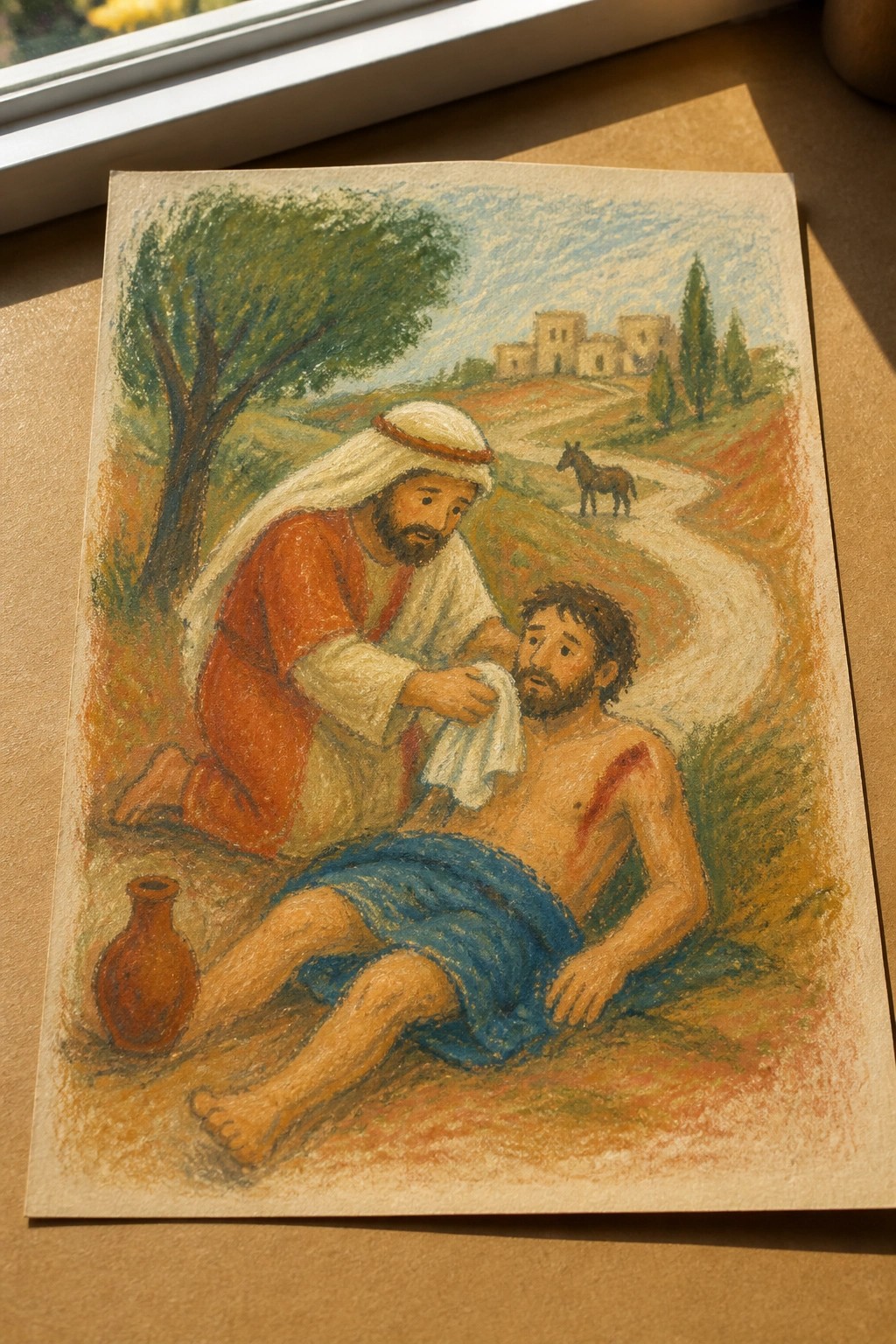
A classic biblical narrative idea shows one traveler stopping to aid an injured man beside a dirt path, with a winding road, distant ruins, and a lone donkey adding depth to the setting. This fits the category of figurative storytelling paintings that place human figures in a landscape to convey a moment of direct help. The off-center placement of the two figures against the curving path and open hills keeps the focus clear while the background layers give the scene room without crowding it.
What makes this idea useful is how the main action stays simple and readable even when the landscape is reduced or cropped for smaller formats. The warm earth tones and clear separation between foreground figures and distant elements make it easy to adapt by changing the time of day or swapping the background for a different setting. For practice or wall pieces, the same idea works well as a quick figure study or a larger composition where the road and hills can be adjusted to fit the canvas shape.
Frequently Asked Questions
What criteria were used to select the 20 paintings for this list? The selection focuses on works from the 14th to 17th centuries that center on biblical stories while showcasing Renaissance innovations like perspective and human emotion. Each piece stands out for its technical mastery and enduring visual impact, drawing from major artists whose contributions shaped art history. Readers can cross reference museum catalogs or art history texts for deeper verification of dates and attributions.
Which Renaissance artists appear most frequently in discussions of biblical paintings? Artists such as Leonardo da Vinci, Michelangelo, Raphael, and Titian dominate these conversations due to their prolific output on themes like the Last Supper, the Creation, and the Madonna and Child. Their works often blend religious devotion with realistic anatomy and dramatic lighting. Exploring biographies of these figures reveals how commissions from the Church influenced their choices of subjects.
Where can viewers see the original versions of these paintings today? Many originals reside in institutions like the Vatican Museums, the Louvre in Paris, the Uffizi Gallery in Florence, and the National Gallery in London. Some frescoes remain in their original church settings, such as the Sistine Chapel. Checking official museum websites provides current visiting hours, ticket details, and any temporary loans or restorations underway.
How do these paintings maintain their majestic quality in contemporary settings? The timeless appeal stems from masterful use of light, composition, and emotional expression that transcends eras, allowing modern audiences to connect with universal themes of faith and humanity. Reproductions in books or digital formats preserve details, while in person viewing highlights scale and texture. Art educators often recommend guided tours or comparison with contemporary works to appreciate this lasting resonance.
What practical steps help someone study or appreciate these biblical Renaissance works more deeply? Start by examining high resolution images alongside historical context on the Reformation and humanism. Visiting exhibitions or using virtual museum tours builds familiarity with techniques like sfumato. Joining online forums or reading scholarly analyses from sources like the Metropolitan Museum of Art offers insights into symbolism and restoration efforts.