I have always liked looking at paintings that show stories from the Bible.
My own attempts at painting have taught me how hard it is to capture that kind of feeling on canvas.
Some of these works stand out because they feel calm and thoughtful rather than flashy.
I picked out eighteen that I keep coming back to when I want something quiet to think about.
They are not all by famous artists but each one has a detail that makes me stop and look longer.
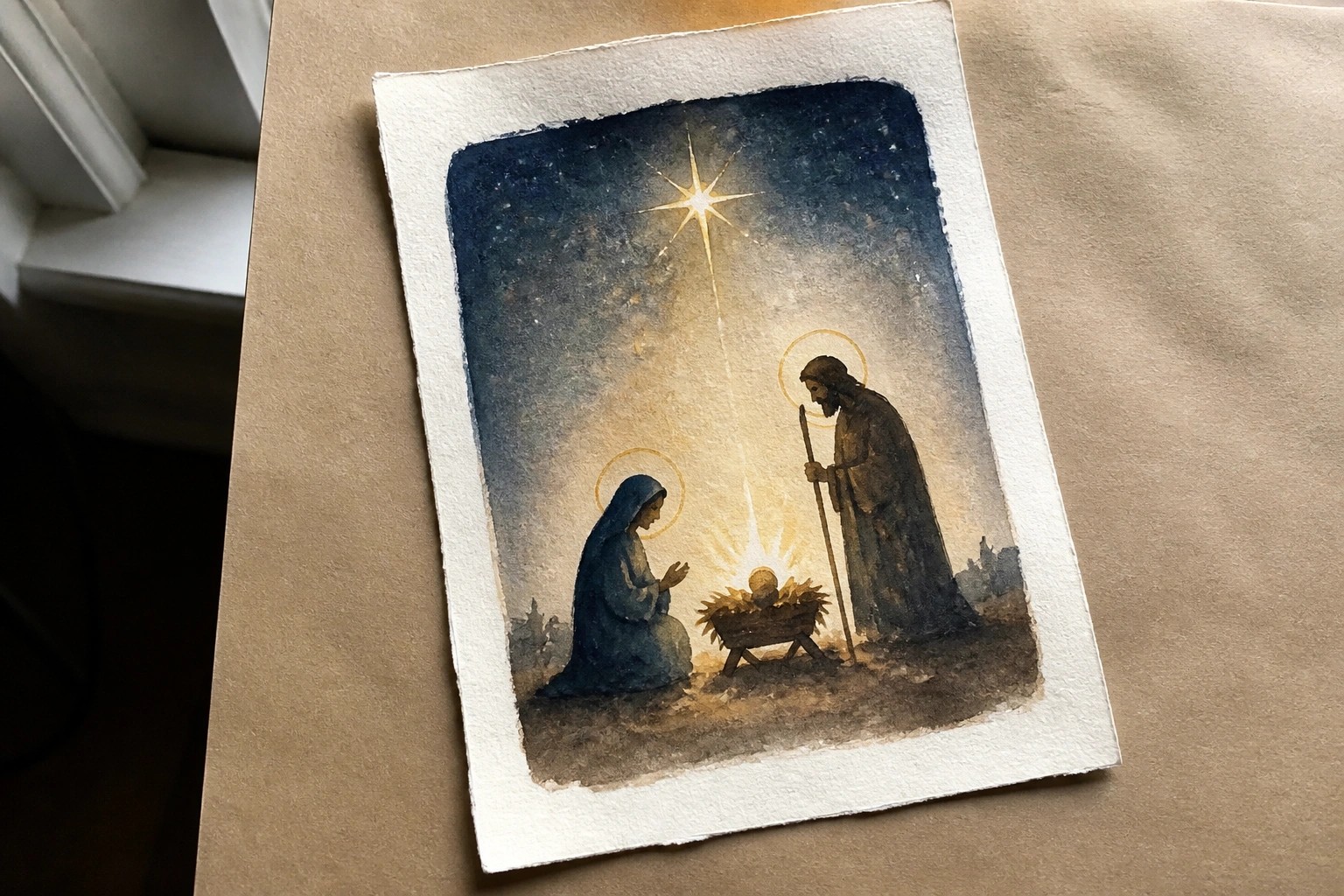
Nativity Scene with a Prominent Guiding Star
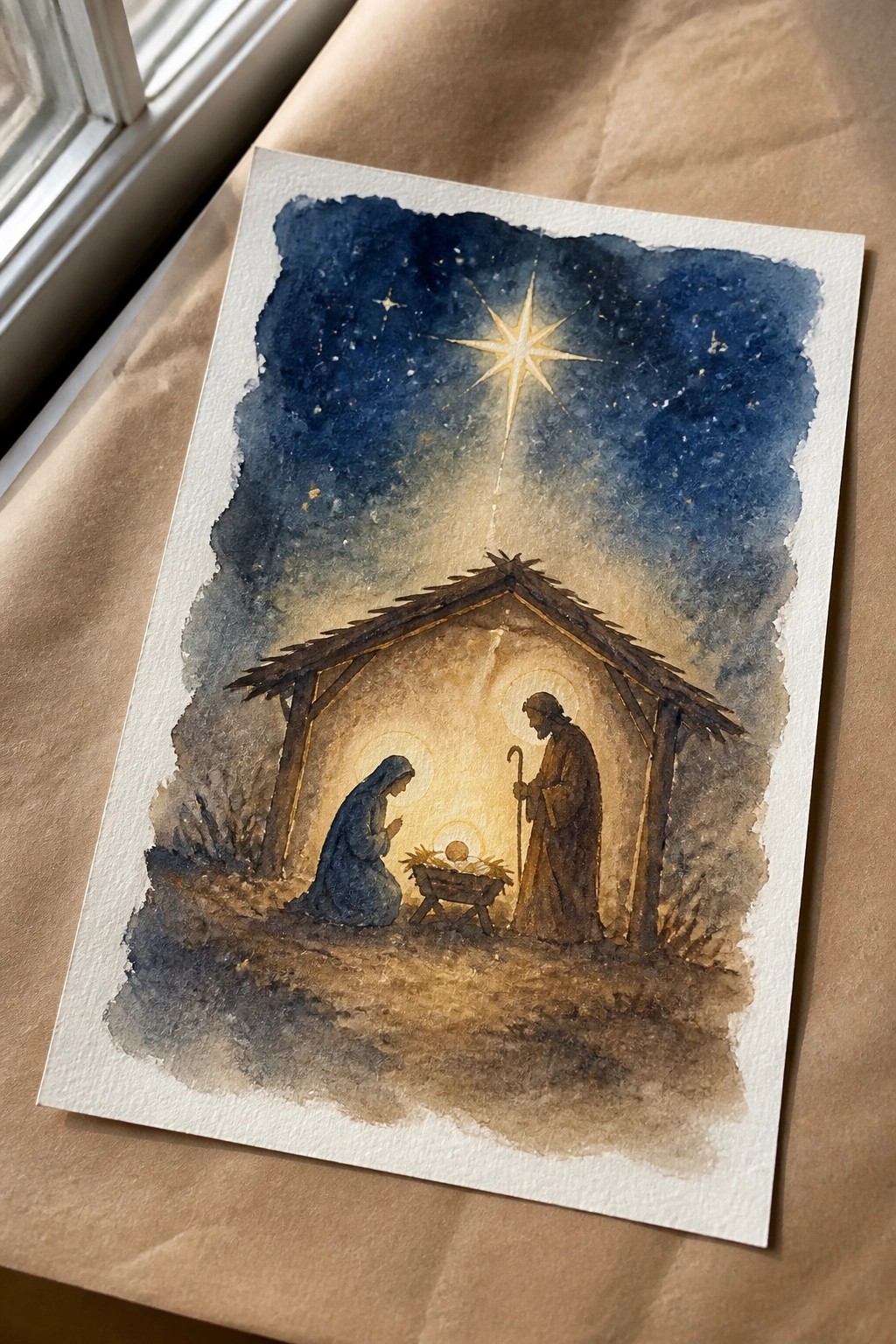
A nativity painting idea like this centers on the holy family arranged around a manger inside a basic stable, with the night sky and one large star taking up most of the upper space. The concept works as seasonal biblical art where the composition places the brightest light source high and lets the glow spread downward to connect the figures. Simple shapes for the stable roof and ground keep the focus on the arrangement rather than extra details.
What makes this idea useful is how the single bright star and the light it casts do most of the work in creating a clear focal point. The color shift from deep blue at the top to warmer tones near the stable makes it easy to adapt by changing the sky depth or cropping tighter around the figures for a smaller piece. For practice, this kind of subject helps with balancing a strong vertical element like the star against the lower horizontal layout of the stable.
Dove with Olive Branch and Peace Text
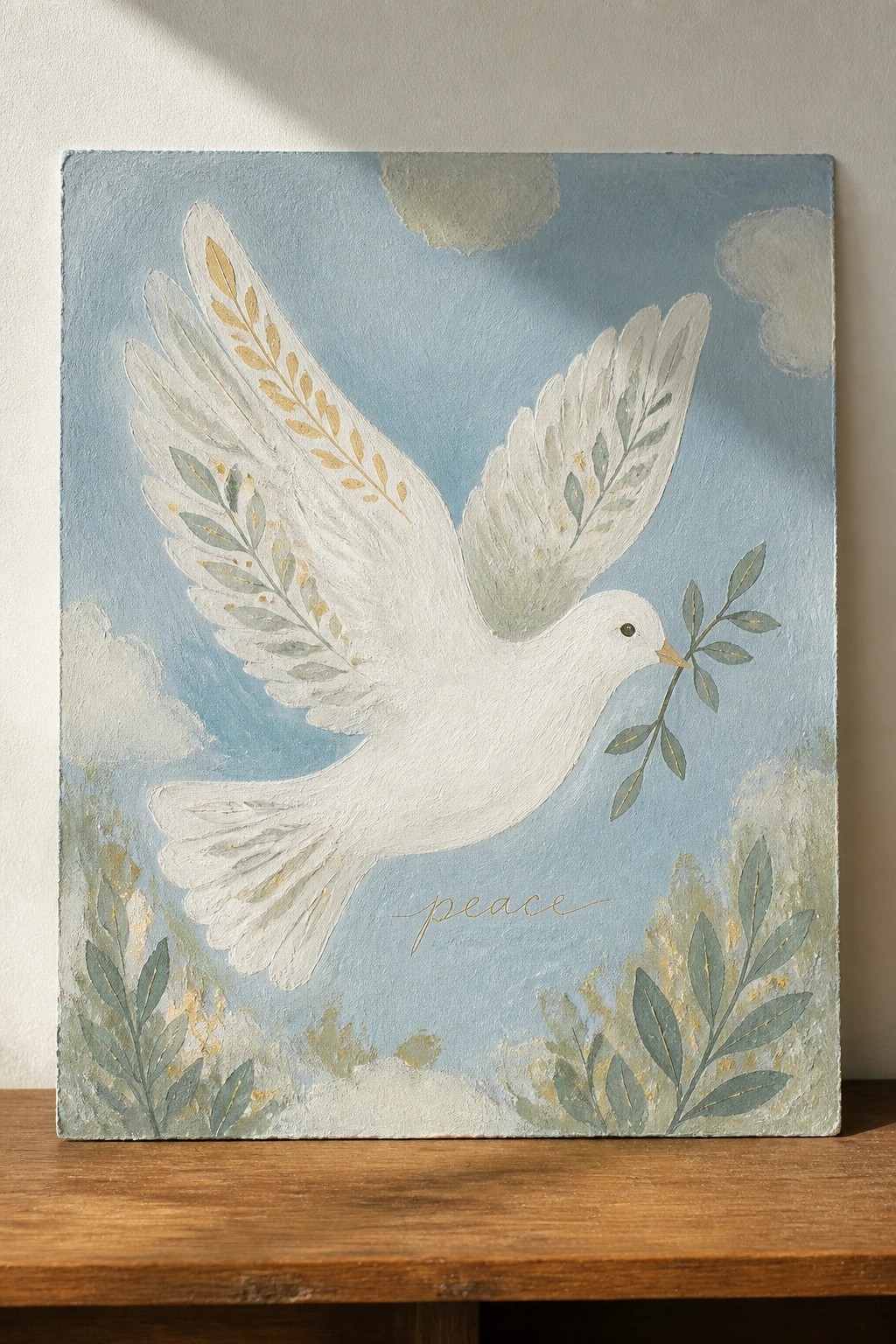
A white dove in mid-flight holding an olive branch works as a clear central subject when set against a light blue sky with soft cloud shapes. The wings are built with overlapping strokes and light gold accents on the feathers while the body stays mostly plain to keep the focus forward. Placing the word peace in simple script underneath balances the layout and turns the whole thing into a straightforward symbolic piece rather than a busy scene.
What makes this idea useful is the centered bird that lets you work on one main shape without needing complex perspective. The sky and bottom foliage can be simplified or swapped for different background colors depending on the room or canvas size. This would be easy to turn into a smaller version for a card or gift by keeping the same wing angles and branch placement but using fewer layers.
A Shepherd Reaching Toward Sheep in a Sunset Field
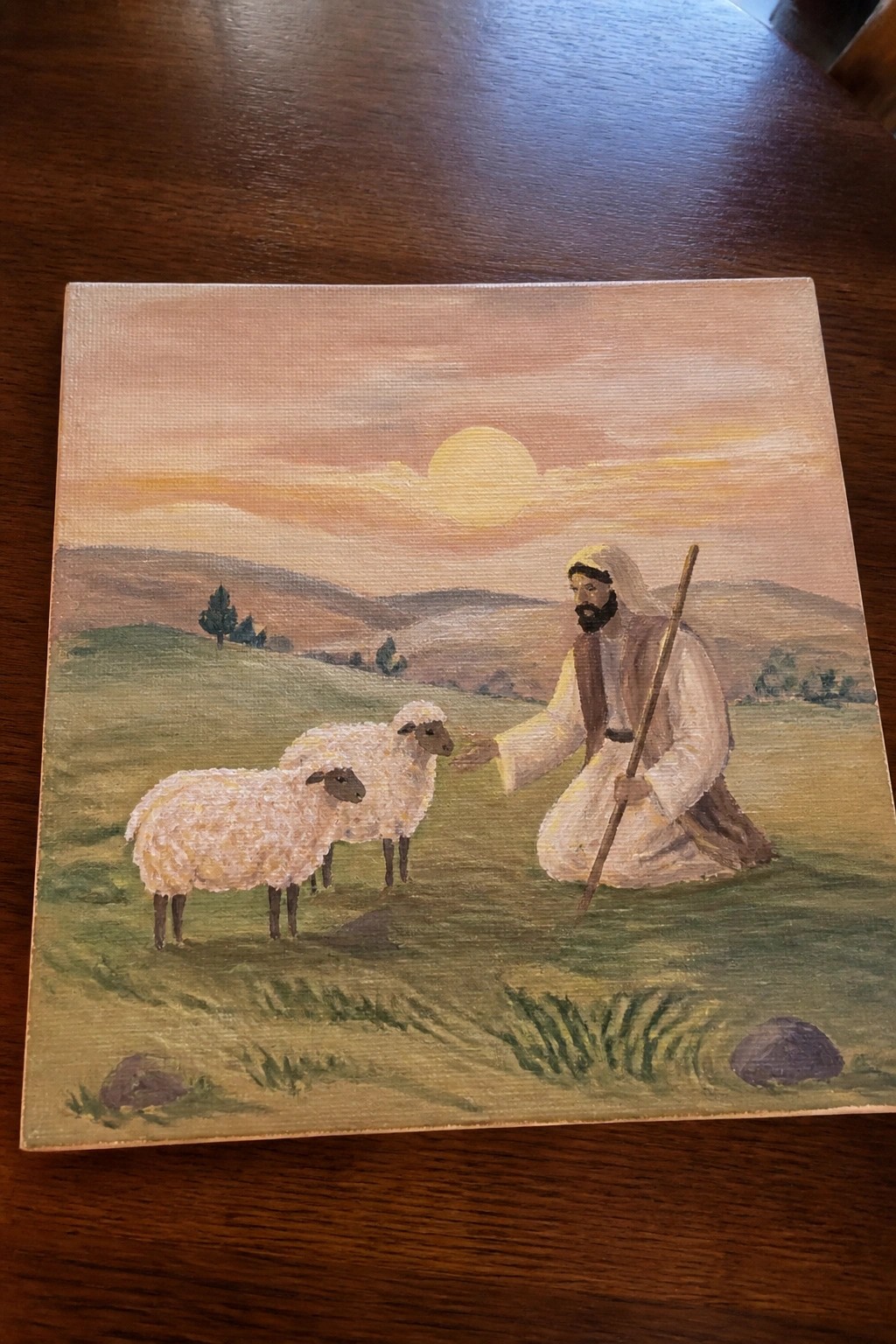
This painting idea centers on a biblical shepherd figure kneeling in an open landscape while extending a hand to two sheep, set against rolling hills and a glowing sunset sky. It belongs to the category of religious landscape painting, where the main action sits low on the canvas so the sky and distant terrain carry most of the visual weight. The warm horizontal bands of color in the sky create a simple way to separate foreground and background without needing complex perspective.
The composition does a lot of the work here by placing the figures to one side and letting the horizon line guide the eye across the scene. You could adapt it by cropping tighter around the shepherd and sheep for a smaller canvas or by shifting the sunset colors to cooler tones for a different mood. For wall art, the idea works especially well because the broad sky area lets you practice soft blending while the sheep add clear focal points that stay recognizable even if the details stay loose.
Figure and Boat Under a Dramatic Sky
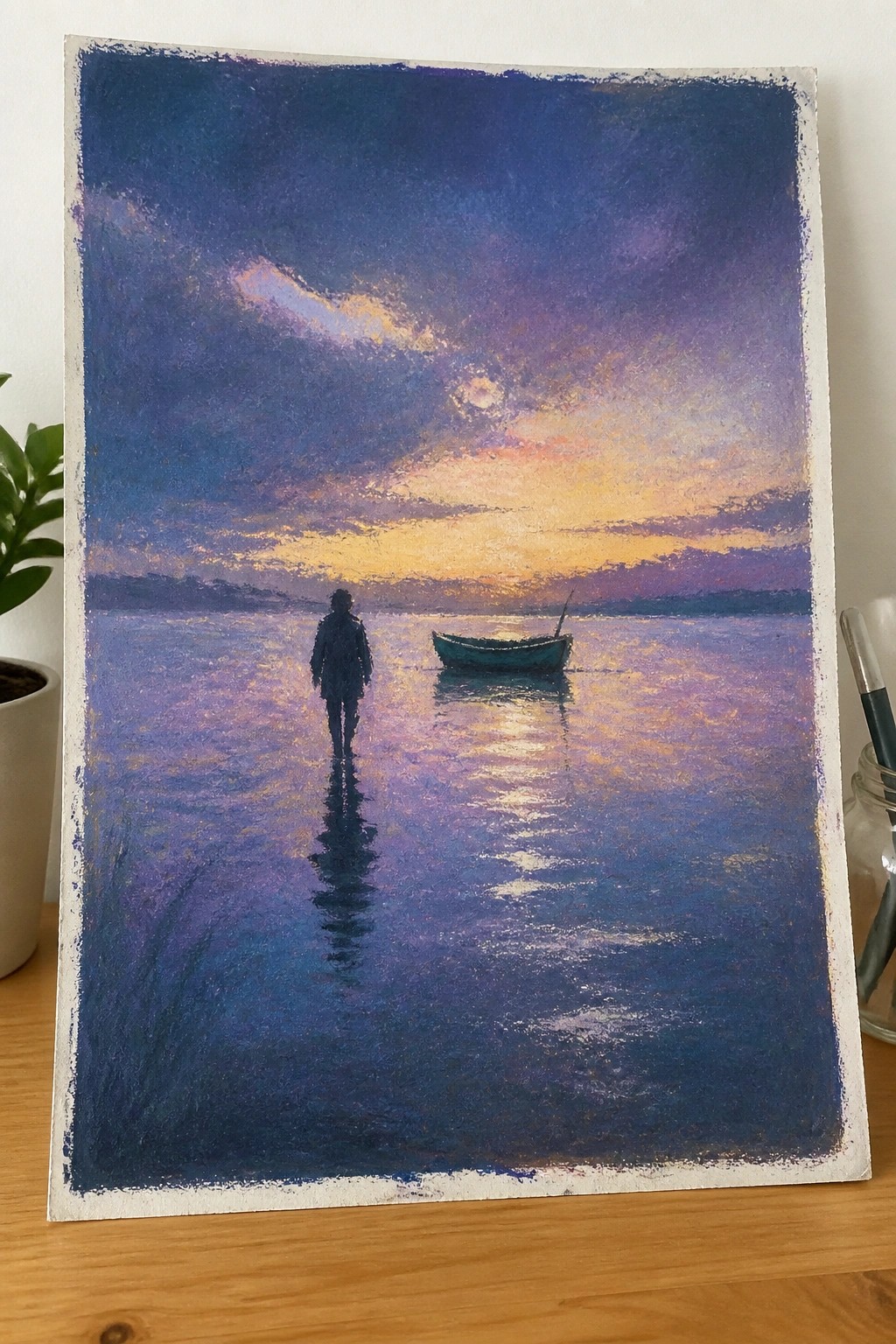
A landscape idea built around a single figure walking into calm water toward a small boat, with most of the space given to a wide sky full of blended sunset colors. The low horizon keeps the water and sky dominant, while the reflections create a simple path that leads the eye straight to the center. This type of scene fits the landscape category and relies on contrast between the dark shapes and the lighter water to hold attention.
The composition does a lot of the work here because the figure and boat act as clear anchors without needing extra details. You can adapt the idea by shifting the colors for a different time of day or replacing the boat with another small object while keeping the same layout. For practice, this kind of subject works well on a medium canvas since the broad areas of sky and water give room to focus on blending without getting lost in fine work. The strong vertical line of the person also helps the scene stand out in a feed of more crowded landscapes.
Loaves and Fishes Still Life with Strong Overhead Light

A still life painting idea built around several loaves of bread and two whole fish placed on a textured surface next to a clay pitcher. The composition relies on a sharp burst of light coming down from the top to separate the subjects from a deep blue background. This setup belongs to the still life category and uses contrast between warm foreground tones and a dark backdrop to keep the focus on the food items.
What makes this idea useful is the clear central grouping that lets you practice light direction without needing complex backgrounds. The color choices stay simple with mostly earth tones and one strong blue, so the same layout works on smaller canvases or larger wall pieces. You could swap the pitcher for a different container or reduce the number of loaves to match the space you have available. For practice sessions this kind of subject gives you direct work on texture and edge control while staying easy to set up at home.
Psalm 1 Tree with Autumn Leaf Layers
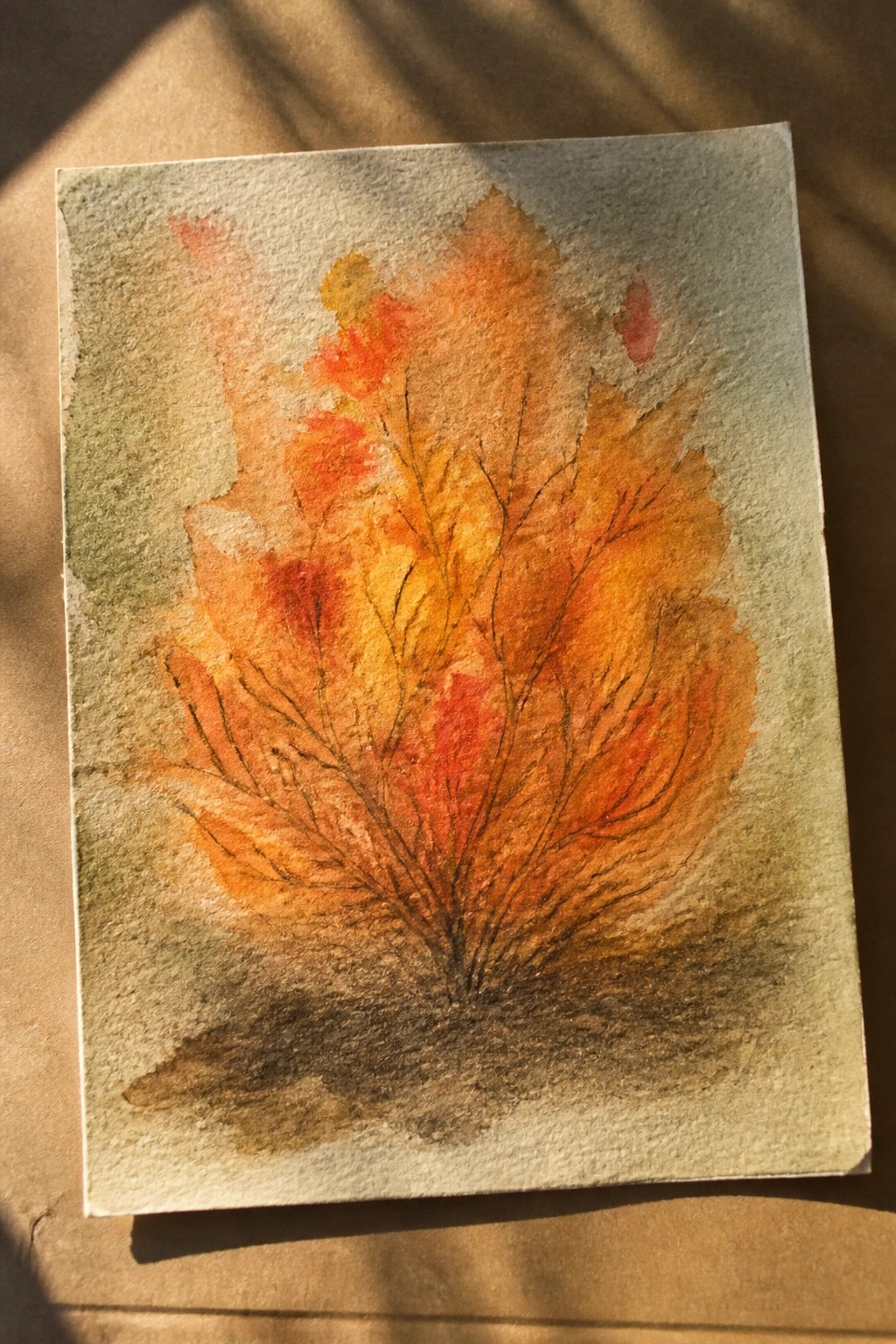
A central tree with branching lines spreading outward works well as a seasonal nature study. The idea uses loose watercolor washes in orange, red, and yellow to build the foliage while keeping the trunk and limbs in darker line work for structure. This approach fits a simple landscape or decorative category where the focus stays on color variation and a balanced, grounded composition.
What makes this idea useful is the clear focal point created by the dark base and radiating branches. The color palette can shift easily to spring greens or summer tones if you want a different season. For practice, this kind of subject lets you test layering without needing complex details, and it translates well to a small canvas or paper size for quick wall pieces. You could simplify the branches further or add a faint water element at the base to tie it closer to the Psalm 1 reference.
Jonah and the Whale Scene
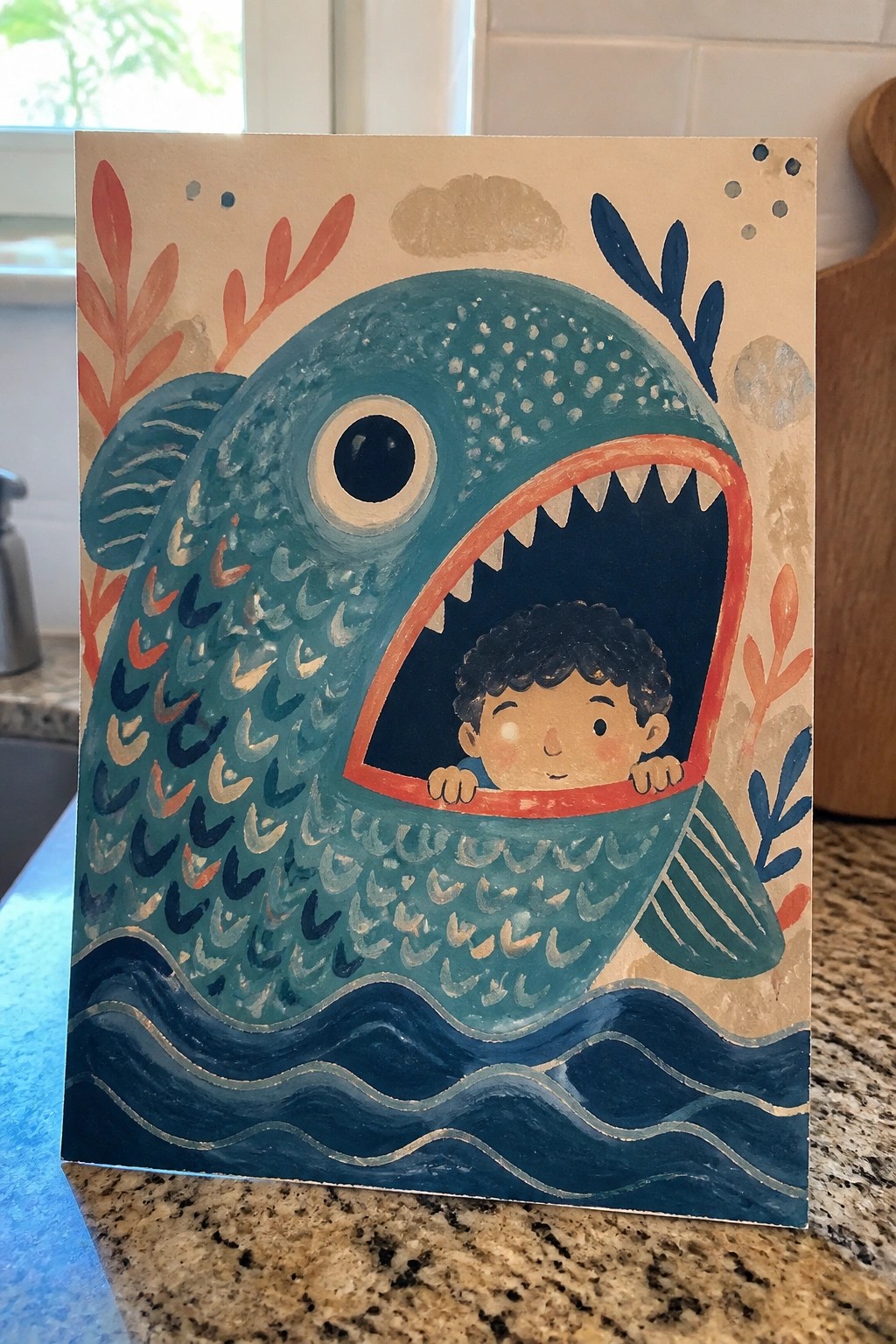
This painting idea uses the story of Jonah as a large fish carrying a boy inside its open mouth, with the fish body filling most of the space and waves at the bottom. It is an animal-plus-figure illustration that relies on clear shapes and a teal-and-blue palette to keep the main action easy to see. The mouth acts as a natural frame for the boy, while the surrounding leaves and dots fill the edges without competing for attention.
What makes this idea useful is how the big fish shape gives you a clear center point that works at different sizes. You can simplify the scales or swap the coral plants for other water plants if you want a faster version for a card or print. The layout leaves room to adjust the wave height or add more fish if you decide to expand it into a full underwater scene later.
Angel Hovering Over a Meadow Landscape
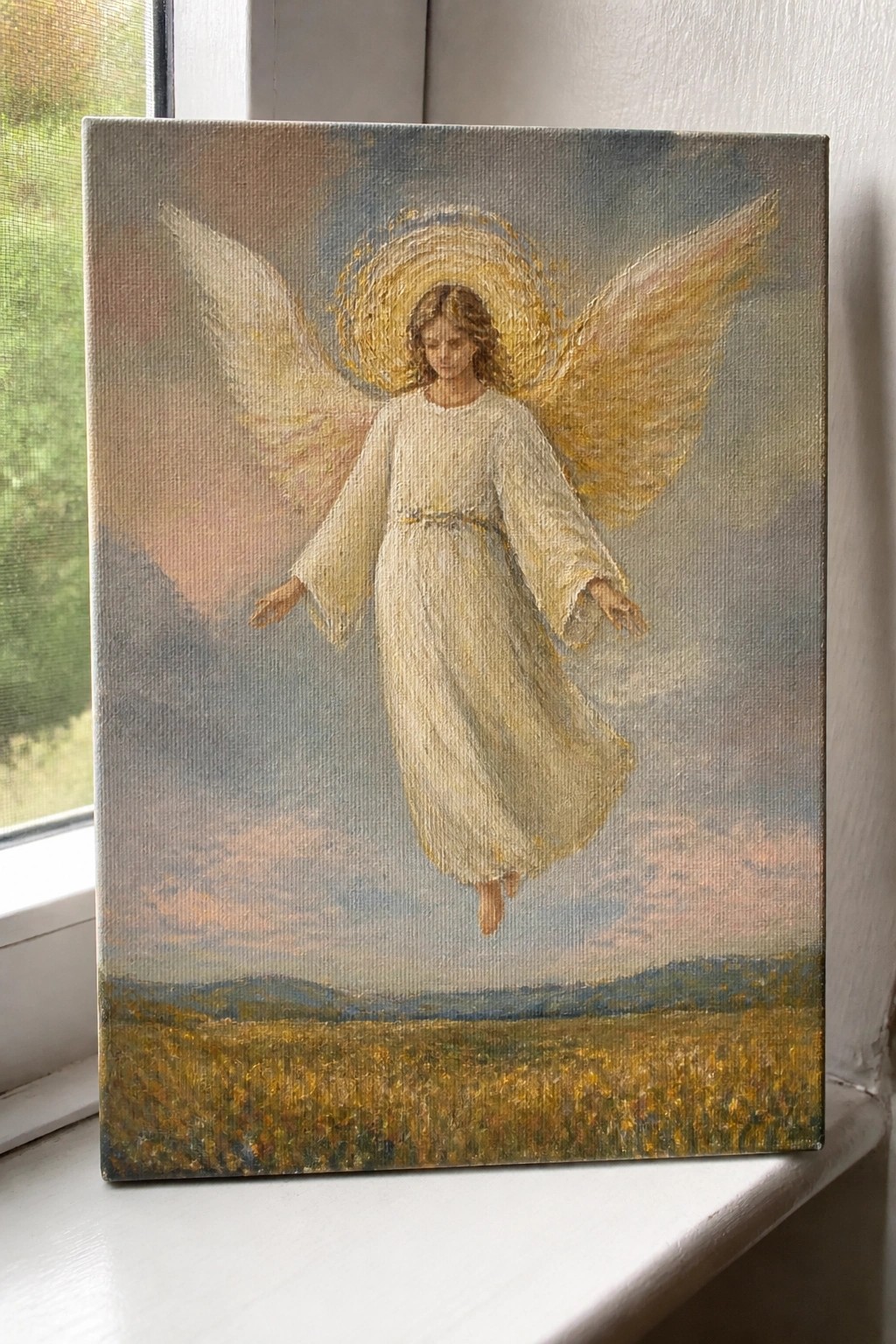
A biblical angel painting idea centers on a robed figure with outstretched wings positioned above a wide field of flowers. The vertical composition keeps the figure as the clear focal point while the sky and distant hills create a simple layered background. This fits the category of religious figure painting combined with landscape elements.
What makes this idea useful is the straightforward central placement that reduces the need for complex perspective or multiple subjects. The soft sky-to-field transition can be adjusted to different color palettes or simplified into fewer layers depending on your skill level. For wall art, the tall format works well for prints or canvas pieces that fit narrow spaces. The same layout could be adapted by changing the field to a different season or toning down the wing details for a quicker version.
Still Waters with a Lone Tree
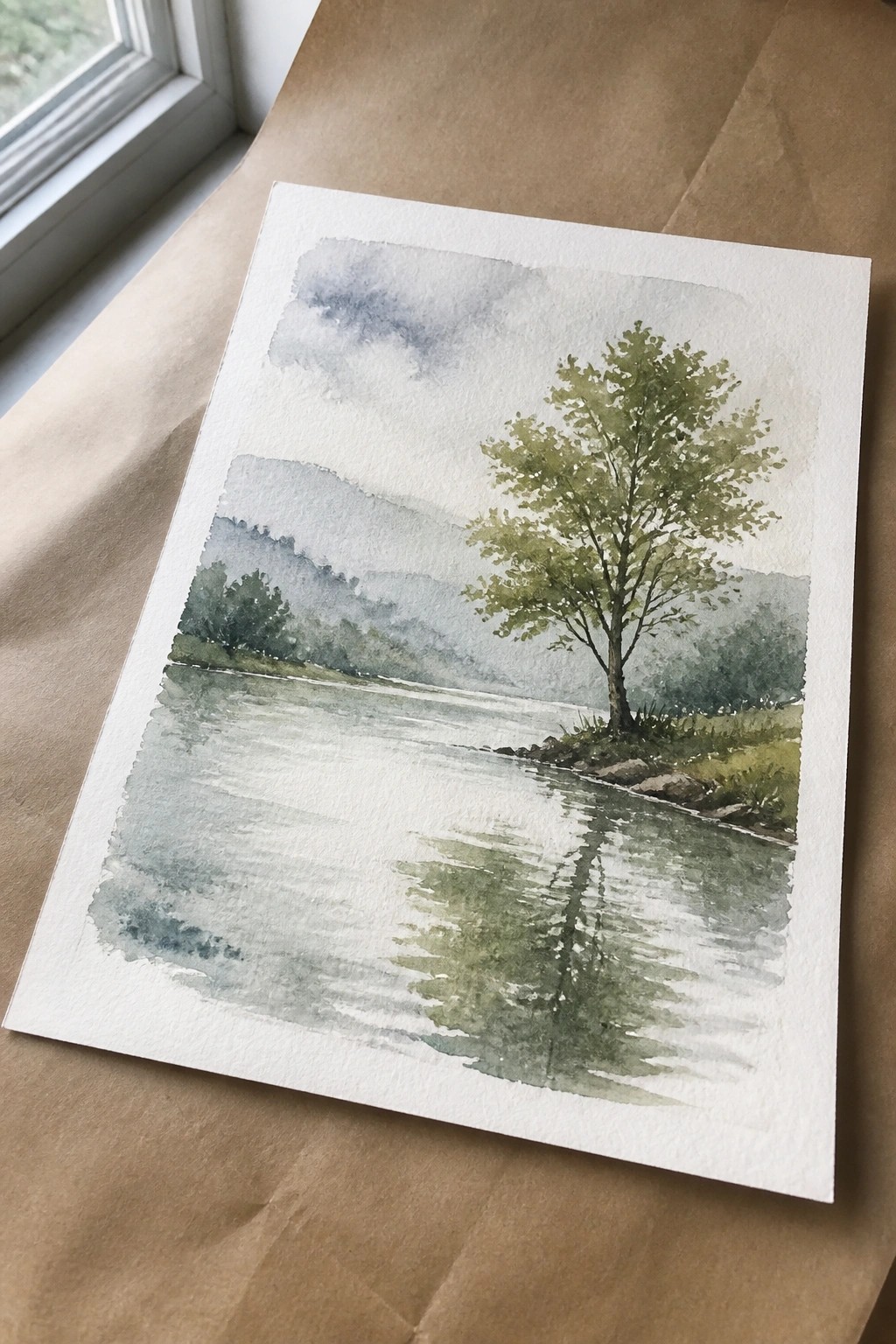
A landscape painting idea built around a wide stretch of calm water, a single tree positioned near the edge, and soft layered hills fading into the distance. The off-center tree and its reflection create a natural focal point that balances the open space above and below the horizon line. Gentle color shifts between cool greens, muted blues, and pale grays keep the scene unified while the horizontal layout emphasizes stillness and depth.
What makes this idea useful is how the reflection and shoreline together handle most of the visual interest without extra details. The limited palette and loose edges make it straightforward to practice wet-on-wet blending or adjust the scale for smaller paper. The same layout adapts easily to a different season by shifting the greens toward warmer tones, and the simple structure works well for wall pieces or quick studies that still read clearly from a distance.
Sunburst Cross with Scripture Quote
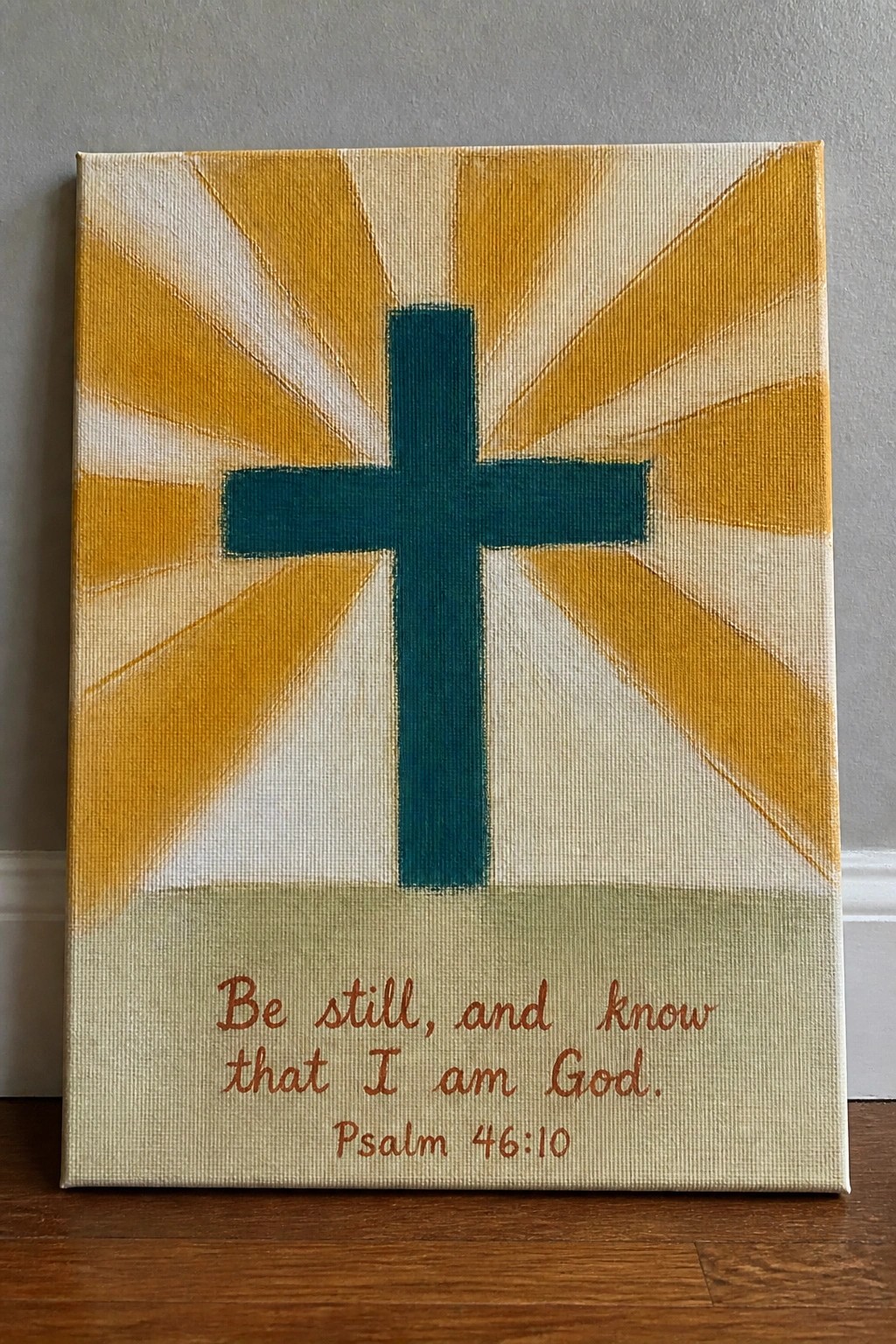
A centered cross stands out against a background of radiating lines in yellow and cream tones. This decorative painting idea combines a strong geometric focal point with a simple text element at the base. The rays create movement that draws attention to the cross while the lower band holds the verse without competing for focus.
The composition works well because the rays and cross use basic shapes that are straightforward to paint. You can easily change the colors of the rays or the cross to match different decor styles. This kind of piece makes a good choice for quick wall art since it requires minimal detail work and still looks complete. The same layout can be simplified further by reducing the number of rays or scaled up on a larger canvas for bigger spaces.
A Good Samaritan Roadside Help Scene
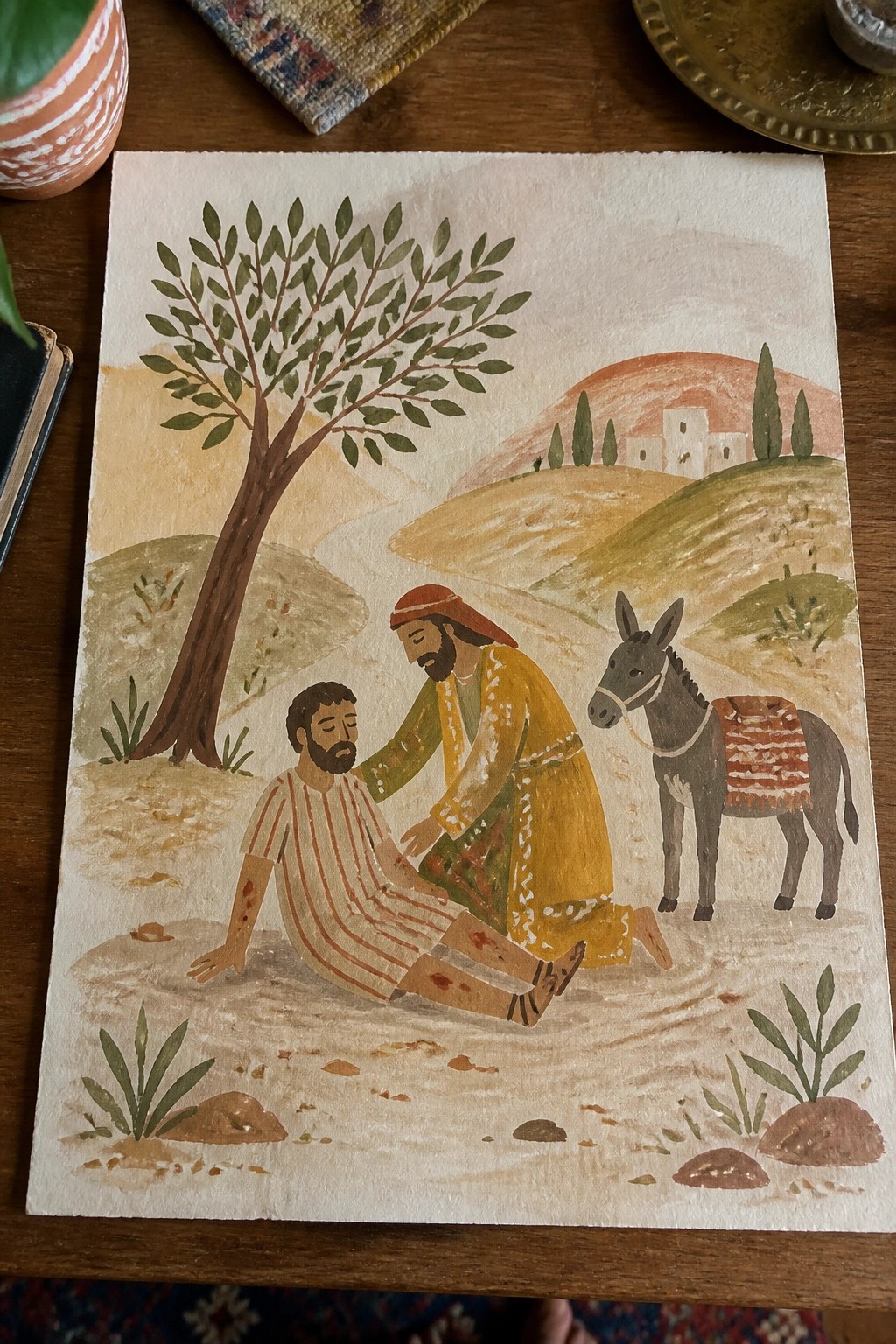
The painting idea focuses on the moment of assistance in the Good Samaritan story, with one figure kneeling beside an injured traveler on a dirt path. This narrative approach combines figures with a simple landscape, using the left-side tree and right-side donkey to frame the central action without crowding it. The warm earth tones and flat shapes create a balanced layout that keeps attention on the interaction while the distant hills and building add depth.
What makes this idea useful is how the main figures can be sketched first and the background added later for easier practice. The limited color palette works on watercolor paper or acrylics and can be adjusted by changing the robe colors or removing the distant building. For wall pieces or gifts, the clear story element makes it easy to adapt into different sizes while keeping the same left-to-right flow.
Noah’s Ark Animals Under a Rainbow Arch
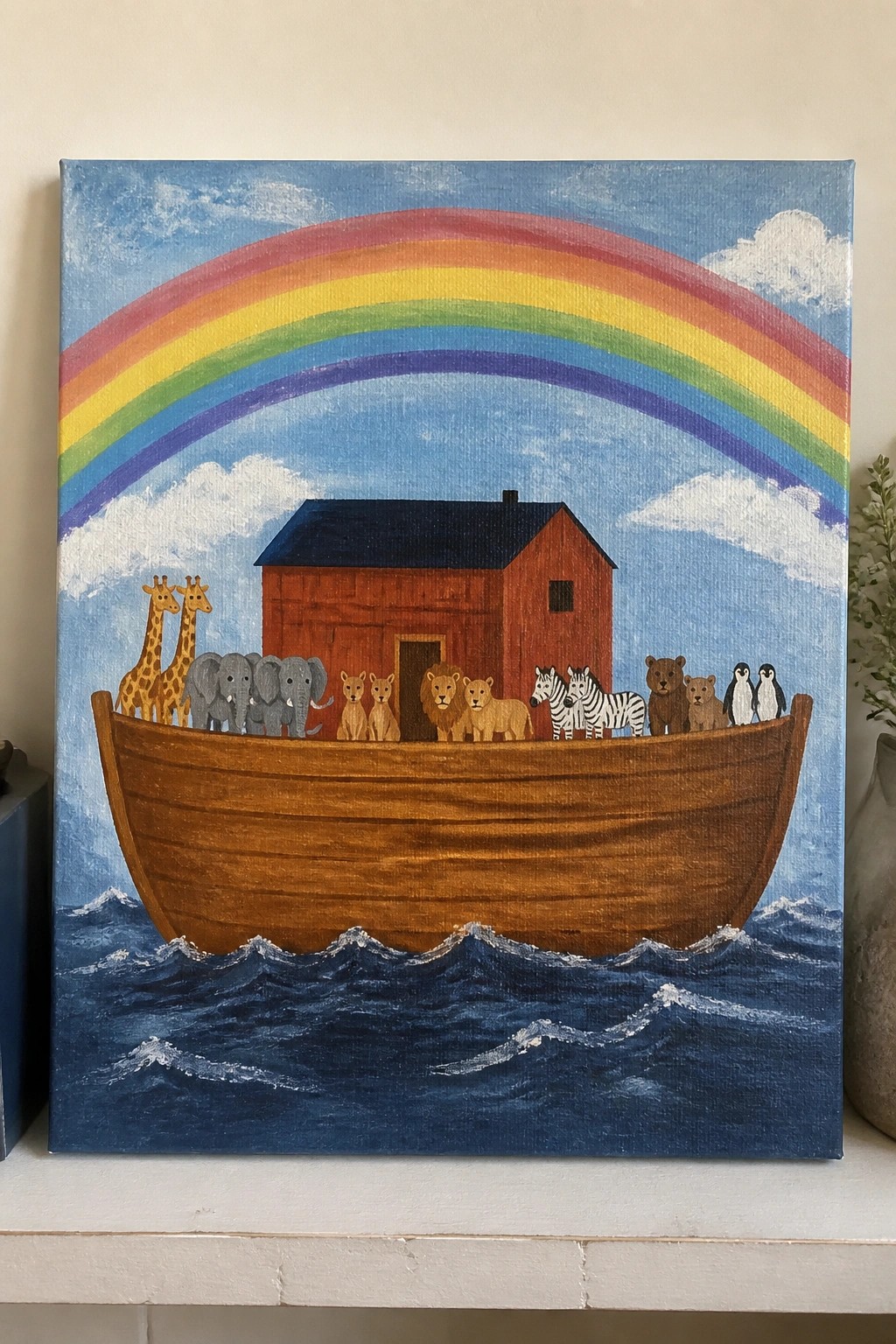
A Noah’s Ark painting idea centers on a wooden boat carrying pairs of animals across the water with a rainbow spanning the sky above. The animals sit in a single row along the boat’s edge so each one remains visible and the curved rainbow creates a natural frame that pulls the eye across the scene. This approach fits the animal and narrative painting category because the simple layout keeps the focus on the subjects without complex backgrounds or overlapping forms.
The composition does a lot of the work here by spacing the animals evenly so you can paint them one at a time. The color palette makes this easy to adapt since the rainbow’s stripes give you ready contrast against the blue water and sky. For wall art you can scale the idea down by using fewer animals or change the boat size to match different canvas shapes while keeping the same arrangement.
David and Goliath from the Smaller Figure’s View
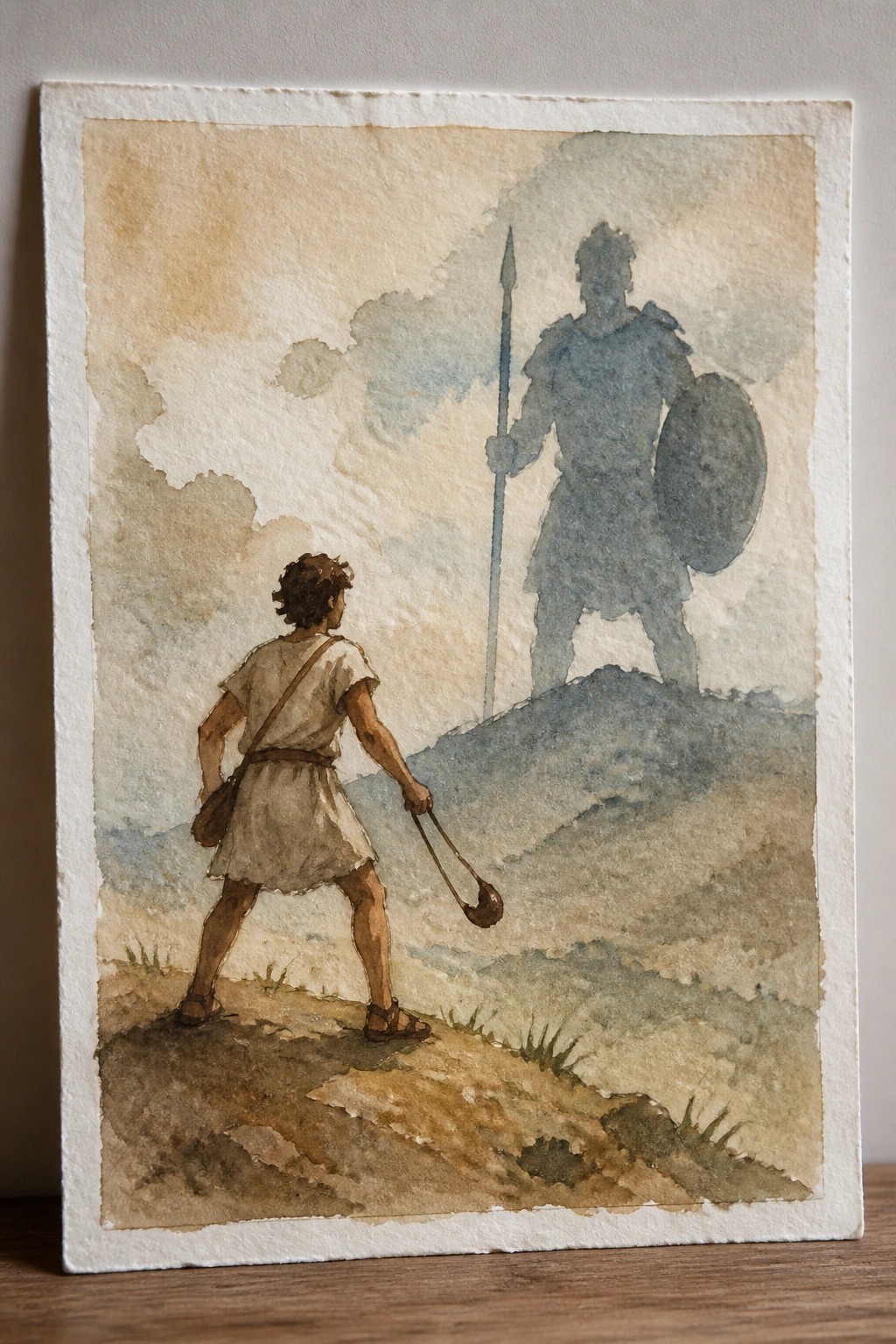
The painting idea shows the biblical confrontation between David and Goliath by emphasizing size contrast and viewpoint. A small figure in simple clothing stands on lower ground holding a sling while facing a much larger armored warrior positioned on a hill above. The layered hills and open sky create depth that makes the scale difference the main focus of the composition.
What makes this idea useful is the clear vertical layout that guides the eye from the foreground figure up to the giant. The muted earth tones and soft cloud shapes keep the scene simple enough to adapt for different sizes or color shifts without losing the core contrast. For practice, the two-figure setup works well because the background can stay loose while the size relationship carries the idea. This approach also translates easily to other biblical stories that rely on one smaller subject facing a dominant form.
Jesus and His Disciples Sharing the Last Supper
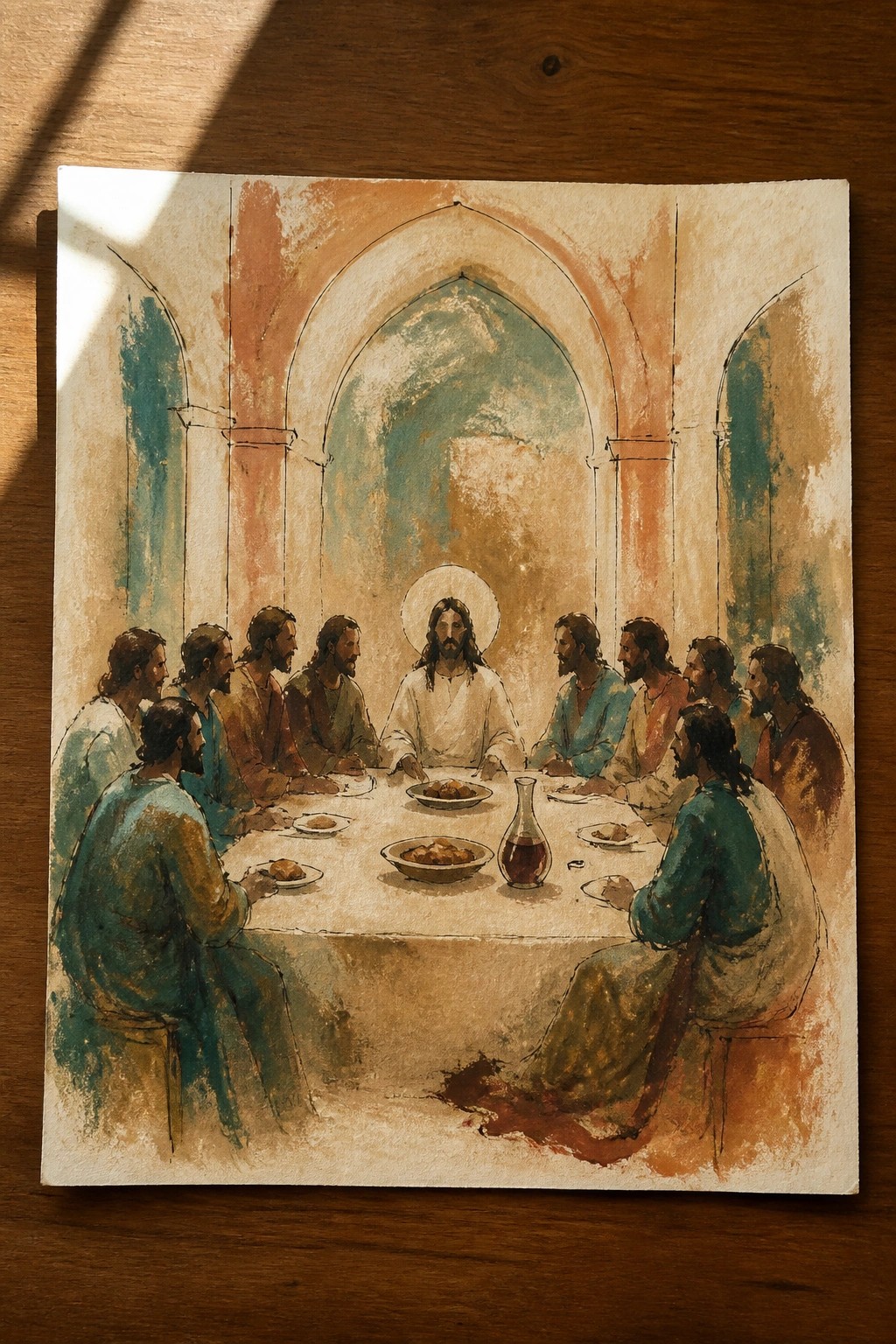
The core idea here is a biblical narrative scene showing Jesus seated at the center of a long table with his disciples during their final meal together. This type of group composition works because the circular table layout draws the eye inward while the repeated arch shapes in the background create rhythm and depth. Loose brushwork and a muted palette of earth tones with teal accents keep the focus on the figures rather than on precise details or heavy rendering.
What makes this idea useful is how the balanced seating arrangement lets you scale the number of figures up or down depending on your canvas size. You could simplify the background arches or shift the color accents to match different room styles if you want it as wall art. For practice, blocking in the central figure first and then adding the surrounding poses helps maintain stability even if the individual gestures change.
Crown of Thorns with White Lilies Still Life
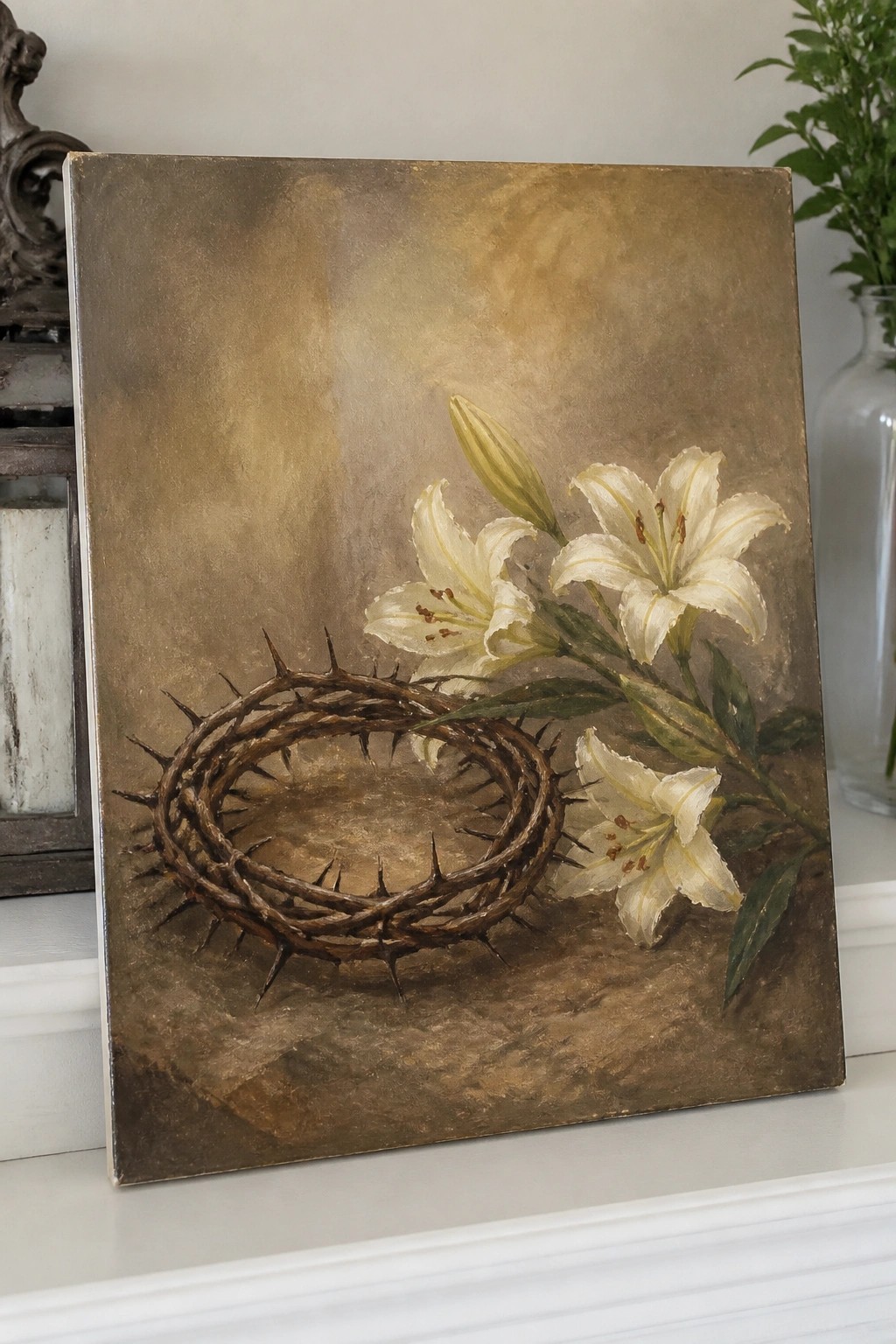
A still life painting idea that combines a woven crown of thorns with a few stems of white lilies against a textured brown background. The thorns sit low and spread across the lower left while the flowers extend upward on the right, creating an off-center balance that keeps the eye moving between the two elements. The limited color palette and soft edges let the rough texture of the thorns stand out against the smoother petals without needing extra detail.
What makes this idea useful is how the asymmetrical layout handles most of the visual interest, so you do not need complex background work. You could simplify it by using fewer flowers or change the background to a warmer or cooler tone depending on the room. For practice, this kind of subject works well because it gives you clear shapes to work on while still leaving room to adjust scale or crop tighter for a smaller canvas.
Harp with Psalm Scroll Decorative Painting
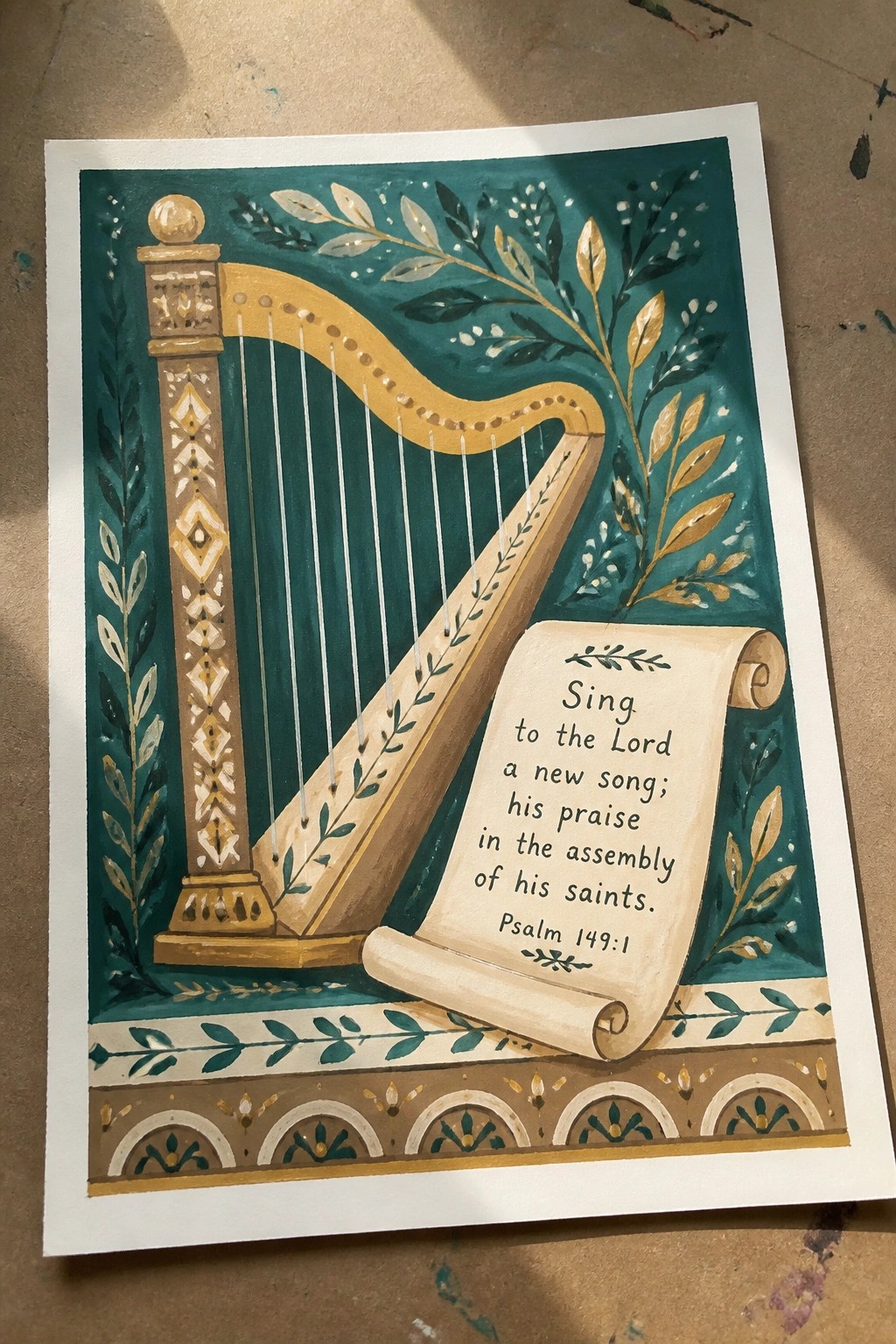
A decorative painting idea that pairs a harp with a rolled scroll displaying Psalm 149:1 creates a clear religious still life. The harp stands upright on the left while the scroll rests at an angle in front of it, with leafy branches filling the space around both objects on a solid teal background. The limited color range of gold, cream, and deep green keeps the focus on the two main shapes and makes the verse easy to read.
What makes this idea useful is how the harp and scroll form a natural L-shape that works on both vertical and square canvases without extra planning. The background stays simple so the lettering and instrument stay prominent, which helps if you want to change the verse or adjust the leaf details for different sizes. For wall art this layout stands out on Pinterest because the text is integrated directly into the image rather than added later. You could reduce the number of leaves or swap in a different instrument if the full version feels too detailed to start.
Jesus Teaching Disciples on a Hillside at Dawn
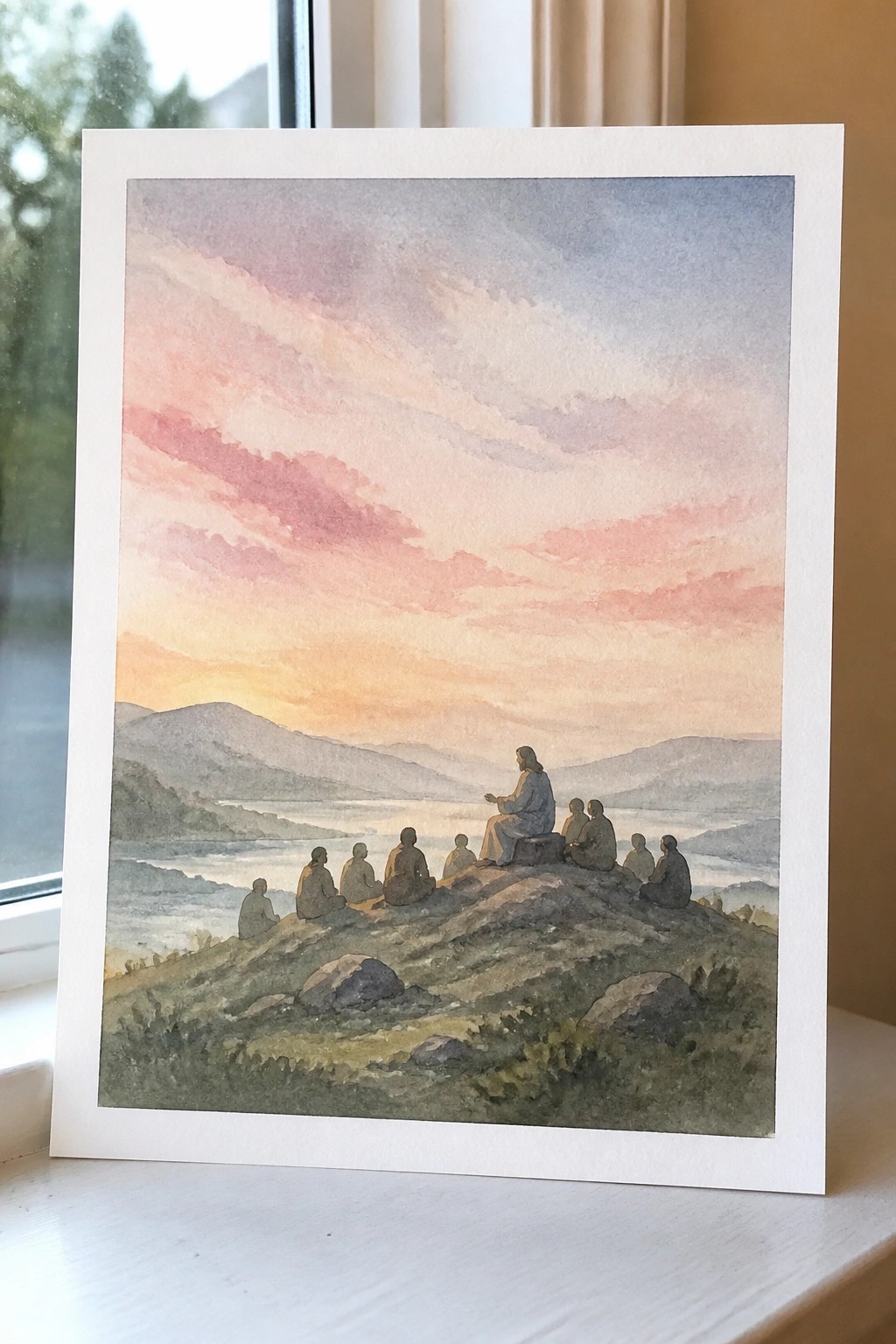
The idea is a biblical gathering scene where one standing figure addresses a small group seated on a rocky rise above a broad lake. The composition uses a low horizon line so the sky and distant mountains fill most of the space while the people stay compact and secondary. Gentle color transitions from warm orange near the horizon to cooler pinks and blues higher up keep the focus on the simple cluster of figures against the open landscape.
What makes this idea useful is how the small size of the figures lets you practice basic shapes and proportions without needing fine detail. The wide sky gives you room to experiment with loose washes or layered color while the water and hills stay straightforward to block in. You can easily shrink the group or change the time of day to fit a smaller canvas or a different palette. For wall pieces the horizontal format works in standard frames and the muted tones sit comfortably in most rooms.
Scripture Quote with Soft Floral Border
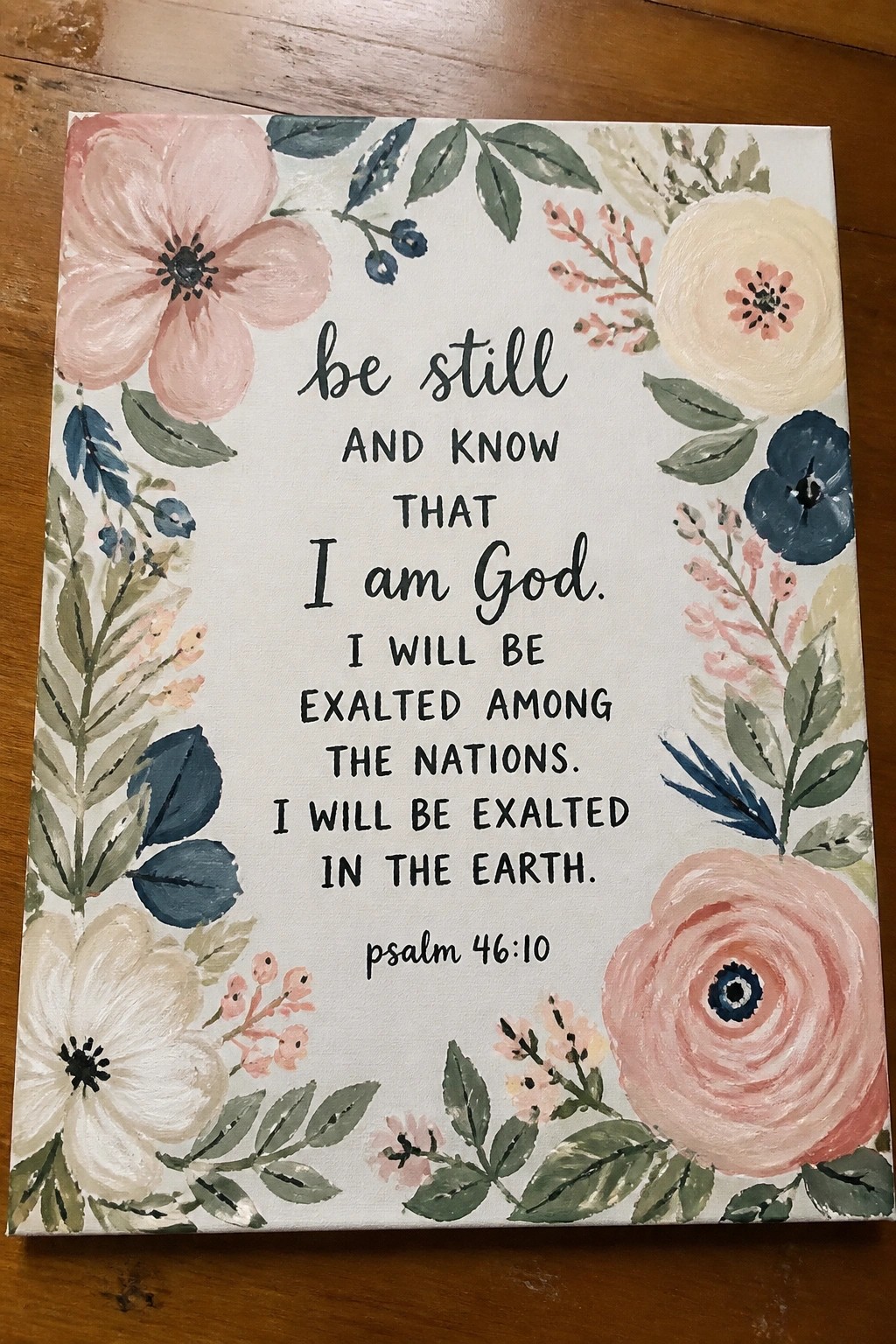
A painting idea that centers an entire Bible verse on a plain background while using a ring of watercolor-style flowers and leaves to frame the text on all sides. The concept treats the lettering as the main focal point and lets the blooms in muted pinks, creams, and dusty blues act as a gentle border rather than scattered decoration. This approach falls under decorative text art, where the even spacing of the florals keeps the layout balanced and readable.
What makes this idea useful is the clear division between the text block and the outer border, so you can finish the lettering first and then fill in the flowers at your own pace. The muted color palette adapts easily if you want to match a room or switch to a different verse. For wall pieces, the design works well because the text stays legible from a distance while the border gives it a finished look. You could reduce the number of flowers to four corner clusters or swap in different leaf shapes without changing the overall layout.
Frequently Asked Questions
What museums or galleries house the original versions of these biblical paintings? Many of these works are displayed in major institutions such as the Louvre in Paris, the Vatican Museums, and the Metropolitan Museum of Art in New York. Checking each museum website allows you to confirm current locations, viewing hours, and any special exhibitions. Some pieces may also be on loan, so planning ahead helps avoid disappointment during a visit.
How can I obtain high quality prints or digital copies of the paintings for personal use? Reproductions are often available through official museum shops or licensed art sites like Art.com and Fine Art America. For digital versions, public domain resources on platforms such as Wikimedia Commons or Google Arts and Culture provide free downloads in high resolution. Always verify licensing terms to ensure the images suit your intended purpose, whether for home printing or devotional materials.
Which specific Bible passages do the paintings illustrate most directly? Each artwork typically connects to well known stories such as the Creation in Genesis, the Annunciation in Luke, or the Crucifixion in the Gospels. Reading the corresponding chapter alongside the image deepens appreciation and reveals symbolic details the artist chose to highlight. Many articles include verse references that guide this side by side study.
How might these paintings support daily prayer or meditation? Displaying one image in a quiet space and spending a few minutes reflecting on its details can focus attention on themes of faith, hope, and redemption. Some people journal about emotions or insights that arise, while others use the artwork as a visual prompt during scripture reading. Over time this practice builds a personal connection to the biblical narrative.
Are there additional biblical paintings from other eras that offer similar inspiration? Beyond the 18 featured works, artists from the Baroque and Renaissance periods produced numerous pieces now held in European collections. Exploring artists such as Caravaggio or Rembrandt through museum catalogs reveals further examples rich in emotional depth. Online databases allow you to compare styles and themes across centuries for continued discovery.