I have always liked seeing how some artists take bible stories and give them a modern look without making them feel distant.
My own attempts at painting similar themes often end up looking too old fashioned so these examples caught my eye.
They show familiar scenes with current clothing and settings yet still keep a sense of respect for the original meaning.
A few of them use simple colors and everyday faces which makes the stories easier to connect with.
I thought it would be useful to share twenty that handle this balance in a natural way.
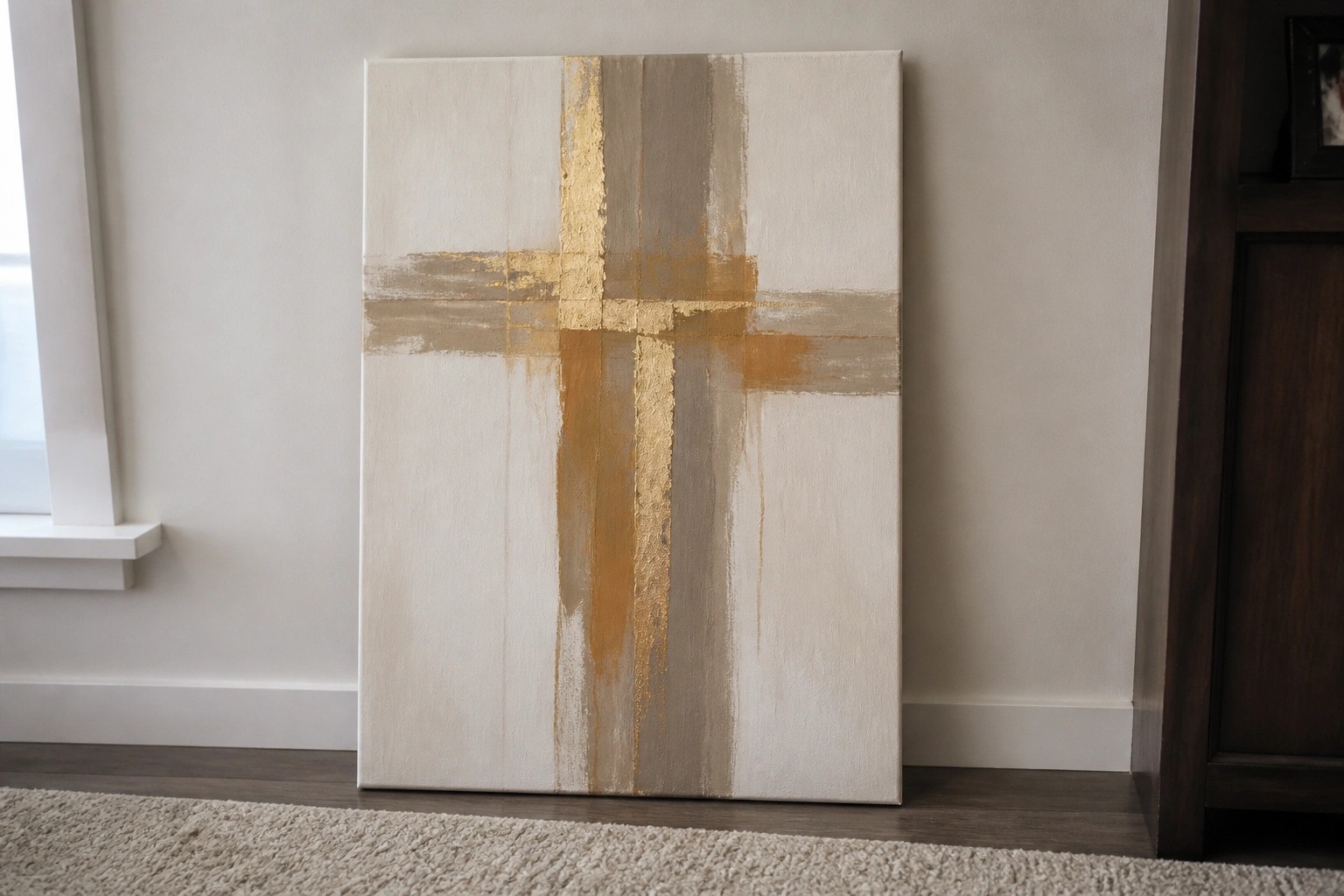
Abstract Cross Built from Layered Neutral Strokes
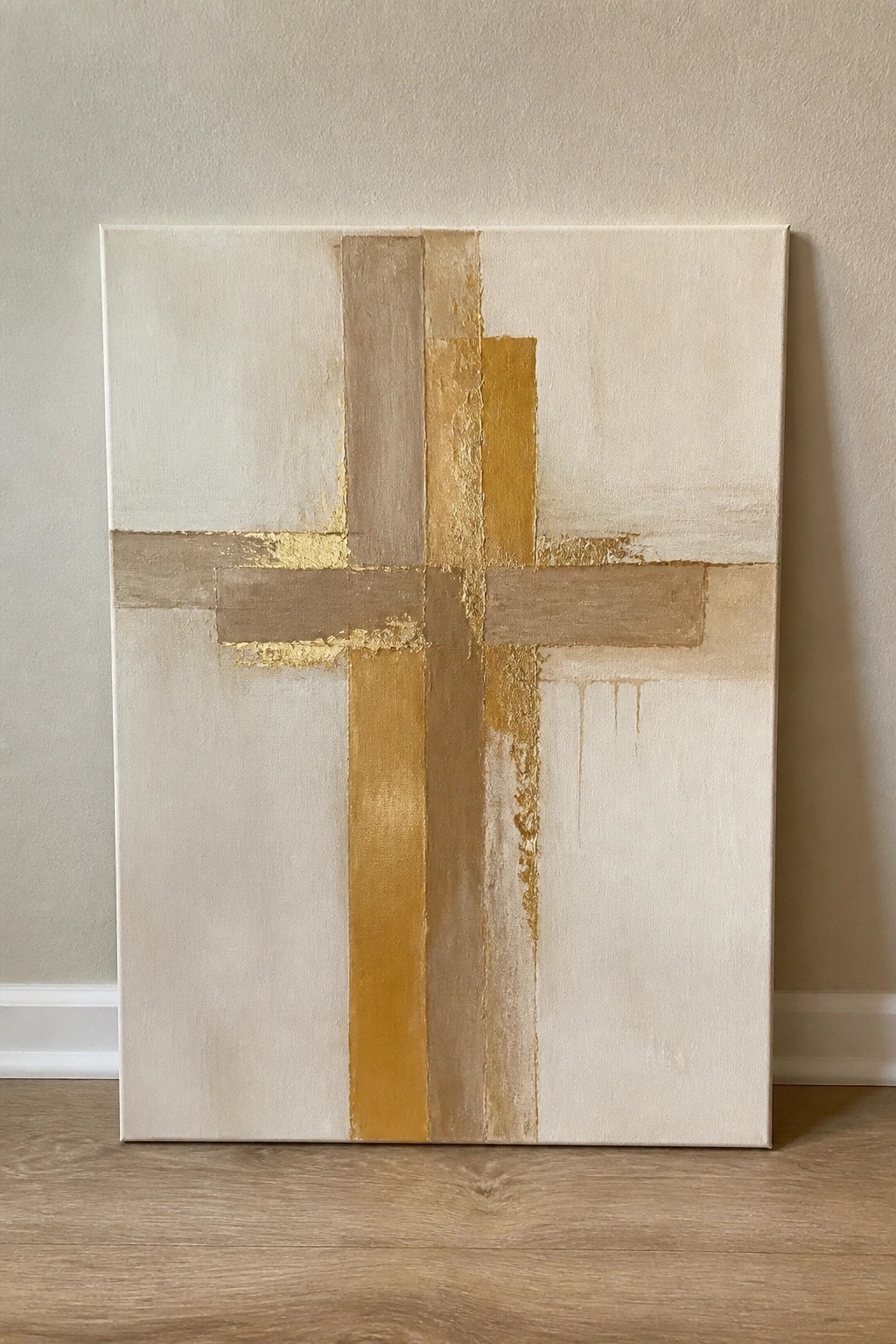
The idea here is a cross formed by wide overlapping bands in soft beige, taupe, and warm gold tones against a pale background. The composition relies on simple horizontal and vertical blocks that intersect at the center, with thin gold leaf accents added along some edges to catch light. This keeps the focus on shape and texture rather than fine detail, making it a straightforward abstract approach to a biblical symbol.
What makes this idea useful is how easily the same layout can be adjusted to different canvas sizes or color mixes. You can use house paint, acrylics, or even leftover wall colors for the base layers and add gold leaf or metallic paint only where the bands cross. For wall art, the neutral range blends with most rooms while the metallic touches keep it from feeling flat. The background stays light so the cross remains the clear focal point.
Shepherd and Flock in Layered Hills
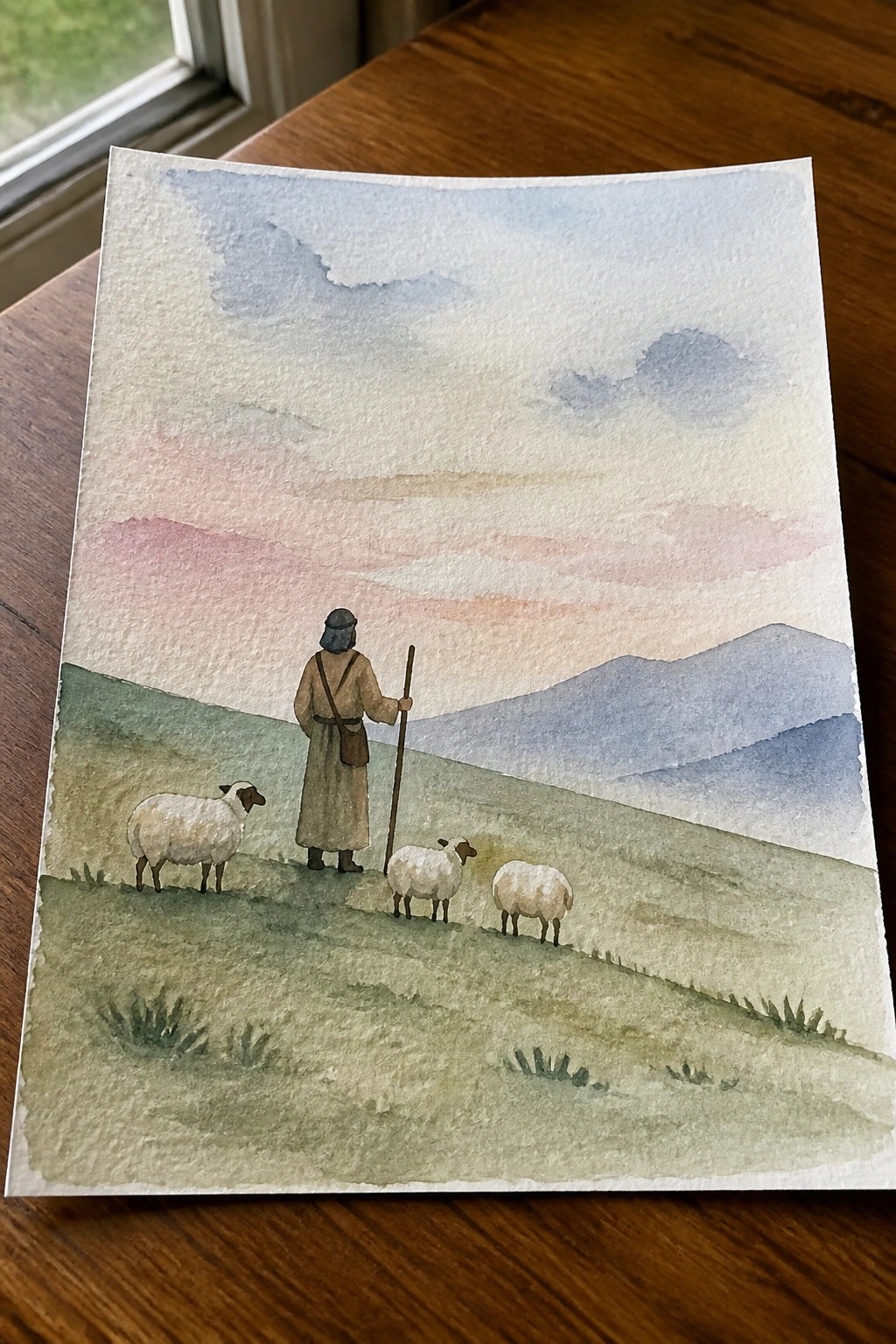
A pastoral landscape idea centers on a shepherd standing with a small group of sheep across rolling green hills, set against distant mountains and a wide sky with soft color bands. The composition places the figures at a mid-ground level so the eye travels from the animals upward through the slopes to the peaks, keeping the scene balanced without crowding any area. This approach fits a landscape category that combines figures and animals while relying on simple shapes and gradual color shifts rather than fine detail.
What makes this idea useful is the clear division of sky, hills, and foreground that lets you practice flat washes and light layering without needing many elements. The limited sheep count and open space make it easy to scale down for a sketchbook study or shift the sky tones to match a different time of day. For wall pieces the layout stays readable even when simplified, and the same structure works if you swap in different animal groups or flatten the background for a more graphic version.
Dove Carrying an Olive Branch with Gold Highlights
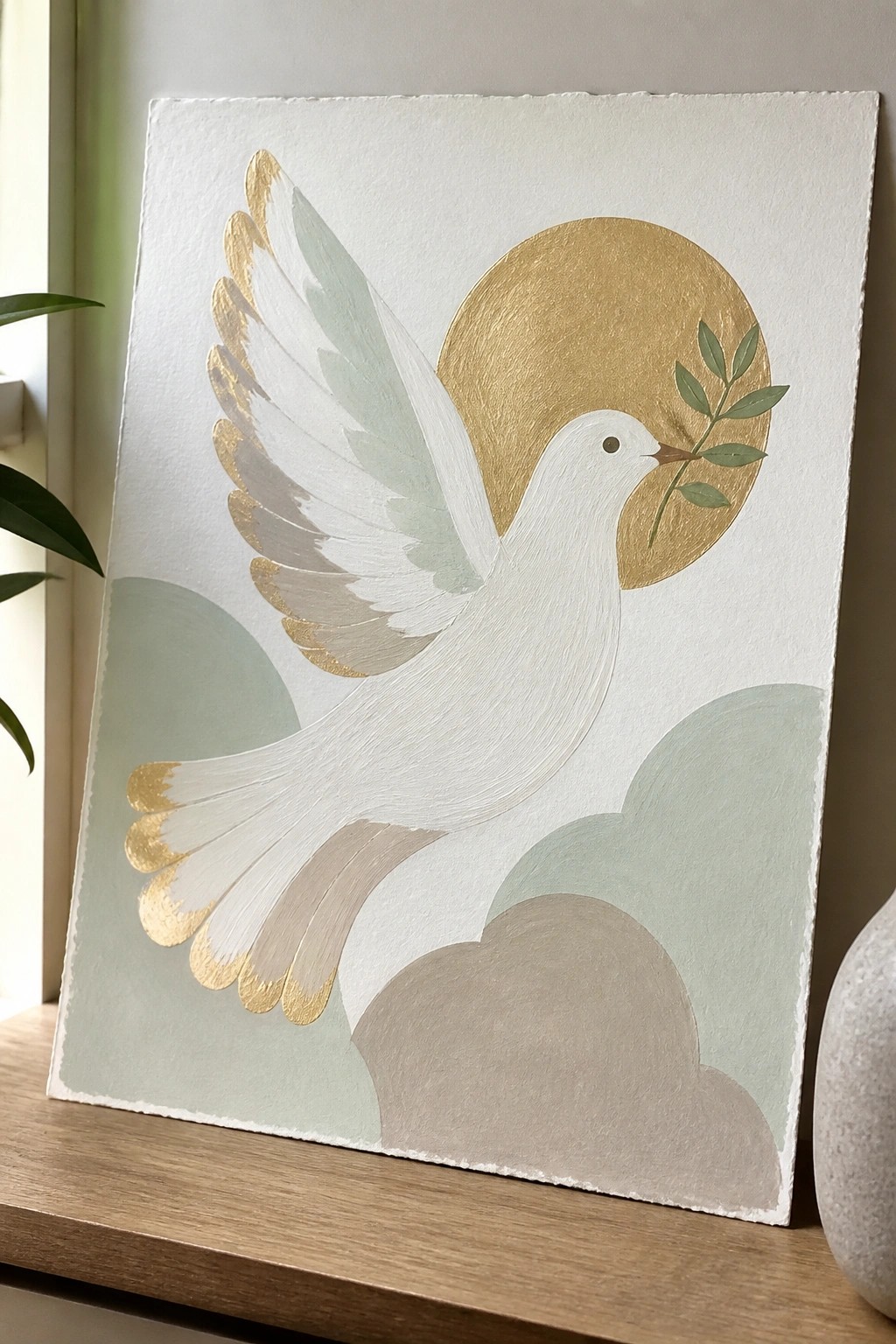
A dove in mid-flight holding an olive branch works as a straightforward biblical subject when the body is painted mostly white and set against a large gold circle. The idea keeps the focus on the bird by using soft overlapping shapes in muted greens and beige for the lower background and adding gold edges to the wing and tail feathers. This approach creates a clean composition where the gold circle serves as both a sun and a visual anchor without adding extra detail.
The composition does a lot of the work here because the dove fills most of the space and the limited palette keeps the piece easy to balance. A painting like this works especially well for wall art since the bold shapes hold up at different sizes and the gold accents can be swapped for another color or left out. You could simplify the wing layers further or change the background shapes to fit a smaller canvas while keeping the same central idea.
Crown of Thorns Circle with Luminous Center

A crown of thorns forms the main subject here as a loose circular arrangement of overlapping branches and sharp points. The painting idea uses a radial layout with a bright center that fades into warmer tones, built through visible brushstrokes and layered texture rather than fine detail. It falls into the category of decorative biblical art where the focus stays on shape, color blending, and surface interest.
What makes this idea useful is the circular structure that holds the composition together even with loose brushwork. The warm brown and orange palette stays easy to mix from a small set of colors and adapts well to different canvas sizes. For practice, this kind of subject helps build texture and edge control without requiring perfect symmetry. The glowing center also gives a clear focal point that works for both small studies and larger wall pieces.
Layered Shapes for a Modern Nativity Scene
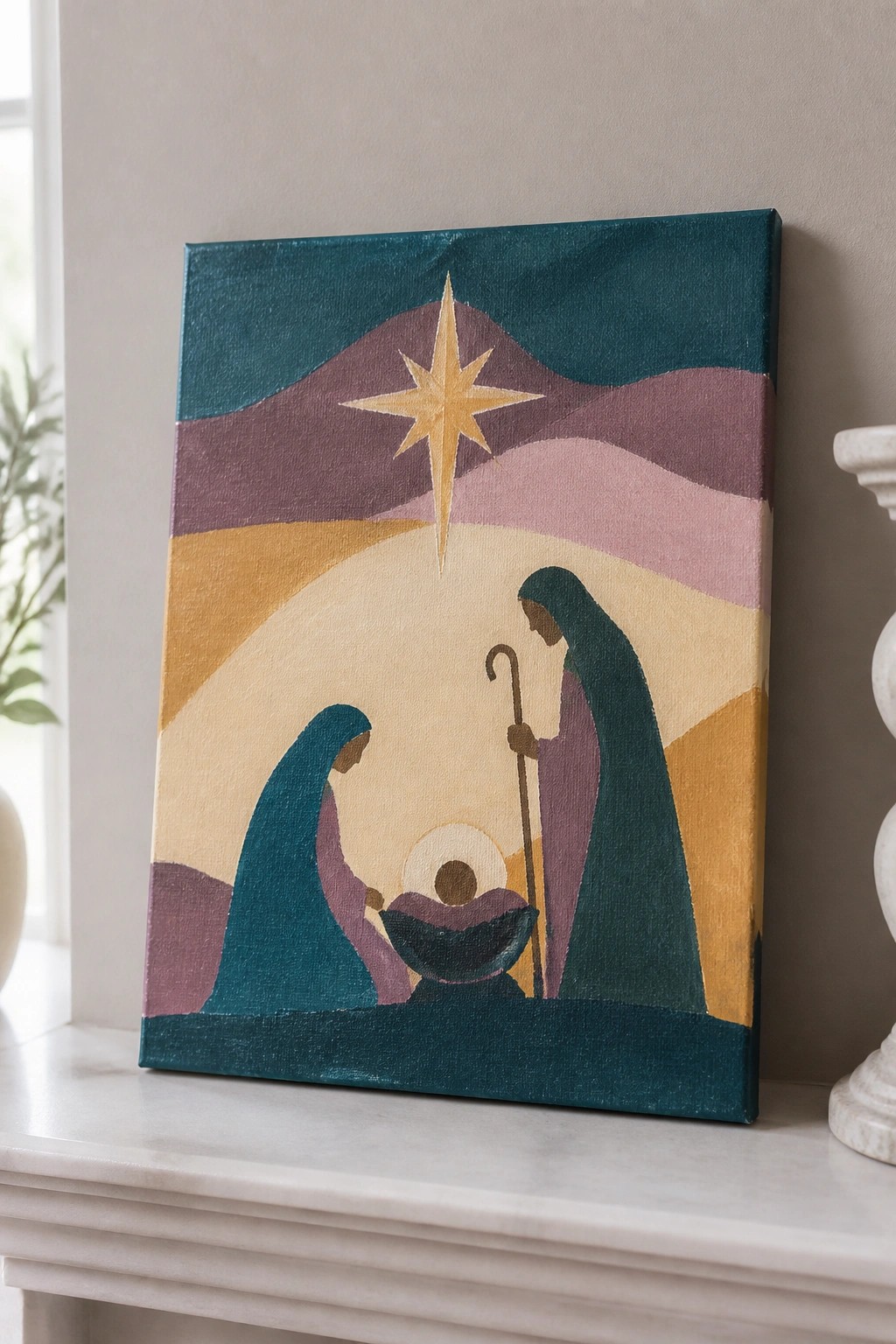
A Nativity idea built from large curved bands of color places the holy family and manger low in the frame beneath a single oversized star. The hills and sky are reduced to flat overlapping shapes in teal, purple, ochre, and cream, which creates depth through placement rather than blending or detail. This keeps the whole piece readable from a distance and gives the star clear visual weight as the focal point.
The composition does a lot of the work here because the stacked bands automatically lead the eye downward to the figures. You can swap the color palette to fit different rooms or seasons while keeping the same simple shapes, and the idea scales easily to smaller canvases or larger walls. For practice, this kind of subject is useful because it rewards clean edges and thoughtful color choices without requiring realistic proportions.
Burning Bush in Loose Watercolor Washes

A burning bush concept translates into a botanical painting where overlapping red and orange washes suggest both foliage and flame without hard outlines. The radiating branch structure keeps the eye moving upward while negative space defines the leaf edges against the color fields. This approach sits comfortably in the category of symbolic or seasonal plant studies that rely on color temperature shifts rather than fine detail.
What makes this idea useful is the simple radial layout that does most of the compositional work once the first wash is down. You can scale it to a greeting card or a larger piece by adjusting how far the background colors extend. The same structure also works if you swap in cooler tones for a different season or keep the warm palette but tighten the leaf shapes for a slightly more graphic result.
Patterned Fish Symbols in a Horizontal Lineup
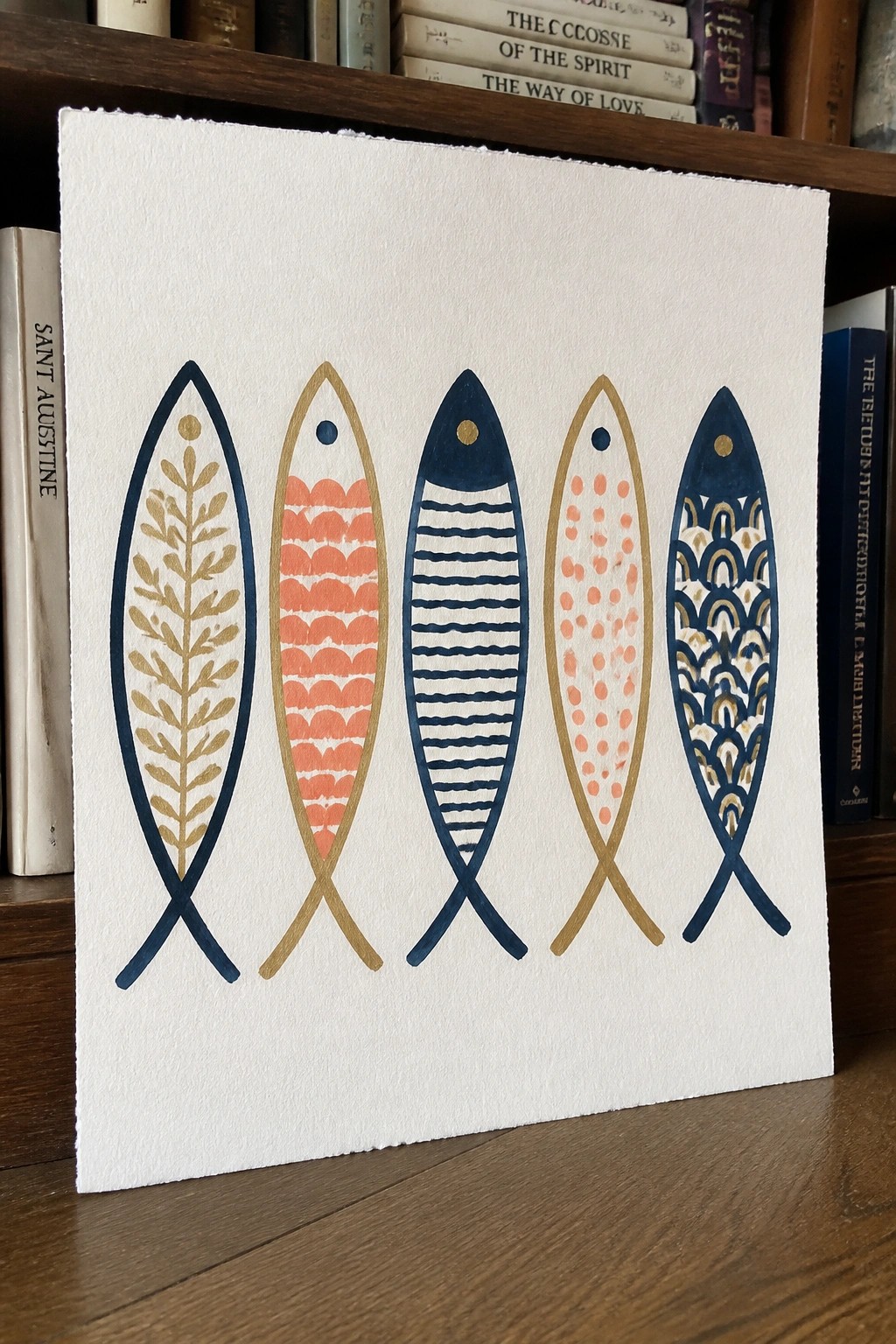
This painting idea centers on five fish outlines placed side by side, each treated as a separate panel for a distinct pattern fill. The patterns range from organic leaves to geometric stripes and dots, all contained within the same simple fish shape and connected by consistent gold or navy borders. A restrained palette of navy, gold, and coral on white keeps the focus on the contrast between the fills rather than on color variety.
What makes this idea useful is how the repeated shape removes the need to invent new forms, so the work stays in experimenting with pattern and color placement. The composition does a lot of the work here because even spacing and matching sizes create balance without extra effort. You could easily adapt it by changing the number of fish, swapping patterns for ones that match a room, or scaling the whole thing down for cards. For wall art, something like this stands out on Pinterest because the clean layout reads clearly even in a thumbnail.
Stylized Good Samaritan Scene
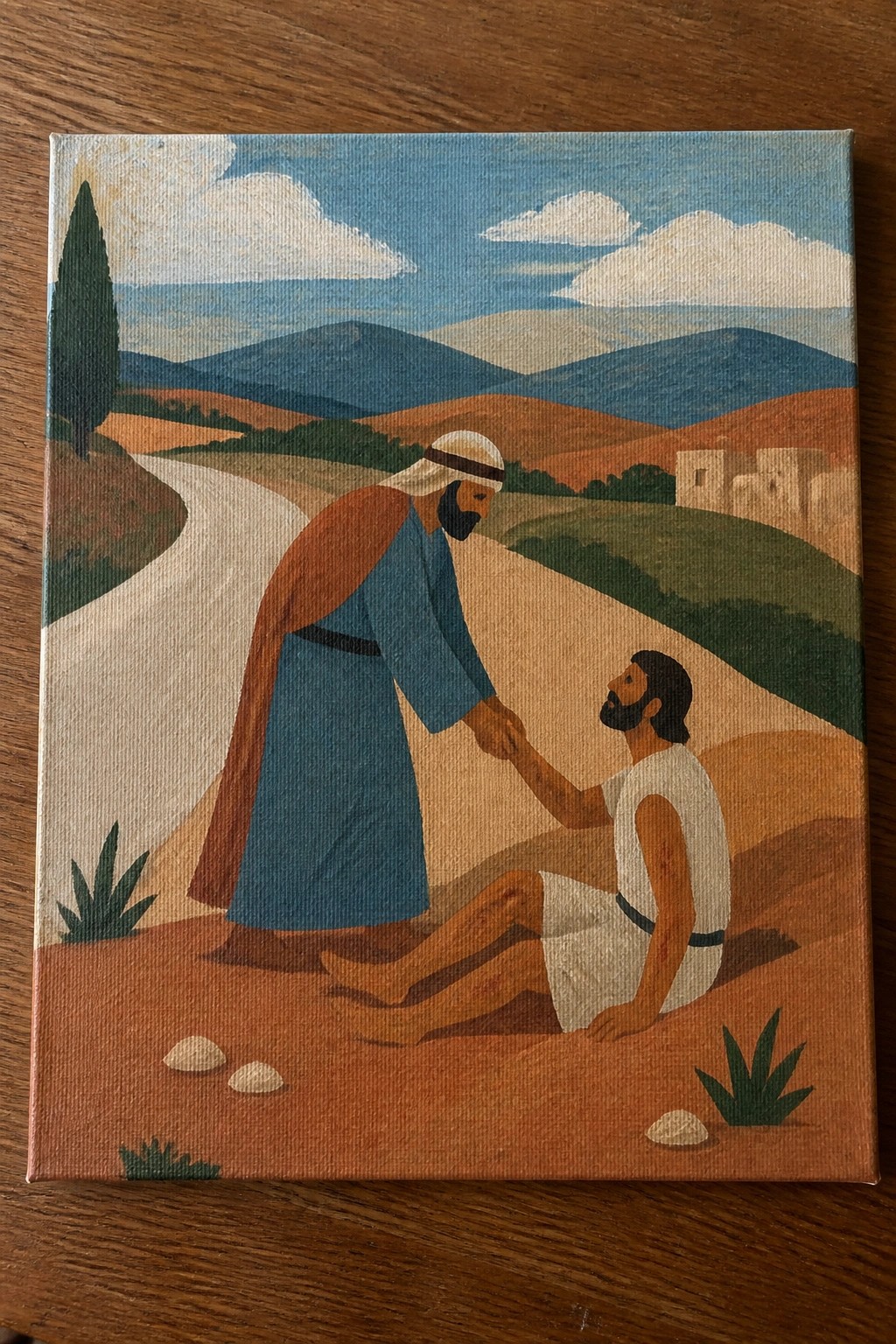
This painting idea centers on the moment of help from the Good Samaritan parable, shown through two figures positioned along a winding path that cuts through layered hills. It functions as a narrative landscape that relies on flat color areas and simplified shapes rather than fine detail to keep attention on the central action. The road and background ridges create a clear depth without crowding the figures, and the earth-toned palette ties the scene together.
The composition does a lot of the work here by using the path to guide the eye straight to the figures while the distant hills and building keep the setting readable. The color blocks make it easy to adapt the idea to different sizes or to swap in cooler tones for a different mood. For practice or wall pieces, the same approach works well if you reduce the number of background layers or change the clothing colors to match another biblical story.
Biblical Woman in Prayer with Golden Halo
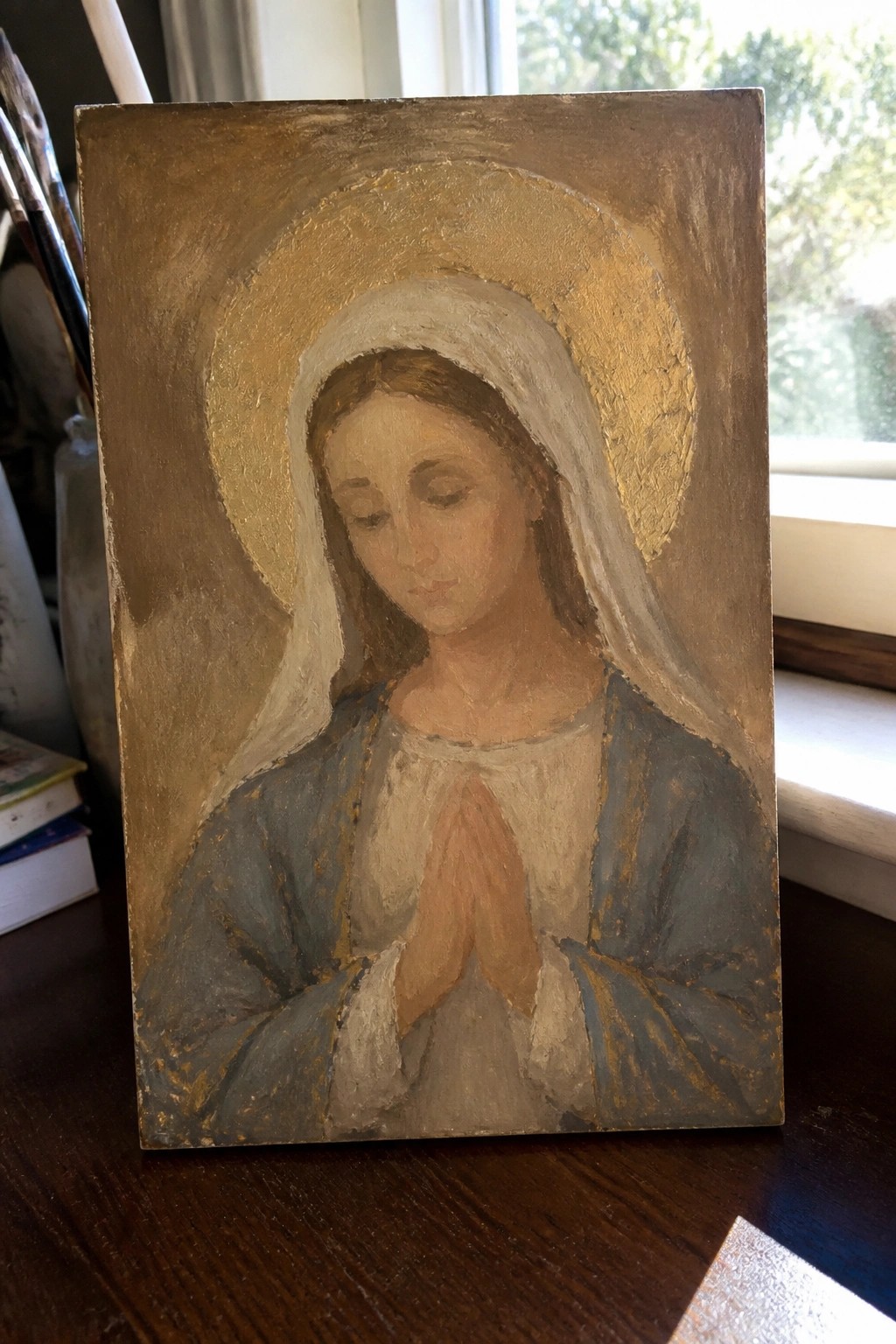
A portrait idea like this focuses on a single female figure in prayer, dressed in a blue robe and white veil with a large golden halo that fills much of the upper space. The composition keeps attention on the downward gaze and clasped hands by using a limited palette of soft blues, warm neutrals, and gold highlights against a rough textured background. Loose brushwork and minimal detail in the clothing folds help the idea stay simple while still reading as a complete piece.
What makes this idea useful is how the halo creates an instant center without extra elements, so the rest of the painting can stay loose. You could swap the blue robe for other earth tones or change the figure to a different biblical character while keeping the same head tilt and hand position. For practice, the limited color range makes it easy to test mixing and layering on a small canvas before trying larger versions for wall pieces.
Jacob’s Ladder Ascending Into Open Sky
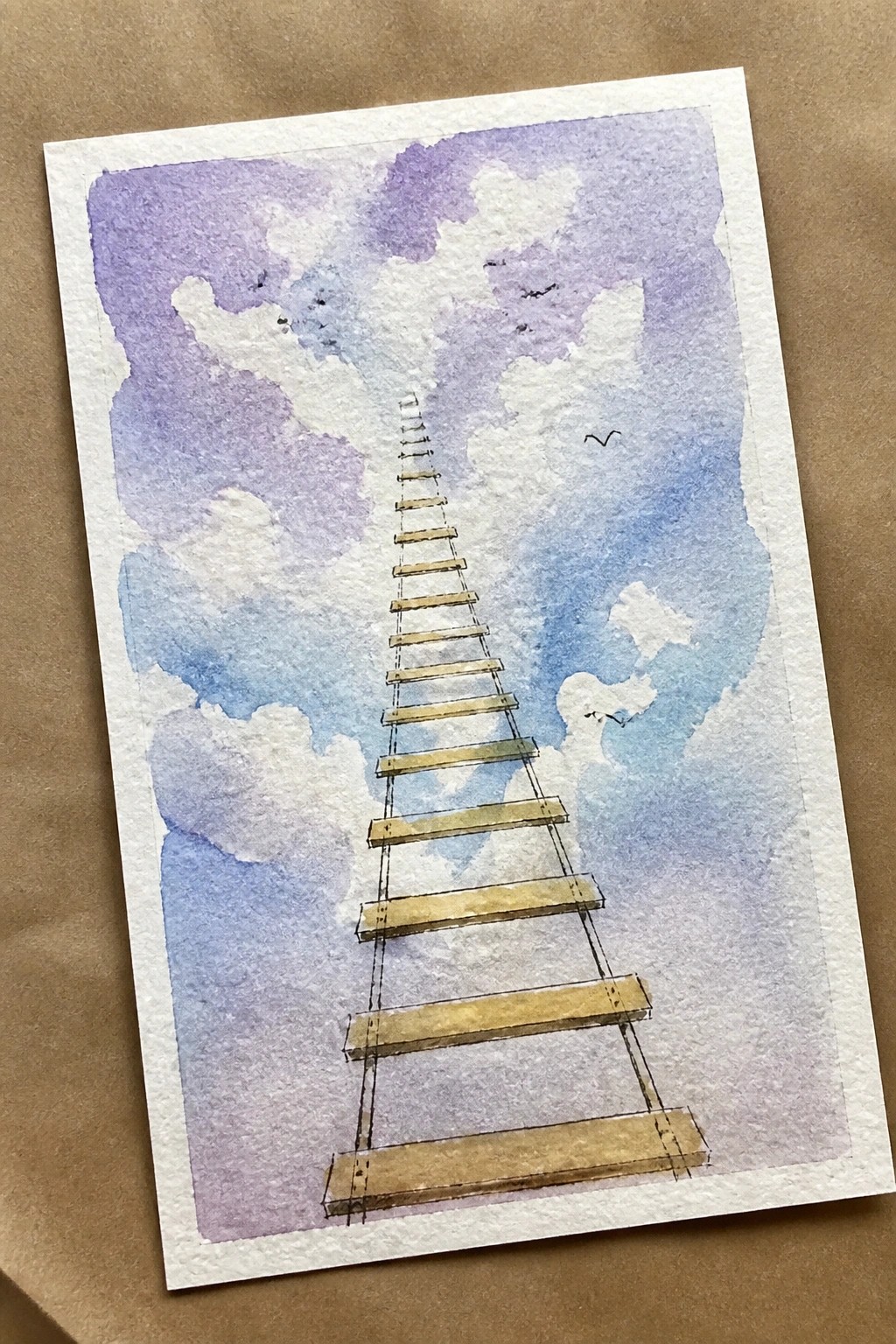
A simple wooden ladder stretches straight upward through layers of soft clouds, creating a clear vertical path that leads the eye toward the top of the frame. The idea keeps the focus on the ladder’s repeated rungs and straight sides against a loose sky background, which makes the composition easy to read from a distance. This approach fits into symbolic landscape painting where one strong element carries the whole piece.
What makes this idea useful is how the tall, narrow layout translates well to vertical canvases or prints for narrow wall spaces. You can adjust the cloud coverage or bird placement to change the mood without redrawing the ladder, and the limited color range makes it straightforward to recreate in watercolor or acrylic. For practice, this kind of subject helps with perspective and clean line work while still producing something that feels modern on a gallery wall.
Tree of Life with Exposed Roots and Layered Leaves

A tree of life painting works best when the roots are drawn spreading across the bottom and the branches reach upward in a balanced way. The idea uses varied leaf shapes and a few round flowers to break up the foliage while keeping the overall form clear. This approach lands in decorative botanical art that stays readable even when viewed from across a room.
What makes this idea useful is the split trunk that creates two natural sides, so you can adjust the leaf colors or add more flowers without throwing off the balance. The limited palette of greens and golds makes it simple to match different wall colors or try on smaller paper first. For wall pieces this centered tree holds its shape at many sizes and gives a clean focal point without needing extra background elements.
Bread and Fish Still Life
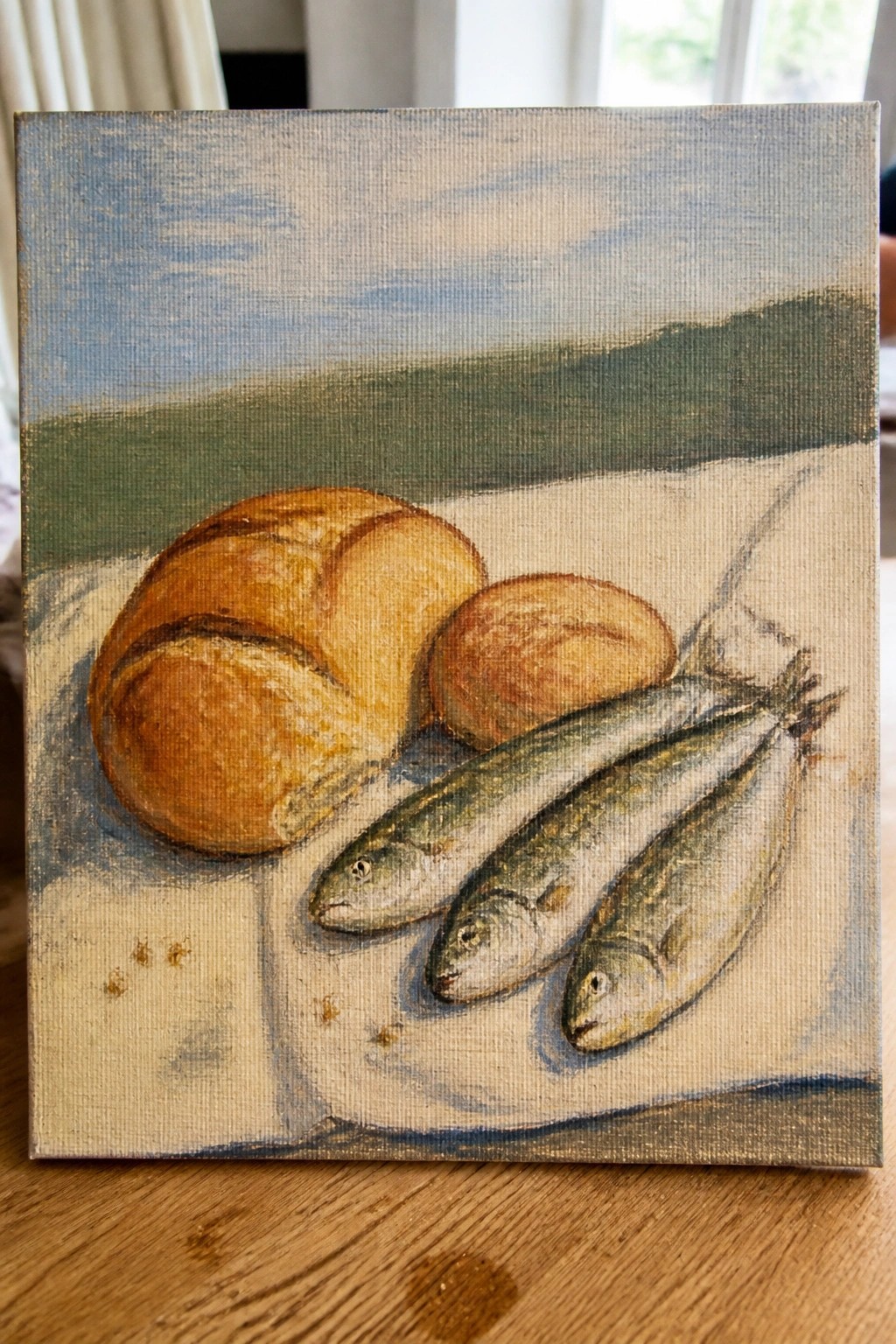
A still life built around bread rolls and whole fish offers a direct way to reference the loaves and fishes story without adding extra figures or symbols. This food still life idea works because the items sit in a loose cluster on a light cloth, with the bread positioned higher and the fish angled forward to create natural overlap. The limited palette of warm browns, soft greens, and off-white keeps the focus tight on the objects themselves.
What makes this idea useful is how simple the setup remains once you have a few rounded shapes and a basic cloth drape in place. The composition does a lot of the work here by letting the objects rest at different angles instead of lining up neatly. For practice, this kind of subject helps with mixing earthy tones and showing texture on bread crusts or fish scales. You could easily scale it down to a smaller canvas or swap in different numbers of loaves to match the space you have.
Psalm 23 River Landscape with Text Overlay
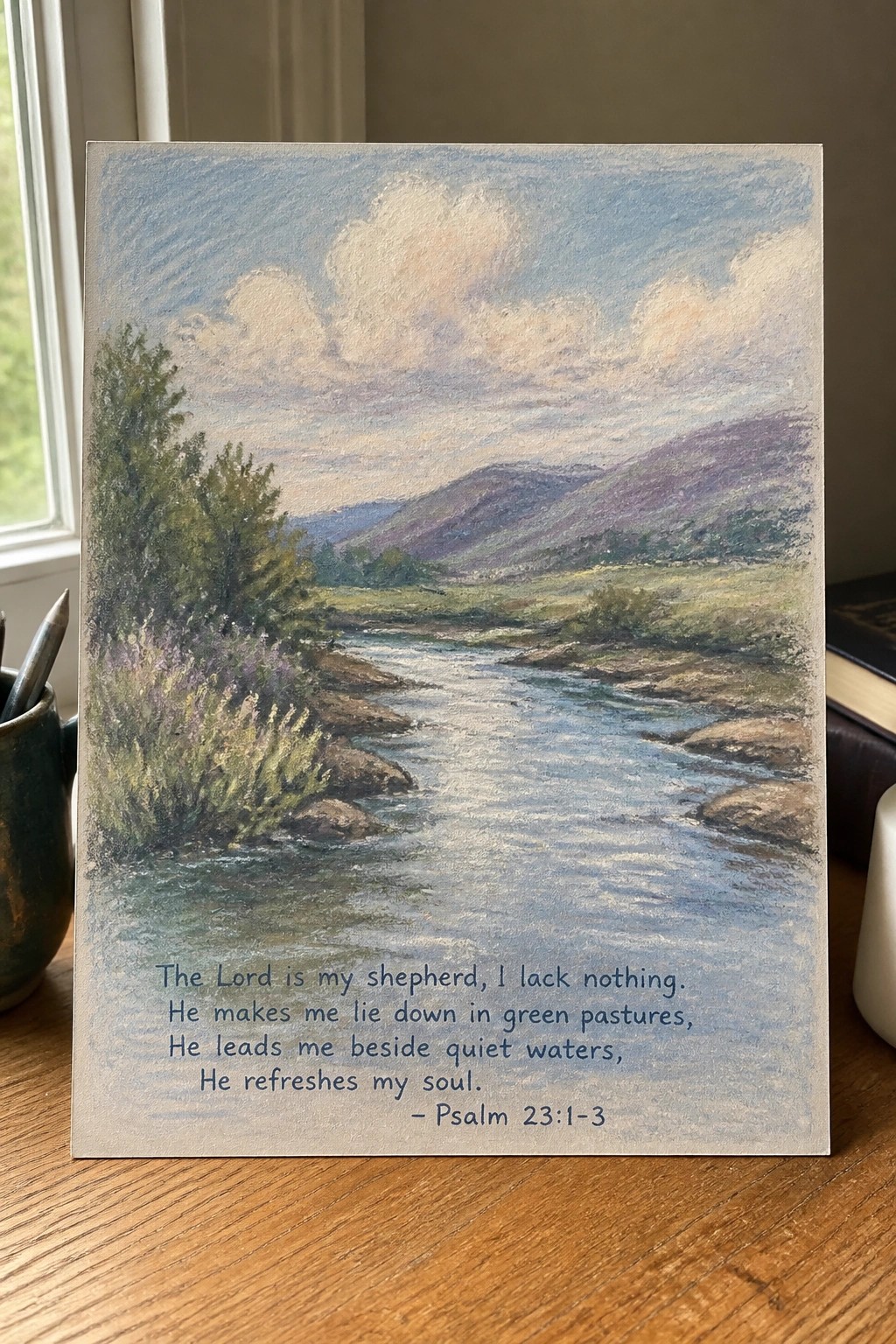
A landscape painting idea that pairs a winding river scene with the opening lines of Psalm 23 placed across the bottom section. The river acts as a clear path through the composition, moving from the foreground rocks toward the distant hills, while the trees and bushes on the left side create a natural frame. This approach works as a straightforward landscape that gains extra purpose from the added scripture without needing extra elements.
What makes this idea useful is how the text sits in the open lower area, so the painting still reads as a complete scene even with the words included. You could shrink the same layout to a smaller panel or swap in different verses while keeping the river and hills as the base. The soft color shifts between the water and sky also make it simple to adjust for different rooms or to match existing decor without changing the overall layout.
Modern Madonna and Child in Soft Layers

A simple mother-and-child scene works well as a modern biblical painting when the figures are built from broad overlapping washes instead of fine lines. The idea centers on a standing woman holding an infant, balanced by a single leafy plant on one side and a large soft circle behind them. The muted blue and warm neutral palette keeps the focus on the shapes rather than on detail, which makes the composition feel calm and uncluttered.
The composition does a lot of the work here because the circle and plant create natural framing without extra elements. You could easily adapt the same layout to a smaller canvas or try it with gouache for more opacity. The limited color range also makes it straightforward to change the tones for different rooms or seasons while keeping the same structure. For wall pieces this kind of subject stands out on Pinterest when the edges stay soft and the plant stays minimal.
A Tiered Noah’s Ark Built from Color Bands
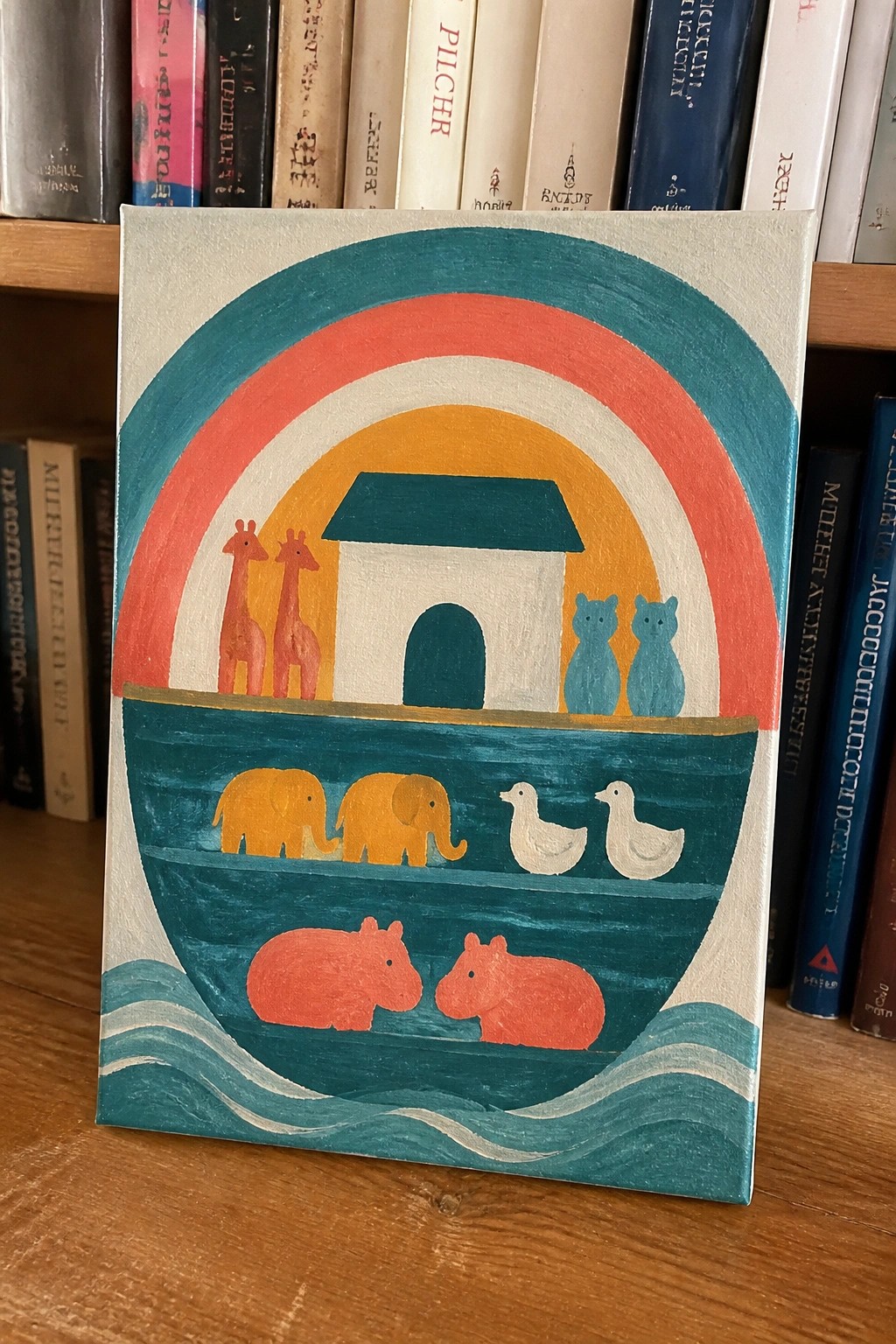
The painting idea uses concentric rainbow arcs to frame a simplified Noah’s Ark scene where animals are arranged in horizontal rows inside the boat. Pairs of elephants, hippos, ducks, giraffes, and cats sit at different levels, with a small house shape placed at the center to anchor the composition. Flat shapes and limited colors keep the focus on the grouping rather than fine details.
What makes this idea useful is how the curved bands handle both the rainbow and the water in one step, so the layout stays balanced without extra background work. The animal pairs can be swapped or reduced depending on canvas size, and the same structure works at smaller scales for cards or prints. For practice, starting with the largest shapes first makes the rest of the painting fall into place quickly.
Ten Commandments Tablet Display
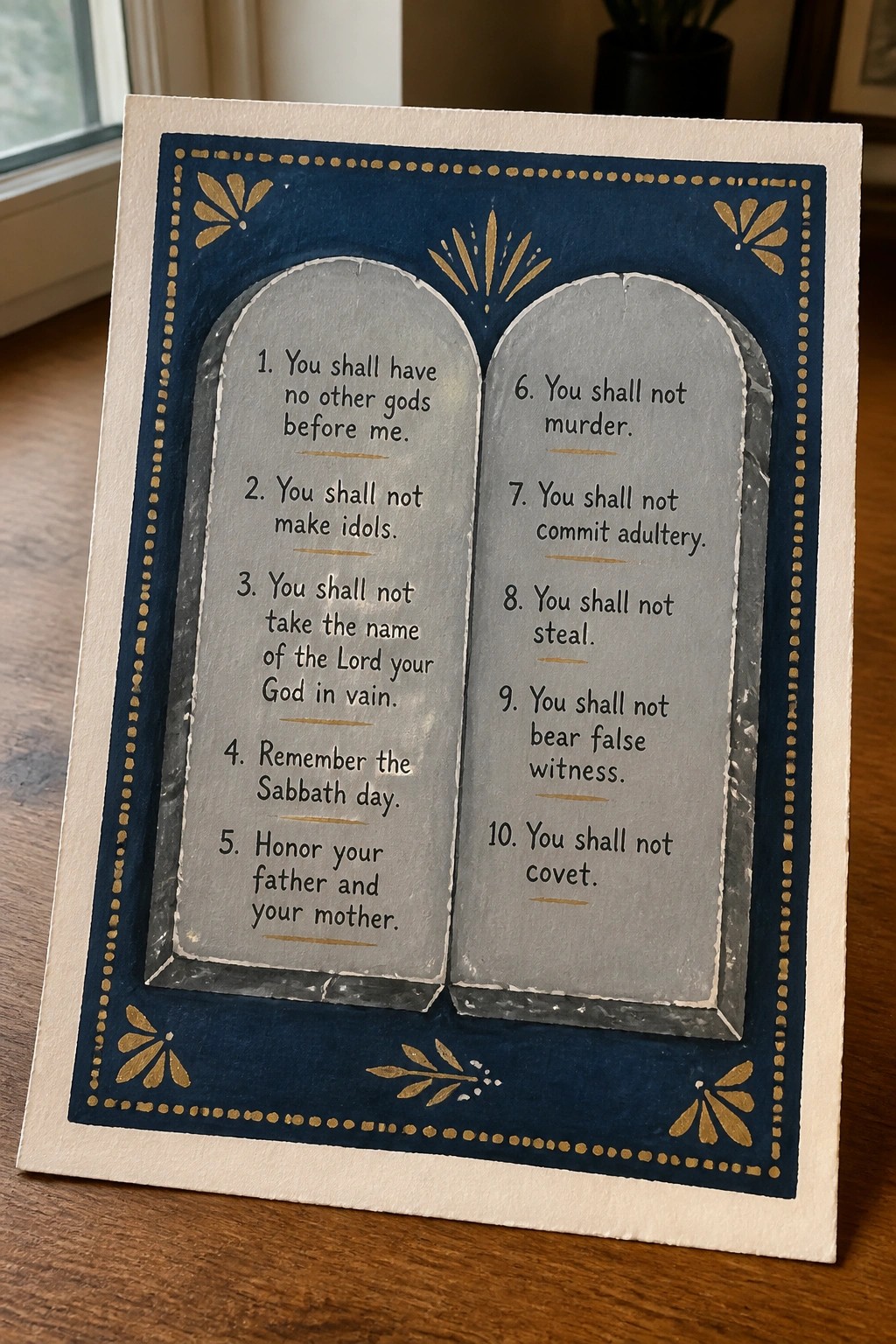
A painting idea centered on the Ten Commandments laid out across two arched stone tablets gives a clear focal point through symmetry and numbered text. The composition works as decorative art by placing the tablets against a solid dark blue field with simple gold accents along the border and corners. This keeps the lettering legible while the balanced layout and limited palette prevent the piece from feeling cluttered.
What makes this idea useful is the built-in structure that guides both the layout and the text placement. The color palette makes this easy to adapt by swapping the blue for another background shade or scaling the tablets to fit a smaller canvas. For wall art, something like this works especially well in a study or entryway where the numbered format stays readable from a distance. The border details can be simplified or removed if the goal is a quicker version.
Praying Angel with Expansive Wings
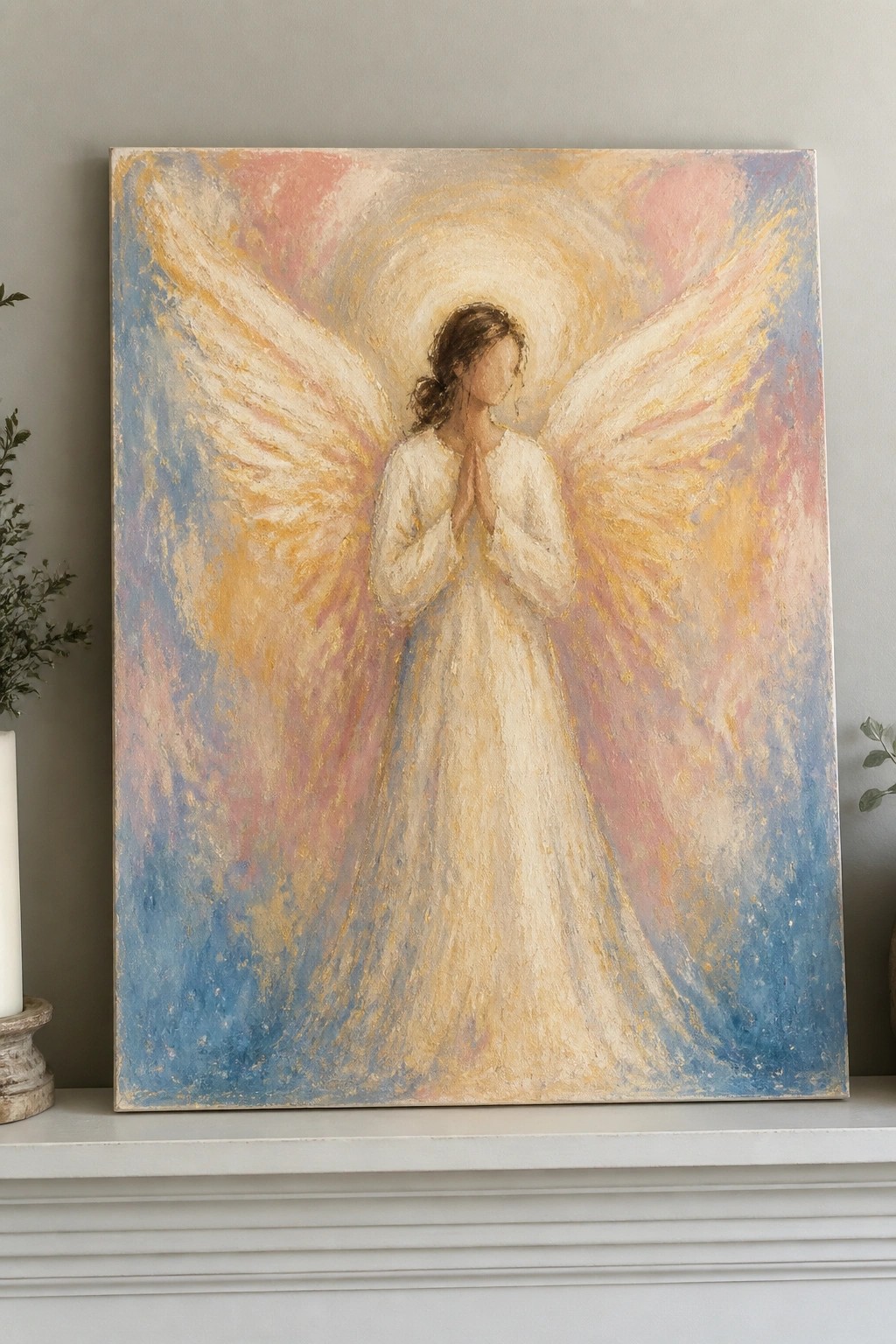
A central angel figure in a prayer pose with large outstretched wings serves as the main subject in this painting idea. The composition places the figure low in the frame so the wings can fill the upper space and blend into a loose background of overlapping color strokes. This creates a balanced focal point while letting the surrounding texture and color shifts add visual interest without competing with the form.
What makes this idea useful is the way the wing shapes and central pose give beginners a clear structure to follow while still allowing room for loose brushwork. The soft color transitions around the figure make it simple to adapt the palette to match different home styles or seasonal themes. For wall pieces, this kind of biblical subject works well because the wings create natural movement that holds attention even at a larger scale.
Still Waters Landscape from Psalm 23
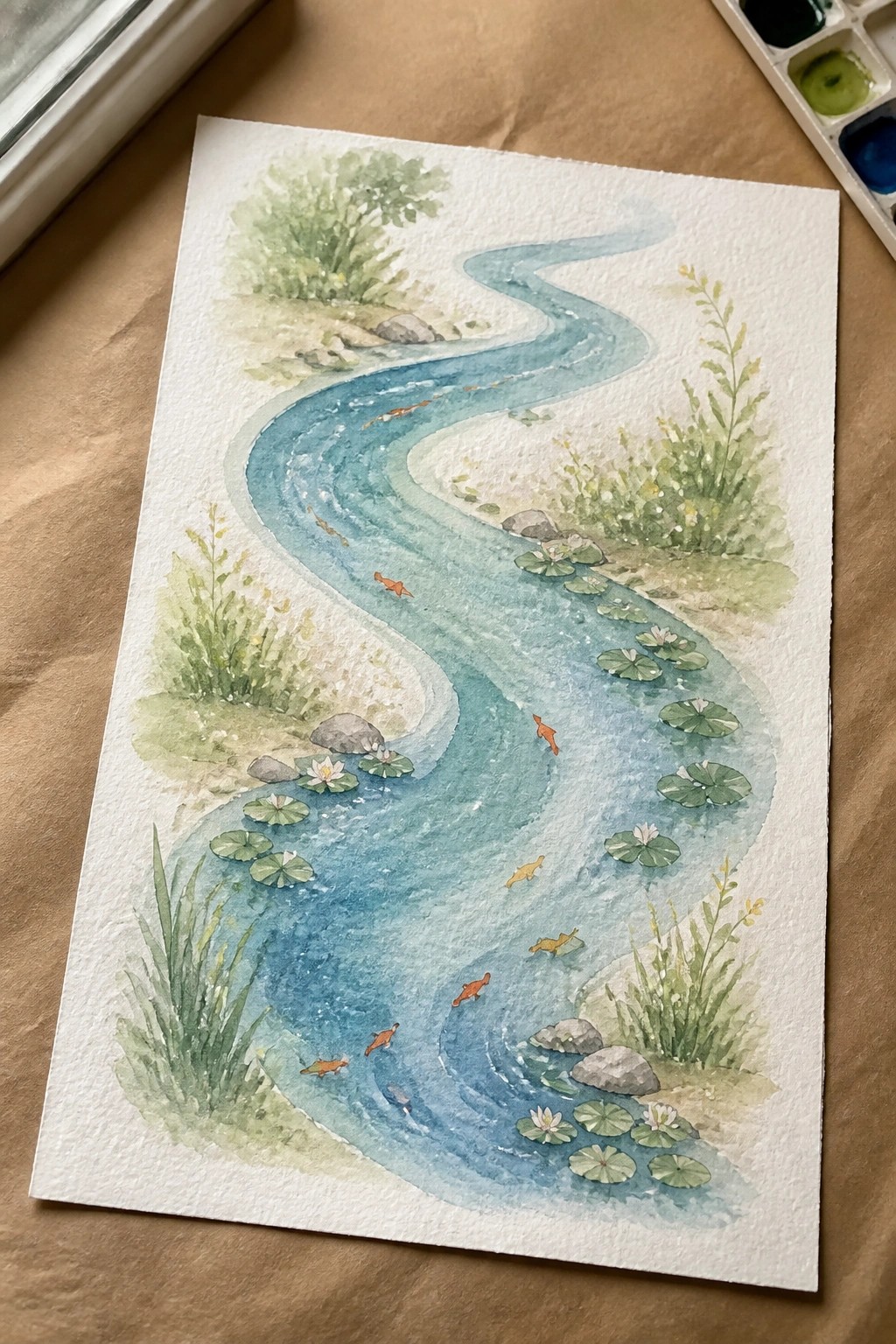
A winding river scene works well as a modern take on the still waters mentioned in Psalm 23. The painting idea centers on a curving blue waterway with lily pads, scattered fish, and soft green banks that keep the focus on gentle movement rather than dramatic action. This landscape approach uses flowing lines and a limited palette of blues and greens to create a calm composition that feels current without losing its reverent tone.
What makes this idea useful is the natural curve of the river, which does most of the visual work and makes the layout easy to adapt to different paper sizes. The same subject can be simplified by reducing the number of fish and plants or expanded with extra shoreline details for larger wall pieces. For practice, this kind of scene helps with layering washes while staying tied to a clear biblical reference that stands out on Pinterest boards.
Jonah and the Whale with Layered Circle Composition
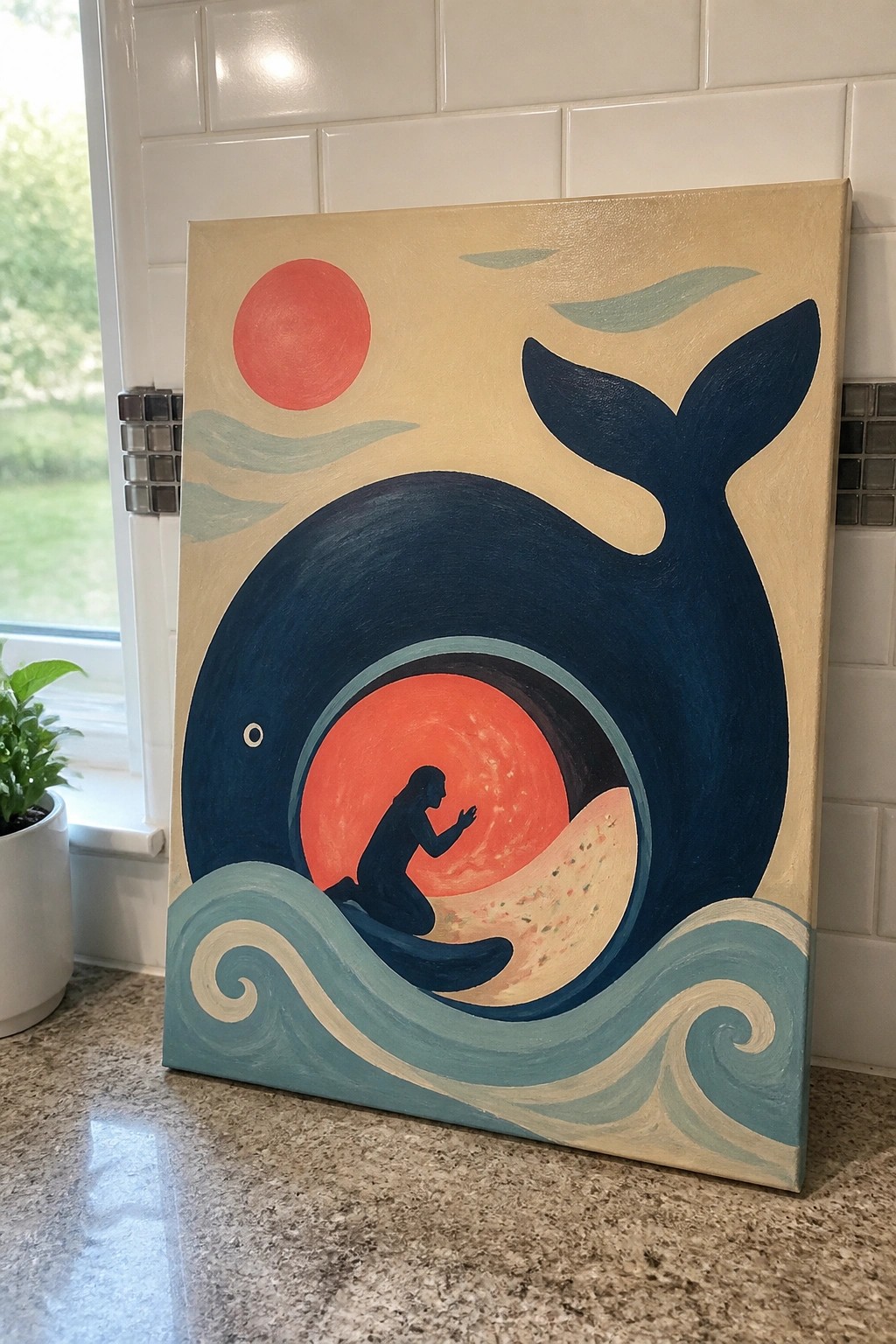
The core idea here is a graphic take on the Jonah story built around a large whale shape that frames an inner red circle containing a kneeling silhouette. Strong curves and flat color areas create the whale body while a second red circle sits outside it in the upper left, balanced by simple wave forms at the bottom. This approach works as a narrative painting that stays modern through bold shapes rather than detailed rendering.
What makes this idea useful is how the overlapping circles and limited color blocks handle most of the layout work for you. You could adapt the same structure on a smaller canvas by keeping the whale outline and inner sun as the main focal points, or change the background tone to shift the overall mood without redrawing the scene. The flat areas also make it straightforward to paint over or adjust later if you want to personalize the color choices.
Prayer Hands with a Soft Gold Halo
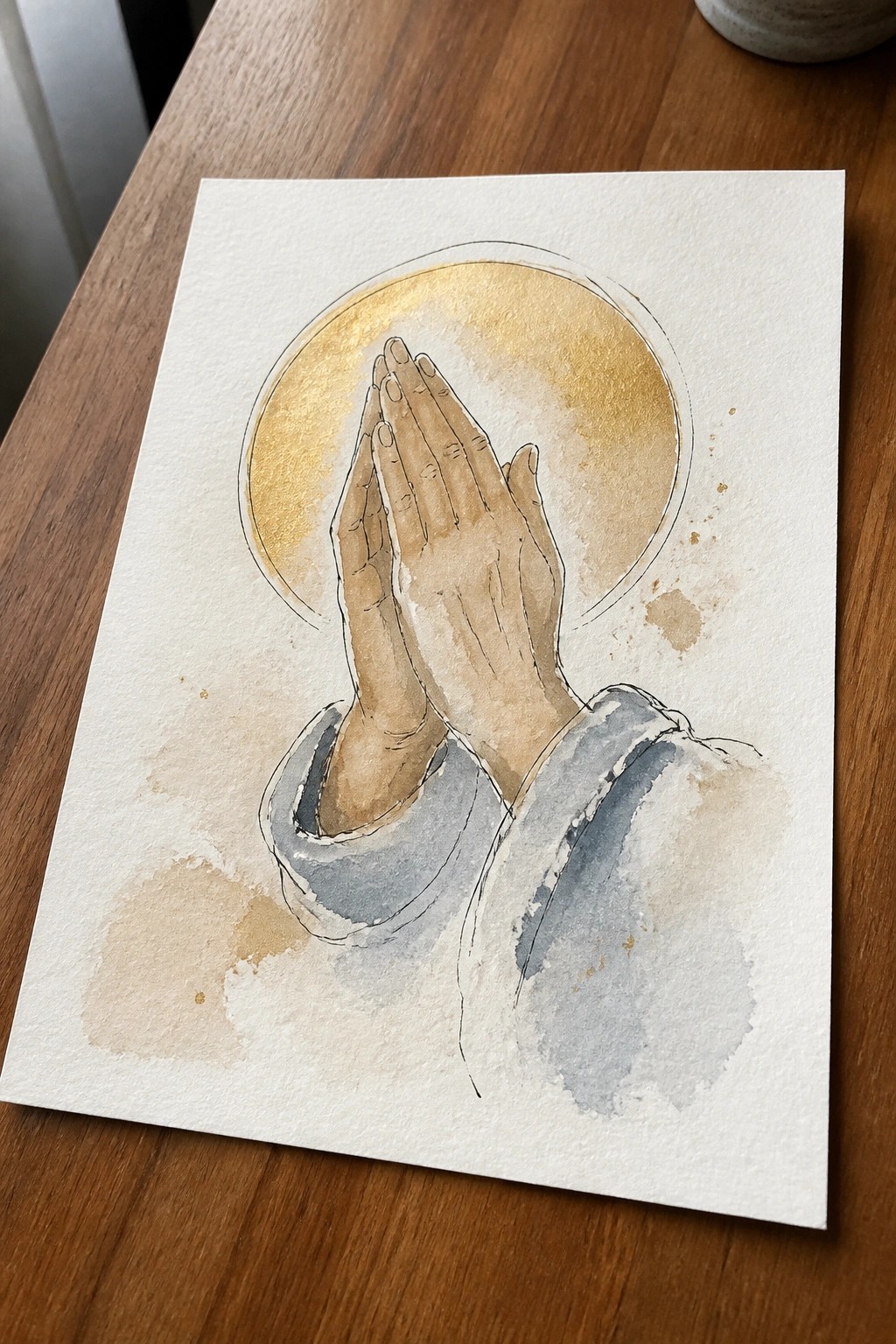
The main idea here is a close-up of hands pressed together in prayer, placed directly in front of a large circular gold shape that serves as a simple halo. The composition works because the hands sit slightly off-center while the gold circle fills most of the upper space, creating a clear focal point without extra elements. This approach falls into modern religious figurative painting that relies on minimal background and soft edges rather than heavy detail.
What makes this idea useful is how the single strong shape and limited palette let you finish a piece quickly for wall art or greeting cards. The loose gold wash and open background make it simple to adjust the size or swap in different sleeve colors if you want a more personal version. For practice, the subject gives you a chance to work on hand proportions and fabric folds while keeping the overall layout straightforward.
Frequently Asked Questions
What are the best ways to view or purchase prints of these modern biblical paintings? Many artists sell limited edition prints directly through their websites or platforms like Saatchi Art and Etsy. Contacting galleries that represent them can also lead to original works or high quality reproductions. Searching the specific painting title with the artist’s name usually brings up reliable sources for acquisition.
How do these paintings balance modern styles with respect for biblical themes? Artists achieve this by using current techniques like bold colors, abstract shapes, or urban settings while preserving the core spiritual message of the stories. They avoid irreverence by focusing on emotional depth and symbolic elements that honor the original narratives rather than altering them for shock value.
Which artists are commonly featured in lists like this and where can I explore more of their work? Names such as Makoto Fujimura, Sadao Watanabe, and Jyoti Sahi often appear in discussions of fresh biblical art. Their personal sites, museum collections, and books on contemporary faith based art provide additional examples along with details on their creative processes.
Are there museums or exhibitions that showcase similar contemporary biblical paintings? Institutions like the Museum of Biblical Art in Dallas or the Vatican Museums occasionally feature modern pieces. Checking schedules for traveling exhibits on religious art or searching databases from organizations like Christians in the Visual Arts can help locate upcoming shows near you.
What resources help deepen understanding of the biblical stories shown in these works? Reading the relevant passages from modern translations of the Bible alongside commentaries from scholars provides context. Online courses from seminaries or apps with visual guides to scripture can further connect the paintings to their source material for richer appreciation.