I have always liked the way angels can be painted with lots of small details without needing a big scene behind them.
Rococo touches like soft curls and pale gold accents seem to fit that idea pretty well.
I came across these paintings while looking for references for my own work and thought they were worth sharing.
Some of them use light colors in a way that keeps everything from feeling too heavy.
I tried a few similar details in my last sketchbook and it was fun to see how they turned out.
Angel Portrait with Integrated Rococo Frame
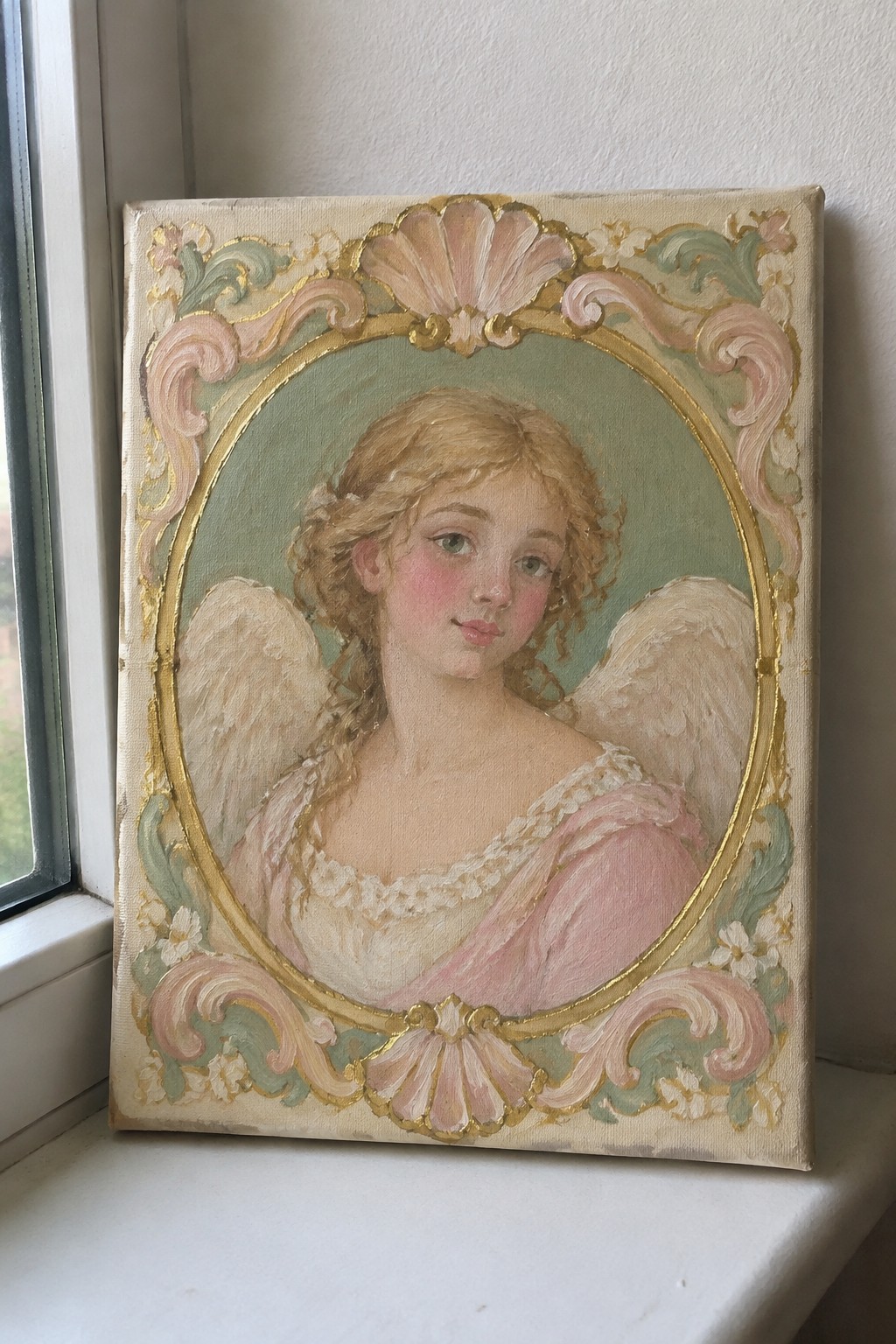
This painting idea pairs a central angel figure with an ornate frame that forms part of the composition rather than sitting outside it. The oval layout holds the figure in place while the surrounding scrolls, shells, and small flowers in soft pink and green extend the decorative surface across the whole canvas. The muted green background keeps attention on the figure and the gold accents without competing for focus.
What makes this idea useful is how the frame elements give you clear shapes to follow while still leaving room to adjust the angel’s expression or hair. You can scale the same layout down for a smaller canvas or simplify the outer scrolls if you want less detail work. The color choices also transfer easily to other palettes, so the piece can match different room styles without needing a full redesign.
Cherubs with Floral Garlands and Corner Scrolls

Two small winged figures float against a pale blue sky while holding a trailing garland of pink and blue flowers. Ornate golden scrollwork fills the opposite corners to frame the central action and add Rococo-style curves. The idea works as decorative art that combines simple figure placement with repeating floral and scroll motifs.
The composition does a lot of the work here by using the garland as a diagonal connector between the two figures and the scrolls as balanced accents. You could adapt this for a greeting card by cropping to one cherub and a shorter scroll section, or change the flower colors to match different room palettes. For practice this subject stays approachable because the shapes stay soft and the background requires only light washes.
Angel in an Elaborate Rococo Frame

This painting idea centers on a single angel figure placed inside a decorative oval border made of scrolling leaves, roses, and gold accents. The approach blends a simple central subject with a detailed frame that adds visual weight without crowding the figure. The soft teal and cream tones in the background keep the composition balanced while the gold details catch the eye along the border edges.
What makes this idea useful is how the oval frame does most of the decorative work, so the angel itself can stay fairly simple in pose and clothing. The color palette makes this easy to adapt by swapping the teal for other muted shades depending on the room or season. For wall art, something like this works especially well because the complete border means it reads as finished on its own. You could scale the frame down for a smaller canvas or swap the corner flowers for different seasonal blooms to change the feel.
Cherub Musician on Rococo Shell Base

A winged cherub playing a lute forms the main subject here, with the figure seated on a large shell-shaped base trimmed in curling scrollwork. This decorative art idea combines a central figure with an elaborate pedestal to create a balanced, self-contained composition that works well as a standalone piece. The soft color transitions and curved lines keep the eye moving between the instrument, wings, and base without overcrowding the space.
What makes this idea useful is how the ornate base does much of the visual work, letting you focus detail on just a few areas while keeping the rest loose. You could easily adapt the color palette to match a room or swap the lute for another small object if you want a different focal point. For practice, the clear separation between figure and base makes it straightforward to simplify the swirls or reduce the wing detail without losing the overall Rococo feel. This kind of subject stands out on Pinterest because the combination of cherub and decorative base reads as finished wall art even at smaller sizes.
Sleeping Cherub in a Rococo Ribbon Frame

A cherub portrait idea like this centers on a soft, rounded figure placed inside an oval frame and then wrapped with wide ribbon loops and small rose clusters. The layout keeps the focus tight on the center while the outer border elements create a balanced, symmetrical shape that feels complete on its own. This type of decorative art works because the oval crop and repeating ribbon pattern give the eye clear paths to follow without crowding the main subject.
The composition does a lot of the work here by using the frame and ribbon to organize the space, so adding or removing a few flowers does not break the design. You could adapt the same idea by changing the ribbon colors to match a room or by shrinking the border details for a smaller canvas. For wall pieces, this approach stands out because the classic subject and soft palette fit easily into existing decor without needing extra framing.
Symmetrical Cherub Trio Connected by Floral Garlands

This painting idea uses three cherub portraits set inside matching ornate frames arranged in a loose triangle. Thin floral chains with pink blooms and green leaves run between the frames to tie the whole piece together. The repeated soft pastels and small decorative bows keep the separate elements feeling like one balanced panel.
The composition does a lot of the work here by using the same frame shape three times so you only need to master one design. You can easily change the flower colors or shorten the garlands to fit a different paper size or turn it into a single card. For practice this kind of subject gives you clear shapes to follow while still letting you add small personal details like extra leaves or a different ribbon color.
Angel in an Ornate Shell-Framed Oval

A centered angel figure in a pale dress and blue sash holds a small bouquet while positioned inside a decorative oval frame. The frame uses curved gold lines, pink shell shapes at top and bottom, and corner roses to create a balanced border around the subject. Soft teal fills the space behind the figure, letting the gold details and flower colors stand out without competing.
The composition does a lot of the work here because the frame keeps the eye focused on the angel and bouquet. This kind of contained layout works well for small canvases or prints meant for shelves and gallery walls. The palette of teal, gold, and muted pinks can be swapped for other tones while keeping the same frame structure, and the idea scales down easily if you skip some of the corner flourishes.
Angel Figure with Extended Arm on Cloud Base

A winged angel seated on clouds forms the core idea here, with the figure leaning back and reaching one arm upward in a clear diagonal line. The soft drapery and cloud forms create a rounded, flowing shape that keeps the eye moving across the canvas. The decorative shell border adds a structured frame that contrasts with the loose center without competing for attention. This approach fits decorative figurative painting where the subject stays central but gains extra interest from the surrounding ornament.
The composition does a lot of the work here by using the cloud base as a simple anchor for the figure. A painting like this works especially well for wall pieces because the warm neutral palette and curved shapes adapt easily to different room styles. You could reduce the border to a thinner line for a faster version or shift the colors toward cooler tones if needed. The open sky area around the angel also leaves room to adjust the scale or crop the idea into a tighter study.
Cherub with Rococo Swirls and Rose Clusters

This painting idea pairs a cherub with large rococo-style scrollwork that curves around the figure and connects to small rose clusters. The composition uses the swirls to create an asymmetrical balance, with the angel positioned toward the center-left and the decorative elements extending to the right and bottom. Pastel washes on the background let the thicker paint on the swirls and flowers stand out without competing for attention.
The composition does a lot of the work here by letting the scrollwork act as both frame and support for the angel. You could simplify the roses or swap their colors to fit different room palettes, or enlarge the whole layout for a bigger canvas. For practice, this setup gives you a chance to handle both soft blending on the face and more textured strokes on the ornamentation in one piece.
Cherub in a Shell Swing with Blue Ribbon Accents

A cherub figure on a shell swing works as the main subject when the blue ribbons create vertical lines that frame it from above and below. Small flowers along the ribbons add color without crowding the space, while the soft cloud background and gold corner scrolls keep the layout balanced and contained. This kind of decorative painting idea relies on a clear center point with supporting details that stay secondary.
The composition does a lot of the work here by using the ribbons to set the height and the borders to define the edges. You could adapt the idea for a smaller canvas by shortening the ribbons or swapping the shell for a simpler seat shape. For wall art, the soft blue and cream palette stays easy to match with other pieces, and the overall layout holds up even if you reduce the number of flowers.
Mirrored Angels Inside a Scrollwork Border

This painting idea pairs two small winged figures in matching blue robes, placed face to face with hands raised in the same gesture. A circular border of blue and gold scrolling leaves and flourishes surrounds them, with small hearts and a single flower placed at top and bottom to keep the eye moving around the center. The idea works as decorative art that relies on symmetry and a contained oval layout rather than background detail.
The even spacing between the two figures makes the composition straightforward to resize or recolor for different projects. You could drop the border details for faster sketches or keep the full frame for a finished piece meant for wall display. The clear central focus and repeating shapes give it strong Pinterest potential for anyone making matching prints or small gifts.
Cherub Portrait with Ornate Shell Halo

A close-up angel portrait idea that keeps the face as the clear center while an oversized halo with shell patterns and gold trim sits directly above. The wings curve in from the sides to frame the shoulders, and the background stays loose so the head and halo stay forward. This approach fits the decorative portrait category where the main work goes into the face and the symbolic top element.
The composition does a lot of the work here by letting the halo carry the detail load while the face stays softer. The color palette makes this easy to adapt since the warm skin tones and teal background can shift to whatever limited set of pastels or paints you already have. For practice this kind of subject works well because the main shapes are simple to block in first and the gold lines can be added last. You could shrink the wings or remove the side swirls entirely if you want a quicker version for a card or small print.
Rococo Angel with Ribbon and Floral Border

A central angel figure set against a pale background works well when surrounded by a continuous border of looping ribbons and small floral clusters. This layout keeps attention on the figure while the decorative elements create a natural frame that feels complete without extra layers. The idea falls into decorative angel painting where soft pastels and repeating motifs give the piece its Rococo character.
What makes this idea useful is how easily the ribbon border can be shortened or extended to match different canvas sizes. The limited color palette lets you swap the pink tones for other pastels without repainting the whole scene. For wall art this approach stands out on Pinterest because the ornate border gives the piece a polished look even when the center figure stays fairly simple. You can also reduce the number of flower clusters if you want a faster version for practice.
Angel Portrait in a Shell-Framed Oval Medallion

This painting idea uses a soft watercolor angel bust as the center of an oval composition bordered by alternating shell motifs, small blossoms, and curving gold lines. The oval shape keeps the eye on the figure while the border elements create rhythm and balance around it. The approach fits squarely in decorative portrait work, where the frame becomes part of the subject rather than just an afterthought.
What makes this idea useful is the clear separation between the central figure and the repeatable border pattern, so either part can be scaled or simplified on its own. The muted blue and pink palette stays easy to match with other pieces or room colors. Someone could paint just the angel first, then add a simpler version of the shell and flower border later, or crop the whole design into a smaller oval for cards or prints.
Cherub with Bird on Ornate Scroll

A cherub figure seated on a large decorative scroll forms the core of this idea, with a small bird placed on its outstretched hand. Corner shell motifs and a plain background keep attention on the central figure while adding balanced Rococo-style ornament. The soft color shifts between peach skin tones, blue wings, and muted gold scrollwork create a clean decorative layout that reads well from a distance.
The composition does a lot of the work here by using the scroll as both support and visual interest, so you can focus on the figure without building a full scene. The color palette makes this easy to adapt by changing the background to a warm cream or soft gray while keeping the shells as a simple border repeat. For wall art, something like this works especially well at medium sizes where the corner details still show without crowding the main subject.
Profile Angel with Ornate Gold Frame and Floral Accents

An angel in profile wearing a flower crown and soft wings works as a decorative portrait idea that pairs a central figure with heavy Rococo-style framing. The oval gold border with shell details at the top and bottom creates a strong visual container, while the floral swags around the edges add movement and keep the overall layout balanced. A muted green background inside the frame lets the figure stand out without extra contrast or busy elements.
What makes this idea useful is how the frame itself becomes part of the painting, so the finished piece looks complete on its own without needing matting or extra borders. The side profile keeps the figure simple to block in, and the surrounding florals give you a clear way to fill negative space. You could adapt it by changing the frame color, swapping the inner background, or using fewer flowers if you want a quicker version. This type of subject works well for wall pieces because the ornate details photograph nicely for sharing.
Symmetrical Cherubs Around an Empty Ornate Frame

Two cherubs with soft wings and pink sashes flank a blank oval frame in a balanced layout that keeps the center open for other uses. Floral garlands at the top and bottom plus trailing ribbons add gentle curves that guide the eye without crowding the middle. This setup works as a decorative piece or a base for inserting a portrait, photo, or different background.
The composition does a lot of the work here because the symmetry and open center make it easy to adapt for different sizes or color schemes. You could swap the pink ribbons for another shade, simplify the flowers for quicker practice, or scale it down for cards and prints. For wall art this kind of balanced arrangement stands out on Pinterest since it feels finished but still leaves room to personalize the middle area.
Angel with Scroll in Pearl and Scrollwork Frame

An angel holding a rolled scroll forms the central subject here, placed inside a complete Rococo-style border made of curling shapes, beaded strands, and small floral clusters. The painting idea treats the frame as an equal part of the design, using it to contain the figure and balance the soft drapery and wings without any extra background elements. This approach fits the decorative art category where the ornate border turns a single figure into a finished wall piece.
What makes this idea useful is how the frame does most of the compositional work, letting the angel stay simple while still looking complete. The soft color palette of creams, dusty pinks, and pale greens adapts easily if you want to match a room or try different seasons. For wall art or cards, the self-contained border keeps the whole piece looking intentional even at smaller sizes. You could simplify the beading or swap the scroll for another object without losing the overall structure.
Framed Cherub with Shell and Bow Accents

A cherub portrait centered in an oval frame offers a straightforward decorative painting idea. The composition places the angel bust against a soft blue background while the surrounding border of scrolls, pink bows, and shell motifs creates a balanced Rococo look. The light color palette and clear separation between the figure and the frame keep the focus on the face and wings without crowding the space.
The composition does a lot of the work here by using the frame to contain the main subject, so you can adjust the size of the canvas easily. A limited set of pastel tones makes color mixing simple if you want to try this on a smaller scale or change the background shade. This type of piece works well for wall decor or gifts because the ornate border adds interest without needing complex scenery. You could simplify the shell and bow details or swap the frame style to match other room colors.
Frequently Asked Questions
What defines the Rococo style in these angel paintings? Rococo style emphasizes elaborate curves, pastel hues like soft pinks and blues, and intricate gold detailing to create a sense of lightness and movement. In angel paintings this appears through flowing drapery, delicate wings adorned with floral motifs, and asymmetrical compositions that evoke grace rather than strict symmetry. These elements combine to give the figures an ethereal yet decorative quality suited to 18th century European interiors.
Which artists are most associated with ornate angel paintings from this period? Artists such as François Boucher and Jean-Honoré Fragonard frequently incorporated angels into their Rococo scenes, using soft brushwork and playful compositions. Other contributors include lesser-known court painters who specialized in religious or allegorical works for churches and palaces. Their techniques often involved layered glazes to achieve luminous skin tones and fine detailing on accessories like halos or ribbons.
How can viewers distinguish Rococo angel paintings from Baroque examples? Baroque angel art tends toward dramatic lighting, bold colors, and intense emotional expressions, while Rococo versions favor gentle illumination, delicate pastels, and a more whimsical atmosphere. Look for the absence of heavy shadows and the presence of ornate flourishes such as scrolling vines or pearl-like highlights on wings. This shift reflects the Rococo preference for elegance over grandeur.
Where might someone locate high-quality reproductions of these 19 paintings? Many museums with Rococo collections offer licensed prints through their online shops, and specialized art publishers provide giclée versions on archival paper. Online platforms that focus on classical reproductions also carry options framed in ornate gilt styles to match the original aesthetic. Checking provenance details helps ensure accuracy in color and detail reproduction.
What practical ways exist to incorporate these angel motifs into home decor? Select smaller prints or digital downloads to frame in groups on walls, or use the imagery on textiles like cushions and curtains for subtle elegance. Pairing them with light-colored furniture and mirrored accents enhances the Rococo feel without overwhelming a space. For a more immersive approach, consider commissioning a custom mural inspired by the ornate details described in the article.