I like to look through old Baroque paintings when I have time.
The angels in them often have this soft glow that catches my eye.
I have tried painting a few similar figures myself and it is trickier than it looks.
Here are twenty two classic ones that I keep coming back to.
They might give you some ideas if you paint too.
Close-Up Cherub Portrait with Upward Gaze and Golden Halo

A centered portrait of a young angel with full curly hair and a thin gold halo forms the core idea here. The upward tilt of the head and soft cloud surround keep the focus tightly on the face while the warm brown and peach tones create a gentle, cohesive mood. This approach works as a straightforward baroque-style angel study that relies on expression and light rather than complex scenery.
The composition does a lot of the work by keeping the subject large and the background minimal, so you can practice skin blending and hair texture without filling an entire canvas. You could easily adapt the halo with gold leaf or a fine brush line and soften the clouds further if you want a quicker version. For practice pieces or small wall sets, this scale and limited palette make it simple to repeat with slight changes in expression or lighting.
Profile Angel Study with Laurel Wreath

A profile angel painting works as a focused figure study that centers on the wing shape, the line of the neck, and the fall of the drapery. The idea uses a dark background to make the lighter clothing and wing stand out, creating clear contrast without extra elements. This approach fits the category of classical portrait work applied to an angel subject.
What makes this idea useful is how the side view reduces facial detail while still giving practice with fabric folds and layered wing texture. The limited color range of cool blues against warm wing tones can be swapped out for other palettes depending on the intended wall color or season. For wall pieces the contained composition keeps the focus tight, so the same idea can be scaled down for smaller paper or simplified by softening the wing edges further.
Cherubs Making Music on Clouds

A painting idea built around three small winged figures seated together on a bed of clouds, each focused on a simple musical action with basic instruments. The overlapping poses and rounded cloud shapes create a compact, balanced group that reads clearly even at smaller sizes. This approach works as decorative angel art where the figures stay central and the background stays minimal.
What makes this idea useful is the built-in structure of the cloud platform, which lets you add or remove figures without redrawing the whole scene. The warm robe colors against the cooler clouds give an easy starting point for shifting the palette to match different wall colors or seasons. For practice, the rounded shapes and clear gestures make it straightforward to work on proportions and fabric folds before adding wings. The same setup could scale down for a card or expand with extra instruments if you want a larger piece.
Textured Angel Wing Close-Up

An angel wing close-up works well as a painting idea because it centers on building form through overlapping feather layers and directional brushstrokes rather than a full figure. The composition places the wing at an angle that fills most of the space, letting the edges of the feathers create natural lines and depth. This approach fits decorative art, where the wing shape and surface texture become the main interest against a muted background with minimal gold detail.
What makes this idea useful is that the single subject keeps the focus on practicing color blending and edge control without complex anatomy. The limited palette of warm neutrals and cool shadows makes it easy to adjust for different canvas sizes or to repeat as a series. For wall art, the vertical flow of the feathers works at both small and medium scales, and the idea can be simplified by reducing the number of feather layers or changing the background tone.
Guardian Angel Over a Sleeping Child

A guardian angel scene works well as a clear narrative idea where one figure watches over another in a quiet indoor setting. The composition uses a gentle downward tilt from the standing angel to the child in bed, with the halo providing the main light source against a darker room. Soft edges and muted colors keep the focus on the protective gesture rather than on fine details or dramatic action.
What makes this idea useful is how the two-figure setup stays readable even when simplified or scaled down for smaller canvases. The warm light against cooler shadows helps separate the angel from the background without extra layers, and the bedroom elements can be reduced to just the bed and pillow if needed. This kind of subject adapts easily for practice pieces or wall pieces because the story stays intact whether the angel is shown full-length or cropped closer.
Angel Portrait with Gold-Accented Halo

A profile angel study pairs a single winged figure with loose drapery and a circular halo to keep the focus tight. The idea uses a muted earth-tone palette with gold leaf on the wings, fabric edges, and halo to add contrast without crowding the composition. This fits the category of classical figurative work that stays decorative rather than narrative.
What makes this idea useful is the way the turned head and halo create an instant center without needing extra background detail. You can scale it down for a greeting card or keep the gold minimal if you want a faster version in watercolor or gouache. The simple light backdrop makes it easy to adapt for different wall sizes or to test new color mixes on the drapery.
Angel Portrait in an Ornate Oval Frame

This painting idea features a bust-length angel portrait centered in a decorative oval frame. The teal background and gold fleur-de-lis pattern on the robe create a strong contrast that keeps the focus on the figure. The frame itself becomes part of the composition, turning a simple portrait into a finished decorative piece.
What makes this idea useful is how the oval frame and limited color palette handle most of the visual structure. You can adapt it by changing the background color or simplifying the gold details for faster practice sessions. For wall art, the contained format works well as a standalone piece or as part of a series with different frame styles.
Angels Sharing a Floral Wreath

The main idea here is two winged figures with halos working together to hold and arrange a circular wreath of white and dark flowers. This setup turns the wreath into the natural center of the composition, pulling the eye between the two figures while their extended arms create a clear visual link. The contrast between the deep red and green robes against the dark background keeps the focus tight on the figures and the flowers without extra elements competing for attention.
What makes this idea useful is the built-in interaction between the two figures, which gives the scene purpose instead of just posing. The wreath can be changed to different flowers or simplified to basic shapes for a faster version, and the color split in the robes makes it easy to test different palettes. For practice or wall pieces, the balanced layout holds up well at smaller sizes and stands out on Pinterest because the circular shape and paired figures create an instant focal point.
Angel Portrait with Halo and Wing Focus

A half-length angel study centers on a bowed head framed by a thin golden halo and a single visible wing that fills the right side of the frame. The idea relies on a close crop that lets the face, hair, and fabric folds carry the painting while the dark background removes any need for extra scenery. Cool blues in the drapery play against warmer gold edges and skin tones, creating a simple two-tone palette that still feels rich.
The composition does a lot of the work here by keeping the main shapes large and easy to block in first. The same idea adapts well to smaller canvases or even toned paper because the limited background means less to resolve. For practice, the wing and fabric give clear opportunities to work on soft edges and light layering without requiring perfect anatomy across the whole figure.
Three Overlapping Cherubs in Soft Clouds

A painting idea built around three young angelic figures clustered together uses overlapping placement to keep the group compact while still giving each face room to show. The loose cloud shapes around them act as a soft frame that pulls attention to the heads and wings without adding extra elements. This kind of classical figure grouping works as decorative art because the limited earthy palette and gentle edges let the composition read clearly even at smaller sizes.
What makes this idea useful is how the arrangement already solves the problem of fitting multiple figures into one frame without crowding. You can adapt the same layout by changing the hair color, swapping the background for a plain wash, or cropping tighter around two faces if three feels like too much. For practice this subject helps with soft blending and edge control, and the finished piece sits well as wall art or a gift because the muted tones match many room styles without needing extra detail work.
Angel with Lantern in Strong Contrast

This painting idea uses a single lantern as the main light source to define an angel figure against a dark background. The composition works by letting the warm glow shape the face, hands, and wings while everything else stays in shadow. It fits the category of figurative decorative art with a clear focus on light and form rather than fine detail.
What makes this idea useful is how the lantern creates a built-in focal point that handles most of the visual work. The dark background removes the need for complex surroundings, so the same setup can be scaled down for smaller canvases or simplified by using fewer brushstrokes. For practice, this kind of subject helps with value control and edge work without requiring a lot of extra elements.
Dynamic Angel in Flight with Swirling Drapery
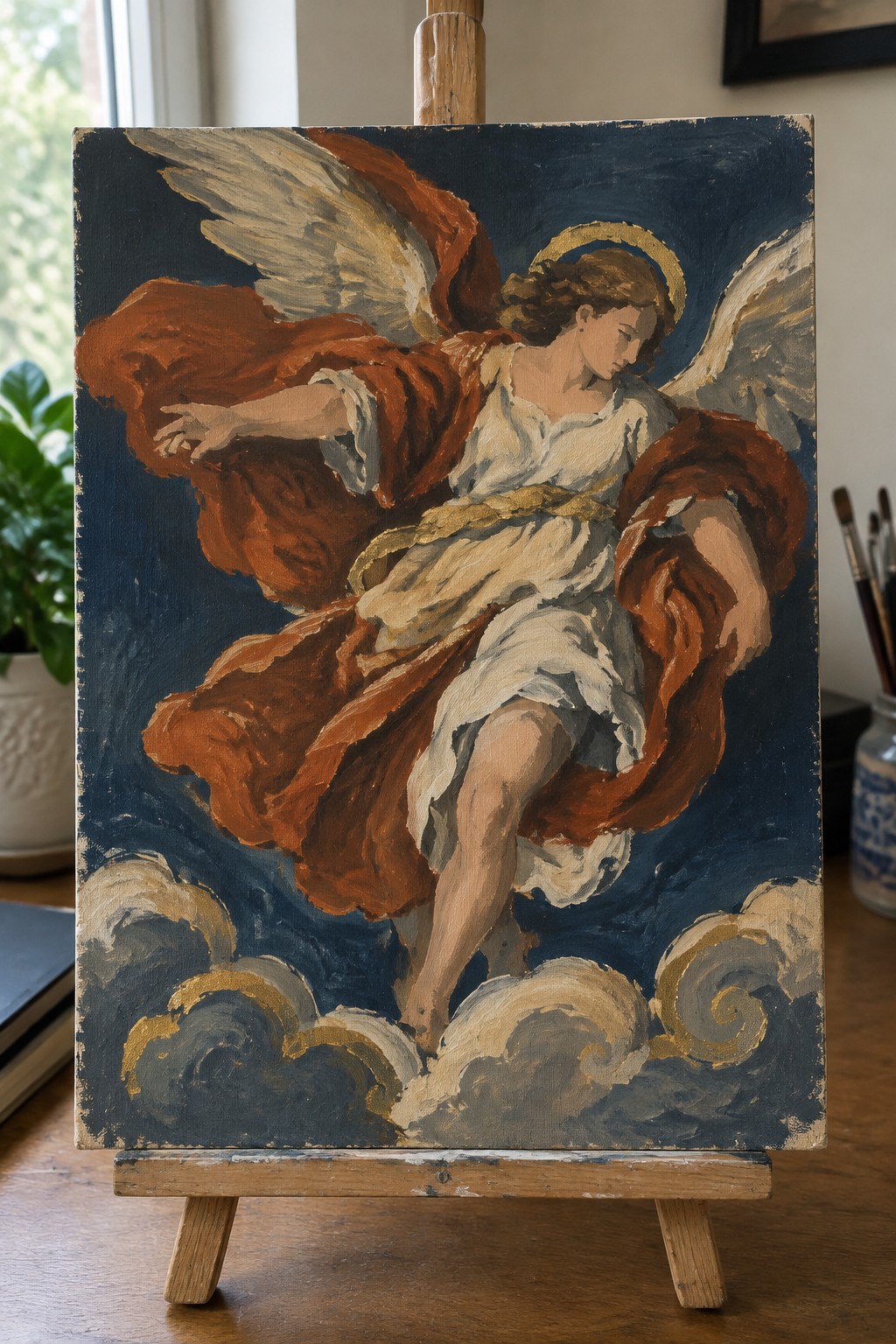
A Baroque-style angel painting idea centers on a single flying figure with strong diagonal movement, dramatic fabric folds, and a dark background that pushes the form forward. The composition uses broad, energetic brushwork on the robes and wings to suggest motion without relying on fine detail or multiple elements. This fits the category of classical figurative art, where the main goal is capturing gesture and weight in the figure against a simple sky.
What makes this idea useful is the clear structure of a central figure with flowing drapery, which gives a direct way to practice anatomy, fabric, and balance in one piece. The limited color palette of deep blue, warm reds, and creams makes it easy to adapt for different sizes or to shift the tones for a different mood while keeping the same layout. For practice or wall art, the idea works well by adjusting the angle of the wings or reducing the cloud detail at the bottom to match the time and space available.
Cherub Portrait with Golden Halo

A close-up cherub portrait centers on the face with a golden halo creating a clear circular frame around the head. The upward gaze and soft shoulder positioning keep the composition balanced and simple while the warm skin tones blend into a textured background. This type of decorative portrait works well when the goal is to focus attention on expression and light without extra elements.
What makes this idea useful is the built-in focal point from the halo, which helps beginners avoid composition mistakes. The limited color range of peaches, browns, and golds makes it easy to test on small canvases or adapt to different skin tones. For wall pieces, the head-and-shoulders format scales cleanly to different sizes and still reads well from a distance.
Angel Study with Layered Drapery and Halo

This painting idea focuses on a seated angel shown in a three-quarter view, with one hand placed on the chest and the head slightly tilted downward. The main appeal comes from the broad folds of blue and warm-toned fabric that wrap around the figure, creating clear directional lines that move the eye toward the face. A soft halo and simplified wings keep the background minimal so the drapery and pose stay front and center.
What makes this idea useful is how the fabric folds give you strong shapes to follow without needing fine facial detail. You can easily change the robe colors or crop the composition tighter for a smaller canvas or card. For practice, the loose edges and overlapping layers let you work on value changes and soft transitions while still keeping the figure readable.
Cherub Pair Framing a Classical Column

A balanced pair of winged figures placed on either side of a central column creates a symmetrical decorative layout that feels structured but light. The curving vines and scattered flowers on the outer edges add movement and keep the eye moving inward toward the column without crowding the middle. This approach works as ornamental decorative art that can sit comfortably on a wall or be adapted for panels and prints.
The composition does a lot of the work here because the vertical column gives an instant focal point while the side elements stay flexible. You can simplify the vines or reduce the number of flowers if you want a quicker version for practice. The soft color range also makes it easy to swap in different tones to match a room or turn the whole thing into a line drawing for coloring or stencil work. For Pinterest, this kind of clean symmetrical idea stands out because it reads clearly even at small sizes.
Trumpet Angel in Profile with Gold Halo

A single angel figure shown from the side forms the core idea here, with one arm raised to hold a long golden trumpet. The composition places the figure against a solid dark blue field so the light robes, wings, and halo stand out clearly without competing elements. Strong vertical lines from the raised arm and instrument, plus the curved halo pattern, keep the eye moving through the piece while the limited palette of deep blue, cream, and gold keeps the focus tight.
What makes this idea useful is the straightforward single-figure setup that works at different canvas sizes without losing impact. The dark background does most of the work by creating instant contrast, so color mixing stays simple. For practice, the pose helps with drawing extended arms and fabric folds at an angle. The same layout adapts easily to a smaller study or a larger wall piece by adjusting only the wing detail level.
Angel Portrait with Auburn Curls and Green Drapery

A half-length angel portrait works well when the focus stays on the face, hands, and the contrast between loose hair and heavy fabric. The idea centers on a single figure set against a dark background, with the green drapery providing both color and a sense of weight across the chest. The composition keeps the wings and halo secondary so the viewer stays on the expression and the way light hits skin and cloth.
What makes this idea useful is how the limited palette of warm tones and deep green lets you practice fabric folds without building a full scene. The dark background does most of the work in making the figure stand out, so the same setup scales easily to smaller panels or studies. For wall pieces, the vertical crop and strong shoulder line keep the design simple to frame while still reading clearly from a distance.
Baroque Angel Wings in Split Neutral Tones

A pair of angel wings forms the core idea here, with one side painted in cool blue-gray washes and the other in warm beige-brown layers. The wings curve inward to create a natural focal point, while gold scrollwork anchors the bottom and sides without crowding the center. This approach works as decorative art that borrows baroque ornamentation but keeps the main shapes simple enough to paint in stages.
What makes this idea useful is the built-in contrast between the two wings, which lets you test different color mixes on one piece. The gold flourishes can be scaled down or swapped for simpler curves if you want a faster study. For wall art, the vertical layout and neutral palette make it easy to adapt for different frame sizes or room colors. You could also shift the tones toward cooler blues or warmer earth shades depending on the look you need.
Angel Suspended with a Floral Garland
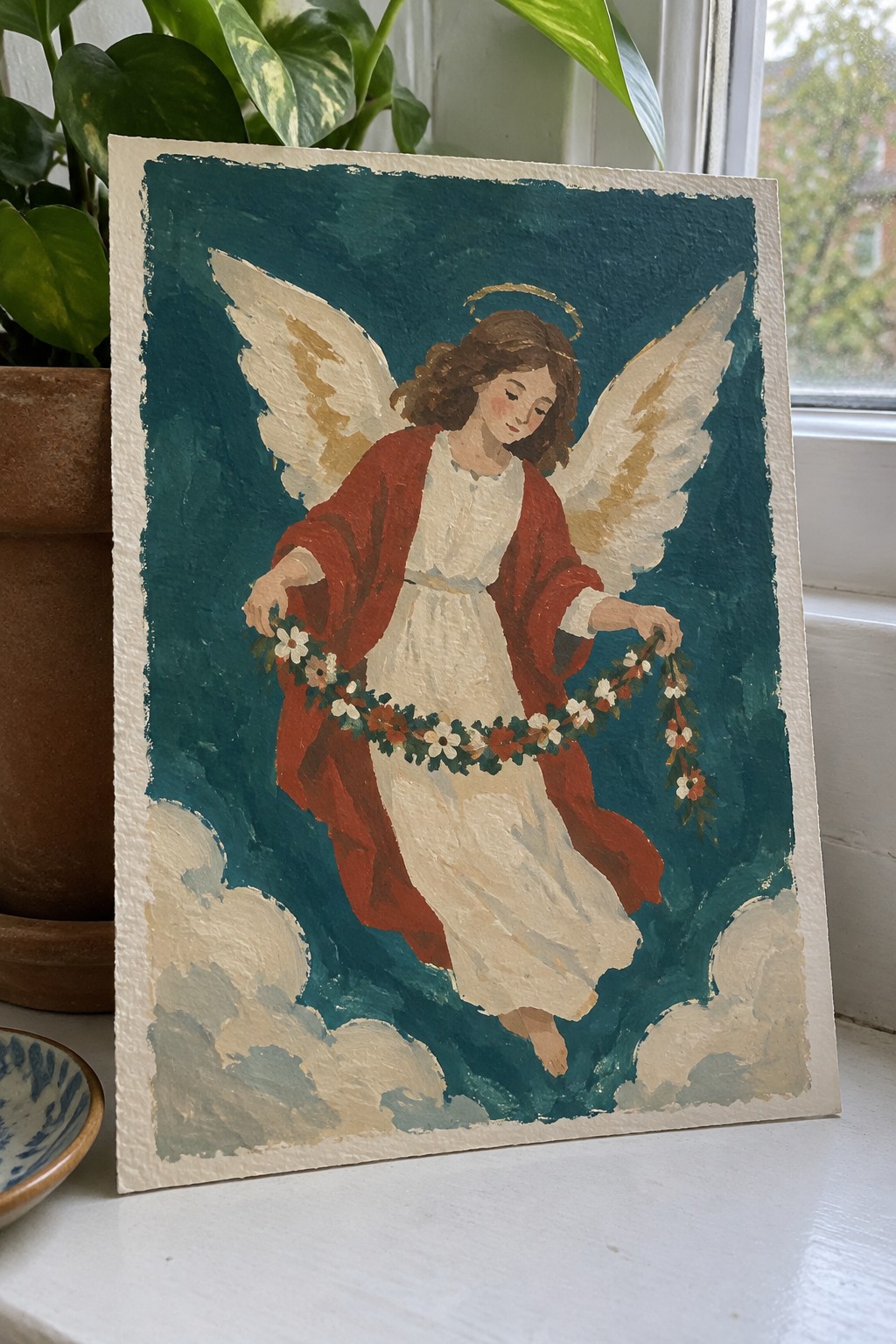
An angel figure floating against a solid teal background gives a clear focal point that works well for decorative paintings. The idea centers on the contrast between the red robe and the cooler surroundings, with the curving floral garland adding a horizontal line that balances the vertical pose. This approach fits the decorative category, where the subject stays simple enough to read from a distance while the loose brushwork keeps the surface interesting up close.
What makes this idea useful is the straightforward layout that leaves room to adjust the garland length or swap the robe color without changing the whole composition. The clouds at the bottom provide a natural base that can be left minimal or expanded if the canvas size changes. For practice, this kind of subject helps with figure placement and color blocking before adding finer details like the wings or flowers.
Baroque-Style Cherub Bust with Earthy Halo

A close-up portrait of a young angel works well as a painting idea when the focus stays on the tilted head, soft curls, and the contrast between the pale face and the darker wings. The composition places the glowing circular halo slightly off-center so it frames the gaze without overpowering the figure, while the loose brushwork on the drapery and feathers keeps the overall shape simple. This fits the category of classical angel portraiture, where a limited palette of warm browns, cool grays, and a single pale yellow keeps the attention on the face and wing edges.
What makes this idea useful is the three-quarter view, which hides one side of the face and makes proportion mistakes less obvious. The background wash stays minimal, so the same layout can be painted smaller for greeting cards or enlarged for a wall piece without needing extra detail. You can swap the halo color or shorten the wings if you want a quicker version, and the muted tones still read as finished even if the brushwork stays broad.
Angel Triptych with Warm Tones and Varied Poses

The painting idea centers on three separate panels, each showing a young angel with curly hair, a golden halo, and feathered wings. The panels share a similar warm palette of browns, soft pinks, and golds while varying the head angles and gazes to keep the group from feeling repetitive. This format works as decorative art because the narrow vertical shape of each panel lets the set function as a cohesive wall piece without needing a single large canvas.
What makes this idea useful is how the repeated subject across three panels gives you built-in practice on the same elements while allowing small changes in expression or tilt. The earthy color range stays easy to match if you want to paint additional pieces later or adjust the background tone. For wall art, the compact size of each panel makes the set practical for narrower spaces like a hallway or above a desk. You could start with just one panel to test the approach before committing to the full group.
Baroque Angel Portrait with Gold Ornamental Borders

This painting idea focuses on a close-up angel portrait where the figure is centered inside a glowing gold halo, with wings and clouds filling the space around the shoulders. The composition gains its strength from the contrast between the soft, blended watercolor tones and the crisp gold baroque scrollwork placed in the corners. It works as decorative art that combines a portrait subject with ornamental framing elements.
What makes this idea useful is how the gold details can be added last with a fine brush or gold leaf pen, letting you build the main figure first without pressure. The balanced layout adapts easily to different sizes, whether you want a small piece for a journal cover or a larger version for a wall. You could swap the full baroque swirls for simpler curved lines if you prefer a lighter frame while keeping the same angel and cloud setup.
Frequently Asked Questions
What is Baroque art and how does it shape angel paintings from that era? Baroque art developed in Europe during the early 1600s as a response to the Protestant Reformation. It features dramatic lighting, rich colors, and dynamic poses meant to stir strong emotions. Angel paintings from this time use these elements to make heavenly figures appear lifelike and awe inspiring, often placing them in swirling clouds or beams of divine light.
Which artists created many of the angel paintings featured in such collections? Key creators include Caravaggio for his intense use of chiaroscuro, Peter Paul Rubens for his vibrant and energetic compositions, and Gian Lorenzo Bernini whose sculptures and paintings captured movement and emotion. Other notable names are Francisco de Zurbaran and Guido Reni, whose works frequently appear in lists of classic Baroque angel scenes.
What religious themes appear most often in these 22 classic angel paintings? Angels serve as messengers, guardians, and symbols of divine presence. Baroque examples emphasize moments like the Annunciation or the expulsion from Eden, using realistic human forms and intense expressions to connect viewers directly with spiritual stories and reinforce Catholic teachings of the time.
Where can viewers see the original paintings or high quality reproductions today? Many reside in major European museums such as the Louvre in Paris, the Prado in Madrid, and the Vatican Museums in Rome. Online platforms like museum websites and Google Arts and Culture offer detailed digital images and zoom features that allow close study of brushwork and color without travel.
How do these Baroque angel paintings differ from those of the Renaissance period? Renaissance angels tend to appear calm and balanced with clear lines and even lighting. Baroque versions add motion, deep shadows, and heightened drama to create a sense of wonder and urgency. This shift helps the figures feel more immediate and emotionally powerful for the viewer.