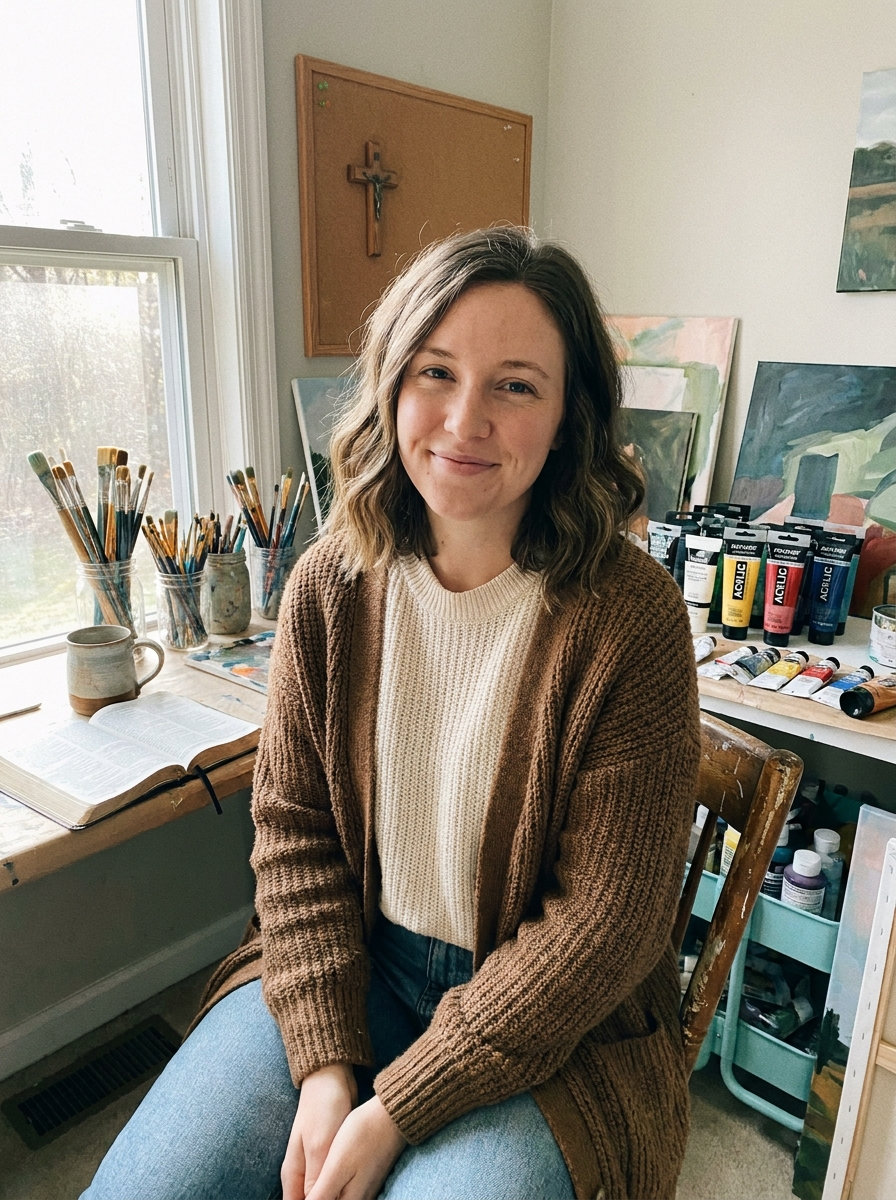
I have always enjoyed painting simple scenes from Bible stories because they give me a calm way to think about faith and hope.
Over the years I tried out different ideas with basic paints and brushes and found a few that worked well even on busy days.
These projects stay easy and do not require fancy techniques or lots of time.
I like how they let me focus on the stories without making the process complicated.
If you paint one you might find it becomes a quiet reminder of something meaningful.
White Dove with Olive Branch

A bird painting idea built around a single white dove in flight, wings spread wide and holding a small olive branch in its beak. The main subject sits centered against a soft peach gradient background, with loose abstract shapes in green and yellow across the bottom to anchor the scene. This approach works because the bird’s clean outline and the simple horizontal division keep the composition balanced without extra elements.
What makes this idea useful is how the strong central shape lets you focus on basic wing forms and body placement. The color split between background and lower section makes it easy to swap in different tones or stretch the canvas size for different wall spaces. You can simplify the branch further or add small variations in the lower shapes if you want to repeat the idea with minor changes.
Sheep on a Hillside Meadow

A landscape idea centered on a small group of sheep in a grassy field uses simple animal shapes against layered hills to create an easy scene. The composition places the sheep low in the frame so the eye moves naturally from the foreground grass up through the hills to the sky. Soft color transitions in the background keep the animals as the main point without needing sharp outlines.
What makes this idea useful is how the basic hill layers and sheep forms can be scaled up or down depending on the paper size. The loose approach to grass and foliage means you can practice blending without worrying about precise edges. For wall art this works well as a quiet piece that fits many room styles, and you could swap in different sky colors or add one more sheep to make it your own.
Dogs Under the Rainbow Covenant

This painting idea pairs two simple dog figures facing each other with a bold rainbow arching overhead. It works as a cute animal scene that directly references the rainbow as a symbol of promise. The white background and evenly spaced color bands keep the focus on the central shapes without extra clutter.
What makes this idea useful is the clear division between the rainbow stripes and the animal forms, so you can paint the arc first and then add the dogs. You could easily change the dogs to different breeds, resize the whole piece for a card, or drop the rainbow down a few shades if you want softer colors. The balanced layout also translates well to small canvases or repeated prints for wall sets.
Mango Still Life with Faith Text

A still life of a mango paired with the word faith below it turns a basic fruit study into a gospel-inspired piece. The idea centers on realistic shading and color blending for the fruit, with a soft cast shadow that anchors it to the surface and keeps the layout balanced. Bold lettering placed directly underneath adds the message without crowding the composition or requiring extra elements.
What makes this idea useful is how the rounded mango shape gives clear practice with light and shadow using just a few layers of yellow and brown tones. The same setup works for other fruits or a different word like hope if you want to match a specific verse. For quick decor or gifts the compact size and plain background make it easy to frame or repeat with small changes in color.
Fish Painted on a Bold Background Shape

Painting a group of fish in overlapping positions creates a straightforward still life that fits the animal or decorative category. The idea relies on a limited palette of blue tones for the fish against a warm terracotta background and a lighter central shape to keep the focus on the forms. Loose brushstrokes and simple outlines make the arrangement easy to read from a distance while still showing some variation in each fish.
The composition does a lot of the work here by using a diagonal flow and a strong background contrast that needs little extra detail. This makes the idea easy to adapt by changing the number of fish, swapping the background color, or adjusting the canvas size for different wall spaces. For practice, the basic fish shapes help build confidence with animal subjects before adding more complex elements.
Jonah and the Great Fish

A painting idea based on the story of Jonah shows a large whale resting on a small area of sand beside one tiny human figure. The concept uses a strong size contrast between the animal and the person to create the scene with very little added detail. A simple blue and brown palette plus plenty of white space keeps the whole idea easy to paint without extra layers or backgrounds.
What makes this idea useful is how the scale difference carries the story so you can focus on basic shapes and washes instead of fine work. The layout adapts easily to different paper sizes or even adds a boat or wave if you want more context later. For practice this subject helps with controlling large areas of color while staying connected to a familiar Bible account.
Calla Lily Cluster on a Light Background

A clustered bunch of calla lilies forms a straightforward floral painting idea that relies on simple shapes and overlapping stems to create interest. The curved petals and upright green stems give the composition clear vertical lines, while the leaves at the base help anchor everything without cluttering the view. This still life approach works well because the limited palette of whites, soft yellows, and greens keeps the focus on the flowers against a plain background.
What makes this idea useful is how the grouped arrangement fills the space without requiring perfect symmetry. The color palette makes this easy to adapt by changing the background shade or swapping in different leaf tones. For practice, this kind of subject helps build confidence with basic layering on petals and stems. You could scale it down for a smaller canvas or add one more bloom to adjust the balance.
Cross on a Hill at Sunset

This painting idea uses a single cross as the main subject, set against a hillside and a warm sky that shifts from orange to pale yellow. It works as a landscape with a clear central element, where the cross is built from thicker vertical and horizontal strokes that stand out from the softer background. The loose brushwork in the foreground and sky keeps the focus on the shape of the cross without needing fine details or multiple objects.
What makes this idea useful is the strong vertical line of the cross, which gives the composition an instant focal point even with minimal planning. The color palette can be swapped for cooler tones or a simpler sky if you want to reduce the number of layers. For practice or quick pieces, the idea scales down easily to smaller canvases while still reading clearly from a distance.
Vertical Stack of Fish Studies

Painting a set of three similar fish in soft blue tones creates a simple animal study that relies on repetition and slight variations in shading. Each fish faces the same direction with fins and tails adjusted just enough to keep the group interesting while staying unified. The vertical layout on a plain background lets the shapes and color washes carry the composition without needing extra elements.
The composition does a lot of the work here because the stacked format uses the full height of the page and makes the idea easy to scale down or expand. You can adapt it by changing the blue palette to cooler grays or warmer teals depending on the supplies you have. For practice this kind of subject works well since the basic fish shape can be redrawn quickly while you focus on brush control and layering washes. A painting like this would also translate easily into a small series for cards or a framed set.
Painting the Burning Bush with Simple Flame Layers

A central cluster of rising flames painted in overlapping strokes of red, orange, and yellow creates a direct way to show the burning bush story. The idea centers on building height and movement through the flame shapes while keeping the base narrow with a few crossed sticks. This layout lets the warm colors carry the main interest against an empty background so the eye stays on the fire itself.
What makes this idea useful is how the same upward flame pattern can be adjusted in size or color intensity without changing the whole setup. You can shorten the flames for a smaller canvas or add faint brown lines at the base to suggest the bush while still keeping the focus on the fire. The limited palette also makes it quick to try different blending techniques for practice or to match a specific room color for wall art.
A Family Walk Along a Winding Road

A painting idea centered on three figures holding hands while standing on a curving path uses simple shapes and a clear vertical layout to tell a story without extra detail. The blue sky takes up the top half while the road and figures occupy the lower portion, creating balance through color blocks rather than fine lines. This approach fits into a figurative or narrative style where the focus stays on the group rather than background elements.
The composition does a lot of the work here by placing the path in the center to connect the figures and guide the eye. You can adapt the idea by swapping clothing colors or making the path lead toward a distant hill to reference a specific Bible story like the journey to Emmaus. For wall art this works especially well because the flat shapes and limited palette stay easy to paint even at a larger size, and the same layout can be simplified by reducing the figures to silhouettes if needed.
Silhouette Nativity with a Prominent Star

A nativity scene painted with flat silhouettes shows Mary and Joseph positioned on either side of a manger while a large star takes up most of the upper space. The idea relies on simple outlined shapes and a narrow color range of browns and gold against a light background to keep the focus on the main elements. The star’s radiating lines and the central placement of the manger help balance the layout without requiring fine details or shading.
The composition does a lot of the work here because the oversized star automatically draws attention and the side figures frame the manger neatly. You can adapt the idea by changing the background to a deeper tone or using metallic paint only on the star for contrast. This kind of painting works especially well for quick seasonal pieces or gifts since the basic shapes let you adjust the canvas size without losing the overall effect. For practice, the limited palette also makes it straightforward to repeat in different sizes.
Watercolor Bird on a Leafy Branch

A small bird perched on a diagonal branch with scattered green leaves forms the core of this painting idea. The subject combines an animal study with botanical elements, using soft washes to shape the leaves and a few darker marks to define the bird’s wings and head. The off-center placement of the bird and the way the branch cuts through the page create a balanced layout that avoids crowding while still filling the space.
What makes this idea useful is how few elements are needed to make a complete piece. You can adjust the number of leaves or change their tones to match different seasons or room colors. For practice this kind of subject works well because the bird can be built in simple layers while the branch gives the composition an easy structure to follow. The same layout can be scaled down for cards or repeated with different bird shapes for a small series.
Grid of Colorful Patterned Fish

Painting multiple fish in a repeating grid gives you an animal-themed piece built around simple repeated shapes. Each fish keeps the same outline while varying in color and pattern, which creates visual interest without needing complex composition or perspective. The two-column layout keeps everything organized and makes the painting feel balanced even when the colors and details differ from one fish to the next.
What makes this idea useful is that the grid structure does most of the planning for you, so you can adjust the number of rows to fit your canvas size. The color choices are easy to swap based on what paint you already have or to match a room. For practice, this kind of subject lets you focus on brush control and pattern work without worrying about realistic proportions.
Hope Candle Still Life

A lit candle with a glowing flame sits centered in this still life idea, with the word hope painted directly below it. The composition uses warm orange and yellow tones for the flame against a soft gray background to keep attention on the light and the text. Thick brushwork adds texture to the candle and its glow while the simple layout leaves plenty of negative space around the edges.
What makes this idea useful is the straightforward subject that works at small sizes without extra elements. The neutral background makes it easy to swap in different colors or adjust the text for other words. For practice, this kind of subject lets you focus on blending the flame and building basic texture before trying larger pieces. A painting like this works especially well for quick decor or gifts since the layout stays balanced even if you simplify the brushstrokes.
Palm Grove Silhouette Walk

A tropical landscape idea that centers on a few tall palm trees framing a simple path, with a dark silhouette of a person walking to give the scene scale and direction. The idea relies on soft horizontal bands of color in the sky and minimal ground details to keep the focus on the trees and figure. This fits into the landscape category and works because the vertical trunks create natural leading lines without needing much extra detail.
What makes this idea useful is the way the silhouette keeps the figure easy to paint while still anchoring the whole scene. The color palette stays limited to greens, browns, and a few sky tones, so it adapts quickly if you want to swap in different tree counts or shift the sky to a sunrise instead. For wall art, the clean layout prints well at different sizes and leaves room to personalize the path or add a second small figure later. The same structure works as a quick practice piece since the main shapes are straightforward and do not require tight realism.
Coastal Lighthouse Landscape

A lighthouse painting idea centers on a tall vertical structure placed against a flat sea and sky to create strong contrast and a clear focal point. The composition uses simple geometric shapes for the tower, rocks, and water, with a limited palette of blues, reds, and sandy tones to keep the scene balanced without extra elements. This fits the landscape category and works by letting the central form carry most of the visual weight while the foreground rocks add just enough grounding.
The composition does a lot of the work here by keeping the lighthouse centered and the background uncluttered. You can adapt the idea by swapping the daytime sky for a dusk version or adjusting the rock colors to match a different shoreline you have in mind. For practice, this kind of subject helps with basic shape blocking and color layering before adding more detail. The same layout could be simplified further by reducing the number of rocks or turned into a smaller canvas study.
Four Haloed Figures in a Grid Arrangement

A set of four robed figures with colored halos forms the core idea here, placed in a two-by-two layout that keeps each one distinct while filling the page evenly. Flat color blocks and simple line patterns on the clothing create a clean decorative style that reads well from a distance. The approach suits gospel-inspired projects where the goal is to show multiple characters without adding extra background elements.
The composition does a lot of the work here by using even spacing and repeated halo shapes to hold the piece together. Colors can be swapped for different seasons or matched to a specific story, and the same layout works at postcard size or scaled up for a canvas. This kind of subject stands out on Pinterest because the grid format photographs cleanly and invites viewers to try their own color choices.
Rainbow Over Hills with Be Still Text

A rainbow landscape pairs a gentle sky wash with layered hills in muted greens and yellows, then adds the short phrase “Be still” in the lower right corner. This type of painting idea works as a simple landscape with text overlay. The wide arc of the rainbow draws the eye across the page while the rolling hills keep the lower half grounded and balanced.
What makes this idea useful is how the rainbow shape guides the layout so you only need loose color layers for the hills. You can swap the text for any short phrase or adjust the hill tones to match different seasons without changing the overall structure. For wall pieces, the horizontal format fits small frames well and leaves room to enlarge the sky area if you want less foreground detail.
Cute Lamb with Bow as an Animal Portrait

A lamb painting idea centers on a single animal subject placed in the middle of the page with a small strip of grass at the bottom to anchor it. The wool is built from rounded shapes and light dabs of color that create texture without needing many layers, while the ears and legs stay simple enough to keep the whole piece balanced. This fits the cute animal category and works as an easy standalone piece or part of a set.
What makes this idea useful is the centered composition that lets the subject carry the painting while the grass adds just enough context. You can change the grass colors or leave the background plain to fit different paper sizes or turn it into a card. The soft neutral palette also makes it simple to adjust for other projects without starting over.
Word Tree with Mercy and Blessed Leaves

A tree painting that places short words directly on the leaves turns a basic nature subject into a decorative piece with a clear message. The idea relies on a central trunk and branching structure to hold the composition together, then layers leaves in varying greens with a few gold accents to keep the eye moving across the canvas. This approach fits the decorative art category because the text becomes part of the foliage rather than a separate element.
The composition does a lot of the work here since the branches already show where to place the words. You can swap in other short phrases or adjust the leaf colors to fit different wall tones without changing the overall layout. This kind of painting works well for gifts or quick practice pieces because the tree shape is easy to sketch first and the leaves can be simplified or made more detailed depending on time.
Frequently Asked Questions
What supplies work best for creating these easy gospel-inspired paintings?
Basic acrylic paints, canvases or watercolor paper, and a set of brushes in various sizes are ideal starting points for all 21 ideas. Add elements like sponges for texture when painting scenes of the Good Shepherd or simple stencils for crosses and doves to keep projects beginner-friendly while celebrating hope through biblical imagery.
How can someone with no art experience still complete these projects successfully?
Focus on the simpler techniques outlined such as using broad brush strokes for backgrounds representing light from heaven or layering colors to depict the empty tomb. Start with one idea like painting a rainbow with Noah’s ark to build confidence, and practice on scrap paper first to capture the essence of hope without needing advanced skills.
Are these painting ideas suitable for children or group activities at church?
Yes, many of the suggestions adapt well for kids by using finger painting for stories like David and Goliath or shared canvases for the feeding of the five thousand. Provide age-appropriate supervision with non-toxic paints and encourage participants to discuss the biblical story of hope while working to make the activity both creative and meaningful.
Where can I find additional references to ensure the biblical elements stay accurate?
Look to free online Bible illustrations or children’s storybook images for guidance on scenes like the resurrection or the prodigal son. Cross-reference with scripture passages mentioned in the article to maintain the focus on themes of redemption and hope without overcomplicating the easy painting process.
How do I display or share the finished paintings to spread their message?
Frame them simply with inexpensive materials and hang in a home, church hallway, or community space where they can inspire others. Consider photographing the work and sharing digitally with a short note about the chosen biblical story to extend the celebration of hope beyond the painting session itself.