I’ve been painting on canvas for a few years now and every so often I try out different religious subjects just to change things up.
Jesus figures can feel intimidating at first but I have found that breaking them down into basic shapes makes the process much easier.
I put together these 20 ideas because I wanted options that rely on simple techniques rather than advanced skills or lots of supplies.
Most of them use everyday brushes and a limited color palette so beginners can focus on getting comfortable with the subject.
I hope a few of them fit what you’re looking for if you’re starting out with this kind of painting.
Sunset Silhouette Jesus
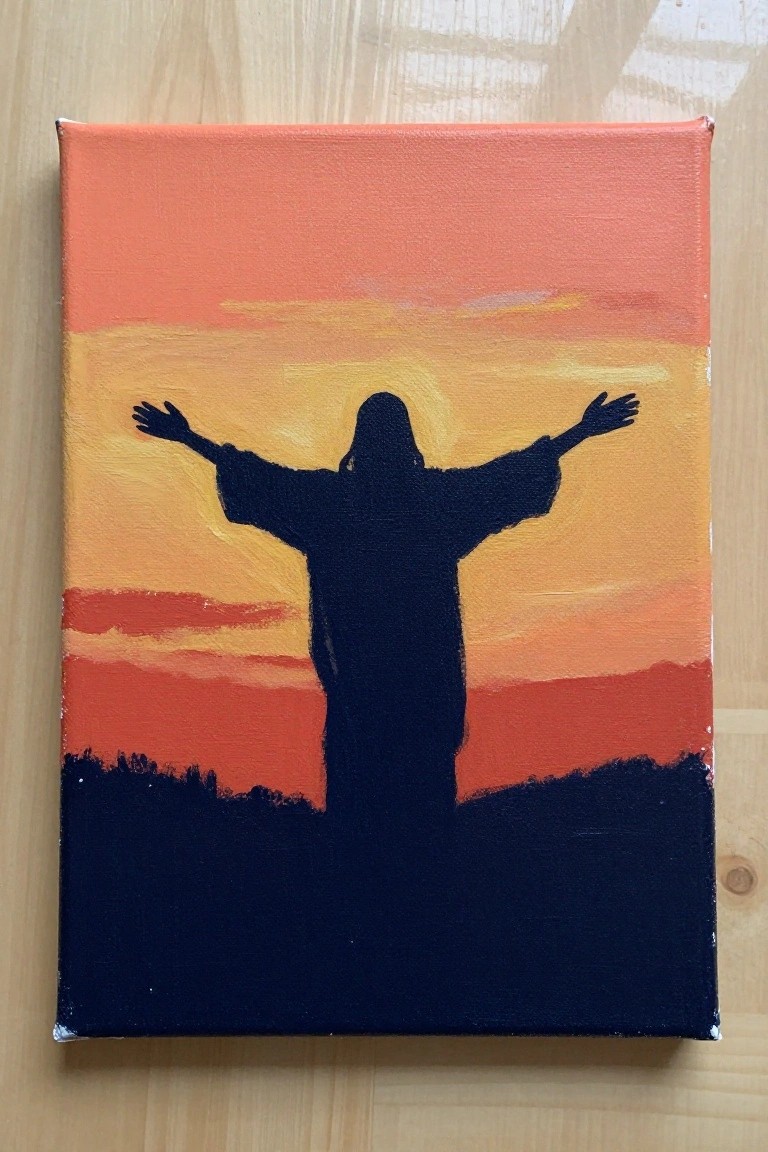
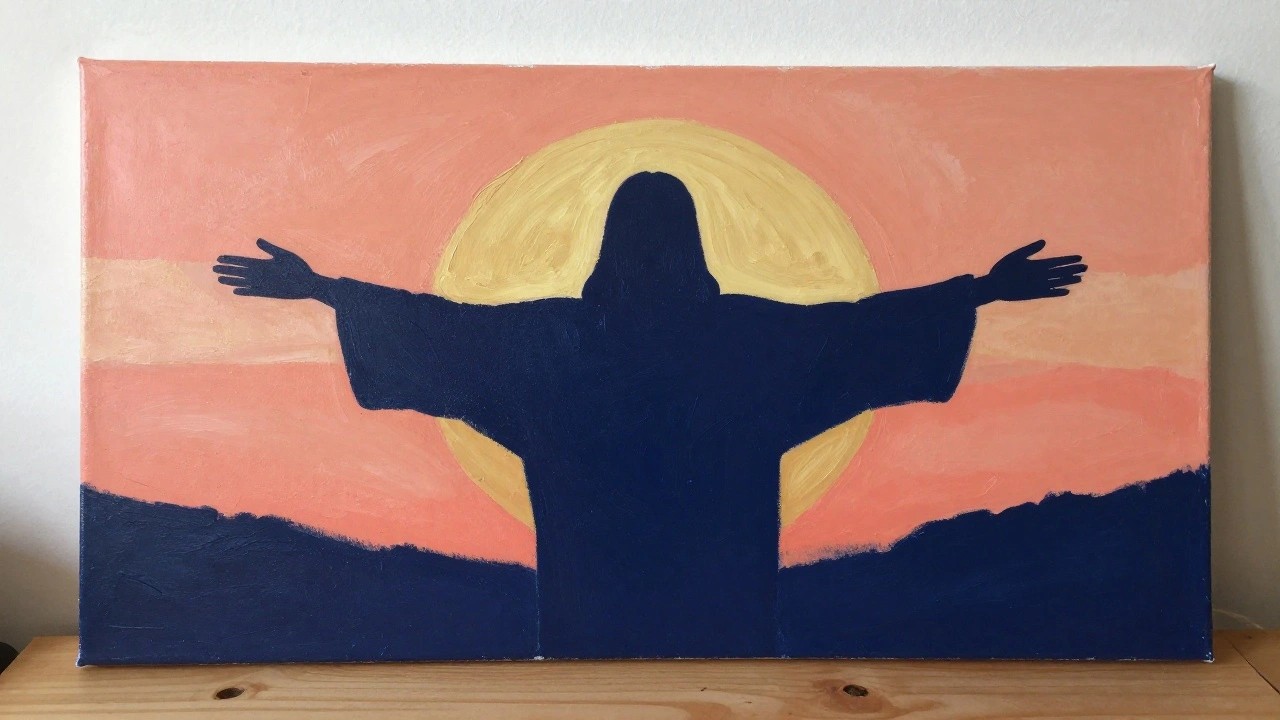
A silhouette of Jesus with arms raised creates a clear focal point by relying on a single dark shape against a blended sunset. The idea centers on a simple figure outline placed over a horizontal gradient that moves from bright yellow near the center to deeper oranges and reds at the edges. A flat dark band at the bottom grounds the scene and prevents the background from overwhelming the main subject.
What makes this idea useful is how the high-contrast layout lets beginners practice color blending without worrying about facial details or fabric folds. The same composition works on a smaller canvas or can be flipped to a sunrise by shifting the color mix toward cooler tones. For wall art, the bold shape holds up well from a distance and reads clearly in thumbnail views on Pinterest.
Watercolor Jesus Portrait with Soft Halo Background
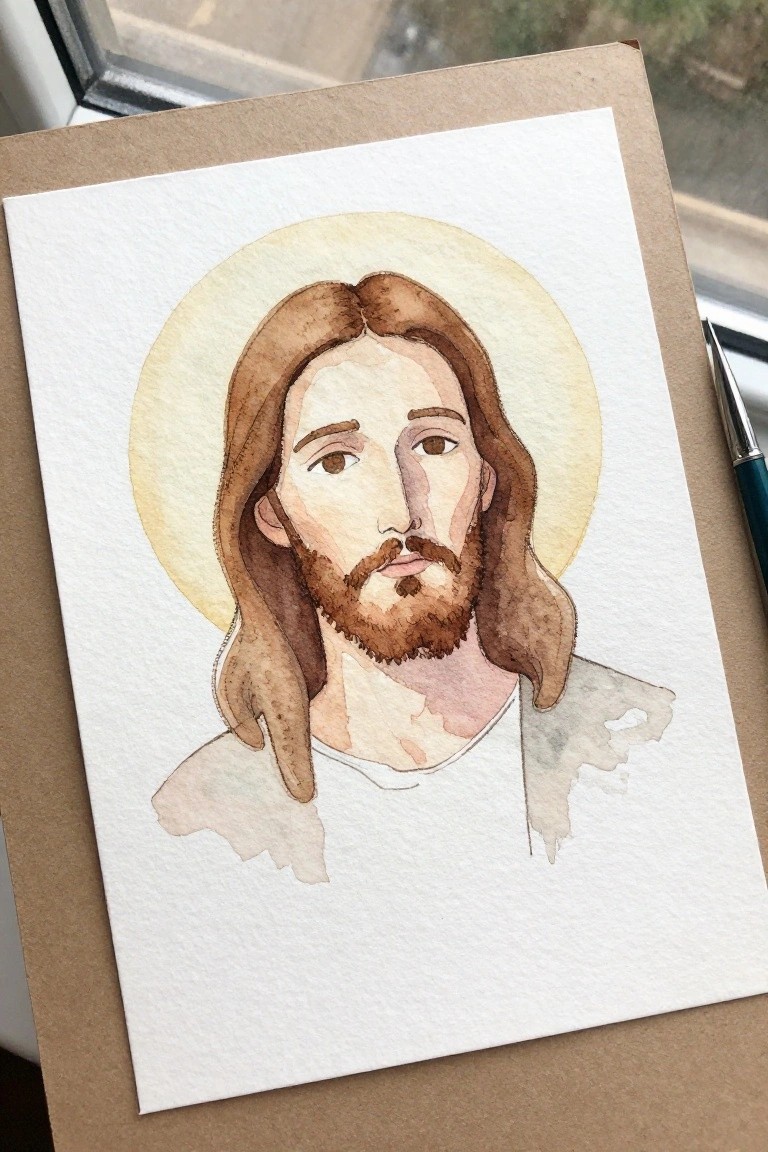
A centered portrait of Jesus using watercolor washes works well as a beginner figure painting idea. The oval halo creates a natural frame around the face while the loose brown tones build the hair and beard with simple overlapping strokes. This approach falls into the religious portrait category and relies on basic shape placement plus light layering for the robe and skin tones.
What makes this idea useful is the way the circular halo and limited palette reduce the need for complex backgrounds or extra details. You can scale it down to a smaller paper size or swap in different earth tones to match your supplies. For practice, this kind of subject helps with face proportions and wash control, and the clean composition makes it easy to adapt for cards or small canvas pieces.
Geometric Folk Jesus with Patterned Tunic
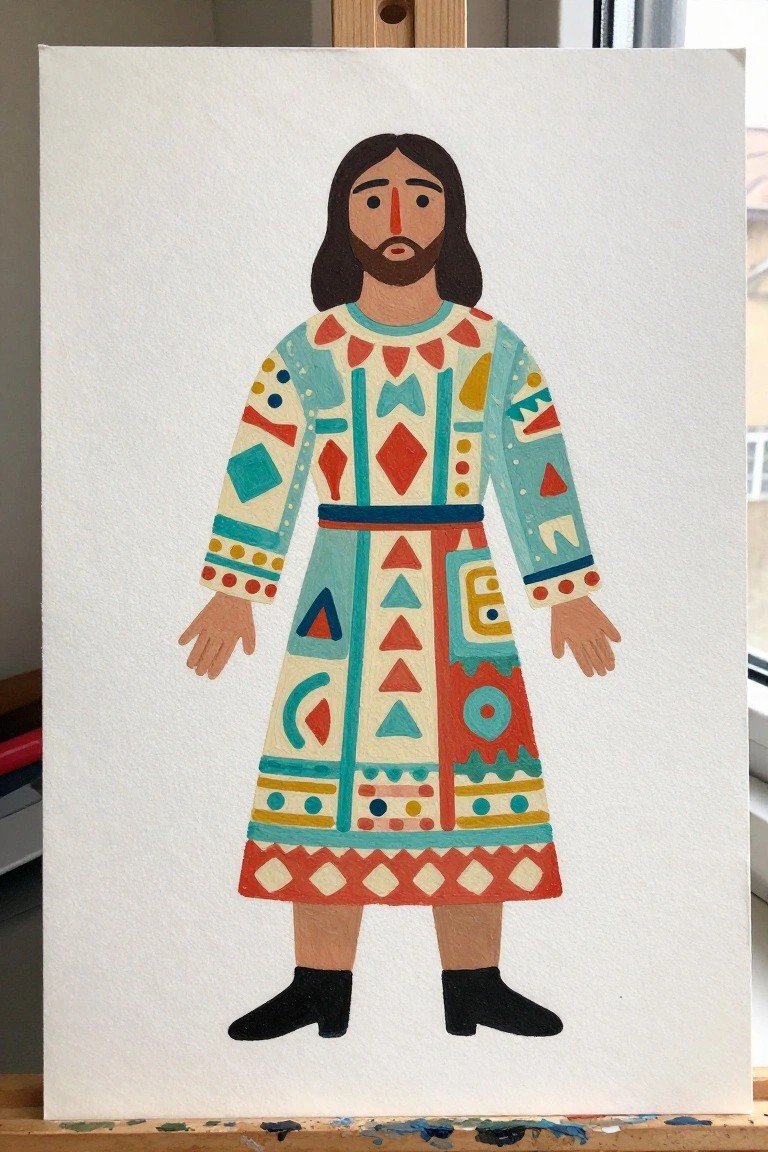
A standing figure of Jesus forms the core of this idea, with the entire visual focus placed on the robe covered in repeating geometric shapes. Triangles, diamonds, circles, and stripes fill the clothing in flat blocks of teal, red, yellow, and blue, while the head, hands, and feet stay simple and minimal. This turns a standard portrait subject into decorative art that uses pattern repetition and color contrast instead of shading or fine detail.
The composition does a lot of the work here because the plain background keeps attention on the patterned robe. You can adapt the idea by keeping the body outline basic and spending time on the shapes and color blocks, which makes the piece approachable for practice or quick canvas projects. Swapping the pattern motifs or shifting the color palette lets you match different decor styles without changing the overall layout. For wall art or gifts, the bold shapes hold up well at smaller sizes and show clearly in photos.
Cross with Wrapped Crown of Thorns
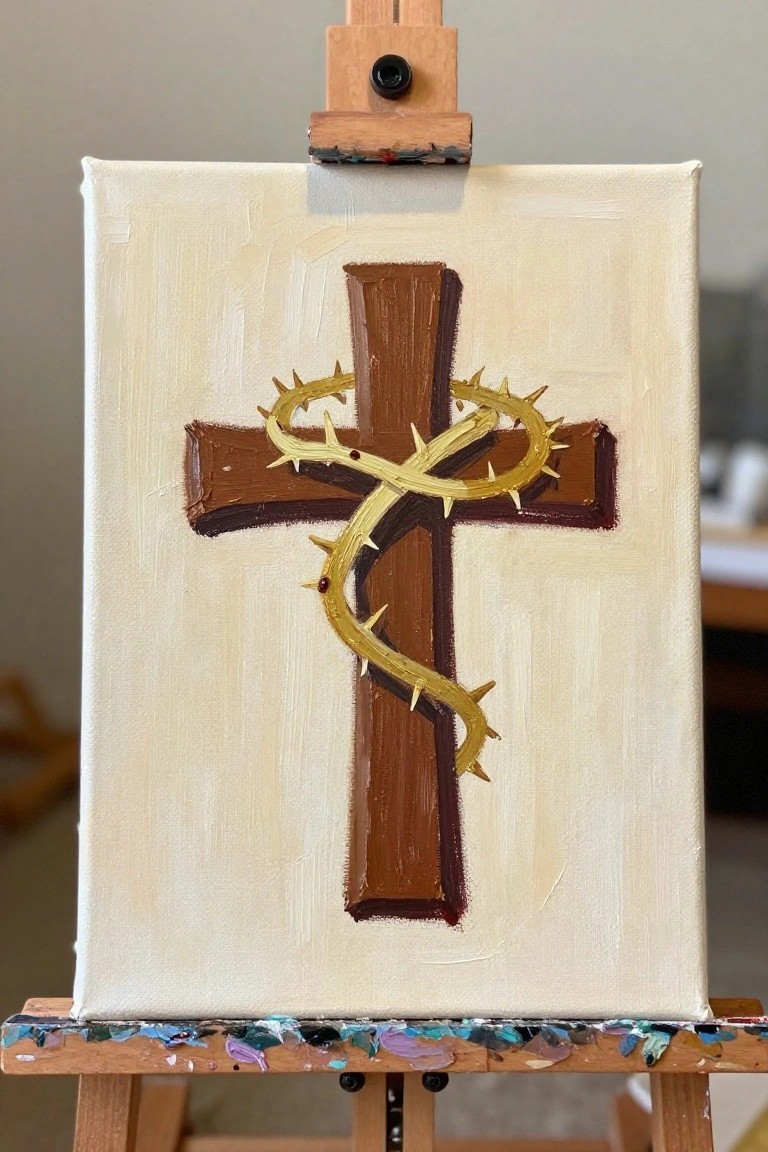
A centered brown cross with a golden crown of thorns wrapped around the middle makes a clean religious still life idea. The thorns create curved lines and small points that contrast with the straight beams of the cross, while the plain light background keeps all attention on those two elements. This approach uses a limited palette and simple overlapping shapes to build interest without extra details.
What makes this idea useful is the clear central subject that works well for wall decor or gifts when kept to a modest canvas size. The neutral tones make it easy to match different rooms, and you can adjust the thorn color or background shade to change the mood. For practice, this layout helps with basic layering on the wood texture and curved brushstrokes on the thorns before trying more crowded compositions.
Seated Jesus with a Lamb
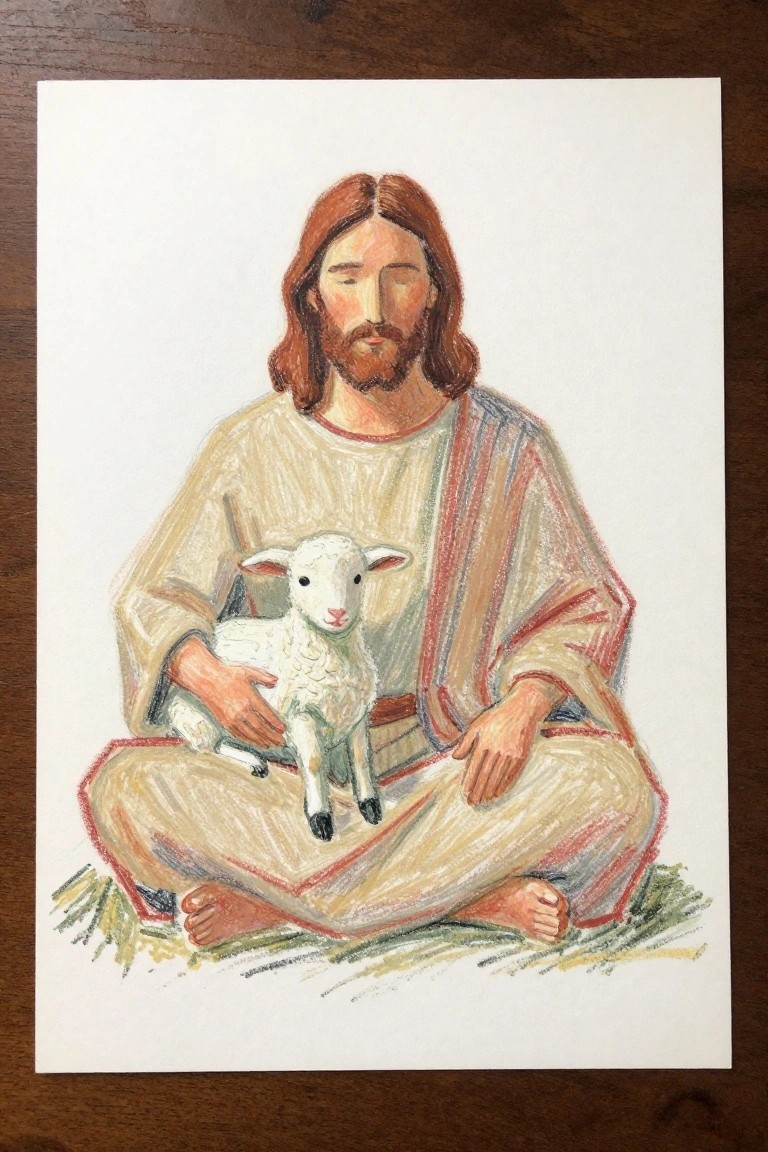
A seated Jesus figure holding a small lamb on his lap forms a straightforward biblical scene that combines a human portrait with an animal subject. The centered placement of the lamb against the robe keeps the composition balanced and easy to follow, while the soft earth tones and simple shapes reduce the need for intricate details. This approach works as a figure painting with an added animal element.
What makes this idea useful is the cross-legged pose that gives clear guidelines for body proportions without requiring dynamic movement or complex backgrounds. The limited color range lets you work with basic pastels or colored pencils and adjust the robe stripes or ground details as needed. You could scale it down for a greeting card or enlarge it for a small canvas while keeping the same layout. For practice, the subject helps build confidence with skin tones and fabric folds at the same time.
Jesus Walking on Water with Ripple Focus
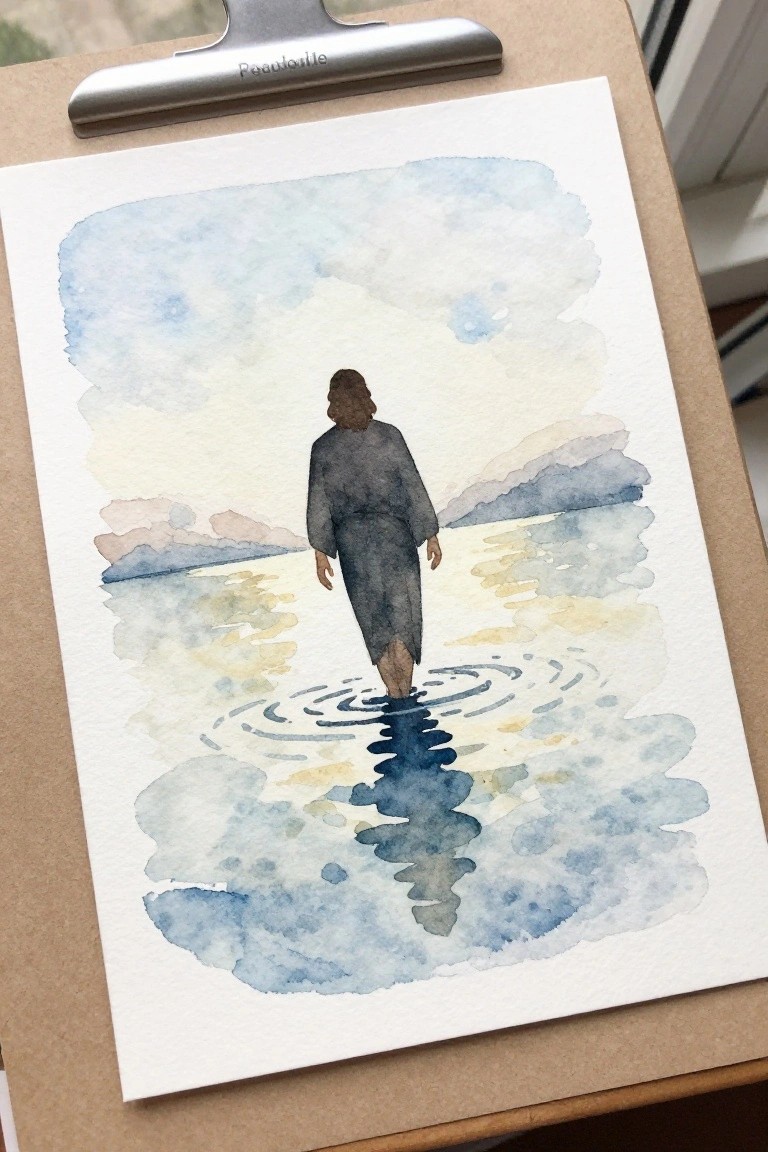
A robed figure moves across a flat stretch of water while leaving a clear set of concentric ripples at the feet. The idea uses a low horizon and simple sky washes to keep attention on the central action and the water surface. Broad color blocks for the sky and distant land keep the layout balanced without extra detail.
What makes this idea useful is the clear vertical layout that places the figure right in the middle and lets the ripples act as the main point of interest. You can change the water tones to warmer shades or crop the sky lower if the canvas size feels off. The ripple pattern is simple enough to test on scrap paper first, and the same setup works for both a quick practice piece and a finished painting.
Hands United in a Simple Cross Formation
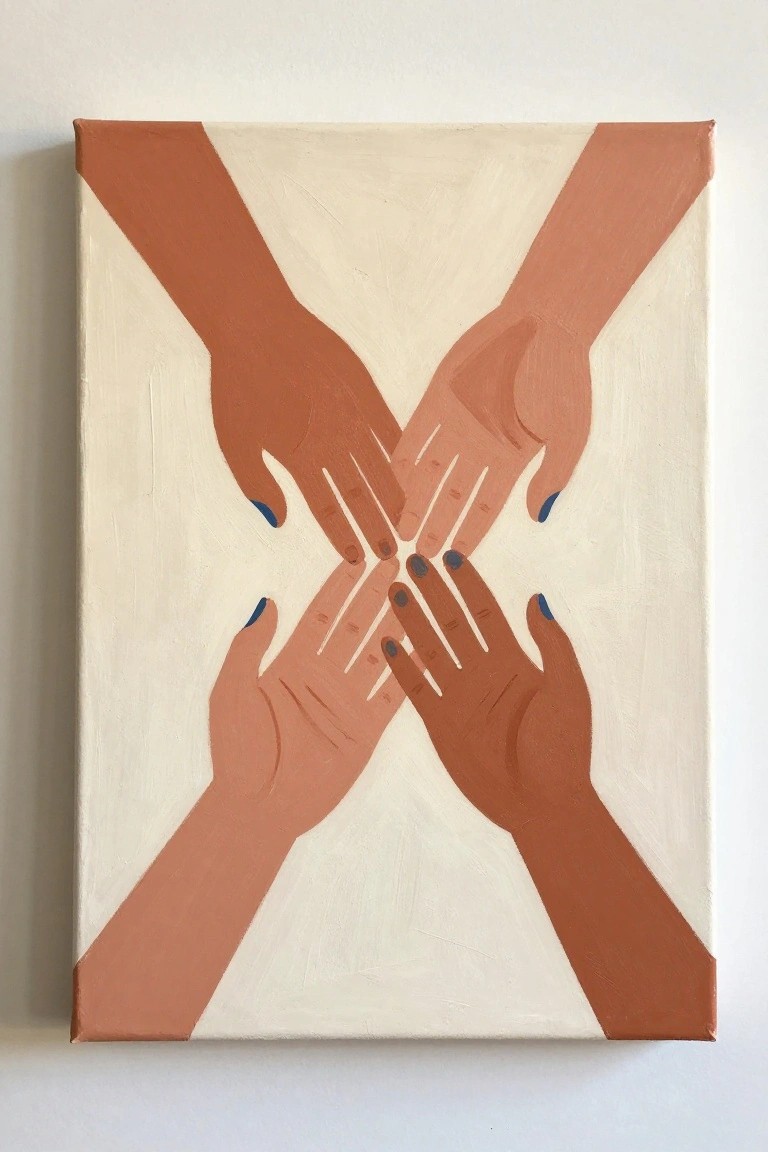
This painting idea uses four hands arranged so their arms create an X and their fingertips meet at the center point. The design relies on clean outlines, flat areas of color, and a light background to keep the focus on the meeting point. It works as decorative art that emphasizes shape and balance over fine detail.
What makes this idea useful is how the strong symmetry does most of the work for you. You can swap the terracotta tones for different skin colors or change the nail polish to fit a theme without redrawing the whole layout. The composition stays effective even if you enlarge or shrink it for a smaller canvas. For practice, this kind of subject helps you work on angles and negative space while still producing a finished piece that looks intentional on a wall.
Bright Group Portrait of Jesus and Children

A central figure of Jesus paired with a ring of smaller figures creates a balanced group scene that works as a simple canvas project. The idea relies on flat color blocks for the robes and basic oval heads to keep everything readable without needing shading or depth. Arranging the tallest shape in the middle and shorter ones around the edges gives the composition structure while staying easy to sketch and fill in.
What makes this idea useful is how the repeating robe shapes let you change colors or swap figures without redrawing the whole layout. You could shrink it down for a smaller canvas or expand the group for a larger one depending on the space. The strong color blocks also help the painting read well in a grid of other ideas online.
Stained Glass Style Jesus Portrait

This painting idea uses thick black lines to divide the face, hair, and background into simple flat color areas that mimic stained glass. The centered face with flowing hair and beard creates a balanced focal point while the rectangular teal panels add structure without extra detail. It works as decorative religious art built from basic shapes and a limited color palette of brown, beige, red, and teal.
The straight lines and large sections make it easy to transfer onto canvas by sketching the main divisions first then filling them in. You can change the background colors or shrink the whole design for smaller practice canvases and quick gifts. For wall pieces, the bold outlines keep the result looking clean even when brushwork stays simple.
Sunset Cross on a Hill
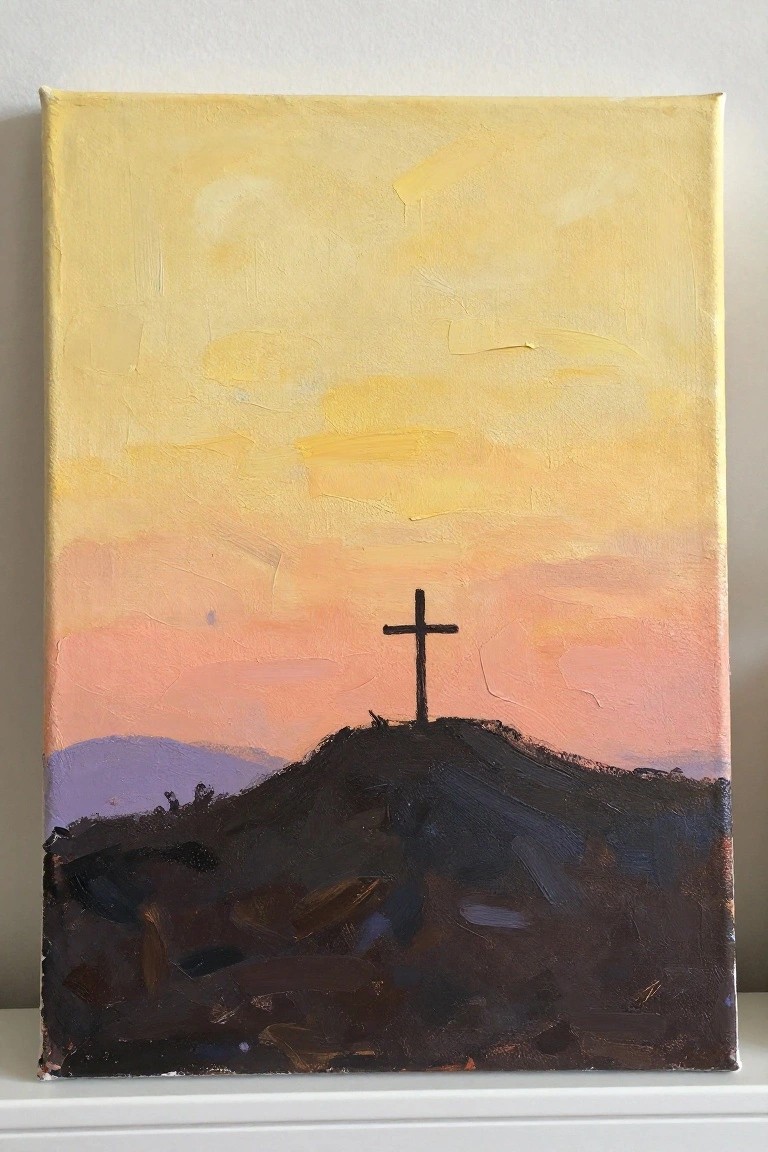
A cross placed on a hilltop serves as the main subject in this landscape idea, with the dark silhouette of the hill and foreground set against a simple sky gradient. The painting uses broad horizontal strokes to build the sky layers while keeping the cross as a single vertical shape that draws the eye. This approach fits a basic landscape category and works because the limited color range and strong contrast between sky and land keep the composition balanced without extra elements.
The composition does a lot of the work here by using a dark mass at the bottom to anchor the cross and let the sky handle most of the visual interest. You can adapt the sky colors to different times of day or adjust the hill height to change the mood while keeping the same basic layout. For practice this kind of subject stays approachable since it relies on blocking in large areas first and adding only one main shape afterward, and the result holds up well as a small canvas piece for shelves or walls.
Flat Color Jesus Portrait with Teal Hair and Halo

This painting idea uses broad blocks of color to build a close-up face with long teal hair and a thin halo floating above. The composition stays centered and simple, relying on clean edges and a restricted palette instead of blending or fine shading. It works as a decorative portrait that keeps the subject recognizable while avoiding small details.
What makes this idea useful is how the large shapes and flat areas let you finish the piece quickly without getting stuck on realism. You can easily change the hair color or swap the halo for a different tone to fit whatever wall or gift you have in mind. The tight crop also makes it simple to scale down for smaller canvases or sketchbook practice.
Profile Jesus Portrait with Loose Brushstrokes
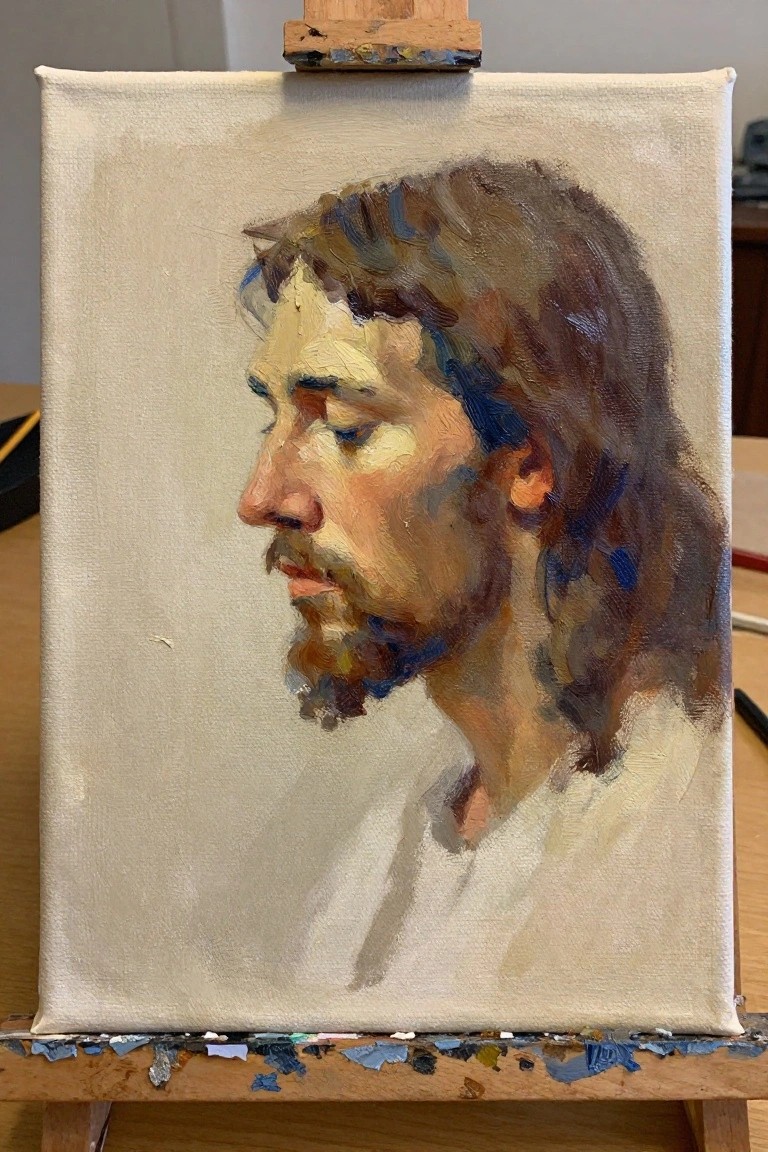
A side profile of Jesus works well as a portrait idea because it reduces the need for perfect symmetry and lets beginners focus on shapes like the nose, jawline, and hair flow. The painting uses a limited palette of warm skin tones, browns, and muted blues applied with visible strokes that build texture in the hair and beard. Keeping the background plain and light helps the face stand out without extra elements to manage.
What makes this idea useful is how the profile angle makes the composition easier to block in with basic shapes before adding color. You can adapt it by changing the background to a soft gray or using fewer colors if you want a quicker study. For practice, this kind of subject lets you work on hair texture and edge control without needing a full scene. The straightforward layout also translates well to different canvas sizes for gifts or wall pieces.
Footprints in Sand Leading to a Cross

A painting idea built around footprints in sand that lead toward a small cross on a hill uses a simple path to guide the eye through the scene. The two large prints sit in the lower section while a trail of smaller marks moves upward, creating a clear line of movement against the flat sandy ground and blue sky above. This approach relies on contrast between the detailed prints and the minimal horizon to keep the composition balanced without extra elements.
What makes this idea useful is how the footprints handle most of the visual interest so you only need basic washes for the sky and ground. You can shrink the whole scene to a smaller canvas or stretch the path longer depending on the paper size. The earthy browns and soft blue work with limited supplies and still read clearly from a distance, which helps if you want something quick for practice or a small framed piece.
Heart Wrapped in Thorns with Cross Above
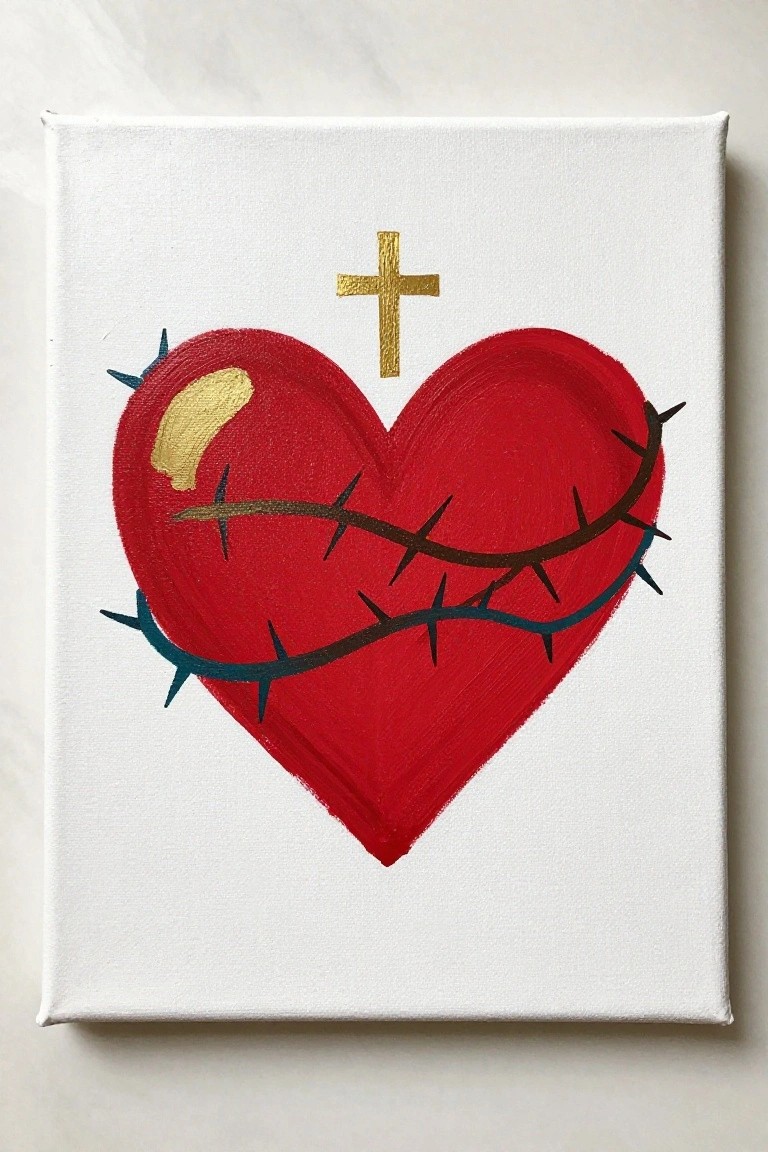
A large red heart sits at the center of this painting idea, wrapped by dark thorny lines that curve around its edges. A small gold cross is positioned directly above the heart on a plain white background, with one gold accent patch on the heart itself. The idea works as decorative art because the bold shape and limited elements keep the layout balanced and easy to read from a distance.
What makes this idea useful is how the simple heart outline and straight cross shape can be adjusted to fit different canvas sizes without changing the overall balance. The red and gold palette against white makes it straightforward to swap colors or add more gold touches if needed for matching a room. This would be easy to turn into a smaller version for gifts or keep the same scale for wall decor, since the empty background removes the need for extra layers or details.
Jesus with Radiant Halo and Open Arms
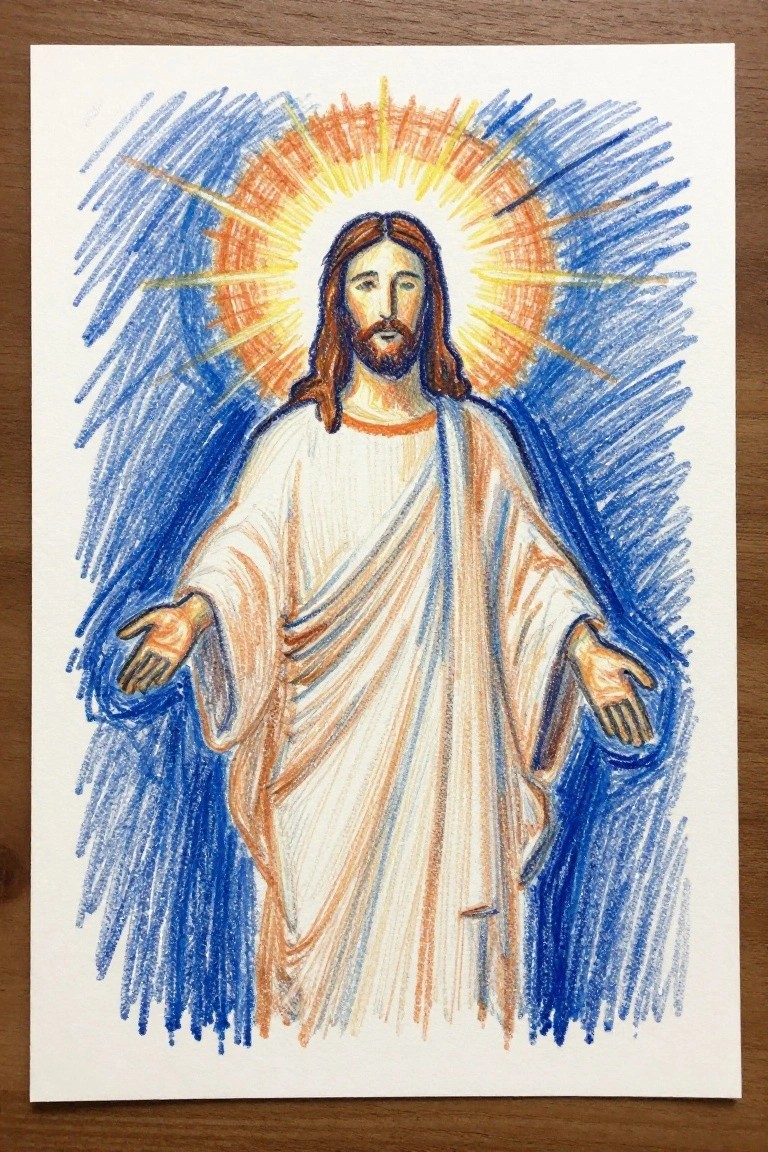
A central figure of Jesus with arms extended forms the main subject of this painting idea. The composition places the figure against a textured blue background while the halo uses radiating lines in yellow and orange to create a clear focal point around the head. This style works as a straightforward religious portrait that relies on contrast between the warm halo tones and the cooler background to hold attention.
The balanced layout and limited color choices make it simple to scale up or down on canvas without losing the main effect. You can reduce the number of halo rays or soften the background texture if you want a quicker version for practice or gifts. The direct pose also leaves room to change robe colors or add subtle shading while keeping the overall structure easy to follow.
Jesus on a Hill with Figures in a Loose Circle
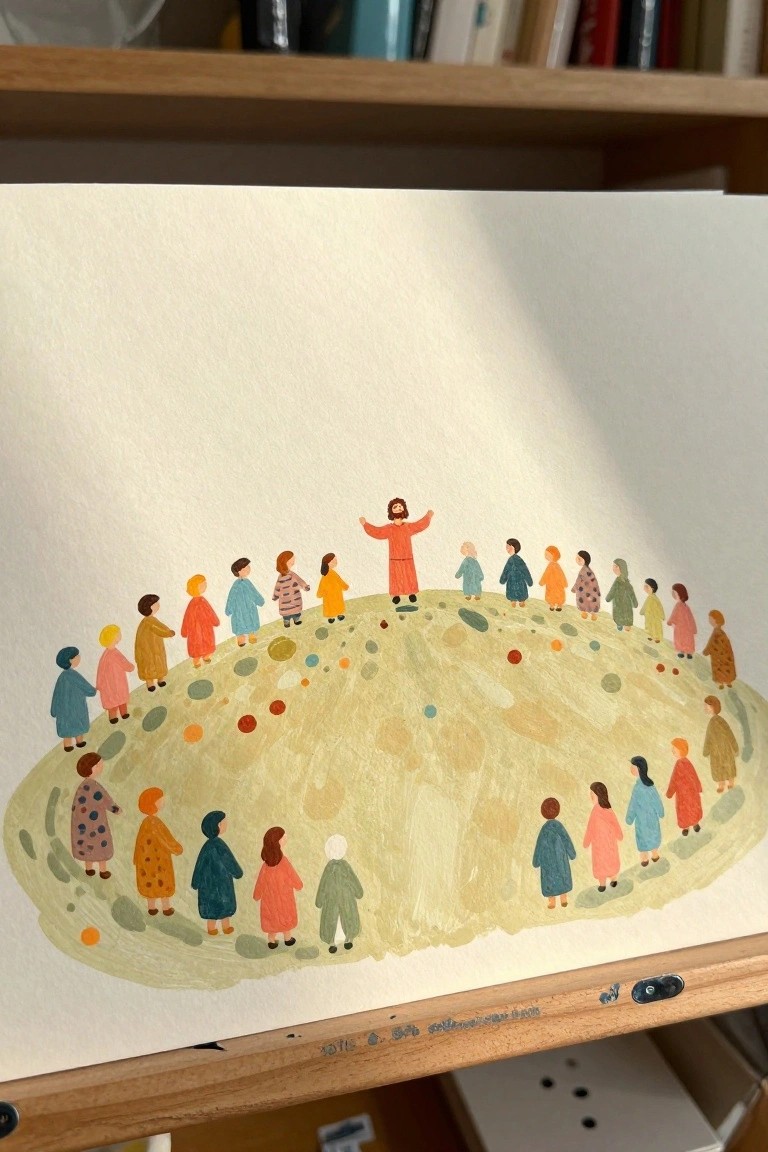
A painting idea centered on one raised figure with a group of smaller shapes arranged around the base of a rounded hill keeps the focus tight without needing extra background details. The idea works by letting the placement of the figures create the scene, using a simple color wash for the ground and scattered dots to suggest texture instead of painting grass or rocks. This fits the category of figurative or narrative scenes where the composition itself carries the story through balance and spacing.
What makes this idea useful is how the semi-circle layout naturally draws attention to the center figure while giving the rest of the canvas breathing room. You can adapt it by reducing the number of figures for a smaller canvas or shifting the ground colors to match whatever paints you already have on hand. For practice this kind of subject helps because the figures stay basic with just a few strokes for clothing and heads, and the hill can be filled in with broad layers. The clean arrangement also makes the finished piece easy to recognize in a grid of thumbnails.
Shepherd Carrying a Lamb Scene
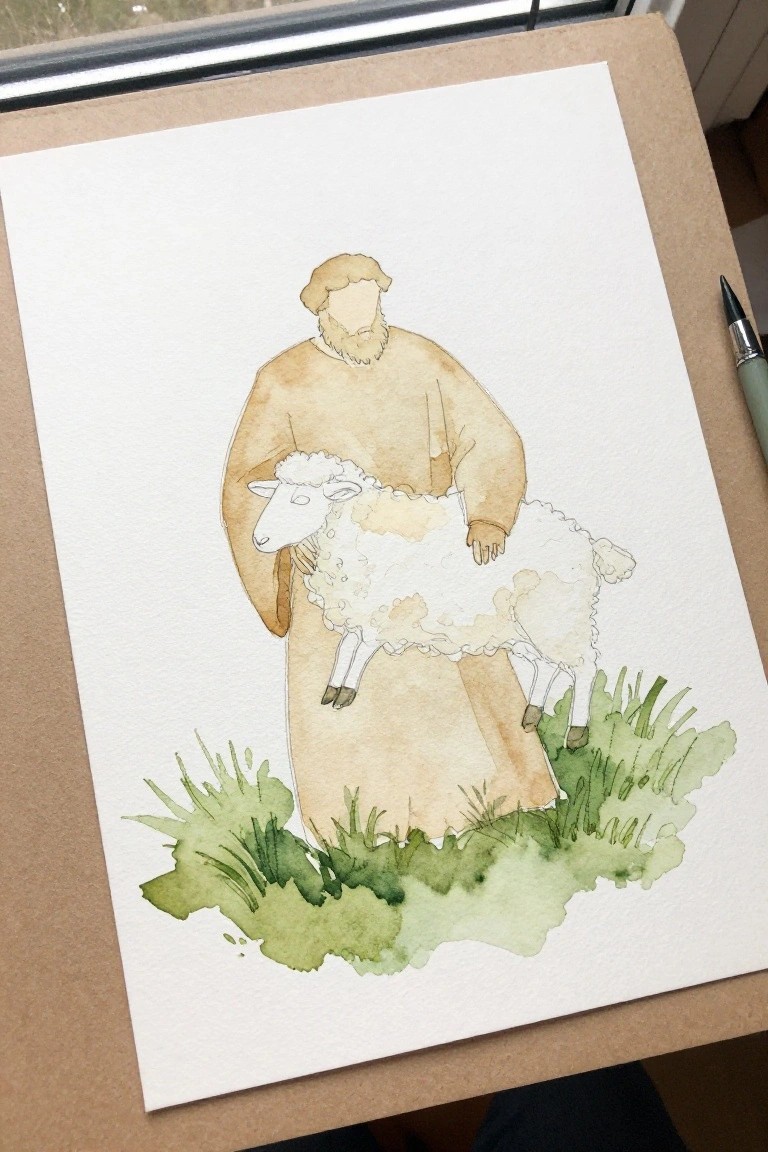
A robed figure holding a sheep forms the core of this painting idea, with the animal positioned across the figure’s arms and legs visible below. The composition uses a soft wash of earth tones for the figure and clean white with light shading for the sheep, set against a loose patch of green at the base. This keeps the focus on the pair while the minimal background lets the shapes stay readable even with simple brushwork.
What makes this idea useful is the clear vertical layout and limited elements that let you practice figure proportions without extra background work. You could change the grass color or add a second animal to adjust the balance. For practice, the subject works well because the robe shape covers most of the body and reduces the need for detailed hands or feet.
Red Berry Branch Still Life
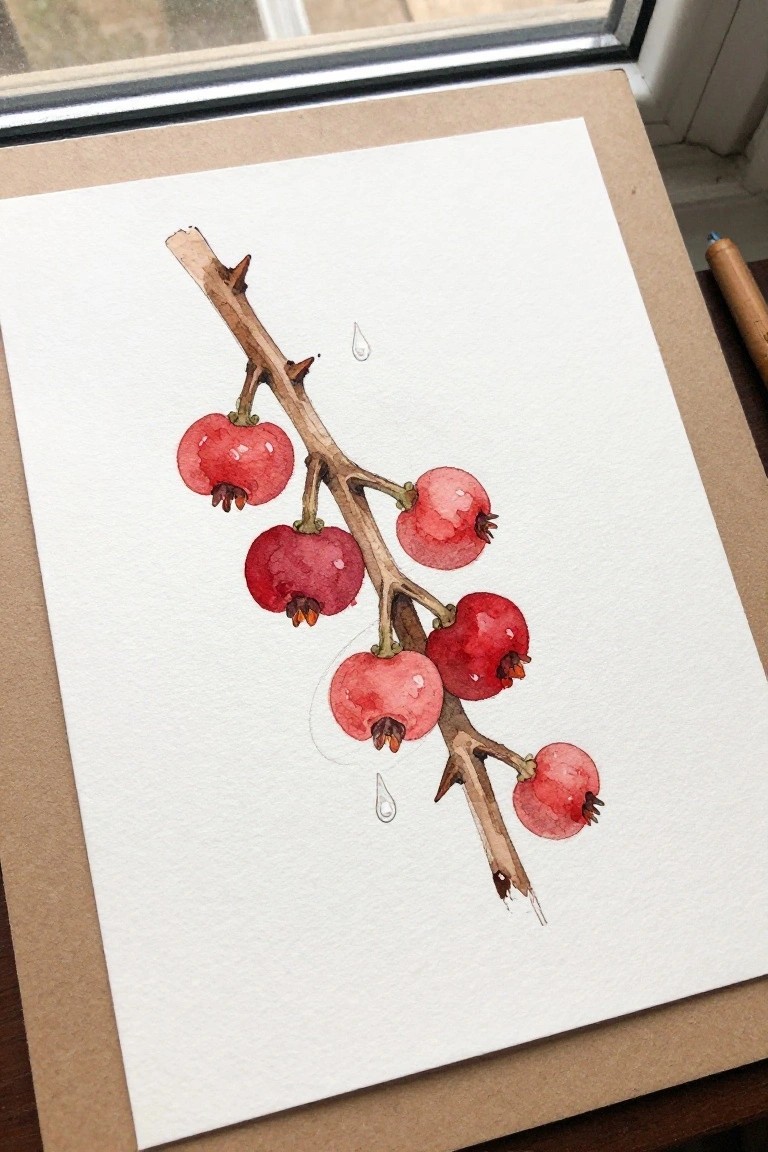
A diagonal branch covered in round red fruits creates a simple still life that relies on natural clustering rather than precise placement. The idea works by using soft washes for the berries to suggest roundness while keeping the branch and thorns more defined with drier strokes. Negative space around the angled stem lets the clusters stand out without crowding the page.
What makes this idea useful is how easily the same layout can be adjusted by changing berry color or spacing for different seasons. The loose grouping along one main stem keeps the composition flexible for smaller cards or bigger canvases. Beginners can practice wet-on-wet blending on the fruit while the branch itself adds just enough structure to hold the piece together. For wall art this kind of subject stays clean and recognizable even when simplified further.
Split Background Jesus Portrait
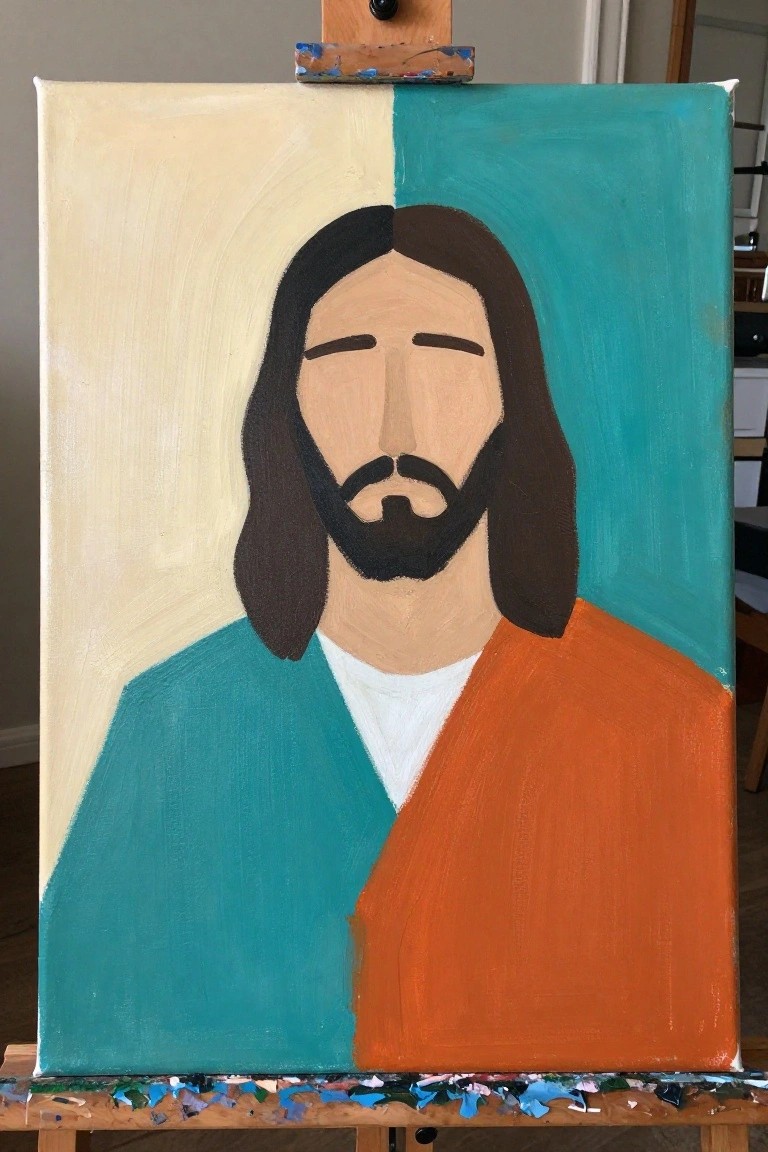
A portrait of Jesus built from large flat color areas works well when the background is split vertically into two contrasting tones. The teal and orange robes sit against the pale yellow and teal halves to keep the figure centered and easy to read from a distance. Broad shapes for the hair, beard, and clothing let the composition carry the interest without needing fine facial details.
The composition does a lot of the work here by using color blocks instead of shading or texture. You can swap the robe colors or change the background split to fit whatever paint you already have on hand. For practice this kind of subject helps you focus on clean edges and even coverage before trying more detailed faces. It also translates quickly to different canvas sizes if you want something graphic for a wall.
Flat Color Nativity Scene with a Single Star
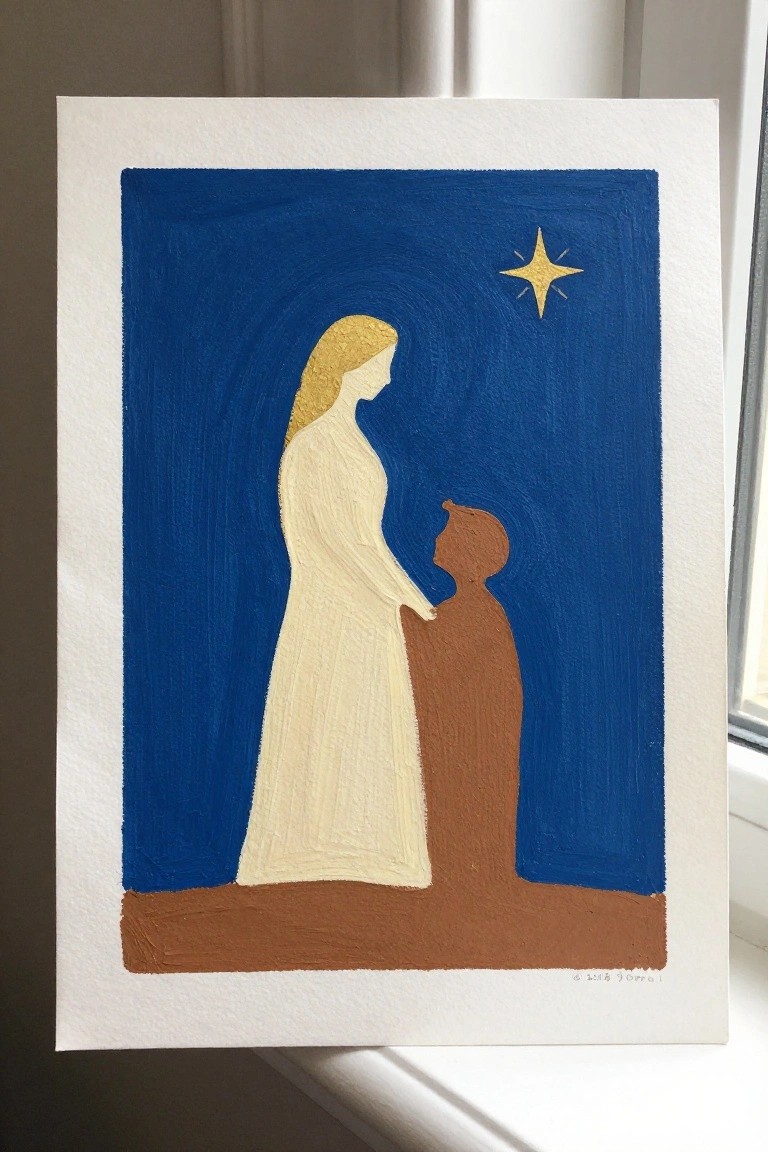
A simple nativity idea built around two standing figures and one star keeps the focus on shape and color blocking. The taller figure in light tones is placed next to a smaller figure in a darker shade, both set against a solid blue field with a bright star in the upper corner. This layout works because the limited palette and large shapes remove the need for blending or fine detail work.
The composition does a lot of the work here since the figures read clearly even at small sizes, making the idea easy to scale for cards or mini canvases. You can change the blue to another deep tone or adjust the star size without losing the overall effect. For practice this subject is useful because it trains clean edges and value contrast using only a few colors.
Frequently Asked Questions
What basic supplies do I need to begin these Jesus painting projects on canvas?
Start with a small stretched canvas or canvas board in a size like 8 by 10 inches. Use acrylic paints in earth tones such as browns, skin shades, blues, and whites along with a few brushes of varying sizes including a flat brush for backgrounds and a round one for details. Add a palette for mixing colors, water for cleaning brushes, and paper towels for blotting. These items keep the process simple and affordable for beginners.
How do I select the best idea from the 20 options when I am a complete beginner with no prior experience?
Look for ideas that focus on basic shapes like a simple profile or a glowing halo against a plain background rather than detailed scenes with multiple figures. Choose one that matches your comfort level with colors and avoid those requiring fine facial features until you practice basic blending. Many of the listed ideas use broad strokes and minimal layers so you can complete a painting in one or two sessions.
What simple techniques help create the face and hair of Jesus without advanced drawing skills?
Begin by sketching a basic oval shape lightly with a pencil then block in the main skin tone using broad brush strokes. Add hair with longer downward strokes in a darker shade and define the eyes and mouth with small dots or short lines rather than precise lines. Layer a lighter shade on top for highlights to give dimension while keeping the overall style soft and symbolic as suggested in the ideas.
How can I add depth to my painting using the recommended canvas techniques?
Apply a base color first and let it dry then build shadows with a slightly darker mix of the same color on areas like the robe folds or background edges. Use dry brushing by dipping a brush in paint and wiping most of it off on a paper towel before lightly sweeping over raised areas for highlights. This method creates a sense of light and form without needing complex blending tools.
How do I fix common errors like uneven colors or smudges while following these beginner ideas?
Allow the paint to dry fully then cover the area with a matching base color to start over on that section. For small smudges gently wipe with a damp cloth before it sets or paint over it with an additional layer once dry. Many of the 20 ideas include forgiving backgrounds like skies or simple crosses so you can expand those elements to hide minor issues.