I like to paint Easter themes sometimes when I have a quiet afternoon.
The story has a lot of moments that work well in watercolor or acrylic.
I have looked at many Christian paintings over the years for ideas.
Some of them really capture the feeling without being too grand.
This article shares 17 of my favorites for Resurrection Sunday.
Cross with Draped Cloth and Easter Lilies
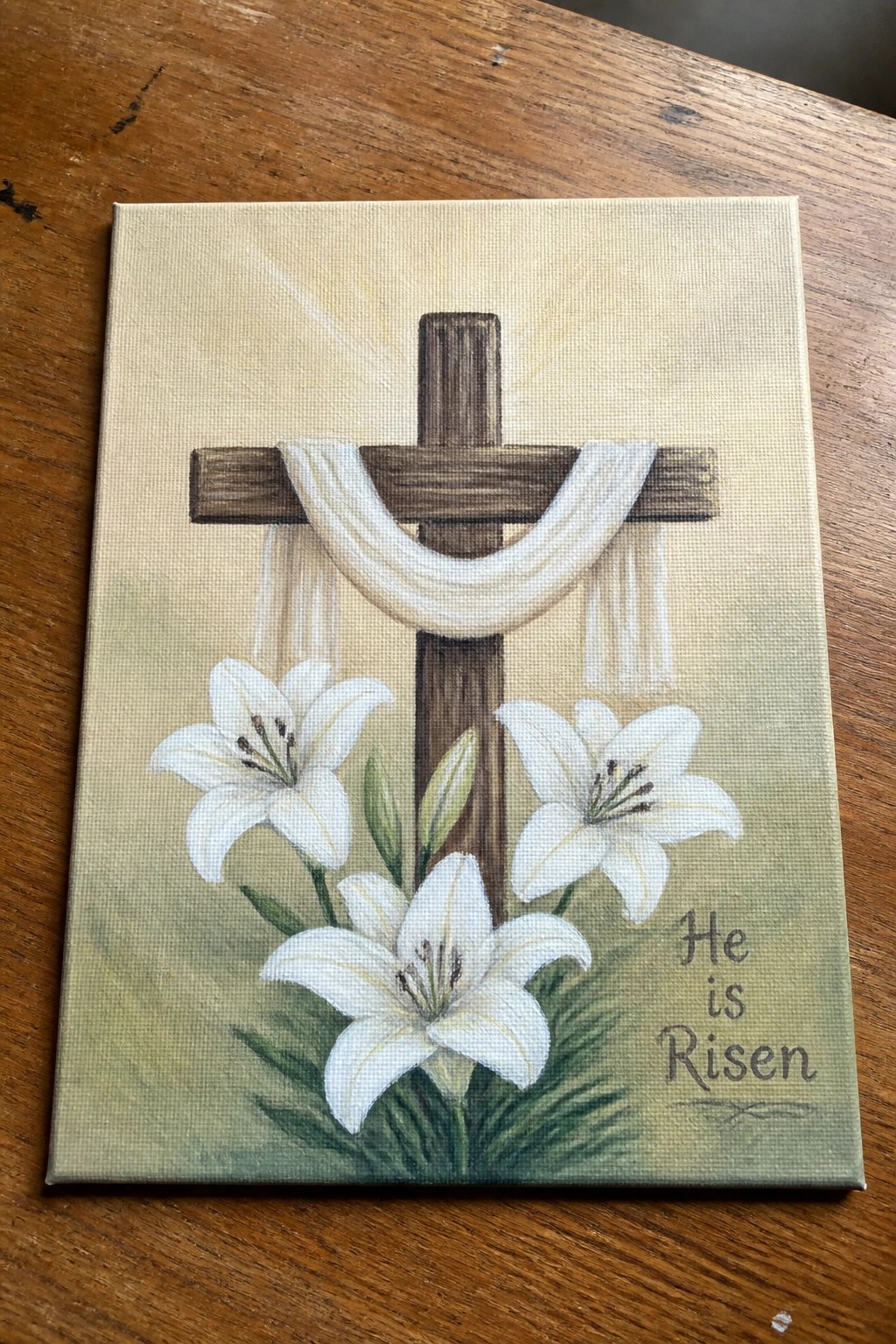
A strong Easter painting idea places a wooden cross at the center with a white cloth draped across the arms and white lilies grouped at the base. Light rays in the background keep the focus on the cross while the phrase “He is Risen” sits to one side in simple lettering. This combines a religious symbol with floral details in a seasonal still life style that stays easy to read from a distance.
What makes this idea useful is how the tall cross shape creates a clear vertical line that organizes the rest of the elements. You can swap the lilies for other spring flowers or shorten the text to fit a smaller canvas without losing the balance. The light background makes it simple to match with spring decor or gifts. For practice the main shapes stay straightforward once the cross and cloth are blocked in first.
Empty Tomb at Sunrise Landscape
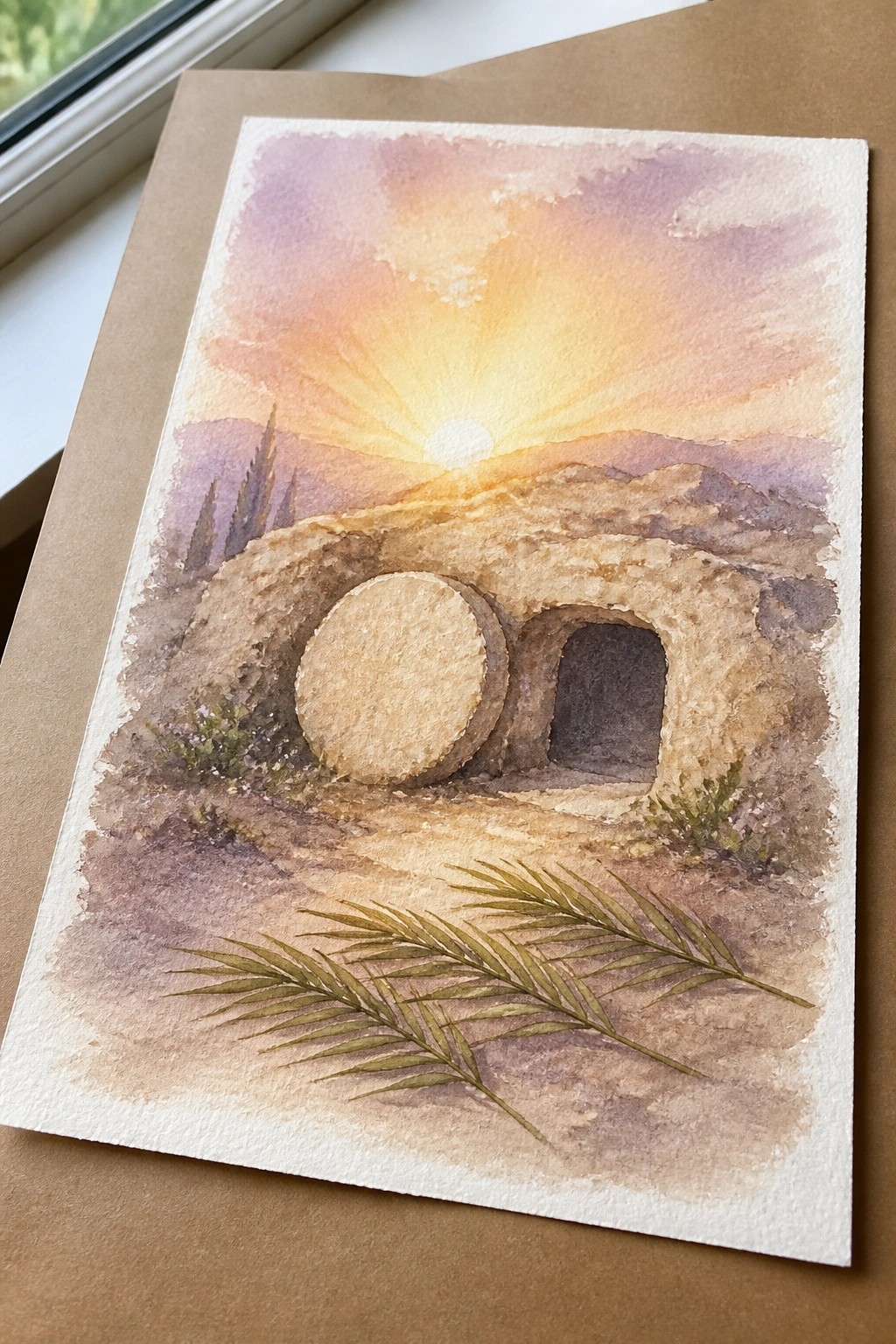
The painting idea focuses on a landscape of an ancient hillside tomb with the large circular entrance stone rolled to one side, leaving the dark opening visible. A warm sunrise with radiating light sits behind distant hills and trees, while simple palm fronds sit across the lower foreground. This seasonal approach uses a soft gradient sky and layered earth tones to keep the tomb as the clear center without extra elements crowding the scene.
What makes this idea useful is the straightforward layout where the tomb and stone create a strong focal point that holds up even if the sky is simplified. The color shift from muted ground to bright sunrise tones can be adjusted for smaller card sizes or larger wall pieces. For practice, the basic shapes of the stone and arch make it straightforward to sketch first, then add color in stages.
Lamb Standing Beside a Simple Wooden Cross
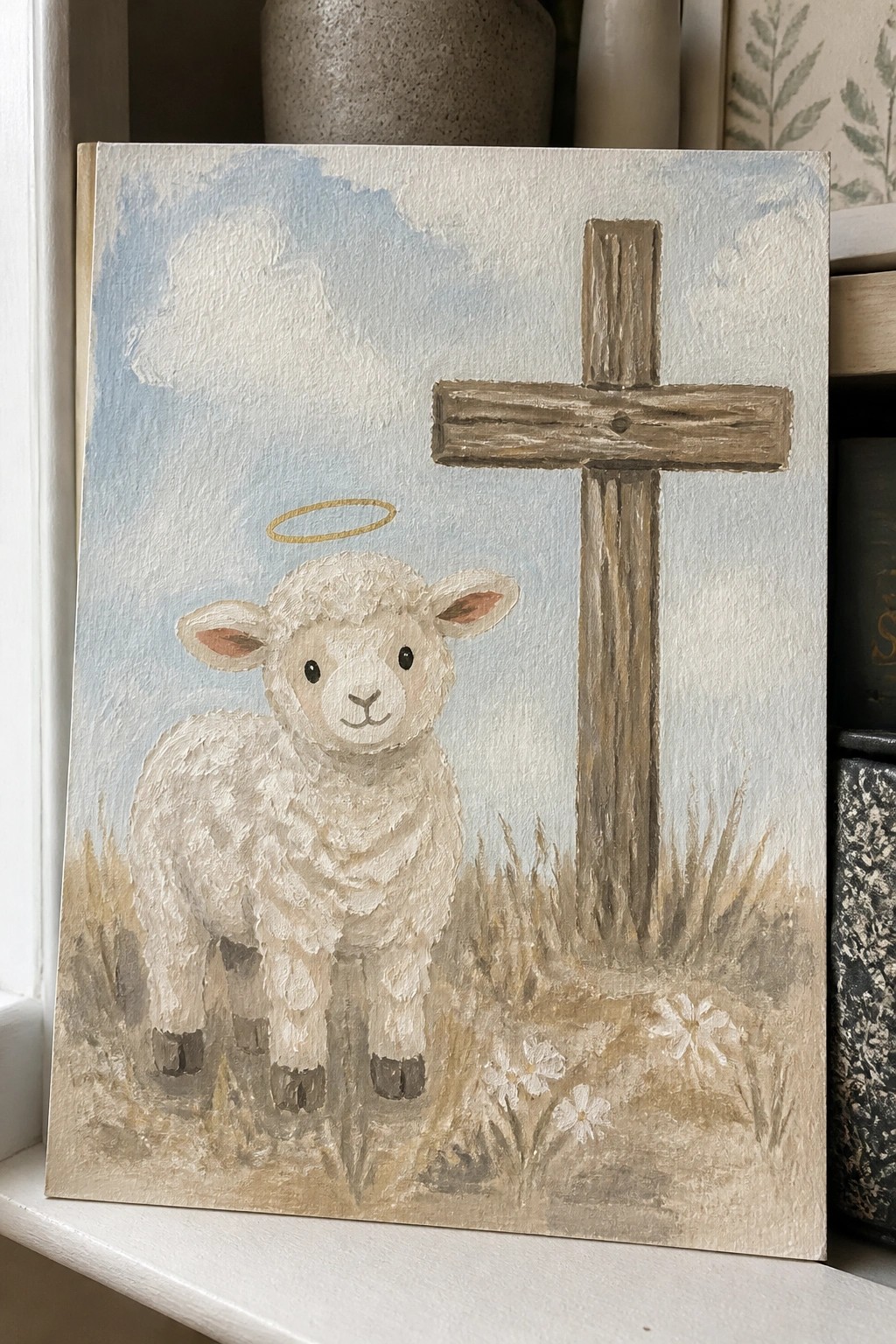
A painting idea that places a small lamb wearing a thin halo next to a tall wooden cross gives a clear Easter theme using only two central subjects. The lamb sits in the lower left on textured grass with a few white flowers while the cross anchors the right side against a soft blue sky. Keeping the animal lower and the cross taller creates natural balance and keeps the eye moving between the two without extra elements.
What makes this idea useful is how the muted palette of creams, browns, and pale blue works in both small and large formats. You can swap the flowers for more grass or move the cross slightly left if you need the composition to fit a vertical canvas or card. The basic shapes also make it straightforward to simplify further for quick practice or add more flowers if you want extra detail for a finished piece.
Crown of Thorns Still Life

A crown of thorns resting on folded red fabric makes a strong still life subject for Easter. The circular shape of the thorns sits centered while the fabric folds create supporting lines that guide the eye inward. A single red color palette across the background and cloth keeps the whole piece unified and directs attention straight to the thorns.
What makes this idea useful is the limited palette that reduces color mixing decisions. The circular layout holds together even with basic brushwork or slight changes in thorn placement. This kind of painting works well for seasonal wall pieces or smaller practice canvases since the main elements stay readable at different scales.
Dove Over Open Bible with Scripture Verse
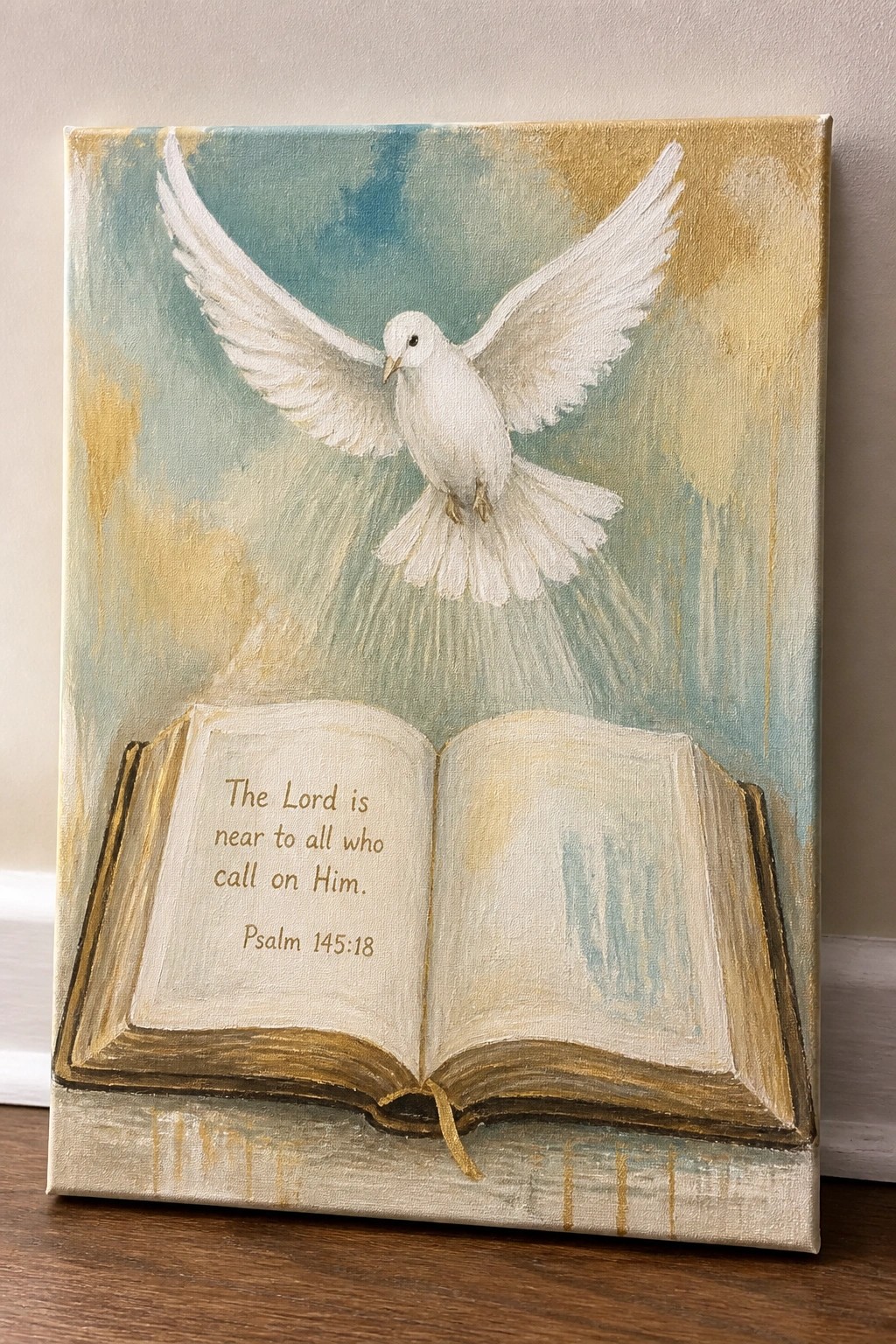
This painting idea places an open book at the base with a white dove positioned directly above it and soft light rays connecting the two. The layout uses a vertical split where the lower half holds the book flat and the upper half shows the bird in motion against a blended wash of blue and gold. The approach works as a still life with a religious element, keeping the shapes simple and the background loose so the text on the page and the bird stand out clearly.
What makes this idea useful is how the open book gives you a built-in spot for any verse you want to feature, making it easy to swap the text or adjust the page angle. The light rays help guide the eye without needing complex detail, so you can simplify them to basic brush strokes if you prefer a quicker version. For wall art the vertical balance fits standard canvas sizes well and the soft color mix adapts to different room tones without clashing.
Triptych Crosses on Layered Hills at Sunrise

A triptych of three vertical panels that each show the same hill with three crosses under a rising sun lets you explore one subject through different color palettes. The composition keeps the crosses centered and the hills stacked in simple layers so the eye moves straight to the central elements while the sky shifts from warm orange-pink to cooler blue and soft purple tones. This approach works as a seasonal landscape idea where repeating the same shapes makes the color changes the main point of interest.
What makes this idea useful is that the fixed layout lets you test out different sky and hill mixes without redesigning the whole scene each time. You could paint the panels separately for smaller cards or bookmarks or keep them together as one wide piece for wall display. The soft blending between layers also makes it easy to adjust the foreground colors if you want a greener spring version or a more muted tone overall.
Stained Glass Cross with Lily and Dove
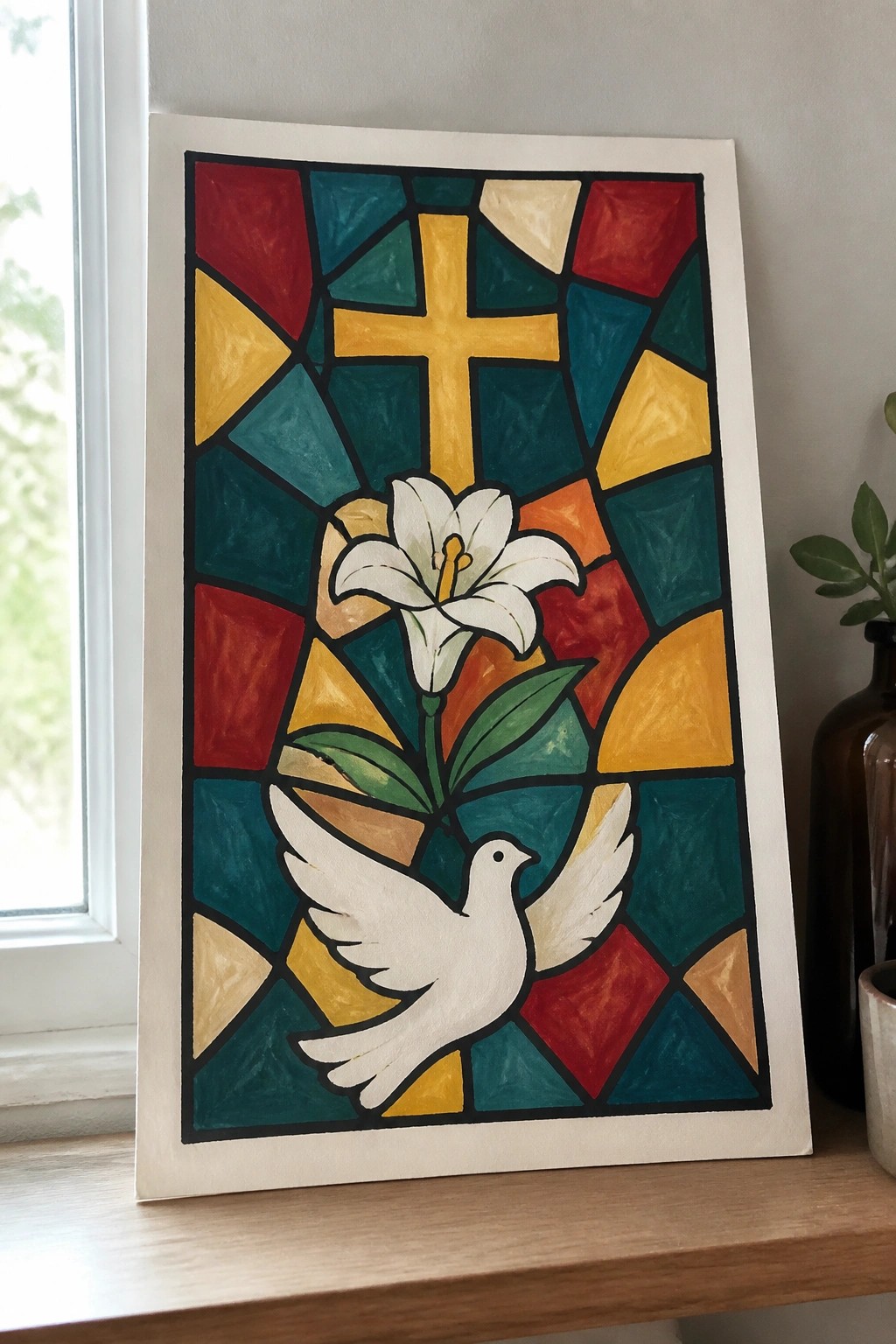
A stained-glass style painting idea works by dividing the canvas into irregular geometric sections filled with flat color and outlined in black to create a leaded-window effect. The main elements are a yellow cross at the top, a white lily in the center, and a white dove below, stacked vertically so each symbol sits in its own color block. This layout keeps the composition balanced while letting the strong outlines and contrasting colors do the visual work.
What makes this idea useful is how the geometric grid organizes the symbols so you do not need complex shading or perspective. The color blocks can be changed to different bright combinations or muted tones without altering the layout, which makes the same design easy to scale for smaller canvases or greeting cards. For seasonal wall pieces, the graphic style stands out because it reads clearly from a distance even when painted with basic brushes.
Angel at the Empty Tomb
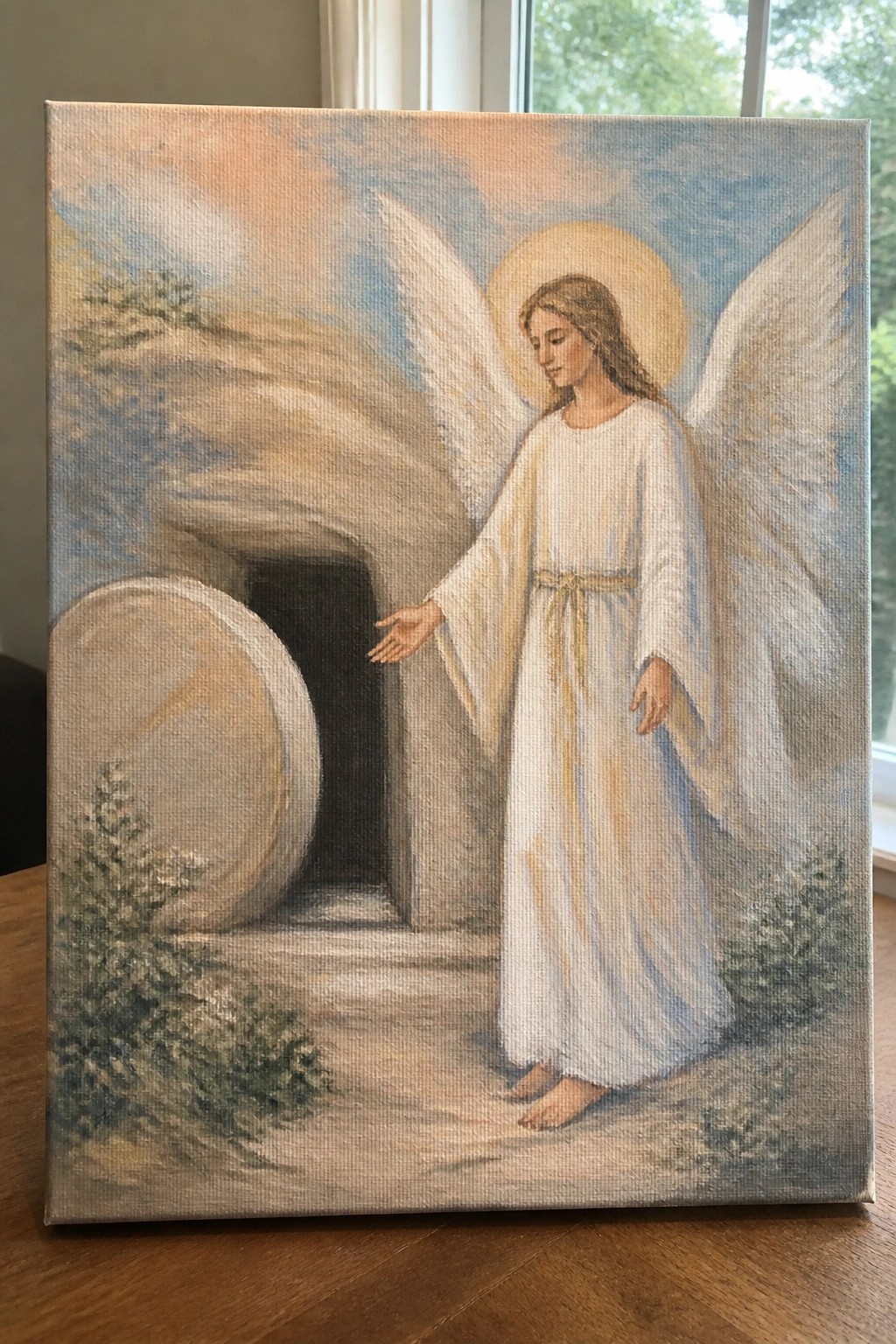
This painting idea focuses on an angel positioned next to an open tomb, with the round stone pushed aside to show the dark entrance. It works as a seasonal religious piece that combines a single figure with a simple landscape setting. The layout keeps the angel on the right side and the tomb on the left, using the outstretched hand to connect the two main elements while the sky and ground fill the rest of the space with soft color shifts.
What makes this idea useful is how the two main shapes create a natural balance that guides the eye without extra props or clutter. You can adapt the color palette by swapping the warm sky tones for cooler ones or adjust the size of the angel to fit a smaller canvas for cards or prints. For practice, the figure and background separation lets you work on clothing folds and basic landscape layers separately before combining them. A scene like this also performs well on Pinterest because it matches common Easter searches while staying easy to recognize at thumbnail size.
Communion Still Life with Bread, Chalice, and Cross
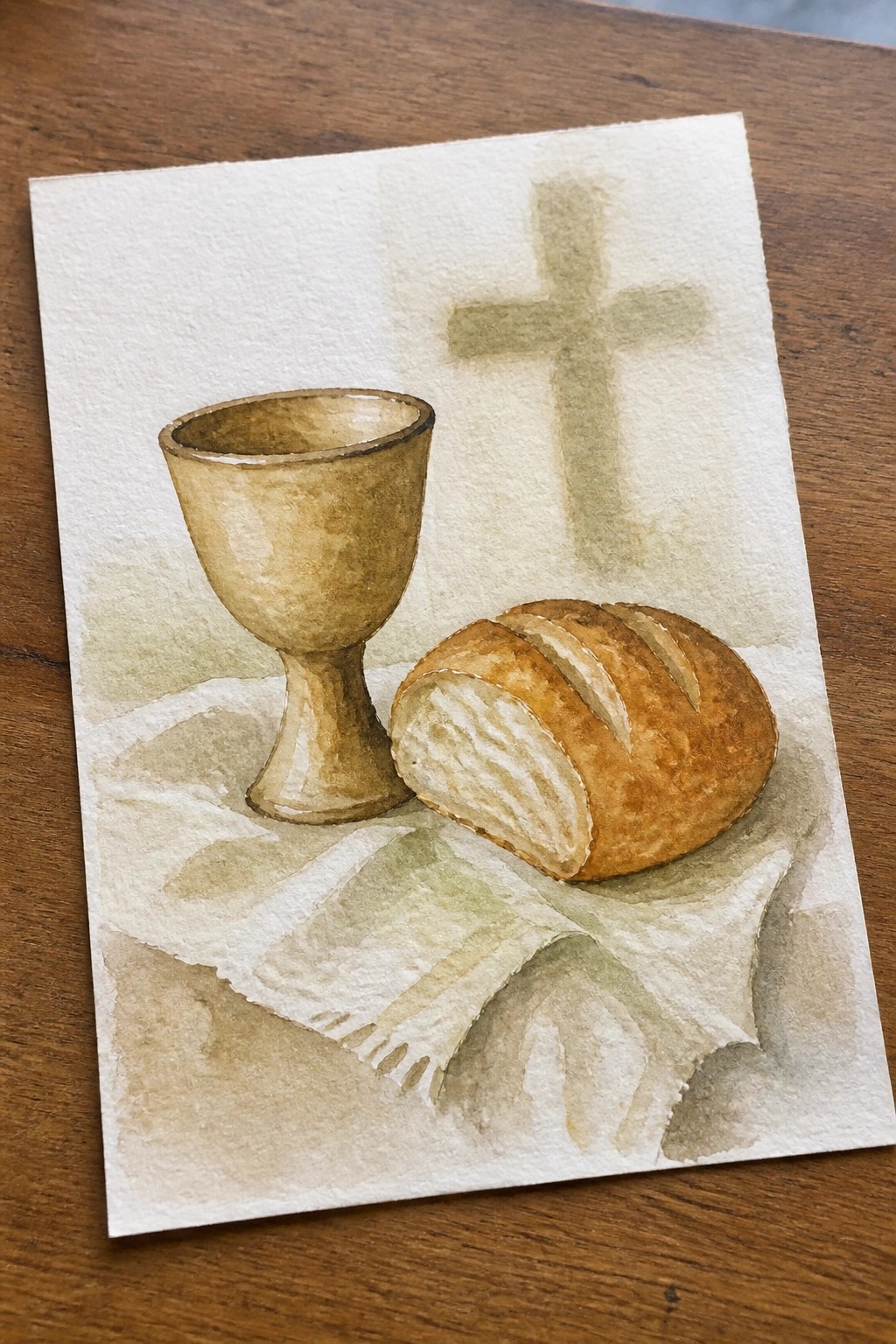
This painting idea uses a still life format built around two central objects: a goblet-style cup and a partially sliced loaf of bread resting on draped fabric. The composition places the items off-center with a soft cross washed into the background, letting the cloth folds guide the eye between the main shapes. Earthy browns and creams keep the focus tight while the loose brushwork on the fabric adds just enough texture to hold interest without extra detail.
What makes this idea useful is how the simple object pairing and muted palette let you finish the piece quickly with minimal colors. You can scale it down for a card or keep the same layout larger for a small canvas since the shapes stay readable at different sizes. The background cross can be lightened or removed entirely if you want a more general bread and cup study instead. For practice, this kind of setup works well because the fabric gives you an easy way to work on folds without needing complex perspective.
Empty Tomb Sunrise Landscape
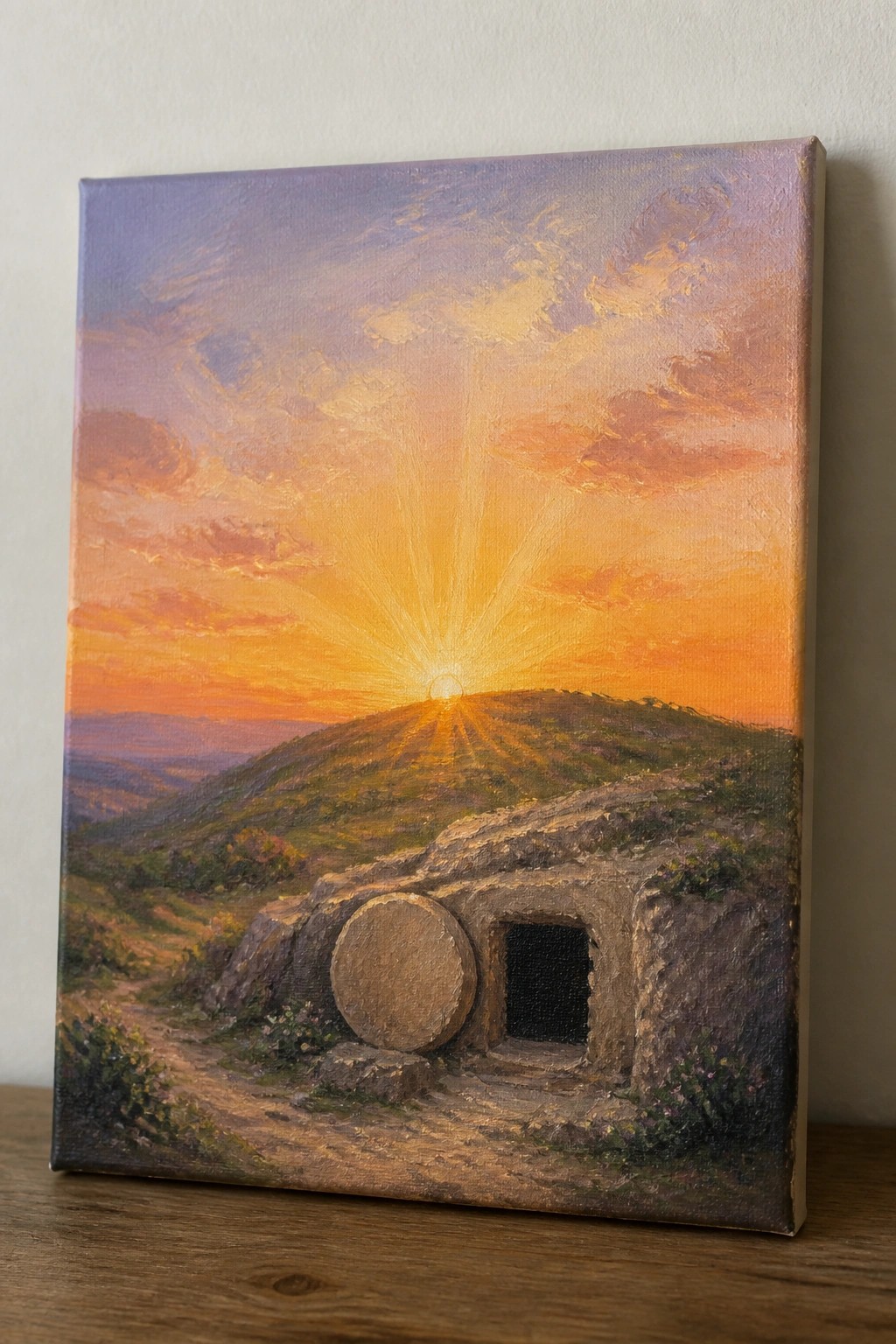
A resurrection scene built around an empty tomb with the round stone rolled aside works well as a seasonal landscape idea. The sun rising directly behind the hill creates strong rays that pull attention to the tomb in the foreground while the rolling hills and path add depth without crowding the view. Warm oranges and golds against cooler purples keep the focus on the light and the open entrance.
The composition does a lot of the work here by using the sun position to anchor the whole scene. You could crop the hills tighter or soften the rays to fit smaller canvases for Easter wall pieces or gifts. The basic shapes of the tomb and stone make it easy to scale down or change the sky colors while keeping the same idea recognizable.
Tulip Bouquet with Faith Cross Accent

A simple floral painting idea that groups several tulips together in overlapping layers of red, pink, and yellow, with long green leaves filling out the shape. The main focus sits on the stems where a small wooden cross tagged with the word faith hangs from twine, turning a standard flower bunch into an Easter piece. This approach works well as a still life because the rounded flower heads create soft shapes while the cross adds a clear vertical element at the bottom center.
What makes this idea useful is how the cross can be swapped for other small tags or left out entirely if you want a plain floral version. The color mix stays flexible so you can shift the palette to match other decor or use whatever paints you already have on hand. For wall art or cards, the vertical layout keeps the piece balanced without needing extra background details, and the same stem-and-cross setup can be tried with different spring flowers if tulips feel too specific.
Empty Tomb Path with Spring Wildflowers
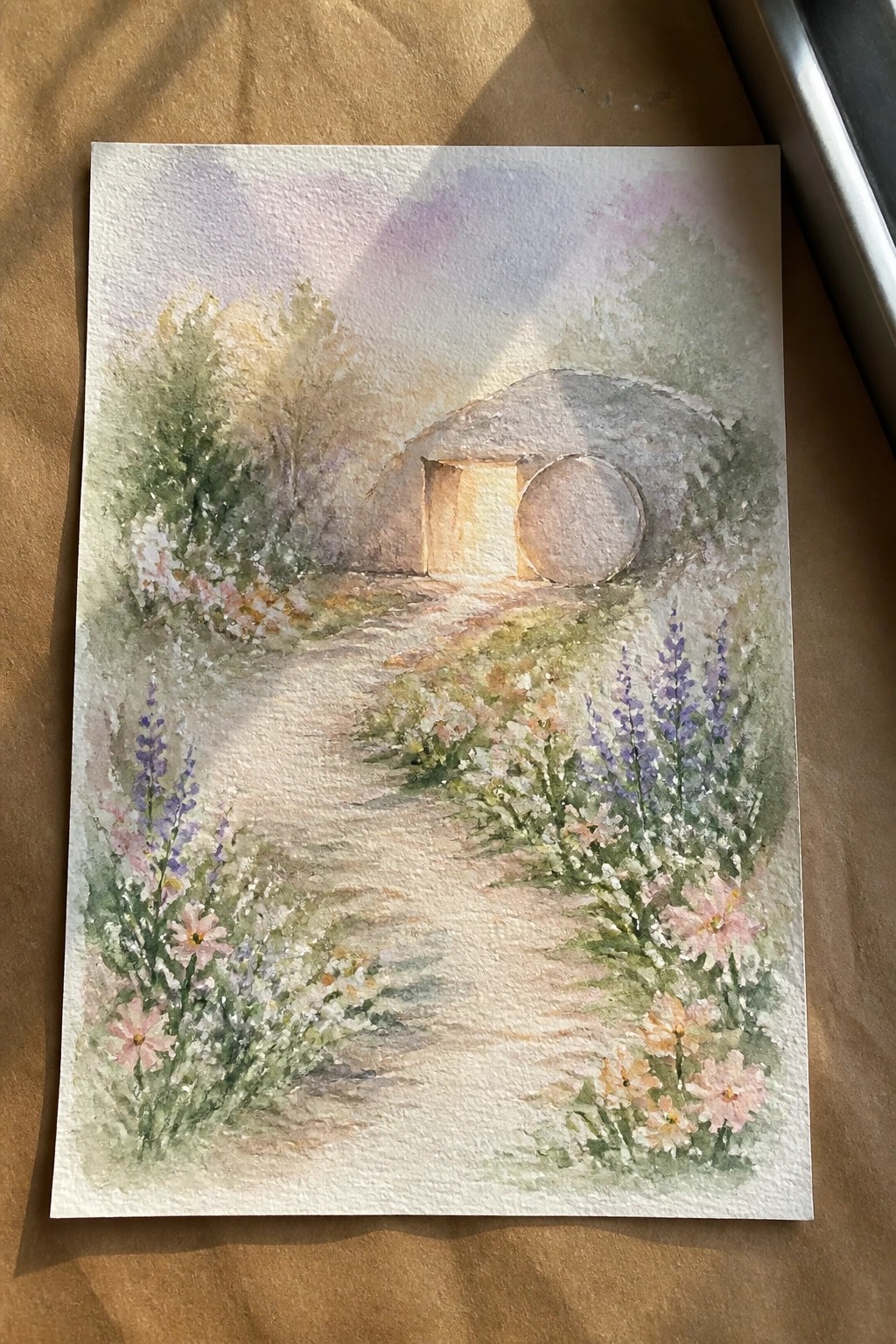
A simple dirt path that leads straight to an open stone tomb with the round door rolled aside makes a clear Easter painting idea. Wildflowers in pink, purple, and white line both sides of the path and fill the foreground, while soft greenery and light sky fill the background. The layout uses the path as a guide to keep the tomb as the main focus without needing extra details.
The composition does a lot of the work here by directing attention forward with the path and framing it with flowers. This setup works especially well for watercolor practice because the loose shapes and soft edges let you build the scene in layers without tight control. You could drop some of the foreground blooms or change the sky tones to fit a smaller canvas or different paper size. For wall pieces or Easter cards, the balanced layout stays readable even if you simplify the flower clusters.
Cute Lamb Next to the Resurrection Message
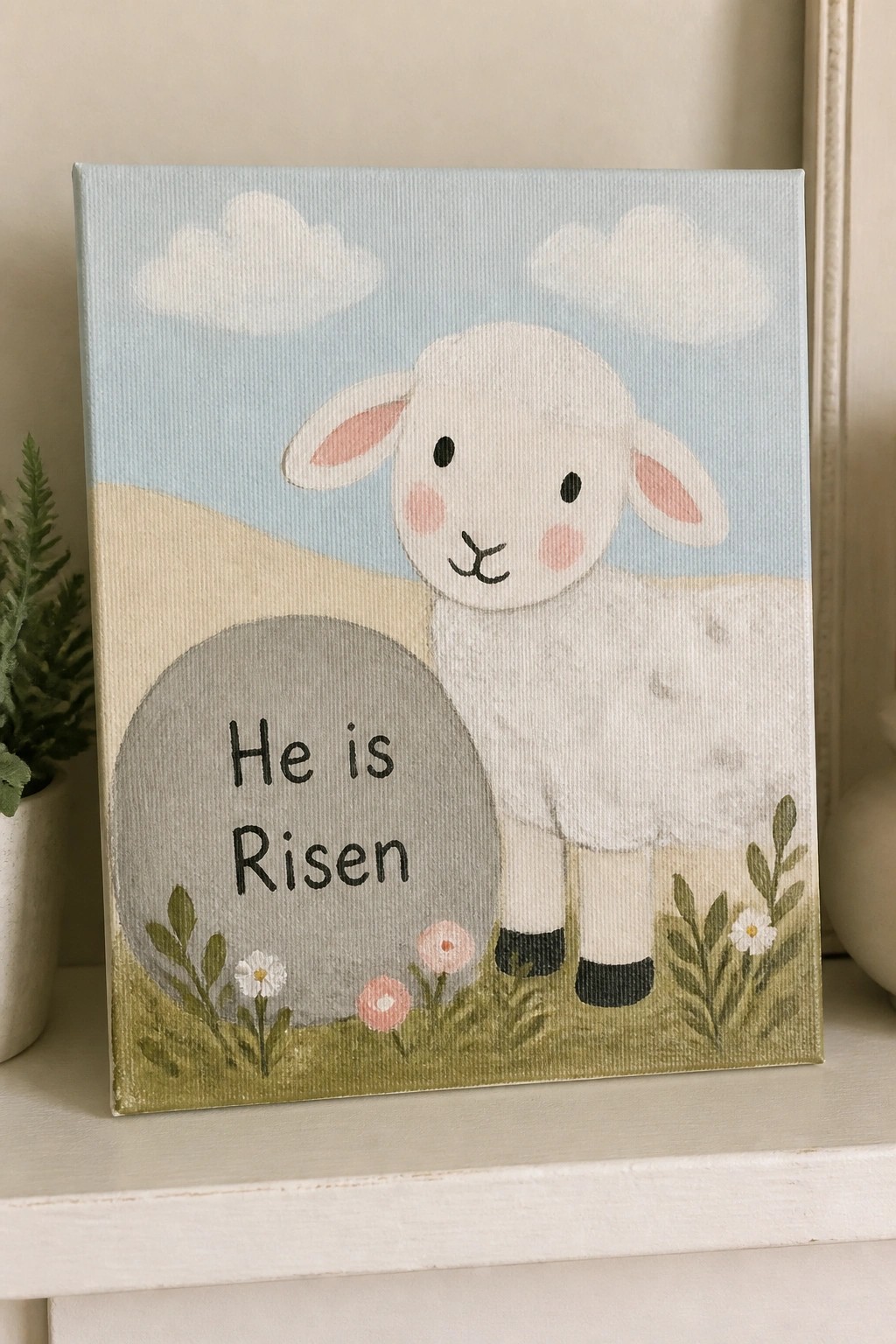
This painting idea pairs a simple lamb figure with a rounded stone that carries the words “He is Risen,” placed on a low hillside under a light sky. The composition uses the stone as a clear focal point on the left while the lamb fills the right side, keeping the layout balanced on a square canvas. Soft blocks of color and rounded shapes give it a clean seasonal look that fits easily into Easter decor or gift projects.
The stone serves double duty as both the message area and a visual weight that stops the eye from drifting. You can change the flower colors at the bottom or swap the sky tone without changing the overall layout, so the same idea works across different room palettes. For quick weekend pieces or small wall sets, the limited number of elements keeps the work manageable while still reading clearly from a distance.
Heart with Cross and Radiant Background
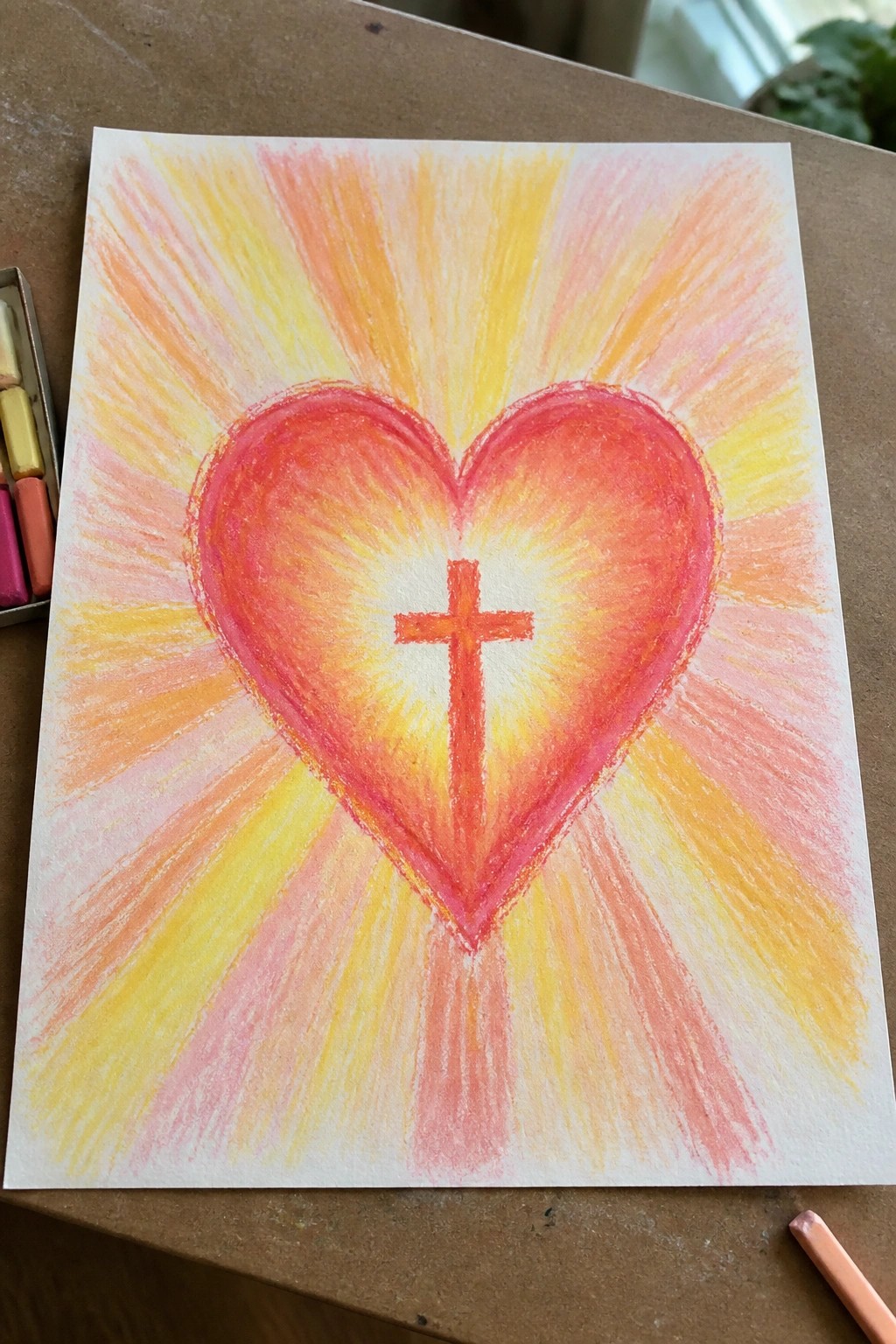
A heart shape with a cross centered inside it forms the main subject, paired with straight lines that radiate outward from the middle of the page. The color moves from bright yellow near the center to warmer oranges and pinks toward the edges, which keeps the focus on the heart without extra detail work. This type of seasonal painting idea relies on a strong central motif and simple directional lines to create visual movement.
What makes this idea useful is how the radiating lines handle most of the background work once the heart and cross are placed. You can easily change the color order or reduce the number of rays if you want a quicker version for cards or small canvases. The layout also adapts well to different sizes because the bold shapes hold up whether the piece is made for a wall or a journal page.
Easter Symbols Painted as Separate Watercolor Vignettes
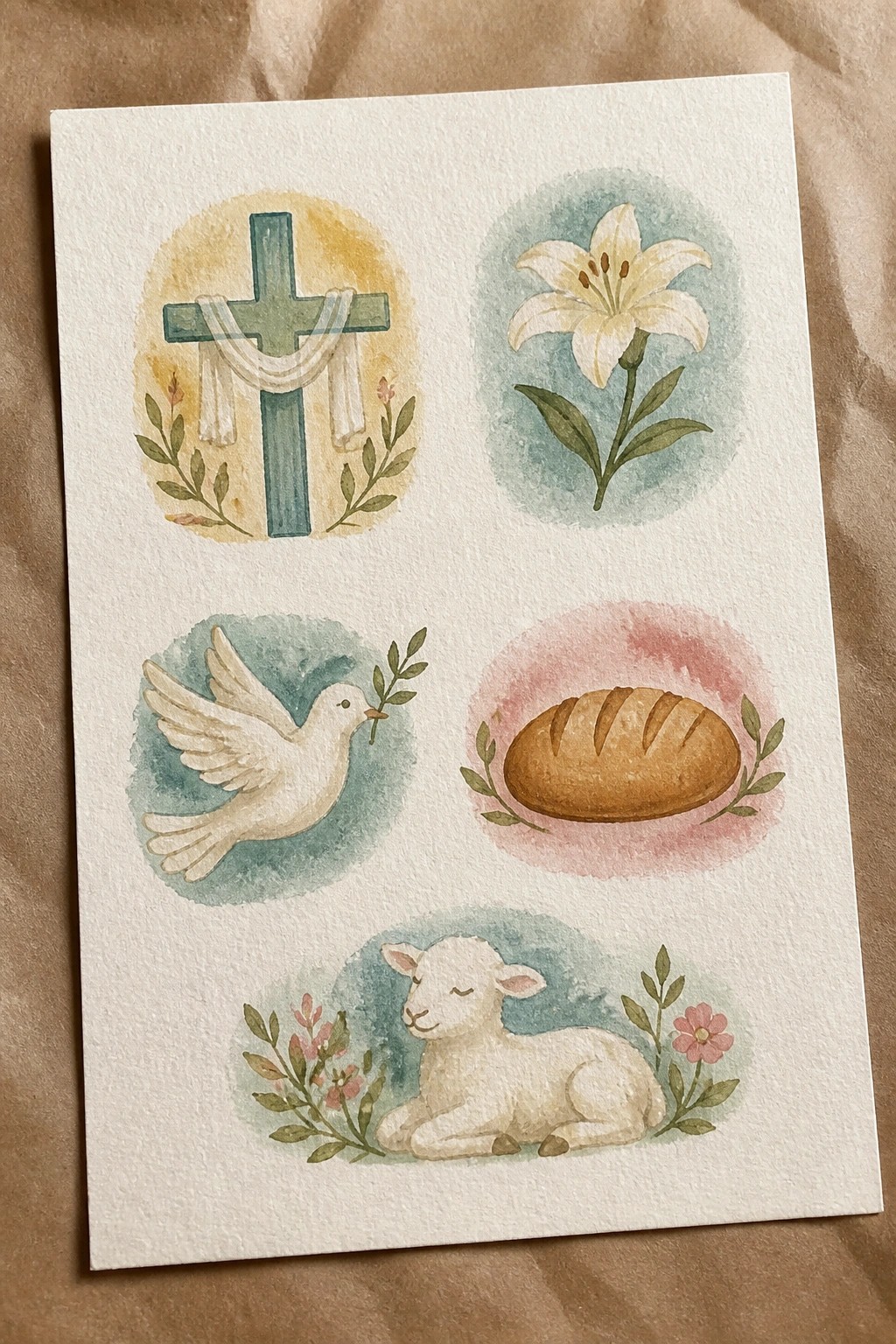
This painting idea uses five well-known Easter symbols arranged in a simple grid, with each one placed inside its own softly blended color circle. The cross with draped cloth, lily, dove, bread, and lamb are all kept small and self-contained so the eye moves easily from one to the next. The muted background washes give each symbol breathing room while still linking them together on the page.
What makes this idea useful is that any single symbol can be lifted out and used on its own for cards or tags without losing the overall look. The circular backgrounds do most of the layout work, so the same idea works at different sizes or with fewer symbols if needed. For Pinterest, a clean grid of recognizable Easter motifs tends to get saved quickly because it reads as both seasonal and ready to adapt.
He Is Risen Text with Lilies on Distressed Teal
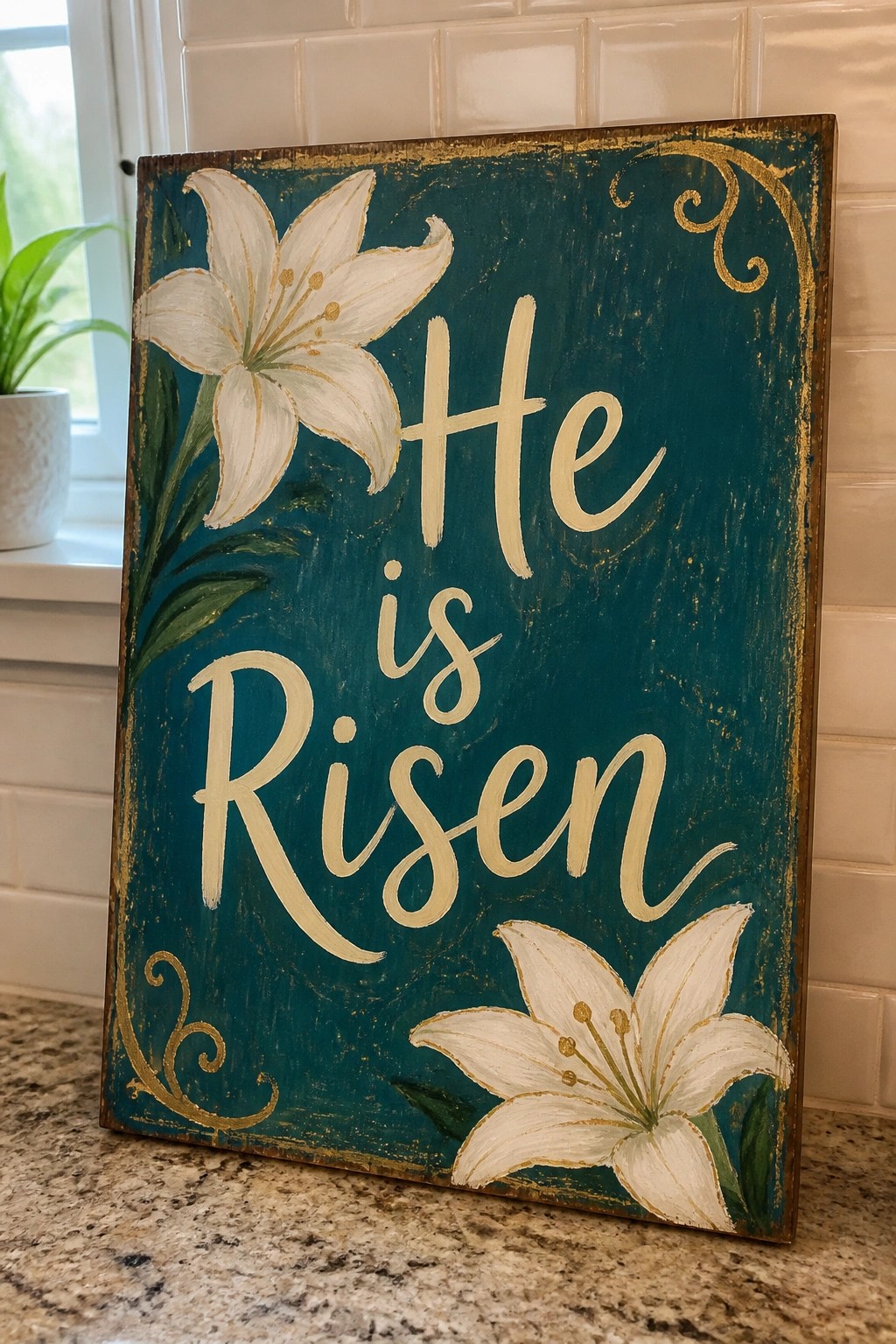
A text-focused painting pairs the phrase “He is Risen” with white lilies that have gold-edged petals. This decorative seasonal idea places the lettering slightly off center so the flowers can frame the top left and bottom right without crowding the words. The deep teal background with visible brush strokes and corner gold swirls gives the piece a simple layered look that keeps the focus on the message and blooms.
What makes this idea useful is how the text does most of the visual work while the lilies add just enough detail to balance the layout. The teal and cream palette adapts easily to different wood sizes or canvas shapes for wall pieces. For practice, the same idea works well if the lettering is traced first and the flowers are simplified to basic petal shapes.
Open Bible Scripture Art with Lilies and Dove
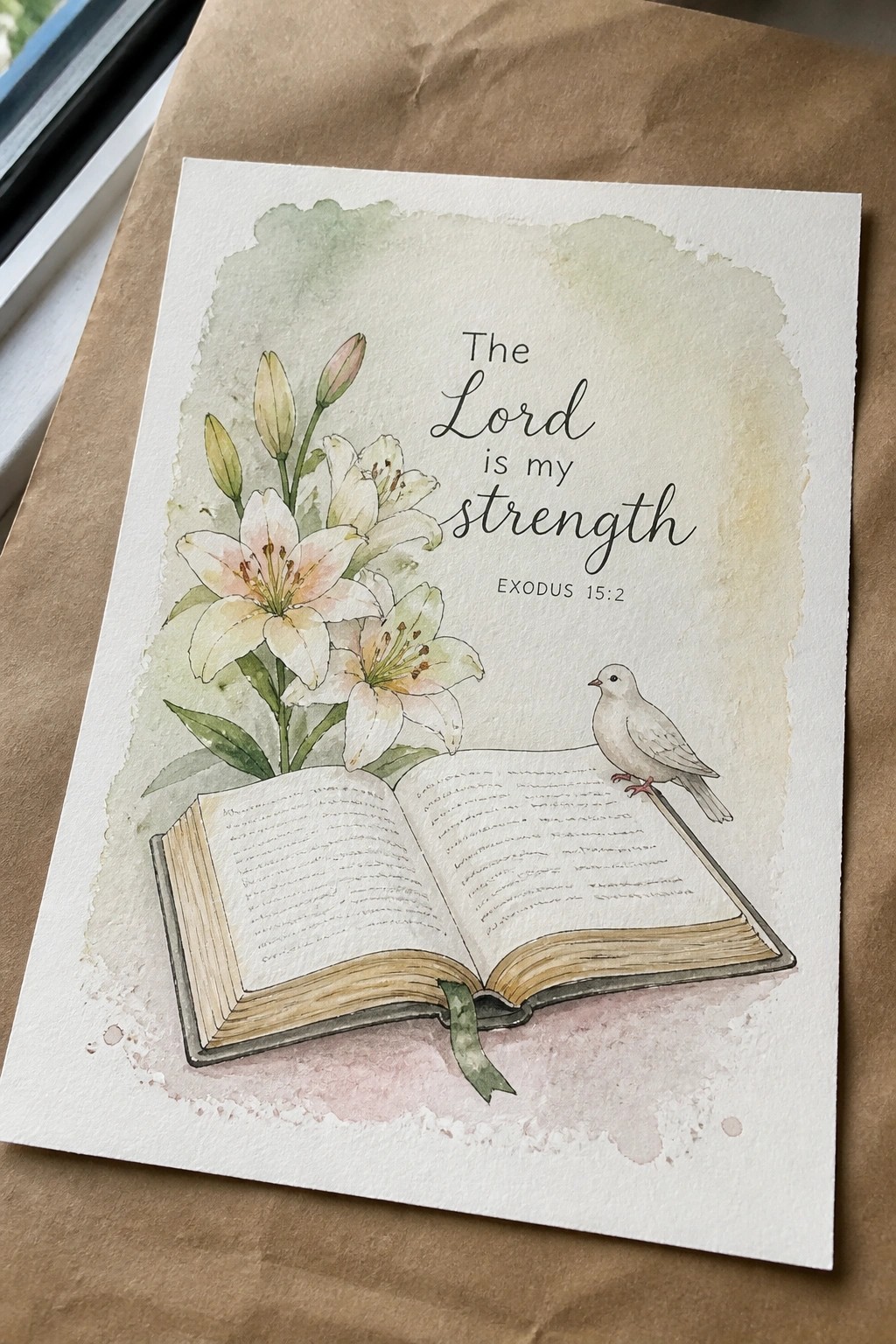
A still life painting idea that centers on an open book as the base, with white lilies clustered on one side and a small dove perched on the opposite edge. The scripture text sits above the book in a simple layout that keeps the verse easy to read while the flowers and bird fill the space around it. This approach combines floral details with a single animal figure and integrates the words directly into the composition.
What makes this idea useful is how the open book creates a clear focal point that supports both the text and the surrounding elements without crowding them. You can swap the lilies for other blooms or adjust the background wash to match different room colors. For wall pieces this works especially well because the verse gives the painting a built-in message, and the same layout can be simplified by reducing the number of flowers or changing the bird to another small subject.
Frequently Asked Questions
1. Where can I find high quality images or prints of these paintings for personal or church use? Many of these classic artworks are in the public domain so you can download high resolution versions from museum websites like the Metropolitan Museum of Art or Wikimedia Commons. For physical prints look to reputable online art retailers that offer framed reproductions or canvas options perfect for displaying at home or during Resurrection Sunday services.
2. Which Bible verses do the scenes in these paintings most often represent? The paintings typically illustrate key resurrection accounts such as Matthew 28 where the angel announces the empty tomb or John 20 describing Jesus appearing to Mary Magdalene. Pairing each image with its matching passage helps readers connect the visual beauty to the scriptural story and enriches personal or family devotion time.
3. Are the original paintings available to view in museums or galleries? Several of the featured works reside in major European and American institutions including the Louvre in Paris and the Vatican Museums. Checking museum websites or planning visits around Easter allows believers to experience the originals in person and gain a deeper appreciation for the artists craftsmanship.
4. How can families incorporate these paintings into Easter celebrations with children? Parents can print smaller copies for coloring activities discuss the resurrection story shown in each piece or create a simple gallery walk at home where kids match paintings to Bible verses. This approach turns the artwork into an engaging teaching tool that makes the meaning of Resurrection Sunday memorable for young ones.
5. What should I know about the artists backgrounds to better understand their work? Most of the painters lived during periods when Christian faith shaped daily life and art so learning about their training under church patronage or personal devotion reveals why they emphasized light hope and triumph in resurrection scenes. Online artist biographies from museum sites provide quick context that adds richness to viewing the collection.