I started painting crosses for my walls a couple years ago when I wanted something simple to reflect my beliefs.
Most of the time I keep the designs basic with just a few colors and clean lines.
I’ve found that using muted tones or adding small details like flowers works better for my style.
A few of these ideas came from sketches I did on scrap paper before trying them on canvas.
You can adjust them to fit whatever size or material you have on hand.
Hilltop Cross at Sunset
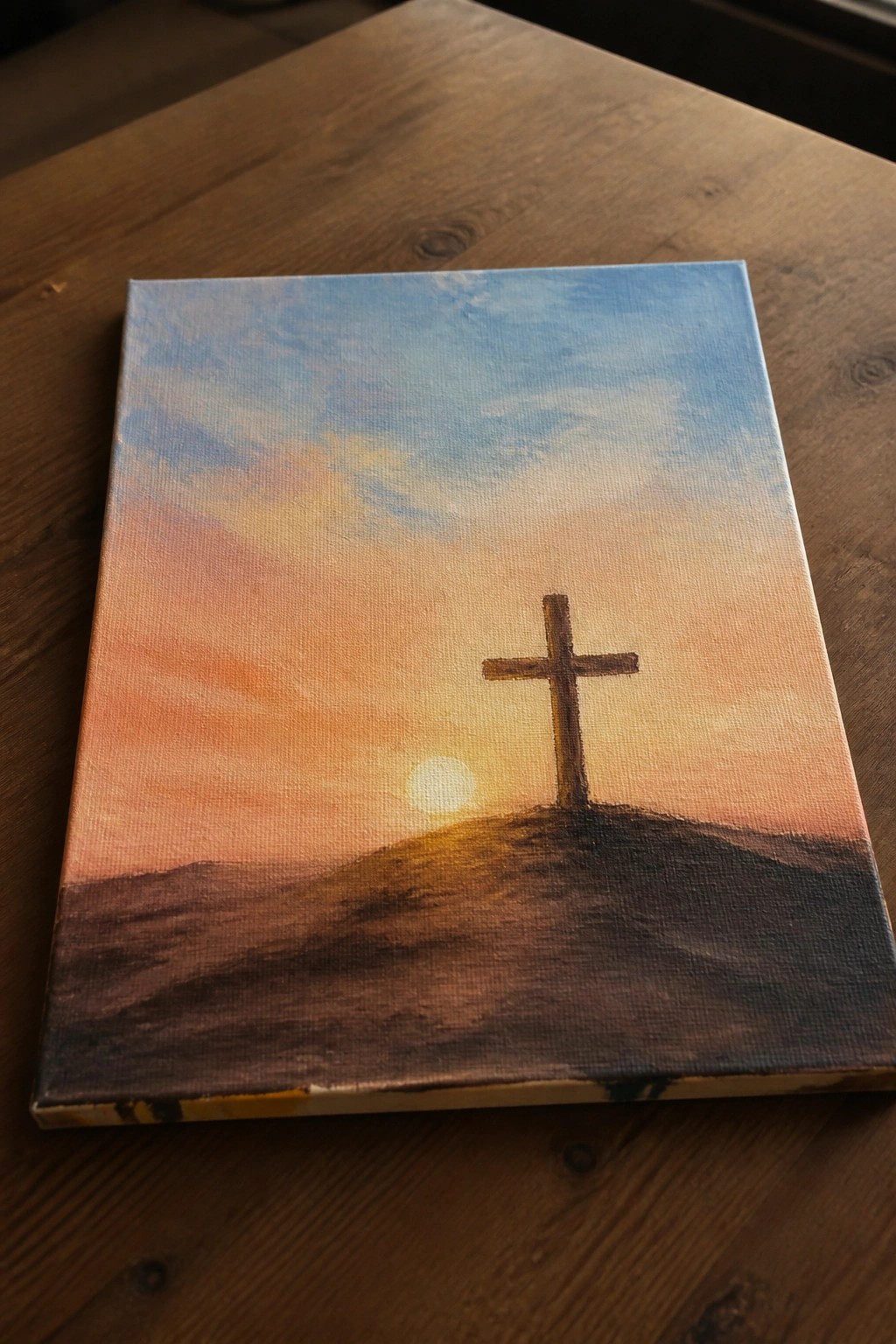
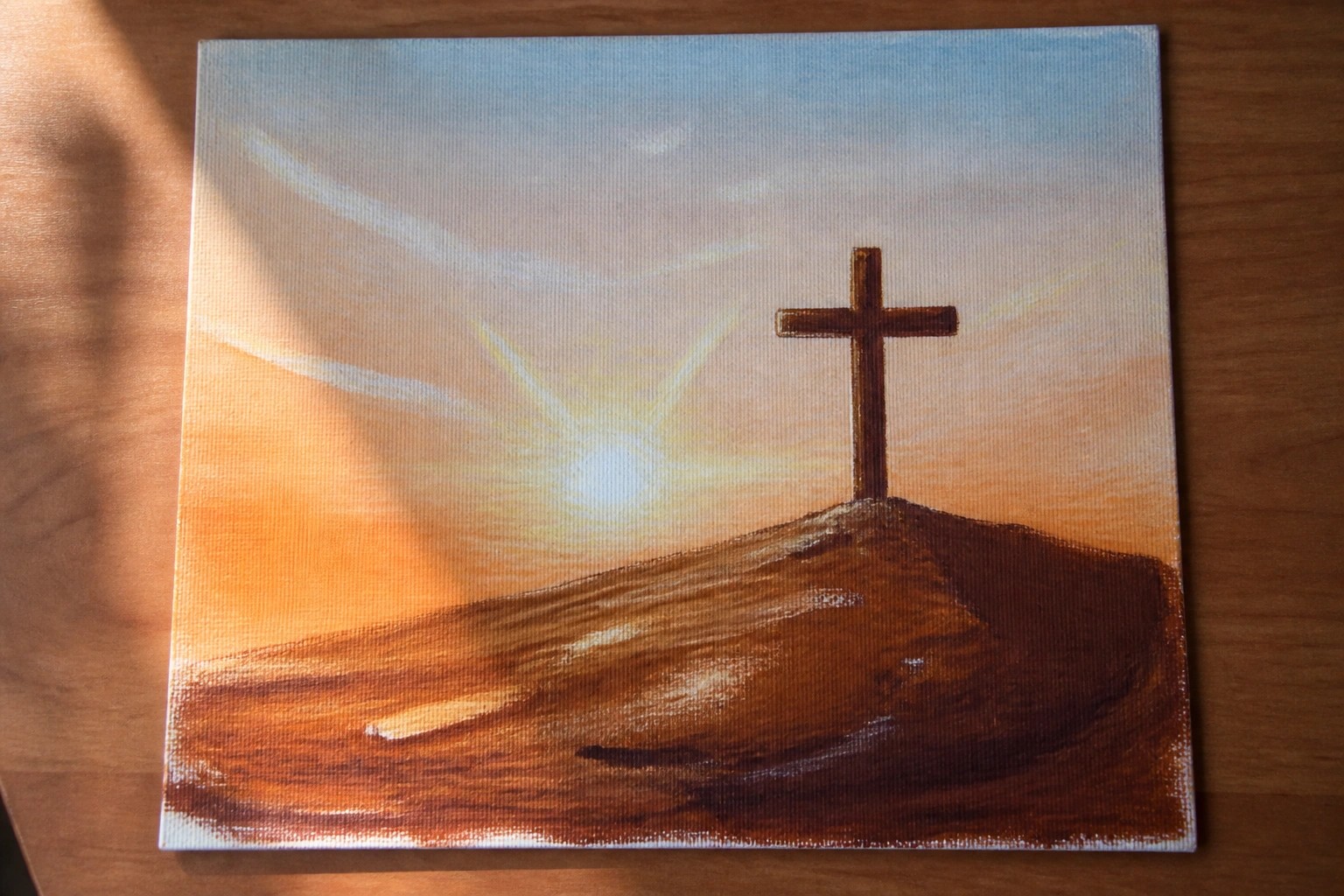
A cross placed on a hill with the sun low behind it forms a clear focal point in a landscape painting. The sky uses a simple gradient from blue at the top through orange and pink tones down to the horizon, while the foreground stays darker to keep the cross prominent. This type of landscape idea combines a religious symbol with natural elements like rolling hills and a setting sun.
What makes this idea useful is the centered composition that does most of the work without needing complex details. The warm color palette can be swapped for cooler tones or different times of day while keeping the same layout. For wall art, the vertical format fits standard canvas sizes and works in living rooms or entryways. You could reduce the sky layers or change the hill texture to match the style of other pieces in a room.
Negative Space Floral Cross
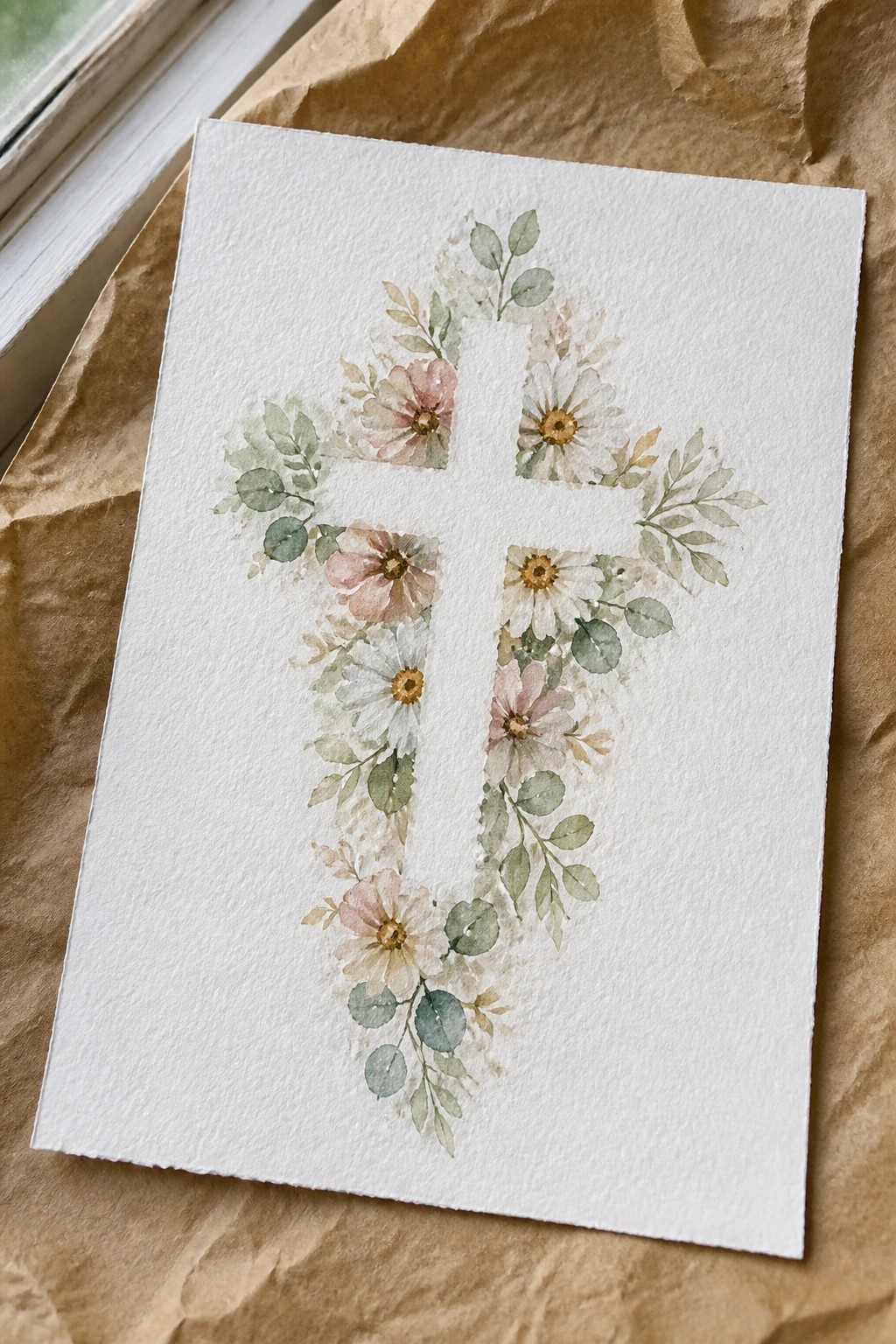
A floral cross painting uses negative space to form the cross shape while surrounding it with clusters of soft blooms and leaves. The idea works by painting delicate flowers like daisies and small roses in muted pinks and creams along with scattered greenery to outline the clean white cross in the center. This approach creates a balanced composition where the floral elements guide the eye without filling the entire space.
What makes this idea useful is how the negative space keeps the cross readable even when the flowers vary in size and placement. You can adapt it by changing the flower types or shifting the color palette to cooler greens and blues for a different look. For wall art this layout stands out because the open center prevents it from feeling too busy while still showing detail around the edges. The same concept can be simplified by using fewer flower varieties or scaled down for smaller canvases.
Folk-Style Cross with Patterned Sections and Scalloped Borders

This painting idea centers on a cross broken into separate color blocks, each filled with basic floral or geometric repeats and outlined by layered scalloped edges. The layout keeps the cross shape dominant while the central circle and vertical panel create natural focal points that guide the eye down the form. It belongs to decorative art, where flat color areas and repeated motifs do the main work instead of shading or depth.
What makes this idea useful is the clear division into panels, which lets you swap colors or swap in different small patterns without redrawing the outline. The composition does a lot of the work here by using borders to separate sections so you can finish one area at a time. For wall art, something like this scales easily to larger canvases or smaller paper versions, and the same structure works if you simplify the inner designs to just dots and lines.
Rustic Driftwood Cross on a Beach at Sunset

A simple cross built from rough wooden sticks and bound with rope stands upright in the sand as the main subject. The idea pairs the cross with a calm ocean scene and a warm pink-orange sky to keep the vertical form as the clear center of attention. The horizontal bar cuts across the middle of the canvas while the waves and sky fill the space behind it with soft horizontal strokes.
What makes this idea useful is the strong central shape that holds the composition together even with loose brushwork. You could swap the sunset colors for cooler tones or crop the scene tighter around the cross to fit a smaller canvas. For wall art this works as a straightforward option that stays focused on the cross without extra symbols or patterns.
Lavender Wreath Around a Cross

A cross painting idea that places a ring of purple flowers and green stems in a loose circle around the central cross. The flowers sit mainly on the left and right sides, with some trailing down the bottom, so the wreath shape frames the cross without covering it. This approach works as floral decorative art because the curved layout keeps the cross as the clear focal point while the soft edges of the petals and leaves add gentle texture.
What makes this idea useful is how the wreath layout does most of the composition work, leaving the background simple and easy to paint. You can swap the purple flowers for other colors or shorten the stems to fit a smaller canvas without losing the overall effect. The same structure also adapts well for practice pieces since the cross stays straightforward and the flowers can be simplified or made more detailed depending on time and skill. For wall art, this kind of balanced wreath keeps the piece looking finished even on a plain background.
Minimalist Cross with Scripture on a Gradient Wash

A central cross drawn with clean lines sits above the short phrase “Be still” and its Bible reference. This is a text-integrated cross painting idea that keeps the focus on the symbol and words rather than extra decoration. The soft background wash gives the piece color and texture while leaving the cross and lettering as the clear focal points, which helps the whole layout stay balanced and easy to read from a distance.
What makes this idea useful is how the wash can be lightened or shifted to another color to suit different wall tones without changing the rest of the design. The simple cross shape and short text make it quick to sketch and letter, so it works well for practice or for making several versions at once. For wall art, something like this stands out on Pinterest because the message is direct and the layout leaves room to adjust size or spacing. You could keep the same format but swap the verse or try a cooler wash color if you want a different mood.
Stained Glass Style Cross with Geometric Color Panels
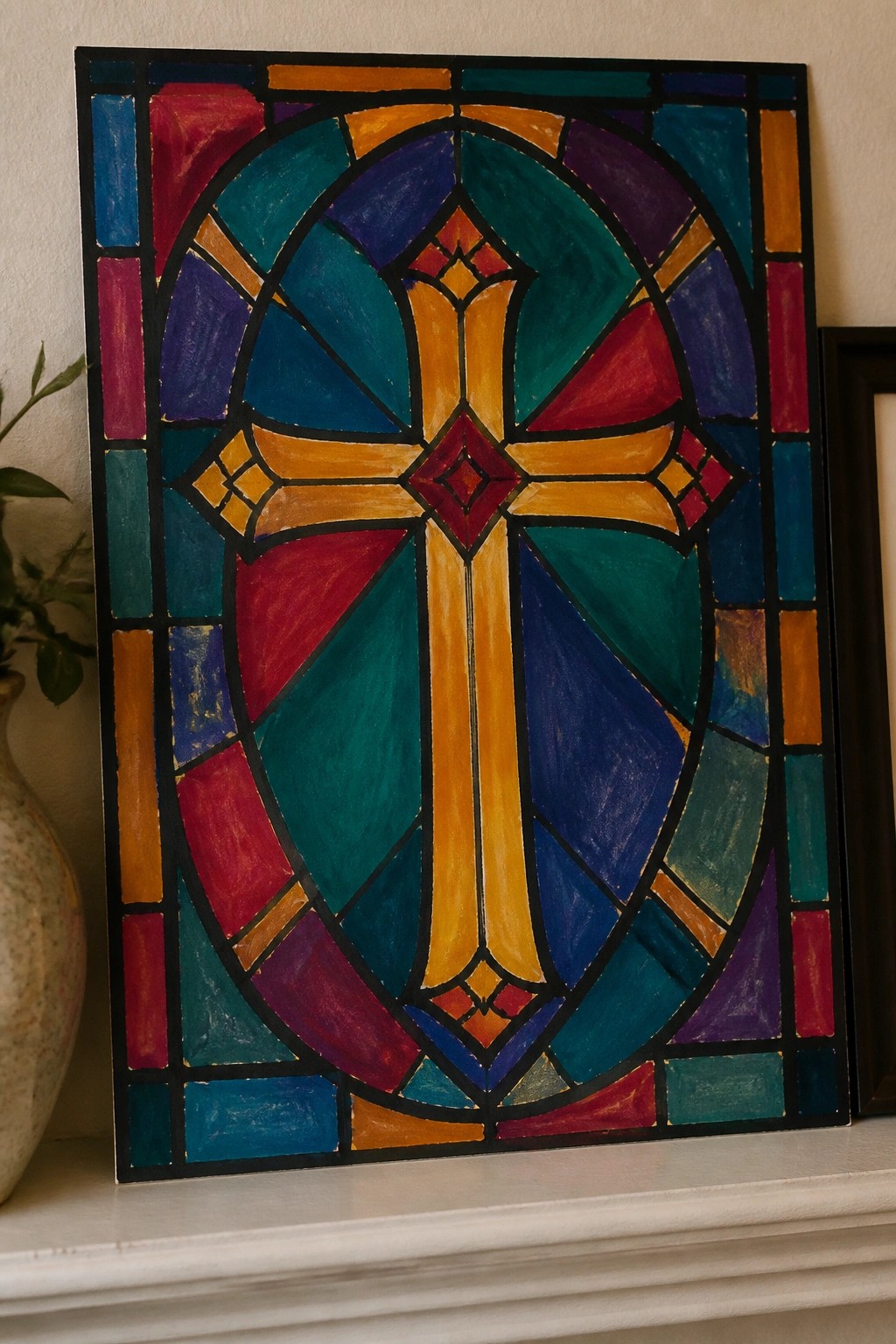
A stained glass style cross works by dividing the space into irregular panels around a central yellow cross shape, using strong black lines to separate blocks of teal, red, blue, purple, and orange. The radiating layout keeps the eye moving outward from the center while the repeated diamond accents at the cross points add structure without extra detail. This approach fits the decorative art category because it relies on color blocking and symmetry rather than shading or realism.
The composition does a lot of the work here since the geometric panels make it simple to plan and paint without freehand curves. You can adapt the idea by choosing a smaller set of colors that match your space or by stretching the design taller for a narrow wall. For practice, this kind of subject helps you focus on clean edges and even coverage, and the result stands out on Pinterest as a ready-made religious wall piece that feels complete even in a basic version.
Wooden Cross with a Bird on a Hilltop
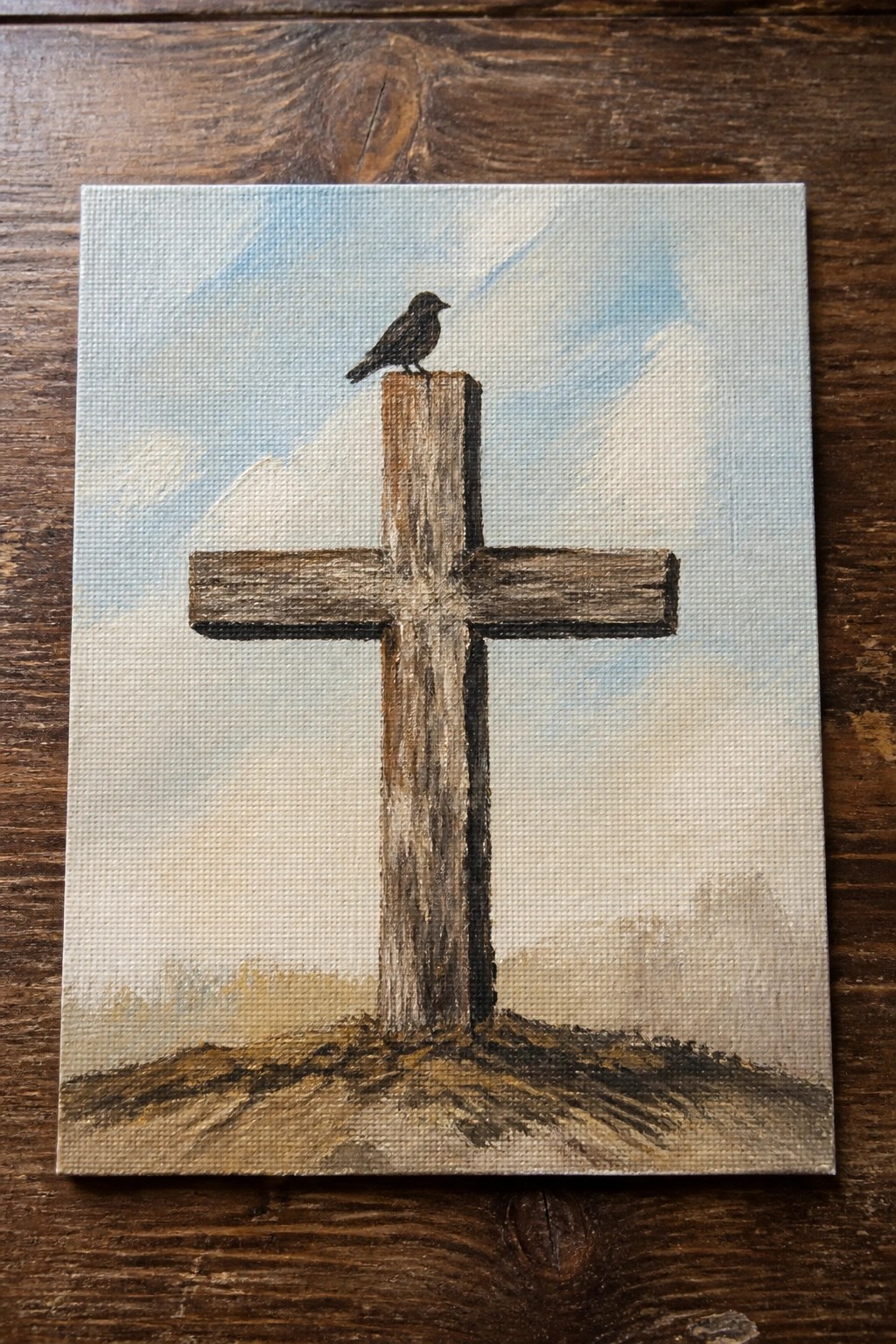
A wooden cross placed on open ground becomes the main subject when a small bird is added at the highest point. This painting idea mixes a simple landscape with an animal detail to create a clear vertical focus. The light sky and low horizon keep the dark cross and bird standing out while the soft cloud shapes add movement without crowding the center.
What makes this idea useful is how the tall cross shape organizes the whole canvas and leaves plenty of space for a plain background. The color palette makes this easy to adapt by changing the sky to warmer tones or flattening the ground into a single wash. For wall art, something like this works especially well because the main elements stay readable even with basic brushwork.
Sunset Crosses Silhouetted on Rolling Hills

A landscape painting idea that places three crosses on a dark hill against a blended sunset sky. The composition relies on a strong color gradient from deep purple down to bright yellow to create depth and keep the crosses as the clear focal point. Layered hills in muted tones add foreground structure while staying simple enough to paint quickly.
What makes this idea useful is the straightforward silhouette method that works even with basic color mixing. The sky blending does most of the visual work, so you can swap in different sunset shades or stretch the hills flatter for a wider canvas. For wall art this layout holds up well at smaller sizes because the dark shapes stand out against the bright background. You could also adapt it by reducing the number of crosses or adding a subtle sun glow to change the mood.
Celtic Cross with Layered Knotwork

A Celtic cross built from interwoven knot patterns gives a structured yet detailed option for Christian wall art. The design layers warm golds, reds, and browns over a textured green background so the central cross remains the clear focal point. Bold outlines and overlapping bands create visual interest while keeping the overall shape easy to read from across a room.
What makes this idea useful is how the knotwork can be adjusted in complexity without losing the basic cross form. The earthy color palette pairs easily with most neutral interiors and can be swapped for cooler tones if needed. For wall art, something like this works especially well in smaller sizes for a desk or larger canvases for a living room wall. You could trace the main bands first and fill in the weaves later to control the level of detail.
Central Mosaic Cross with Radiating Color Blocks

A cross built from small rectangular blocks in warm yellow tones sits at the center of this painting. The rest of the canvas fills with similar blocks in teal, coral, orange, and soft yellow arranged in lines that spread outward from the middle. This geometric mosaic style works as decorative art because the repeating shapes and clear radial layout keep the composition balanced and easy to follow.
What makes this idea useful is how the radiating lines give you a built-in guide for placement so you do not have to invent the layout from scratch. You could adapt it by changing the block colors to match a room or by using larger rectangles if you want to finish the piece faster. For wall art, the strong central cross holds attention even when the surrounding colors stay muted, and the same approach can be simplified further by limiting the palette to three or four shades.
Cross Formed from Layered Roses
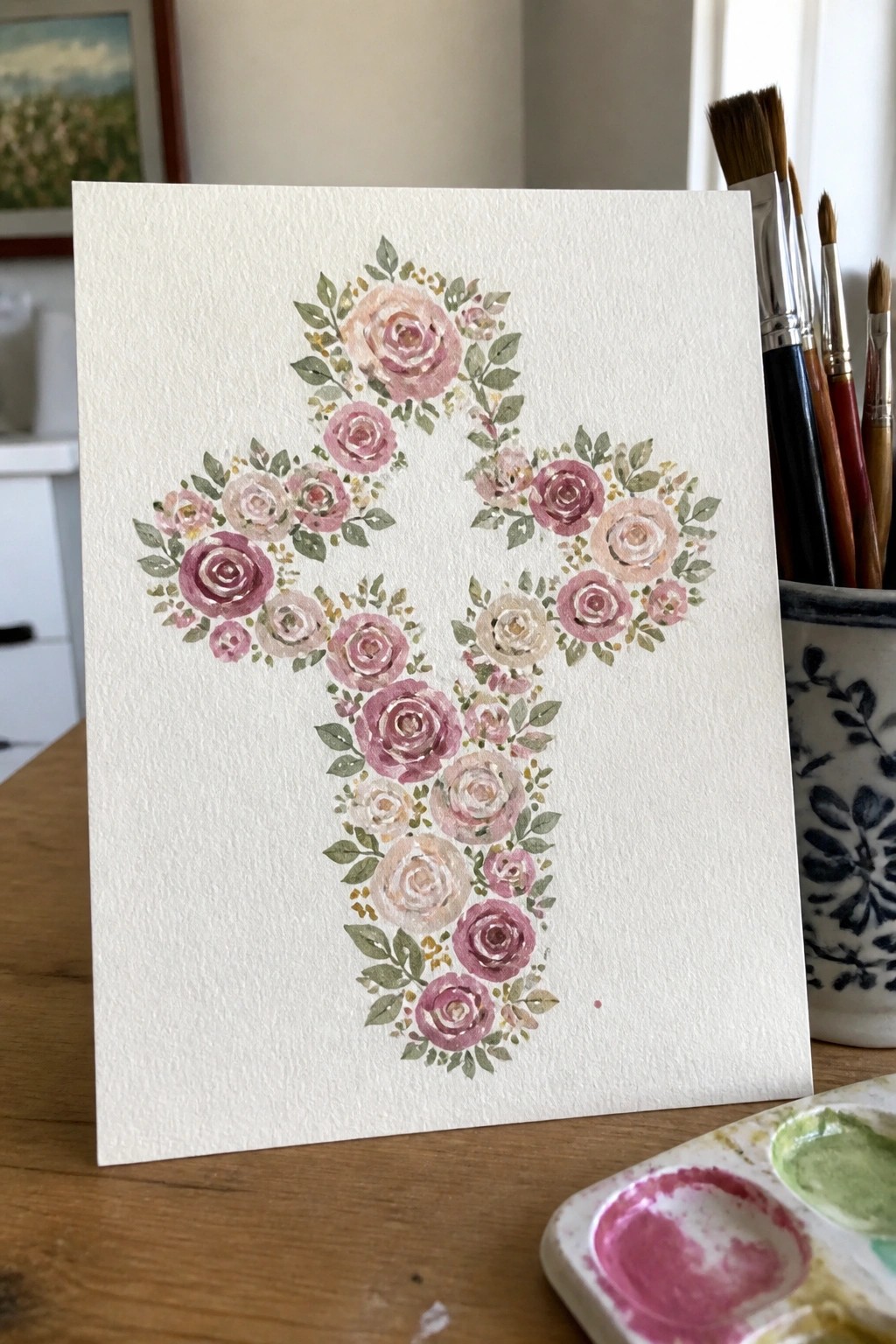
A floral cross idea takes shape when individual roses and leaves are grouped to build the full outline without drawing any separate lines. The mix of pink and mauve blooms in different sizes creates natural variation while the green foliage fills gaps and softens the edges. Small gold dots add subtle texture that helps the shape hold together from a distance.
The composition does a lot of the work here because the cross stays readable even when the flowers are placed freely. You can adapt it by changing the rose colors to match a room or by reducing the number of blooms for a simpler version. This style also works for practice since the subject is built from repeated shapes rather than precise details. For wall art it stands out on Pinterest because the familiar cross form is presented in a fresh way through everyday flower elements.
Cross on a Rocky Island in Stormy Seas
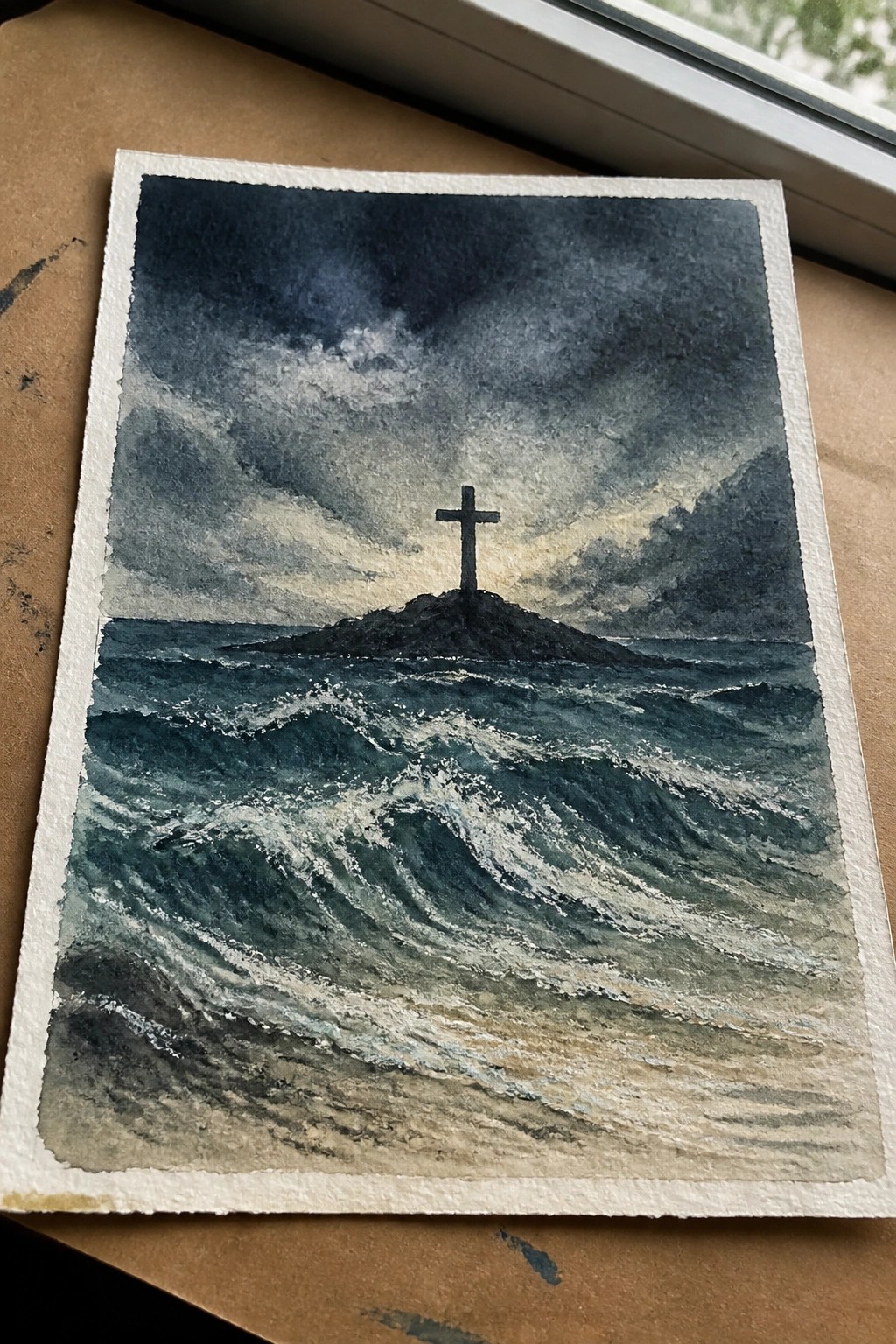
A solitary cross placed on a small rocky rise in open water creates the main focus of this seascape idea. The painting builds the scene with layered waves that move toward the viewer and a heavy sky that frames the central shape without overwhelming it. This landscape style relies on contrast between the dark water and the lighter area behind the cross to keep the eye on the subject.
The composition does a lot of the work here by using the waves as leading lines. You can simplify the wave detail for a quicker version or shift the sky to softer grays if you want a less intense result. This approach works well for wall art because the strong central placement stays effective even when the overall size changes.
Overlapping Rectangles Form a Pastel Cross
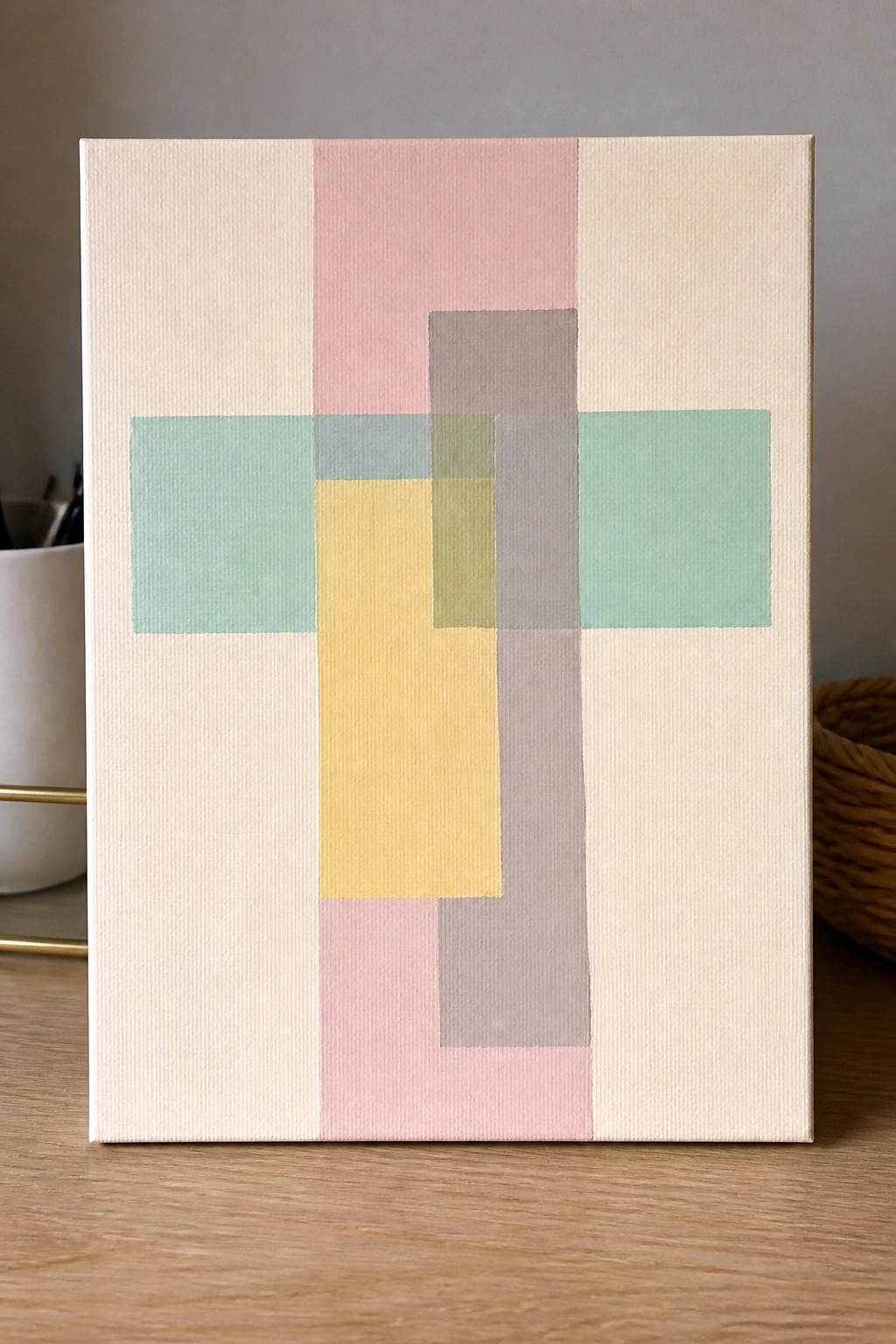
An abstract cross takes shape through overlapping rectangles in soft pastel tones of green, yellow, pink, and gray. The design relies on color blocks placed against a light background to suggest the cross form. Overlaps between the shapes create subtle layers that give the composition some dimension.
The composition does a lot of the work here since the rectangles naturally guide the eye toward the cross. This makes the idea easy to adapt by changing the color palette to fit different rooms or trying a larger canvas for more impact. A painting like this stands out for Christian wall art because the modern layout feels fresh while keeping the cross as the clear focus.
Rustic Wooden Cross with Floral Branches

A central cross with visible wood grain in soft browns anchors this design, while a single larger flower and trailing stems with leaves cross over the horizontal beam. The composition keeps the cross shape clear by placing the florals mainly on one side and letting the vertical element run uninterrupted to the bottom. This approach works as decorative floral art that pairs a strong geometric form with lighter organic details.
What makes this idea useful is the neutral color range, which lets you swap in different flower shades or leaf styles without changing the whole layout. You could simplify the branches to fewer strokes for a quicker version or add the same text treatment at the base for a finished wall piece. The vertical format also makes it easy to adapt for smaller canvases or cards while still reading clearly from a distance.
Doves in Front of a Golden Cross
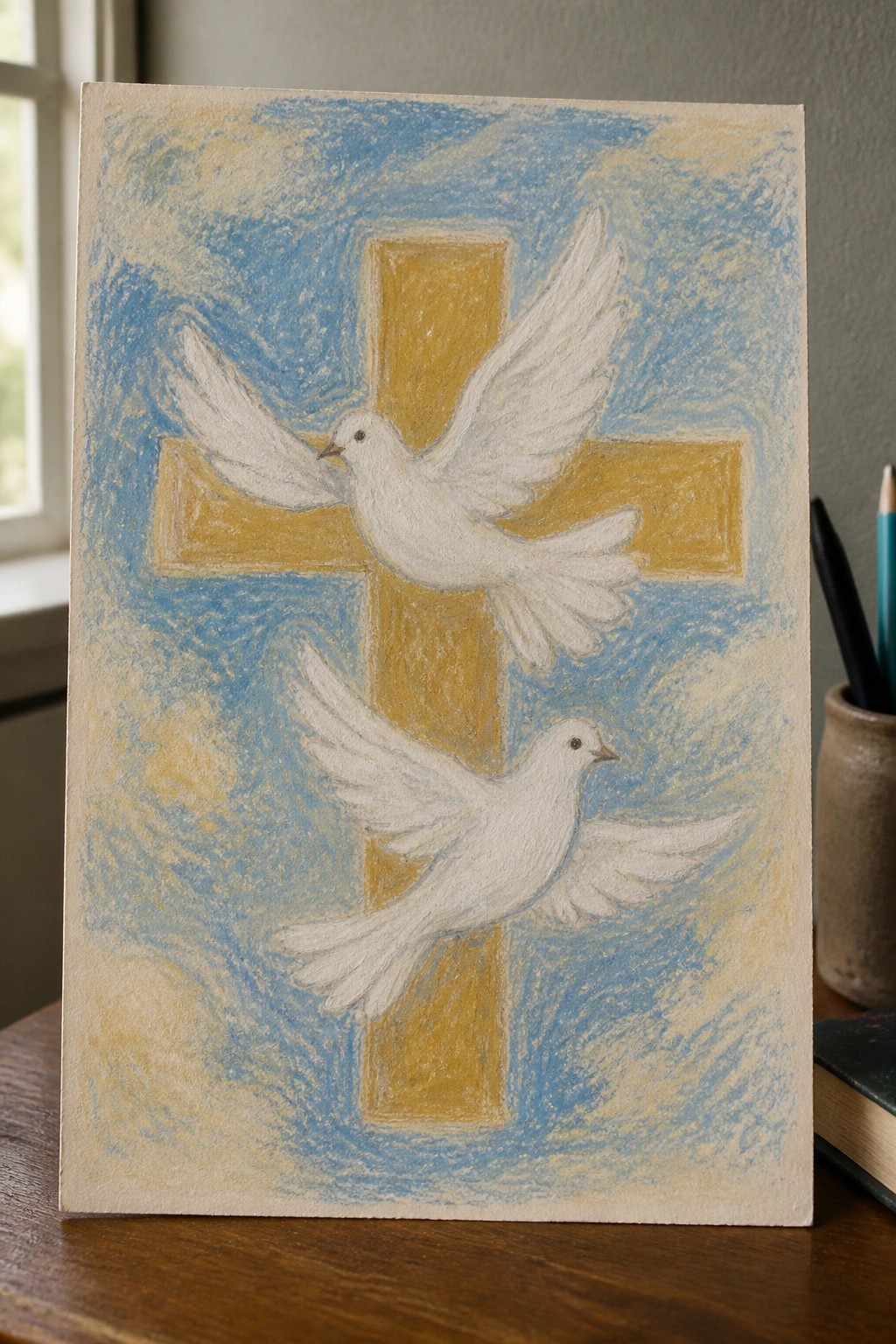
A pair of white doves placed in front of a golden cross gives this idea a clear focal point through simple overlapping shapes. The birds’ wings create diagonal movement that contrasts with the straight lines of the cross, while the soft blue and yellow background keeps the emphasis on the main elements. This approach falls into the animal and decorative art category and works well because the limited color palette and layered layout stay easy to read from a distance.
The composition does a lot of the work here because the cross acts as a built-in frame that holds the two birds in place without extra details. You could adapt it by using one dove instead of two, switching the background to a single color wash, or resizing it for a smaller canvas. For wall art this idea stands out on Pinterest because the strong central shape reads clearly even in a thumbnail, and the same layout could be painted in acrylics or watercolors depending on the finish you want.
Textured Cross Built from Script Fragments
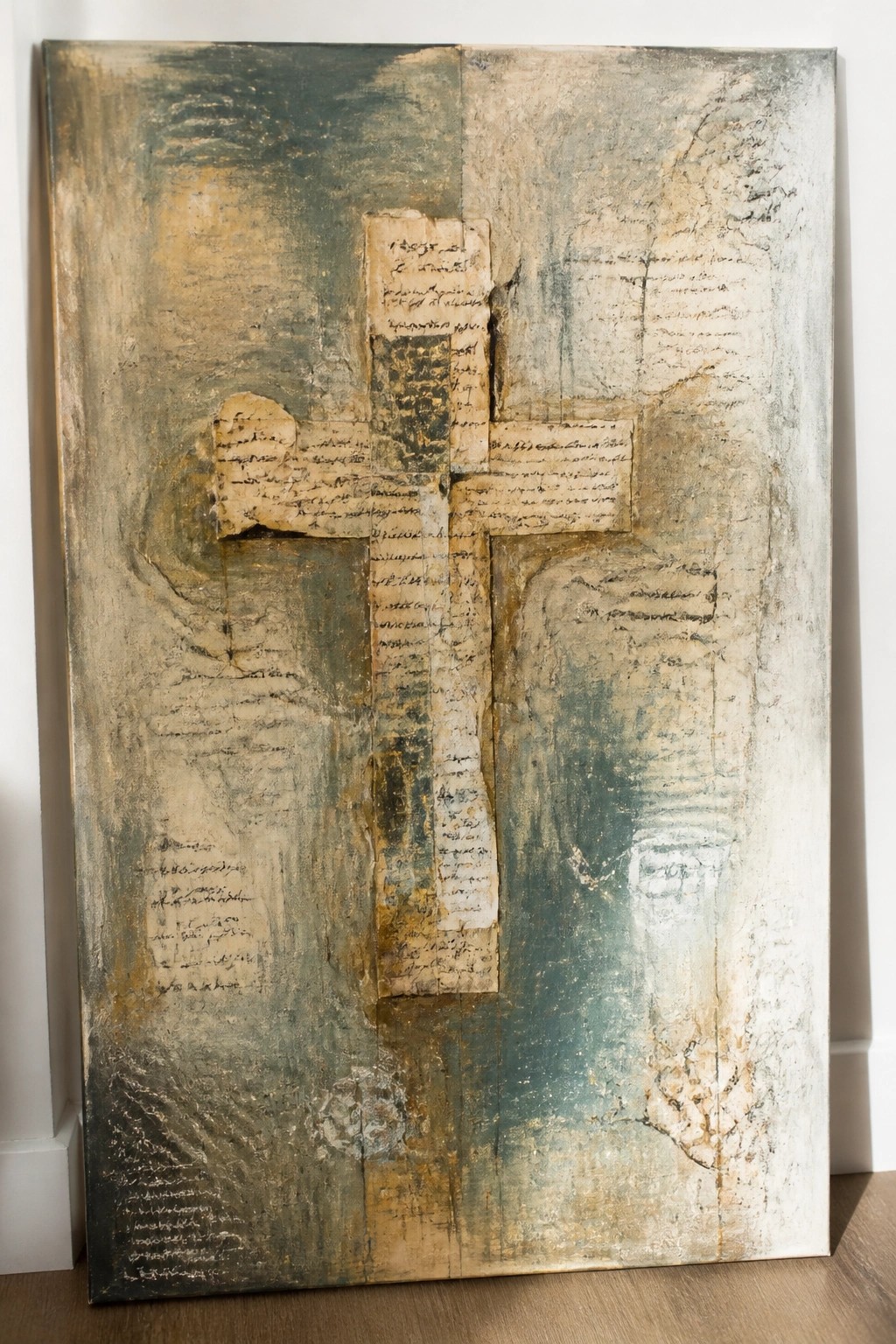
This painting idea uses a central cross formed from layered pieces that carry handwritten text, set against a broad background of blended earth tones and soft washes. The cross stands out through its raised, irregular edges and contrast with the surrounding muted layers rather than through bright color. The approach falls into decorative art that mixes collage elements with painting to create a worn surface.
What makes this idea useful is how the simple cross shape holds the composition together even when the background gets heavily textured. You can adapt the color palette by shifting the greens and golds toward cooler or warmer neutrals to match different rooms. The same layout works at smaller sizes or with photocopied text in place of original handwriting, which keeps the focus on the shape and layers rather than fine detail. For wall art, something like this stands out on Pinterest because the central form reads clearly from a distance while the texture rewards closer looks.
Three Crosses Silhouetted on a Hill at Sunset
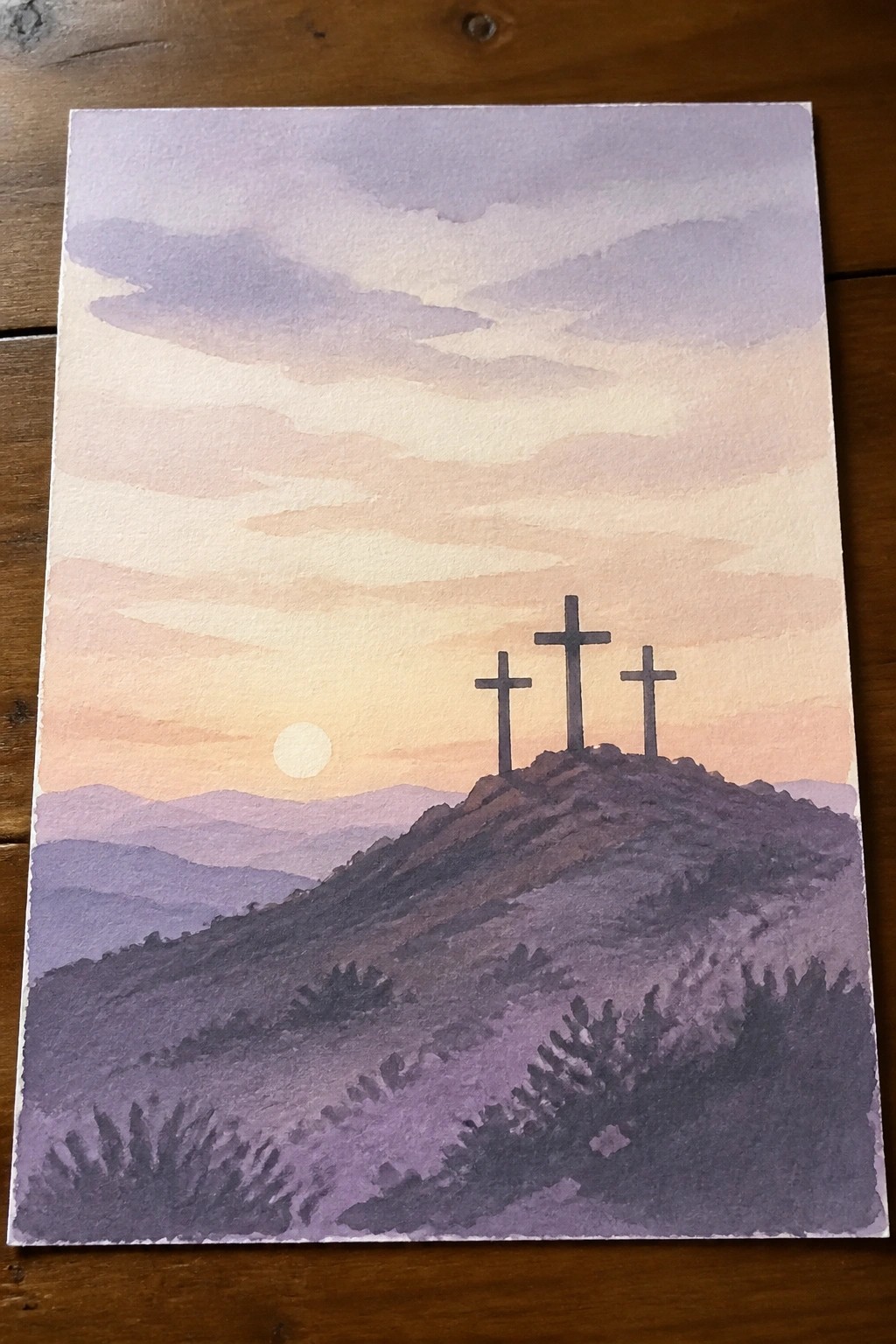
This painting idea uses three simple cross shapes placed along a hill ridge as the main focus, set against a wide sky that blends warm oranges and yellows near the horizon into cooler purples higher up. The landscape category works here because the low sun and layered hills create natural depth through overlapping shapes and soft color shifts, while the dark cross forms stay minimal so the background carries most of the visual weight. Rough brushwork in the foreground hills adds texture without pulling attention away from the central silhouettes.
What makes this idea useful is the built-in contrast that lets the sky colors do the heavy lifting while the crosses stay easy to paint as solid shapes. You could swap the sunset palette for cooler tones or reduce it to one or two crosses if you want a simpler version for practice. The layered hills also give you a clear way to build depth with just a few washes, which works well for wall pieces that need to read from a distance.
Frequently Asked Questions
1. How do I choose which cross painting idea fits best in my home? Consider the size of your wall space and the overall style of your room. Simpler designs with soft colors work well in smaller areas or minimalist settings while more detailed scenes with symbolic elements like vines or light rays suit larger walls in living rooms or entryways. Match the theme to your personal faith journey such as using water motifs for baptism reminders or tree branches for growth in Christ.
2. What basic supplies do I need to start one of these cross painting projects? Gather a canvas or wood panel in your desired size along with acrylic paints brushes of various widths and a pencil for sketching. Add optional items like stencils for clean lines gold leaf for accents or sealant for protection. Many of the 18 ideas use everyday household items like sponges for texture effects so start with what you have and build from there.
3. How can I make these cross designs more personal and meaningful? Incorporate subtle elements tied to your life such as favorite Bible verses written in elegant script or colors that represent family members or seasons of faith. Layer in symbols like doves for peace or mountains for strength to create a unique piece that reflects your story while keeping the timeless cross as the focal point.
4. What steps help ensure the finished painting lasts for years on my wall? Apply a protective varnish after the paint dries fully and choose high quality canvas or primed wood to prevent warping. Hang it away from direct sunlight or moisture sources and use proper mounting hardware like D rings or French cleats for secure display. These practices keep the artwork vibrant and intact as a lasting reminder of faith.
5. How do I display multiple cross paintings together without overwhelming the space? Arrange them in a balanced grid or staggered pattern on a feature wall using similar frame styles for cohesion. Leave breathing room between pieces and vary the sizes slightly for visual interest. This approach turns several ideas from the collection into a unified gallery that inspires without clutter.