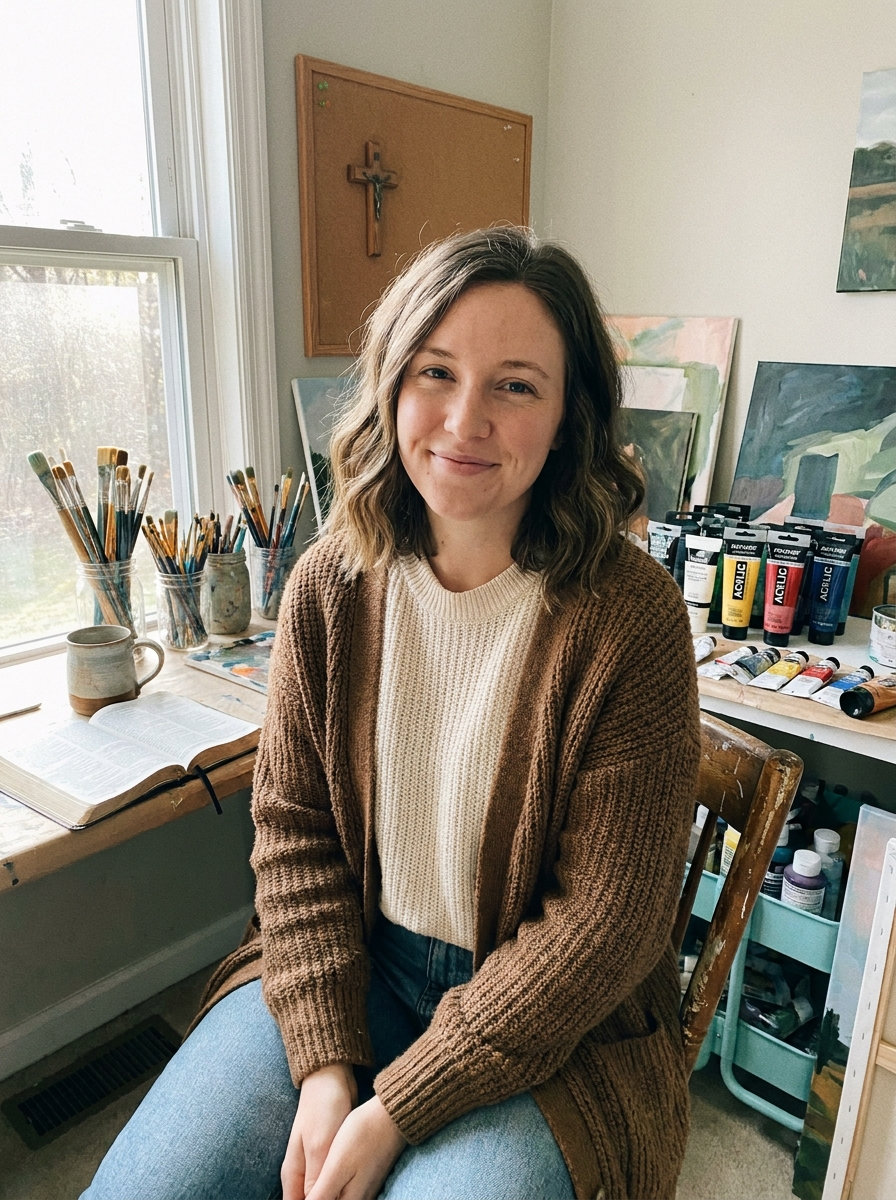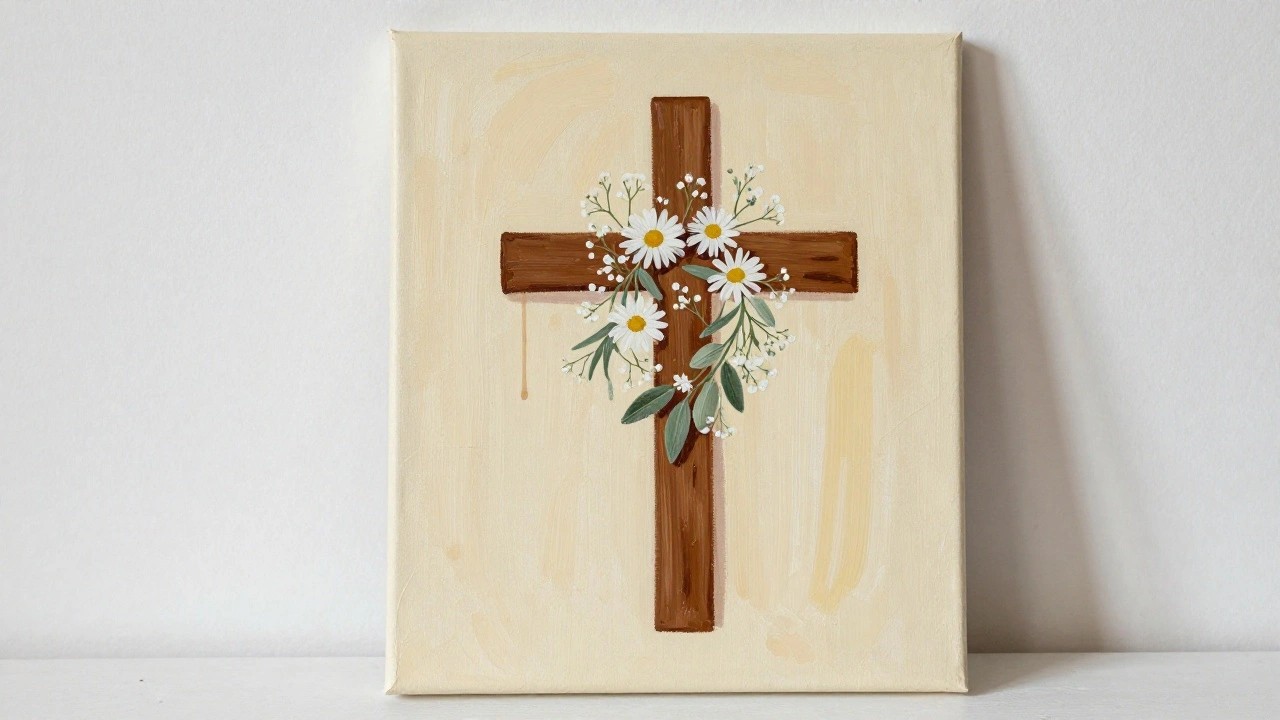
I like painting crosses because they add a quiet reminder of faith to the rustic look in my home.
My style tends to lean toward simple designs with worn edges and soft colors that match the rest of my decor.
I’ve tried a few different approaches over the years and kept the ones that felt the most natural.
Some ideas came from old barn wood I found and others from basic canvas pieces I had on hand.
These are the ones that worked best for me without needing fancy supplies.
Cross in a Pasture with Red Barn Behind It
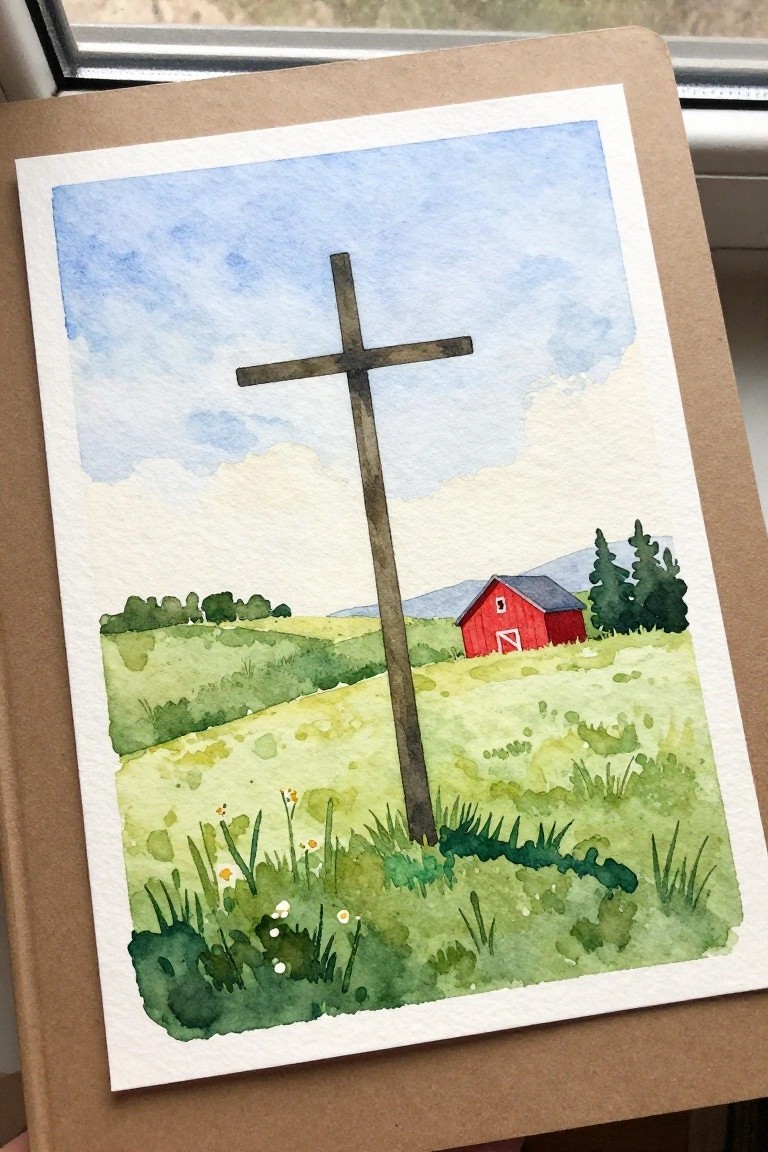
A tall wooden cross placed directly in a grassy field forms the main subject here, paired with a small red barn and distant hills to create a simple rural scene. The idea relies on the cross as the tallest element to pull the eye upward while the lower half stays filled with layered greens and scattered brush. This approach fits a straightforward landscape style that uses open space and a limited color range to keep everything readable.
What makes this idea useful is how the cross shape handles most of the visual weight, so the rest of the painting can stay loose. You can shrink or enlarge the barn, swap the hill colors, or crop the sky lower if you want a different proportion on your canvas. For practice, the basic layout works well because the shapes stay clear even when you simplify the grass and trees.
Checkered Cross with Sunflowers and Hanging Faith Jar
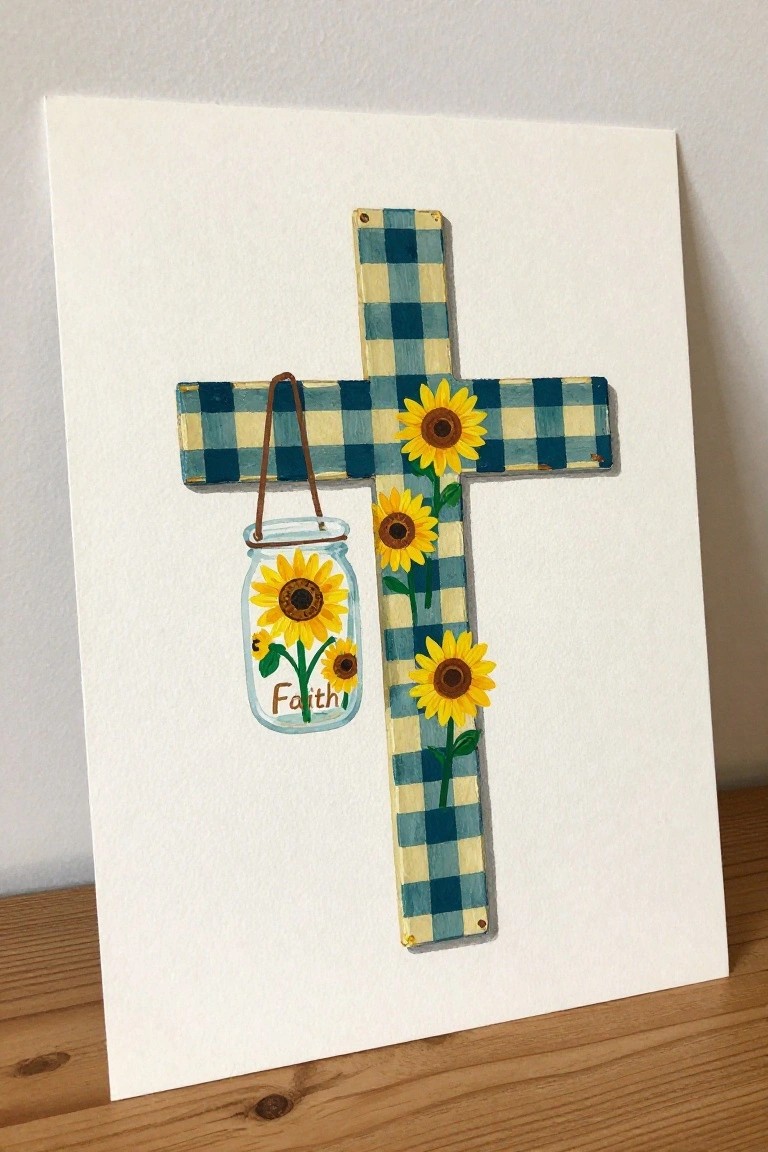
A painted cross in a blue and yellow buffalo check pattern creates the foundation for this idea, with sunflowers placed along the vertical beam and a mason jar suspended from the horizontal arm. The jar repeats the sunflower motif and includes the word faith in simple lettering. This decorative approach pairs a repeating geometric pattern with clustered floral elements to build a balanced farmhouse cross without overcrowding the surface.
What makes this idea useful is the gingham pattern that can be painted freehand or with stencils and easily changed to other color combinations. The hanging jar adds a bit of depth while staying simple to replicate on different cross sizes. For wall art, something like this works especially well because the pattern keeps the eye moving across the piece while the sunflowers stay grouped on one side. The same layout can be adapted by using different flowers or replacing the jar with another small object.
Neutral Cross with Off-Center Greenery
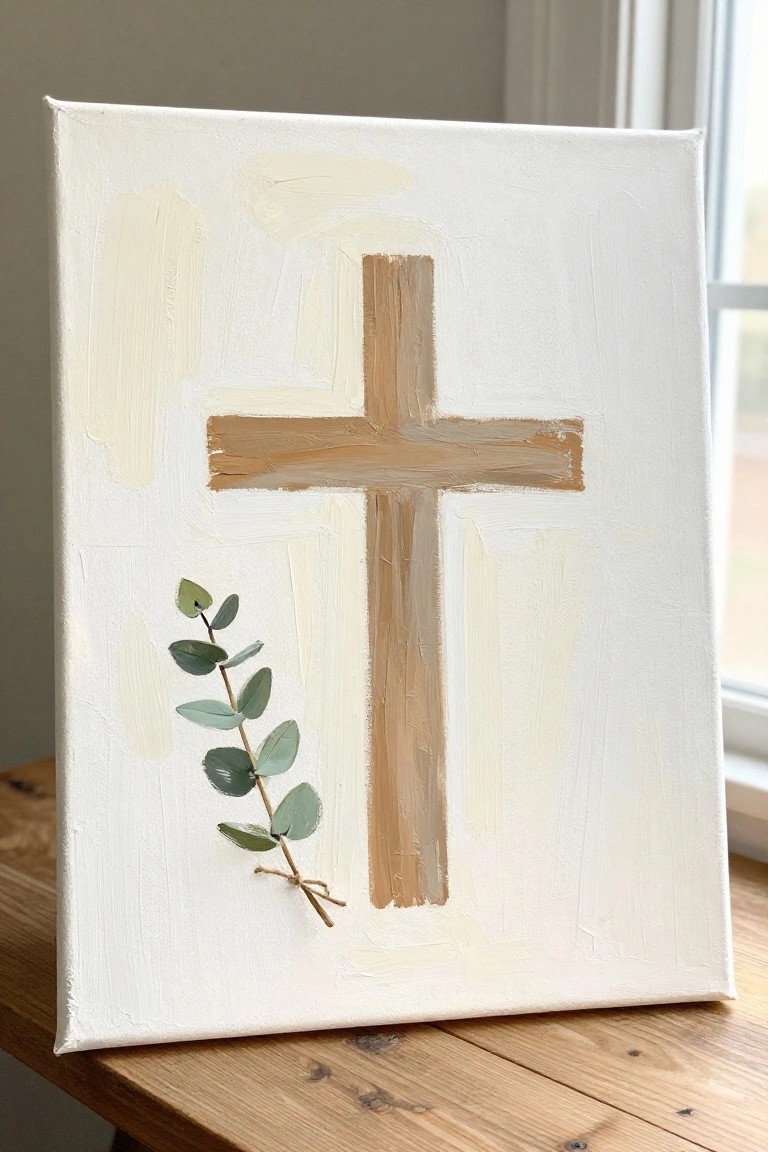
A centered cross in soft brown tones on a white background forms the main subject, with a small eucalyptus branch placed low and to the left for balance. The idea combines a bold faith symbol with a single natural element, keeping the overall layout simple and open. This approach works as decorative wall art because the negative space around the cross prevents it from feeling heavy while the branch adds just enough variation in shape and color.
What makes this idea useful is how the branch placement breaks up the symmetry without adding extra work. You could swap the eucalyptus for lavender, dried wheat, or nothing at all depending on the season. The limited color palette also makes it easy to match existing decor or resize for smaller canvases. For practice, this kind of subject lets you focus on brush control and placement rather than complex details.
Heart Stacked Cross with Boat Base
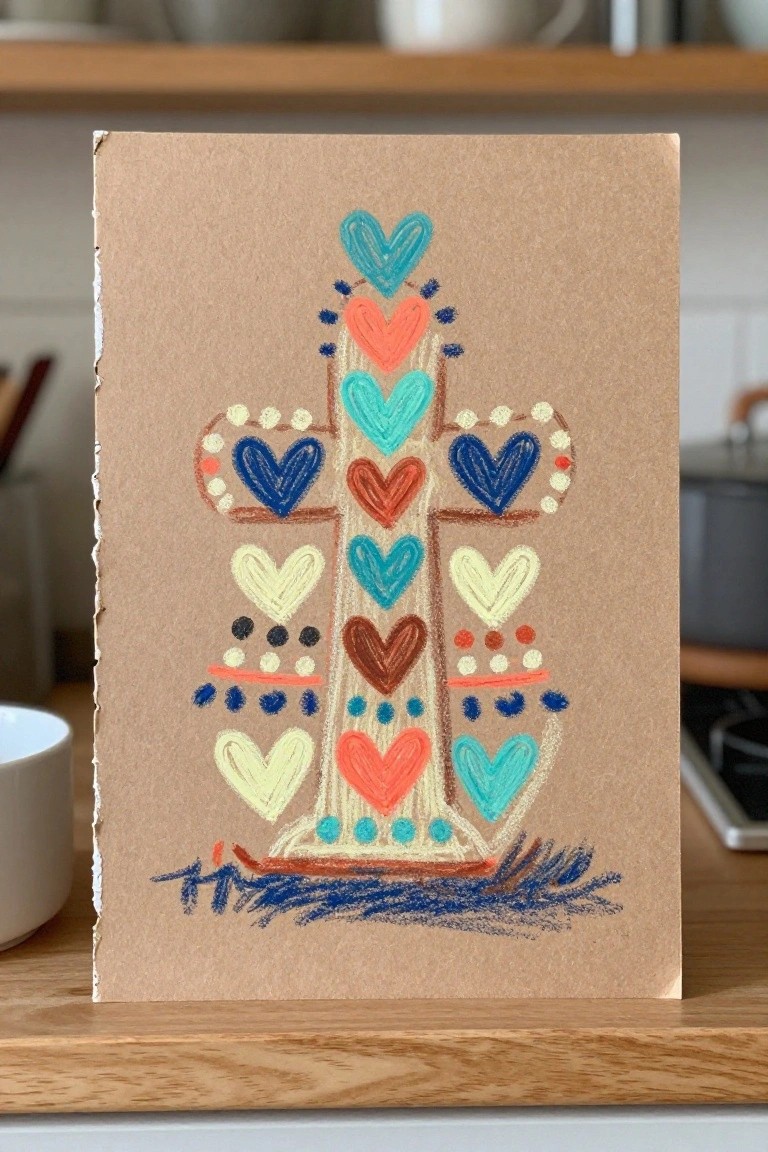
A cross assembled from stacked hearts in different sizes and colors forms a clear decorative motif. The main vertical line of hearts creates the stem while paired hearts on each side mark the arms, all resting above a small hull shape at the bottom. The brown paper background keeps the focus on the repeated heart forms and the limited color set of teal, coral, navy, and yellow.
What makes this idea useful is the way the repeating heart shape reduces the need for precise drawing skills. You can change the color order or drop some of the side hearts to simplify the layout for a smaller canvas or greeting card. The brown paper also helps the brighter tones stand out without extra background work, which makes the design easy to adapt for quick wall pieces or gifts.
Wildflower Cross with Loose Bouquet Base
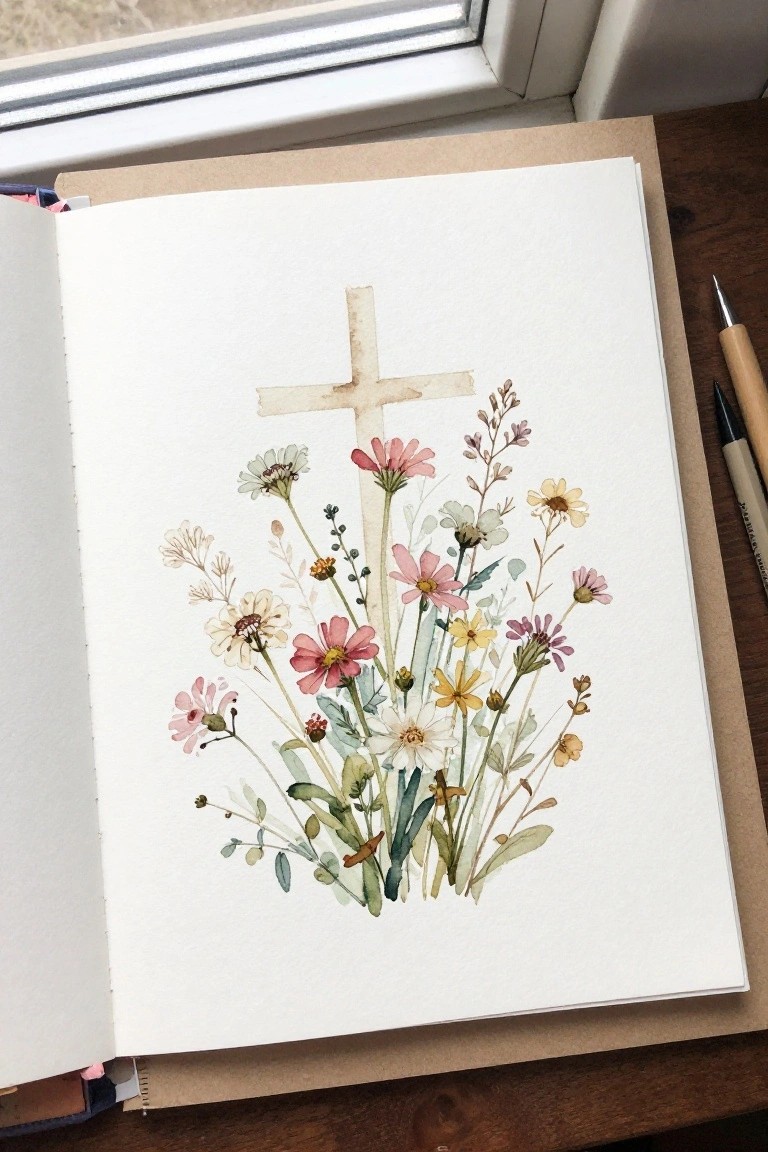
A central cross paired with a loose cluster of wildflowers at the base makes a straightforward painting idea that combines a faith symbol with natural elements. The flowers sit low and spread outward, leaving the upper part of the cross clear so the eye moves naturally from the blooms up to the cross arms. This setup works as decorative floral art because the varied heights and soft color mix keep the composition from feeling too stiff or centered.
What makes this idea useful is how easily the flower group can be scaled down or swapped for different meadow colors depending on the season or room. You can start with just four or five flower types and add more later if needed, which keeps the first attempt simple. For wall pieces this layout stays balanced even on a plain background, so it prints or frames without extra work. The same idea also translates well to smaller canvases if you want something quick for a shelf or gift.
Cross with Chick and Picket Fence
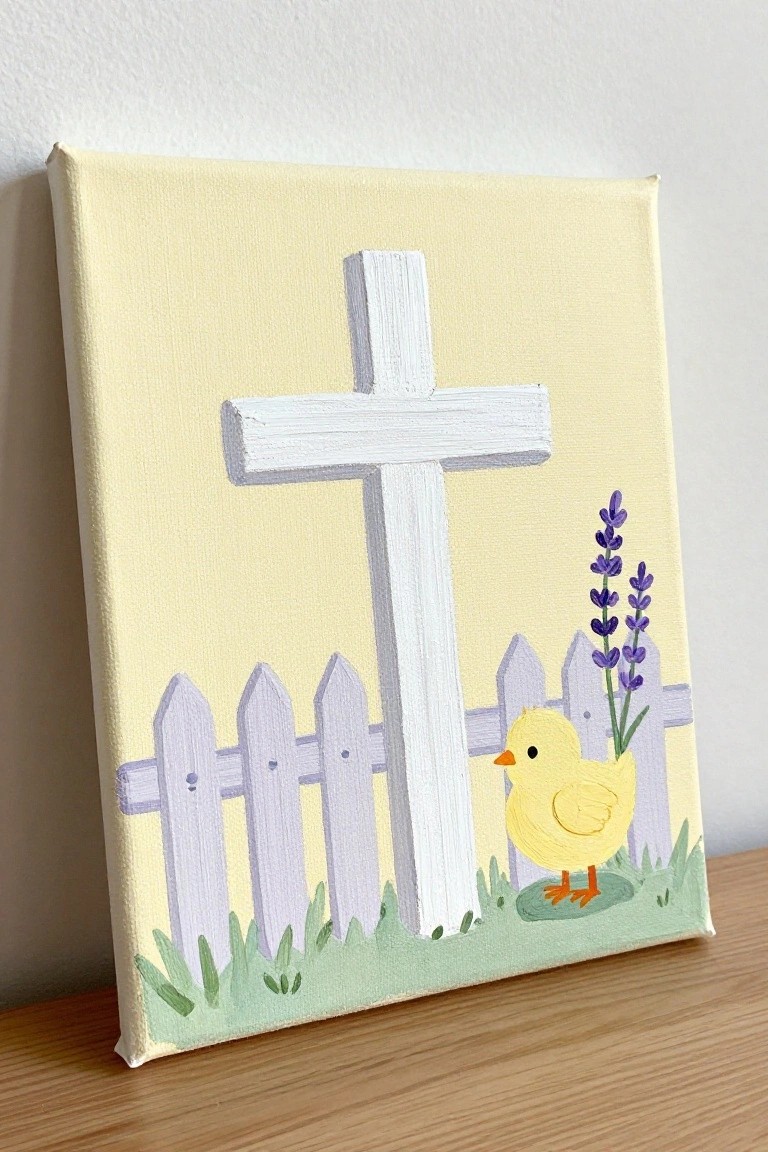
A farmhouse cross painting that pairs a white cross with a small yellow chick, a lavender stalk, and a light purple picket fence along the bottom edge. The pale yellow background and strip of green grass keep the layout simple and balanced, with the cross taking the main visual weight on the left and the chick and flowers filling the right side. This type of decorative piece blends a faith symbol with basic farm and garden elements for an easy seasonal or everyday result.
The composition does a lot of the work here by leaving plenty of empty space around the main objects. You could swap the chick for a different small animal or change the fence color to fit whatever palette you already have. For wall art, this setup works especially well because the light background makes it simple to match with other neutral pieces. The same idea could be painted smaller on wood or paper if you want to test the layout first.
Folk Floral Cross with Geometric Bands
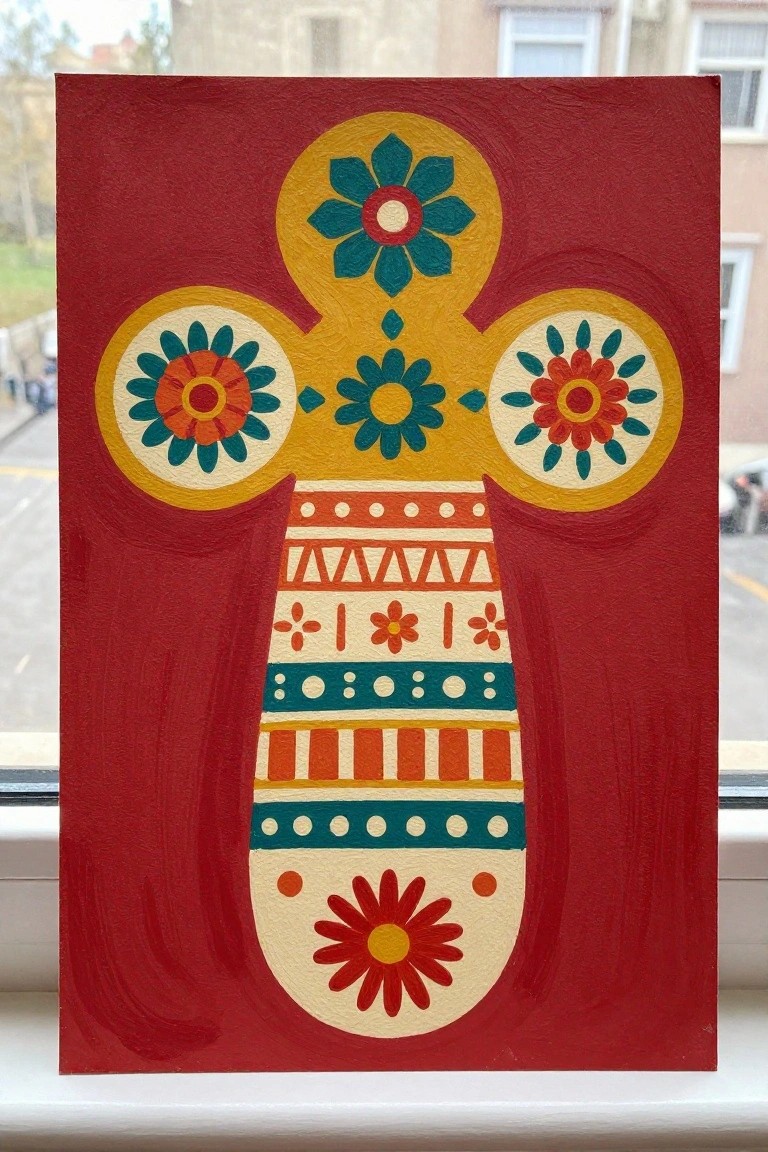
A cross built from overlapping circles and a tapered body covered in repeating stripes, dots, and small flowers creates a strong folk-art look. The design uses a tight color scheme of red, mustard yellow, teal, and cream to keep the shapes clear and balanced. This approach works as decorative wall art that mixes simple shapes with just enough detail to hold interest.
What makes this idea useful is the way the bands and circles do most of the layout work for you. You can copy the pattern on a smaller canvas for a shelf or enlarge the same structure for a bigger piece above a mantel. The red background lets the other colors stand out, so swapping teal for navy or mustard for soft orange is an easy way to match different rooms. This style also shows up well on Pinterest because the bold outline and repeating motifs photograph clearly.
Cross Reflected in Sunset Water
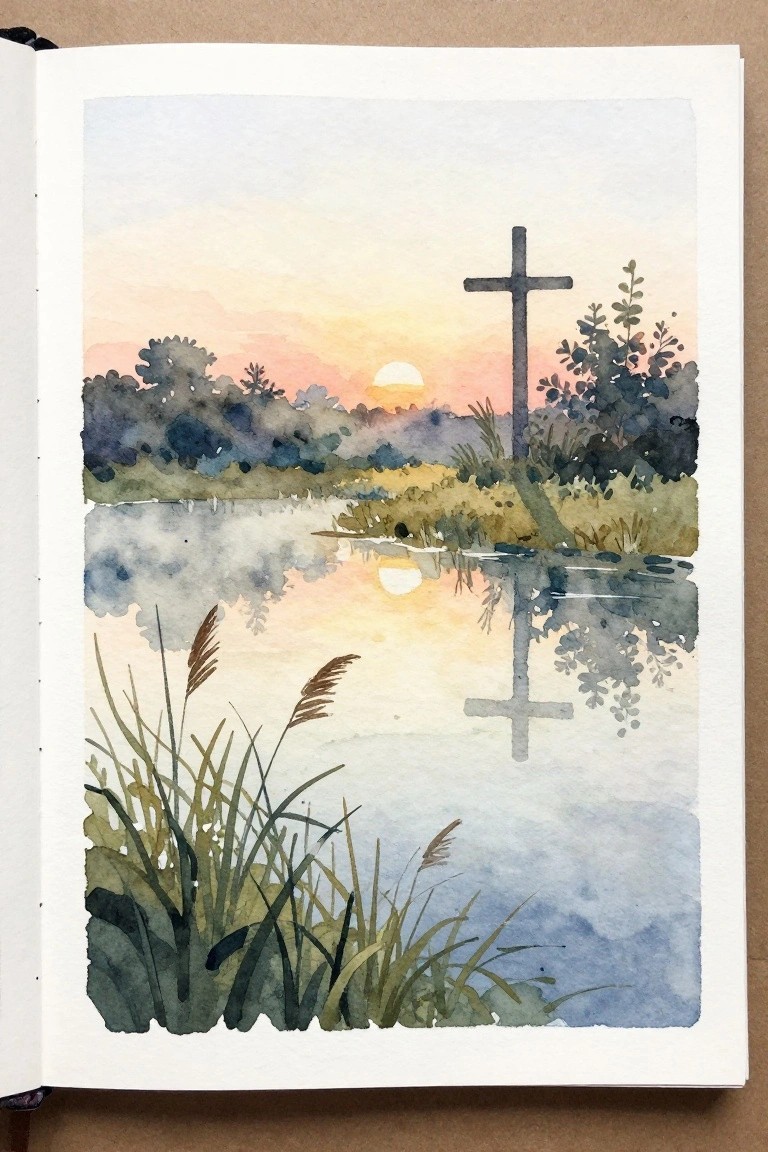
A landscape painting idea that centers on a single cross placed near water so its reflection becomes the main focal point at sunset. The idea uses a soft gradient sky, distant tree line, and simple foreground reeds to keep attention on the mirrored shape without overcrowding the scene. This approach fits a landscape category because the water surface creates built-in symmetry and lets the cross stand out through contrast rather than extra detail.
The composition does a lot of the work here by balancing the cross with its reflection so the painting feels complete with minimal elements. You could change the sky colors to match a different season or simplify the reeds further if you want a quicker version for practice. For wall art, this setup works well because the reflection adds interest while the overall layout stays easy to scale up or down.
Cross in an Open Field Landscape
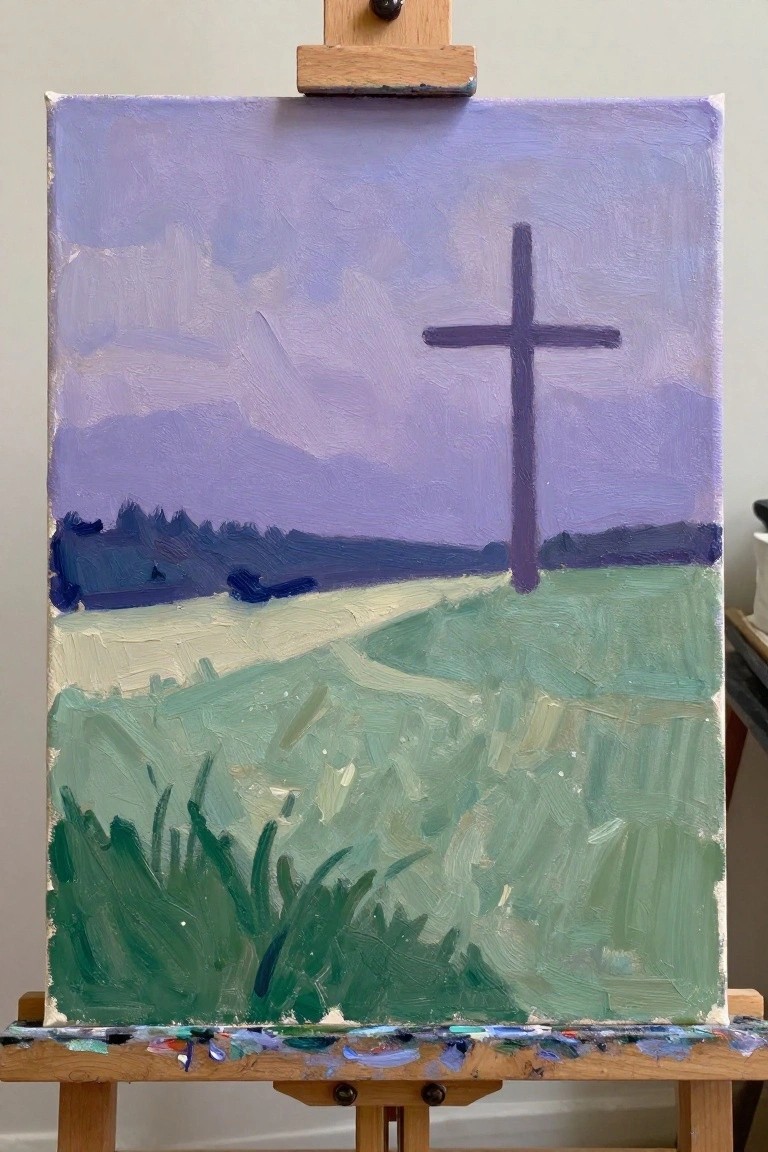
A single cross positioned against a soft sky and rolling fields forms the core of this landscape idea. Broad horizontal strokes build the green foreground while the cross uses simple vertical and horizontal shapes to create contrast. This setup fits a landscape category where minimal elements carry the composition through color blocks and loose texture rather than fine detail.
The composition does a lot of the work here because the cross needs only straight strokes once the background layers are in place. You can shift the sky from purple to blue or gray to match different seasons without changing the layout. For wall pieces this approach works especially well at medium sizes where the dark shape reads clearly from across a room. The same idea can be simplified further by using fewer colors or enlarged by adding distant tree lines.
Mixed Pattern Crosses in Soft Tones
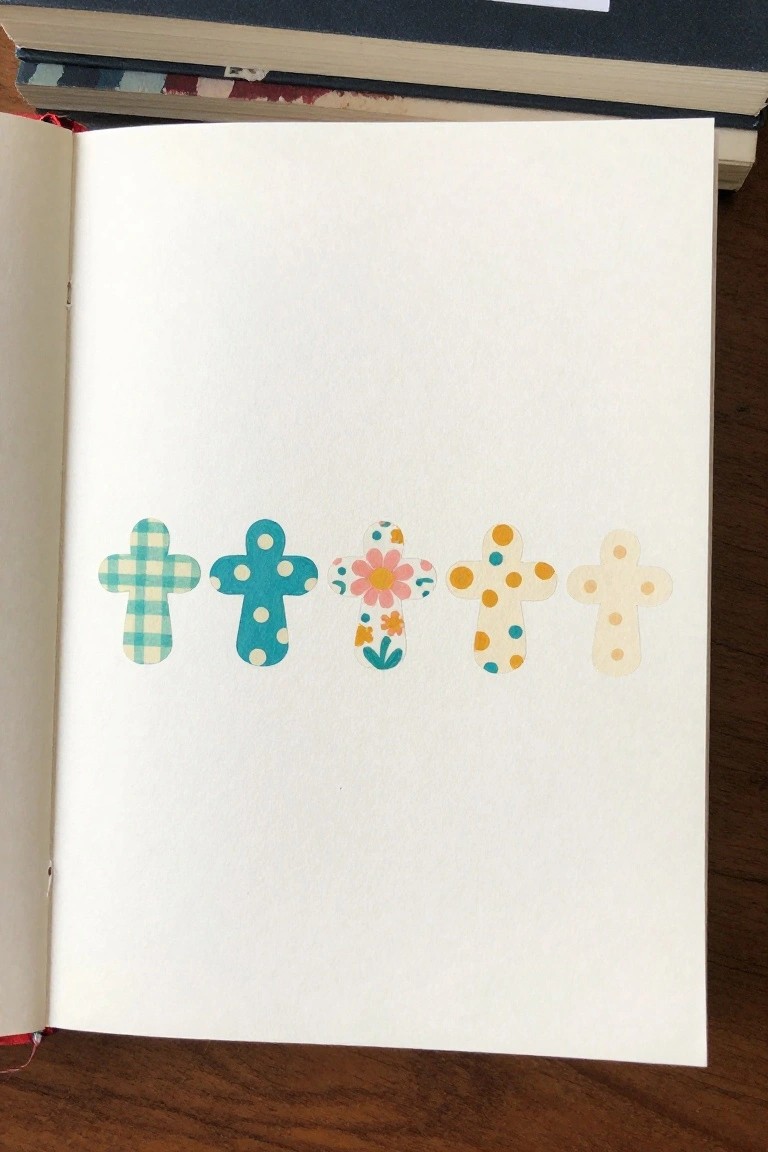
A set of cross shapes each filled with a different pattern creates a simple decorative painting idea that relies on repetition and variety. One cross uses a checkered design, while others feature polka dots, a small floral motif, or scattered spots in coordinating colors. The even spacing and matching scale keep the group balanced without needing extra elements or complex backgrounds.
What makes this idea useful is how easily the patterns can be swapped for other prints or scaled to different sizes. The soft teal, pink, and yellow palette works well for farmhouse settings but can be changed to match any color scheme. This would be easy to turn into small wood plaques or canvas pieces by tracing the shapes and filling them with paint or paper cutouts.
Simple Farmhouse with Cross and Autumn Pumpkins
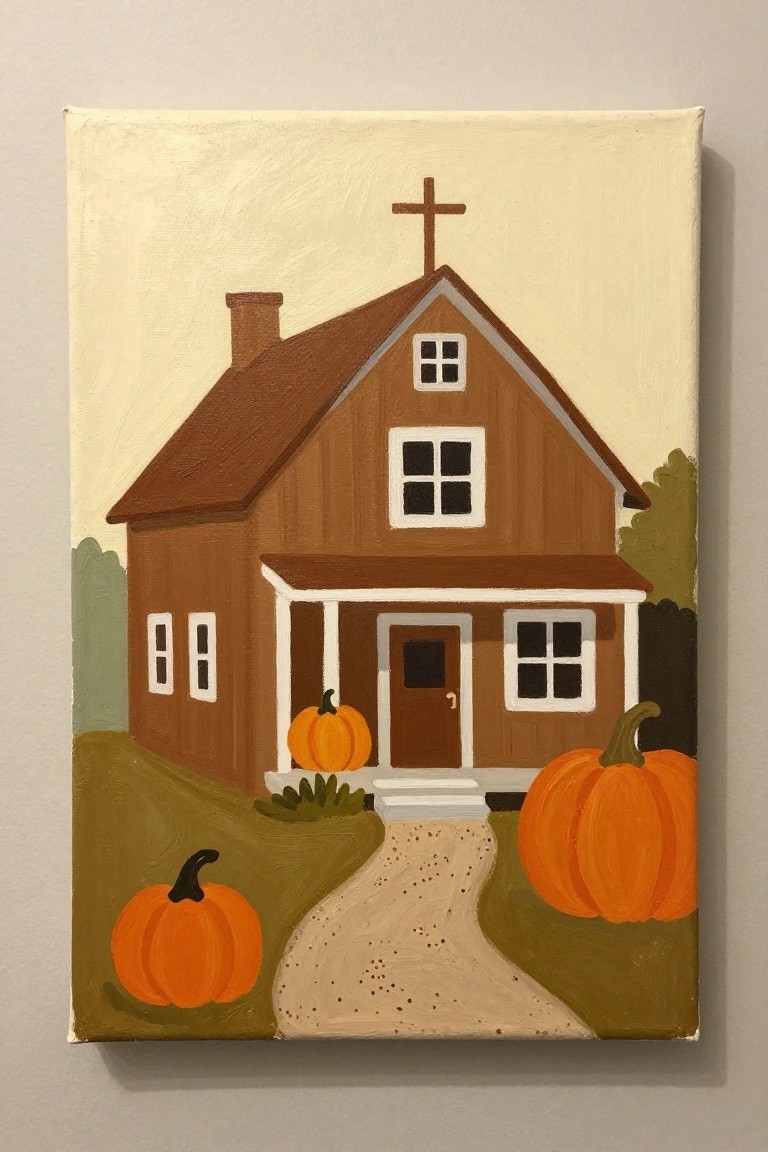
A painting idea built around a brown wooden house with a cross on the roof peak works as a seasonal decorative piece that mixes architecture and harvest elements. The house sits centered with a light path leading to the door and three pumpkins placed at different distances to balance the foreground. This layout uses flat shapes and a limited color range to keep the cross as the clear focal point while the pumpkins add weight without crowding the scene.
The composition does a lot of the work here by placing the cross high and using the path to guide the eye forward. You could swap the pumpkins for other fall items or change the house color to match a specific room. For wall art this idea stands out on Pinterest because it pairs a recognizable farmhouse shape with a faith symbol in a way that stays simple to paint and easy to size up or down.
Red Cross with Layered Edge Shading
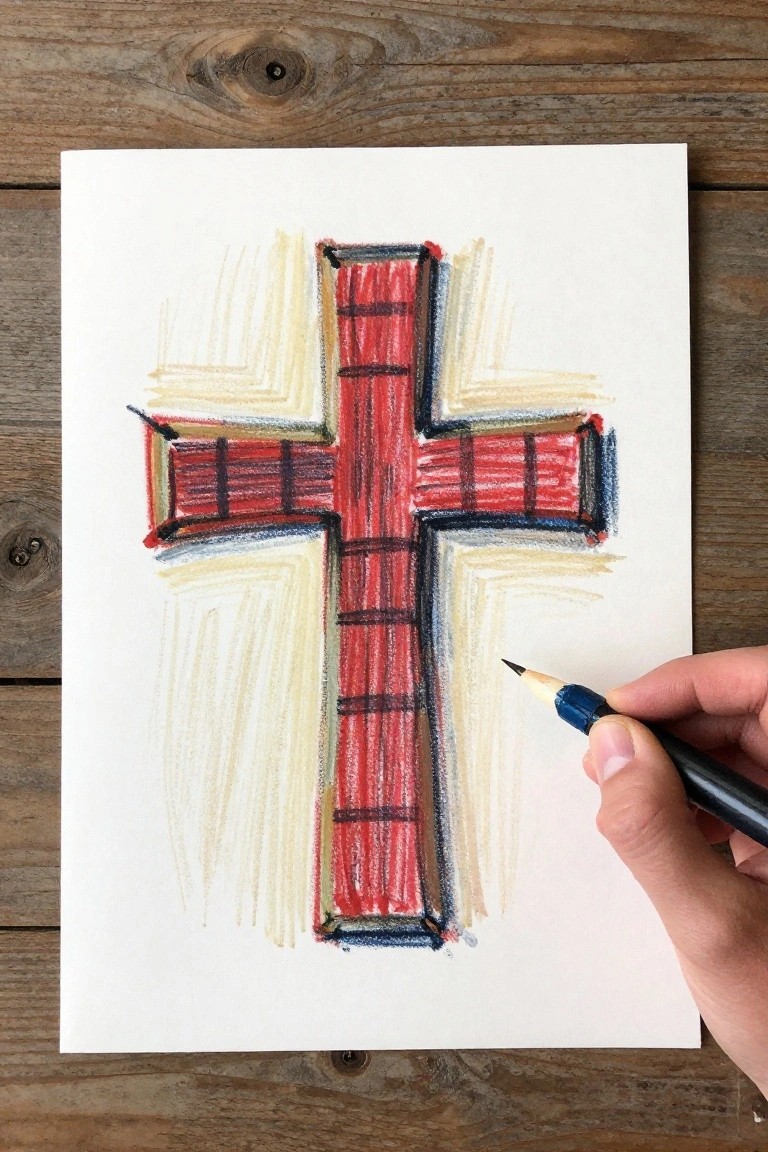
A bold red cross with black grid lines running across both arms and the stem forms the main subject. Soft yellow and blue strokes are layered around the edges to create depth and separate the cross from the background. This decorative approach keeps the focus on the shape through strong color contrast and simple repeated marks.
What makes this idea useful is the clear central shape that works well for different sizes or color swaps. The background strokes can be adjusted to fit whatever palette you already have on hand. It would be easy to turn into a quick practice piece or a larger canvas version for wall decor.
Olive Wreath Cross with Scripted Text
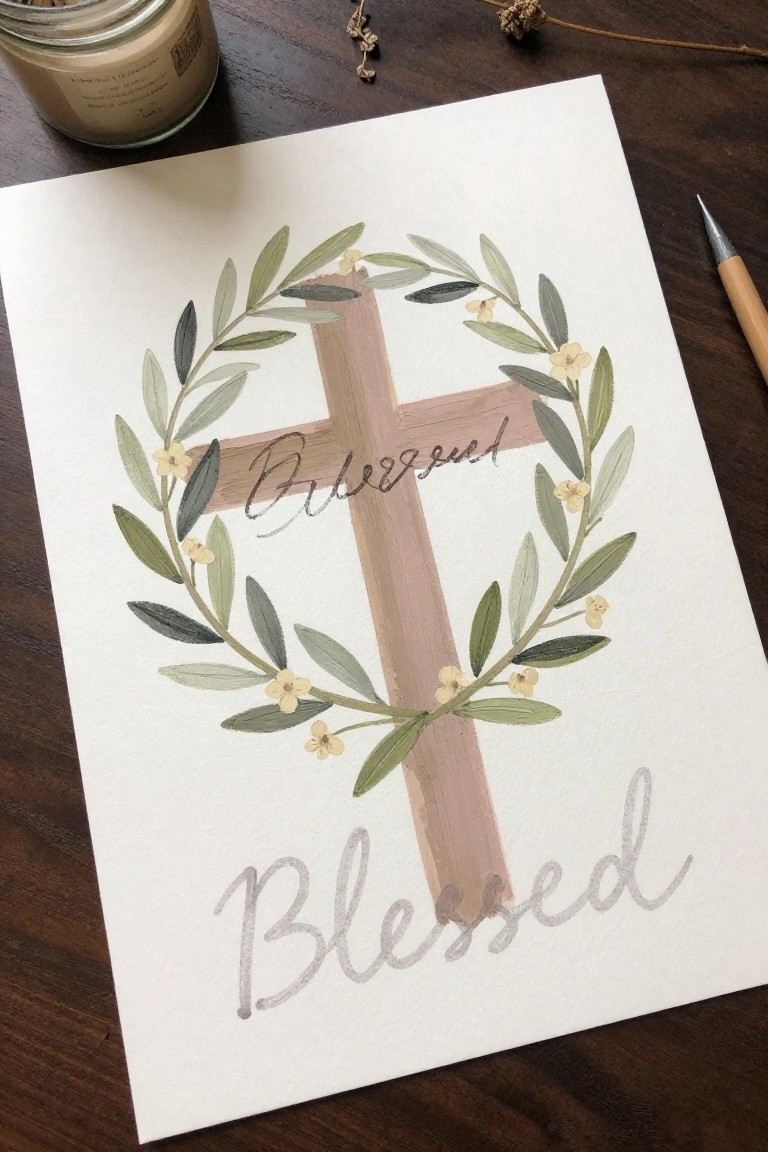
A cross wrapped in an olive branch wreath creates a balanced decorative piece that mixes a simple religious symbol with botanical details. The branches form a loose circle around the cross, with small flowers spaced out to keep the focus on the wood tones and the flowing script of the word “Blessed” placed across the middle. A second, larger version of the same word sits below in a softer gray, giving the layout two layers of text without crowding the design.
What makes this idea useful is how the wreath acts as a built-in border that keeps the eye centered on the cross. You can easily change the leaf colors or flower size to match different color schemes or room styles. The layout also works at smaller sizes if you want a quick piece for a desk or as a gift. For practice, starting with the wreath shape first helps you get the spacing right before adding the text.
Rustic Wooden Cross with Hanging Heart Detail
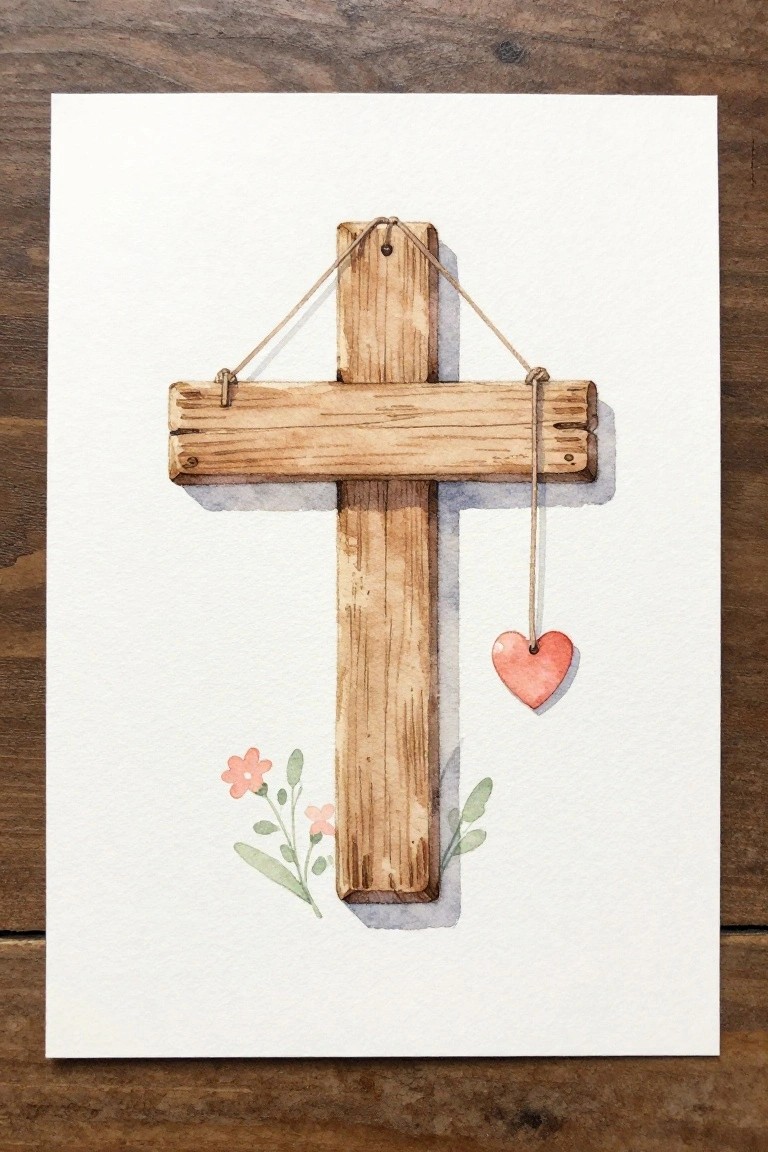
This painting idea features a straightforward wooden cross rendered in soft brown tones, with a small heart suspended by string from one arm and a modest cluster of pink flowers positioned at the base. The composition keeps the cross centered and dominant while using the hanging element and flowers to create light asymmetry and visual interest. It works as decorative still life art that relies on simple shapes and a restrained palette rather than complex layering or heavy texture.
What makes this idea useful is how the plain background keeps the focus tight on the cross, so it translates easily to different canvas sizes or even wood panels. You could swap the heart color or change the flowers to match a room’s existing palette without needing to repaint the whole piece. For wall art, the limited details make it a quick option that still reads clearly from a distance.
Red Truck with Wildflowers and Cross at the Barn
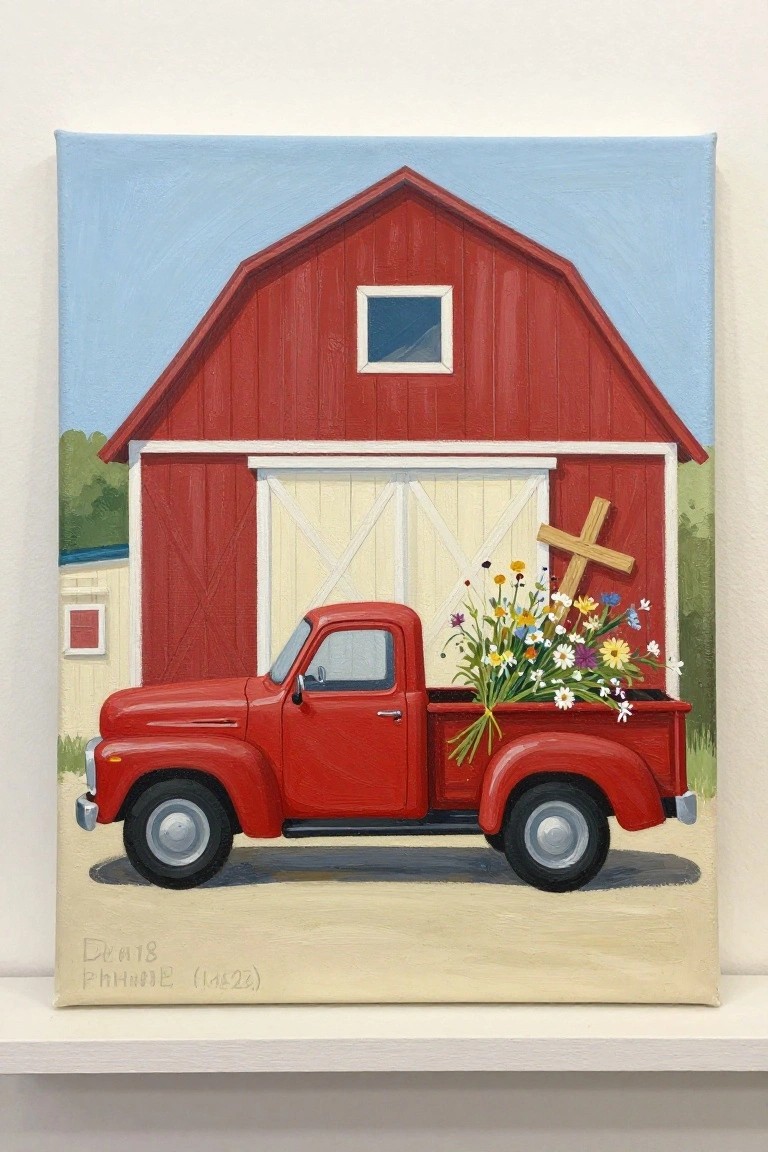
A painting idea built around a vintage red pickup truck loaded with loose wildflowers and parked in front of a red barn gives a clear farmhouse theme with an added faith element. The wooden cross resting against the barn wall sits slightly off center so it does not compete with the truck or the flower bundle. Limited colors, mainly strong reds against a pale sky and ground, keep the whole scene easy to read from a distance.
The composition does a lot of the work here because the truck and barn create large, simple shapes that guide the eye without needing lots of fine detail. You can shrink the canvas size or drop some of the smaller flowers if you want a quicker version for practice. For wall art the idea works especially well in a set of two or three similar pieces where you vary only the flower colors or the angle of the cross.
Patterned Band Cross with Floral Accents
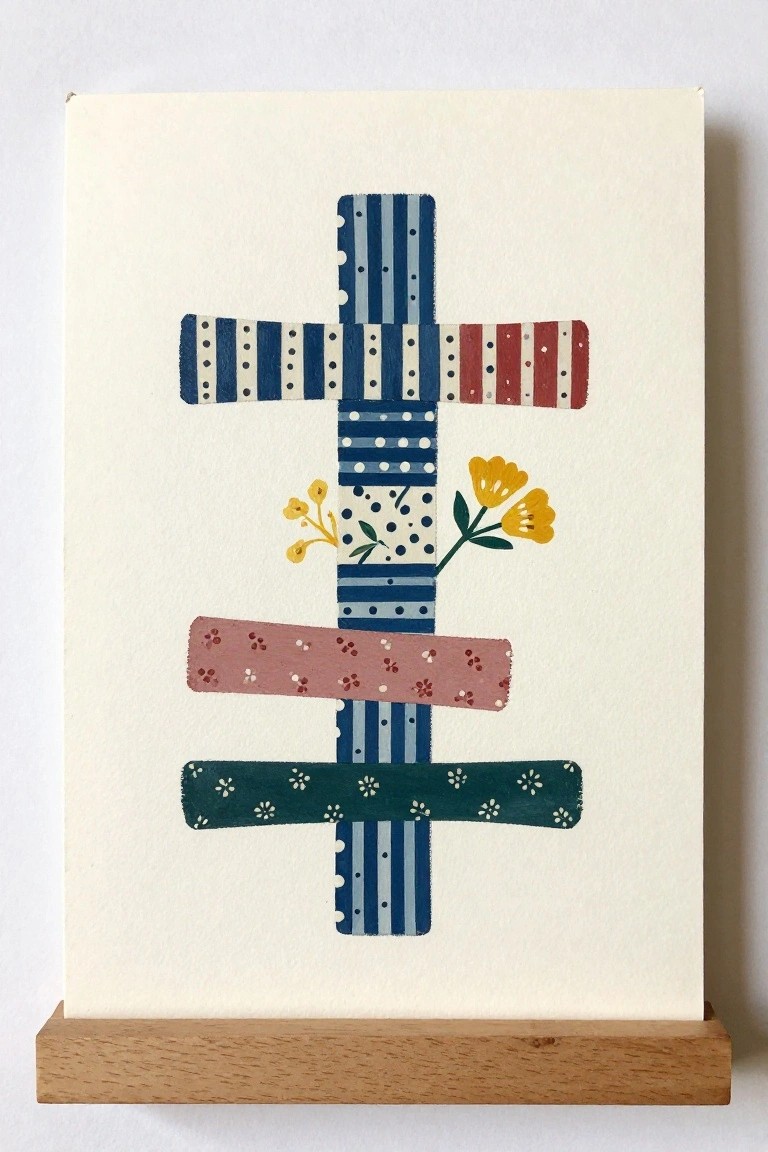
A cross built from layered horizontal and vertical bands creates a clean decorative piece where each strip carries its own pattern of stripes or dots. The bands vary in width and color, using blues, reds, and muted tones to keep the shape readable while the patterns add texture across the surface. A small cluster of yellow flowers sits to one side, breaking the symmetry just enough to draw the eye without overpowering the central form.
The composition does a lot of the work here by letting the repeating patterns carry visual interest instead of requiring detailed painting skills. You could swap the color palette to match existing decor or replace the floral accent with a different motif if desired. This would be easy to turn into a weekend canvas project since the straight bands rely more on layout than on freehand drawing, and the simple structure shows up well in small sizes for wall displays.
Seaside Chapel Landscape
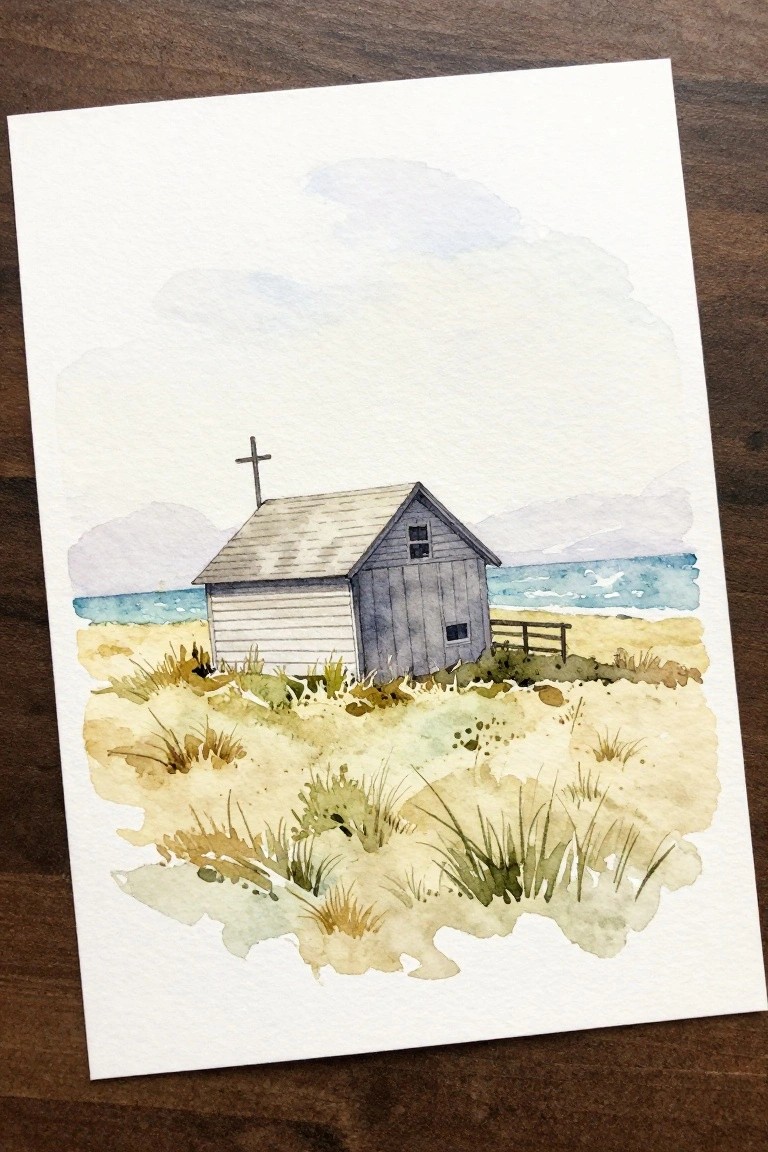
A small wooden church with a cross on the roof forms the main subject in this landscape painting idea. The building sits low in the frame against a strip of water and sky, with sandy ground and grasses filling the foreground to create depth. The idea works because the simple rectangular shapes and limited color range keep the focus on the structure without extra clutter.
The composition does a lot of the work here by using the open background to highlight the building. You could adapt it by changing the water to fields or swapping the grass tones for different seasons while keeping the same basic layout. For practice, this kind of subject helps with basic perspective on the roof and walls, and the small scale makes it easy to finish in one session or turn into a quick study for larger pieces.
Patchwork Plaid Cross
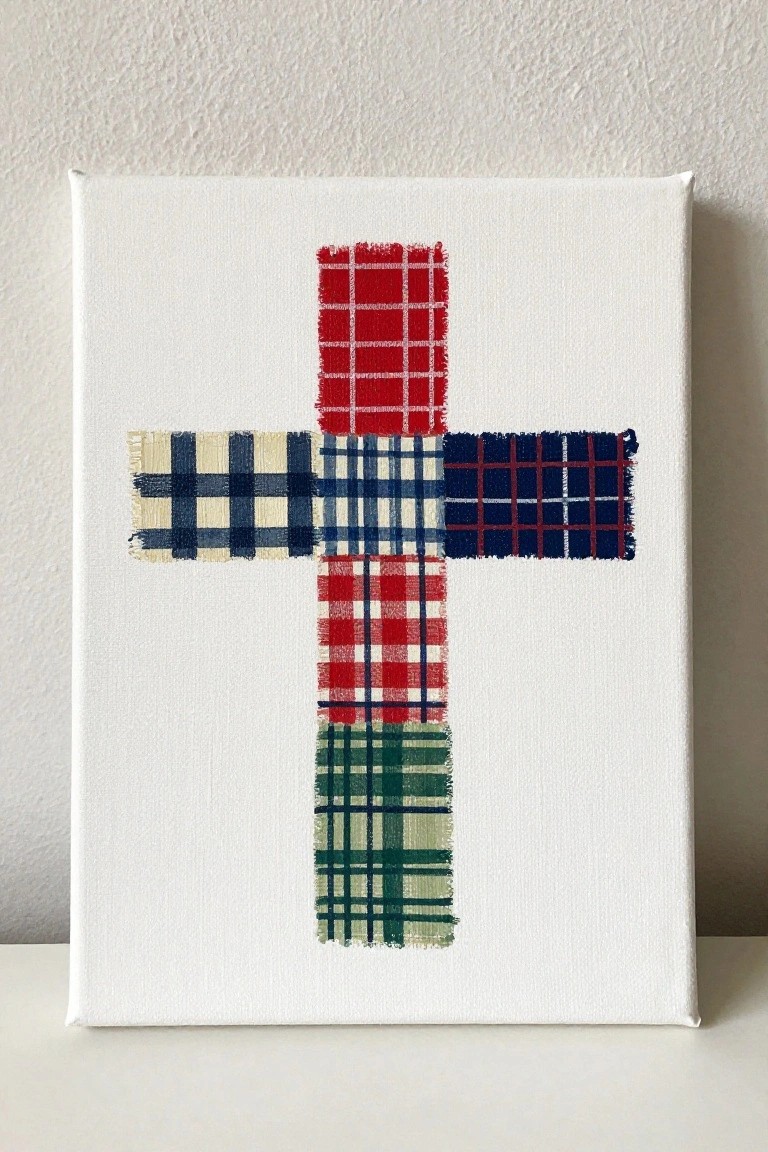
A cross built from separate plaid blocks creates a simple but structured decorative piece. Each arm uses a different tartan pattern in red, blue, green, and neutral tones, so the shape forms through the arrangement of those rectangles rather than one continuous fill. The white background keeps the focus on the grid lines and color changes without adding extra elements.
What makes this idea useful is the way the block layout lets you change just one or two patterns at a time to match a room or season. The straight edges and repeating lines are easy to tape off or measure, so you can adjust scale without redrawing the whole design. For wall art, something like this stands out on Pinterest because the mix of patterns feels finished even when the brushwork stays loose.
Lamb Resting at the Base of a Wooden Cross
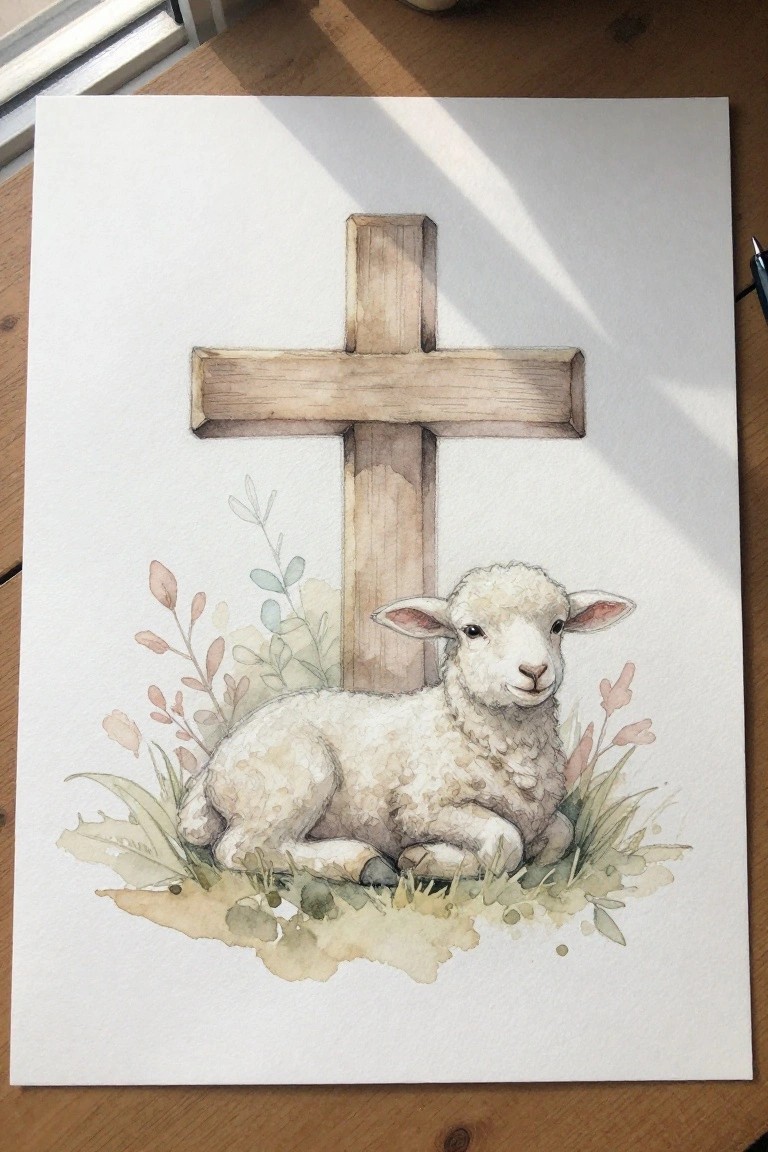
Pairing a small lamb with a plain wooden cross creates a balanced farmhouse piece where the vertical cross gives structure and the animal fills the lower space with a soft shape. The idea works as a decorative animal painting that keeps the cross central while using light foliage to ground the scene without crowding it. Muted browns, creams, and greens plus loose edges help the whole thing read as calm and easy to hang.
What makes this idea useful is the way the cross handles most of the composition, so the lamb only needs simple shapes and a few grass strokes to finish the look. You can shrink the layout for a small canvas or greeting card or stretch it taller for a bigger wall piece. The soft color range also lets you swap in different leaf colors or a plain background if you want a quicker version for practice.
Frequently Asked Questions
What supplies are needed to start making farmhouse cross paintings? You will need wooden crosses or planks cut into cross shapes, acrylic or chalk paints in neutral tones like white, gray, and beige, sandpaper for distressing, stencils for lettering or patterns, and sealant to protect the finish. Start with affordable pine or reclaimed wood from craft stores, then gather brushes, rags for wiping, and optional items like twine or metal accents to enhance the rustic feel while keeping the focus on faith inspired designs.
How can I make my cross paintings look authentically rustic? Distress the wood by sanding edges and surfaces before painting to create a worn appearance. Apply thin layers of paint and wipe some away while wet to let the wood grain show through. Add texture with dry brushing or by mixing in a bit of baking soda to the paint for a crackled effect. These steps help blend everyday farmhouse charm with meaningful faith elements drawn from the 19 ideas.
What are simple ways to include faith messages in the designs? Incorporate short Bible verses, words like grace or hope, or subtle symbols such as doves and wheat using stencils or freehand painting. Choose soft script fonts that complement the rustic style, and position the text across the center or arms of the cross. This approach keeps the artwork personal and spiritual without overpowering the overall farmhouse aesthetic.
Are these painting ideas suitable for beginners with no art experience? Yes, many of the 19 ideas use basic techniques like solid color washes, simple distressing, and pre made stencils that require only steady hands and patience. Begin with one of the easier designs that feature minimal details, practice on scrap wood first, and follow step by step instructions to build confidence while creating pieces that reflect both rustic charm and faith.
Where are the best places to display these finished cross paintings? Hang them above a mantel, on an entryway wall, or in a dining area where they can serve as daily reminders of faith. Use simple hooks or lean smaller versions on shelves with other farmhouse decor like lanterns and greenery. Group several together in varying sizes for a gallery wall that adds warmth and spiritual depth to living spaces.