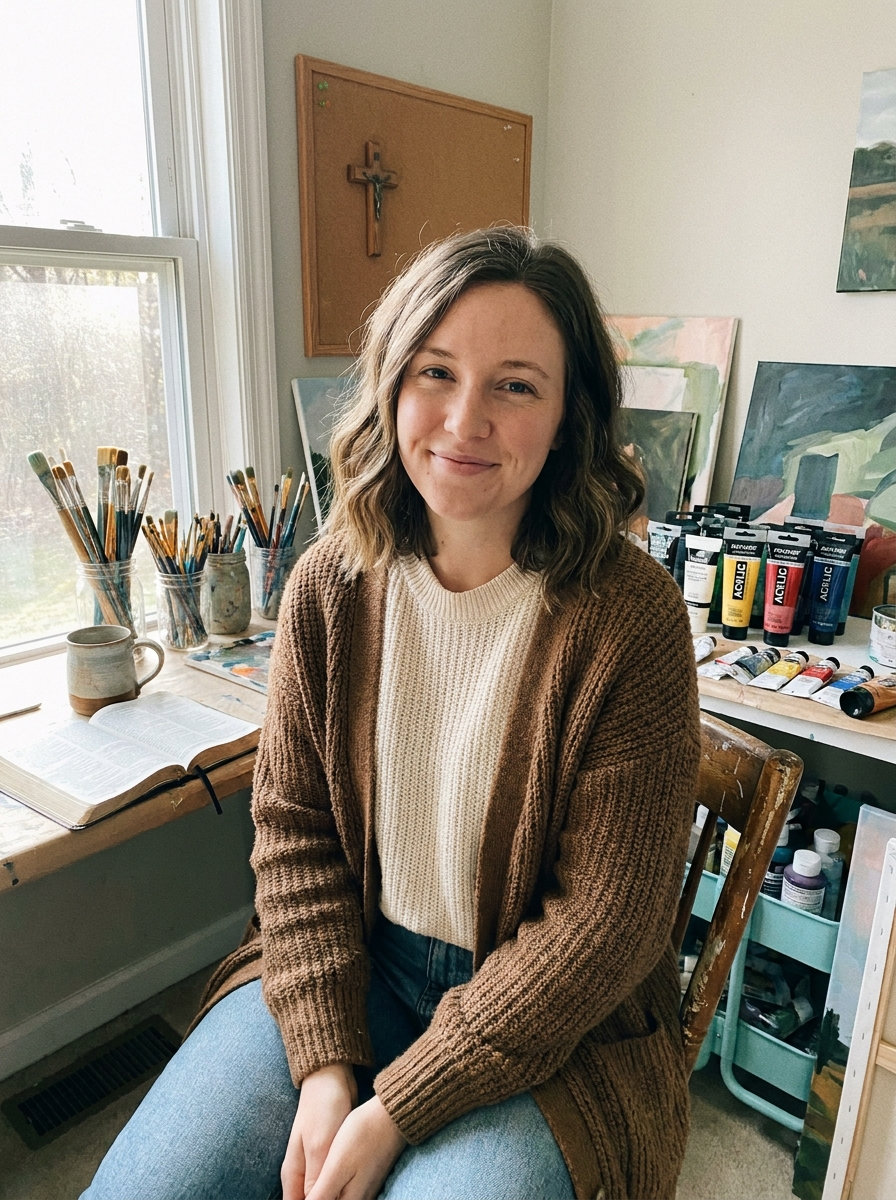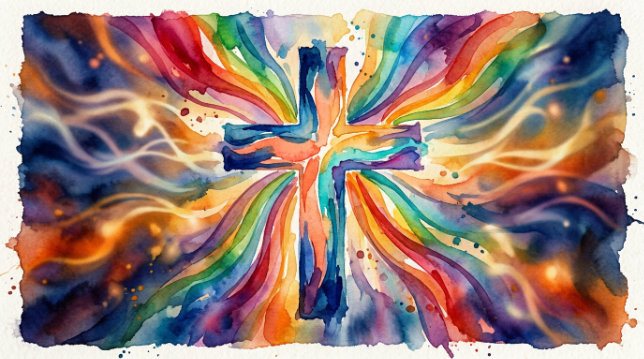
I like to paint crosses for my prayer space because the colors make it feel more inviting.
I have tried a few different styles over the years and some turned out better than others.
These ideas came from my own experiments with acrylic paints and simple brushes.
I think adding a bit of color helps me focus during quiet times.
Maybe one of these will work for your space too.
Folk Geometric Cross with Repeating Motifs

A cross built from stacked diamonds, triangles, and small hearts creates a strong decorative piece for a prayer space. The design relies on a clear central diamond and mirrored shapes that run down the vertical arm, which keeps the eye moving without crowding the surface. A warm palette of teal, mustard, rust, and brown against the soft background makes the patterns pop while staying easy to read from a distance.
What makes this idea useful is how the repeating shapes can be scaled up or down depending on your canvas size. You can drop a few heart details or simplify the inner diamonds if you want a faster version, or swap the background color to match a specific wall. For wall art, the bordered cross shape gives instant structure so the piece reads clearly even when kept fairly flat.
Stained Glass Mosaic Cross on Neutral Ground

A stained-glass style cross breaks the shape into irregular sections filled with bright colors like blue, teal, green, yellow, and purple. Black lines act as the leading that separates each color block and defines the arms clearly. The solid gray background keeps attention on the colored pieces while making the overall piece easy to hang in any space.
What makes this idea useful is how the black outlines remove the need for precise blending or shading. You can adapt it by swapping in different color combinations or changing the background shade to match a room. The layout also works on smaller canvases or wood panels if you want a quicker version for gifts. For practice, this kind of subject helps you focus on shape division and color placement without needing advanced techniques.
Geometric Cross Built from Bold Color Blocks

This painting idea centers on an abstract cross formed by layering thick rectangular strokes of color that overlap slightly at the edges. A dark central cross in black and navy anchors the design while bright pink and turquoise blocks extend outward to define the arms. The white background stays mostly untouched so the color shapes stand out clearly without extra detail or shading.
What makes this idea useful is how the block layout lets you focus on color placement and brush pressure instead of drawing accurate lines. You can swap the pink and turquoise for any two bright shades that fit your room or try the same structure on a smaller panel for quick practice. The high contrast and simple shapes make it easy to hang as wall art in a prayer space, and the approach stays flexible if you want to add or remove one color accent.
Watercolor Cross Against a Blended Sky Wash

A cross rendered in soft rose and pink watercolor sits centered over a loose wash of yellow, orange, and pale pink that fades into cloud-like shapes near the bottom. The background uses broad, wet blends and a faint circular highlight behind the cross to create depth without adding extra elements. This keeps the idea simple while letting the color gradients carry the visual weight.
The composition does a lot of the work here because the strong vertical shape of the cross contrasts cleanly with the fluid background. You could swap the warm palette for blues and lavenders to shift the mood or crop the design into a square format for smaller canvases or prints. For wall pieces, the same layout works well at larger sizes since the loose washes scale easily and still read clearly from a distance.
Patchwork Cross Using Colorful Pattern Blocks

A cross built from separate painted blocks lets you combine different colors and patterns into one shape without needing a single smooth surface. The vertical bar runs longer with the horizontal arms extending from the middle section, and each block carries its own design like dots, stripes, or simple shapes. This approach falls into decorative art and works because the variety of patterns keeps the eye moving across the form while the white background holds everything together.
What makes this idea useful is how easily you can swap in your own color choices or repeat favorite patterns across the blocks. The layout stays balanced even if some sections end up slightly uneven, so it suits quick practice sessions or trying out new paint mixes. You could shrink the whole thing onto a smaller canvas or add the separate small square as an accent on another project. For wall pieces, the bold blocks give it enough presence to stand out without extra details.
Butterfly Cross Built from Repeating Shapes

Arranging butterfly forms into a cross creates a clean decorative piece that works well for prayer spaces. The idea relies on a symmetrical layout where butterflies in varied bright colors stack vertically with side extensions to define the arms. Small dots in yellow and purple act as light accents that keep the overall design balanced and focused on the cross outline.
What makes this idea useful is how the repeated butterfly shape lets you build the cross without needing advanced drawing skills. You can adjust the number of butterflies to change the scale or swap colors to fit different room palettes. This approach adapts easily into stenciled versions or mixed media pieces and performs well as a quick wall art option for seasonal or faith-based displays.
Rustic Cross with Cascading Wildflowers

A wooden cross forms the main subject here, painted in a simple brown texture and paired with a loose cluster of red, blue, yellow, and pink flowers that run down one side. The flowers are arranged in a diagonal flow rather than a symmetrical pattern, which keeps the composition from feeling too stiff. This fits the floral decorative category and works because the light background lets the wood tone and bright blooms stand out without extra detail.
What makes this idea useful is the way the empty space on either side of the cross makes it easy to resize for different canvas widths. The color palette can be swapped for whatever flowers are in season or already on hand, and the same layout works on smaller boards or even as a greeting card design. For wall pieces in a prayer space, the straightforward central shape and limited background keep the painting quick to finish while still looking finished.
Purple Cross with Soft Cloudy Background

A watercolor cross painted in deep purple with a thin gold edge sits centered over a loose wash of purple, blue, and pale yellow that spreads like soft clouds. Quick downward strokes in darker blue and purple at the bottom create a simple ground layer that anchors the composition without adding much detail. The idea works as a straightforward decorative piece that pairs a clear central shape with fluid background layers.
What makes this idea useful is the way the background wash does most of the color work while the cross stays simple to paint. You could change the purple and blue tones to match a different room or swap the bottom strokes for other colors to shift the season. The loose style also makes it easy to scale down for cards or practice on smaller paper.
Seashell Cross on Striped Beach Layers

A cross built from real seashells forms the central subject when mounted over a painted canvas divided into simple horizontal bands of sky blue, sand beige, and ocean blue. This mixed media idea pairs basic acrylic stripes with collected shells to create a decorative piece that fits coastal or prayer room settings. The straight vertical line of shells down the middle and shorter horizontal row across the center keep the cross shape easy to read against the repeating background stripes.
The composition does a lot of the work here because the stripes act as built-in guides that frame the cross without extra drawing or measuring. You can swap shell sizes or colors based on what you have and still keep the same layout, or shrink the whole thing to a smaller canvas for a desk. This works especially well for beginners who want a finished piece without painting detailed figures, and the beach stripes make it simple to match wall colors or seasonal decor. For Pinterest, the combination of texture from the shells and clean stripes gives it a clear, repeatable look that stands out in search results.
Mosaic Cross Built from Watercolor Squares

A cross made from separate squares of watercolor paint gives a clean geometric structure while still showing soft color variation inside each block. The squares sit in a simple grid that outlines the arms and vertical beam, with colors shifting across the shape in a loose sequence rather than a strict pattern. This approach keeps the focus on the cross form itself through color placement instead of detailed brushwork.
What makes this idea useful is the built-in grid that removes the need to draw a perfect cross freehand. You can change the colors to fit a room, repeat favorite shades, or shrink the whole thing down for a card. The same layout works at different sizes and still reads clearly even when the paint inside the squares stays loose.
Pastel Gradient Cross with Scattered Gold Dots
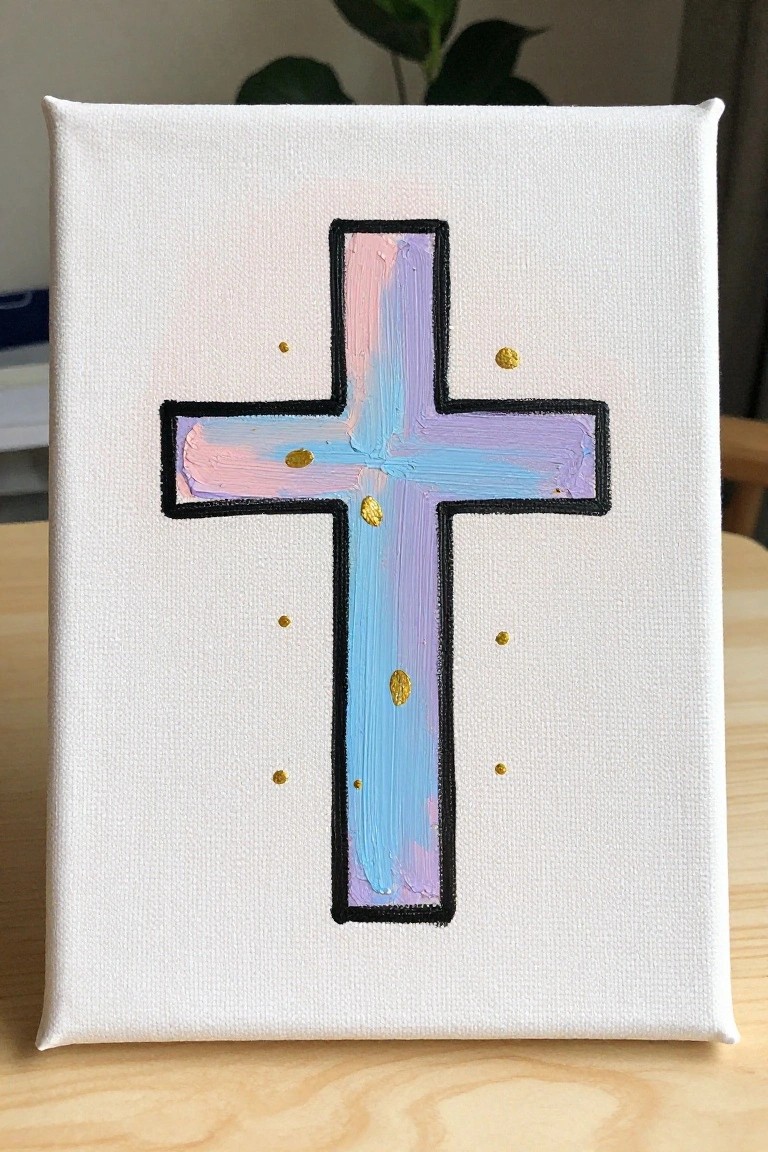
A centered cross filled with a smooth pink-to-purple-to-blue gradient gives the piece a soft, blended look while the thick black outline keeps the shape defined and easy to read from a distance. The white background leaves plenty of breathing room, and the small gold dots are spaced evenly to add subtle sparkle without crowding the design. This approach falls into the decorative cross category and works through simple color layering and minimal accents rather than complex details.
The composition does a lot of the work here because the cross stays large and central with open space around it. You can swap the pastel blend for any three colors you already have on hand or move the gold dots to different spots if you want a less symmetrical feel. This keeps the project quick for practice sessions and gives you a clean wall piece that fits prayer spaces without needing advanced brush control.
Central Cross with Layered Floral Surroundings

A cross placed in the middle of an abstract garden scene gives a clear focal point while letting bright flowers fill out the rest of the canvas. The idea works by keeping the cross dark and solid so it stands apart from loose brushstrokes of pink blooms on one side and yellow-green foliage on the other. This style fits the floral decorative category, where the cross sits naturally inside a lively field of color instead of appearing on its own.
What makes this idea useful is how the large color blocks and simple shapes let you build the scene quickly without tight detail work. The layout keeps the cross visible from a distance, which helps when the finished piece hangs in a prayer space or hallway. You could swap the pink and yellow for whatever colors already match your room or shrink the whole thing to a smaller board if you want something quick to try.
Polka Dot Cross Over a Two-Tone Background

A cross painted solid yellow and covered in loose red, green, and blue dots makes a simple decorative piece that stands out through color contrast. The background splits into a blue upper half and a yellow-green lower half with vertical stripes and scattered dots, creating separation that keeps the cross prominent. This approach works as decorative art because the bold shapes and limited color repeats make the composition easy to read from a distance.
What makes this idea useful is how the dot pattern lets you test color placement without needing precise lines. You could repeat the same layout on a smaller canvas for a desk piece or swap the stripes for a single wash if you want less texture. The outer gray border also gives the finished work a clean edge that works well for framing or pinning on a mood board.
Patterned Cross Using Concentric Borders and Diamonds
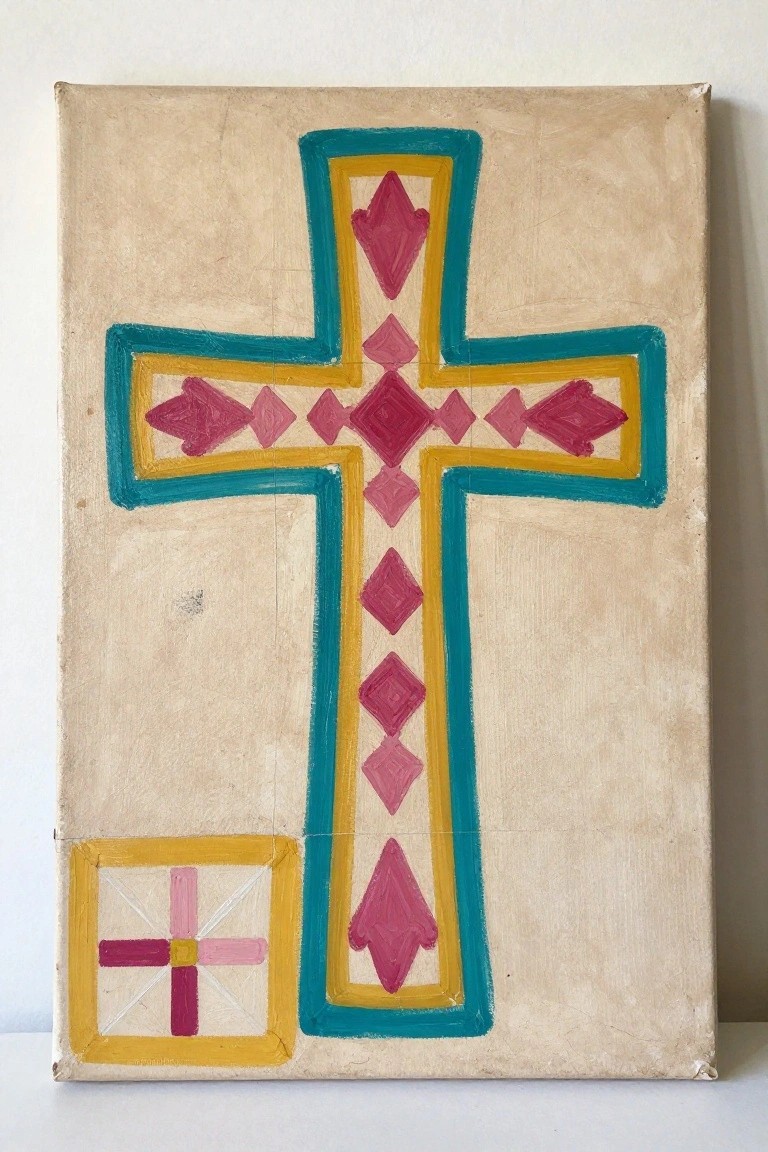
This painting idea builds a cross from stacked borders in teal and yellow that frame a vertical line of pink diamond shapes running through the center. The repeating diamonds create a simple rhythm that fills the space without requiring detailed drawing, while the layered borders keep the design structured and balanced. It belongs in the decorative art category because the effect comes from color blocking and shape repetition rather than shading or realism.
What makes this idea useful is how the border widths do most of the planning work, so you can focus on choosing just three or four colors. You can easily swap the diamond motif for circles or stripes or shrink the whole design onto a smaller canvas. For a prayer space, the bold outlines stay visible across a room, and the small cross tucked in the corner gives you an extra element to repeat or simplify on matching pieces.
Frequently Asked Questions
What materials are recommended for creating these colorful cross paintings? Acrylic paints work well for these projects because they provide bright, vibrant hues that dry quickly and adhere to various surfaces. Gather canvases or wooden boards, a set of brushes in different sizes, painter’s tape for clean lines, and optional items like glitter or metallic accents. Prepare a clean workspace with newspaper or a drop cloth to protect surfaces while you work.
How can beginners approach these painting ideas without feeling overwhelmed? Begin with straightforward designs such as a single bold cross in two complementary colors. Sketch the outline lightly with a pencil first, then fill in sections one at a time. Work on small practice pieces before tackling larger canvases, and allow yourself to layer colors gradually for depth without rushing the process.
Do certain colors hold special meaning in Christian art for crosses? Colors like gold often represent the glory of God and eternal life, while purple signifies royalty and penance. Blue can evoke peace and heaven, and green stands for renewal and growth through faith. Select shades that align with the mood you want to create in your prayer space to make the artwork more personally meaningful.
Where should I place these paintings to best enhance my prayer space? Position them at eye level on a wall near your kneeling area or altar so they become a focal point during reflection. Use natural light from a window or soft lamps to make the colors pop. Grouping several smaller pieces together creates a cohesive display that invites calm and inspiration without cluttering the room.
Can I adapt these ideas for different sizes or themes in my home? Yes, you can resize the cross motifs to fit any wall or shelf by using smaller frames or larger canvases. Add personal touches such as subtle scripture text or seasonal elements like leaves for spring to keep the art fresh and relevant to your faith journey over time.