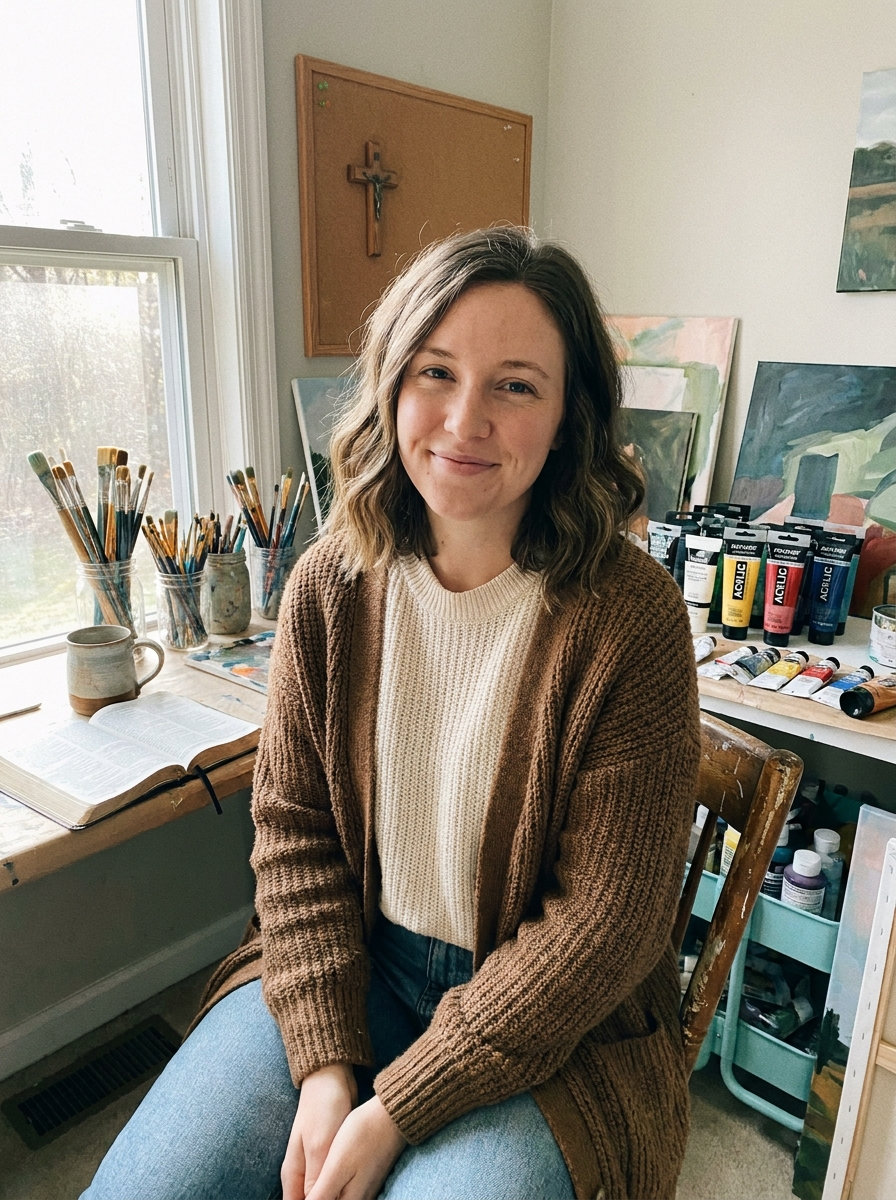
I have always enjoyed painting simple scenes that remind me of my faith.
Watercolor is easy to start with because it does not require many supplies.
I wanted to share some ideas that anyone can try even if they have never painted before.
These projects use basic shapes and soft colors to create meaningful pieces.
It feels good to make something that reflects what I believe in.
Wreath with Central Cross
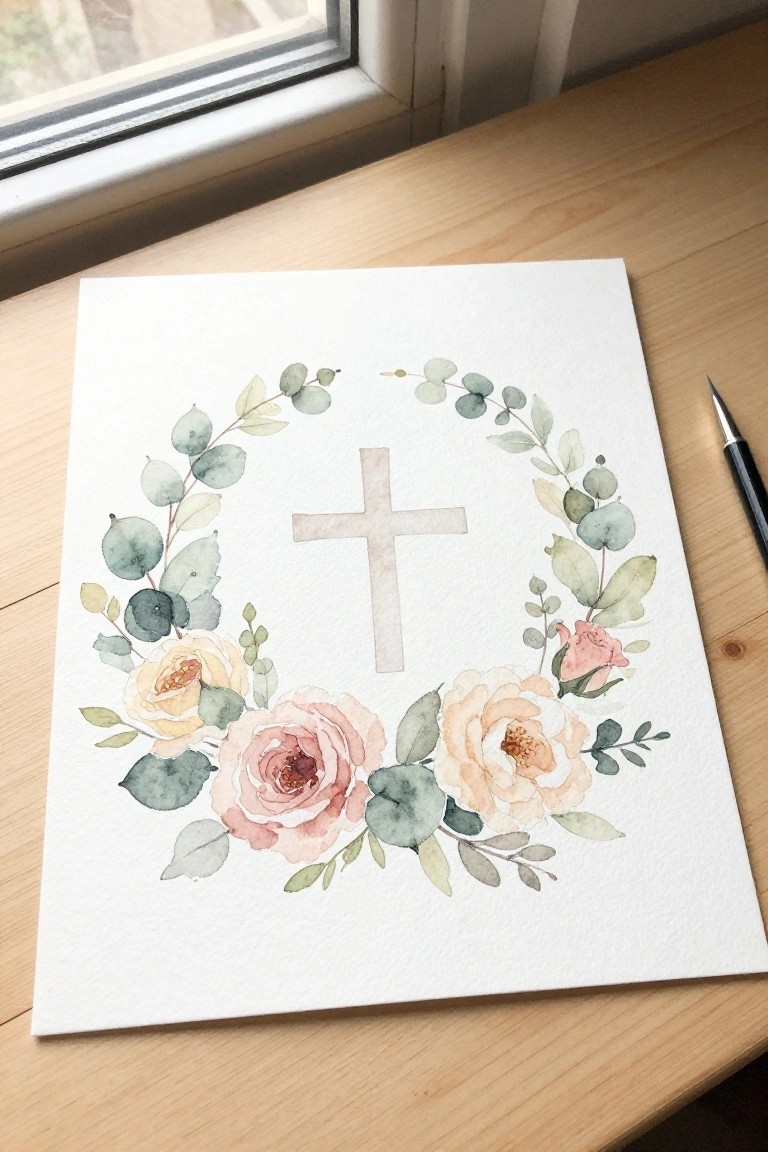
A circular arrangement of soft green leaves and pastel flowers creates a wreath that leaves space for a simple cross in the middle. The flowers sit mostly along the lower half while the leaves continue around the top, keeping the cross as the clear focal point. This setup works as decorative art that mixes a floral border with a single central element.
The composition does a lot of the work here by leaving the upper half lighter so the cross stands out without extra effort. You can swap the pink and peach tones for other colors to match different seasons or home styles. For practice, start with the circle and leaves first, then add just a few blooms at the bottom. This kind of piece also translates well to smaller sizes for cards or framed prints.
Dove Carrying an Olive Branch
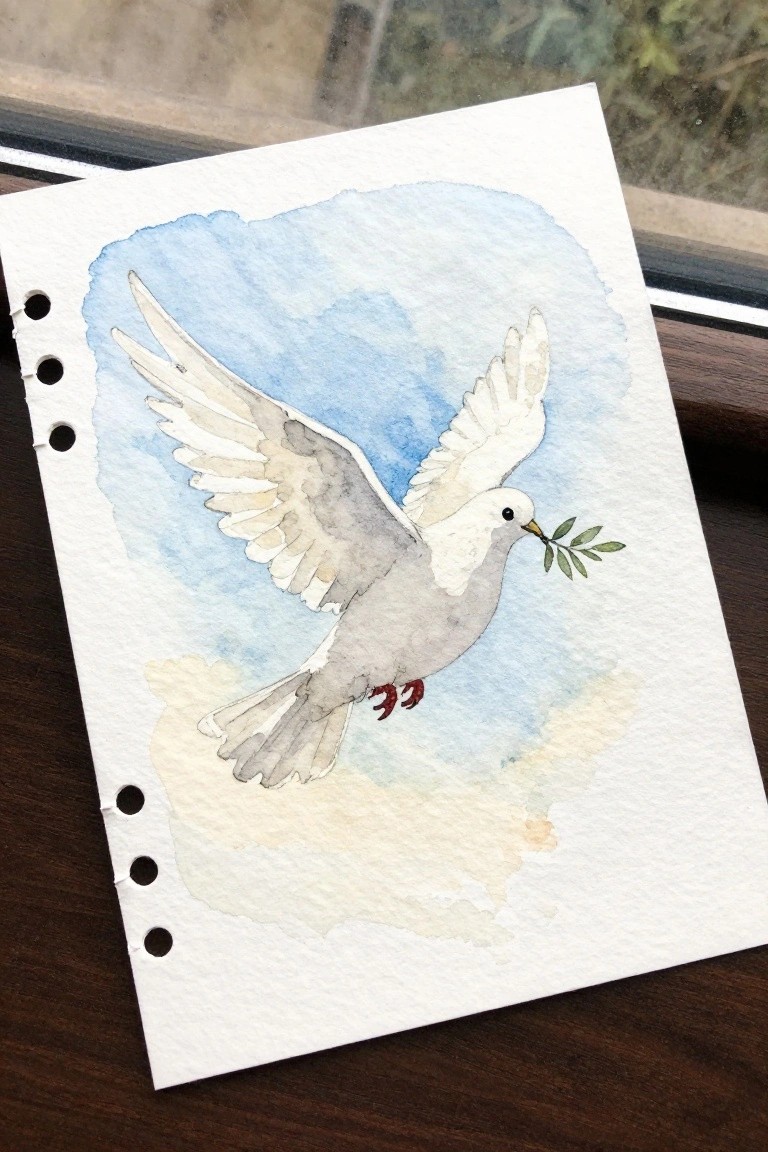
A flying dove with an olive branch in its beak serves as a clean animal subject that fits easily into a Christian-themed watercolor collection. The idea centers on a single bird placed at an angle with wings spread wide, using soft color washes behind it to separate the figure from the page without adding extra elements. This keeps the focus on the main shape and a few simple color blocks rather than scattered details.
The composition does a lot of the work here by letting the bird’s outline carry the interest while the background stays loose. The color palette makes this easy to adapt by changing the sky tones or shrinking the bird for smaller cards or journal pages. For practice, this kind of subject helps beginners work on basic wing shapes and light layering without needing precise realism.
Paint a Simple Fish with Gold Flecks
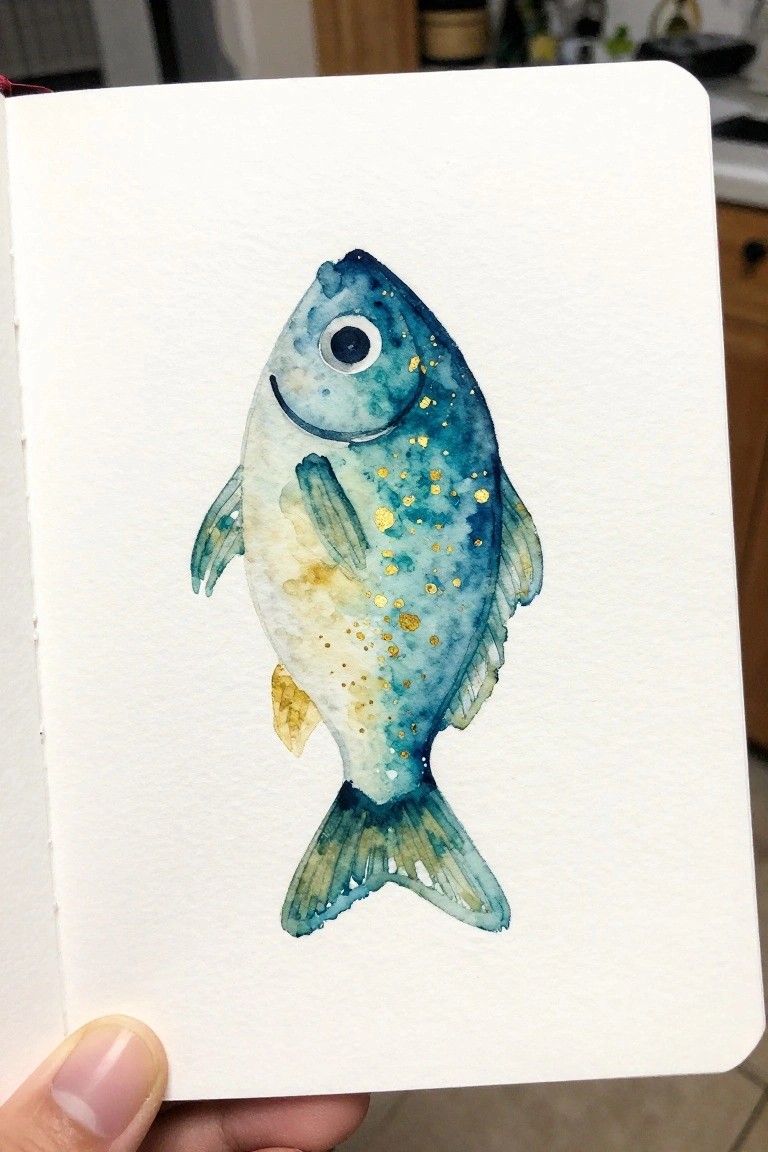
A single fish painted in loose watercolor layers offers a straightforward animal subject that works well for practicing color blending on a centered composition. The idea uses a blue to teal wash over most of the body with a lighter area left on the lower half, plus scattered gold dots that add texture without extra brushwork. This keeps the focus on basic shapes and wet-on-wet effects rather than fine details.
What makes this idea useful is how the oval body and fin outlines can be traced from a simple template if needed, then filled in with varying water-to-paint ratios. The gold flecks are easy to add last with a small brush or even a splatter technique, and the same layout scales down well for greeting cards or bookmarks. For wall pieces, the vertical fish shape fits nicely on a standard page without crowding.
Simple Nativity Watercolor with Loose Shapes
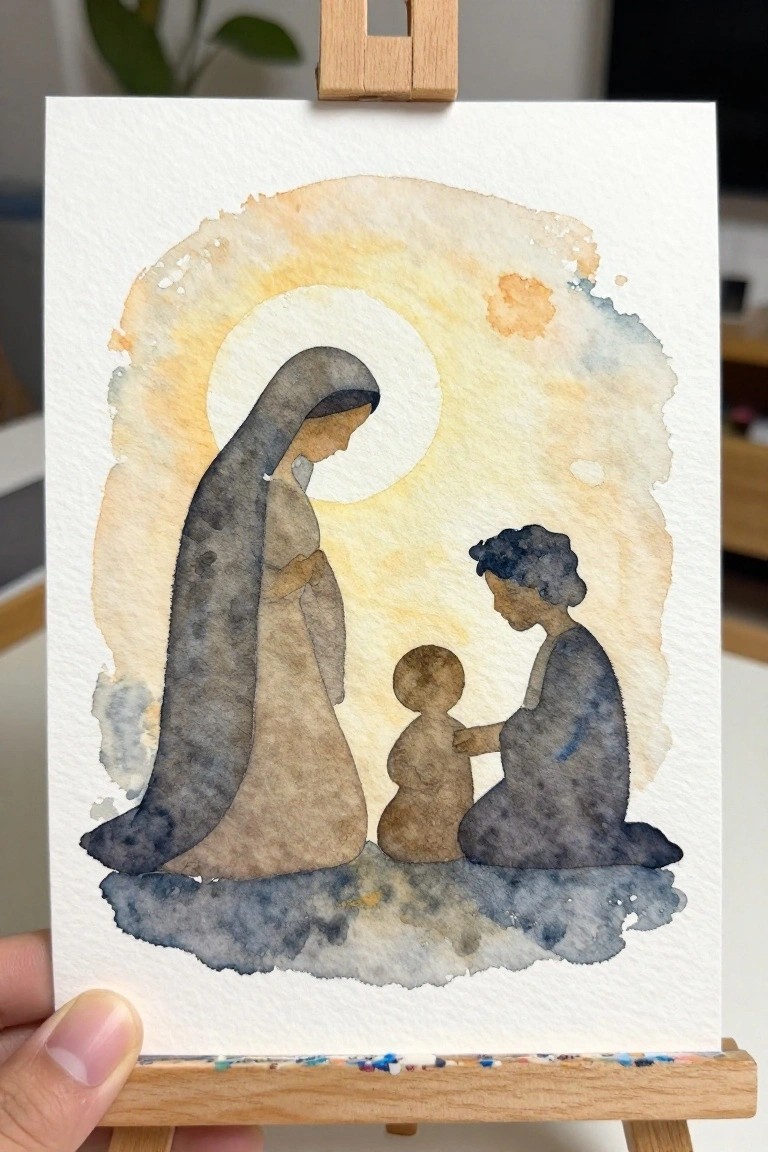
A nativity scene painted with broad watercolor shapes keeps the focus on the three figures arranged around the baby. The mother stands on one side while the father kneels on the other, both formed from connected dark washes that create clear silhouettes against a lighter background. A single circular light area behind the standing figure and a wide wash of warm color across the top give the composition its main structure without requiring detailed features.
What makes this idea useful is how the large background wash handles most of the visual weight so the figures only need simple shapes and value changes. The same layout can be painted smaller for cards or enlarged for wall pieces while keeping the same loose approach. For practice this subject helps with grouping figures and controlling wet-on-wet edges before adding any small details like hands or hair.
Lamb Portrait in Soft Watercolor
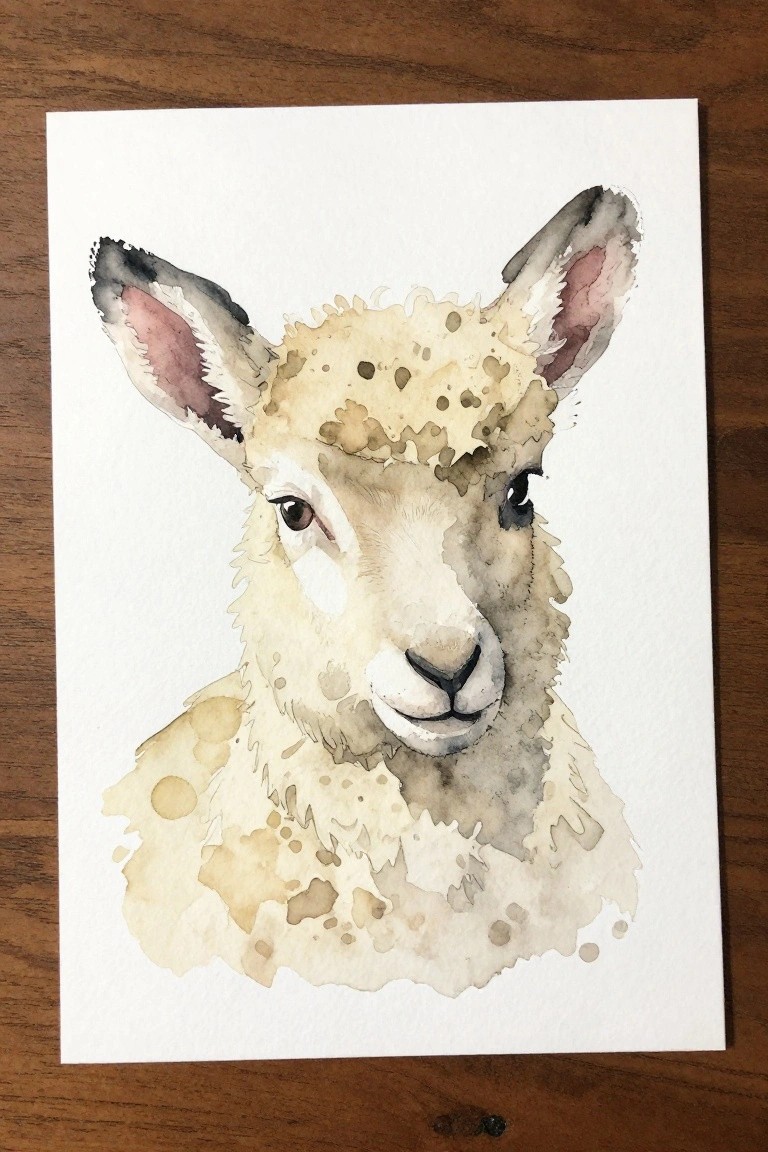
A lamb portrait works as a centered animal study built around the face and ears as the main shapes. The idea relies on soft color washes to form the head, with scattered darker spots and light areas to suggest wool texture rather than individual strands. This approach keeps the focus on the muzzle and eyes while the ears add balance on either side.
What makes this idea useful is that the large rounded forms give beginners clear areas to practice blending and lifting color. You can scale it down for cards or keep it the same size for a small frame, and the limited palette of beige, brown, and a touch of pink makes it easy to match with other pieces. The same structure works if you swap the lamb for a different animal or simplify the spots further for quicker versions.
Hilltop Church Landscape
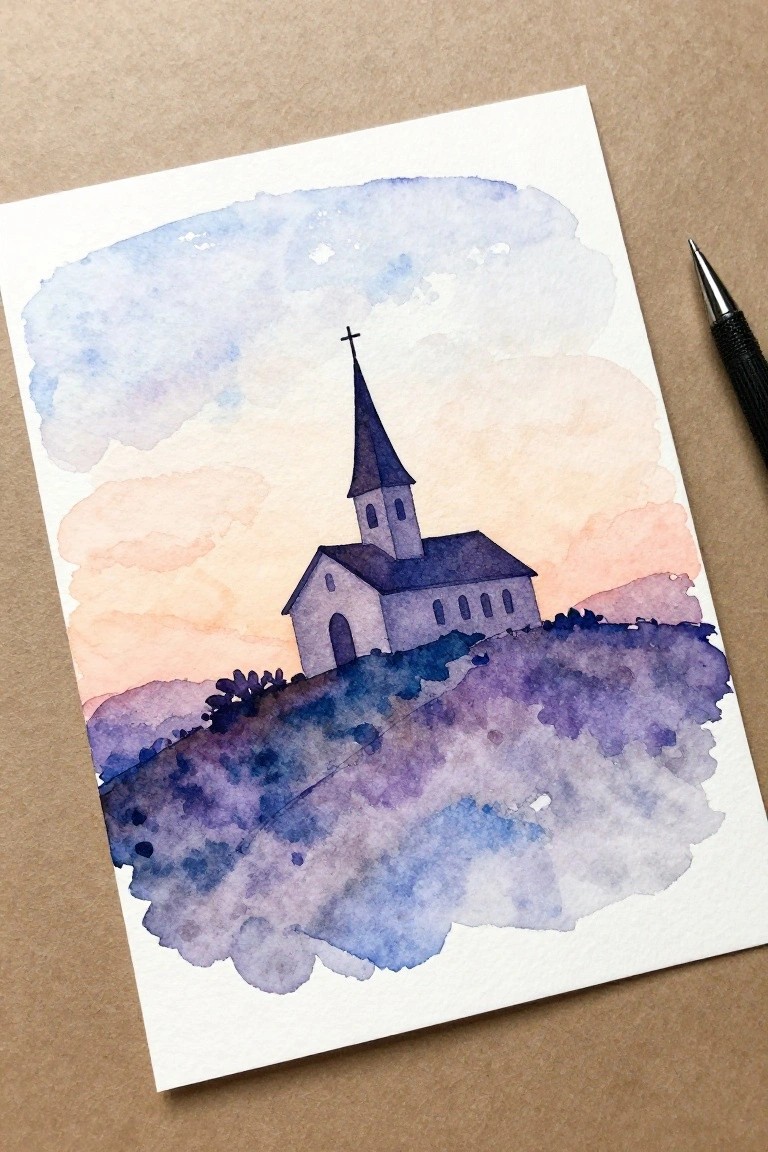
A simple church with a tall steeple and cross placed on a low hill works well as a landscape painting idea. The building sits slightly off center against a soft sky that shifts from warm peach to pale blue. Loose color washes in the foreground hills create depth while keeping the shapes easy to paint.
The composition does a lot of the work here by letting the steeple act as the clear focal point. You can swap the sky colors for different times of day or reduce the hills to two broad layers if you want less detail. This subject stays approachable for practice because the main forms stay basic yet still read clearly as a finished piece. For wall art, the same layout works at different sizes without losing impact.
Watercolor Crown of Thorns
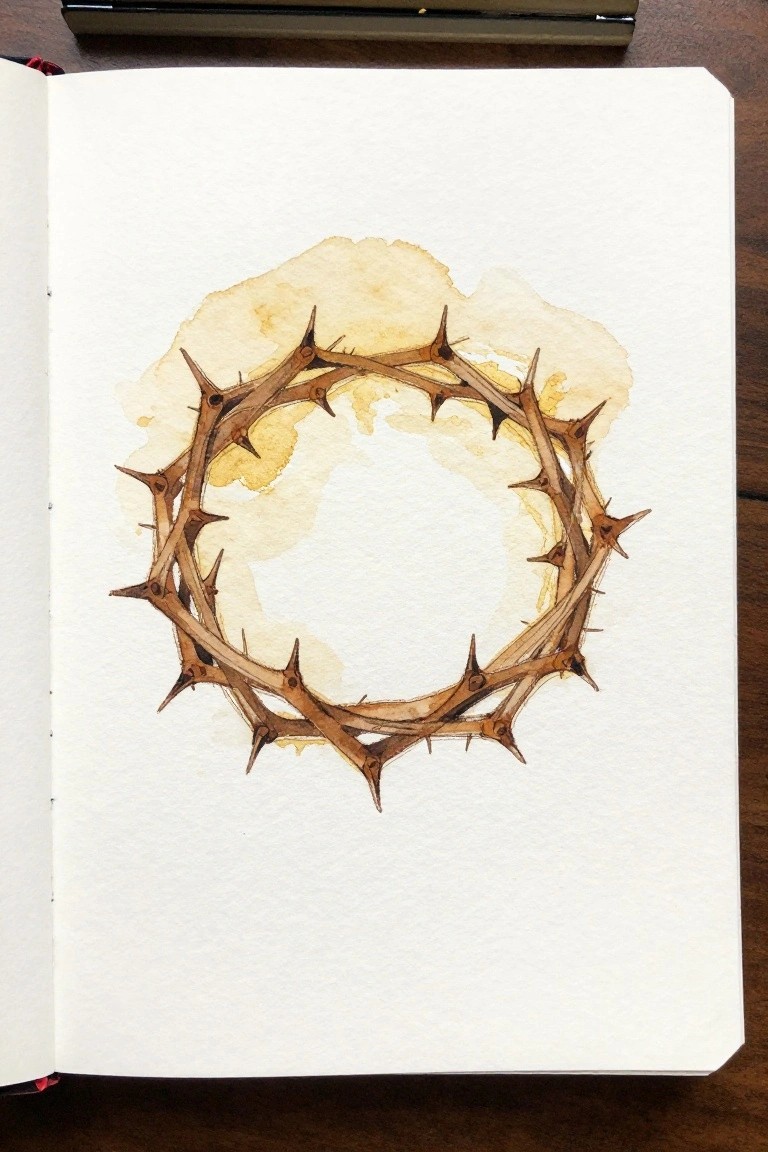
A crown of thorns forms a clean circular subject that works well for Christian watercolor pieces. The repeated pointed shapes create built-in rhythm across the page while the open center keeps the composition balanced. Earthy browns with a light yellow wash behind them give the whole thing a simple, grounded look without extra layers.
What makes this idea useful is how the single ring shape fills the page without needing background elements or complex details. You can scale it down for cards or keep it large for wall pieces, and swapping the browns for cooler tones changes the mood quickly. For practice, the subject helps with brush control on curves and spikes while staying easy to finish in one session. This type of motif also performs well on Pinterest when paired with other minimal faith-based sketches.
Anchor with Climbing Vines
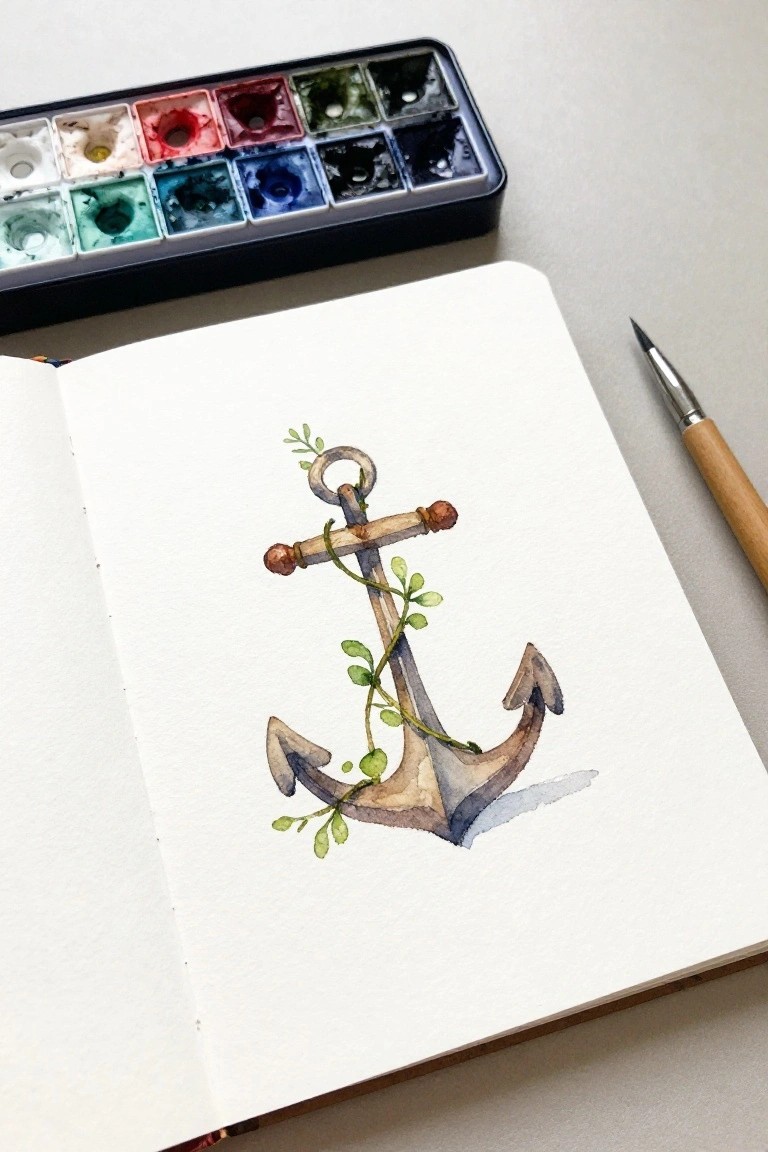
An anchor forms the core of this painting idea, with thin green vines wrapped around the shaft and flukes to add organic lines. The approach works as decorative art by balancing the solid anchor shape against the lighter plant details. A muted mix of browns and grays for the anchor keeps the greens from competing, while the slight shadow under the base gives the whole piece a grounded feel.
What makes this idea useful is how the anchor outline gives beginners a clear starting point before they add the smaller vine elements. The color palette makes this easy to adapt by changing the vine shades or simplifying the leaves to basic dots and strokes. For practice, this kind of subject helps with both controlled edges on the anchor and looser work on the greenery. The same layout scales well for cards or small prints without needing extra elements.
Soft Gradient Angel with Scattered Accents
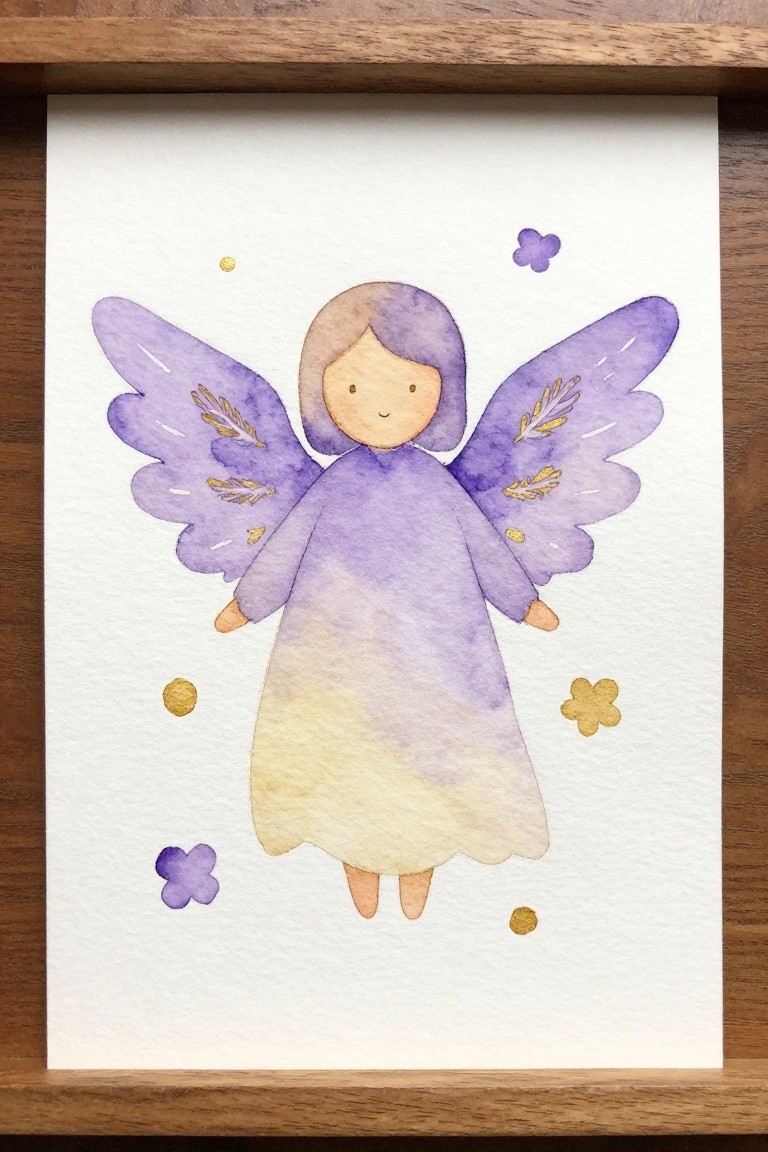
A simple angel figure with broad wings and a long dress forms the core of this painting idea. The design relies on a centered subject, soft color blending from purple down into warmer tones, and minimal added shapes like dots and small clusters to balance the space. This approach fits a decorative style that stays light on detail while using the wings and dress shape to hold the composition together.
The composition does a lot of the work here by leaving plenty of white space around the figure so nothing feels crowded. You can swap the small accents for stars or leaves, change the dress colors to match a season, or shrink the whole thing for cards without losing the balance. A painting like this works especially well for quick practice pieces or small gifts since the main shapes are easy to repeat and the background stays plain.
Loaves and Fishes Still Life
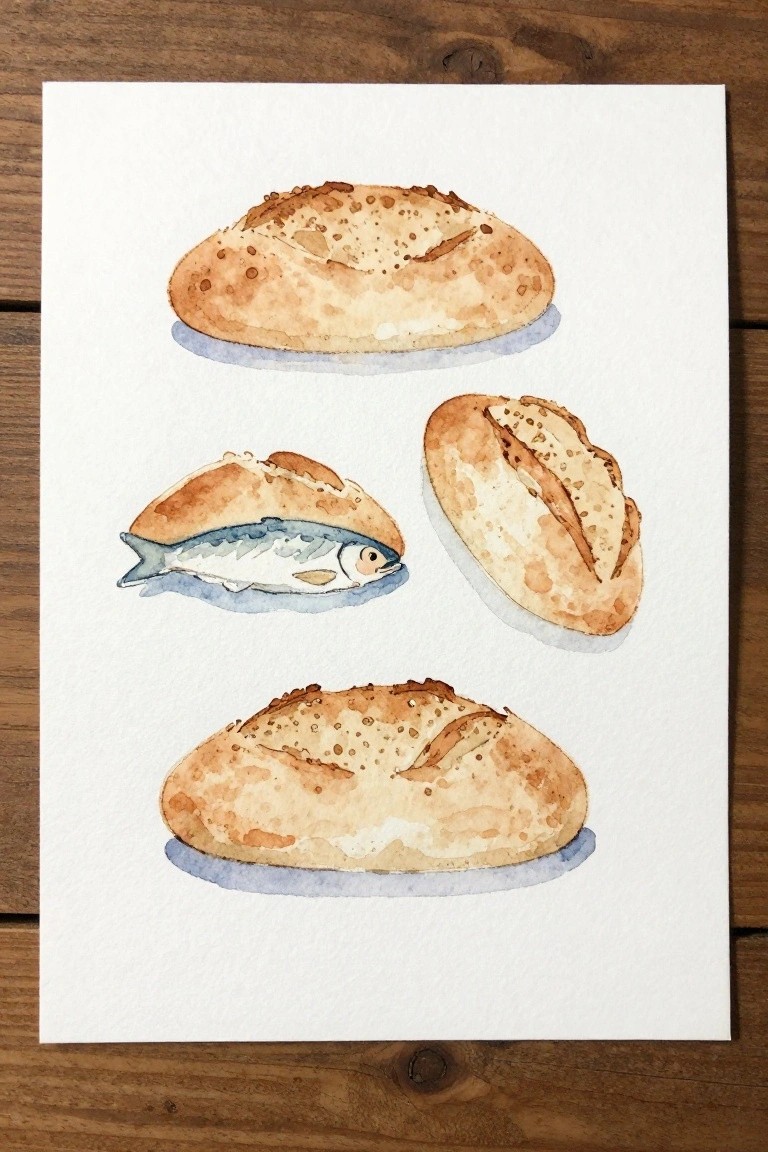
A loaves and fishes still life captures the biblical account of Jesus feeding the crowd through a simple arrangement of bread and one fish. The idea works as a food-based composition where the rounded shapes of the loaves sit at different angles and the fish adds a single contrasting form. Soft brown washes on the bread paired with cooler tones on the fish keep the focus on the objects while the light blue shadows underneath tie the scattered pieces together on the page.
What makes this idea useful is how the well-known Christian symbol turns an ordinary food study into a clear faith reference without extra details. You can easily drop it to two loaves and one fish or change the bread colors to whatever browns and tans you already have. The loose placement leaves room to adjust spacing or scale the whole thing smaller for cards or journal pages, and the recognizable subject helps it perform better on Pinterest than a plain bread sketch.
Lake Landscape with Overlaid Quote
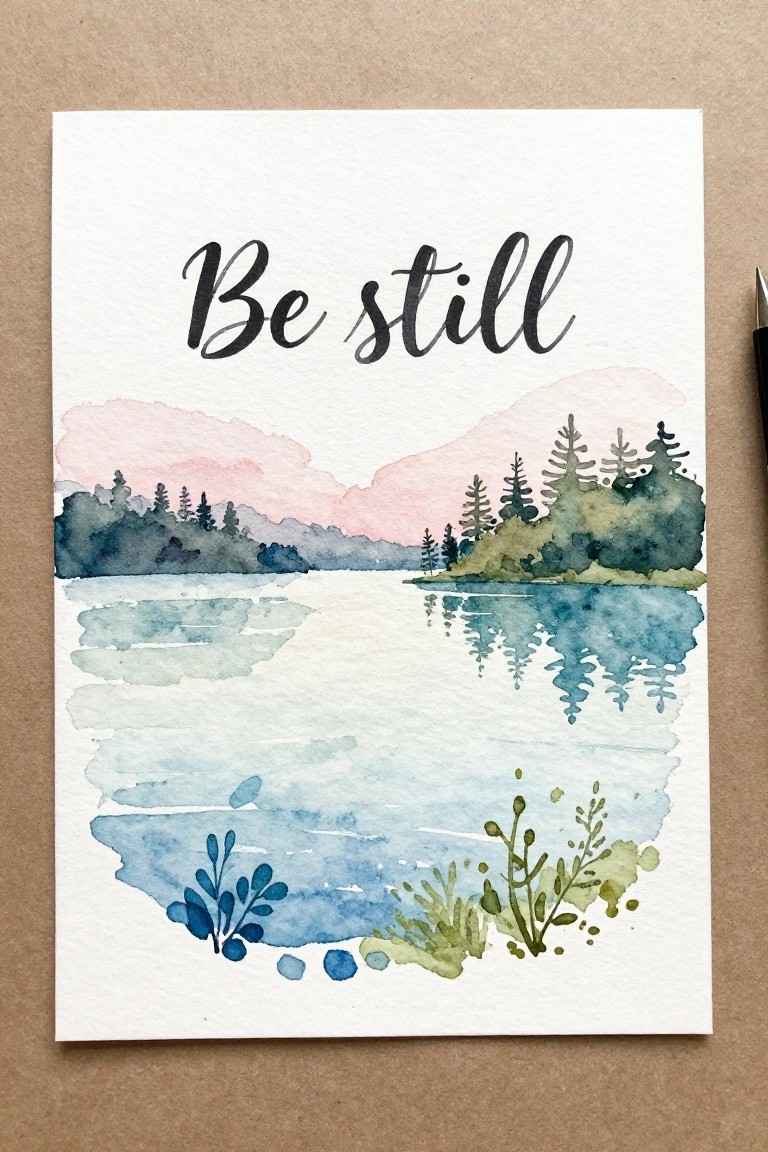
A landscape idea that layers a calm lake and distant trees under a short phrase gives you a complete piece without needing complex details. The horizontal water area anchors the scene while the soft color blocks for trees and sky create depth with minimal brushwork. This approach sits in the landscape category but adds text as a simple decorative element to turn the painting into a ready-to-hang reminder.
The composition does a lot of the work here because the text sits in the open space above the horizon and leaves the reflection area untouched. You can swap the phrase for any short verse or keep the same layout but shift the color palette to cooler tones or warmer greens depending on the season. For practice this subject works well because the reflections can be painted with quick downward strokes rather than precise lines, and the overall size stays easy to finish on a single sheet of paper.
Shepherd Staff Leaning Against a Rock
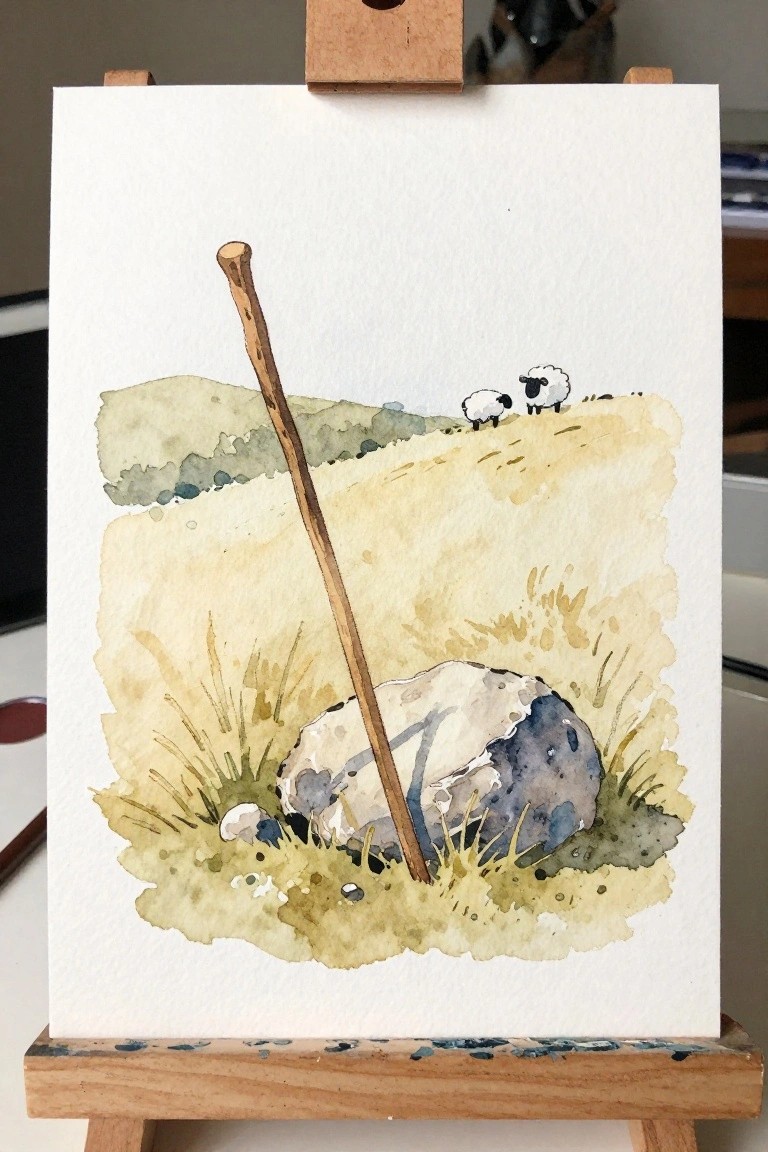
A painting idea built around a shepherd’s staff resting against a rock in an open field with a few sheep on a distant hill creates a simple pastoral scene. The staff acts as the main vertical element that leads the eye through the composition, while the rock and grass layers build a grounded foreground. This approach fits into landscape painting with a light Christian symbol, using soft washes and minimal detail to keep the focus on the objects rather than a busy background.
What makes this idea useful is the clear focal point created by the staff and rock, which lets you practice basic shapes and light washes without needing many elements. You can swap the sheep for a single figure or change the hill colors to match a different time of day. The loose treatment of the grass and sky makes it easy to adapt for smaller paper sizes or to add a short verse in the corner if you want a more direct faith reference. For practice, this kind of subject helps test how much empty space still holds a scene together.
A Growing Seedling
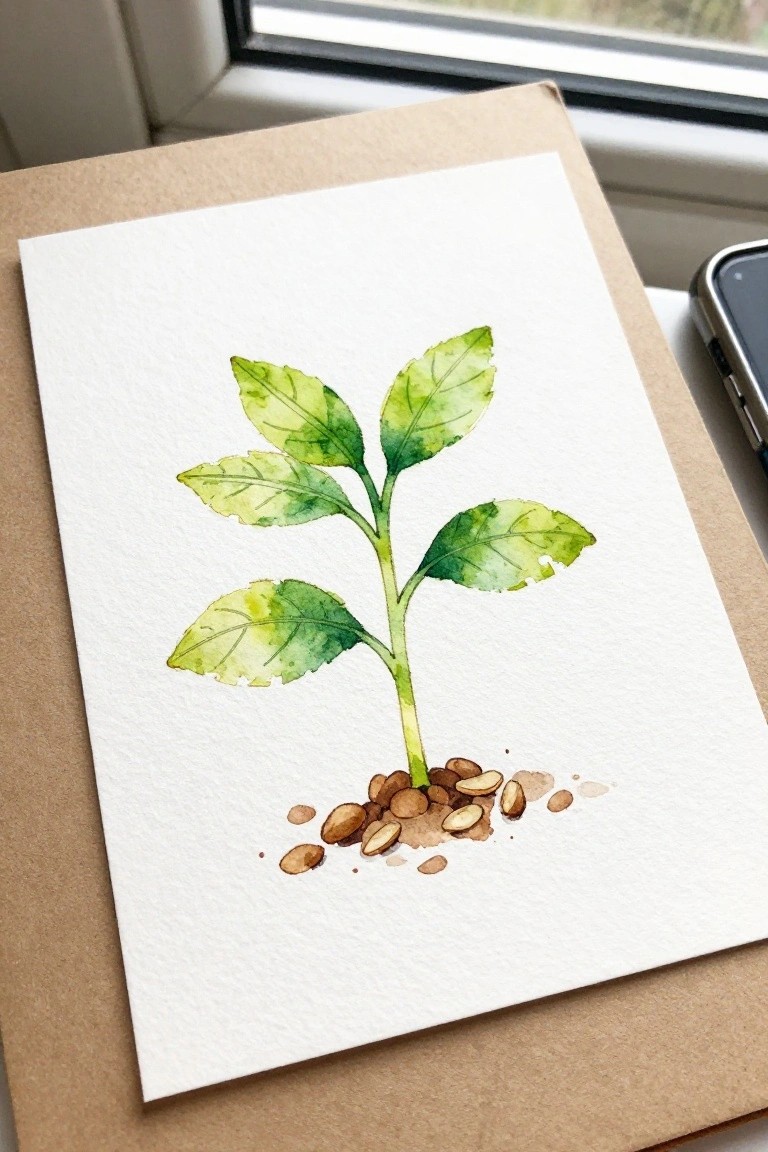
A sprouting plant with layered green leaves rising from a small mound of soil and scattered seeds forms the core of this painting idea. The subject is a simple botanical study that uses a vertical stem and clustered foliage to create natural balance against the loose seeds at the base. This type of still life works as a clean growth motif that stays easy to paint without needing complex details or backgrounds.
What makes this idea useful is how the central placement lets the leaves and seeds carry the composition without extra elements. You can shift the leaf colors toward deeper greens or add a few more seeds around the edges to change the scale for a card or journal page. The simple shapes help this feel more approachable for practice while still looking intentional enough to share as a finished piece.
Stacked Watercolor Heart Pairs for Faith Hope and Love
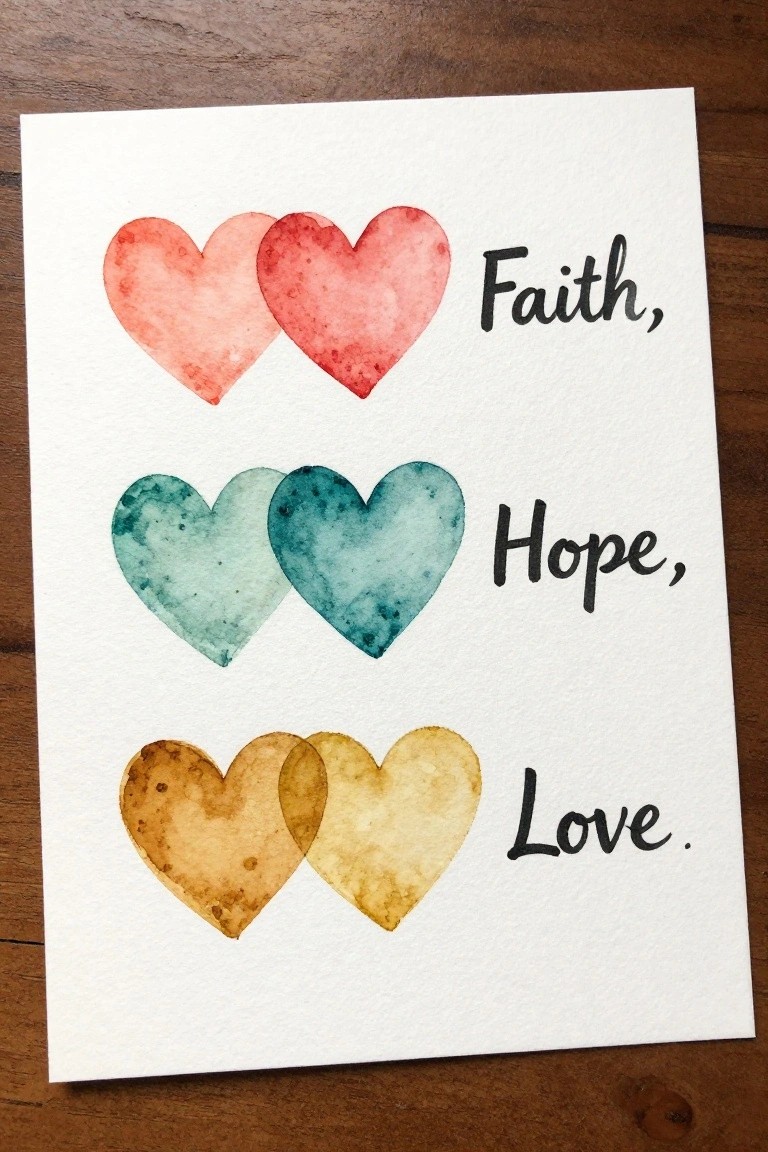
Pair two overlapping hearts in a single color family and line them up beside one of the words faith, hope, or love. Stack the same format in three rows so each pair uses its own color group while the text stays aligned on the right. The vertical layout and consistent spacing let the hearts carry the visual weight without extra elements.
What makes this idea useful is the built-in repetition that works on a card, small canvas, or journal page. You can change the color families to fit different seasons or rooms while keeping the same three-row structure. The basic heart shapes make it simple to adjust size or swap in other short words if the original text does not fit your project.
Driftwood Cross on the Beach
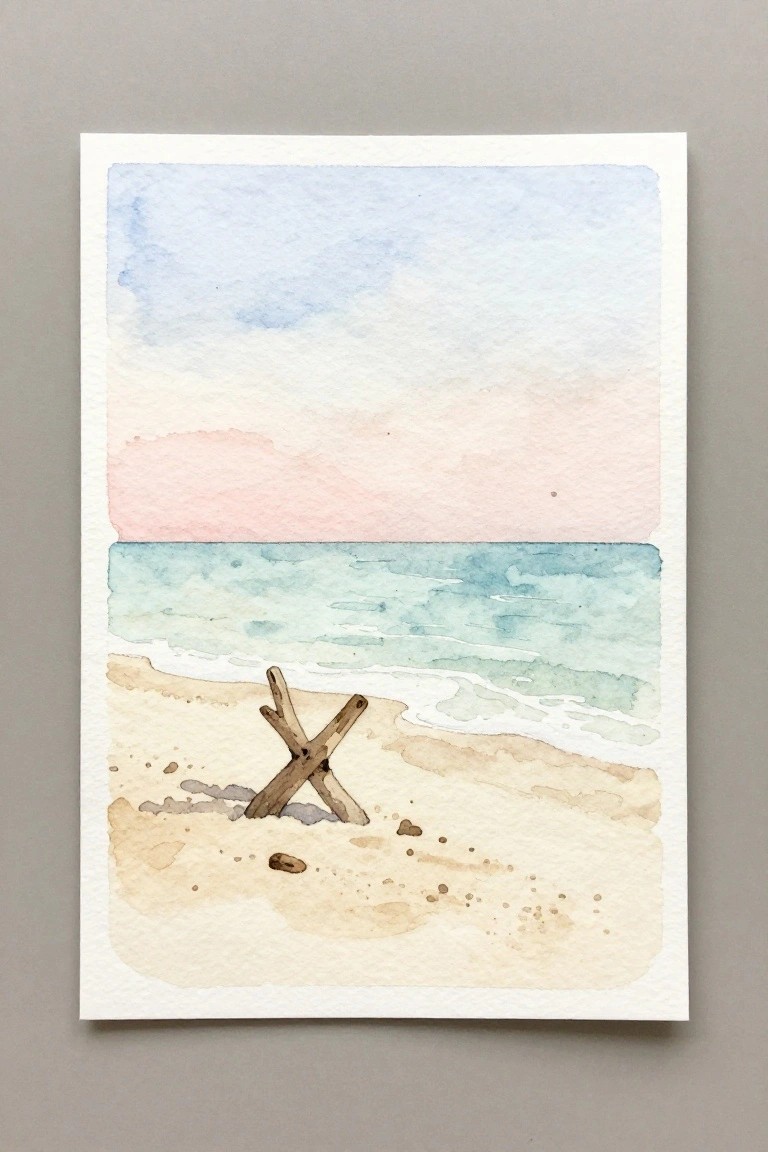
A cross formed by two crossed pieces of driftwood placed on the sand gives this landscape its main focus. The idea uses a simple layout with the sky above, a strip of water in the middle, and the beach filling the bottom third, so the cross sits clearly in the foreground. Soft horizontal washes handle the sky and water while the sand stays light with only a few small marks for texture.
What makes this idea useful is how the cross becomes the clear subject without needing extra details around it. You can swap the sky colors for sunrise or sunset tones or make the water deeper blue depending on the paints you have. The open space on the sand also leaves room to add or remove small rocks or footprints if you want to change the scene. For wall art this keeps the piece calm and easy to frame, and the same layout works at postcard size for gifts.
Bordered Cross Over Blended Watercolor Hues
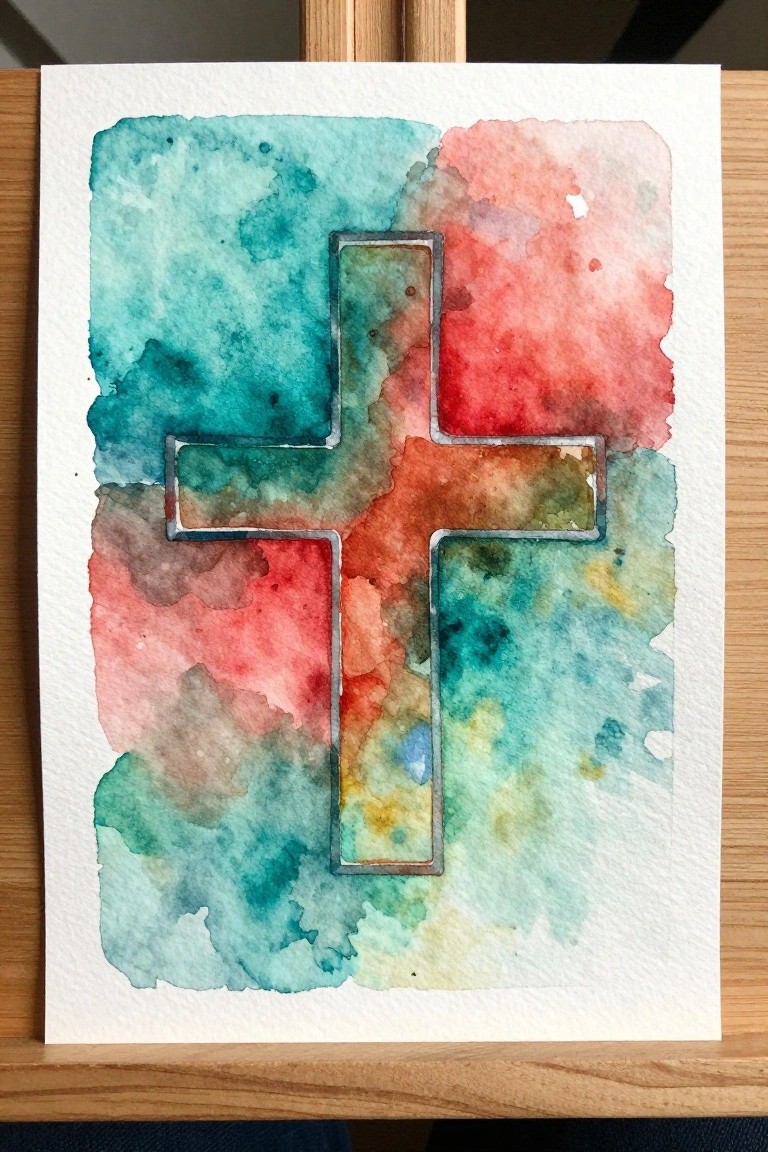
A cross with a simple metallic-style border creates the main subject here by sitting directly over an abstract wash of teal, red, orange, and green. The background stays loose with overlapping color areas that let the cross shape read clearly without extra lines or details. This setup works as decorative Christian art because the strong central form contrasts with the soft, uneven color fields behind it.
What makes this idea useful is how the background can be finished in a few quick wet-on-wet layers while the cross supplies the structure. You could change the border to a darker shade or leave it as a plain outline to adjust the look for different rooms. The color mix also makes it easy to adapt by swapping in seasonal tones or shrinking the whole piece for cards. For practice, this kind of subject keeps the focus on shape and color balance instead of fine details.
Kneeling Prayer Silhouette with Soft Glow
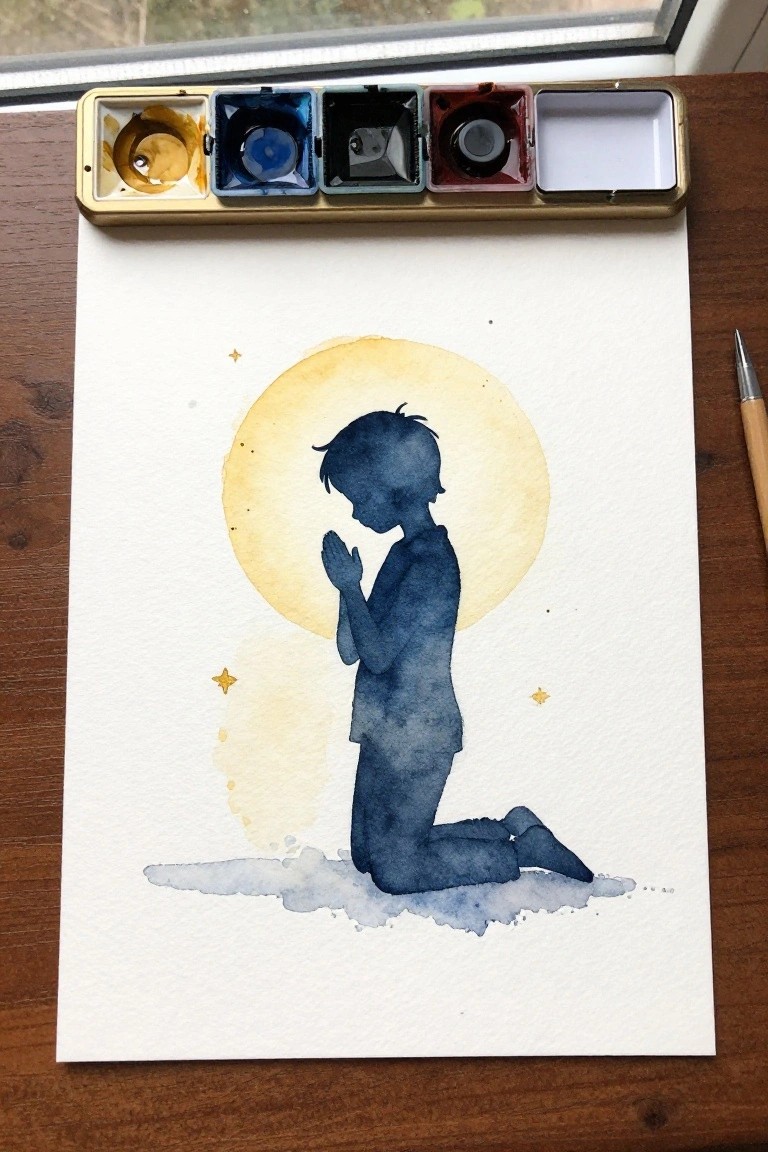
A simple kneeling figure in prayer works well as a single focal point when placed in front of a large soft circle. The dark silhouette against the pale wash creates clear contrast, while the small star shapes keep the overall layout balanced without adding extra elements. This approach fits into basic figure-based Christian art that uses shape and limited color rather than detailed rendering.
The composition does a lot of the work here by letting the circle handle most of the background so the figure stays easy to paint. You can swap the glow color or scale the stars down for smaller cards or bookmarks. For practice this idea helps with even washes and simple edge control, and the same layout adapts quickly if you want to try different paper sizes or add a thin border later.
Frequently Asked Questions
What basic supplies will I need to try these Christian watercolor ideas as a beginner?
You can start with a small set of watercolor paints in primary colors, a few round brushes in sizes 2, 6, and 10, cold press watercolor paper, a pencil for light sketches, an eraser, a water cup, and paper towels. Many of the 17 ideas use simple shapes like crosses, doves, or hearts, so these basics let you paint without buying extra tools.
How do I paint these ideas if I cannot draw well?
Focus on loose shapes and symbols rather than detailed figures. For example, use a circle for the world in a creation scene or simple lines for a cross. Trace a light outline first if needed, then fill with soft washes of color. The ideas are designed for first timers, so they rely more on color and placement than perfect lines.
What should I do if my watercolor paints bleed together on the paper?
Work on dry paper for sharper edges or let one layer dry fully before adding the next. Use less water on your brush for control, especially when painting words like faith or hope. If colors run, blot gently with a paper towel and let it dry before touching up with a smaller brush.
How can I use these finished paintings in my daily life?
Frame small pieces for a prayer corner, use them as bookmarks in your Bible, or glue them onto cards to share with friends. Some ideas like a simple fish symbol or olive branch work well on journal covers. Keep them visible to remind you of scripture throughout the day.
Where can I find reference images or verses to match the 18 ideas?
Search free sites for public domain Christian symbols or open a Bible app and pick short verses like John 3:16. Pair each idea with a verse that fits the theme, such as a lamb for Psalm 23. This keeps the project personal and meaningful without needing advanced art skills.