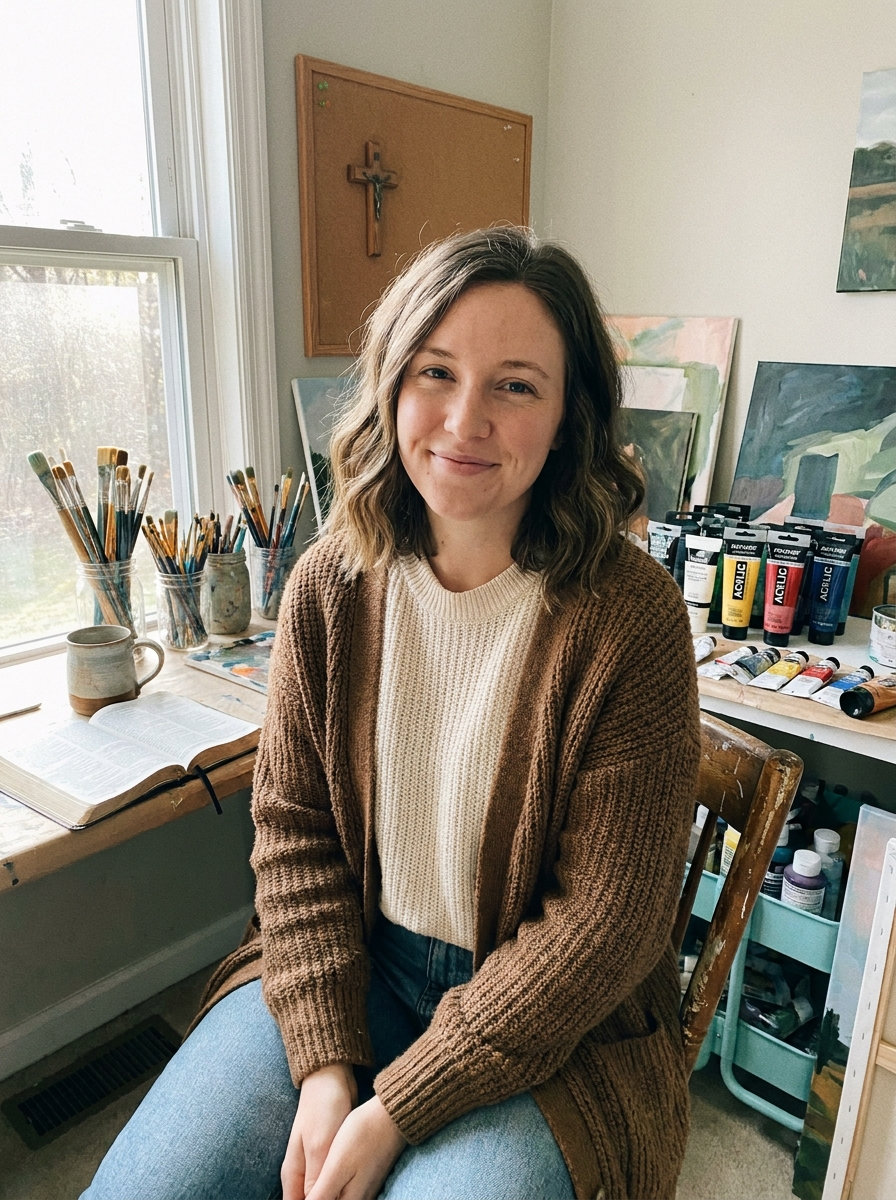
I like painting scenes of Jesus in watercolor because the colors stay soft and the whole thing feels quiet.
These kinds of paintings often use gentle shades that do not push too hard yet still show a sense of faith.
In my own work I try to keep the same light touch instead of adding strong details or dark lines.
I came across several examples that matched this simple approach and thought they were worth sharing.
They remind me why I keep coming back to watercolor for subjects like this.
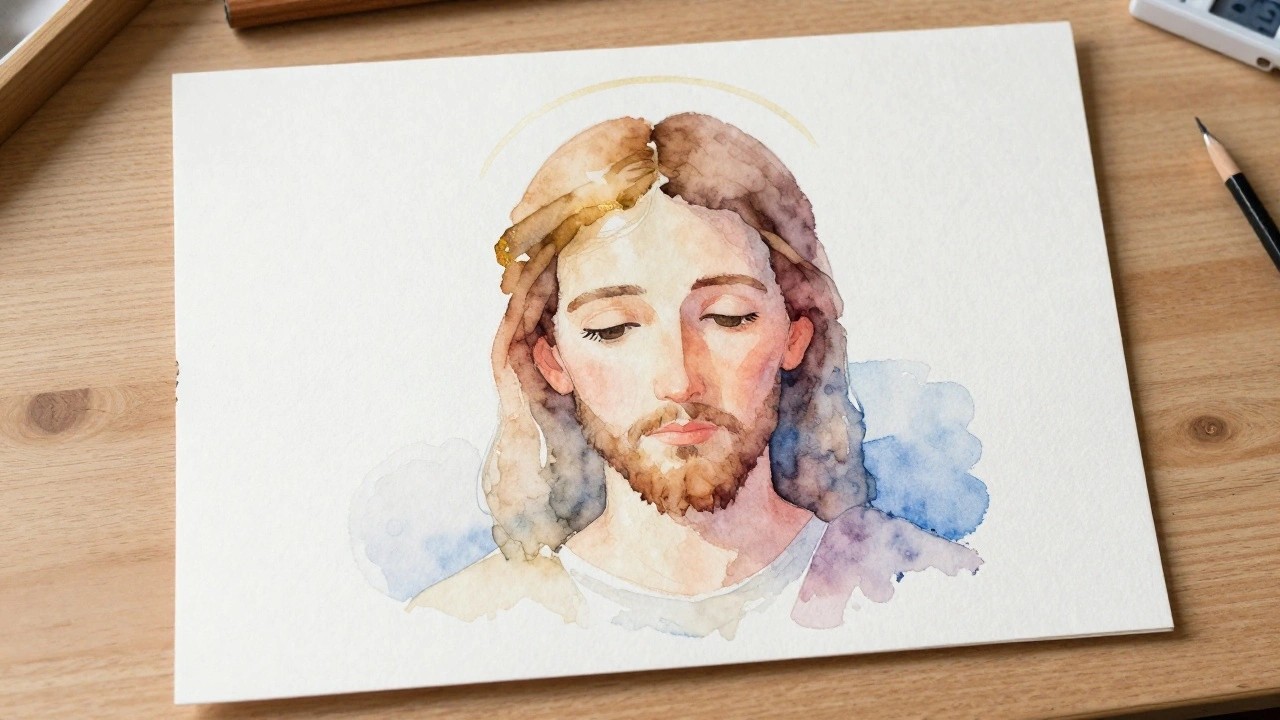
Jesus Portrait with Centered Face and Simple Halo

A centered portrait of Jesus makes a strong painting idea because the face fills most of the space and the hair creates natural framing around it. The light halo sits directly above without extra decoration, while the blue washes at the sides add contrast and keep the background from feeling empty. This approach fits a straightforward religious portrait category that relies on soft color blending and minimal extra elements.
The composition does a lot of the work here by placing the subject large and centered so the focus stays on the facial features rather than background details. The neutral tones make it easy to adjust with any skin or hair colors you already have, or to simplify the hair into fewer washes if you want a quicker version. For wall pieces or gifts this kind of portrait works well because the halo gives instant recognition while the loose style keeps it practical to paint.
Jesus Kneeling Beside a Lamb in Soft Greens
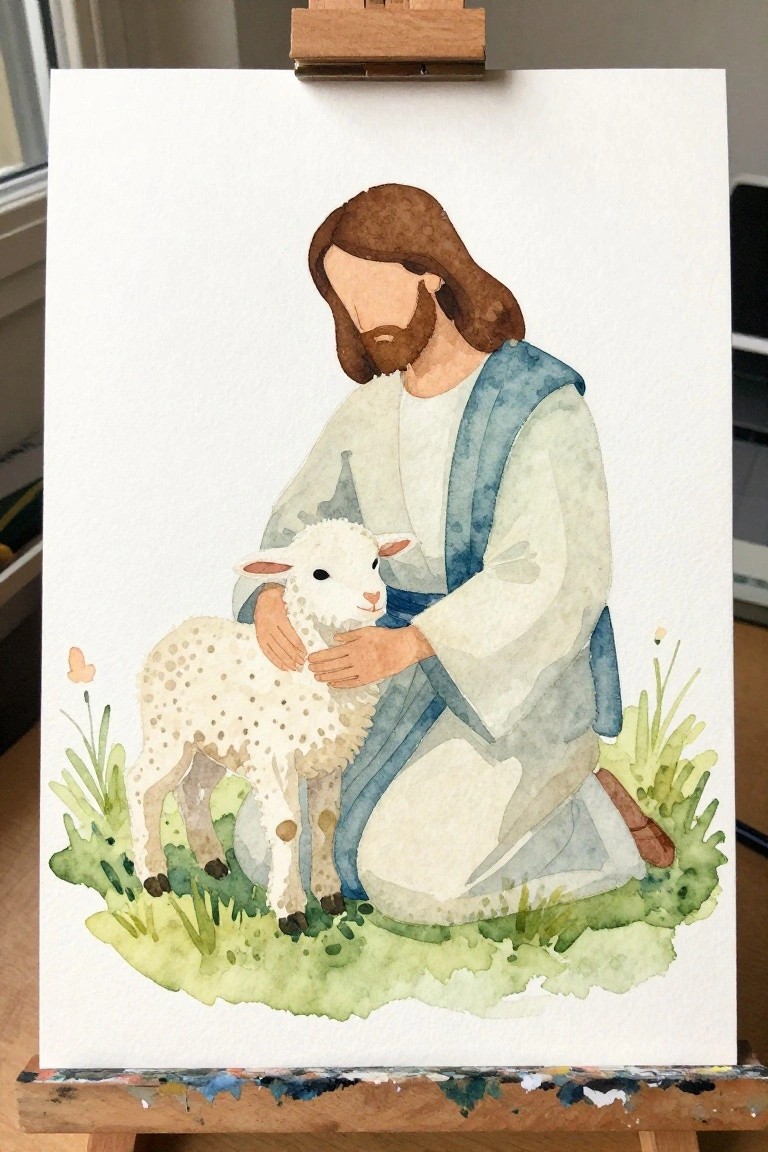
A painting idea like this pairs a central human figure with a young animal placed directly in front on a patch of grass. The hands rest on the lamb to create a clear focal point while the surrounding foliage stays loose and minimal. Light washes in blue and green keep the overall layout balanced and easy to read from a distance.
What makes this idea useful is how the main shapes can be blocked in first with a simple sketch before adding color. You can shrink the grass area for a smaller canvas or swap the butterfly for other small accents without changing the core setup. For practice this works well because the figure and animal give you clear edges to follow while still leaving room to adjust tones or background density.
Jesus by the Shore at Sunrise
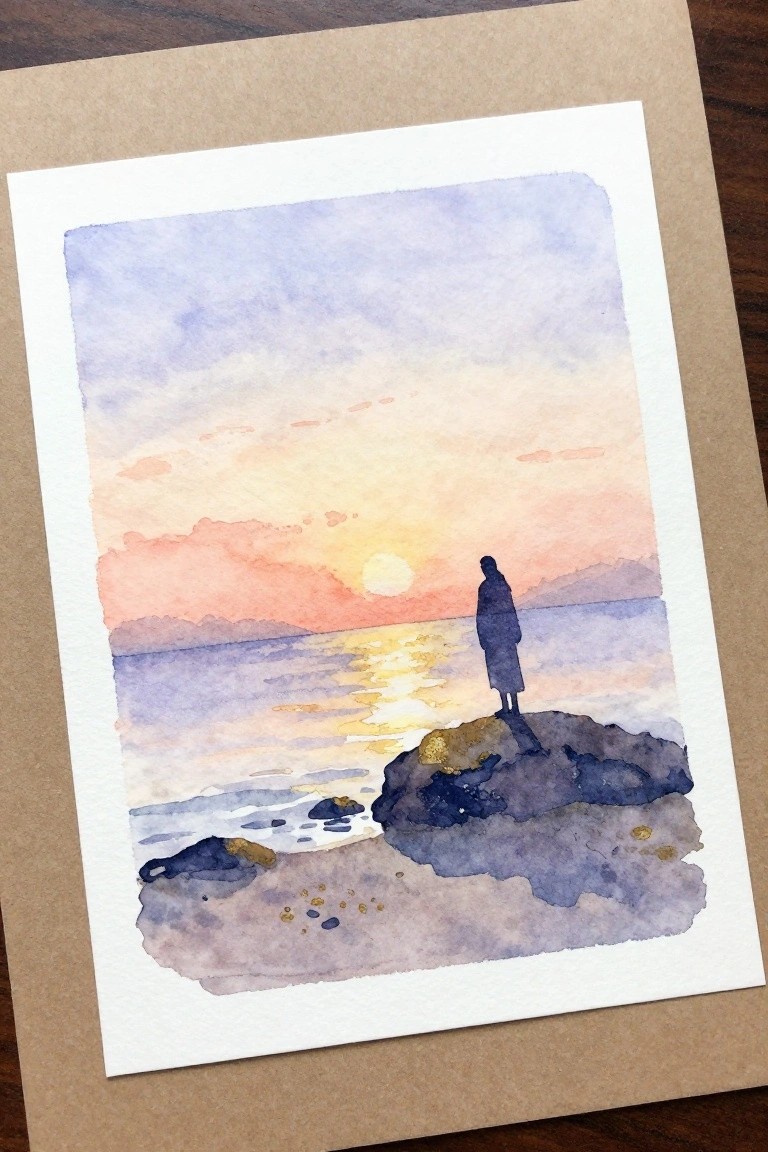
A lone robed figure placed on a rocky outcrop next to the water forms the core of this landscape idea, with the low sun creating a strong horizontal reflection that leads the eye across the scene. The sky moves through a simple gradient of cool blue into warm peach and orange, while the water and distant hills stay soft and low in detail so the figure remains the clear focal point. This approach works as a quiet spiritual landscape that keeps the composition open and balanced rather than crowded.
What makes this idea useful is the way large washes handle the sky and water, leaving only the rocks and figure to add shape. You can shift the sun lower or higher to change the time of day, or reduce the number of rock shapes if you want a faster version. For wall pieces the wide horizon and single figure keep the painting easy to adapt to different paper sizes without losing impact.
Jesus with a Child and Woman Under a Tree
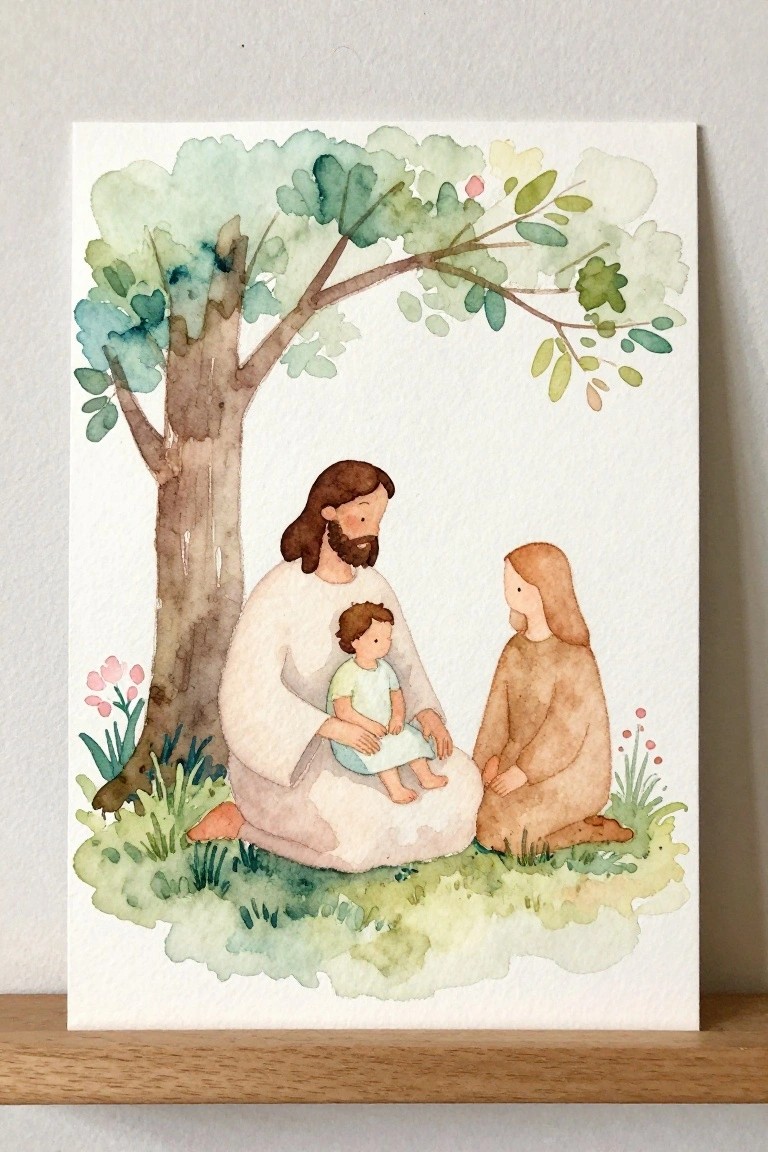
A family scene with Jesus seated outdoors forms the main idea, showing him with a small child on his lap and a woman sitting close by. This type of painting idea combines a religious subject with simple landscape elements like a tree and grass. The triangular placement of the figures under the branches keeps the focus centered while the soft washes of green and brown hold the composition together without extra detail.
The composition does a lot of the work here by using the tree shape to frame the group naturally. A painting like this works especially well for wall pieces or small prints because the subject stays clear even at modest sizes. You could adapt it by cropping the tree or changing the grass tones to fit different color schemes, and the same layout could be simplified further for quicker practice sessions.
Gentle Floral Wreath in Soft Pinks
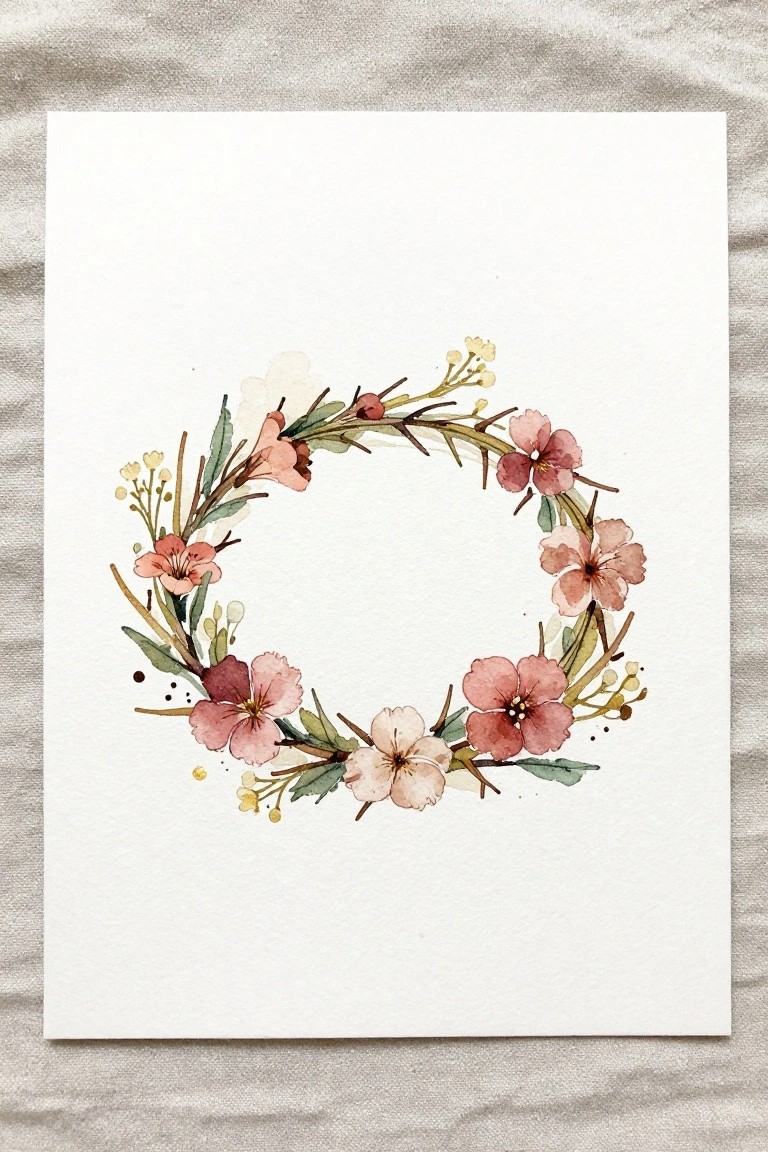
A circular arrangement of pink flowers along curving stems forms an open wreath shape that sits centered on the page. The idea centers on grouping smaller clusters of blooms and leaves to create a balanced ring without filling the middle space. This type of decorative floral piece works through even spacing and a limited palette of muted reds, soft greens, and brown stems that keep the focus on the ring itself.
What makes this idea useful is the empty center, which leaves room to add lettering, a small symbol, or leave it plain for a simple wall piece. The color choices stay easy to adjust by swapping in different flower shades while keeping the same branch layout. For practice, repeating the same curve and cluster pattern a few times helps build control over spacing and watercolor edges without needing complex backgrounds.
Cross with Lilies in a Morning Field

A wooden cross set in a field of white lilies makes a straightforward landscape idea that pairs a single strong shape with clusters of flowers at the base. The sun glow behind the cross gives the background a gentle gradient that keeps the focus on the central form while the scattered blooms and leaves fill the lower area. This approach works as a floral landscape because the cross stays bold and simple, letting the flowers add detail without crowding the composition.
What makes this idea useful is how the cross can be painted first as a basic rectangle shape before the lilies are added around it. The limited greens and soft yellows make it easy to swap in different flowers or shift the background tone for a new season. For wall pieces this layout stays balanced at smaller sizes, and the idea can be simplified further by using fewer blooms or a flatter sky if you want quicker practice.
Washing of the Feet

A painting idea like this focuses on the simple action of pouring water over feet resting in a basin. The main subject is the interaction between the hands, the stream of water, and the feet below, which creates a clear vertical flow through the center of the composition. Soft teal and blue washes in the water area keep the eye moving downward while the warmer skin tones stay the main point of interest.
The composition does a lot of the work here by using the basin edge as a natural boundary that holds everything together. This kind of subject works especially well for practice because the water lines give an easy way to practice loose brushwork without needing perfect detail. You could simplify the hands or change the basin shape to make it fit a smaller paper size or a different color scheme.
Jesus Walking on Water at Sunset
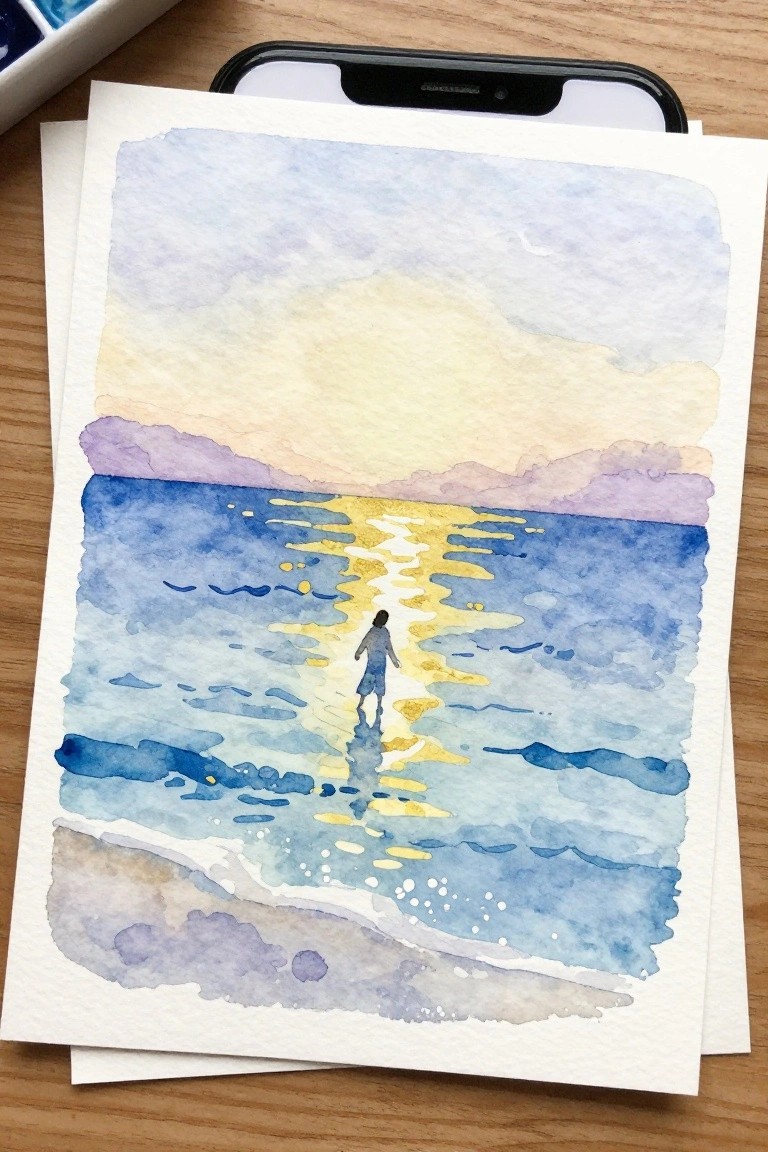
A figure moving across open water toward a bright horizon forms the core idea here. The vertical strip of reflected light acts as a built-in path that pulls the eye straight to the subject while the surrounding blues and soft sky layers keep the rest of the scene balanced. This approach works as a simple landscape idea with one strong focal point rather than lots of separate elements.
The composition does a lot of the work here by letting the light path handle both direction and emphasis. You can easily swap the sunset colors for cooler tones or crop the scene tighter if you want a smaller piece for practice. This kind of subject stands out on Pinterest because the single bright line against the darker water creates instant contrast without needing extra details.
Serene Jesus Portrait with Open Hands
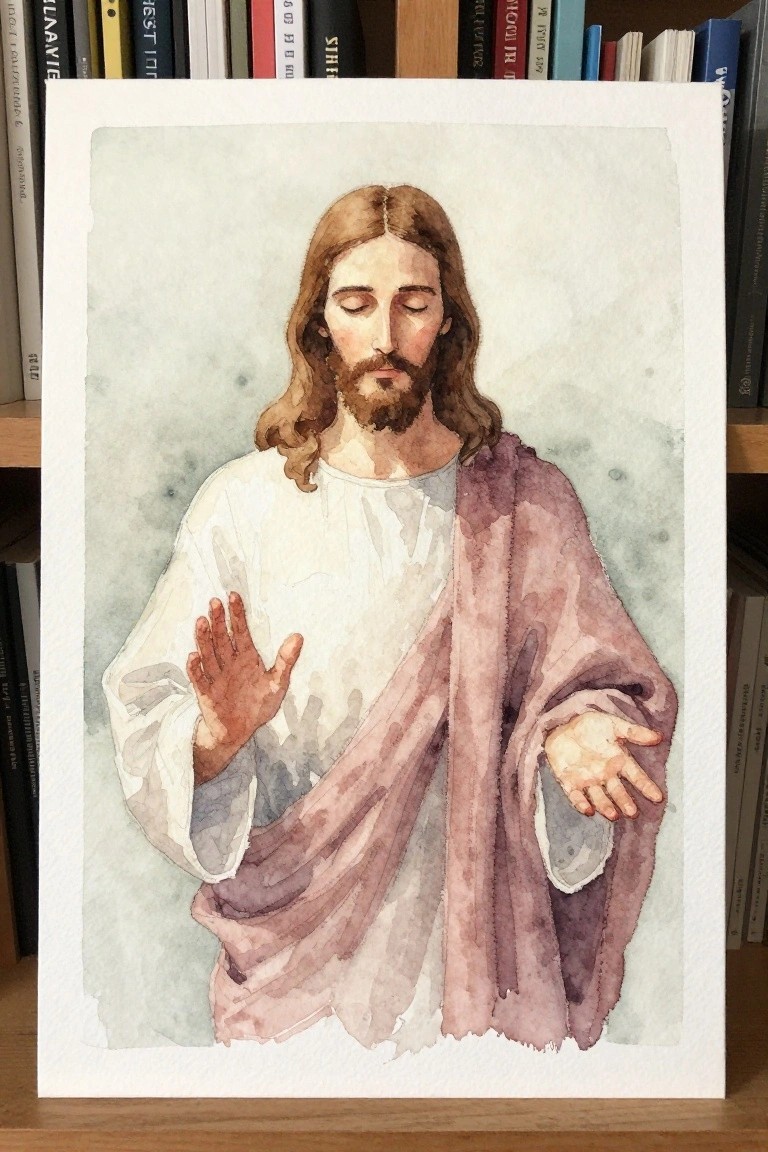
A centered portrait of Jesus makes a strong devotional painting idea when the focus stays on the calm face and the simple hand gestures. The white and muted purple robes create gentle folds that guide the eye downward while the light background keeps everything soft and uncluttered. This approach fits the category of figurative or religious portrait work that relies on balanced composition and loose color washes rather than heavy detail.
What makes this idea useful is the clear central placement that leaves room to adjust the robe colors or hand positions without redrawing the whole figure. The soft background wash reduces the need for complex scenery so beginners can practice figure proportions and fabric folds at the same time. You could simplify the robes further or shift the palette toward cooler tones if the painting is meant for a specific room or gift. For Pinterest, a clean single-figure layout like this tends to perform well because it reads clearly even in small thumbnails.
Minimal Nativity Scene with a Centered Star
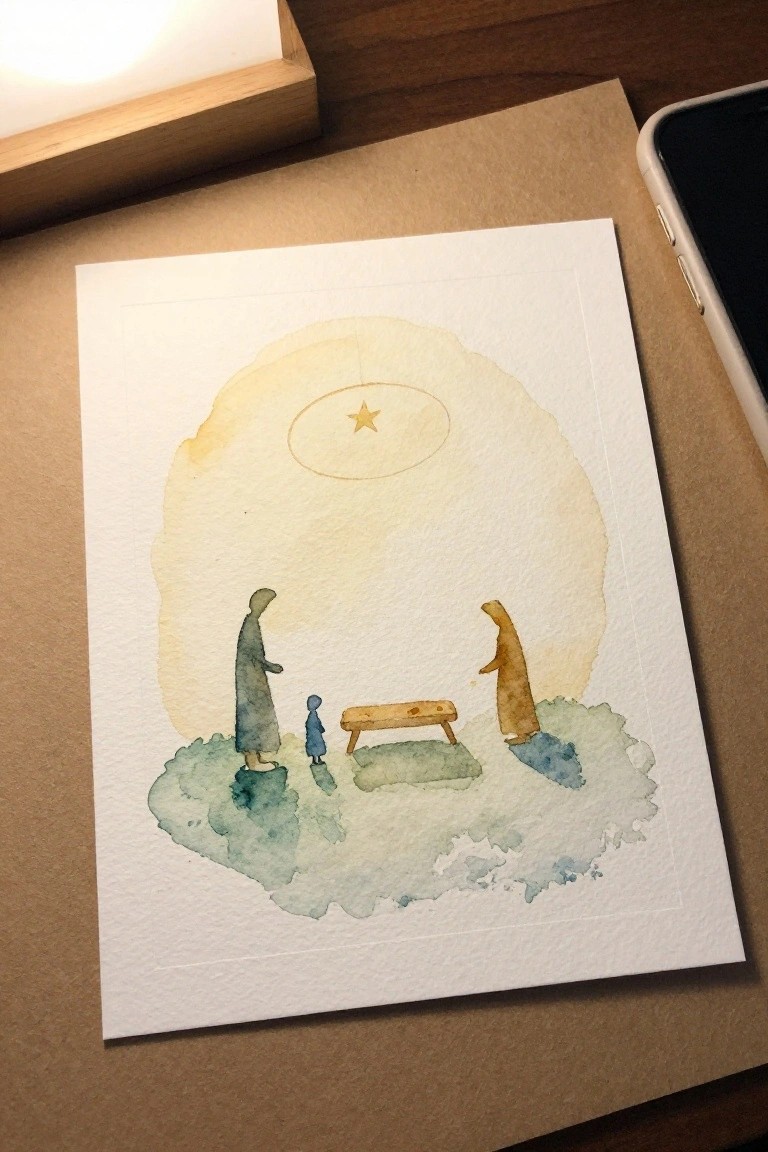
A compact nativity idea that shows three robed figures gathered around a low bench under a large glowing star. The painting uses a single wash of light around the star to create a contained focal area while the figures and ground sit on a small rounded base. This keeps the composition simple and balanced, fitting the category of small-scale religious illustration.
What makes this idea useful is the clear central light source that guides placement of the rest of the scene. The rounded background shape and limited number of elements make it easy to adapt for greeting cards or a small framed piece. You could change the robe colors or shrink the star to fit different paper sizes without losing the overall structure. For wall art, the contained layout works well because it does not require filling the whole page with detail.
Quiet Landscape with a Lone Figure Near a House

A painting idea built around a single small figure in an open field with a modest house and trees nearby creates a simple landscape focused on space and distance. The sky takes up the top half with blended washes of blue shifting into soft pink and peach, while the lower section uses earthy yellow and brown tones to suggest dry grass. Keeping the house and trees as compact shapes on one side leaves most of the composition open, which lets the eye rest on the figure without extra detail.
The composition does a lot of the work here because the large empty areas make the scene easy to scale up or down. You can adapt the color shifts in the sky to whatever palette you have on hand and still keep the same balanced layout. For practice, this kind of subject helps with loose washes and deciding how much detail to add to the foreground versus the background. A painting like this would work well for wall pieces where a calm, open view is needed.
Watercolor Study of Clasped Hands with a Cross
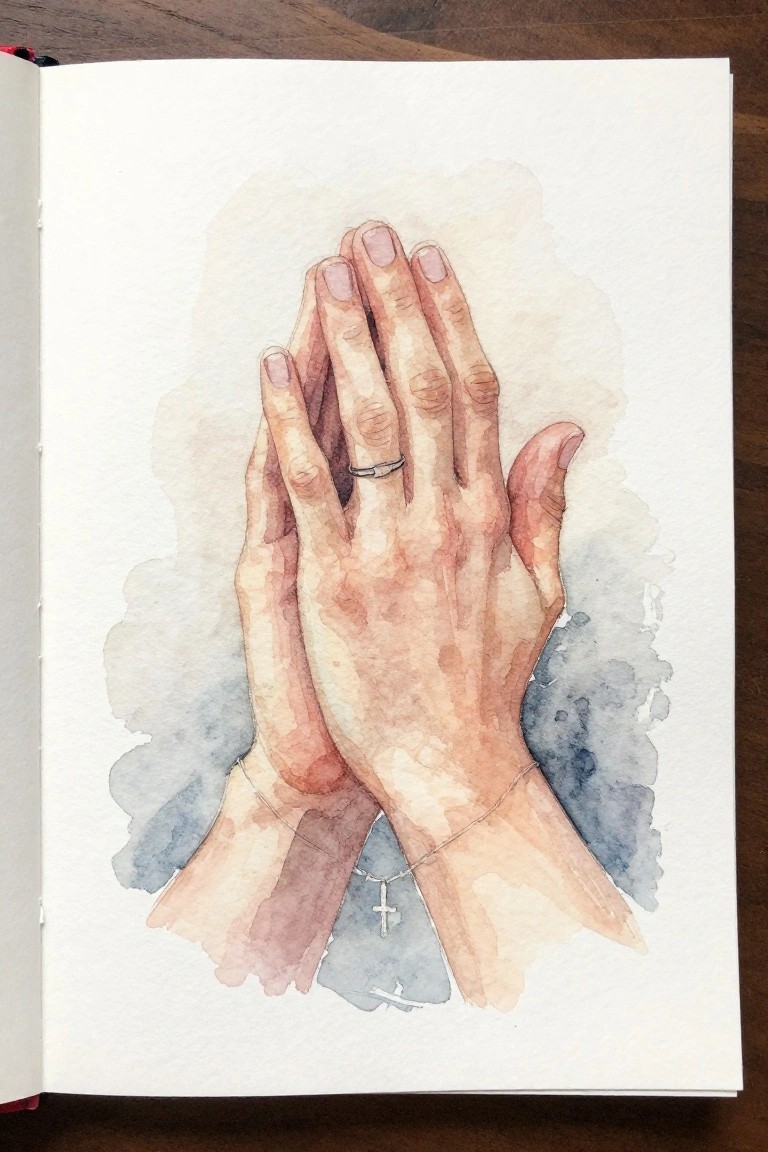
A close-up view of two hands folded together forms the core idea here, with one wearing a simple band and a small cross necklace resting across the wrists. The painting idea centers on realistic hand structure and overlapping fingers rather than broad scenery or patterns. Soft color blending in the skin tones and a loose wash behind the hands keep the focus tight on the central shape while allowing the background to fade out naturally.
What makes this idea useful is the way the hands create their own composition through overlapping shapes and subtle jewelry details that break up the skin area. The scale works well for a sketchbook page or a small framed piece since the subject fits neatly without needing extra elements. You could simplify it by dropping the necklace or change the background wash to a single color to match different wall tones.
Jesus Portrait Surrounded by a Soft Floral Wreath

A portrait of Jesus with closed eyes and a neutral expression forms the center of this idea, with a loose ring of watercolor flowers placed around the edges to create a natural frame. The flowers vary in size and hue, using muted pinks, purples, and greens that keep the focus on the face while adding movement to the outer space. This approach combines portrait work with a simple decorative border, making the overall layout feel balanced without extra background elements.
What makes this idea useful is how the wreath handles the composition so the face stays the main point even if some flowers are left out or redrawn. The color choices stay light enough to copy across different paper sizes or to swap for seasonal shades without changing the whole layout. For practice, the idea works well because the central subject can stay the same while the flowers get simplified or rearranged to test new brush control.
Soft Jesus Figure Layered Over Open Book Pages
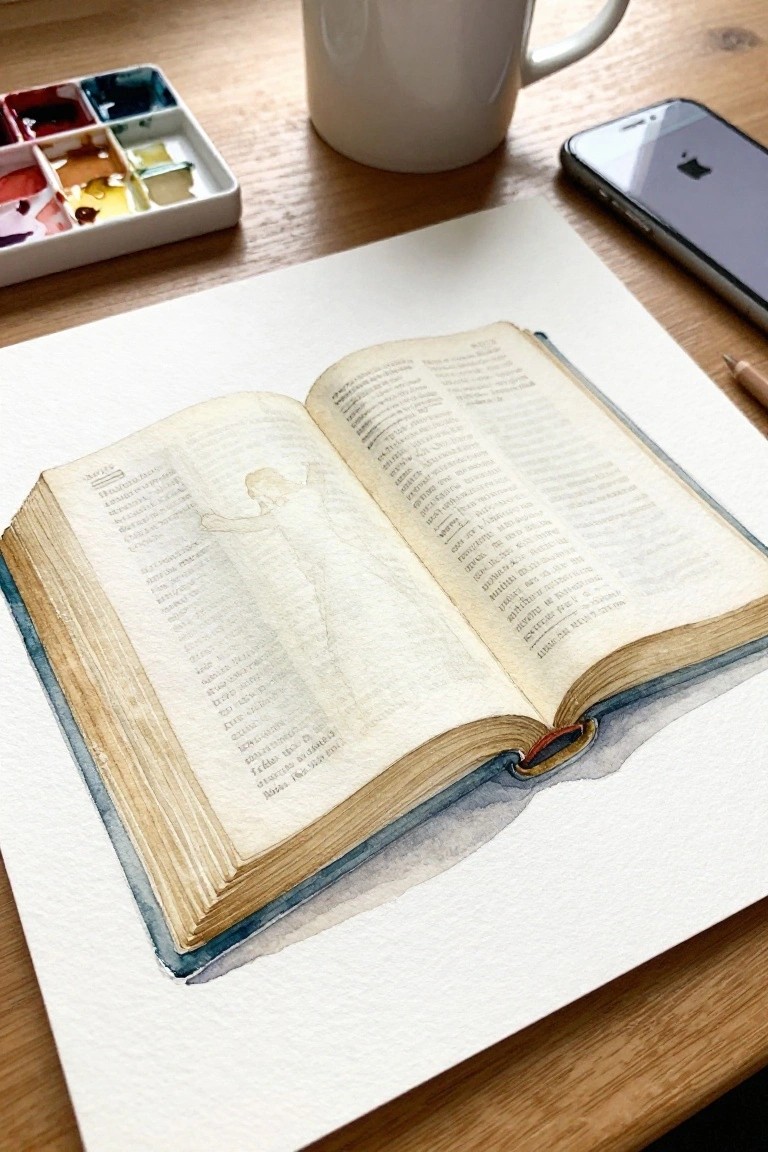
This painting idea places a faint watercolor figure of Jesus directly onto the spread of an open book so the printed text remains visible underneath. The figure spans the left page with arms extended, letting the existing lines of text act as both background and detail. The composition keeps the focus on the book itself as the main surface, with soft edges around the figure to keep the overlay subtle rather than dominant.
What makes this idea useful is that the book pages already supply texture and layout, so you can skip painting a separate background. You could adapt it by changing the book size, shifting the figure placement, or using different text density for more or less contrast. For personal projects or small prints, the same approach works well because it turns an everyday object into the main element without needing complex scenery.
Loaves and Fishes Still Life for a Faith-Based Scene

A still life built around bread loaves on plates with small fish as accents works as a direct reference to the biblical feeding story. The idea places the main items at different heights and angles across the page, using soft background washes to separate the groups without adding extra objects. This keeps the composition balanced while letting the rounded shapes of the bread and the simple fish outlines carry the visual weight.
What makes this idea useful is how the limited set of subjects can be rearranged or reduced to fit smaller sketches or larger pages. The neutral tones on the bread combined with one or two accent colors for the fish make color mixing straightforward and keep the focus on shape and placement. For wall art, the same layout works well with added scripture text along the edge or a narrower crop that shows only two plates.
Rolling Hills with a Flock of Sheep
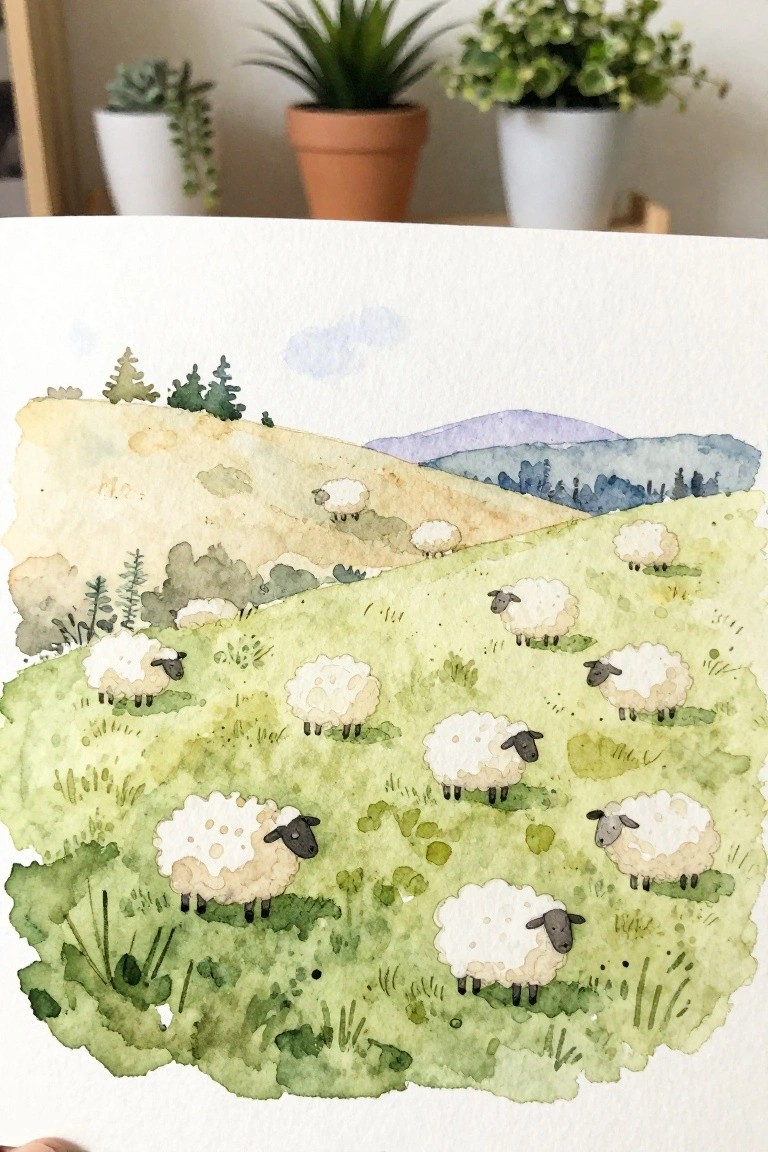
A landscape built around scattered sheep on layered hills gives a simple way to suggest the Good Shepherd idea without painting a figure. The sheep are placed at different heights and angles so the eye moves across the scene naturally, while soft green and warm yellow washes create depth without needing sharp outlines. This approach fits the animal-plus-landscape category and keeps the focus on open space rather than intricate detail.
The rounded shapes of the sheep are easy to repeat or reduce in number, so the same idea works for a quick card or a larger wall piece. You can swap the background hills for flatter fields or add a faint path to change the mood without starting over. The loose color blocks also make it simple to test different palettes before committing to a final version.
Heart and Cross Watercolor Design
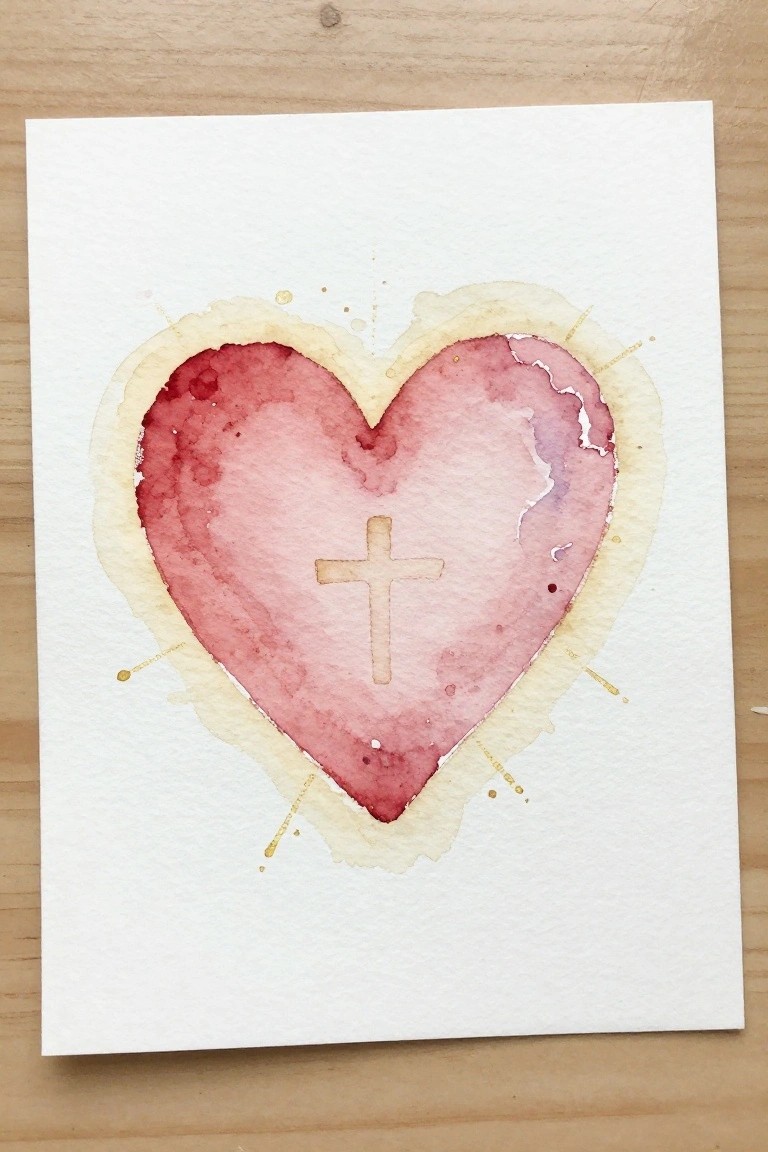
A heart shape filled with blended pink and red washes sits centered on the page, with a small cross placed in the middle and a thin beige border around the outer edge. Gold splatter marks add light contrast along the sides without crowding the main form. This approach works as decorative art because the simple layout lets the color layers and central cross carry the idea.
What makes this idea useful is the clear heart outline that holds the composition together even with loose washes inside. The limited color range makes it easy to scale down for greeting cards or enlarge for a small wall piece. You can drop the gold marks entirely or change the border color to test different looks without starting over. The central cross placement keeps the focus direct, which helps the design read clearly when shared online.
Jesus by the Lake with a Companion
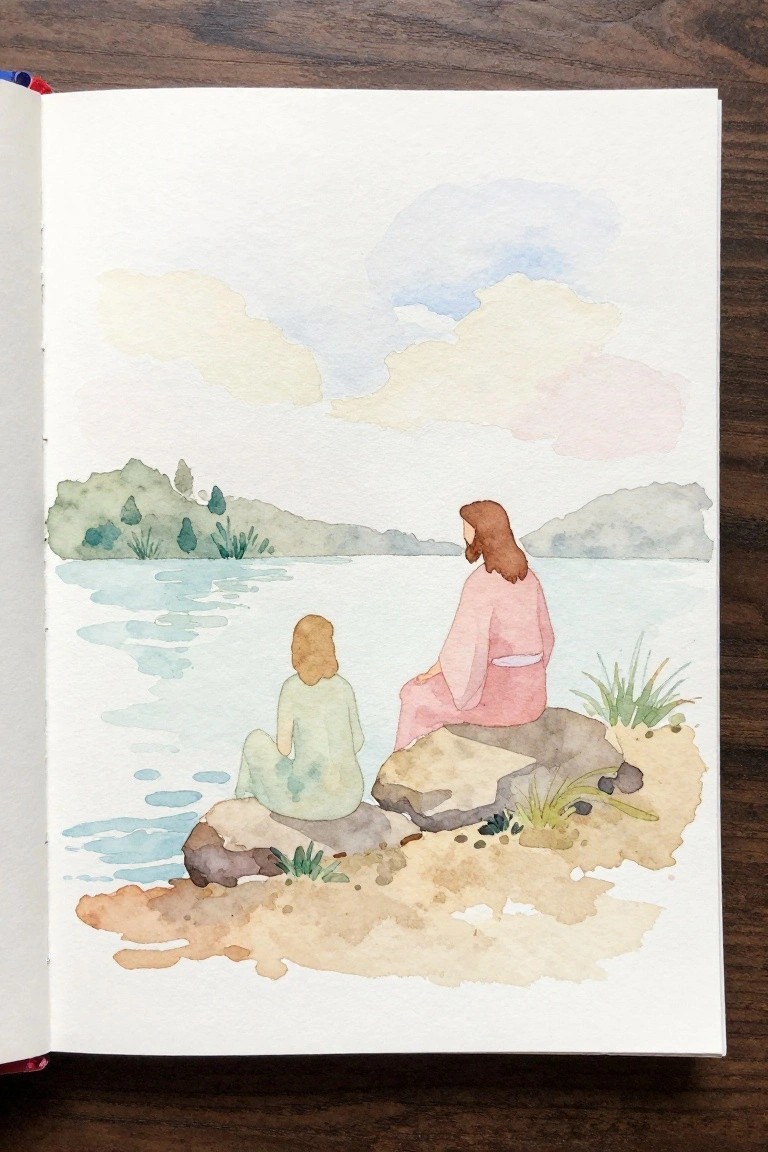
A lakeside scene with Jesus and one other figure seated on rocks facing the water forms the core idea here. This type of painting combines a simple landscape with two seated figures to create a balanced, restful composition. The wide water area and low distant hills keep the focus on the figures while the soft color transitions in the sky and water add depth without extra detail.
What makes this idea useful is how the rock shapes and water line create a natural frame that can be adjusted in size or color to fit different paper formats. The basic layout works well for practice because the figures stay small and the background relies on broad washes rather than fine work. This same setup could be simplified by removing one figure or adapted for wall pieces by stretching the water area across a wider page.
Jesus Figure with Birds in a Loose Vertical Layout
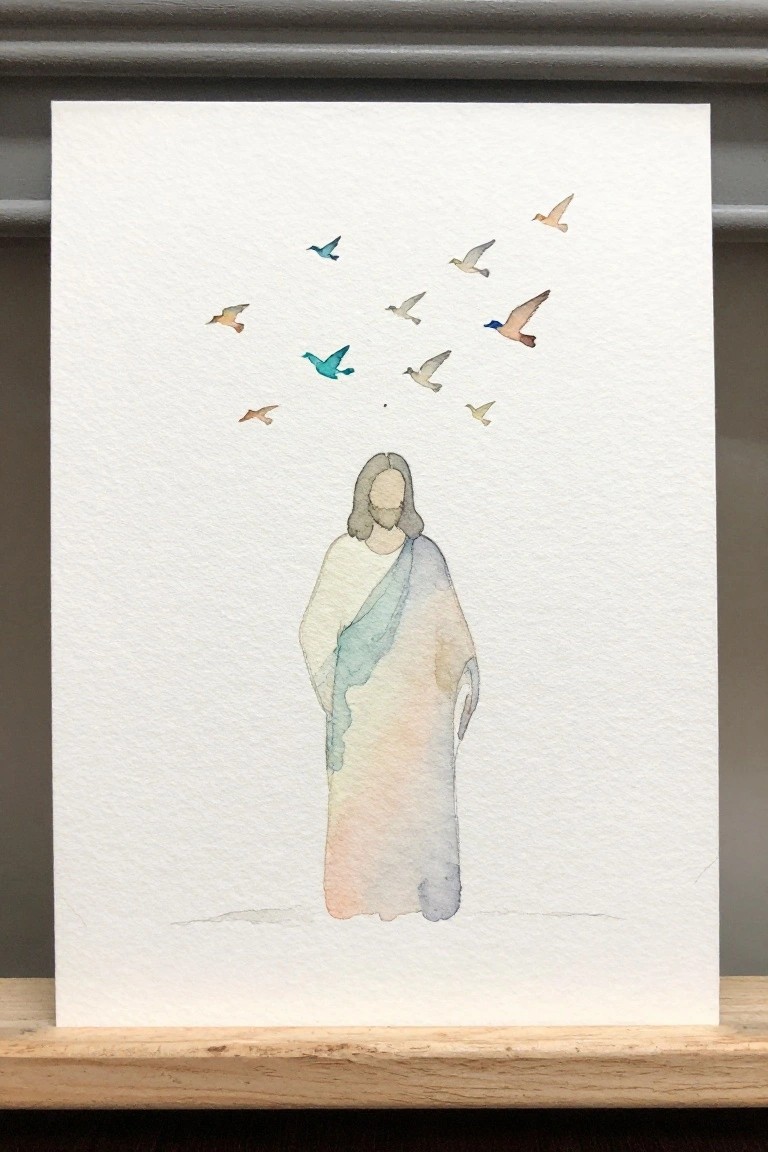
This painting idea pairs a central robed figure with a loose group of birds placed above it to create an open, upward composition. The birds are spaced unevenly to suggest motion while the figure stays grounded at the bottom third of the page. Soft washes on the robe and minimal background keep the focus on the contrast between the solid form below and the scattered shapes above.
The composition does a lot of the work here by using empty space to balance the birds against the figure. You can easily adapt it by changing the number or direction of the birds, or by testing different robe colors without redrawing the whole scene. For practice, this kind of subject works well on small paper because it does not require tight detail or a full background. It would also translate cleanly to greeting cards or simple prints where the vertical balance stays intact.
Hands Cradling a Globe in Watercolor
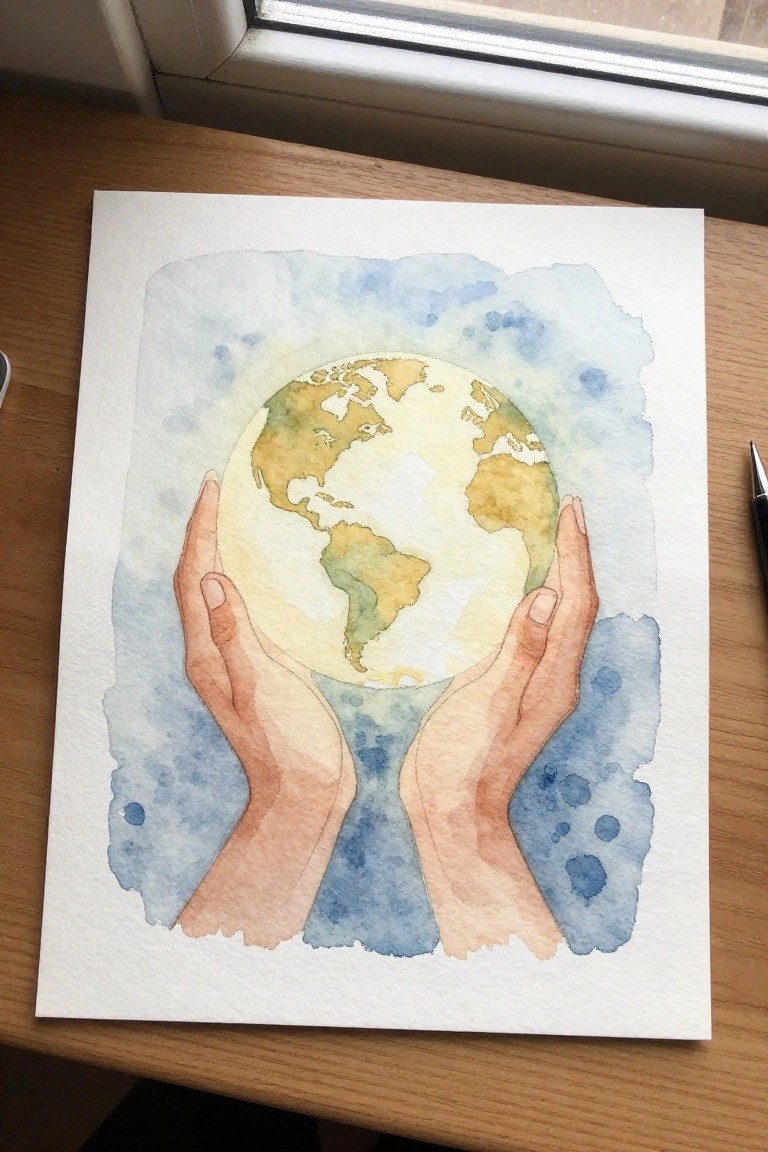
A painting idea built around two hands holding a globe lets the round shape of the Earth sit centered between the palms, with continents blocked in using muted greens and yellows. The open curve of the hands creates a natural frame that draws the eye inward while the soft blue background wash adds space without pulling focus. This approach works as a straightforward figurative piece that combines simple forms with a clear central subject.
The composition does a lot of the work here by keeping the layout balanced and easy to scale up or down. You can adapt the idea by swapping in different landmass colors or loosening the hand outlines for faster studies. For practice, the subject combines shape work and color mixing in one session, and the clean setup makes it simple to resize for cards or small wall prints.
Path Leading Into Bright Light
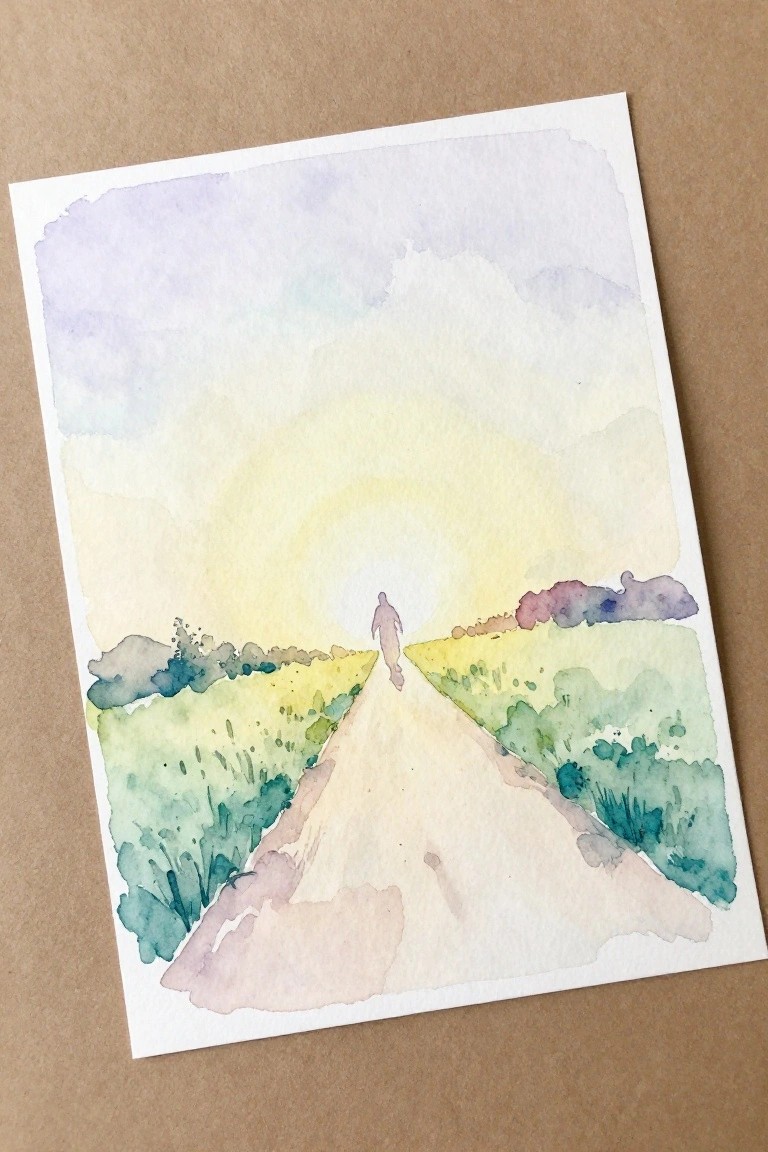
A landscape painting idea built around a single figure walking down a central path that narrows toward a glowing horizon. The soft color washes in the sky create a strong focal point while the green fields on either side frame the path and keep attention moving forward. This approach works well for a faith-themed piece because the composition relies on simple perspective and a bright center rather than detailed figures or symbols.
The composition does a lot of the work here since the path itself guides the eye and reduces the need for complex foreground details. You can easily adapt the idea by changing the sky colors for different times of day or swapping the single figure for a small group. For practice this subject is useful because it teaches control with light washes and lets you test how much or how little detail the scene needs. A painting like this also translates well to small prints or cards without losing its impact.
Frequently Asked Questions
1. Where can I find prints or originals of these 21 Jesus watercolor paintings? Many of the featured artworks are available as high-quality prints through the artists’ websites or platforms like Etsy and Fine Art America. Searching by the painting title or artist name often leads to options for framed prints, canvases, or digital downloads that suit various budgets and home decor needs.
2. Who created these peaceful Jesus watercolors and how can I learn more about them? The collection highlights works from multiple artists known for religious themes. Each piece usually includes artist credits in the article, which allows you to visit their portfolios online and discover additional faith-based creations along with insights into their creative processes.
3. What watercolor techniques produce the soft colors seen in these faith-inspired paintings? Artists typically rely on wet-on-wet blending and light layering of translucent washes to achieve gentle gradients. Selecting muted pastels and earth tones helps maintain a calm mood that reflects themes of peace and devotion without overwhelming details.
4. How can these paintings support personal faith or meditation practices? Placing one in a dedicated prayer area creates a visual focal point for reflection on biblical stories. The soft color palettes encourage a tranquil atmosphere that aids in quiet contemplation or daily devotions by evoking a sense of serenity and connection.
5. Are there resources for beginners who want to try painting similar Jesus watercolors? Online tutorials on platforms such as YouTube and Skillshare provide step-by-step guidance on basic watercolor methods tailored to religious subjects. These lessons focus on color mixing and soft application to help newcomers build skills while exploring faith-based imagery.