I have always liked the Garden of Gethsemane as a subject because it shows a quiet and personal moment.
Lately I pulled together some oil paintings that focus on Christ at prayer there.
Each one handles the light and the setting in its own way which makes them worth comparing.
When I paint similar scenes myself I notice how the colors and brushwork change the mood without needing much detail.
These examples gave me a few ideas for my next canvas.
Moonlit Prayer Scene with Olive Tree and Resting Figures
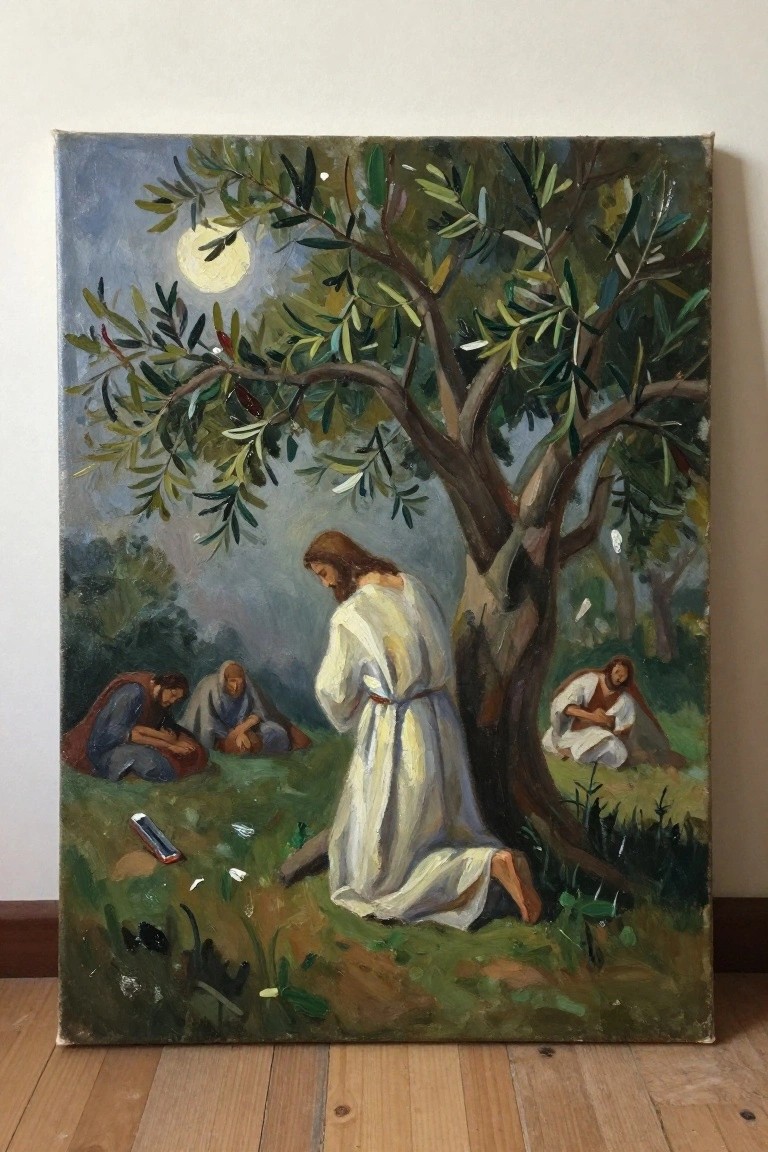
A strong oil painting idea for the Garden of Gethsemane places a single kneeling figure in white robes directly under the branches of a large olive tree while a bright moon lights the scene from above. Three additional figures rest on the grass at different distances to create depth and show separation from the central subject. The night sky and tree canopy give the composition a clear structure that keeps the eye on the kneeling figure without needing heavy detail in every area.
What makes this idea useful is the built-in contrast between the light robes and the darker greens and blues of the foliage and ground, which simplifies practice with value changes. The tree placement helps frame the main figure naturally and works on both medium and larger canvases. This layout can be adapted by reducing the number of resting figures or shifting the moon position to change the light direction while keeping the same overall mood. For wall art the vertical tree and figure arrangement fits standard portrait orientations without extra cropping.
Focused Study of Clasped Hands in Prayer
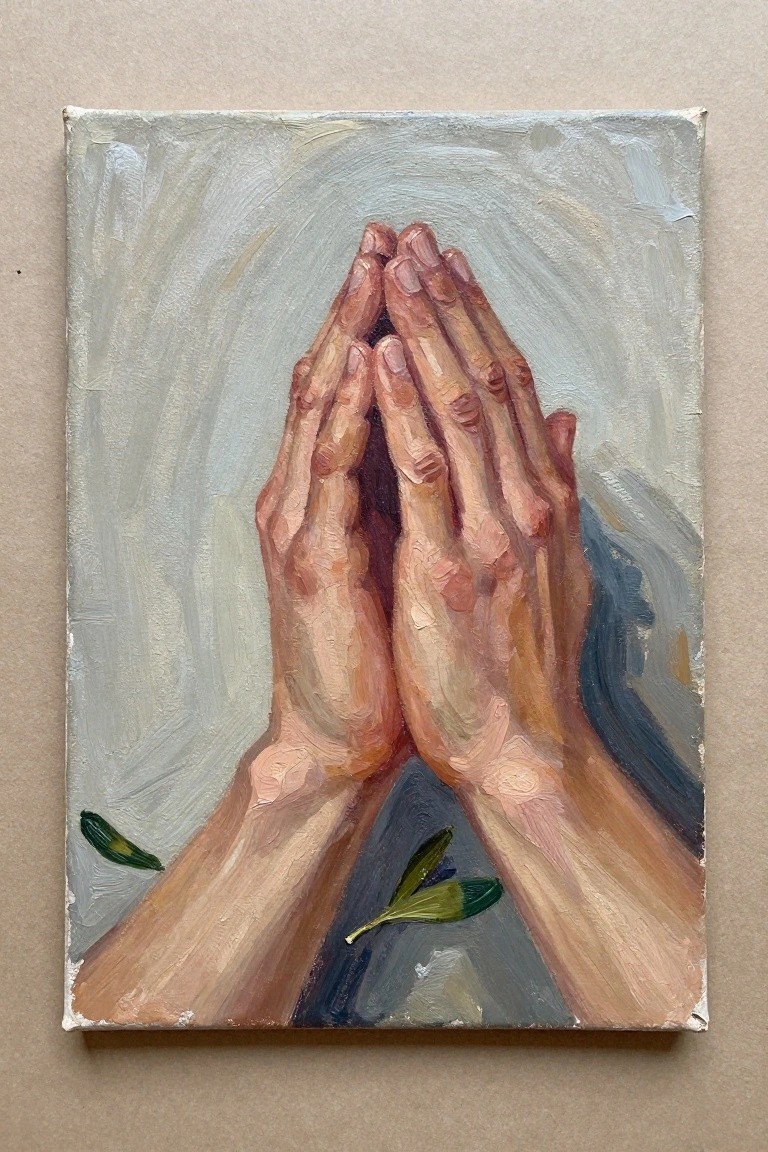
This oil painting idea uses a tight view of two hands pressed together in prayer as the main subject. It works as a figure study that keeps the composition simple while letting the gesture carry the devotional theme. The upward angle and the shift from warm skin tones to a cooler background create clear focus without extra elements.
What makes this idea useful is how it reduces the Gethsemane scene to its core action, which makes the piece easy to scale or pair with small olive leaves for context. The soft blending on the hands helps the skin look natural while still showing brushwork, so it suits practice with flesh tones and light direction. For wall art, the vertical format and limited palette keep it easy to adapt into smaller studies or larger pieces without losing impact.
Lone Figure in an Olive Grove with Stone Wall
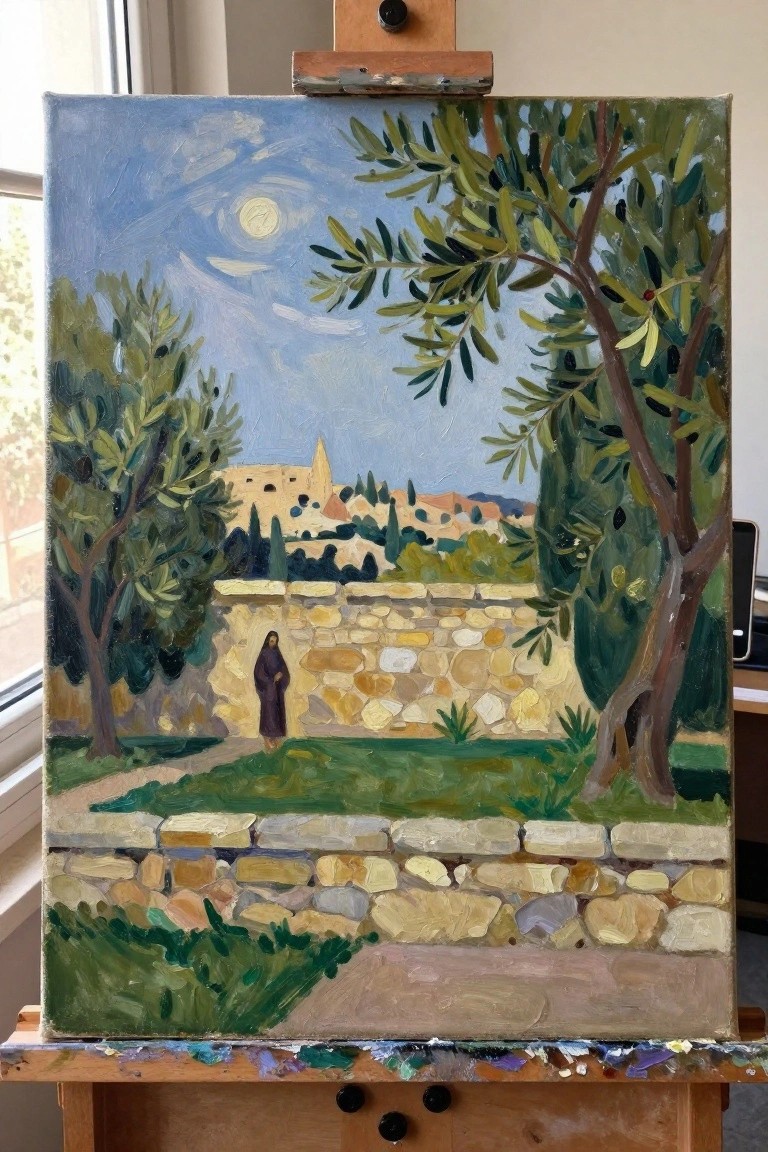
An oil painting idea like this centers on a solitary figure placed in a quiet olive grove beside a low stone wall, with a hillside town visible beyond the trees. The layout uses foreground greenery and tree branches to frame the middle ground, while the distant buildings add a sense of scale and place. This approach fits a landscape category with a subtle figure element, where the mix of greens, earth tones, and open sky creates a balanced outdoor scene.
What makes this idea useful is the clear separation of layers—wall, trees, and background—which helps when practicing depth in oil. The stone wall offers a chance to work with textured blocks and varied brush marks without needing extreme detail. For wall art, the same idea could be adapted by shifting the sky color or tightening the crop around the figure and nearest trees. The overall setup stands out on Pinterest because it combines a recognizable garden setting with simple structural lines that hold up at smaller sizes.
Portrait of Christ with Clasped Hands in Prayer
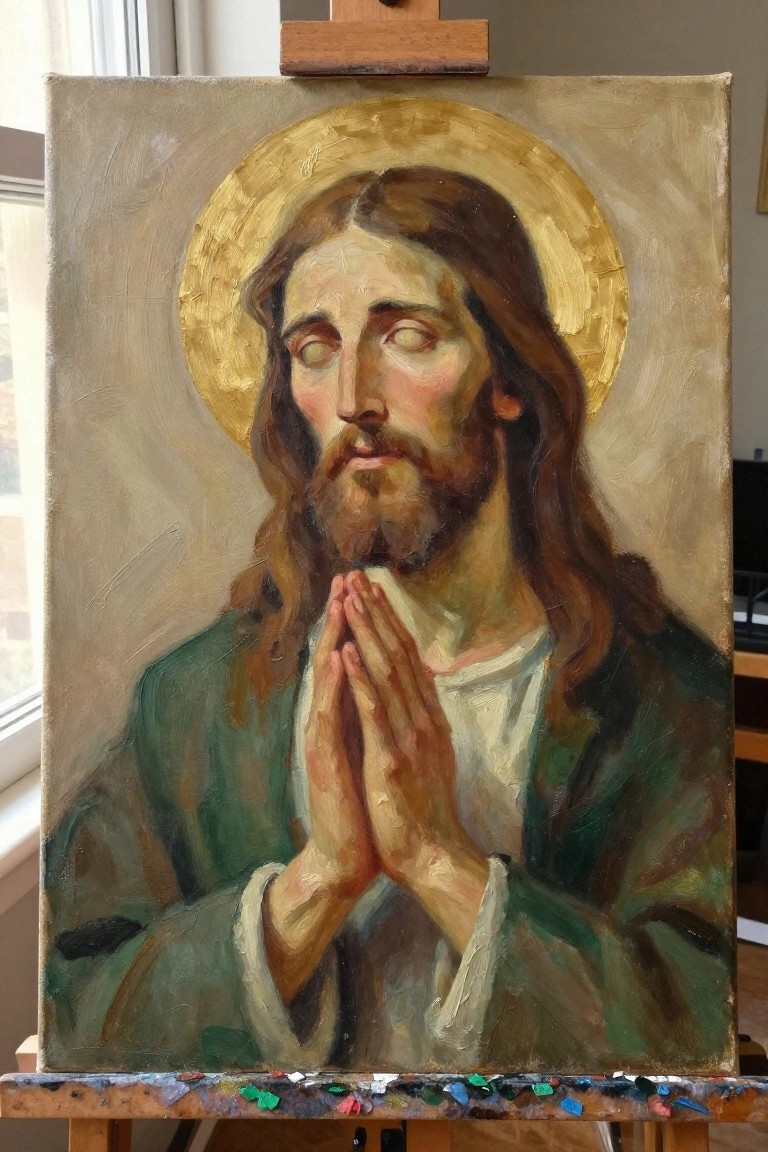
This oil painting idea focuses on a direct portrait of Christ during his time of prayer, with hands folded tightly and gaze lifted slightly. It fits the portrait-inspired category for classic religious wall art, where the halo and upper body framing keep the attention on the face and gesture. The blended skin tones and layered robe colors create a soft but solid presence that works well for this kind of subject.
What makes this idea useful is the simple centered layout that lets the prayer pose carry the whole piece without extra background details. The earthy greens against the warm halo tones adapt easily if you want to change the robe color or shift the canvas to a vertical format for smaller wall spaces. For practice, the subject gives clear areas to work on gradual blending around the hands and face while keeping the overall mood restrained.
Kneeling Christ Reaching for the Cup with Shadowed Witnesses
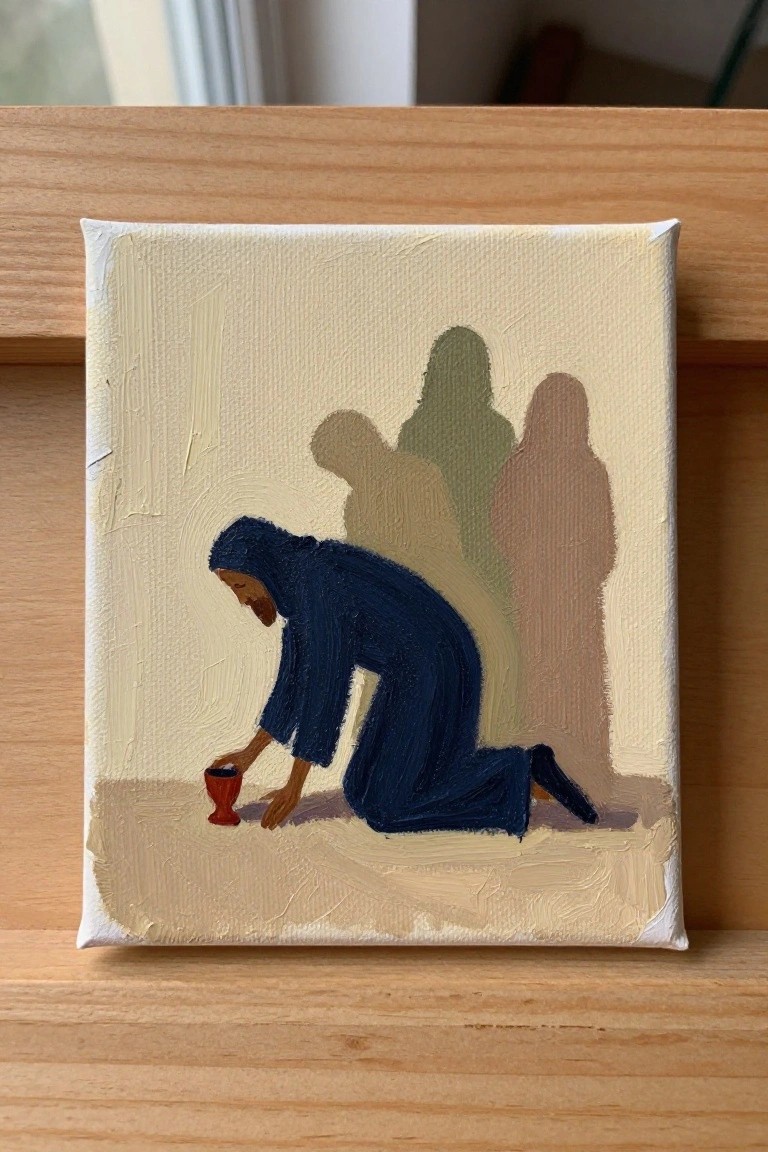
A single kneeling figure in deep blue extends one hand toward a small red cup while the other rests on the ground for support. Behind it, three overlapping shadow shapes in muted earth tones suggest other figures without detailing them, keeping the focus on the central action and the cup. This approach works as a simplified religious narrative idea that relies on strong color contrast and negative space rather than intricate detail.
What makes this idea useful is the limited palette and clear focal point, which let the composition read quickly even on a small canvas. The shadow shapes can be adjusted in tone or number if you want to personalize the scene or reduce the figure count for a tighter crop. For practice, this layout helps you work on figure proportion and simple layering without needing complex backgrounds. It also translates well to prints or small wall pieces because the strong silhouette holds up at smaller sizes.
Silhouetted Kneeling Figure Framed by Overhanging Branches
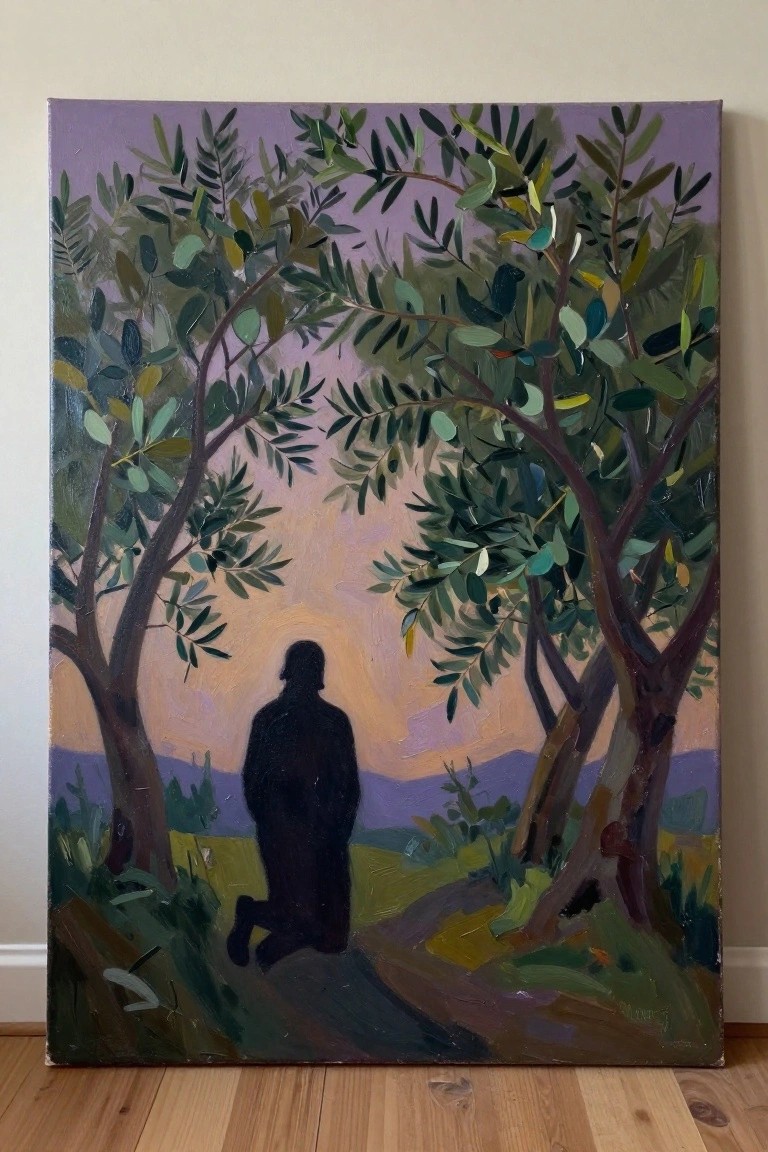
The core idea here is a lone kneeling silhouette positioned at the center of an olive grove, set against a glowing horizon that pushes the eye straight to the figure. Strong vertical tree trunks and layered foliage on both sides create a natural frame while the warm sky gradient supplies the main light source. This approach works as a moody landscape with a single focal figure, where contrast between the dark shape and the bright background does most of the compositional work.
What makes this idea useful is how the existing tree canopy already supplies depth and guides attention without extra elements. The limited color range, mostly greens against the purple-to-orange sky, keeps the painting simple to block in yet still dimensional once the branches are layered. For wall art the silhouette format scales easily to different canvas sizes and can be adapted by swapping the time of day or reducing the number of leaves if the foliage feels too busy.
Christ Kneeling by Lantern in a Nighttime Grove
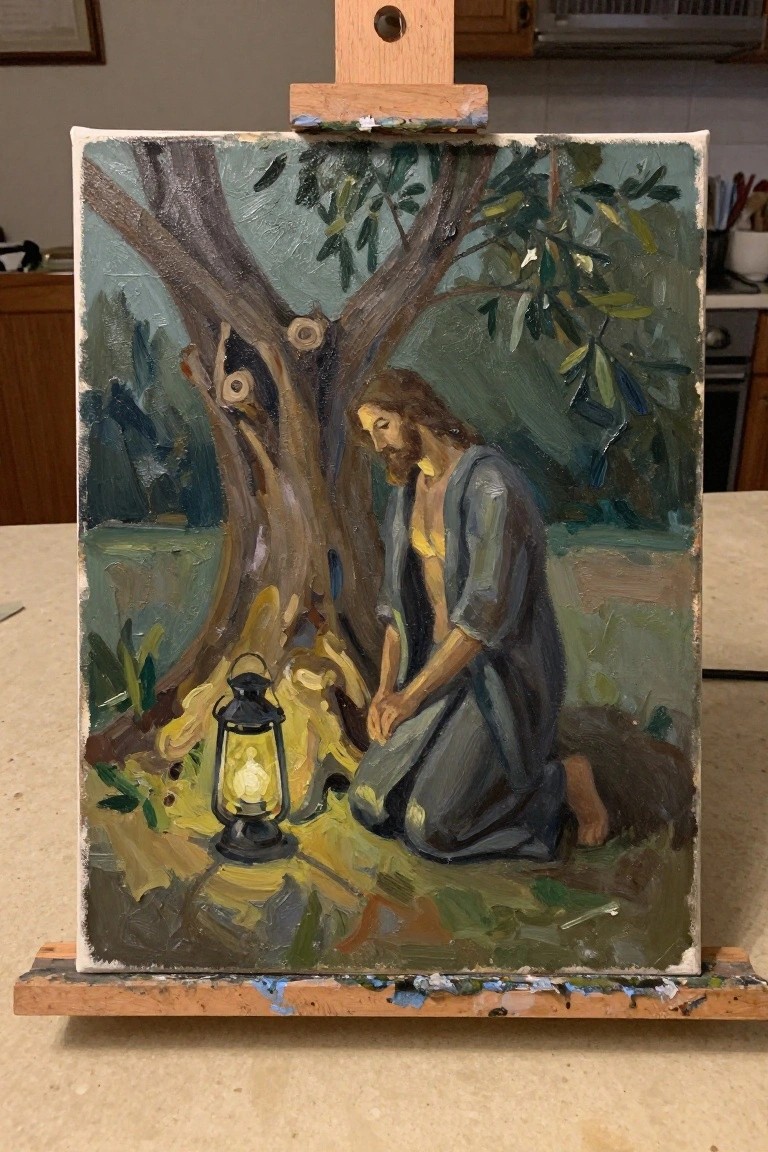
A solid oil painting idea here is a nighttime scene of Christ in prayer, with the figure positioned beside a glowing lantern under a large tree. The composition uses the lantern as the main light source to pull focus onto the kneeling pose while the dark tree trunk and foliage create a simple, enclosed setting. This approach falls into the moody traditional category, where limited lighting and a contained background keep the subject clear without extra elements.
What makes this idea useful is the built-in contrast from the lantern, which handles much of the visual interest through warm highlights against cooler tones. The vertical layout adapts easily to different canvas sizes by shifting the tree slightly or cropping the foliage. For practice, the same setup works well if you simplify the background to focus on light edges and the figure’s posture.
Olive Tree Path with Receding Figures in Robes
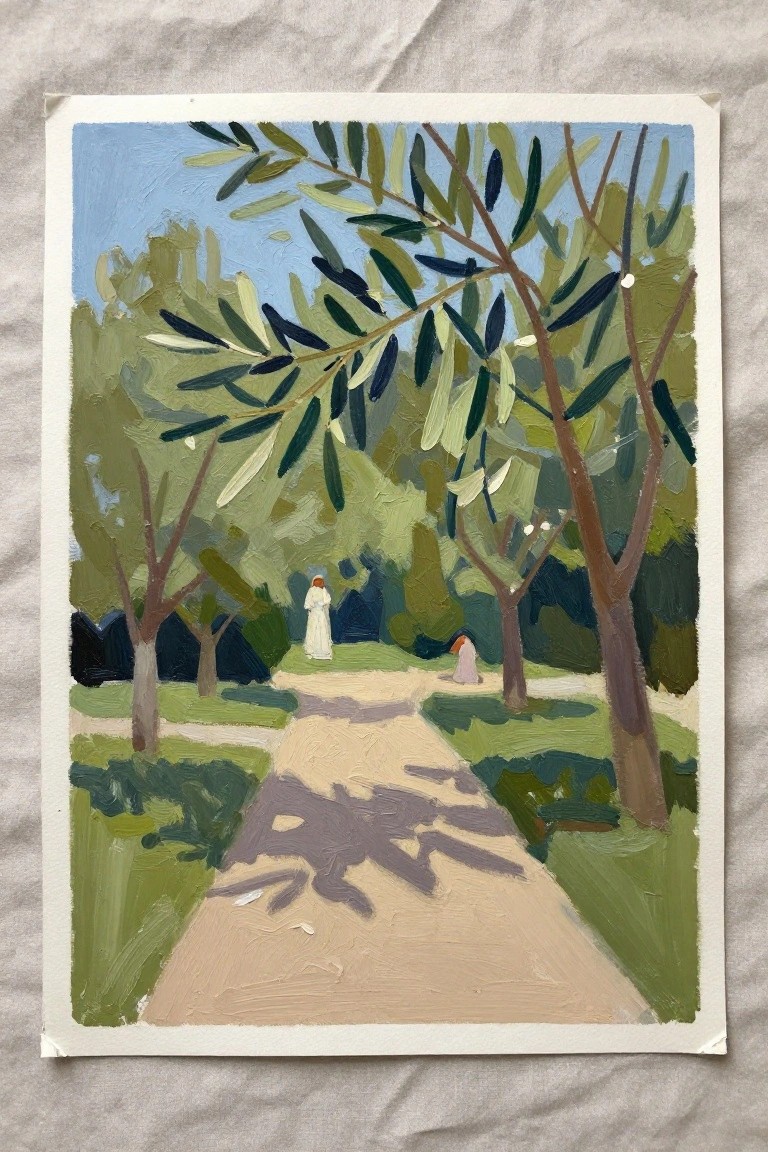
An oil painting idea built around a straight garden path cutting through olive trees works by letting the cast shadows from the branches pull the eye forward toward two small robed figures. The layout keeps most of the detail in the foreground trees and path edges while the background stays soft, which suits a simple landscape approach rather than a tight portrait of Christ. The category here is a biblical garden scene that relies on light direction and tree placement instead of facial detail.
What makes this idea useful is the built-in depth from the path and shadows, so you can change the number of trees or shift the figures farther back without losing the overall structure. The green and earth-tone palette adapts easily if you want a cooler or warmer version for different seasons or wall colors. For practice, the same idea can be simplified by reducing the number of branches while still keeping the strong shadow lines that make the path feel real.
Christ Praying Beside a Stone With a Companion in the Garden
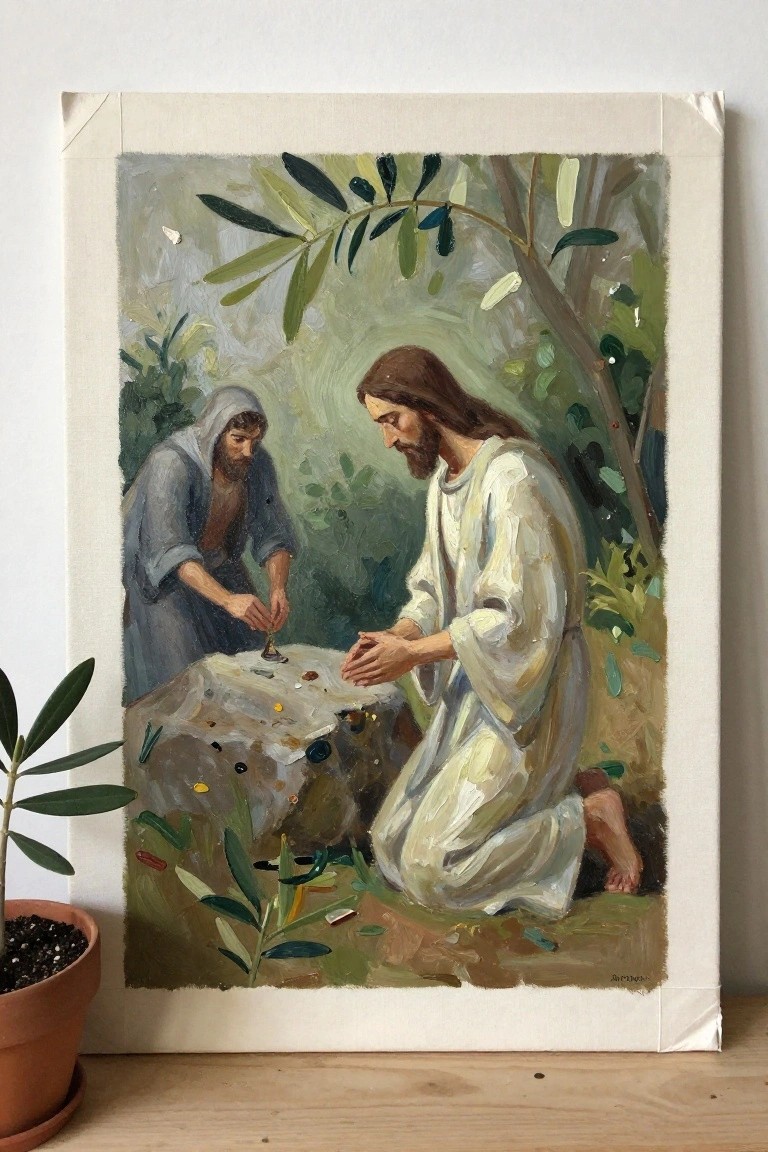
This oil painting idea centers on the moment of prayer in Gethsemane by placing the main figure in white robes kneeling in the foreground while a second figure stands at a stone nearby. The composition works by keeping the garden setting simple with loose olive branches overhead and enough open space around the figures to avoid crowding. It fits the classic wall art category with its focus on religious subject matter and natural garden backdrop rather than heavy detail or abstraction.
What makes this idea useful is the clear separation between the kneeling figure and the background element, which lets the eye rest on the prayer pose without extra clutter. The muted greens and earth tones can be scaled down easily for practice pieces or adjusted with warmer highlights if a brighter version is preferred. For wall art the layout adapts well to vertical canvases since the vertical tree line and kneeling figure already guide the eye upward. The same idea can be simplified by removing the second figure and keeping just the stone and kneeling pose if a more minimal approach is needed.
Close-Focused Portrait of Christ in Prayer
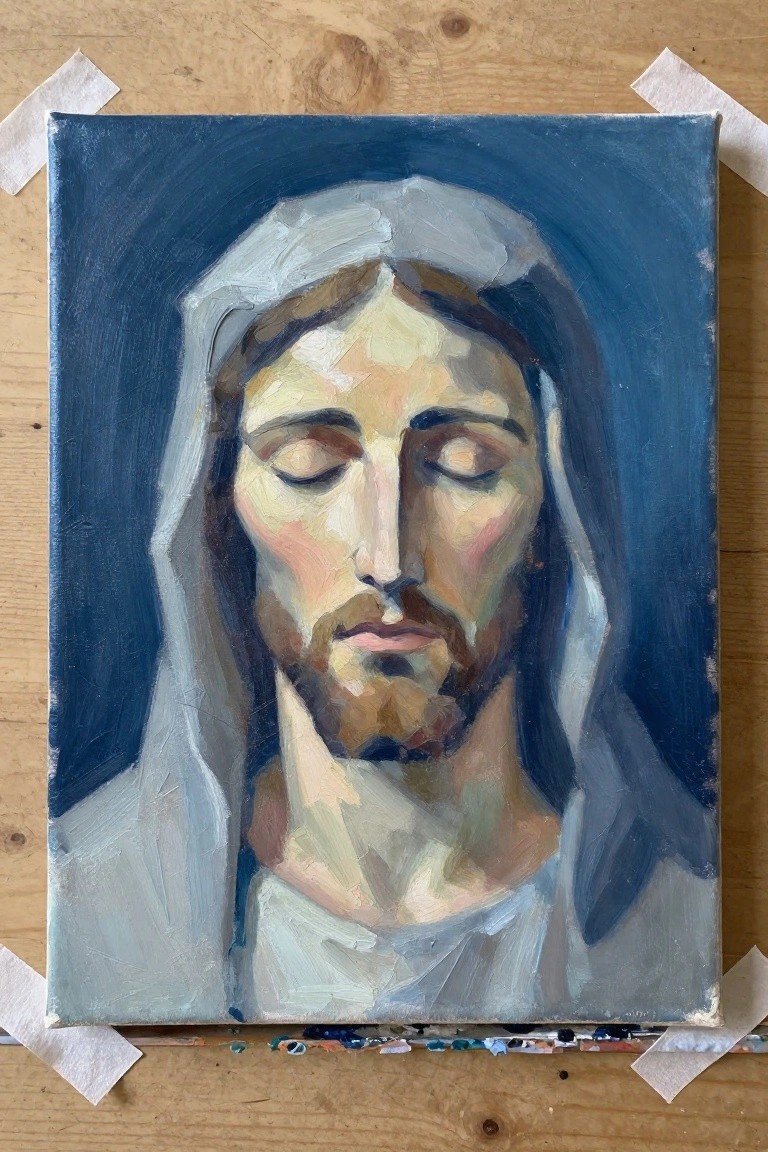
An oil painting idea like this uses a tight crop on Christ’s face with closed eyes to capture the quiet moment of prayer. The soft blending across skin tones and the white head covering creates a calm focal point against the solid blue background, keeping the composition simple yet centered. This approach works as a moody portrait-inspired piece that fits the Garden of Gethsemane theme through expression rather than added scenery.
What makes this idea useful is the way the limited palette and centered layout adapt easily to different canvas sizes or series work. You can shift the blue background to cooler or warmer tones depending on the surrounding pieces or simplify the head covering for quicker studies. For practice, this kind of subject builds skill in skin blending and subtle value changes while staying practical for wall art or smaller devotional paintings.
Overhanging Branches Framing a Distant Prayer
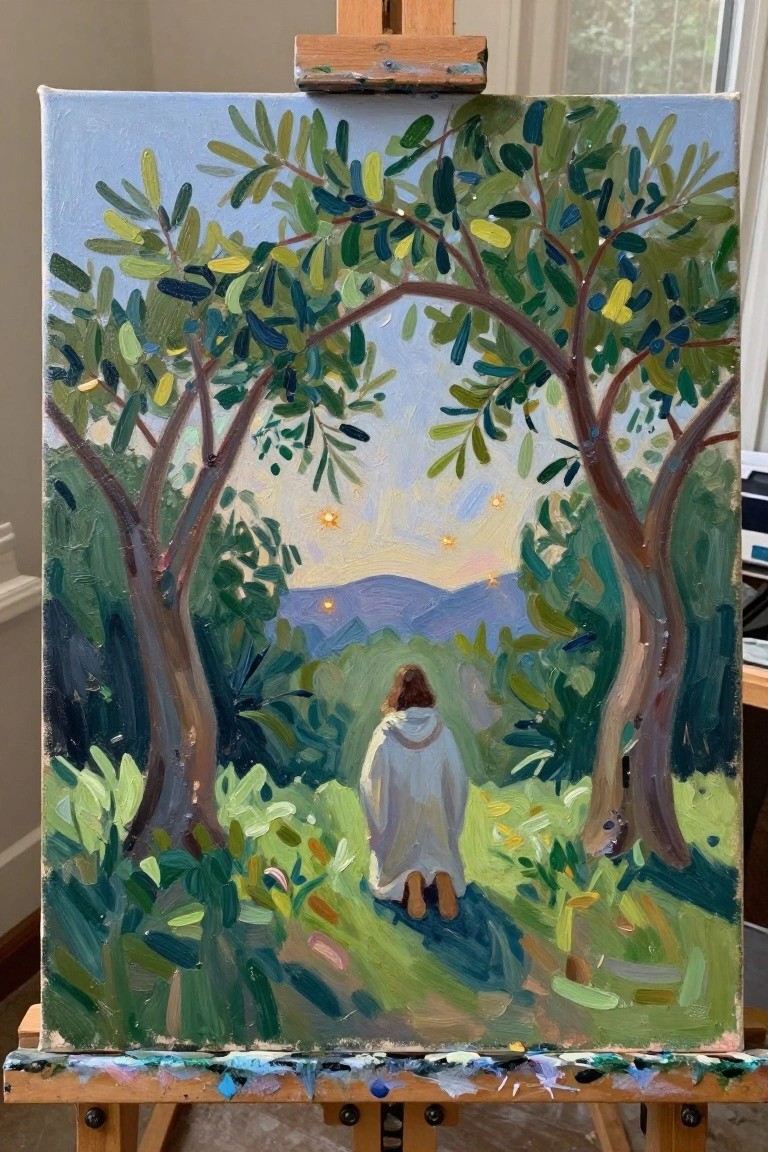
A landscape idea that positions Christ from behind on a winding path, with tree branches forming a natural arch that leads the eye toward mountains and a pale sky. The concept relies on the path and layered foliage to create depth while keeping the figure small and centered as the quiet anchor. Soft blending between the greens and the sky helps the scene feel open rather than crowded.
What makes this idea useful is how the arch of branches does most of the compositional work by directing attention forward. You could adapt it by tightening the crop around the figure for a more intimate version or shifting the sky colors toward deeper blues for a stronger night effect. For practice this layout works well because the simple perspective and limited focal points keep the painting manageable while still looking complete on a wall.
Christ Praying Beside Attendants at Sunset
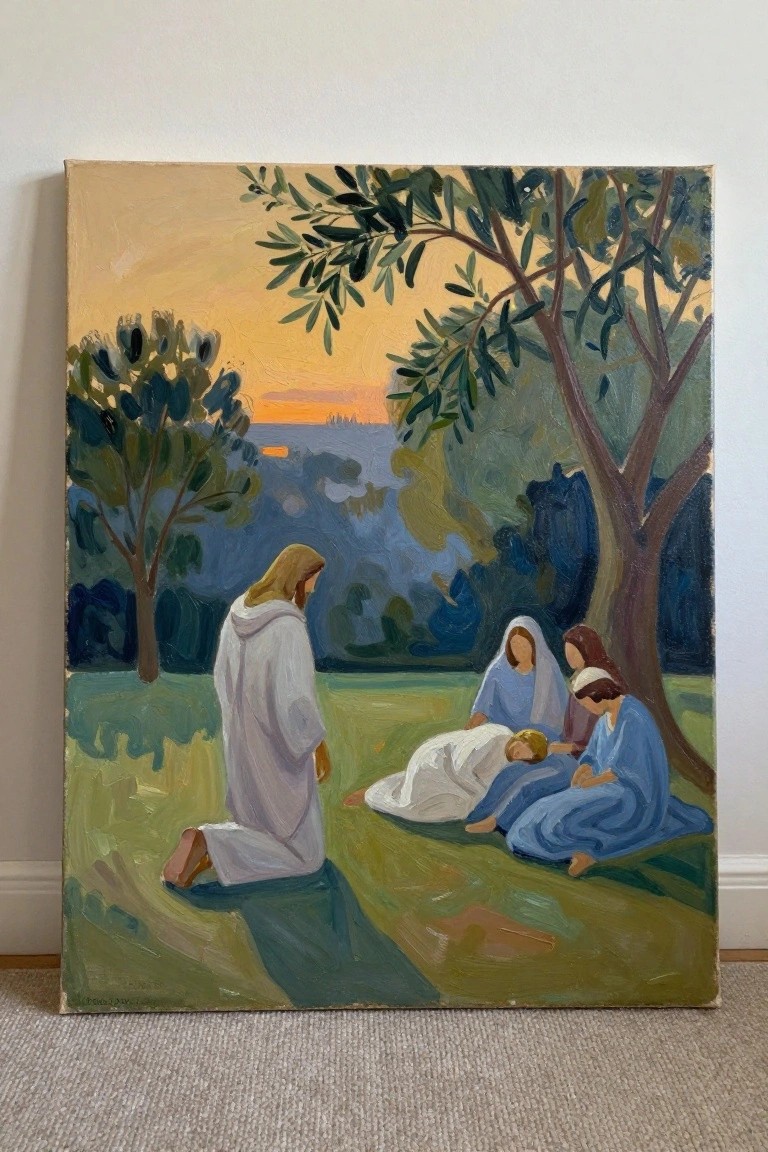
This oil painting idea shows Christ in a kneeling pose during prayer set against an open garden landscape at dusk, with three companions gathered around a reclining figure under a spreading tree. The composition places the main action slightly off center so the distant hills and warm sky can balance the weight of the group without crowding them. It works as a classic religious landscape that relies on broad color blocks and gentle blending to suggest both the time of day and the spatial depth.
What makes this idea useful is the clear division between the bright sky, the darker tree mass, and the green foreground, which lets an artist block in large areas first before refining the figures. The layout adapts well to different canvas sizes since the horizon line can shift up or down without losing the focus on the prayer. For wall art this kind of scene stands out when the sunset oranges stay strong against the cooler blues and greens, and the same idea can be simplified by reducing the number of figures or tightening the crop around Christ alone.
Olive Branch and Chalice Still Life
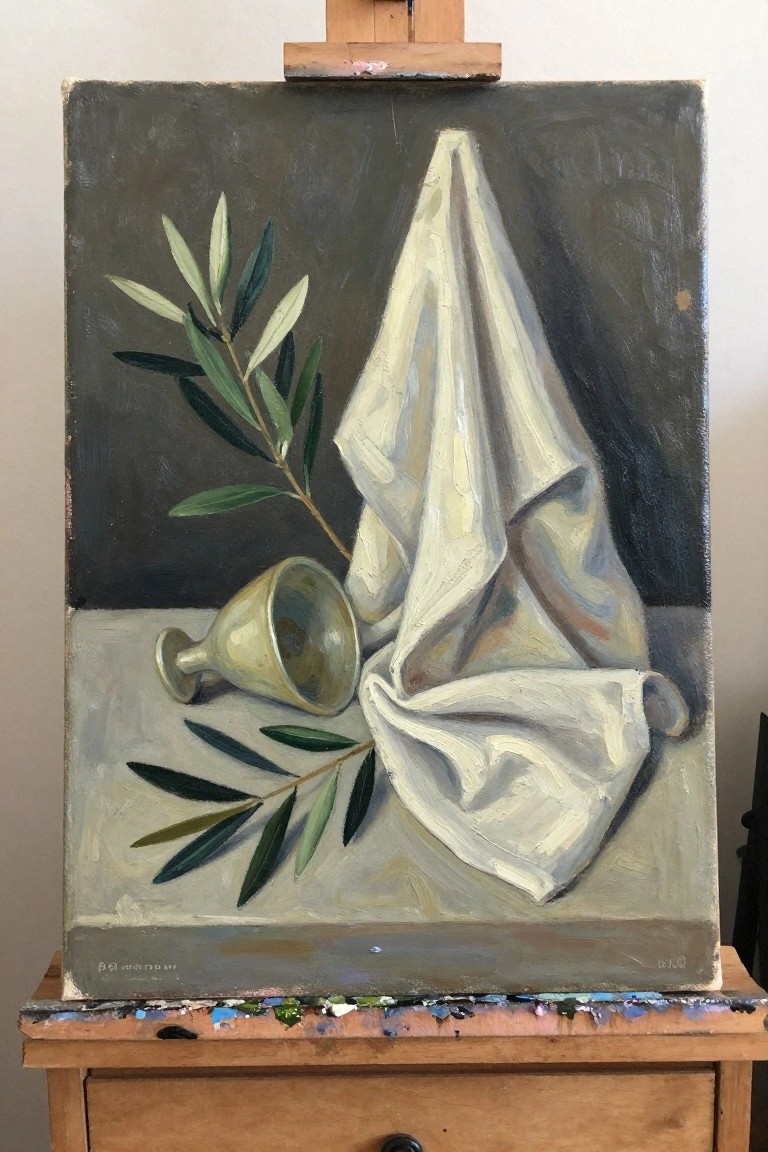
A still life oil painting idea built around olive branches, a small chalice, and a loosely draped white cloth works well for capturing the Garden of Gethsemane through simple objects rather than figures. The fabric folds create soft depth and movement against the dark background, while the green leaves add a clear natural accent that keeps the eye moving across the composition. This approach falls into the moody still life category and relies on gentle blending and restrained color to hold attention.
What makes this idea useful is the way the draped cloth gives direct practice with light and shadow on fabric without requiring complex details. The limited palette of greens, off-whites, and grays makes the piece easy to scale down or adjust by shifting the cup angle or adding a second branch. For a series on Christ’s prayer, this kind of symbolic still life stands out on Pinterest because it reads clearly even at small sizes and translates well to prints or greeting cards.
Moonlit Silhouette Prayer in the Garden
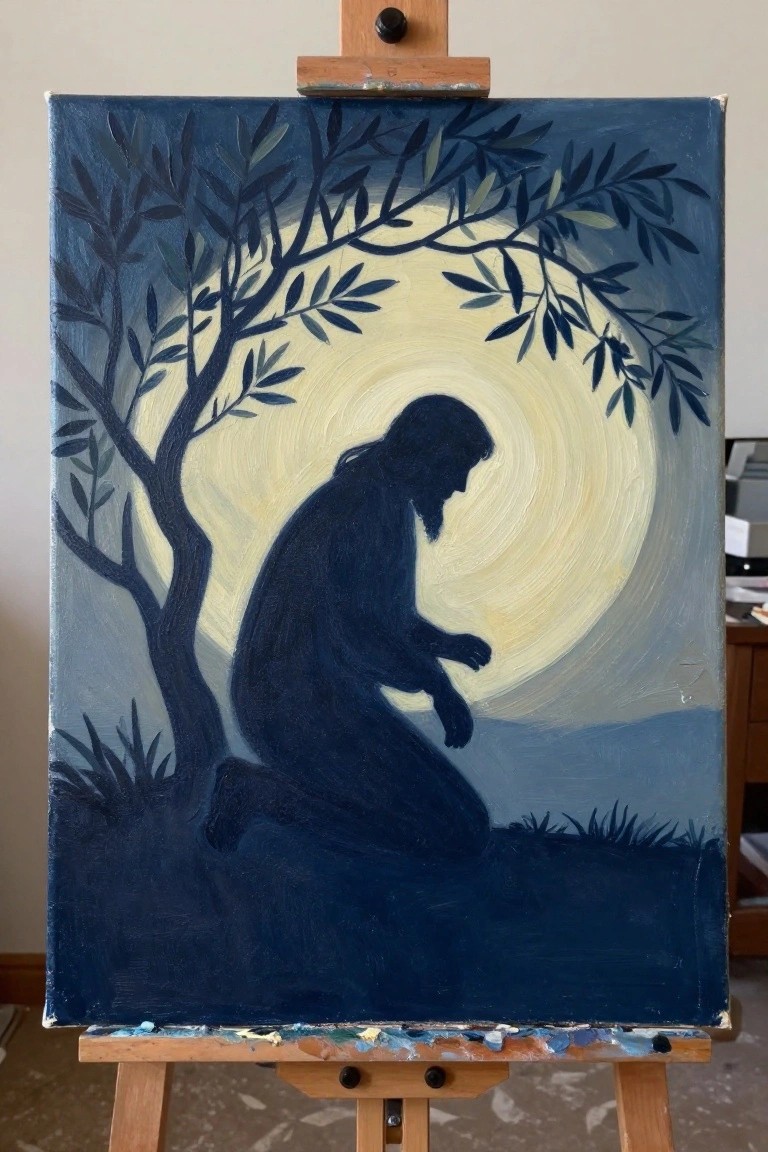
A strong oil painting idea here uses a single kneeling figure reduced to a dark silhouette against a large glowing circle, with tree branches arching across the top to frame the scene. The composition relies on value contrast and minimal detail to direct attention straight to the posture of prayer. This approach fits the moody classic wall art category, where simple shapes and a limited palette carry the impact.
What makes this idea useful is how the high contrast between the figure and the bright circle does most of the visual work, leaving room to focus on clean edges and soft blending around the light. An oil painting idea like this works especially well for practice because it trains control over large shapes without requiring intricate facial work. For wall art it adapts easily to different canvas sizes and can be personalized by adjusting branch placement or softening the glow into cooler tones.
Christ Kneeling Under Flowering Branches
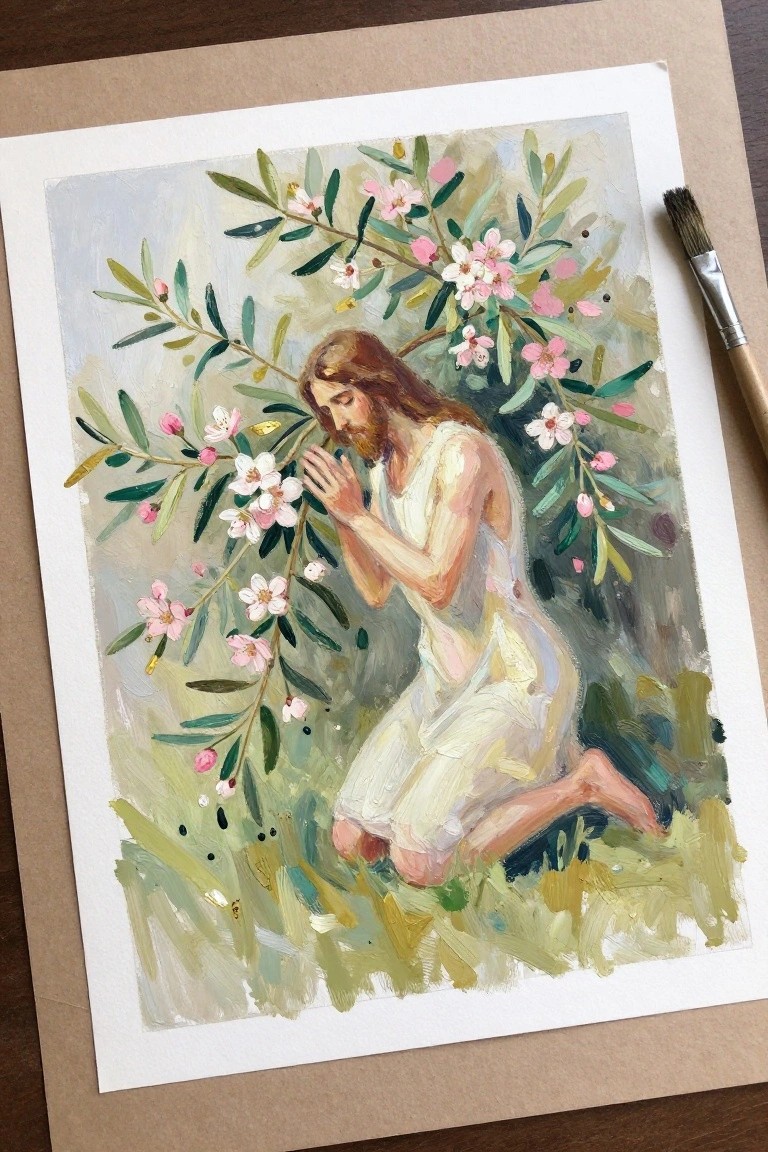
This oil painting idea places Christ in a kneeling prayer pose directly beneath curving branches loaded with pink and white blossoms. The branches create a loose frame that draws attention to the figure while the background stays soft and low in detail. It works as a portrait-inspired religious scene that mixes a clear central figure with light floral elements rather than a full landscape.
What makes this idea useful is how the overhead branches add shape and movement without crowding the main subject. The gentle blending of greens and soft earth tones keeps the focus on the pose instead of competing details. For wall art this layout adapts easily by shifting the flower colors or trimming back some of the foliage to fit a vertical canvas. It stands out on Pinterest because the blossoms give the scene a recognizable garden feel while still centering the prayer moment.
Stylized Prayer Figure with Balanced Foliage
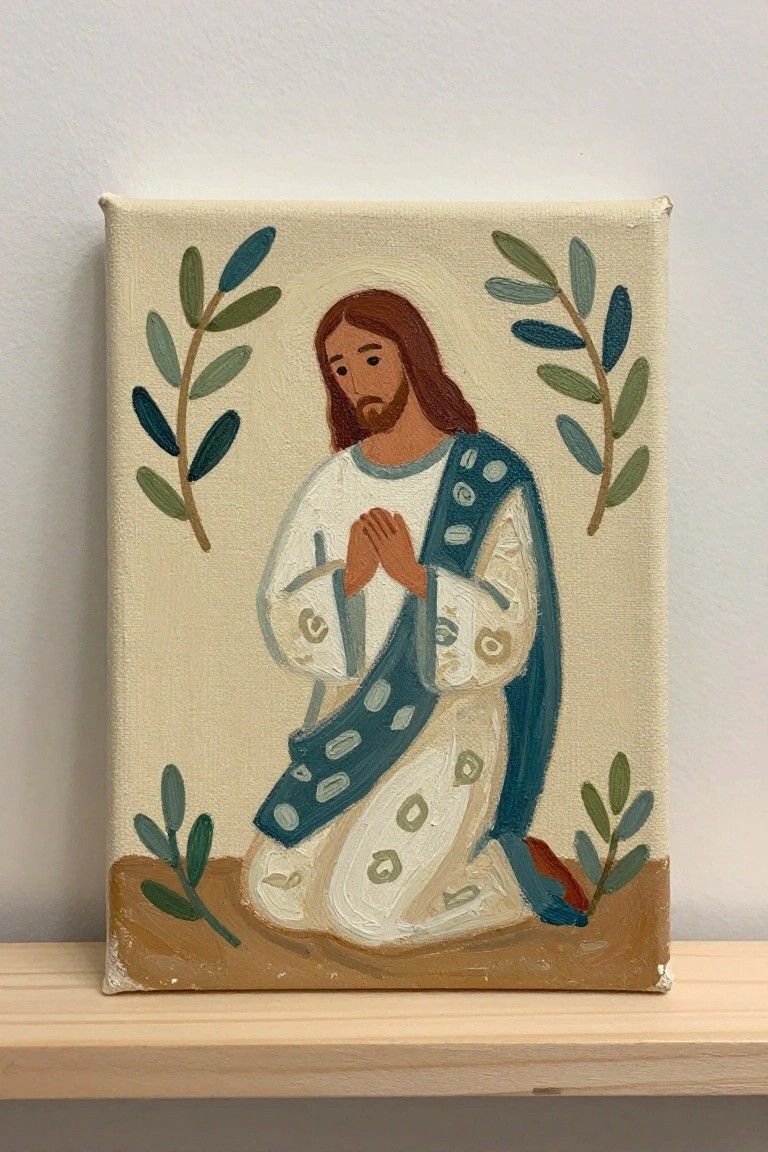
This oil painting idea focuses on a central kneeling figure of Christ in prayer, using simplified shapes and a limited palette to keep the emphasis on the pose and robe details. The composition places leafy branches on either side and a narrow earth strip at the base, creating clear visual balance without crowding the main subject. It fits the category of portrait-inspired classic wall art with decorative botanical accents.
What makes this idea useful is the way the flat color areas and soft edges reduce the need for complex blending while still allowing room to practice fabric folds. The symmetrical branch placement can be scaled down or expanded depending on canvas size, and the earth tone base gives a natural anchor that works for both small studies and larger pieces. For wall art, the clean layout stands out on Pinterest because it reads clearly even in thumbnail views.
Christ Praying with Olive Branches Overhead
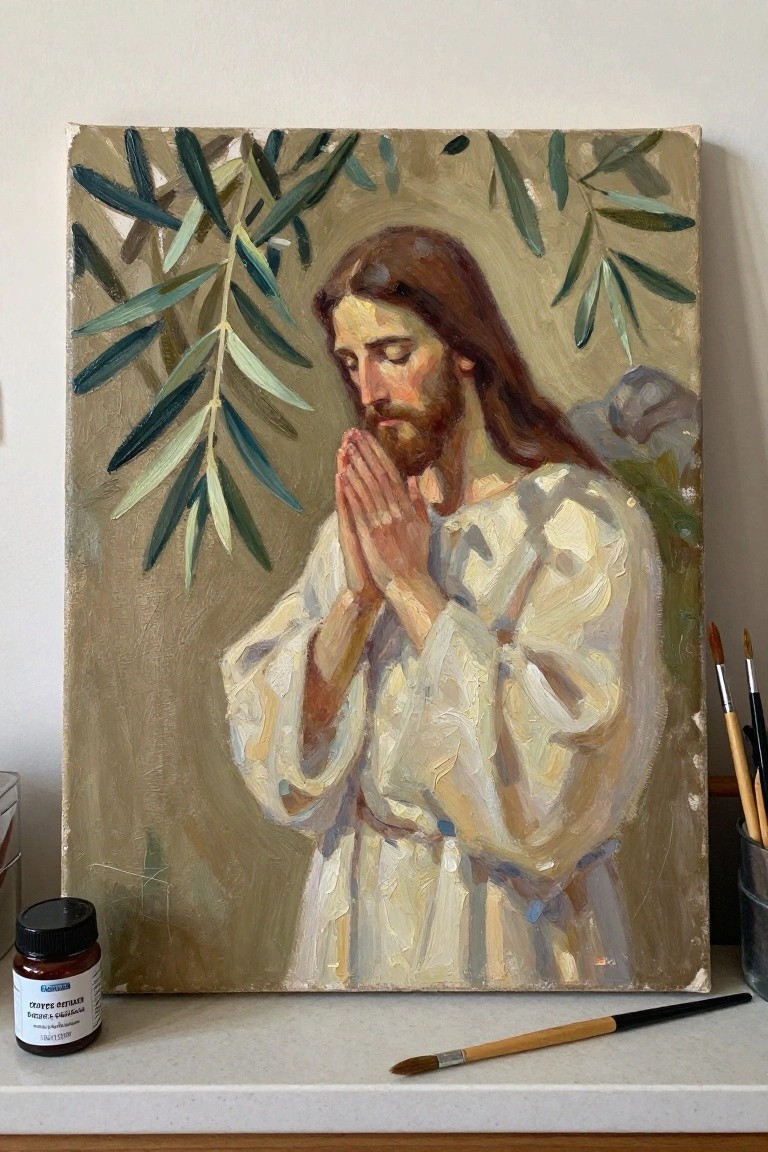
A portrait-focused oil painting idea places Christ in prayer at the center while using a few olive branches to suggest the Garden of Gethsemane setting. The composition keeps the background simple and muted so the clasped hands, robe folds, and downward tilt of the head remain the main points of interest. Soft blending between the figure and the leaves creates a gentle transition that still keeps the subject clear.
What makes this idea useful is the way a limited number of branches can stand in for the full garden scene without adding extra landscape work. The vertical layout and restrained color range work well for practice pieces or for pieces meant to hang in smaller spaces. For wall art, the same idea can be adjusted by changing the leaf density or shifting the branch placement to fit different canvas sizes.
Tree Trunk as the Focal Point of Prayer
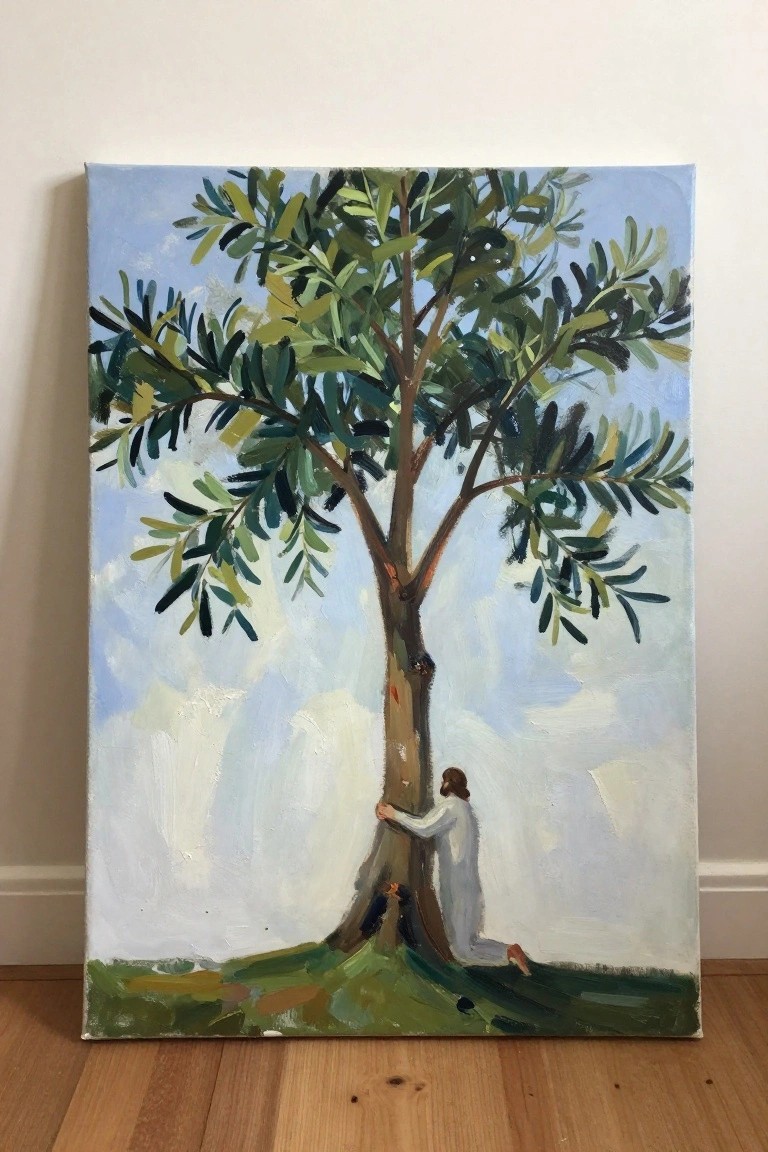
This oil painting idea uses a tall central tree as the main vertical anchor, with the praying figure positioned low against the trunk to create a grounded, intimate scene. The broad handling of foliage and open sky keeps the emphasis on the tree’s form rather than on fine details, fitting a landscape approach with a single figure element. The simple ground plane and soft cloud shapes help the composition stay balanced without competing elements.
What makes this idea useful is how the tree’s size and placement let you adjust the sky or ground colors easily to shift the overall mood. The layout works well for medium canvases because the figure stays secondary and does not require much detail work. For practice, the idea translates quickly to different tree shapes or fewer branches while still reading as a Gethsemane scene, and it stands out on Pinterest through its clear vertical structure.
Christ Standing Forward While Disciples Sleep Nearby
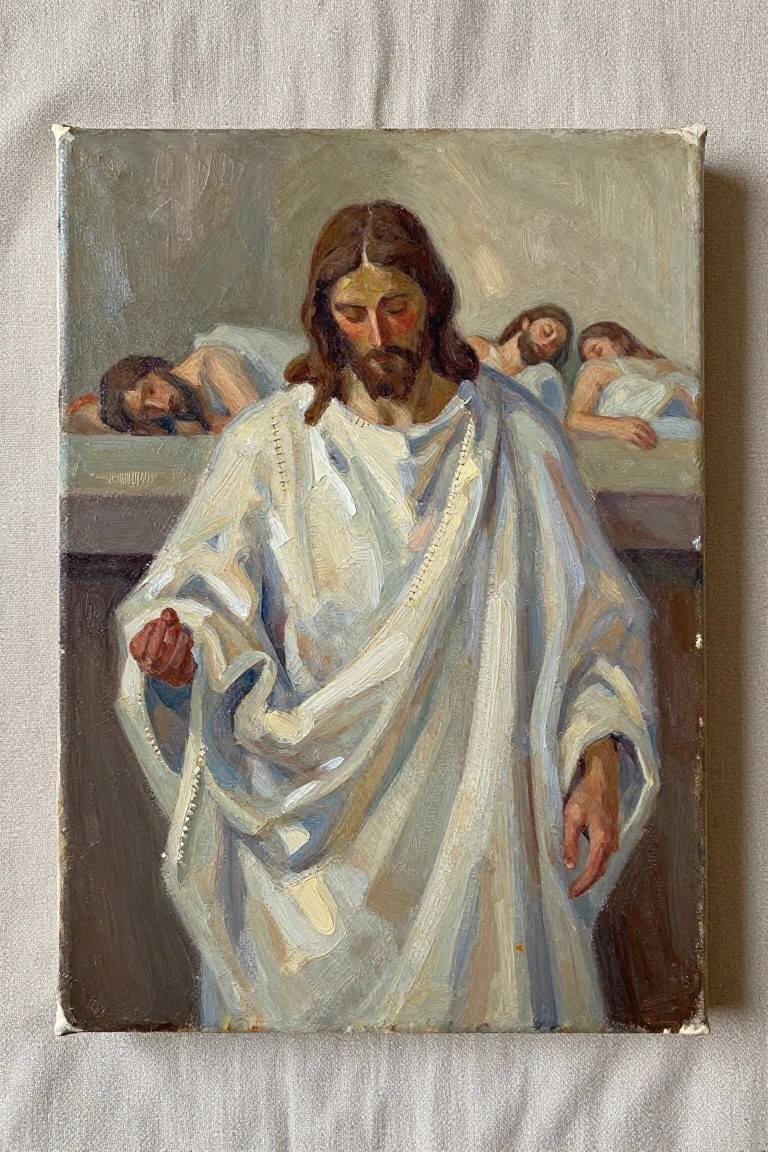
This oil painting idea places Christ in the foreground wearing loose white robes with visible folds and soft color shifts, while three disciples rest on a raised platform behind him. The layout keeps the main figure dominant and uses the background figures mainly to set the scene without pulling focus. It fits the classic religious narrative style that works as traditional wall art.
What makes this idea useful is the clear separation between the upright central form and the reclining figures, which builds depth with minimal extra elements. You could simplify it by cropping tighter around Christ for a smaller canvas or extend the background slightly if you want more garden context. The muted palette also makes it easy to adjust for different lighting or to practice drapery on a single large figure.
Christ Kneeling Against an Olive Tree Trunk
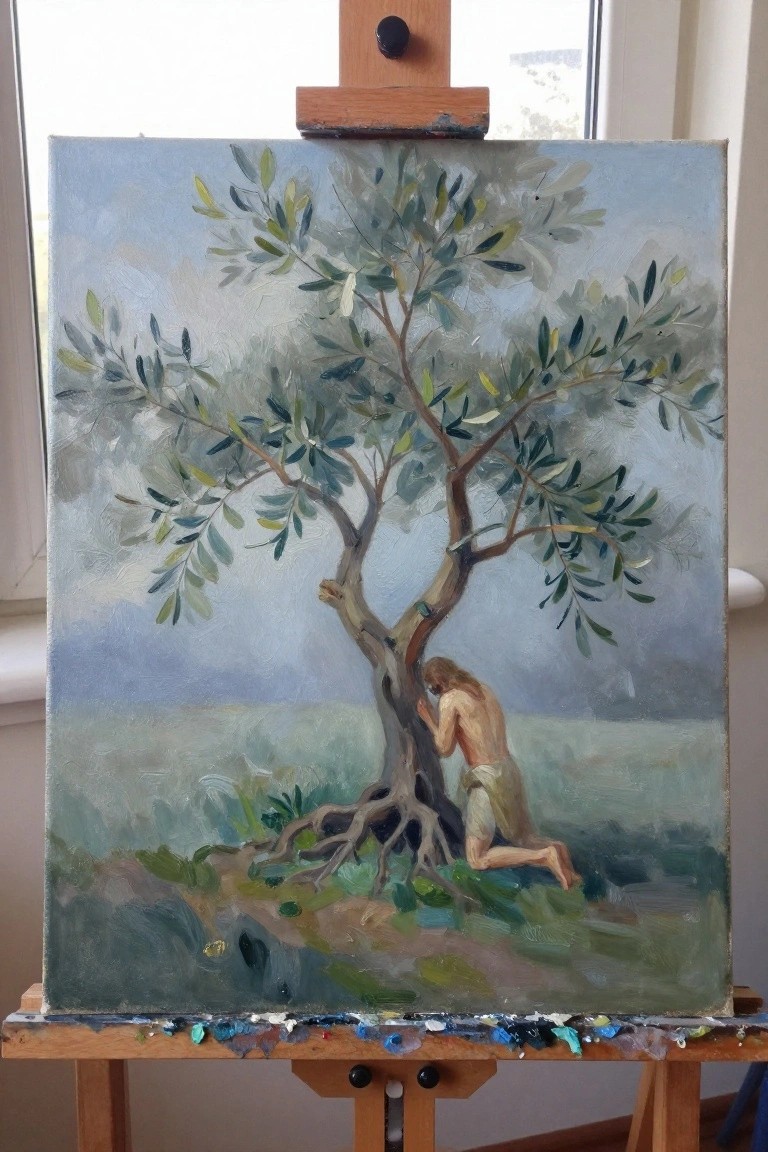
This oil painting idea places the praying figure low and close to the tree roots so the trunk itself becomes the main vertical support in the scene. The spreading branches fill the upper half while the open field and sky keep the lower half simple, which helps the eye move naturally from the figure up into the foliage. It works as a landscape with a single figure, a common approach for religious subjects that keeps the focus on the act of prayer rather than extra details.
What makes this idea useful is the clear division between the busy branches and the quieter ground plane, which makes it easier to balance a larger canvas without overcrowding. The soft sky and distant horizon give flexibility to adjust the mood through color changes while the tree shape stays consistent. For practice this layout works well because it combines foliage handling with a figure study in one piece, and the same basic arrangement can be tightened or expanded for different frame sizes.
Christ Praying Within a Simple Laurel Wreath
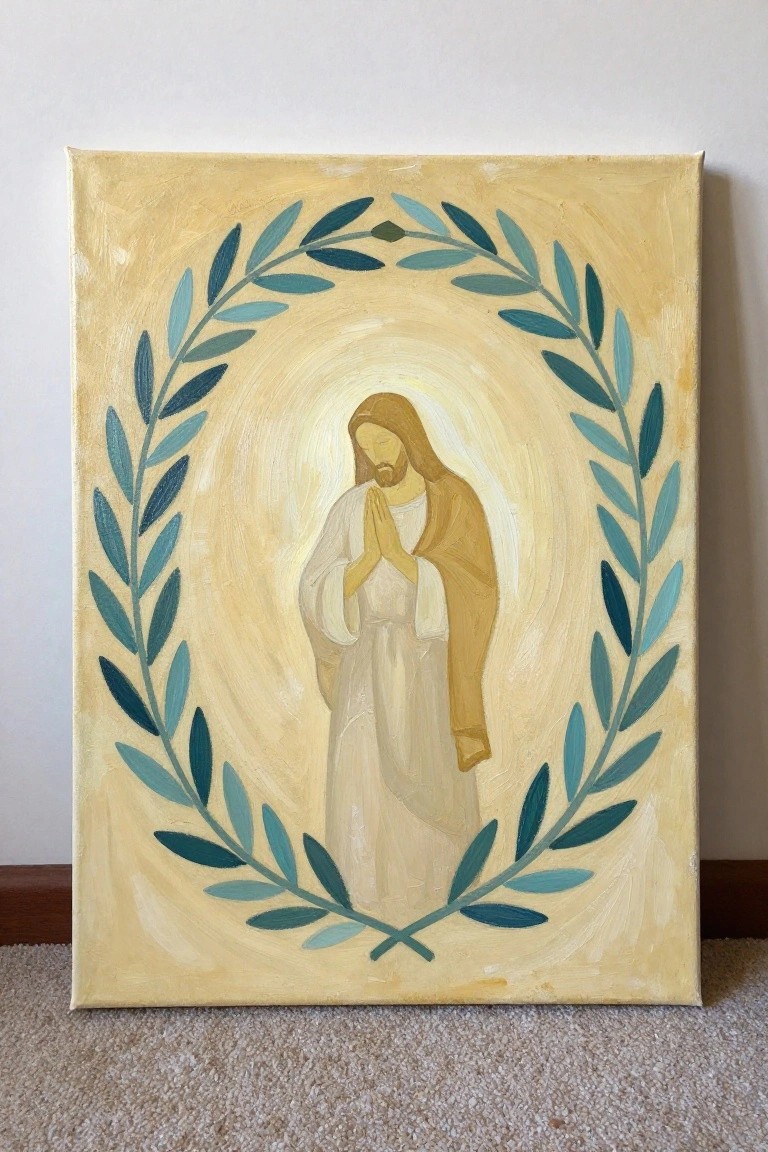
A centered portrait of Christ in prayer pairs naturally with a circular laurel wreath to keep the focus tight on the figure. The soft glow behind the subject and the warm yellow ground create a contained, balanced layout that works as classic wall art with a decorative frame built in. This approach keeps the oil painting idea straightforward while the overlapping leaves add just enough structure around the edges.
What makes this idea useful is the wreath acting as a built-in border that simplifies composition choices. You could swap the leaf tones for deeper greens or earth colors to shift the mood, or reduce the number of leaves if you want a faster version for practice. For wall art, the light background and contained shape make it easy to hang in smaller spaces without losing impact. The softer blending around the figure also helps the idea translate well to different canvas sizes.
Profile View of Christ with Soft Atmospheric Background
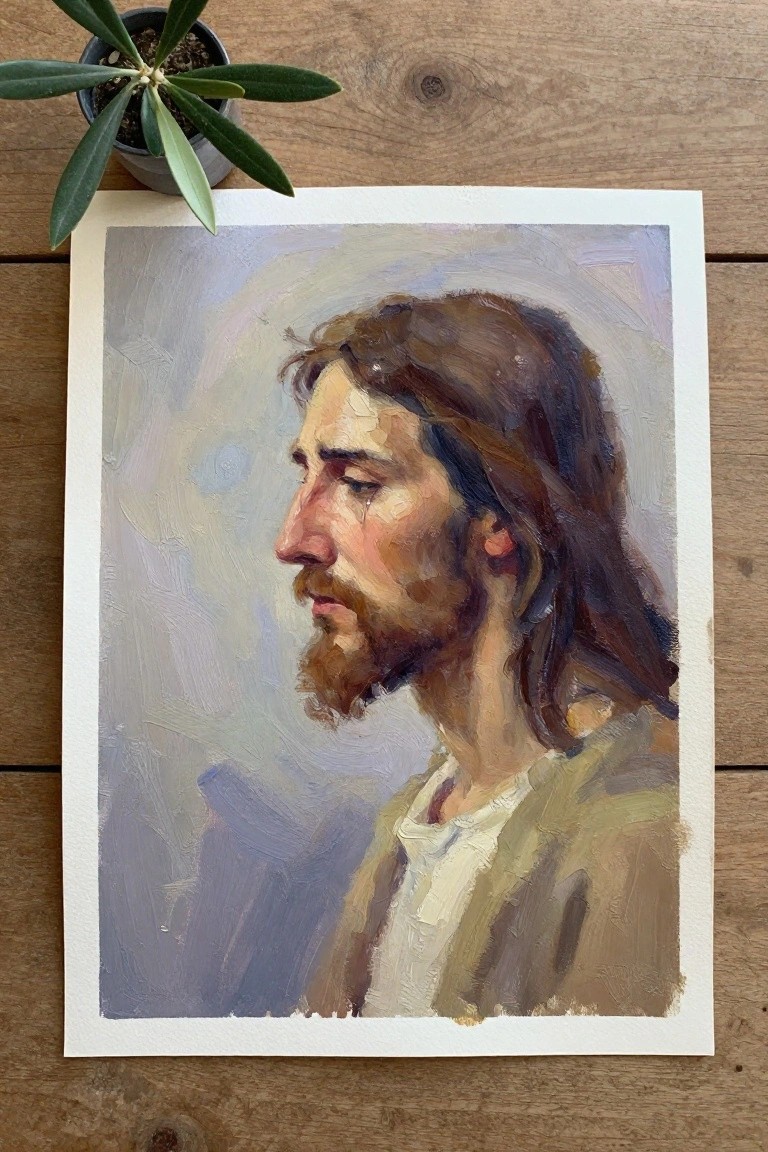
This oil painting idea uses a close profile of Christ to keep the focus on the face and beard through simple directional brushwork and a narrow color range. Earthy browns and warm skin tones stand out against the cooler, hazy blue-gray background, which helps the figure feel grounded without extra detail. The result is a straightforward portrait-style approach that works well for Garden of Gethsemane themes centered on quiet prayer.
What makes this idea useful is the way the soft blending and limited palette reduce the need for complex scenery while still creating depth. The composition adapts easily to smaller canvases or studies because the main elements stay centered on the head and shoulders. For wall art, the same setup can be adjusted by shifting the background tone or tightening the crop around the face to match other pieces in a series.
Angel Above Kneeling Christ with Resting Disciples
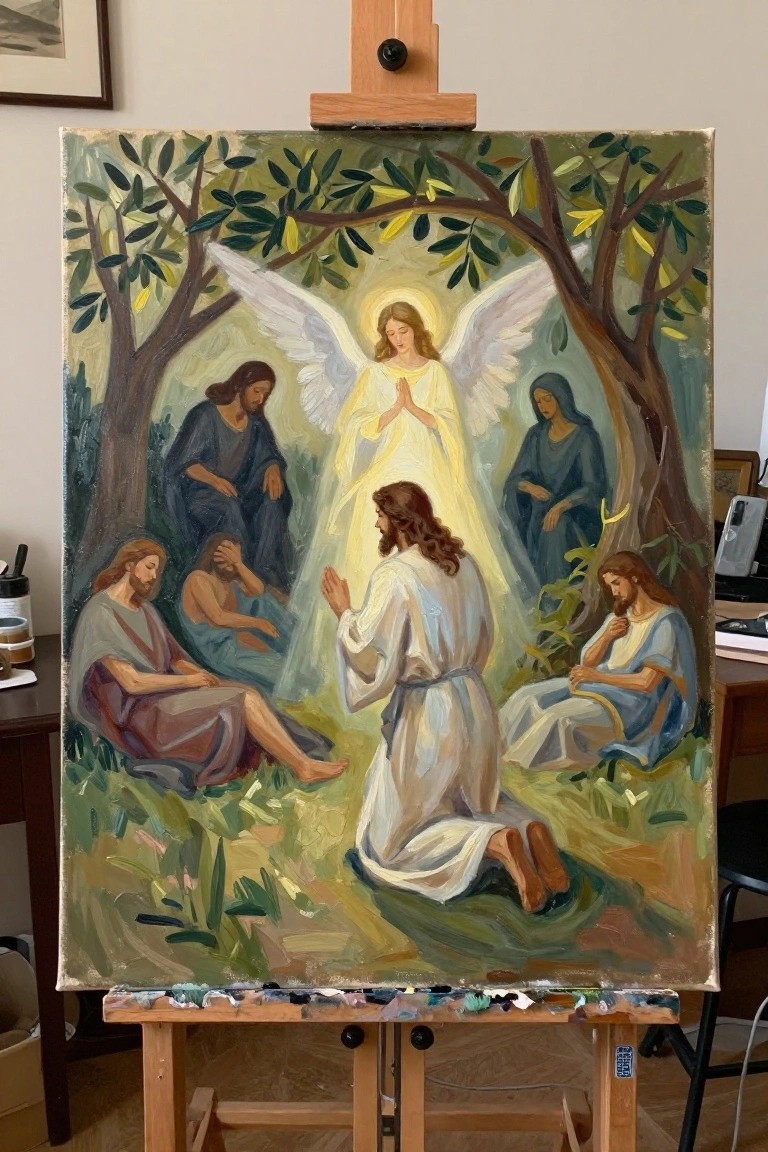
This oil painting idea places Christ in the center foreground on his knees with hands raised, while a glowing angel stands directly behind him in prayer pose and four disciples sit at varying distances among the trees. The layout uses the trees to frame the scene and create a natural enclosure that keeps attention on the two central figures. Soft blending in the greens and earth tones lets the lighter robes and the angel’s wings provide the main contrast without needing sharp outlines.
What makes this idea useful is the clear vertical line from the angel down through Christ that organizes the rest of the composition. The muted background colors let the lighter figures stand out even at smaller sizes, which helps if you want a version for wall art or a gift. You could simplify it by dropping two of the disciples or tightening the crop to just the angel, Christ, and one figure on the left. The overlapping forms and gentle color shifts make it straightforward to adjust the scale without losing the overall balance.
Frequently Asked Questions
What criteria were used to select these 23 powerful oil paintings?
The selection likely focuses on works that strongly emphasize the moment of Christ’s prayer in the Garden of Gethsemane, highlighting emotional depth, masterful use of light and shadow, and historical significance in religious art. Curators often prioritize paintings that capture the solitude, anguish, and surrender in the scene while showcasing diverse techniques from different eras.
Which artists are represented among these 23 oil paintings?
Many collections include masters such as Heinrich Hofmann, whose serene yet intense portrayals stand out, along with contributions from artists like James Tissot or lesser-known 19th-century European painters. The list typically mixes well-known figures with emerging talents to illustrate how the theme has evolved over centuries.
Where can viewers access the original paintings or high-quality reproductions?
Originals are often housed in museums like the Vatican collections or major European galleries, while digital archives from institutions such as the Metropolitan Museum of Art provide free online views. For reproductions, reputable sites offer prints on canvas that preserve the oil texture, allowing enthusiasts to study details like brushwork and color at home.
What common symbols appear across these depictions of Christ’s prayer?
Artists frequently incorporate elements such as the cup of suffering, sleeping disciples in the background, and olive trees to represent isolation and divine connection. These symbols help convey the spiritual weight of the moment, with variations in lighting used to draw attention to Christ’s upward gaze or folded hands.
How do different paintings interpret the emotional intensity of this biblical event?
Some works focus on quiet resignation through soft tones and balanced compositions, while others heighten drama with stark contrasts and dynamic poses to reflect inner turmoil. Viewers can compare these approaches to appreciate how each artist personalizes the theme of faith amid adversity.