I have always liked oil paintings that show scenes from the resurrection.
They often focus on the empty tomb and the simple details around it.
Over time I have found a few that stand out to me for their careful brushwork and natural light.
I enjoy seeing how different artists handle the same subject in their own style.
These are the ones I keep coming back to when I think about this part of the story.
Sunrise Over the Open Tomb

This oil painting idea places the empty tomb directly in a wide landscape at sunrise, with the rolled stone and draped cloths sitting in the foreground against a glowing sky. The composition works by balancing the dramatic light rays and soft color shifts in the sky with the more grounded, textured forms of the stone and fabric below. It fits into the landscape category while incorporating clear resurrection symbols through the open cave and displaced elements.
What makes this idea useful is the way the strong horizon and light source give the whole scene built-in depth without needing complex details. The color palette can be shifted toward cooler tones for a different season or time of day while keeping the same layout. For practice, the large open areas let you focus on blending skies and suggesting distant hills before adding the closer tomb elements. An oil painting idea like this works especially well for wall art because the scale and light effects hold up from a distance.
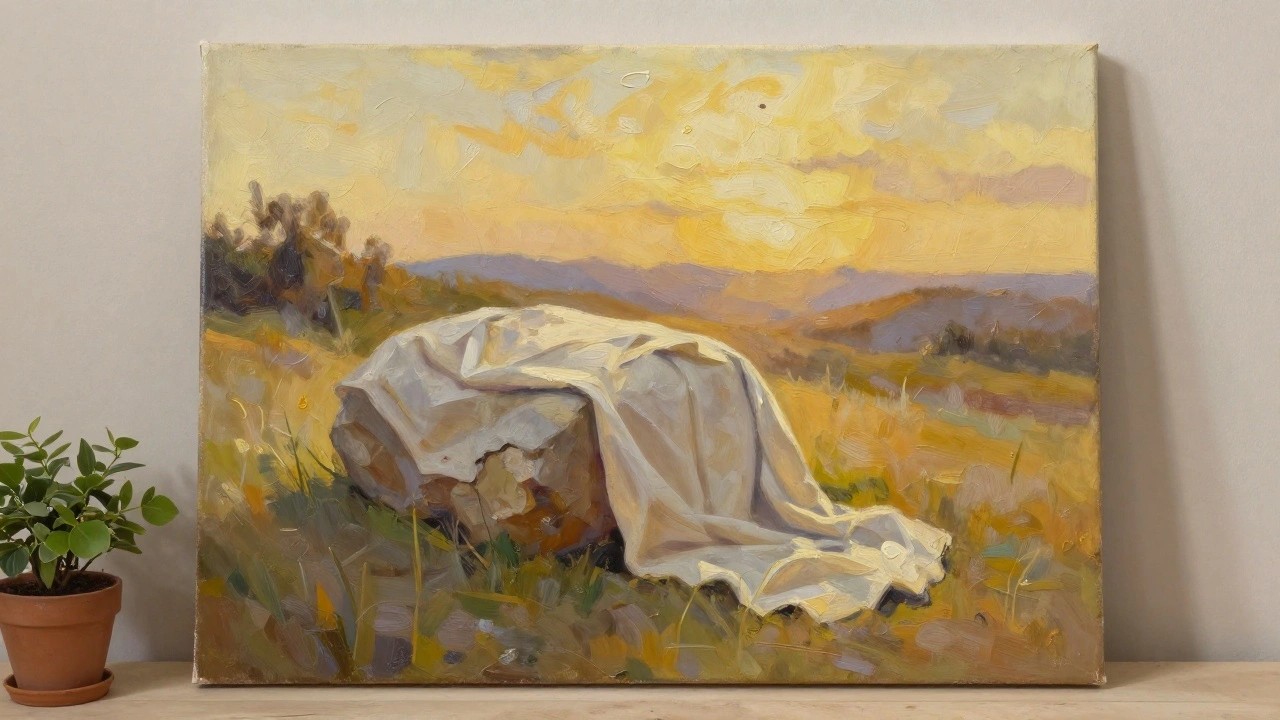
Linen Wrappings Left in the Tomb

A still life of loosely folded white linen on a warm brown surface works as a direct reference to the empty tomb. The idea keeps the focus on the fabric itself, using a diagonal placement and simple background shapes to avoid clutter. Blended edges and visible brushwork help the folds feel substantial while the muted palette keeps the overall mood restrained.
What makes this idea useful is how well the fabric folds translate to oil paint without needing complex details. The earthy color range adapts easily to different lighting setups or canvas sizes, and the same layout can be tightened or loosened depending on whether you want a quick study or a finished piece. It also gives a quieter option for resurrection-themed work that still reads clearly as a symbol of the empty tomb.
Angel Holding the Tomb Cloth at Sunrise

A resurrection oil painting idea built around a single angel figure standing beside the rolled stone, holding out a length of white cloth against a bright halo and rising sun. The composition keeps the focus on the angel’s pose and the fabric while the wings and light rays fill the upper space without competing for attention. This approach fits classic wall art because the simple foreground elements and glowing background let the subject read clearly from a distance.
What makes this idea useful is the way the cloth creates a clear action for the angel, giving you a ready-made center of interest for practicing drapery folds and figure placement. The light palette of pale yellows, soft blues, and whites works well for a mid-size canvas and could be adjusted to a cooler tone or tighter crop if you want a smaller study. For practice, this kind of subject lets you focus on blending the wings and background first, then add the cloth and stone as the final layers.
Path to the Empty Tomb at Sunrise

This oil painting idea uses a straight dirt path cutting through fields as the main device to lead the viewer toward a small tomb structure set against a low horizon. The landscape category works here because the wide open fields and layered sky give plenty of room for color transitions while the path itself acts as a clear focal line. Soft blending in the sky and varied brushwork in the grass keep the eye moving forward without crowding the tomb at the center.
What makes this idea useful is the built-in leading line that makes the tomb easy to place without extra elements. You could adapt the same layout by shifting the sky to cooler dawn tones or tightening the crop to focus more on the path and less on the distant hills. For practice this kind of scene helps with color mixing across large areas while still leaving space to add texture in the foreground flowers. The warm horizon against cooler upper sky also gives the finished piece strong contrast for sharing online.
Silhouette Approaching the Open Tomb
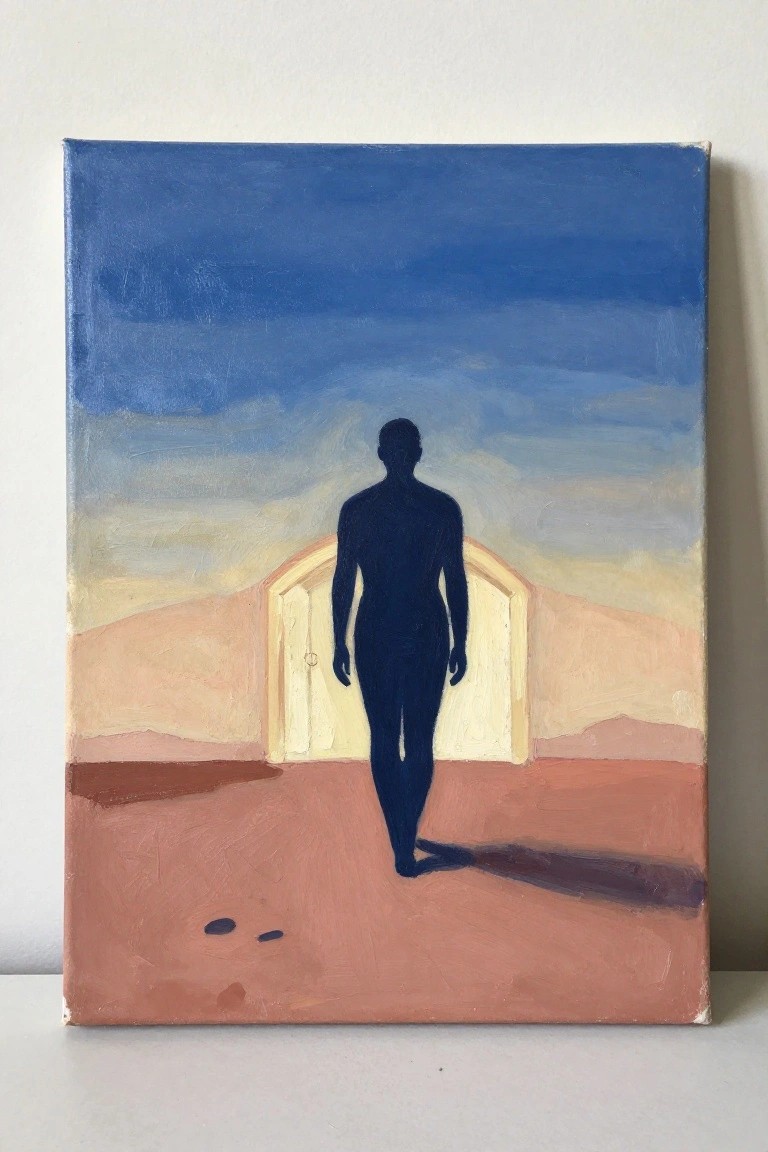
An oil painting idea built around a single dark figure walking straight toward an open doorway uses a strong vertical shape against a horizontal landscape to keep the eye moving forward. The contrast between the solid silhouette and the light interior of the structure makes the empty entrance the clear focal point. This fits a moody landscape category where minimal detail and broad color areas create a sense of distance and quiet movement.
What makes this idea useful is how the silhouette removes the need for facial features or clothing details, letting the composition stay simple while still suggesting forward motion. You could adapt it by changing the sky from deep blue to softer dawn tones or by adjusting the ground color to shift the time of day. For practice, this kind of layout works well because the limited palette forces attention on shape and edge control, and it could be scaled down easily for a smaller canvas without losing impact.
Empty Tomb Through an Arched Frame
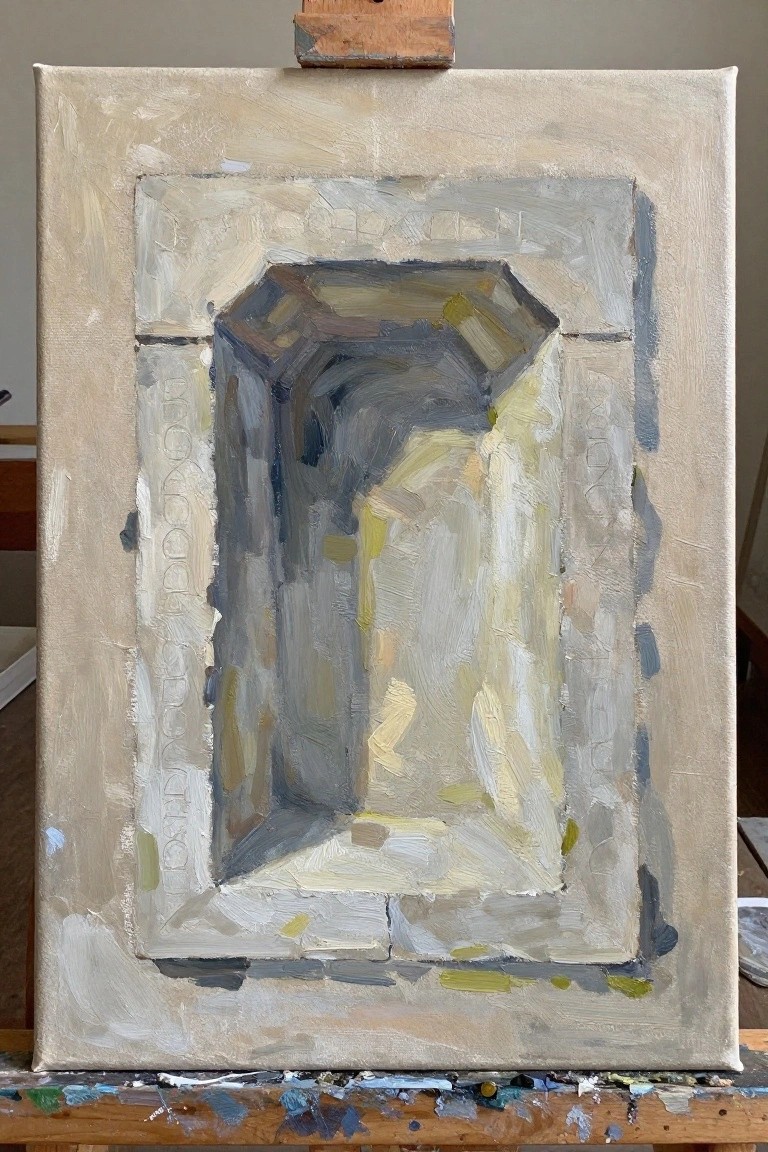
The core idea is to frame the empty tomb as a recessed archway where shifting planes of paint suggest depth and an open interior without showing any figures. Broad, directional brushwork and overlapping layers of muted gray, beige, and pale yellow create the sense of stone surfaces catching uneven light. This fits a moody, architectural category of resurrection painting that relies on structure and atmosphere rather than narrative detail.
What makes this idea useful is how the arch gives a clear focal point while letting texture and value changes carry most of the visual weight. You can adapt the same layout with stronger warm-cool contrasts or simplify the edges for a quicker study. For wall art it works at medium sizes because the composition stays readable from a distance, and the basic shape is easy to personalize with different light directions or added stone details.
White Lilies in a Neutral Vase Still Life
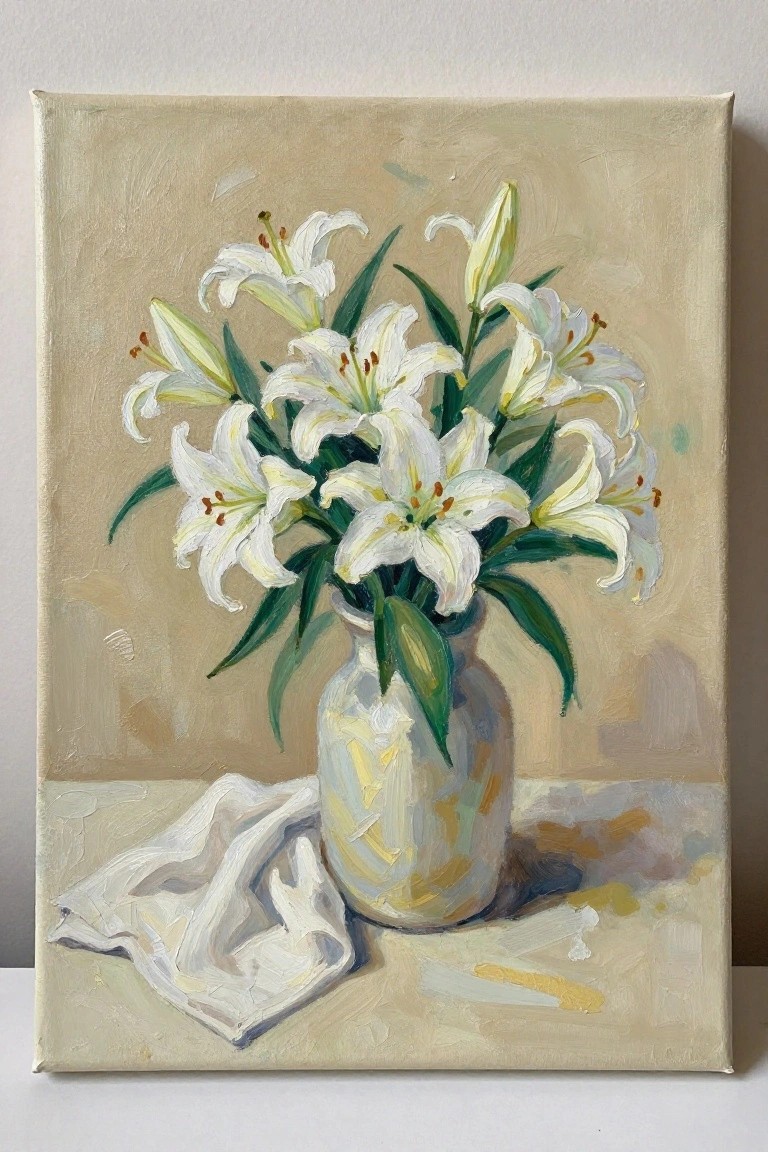
A floral still life built around white lilies works well for resurrection themes because the upright blooms and open petals naturally draw attention without needing extra elements. The idea centers on a tight cluster of flowers set in a simple vase, with green leaves providing shape and the light background keeping everything readable. A draped cloth at the base adds a bit of weight and helps the composition feel complete rather than floating.
What makes this idea useful is the restricted palette, which lets you focus on form and light without juggling too many colors. The layout adapts easily to different canvas sizes and can be simplified by using fewer stems if you want a faster study. For wall art or seasonal pieces, the clean contrast between the flowers and background holds up well even when the paint is applied in broader strokes.
Hilltop Crosses Over an Open Tomb
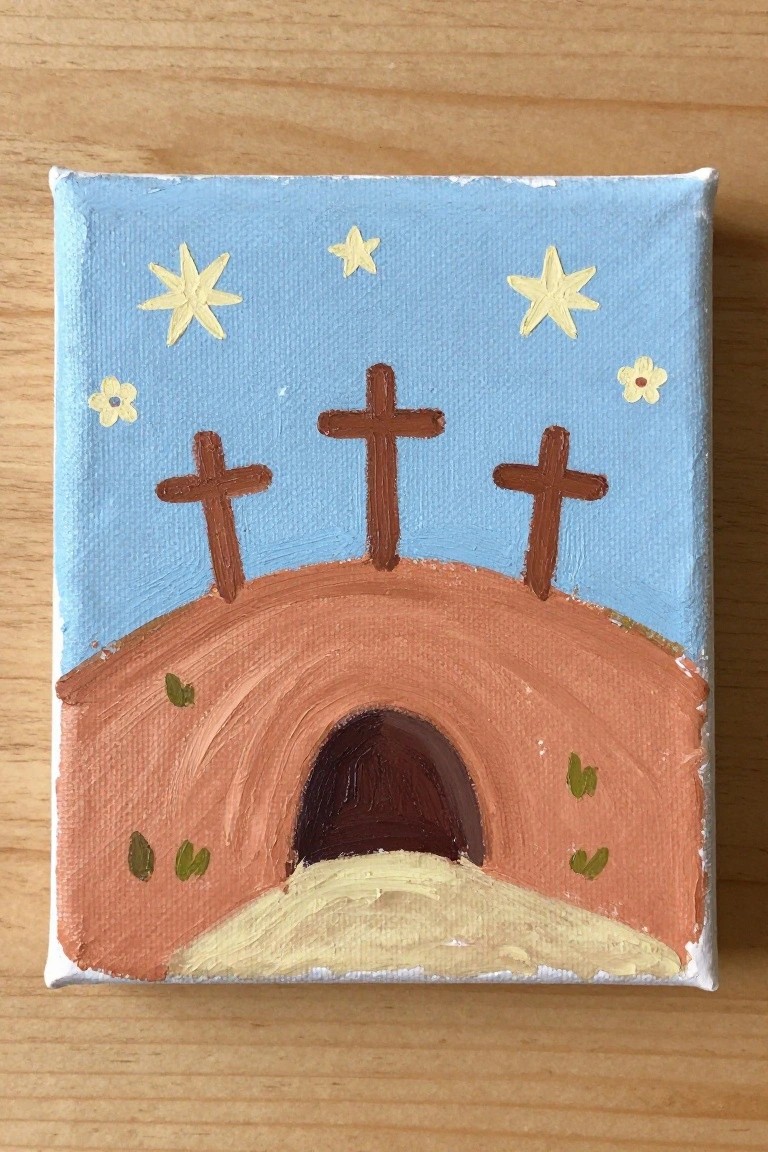
A landscape-style oil painting idea places three crosses on a rounded earthen mound that leads down to a dark arched tomb entrance. The composition keeps the focus on the open cave by using the hill’s curve as a natural frame while scattering small stars and flowers across the sky above. This approach works well as classic wall art because the simple shapes and clear color blocks let the oil paint’s texture and blending do most of the visual work.
What makes this idea useful is how the limited color palette and central tomb opening create an easy focal point without needing complex details. The same layout can be scaled down for a small canvas or adapted by changing the sky to a sunrise for a different seasonal feel. For practice, the subject lets you work on basic landforms and value contrast before adding any extra elements like the stars.
An Arched Entrance Evoking the Empty Tomb

The core idea is an arched passageway that pulls the viewer inward toward an undefined empty space, using the shape itself to suggest a tomb entrance. Broad color zones around the arch build depth through overlapping layers and value changes rather than detailed forms or figures. This fits a decorative architectural category where simple shapes and color contrast do most of the work.
What makes this idea useful is the strong inward perspective created by the arch, which works well even at larger scales for wall pieces. The color blocks can be adjusted easily for different moods or seasons, and the layout leaves room to add faint light at the back or keep the interior more open. For practice, this kind of subject helps focus on blending edges and managing depth without needing complex details.
Women Carrying Jars Toward the Tomb
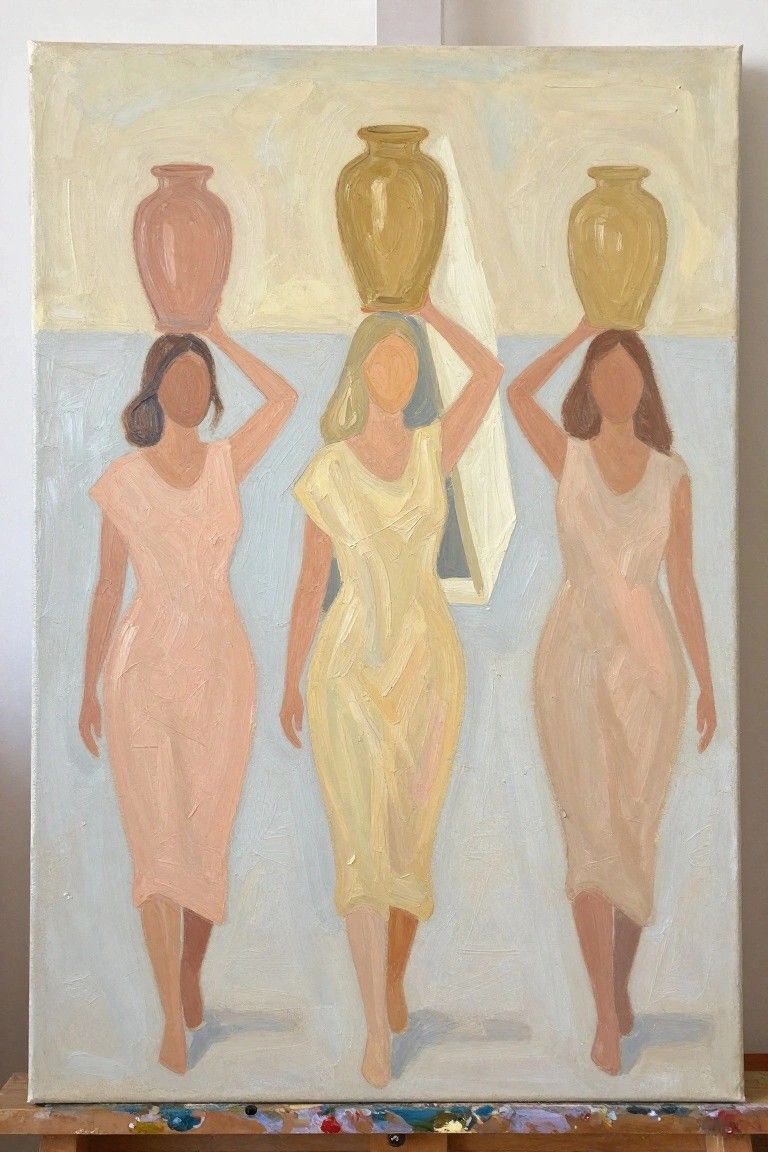
Three women in simple dresses walk in a line while balancing oversized jars on their heads. The idea uses a repeated pose and a limited color range to create a quiet procession scene that fits a resurrection theme. Soft edges and flat background planes keep attention on the figures and the vessels without added detail.
What makes this idea useful is the clear repeating structure, which lets you change the number of figures or jar colors quickly. The muted palette works for early morning light and can be shifted toward cooler tones if you want a stronger tomb setting. For practice, the limited background makes it simple to focus on figure proportions and fabric folds. You could also shrink it to two women or turn the jars into smaller containers if you want a tighter composition.
Rolled Stone Still Life in Muted Tones

A single stone set against a plain background forms the core idea here, capturing the moment the tomb was opened without any added figures or symbols. This still life approach keeps attention on the weight and shape of the stone through careful value shifts and a low-contrast palette. The soft transitions between light and shadow make the form feel solid while the empty space around it emphasizes isolation.
What makes this idea useful is how the limited elements let you practice edge control and subtle color mixing without getting overwhelmed. The neutral background could be swapped for a pale sky tone or a slightly textured ground to suggest dawn light. For wall art in a resurrection series, the same layout works well at a larger scale or with minor adjustments like a deeper cast shadow to change the mood.
Empty Tomb with Light-Filled Recess and Fallen Cloth

An oil painting idea built around an empty tomb uses a deep box-like recess to create strong depth and contrast. Side openings let in shafts of light that hit a crumpled white cloth on the stone floor while leaving most of the space in shadow. This setup works as a moody still life that relies on the enclosed space and limited elements to hold attention.
What makes this idea useful is how the recess itself does most of the compositional work, so the cloth becomes the clear focal point without extra detail. The muted earth tones and soft light patches make it simple to scale down for practice or to shift the light direction for a different mood. For wall art, the biblical subject combined with the dramatic interior framing tends to perform well on Pinterest because viewers stop to read the space. You could easily adapt it by changing the cloth folds or adding a second small light source on the opposite wall.
Empty Tomb at First Light
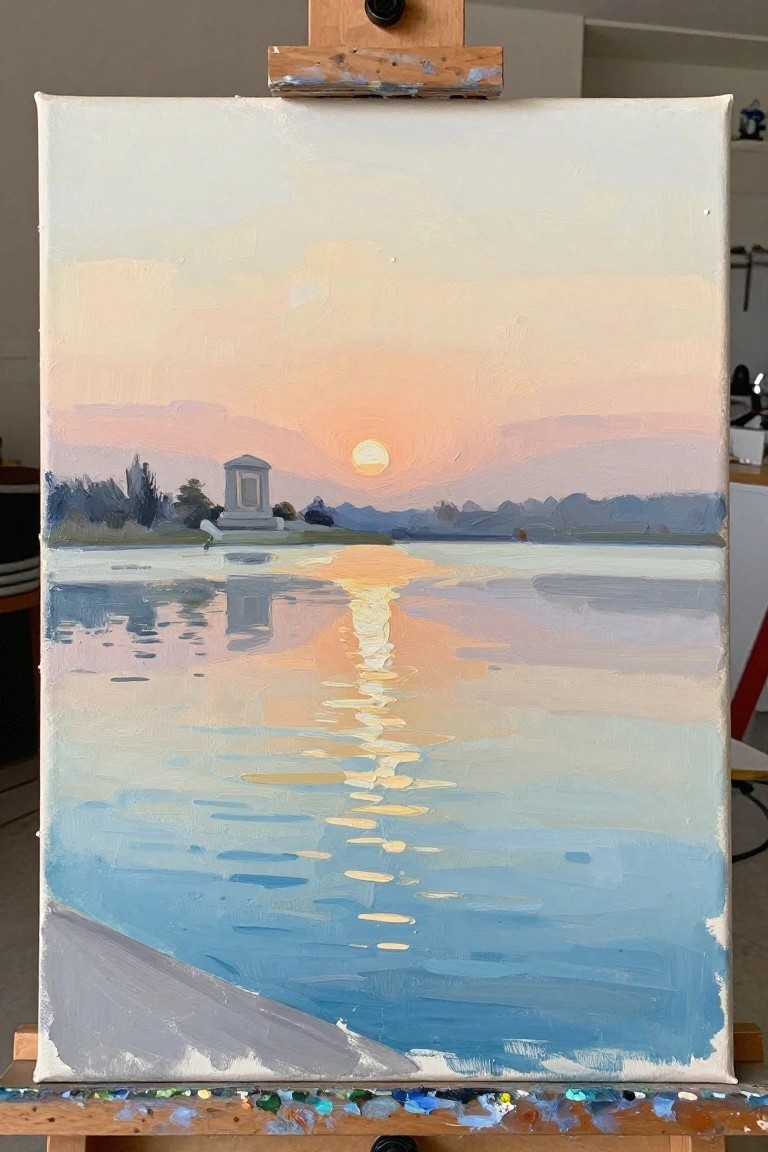
A landscape oil painting idea built around a small classical tomb placed on the shore of a wide, still body of water works well when the low sun creates a direct path of light across the surface. The composition keeps the tomb as a modest focal point while the reflection and soft sky gradients pull the eye forward without crowding the scene. This approach sits comfortably in the landscape category and relies on gentle color shifts rather than sharp detail.
What makes this idea useful is how the horizontal layout and single light path give clear structure without needing complex elements. The same setup can be scaled down for a practice piece or widened for a larger canvas, and the tomb shape can be swapped for another simple building if you want a different reference. The softer sky and water transitions also make it a straightforward choice for working on blended edges and light values.
Vibrant Meadow Tomb with Colorful Flowers
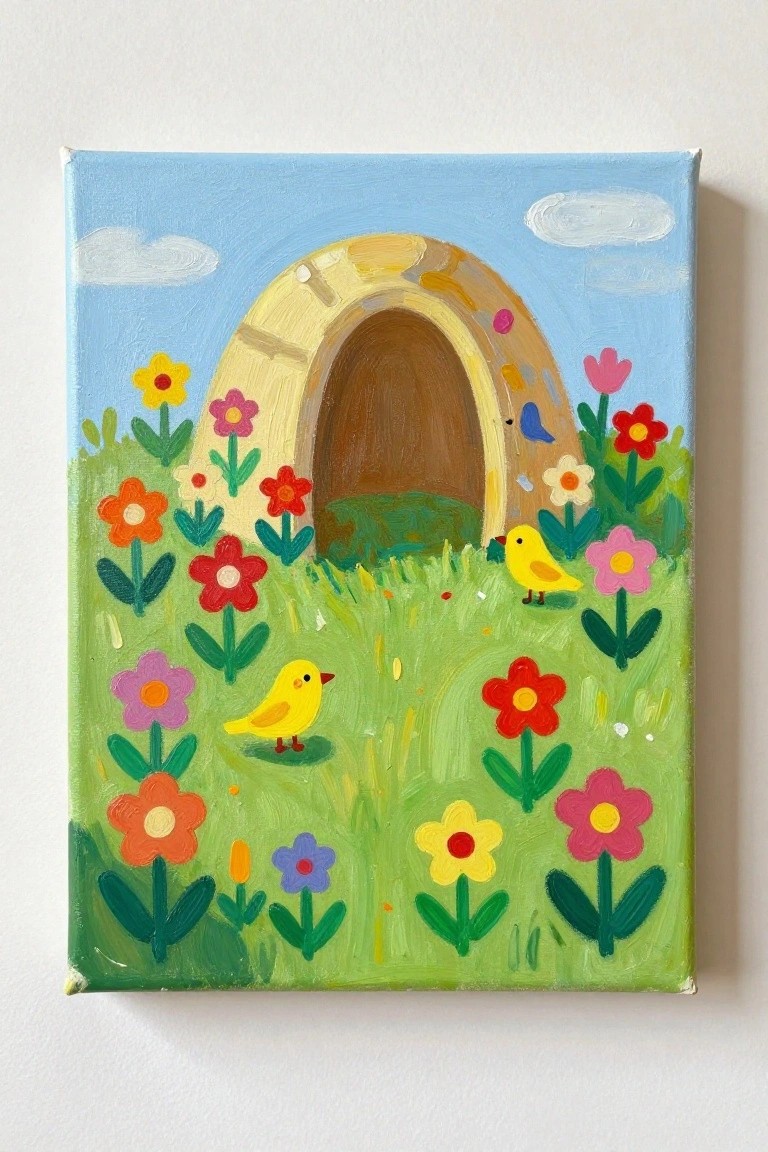
An oil painting idea like this places an open stone arch as the central tomb entrance in a green field, surrounded by scattered clusters of bold flowers in red, orange, pink, yellow, and purple. Two small yellow birds sit on the grass to add simple points of interest without crowding the scene. The style works as a decorative floral landscape that relies on flat color areas and clear shapes rather than heavy blending or texture.
What makes this idea useful is the open layout that lets bright flower colors do most of the work while the arch stays easy to paint as a solid shape. You could scale the tomb larger on a bigger canvas or swap the flower colors for softer pastels if you want a calmer piece for seasonal decor. For practice, the idea adapts well because the flowers can be simplified into quick strokes while the birds and arch give you clear shapes to build contrast around.
Symbolic Grid With an Empty Tomb at the Center
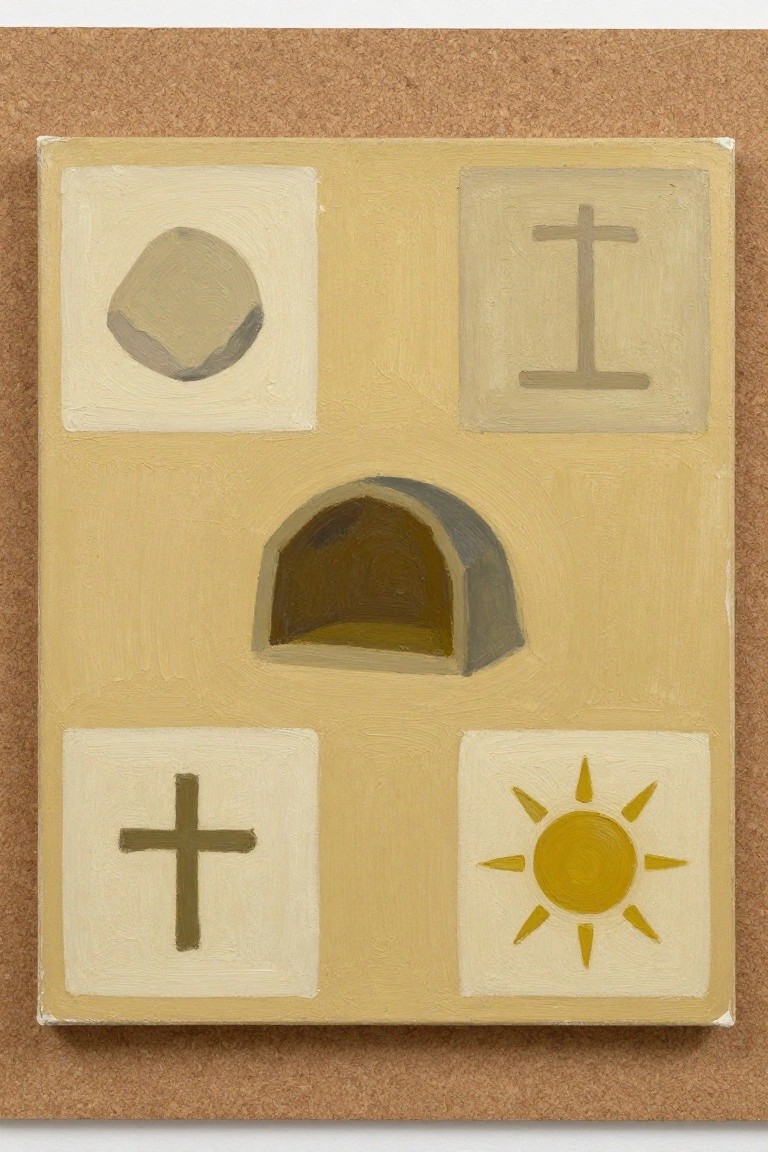
This oil painting idea uses a simple grid layout to place resurrection symbols around a central empty tomb. The rolled stone, empty cross, standing cross, and sun are each contained in their own square while the tomb sits in the middle as the main focus. The idea works as symbolic religious wall art where the balanced arrangement and limited color palette keep attention on the empty space inside the tomb.
What makes this idea useful is the clear division of space that lets you paint each symbol separately before connecting them through the shared background. You can easily swap in different symbols or adjust the color scheme to match other pieces in a series. For practice this kind of layout helps with shape control and edge work without requiring complex blending. It also translates well to smaller canvases or greeting card designs if you want to adapt it for gifts.
Sparse Chapel with Crosses on a Rolling Hill

This oil painting idea centers on a small structure topped with three crosses set against open hills and a wide sky, capturing the quiet site of the empty tomb through a straightforward landscape approach. Broad areas of warm red-orange ground contrast with cooler sky tones to pull attention toward the central building and crosses. Loose strokes in the foreground keep the eye moving across the scene while the distant hills add depth without crowding the main elements.
What makes this idea useful is the way the simple layout and limited palette let the crosses stand out clearly as the focal point. You could adapt the same composition by shifting the sky colors toward sunset or tightening the foreground strokes for a more contained version. For wall art this kind of open landscape works especially well when scaled up so the sky area takes up most of the canvas. The idea also translates easily to smaller studies if you want quick practice on color blocking and basic land forms.
Empty Tomb with Cross and Wildflowers
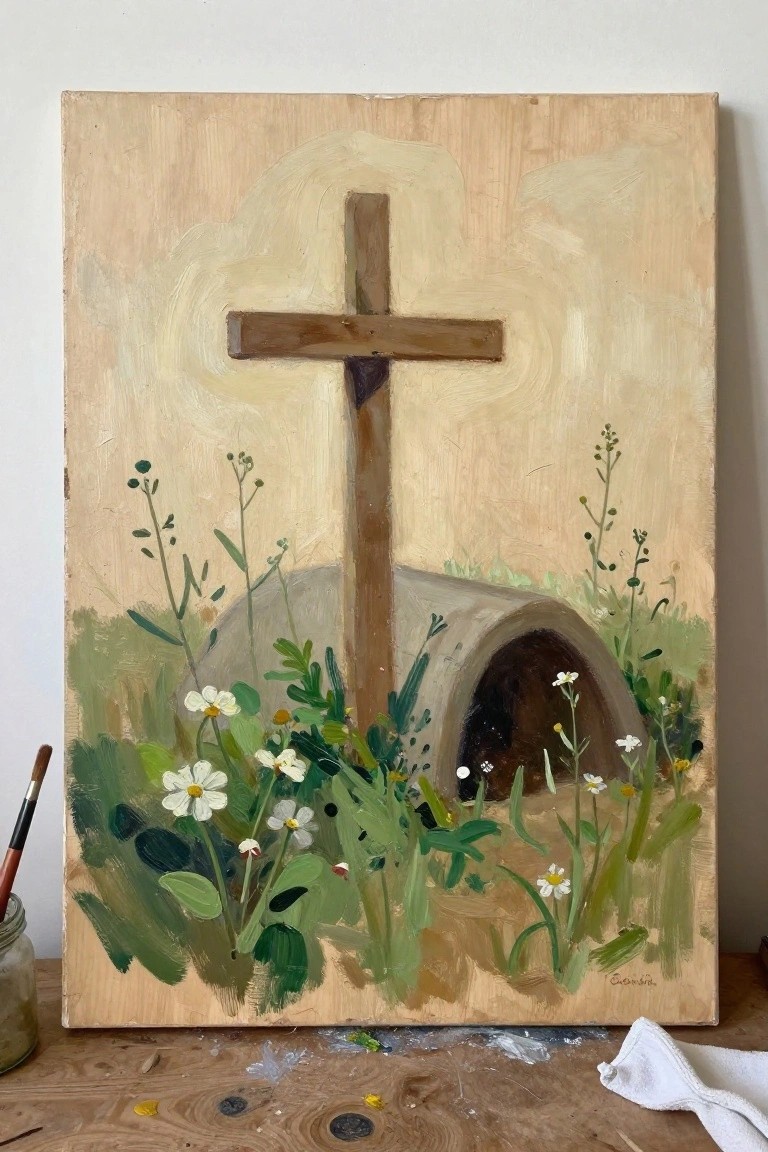
A central wooden cross placed directly in front of an open stone tomb forms the core of this oil painting idea, with the tomb mouth left dark and empty to emphasize the resurrection theme. Loose clusters of white daisies and tall grasses fill the foreground while a soft, pale sky fills most of the background, creating a simple vertical composition that keeps the focus on the cross and tomb. The idea fits the classic religious wall art category, where a strong central symbol is balanced by natural elements rather than dramatic lighting or heavy detail.
What makes this idea useful is the clear vertical anchor of the cross that organizes the rest of the painting without requiring advanced perspective skills. The soft background makes it easy to adjust the overall tone or crop the canvas for different wall sizes while keeping the flowers loose and varied. For seasonal decor, the same layout works well if you swap in different bloom colors or simplify the foliage to match the season you are painting for.
Minimalist Stone Block Tomb in Impasto

This oil painting idea uses a single angled cube to stand in for the empty tomb. Thick, directional brushstrokes in a narrow range of creams, beiges, and cool shadows give the form weight and presence. The simple layout keeps attention on the paint texture and the slight shift in planes rather than on added figures or scenery.
What makes this idea useful is how it reduces the resurrection scene to one strong shape that still reads clearly as a tomb. The heavy texture carries most of the interest, so the same approach works well for quick studies or for larger wall pieces where you want the paint itself to do the work. You could change the angle, push the shadows cooler, or keep the palette even tighter if you want a more modern look. A reduced subject like this also performs well on Pinterest because it reads quickly in a thumbnail while still feeling tied to the empty tomb story.
Open Book Resting in a Meadow
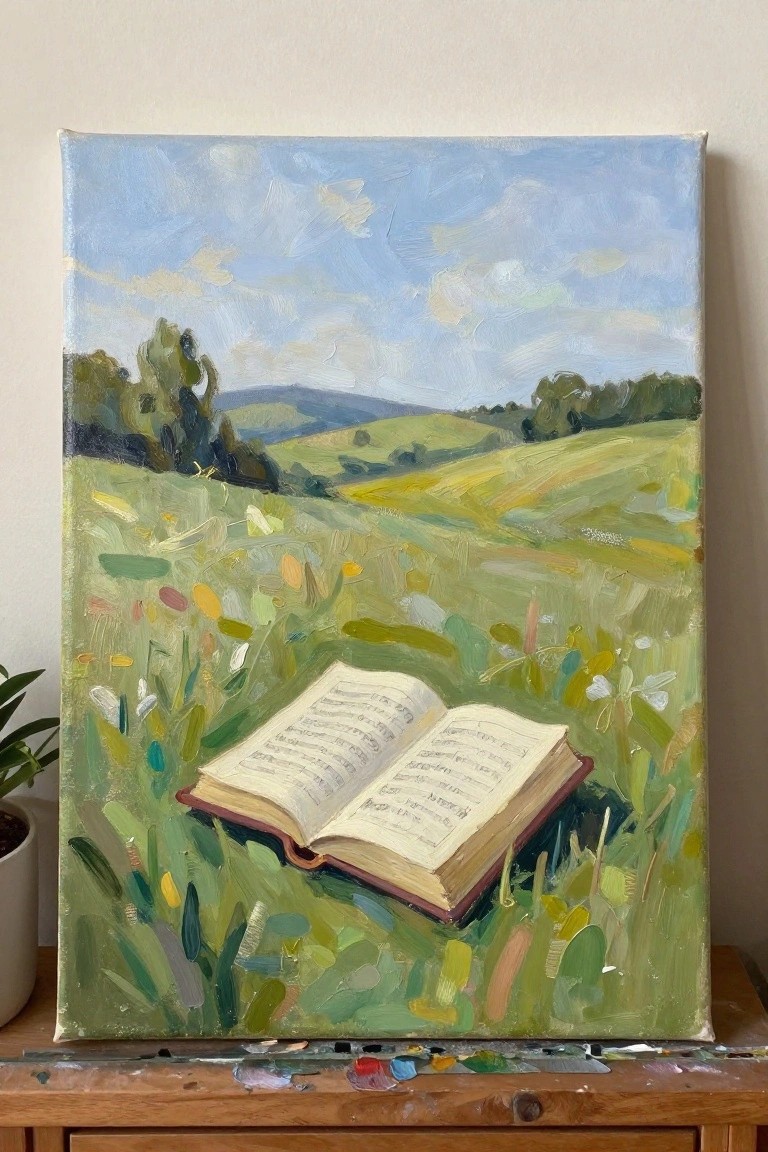
An open book placed in tall grass among scattered wildflowers forms the main subject against a backdrop of rolling hills and open sky. The oil painting idea pairs a still life element with a landscape setting, using tighter handling on the book pages while keeping the surrounding field and distant trees looser. This creates a clear focal point without crowding the composition and works as a landscape piece with an added everyday object.
What makes this idea useful is the strong contrast between the book and the softer green field, which lets the pages read clearly even from a distance. The bright greens and blues make it easy to adapt for different seasons by shifting the flower colors or hill tones. For practice, the setup helps with balancing detail and open space, and the same layout could be simplified by reducing the number of flowers or changing the book to a smaller object. This kind of painting also pins well on Pinterest because the book gives viewers something specific to notice right away.
Frequently Asked Questions
1. Where can I find high resolution images or prints of these 19 resurrection oil paintings? Many of the featured works are in public museums or church collections that offer digital archives online. Search museum websites directly or use art databases like Wikimedia Commons for free high resolution downloads. For prints consider reputable sites that specialize in religious art reproductions to ensure accurate color and detail.
2. Which famous artists created the oil paintings highlighted in this collection? The list includes masters such as Rembrandt, Rubens, and Caravaggio alongside lesser known 19th century artists. Each entry typically notes the painter background and the specific museum or private collection where the original hangs so readers can explore more of their portfolios.
3. How do these paintings portray the empty tomb in ways that differ from standard crucifixion scenes? Artists often use dramatic lighting to emphasize the rolled away stone and discarded burial cloths rather than focusing on the cross. Some include subtle symbols like blooming flowers or angelic figures to convey hope and victory over death which invites viewers to reflect on the resurrection narrative itself.
4. Are any of these oil paintings available for public viewing in museums right now? Several appear in major European institutions such as the Louvre or the Vatican Museums while others reside in American galleries. Check current exhibition schedules on museum apps or websites because rotation and conservation work can affect availability at any given time.
5. What should I look for when studying the brushwork and symbolism in resurrection themed oil paintings? Pay attention to how artists render light emerging from the tomb entrance to symbolize divine presence and examine small details like the expressions of the women at the tomb. Comparing multiple versions side by side reveals evolving artistic techniques across centuries and deepens appreciation for the shared biblical theme.