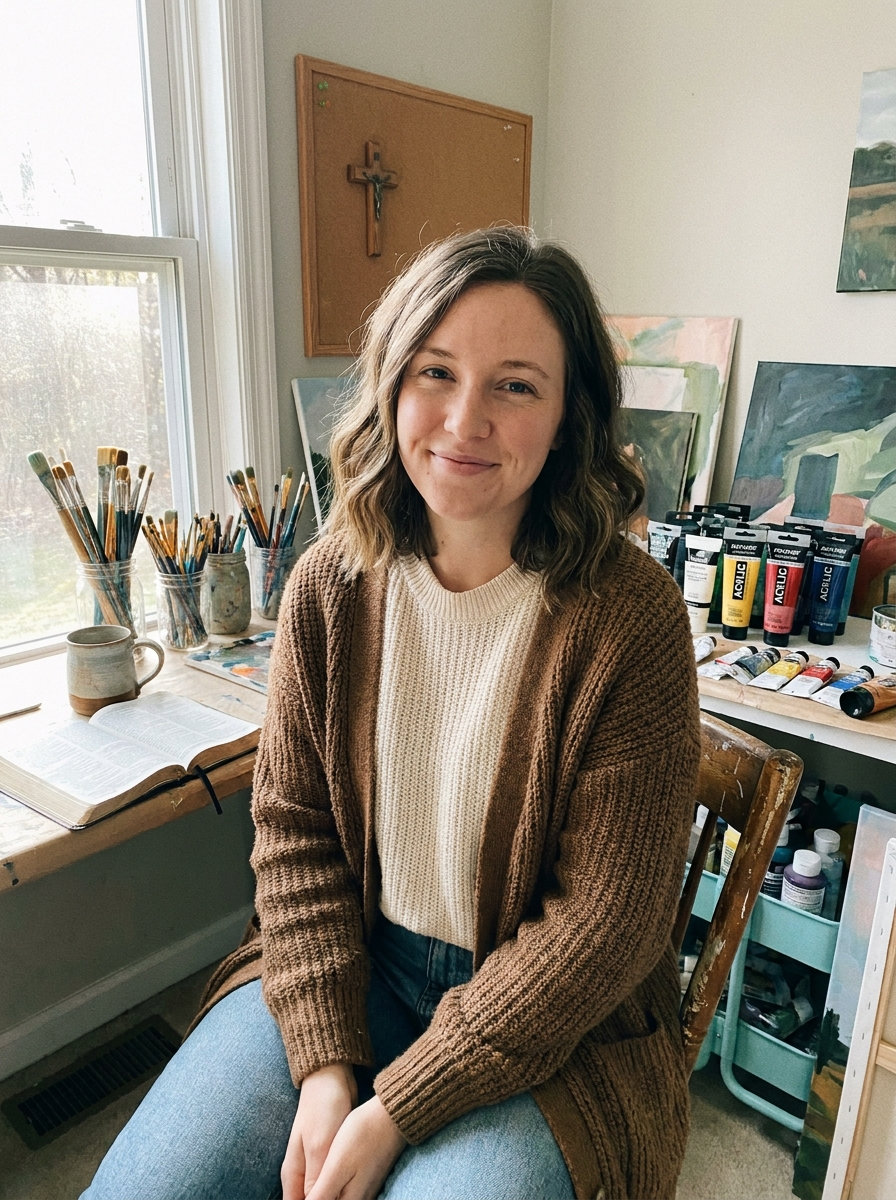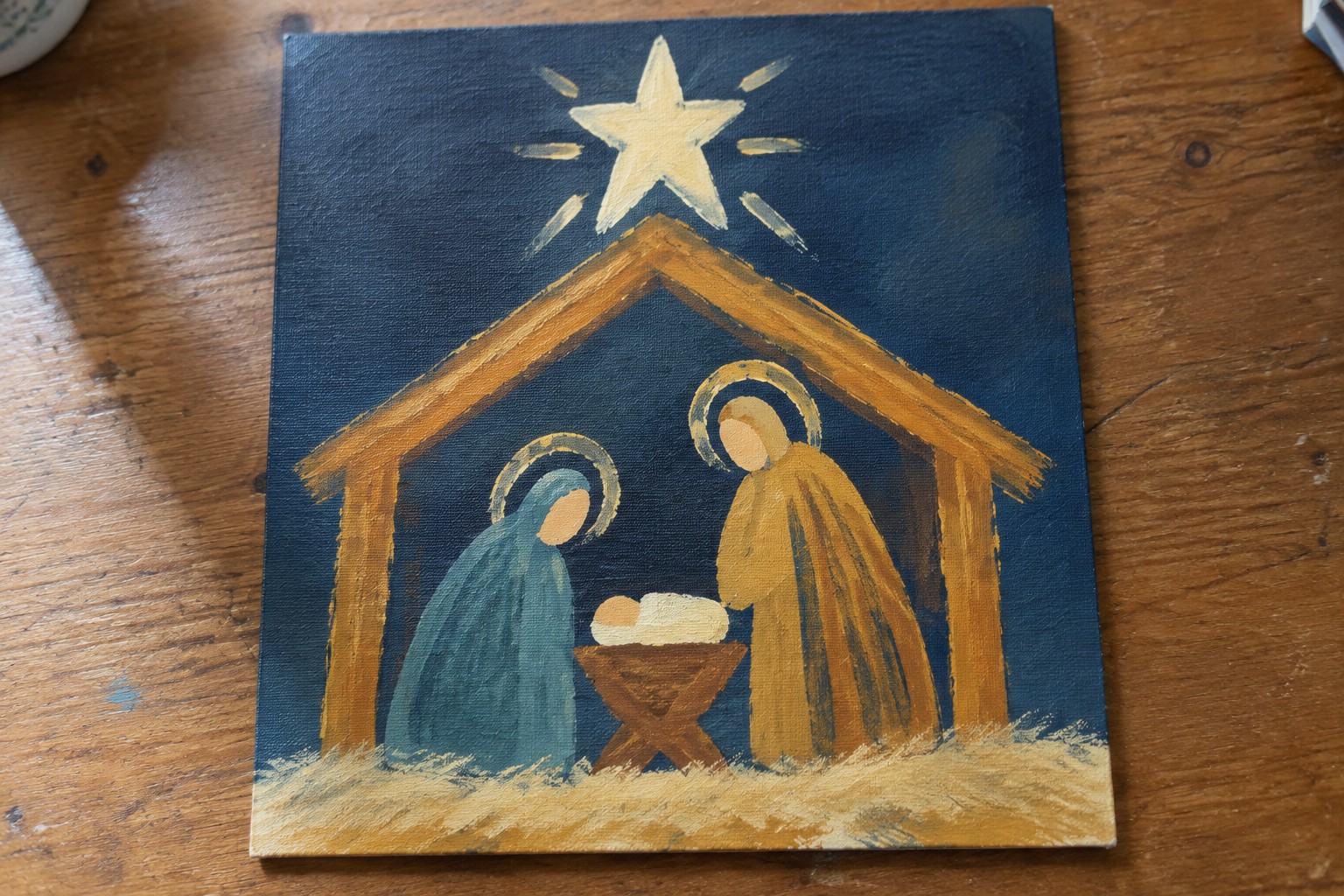
I often paint nativity scenes around the holidays using just basic shapes like circles and triangles.
It keeps things simple and does not take a lot of time or supplies.
I have tried different combinations over the years and found a few that work well without much fuss.
These ideas focus on easy forms that still show the main parts of the scene.
I hope one or two of them might fit what you are looking for.
Nativity Scene Made with Basic Shapes and a Prominent Star
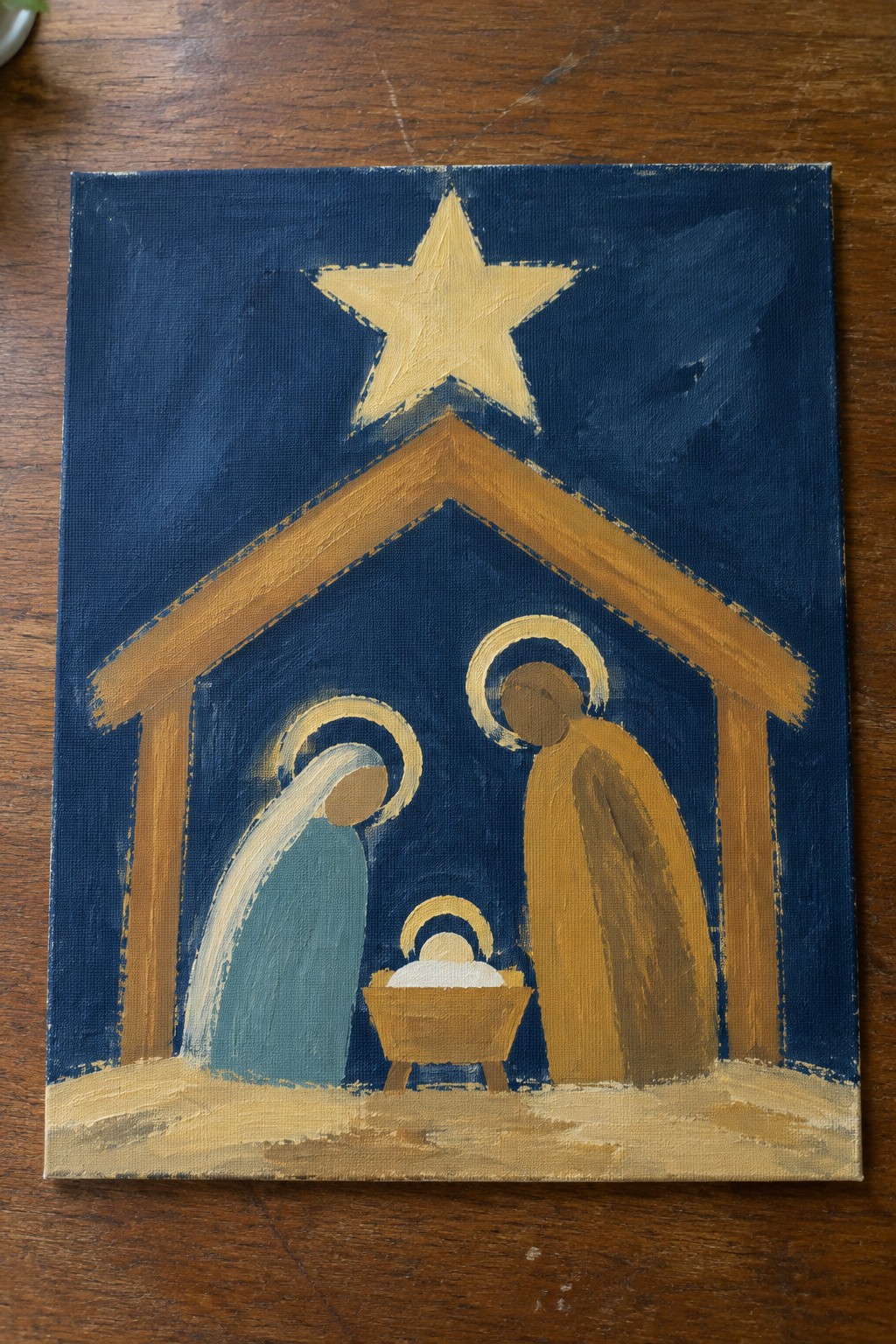
A nativity scene built from simple geometric forms creates a clean, readable layout. The stable reduces to a triangle roof and two posts, the figures stay as rounded silhouettes with halos, and the oversized star sits centered at the top to anchor everything. This keeps the idea firmly in the seasonal decorative category while using flat color blocks and minimal layering so the shapes carry the composition.
The composition does a lot of the work here because the star and stable create a clear vertical structure that works on both small and medium canvases. You can swap the deep blue background for other dark tones or change the gold accents without losing the balance. This approach stands out on Pinterest for quick holiday projects since the shapes stay legible even when simplified further or painted in different color families.
Nativity Scene Built from Simple Shapes and a Bright Star

This idea uses basic shapes to create a nativity scene, with a triangular roof, rounded figures for the people and animals, and a large star as the main focal point. The soft washes in blue and brown keep the sky and ground simple while letting the star pull the composition together. It works as seasonal decorative art because the limited shapes and muted palette make the arrangement easy to read without extra detail.
The composition does a lot of the work here by leaving plenty of empty space around the stable so the star stands out clearly. A painting like this works especially well for practice because the shapes stay loose and the figures require only a few brushstrokes each. You could swap the cool sky for warmer sunset colors or shrink the whole scene for greeting cards, and the same layout would adapt quickly if you want to try it in a different medium.
Folk Art Nativity Built from Flat Shapes
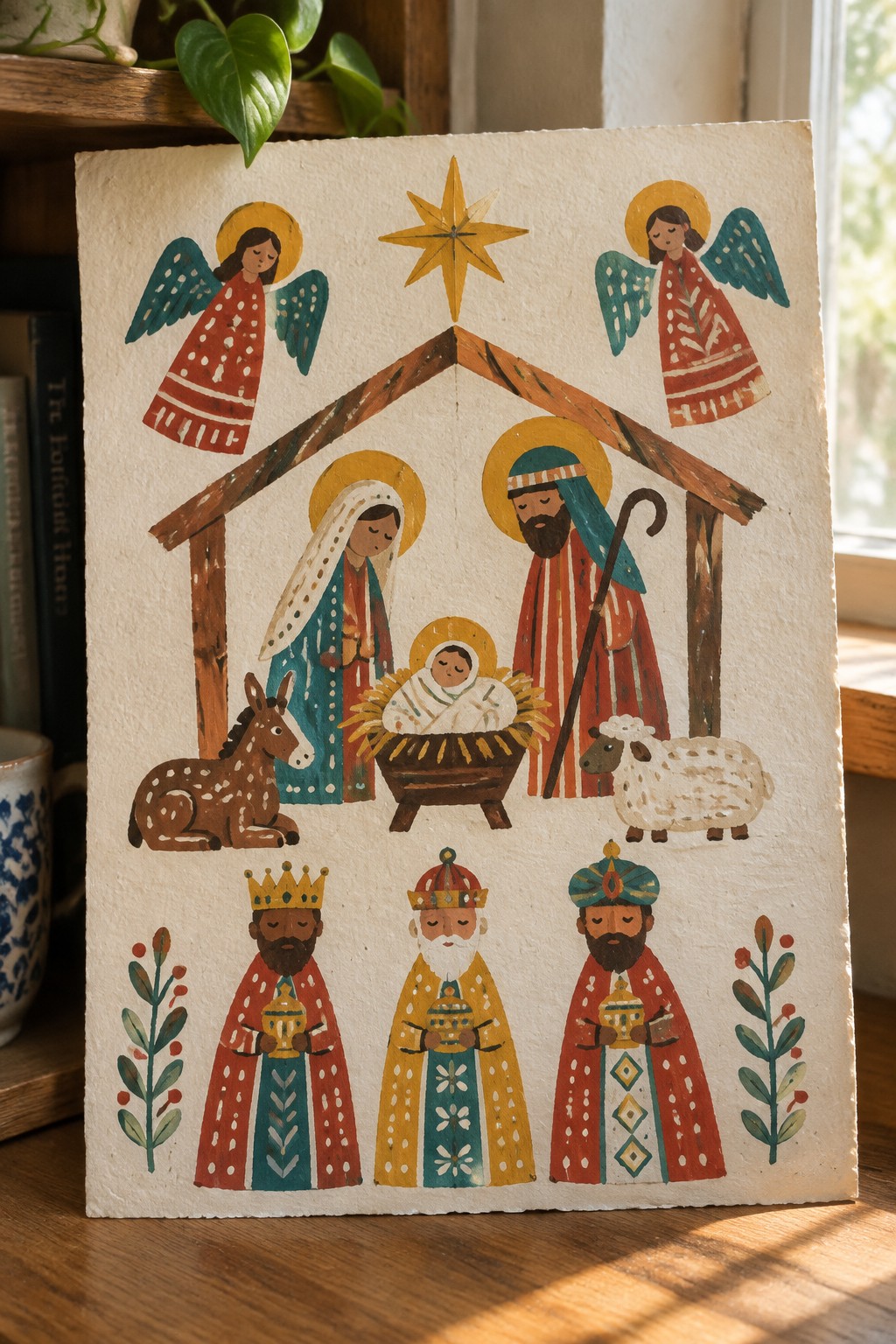
This nativity idea centers on a stable structure surrounded by figures rendered as solid color blocks rather than detailed forms. The composition stacks the holy family and animals inside the stable while placing the three wise men in a clean row below, with angels and a star filling the upper space. Strong outlines and a restricted palette of red, teal, gold, and brown keep every element distinct without needing gradients or texture.
What makes this idea useful is how the flat shapes remove the pressure to paint faces or fabric folds, letting you focus on balanced placement instead. You can shrink the whole layout for greeting cards or expand the stable area if you want more breathing room between figures. The same block approach also works well if you swap in different colors to match your existing paint supply.
Geometric Nativity Built from Basic Shapes

A nativity idea built around flat shapes works well when robes become triangles, heads become circles, and the star takes up the top third of the canvas. The layout keeps the three figures balanced around the manger while the single star acts as the clear focal point. A dark background lets the few colors stand out without needing extra layers or shading.
The composition does a lot of the work here because the star pulls everything together and the figures stay readable even at small sizes. This style suits quick seasonal pieces since the shapes need almost no blending. You could change the background to a deep red or shrink the whole scene for greeting cards while keeping the same arrangement. For wall art, the bold blocks of color make it easy to match with other modern holiday pieces.
Nativity Scene Built Around a Large Central Star

This painting idea centers on a nativity scene constructed from basic shapes, with a bold eight-pointed star placed high to guide the eye downward into the stable. The stable uses simple angled lines for the roof and posts, while the sheep are formed from rounded, textured shapes that sit easily in the foreground. Warm browns, oranges, and yellows create a unified seasonal look that keeps the focus on the manger without needing fine detail.
What makes this idea useful is how the oversized star does most of the compositional work and lets the rest of the scene stay loose. You can scale the same layout down for greeting cards or keep the large star when working on bigger paper. The limited color range and clear foreground shapes also make it straightforward to adapt by changing the background buildings or swapping sheep for other simple animal forms.
Starry Night Nativity with Simple Stable
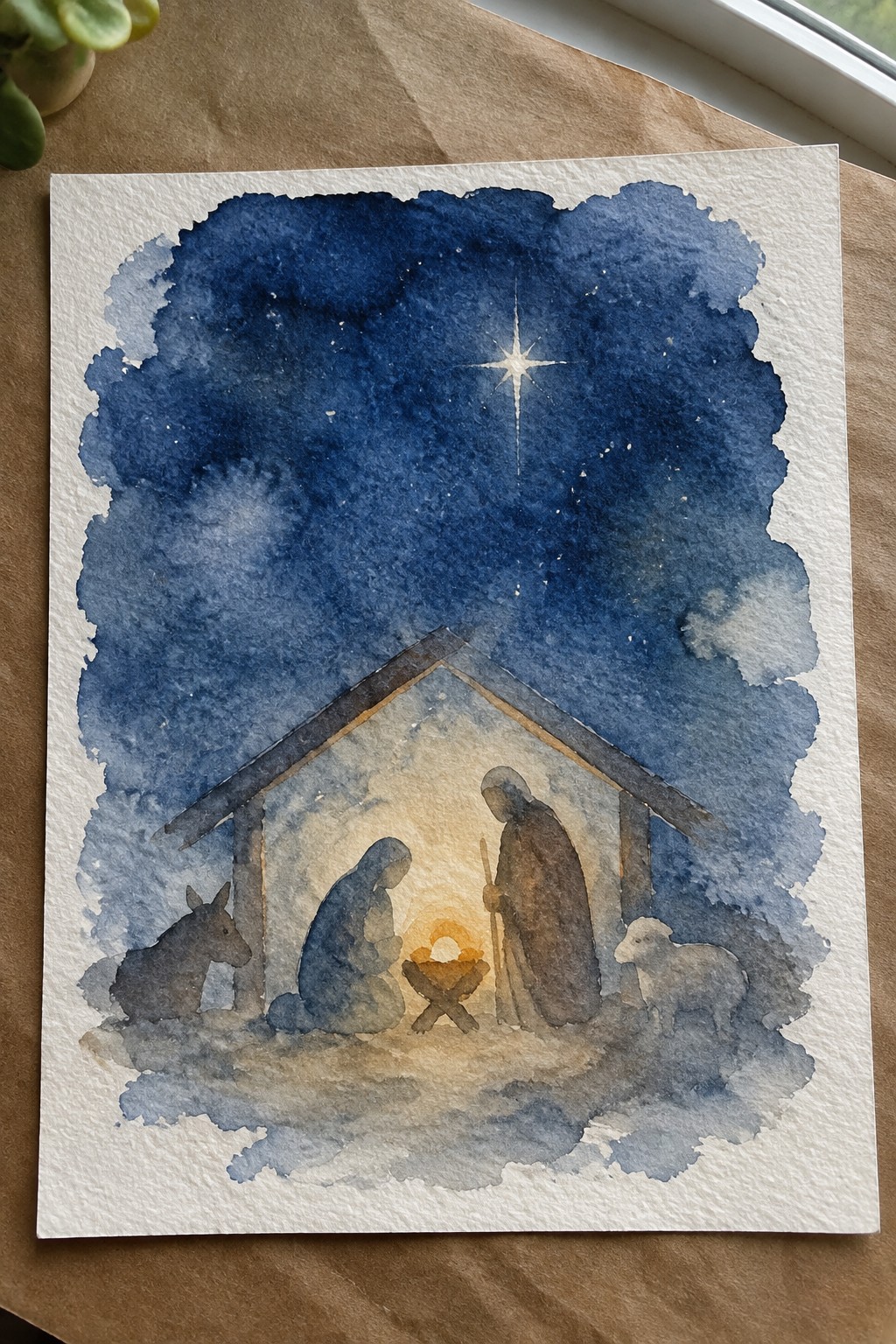
A nativity scene built around a small wooden stable works well when the background is kept to a single deep blue wash with scattered white dots for stars. The main shapes stay basic: a triangular roof, rectangular posts, and rounded figures grouped around a central manger that holds the brightest spot of color. This seasonal idea relies on the contrast between the dark sky and the warm glow inside the stable to hold the composition together without extra details.
What makes this idea useful is how the solid night sky removes the need to paint a full landscape or background elements. The color palette makes this easy to adapt by swapping the blue for a different dark value or scaling the stable down for a card-sized version. For practice, this kind of subject helps you focus on placing one strong light source and keeping the surrounding shapes minimal. This would be easy to turn into a repeatable template by tracing the stable outline first and adding the figures afterward.
Nativity Scene Built from Basic Shapes and Bold Colors
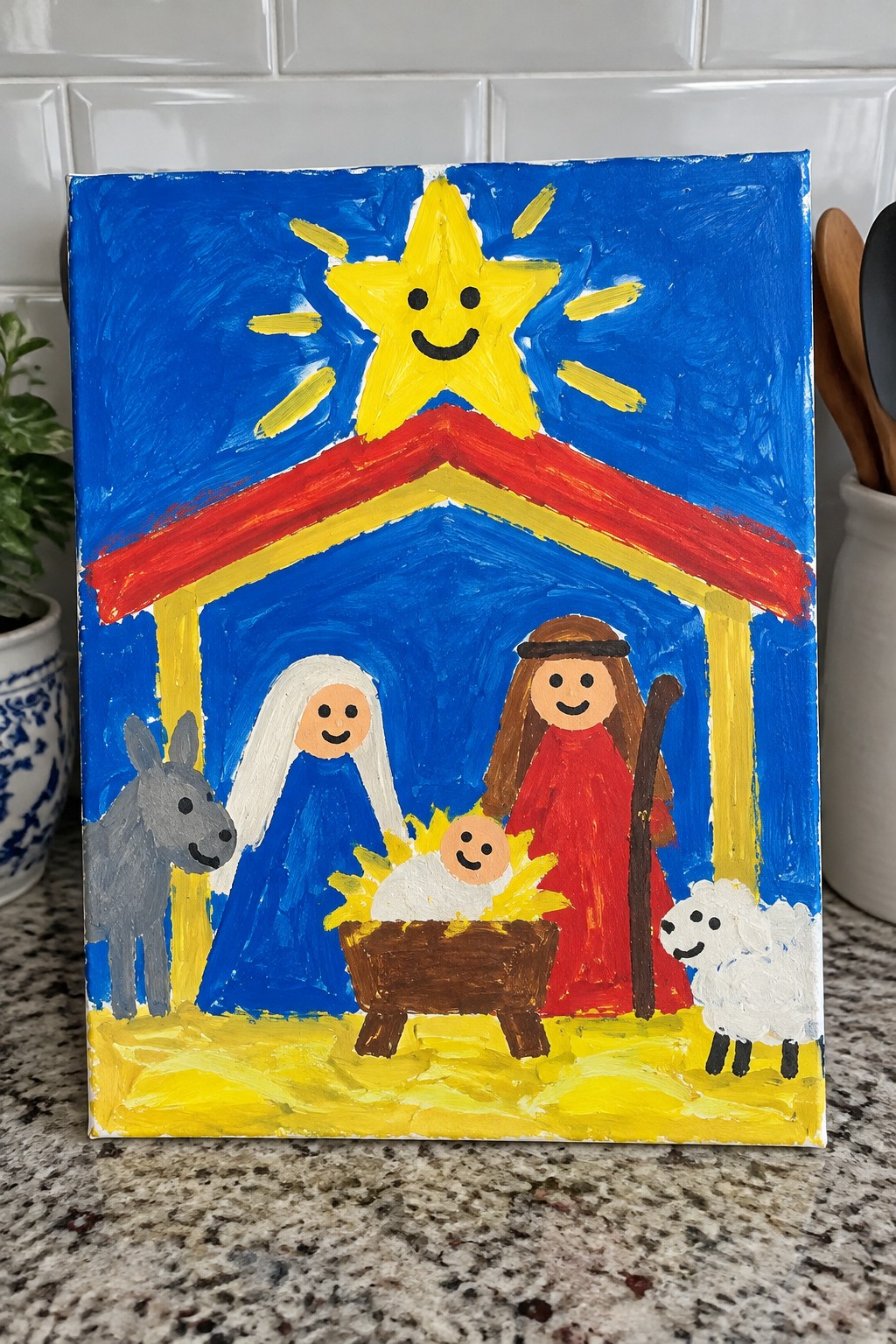
A nativity scene painted with simple shapes works well when the stable is formed from a triangle roof and rectangle walls, the figures are made from rounded heads and draped robes, and the animals stay chunky and minimal. The large smiling star at the top anchors the whole piece and gives it a clear focal point against the solid blue sky. Thick brushwork and a limited palette of primary colors plus yellow keep the elements easy to read even from a distance.
What makes this idea useful is how the triangular stable and oversized star do most of the compositional work, so you do not need perfect proportions. You can easily change the star’s expression, swap the red and blue robes, or shrink the animals if you want a tighter layout. For holiday decor or quick gifts, the bright colors and clear shapes translate nicely to smaller canvases or even paper without losing impact.
Nativity Scene Built from Chunky Animal Shapes
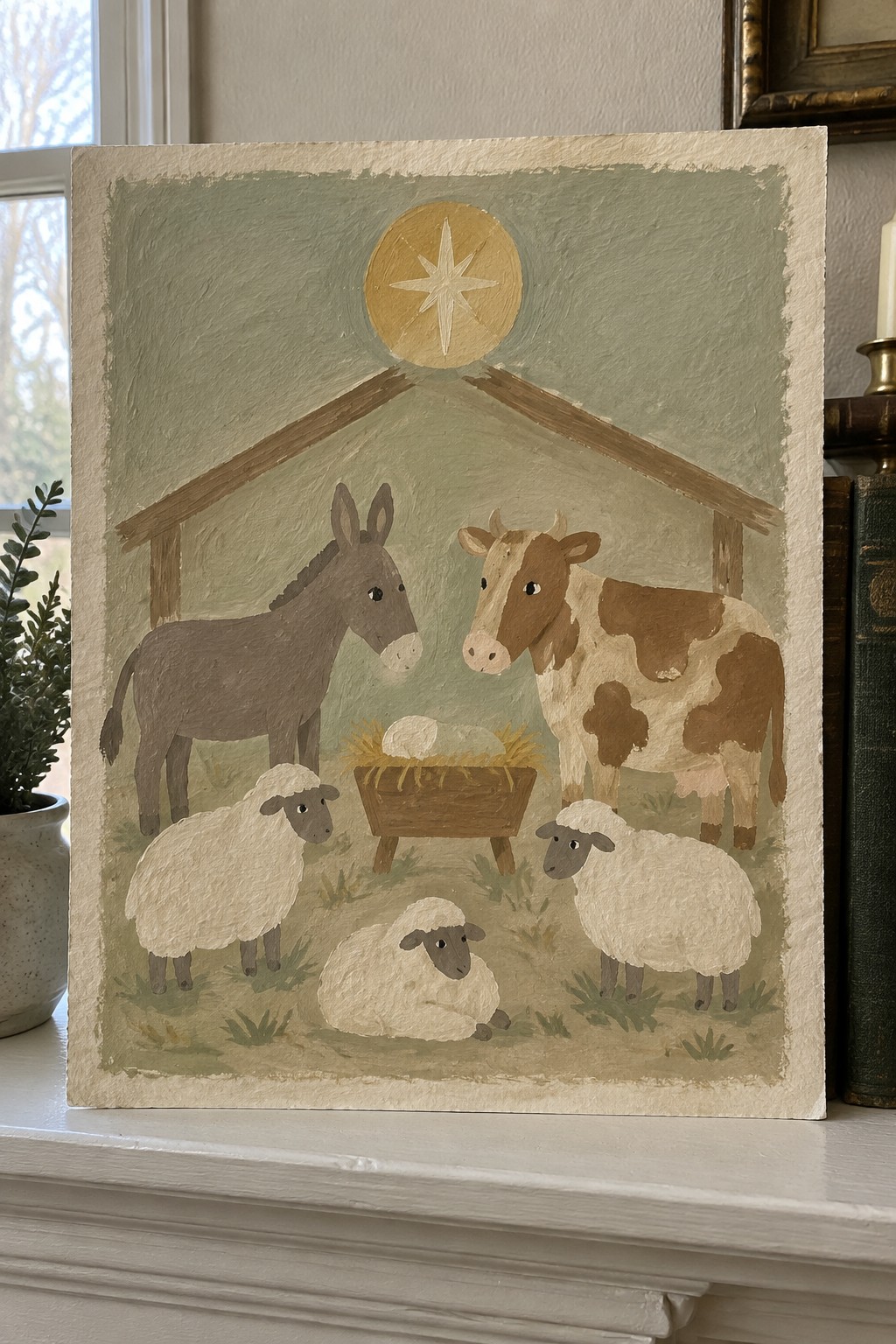
A nativity idea like this relies on simple rounded shapes for the animals and a basic roof structure to keep everything readable. The donkey, cow, and sheep are all formed from basic ovals and rectangles with minimal leg and head details, arranged loosely around a central manger. The golden star and brown roof lines sit high enough to balance the group without crowding the animals below.
The composition does a lot of the work here by letting the animals naturally frame the manger. You could swap the cow for a camel or change the background color to fit a different room without redrawing anything. This layout works especially well for beginners who want a full scene but prefer working with bigger brushes and fewer tiny details. For wall art, the soft palette and open space around the edges make it easy to hang without feeling busy.
White Silhouette Nativity on a Loose Wash Background
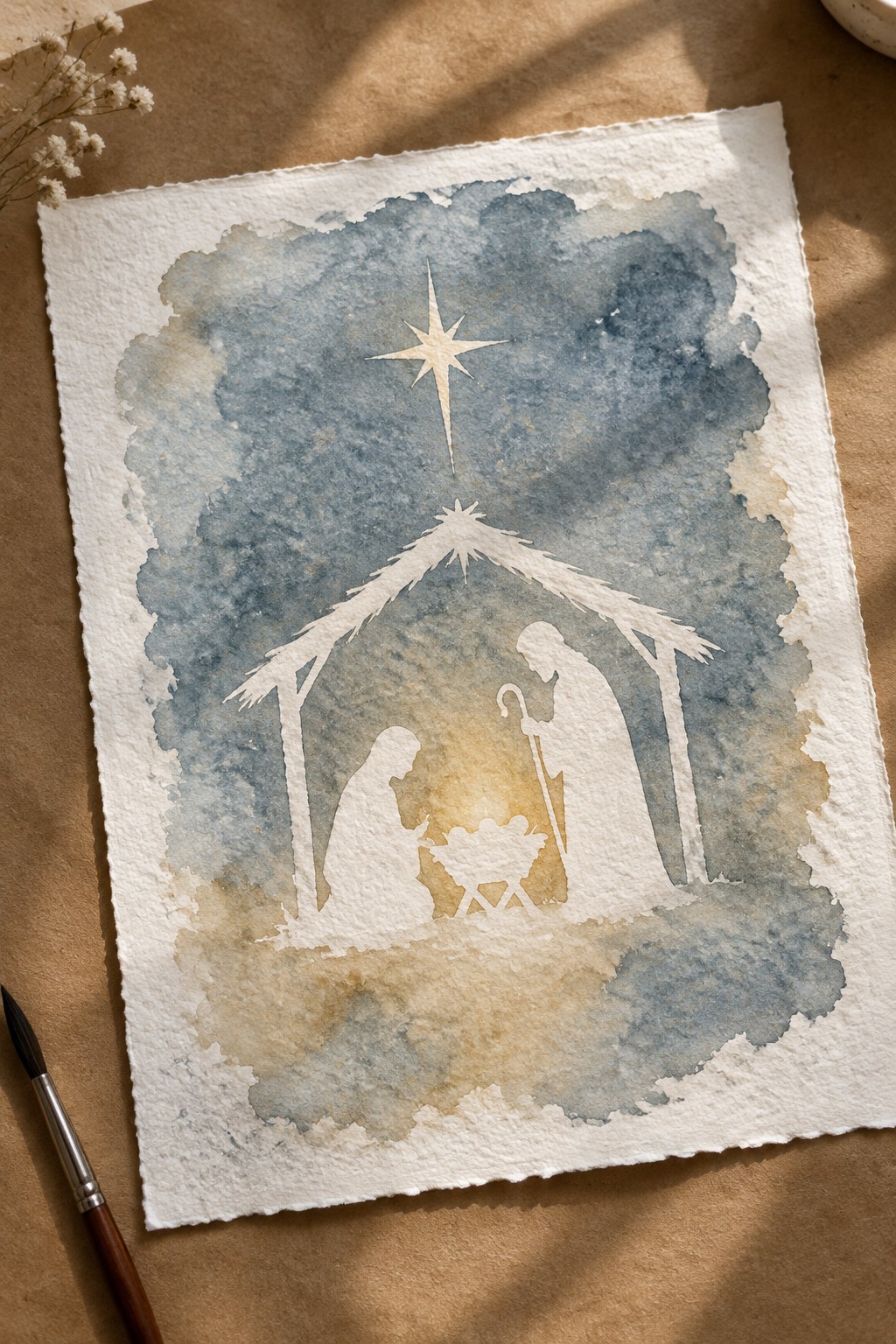
This painting idea centers on a nativity scene made from simple white shapes for the stable, figures, star, and manger set against a soft blue and brown watercolor wash. The composition works because the dark background pushes the clean outlines forward while the warm glow at the center draws the eye without extra detail. It fits the seasonal decorative category and keeps the whole scene readable even when the shapes stay basic.
What makes this idea useful is how the background wash handles most of the atmosphere so you only need to focus on placing a few strong shapes. The limited color range lets you scale the painting down for cards or keep it larger for a small frame without changing the approach. You could swap the blue tones for deeper night colors or add a second wash layer if you want more variation while keeping the white shapes as the main feature.
Nativity Scene Built from Basic Geometric Shapes
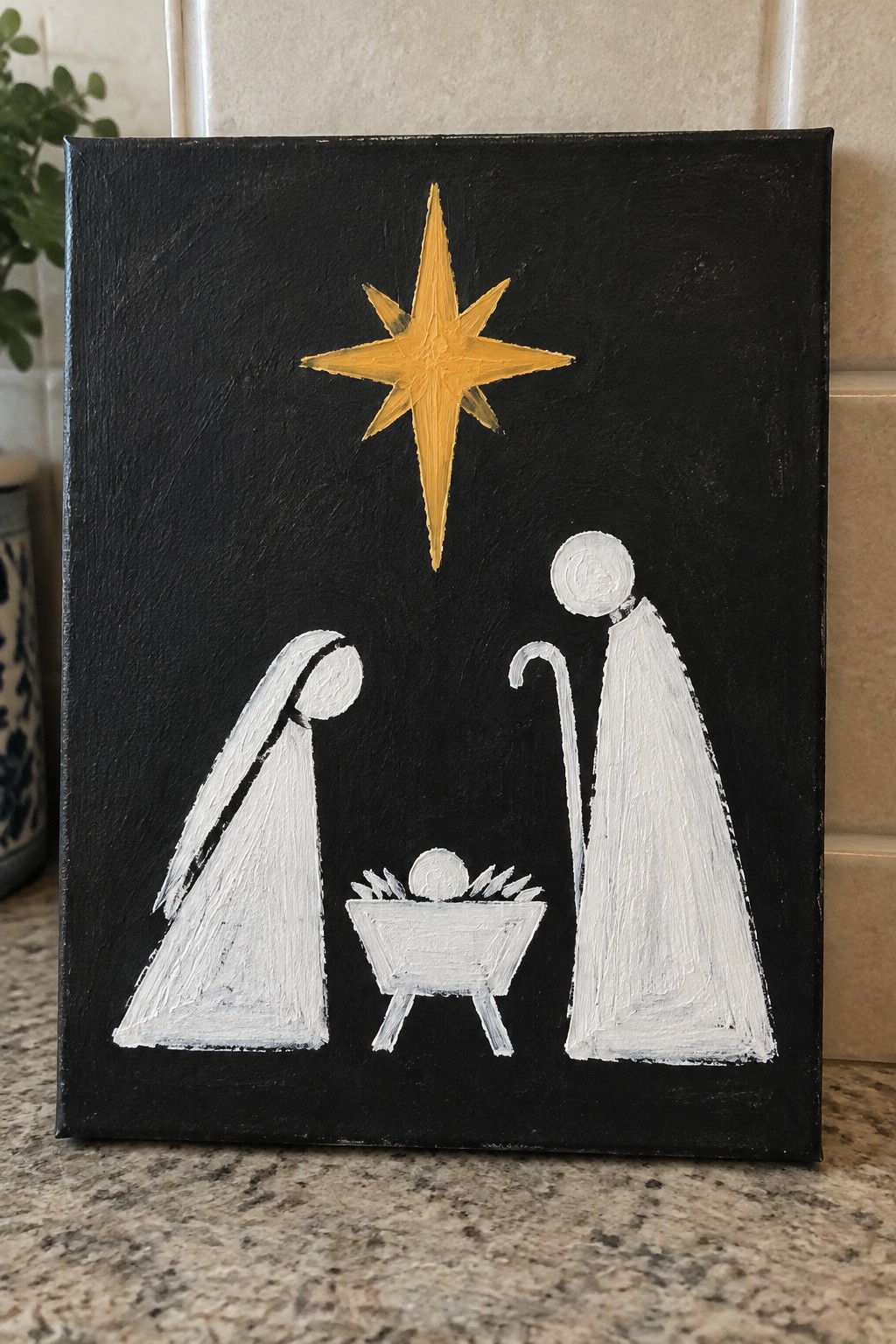
A nativity scene idea built from basic geometric shapes keeps the focus on recognizable forms rather than fine detail. Triangles and rounded shapes form the standing figures while a smaller version sits in a simple rectangular manger, and a multi-pointed star anchors the top of the arrangement. The high-contrast white shapes against the dark background make the composition read clearly even when viewed from across a room.
What makes this idea useful is how the limited shapes remove the pressure to paint realistic folds or faces. You can easily change the background color or swap the star for a moon if you want a different seasonal twist. The layout also works at small sizes for cards or ornaments since the forms stay legible without extra brushwork.
Nativity Scene Built Around a Simple Stable and Star

The core idea is a nativity composition that uses one clear central structure, the stable, to frame the holy family and manger. A single bright star sits directly above as the main focal point, while the background stays minimal with soft hills and a blended sky. This approach keeps the layout balanced and easy to read even with a limited color range of browns and muted golds.
What makes this idea useful is how the stable shape and overhead star do most of the compositional work. The vertical lines of the shelter naturally guide attention to the figures without extra elements. You could simplify the figures into basic shapes for a faster version or shift the palette to cooler tones if you want a different seasonal feel. For wall pieces or holiday practice, the contained scene adapts well to small or medium canvases.
Three Kings Built from Triangles and Rectangles

A nativity painting idea like this focuses on the three kings as large triangular shapes with repeating geometric patterns running down their robes. The composition stays clear by lining the figures up evenly and adding small lanterns plus one strong star above to anchor the scene. This keeps the whole piece in the decorative seasonal category while relying on flat color areas and basic shapes rather than detailed faces or shading.
What makes this idea useful is how the strong vertical shapes and limited color palette make it easy to resize for different formats like cards or small panels. You can change the robe colors to whatever paints you already have and still keep the same balance. For practice, the repeating patterns on the robes give you something structured to work on without needing advanced drawing skills. The same layout would also work if you wanted to simplify it further into a single-color version or expand it with extra stars.
Desert Nativity with Palm Tree and Star

A nativity scene built around a simple open stable, three figures, and one palm tree works as a seasonal landscape idea that keeps everything grounded in basic shapes. The star sits high and centered to pull the eye downward to the manger, while the palm tree on the left creates natural balance without crowding the space. A soft sandy foreground and faint hills keep the focus on the shelter rather than on background detail.
What makes this idea useful is how the empty sky and ground let you adjust scale easily for cards or small canvases. You can simplify the palm fronds into a few curved strokes or swap the muted palette for warmer tones if you want a different mood. The composition stays balanced even when the stable sits slightly off center, so it works well for quick practice pieces or holiday decor without needing lots of layers.
Simplified Nativity Using Large Shapes and a Dominant Star
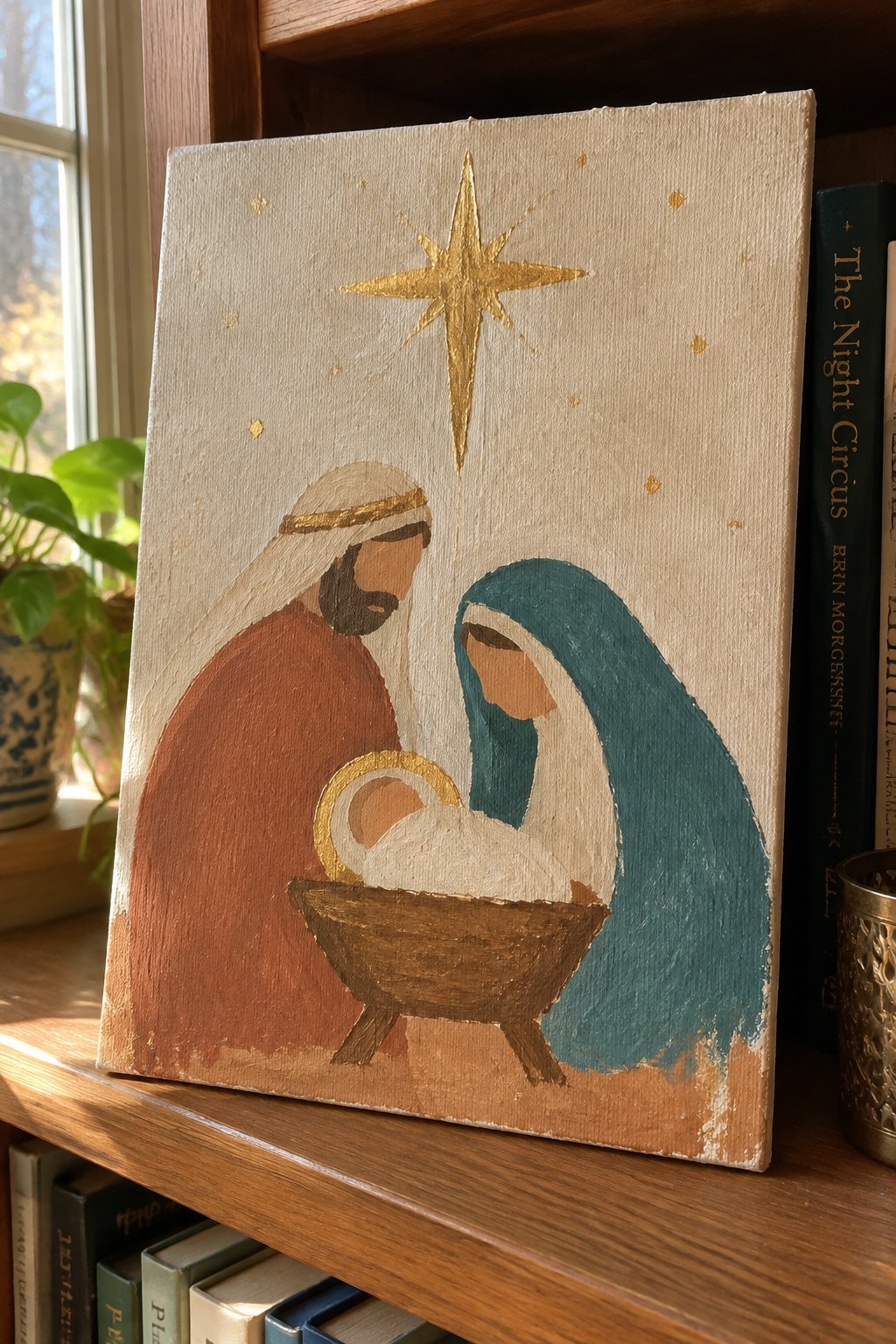
This nativity idea uses big, flat color blocks to form the figures instead of detailed outlines or shading. The composition stacks the three main figures in a loose triangle under one oversized star, with the manger acting as the low anchor point. A restrained palette of rust, teal, and warm neutrals plus a few gold touches keeps the shapes readable even from a distance.
The composition does a lot of the work here by letting the star and the curved teal robe create instant visual balance. This works especially well for small canvases or quick seasonal pieces you can finish in an afternoon. You could swap the teal for deep green or shrink the whole thing for a set of painted cards. The simple shapes also make it easy to adjust the star size or robe colors without redrawing the entire scene.
Nativity Scene Built from Rounded Shapes
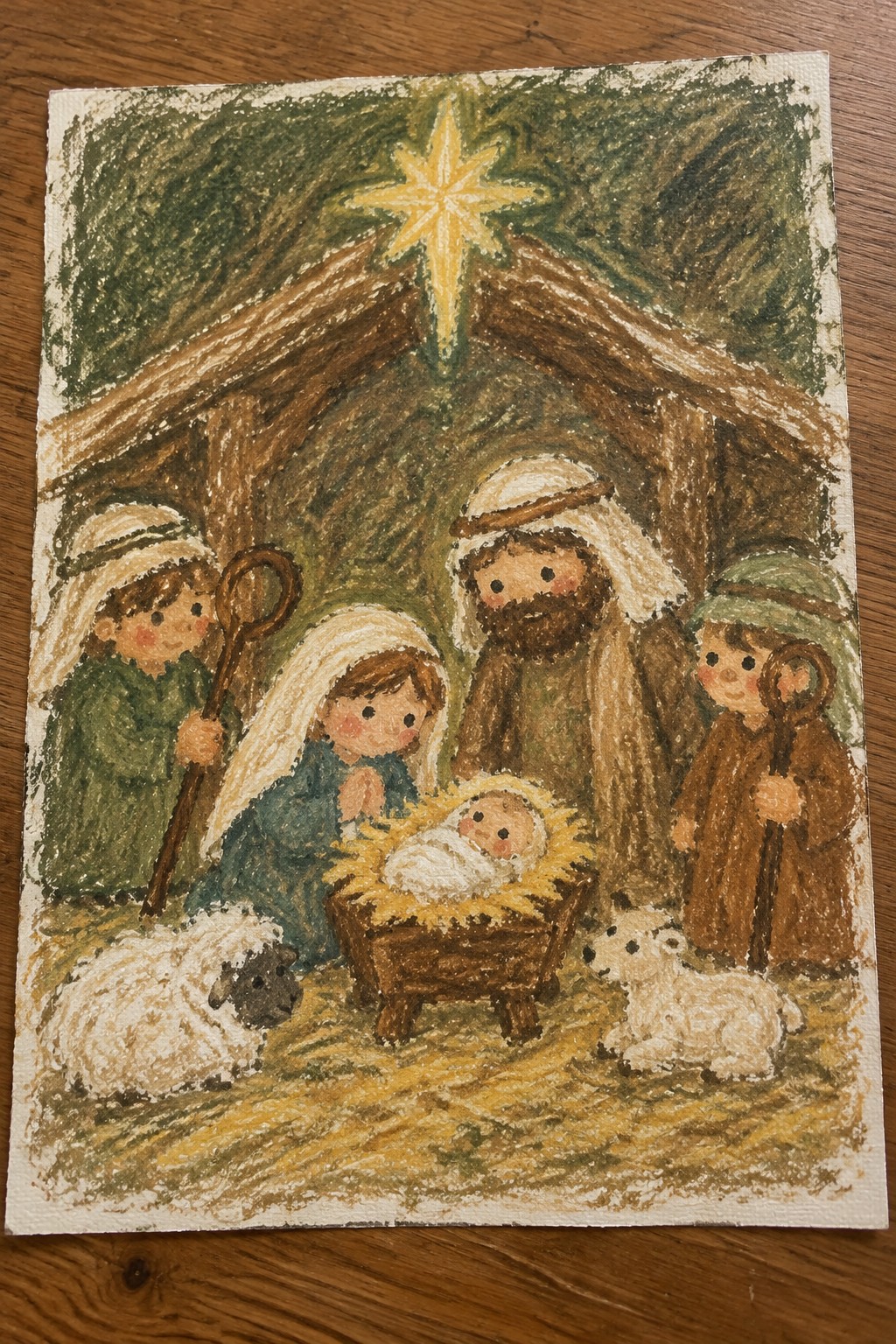
A nativity scene idea that relies on simple rounded shapes for the figures, animals, and stable works well when you want a clear focal point without adding lots of small details. The manger sits in the center with the star placed directly above it, and the surrounding figures are grouped in a gentle arc that keeps the eye moving inward. Earthy browns, soft greens, and muted yellows give the whole piece a cohesive look that stays easy to paint even on a smaller canvas.
What makes this idea useful is how the rounded forms let you adjust the number of shepherds or sheep without throwing off the balance. You can scale the stable and star larger or smaller depending on whether you are painting a card, a canvas panel, or a page in a sketchbook. The limited color range also means you can finish the piece quickly while still having enough contrast to make the manger stand out.
Silhouette Nativity with Layered Sky
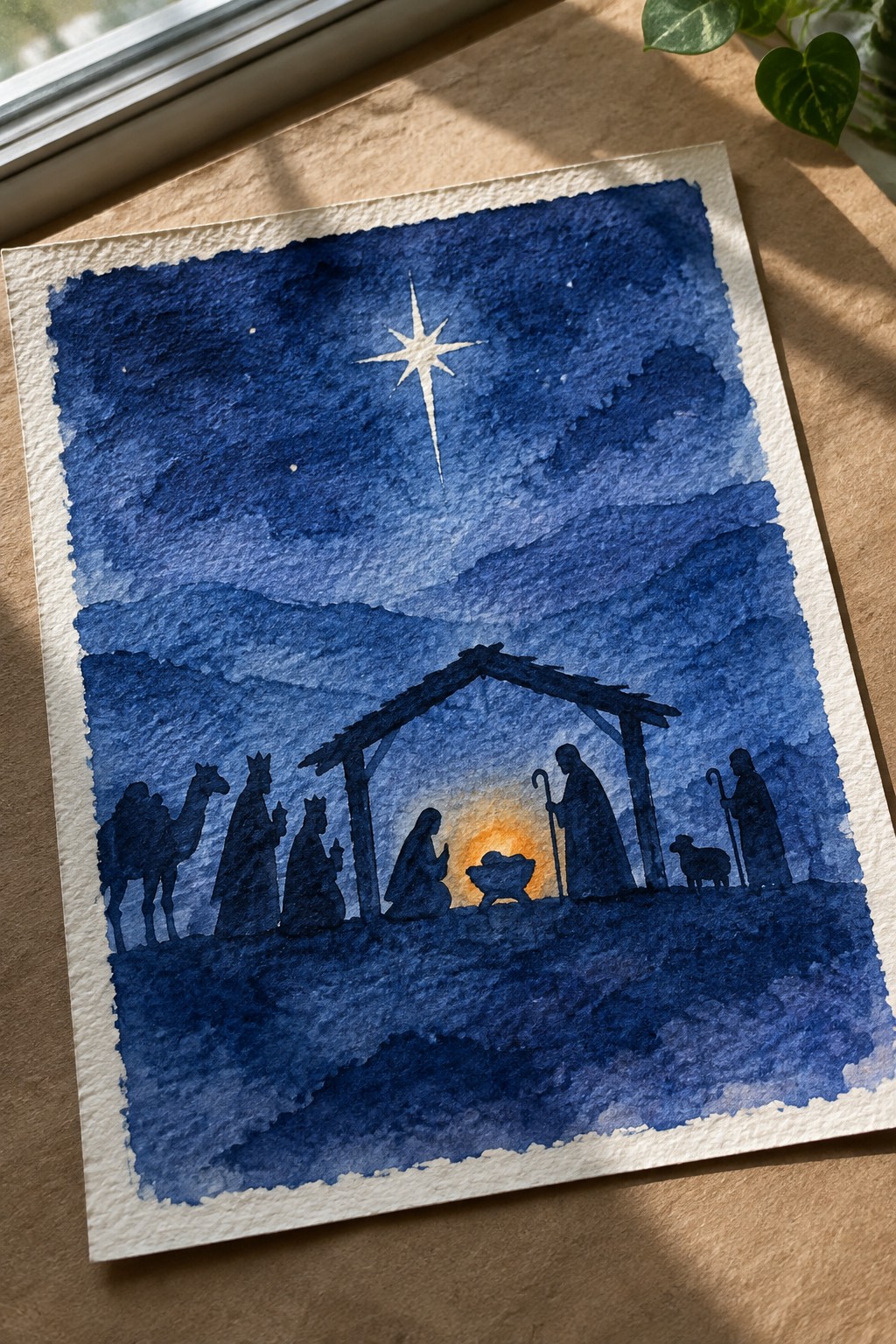
This painting idea uses simple black silhouettes for the stable, figures, animals, and wise men set against a deep blue watercolor sky that fades into lighter layers for the hills. A large star and a small warm glow behind the manger create the only points of contrast, keeping the whole scene easy to read. The approach works as a seasonal silhouette painting where the shapes carry the story and the background stays minimal.
What makes this idea useful is how the silhouettes remove most of the drawing pressure while still showing the full nativity story. You can reuse the same layout on smaller paper for cards or scale it up for a larger piece by changing only the size of the star and glow. The limited palette also makes it quick to finish if you want several versions with slightly different sky tones.
Hanging Nativity Mobile with Suspended Figures

A nativity scene arranged as a mobile from a single wooden beam gives the composition a clear structure, with the star placed directly above to anchor the top. Simple oval and teardrop shapes form the figures, connected by thin vertical lines that suggest hanging strings, while the baby rests in a small rectangular manger at the center. The limited palette of muted pinks, blues, and earth tones against a pale background keeps the focus on the balanced layout rather than on detail work.
The suspended arrangement makes the idea easy to adapt by changing the number of figures or swapping colors to match different room schemes. It works especially well for seasonal wall pieces because the vertical lines and central star create visual balance without needing complex backgrounds. You could simplify it further by using only three hanging shapes or expand it with additional kings if you want a wider version.
Rounded Shapes Form a Minimal Nativity Scene

This painting idea reduces the nativity to a few rounded shapes placed against a plain background. The figures are blocked in as simple ovals and curves in muted gray and beige tones, with the baby shown as a small white oval inside a brown nest-like form. A star made from overlapping oval strokes in gold sits centered above them, creating a clear vertical focus that holds the whole composition together.
What makes this idea useful is how the limited shapes remove the need for facial details or complex clothing. The neutral palette works on any background color, so you can test it on wood panels, paper, or larger canvases without changing the layout. For practice, it helps with shape placement and value contrast before trying busier versions with extra animals or landscape elements.
Frequently Asked Questions
What basic supplies do I need to create these nativity scene paintings with simple shapes?
You will want a set of acrylic or tempera paints in primary colors plus brown, white, and gold for accents. Gather brushes in small medium and large sizes along with canvas paper or wood panels. Include a pencil for light sketching a ruler for straight lines and a cup of water for cleaning brushes. These items keep the process simple while allowing clean shapes like circles triangles and rectangles to form the figures.
How can I make sure the characters remain recognizable when sticking to basic geometric shapes?
Focus on key identifiers such as a triangular robe for Mary a rectangular manger for the baby Jesus and circular heads with halos for all figures. Add small details like a staff made from a thin rectangle for Joseph or star shapes in the sky. Practice placing the shapes in familiar poses first on scrap paper so the overall composition tells the story without extra lines.
Are these painting ideas suitable for children and how can I adjust them for different ages?
Yes these ideas work well for kids because they rely on tracing or cutting out shapes rather than freehand drawing. For younger children provide pre cut stencils and thicker brushes while older kids can experiment with overlapping shapes or adding subtle shading. Supervise the use of any sharp tools and encourage group projects where each person paints one element to build the full scene together.
What color choices help create a calm and meaningful nativity scene?
Start with soft blues and deep indigos for the night sky then layer warm earth tones like ochre and sienna for the stable and robes. Use white or pale yellow for highlights on halos and the star to draw the eye. Keep the palette limited to five or six colors total so the simple shapes stand out clearly and the scene feels peaceful rather than busy.
How do I prepare my workspace to avoid common mistakes when painting with simple shapes?
Clear a flat surface and cover it with newspaper or a plastic sheet. Arrange your paints and brushes within easy reach and have paper towels ready for quick cleanups. Sketch the layout lightly in pencil first to check proportions then paint from the background forward. This order prevents smudging and lets each shape dry before adding the next one on top.