I painted my first nativity scene a few winters ago when I wanted something simple to work on during the evenings.
Since then I have tried out different versions and kept the ones that felt easy enough for me to repeat.
Most of them use the same few colors and basic brushes I already had around the house.
I put together this list because I know how helpful it is to have a few clear starting points when you are new to painting.
These ideas are the ones I still reach for when the holidays come around again.
Nativity Scene Built Around a Simple Stable and Star
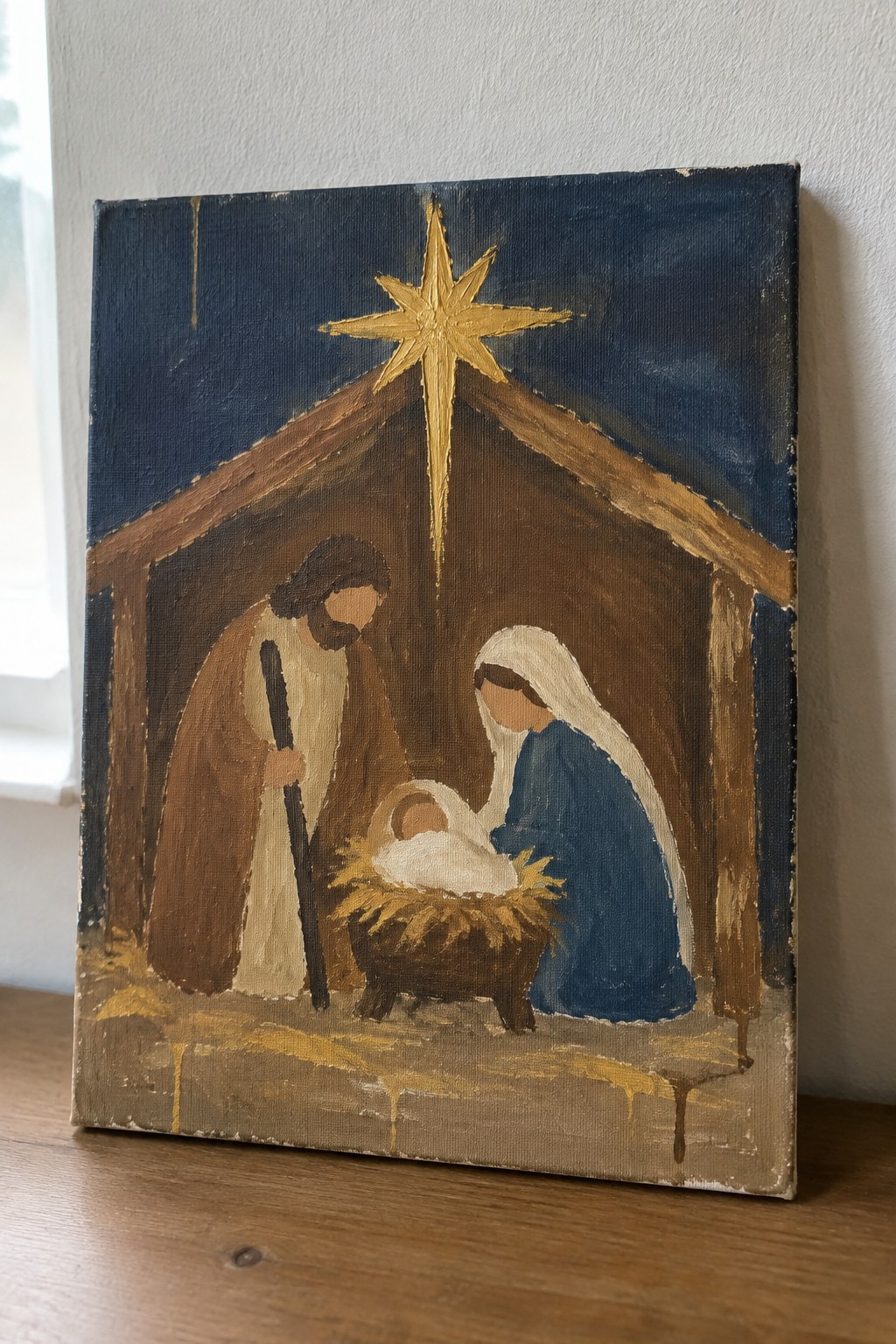
A nativity painting centered on a wooden stable with the manger as the main focus gives the composition a clear structure that is easy to sketch first. The large star overhead acts as a natural focal point and helps guide the eye to the figures below. Using a limited palette of browns, deep blue, and gold keeps the colors manageable while still providing enough contrast to make the scene readable.
What makes this idea useful is how the stable shape and star can be blocked in early, leaving the rest of the canvas to be filled with just three figures. The same layout works at different sizes, so it can be painted on a standard canvas or scaled down for a small panel or card. The straightforward arrangement also makes it simple to swap in different background colors or leave out extra details if you want a quicker version.
Silhouetted Nativity with Star and Horizon Reflection

A nativity painting built around a single bright star and simple dark figures keeps the focus on the stable and the sky above it. The gradient wash from deep blue at the top to warm tones near the horizon gives the scene depth while the water band at the bottom mirrors the sky and adds a clean horizontal line. This approach works as a landscape-style seasonal piece because the shapes stay basic and the contrast does most of the visual work.
The composition does a lot of the work here since the dark shapes sit clearly against the lighter sky and need very little detail. You can swap the water for grass or hills, or shift the sky colors from cool to warmer tones, without changing the overall layout. This idea also adapts well to smaller formats like greeting cards or quick practice pieces because the main elements stay limited and easy to repeat.
Nativity Scene with the Three Kings in the Foreground

A nativity painting built around the manger gains structure when the three kings are arranged across the lower half holding distinct gifts, while Mary, Joseph, and the animals fill the middle ground under the stable roof. The triangular roofline and central star create a clear focal point that pulls the eye upward without needing extra details. This approach fits seasonal holiday art that relies on simple layering and a limited palette of deep blues, reds, and golds.
The composition does a lot of the work here by separating the kings in the front from the manger scene behind them, which makes it easy to paint in stages. You can scale this down for a card or keep the same layout on a larger canvas by adjusting how much of the starry sky you include. The idea also adapts well if you want to reduce the number of figures or swap the ornate gift details for simpler shapes while keeping the overall balance.
Nativity Scene with Sheep in a Stable
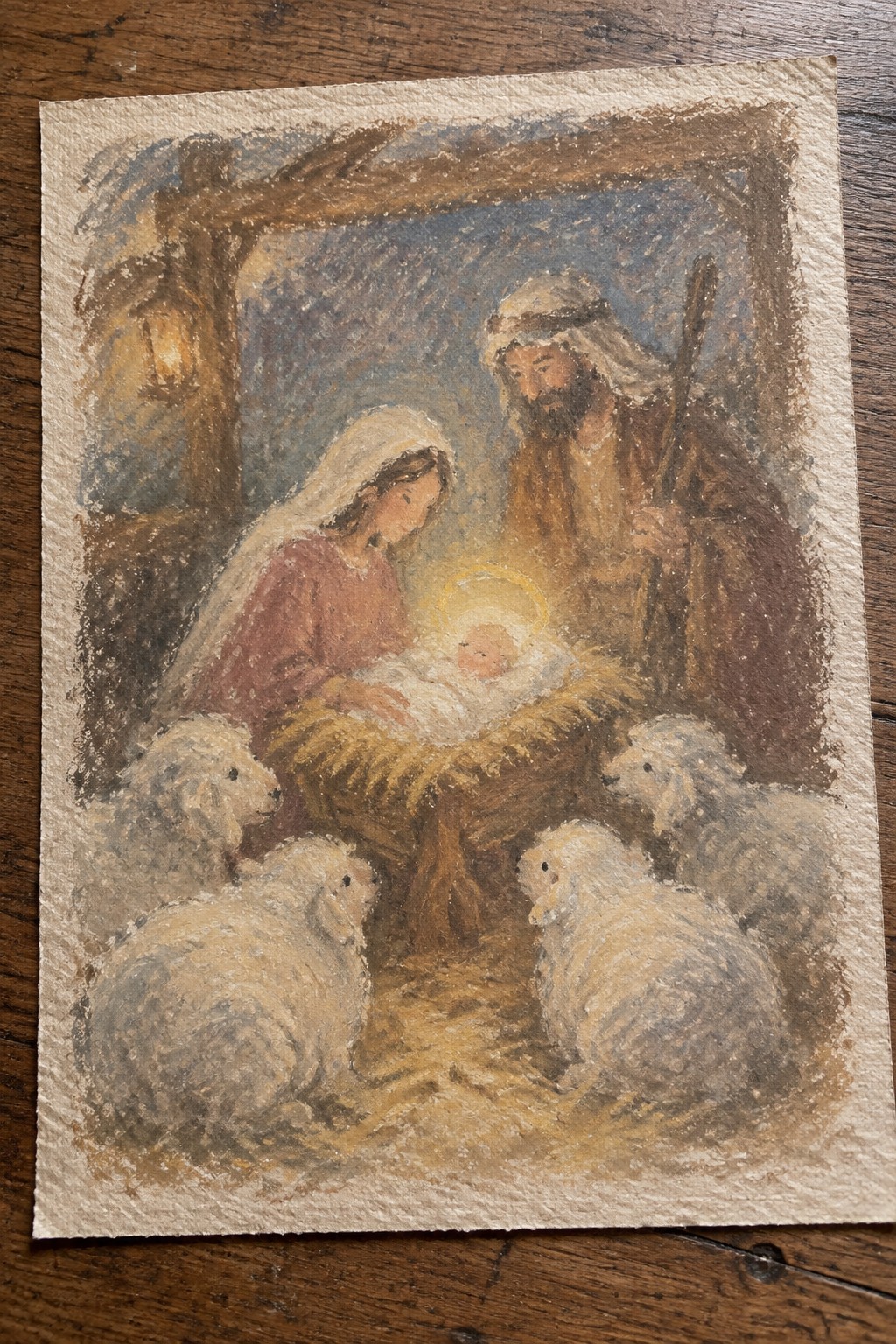
A nativity painting idea that centers the holy family around a simple manger while placing several sheep in the foreground creates a balanced seasonal composition. The soft lighting from a single lantern on the left helps draw attention to the central figures without needing strong contrasts or complex details. Earthy browns, muted reds, and cool background tones keep the overall palette calm and easy to work with.
The composition does a lot of the work here by using the sheep to frame the manger and add visual weight at the bottom. This makes the idea useful for practice with grouping animals and figures without overcrowding the scene. You could simplify it further by reducing the number of sheep or adapt the colors to match whatever paints you already have on hand. For wall art or holiday cards, the stable setting and gentle lighting give it a finished look that still feels approachable for beginners.
Simple Nativity with a Single Star

A compact nativity scene centers on Mary, Joseph, and the infant in a manger beneath one large star. Rounded shapes and a flat green background keep the layout clean and easy to read at a small scale. The limited color palette of terracotta, soft beige, and muted green helps the figures stand out without extra detail work.
The composition does a lot of the work here by grouping the main elements tightly in the middle. You could paint this on a 6×6 or 8×8 canvas for quick holiday decor or scale it down for cards. Swapping the solid background for a darker night tone or adding a simple border gives an easy way to change the look. This kind of straightforward holiday subject works well for practice pieces that still feel finished enough to display or gift.
Nativity Scene Under a Bright Guiding Star

A nativity painting idea that centers on a simple wooden stable with Mary, Joseph, and the baby in a manger, flanked by a donkey and lamb, all set beneath a large glowing star in a soft blue night sky. The composition places the star high to create a natural focal point while the stable and figures occupy the middle ground, with distant hills keeping the background light. This approach fits seasonal holiday art that blends a gentle landscape with clear central figures.
The open sky above the stable gives you room to adjust the star size or soften the clouds without changing the overall balance. You can keep the animal placement minimal or swap in different background elements like trees if the hills feel too open. A painting like this works especially well for wall pieces or cards because the vertical layout prints cleanly and the limited color range stays easy to mix.
Nativity Framed by a Wreath of Leaves and Berries

A centered nativity scene inside a circular wreath of layered leaves and berry clusters gives the painting a contained, decorative structure. The wreath acts as a natural border that pulls attention inward toward the stable while the golden stars above add a simple focal point without filling the space. This approach fits the seasonal category and relies on repeating organic shapes rather than precise detail to hold the composition together.
The wreath layout keeps the main figures easy to place first before building outward, which helps with proportion and balance. You can change the berry tones or leaf density to shift the overall palette or make the border tighter or looser depending on the paper size. For wall art or cards, the circular frame creates a clean finished look that stands out in a feed without needing extra background elements.
Stable Nativity with Surrounding Animals

A nativity scene built around a simple wooden stable works well when the manger sits at the center with a few animals placed close by on either side. The triangular roof shape and single bright star overhead keep the eye moving toward the main figures without needing extra details. This approach fits the seasonal category and gives beginners a clear structure to follow while adding just enough animal shapes to fill the space.
What makes this idea useful is how the animals create natural balance on both sides of the manger so the composition feels complete without extra planning. You can reduce the number of animals or swap in different ones if you want a faster version or a more personal touch. The warm brown tones against the dark sky also make it easy to adjust the palette for different wall colors or to match other holiday pieces you already have.
Starry Night Nativity in a Landscape
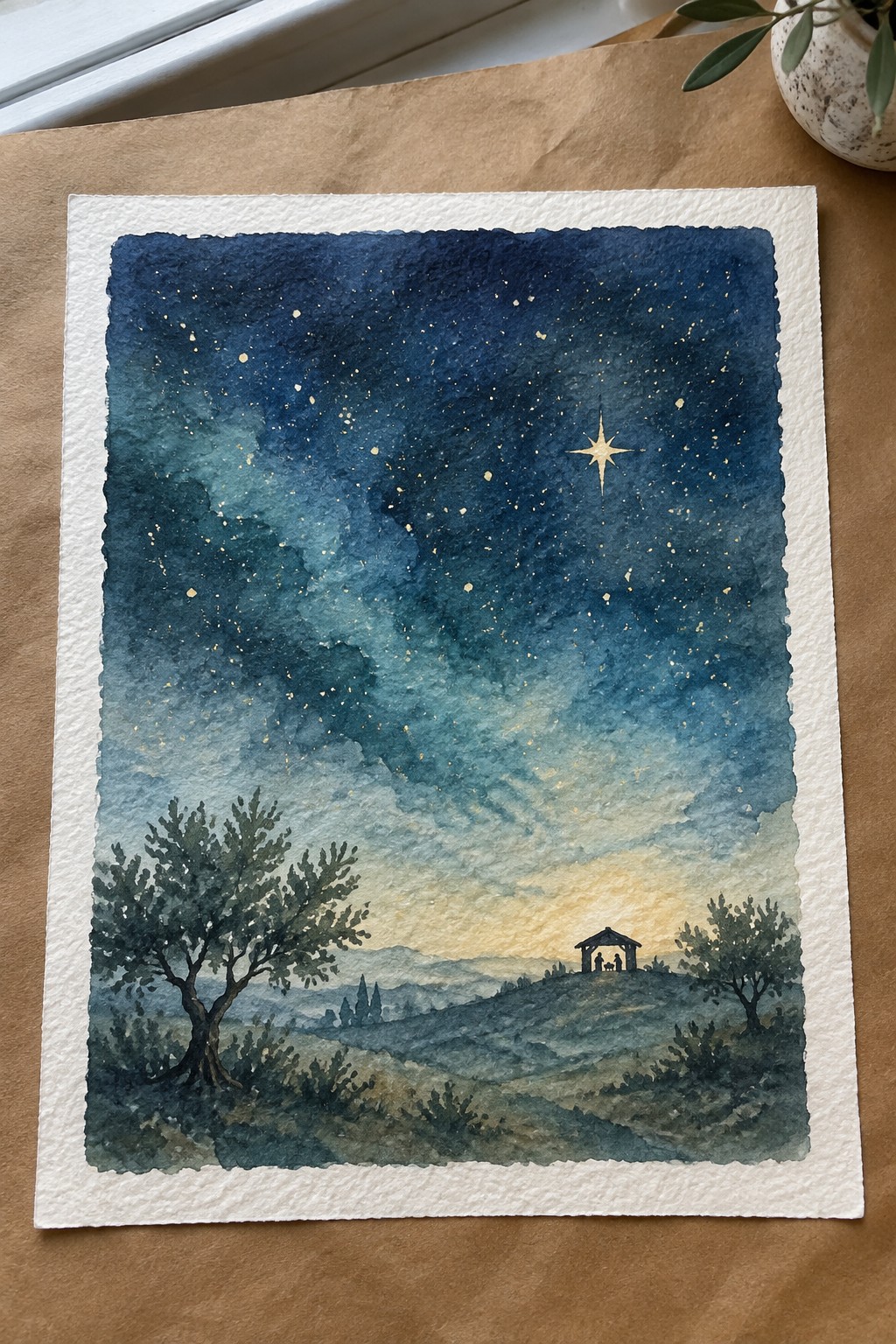
A nativity scene placed on a low hill under a wide night sky works well as a landscape idea. The bright star sits high in the upper right while the shelter and figures stay small and low on the horizon. A gradual shift from deep blue at the top to warmer tones near the ground gives the sky most of the visual weight and keeps the focus clear.
The composition does a lot of the work here because the large sky area balances the smaller foreground elements. You can adapt the idea by changing the number of trees or shifting the horizon line higher or lower to fit different canvas sizes. For practice this subject lets you work on soft sky washes and simple silhouettes without needing many fine details. It also translates easily to holiday cards or small wall pieces since the star remains the main point of interest.
Intimate Madonna and Child with Golden Halos

A close-up nativity idea that centers on Mary holding the infant Jesus works well as a simple character study. The tight framing keeps both figures close together, with the halos providing a clear focal point against the dark background. The warm brown and terracotta palette plus the soft, rounded shapes of the cloth and faces make the composition feel balanced without needing extra elements.
What makes this idea useful is the dark background that reduces the amount of painting needed while still making the figures stand out. You could easily change the halo color or adjust the clothing tones to match whatever paints you already have on hand. For practice, the limited setting lets you focus on skin tones and fabric folds without managing a full scene. This type of portrait also translates well to small canvases if you want quick seasonal pieces for gifts or wall displays.
Three Kings with Patterned Robes
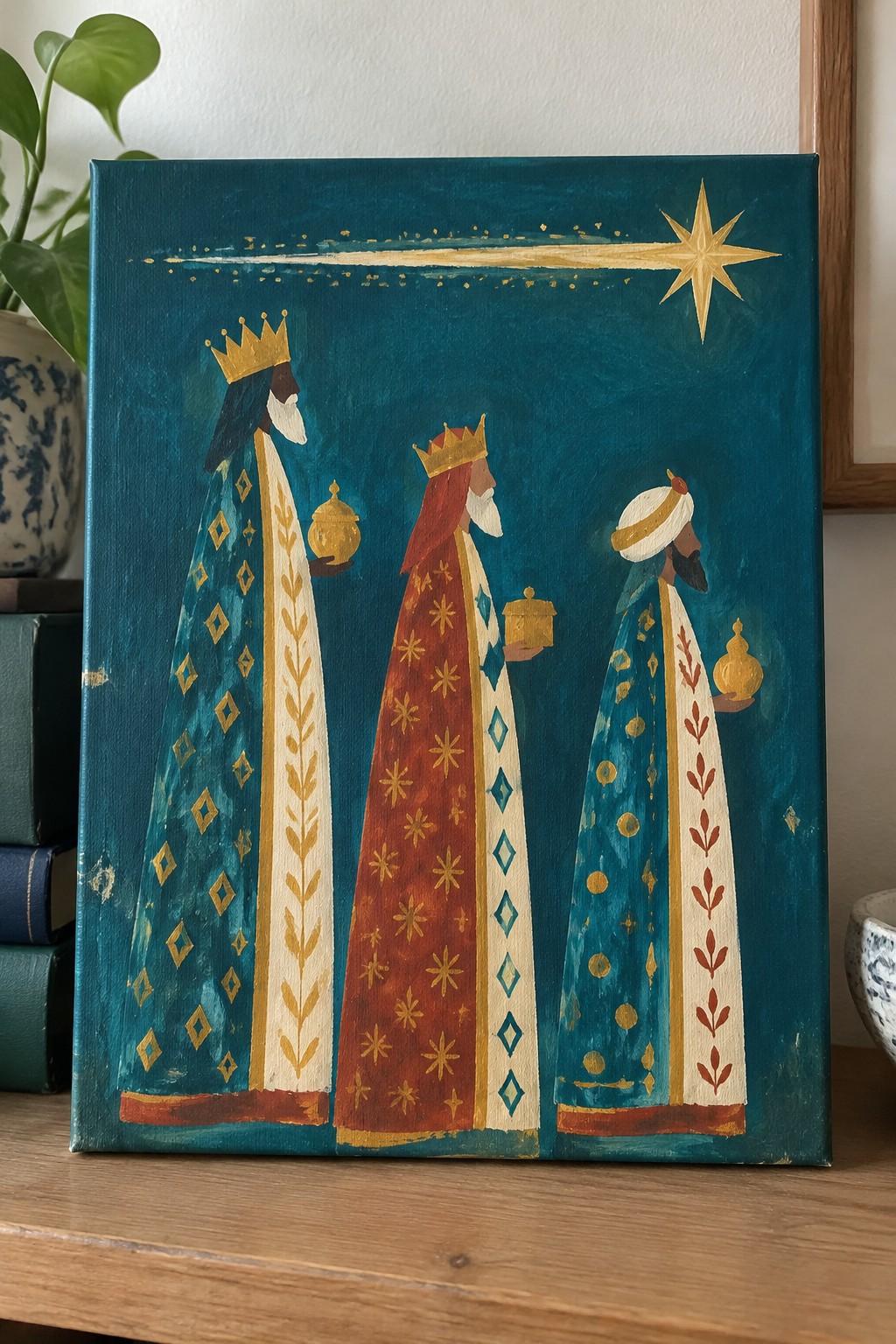
A nativity painting idea built around the three wise men uses tall vertical figures and repeating geometric patterns on their robes to create a balanced, eye-catching layout. The strong central star and horizontal line across the top keep the focus upward while the teal background holds the composition together without extra detail. This type of seasonal piece works as decorative holiday art that relies on shape and color blocks rather than fine shading or realism.
What makes this idea useful is how the robe patterns can be simplified to basic stripes or dots if you want a faster version or kept as they are for more practice with repeats. The limited color scheme of teal, gold, red, and white makes it easy to swap in other shades to match your space or supplies. For wall art or gifts, the upright format fits standard canvas sizes well and stands out on Pinterest next to softer or more crowded nativity scenes.
Shepherd and Sheep in a Sunset Landscape

A shepherd walking with his flock across an open field makes a strong nativity painting idea because it places the focus on the people who first heard the news. The composition keeps the figure and animals small against a wide sky and layered hills, which lets the sunset colors carry most of the mood. Soft washes in the sky and simple shapes for the sheep keep the scene readable even when the details stay minimal.
What makes this idea useful is how easily the same layout works for different times of day or seasons. You can shrink the sky, change the hill colors, or add one more sheep without redrawing the whole scene. For nativity sets, this subject pairs well with stable or star scenes because the open landscape gives breathing room between figures. The gentle color shifts also make it forgiving for beginners who want to practice washes before adding the animals.
Curved Shape Nativity with Central Star

A nativity idea that uses three overlapping curved forms to represent the holy family gathered around a small manger, with one large star above and smaller stars scattered across the background. The painting relies on simple silhouettes, a soft neutral backdrop, and gold accents to keep the scene readable while staying minimal. This fits into decorative seasonal art because the limited shapes and color blocks create a clear focal point without extra detail.
The composition does a lot of the work here by letting the curved forms carry the story so beginners can focus on placement and color choice rather than drawing faces or clothing. You could easily change the blue and pink tones to match other holiday decor or shrink the layout for cards and ornaments. For practice, this kind of subject works well because the large shapes stay forgiving if your brushwork is loose. It would stand out on Pinterest because the modern silhouette style looks different from the usual detailed nativity scenes people already have.
Animal-Centered Nativity with a Star Overhead
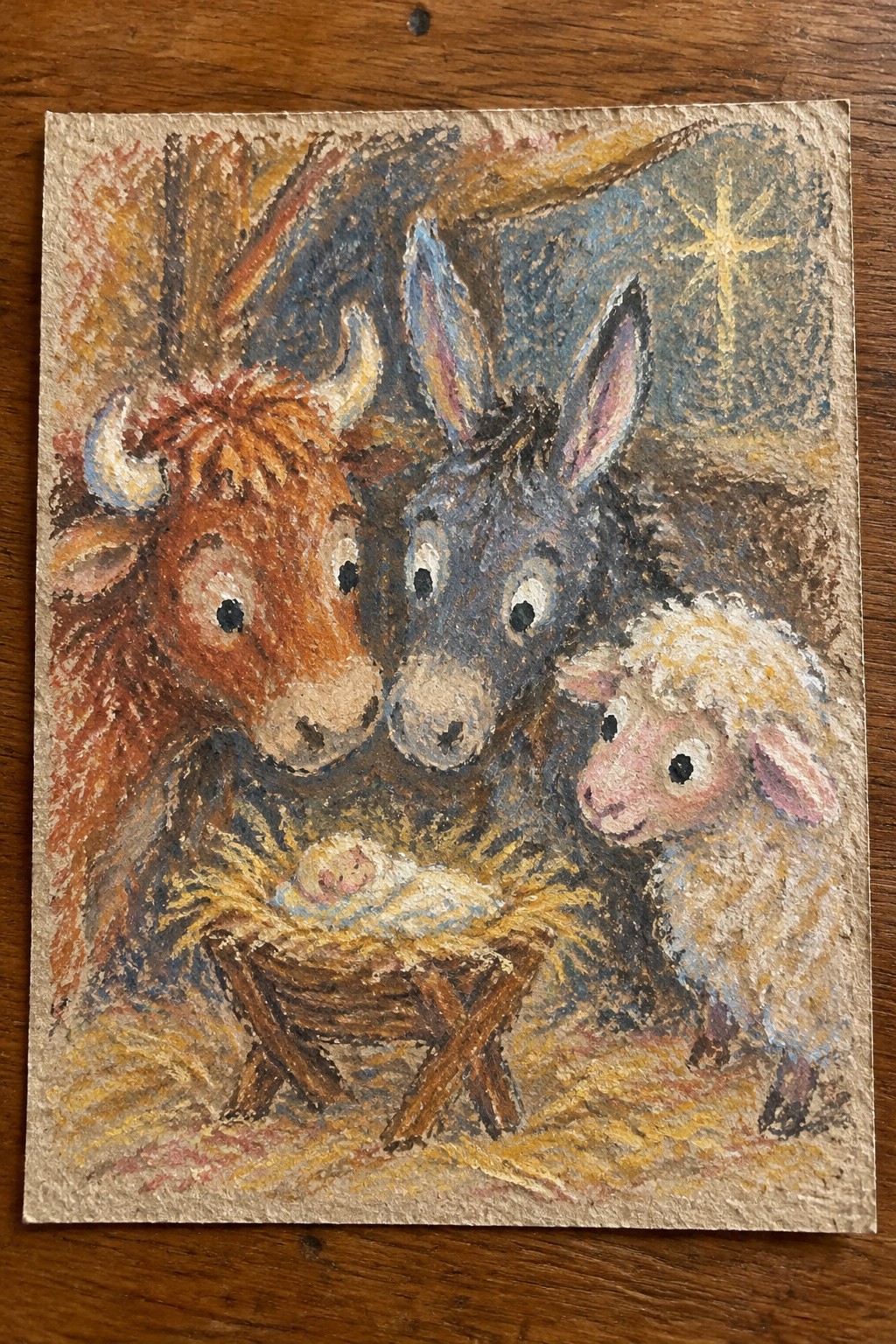
A nativity painting idea that puts the animals front and center works by grouping a cow, donkey, and sheep closely around a small manger. The animals occupy most of the upper space and frame the crib below, while the single star in the upper corner balances the composition without competing for attention. This approach fits the animal and seasonal category, using soft overlapping shapes and a muted palette to keep the scene simple yet complete.
What makes this idea useful is the way the clustered animals do most of the visual work, so you do not need a detailed stable or landscape. You can easily adapt it by dropping one animal or swapping the star for a plain night sky if you want a faster version. For practice or gifts, the rounded forms and limited color range make it forgiving for beginners while still looking finished. A painting like this also performs well on Pinterest because the animal focus gives it a recognizable twist on the usual nativity setup.
Oval Folk Art Nativity on Wood

A nativity scene painted on an oval wooden panel offers a straightforward seasonal project that combines the holy family with simple animal figures. The idea uses a central stable structure topped by a large star, with the manger positioned low so the surrounding figures and animals stay balanced without crowding. A limited teal and orange palette plus a scalloped border gives the piece a clean decorative finish that works on wood or transferred to canvas.
The composition does a lot of the work here by keeping the star and manger as the main focal points. You could adapt the same layout to a rectangular board or a set of smaller ornaments while keeping the color count low. For wall art, this format stands out because it already looks finished as a plaque rather than needing a frame. The simple shapes also make it easy to scale down or swap in different background tones without changing the overall arrangement.
Night Sky Nativity with a Single Dominant Star
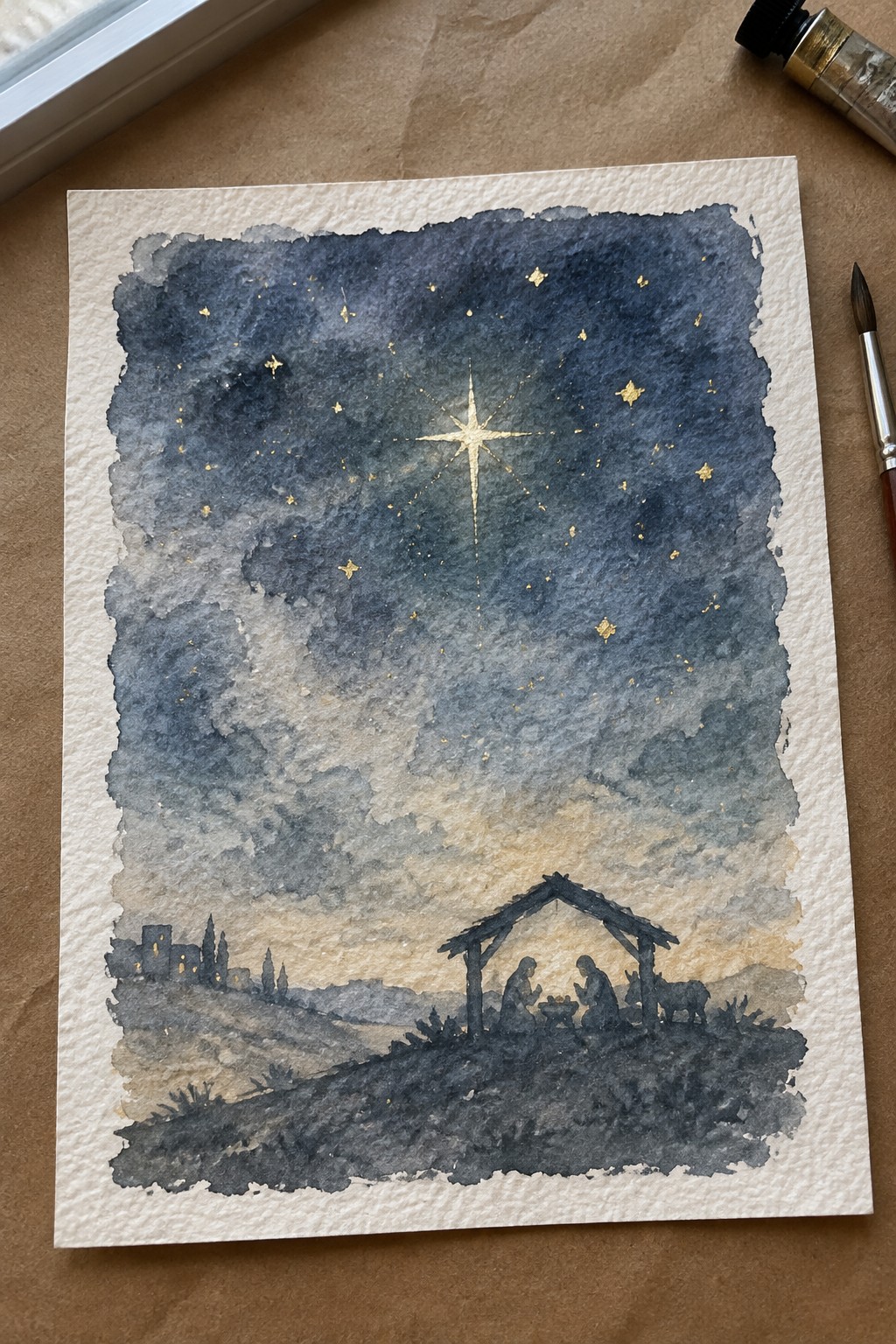
A nativity scene placed low on a hillside under a dark sky lets the large central star become the main focal point. The idea works by keeping the manger, figures, and distant town simple and small so the sky and star carry the composition. A limited palette of deep blues fading into warmer tones near the horizon, plus a few scattered gold accents, creates contrast without requiring many colors or complex details.
The composition does a lot of the work here because the sky takes up most of the space and only needs loose washes and soft edges. You can scale this down easily for a card or keep the same layout on a larger sheet by adjusting how much sky you show. The simple shapes of the stable and figures make it straightforward to adapt with whatever blues and earth tones you have on hand, and the strong vertical star helps the piece read clearly even at small sizes.
Angel Floating Above a Wooden Crib

An angel with brown hair, white wings, and a simple halo hovers in the upper half of the canvas while a wooden crib sits below. The idea relies on a soft blue and pink sky with loose cloud shapes to fill the space around the two main elements. Keeping the angel higher and the crib lower creates a clear vertical balance that feels calm and easy to follow.
What makes this idea useful is the split layout, which lets you work on the sky first and then place the crib without crowding. You can swap the teddy bear for a small figure or add a few faint stars if you want a more traditional nativity touch. The gentle color shifts and soft edges also make it simple to adjust the size for a card or a larger canvas.
Manger-Focused Nativity in a Rustic Stable
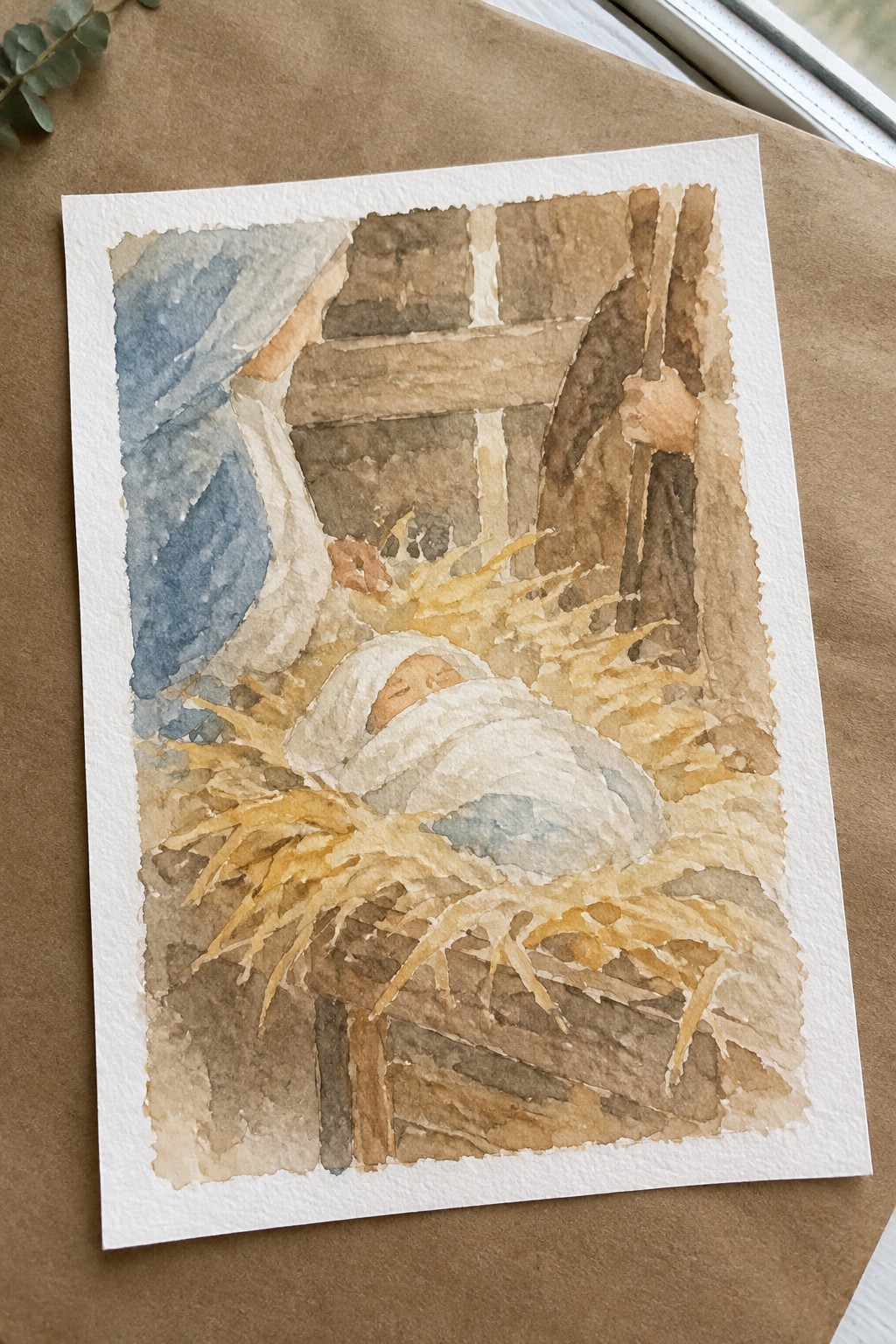
This painting idea shows the baby resting in a wooden manger surrounded by loose straw inside a simple stable. The composition places the manger low in the frame and uses the overhead beams and side structures to create a contained space without extra figures or scenery. It works as seasonal art that relies on basic shapes and a limited palette of browns, golds, and soft blues.
What makes this idea useful is how the stable walls and straw already supply the background and texture, so you do not need to invent extra details. You could shrink the whole scene to fit a greeting card or crop it tighter around the manger for a smaller study. The color choices stay easy to mix with a basic set, and the loose brushwork on the straw lets you practice soft edges without worrying about perfect outlines. For wall pieces, the contained setting keeps the focus clear even at smaller sizes.
Textured Collage Nativity Scene
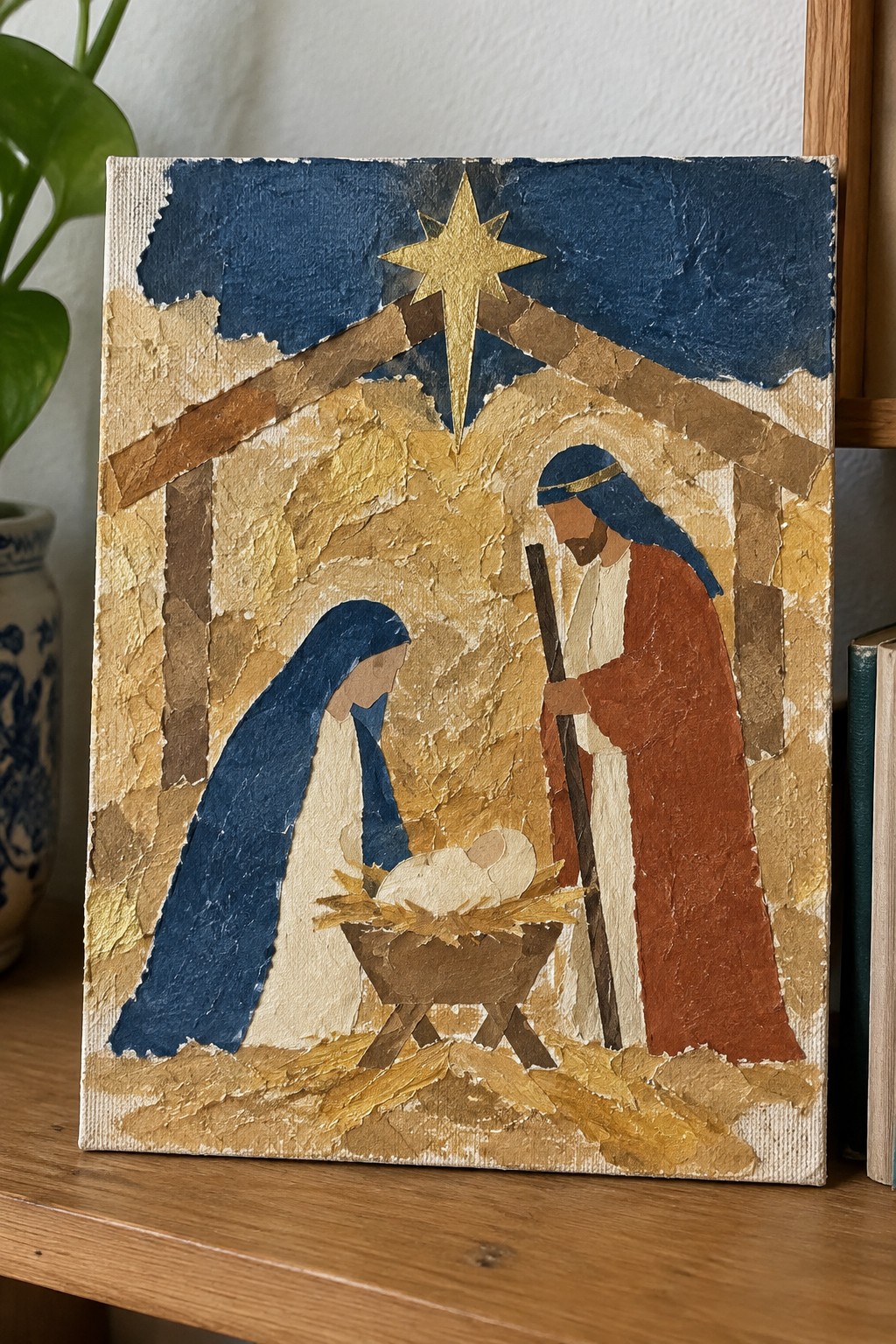
A collage-style nativity builds the stable, figures, and manger from layered torn pieces that create depth through overlapping edges and varied textures. The star sits high in the center to anchor the composition, while the warm gold and brown tones around the manger contrast with the deep blue upper section. Simple shapes for the robes and shelter keep the focus on the main grouping without requiring precise outlines.
What makes this idea useful is how the torn layers handle most of the visual interest, so beginners can work with scraps or thick paint instead of detailed drawing. The limited palette of blues, golds, and earth tones makes it easy to adapt for smaller canvases, greeting cards, or larger wall pieces using whatever materials are on hand. The same layout works if you swap in painted paper for fabric scraps or adjust the star size to change the balance.
Nativity Scene with a Single Guiding Star

A nativity painting idea that places the holy family in a tight group beneath one large star. The figures are arranged vertically with the star positioned high in the center, and a simple dark-to-light sky gradient fills the rest of the space. This type of seasonal composition works because the limited shapes and muted palette keep attention on the three figures without extra background elements.
What makes this idea useful is how the star handles the upper half of the canvas so you do not need to invent more scenery. You can change the robe colors or make the figures smaller or larger while keeping the same basic layout. For wall art or gifts the vertical format fits standard canvas sizes and still reads clearly from a distance.
Frequently Asked Questions
What basic supplies do I need to start painting these nativity ideas as a beginner?
You can begin with just a few affordable items such as acrylic paints in primary colors, a set of small and medium brushes, a canvas or thick paper, and a pencil for sketching. Add a palette for mixing, water for cleaning brushes, and paper towels for blotting. These basics let you try most of the simple ideas without buying extras right away.
How do I simplify the human figures like Mary, Joseph, and the shepherds if drawing is not my strength?
Start with basic shapes such as ovals for heads and triangles or rectangles for bodies. Keep faces minimal with just a dot for an eye or a small curve for a smile. Focus on the overall pose rather than fine details, and use the article ideas that suggest robes or cloaks to cover more of the body. Practice on scrap paper first to build confidence.
What colors work well together for a calm and traditional nativity scene?
Choose a soft palette with warm earth tones like ochre, soft brown, and cream for the figures and stable. Add cool blues or deep greens for the night sky and background. Include a touch of gold or yellow for the star and halo effects. Test mixes on a separate sheet to see how they blend before applying them to your main painting.
How can I make the background interesting without adding too many complicated elements?
Use simple layers such as a gradient sky from dark blue at the top to lighter tones near the horizon. Add a few basic shapes like triangles for distant hills or a rectangle for the stable walls. Keep the focus on the central nativity group by using lighter colors there and softer tones in the background.
What should I do if one of the painting ideas does not turn out as planned?
Step back and identify one small part to adjust, such as repainting a section with a lighter color or adding a simple highlight with white. Many beginners fix issues by layering thin coats of paint once the first layer dries. Remember that small imperfections often add charm, and you can always start a new version using the same idea with slight changes.