I was looking through some online galleries last week and noticed quite a few paintings of angels falling from heaven.
The way the figures were shown in midair caught my eye right away.
It reminded me of times when I have tried to paint motion in my own sketches without making it look too stiff.
Some of the works use soft colors while others go for sharper contrasts but they all seem to focus on that sense of descent.
I picked out a few that felt worth sharing here.
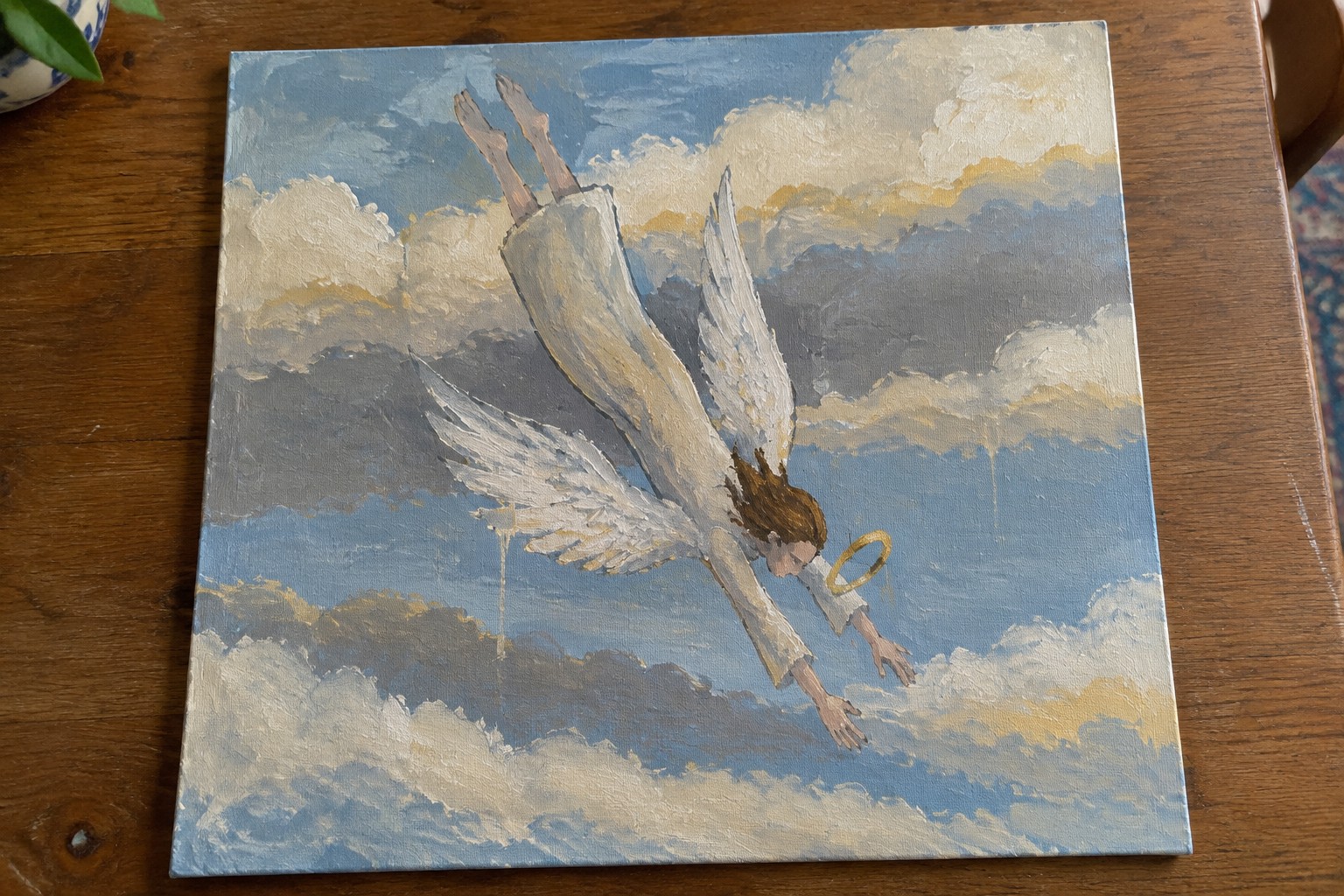
Falling Angel in Inverted Descent

An angel shown mid-fall in an inverted pose creates a strong sense of downward motion through layered clouds. This type of figurative painting idea relies on the vertical composition and outstretched arms to lead the eye along the figure’s path. The soft cloud shapes and subtle edge drips give the background texture while keeping attention on the central form.
What makes this idea useful is the built-in emphasis on perspective and movement, which works well for practicing angled figures. You could swap the blue tones for warmer shades or reduce the cloud layers to make a faster version on a smaller canvas. For wall pieces, the tall format fits narrow spaces and the clear downward action stands out in a feed of angel art.
Scattered Angels Across a Cloudy Sky

A painting idea centered on several small angels placed at different heights and angles over a soft blue cloud background dotted with stars. The loose spread keeps each figure visible without crowding while the clouds and stars fill negative space evenly. This kind of repeating motif suits decorative or illustrative work where the pattern of figures carries the design.
The composition does a lot of the work here by balancing the angels so the eye travels across the whole piece. You could reduce the number of figures or adjust the robe colors to suit a card, nursery print, or journal cover. For practice this setup helps focus on simple body shapes and light blending without needing precise anatomy or heavy detail.
Angels in Patterned Robes Descending Side by Side
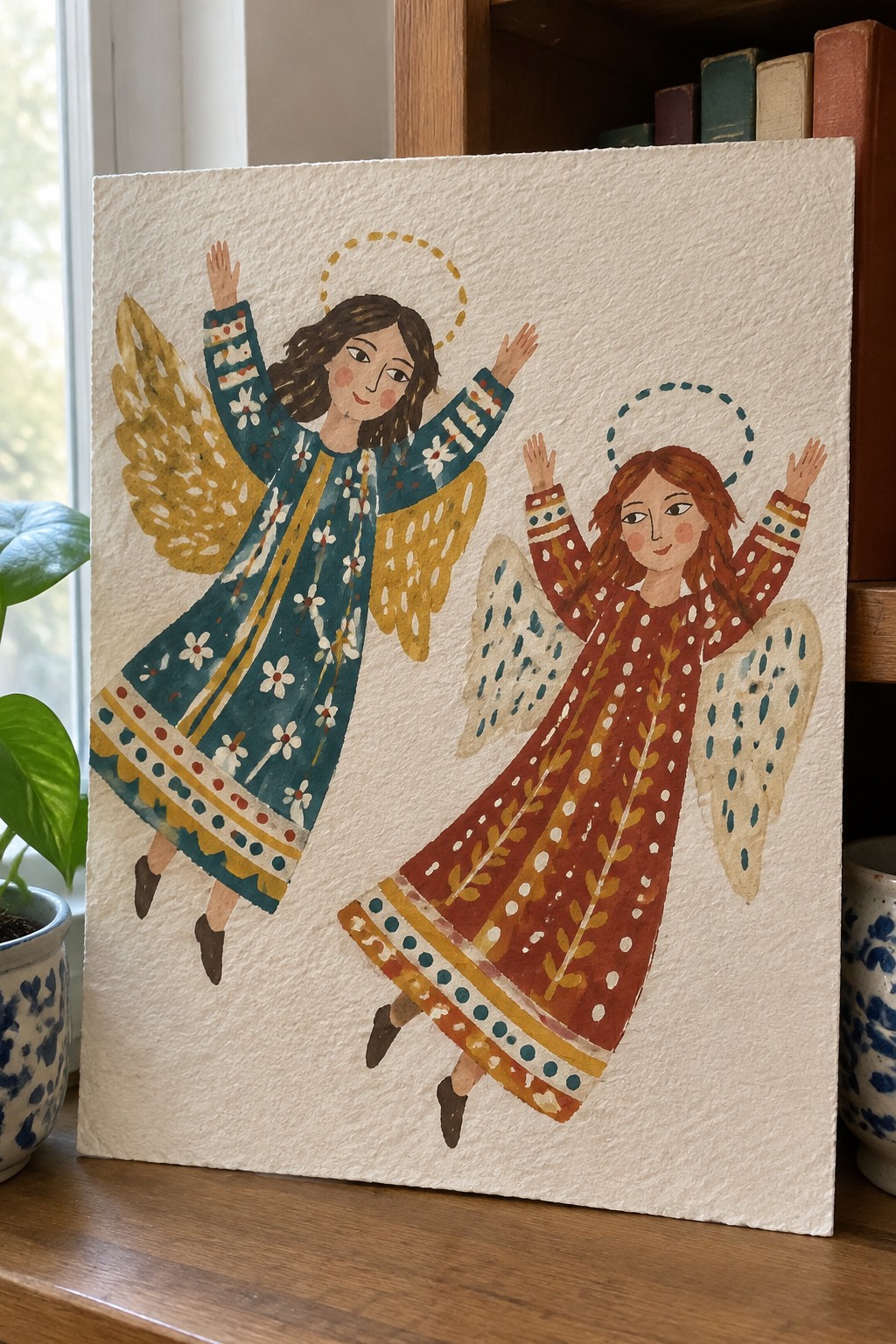
The painting idea shows two angels side by side in descent, both with arms raised and halos, wearing long robes covered in repeating motifs like flowers and dots. The composition works by placing the figures at slight angles to each other against a plain background, letting the contrast between the teal robe and the rust one carry the visual weight. This approach fits decorative folk art, where flat shapes and bold pattern blocks replace detailed shading or perspective.
What makes this idea useful is how the robe patterns give you a built-in way to fill space without complex techniques. The color pairing of teal and rust could be swapped for other combinations to match different seasons or wall colors. For practice, the simplified figure shapes make it easy to copy the basic layout first, then adjust wing details or hem patterns to personalize it without starting over.
Angel Caught in Low-Angle Freefall

This painting idea uses a sharp upward viewpoint to show a winged figure tumbling downward, with the body angled and limbs positioned to emphasize motion and foreshortening. The large wings spread wide on either side help balance the vertical composition while drawing attention to the central figure. A limited palette of deep blues, purples, and warm orange streaks keeps the focus on the figure against a simple atmospheric background.
The composition does a lot of the work here by turning a single figure into a full scene without needing extra elements. You could adapt the same low-angle setup for practice with anatomy and movement, or scale it down for a smaller canvas study. Changing the wing size or softening the background colors would let you personalize it quickly for different wall spaces or sketchbook pages.
Angels Scattered Across a Sunset Gradient

A set of black angel silhouettes placed at different heights and angles across a sky that shifts from deep blue down through purple into orange and red. The idea centers on using simple dark shapes against a blended sunset to suggest figures moving through the air above a mountain range. The composition works because the gradient creates natural layers while the scattered silhouettes add direction and spacing without extra detail.
What makes this idea useful is how the silhouettes reduce the need for figure drawing while still giving a clear sense of motion. You can change the number or placement of angels to fit taller or wider canvases, or swap the mountain base for a plain horizon if you want a quicker version. The strong color bands also make it straightforward to practice smooth blending before adding the dark shapes on top. For wall pieces, this kind of layout stands out on Pinterest because the contrast reads clearly even in small preview images.
Descending Angel Meets a Rooftop Cat

A floating angel in descent forms the core of this painting idea, with the figure angled downward over a cluster of rooftops and a cat perched on one edge as the lower focal point. The vertical layout uses the sky above and buildings below to suggest height and gentle motion without needing dramatic action lines. Soft watercolor washes handle the sky and distant structures while keeping the angel and cat as clearer elements in the foreground.
The composition does a lot of the work here because the angel takes up the upper space and leads the eye straight to the cat. You could adapt the color palette by swapping the blue sky for warmer tones or simplify the buildings into loose shapes for faster practice. This kind of scene works especially well for wall pieces since the vertical flow fits tall formats and mixes a familiar subject with an unexpected detail that catches attention on Pinterest.
Patterned Wings on a Descending Angel

The core idea here is an angel shown in a steep downward angle with arms reaching forward and a compact body shape that keeps attention on the wings. The wings are treated as large decorative panels filled with repeating floral shapes, bands, and small motifs in a limited palette of reds and greens. This turns the composition into a balance between the simple figure and the busy surface patterns that fill the space around it.
What makes this idea useful is how the wing layout gives you a clear structure to build patterns inside without needing complex anatomy. The tilted angle works on vertical formats like sketchbook pages or tall paper, and the same wing shape can be reused with different motifs or color sets for quick variations. For practice, the approach lets you work on shape repetition and color placement while keeping the figure itself basic.
Angels Arranged on Vertical Color Stripes

This painting idea uses a row of angel figures spaced across a canvas split into wide vertical bands of color. The figures share the same basic shape and large wing spans but vary slightly in height and robe tone, which keeps the eye moving down the composition. The loose brushwork on the wings and the paint drips along the bottom edge give the piece a relaxed, graphic feel that works as decorative wall art.
What makes this idea useful is how the striped background does most of the visual work, so you only need to focus on placing the angels and their wings. You can easily change the stripe colors to fit a room or swap the number of figures if five feels like too many. The vertical layout also translates well to a tall narrow canvas or a set of smaller panels if you want to try the same idea at different scales.
Angel Caught in Descent
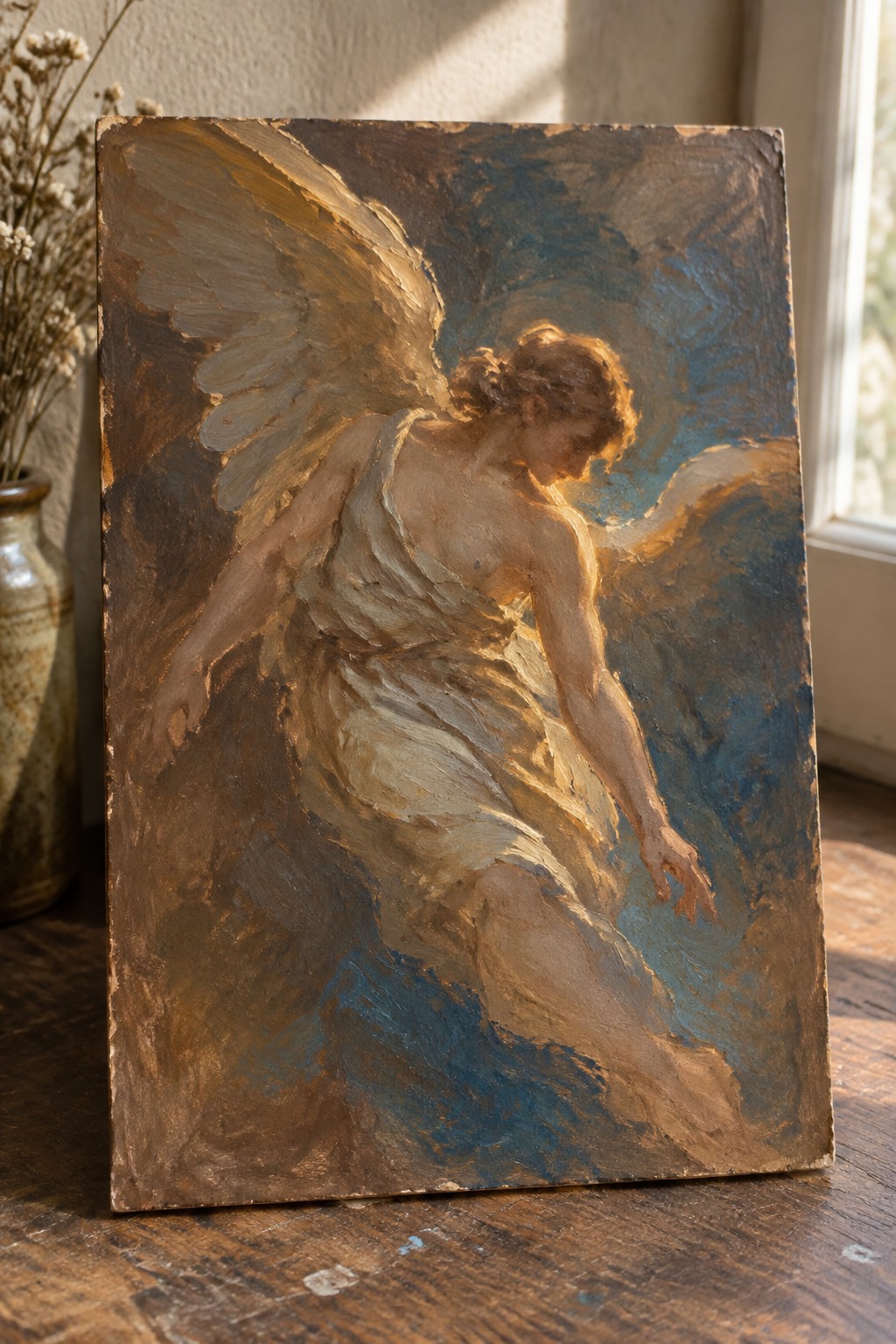
A falling angel painting idea centers on a winged figure shown mid-motion, body angled downward with fabric and wings creating strong diagonal lines across the frame. The concept works as a dynamic figure study where the twist of the torso and extended arm guide the eye through the composition without needing extra elements. Warm skin tones against cooler blue and brown background areas create contrast that emphasizes the sense of downward movement.
What makes this idea useful is how the single strong pose does most of the work, letting you practice gesture and drapery folds without building a busy scene. The earth-toned palette stays easy to mix and can be adjusted for smaller canvases or different lighting setups. For wall pieces, the vertical flow of the figure fits tall formats well, and you can simplify the background further if you want to test the idea quickly.
Scattered Angels in Loose Cloud Formations

The painting idea uses multiple small angel figures in soft pastel dresses placed at different angles across a blue and pink clouded background with scattered gold stars. The repeated motif creates an even spread that avoids any single center of interest while keeping the overall layout balanced through color variation and spacing. This fits into cute decorative art where the focus stays on simple repeated shapes rather than detailed scenes or dramatic action.
What makes this idea useful is how the loose cloud shapes and star placements let you expand or shrink the number of angels without losing the composition. The soft color shifts between figures make it easy to adapt for different paper sizes or to personalize with your own dress colors. For practice this works well because the small scale keeps each angel quick to paint while the background texture adds interest without extra effort.
Angel Reaching Toward a Trail of Stars

An angel figure in a coral dress extends one arm upward to grasp a line of golden stars that stretch across a deep blue night sky. The composition places the figure slightly off-center with the body angled to create upward motion, while the crescent moon and scattered clouds fill the remaining space without crowding the main action. This approach fits into figurative night-sky painting where the focus stays on the single reaching gesture against a simple gradient background.
The color contrast between the warm dress and cool blue sky makes the idea easy to scale for different canvas sizes or to shift into a smaller sketchbook study. Blocking the sky in broad strokes first leaves room to adjust the angel’s pose or swap the star trail for a simpler arc if needed. The layout works well for wall pieces because the vertical movement draws the eye without requiring fine background details, and changing the dress shade keeps the same structure while matching different room colors.
Soft Pastel Angel Descending Through Clouds

A childlike angel figure with yellow hair and open arms forms the core of this painting idea, shown moving downward through a sky of layered clouds and a bright sun. The approach uses loose overlapping strokes in blues, greens, and yellows to suggest motion without tight outlines or heavy detail. The off-center placement of the figure against the open sky keeps the focus on the descent while the scattered cloud shapes add gentle direction to the composition.
What makes this idea useful is how the simple figure and sky layout work together without requiring advanced drawing skills. You can adapt it by shifting the sun position or swapping in different cloud densities to change the sense of height or speed. For practice pieces or small wall art, the limited color range makes it easy to try in pastels, crayons, or even thinned acrylics while keeping the same light, downward movement.
Low-Angle Angel Descent Through Clouds
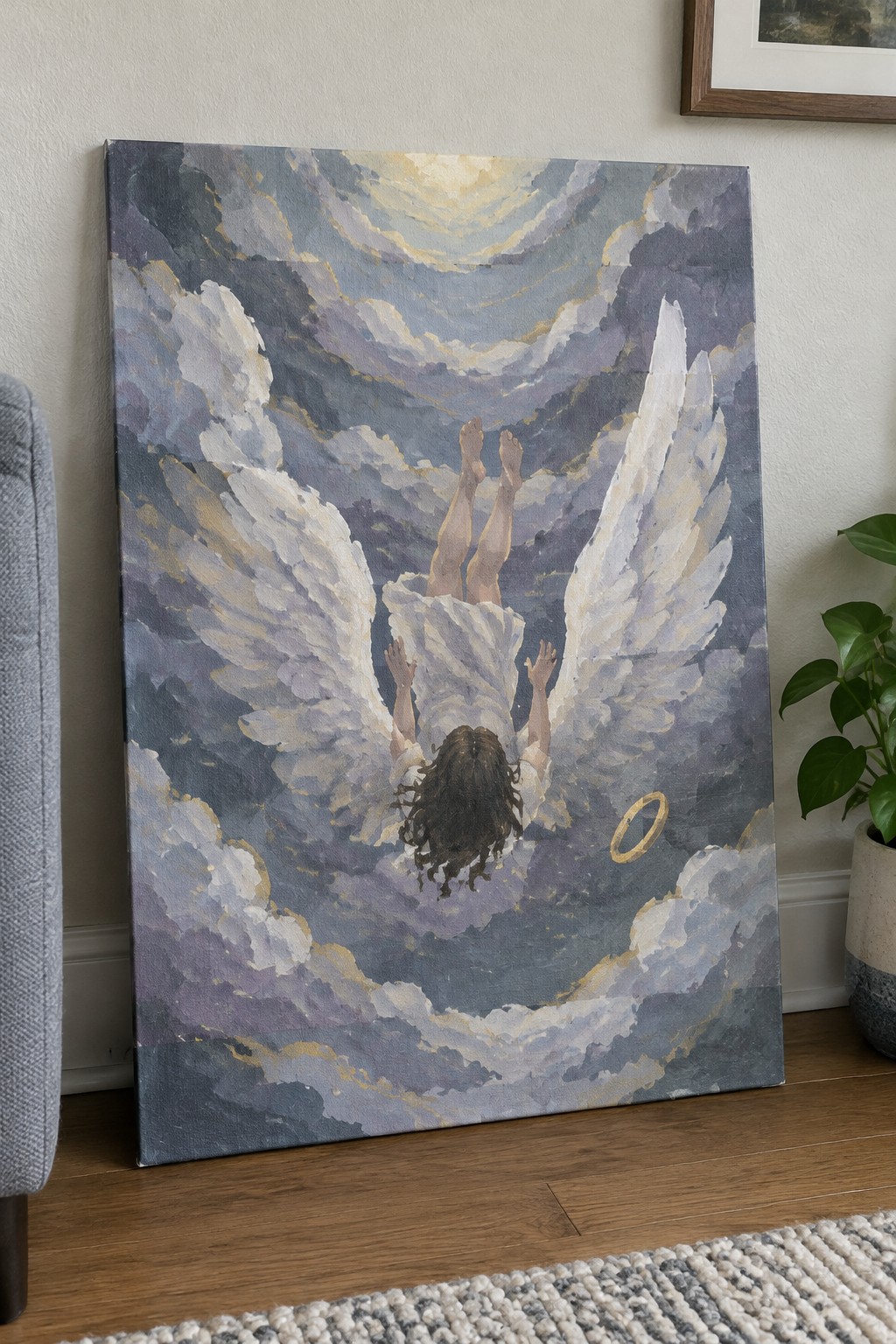
An angel viewed from below creates the main idea here, showing the figure falling or diving toward the viewer with wings fully extended and arms reaching outward. The vertical composition stacks the body, wings, and layered clouds upward toward a bright light source, which keeps the eye moving through the whole piece. Loose brushwork and a cool blue-gray palette with soft highlights make the motion readable without needing sharp detail.
What makes this idea useful is the strong perspective that already sets up the drama. You could paint the clouds with fewer layers or shift the light to a warmer tone for a different mood. For practice, the subject works well because the pose and angle give you clear shapes to follow while still leaving room to adjust the wing size or hair flow. A painting like this would also translate easily to a taller canvas for wall display.
Angel with a Star Umbrella in a Cloudy Sky

A small angel figure paired with an umbrella made of stars creates a light celestial scene that works well in loose watercolor. The idea uses scattered star shapes across the sky to add interest while keeping the main elements simple and easy to balance. Soft blue and purple cloud washes form the background and help the figure and umbrella stand out without extra detail.
The composition does a lot of the work here by placing the umbrella as the clear focal point above the figure. This setup works especially well for smaller formats like cards or prints because the elements stay readable even when scaled down. The limited palette also makes it simple to swap the sky tones for different moods or seasons while keeping the same layout.
Angels Descending in Patterned Folk Style

A group of three angels shown at staggered heights gives the clear idea of figures moving downward through space. The concept relies on flat decorative patterns across their robes in teal, orange, and gold, with simple star and circle motifs that repeat without crowding the surface. This approach fits decorative folk art, where bold shapes and a plain background let the vertical arrangement carry the sense of descent.
The staggered placement makes it simple to add or remove figures depending on your canvas size. You can keep the same color scheme but change the robe patterns to match other projects or room colors. For wall art this layout stands out because the eye follows the downward line without needing extra details or shading.
Falling Angel Caught Mid-Descent

This painting idea centers on a single angel figure dropping through a dark, cloud-filled sky with one arm raised and a thin gold halo marking its head. The concept relies on a strong diagonal pose that leads the eye from the lower left up toward the outstretched hand, while the surrounding clouds fill negative space and add weight to the descent. Thick, directional brushwork and a narrow palette of deep blues, grays, and warm skin tones keep the focus on the figure without extra details.
The composition does a lot of the work here by placing the angel off-center and letting the clouds create movement around it. This makes the idea easy to scale down for a study or enlarge for a taller canvas while keeping the same dramatic angle. Changing the halo to a cooler tone or softening the wing edges gives quick options for variation without changing the core layout. For practice, the limited color range and clear light source on the figure make it a straightforward subject to revisit with different brush sizes.
Angel Descending with a Line of Birds

An angel positioned high in the frame forms the main subject here, shown mid-descent through soft cloud layers while holding a thin line that connects to a short chain of small birds below. This painting idea uses a watercolor sky with blended blue-to-warm gradients and loose cloud shapes to suggest downward motion without needing sharp outlines or complex details. The diagonal placement of the birds creates a clear visual path that supports the falling-from-heaven theme while keeping the overall layout simple.
The composition does a lot of the work here by letting the sky washes and cloud masses fill most of the space so the focus stays on the angel and the bird line. This makes the idea easy to adapt for practice by adjusting the sky colors or shortening the bird chain to just three or four shapes. For wall pieces the vertical flow works well on taller paper or canvas, and the same setup could be changed to stars or leaves if you want a seasonal version.
Falling Angel with Autumn Leaves and Integrated Text

The core idea shows a small winged figure tumbling through open sky with a halo drifting above and leaves scattered on all sides, while a landscape sits far below to mark the distance traveled. This painting concept blends a central figure with seasonal details and short handwritten lines placed at the edges to create a clear sense of downward motion. The loose placement of leaves and the tilted angle of the angel keep the eye moving through the scene without needing heavy detail or complex layering.
The composition does a lot of the work here by using the figure’s upside-down pose and the falling leaves to direct attention straight down the canvas. You could swap the leaves for snowflakes or flower petals to shift the season while keeping the same layout and text style. For practice this subject works well because the sky background stays simple and the text can be shortened or changed to fit different messages. A version like this would stand out on Pinterest since the added phrases turn a standard falling angel into a quick story that feels more personal.
Angel in Gentle Descent with Floral Framing

An angel caught mid-fall forms the core of this painting idea, shown with one arm reaching upward and wings softly extended behind. The composition places the figure inside layered golden circles and a central sun, while pink petals and small flower sprigs create a loose border that guides the eye without crowding the scene. This approach suits decorative celestial art, where the muted palette and visible brush textures keep the focus on the figure’s posture and the sense of quiet motion.
What makes this idea useful is how the scattered petals and stars can be reduced or rearranged to simplify the layout for smaller canvases. The color palette makes this easy to adapt by shifting the pinks toward cooler blues or warmer earth tones depending on the intended space. For practice, this kind of subject helps build skill with soft edges and figure placement while still leaving room to personalize the surrounding details.
Frequently Asked Questions
What biblical event inspires most paintings of angels falling from heaven? These artworks draw from passages in the Book of Revelation and related texts that describe Lucifer and rebellious angels being expelled from heaven by divine power. The scenes emphasize themes of pride leading to downfall and serve as visual reminders of spiritual consequences across centuries of religious art.
Which famous artists created the most powerful examples in this group of 19 paintings? Notable creators include Gustave Dore for his detailed engravings, Peter Paul Rubens for dynamic Baroque compositions, and various Renaissance masters who captured intense movement and emotion. Their works stand out for technical skill and the ability to convey both grandeur and tragedy in a single image.
Where can someone view or study these 19 specific angel paintings today? Many originals reside in major institutions such as the Louvre, the National Gallery in London, or Vatican collections. High-resolution digital versions appear on museum websites and art archives, allowing close examination of brushwork and color without travel.
What artistic techniques help these paintings evoke strong feelings in viewers? Artists rely on dramatic contrasts of light against shadow, swirling compositions that suggest rapid descent, and realistic facial expressions of anguish or defiance. These methods draw the eye downward through the canvas and create a sense of motion that mirrors the subject matter.
How should someone interpret the symbolism if they lack deep religious knowledge? Look for universal ideas such as the loss of grace shown through broken wings or fading halos, and the isolation of figures separated from their former home. These elements highlight human experiences of failure and regret, making the paintings meaningful beyond any single faith tradition.