I have been looking at oil paintings of fallen angels that lean into darker colors and heavier shadows.
My own painting experiments with similar subjects made me notice how those choices affect the whole piece.
It seems like a lot of artists are moving away from lighter backgrounds lately and I can see why it works for this theme.
I gathered 21 examples that show this approach in different ways.
They feel more real to me than the brighter versions I used to see around.
Fallen Angel Portrait with a Broken Halo

A fallen angel concept works as a tight portrait that centers the face and shoulders while using a cracked golden halo as the main point of interest. The idea relies on strong contrast between the light halo and the dark, layered background to keep the eye moving across the hair, skin, and partial wing. It belongs in the dramatic figurative category where darker earth tones and visible brushwork create a somber, grounded mood.
What makes this idea useful is how the broken halo gives an immediate focal point that can be simplified or exaggerated depending on the size of the canvas. The limited color range helps control values during the block-in stage, making it practical for practicing skin tones and hair texture without juggling too many hues. For wall pieces the same setup adapts easily by shifting the angle of the head or reducing the wing detail to fit smaller formats while keeping the overall impact.
Fallen Angel Reclining on Rubble with Strong Overhead Light

A fallen angel figure forms the core of this idea, shown reclining on broken stone blocks with large damaged wings spread outward and a simple cloth draped across the waist. The composition relies on a single strong light source from above to model the torso, limbs, and wing feathers while the rest of the scene stays dark and minimal. This approach works well for dramatic figurative work where the goal is to keep attention on the body and the contrast between the figure and the rough surroundings.
What makes this idea useful is the straightforward pose that lets you focus on anatomy and fabric without needing a complex setting. The dark background does most of the work in isolating the subject, so the same layout can be scaled down or painted on a smaller canvas for practice. You could swap the rubble for simpler shapes or change the wing condition to make the piece more personal. For wall art, the strong value contrast helps it read clearly even from a distance, which is why similar pieces perform well on Pinterest boards for moody interiors.
Overlapping Feathers Forming a Fallen Wing

A wing shape built from layered and overlapping feathers gives this painting its main structure, with the feathers varying in angle and size to create depth. The dark background and scattered loose feathers around the edges keep the focus tight on the wing form while adding a sense of disarray. Heavy texture and limited gold highlights on a mostly black and brown palette make the composition read as dramatic without needing additional figures or details.
What makes this idea useful is how the wing shape does most of the compositional work, so you can focus on texture and placement rather than inventing forms. The scattered feathers let you adjust the level of messiness depending on how broken or intact you want the wing to look. This layout works especially well for practice pieces because you can reuse the same feather shapes at different scales, and the dark palette hides small mistakes while still showing off the gold touches on a finished wall piece.
Back-to-Back Fallen Angels in a Stormy Setting
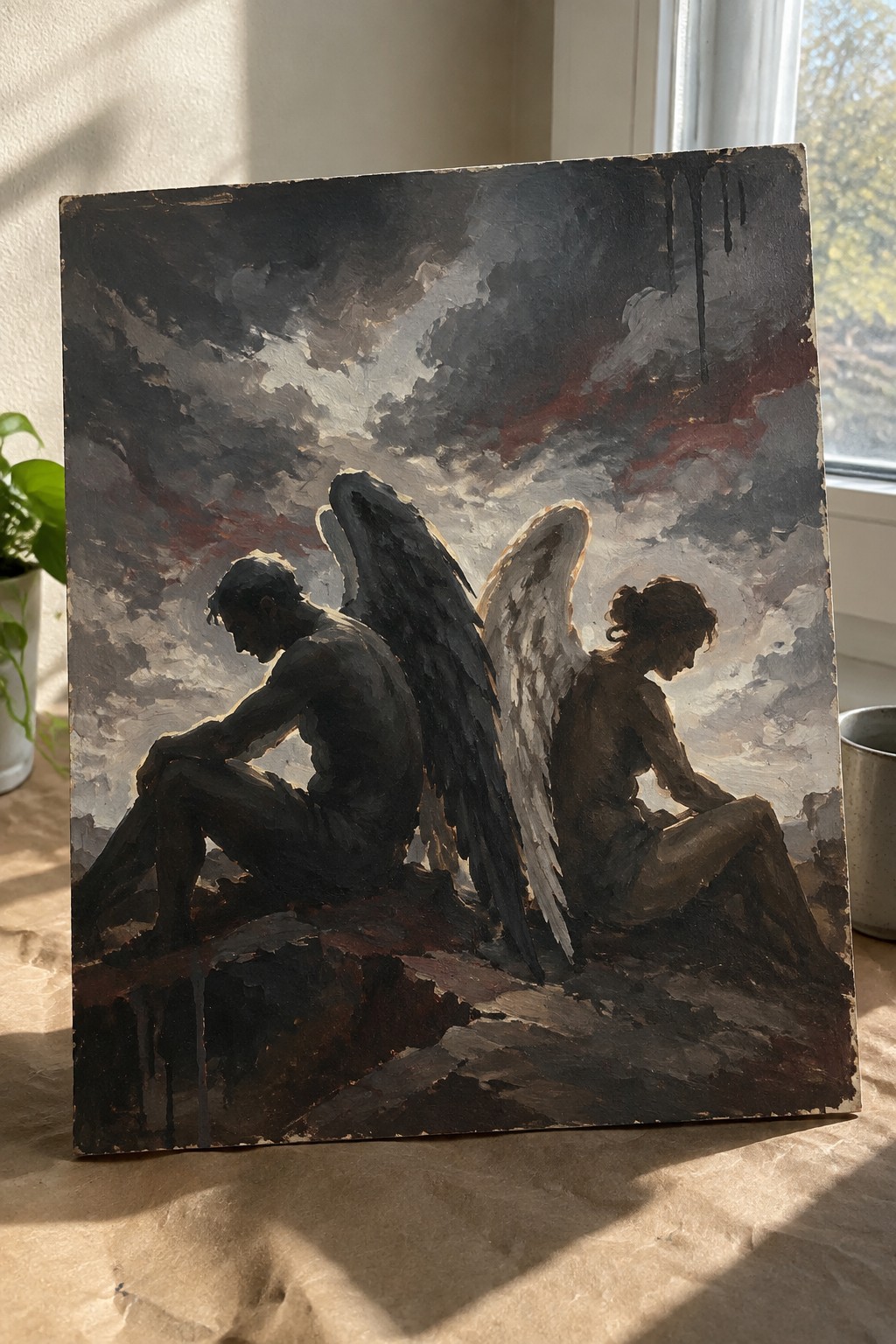
A strong painting idea centers on two fallen angels seated back to back on a rocky ledge, their wings rendered in opposing dark and light values against a heavy, clouded sky streaked with deep red. The composition gains impact from the simple opposing postures and the way the wings create a visual divide down the middle of the scene. This approach works well as dramatic figurative work with a mythological angle, where the focus stays on the figures and the moody sky rather than added details.
The color palette of muted grays, browns, and red undertones keeps mixing straightforward and helps the wings stand out without extra highlights. You could adapt this by cropping tighter around the torsos for a smaller study or swapping the full rocky base for a flatter ground plane if you want less background work. The back-to-back arrangement makes the idea easy to try with just two reference photos, and the limited interaction between the figures reduces the need for complex anatomy adjustments.
Falling Angel with a Blood-Streaked Wing

A winged figure in a steep downward plunge forms the core of this painting idea, with one wing carrying a bold red streak that cuts through the otherwise dark, muted tones. The composition relies on strong diagonal movement and a low viewpoint to emphasize the fall, while the limited palette of grays, blacks, and that single red accent keeps the focus tight. This approach fits the dramatic fallen angel category and works as a standalone figurative piece with a dark, atmospheric mood.
What makes this idea useful is the strong visual anchor provided by the red wing mark, which gives the eye an immediate place to land without extra details. The vertical format and restrained colors make it straightforward to adapt for different sizes or to simplify into a quicker study. For practice, the clear pose and limited palette let you focus on gesture and value rather than complex color mixing. This kind of direct, high-contrast subject also translates well to prints or series work for darker-themed walls.
Hand Holding a White Feather with One Blood Drop

A pale feather rests across an open palm with a single red drop at its base, set against a near-black background. The painting idea uses the contrast between the light feather and dark skin tones to pull focus straight to that small blood detail. This type of still life keeps the subject minimal so the eye stays on the relationship between the hand, feather, and the one point of color.
The composition does a lot of the work here by angling the feather upward and letting the blood sit at the lowest point. A painting like this works especially well for practicing skin tones and fine feather texture without building a full scene. You could swap the feather for a small branch or key, or change the background to deep blue if the black feels too stark.
Headless Angel Statue in Ruined Surroundings
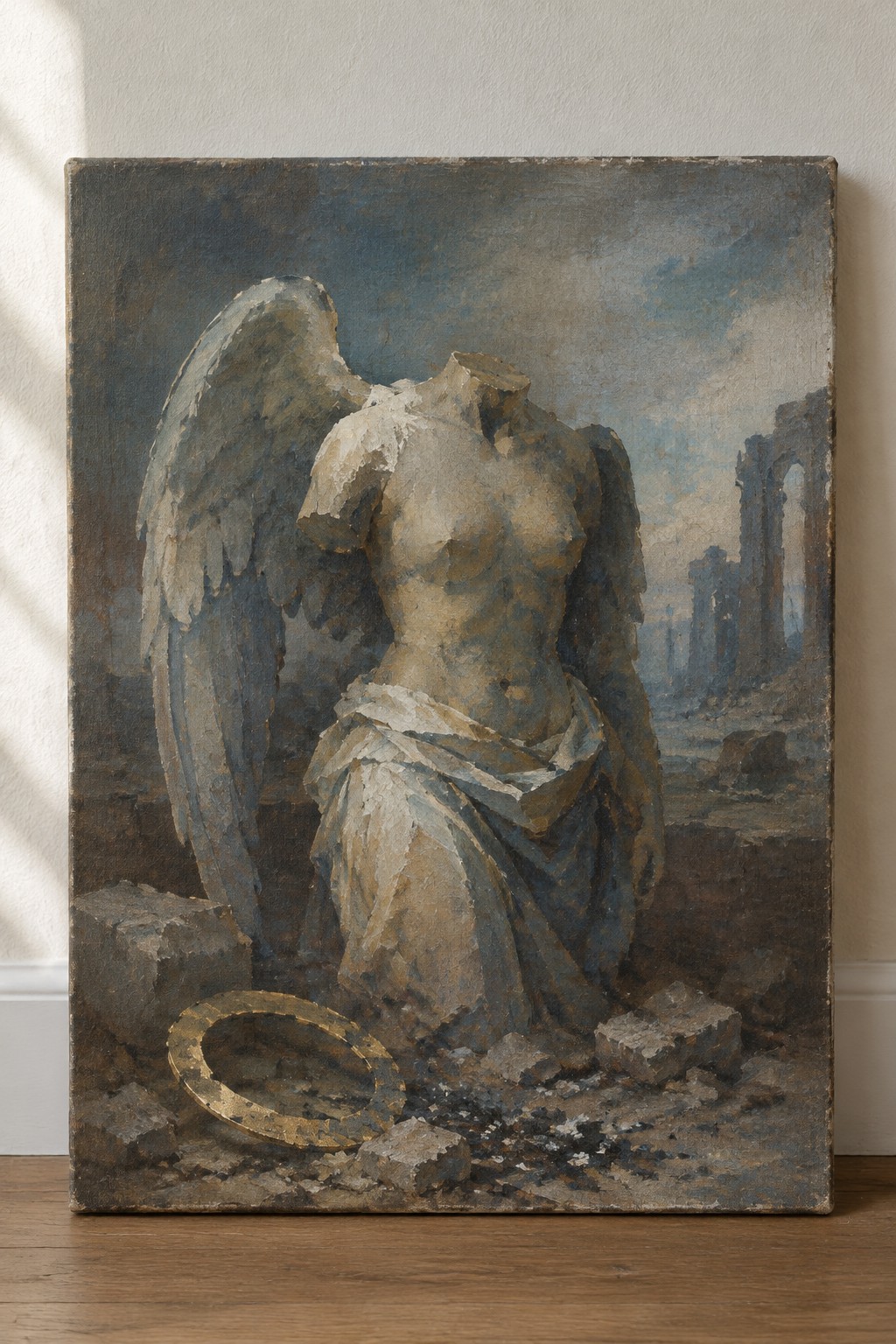
A fallen angel concept rendered as a damaged classical torso with large wings, positioned in a collapsed architectural setting. The idea centers on the contrast between the broken figure and the scattered debris, with a golden halo placed on the ground to complete the narrative without needing a full figure. This fits into dramatic figurative painting that blends still life elements with landscape ruins, using muted earth tones and rough texture to keep the focus on the form.
The composition does a lot of the work here by placing the halo as a separate focal point in the foreground, which makes the idea easy to adapt for smaller canvases or studies. A painting like this works especially well for practicing texture on wings and stone while keeping the background loose. The simple color range of blues, browns, and golds makes it straightforward to personalize by swapping the ruins for a different setting or adjusting the wing angle. For wall art in a darker aesthetic, this kind of subject holds up well without needing extra detail.
Fallen Angel on a City Rooftop at Dusk

A winged figure sits on the edge of a rooftop ledge, looking down over a city where lights are just beginning to stand out against the fading sky. The idea relies on the strong diagonal of the wings and the figure’s hunched posture to lead the eye from the foreground into the distant buildings and the moon overhead. Darker tones dominate the palette, with the city glow providing the main source of contrast and depth.
The composition does a lot of the work here by using the ledge as a clear horizontal anchor that keeps the figure grounded while the background stays loose. This makes the idea straightforward to adapt by swapping in a different skyline or shifting the light source to early morning or full night. For practice, it works well for studying how to handle a single figure against a busy but simplified backdrop without getting lost in details. The same setup could be scaled down for a smaller canvas or turned into a series by changing the wing position or adding a second figure.
Fallen Angel Portrait With Damaged Halo
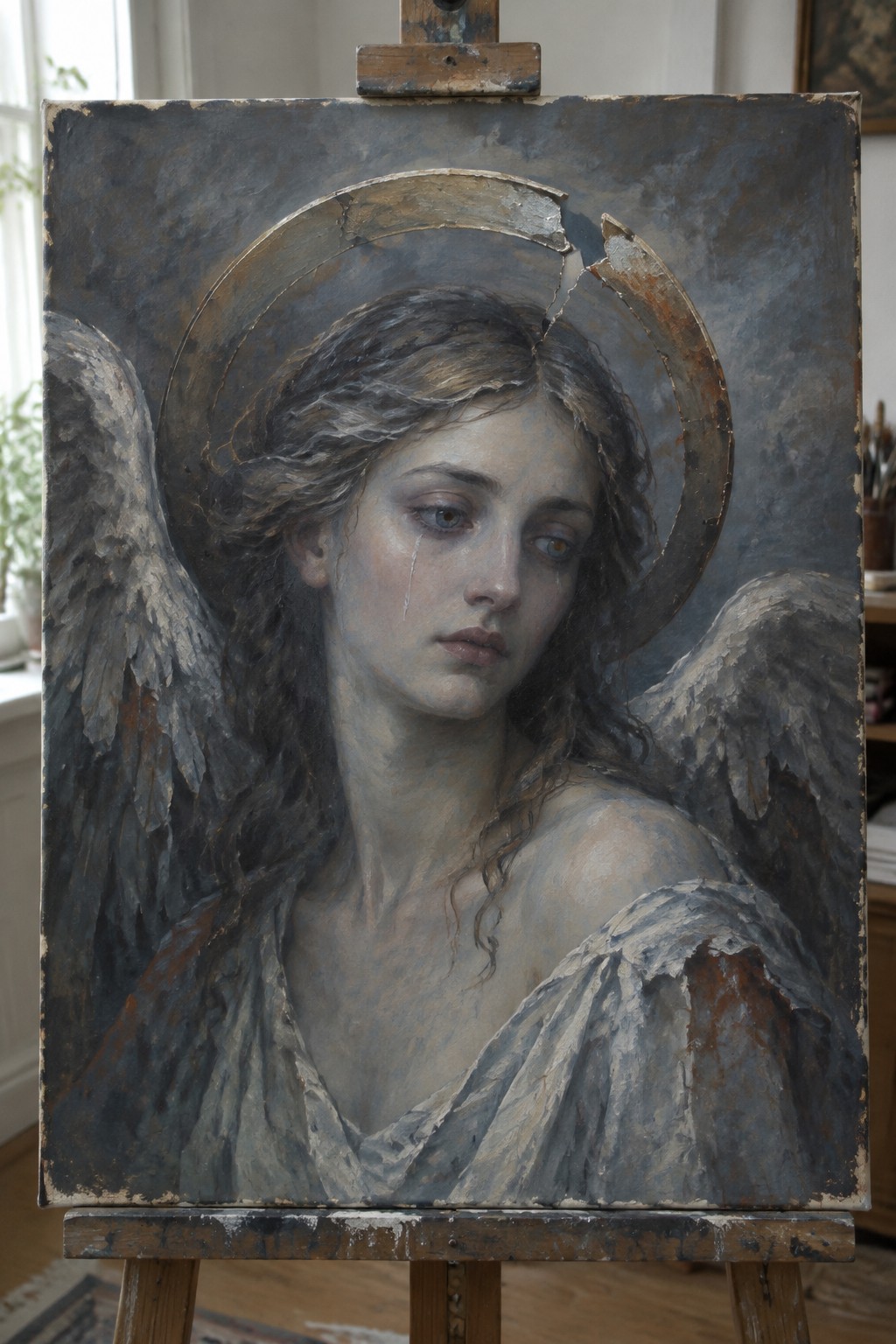
A close-up portrait of a winged figure with a cracked halo and a single tear creates the core idea here. The concept works through tight cropping around the face and shoulders, letting the muted gray-blue tones and heavy texture on the wings and fabric carry the weight. This approach suits dramatic figure painting where the mood comes from limited color and visible surface buildup rather than extra symbols or background details.
What makes this idea useful is the way the broken halo and single tear give a clear focal point that holds even on a smaller canvas. The dark background and rough brushwork make it straightforward to adapt by softening edges or shifting the palette toward cooler greens if needed. For practice, the composition rewards attention to texture on the wings and fabric without requiring perfect anatomy, and it translates well to wall pieces that lean into somber tones.
Winged Form Built from Layered Strokes

A fallen angel idea shown as a compact bird with wings pulled in tight gives the subject a grounded, heavy presence. Broad, overlapping brushstrokes create the wing shapes and body volume using only earth tones that range from pale beige to near-black. The limited palette and visible texture keep the focus on mass and direction rather than fine feather detail.
The contained oval layout makes this easy to paint on a standard canvas or panel without needing extra space for background elements. You can shift the value range darker or lighter to match other pieces in a series, or simplify the stroke count if you want a quicker version for practice. The same wing-over-body structure also works if you swap the bird for a more human torso while keeping the same heavy layering approach.
Fallen Angel Walking Away on a Rainy Night Street

A fallen angel idea like this centers on a single winged figure seen from behind, moving down a wet urban street where reflections from street lamps stretch across the pavement. The composition gains its strength from the strong vertical lines of the lamps and buildings balanced against the broad wings and the horizontal glow of the water. This type of painting falls into the darker narrative scene category, where the mood comes from limited light sources and a restricted palette of deep blues against warm yellow highlights.
The composition does a lot of the work here by placing the figure in the middle distance so the reflections and lamps carry the eye without needing complex foreground detail. What makes this idea useful is how the wet surface lets you practice reflections and atmospheric depth with just a few color shifts. The same setup could be adapted for a smaller canvas by tightening the crop around the figure and the nearest lamp, or lightened by swapping the city buildings for simpler tree shapes. For wall art, the tall format and strong contrast make it easy to print or paint in a vertical frame.
Fallen Angel Bound by Fragile Strings
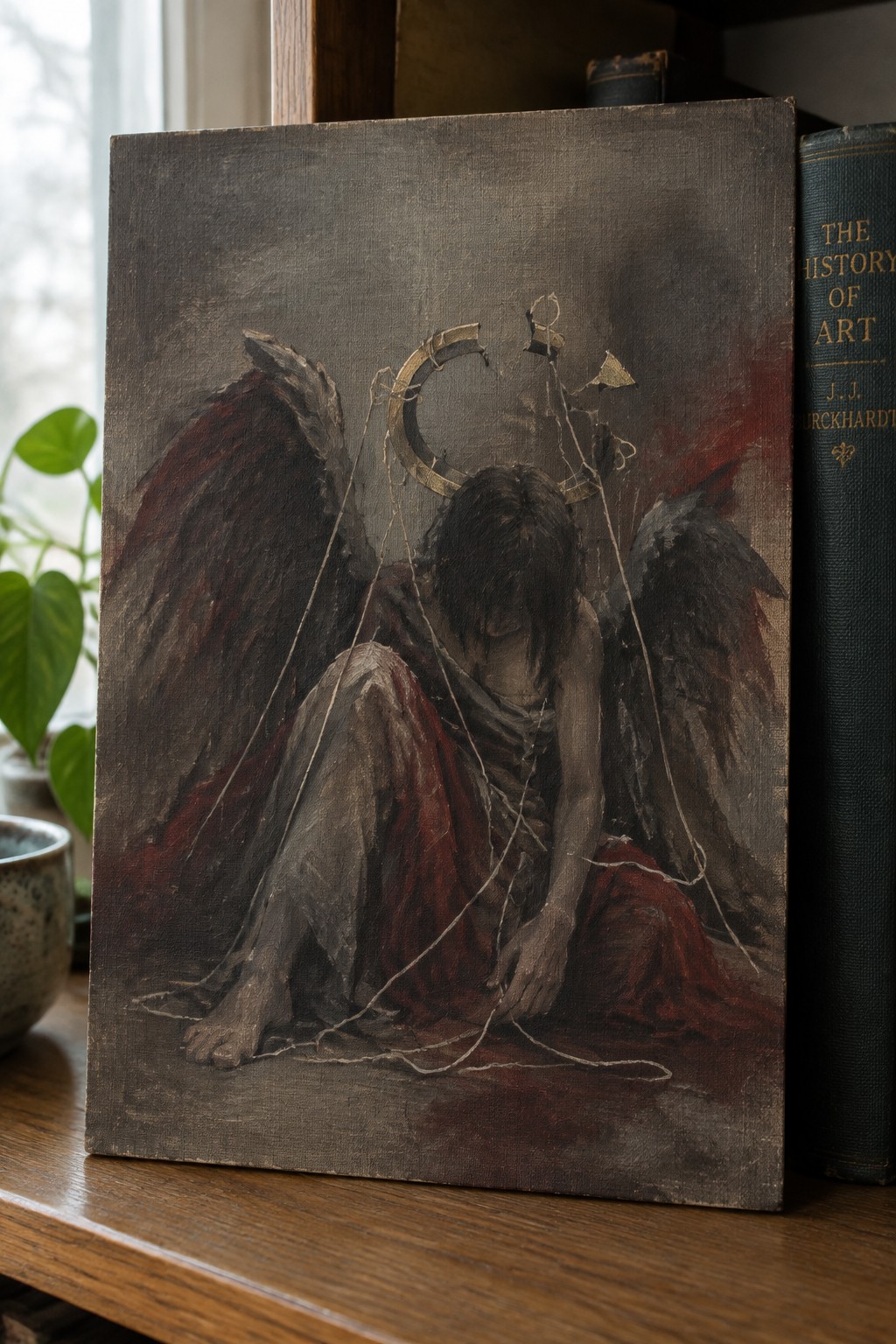
A fallen angel idea built around a seated figure with a cracked halo and thin strings wrapped across the body and wings. The dark red and gray palette keeps the focus on the figure while the light strings add contrast and a sense of restraint. This type of composition works as dramatic figurative art because the broken halo and linear elements give the scene structure without extra background detail.
What makes this idea useful is how the strings act as both a visual element and a simple way to add tension to the pose. You could adapt it by reducing the number of strings or shifting the wing colors to cooler tones for a different mood. For wall pieces the tight crop around the figure makes it easy to fit on a medium canvas, and the limited palette means you can practice value work without juggling many colors.
Fallen Angel Kneeling Before a Candle in Charred Woods

A fallen angel as the central subject works well here because the bowed posture and large wings create a strong vertical shape that stands out against the horizontal spread of the dark trees. The single candle provides the only bright point, which pulls the eye straight to the figure and keeps the rest of the scene from feeling cluttered. This fits the darker dramatic composition category, where the idea relies on limited light and heavy surroundings rather than lots of detail.
What makes this idea useful is the straightforward setup of one figure plus one small light source, which can be painted on a smaller canvas without losing impact. The dark background lets you focus practice on value changes and simple shapes instead of complex elements. For wall pieces, the strong contrast between the warm candle and the rest of the scene makes it easy to read from across a room, and you could swap the forest for a rocky field or empty field if you want to change the setting.
Fallen Angel Huddled Under Harsh Window Light
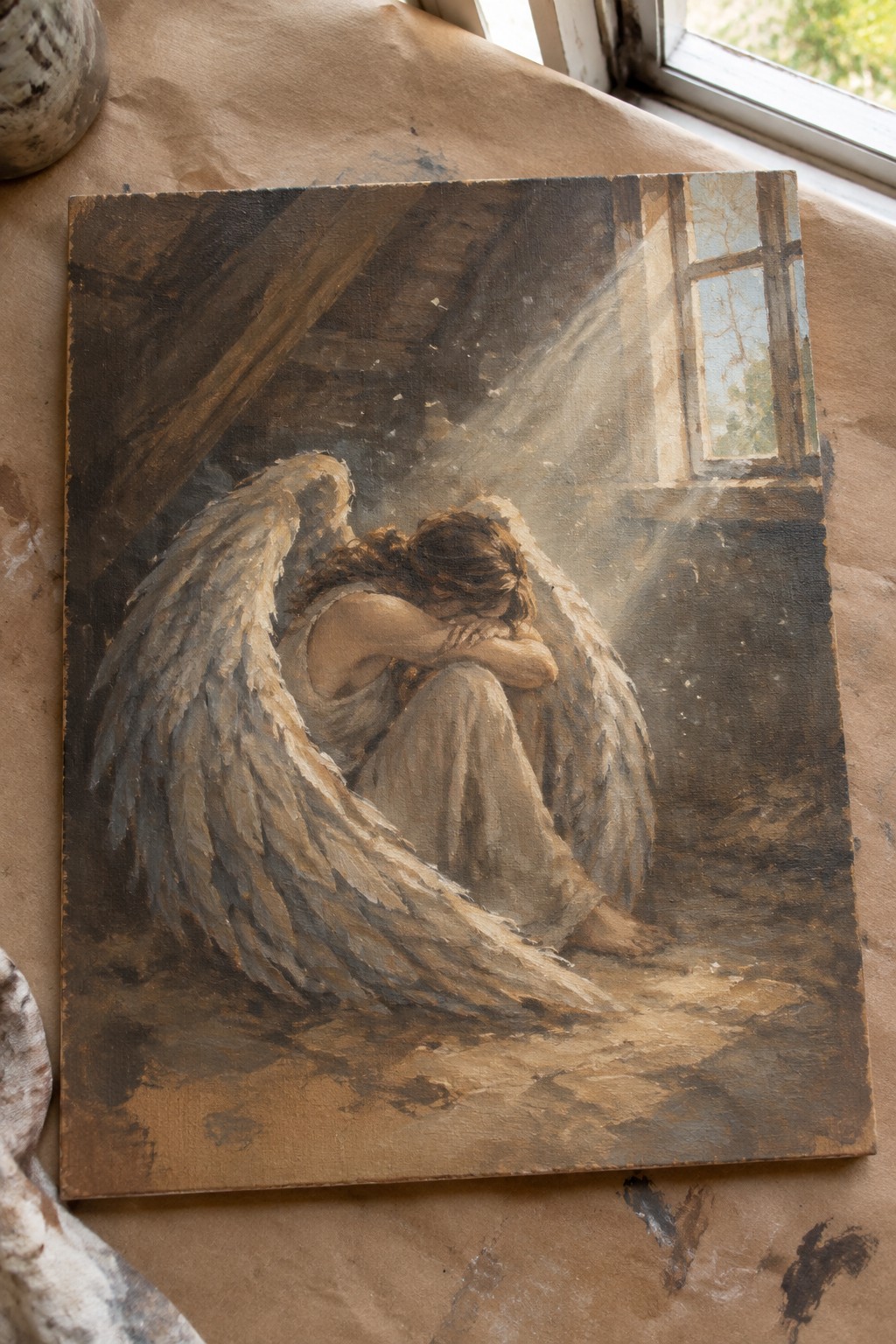
This painting idea shows a winged figure drawn into a tight crouch on the floor, with large wings wrapping around the body as the main focal point. Strong light beams from a single window cut across the dark interior, creating sharp contrast between the illuminated form and the surrounding shadows. The idea works as a dramatic figure study in a contained, moody setting rather than a full scene.
What makes this idea useful is the single light source that handles most of the visual interest without extra elements. You can simplify the background to rough planes of brown and gray or shift the palette toward cooler tones if the warm browns feel too heavy. The vertical crop and central pose also translate well to smaller canvases or prints for darker wall displays.
A Single Feather with Crimson Mark on Dark Ground

A still life built around one large feather relies on high contrast and a limited color range to hold attention. The light feather sits diagonally across a deep black surface, with the red streak serving as the only accent color and the main point of interest. Visible brush marks give the feather shaft and barbs some texture while the uneven background keeps the overall effect simple and direct.
The composition does a lot of the work here by using empty space and one strong focal point, so the idea stays easy to paint without extra details. This kind of subject works well for practice on a small canvas or as a quick study before trying larger pieces. You can change the angle of the feather or soften the red to match different room styles. For wall art, the dark background makes it simple to hang with other moody or dramatic work.
Cracked Stone Fallen Angel Wing
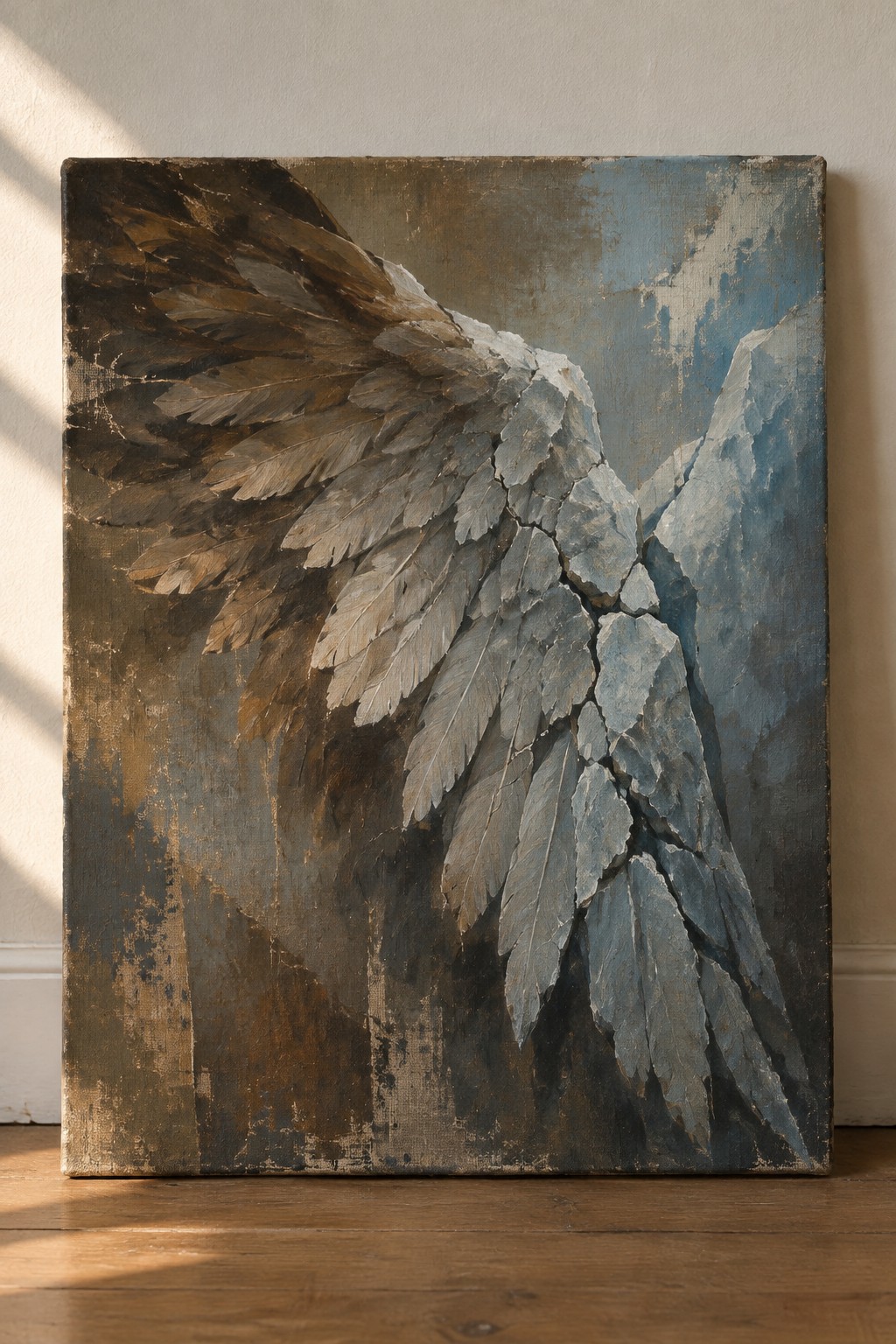
A fallen angel wing idea works well when half the form shifts into cracked stone while the rest keeps its feather detail. The strong side lighting and limited palette of browns, grays, and muted blue push the eye straight to the break between the two textures. This creates a clear focal point without needing extra elements in the scene.
The composition does a lot of the work here by keeping the background simple and dark so the wing shape stays dominant. You could easily adapt it by changing the stone color to cooler grays or adding more cracks for extra weight. For practice, this kind of subject helps you focus on texture contrast and value shifts in a single object. A painting like this would pin well as a moody standalone piece for darker wall displays.
Fallen Angel Facing a Shattered Mirror

The painting idea shows a winged figure viewed from the side, positioned in front of an oval mirror that has been broken into several uneven pieces. One section of the reflection appears lighter while the other sections darken the features and include small candle flames visible through the cracks. The jagged lines of the broken glass create natural divisions across the canvas and pull focus toward the contrast between the figure and its fragmented reflection.
What makes this idea useful is the built-in structure from the mirror shards, which lets you practice edges and small details without filling the whole background. You could scale it down by keeping only three or four glass pieces or shift the palette toward cooler tones if you want a stronger contrast between the wings and the reflection. For wall pieces, the oval frame and broken sections give the composition a clear focal point that still reads well from a distance.
Fallen Angel Slumped on Stone Steps

A fallen angel figure forms the core idea here, shown collapsed against a stairway with large wings extending across the composition. The painting idea uses strong light falling from one side to separate the figure from a mostly dark background while the steps create clear horizontal lines that support the slumped pose. This fits the dramatic figure category, where limited color range and heavy shadow areas keep attention on the body and wing shapes rather than on extra details.
What makes this idea useful is how the stairway gives built-in structure that removes the need for complex backgrounds. The pose works at different sizes since the wing curve and bent posture read clearly even when simplified. For practice, the high contrast between light and shadow areas makes it a good subject for value studies before adding color. The overall vertical layout also translates well to narrower canvases for wall display.
Patterned Wings on a Seated Angel Figure
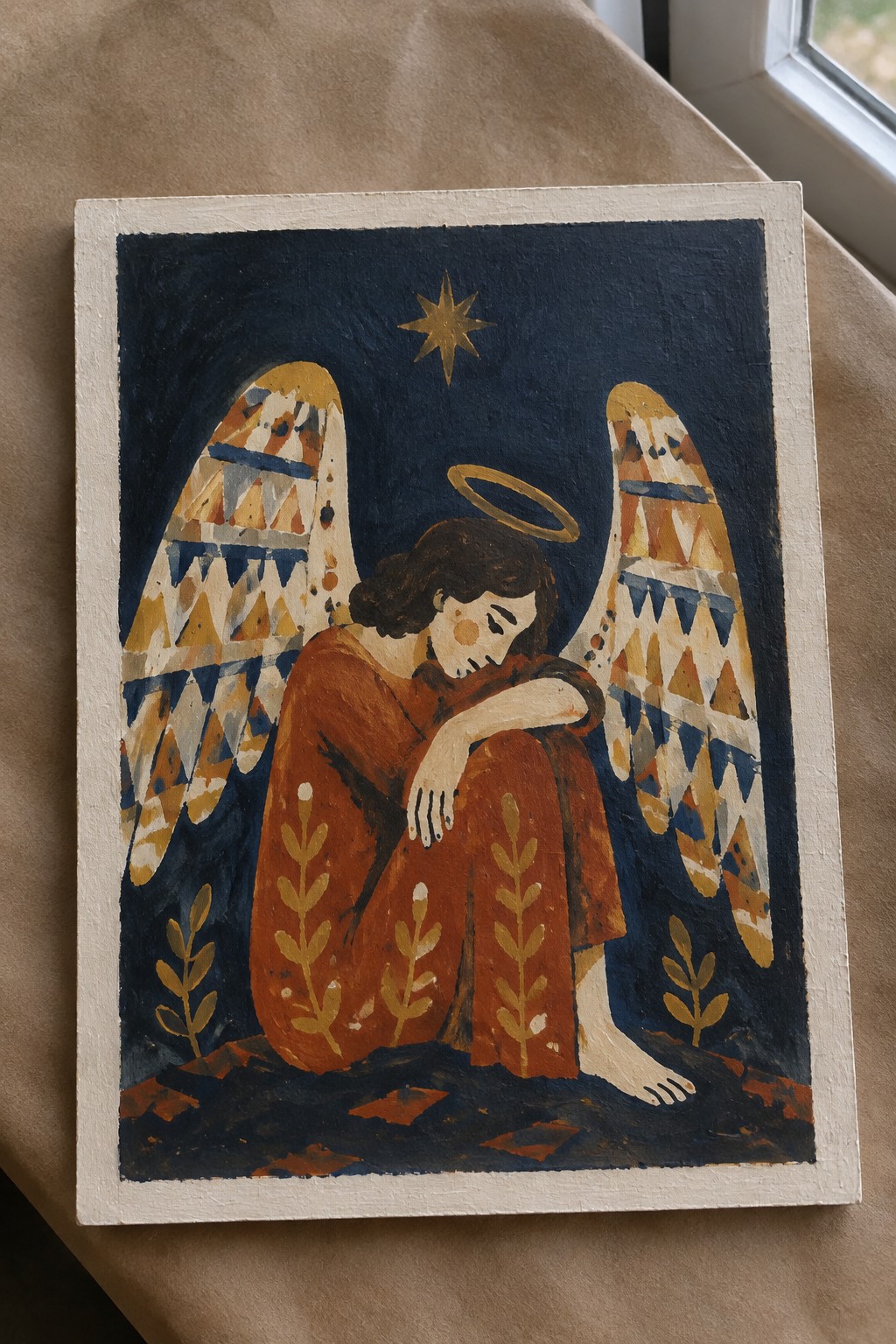
A single winged figure sits hunched forward with knees pulled close, wearing a plain robe and a simple halo. The wings carry repeating geometric patterns in warm ochres and muted blues that break up the large shapes and add visual interest. This approach works as a figurative idea that relies on a centered subject, a dark background, and limited extra elements to keep the focus tight.
The composition does a lot of the work here by letting the wing patterns carry the detail while the rest stays simple. You could easily change the color scheme on the wings or robe to match different room palettes or try the same pose on a smaller panel for practice. For wall pieces, the dark background helps the figure stand out without needing additional scenery or props.
Fallen Angel’s Golden Form Rising Through Dark Waves
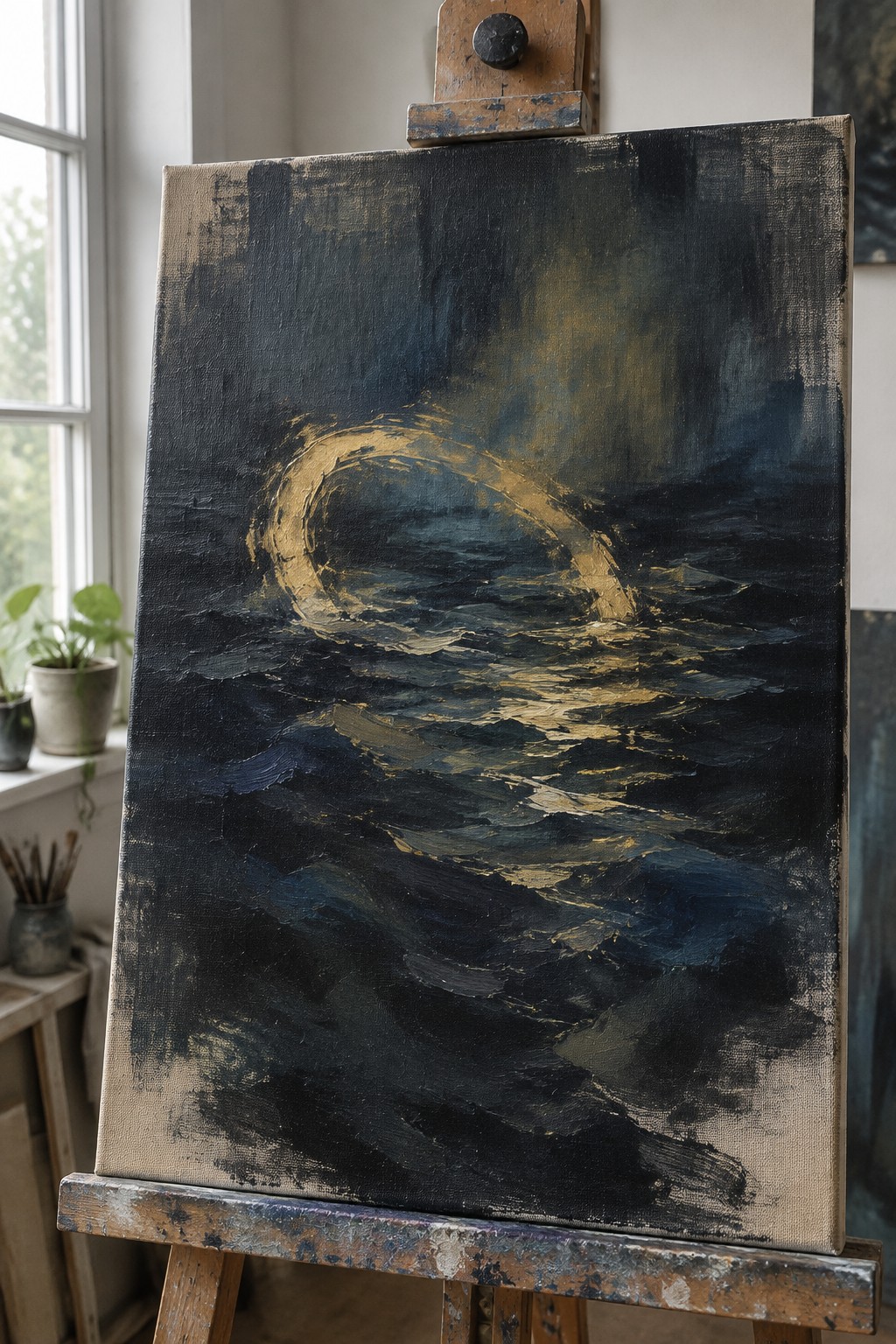
This painting idea uses a dramatic seascape to show a fallen angel through a single glowing golden arc emerging from heavy dark water. Thick textured brushwork in deep blues, blacks, and muted golds builds movement and depth while keeping the composition centered on that one bright shape. The approach fits a symbolic landscape style where the angel is suggested rather than fully depicted, letting the contrast and rough surface do most of the work.
What makes this idea useful is the clear focal point created by the light shape against the near-black background, which simplifies planning the layout. The limited palette of dark tones with one metallic accent makes it straightforward to scale up or down or swap in different gold shades. For practice, this kind of subject helps with building texture and controlling strong value contrast without requiring detailed figures. The abstract quality also lets you adjust the curve or thickness of the golden element to match your own take on the fallen angel.
Fallen Angel Surrounded by Ravens in a Stormy Sky

A strong painting idea centers on a single winged figure collapsed on rocky ground while black birds circle and dive around it. The concept works as dramatic figurative art with an animal element, using the birds to create motion and pull the eye across the canvas. The low placement of the figure against a swirling, muted sky gives the whole scene a sense of weight and descent without needing extra details.
What makes this idea useful is how the birds can be added or removed to change the energy while keeping the same core layout. The limited dark palette and rough brushwork make it straightforward to adapt on a smaller canvas or simplify for practice. For wall pieces, the vertical composition holds up well in prints or larger formats where the contrast between the grounded figure and the moving birds stays clear.
Frequently Asked Questions
What techniques help artists create darker compositions in fallen angel oil paintings? Artists often rely on deep shadows, limited color palettes with heavy use of blacks, deep blues, and earth tones, and strong contrasts between light and dark areas to build drama. Layering glazes and using impasto for texture on wings or fabric adds depth, while strategic lighting from a single source like moonlight heightens the sense of isolation and fall from grace.
Who are the main artists behind the 21 dramatic fallen angel paintings mentioned? The collection features works from both historical masters like Gustave Doré and John Martin and contemporary creators who specialize in dark fantasy themes. Many pieces draw from biblical or literary sources, and checking artist signatures or gallery notes in the article helps identify specific names and their unique styles.
What symbolic elements appear most often in these darker fallen angel compositions? Fallen angels frequently symbolize rebellion, loss, and redemption through broken wings, tattered robes, and expressions of regret or defiance. Darker settings such as stormy skies or ruined temples reinforce themes of exile, and viewers gain more insight by noting how light sources sometimes highlight a single angelic feature against overwhelming shadow.
Where can someone find prints or view the full set of these 21 oil paintings? High-quality prints are available through fine art websites, museum shops, or artist portfolios linked in related articles. For originals, contact galleries that specialize in dark romanticism or check auction sites, and always verify authenticity by reviewing provenance details before purchase.
How might a beginner approach painting a similar dramatic fallen angel scene? Start with a simple sketch focusing on dynamic poses and wing anatomy, then build up dark underpainting before adding highlights. Experiment with oil mediums for smooth blends in shadows, study reference photos of dramatic lighting, and practice on smaller canvases to capture the emotional intensity without overcomplicating the composition.