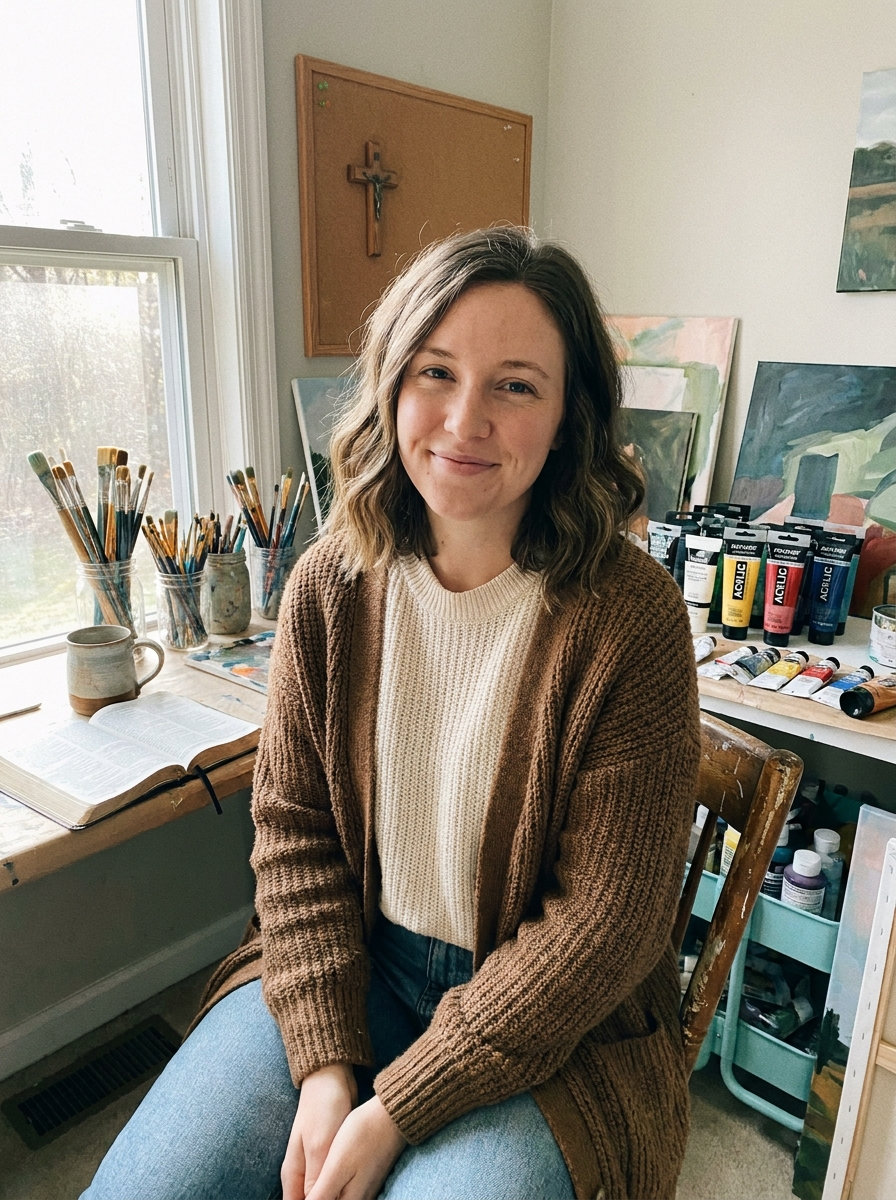
I have always enjoyed painting things that reflect my faith.
Canvas is my favorite surface because it holds the paint nicely and lasts a long time.
Lately I have been collecting ideas for Christian paintings that feel personal and not too complicated.
I gathered 24 ideas that stood out to me for their simplicity and meaning.
Some I painted exactly as I saw them and others I changed a little to fit my style.
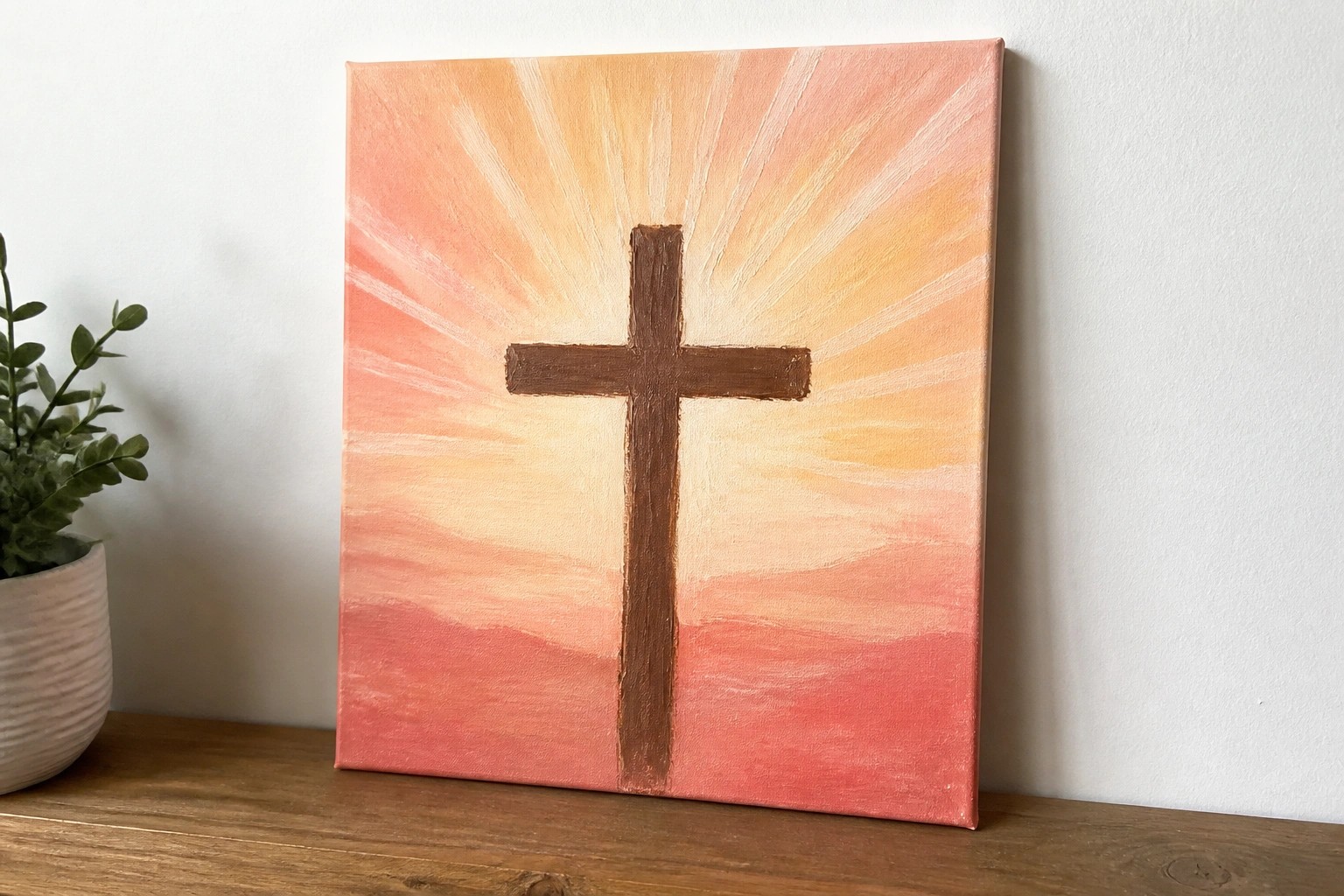
Cross with Radiating Rays on Gradient Background

A centered cross paired with straight white lines radiating outward forms the main subject here. The background shifts through a warm gradient from yellow at the top into pink and red toward the bottom, which keeps the focus on the cross and rays. This approach works as a straightforward decorative Christian painting because the simple shapes and directional lines create visual interest without extra elements.
What makes this idea useful is how the radiating lines guide the eye while the gradient handles most of the background work. You could swap the colors for cooler tones or a single hue to fit different spaces, or reduce the number of rays for a quicker version on a smaller canvas. The layout stays balanced even if the brushwork stays loose, which helps it stand out in a feed of more detailed Christian pieces.
White Dove with Olive Branch on Textured Teal
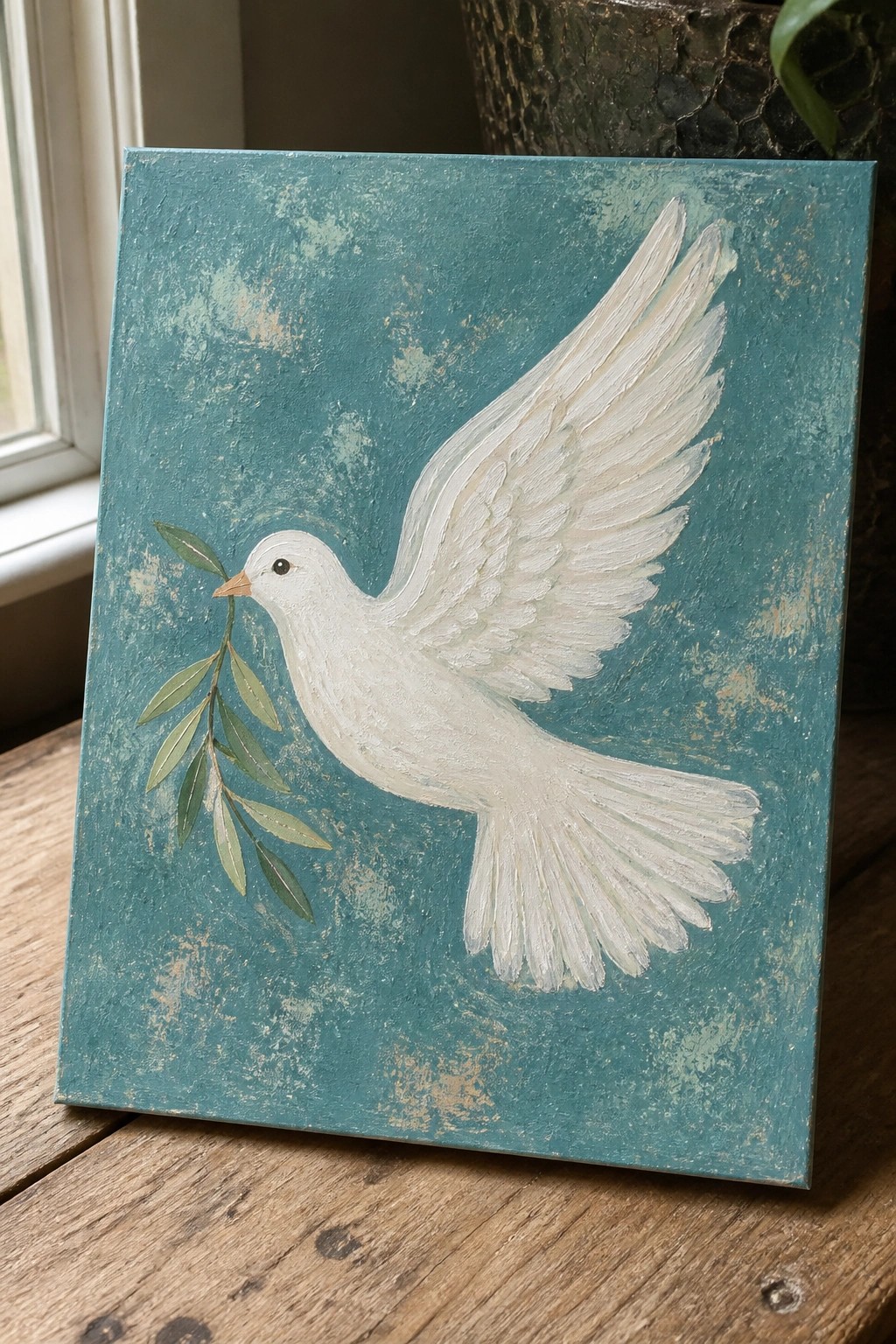
A dove in flight carrying an olive branch makes a straightforward symbolic subject that works on any canvas size. The white bird cuts clearly across the teal field, and the angled wings plus trailing branch create movement without needing extra elements. Rough texture in the background gives the piece some depth while keeping attention on the central shape.
What makes this idea useful is how the high contrast between bird and background does most of the visual work, so even basic brushstrokes read well. You can change the background color, shorten the branch, or reduce the wing detail if you want a quicker version for practice or gifts. For wall pieces, the square format and limited palette make it easy to match with existing decor.
Sunset Crosses on a Hill
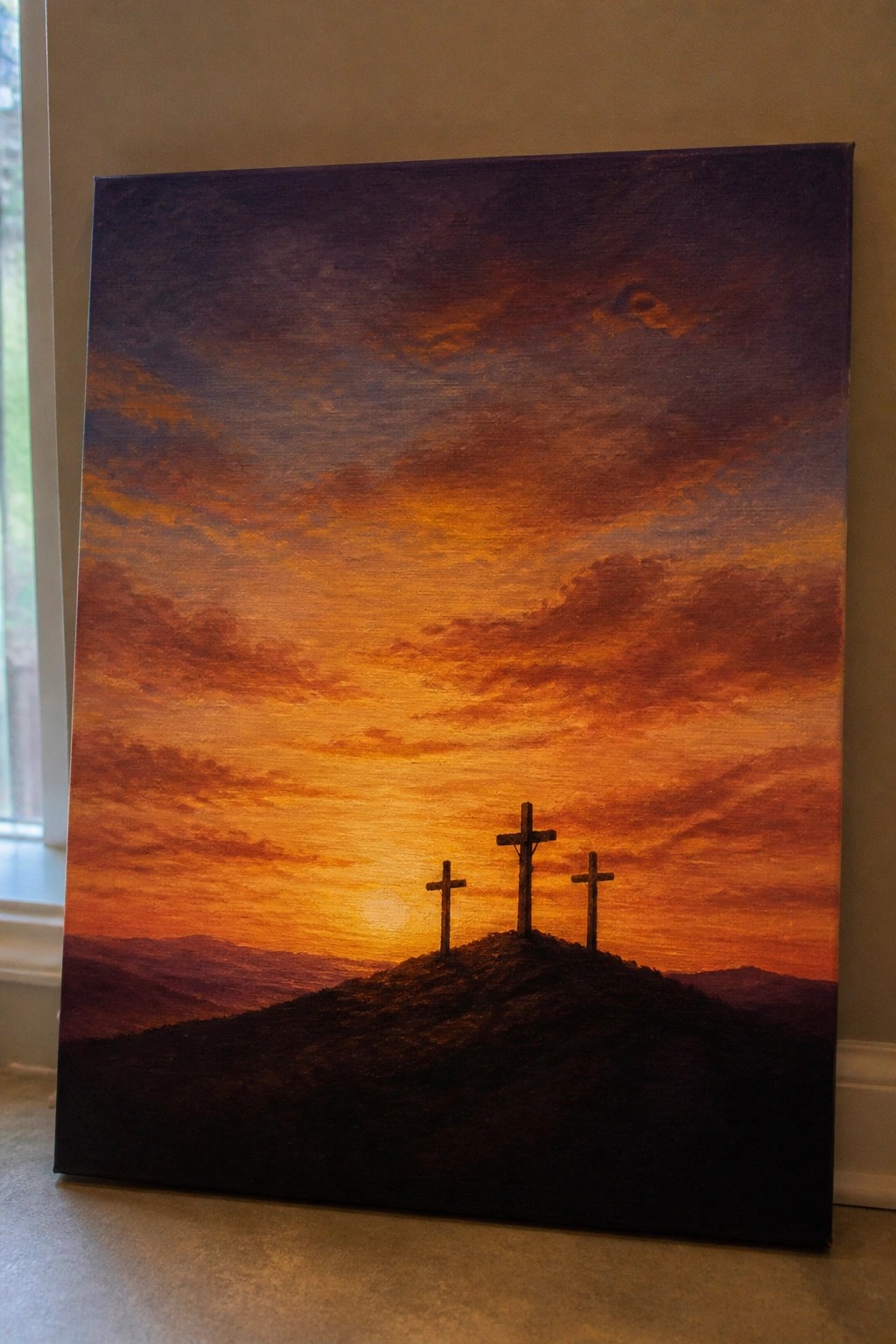
A landscape painting idea centered on three crosses placed along a hilltop works well because the strong silhouette lets the crosses stand out clearly against the sky. The idea relies on a bold sunset palette with layers of orange, red, and purple to build depth through the clouds and distant ridges. This setup keeps the focus on the central group of crosses while the gradual color shifts in the sky handle most of the visual interest.
What makes this idea useful is how the silhouette method removes the need for fine detail on the crosses or terrain, making it straightforward to scale up or down on different canvas sizes. You can swap the sunset colors for cooler tones or add more hills in the background if you want a wider composition. For wall pieces, the high contrast helps the image read clearly even in small previews, and it is easy to personalize by moving the crosses closer together or changing the slope of the hill.
Lamb Painting with a Banner Quote

A centered lamb in a grassy field pairs with a simple banner across the top that carries short text. This approach turns a basic animal subject into a decorative piece by adding the banner as the main focal point above the figure. Soft greens and neutral tones in the grass and background let the lamb stay the main subject without extra clutter.
What makes this idea useful is how the banner gives you an easy spot to change the words for different verses or names. The lamb shape stays simple enough to adjust for smaller canvases or larger wall pieces, and you can keep the grass minimal or add a few extra flowers without much trouble. The layout works well for Christian decor because the text sits right where viewers look first.
Floral Ichthys Symbol Filled with Blooms

A painted ichthys outline in gold holds a tight cluster of flowers and leaves in reds, oranges, and yellows against a white inner field, with the cross arm extending through the right side. The navy background keeps the focus tight while smaller leaves and hearts fill the space around the main shape without crowding it. This approach combines a clear religious symbol with a contained floral pattern that reads as one unified decorative piece.
What makes this idea useful is the strong central shape that does most of the layout work. The navy field lets the warmer tones stand out, and the same flower mix can be swapped for different colors or scaled down for a smaller canvas. For wall art, this kind of piece works well because the dark background gives it weight without needing extra detail around the edges. The design can also be simplified by using fewer flower types if a quicker version is needed.
Olive Branch Accent on a Psalm 23 Canvas

A scripture painting places the opening lines of Psalm 23 in centered text on a textured neutral background, then adds one olive branch in the lower right to offset the lettering. The branch uses layered greens and soft browns with a few visible olives to give it weight without crowding the words. This format works as decorative art because the text stays dominant while the plant element adds a single natural shape that fills empty space.
What makes this idea useful is how the branch gives the composition an easy focal point that you can copy or simplify with fewer leaves. The neutral background lets you change the canvas size or adjust the text placement without redesigning the whole piece. You could swap the olive branch for another simple stem if you want a different look, and the limited color range keeps the painting quick to finish while still looking finished on a wall.
Stained Glass Arches with a Central Star
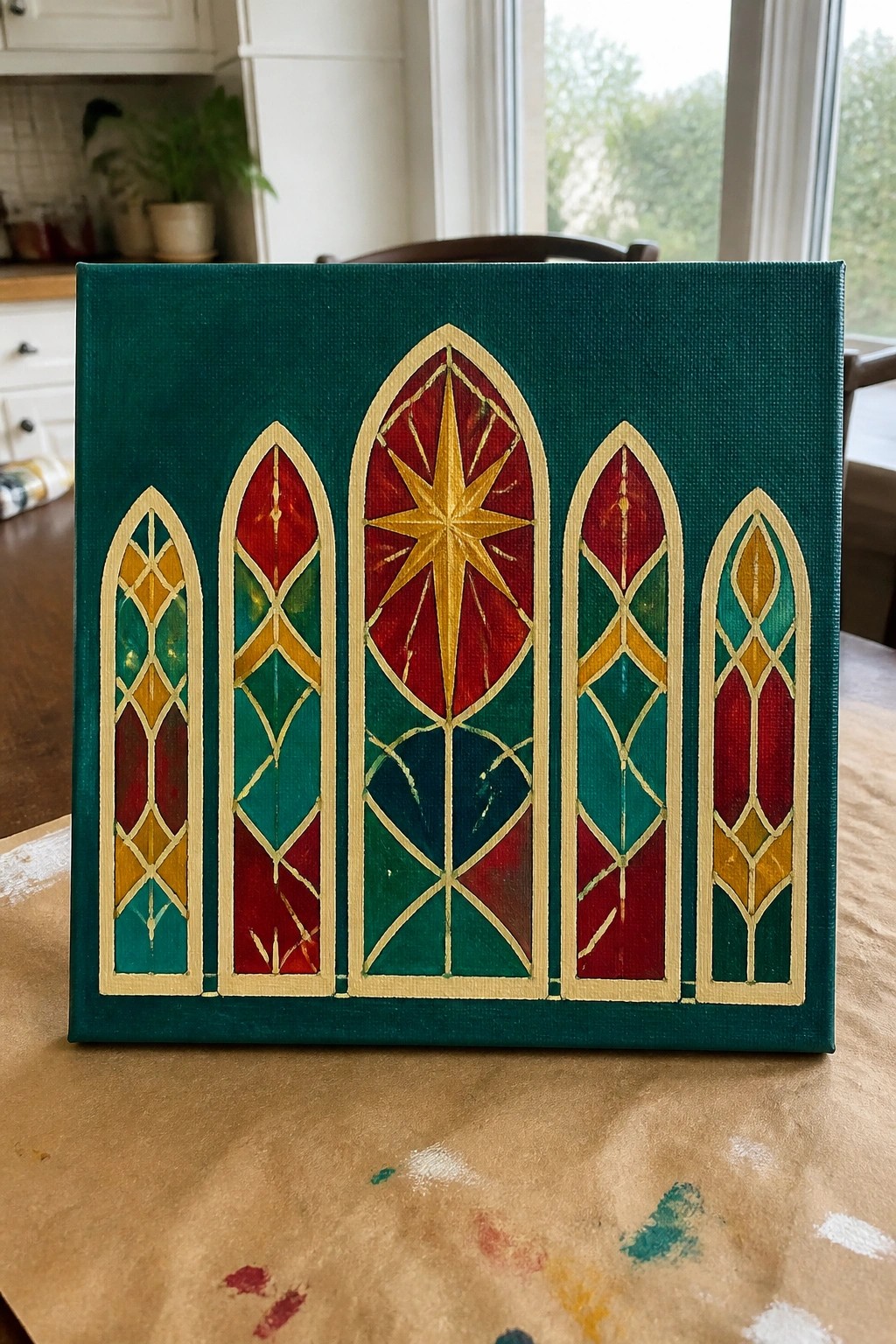
A painting idea built around five pointed arches side by side, each outlined in gold against a solid teal background. The center arch holds a large gold star on a red field while the remaining arches use simple geometric divisions filled with red, green, yellow, and teal. The layout stays symmetrical and the gold lines keep the shapes clear even when the inner patterns stay fairly basic.
What makes this idea useful is that the repeating panel format works on different canvas sizes without needing major changes. You can reduce the number of arches or drop some of the inner lines if you want a faster version, yet the gold outlines and dark background still give it a finished look. For wall art the vertical shape fits narrow spaces well and the color scheme stays easy to match with other decor. The same idea can be adapted for Christmas by keeping the star or swapped for other symbols in the center arch.
Shepherd with Sheep on a Hillside at Night
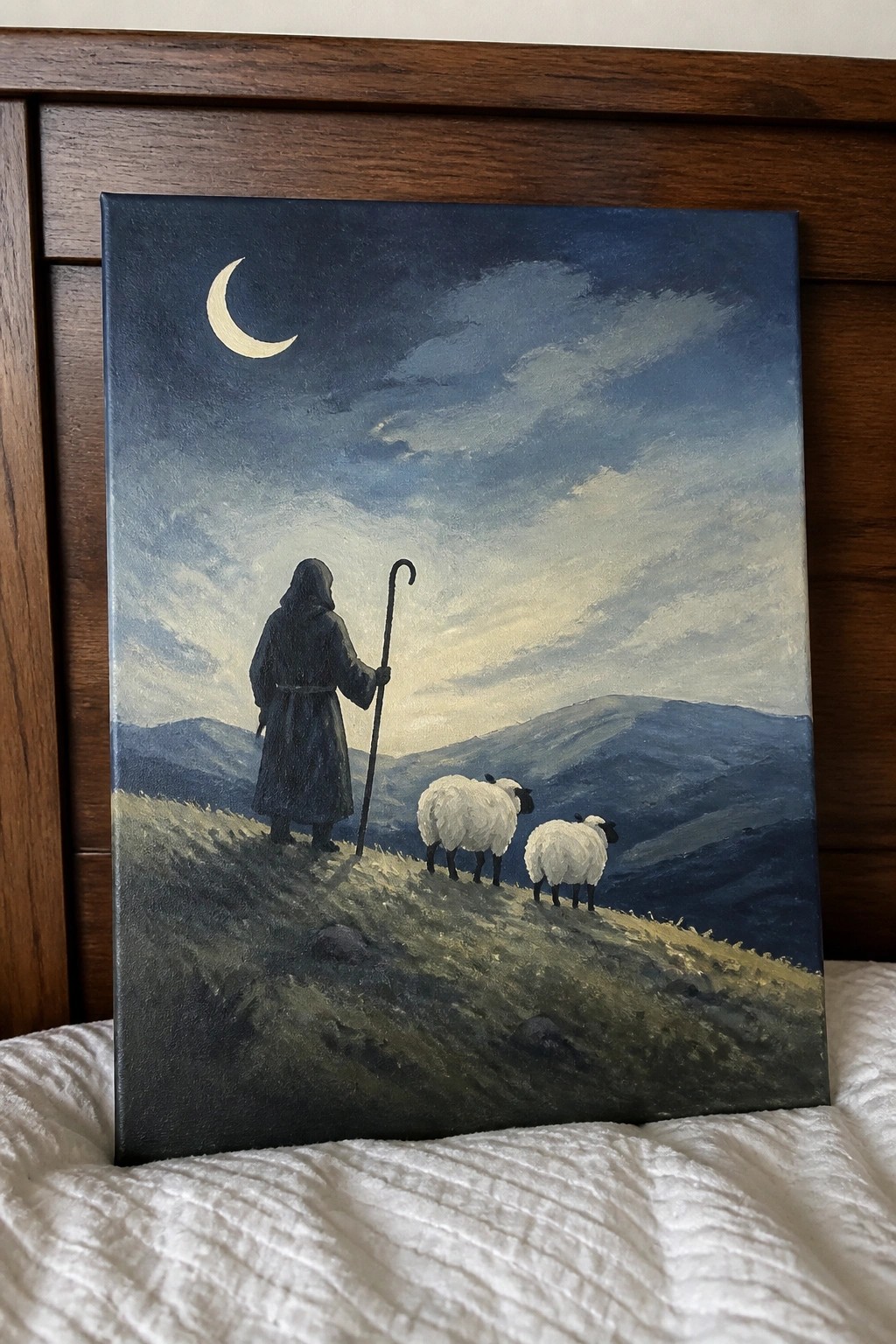
A night landscape idea works well here by placing a single robed figure with a staff alongside two sheep on a sloped hill. The composition uses a low horizon line and a crescent moon to keep the focus on the group while the layered mountains add distance behind them. Dark blue sky tones that lighten toward the horizon give the scene its depth with simple color shifts rather than heavy detail.
What makes this idea useful is the limited number of elements that still read clearly even if the figures stay loose. The cool palette of blues and muted greens makes it straightforward to shift the time of day or swap in different weather without repainting the whole layout. For practice, this kind of subject lets you work on basic land forms and sky gradients on a medium canvas before adding more animals or changing the moon phase.
Crown of Thorns Wreath with Wildflowers

A crown of thorns creates the main circular shape, with thin branches twisted together and small white daisies plus a few pink blooms tucked in among green leaves. The muted beige background keeps attention on the contrast between the dark thorns and the lighter flowers. This still life idea works because the round layout balances the sharp lines of the thorns with softer petal shapes.
What makes this idea useful is how the circle does most of the composition work, so you do not need to plan a complex background. You could shrink it for a quick study or add more flower types to change the color mix. The simple background also makes it easy to hang in different spaces or repaint in a smaller size for practice.
Stacked Vintage Books with a Cross
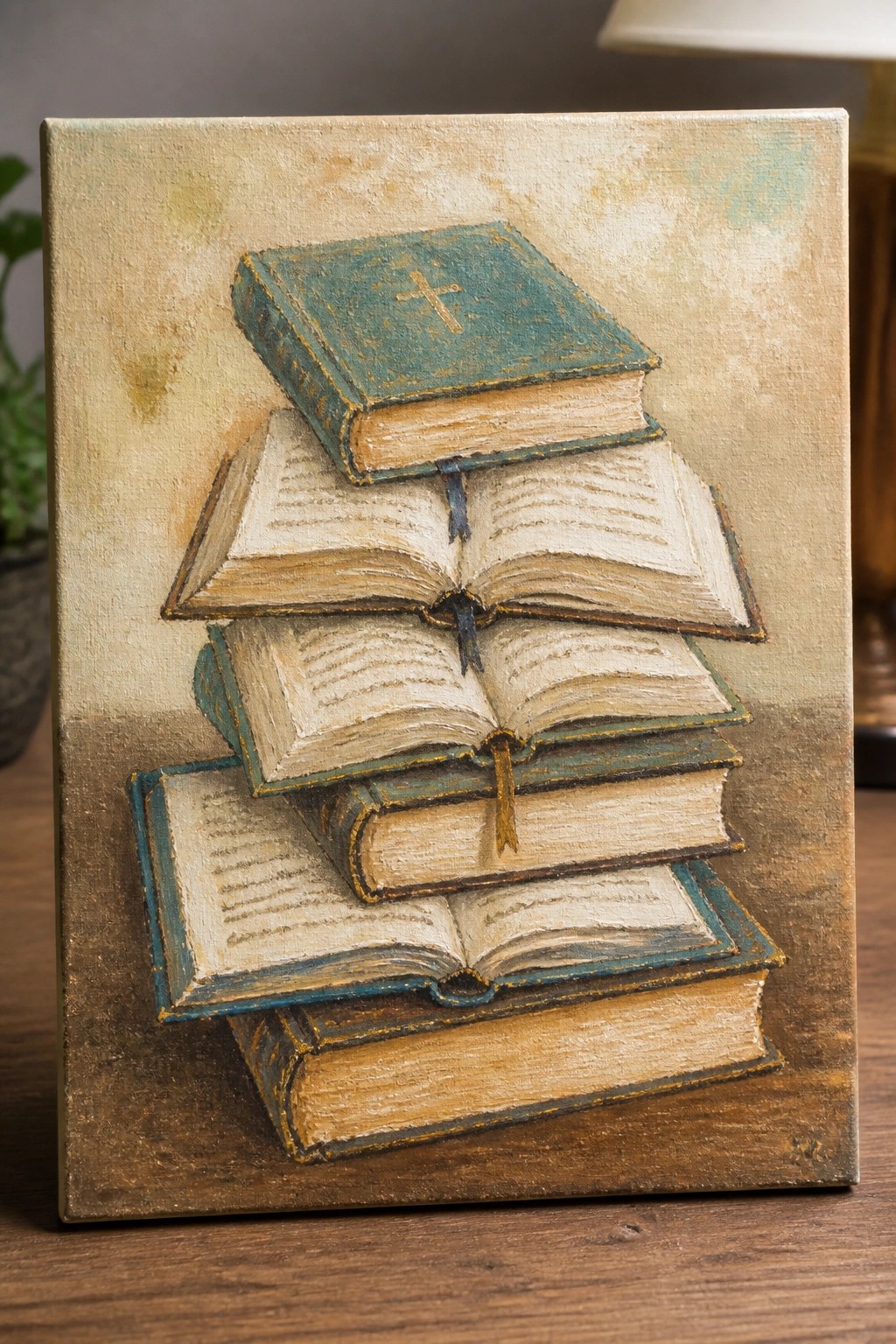
A still life built around a stack of old books works well when the top volume carries a small cross on its cover. The open pages on the middle books add natural layers and breaks in the shape, while the closed books at the base give the stack weight and structure. Muted greens and browns with soft edges keep the focus on the forms rather than on bright details.
The composition does a lot of the work here because the overlapping books already create depth and balance without extra props. You could shift the color palette to cooler tones or warmer browns to match different rooms, or swap the cross for another small emblem if you want a more personal version. For practice, this kind of subject helps with painting edges and page texture while staying easy to scale up or down for different canvas sizes.
Be Still Quote on a Gradient Canvas
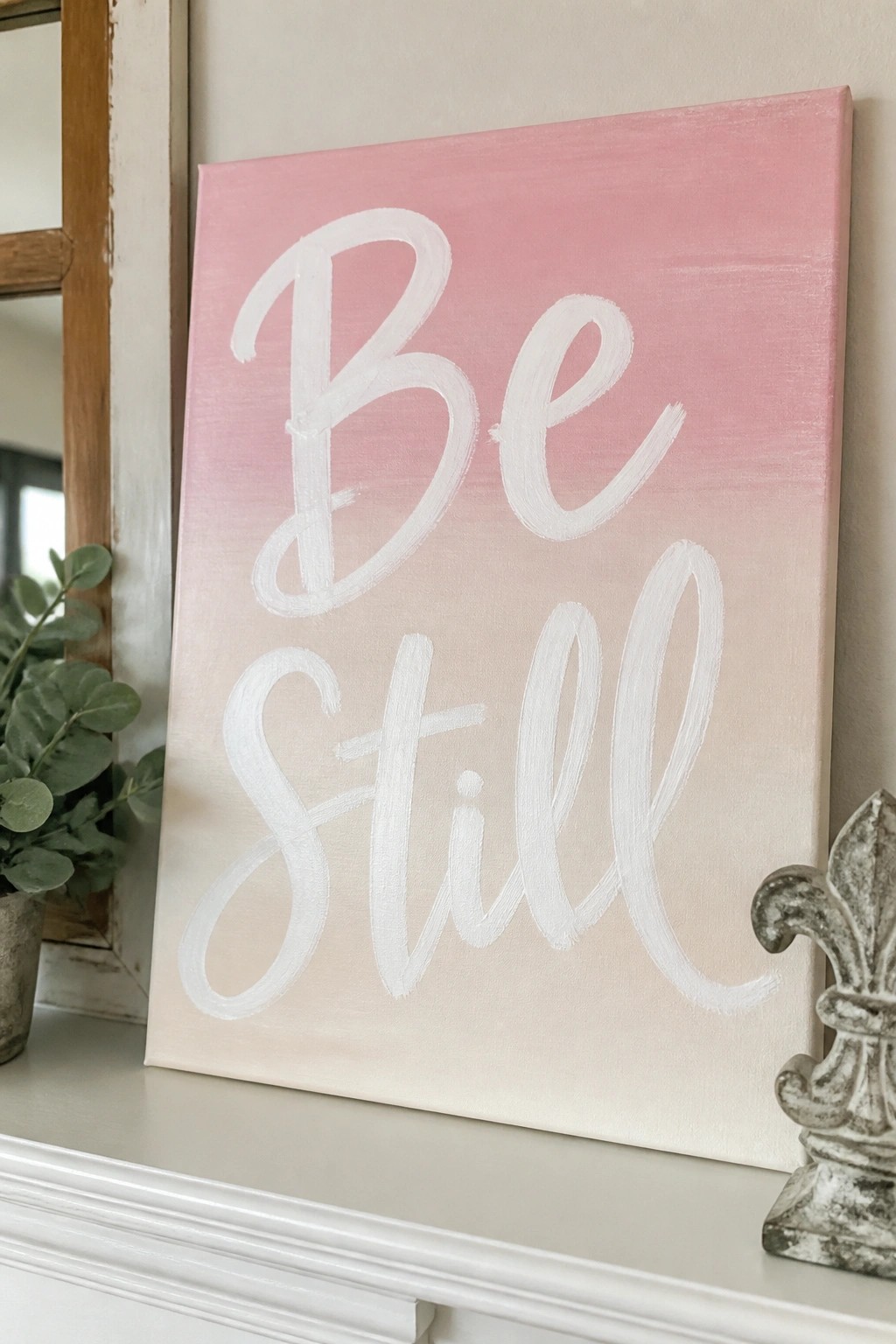
A clean hand-lettered quote in flowing white script sits centered on a simple pink-to-beige ombre background. This approach falls into decorative text art, where the main focus stays on the lettering itself rather than added imagery or detail. The gradual color shift keeps the piece balanced while letting the bold script stand out without competing elements.
What makes this idea useful is how easily the background gradient can be swapped for any two colors that match a room or season. The large script letters work well even with basic brush control, so the design stays approachable for practice or quick weekend projects. For wall decor, the layout scales nicely to different canvas sizes and pairs cleanly with other pieces in a gallery arrangement.
Star Over a Nighttime Cityscape
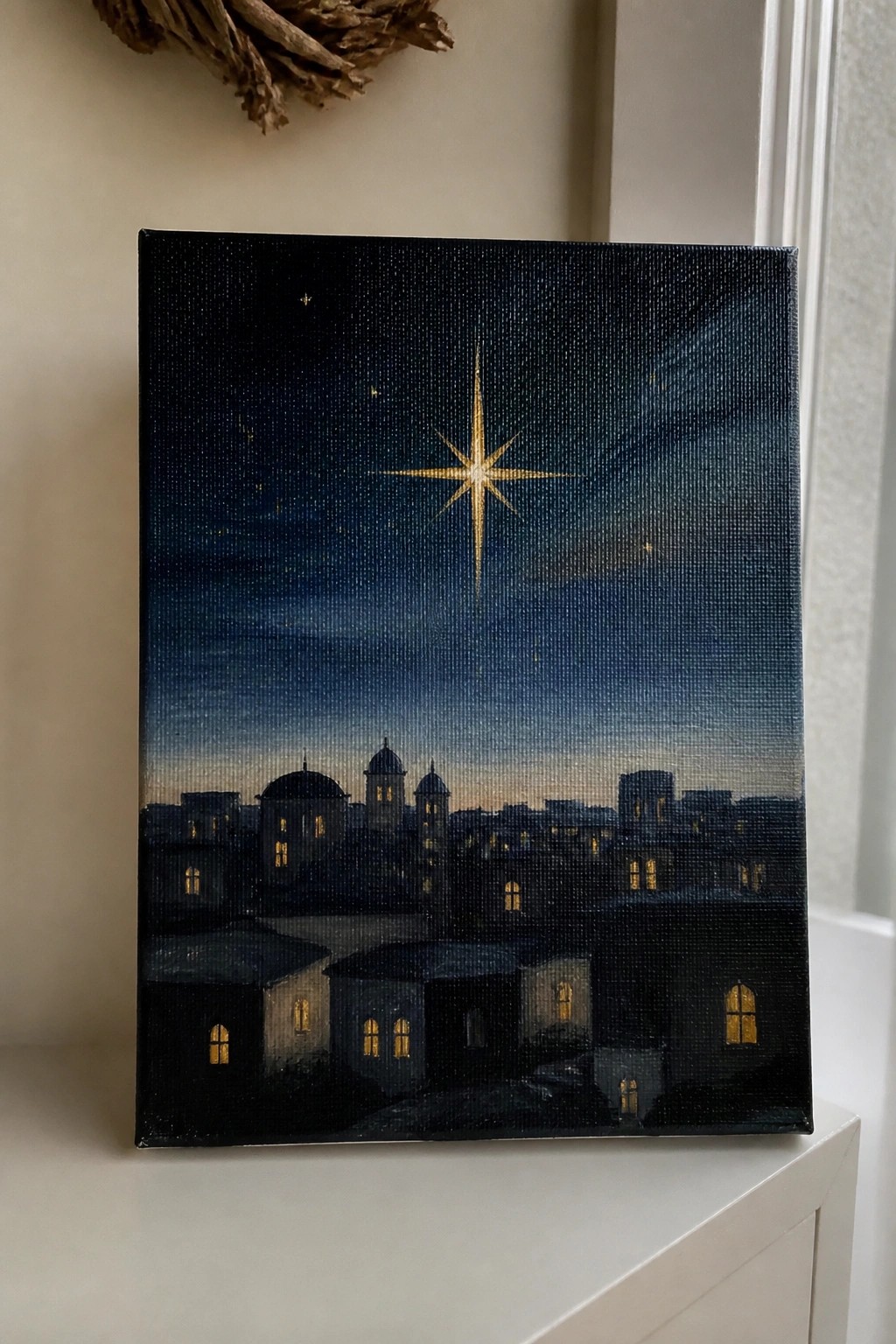
A night landscape idea built around a single large golden star with sharp rays set high in a deep blue gradient sky above a row of building silhouettes. The composition uses the star as the clear focal point while the rooftops and scattered lit windows create a simple horizontal base that balances the empty sky. This approach fits a landscape or seasonal category and works because the strong contrast between the bright star and dark lower section keeps the eye moving upward without needing extra detail.
The composition does a lot of the work here by placing the star slightly off center so the rest of the canvas stays open and easy to fill. You can adapt the idea by changing the star size, swapping the blue tones for cooler or warmer shades, or adding more buildings if you want a wider view. For wall art this kind of piece stays effective at smaller canvas sizes and can be finished quickly since most of the work happens in the sky gradient and the single bright element.
Praying Hands with Scripture and Floral Accents
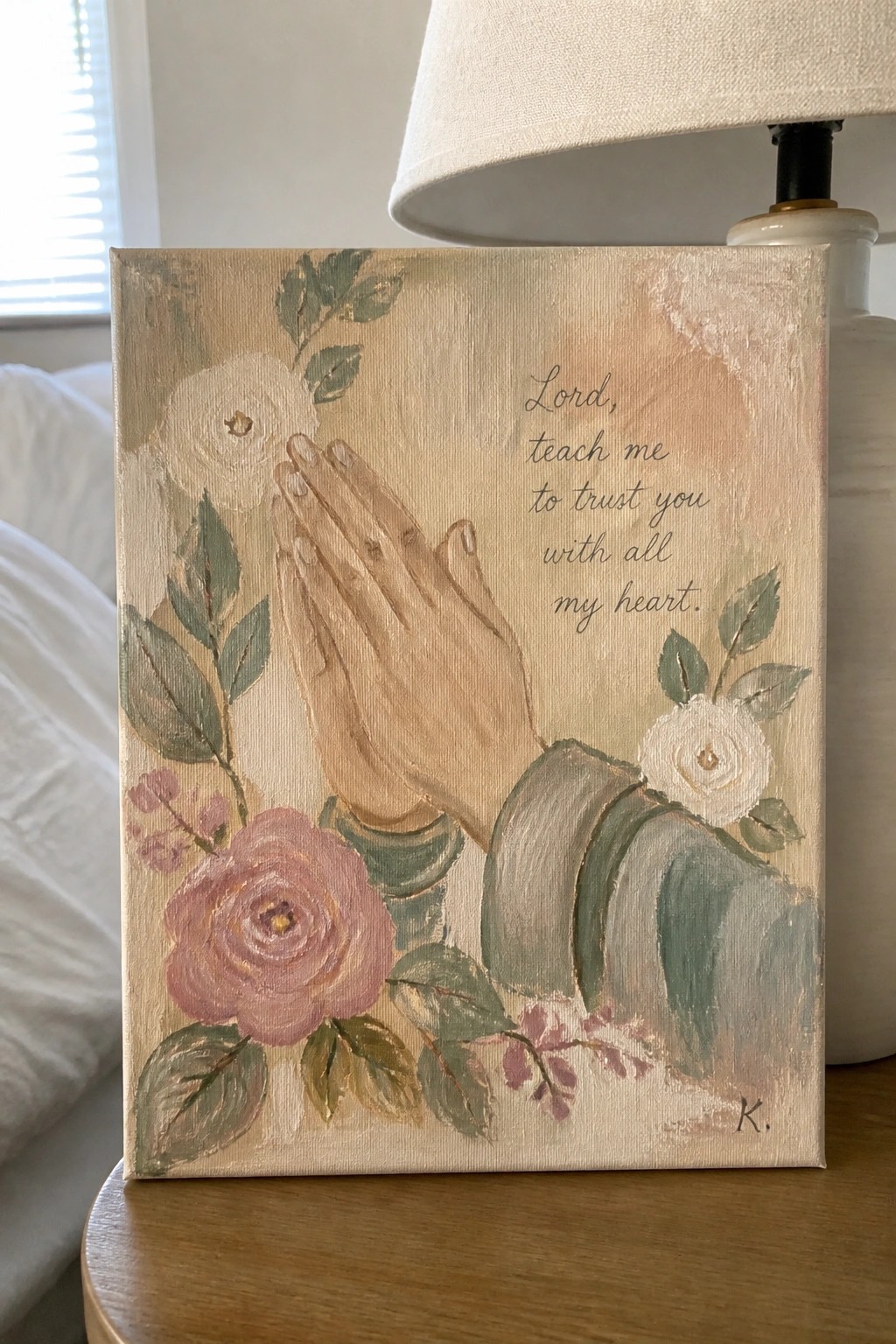
A canvas idea that centers on praying hands as the main subject, paired with a short Bible verse placed to one side and soft floral clusters filling the remaining space. The neutral background lets the hands and flowers share focus without crowding, while the flowers on opposite corners balance the text and keep the layout open. This fits the category of decorative Christian art that mixes a simple figurative element with botanical details.
What makes this idea useful is how the hands stay front and center even if the flowers are reduced to fewer strokes. The soft color range makes it easy to swap the roses for other blooms or change the verse without repainting the whole piece. For wall art, the layout works on a standard canvas size because the background stays light and the text stays readable from a distance. You could also shrink the floral elements to practice the hands alone before adding color around them.
Loaves and Fishes Vertical Stack
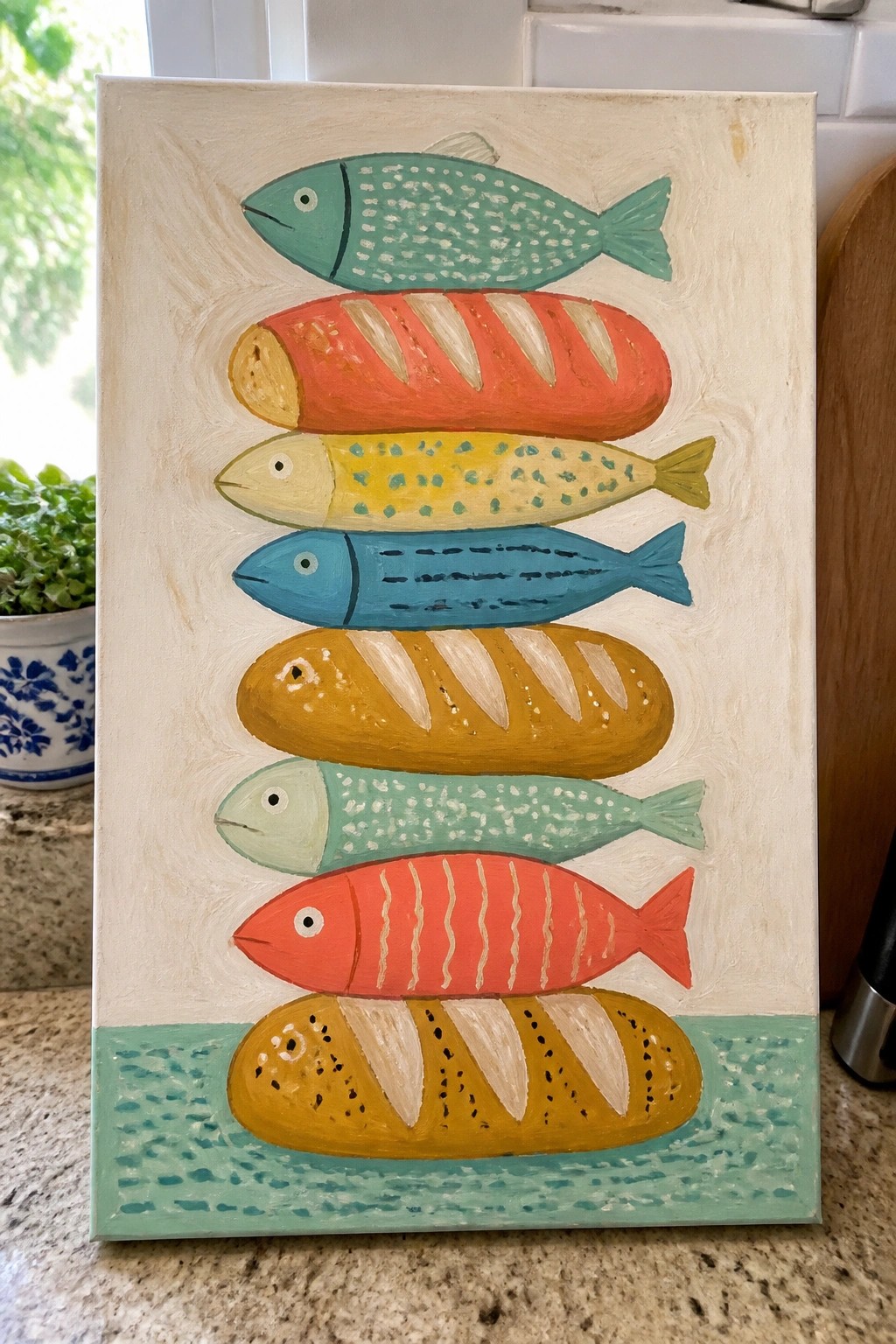
A vertical stack of alternating fish and bread loaves gives a clean, graphic take on the loaves and fishes story. The design uses simple, repeated shapes with flat color areas and light texture marks to keep the pattern easy to read from a distance. A narrow teal band at the bottom anchors the stack without adding extra elements.
What makes this idea useful is how the fixed vertical layout works on tall, narrow canvases where other subjects might feel cramped. The color blocks can be swapped for different shades or limited to two tones if you want a quicker version. For wall art, the bold outlines help the piece read clearly even when hung higher up, and the same stack can be shortened or lengthened to match the canvas height.
Serene River Landscape with a Small Boat
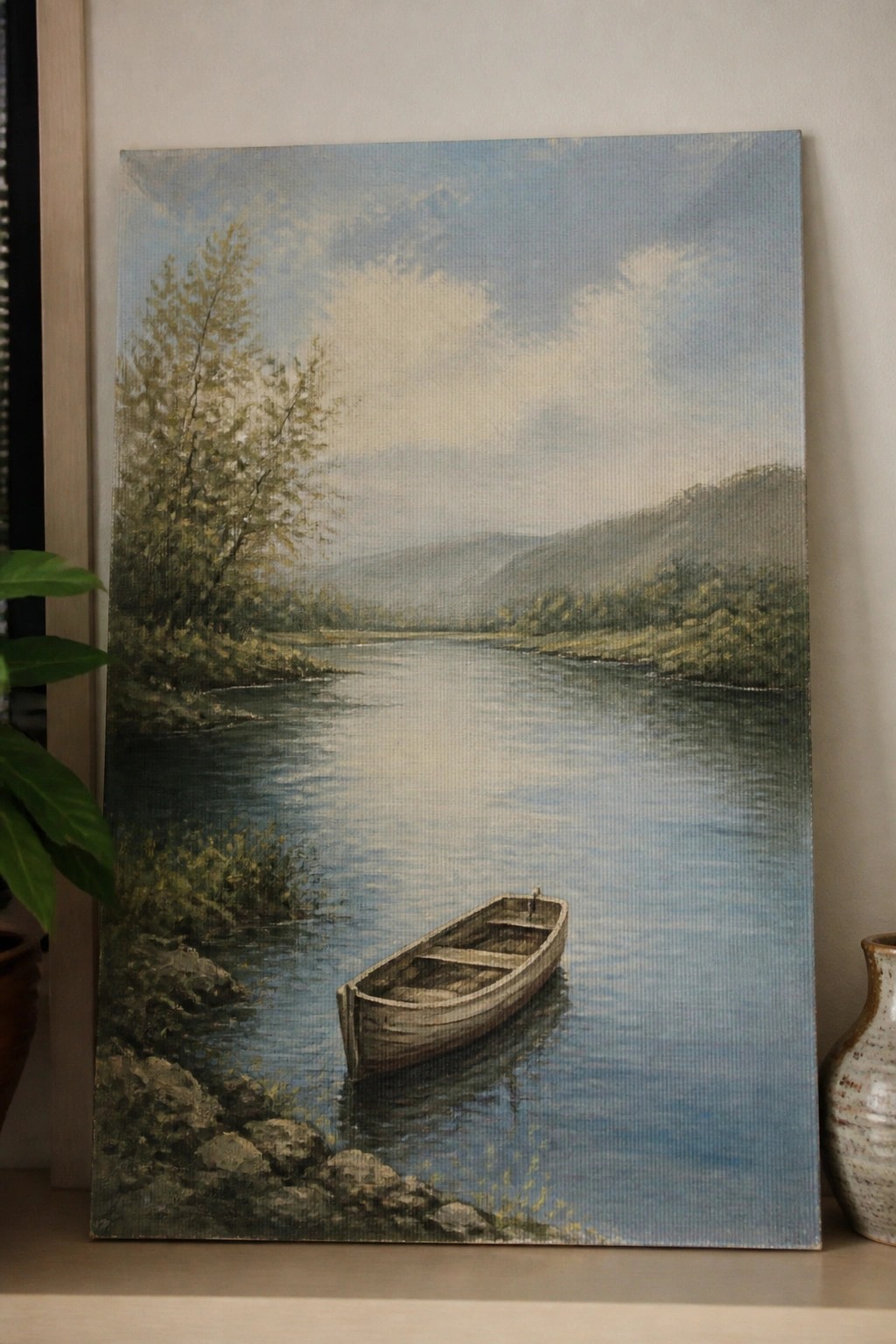
A landscape idea built around a single small boat on calm water gives you a clear focal point that pulls the eye through the scene. The river creates a natural path toward distant hills while the tree line on one bank adds weight without crowding the composition. Using a limited palette of blues, greens, and soft grays keeps the painting cohesive and lets you build depth through simple layers rather than fine details.
What makes this idea useful is how the boat acts as an easy anchor you can resize or reposition depending on your canvas. The wide open water and gradual horizon make it straightforward to adjust the sky or tree shapes for different proportions. For practice, this kind of subject helps you work on blending water reflections and soft edges without needing complex foreground elements.
Patchwork Heart with a Central Cross
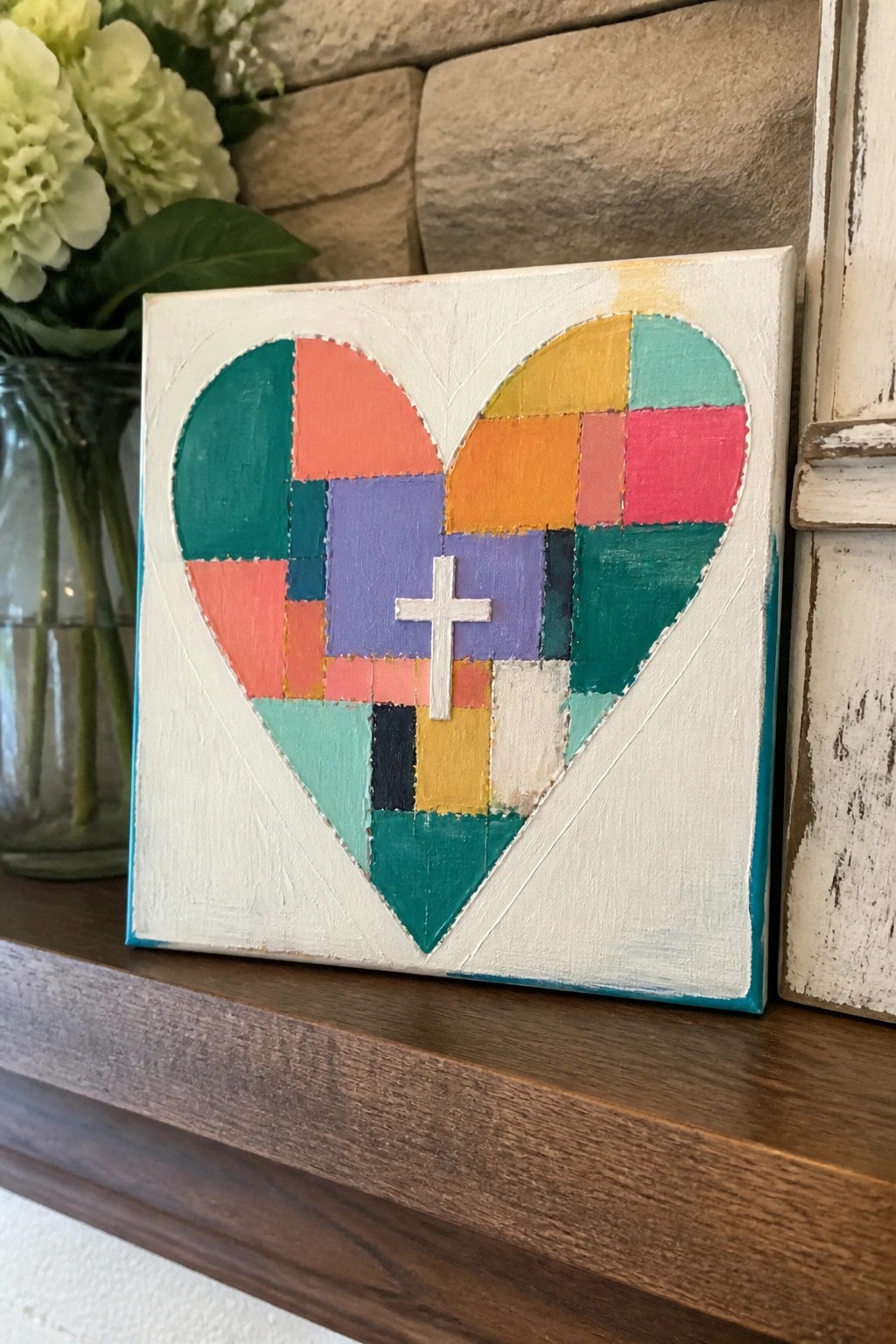
A heart built from irregular blocks of bright color creates a simple mosaic effect that draws attention to the white cross placed right in the center. The idea uses straight edges and flat color areas to form the heart shape on a plain background, which keeps the focus on the pattern and the symbol without extra details. This style fits decorative Christian art because the geometric layout makes the cross stand out clearly.
The color palette makes this easy to adapt by swapping in any shades you already have or changing the block sizes to fit a different canvas. You could enlarge the cross or reduce the number of colors if you want a faster version for gifts or practice pieces. For wall art, something like this works well because the heart shape reads from a distance while the patchwork adds texture up close.
White Lilies on a Soft Radiant Background

A floral painting idea centered on white lilies works because the open blooms and surrounding buds create a natural focal point that draws the eye inward. The green leaves and stems add structure underneath the flowers while the pale yellow background with its gentle glow keeps the whole piece light and balanced. This category of canvas painting relies on contrast between the crisp white petals and the muted surroundings to make the arrangement feel full without needing extra details.
What makes this idea useful is how the contained cluster of flowers fits easily on a standard canvas size without requiring complex perspective. The limited palette of white, green, and warm yellow tones means fewer color mixes and quicker progress if you want to finish in one or two sessions. You can simplify it further by reducing the number of buds or enlarge the same layout on a bigger canvas for wall decor. The background keeps the focus on the lilies so the composition stays clean even if your brushwork on the petals is not perfect.
Lamb Name Canvas with Heart Tree
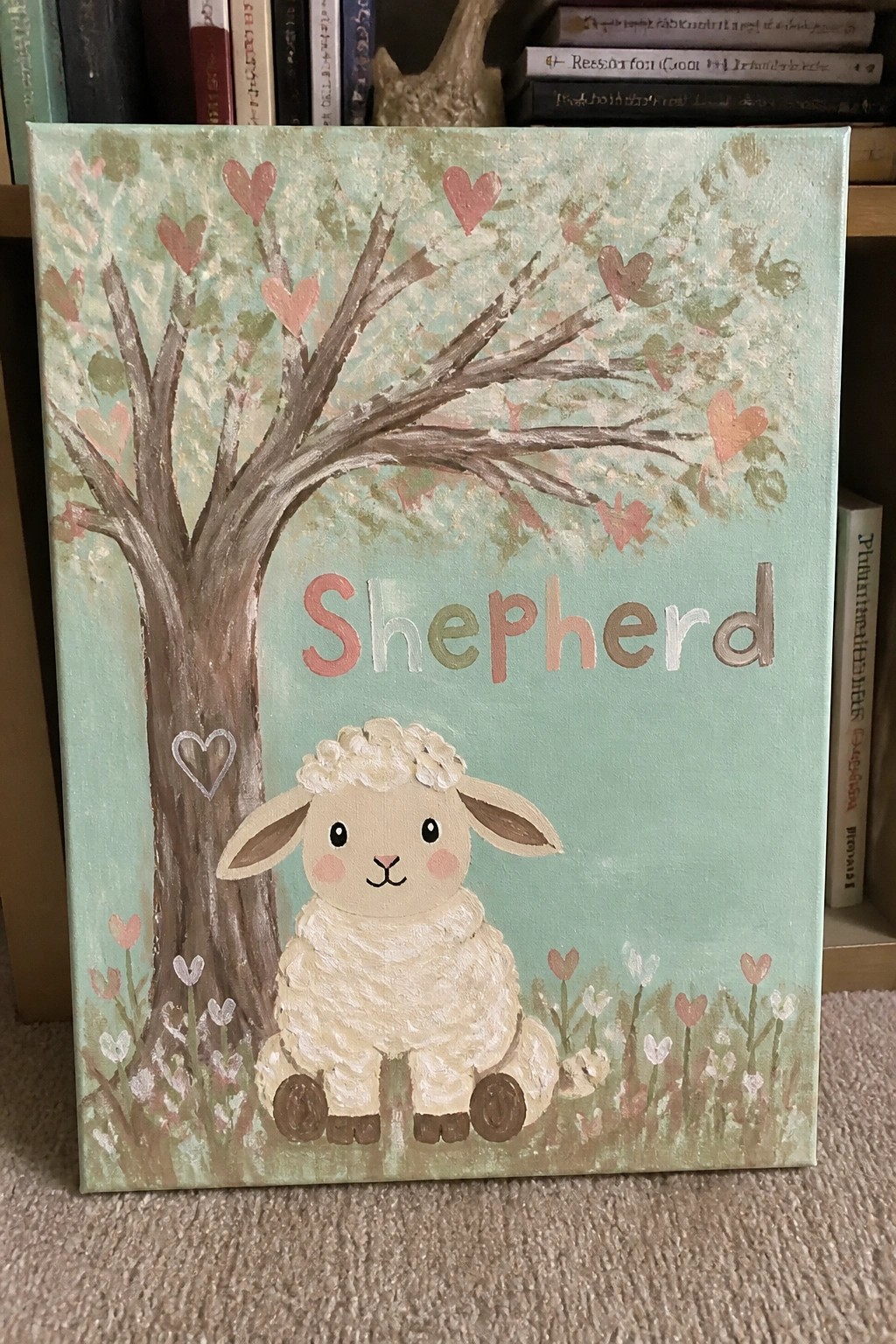
A simple sheep figure paired with a tree and scattered hearts creates a personalized canvas that centers on a name in mixed colors. This approach blends an animal subject with typography to make a decorative piece that fits a child’s room or a faith-themed space. The open background and balanced placement of the name keep the design from feeling crowded while letting the sheep stay the main focal point.
What makes this idea useful is how quickly the name can be changed to fit any child or a short Bible reference without redrawing the whole scene. The tree and heart shapes can be scaled up or down depending on the canvas size, and the soft color choices make it simple to match existing room colors. For gifts, a painting like this stands out on Pinterest because it looks finished with only a few main elements.
Crown and Scepter on Abstract Color Blocks
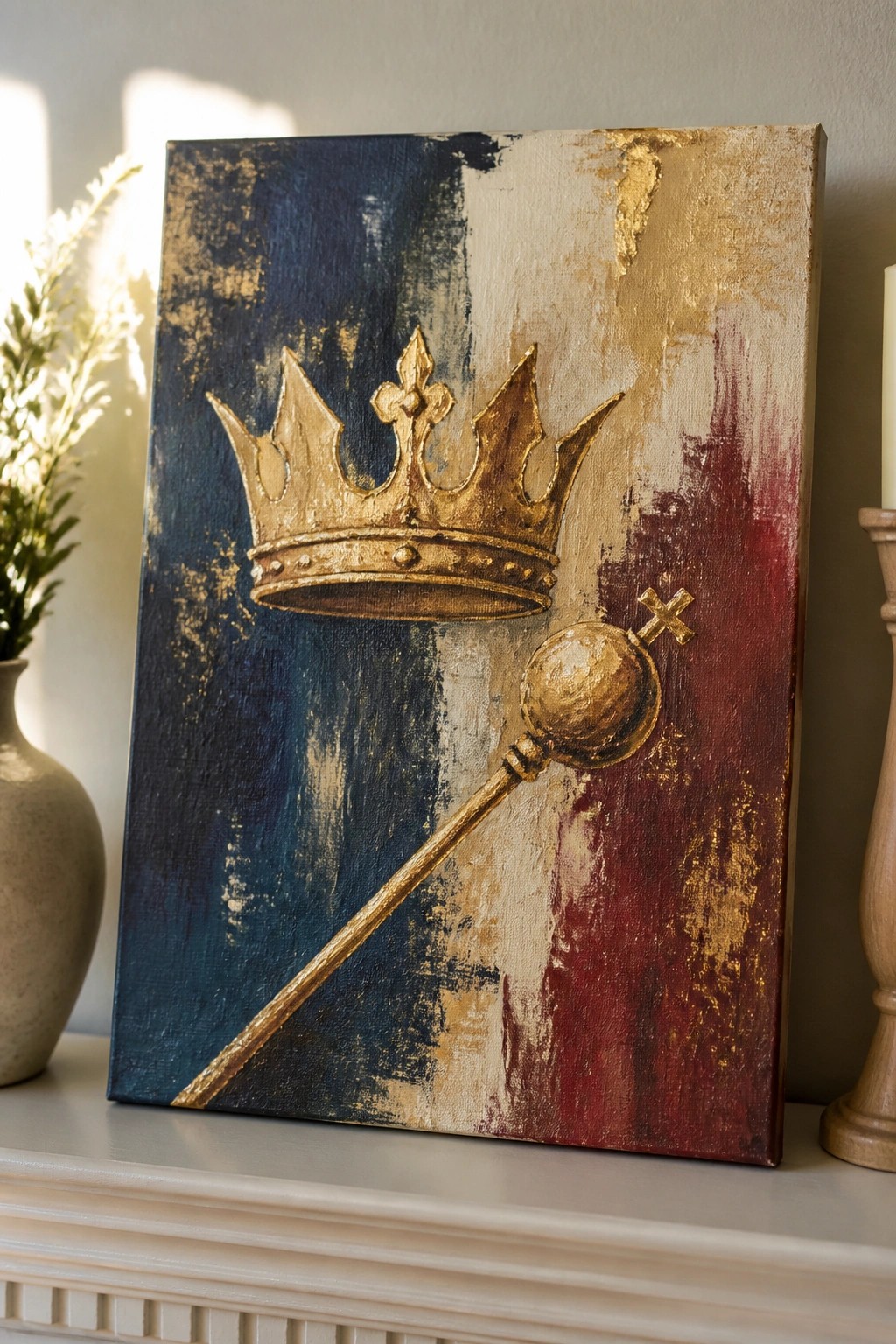
A painting idea built around a golden crown and orb scepter placed over a background divided into three rough color sections. The crown sits in the upper half while the scepter runs diagonally across the lower portion, with gold paint or leaf used to highlight both objects and scattered edges. This approach fits decorative Christian art and gains visual strength from the contrast between the metallic subjects and the textured, non-representational background.
The composition does a lot of the work here because the strong color divisions create instant structure without extra detail. You can adapt the palette by swapping the red section for another shade or by shrinking the whole piece to fit a smaller canvas. For wall art, the diagonal placement of the scepter gives the layout direction, and the gold elements can be added last with simple acrylic or metallic paint for faster results.
Christian Boat Scene with Anchor and Cross

A boat floating on calm water serves as the main subject here, with an anchor painted on its side and a cross on the stern. This creates a landscape painting that blends a simple still life element with a distant shoreline and layered sky. The horizontal bands of color and the boat’s placement slightly off center keep the composition balanced without crowding the canvas.
What makes this idea useful is how the boat gives you an easy focal point while the water and sky handle most of the background work. You can scale it down to a smaller canvas or swap the distant trees for different shoreline details if you want a change. For wall pieces, this type of scene adapts well to cooler blue tones or a slightly higher horizon line if you prefer more sky.
Mustard Plant Botanical with Scripture Quote
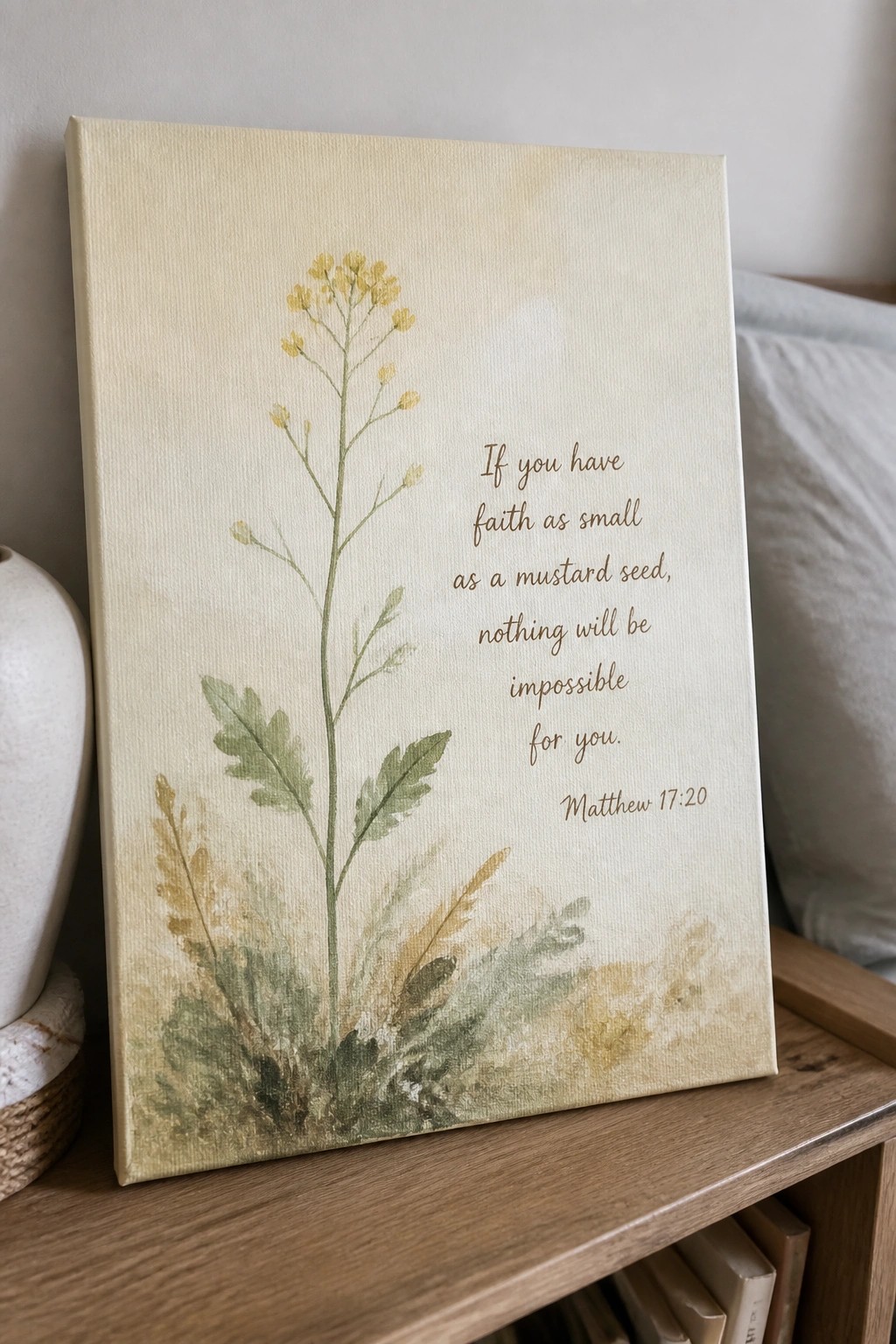
A botanical painting idea that centers on a single tall mustard plant with yellow flower clusters, layered green leaves, and soft earth-tone foliage at the base. The composition keeps the plant on the left and balances it with the verse text on the right against a pale neutral background. This approach falls into the category of floral scripture art that combines a simple plant study with integrated wording.
What makes this idea useful is the vertical plant shape that creates natural space for text without extra layout work. The muted color palette makes it easy to adapt by changing the flower color or background tone to fit different rooms. For wall art, something like this works especially well because the loose brushwork and soft edges keep it from looking too formal or crowded on a shelf. You could simplify the foliage further or enlarge the text if you want a quicker version for practice.
Stacked Hearts with Crosses
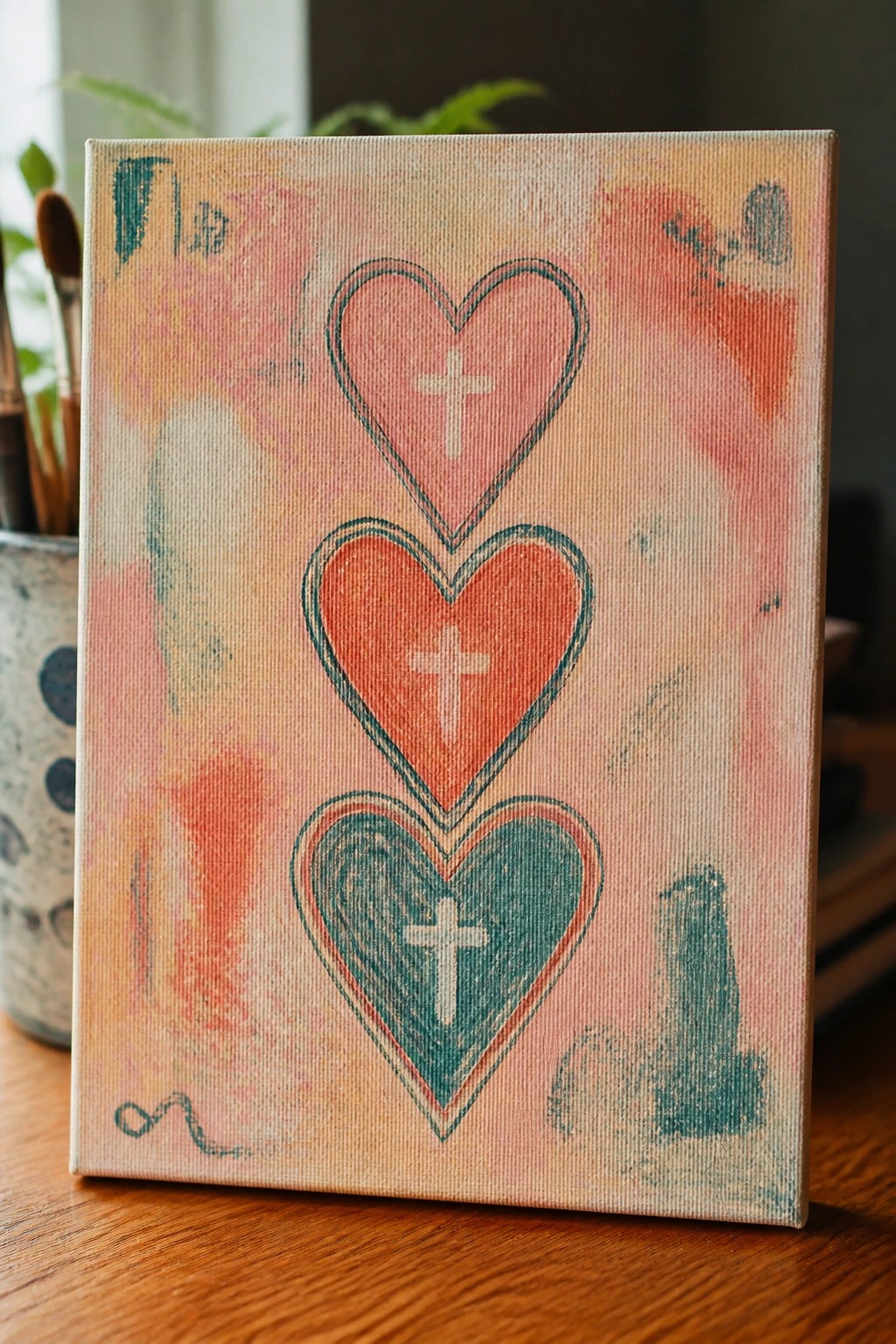
A straightforward Christian painting idea is to stack three hearts vertically down the canvas, each one centered with a small white cross. The hearts are painted in contrasting shades of red, teal, and pink with visible outlines, set against a loose background of blended peach, orange, and teal brushstrokes. This arrangement uses the repeated shape and limited color range to keep the design balanced and easy to read from a distance.
The composition does a lot of the work here because the vertical stack fits standard canvas proportions without needing extra elements. You can change the heart colors to coordinate with your space or simplify the background to a single wash if you want fewer layers. For wall art, something like this works especially well as a quick weekend project that still reads clearly as Christian decor.
Church by the Sea at Sunset

A church placed beside water at sunset works as a landscape idea that combines architecture with natural surroundings. The path leads the eye straight to the building while the sky and water fill the background with broad color areas. Palm trees on both sides help frame the main subject without crowding the center.
The color palette of warm sky tones against cooler water makes it simple to shift the time of day or swap in different foliage. You can reduce the number of plants or change the palm trees to match a local setting if needed. This type of scene stands out for wall pieces because the central building gives it a clear focal point that works at different canvas sizes.
Tree of Crosses with Birds and Grace Banner

A strong painting idea here is a central tree whose branches support a collection of crosses in varied sizes and colors along with small birds. The layout uses the tree’s natural branching to create clear spots for the crosses so they read as individual pieces rather than a crowded pattern. This approach falls into decorative religious art and keeps the focus on the repeated cross shapes balanced by the foliage and birds.
What makes this idea useful is that the tree already supplies the structure so you only need to paint simple cross outlines and a few birds rather than invent a full scene. You can swap the banner word or change the cross colors to fit different rooms or seasons without redrawing the whole tree. For wall pieces this works especially well because the vertical tree shape fills a canvas nicely and the banner gives an easy place to add a single word or short phrase.
Frequently Asked Questions
What supplies are best for creating these Christian canvas paintings?
For most of the ideas in the article, start with a primed cotton or linen canvas, acrylic paints for their quick drying time and ease of blending, and a set of brushes in various sizes including flats and rounds. Add gesso for extra texture if needed, and consider oil paints for slower blending on larger pieces. Always work in a well ventilated area and seal finished works with a matte or gloss varnish to protect the spiritual imagery.
How can beginners adapt the more complex ideas from the list?
Beginners should simplify detailed scenes by breaking them into basic shapes and focusing on one element at a time such as a cross or dove. Use reference photos or light sketching with a pencil first, then layer colors gradually. Practice on smaller canvases before scaling up, and do not hesitate to use stencils for lettering like Bible verses to build confidence while still honoring the inspiring themes.
What techniques help highlight the spiritual meaning in these paintings?
Layering thin washes of color creates depth that draws the eye toward central symbols like light or hands in prayer. Incorporate symbolic elements such as subtle halos or rays of light using dry brushing for a soft glow. Experiment with contrasting colors, like deep blues against warm golds, to evoke peace or hope, and add texture with palette knives for a sense of dimension that invites reflection.
How should I choose colors to match the mood of each Christian idea?
Select a limited palette based on the emotion you want to convey, such as serene blues and greens for themes of calm or redemption, and earth tones for nativity scenes. Test colors on a scrap canvas first to see how they interact under different lighting. Warm tones like reds and oranges can represent divine energy, while cooler shades foster contemplation, always keeping the overall composition balanced and uplifting.
Where can I find additional resources to expand on these 24 ideas?
Look to online Christian art communities, Bible study sites for verse inspiration, and museum collections of religious artwork for historical references. Books on faith based creativity or local workshops offer hands on guidance. Experiment by combining elements from multiple ideas in the article, such as merging a landscape with scripture, to develop your personal style over time.