I often paint simple pictures of Jesus when I want a calm project to work on during quiet evenings.
My own versions usually stay basic with soft colors that do not require many layers or hours.
I have found that keeping the shapes gentle makes the whole thing feel more natural and less stressful.
These kinds of paintings work well if you just want something peaceful to hang up or give as a gift.
Over time I have collected a few easy approaches that still end up looking thoughtful without extra fuss.
Portrait of Jesus with a Soft Halo Glow
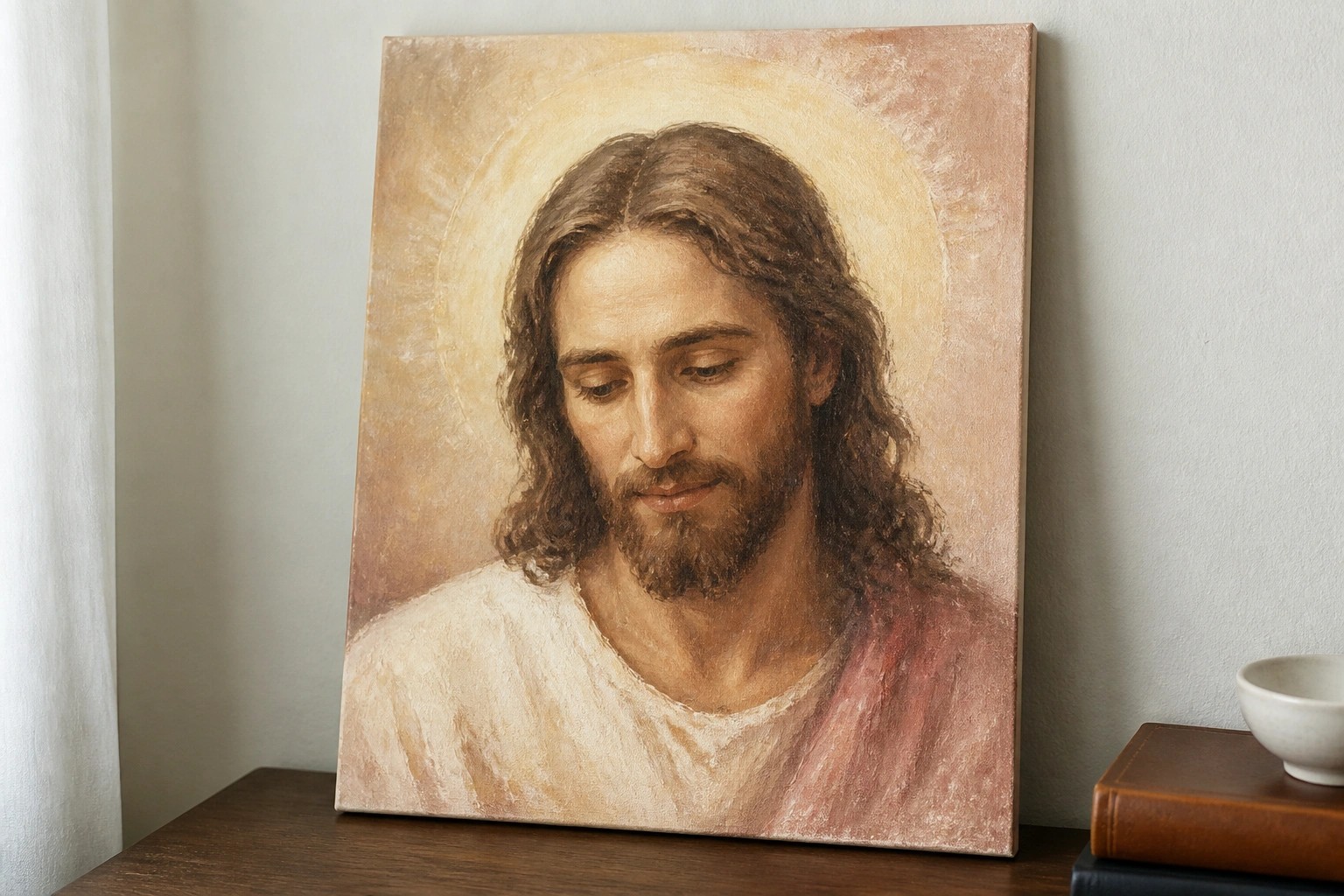
A close-up portrait idea like this centers on Jesus with eyes closed and a warm halo circling the head. The composition keeps the face as the clear focal point while the background stays loose and blended in muted earth tones. Visible brushstrokes add texture without complicating the overall shape or balance.
What makes this idea useful is how the circular halo and downward gaze create built-in structure that guides the eye. The restrained palette of warm browns, soft pinks, and golds stays easy to mix and repeat across different canvas sizes. For wall pieces, this kind of focused face works well in smaller formats or as a study before trying a larger version with added clothing folds.
Sunset Silhouette of Jesus on Layered Hills
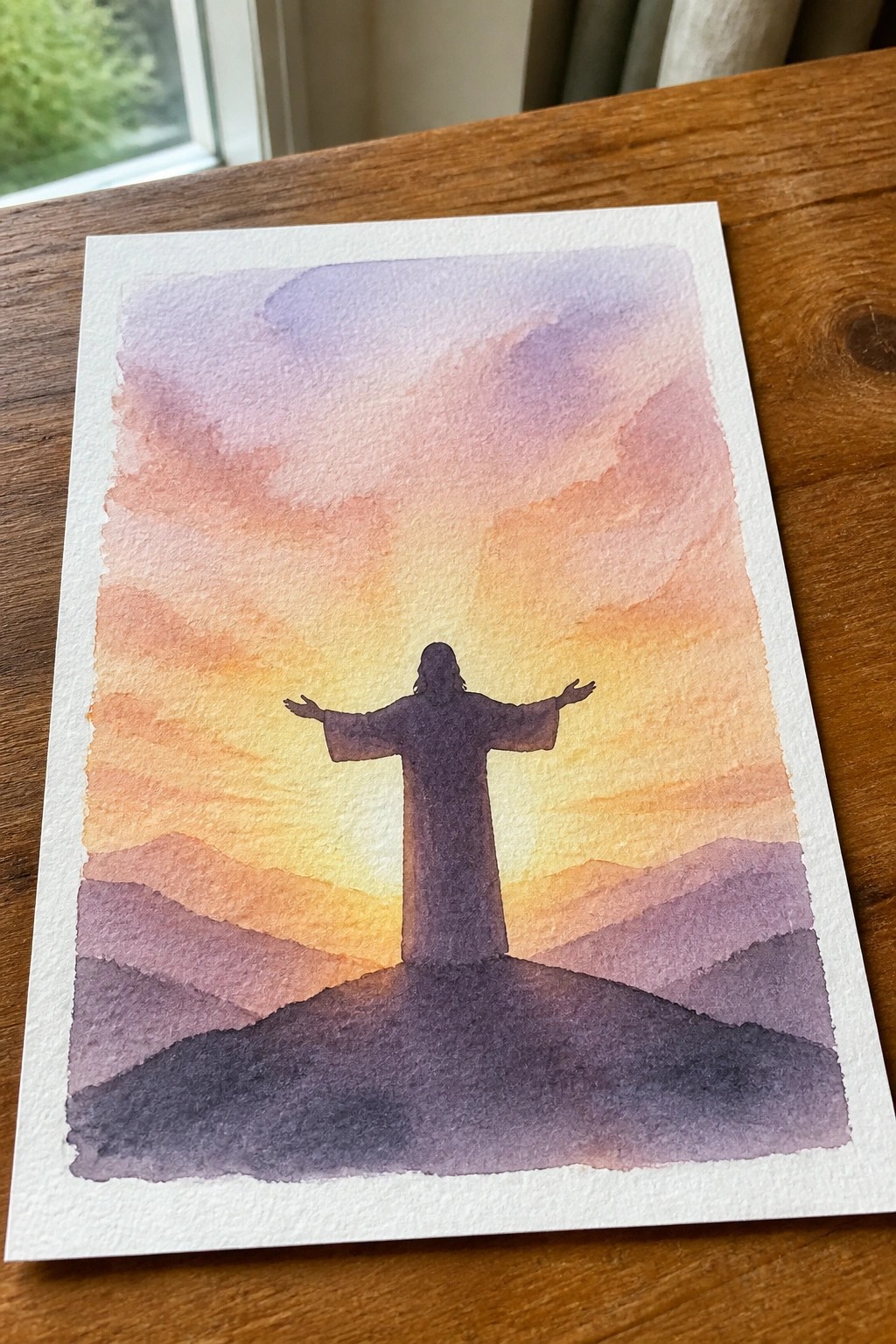
A silhouette of Jesus standing with arms open on a hill against a sunset sky creates a straightforward religious landscape idea. The composition centers the dark figure against a glowing gradient that moves from yellow near the horizon through orange and into soft purple at the top, while layered hills in muted tones add depth without extra detail. This style works as a landscape painting where the shape and placement carry the idea rather than any fine features.
The composition does a lot of the work here by using the bright sky to define the figure automatically. You can swap the sky colors for whatever paints you already have or reduce the hills to two layers if you want a faster version. For wall art this format prints cleanly at different sizes because the strong contrast holds up even when scaled down.
Jesus Seated with Sheep in a Soft Field
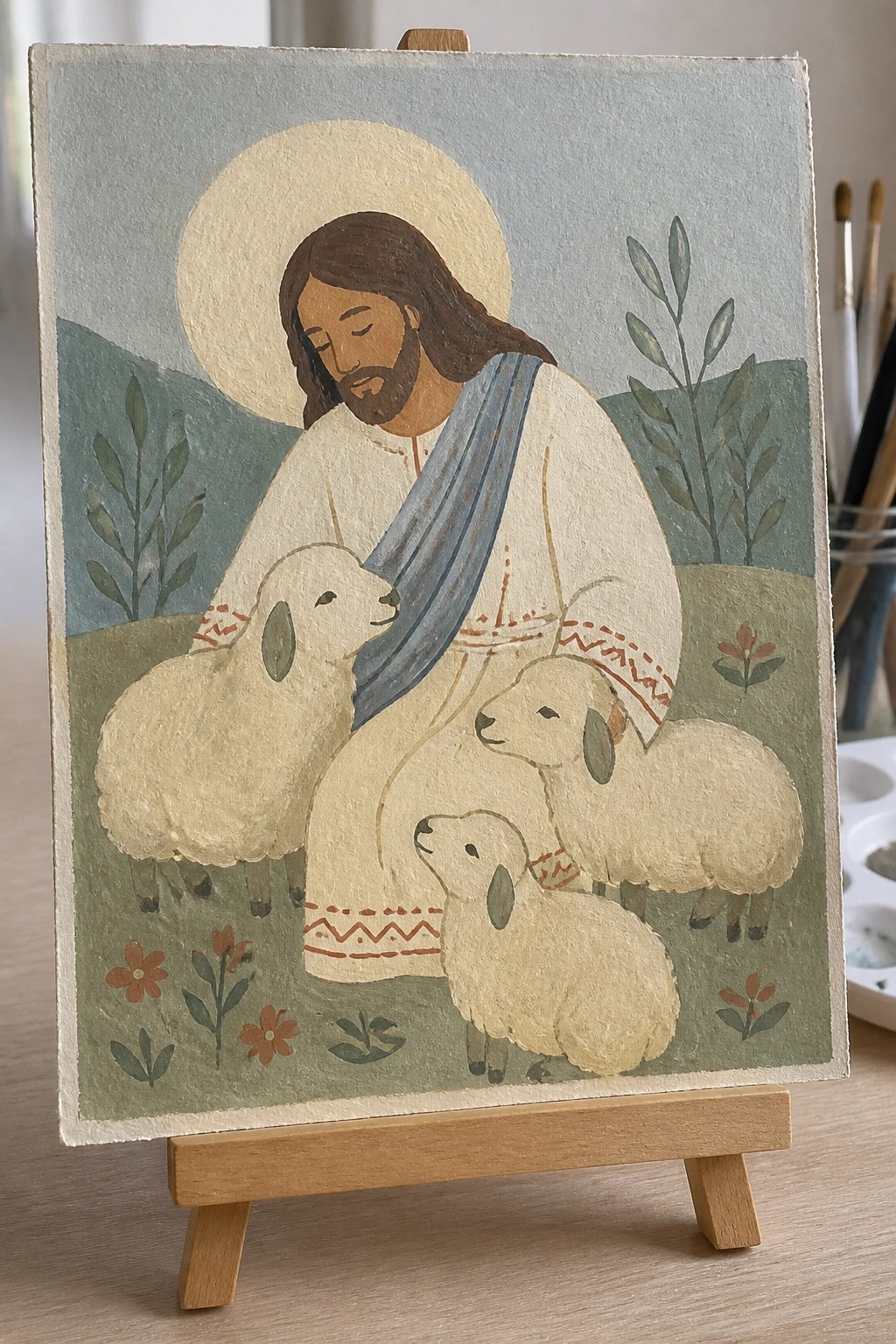
This painting idea places Jesus as the central figure among three sheep in a simple outdoor setting. The composition works by keeping the sheep clustered in the lower half of the frame while the figure occupies the upper center, creating a natural focal point without overcrowding. The muted greens and creams, along with the rounded shapes of the animals, give it a clear animal-and-landscape category that stays easy to read at a glance.
What makes this idea useful is how the sheep can be adjusted in number or size to fit different canvas proportions without changing the overall layout. The background hills and scattered plants stay minimal, so you can add or remove them depending on whether you want a quicker sketch or a fuller scene. This kind of subject stands out on Pinterest because the vertical arrangement leaves room for the figure while still showing the animals clearly.
Praying Hands with a Simple Cross
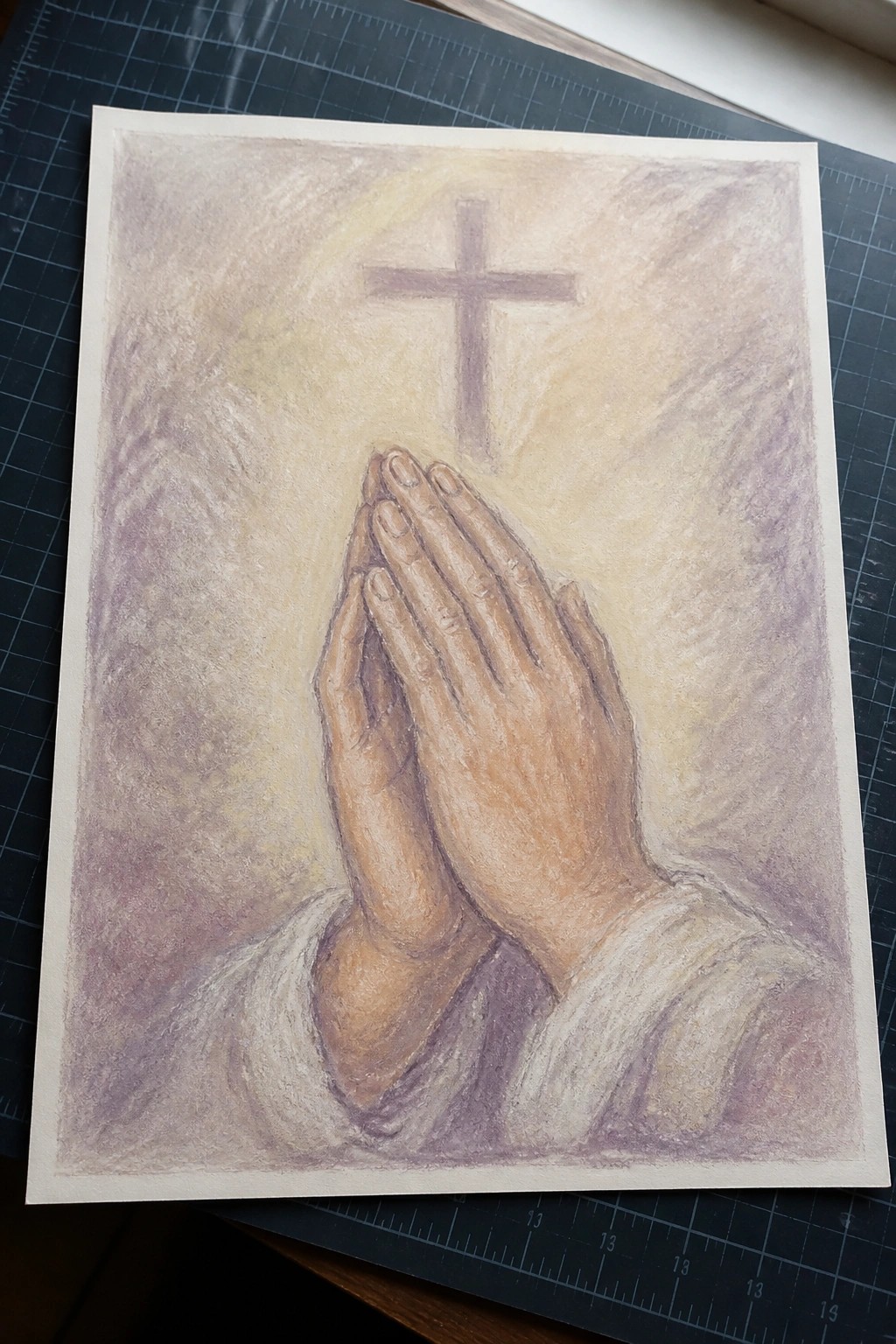
A painting centered on clasped hands in prayer with a cross placed directly above creates a clear devotional subject. The hands occupy the lower portion while the cross floats in the upper center, surrounded by a soft halo of light. Blended background tones keep the focus tight on those two elements without extra detail or clutter.
What makes this idea useful is how the vertical layout works well on standard canvas sizes. You can simplify the background even further or shift the color temperature to match a room. For practice, the hand positioning gives you a chance to work on form and light without needing a full figure, and the same setup can be adapted into a smaller sketch or a larger wall piece.
Floral Wreath Cross on a Neutral Canvas
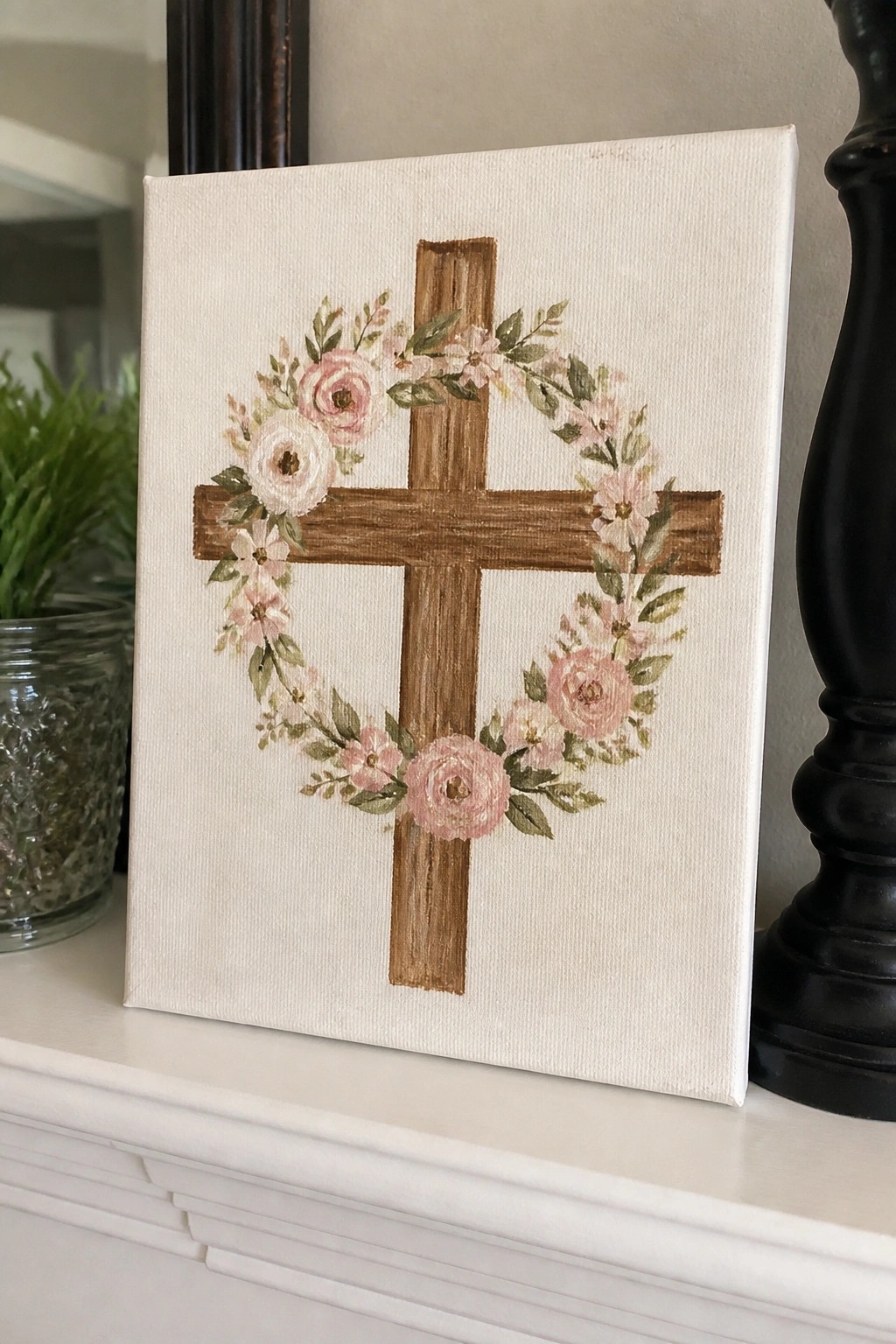
A cross wrapped in a loose floral wreath offers a straightforward way to combine a strong central shape with soft surrounding details. The wreath uses clustered pink roses, smaller white blooms, and scattered green leaves to create a circular frame that draws the eye inward while softening the straight lines of the cross. This approach lands in the floral decorative category and works because the flowers stay balanced on both sides without crowding the wood grain texture of the cross itself.
What makes this idea useful is the way the wreath naturally guides placement and color choices, so you do not have to invent a background or layout from scratch. The soft pink and green palette adapts easily to different room styles or can be swapped for other flower colors if you want a seasonal version. For practice, the design lets you focus on one main subject while building light layering skills with the leaves and petals. A painting like this also translates well to smaller canvases or greeting cards when you need quicker projects.
Starlit Nativity Scene in a Simple Stable

A night scene of the holy family gathered around the manger inside a basic wooden stable works well as a seasonal religious painting idea. The composition places the stable as a clear central frame that leads the eye toward the figures while the large star and deep blue sky sit above to balance the darker lower half. Soft washes of blue and brown with a single bright light source keep the focus on the stable area without extra elements.
The composition does a lot of the work here because the stable shape gives an easy structure to build around and the star provides a strong vertical line to anchor the top. This idea adapts quickly to smaller sizes for greeting cards or larger ones for wall pieces since the main shapes stay simple. You can shift the sky tones or reduce the number of stars if you want a faster version for practice.
Jesus Walking Toward the Ocean at Dawn
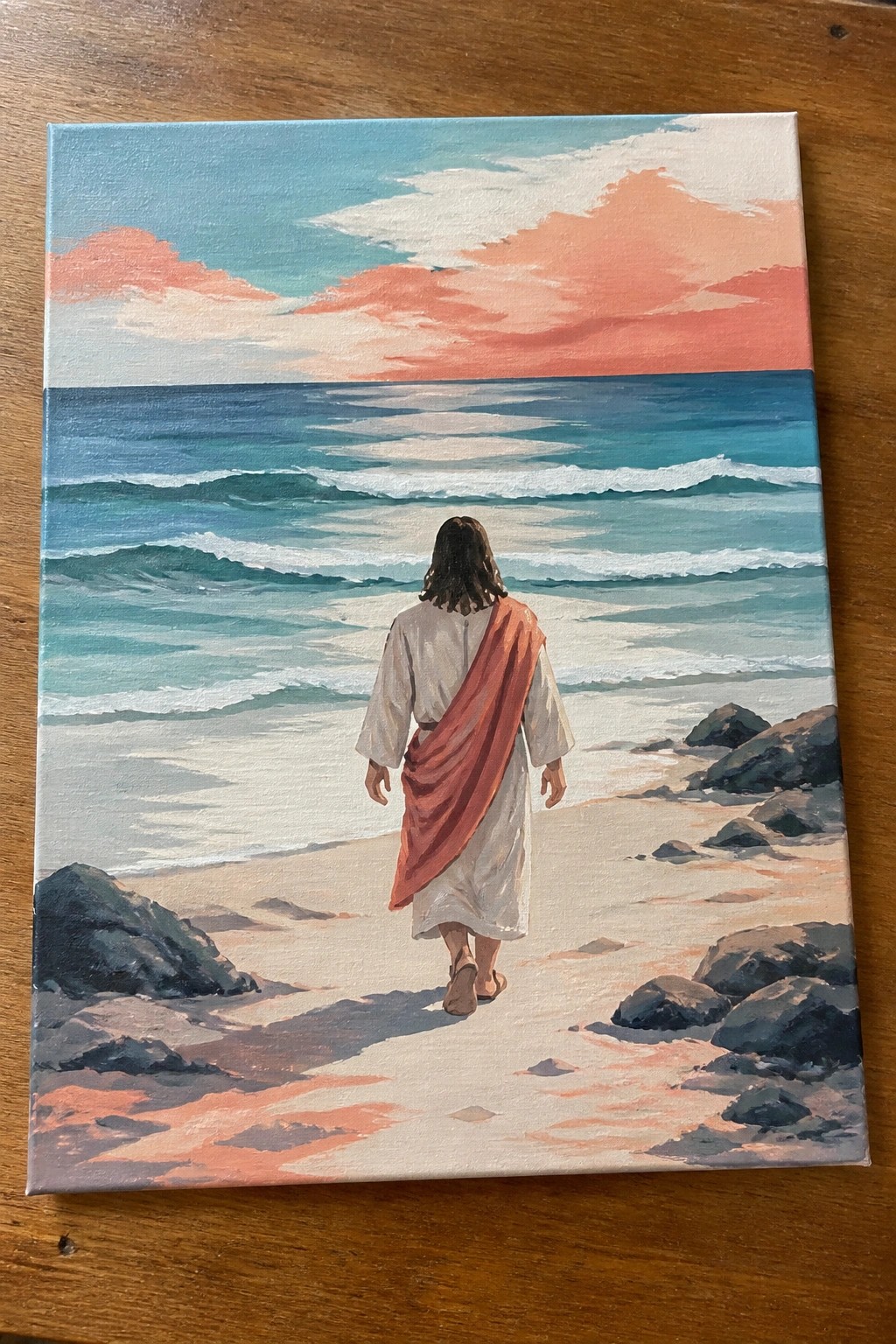
A figure of Jesus in simple robes walks barefoot along the shoreline with the ocean stretching ahead. This landscape idea keeps the horizon low so the sky takes up most of the upper space and the figure stays small against the water. The path of the beach and the line of waves create a clear direction that moves the eye straight into the distance.
What makes this idea useful is the basic layout with one main shape against a simple background. The sky colors can be swapped for different times of day without changing the rest of the painting. For practice this works well because the water and sand areas can be painted in broad strokes first while the figure stays basic. The same scene can be made smaller for a card or stretched wider for a larger canvas.
Soft Scene of Jesus with Three Children
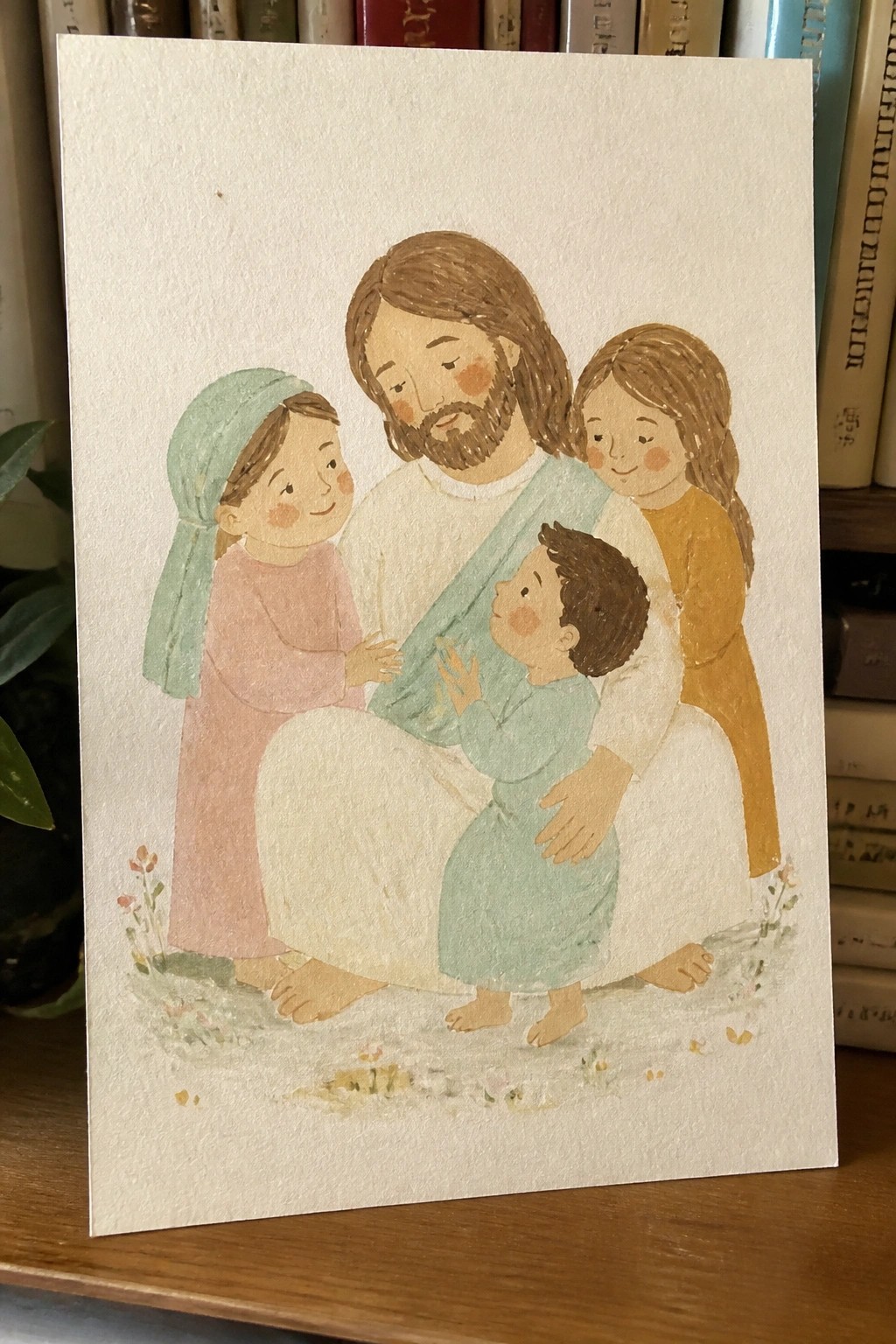
This painting idea shows Jesus seated on the ground with three children clustered around him in a close, overlapping arrangement. One child reaches toward him from each side while the third stands in front, creating a compact central group. The idea works as soft figurative art through simple rounded shapes, a muted pastel palette of pinks, greens, and earth tones, and minimal background details that keep attention on the figures.
The composition does a lot of the work here by using the central seated figure to anchor the group without extra props or scenery. You could adapt it by changing the children’s clothing colors or reducing the number of figures for a quicker sketch. This would be easy to turn into a small card or nursery print since the elements stay contained and the scale feels approachable for practice.
Warm Toned Jesus Portrait with Soft Halo
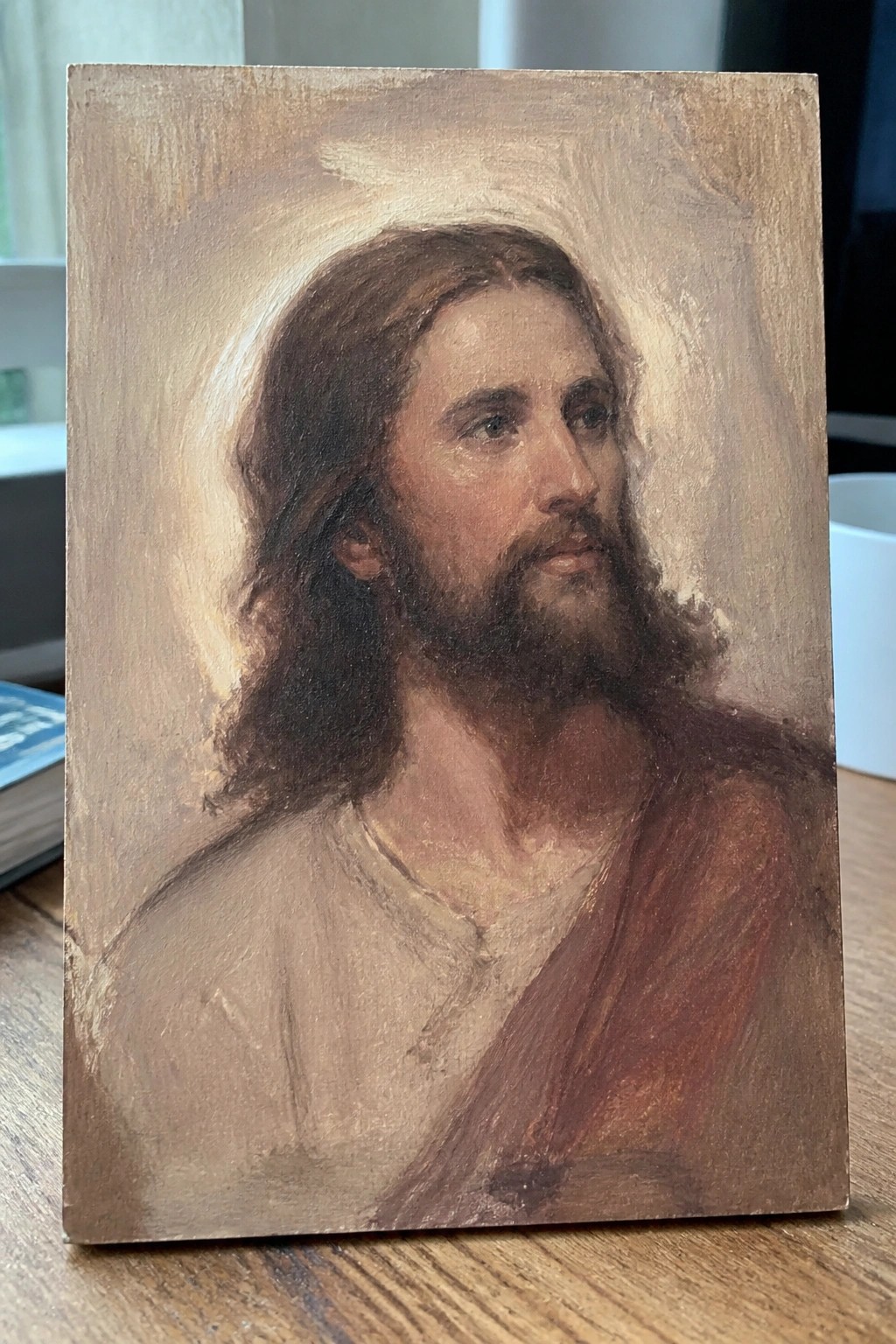
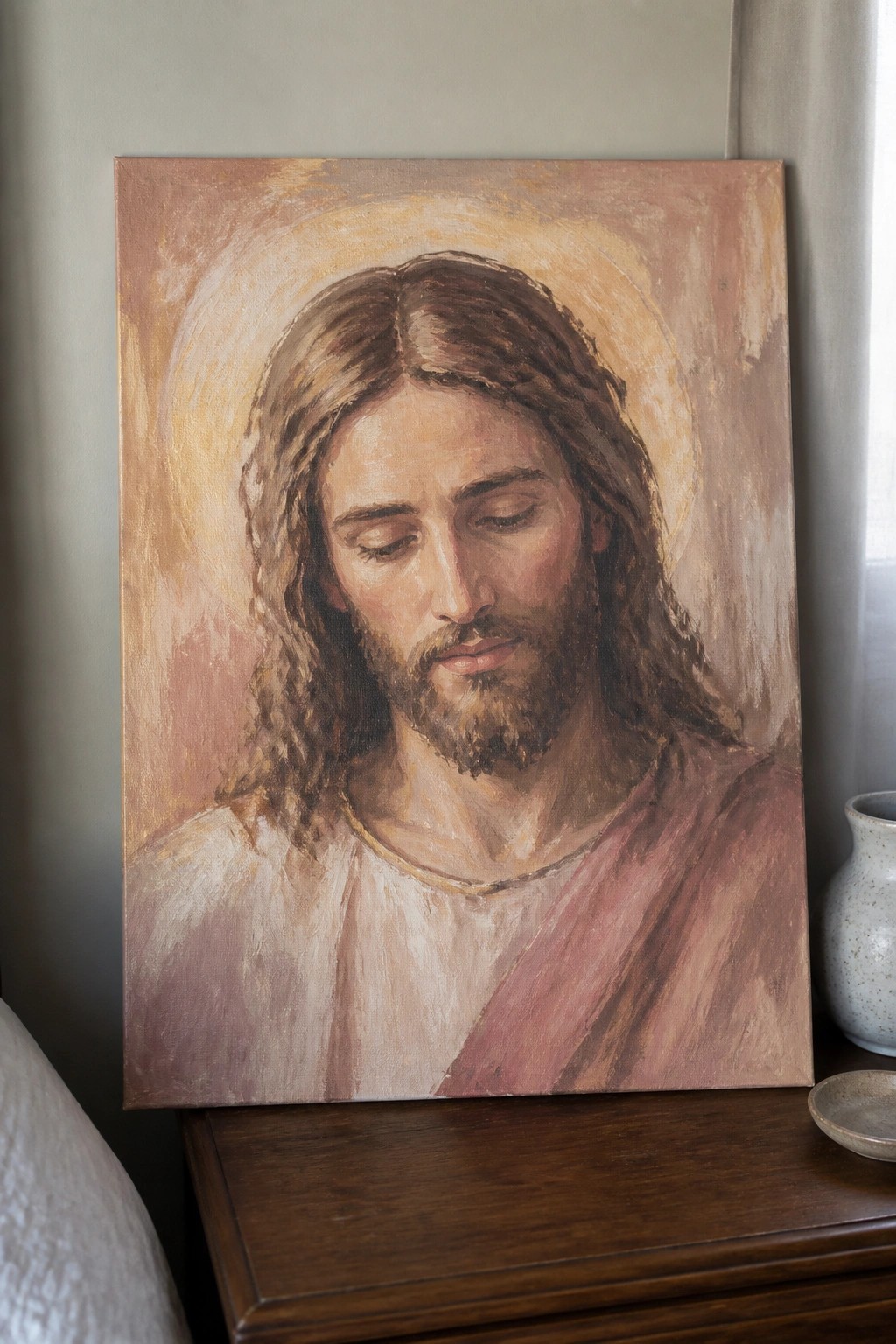
A close-up portrait of Jesus forms the core idea here, using a three-quarter view that draws attention to the face and shoulders. The composition keeps the background plain so the warm browns, creams, and soft reds stay centered on the figure. Loose brushwork and a gentle halo of light give the piece its calm, focused feel without extra elements.
What makes this idea useful is how the simple background and limited palette let you concentrate on the face shape and lighting. You could scale it down for a smaller canvas or swap the halo for a faint edge of lighter paint to change the mood quickly. For practice, this kind of subject works well because the basic forms stay readable even if the brushwork stays broad.
Dove Soaring Against a Soft Halo
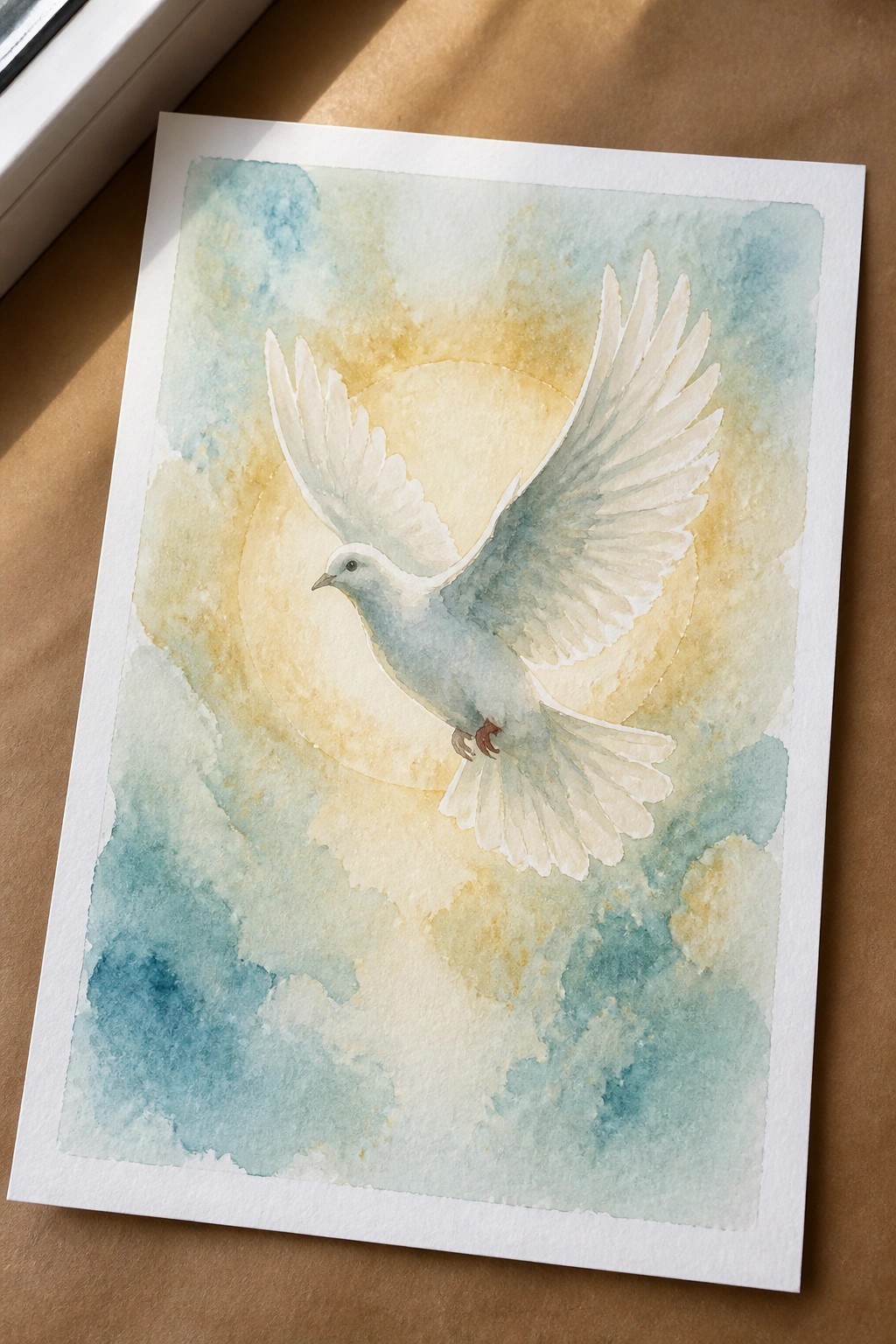
A dove in flight works well as an animal subject because the spread wings create strong diagonal lines that move across the page. The idea centers on keeping the bird mostly white so it contrasts with loose background washes in blue and yellow. Placing a simple circle behind the body adds a focal point without requiring extra details or complex shapes.
The composition does a lot of the work here by letting the background handle most of the color while the dove stays minimal. You could simplify the wings further for a quicker study or enlarge the circle to change the balance. This would be easy to turn into a greeting card or a small canvas piece since the soft edges make it forgiving on details. For wall art, something like this stands out on Pinterest because the single subject stays clear even at thumbnail size.
Open Bible with Glowing Cross and Scripture Text
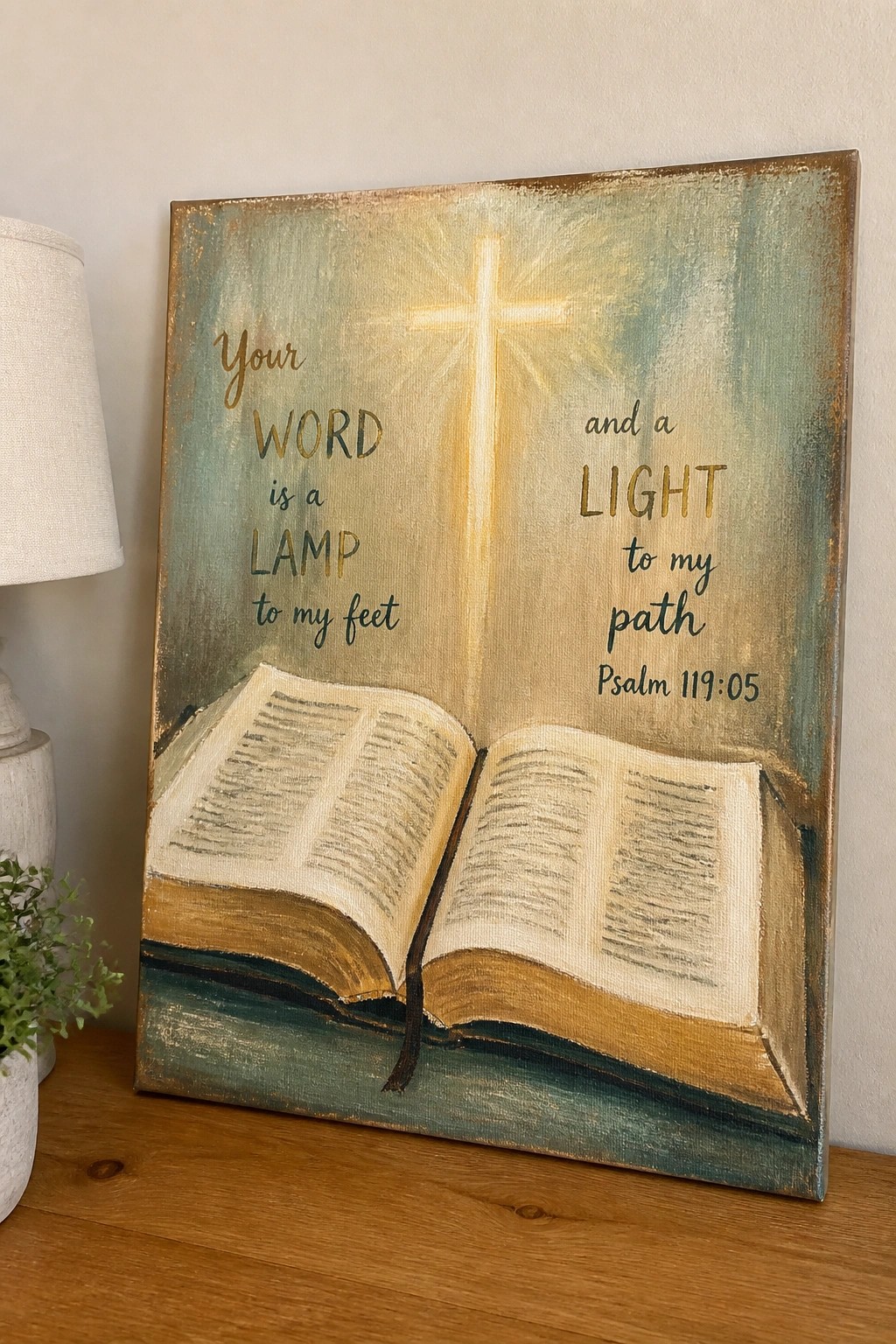
An open book sits at the base of the canvas while a bright cross radiates light upward, with the Psalm 119 verse placed on either side in mixed lettering styles. This decorative religious piece combines still life elements with integrated text, using a vertical layout that keeps the book anchored at the bottom and the light source centered above it. The soft edge blending between the teal background and the gold light rays creates a calm focal point without crowding the space.
What makes this idea useful is the way the text becomes part of the composition instead of an afterthought. The muted teal and gold palette adapts easily to different wall colors or frame choices. For practice, this kind of subject lets you work on light effects and simple book shapes without needing complex details, and you could swap the verse or shift the cross position if you want a different balance. The vertical format also saves well for Pinterest boards focused on scripture wall art.
Crown of Thorns with Central Light

A crown of thorns painted as a loose circle with a bright glowing center creates a simple devotional subject. The warm browns and golds in the background help the darker thorns stand out while the soft light in the middle keeps the focus inward. This kind of composition works as a still life or symbolic piece rather than a full scene.
What makes this idea useful is how the circular layout does most of the work for you. You can paint the thorns with quick strokes and then blend the center light to control how much glow you want. The color palette stays easy to adjust if you prefer cooler tones or softer edges. For wall art or practice, the same idea scales down well to smaller canvases or gets simplified by using fewer thorns.
Loaves and Fish Around a Central Cross

This painting idea centers on four oval bread shapes placed around a vertical cross, with two fish positioned at the bottom and a small plant detail between them. The ovals repeat in a balanced layout that keeps the cross as the clear focal point while the fish add a lower horizontal element. Earthy brown tones on the bread contrast with the teal cross and fish against a plain light background, and the visible texture on the bread shapes gives the forms more weight without extra detail.
The composition does a lot of the work here by repeating similar oval shapes to create symmetry around the cross. A painting like this works especially well for wall pieces because the layout fills the space evenly and leaves room for color changes. You could simplify it by using fewer loaves or adjust the teal to another shade if you want it to match a different room. For practice, this kind of subject lets you focus on shape placement and basic texture rather than fine details.
Jesus Teaching on a Rocky Hillside
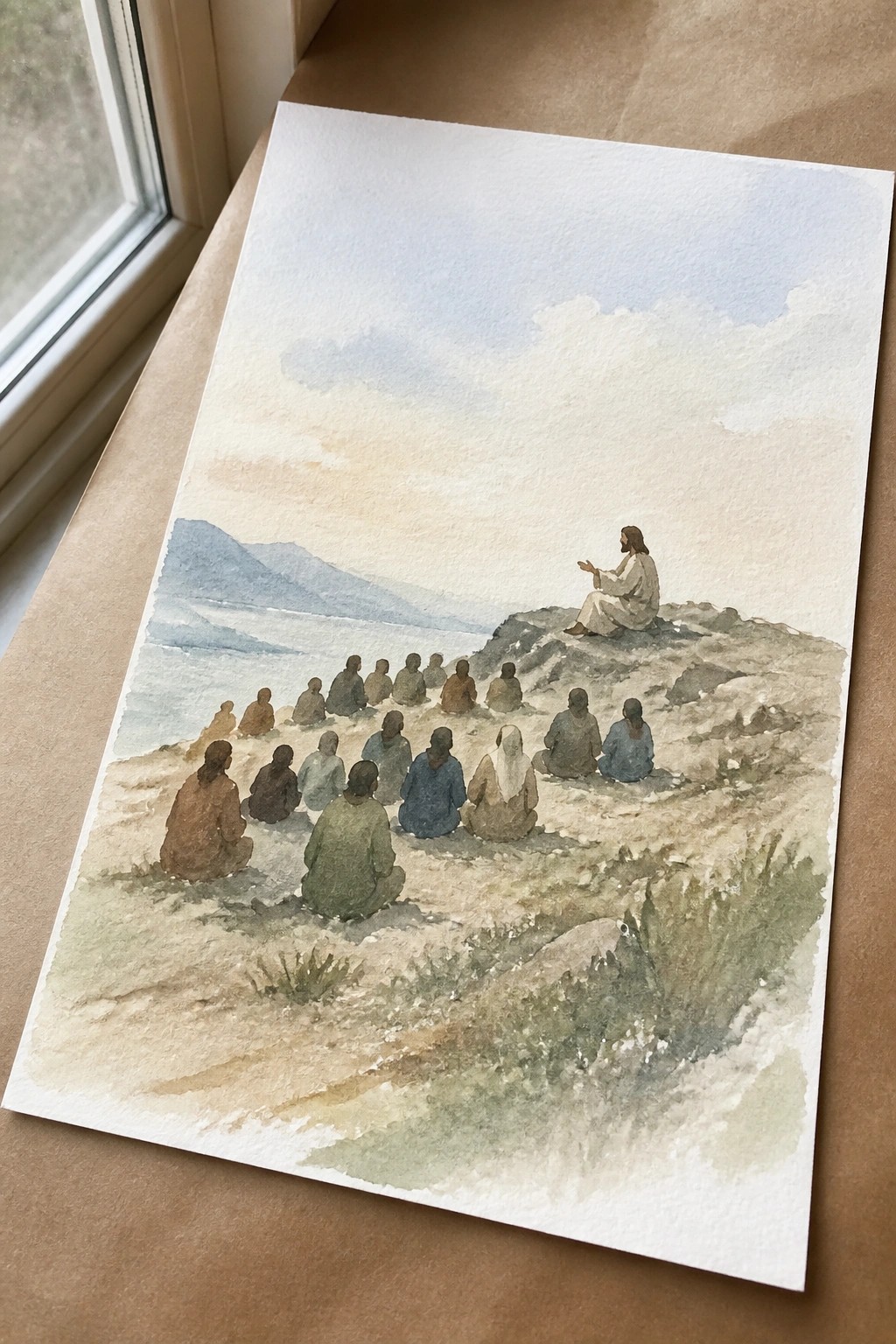
A painting idea built around one figure seated higher on rocks while a group gathers below creates a natural focal point through simple elevation and spacing. The landscape elements like water and hills sit in the distance to frame the scene without crowding the people in the foreground. This type of narrative landscape works because the open sky and ground planes give the arrangement room to breathe while keeping the eye on the central relationship between speaker and listeners.
What makes this idea useful is how the rocky outcrop automatically sets the main figure apart so you do not need extra techniques to establish importance. You can scale the group down to fewer people or soften the background hills if you want a quicker study. For wall pieces the wide sky and water keep the overall feel balanced, and the same layout adapts easily if you change the clothing colors or shift the time of day.
Geometric Stained-Glass Jesus
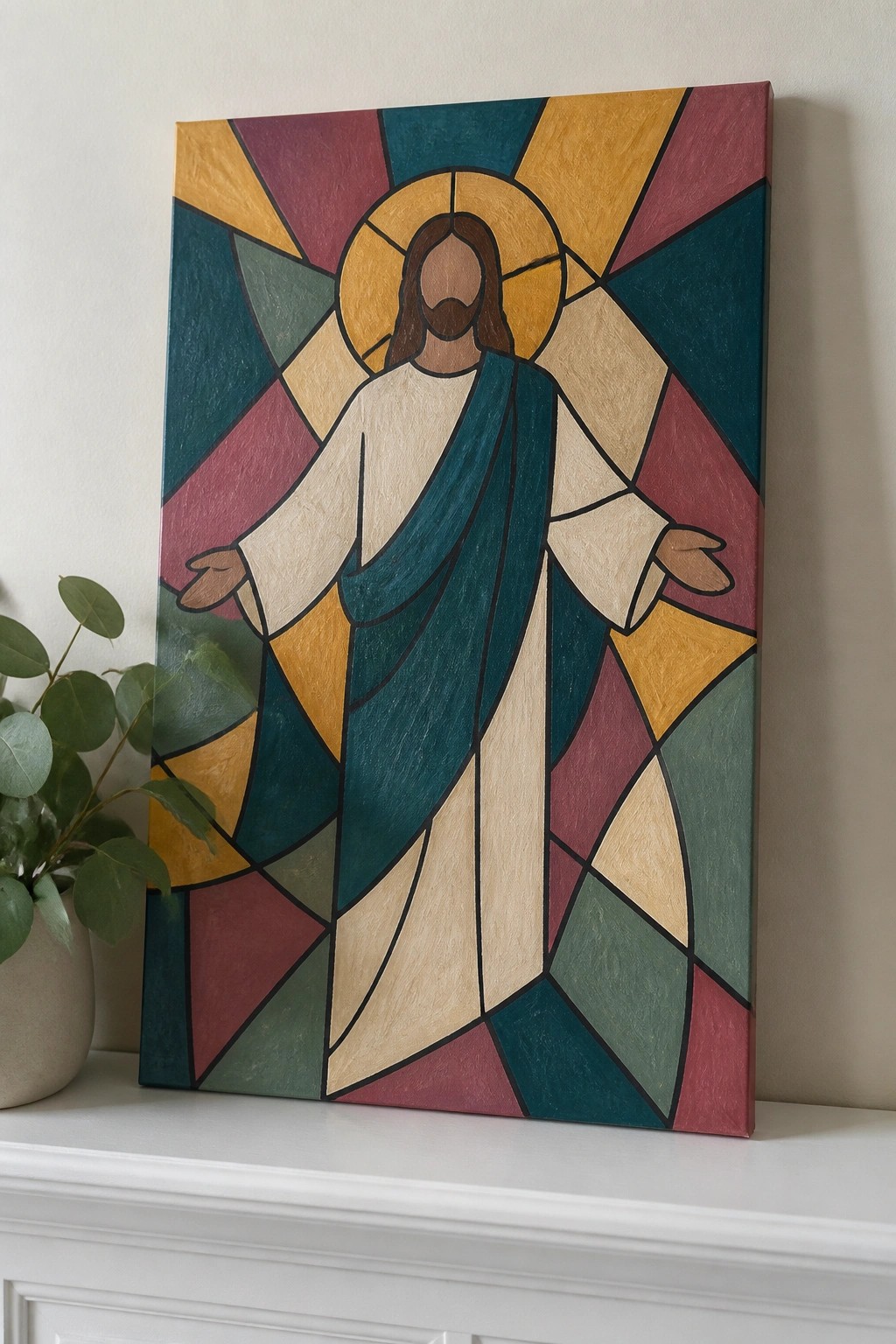
This painting idea centers on a central figure of Jesus rendered through large angular sections that mimic stained glass. The design uses straight lines to divide the background into bold color blocks of teal, maroon, gold, and beige that radiate outward from the figure. The flat color areas and clear outlines keep the focus on the overall shape rather than small details, which makes the style work well as decorative religious art.
What makes this idea useful is how the grid of lines gives you a built-in structure to follow when blocking in color. You can adjust the palette to softer tones or fewer colors if you want a calmer version for a bedroom or prayer space. The same layout works at different sizes, so it is easy to try first on a smaller board before committing to a full canvas.
Minimal Gold Line Profile of Jesus on Soft Wash

A profile portrait of Jesus drawn with thin gold lines over a loose background of blended blue and gray watercolor shapes gives a clean, modern take on a traditional subject. The circular halo in gold sits slightly off center to frame the head while the rest of the figure stays understated with minimal detail on the face and robes. This setup lets the soft color fields do the heavy lifting for depth and mood instead of relying on shading or complex features.
The composition does a lot of the work here by using the halo as the main focal point so beginners can focus on steady line work without worrying about perfect proportions. You can swap the background colors for warmer tones or cooler neutrals depending on the room or season and still keep the same layout. For wall pieces this idea scales easily to larger paper while the simple shapes also work well reduced for greeting cards or journal covers.
Lamb with Crook and Distant Cross
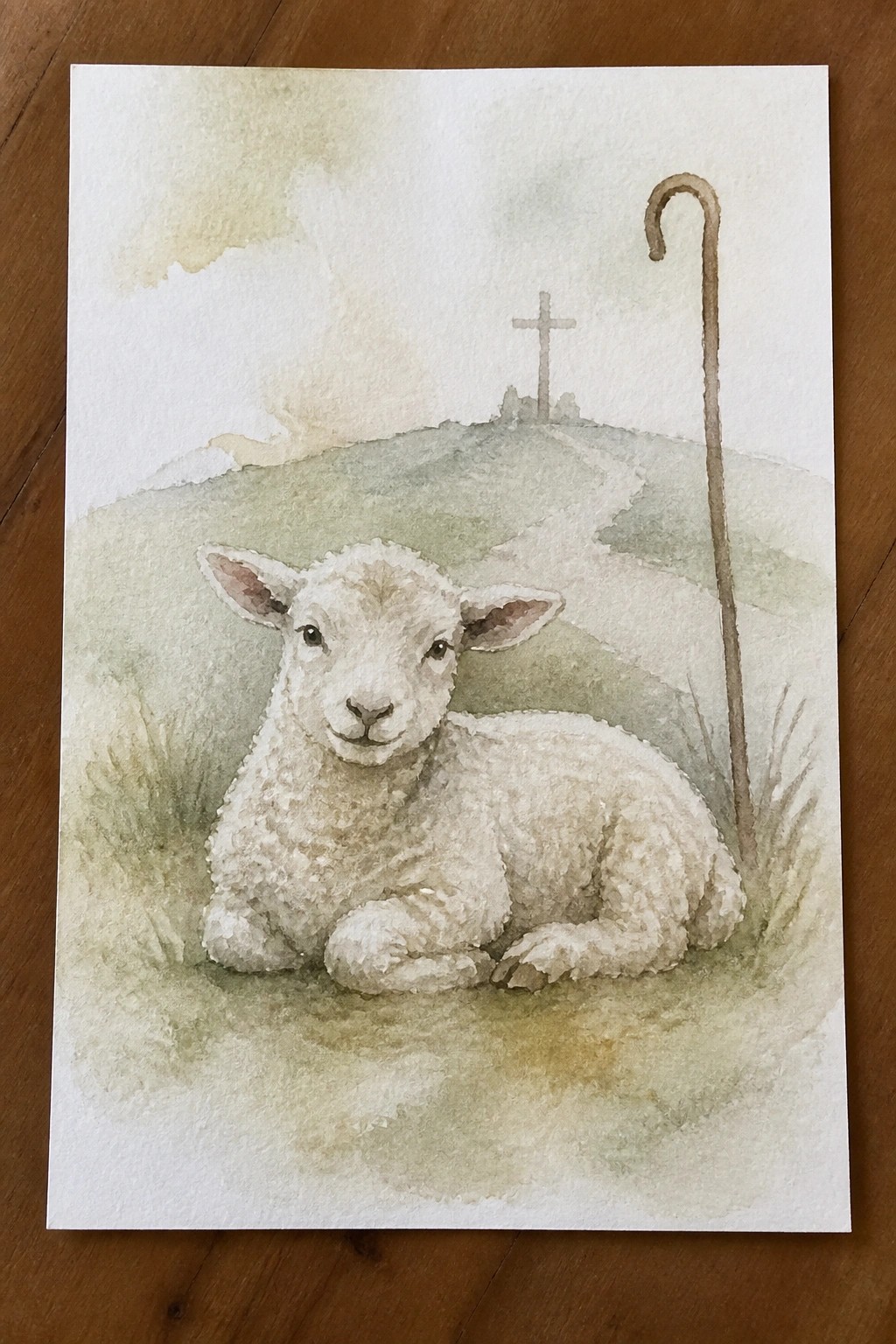
A painting idea built around a resting lamb in the foreground paired with a shepherd’s staff and a simple cross on a hill. This combines an animal subject with light landscape elements to create a balanced scene where the lamb anchors the lower half while the staff and cross add vertical interest and depth. The soft green and beige palette keeps the focus on the lamb without competing details.
What makes this idea useful is the clear foreground subject that can be painted first before adding the background hill and cross. The vertical staff helps fill empty space on one side and can be adjusted in height or thickness to fit different paper sizes. This would be easy to turn into a smaller card format by cropping the sky area or expanded for wall art by adding more grass texture at the bottom.
Layered Heart with Central Cross
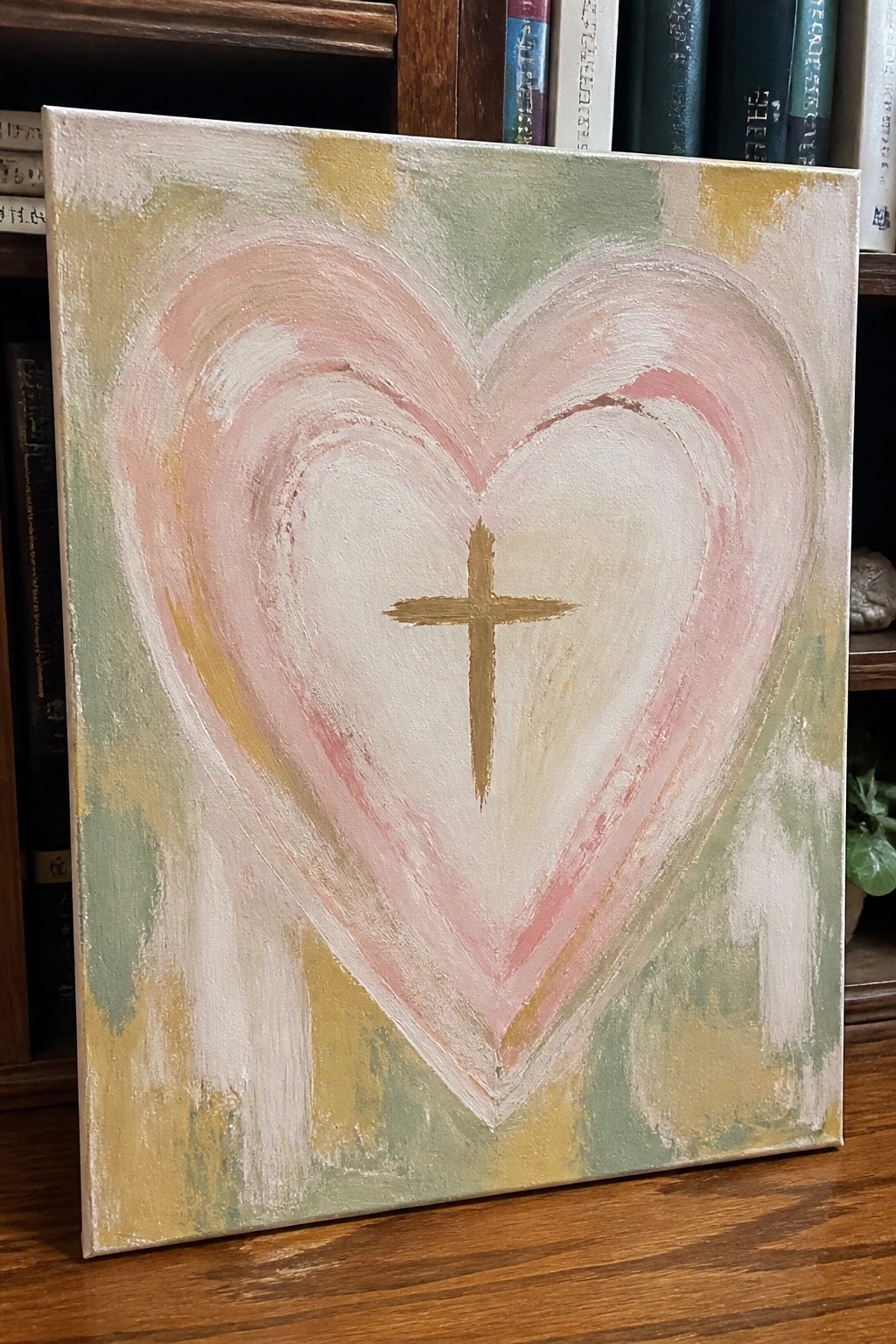
A heart shape built from overlapping brushstrokes in soft pink and cream surrounds a single gold cross placed at the center. The background uses broad patches of muted green and yellow to frame the heart without competing for attention. This layout relies on repeated outlines rather than fine detail to give the heart its form and keep the cross as the clear focal point.
The composition does a lot of the work here by using one dominant shape that can be sketched first and filled in with loose strokes. You could scale it down for a smaller canvas or adjust the background colors to fit a specific room. For practice this works well because the heart provides structure while still allowing room to experiment with how thick or blended the layers become.
Hilltop Cross Against a Sunset Sky
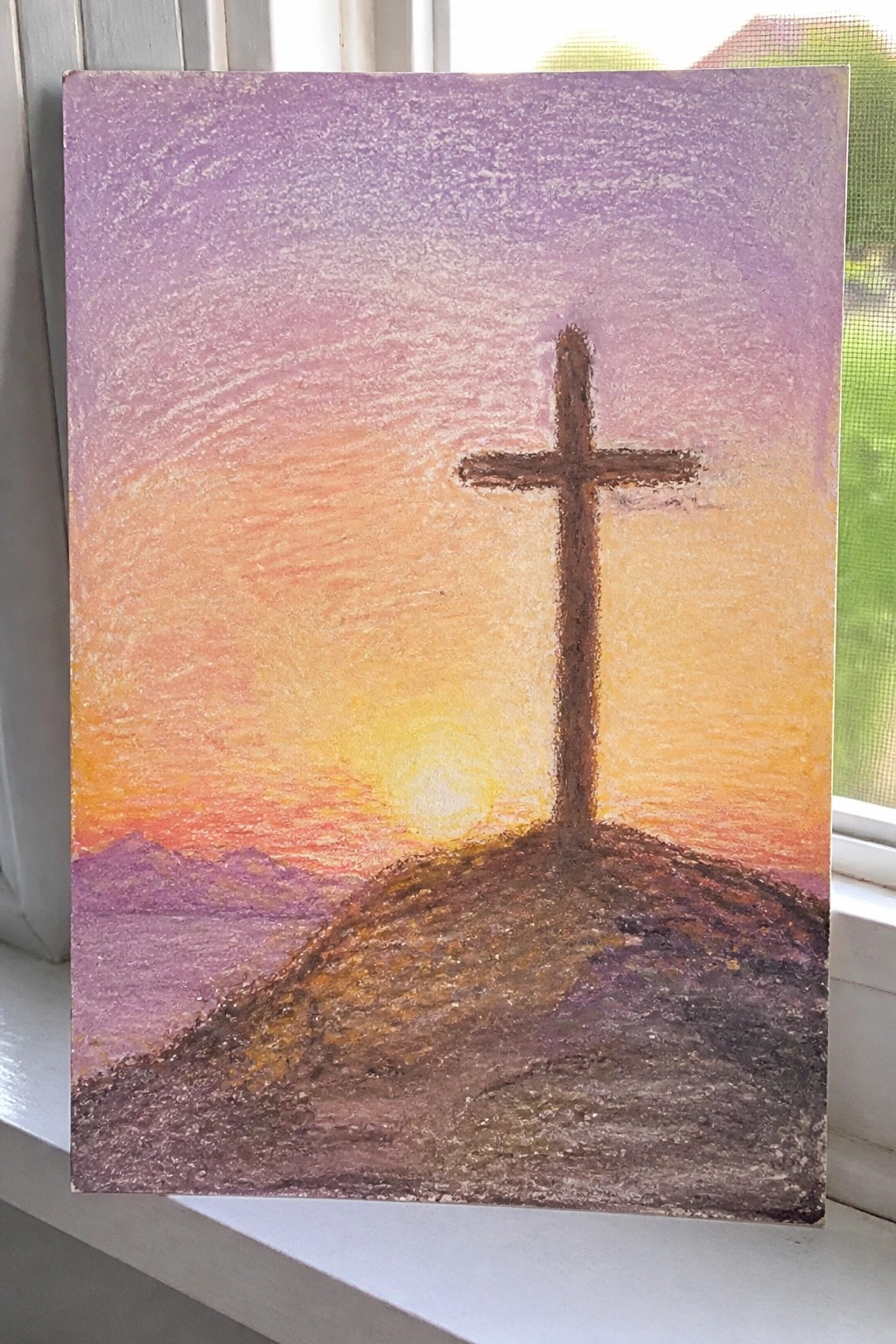
A cross centered on a hill with a sunset behind it creates a straightforward landscape idea. The sky moves from purple at the top through orange to a bright glow at the horizon, while the hill and distant mountains stay low so the cross stays the main focus. The gradual color shift and simple foreground shape keep the whole scene easy to read from a distance.
The color gradient handles most of the atmosphere, which leaves room to practice blending without needing lots of small details. This layout adapts well if you want to change the sky tones or swap the hill for a flatter foreground. For wall pieces, the centered subject and limited elements make it quick to resize for different canvas sizes.
Frequently Asked Questions
What supplies work best for painting soft and worshipful images of Jesus? Acrylic paints in muted tones like soft blues, warm beiges, and gentle golds create a calm atmosphere. Use round brushes for smooth blending and a fine detail brush for facial features. Start with a primed canvas or thick paper to avoid harsh lines, and keep a damp cloth nearby to soften edges as you work.
How do I choose which of the 19 painting ideas to try first as a beginner? Begin with simpler compositions that focus on a single element, such as a glowing face or praying hands, rather than full scenes. Look for ideas that use large shapes and minimal details so you can practice blending colors without feeling overwhelmed. This builds confidence before moving to more layered designs.
What techniques help make the paintings feel soft and gentle? Apply thin layers of paint and blend them while wet to avoid sharp contrasts. Use light pressure with your brush and add subtle highlights around the figure to suggest a peaceful glow. Avoid dark outlines and instead let colors flow into one another for a tender, inviting appearance that supports a worshipful mood.
How can I display these paintings to enhance personal or group worship? Place them in a quiet corner with soft lighting to create a space for reflection. Frame them simply in neutral colors so the focus stays on the image itself. Many people also use prints of their finished work in prayer journals or share them during small group studies to inspire conversation about faith.
Are there ways to adapt these painting ideas for children or group settings? Yes, simplify the designs by using larger brushes and pre-drawn outlines on paper plates or canvas boards. Focus on one idea at a time and encourage participants to add personal touches like soft clouds or rays of light. This keeps the activity accessible while still capturing the worshipful spirit of the original concepts.