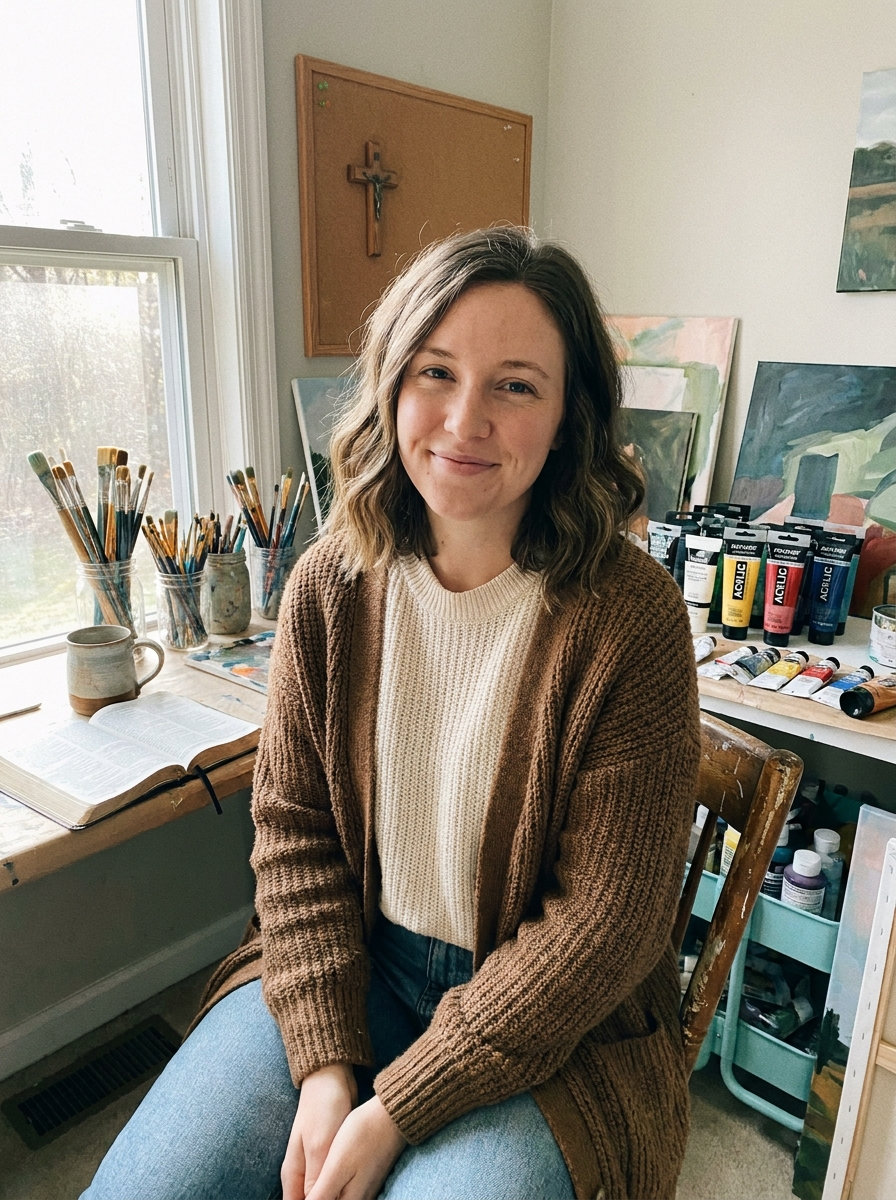
I enjoy keeping my own paintings simple so they fit easily into a quiet space.
Lately I have been trying out minimal Christian themes that do not feel heavy on the wall.
They give a calm look that works well with clean furniture and soft lighting.
I put together these examples because they match the kind of understated style I like in my own home.
Minimal Gold Cross with Base Line
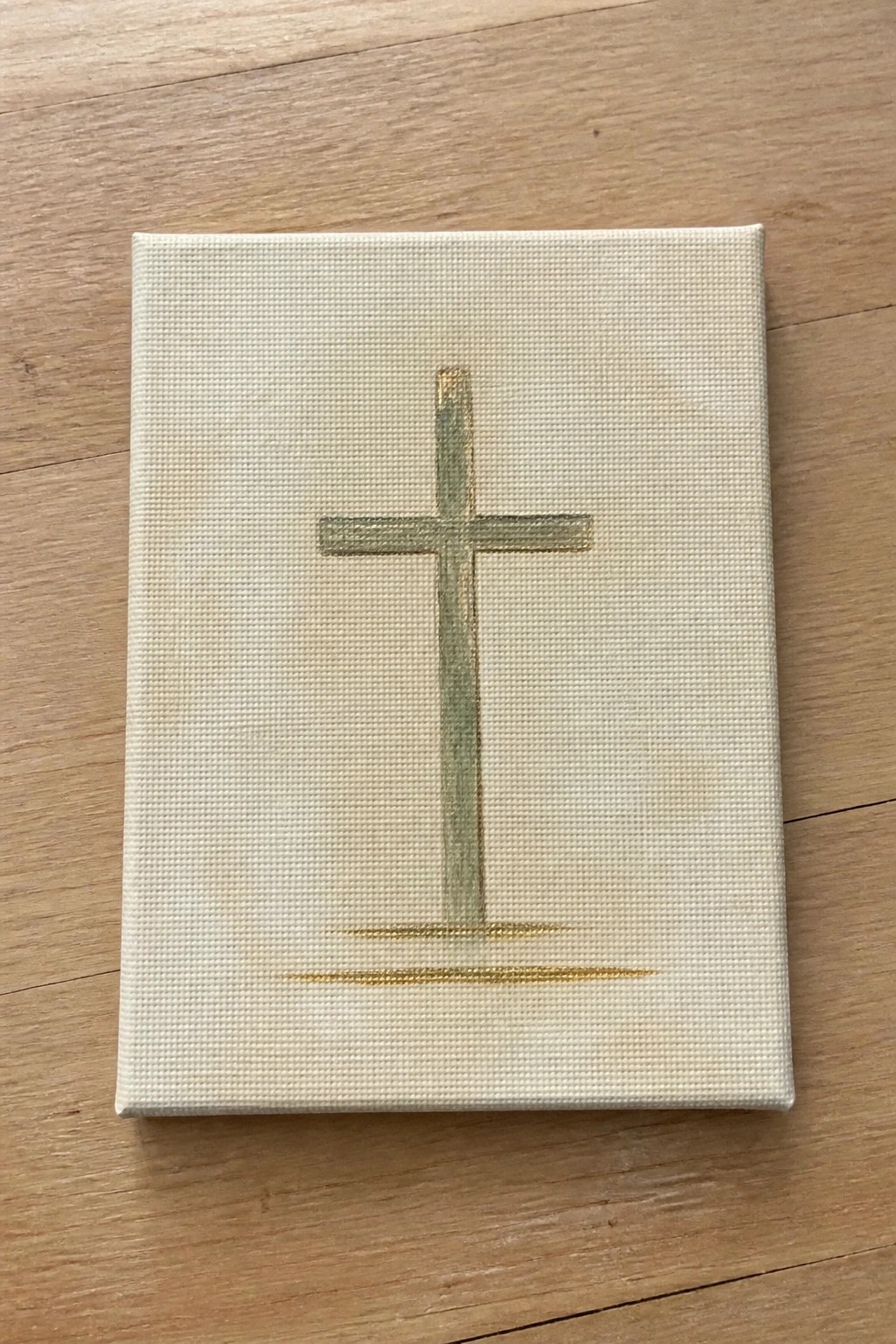
A single cross painted in muted gold sits centered on a plain off-white canvas, with two thin horizontal lines placed below to suggest a simple base. The brushwork shows slight texture in the vertical and horizontal strokes while keeping the overall shape clean and balanced. This approach belongs to minimalist decorative religious art that relies on limited elements and soft metallic contrast rather than detail or color variation.
What makes this idea useful is how the centered layout and base line handle visual weight without extra elements. You can easily adjust the gold shade or swap the background tone to match different room palettes. For practice, this kind of subject helps build control with straight edges and even coverage on a medium canvas. It also translates well to smaller sizes for shelves or grouped wall displays.
Faith Over a Minimal Watercolor Horizon
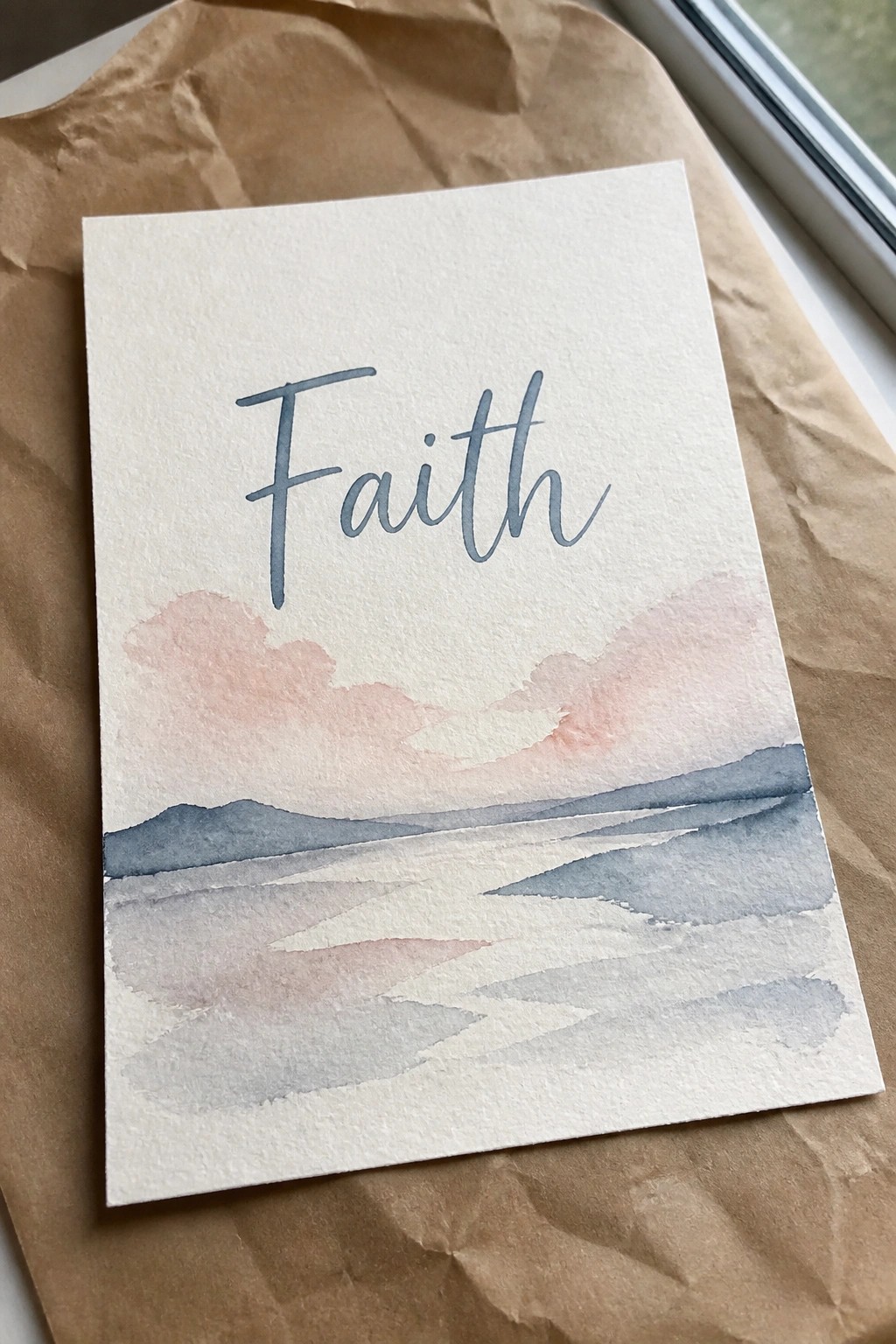
The core idea pairs the single word Faith in flowing script with a quiet horizon scene made from layered washes. A few soft color bands suggest sky, distant land, and water using only muted pinks, grays, and blues on a clean white ground. The layout leaves plenty of breathing room so the lettering stays the main focal point while the background supplies gentle context.
What makes this idea useful is how the text carries the message and the loose washes do the rest. You can shift the palette to cooler or warmer tones depending on the room or frame, and the same layout works at postcard or larger sizes. For practice the simple bands let you focus on blending without needing precise shapes. The clean negative space also helps the piece stay readable when pinned on Pinterest or hung in a small gallery wall.
Minimal Dove Silhouette with Olive Branch
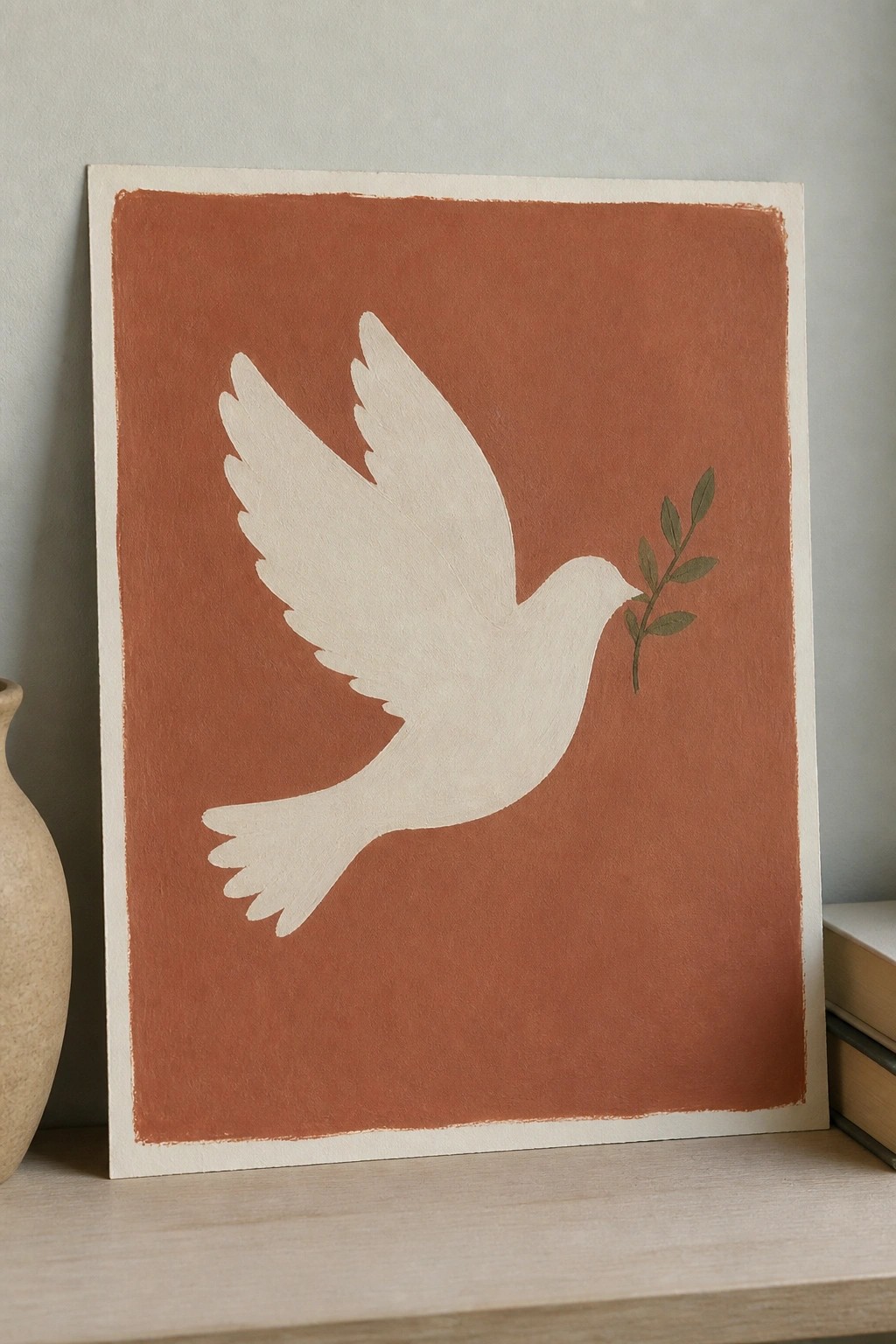
A flying dove holding an olive branch works as a straightforward minimalist animal painting idea. The bird is reduced to a clean cream shape against a flat terracotta field, with the small branch adding just enough detail to balance the empty space on the right. This approach keeps the composition balanced through simple shapes and a limited palette rather than layered textures or shading.
What makes this idea useful is the way the solid background lets the silhouette carry the whole piece without extra elements. You could change the terracotta to a cooler tone or a soft neutral to fit different spaces, or shrink the scale for a smaller canvas or greeting card. The same layout also translates easily to digital files if you want to print it in multiple sizes.
Lamb Portrait with Cross Necklace
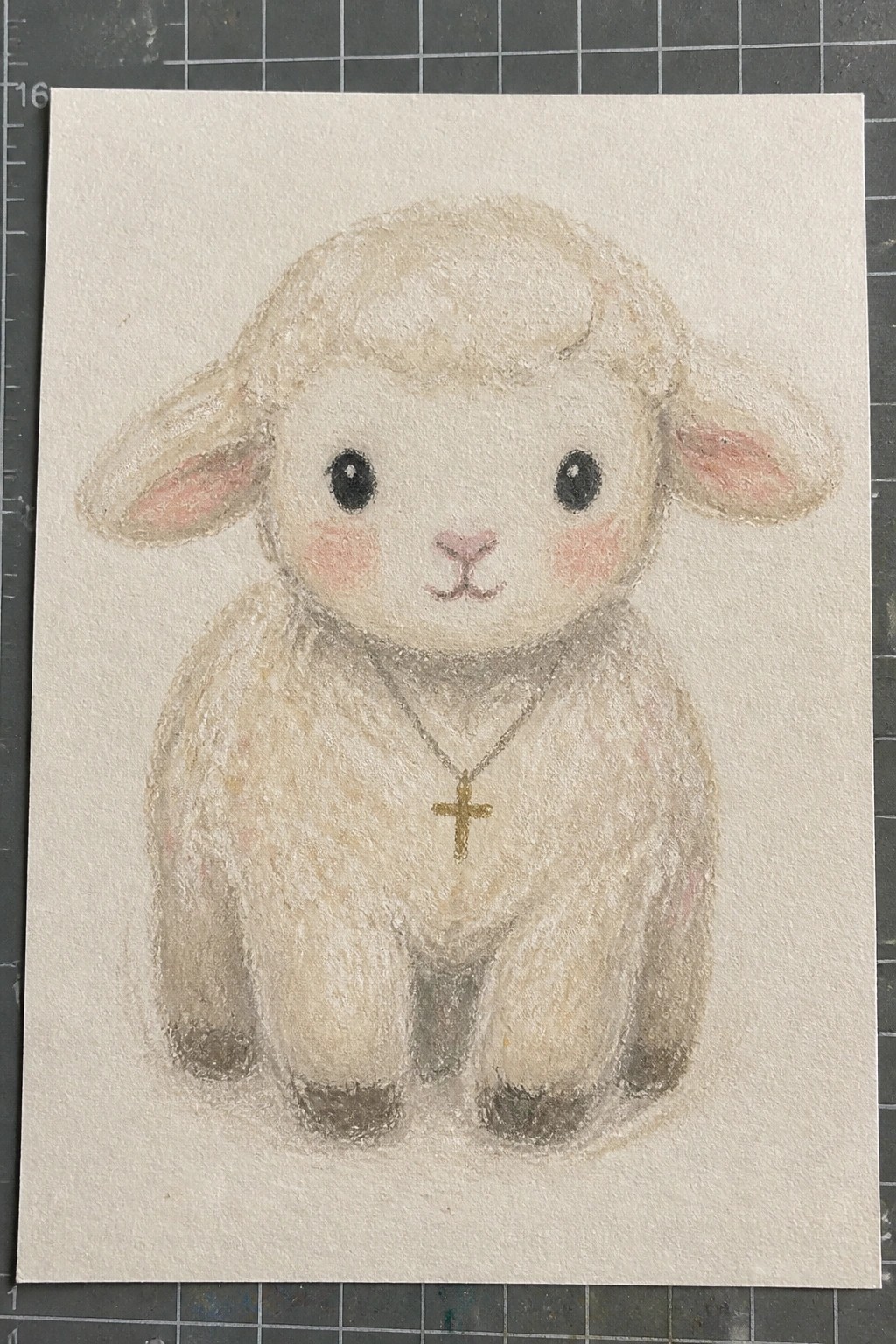
A centered lamb study uses soft neutral tones and rounded forms to create a simple animal painting with a small gold cross as the only accent. The clean composition keeps attention on the subject while the subtle shading on the wool and face adds just enough texture. This approach fits the category of minimal decorative animal art with a quiet Christian detail.
The composition does a lot of the work here by using negative space to let the lamb and necklace read clearly at small sizes. You can easily shift the palette to cooler grays or swap the cross style to match different frames or gift cards. For practice, this kind of subject helps you work on soft blending and proportion without adding backgrounds or extra objects.
Minimalist Church Steeple with Flat Gray Background
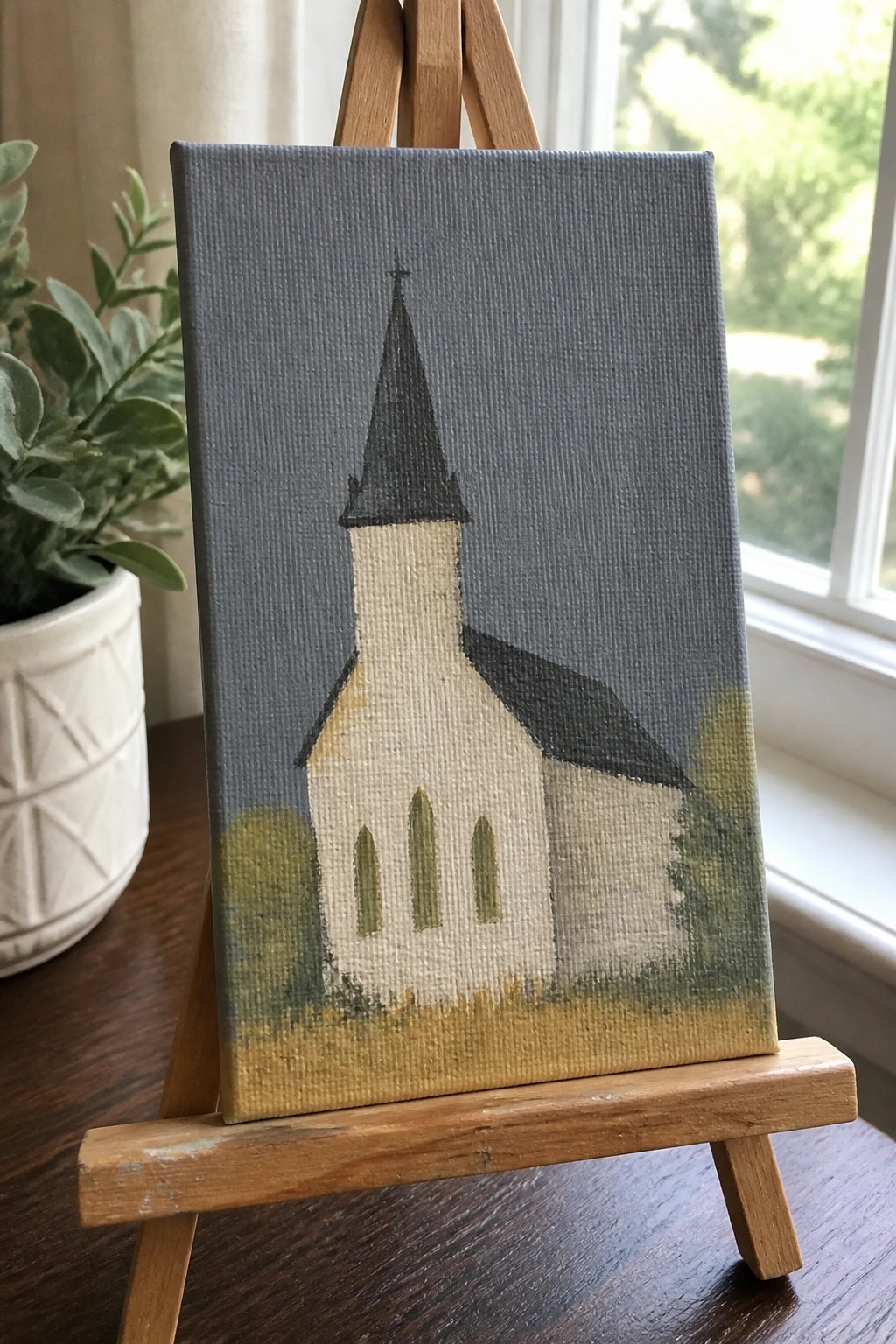
A church building reduced to its main shapes creates a clear focal point when the steeple is kept tall and narrow. The white body stands out against the single gray tone while the dark roof line adds just enough contrast to define the form. A narrow strip of green and yellow at the base anchors the building without adding extra elements or layers.
What makes this idea useful is how the limited palette keeps the focus on the steeple shape itself. The flat background makes it simple to swap colors later if you want a warmer or cooler version. This would be easy to turn into a small series by changing only the foreground band or adjusting the roof angle slightly. For wall art, something like this works well in sets of three with minor variations in steeple height.
Minimal Crown of Thorns in Loose Watercolor
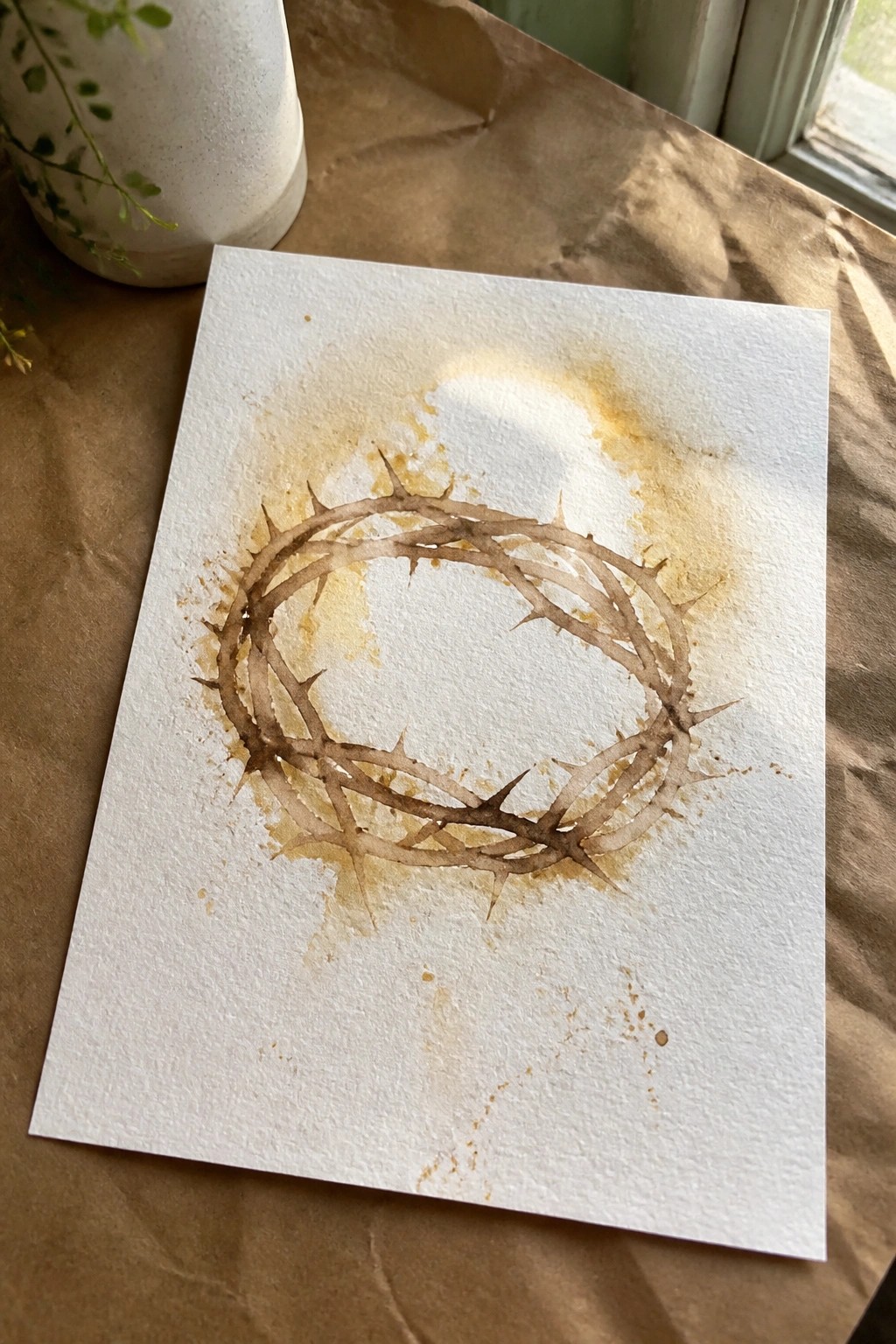
A crown of thorns forms the core subject here, painted as a circular arrangement of overlapping thorny branches in soft brown tones. The idea relies on a centered composition where the ring shape holds the viewer’s attention while the spikes create an irregular outer edge. This fits into decorative still life work because the simple lines and limited palette keep the whole piece calm and uncluttered.
What makes this idea useful is how the round layout does most of the compositional work, so you only need to focus on varying the branch thickness and spike angles. The surrounding wash can be lightened or omitted entirely if you want a cleaner version for cards or prints. You could also repeat the same shape in different sizes on one sheet to create a quick series for wall grouping.
Stacked Minimal Fish Symbols
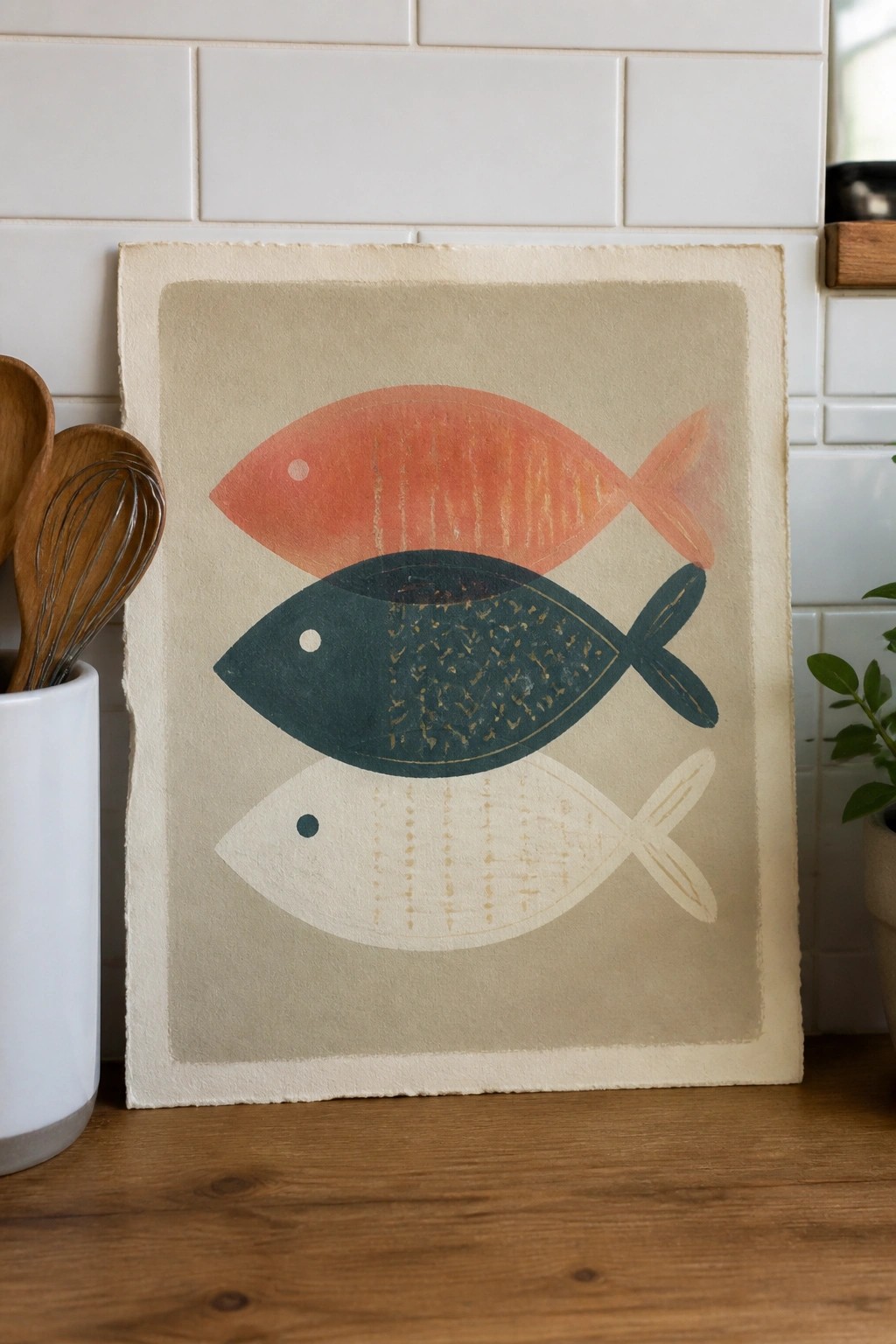
A painting idea like this uses three simple fish shapes stacked vertically to create a clean Christian motif. The fish vary in color and texture, with the top one in warm coral, the middle in deep teal with subtle gold marks, and the bottom in soft off-white. The overlapping placement and neutral background keep the focus on the shapes themselves while giving the whole piece a balanced, modern layout that works well as decorative art.
What makes this idea useful is how the basic outlines let you experiment with color shifts without needing complex details. You could easily adapt the same vertical stack by changing the palette to match your space or reducing it to two fish for a smaller canvas. For wall art, something like this fits a calm designer look because the limited elements still read clearly from a distance. The background keeps the focus on the forms, so it translates well to prints or even quick acrylic studies.
Minimal Praying Hands with a Small Gold Cross
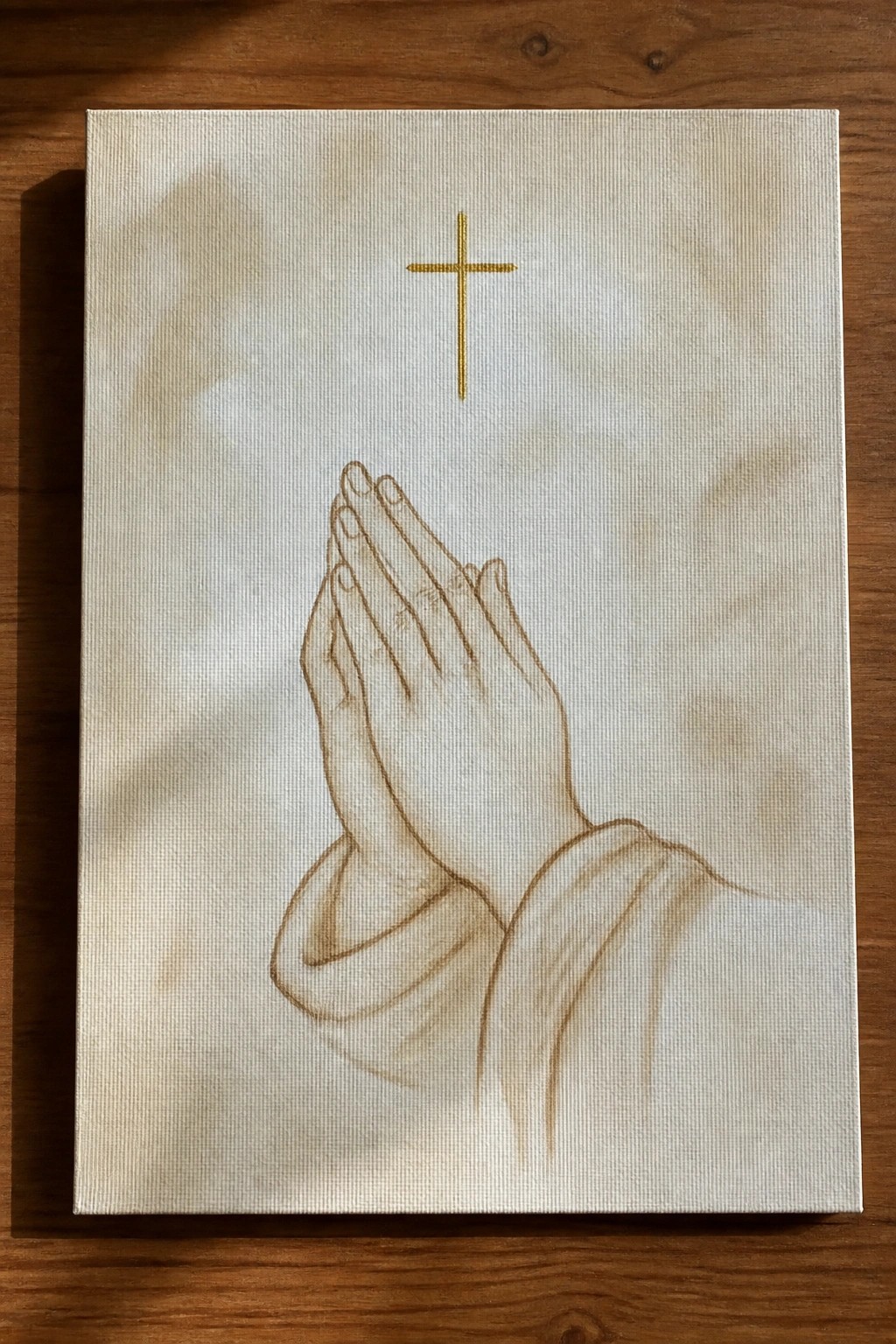
A painting idea built around praying hands placed low on the canvas with a single gold cross floating above works as a stripped-down piece of religious art. The composition relies on negative space to keep attention on the hands and cross without extra background details. Soft brown shading on the hands paired with the thin cross gives the whole thing a quiet, balanced look that stays easy to read from a distance.
What makes this idea useful is how the empty space around the main elements lets you adjust the scale without losing impact. You could shrink the hands and cross for a small canvas or greeting card or keep the current proportions for a larger wall piece. The limited color palette also makes it simple to swap the brown tones for other neutrals or change the cross to a different metallic shade if you want a fresh version.
Lone Cross with Radiating Light on a Hill
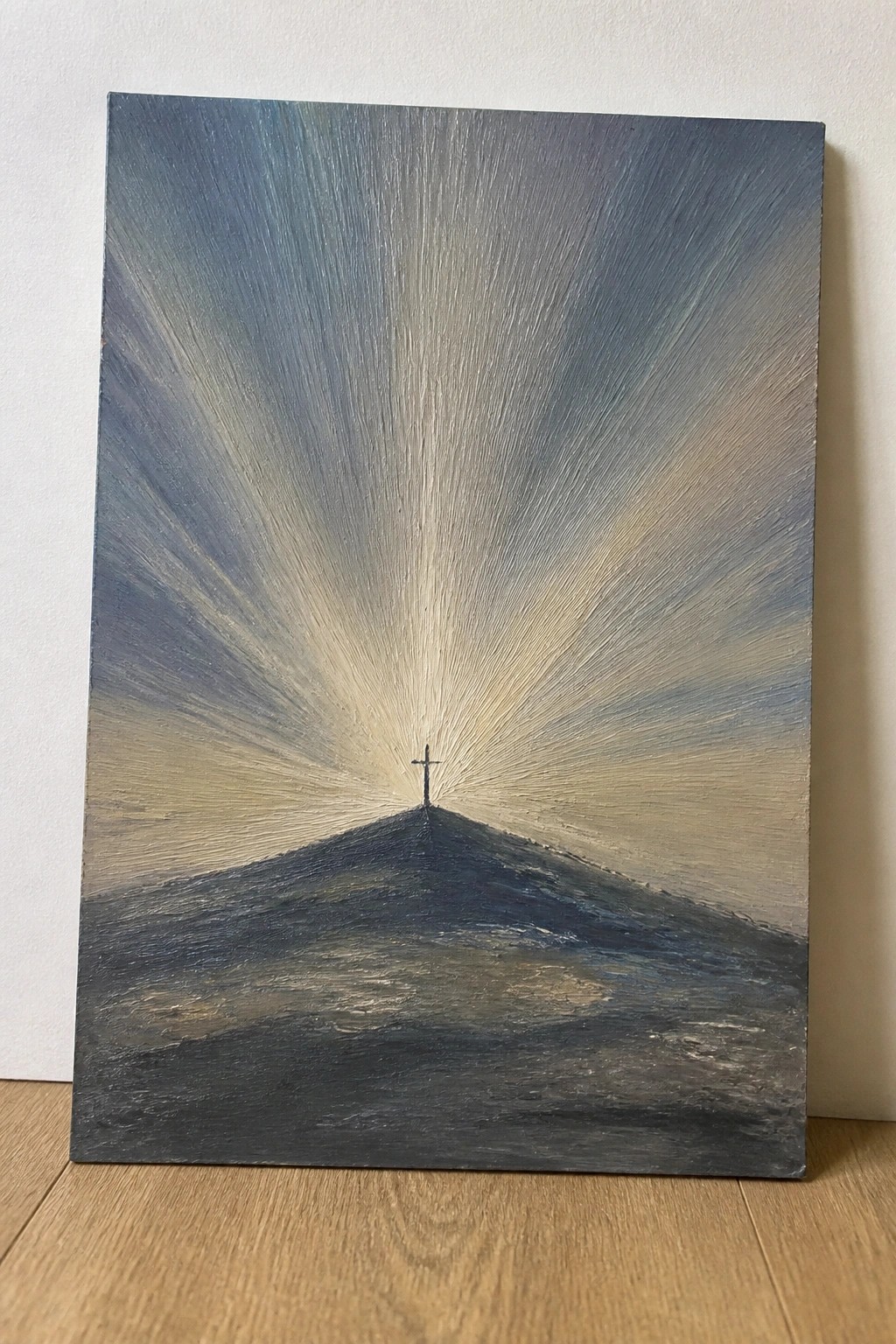
A simple landscape idea places a single cross at the top of a low dark hill so that light rays spread outward from that central point into a soft gradient sky. The radial lines create a clear focal point while the rest of the scene stays reduced to broad shapes and muted tones. This approach works as a minimal Christian landscape because the composition relies on contrast between the dark foreground and the lighter sky rather than on extra detail.
The composition does a lot of the work here since the hill and rays guide the eye without needing complex elements. You can adapt the idea by adjusting the angle of the rays or swapping the sky colors to fit different room palettes. For wall art this scale stays effective on a medium canvas and leaves room to simplify the brushwork even further if you want a quicker version.
Heart and Cross in Muted Pastels
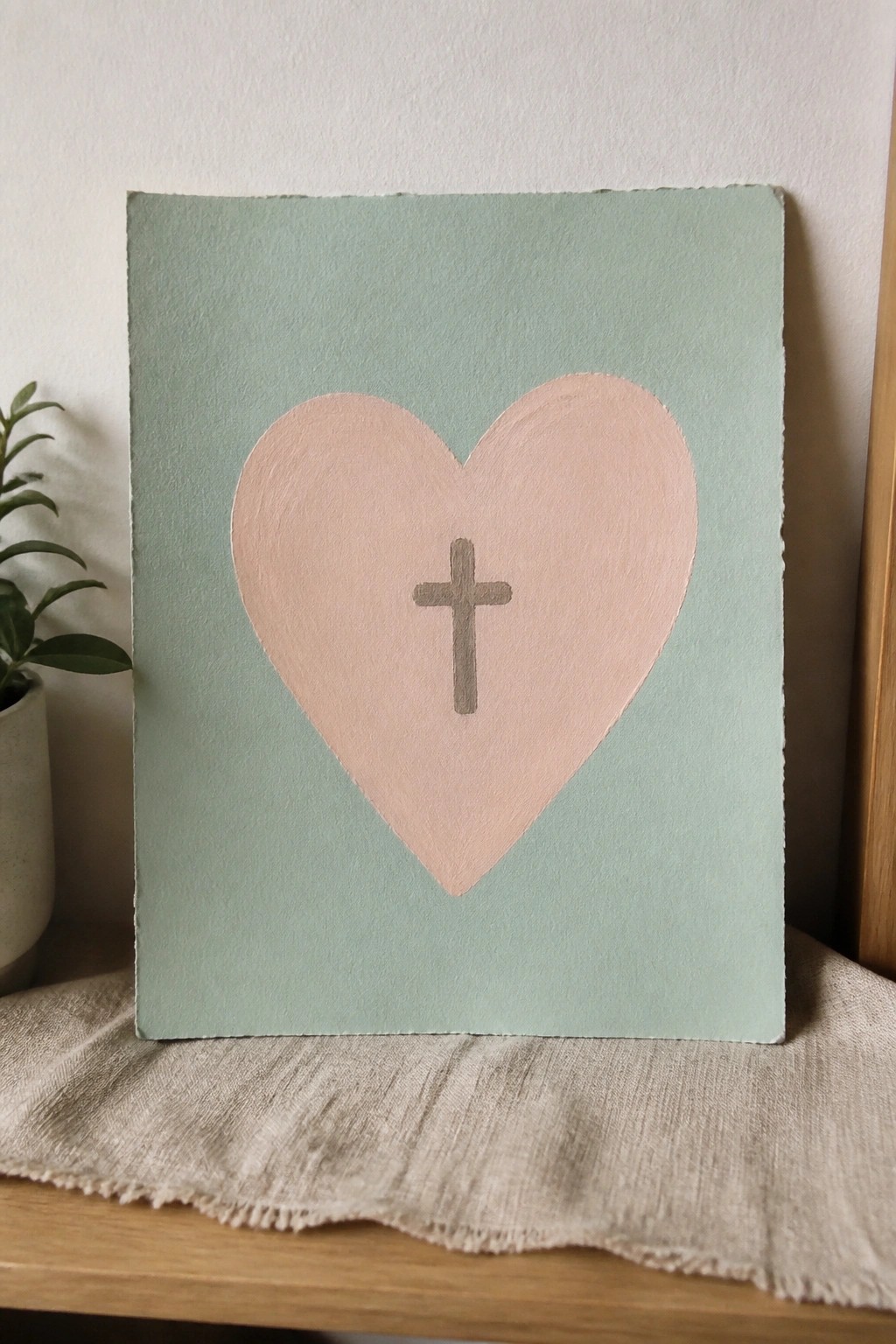
A large heart shape painted in a soft pink sits centered on a flat sage green background, with a small gray cross placed directly in the middle. The idea relies on simple overlapping shapes rather than detail or shading, which keeps the cross as the clear focal point. This approach works as a decorative piece in the minimal Christian painting category.
The composition does a lot of the work here because the solid background removes any need for extra elements or blending. You can easily change the heart or background color to match different wall tones, or adjust the cross size if you want more or less emphasis. For practice or quick decor projects, the limited shapes make it straightforward to scale up or down without losing the overall balance.
Open Book Still Life with Soft Wash Background
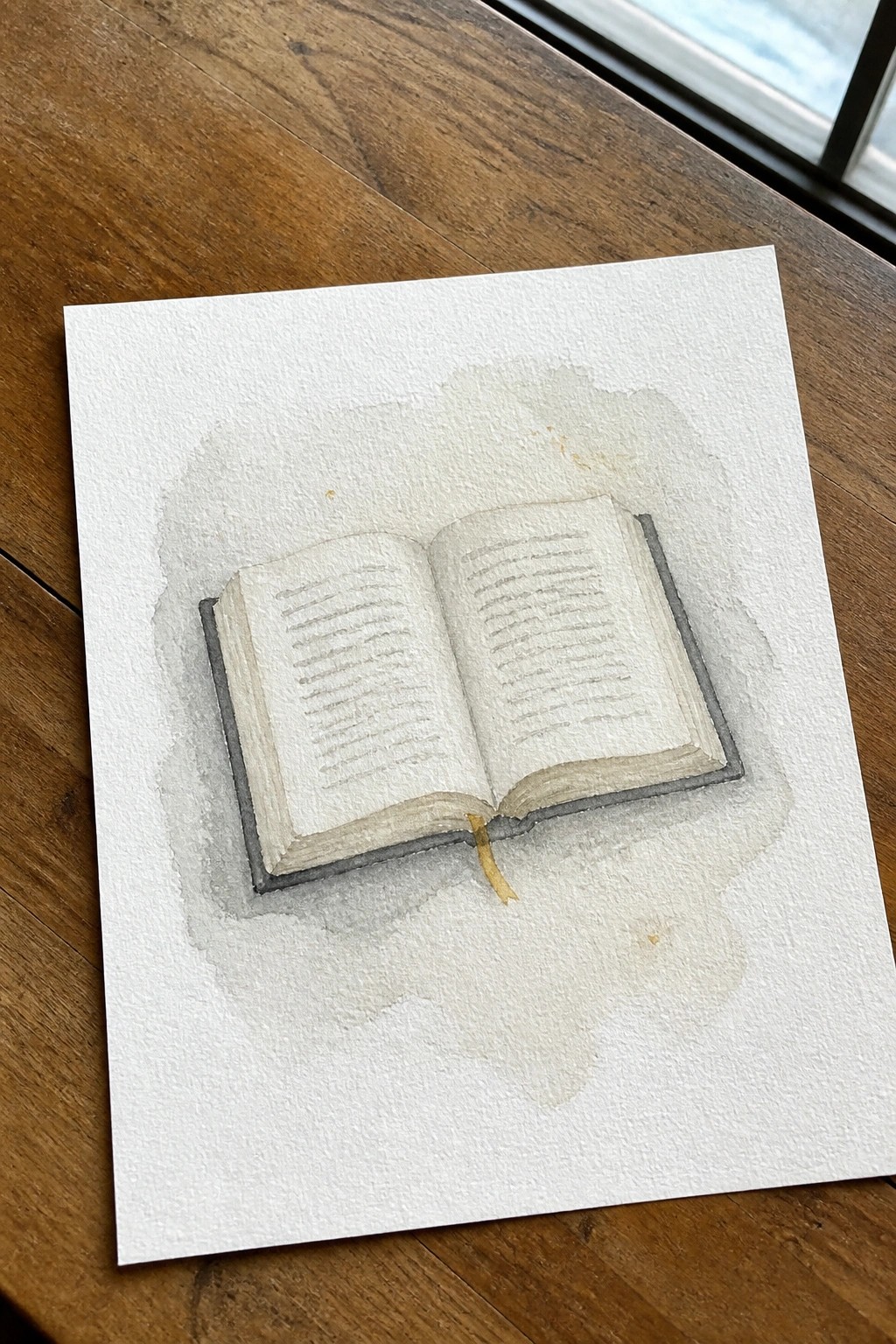
A still life painting idea built around an open book with simple page lines and a single ribbon bookmark. The book sits centered on a loose, cloudy wash that fades out at the edges, letting the subject stay clear without extra elements. This approach keeps the focus on the rectangular shape of the spread pages and the slight angle of the binding.
What makes this idea useful is the limited number of shapes, which makes it straightforward to sketch before adding color. The soft background can be adjusted to any muted tone to match different wall colors or frames. For practice, this kind of subject works well because the lines on the pages can be simplified or left loose depending on how much detail you want. The same layout could be adapted to a smaller sketchbook size or turned into a series with different bookmark colors.
Minimal Cross Trio on a Textured Neutral Field
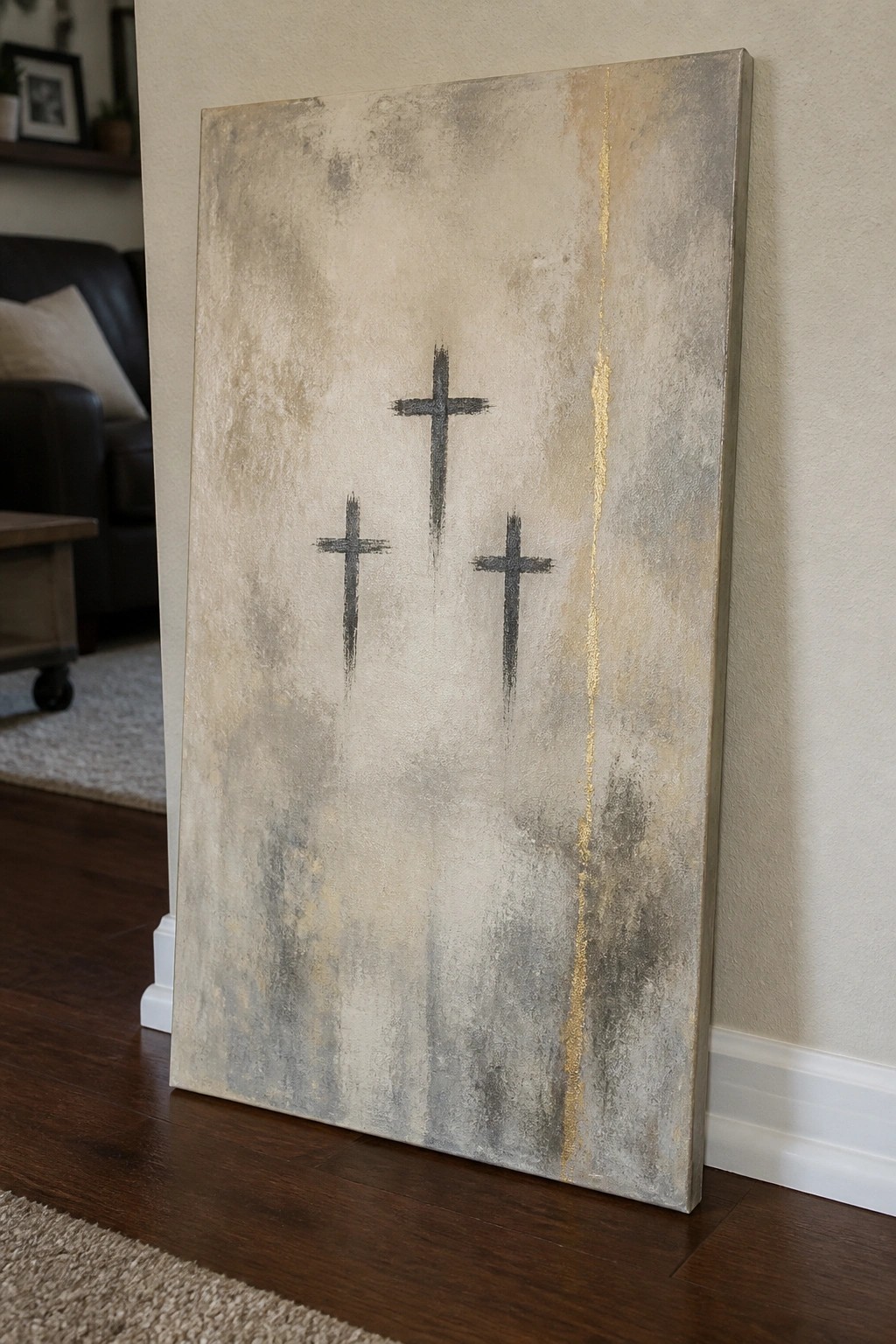
Three black crosses painted with visible brushstrokes sit across a large canvas covered in layered beige, gray, and cream tones. A narrow vertical gold line runs down the right side to break up the surface and add contrast. The composition works as abstract decorative art by keeping the subject limited to repeated shapes and a restrained palette that relies on placement and texture for interest.
What makes this idea useful is the way the background texture carries most of the visual weight, so the crosses only need simple strokes. You can adapt the layout by changing the angle of the crosses or adjusting the gold line to a different width or color to suit your space. The neutral base also makes it easy to match existing furniture or try the same arrangement on a smaller panel for practice.
Minimal Sheep and Crook Scene
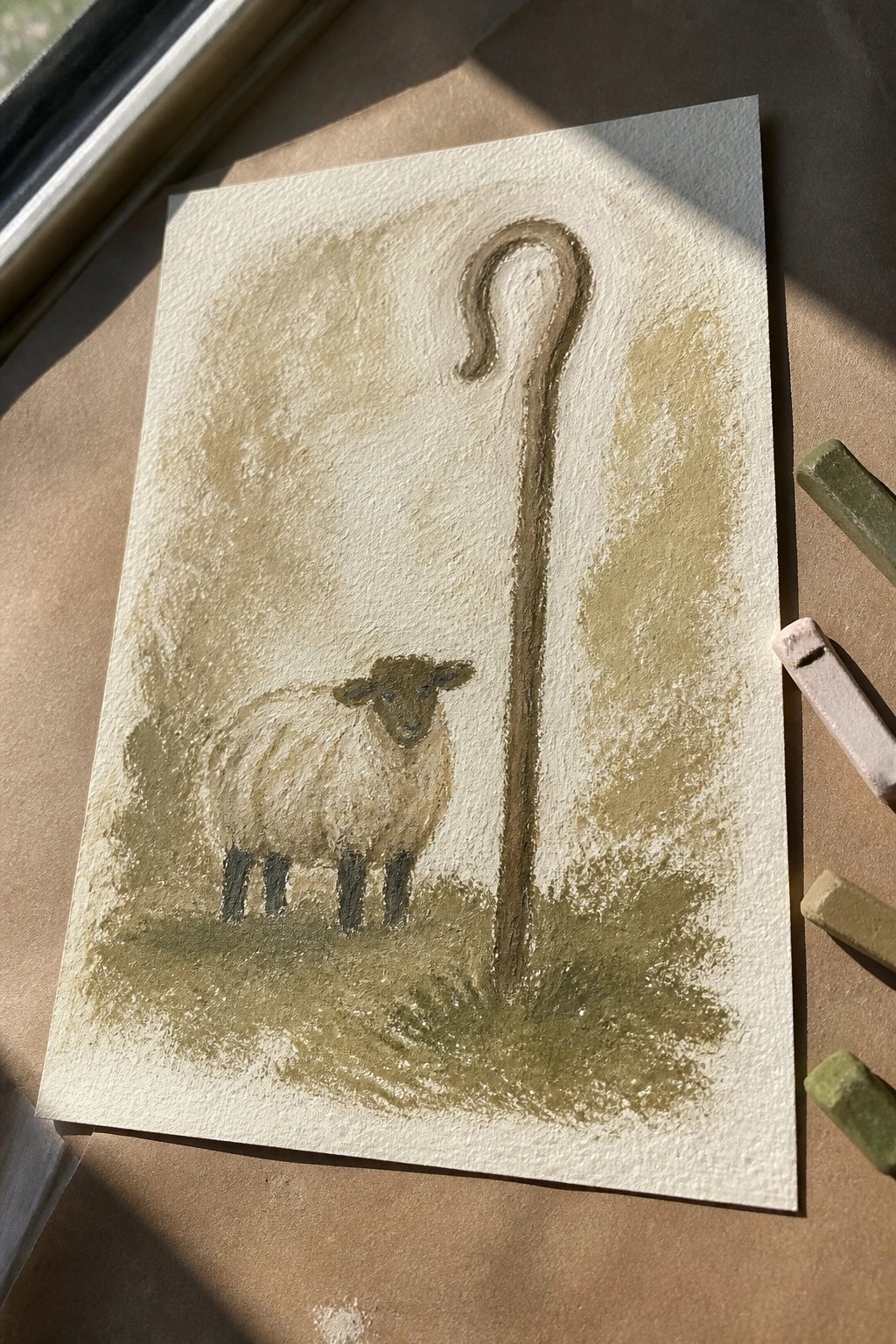
A lone sheep placed beside a tall shepherd’s crook forms the core of this painting idea. The vertical staff balances the rounded body of the sheep while the muted earth tones keep the whole scene understated. It works as a simple animal subject with a clear Christian reference that stays spare rather than decorative.
What makes this idea useful is the limited number of elements that still hold visual weight. The tall staff gives you an easy way to fill vertical space without adding extra details. You can shift the background wash to cooler grays or warmer browns depending on the room, or crop the composition tighter around the sheep for a smaller canvas. The same setup also translates quickly to a sketch or a larger canvas without needing new reference.
Pastel Geometric Stained Glass Window
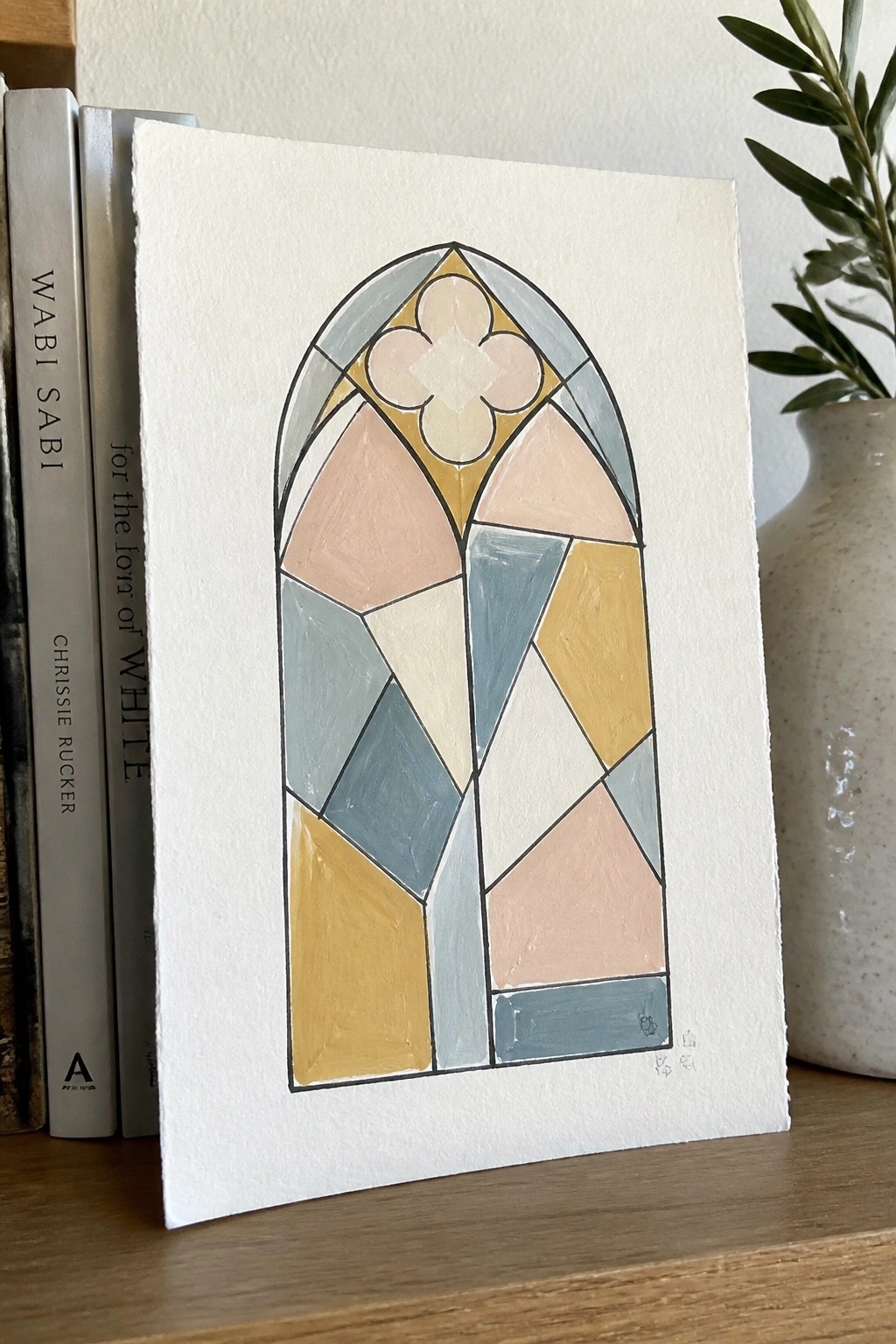
A stained glass window idea built from flat geometric panels and a quatrefoil at the top gives a clear Christian motif without heavy detail. The arched frame holds irregular shapes that balance the composition while the soft pink, yellow, blue, and gray sections stay quiet. Bold black lines separate the colors so the eye moves easily across the design.
The composition does a lot of the work here because the symmetry and limited palette make it simple to scale up or down. You can swap the colors for ones that match your room or drop the bottom row of shapes if you want a faster version. For wall art this kind of piece works especially well in a minimalist setting since it reads as both decorative and calm.
Minimal Palm Frond with Hosanna
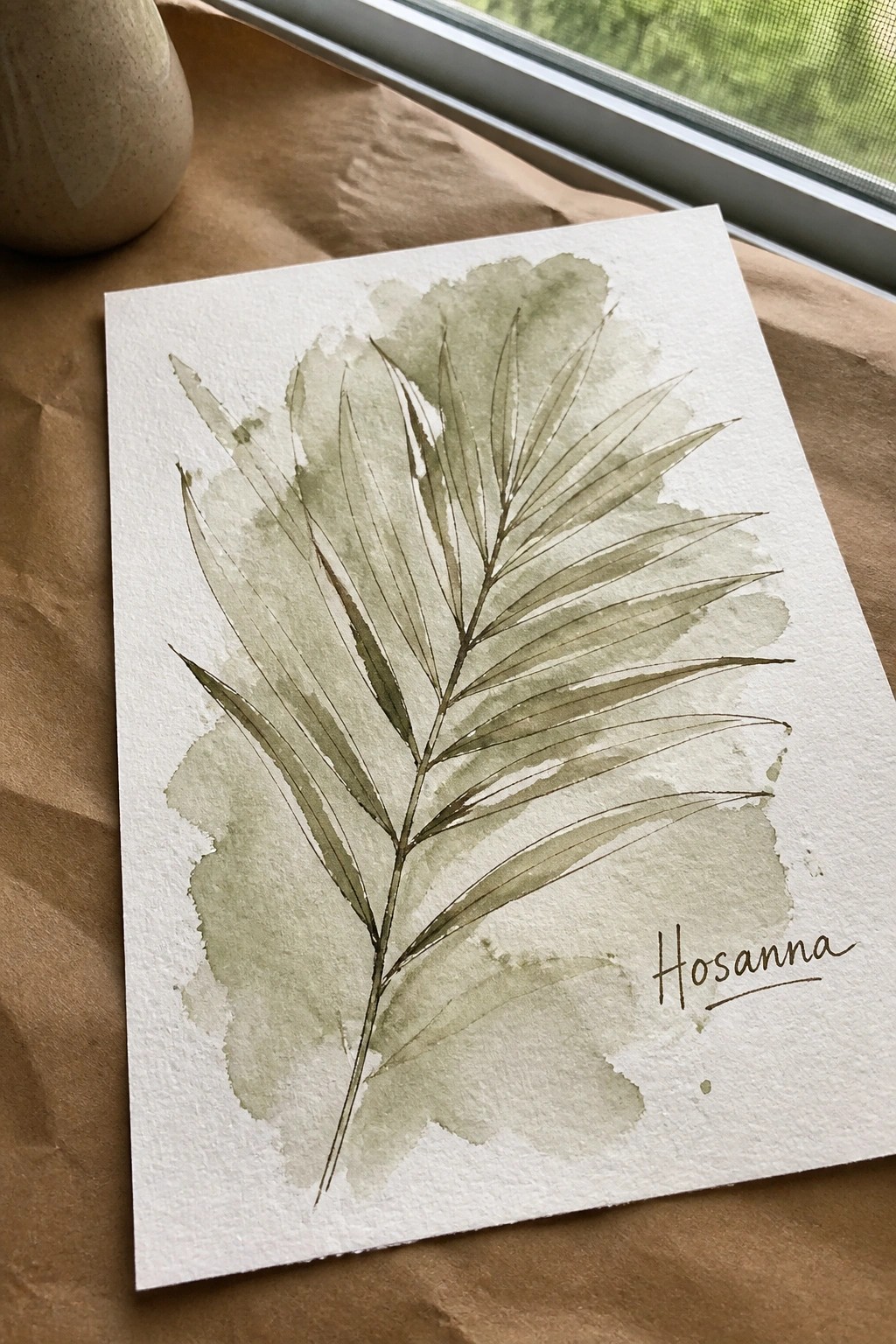
A single palm frond painted in layered green washes forms the core of this idea, with the word Hosanna added in simple script to one side. The composition uses one central stem and open negative space around the leaves to keep the focus tight. It fits into the botanical category with a light decorative touch that stays clean and uncluttered.
The composition does a lot of the work here because the open layout lets the leaf stand out without extra elements. You can swap the word for another short phrase or change the green tones to match different room colors. For wall art this size works well as a quick piece you can finish in one session and frame without crowding the design. The same approach scales down easily for cards or sketchbook pages if you want to test variations first.
Bold Silhouette Nativity in Black and Gold
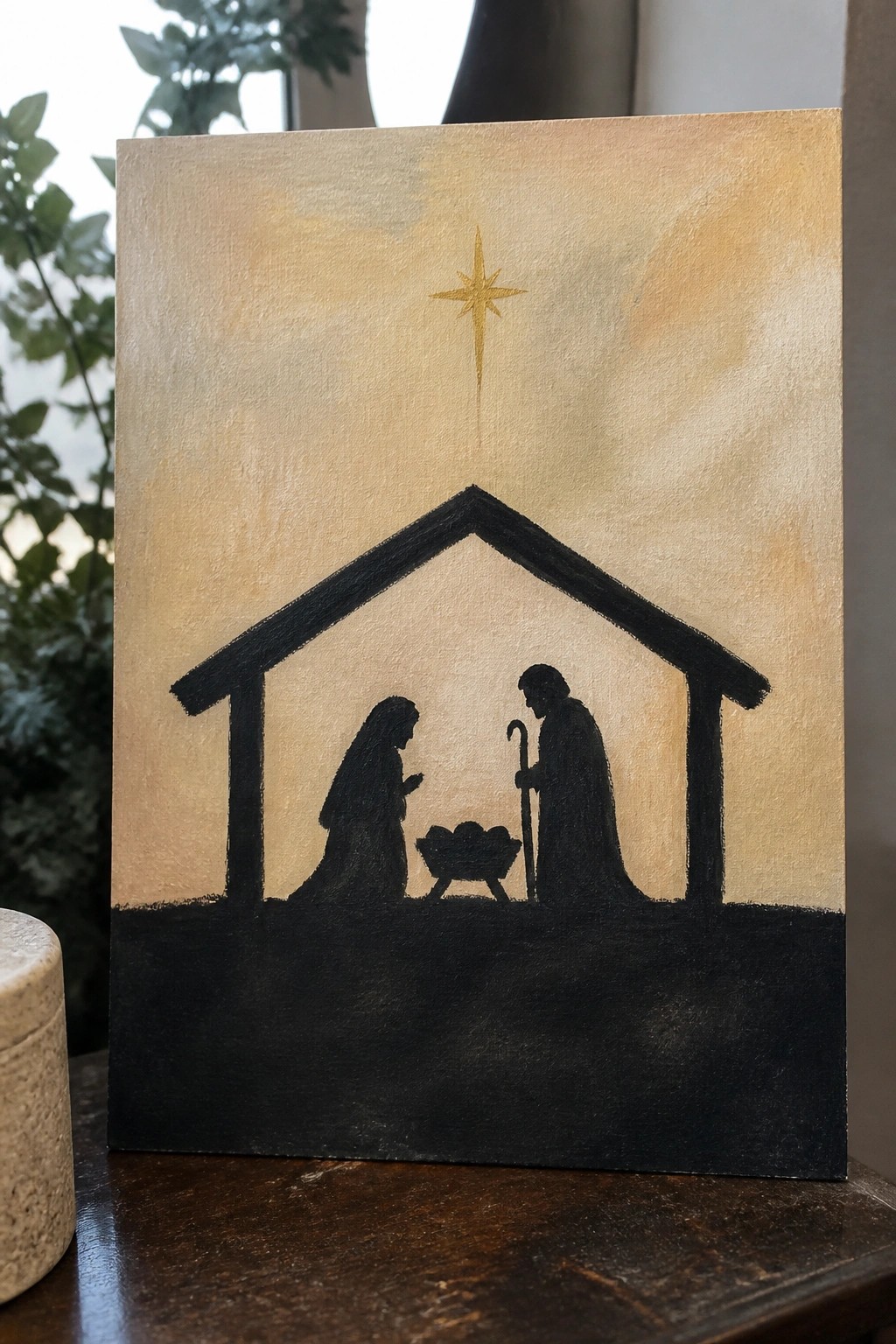
A nativity scene built from large black silhouettes of a stable, two figures, and a manger works as a clean silhouette painting idea. The composition stays effective because the solid shapes sit against a light background with one small gold star as the only accent, keeping the focus on the overall arrangement instead of details. This fits the decorative art category and suits a minimal approach where negative space and contrast do most of the work.
What makes this idea useful is how the black shapes can be painted quickly with a wide brush or even traced from a stencil for consistent results. The neutral background and single gold accent make it simple to adjust the size for a small canvas or a larger wall piece without changing the core layout. For practice, this kind of subject helps focus on edges and balance before adding more elements.
Minimal Bread and Fish Still Life
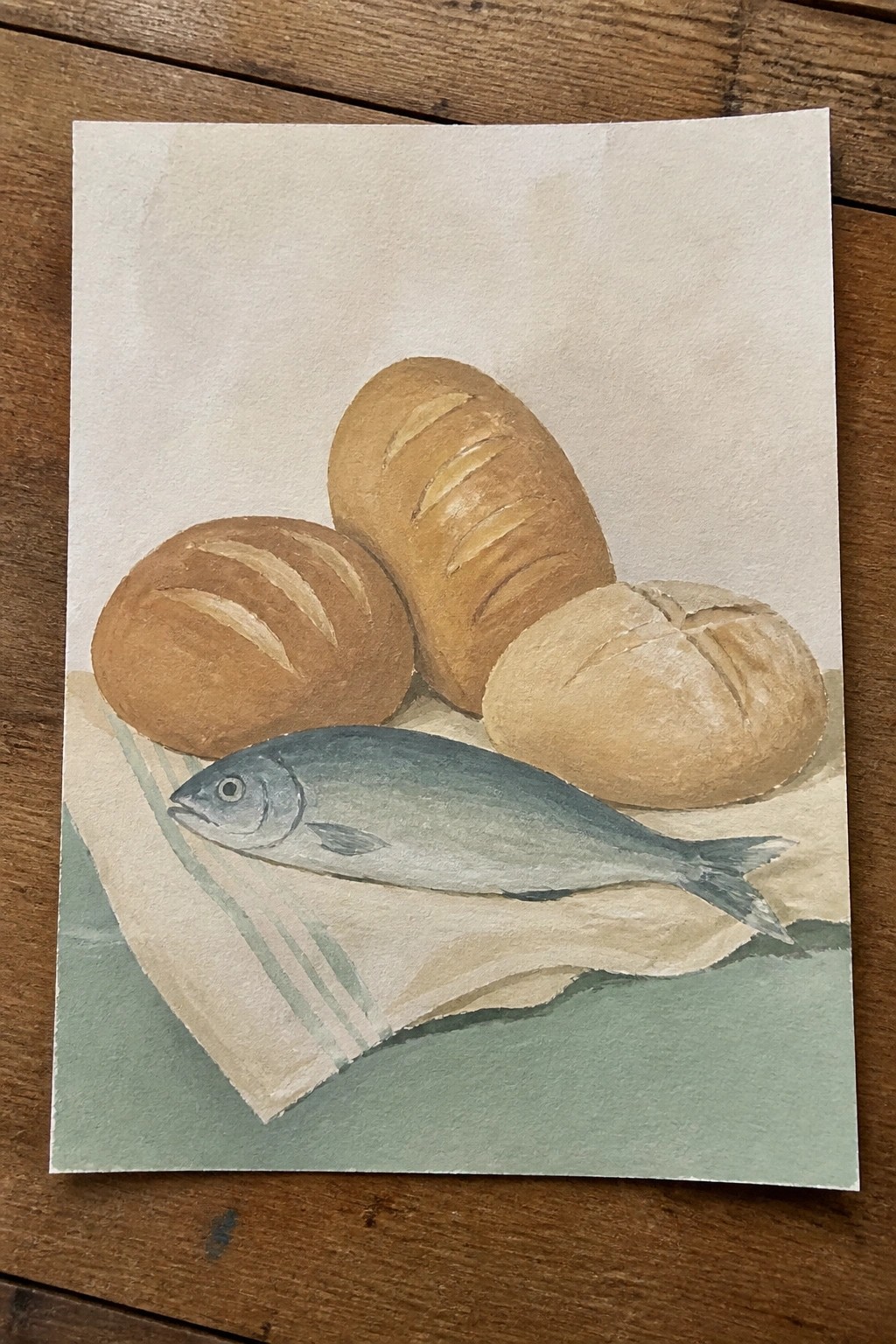
This painting idea uses a simple still life setup built around three bread loaves and one fish placed on a folded cloth. The composition groups the rounded loaves together in the background while the fish stretches across the foreground to create a clear focal line. A muted palette of browns and soft greens keeps the shapes distinct without adding extra elements or busy details.
What makes this idea useful is how the basic forms let you practice overlapping shapes and soft color blending at the same time. You could swap the cloth for a different neutral tone or reduce it to two loaves if you want a smaller piece. For wall art, the horizontal layout works well on a medium canvas and stays easy to adapt by adjusting the spacing between the objects.
Minimal Cross on a Hilltop Landscape
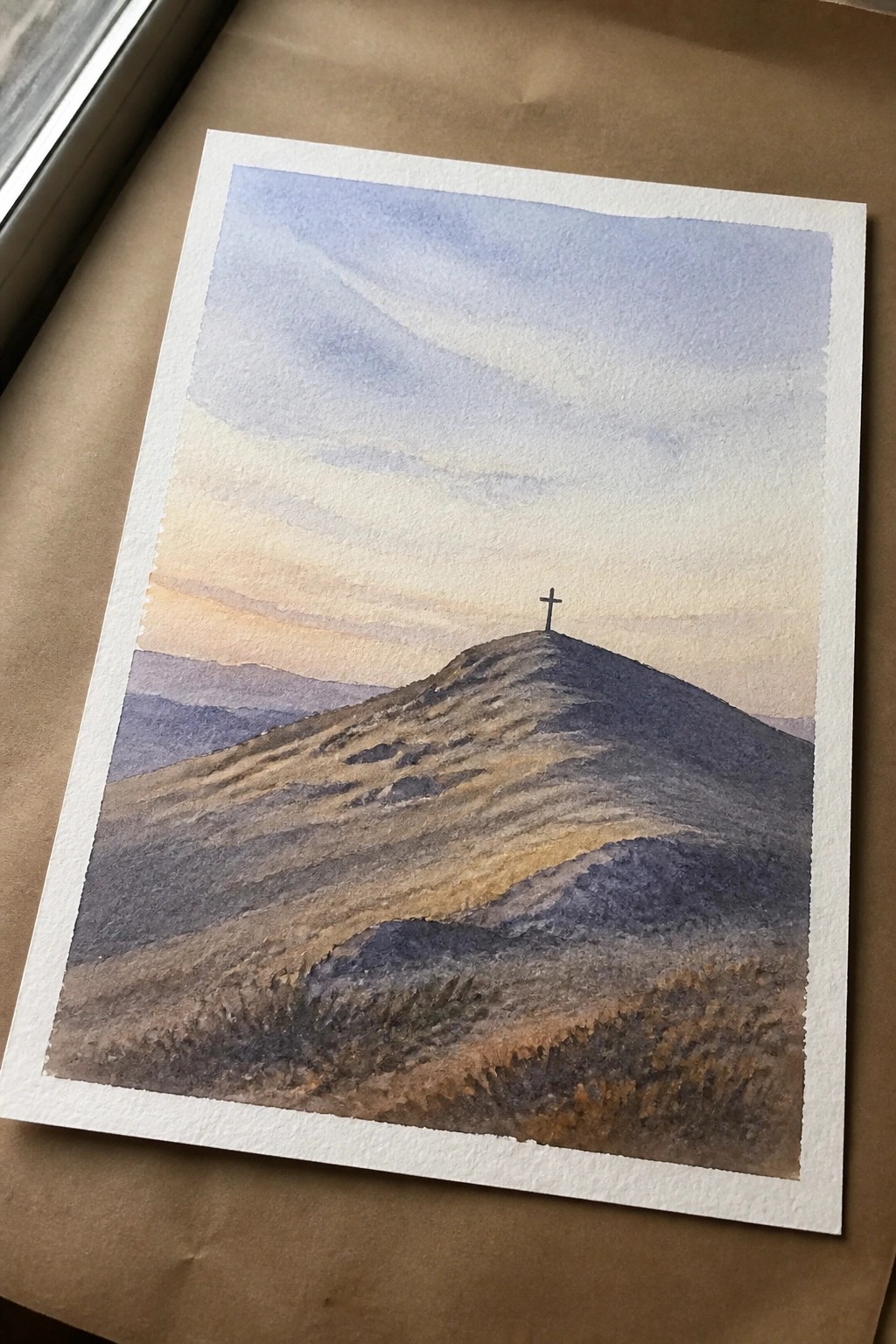
A landscape painting idea built around a single cross placed at the summit of a hill works well when the rest of the scene stays broad and simplified. The sky uses a gentle gradient from warm tones near the horizon to cooler shades above, while the hills are treated as overlapping shapes with soft edges. This keeps the cross as the only distinct vertical element and lets the composition stay balanced without extra details.
The composition does a lot of the work here because the open sky gives the cross room to read clearly even at small sizes. You can adapt the idea by changing the hill angle or swapping the sunset for a clearer daytime sky while keeping the same limited color range. For practice, this kind of subject is easy to sketch first and then finish with loose washes, and the result translates directly to a small canvas or print that fits a calm, uncluttered wall arrangement.
Muted Leaf Wreath with Small Cross
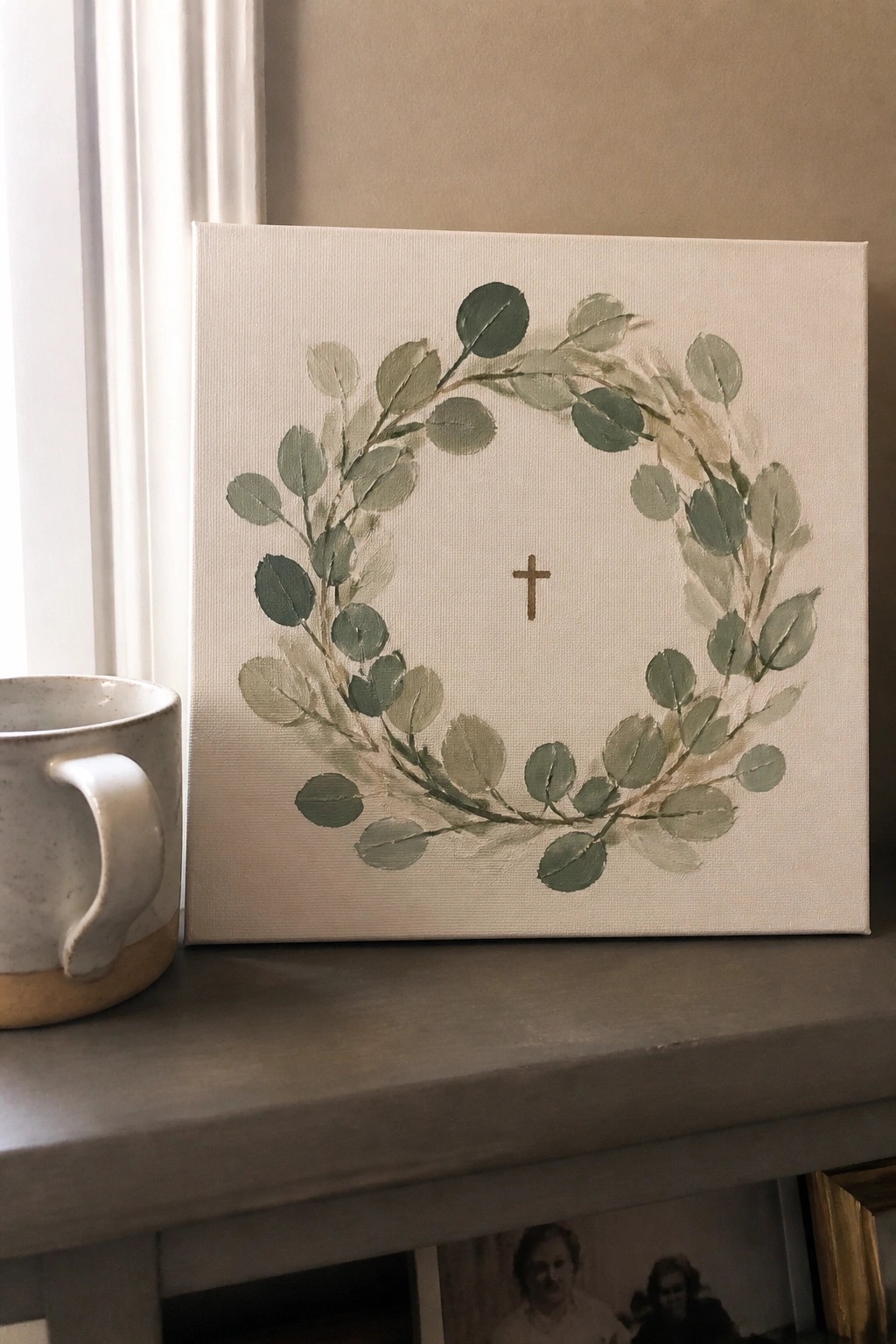
A wreath built from layered oval leaves in several soft green shades creates a loose circle on the canvas. The idea keeps the center open and places a single small cross inside it, using the negative space to hold the composition together. This approach works as decorative Christian art that stays simple and botanical rather than ornate.
What makes this idea useful is the flexible leaf placement that does not require perfect symmetry. You can scale the wreath to fit different canvas sizes or swap in other leaf shapes while keeping the same muted palette. For wall pieces, the open center and limited colors make it easy to match existing decor without adding extra elements.
Sunset Cross Silhouette Landscape

A sunset landscape idea centers on a single cross placed as a small silhouette against a large setting sun on a low hill. Strong radial brushstrokes fan outward from the sun to create depth, while the sky shifts through layers of yellow, orange, and pink that meet a solid reddish foreground. This approach falls into scenic landscape painting with a restrained Christian symbol.
What makes this idea useful is the high-contrast sun and rays that carry the composition even when details stay minimal. You can scale the sun larger or smaller to change the mood, or swap the hill color to match different wall tones. For practice this works well because the main shapes are easy to block in first, then the rays can be added last to pull everything together.
Vertical Stack of Christian Symbols
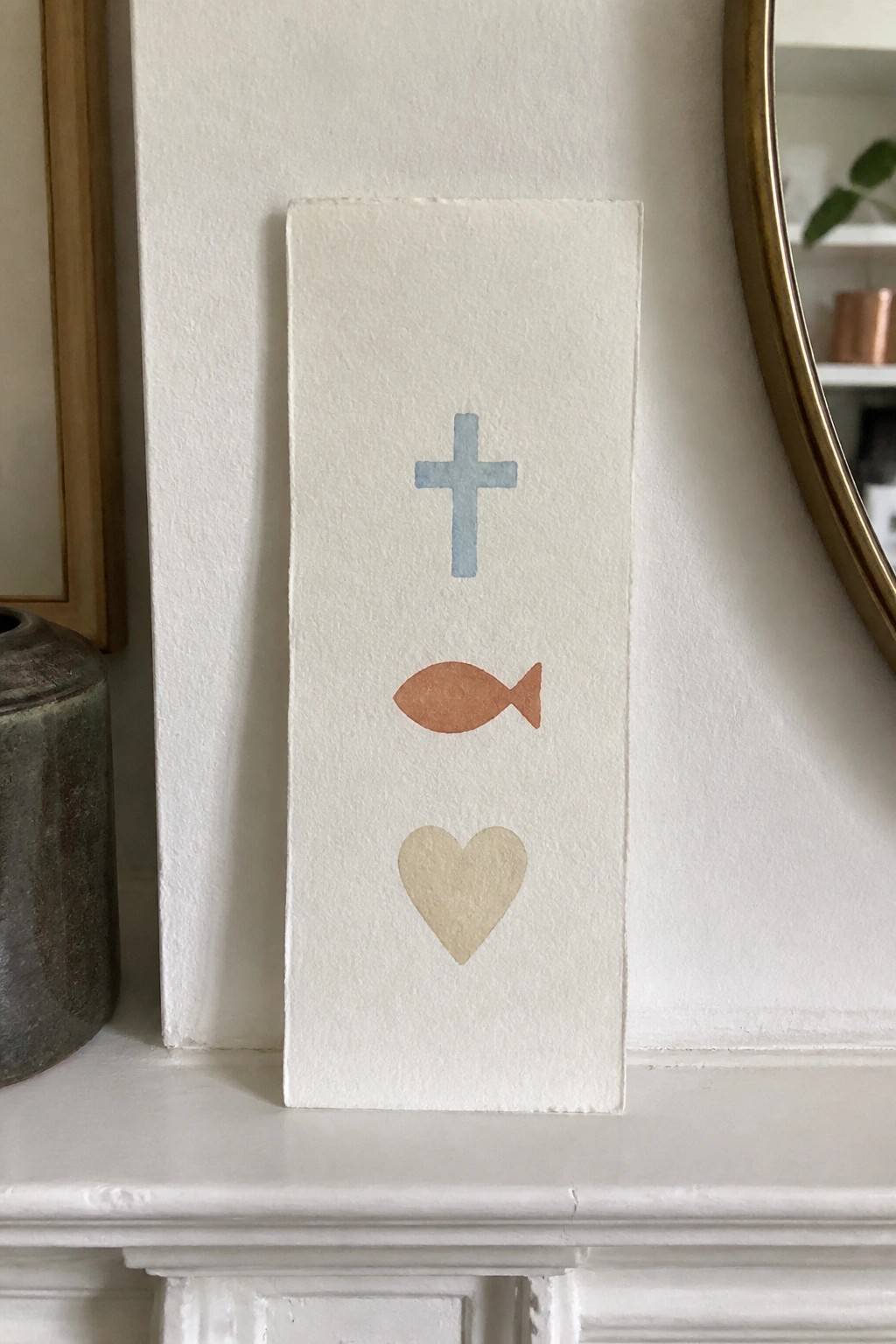
A narrow vertical format holds three simple Christian symbols spaced evenly down the center. The light blue cross sits at the top, followed by a terracotta fish and a pale heart below, all rendered as flat shapes with soft edges. This approach keeps the focus on the symbols themselves through generous white space and a restrained three-color palette.
What makes this idea useful is how the tall rectangular shape works on shelves or narrow wall spots where a wider piece would feel cramped. You can change the colors to fit your existing decor or adjust the spacing if you want more breathing room between the icons. The basic outlines also make it simple to scale up for a larger canvas or repeat on paper for a set of matching pieces.
Minimal Praying Hands with Dotted Halo
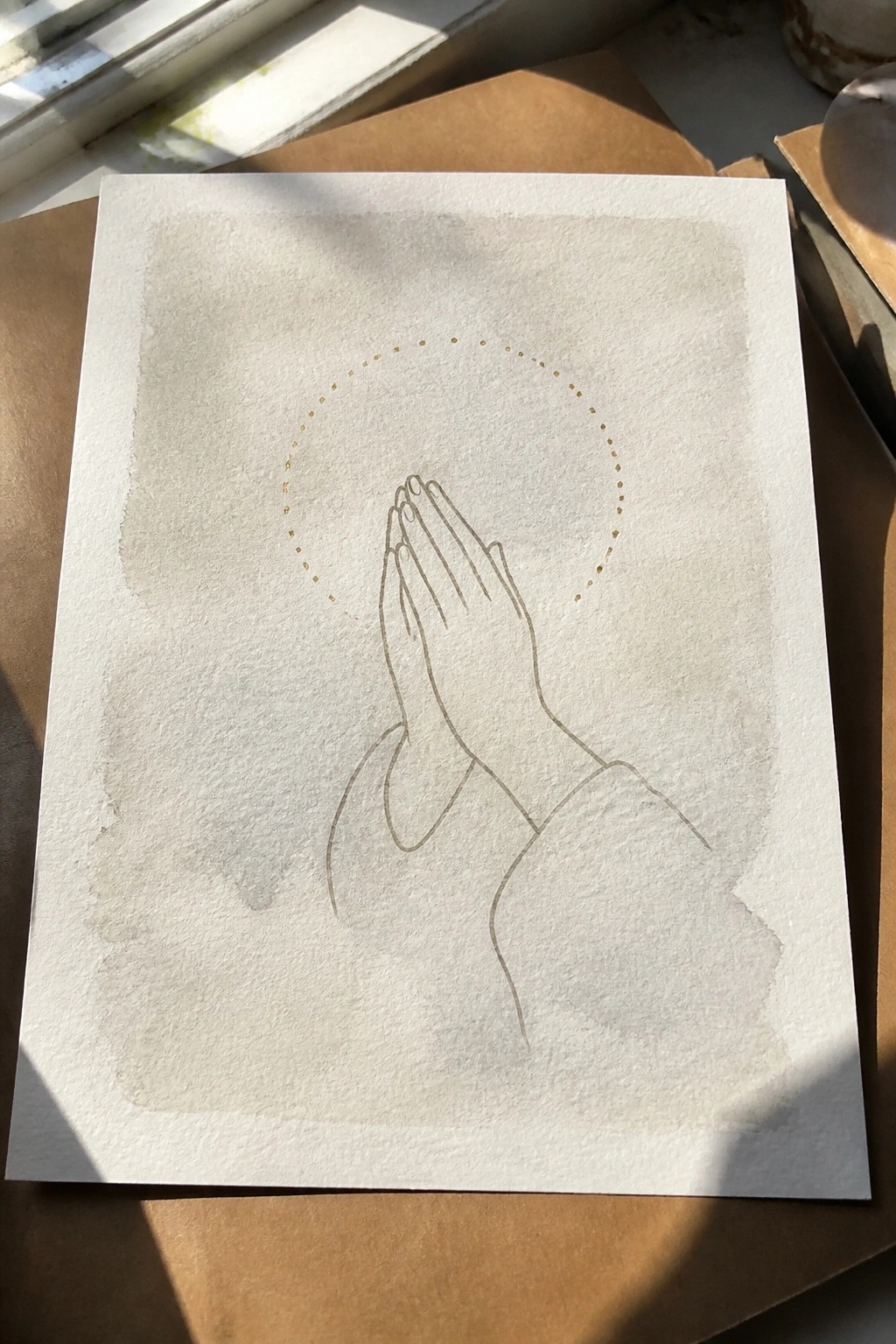
A painting idea built around praying hands uses clean line work to show the folded fingers and wrists while a loose circle of small dots sits above as a halo. The soft background wash keeps the focus on the central gesture without adding extra shapes or colors. This fits a decorative line art style that stays simple and centered on one clear subject.
What makes this idea useful is how the limited elements let you adjust line thickness or dot spacing without changing the whole composition. You could shrink it for a card or stretch the halo wider for a larger piece while keeping the same layout. The light wash works on different papers, so it is easy to test variations until the hands stand out the way you want.
Minimal Cross Abstract in Neutral Panels

A geometric abstract painting built around a cross shape works by dividing the canvas into rectangular blocks with intersecting lines. The main idea uses a vertical gold stripe running down the center and a horizontal one across the middle to form the cross, while the surrounding panels shift between black, gray, and off-white. This layout keeps the focus on the simple cross structure without extra details or imagery.
The composition does a lot of the work here because the straight divisions and limited color range make the idea easy to copy with painter’s tape. You could swap the black panels for deep navy or swap the gold for copper if you want a different feel. For wall art, something like this fits modern or minimalist rooms and can be painted on a tall canvas or scaled to a smaller size for a diptych. The same grid approach also works if you want to practice clean edges and layering without needing advanced drawing skills.
Olive Branch Wreath with Centered Name

A circular wreath built from olive branches works as the main subject here, with clusters of small green olives and leaves arranged around the ring. The word Grace appears in the middle in a simple script that fills the open space without crowding it. This approach fits into decorative botanical art where the wreath shape and limited color range keep the whole piece balanced and easy to read.
What makes this idea useful is the way the wreath naturally creates a frame that highlights the name without extra borders or details. You can change the text to a different word or initial and shift the greens slightly warmer or cooler depending on the room. The loose placement of the olives breaks up the symmetry just enough to avoid looking stiff, which helps when adapting the same layout for quick gifts or small wall pieces.
Frequently Asked Questions
What are the most common themes in these minimal Christian paintings?
Many collections focus on subtle symbols like crosses, doves, or serene landscapes that evoke faith without overwhelming detail. These elements are rendered in soft neutrals or muted tones to promote a sense of peace and allow the artwork to blend seamlessly into modern spaces.
How can I choose the right painting size for my room?
Measure your available wall space first and consider the room’s scale. Smaller pieces suit desks or entryways while larger ones anchor living rooms or bedrooms. Aim for art that fills about two thirds of the wall area to maintain balance and visual calm.
Where can I source high quality prints of chic minimal Christian art?
Look for reputable online platforms that specialize in digital downloads or museum quality giclee prints. Check artist websites or curated stores for options that offer customizable sizes and archival paper to ensure longevity and a professional finish.
What framing choices enhance the designer vibe?
Select thin black, white, or natural wood frames with clean lines and no ornate details. Opt for matte glass or no glass at all to reduce glare and keep the focus on the subtle artwork which supports an uncluttered serene atmosphere.
How do I pair these paintings with other decor elements?
Combine them with neutral textiles, simple furniture, and sparse accessories in the same color palette. Add soft lighting nearby to highlight the pieces without clutter which helps sustain the overall calm and intentional designer feel throughout the space.