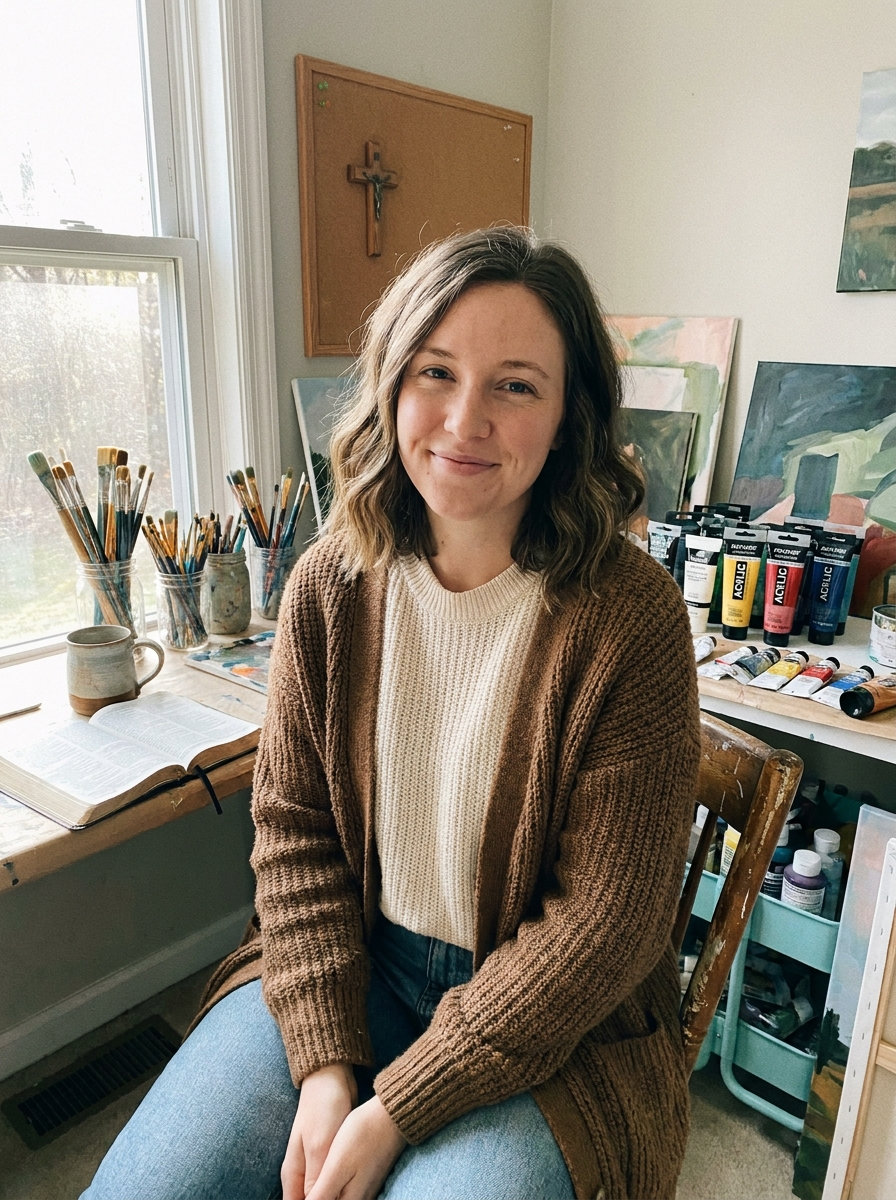
I started painting baby angels a while ago because the soft shapes felt manageable even when I was still learning.
Many of these designs use simple lines and light colors which makes them suitable if you are just getting into it.
I tried a couple myself and adjusted the wings or halos to fit what I had on hand.
Looking back at my notes I think sharing these could help others find easy starting points without too much pressure.
Baby Angel Sleeping on a Crescent Moon

A sleeping baby angel curled inside a crescent moon forms the core of this painting idea. The moon shape doubles as both a resting spot and a natural frame, while soft clouds and small stars fill the background without crowding the main figure. The limited color palette of pale blues, warm yellows, and neutral tones keeps the focus on the rounded shapes and gentle posture.
The composition does a lot of the work here by using the moon curve to anchor the figure and create balance. You could easily change the sky tones for a sunrise version or reduce the number of stars if you want a faster study. This kind of subject works especially well for small canvases or nursery prints since the main elements stay contained and easy to scale.
Close-Up Baby Angel with Upward Gaze

A simple baby angel portrait works well when the focus stays on the face and the gentle hand-to-chin pose. The soft, warm color palette and loose brushwork on the curls keep the painting approachable without requiring tight detail work. This type of cute decorative portrait fits nicely on a small canvas and relies on the centered composition rather than background elements.
The composition does a lot of the work here by placing the face slightly off-center and using the halo to draw the eye upward. You can adapt the idea by changing the background to a light blue or cream, or by practicing just the head and shoulders on a practice board first. For wall art, something like this works especially well in a nursery or as a quick gift because the subject reads clearly even at smaller sizes. The simple shapes help this feel more approachable for beginners who want to try skin tones and soft blending.
Folk Art Angel with Side Flower Borders

A centered angel figure holding a bouquet serves as the main subject, with vertical floral strips on each side acting as built-in borders. The idea blends a simple character portrait with repeating pattern work, using a teal base color for the dress and warm accents in red, gold, and yellow to keep the palette limited and cohesive. This approach fits the category of decorative cute art that combines figure painting with easy floral repeats.
The balanced layout does a lot of the work here by letting the side borders fill empty space without extra planning. You can swap the flowers in the bouquet or simplify the dress pattern to make the piece your own while keeping the same structure. This format works especially well for small canvases or printable cards since the borders help the composition look complete even at smaller sizes. For practice, the repeated flower motifs on the sides give you quick wins before tackling the central figure.
Three Baby Angels Holding Stars in a Blended Sky

A group of three small angel figures forms the core of this painting idea, with each one holding a single star against a sky that shifts from blue at the top to warmer tones near the bottom. The composition stays effective by placing the figures together in the lower portion of the page, letting the scattered stars and blended background fill the rest of the space without extra objects or layers. This type of cute decorative piece works well when the focus stays on simple rounded shapes for the bodies and wings.
What makes this idea useful is the built-in repetition of the stars, which gives the scene structure while keeping the drawing steps straightforward. The background blending can be adjusted to whatever colors you have, or reduced to fewer layers if you want a quicker version. For practice or small wall pieces, the centered group of figures creates a clear focal point that translates easily to cards or prints. You could swap the hair colors or star placements to match different seasons or rooms.
Angel Cuddling a White Rabbit

A seated angel figure paired with a small white rabbit creates a simple character scene that works well as a standalone painting. The idea centers on the interaction between the two, with the angel’s arms wrapped around the animal and both figures sharing similar rounded shapes and soft coloring. A muted wash background plus a few low flowers at the base keeps the focus on the pair without adding extra layers or details.
The composition does a lot of the work here by placing the figures in the center with enough negative space around them. You could easily swap the rabbit for a different small animal or adjust the clothing color to match a holiday or nursery theme. For practice, this kind of subject helps with painting soft edges and balanced placement on the page, and the limited palette makes it straightforward to repeat in different sizes for cards or small wall pieces.
Back View Baby Angel with Soft Glow and Stars

A back view of a baby angel in a simple dress lets you focus on shape and flow instead of facial features. The pale circular wash behind the figure and the scattered gold stars create a balanced layout that keeps the eye on the central form. This fits the category of cute decorative angel paintings that rely on soft blending and minimal details.
The composition does a lot of the work here by centering the angel with open space on all sides. You can swap the dress color or adjust the number of stars to fit different projects without changing the core idea. For practice, this kind of subject helps with wash control and small accents like the halo. It would work well as a small print or card design because the limited palette keeps it easy to repeat.
Angel with Soft Floral Wreath

A centered baby angel figure with clasped hands and small wings forms the core of this idea, framed by a loose ring of roses, camellias, and leaves in dusty pinks, creams, and muted greens. The circular flower placement creates a natural border that keeps the focus on the figure while adding varied shapes and soft color blocks around the edges. This approach blends a simple portrait-style subject with botanical elements to produce a balanced decorative piece.
The wreath structure lets you add or remove flowers without disrupting the layout, and the limited color range makes mixing easier for practice runs. You could swap the roses for other blooms or shrink the angel details to basic shapes if needed. For wall pieces or gifts, the contained composition fits well on smaller canvases and stands out on Pinterest because the flowers give it clear visual weight without requiring complex backgrounds.
Baby Angel Blowing Kisses with Floating Hearts

A baby angel figure paired with a trail of hearts creates a simple decorative subject that works well for small canvases or cards. The off-center placement of the angel leaves open space on the right for the hearts to scatter upward, which balances the composition without crowding it. Rounded cloud shapes at the bottom and top frame the scene while keeping the focus on the central action of the blowing kisses.
The composition does a lot of the work here by using the hearts to guide the eye naturally across the canvas. You could easily change the background to a soft gradient or repeat the same idea at a smaller scale for gift tags. For practice, this kind of subject helps with loose figure drawing and adding small scattered elements without needing tight detail work.
Sleeping Baby Angel in Soft Pastels

A sleeping baby angel makes a strong subject for this style of painting, with the figure curled against pillows and the small wings framing the head. The idea works as a cute portrait where the oval shape of the face and the gentle slope of the shoulders guide the viewer naturally toward the center. Muted skin tones paired with pale fabrics and a thin halo keep the overall palette calm and easy to balance.
What makes this idea useful is how the rounded forms and limited color range let you practice blending without needing perfect detail everywhere. You can shrink the wings or simplify the fabric folds if you want a faster version on a smaller canvas. The same setup adapts well for nursery wall pieces or small gifts because the soft edges and close framing hold up even when the background stays plain.
Baby Angel with Rainbow Striped Wings

A baby angel portrait works well as a cute decorative piece when the wings are painted in stacked rainbow bands instead of plain white. The centered figure with clasped hands and a simple halo keeps the focus tight, while the soft background wash prevents the bright colors from feeling too busy. Rounded shapes and gentle color transitions make this idea easy to paint without needing fine detail work.
The stacked wing sections give you a clear way to practice color blocking and blending on one subject. You can change the rainbow order or limit it to three colors if you want a calmer version for a nursery wall. This format also scales down nicely for small canvases or cards, and the clean composition stands out on Pinterest because the bright wings catch attention fast against the pale background.
Hanging Angels Mobile with Stars

A mobile-style painting idea works by suspending three small angel figures from a curved brown bar using thin vertical lines, with gold stars placed at different heights between them. The figures wear simple robes in soft blue, beige, and green, each with basic wings and hands held together. The curved top bar and evenly spaced hanging elements create a clear vertical rhythm that keeps the composition balanced on the page.
What makes this idea useful is the built-in structure of the bar and strings, which removes the need to invent a background. You can change the robe colors or reduce the number of figures if you want a quicker version. The repeated angel shapes make it practical for practicing consistent sizing and simple line work. This layout would also adapt easily to a larger canvas or a set of matching small paintings for a child’s room.
Baby Angel Reading on a Cloud

A seated angel figure holding an open book forms the main subject here. The cloud creates a simple base that anchors the figure while the soft green background with scattered dots and small flowers keeps attention centered without crowding the space. Rounded shapes and a limited palette of greens, blues, and muted pinks make this a clear example of cute decorative art.
What makes this idea useful is how the cloud gives an instant setting without extra background work. You could swap the book for a different small prop or shift the background tone to fit a nursery wall or greeting card. For practice, this kind of subject lets beginners focus on basic figure placement and soft blending before adding finer details like the halo or wing edges.
Baby Angel Holding a Balloon

A baby angel figure in a simple white gown reaches up to hold the string of a large pink balloon, set against a pale blue-green sky with soft, rounded clouds. The idea uses a straightforward vertical layout with the figure placed slightly left of center, which keeps the scene balanced without crowding. This type of cute decorative painting works because the shapes stay rounded and the color choices remain limited to a few gentle tones.
What makes this idea useful is how the main elements can be adjusted in size or color without changing the overall feel. The balloon acts as a clear focal point that draws the eye, so the rest of the painting can stay loose. Beginners can try it on a small canvas first, then scale it up for a nursery wall or adapt the balloon to a different shade to match a room. The cloud placement also leaves room to add or remove details depending on how much time you want to spend.
Soft Baby Cherub Portrait in Neutral Washes

A baby angel portrait idea works by centering on a young cherub bust with curly hair and small wings. The three-quarter angle on the face creates a natural focal point while the wings frame the shoulders without crowding the space. A muted warm palette on the figure against a cool wash background keeps the whole piece balanced and easy to read.
What makes this idea useful is how the loose edges let you build the form gradually instead of locking in details early. You can swap the background tone or adjust wing size to match whatever paper you have on hand. For practice, this kind of subject trains you to handle soft transitions and gentle value shifts before moving on to more complex figures.
Baby Angel in Polka-Dot Beanie

A baby angel portrait works well when the main focus stays on a single character wearing a patterned knit hat and resting the chin on both hands. The idea uses a close crop and a soft teal background to keep attention on the face and hat while the wings stay secondary. Rounded shapes and a limited color range make the whole piece feel balanced without needing lots of extra elements.
What makes this idea useful is how the hat pattern gives the subject personality without requiring detailed facial features. You can change the dot colors or background shade to fit different rooms or seasons while keeping the same pose. The soft edges and visible texture also make it easy to practice blending on a small surface before trying larger versions.
Two Angels Sharing an Umbrella in the Rain

A rainy day scene with two small winged figures standing close together under one umbrella works as a compact figurative idea. The umbrella acts as the main anchor that pulls the two characters into a single shape, while the puddles below repeat their forms without adding extra elements. Soft washes for the sky and background keep the focus on the central group rather than on fine details or multiple layers.
The composition does a lot of the work here by using one large shape to connect the figures and create balance. The muted greens and blues make it easy to adapt with a small set of colors, and the scene stays readable even if you simplify the wings or shorten the rain streaks. This kind of subject works well for practice pieces or small seasonal prints because the main elements fit on a standard paper size and do not require intricate backgrounds.
Baby Angel in Prayer with Gold Stars

A simple angel figure works well as a decorative subject when placed against a solid dark background with minimal scattered elements. The centered composition keeps the focus on the wings, halo, and hands while the stars add just enough interest without competing for attention. This type of cute, standalone figure fits into the decorative art category and translates easily to small canvases.
What makes this idea useful is how the dark background hides minor background mistakes and lets the figure stand out with less pressure on blending. The gold details can be added at the end with a fine brush or even paint markers, which makes the piece forgiving for beginners. This would be easy to adapt by swapping the blue for other deep tones or changing the star placement to fit different frame sizes. For wall art, the compact size and limited color palette make it a quick project that still reads clearly from a distance.
Stacked Angel Trio in Folk Patterns

A vertical stack of three angels forms the core idea here, with each figure using the same basic shape but varying dress colors and wing patterns to create a simple tower effect. This decorative approach works by repeating a single motif in a lineup, letting color shifts and small pattern details carry the visual interest instead of needing a full scene or background. The result fits squarely into cute decorative art that stays easy to read even at smaller sizes.
What makes this idea useful is how the narrow vertical layout translates well to cards, journal pages, or slim wall pieces without extra elements. You could change the dress colors to match a holiday palette or simplify the wing patterns to speed up the process while keeping the stacked format intact. For practice, repeating the angel shape multiple times helps build consistency with brushwork and pattern placement before trying more varied compositions.
Baby Angel with Moon Phases

A baby angel resting on clouds forms the center of this painting idea, with a curved line of moon phases creating a frame above and below the figure. The idea combines a soft portrait of the angel with simple repeating shapes for the moons, using a muted blue background and gold highlights to keep the focus balanced. This fits into decorative art that blends a central character with a repeating border pattern.
What makes this idea useful is that the moon phases can be painted as basic circles first, then shaded or left plain depending on how much detail you want. The composition does a lot of the work here by placing the angel in the middle and letting the moons guide the eye around the edges. This would be easy to turn into a greeting card size or adapt by swapping the gold moons for silver or skipping the stars entirely. For practice, this kind of subject gives you a chance to work on a face and wings without needing a complicated background.
Frequently Asked Questions
What supplies should beginners use for these baby angel paintings? Acrylic paints work well on canvas or heavy paper because they allow easy layering and corrections. Gather round and flat brushes in small to medium sizes along with a basic palette of soft colors like pale pink, light blue, white, and cream. Keep a cup of water and paper towels nearby for blending.
How do I choose the right painting from the list to start with? Pick one with fewer details such as a simple pose and minimal background elements. This helps build confidence before moving to more complex scenes with clouds or multiple figures. Review the descriptions in the article to match your current skill level.
What techniques help create soft and charming baby features? Use light pressure with rounded brush strokes for faces and blend edges gently while the paint is wet. Add subtle shading under the chin and around the eyes with a slightly darker tone of the base color. Practice on scrap paper first to get the gentle expressions right.
Where can I find similar reference images if I want to try my own versions? Search free stock photo sites using terms like baby angel sketches or cherub illustrations. Many museums and art websites also offer public domain images of classic angel paintings that match the charming style in the article.
How long should a beginner expect to spend on one of these paintings? Plan for several short sessions of one to two hours each rather than rushing through in one sitting. This allows time for drying between layers and gives you a fresh eye for adjustments. Starting small keeps the process enjoyable and reduces frustration.