I have always liked looking at old paintings of angels when I need ideas for my own work.
Many of them show the full figure rather than just the face or wings.
I picked out 21 classical ones that stand out for that reason.
They come from different periods but share a similar approach to composition.
Sometimes seeing how others handled the details helps me figure out my next project.
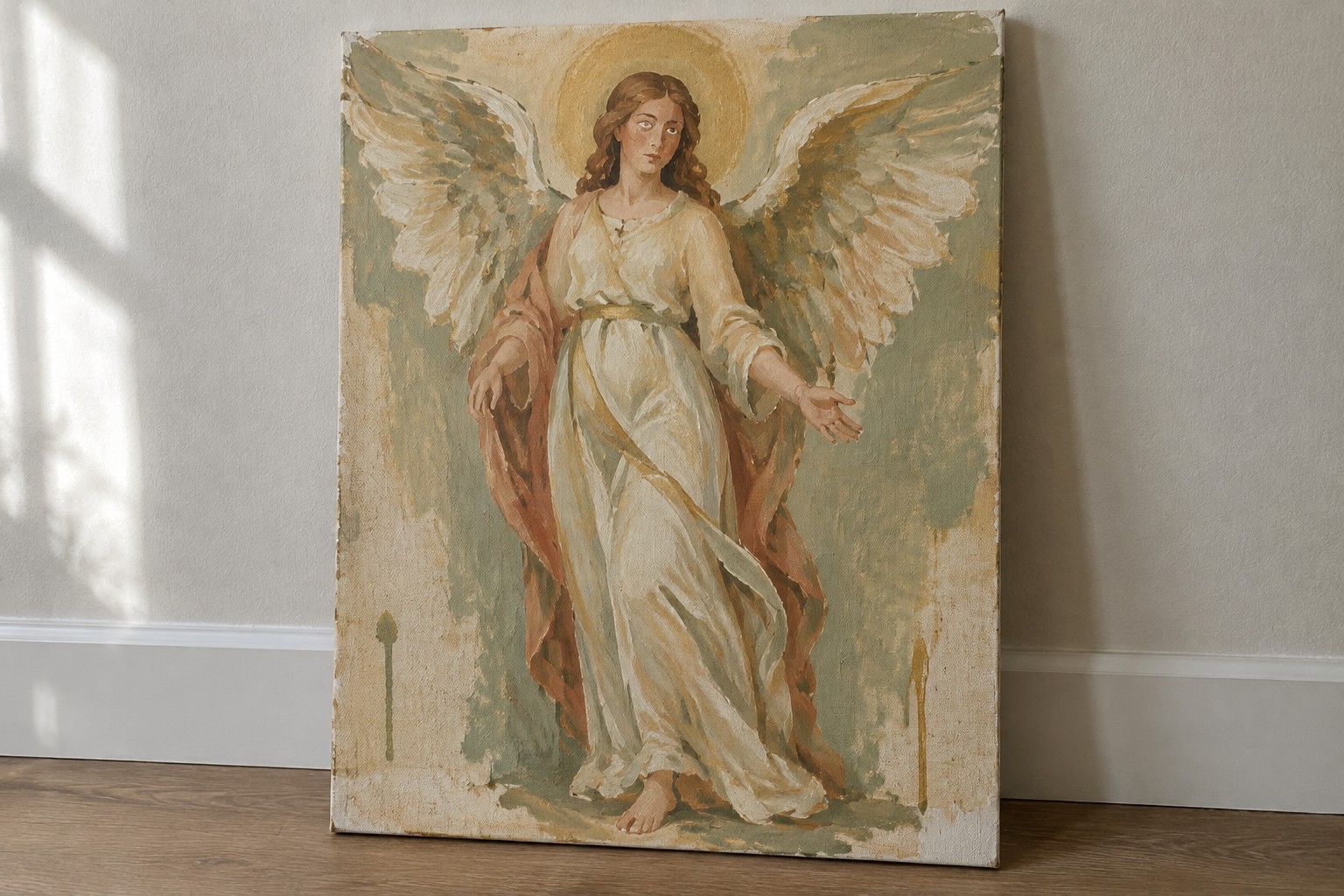
Full-Figure Angel with Reaching Pose

A full-figure angel stands in soft, flowing robes with one arm extended forward and the other resting near the chest. Large wings spread out on either side while a simple halo sits above the head, creating a clear vertical line from top to bottom. The muted mix of creams, dusty greens, and warm earth tones keeps the focus on the figure and drapery without strong contrasts.
What makes this idea useful is how the straightforward pose and open arm placement work well for larger wall pieces or entryway art. You can easily shift the color palette toward cooler or warmer tones to match different spaces, or scale down the wing size if the canvas is smaller. For practice, the visible folds in the fabric give a solid starting point before adding the wings and background washes.
Kneeling Angel in Soft Cloud Setting

A full-figure angel in a kneeling prayer pose works as a classical composition because the large wings and draped robes create clear vertical lines that keep the eye moving upward. The soft blue and cream washes blend the figure into the cloudy background, which adds atmosphere while keeping the focus on the body position and wing structure. This type of painting idea falls into decorative angelic art where the subject is treated with gentle color layering rather than sharp detail.
The composition does a lot of the work here by letting the clouds act as both support and background, so you do not need complex scenery. You can simplify the wing edges or adjust the robe folds to match your skill level, and the same layout adapts easily to different sizes for cards or prints. A painting like this stands out on Pinterest because the upright figure and light palette read clearly even in small thumbnails.
Trumpeting Angel in Full Figure Pose

A classical angel painting idea works well when the figure stands in a clear, active stance while playing a long trumpet. The composition places the body in a slight twist with one leg forward, letting the red cloak and white robe create strong diagonal lines that guide the eye upward to the raised instrument. Large wings on either side balance the vertical shape without blocking the central action, and the simple ground plane keeps the focus on the gesture itself.
What makes this idea useful is how the pose already supplies movement, so you can practice fabric folds and wing shapes without needing a busy background. The limited palette of teal, red, and earth tones adapts easily if you want to change the cloak color or soften the ground for a different setting. For wall art, the upright format fits nicely above a doorway or in a narrow space, and you can simplify the wings into broader shapes if you want a quicker version for practice or cards.
Full-Figure Angel with Raised Sword

A full-figure angel painting centers on a standing figure holding a sword high while positioned among clouds. The idea uses a tall vertical layout with the wings and drapery creating natural movement around the body. Soft blue and earth tones keep the focus on the figure without competing details, which suits classical or religious decorative art.
What makes this idea useful is the strong vertical shape that fits tall wall spaces or narrow panels. The cloud background removes the need for extra elements, so you can focus practice on the robes and wing structure. You could simplify the sword or adjust the robe colors to match different room palettes while keeping the same pose and scale.
Seated Angel With Flowing Wings and Drapery

A full-figure angel composition works well when the figure is placed in a relaxed seated pose with one arm resting and wings spread behind for balance. The draped fabric across the lap and legs adds movement while keeping the body as the clear focal point. Soft color shifts and visible texture in the wings and cloth help the idea read clearly even at smaller sizes.
What makes this idea useful is the simple seated posture that still shows the full body and wings without needing complex perspective. The muted palette makes it easy to adapt to different paper or canvas sizes while keeping the same calm mood. For practice, this layout helps work on fabric folds and wing shapes together without requiring a busy background.
Guardian Angel Standing Over a Sleeping Child

A full-figure angel painting shows the angel in a protective stance directly above a child resting on the ground. The tall vertical format uses the angel’s wings and extended arm to lead the eye downward, creating a clear focal relationship between the two figures without extra background details. Muted greens and soft whites keep the palette calm while the loose brushwork on the robes and wings adds movement to the otherwise still scene.
What makes this idea useful is how the height difference between the standing angel and the child handles most of the composition work. You can easily change the robe colors or simplify the wings for a smaller canvas while keeping the same protective pose. This setup works well for wall pieces because the limited elements make it straightforward to adapt for different room sizes or personal color preferences.
Classical Angel Holding White Lilies

A full-figure angel stands in a gentle contrapposto pose while cradling a stem of white lilies against her torso. The idea pairs the vertical angel form with a single floral element that breaks up the gown lines and gives the hands a natural focal point. Large wings extend outward to balance the tall composition, and the muted green background wash keeps the figure grounded without competing for attention.
What makes this idea useful is how the upright pose and simple prop let you practice drapery folds and wing shapes at any scale. The soft color mix of greens, pinks, and creams translates easily to other palettes or even gouache if you want more opacity. For wall pieces this works well because the vertical layout fits standard frames and still reads clearly from a distance. You can simplify the wings or swap the lilies for another flower without losing the classical feel.
Angel with Scroll and Mosaic Patterned Wings

A full-figure angel idea works when the wings carry a repeating pattern of teal, rust, and gold that draws attention without crowding the central pose. The scroll in the hands gives the figure a clear purpose while the plain background keeps the focus on the balanced stance and flowing robe. This approach sits comfortably in the decorative angel category, where color contrast and simple shapes help the composition read well from a distance.
The composition does a lot of the work here by placing the patterned wings against an empty field so they remain the main event. You could swap the earth tones for cooler blues or shrink the wing details for a quicker study. For wall art the clean layout makes it easy to scale up or turn into a print, and the same pose works fine with different wing patterns if you want to personalize it.
Angel in Gentle Descent with Flowing Fabric

A full-figure angel composition works well when the figure is shown in a tilted, downward pose that suggests slow movement through open space. The large wings balance the extended arm and bare feet while the red and white drapery adds long diagonal lines that keep the eye moving across the canvas. This approach fits the decorative classical angel category, where the sky background stays simple so the focus stays on the figure and fabric.
The composition does a lot of the work here by placing the angel slightly off-center with the body angled to create natural flow. A painting like this works especially well for practice with figure proportions and fabric movement since the clouds give an easy, low-detail background. You could adapt the same pose for a smaller canvas by shortening the wings or shifting the color palette toward cooler grays and soft blues while keeping the downward motion intact. For wall pieces this idea stands out on Pinterest because the clear vertical shape and limited background make it easy to crop or resize.
Full-Figure Angel with Harp in Soft Pastel Watercolors

A standing angel holding a harp forms the core of this painting idea, with the figure placed vertically to fill most of the page. The wings extend outward just enough to frame the upper body while the gown flows downward to anchor the bottom of the composition. A pale sky and low hills keep the background simple so the harp and the layered folds of fabric stay easy to read.
The composition does a lot of the work here because the centered pose and open wing placement work on both portrait and square formats. The limited palette of cool blues and warm neutrals can be swapped for earth tones or deeper indigos without changing the layout. This subject suits practice sessions focused on drapery and proportion, and it scales cleanly for wall prints or card designs.
Facing Angels in Balanced Full-Figure Pose

The idea here is a pair of full-length angels shown in profile, standing face to face with one hand raised and the other relaxed at the side. The mirrored poses create a clear center focus that holds the composition together even with minimal background detail. This approach works well for classical angel subjects because the symmetry and simple gestures let the figures carry the visual interest without needing extra elements.
What makes this idea useful is the built-in balance from the mirrored layout, which reduces the need to invent poses from scratch. The limited color range keeps mixing straightforward, and the same setup can be adapted by changing robe colors, simplifying the wings, or shifting the scale for different canvas sizes. For practice, it offers a solid structure to work on figure proportions and fabric folds while still producing a complete-looking piece.
Full-Figure Angel with Raised Hand Gesture

A full-figure angel composition gains strength when the figure stands in a clear three-quarter view with one arm raised in a simple gesture and the other hand gathering drapery. The painting idea relies on loose brushwork to define the wings and fabric folds while keeping the background dark and minimal so the figure stays dominant. Warm earth tones mixed with cooler blue accents in the robes create contrast without adding extra elements.
The composition does a lot of the work here by balancing the raised arm against the downward flow of the robes. This makes the idea practical for practicing figure proportions and fabric handling in one piece. You could easily shift the color temperature or crop the background tighter for different wall sizes. For practice, the loose handling lets you focus on shape and value before worrying about fine detail.
Full-Figure Angel with Layered Drapery
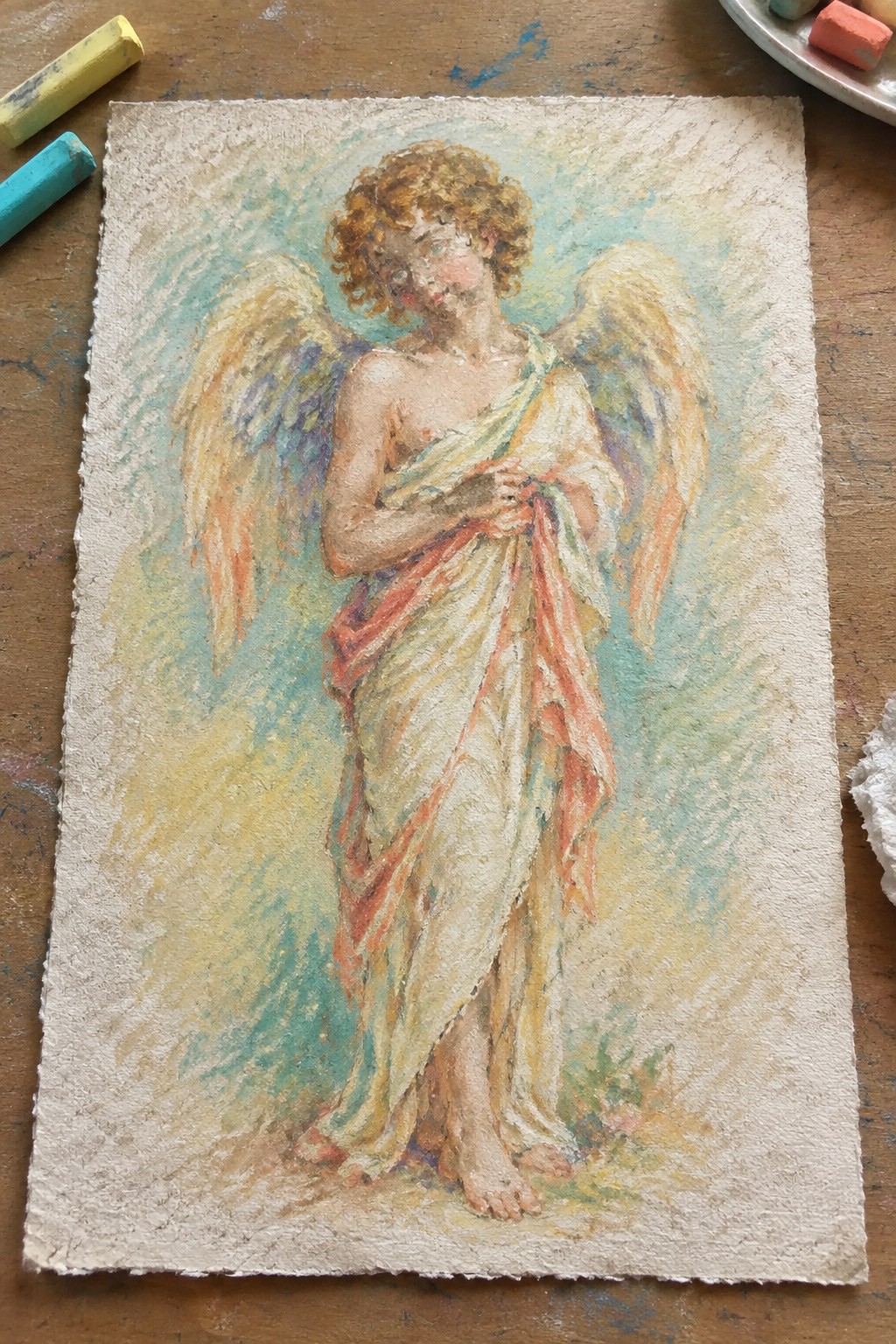
A standing angel figure with curly hair and large wings forms the core of this painting idea. The composition places the figure slightly off-center with wings framing the upper body while the draped fabric creates diagonal lines that guide the eye downward. Soft blended colors and a light background keep the focus on the pose and the folds of the cloth rather than on fine detail.
The composition does a lot of the work here by using a simple upright stance and clear wing placement that beginners can copy without needing complex perspective. Swapping the robe colors or softening the background wash lets you adapt it for different seasons or room styles. This kind of centered angel works especially well for practice because the fabric folds give you clear shapes to study while the overall layout stays balanced enough for a finished piece you can frame or share.
Angel Playing Trumpet in Profile

A full-figure angel stands in profile while blowing a trumpet, with large wings folded behind and robes draped in soft folds that follow the body’s movement. The idea centers on a classical messenger pose that uses the extended arms and slight forward lean to create a clear sense of action without needing extra props or scenery. A limited palette of warm neutrals, dusty pinks, and gold accents on the halo and instrument keeps the focus on the figure while the loose, textured background prevents the composition from feeling crowded.
What makes this idea useful is the clear vertical flow from head to feet, which helps when planning wall art or larger canvases. The neutral color range adapts easily to different room styles or can be swapped for cooler tones if needed. For practice, the same setup works well as a figure study by simplifying the wings or background first, then adding detail once the pose feels balanced.
Full-Figure Angel with Crossed Hands and Extended Wings

A full-length angel painting works well when the figure stands centered with hands crossed over the chest and wings spread just enough to frame the body. The vertical layout keeps the entire pose visible from head to bare feet while the soft, blended brushwork in the wings and robe prevents any single area from pulling focus. This kind of classical angel idea fits the full-figure category because the simple hand placement and quiet downward gaze create a balanced, self-contained subject that reads clearly even from a distance.
The composition does a lot of the work here because the crossed arms and centered stance stay recognizable even if you change the wing size or background color. You could adapt it for a smaller canvas by shortening the wings or use a limited palette of earth tones if you want a quicker study. For wall pieces, this approach gives you a calm, traditional angel without extra symbols or scenery that might date it later.
Full-Figure Angel with Layered Robes and Extended Wings

A full-figure angel composition works by placing the standing form against a minimal sky background so the long draped robes and open wings can create height and movement. The watercolor approach uses overlapping washes to separate the blue outer garment from the lighter inner dress, letting the fabric folds suggest form without heavy outlines. This keeps the painting in the classical angel category while staying loose enough for the eye to follow the vertical lines from head to bare feet.
What makes this idea useful is how the soft background removes the need for extra scenery or props. The limited palette of blues, creams, and faint pinks makes it straightforward to swap in different tones or scale the figure down for smaller paper sizes. For wall art, the tall vertical shape fits narrow spaces well, and the same layout can be simplified by reducing wing detail or tightened by adding more folds to the robe.
Classical Angel with Flowing Ribbon in Sky

A full-figure angel composition works by placing the figure at a slight diagonal so the wings, robe folds, and long golden ribbon all lead the eye across the canvas. The idea relies on a simple sky background that lets the layered clothing and wing details carry the visual interest without extra scenery. This approach fits the decorative classical angel category where the focus stays on posture, fabric movement, and a limited color scheme of teal, coral, and gold.
What makes this idea useful is how the centered figure fills most of the frame, which reduces the need for complex background work while still giving practice with drapery and wing shapes. The ribbon adds a clear diagonal line that helps balance the composition and can be shortened or removed if the painter wants a simpler version. For wall pieces, the same layout scales easily to different canvas sizes and works with minor color swaps to match existing room tones.
Full-Body Angel with Book and Raised Hand

A full-figure angel composition works well when the figure stands centered against a dark background with gold accents. The raised hand and book create a clear vertical line that keeps the eye moving through the tall format. Gold leaf on the wings, halo, and trim adds reflective highlights that contrast with the deep blue field and make the piece read as decorative art.
What makes this idea useful is the straightforward vertical layout that fits narrow wall spaces or entryways. You can swap the book for another object or reduce the gold details to finish it faster while keeping the same balance. The dark background does most of the work by making the light figure stand out, so the idea translates easily to different color schemes or simpler brushwork for practice pieces.
Paired Angels on a Shared Path
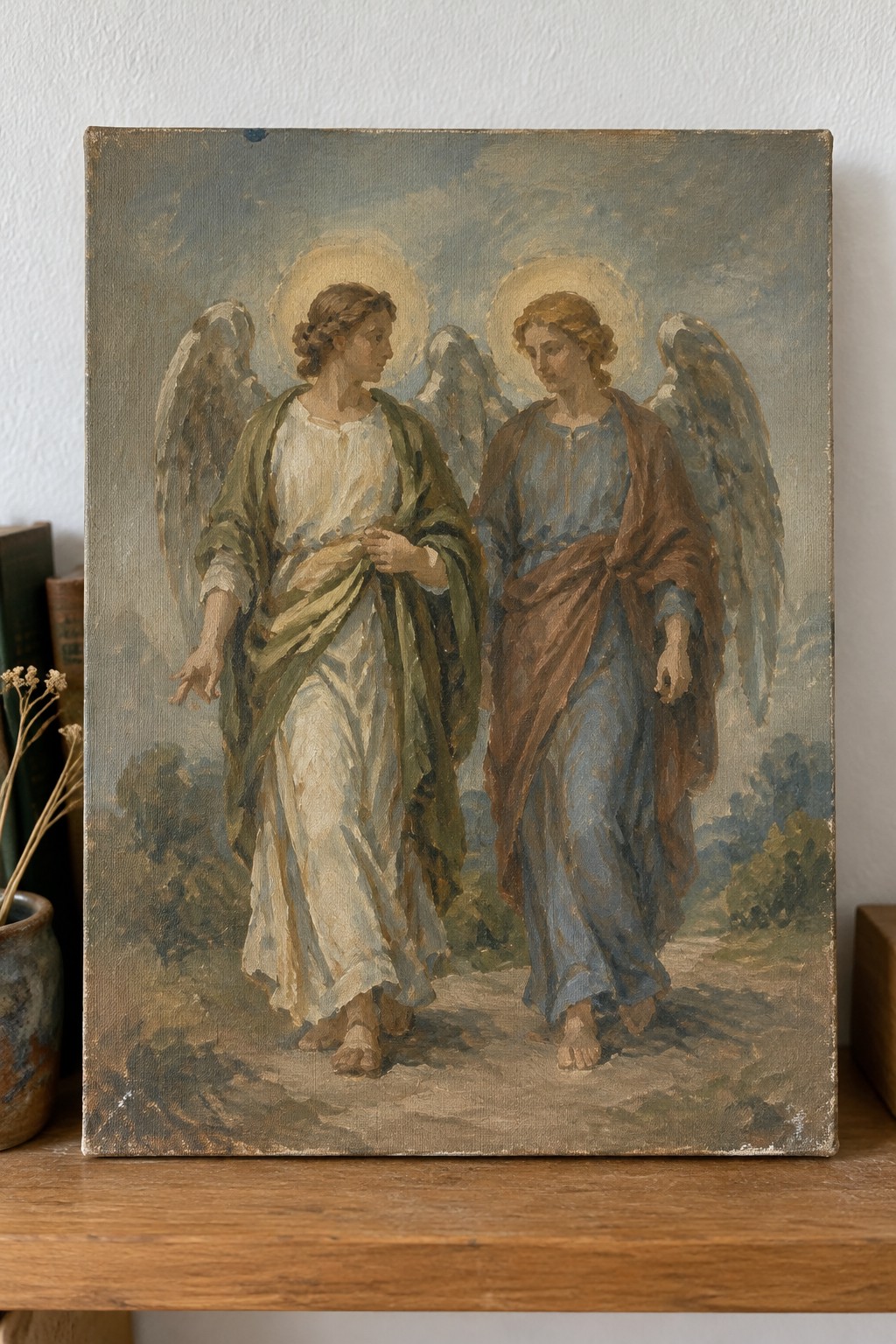
The core idea here is a full-figure study of two angels walking side by side, their bodies angled toward each other to suggest quiet interaction. The composition places both figures in the foreground with enough space between them to show movement and the drape of their robes, while a muted landscape fills the background without competing for attention. This approach fits the category of classical figure painting with a light narrative element, using the path and soft sky to ground the scene.
What makes this idea useful is that the two figures create built-in variety in pose and color without needing extra objects or a complex setting. You could simplify it by cropping to just the upper bodies or swapping the landscape for a plain gradient if you want faster practice. The similar scale of both angels also makes it straightforward to adjust for different canvas sizes when making wall pieces.
Lantern Angel in a Twilight Landscape

A full-figure angel idea like this centers on a standing figure holding a single light source to anchor the composition and create a clear focal point. The upright pose with one arm extended keeps the eye moving from the wings down through the draped fabric to the ground plane, while the soft gradient background adds depth without competing for attention. This approach fits the classical angel category by pairing the figure with a simple landscape that suggests time of day through color shifts rather than added objects.
What makes this idea useful is the built-in light source that helps define form and mood at the same time. You could simplify the wings or background for quicker studies, or adjust the sky colors to shift the scene from dusk to early morning. The vertical figure against a horizontal landscape also makes the painting easy to scale for different canvas sizes or to crop for prints. For wall art, the contained light and open space around the figure give it a balanced look that works at various sizes.
Full-Figure Angel with Raised Arms and Spread Wings

A full-figure angel composition works by placing the standing figure in the center with both arms lifted to create a clear vertical line that draws the eye upward. The large wings on either side balance the pose and fill the space without crowding the central shape. The soft, blended background keeps the focus on the figure while the flowing robe uses simple vertical folds to suggest movement.
What makes this idea useful is the clear, centered layout that helps with proportion practice on a full body. The limited color range of greens, oranges, and muted tones makes it easy to shift the palette or simplify for a smaller study. For wall pieces, the upright pose and open wing shape hold up well at different sizes, and the same structure can be adapted with different robe colors or a plainer background.
Frequently Asked Questions
What defines a full-figure composition in classical angel paintings? Full-figure compositions show the entire body of the angel from head to toe rather than focusing only on the face or upper body. This approach allows artists to emphasize movement, drapery, and symbolic elements like wings or attributes held in the hands. Viewers gain a stronger sense of the angel as a complete heavenly messenger interacting with the earthly scene.
Which museums or locations currently display the majority of these 21 paintings? Many of the works reside in major European institutions such as the Louvre in Paris, the Uffizi Gallery in Florence, the Prado in Madrid, and the National Gallery in London. A few pieces remain in churches or private collections with limited public access. Checking each museum website in advance helps confirm current exhibition status and any required reservations.
Are high-resolution images or prints of these paintings available for study or purchase? Public-domain works can often be downloaded from museum digital collections or sites like Wikimedia Commons. For prints, reputable vendors such as museum shops or licensed art publishers offer faithful reproductions on canvas or paper. Always verify licensing terms before using images for commercial projects.
What historical periods and artistic styles are represented across the 21 selections? The list spans roughly from the early Renaissance through the Baroque era, featuring Italian, Flemish, and Spanish masters. Early examples tend toward balanced, serene figures while later works show more dramatic lighting and dynamic poses. This range illustrates how full-figure angel depictions evolved alongside broader changes in religious art.
How can readers learn more about the symbolism and stories behind each painting? Start with the museum catalog entries or scholarly books on Christian iconography for detailed explanations of attributes like lilies or trumpets. Online lecture series from universities and museum podcasts frequently discuss individual works. Visiting in person also allows close observation of details that reveal deeper theological meanings.