I enjoy studying paintings that focus closely on faces because the small details can carry a lot of feeling.
These crying angel examples stood out to me for the way they handle the eyes and mouth without making it too dramatic.
I have painted angels a few times myself and I know how tricky it is to get the expression just right.
I chose 18 pieces that I think show strong work in those areas.
Looking through them has given me a few ideas for my own sketches.
Close-Up Angel Face with Streaming Tears

A portrait-style painting idea that centers on an angel’s face as the sole focus, using a tight crop to highlight the eyes, nose, and mouth while tears run visibly down the cheeks. The composition keeps the halo and wing edges in the background so they frame the face without pulling attention away from the expression itself. Soft blending around the skin and eyes creates a natural look that makes the wet streaks stand out clearly.
What makes this idea useful is how the limited background lets you practice skin tones and eye details without needing a full scene. You can easily adapt it by changing the hair color or shifting the gaze slightly for a new version. The size works well on a standard canvas for wall display or as a practice piece when you want to focus on facial features. For Pinterest, the direct eye contact and visible tears give it a clear hook that stands out from softer angel portraits.
Watercolor Angel Portrait Centered on Upward Gaze and Facial Detail

A close-up portrait of a young angelic figure with curly hair and a thin halo makes a strong study in expressive facial features. The idea relies on the upward head tilt and soft color washes to draw attention to the eyes, mouth, and skin texture rather than full body details. Muted blues and earth tones in the background keep the face as the main point of interest while the wings stay secondary.
What makes this idea useful is how the simple halo and loose background reduce the need for complex composition decisions. The subject works well for practicing skin tones and hair texture in watercolor without requiring a large canvas. You could easily adapt the color scheme on the wings or swap the hair style to match different seasons or room palettes, and the tight crop on the face keeps the piece suitable for smaller prints or sketchbook practice.
Close-Up Angel Portrait with a Single Tear

This painting idea uses a tight portrait format to show an angel’s face with white hair, furrowed brows, and one visible tear. The composition keeps the face centered while the wings and halo sit slightly behind to avoid crowding the main features. Soft layering in the skin tones and hair creates texture without sharp lines, making the expression the clear focus of the piece.
What makes this idea useful is how the centered face and limited background let you concentrate on facial details first. You can adapt it by cropping tighter around the eyes and tear or swapping the green-gold palette for cooler blues if you want a different mood. For practice this works well because the subject stays simple enough to finish in a few sessions while still giving you room to study how light hits the skin and hair.
Close-Up Crying Angel Portrait with Golden Halo

A strong painting idea here is a tight facial portrait of a child angel, built around the contrast between soft blonde hair, a simple golden halo, and the clear detail of tears running down the face. This approach fits the portrait category and works by keeping the background light and loose so the eyes, wet lashes, and mouth stay front and center. The slight tilt of the head and the way the hair falls forward add natural movement without pulling focus away from the expression.
What makes this idea useful is the square crop and limited background, which let you practice eye details and skin blending on a smaller surface before scaling up. The warm and cool color mix in the hair and clothing is easy to shift if you want to change the hair color or try different halo tones. For practice or quick wall pieces, the same layout works well in a sketchbook version or on a 10-by-10 inch panel where the face still reads clearly from a few feet away.
Profile Angel with Light-Catching Tears

A profile portrait of a crying angel centers the idea on capturing multiple teardrops as they catch light along the cheek and jawline. The composition places the face at an angle that lets the eye, brow, and mouth convey expression while the halo and wing stay secondary. Muted teal background tones keep attention on the warmer skin and hair colors without competing.
The composition does a lot of the work here by using a tight crop that makes the face the clear focal point. This approach works especially well for practicing how to render transparent water droplets over skin tones. The limited palette of soft coral, teal, and gold makes it simple to adjust the background color or hair shade if you want to create a small series. For practice, the same idea scales down easily to a sketchbook size while still showing the key tear details.
Crying Angel Portrait with Gold Leaf Details

A portrait-style painting idea that puts the angel’s face front and center works by using visible tear streaks to guide attention across the features. The concept fits into expressive figurative work where the main interest comes from the eyes, skin tones, and the way soft washes build up around the mouth and cheeks. A muted palette of blues, pinks, and earth tones plus scattered gold keeps the composition balanced without pulling focus away from the face itself.
What makes this idea useful is how the tight crop on the face reduces the need for a full background, so the same layout can be scaled down for practice sketches or kept larger for wall pieces. The gold can be swapped for simple metallic paint or skipped entirely if someone wants a quicker version. For Pinterest, the clear facial emotion and limited color range make the idea easy to spot in searches for angel or portrait references.
Close-Up Crying Angel with Curly Hair and Light Tears

A crying angel portrait idea centers on a head-and-shoulders crop that places the face and falling tears as the clear center of attention. The painting uses soft color washes around the skin and hair to keep the eyes and mouth area sharp while the wings and scarf stay in a supporting role. This approach fits expressive portrait work where the main goal is capturing facial detail rather than building a full scene or background.
The composition does a lot of the work here by filling the frame with the face so the viewer connects with the expression first. You can adapt the idea by swapping the scarf pattern or adjusting the hair volume while keeping the same tear placement and crop. For practice, this kind of subject works well because the limited background lets you spend more time on skin tones and water lines without needing complex scenery.
Crying Angel Close-Up Portrait
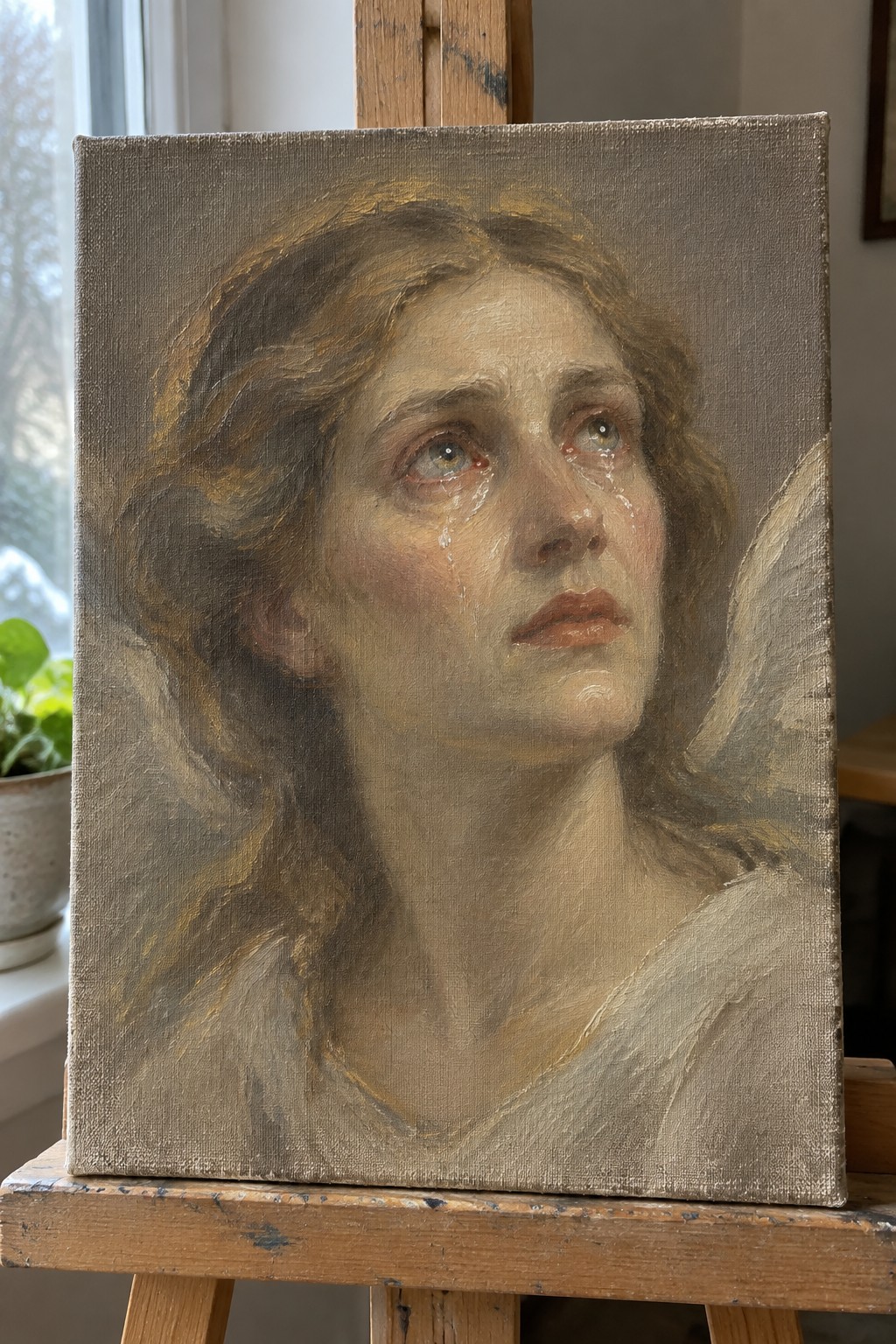
A crying angel portrait idea focuses on a tight facial view where tears become the central detail that shapes the entire expression. The upward head angle and soft neutral tones create a simple structure that keeps attention on the eyes and skin without needing extra elements. This fits the category of expressive figurative painting that works well as a study in subtle value changes and light on the face.
What makes this idea useful is how the single subject and plain background remove most setup decisions so you can concentrate on the face itself. The muted palette adapts easily if you want to shift toward cooler or warmer tones while keeping the same layout. For practice, the clear tear lines and eye direction give you a specific target that still leaves room to adjust the angle or crop tighter for a different result.
Close-Up Angel Portrait with Oversized Eyes and Visible Tears

A portrait idea built around a young face with large, glossy eyes and dark tear lines running down the cheeks. The halo sits directly above the head while soft wings frame the lower sides, keeping the focus tight on the expression rather than the full figure. Muted yellows, pinks, and cool background tones create a gentle contrast that lets the face and tears remain the clearest elements.
What makes this idea useful is the centered face that takes up most of the space, which makes it simple to practice eye shape and tear placement without needing complex backgrounds. The light color palette is easy to adjust by changing the hair tone or background wash while keeping the same layout. For practice, you can crop tighter around the eyes and cheeks to turn it into a shorter study. The square format also works well for small canvas sizes when you want a quick wall piece.
Angel Portrait with One Falling Tear

This painting idea centers on a tightly cropped angel face where the main focus stays on the eye and the single tear running down the cheek. The wing appears only partially on the left, acting as a soft supporting element rather than a full figure. Loose washes and blended edges around the hair and background keep the composition simple while still directing attention to the facial detail.
What makes this idea useful is how the off-center wing lets you practice portrait work without committing to an entire body or detailed feathers. The muted brown and blue palette adapts easily to different paper sizes or even sketchbook studies. You could shorten the hair or reduce the background wash to make it quicker for practice or turn it into a small decorative piece for a gallery wall.
Angel Portrait with Golden Halo and Flowing Tears

A close facial study of an angel works well here because the eyes and the long tear streaks pull attention straight to the center of the composition. The loose hair and soft wing shapes on either side frame the face without competing with it, while the thin gold halo sits lightly above to keep the focus on the expression. This kind of idea fits the portrait category and leans on simple layering of skin tones and wet highlights rather than busy background detail.
What makes this idea useful is how the face fills most of the space, so you can practice proportions and water blending without planning a full scene. The muted background and limited gold accents make it easy to scale down for smaller paper or switch the medium to colored pencils if you want cleaner lines on the tears. For wall pieces it stays calm enough to fit different rooms, and you can simplify the wings further or change the hair color to match whatever reference you have on hand.
Angel Portrait with Oversized Faceted Teardrops

This painting idea focuses on a close-up angel face where the main feature is a pair of large, multi-sided teardrops that extend down from the eyes like earrings. The composition keeps the face centered with a flat blue background and small gold stars to frame the figure without competing for attention. The warm skin tones and blue clothing create enough contrast to let the clear drops read as the strongest element in the piece.
What makes this idea useful is how the teardrops can be built with a few overlapping oval shapes and simple light reflections rather than tricky gradients. The limited color range of blues, golds, and peach tones makes it easy to adapt for smaller canvases or greeting cards. You could shorten the drops, change the star pattern, or remove the wings entirely if you want a quicker version. The strong central shape also helps the finished piece read clearly even at thumbnail size, which works well for sharing online.
Freckled Angel Portrait with Streaming Tears

A close-up portrait of a crying angel keeps the entire focus on the face by framing it with soft white wings on both sides. This painting idea works through a muted palette of warm skin tones, dusty pinks, and cool grays that let the clear tear tracks stand out without competing elements. It belongs in the expressive portrait category where small details like freckles, wet skin, and slightly parted lips carry the visual weight.
What makes this idea useful is the way the wings create natural borders that simplify the composition and reduce the need for extra background work. The color choices stay easy to adjust toward cooler or warmer tones depending on the mood you want, and the tight crop makes it straightforward to scale down for smaller canvases or studies. For practice, this subject builds skill with skin texture and subtle highlights while still looking complete on its own as wall art or a standalone piece.
Close-Up Watercolor of an Angel’s Tear-Streaked Face

This painting idea focuses on a tight facial portrait of an angel where the main interest comes from the eyes and the way tears run down the cheeks in uneven lines. The loose blue washes around the head create a soft frame that keeps attention on the center of the face without competing details. The approach fits the category of emotional portrait studies because the wet blending handles skin transitions and eye reflections in one layer rather than building up many small shapes.
What makes this idea useful is how the cool blue and muted skin tones limit the color choices so you can concentrate on the eye area and tear placement. The vertical crop works well for smaller paper sizes if you want a quick practice piece or a set of similar studies. You can adapt it by shifting the head angle slightly or reducing the background wash to just a few strokes when you need faster versions for gifts or sketchbook pages.
Close-Up Angel Portrait with Upward Gaze and Single Tear

A portrait-style angel painting idea centers on the face, using an upward gaze and one visible tear to create the main point of interest. The composition keeps the halo and wings as soft background elements so the eyes, brows, and mouth carry the expression. A muted mix of browns, golds, and blues in the hair and clothing helps hold attention on the facial details rather than spreading it across the whole figure.
What makes this idea useful is how the single tear gives an immediate focal point that works even on a smaller canvas. The limited color range makes it simple to adjust the tones if you want a cooler or warmer version for different rooms. For practice, this kind of subject lets you focus on eye shape and subtle skin blending without needing to invent a full scene or background.
Angel Face with Halo and Tear Focus

This painting idea centers on a close-up angel portrait that uses the face as the main subject to showcase streaming tears and wet eye details. The composition frames the head with soft wings on both sides and a thin halo above, while a muted green-brown palette and visible brushstrokes keep the background simple so the expression stays front and center. It works as an expressive figurative piece where the off-center placement and limited color range make the facial details the clear priority.
What makes this idea useful is how the tight crop on the face removes the need for a detailed setting, so you can focus practice time on skin texture and tear rendering. The earthy palette is easy to mix from a small set of colors, and you could adapt it by softening the halo or changing wing placement to fit a different canvas size. For wall art, this kind of centered angel study stands out on Pinterest because the tears create an immediate focal point that reads clearly even at small thumbnail sizes.
Close-Up Crying Angel with Oversized Eyes and a Single Tear

A portrait-style angel painting works by centering attention on a young face with large blue eyes and one small tear on the cheek. The teal background and dotted gold halo keep the composition simple while the patterned collar and wings add just enough detail to support the face without competing for focus. This kind of idea fits decorative portrait work because the exaggerated eye size and minimal tear make the expression easy to read from a distance.
What makes this idea useful is how the large eyes and single tear give you a clear way to practice facial emotion without painting a full body or complex scene. The teal and gold palette can be swapped for other background colors or clothing details if you want to change the mood. For wall art or quick practice pieces, the basic wing shapes and halo dots stay simple enough to finish in one session while still looking complete.
Angel Face Study with Streaming Tears

A close-up portrait of an angel focuses on the idea of showing emotion through tears that run down the cheeks and catch light on the skin. The three-quarter angle and tight crop keep attention on the eyes and mouth while the hair and wing edges create a natural frame around the face. This type of painting idea works as an expressive portrait where the facial details carry the whole piece.
What makes this idea useful is how the centered face makes it straightforward to practice skin tones and eye shapes without needing a full figure. The soft color shifts around the tears give you room to adjust the palette or hair color for different versions. For practice, this kind of subject stays manageable on a small sheet since the main work happens in one area. The wing detail can be simplified or left loose if you want to keep the emphasis on the face alone.
Frequently Asked Questions
What makes the facial expressions in these crying angel paintings so emotionally powerful?
The artists focus on subtle details like quivering lips, glistening tears along the cheeks, and furrowed brows to convey deep sorrow. Studying close-up images helps viewers notice how light and shadow play across the eyes and skin to heighten the sense of vulnerability and divine grief.
Who are the main artists behind the 18 expressive crying angel paintings featured?
Many come from Renaissance and Baroque masters such as Guido Reni and modern interpreters who draw on classical styles. Each artist brings unique approaches to rendering wet eyes and flowing hair, allowing the collection to span centuries while keeping the emphasis on intimate facial emotion.
Where can someone find high quality prints or view the original paintings from this collection?
Reproductions are often available through reputable art print sites that specialize in museum quality giclee prints. For originals, check major museum databases or auction records, as some reside in European galleries while others appear in private holdings open for occasional public exhibits.
What techniques do artists use to capture realistic tears and skin textures in these angel faces?
Layers of translucent glazes build up the moist look of tears, while fine brushwork creates pores and subtle color variations in the skin. Beginners can practice by mixing small amounts of white with cool tones for highlights on tear trails and using dry brushing for delicate eyelid creases.
How can these paintings inspire someone learning to paint expressive human emotions?
Examine the way each angel’s gaze directs the viewer’s attention and how slight head tilts amplify feelings of longing. Try copying sections of the faces in your own sketches to understand how minimal changes in mouth shape or eyebrow angle transform a neutral expression into one full of pathos.