I’ve always liked looking at old religious paintings because they show feeling without needing much explanation.
When I came across crucifixion scenes I started noticing how each artist approached the same story in their own way.
Some of them caught my eye because the figures looked tired or pained in a way that felt familiar from real life.
Over time I put together a list of 20 that seemed worth sharing here.
Painting people myself has made me notice the small choices these artists made with light and posture.
Close-Up Portrait Focused on Thorns and Blood Trails
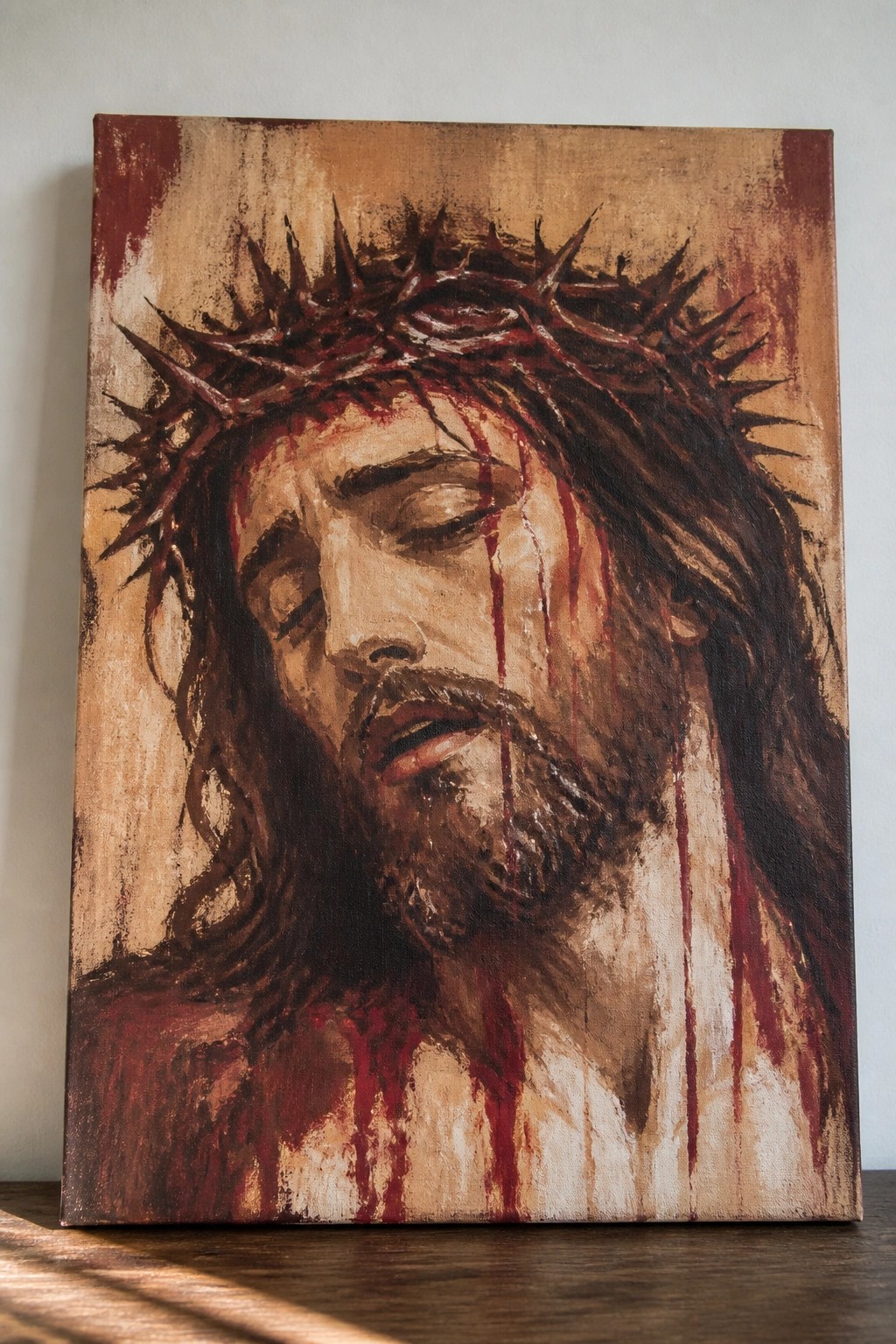
A strong painting idea here is a tight portrait of Christ wearing a crown of thorns, with blood running in vertical streaks down the face and neck. The composition works by angling the head slightly and filling most of the frame with the face and hair so the thorns create sharp points against the softer features. Warm browns mixed with reds and off-white skin tones keep the palette simple while the brush marks add texture to the hair, beard, and background.
The composition does a lot of the work here by using a plain textured background that lets the face and blood stand out without extra elements. You can adapt the idea by changing how much blood shows or shifting the head angle a bit to fit different canvas sizes. For practice this kind of subject helps with building skin tones and making the thorns look dimensional without needing complex scenery. It would work well for wall pieces because the direct crop keeps the focus clear even when viewed from a distance.
Silhouetted Crosses on a Hill Under a Dramatic Sky
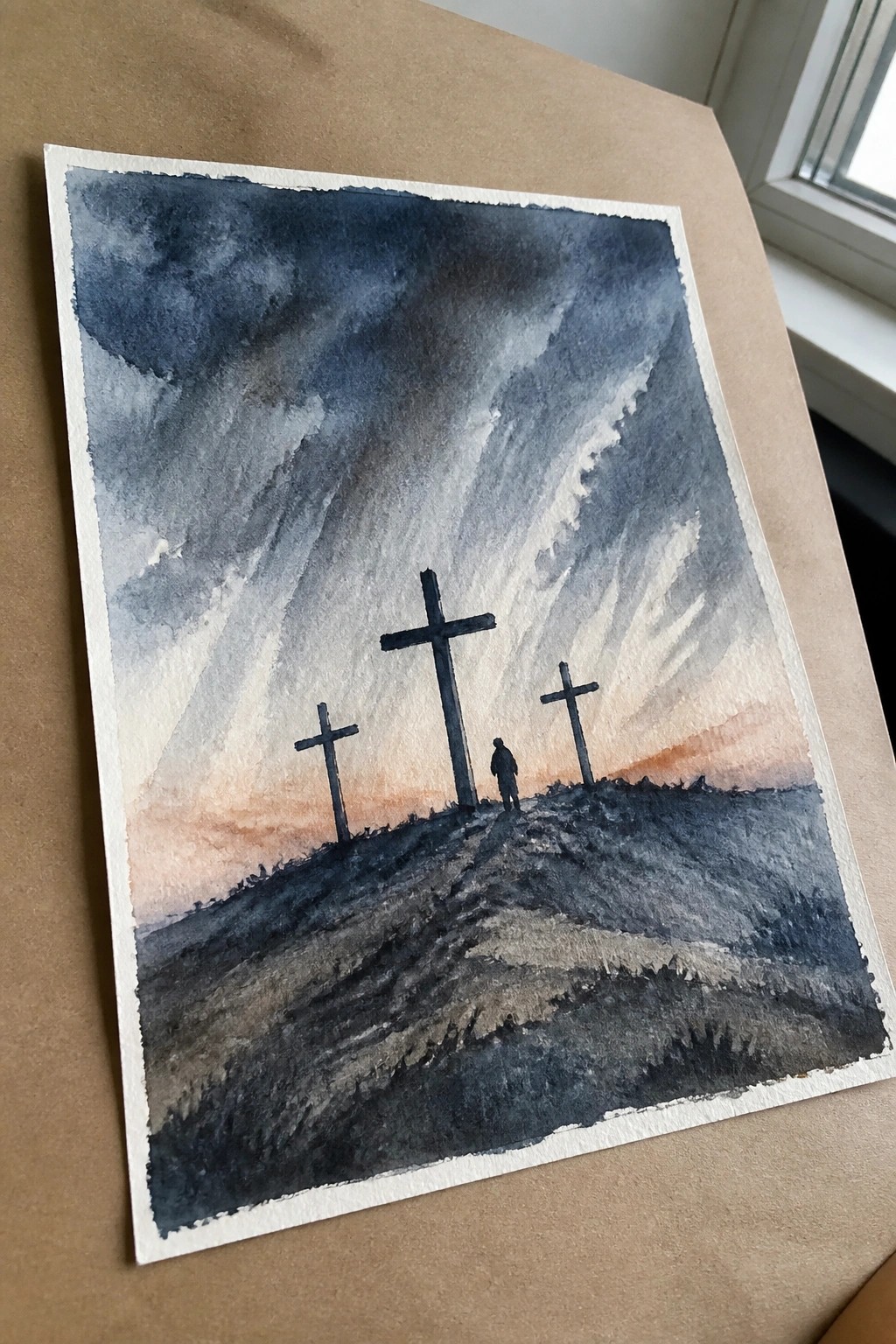
A crucifixion scene with three crosses arranged along a ridge gives a clear landscape idea built around simple vertical shapes against a changing sky. The painting idea centers on the hill path leading the eye forward while the sky shifts from dark storm clouds to a narrow band of warm light near the horizon. This fits the dramatic landscape category where bold silhouettes and layered sky washes create the main impact without needing detailed figures.
The composition does a lot of the work here by keeping the crosses and figure as dark shapes so the sky carries the interest. You can adapt the idea easily by changing the sky colors for a different time of day or swapping the crosses for other tall forms like trees or poles. For wall art this layout works well because the strong horizon line and path give structure while the limited detail keeps it quick to paint in watercolor or acrylic.
Three Crosses with a Group at the Base
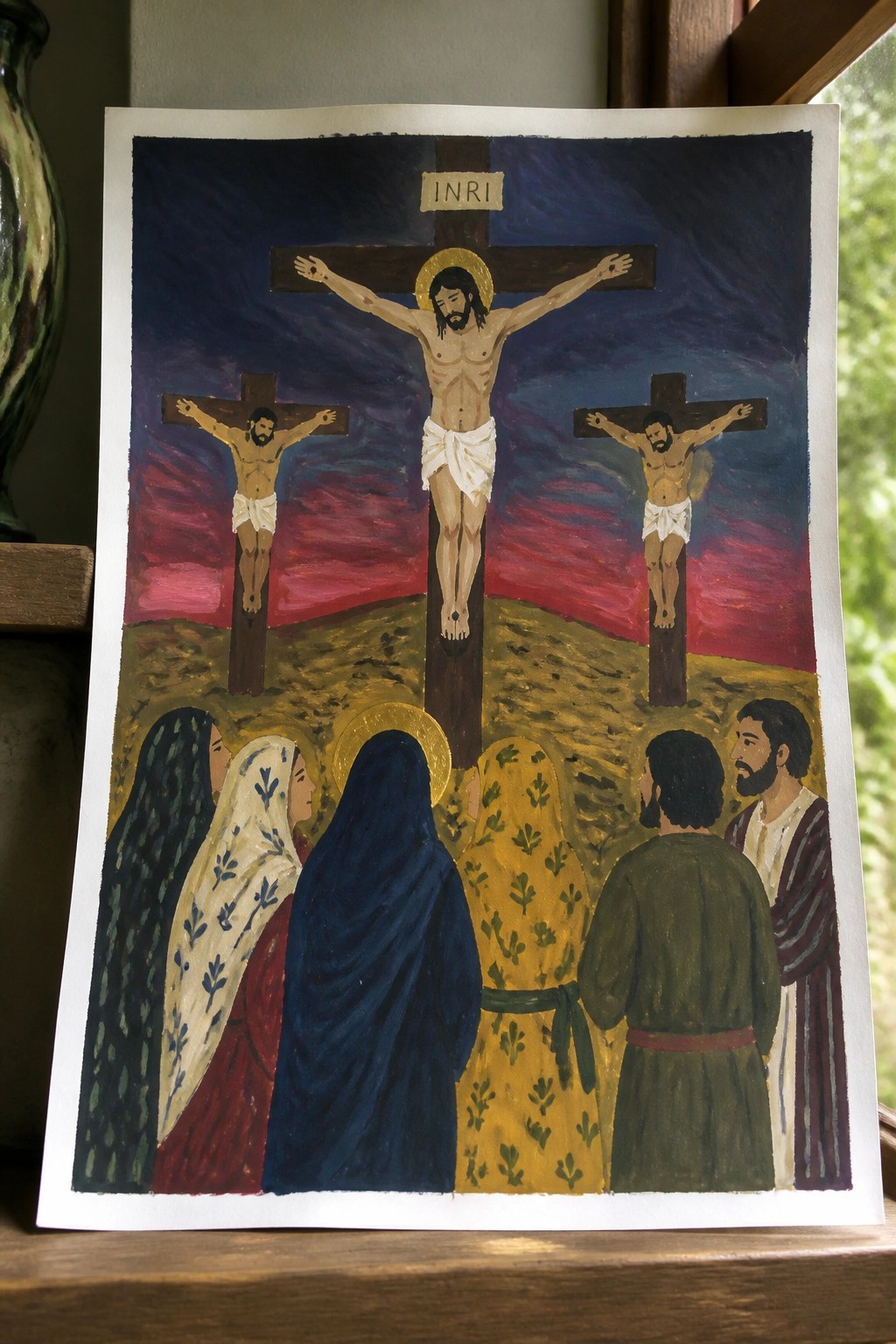
A strong central cross holds the main figure while two smaller crosses sit on either side against a sky that moves from deep blue to red and pink near the horizon. The lower half shows a row of standing figures in simple robes that create a solid base and keep the eye moving upward to the crosses. This setup works as a straightforward religious narrative painting where the vertical lines and layered ground plane give the scene clear depth without needing fine detail.
The composition does a lot of the work here by keeping the three crosses evenly spaced and using the foreground figures to anchor the bottom edge. You can adapt it by reducing the number of lower figures or changing the sky to a single color wash if the full gradient feels too busy. For practice this kind of subject is useful because the main shapes stay readable even when the brushwork stays loose, and the same layout can be cropped tighter for a smaller canvas or stretched wider for a larger wall piece.
Crucifixion Scene with Dramatic Sunset Backdrop
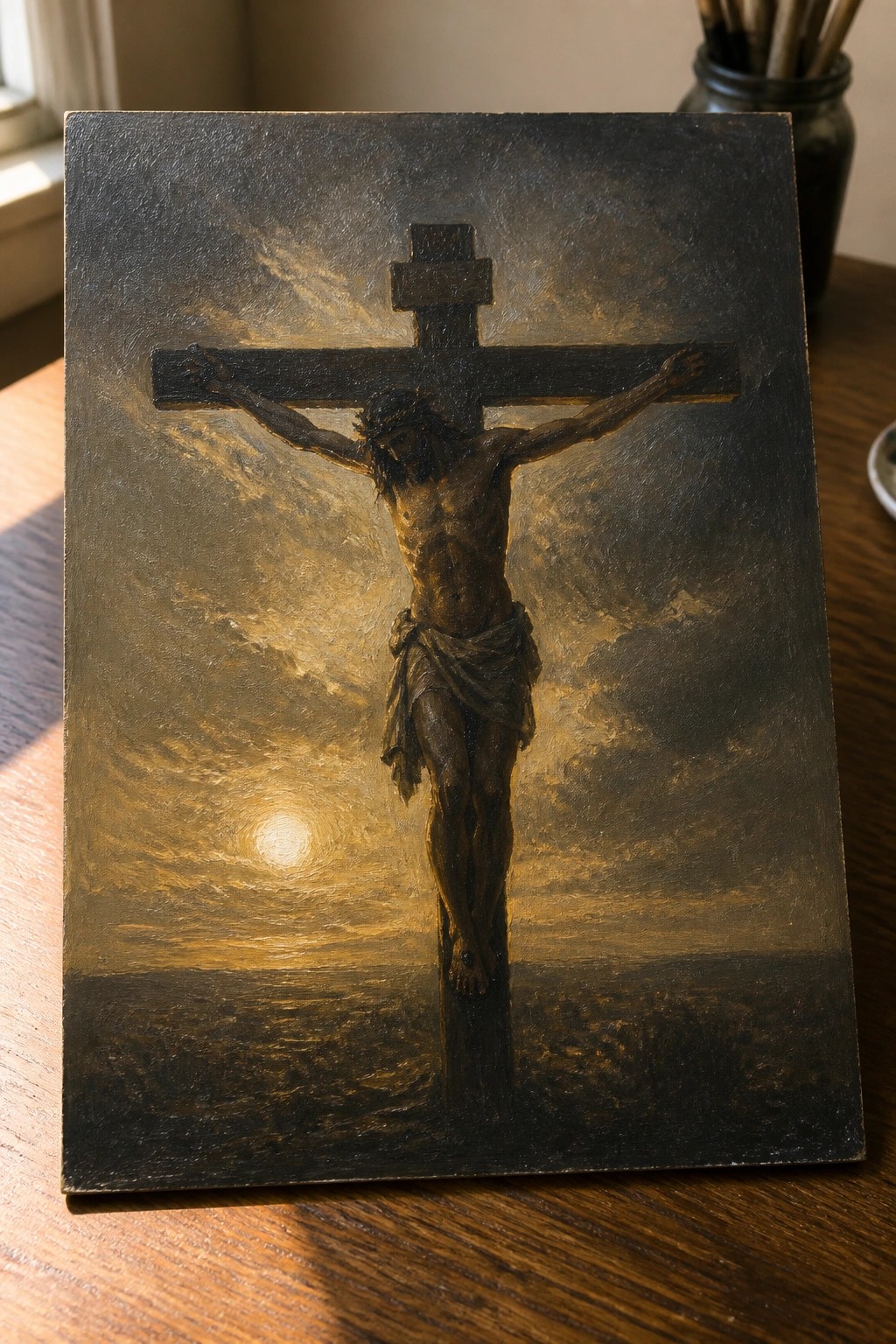
A crucifixion painting centers the figure on the cross against a low sun over water to create a strong silhouette and directional light. The wide horizontal beam of the cross balances the vertical post while the glowing horizon sits low to pull the eye upward. This approach fits the dramatic religious figure category where the landscape supports the main subject through contrast rather than competing details.
The single bright light source makes it simple to practice edge lighting and value shifts on the torso and limbs. You can change the sky to a darker storm or a cooler dawn while keeping the same cross placement and figure angle. For wall pieces the limited color range keeps the focus tight so the idea works even at smaller sizes.
Hands Nailed to a Cross with Dramatic Sky Backdrop
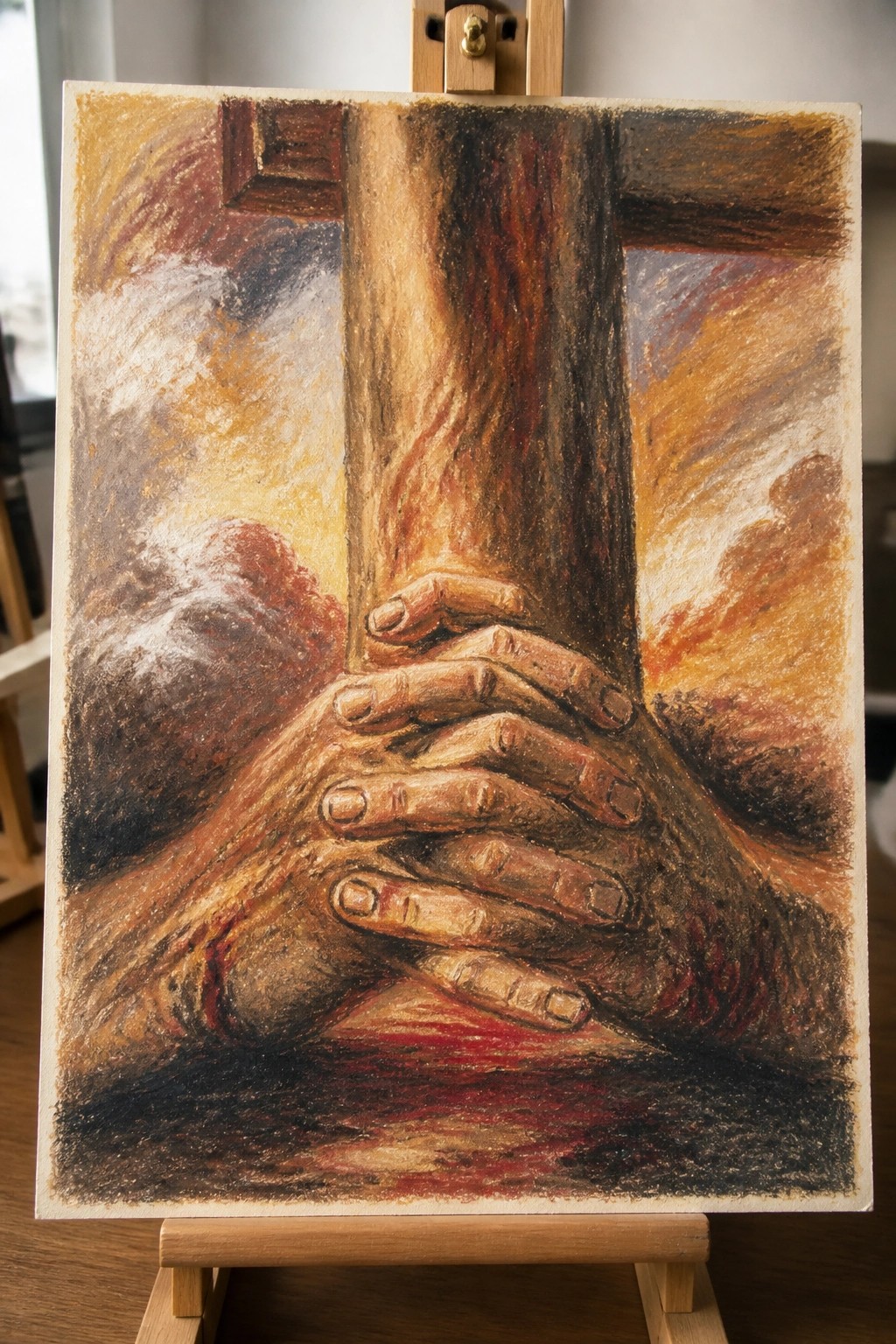
A strong painting idea centers on a close-up of hands fixed to a wooden cross, with the fingers overlapping and the grain of the wood clearly visible. The composition places the hands low in the frame so the vertical beam leads the eye upward, while the background uses contrasting warm and cool tones to separate the subject from the sky. This approach belongs to the dramatic figurative category and works because the tight crop keeps the focus on the hands and the simple cross shape.
What makes this idea useful is the vertical layout that naturally fits a cross form without extra planning. The color split between the dark lower area and the lighter sky gives an easy way to adjust mood by swapping in different background tones or softening the edges. For practice, the idea lets you work on hand positioning and wood texture without needing a full figure. The same setup could be scaled down or turned into a study by keeping just the hands and a single beam.
Floral-Framed Crucifixion with Mourners Below

A crucifixion painting idea that places the central cross against a dense backdrop of oversized flowers in warm reds, oranges, and teals. The composition keeps the cross as the vertical anchor while four standing or kneeling figures occupy the lower half in balanced groups on each side. This approach mixes a traditional religious subject with a decorative floral pattern that fills negative space and adds repeating shapes around the main scene.
The composition does a lot of the work here by using the cross and the flower clusters to guide the eye without needing complex perspective. You could simplify it by cutting the flower count in half or swapping the background colors for a cooler palette if you want a different mood. For wall art, the clear central focus and flat color blocks make it easy to scale up or down while keeping the same structure.
Loose Watercolor Crucifixion with a Kneeling Figure at the Base
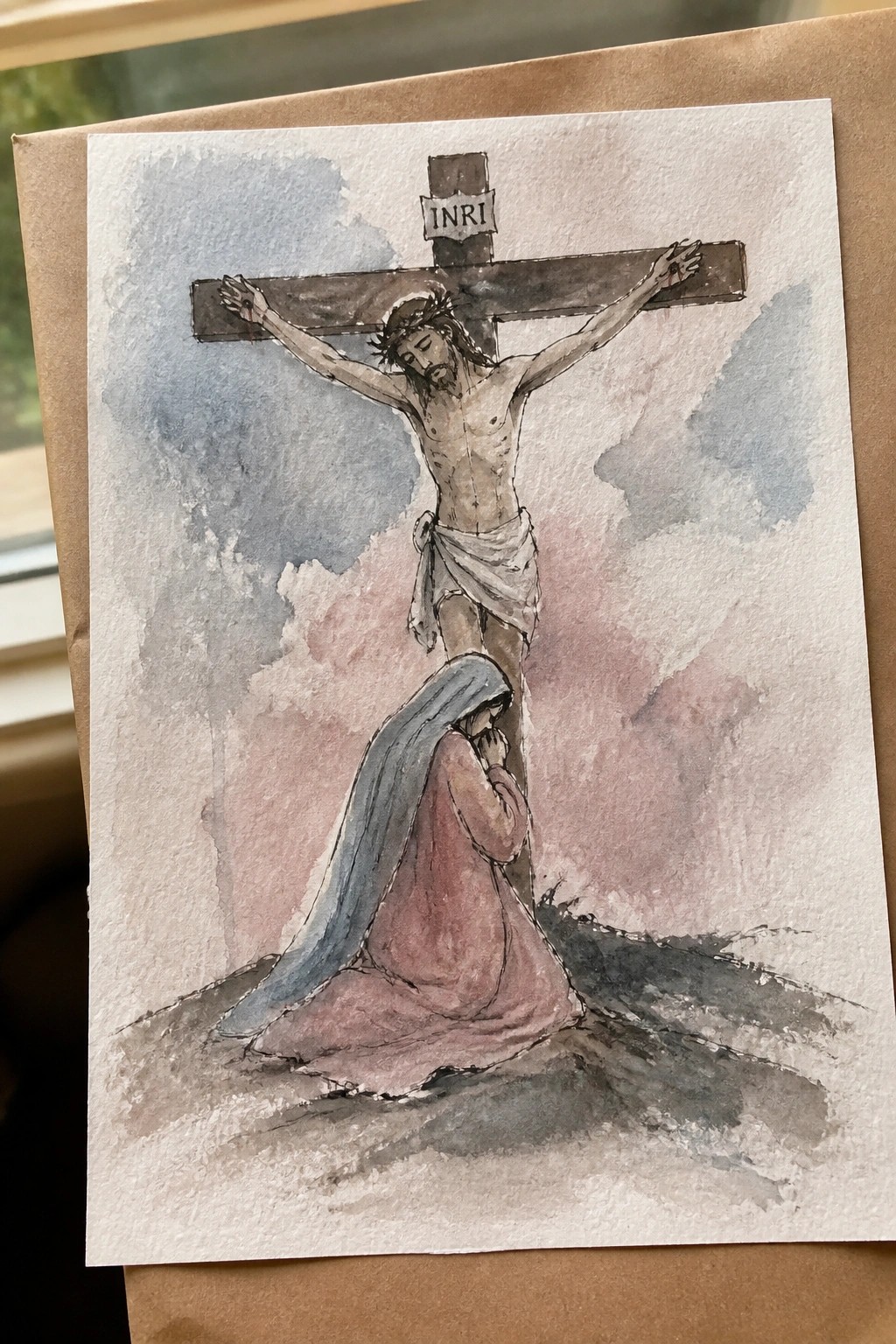
A crucifixion painting idea that centers on the vertical line of the cross and pairs it with a compact kneeling form directly beneath it. The concept uses soft overlapping washes in muted blues, pinks, and browns to suggest space while the figures stay anchored by simple line work. This approach fits the dramatic religious scene category where the main impact comes from the contrast in posture and scale rather than fine detail.
What makes this idea useful is the strong vertical structure that helps with placement on the page and keeps the eye moving from top to bottom. The muted palette makes color mixing simple and lets you adjust wash strength without overcomplicating the piece. You could easily scale it down for a card or crop the background washes tighter if you want a quicker study. For practice this subject gives clear proportions to work from while still leaving room to change the kneeling pose or background softness.
Hilltop Cross Framed by Layered Sunset Colors
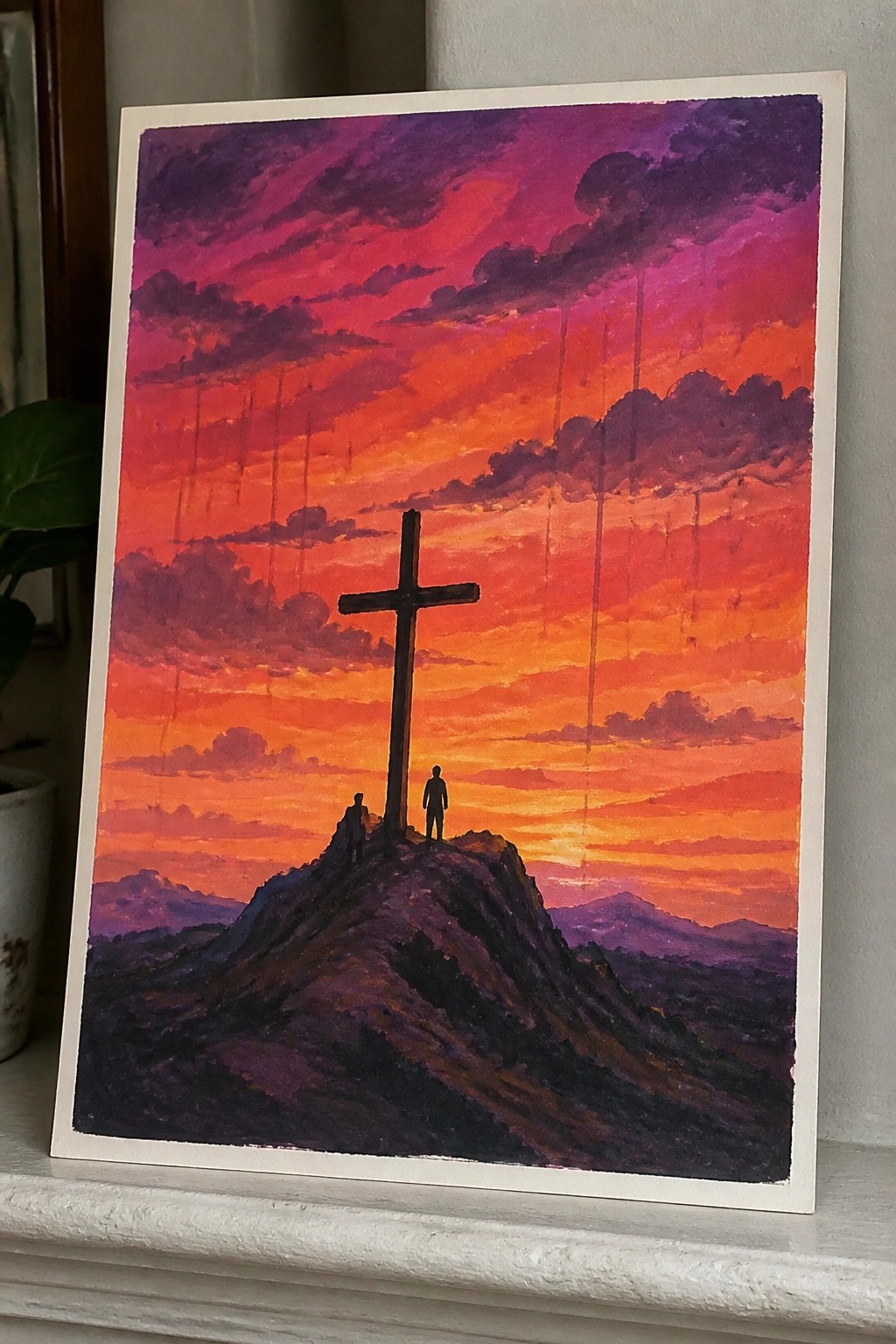
A crucifixion idea built around a large cross placed on a rocky hill works well as a dramatic landscape painting. The main elements are the strong vertical shape of the cross, two small standing figures at its base, and a sky filled with horizontal bands of orange, red, and purple that stretch across the full width. This setup lets the sky carry most of the visual weight while the dark hill and cross create a clear focal point without extra detail.
What makes this idea useful is how the sky layers do the heavy lifting for mood and depth, so you can start with broad color washes before adding the hill and cross as simple dark shapes. The limited number of elements makes it straightforward to adjust the horizon line or swap in different sunset tones if you want a warmer or cooler version. For wall pieces, the vertical cross against the wide sky gives strong contrast that holds up at different sizes. You could also drop the figures entirely and keep just the cross and sky for a more minimal take.
Expressive Crucifixion Built with Thick Textured Layers
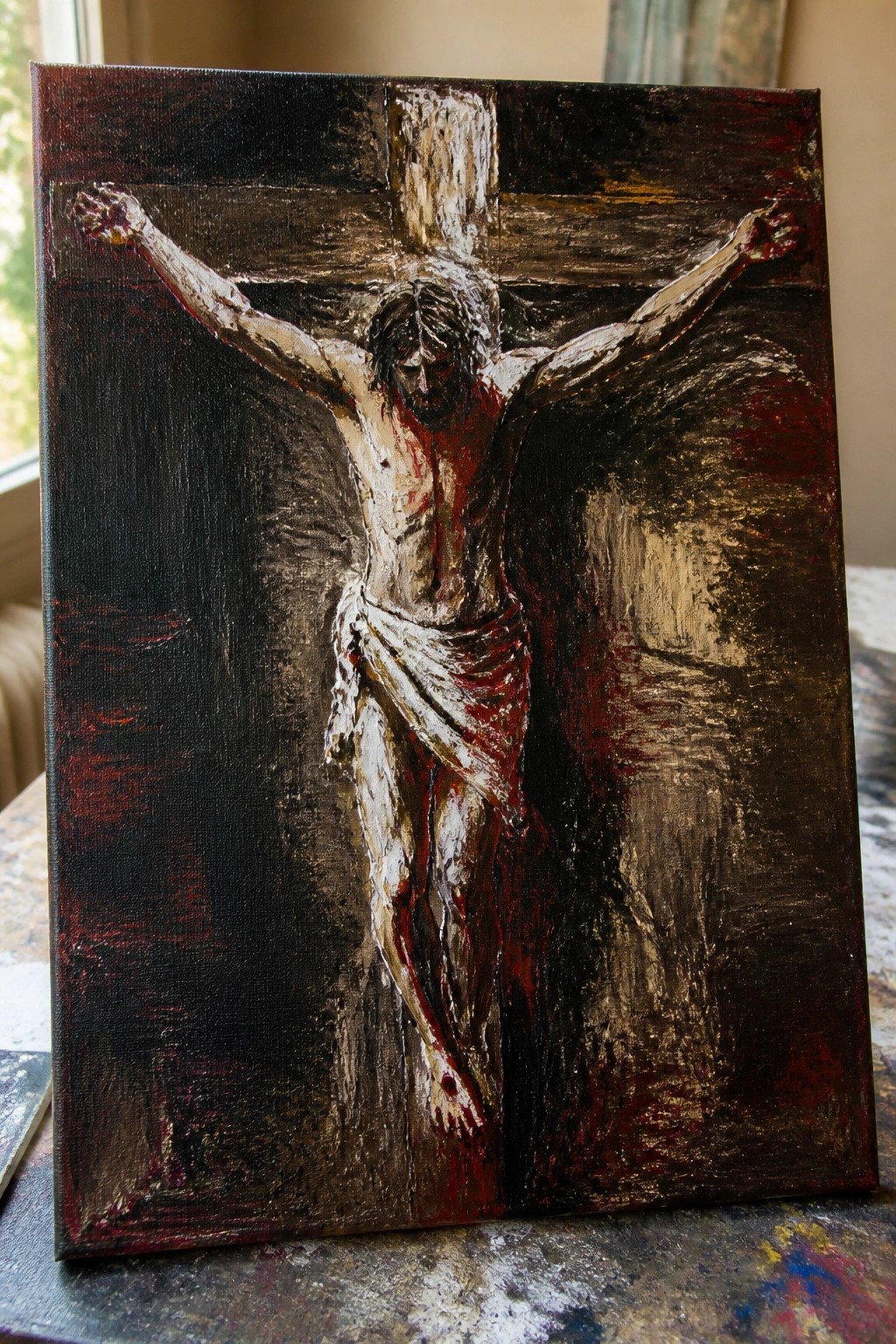
A crucifixion scene works here as a dramatic religious subject painted with heavy, visible brushstrokes that sculpt the figure against a nearly black background. The idea centers on strong contrast between the pale skin tones and the deep reds and browns that define the body and cloth. This category of figurative work relies on loose, directional strokes rather than fine detail to hold the composition together.
The composition does a lot of the work here by keeping the cross and figure centered while letting the dark ground fall away at the edges. A painting like this adapts easily to different sizes since the limited palette of black, white, and red keeps mixing simple. You could try the same approach on a smaller canvas by focusing on the same central placement and building up texture only around the torso and arms. For wall pieces it stands out because the high contrast makes the image readable even from across a room.
Lone Cross on a Layered Hill Landscape
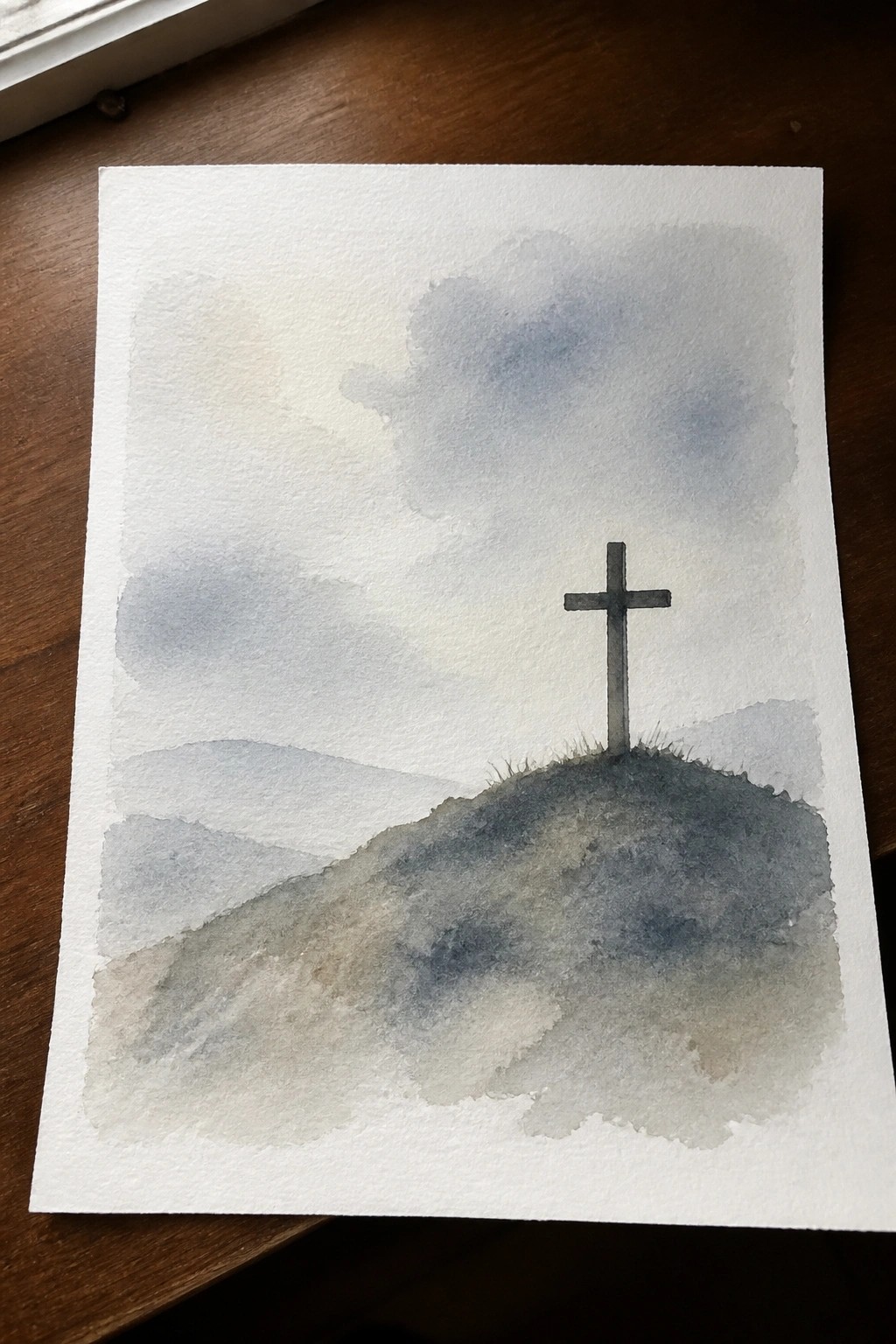
A single dark cross placed at the top of a rounded hill serves as the main focal point, set against soft overlapping layers of distant hills and a muted sky. The idea relies on simple shapes and gentle color washes to keep attention on the cross while the background hills create depth through overlapping tones of gray, blue, and beige. This approach fits into landscape painting with a symbolic element, where minimal detail and blended edges let the composition stay calm and direct.
The composition does a lot of the work here because the cross needs little detail to stand out once the hills are blocked in. A painting like this works especially well for practicing wet-on-wet washes and learning how to build distance with cooler, lighter tones in the back. The color palette makes this easy to adapt by swapping in warmer or cooler grays depending on the mood you want, and the same layout can be scaled down for greeting cards or kept larger for wall pieces. For practice, this kind of subject lets you focus on shape and value without needing complex details.
Close-Up of Mourning Faces in Dark Tones

A tight grouping of three faces lets the painting idea focus on shared grief through overlapping forms and angled heads. The concept relies on a limited palette of deep reds, browns, and blues against a rough dark background to keep attention on the expressions. This approach works as figurative emotional portraiture where the main interest comes from the arrangement of the heads rather than a full scene or setting.
The composition does a lot of the work here by pushing the faces forward so the viewer connects with the expressions first. You could adapt the same idea by using a similar tight crop on any group of figures or by shifting the color range to suit a different mood while keeping the overlapping layout. For practice, the simple background makes it easier to study facial details without adding extra elements.
Cross with Crown and Symbolic Details
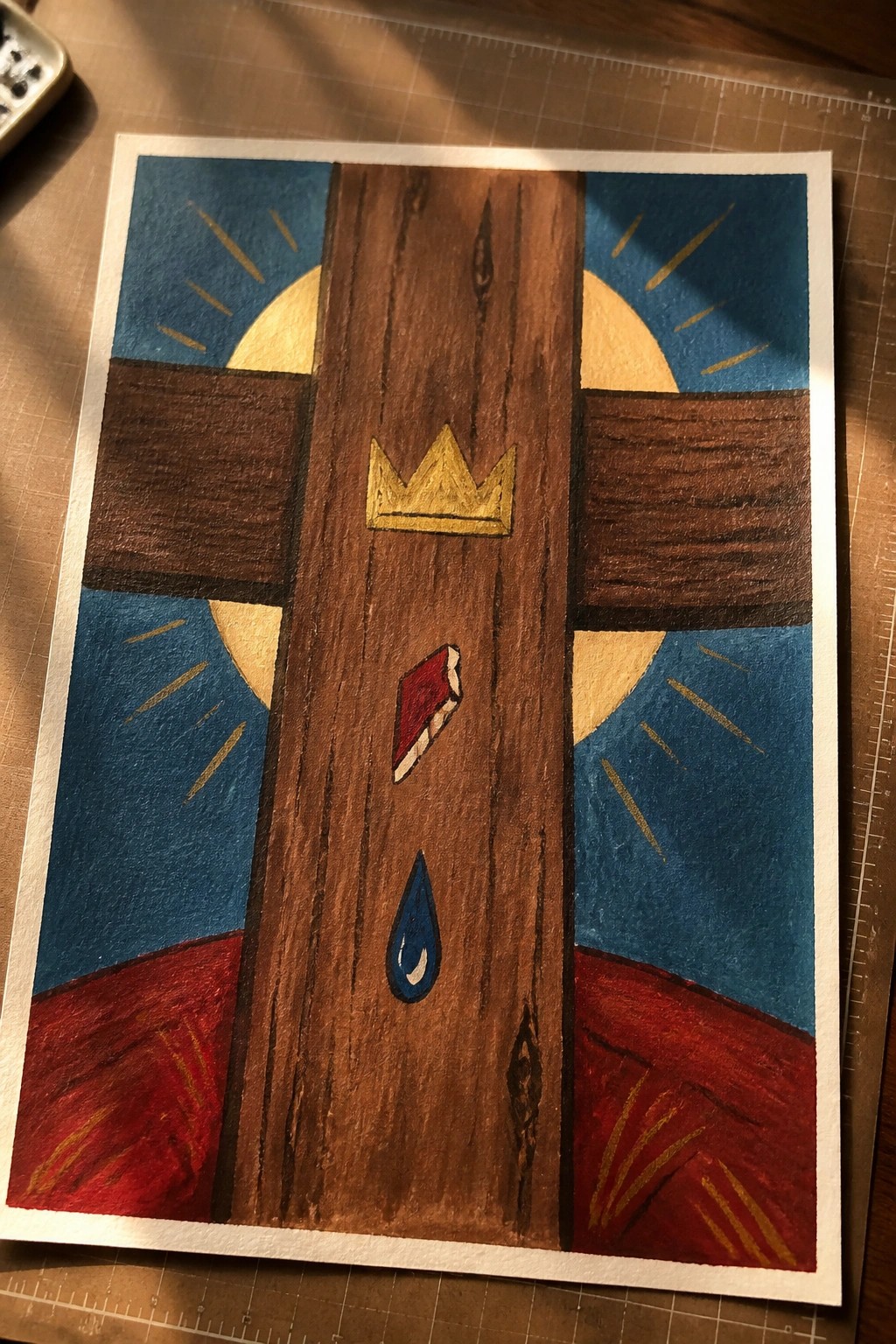
The main idea here is a tall wooden cross placed dead center, with three small items stacked vertically along its length against a symmetrical background split between blue sky and red ground. Golden half-circles and straight rays create a repeating pattern on either side that frames the cross without competing with it. This approach works as a simple symbolic or decorative religious piece, where the limited number of elements and strong vertical layout keep everything easy to read from a distance.
What makes this idea useful is the clean central focus that holds up even if you change the background colors or scale the whole thing down for a smaller canvas. The red and blue sections can be swapped for other contrasting tones if you want a different mood, and the small central items can be swapped out or left off entirely for a more minimal version. For practice, this kind of subject gives you a clear structure to follow while leaving room to adjust the details.
Silhouetted Crucifixion on a Moody Gradient Background
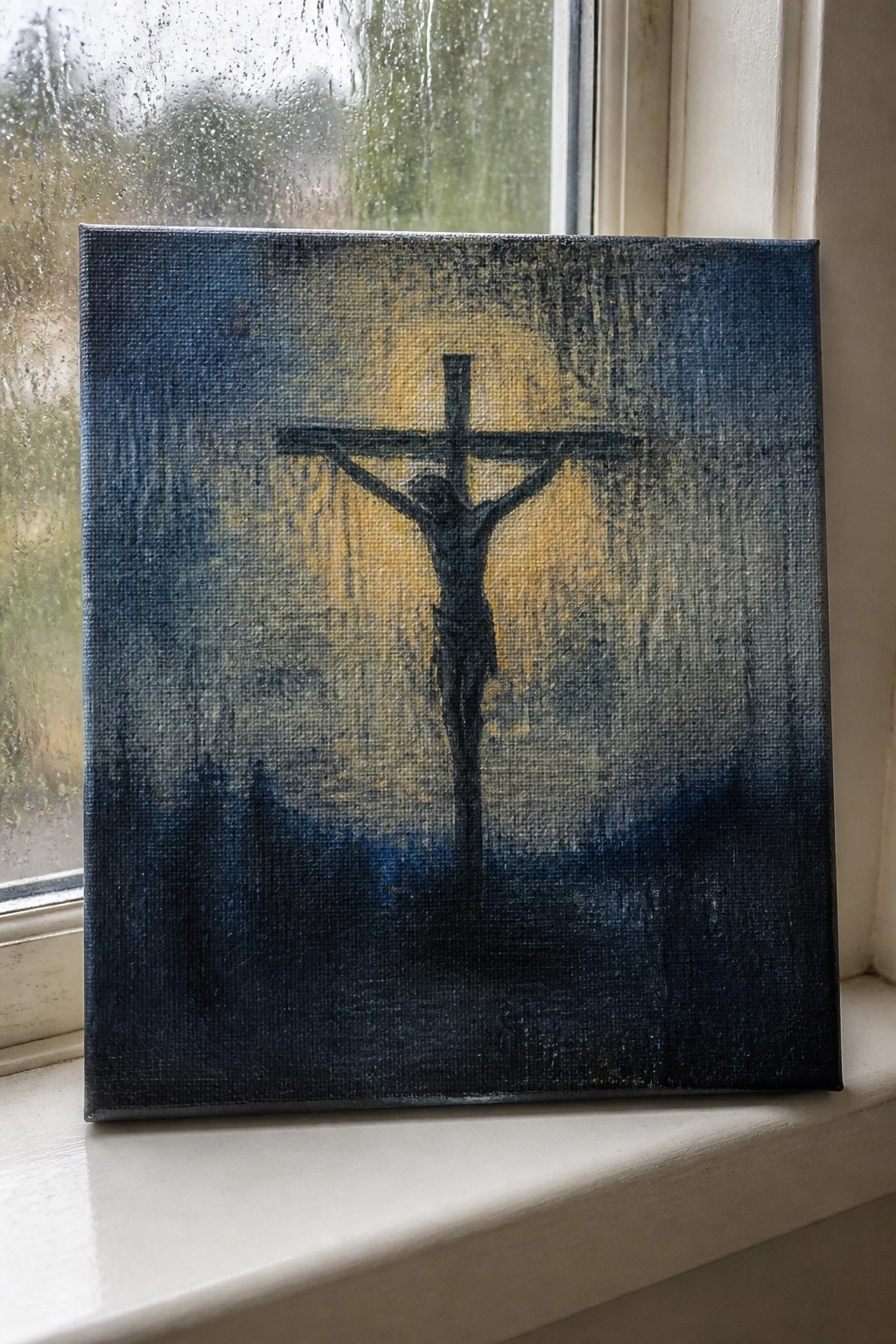
The core idea is a crucifixion figure reduced to a dark silhouette against a strong vertical gradient that moves from deep blue at the edges into a concentrated yellow glow directly behind the cross. This setup relies on high contrast and minimal internal detail to make the cross and figure readable from a distance. It fits the dramatic religious painting category where atmosphere and shape carry the composition more than line work or texture.
What makes this idea useful is the way the background handles most of the visual interest, so the figure itself can stay simple and still read clearly. The vertical format and centered placement work well for small canvases or quick studies where you want impact without complex anatomy. You could easily swap the blue-to-yellow shift for other dark-to-light pairs or crop the bottom third tighter if you want less negative space. For practice, the approach lets you focus on value control and edge softness rather than fine brushwork.
Low-Angle Cross Against a Moody Sky
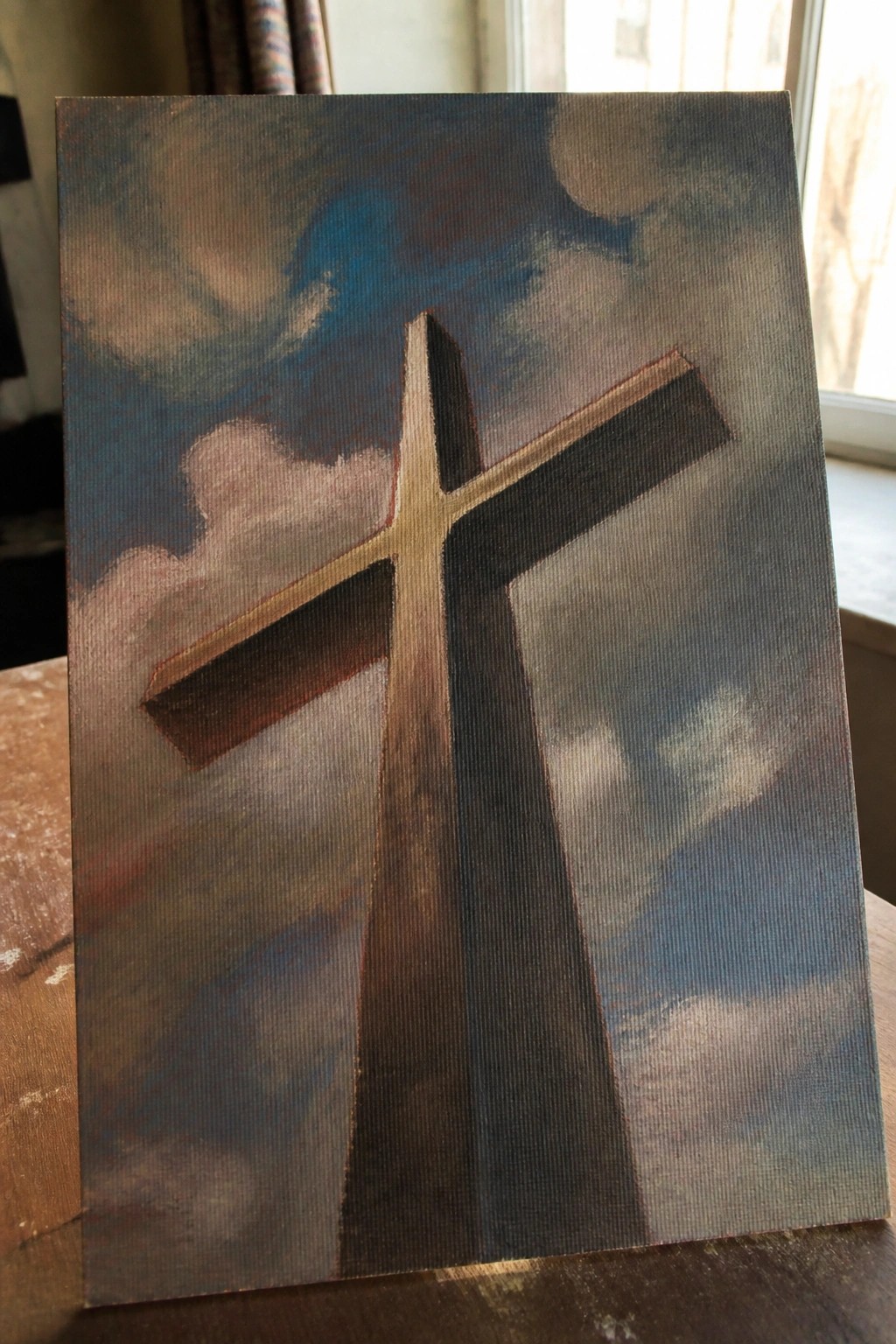
A large wooden cross painted from a low angle creates a strong vertical focus that fills most of the canvas. The idea relies on simple geometric shapes for the cross combined with blended cloud layers in muted blues, browns, and grays to build atmosphere around it. This approach works well as an atmospheric landscape piece where the background supports the central form without adding extra objects or fine detail.
What makes this idea useful is the clear focal point and limited palette, which reduces the need for complex color mixing. The composition can be adapted by shifting the sky tones to match different room colors or by changing the angle to make the cross appear taller or more distant. For practice, the basic shapes let you work on value contrast and soft edges before adding any extra elements. A painting like this also reads well in small sizes, which helps it stand out in a Pinterest feed.
Crucifixion Scene with Figures Grouped at the Base
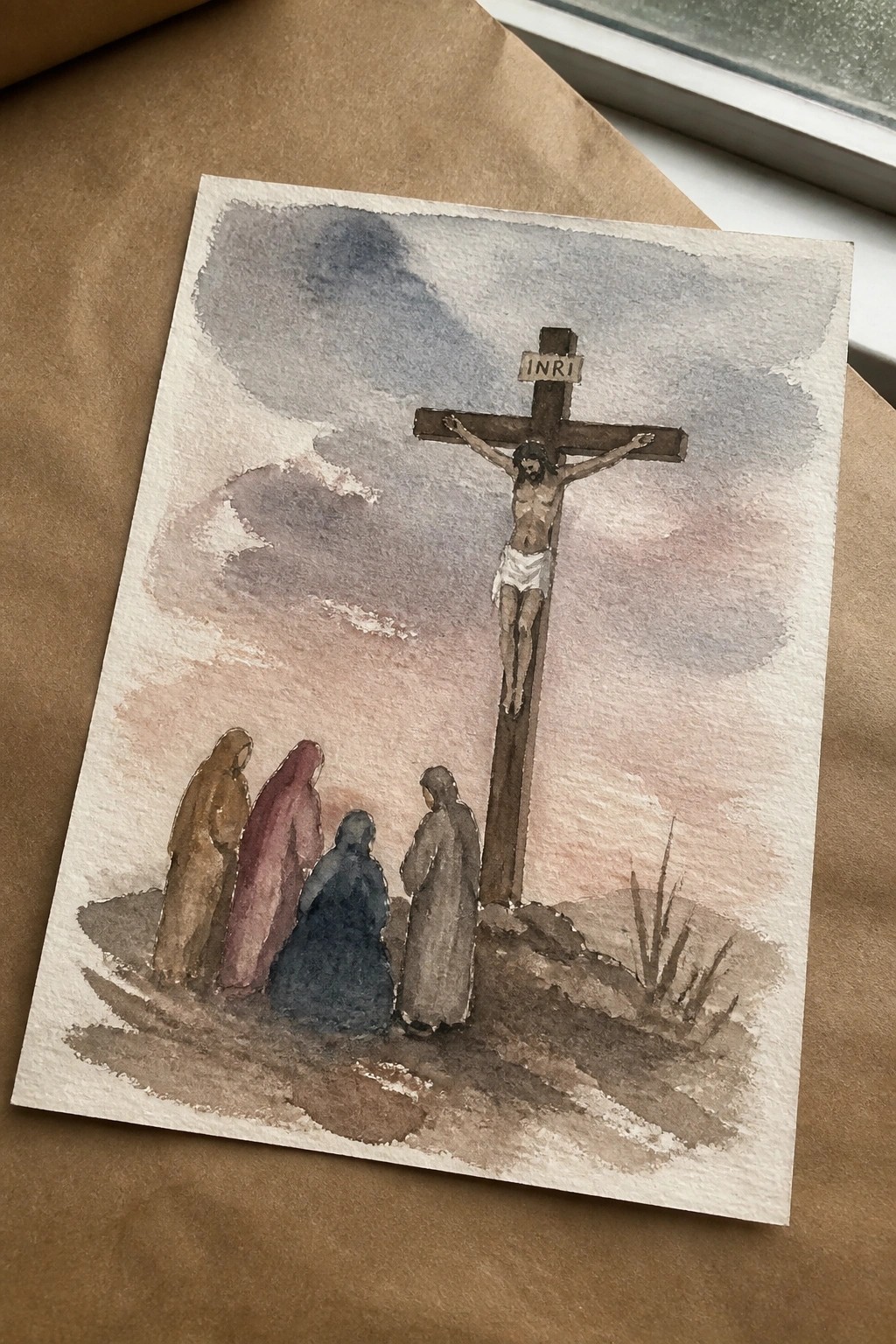
A strong vertical composition places the cross on the right side while a small cluster of robed figures occupies the lower left, creating clear visual balance between the central figure and the supporting group. The idea relies on a muted sky with soft washes that fade into the ground, keeping the focus on the main subject without extra detail or clutter. This approach suits narrative or religious painting styles where the layout itself carries the story through simple shapes and limited color shifts.
The off-center cross leaves open space that makes the scene easy to scale down or expand depending on paper size. Muted earth tones and sky blending can be swapped for stronger contrasts or kept loose for quicker studies. For practice, the idea works well as a study in proportion and placement rather than fine rendering, and the straightforward grouping of figures translates easily into personal variations for wall pieces or seasonal projects.
Abstract Crucifixion with Dripping Red Layers
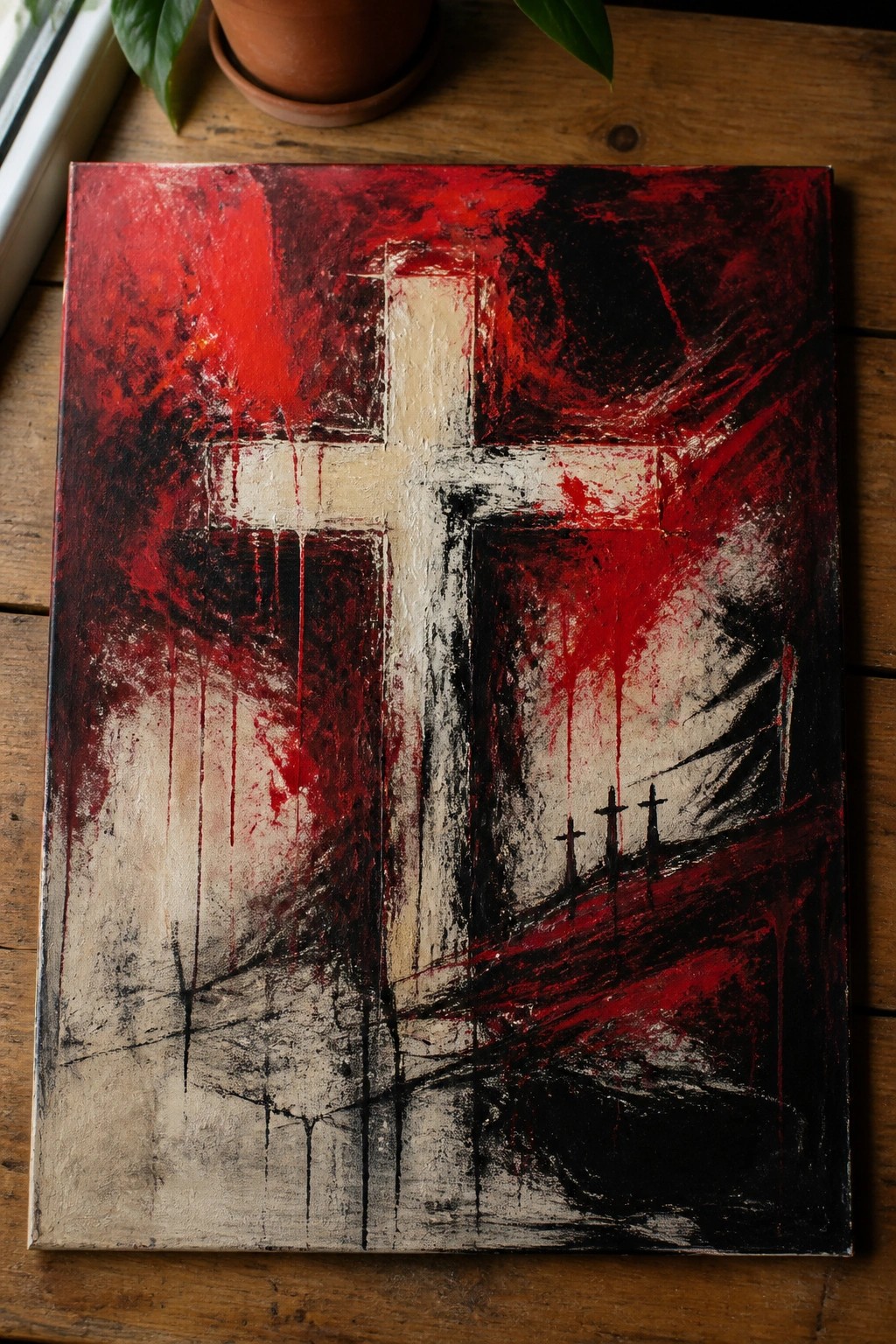
An abstract crucifixion idea centers on a large central cross built from bold white and black strokes set against heavy red and black paint application. The dripping red creates vertical movement that leads the eye downward while three smaller crosses sit lower in the distance to suggest depth. This type of painting idea works as dramatic religious abstract art where texture and color contrast carry the main impact instead of detailed figures.
What makes this idea useful is the way the red drips handle the emotional weight without requiring precise shapes. The limited color palette of red, black, and white makes it straightforward to scale up or down or swap in different reds for variety. For wall pieces, the strong vertical lines and high contrast help it read clearly from a distance. You could adapt it by reducing the number of drips or softening the background if you want a less intense version for practice.
Flat-Color Crucifixion Scene with Balanced Figure Groups
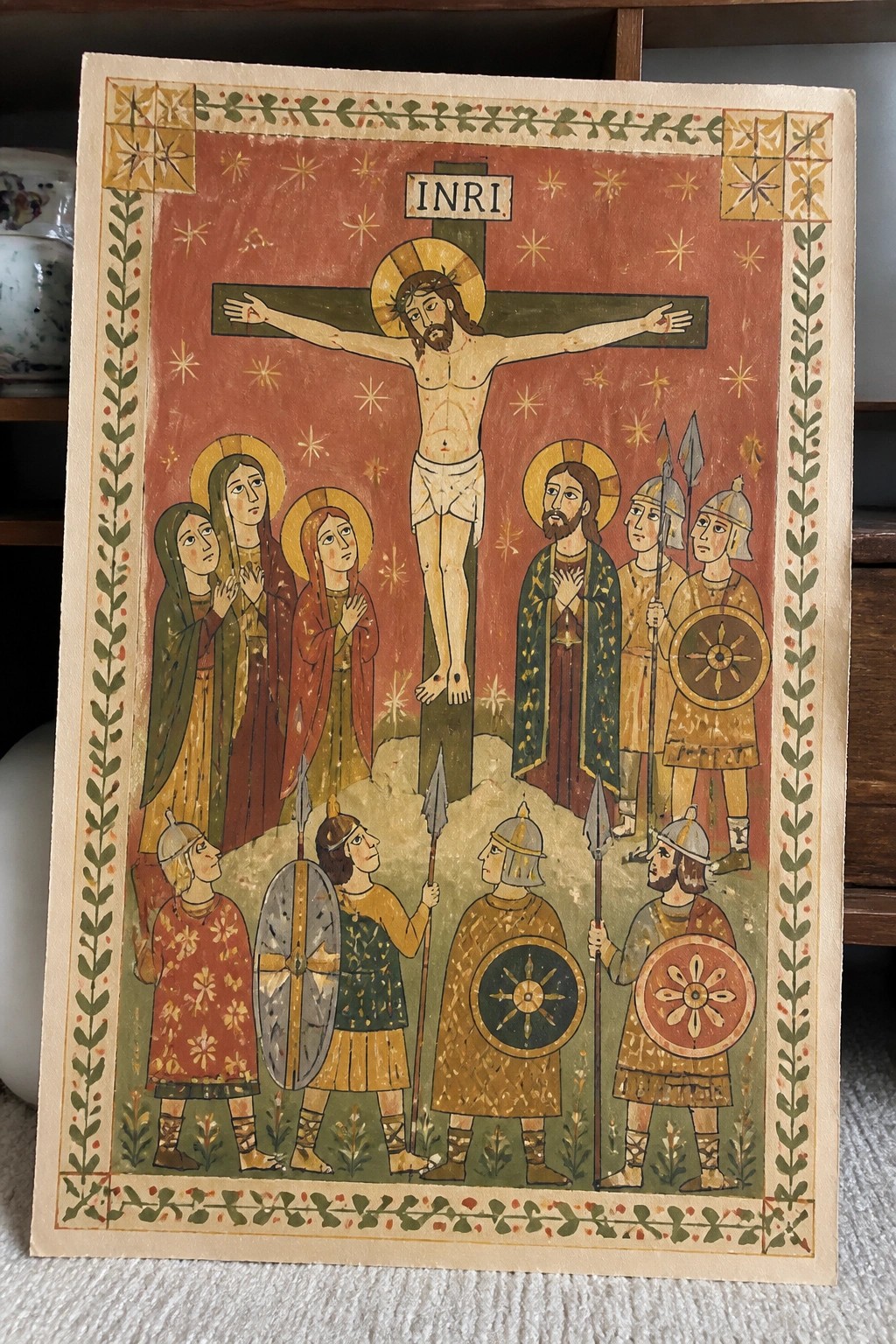
A crucifixion painting idea built around a central cross with figures arranged in clear groups on both sides. The concept uses a red upper section and green lower section to separate the space, along with a decorative border that frames the whole scene. This approach keeps the layout readable through symmetry and simple shapes rather than depth or shading.
What makes this idea useful is the way the figures are split into two balanced groups, which helps organize the composition without extra planning. The limited color areas and repeated patterns on clothing and shields make it easy to scale down for smaller canvases or to adjust the number of figures. For practice, this kind of subject lets you focus on placement and outlines first before adding details like the border or stars.
Soldier With Spear in a Barren Battlefield

A single standing soldier in a long coat and helmet holds a long spear angled downward across a flat, empty stretch of ground. The idea uses a strong vertical figure placed off-center against a wide, low horizon and distant broken shapes to keep the eye on the figure’s posture and the open space. Cool gray and blue tones with visible textured strokes give the scene weight without needing bright colors or extra objects.
What makes this idea useful is the straightforward vertical composition that holds attention even when the background stays minimal. The limited palette works with basic mixing and lets the spear and figure shape carry the impact. For practice it helps with balance and proportion on a vertical format, and the same setup can be adapted by swapping the ruins for a plain hill line or keeping the figure smaller for a wider landscape version.
Stark Crucifixion with Textured Cross Background
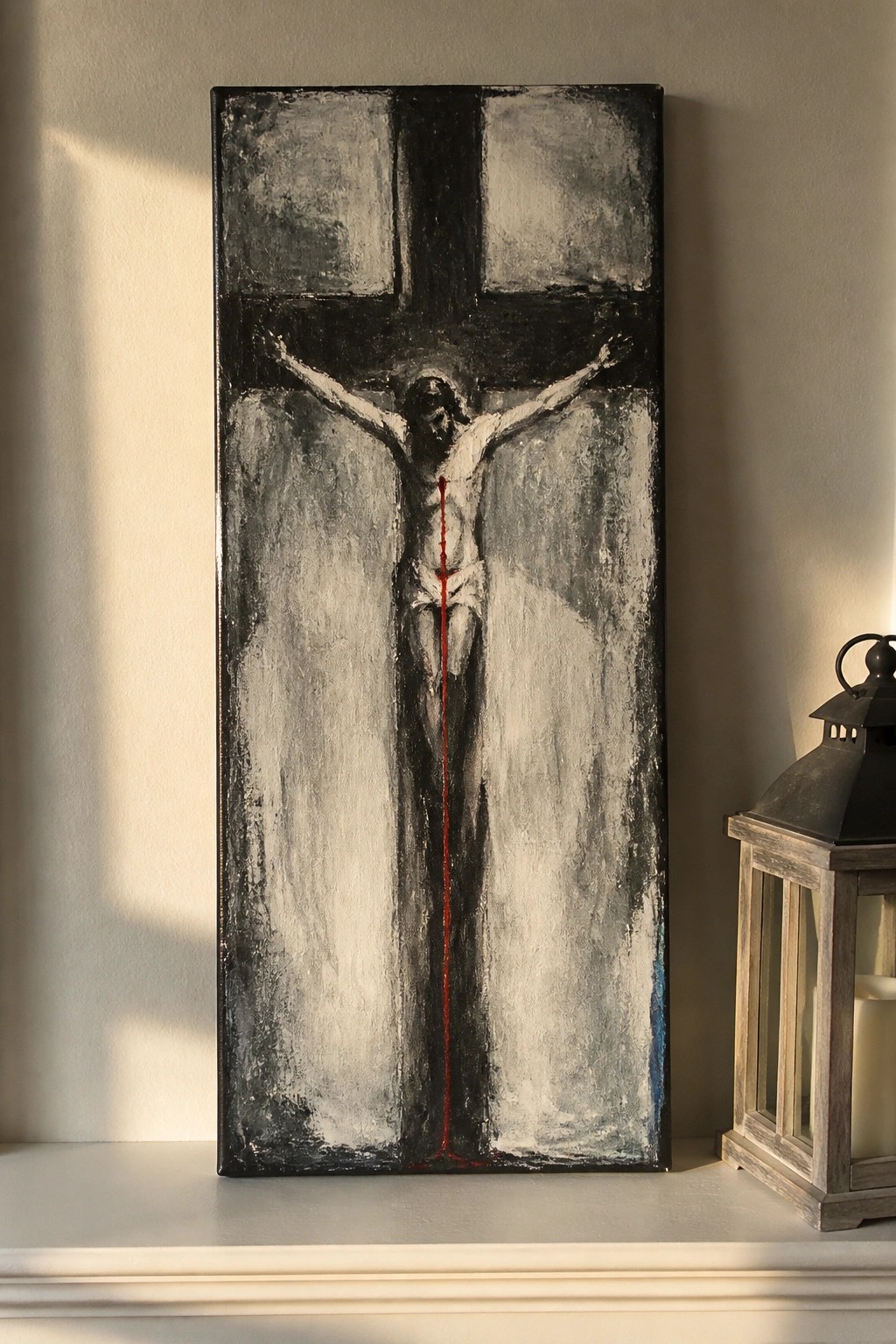
A crucifixion painting idea built around a tall vertical format where the cross fills most of the space and merges with the background. The figure is kept minimal with broad strokes while a single red vertical line runs down the center to create the main focal point. This approach belongs to dramatic religious art that relies on strong contrast and rough texture instead of fine detail.
What makes this idea useful is how the limited palette and large shapes let you work on a tall canvas without getting stuck on small details. You can adjust the red line thickness or swap the background texture with whatever brushes or tools are available. For wall art the vertical layout fits narrow spaces and pairs easily with other monochrome pieces in a collection.
Close-Up Crucifixion Portrait in Watercolor

A tight portrait of Christ resting his head against the crossbeam works well as a dramatic figure study. The idea centers on the face and hand as the main focus while the loose background washes keep everything else secondary. This approach lets the downward tilt of the head and the grip on the wood carry the composition without extra figures or scenery.
What makes this idea useful is how the soft background reduces the need for precise edges everywhere, so you can spend more time on the face and hand. You could adapt it by changing the angle slightly or using fewer layers on the hair to finish faster. For practice, the limited color range and vertical format make it straightforward to try on different paper sizes while still keeping the emotional weight.
Frequently Asked Questions
What techniques do artists use to show intense suffering in these crucifixion scenes?
Artists often rely on exaggerated facial expressions, twisted body positions, dramatic lighting that highlights wounds and shadows, and surrounding figures with gestures of grief or horror. These elements combine to draw viewers into the emotional intensity rather than just presenting a historical event.
Which artists appear most frequently among the 20 paintings discussed?
Masters such as Matthias Grunewald, Caravaggio, and Peter Paul Rubens stand out because their works emphasize human pain and spiritual depth through bold colors and realistic details. Other notable names include Francisco de Zurbaran and El Greco, whose styles add unique emotional layers to the theme.
Where can someone view the original versions of these paintings today?
Many originals hang in major European museums including the Louvre in Paris, the Prado in Madrid, and the Alte Pinakothek in Munich. Some pieces remain in churches or smaller regional collections, so checking official museum websites helps confirm current locations and visiting hours before travel.
How do these artworks differ from more traditional or serene crucifixion images?
The dramatic examples focus on raw physical agony and psychological turmoil with chaotic compositions and vivid blood details, whereas traditional versions often present a calmer, more idealized Christ figure surrounded by orderly saints. This shift highlights human vulnerability and invites stronger personal reactions from modern audiences.
What background knowledge helps viewers connect with the emotional impact of these pieces?
Understanding the biblical accounts of the crucifixion along with the historical periods when the paintings were created adds depth. Learning about the artists personal struggles or the religious climate of their era reveals why certain works convey such powerful feelings of despair, sacrifice, and redemption.