I like looking at simple Christian paintings because they often show peace in ordinary ways.
Over the years I have tried painting a few scenes myself with soft colors and basic figures.
Here are twenty examples that stand out to me for feeling calm and unforced.
Most of them use everyday moments like prayer or light coming through windows.
They might give you some easy ideas to try in your own sketchbook.
Watercolor Scripture with a Small Olive Branch
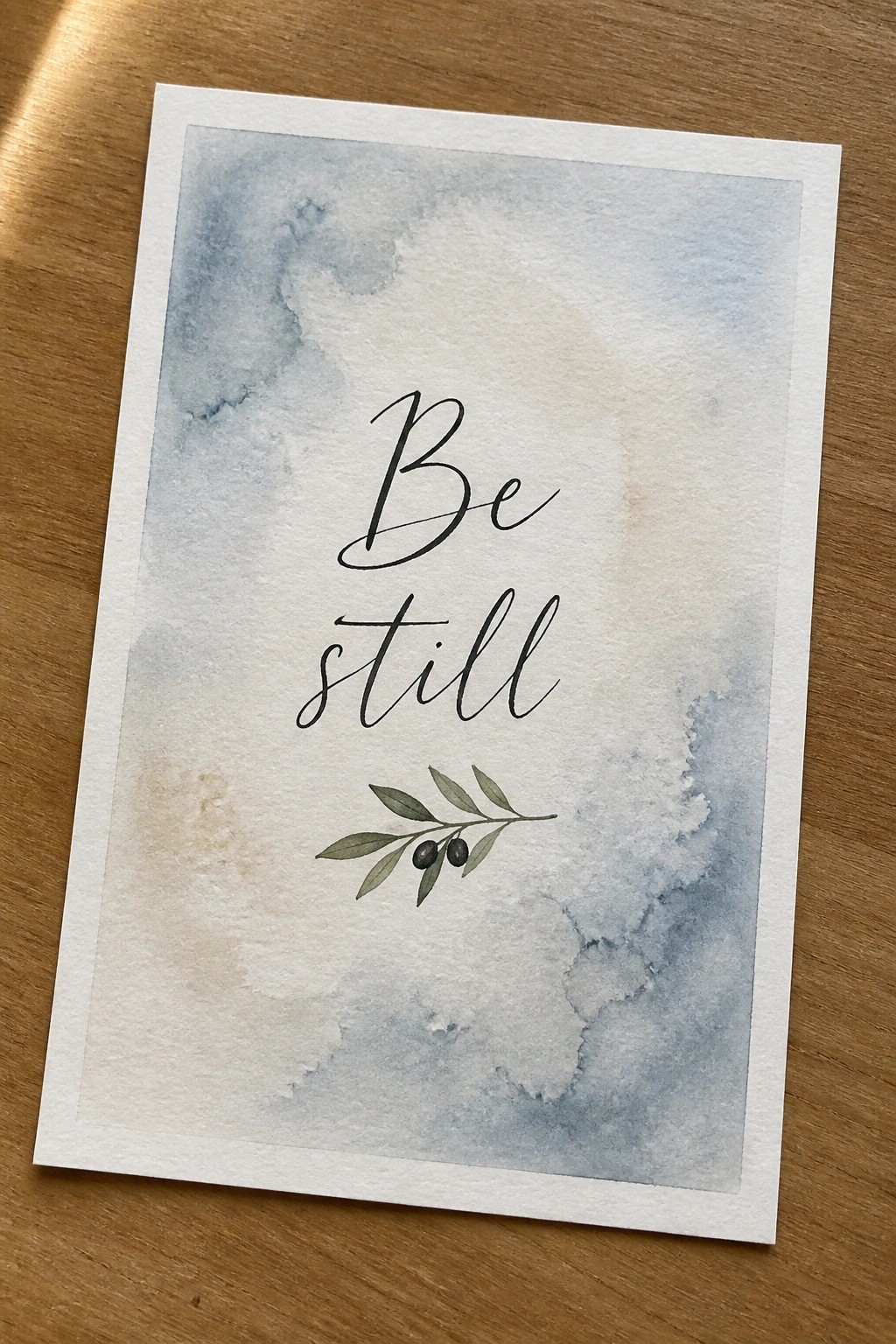
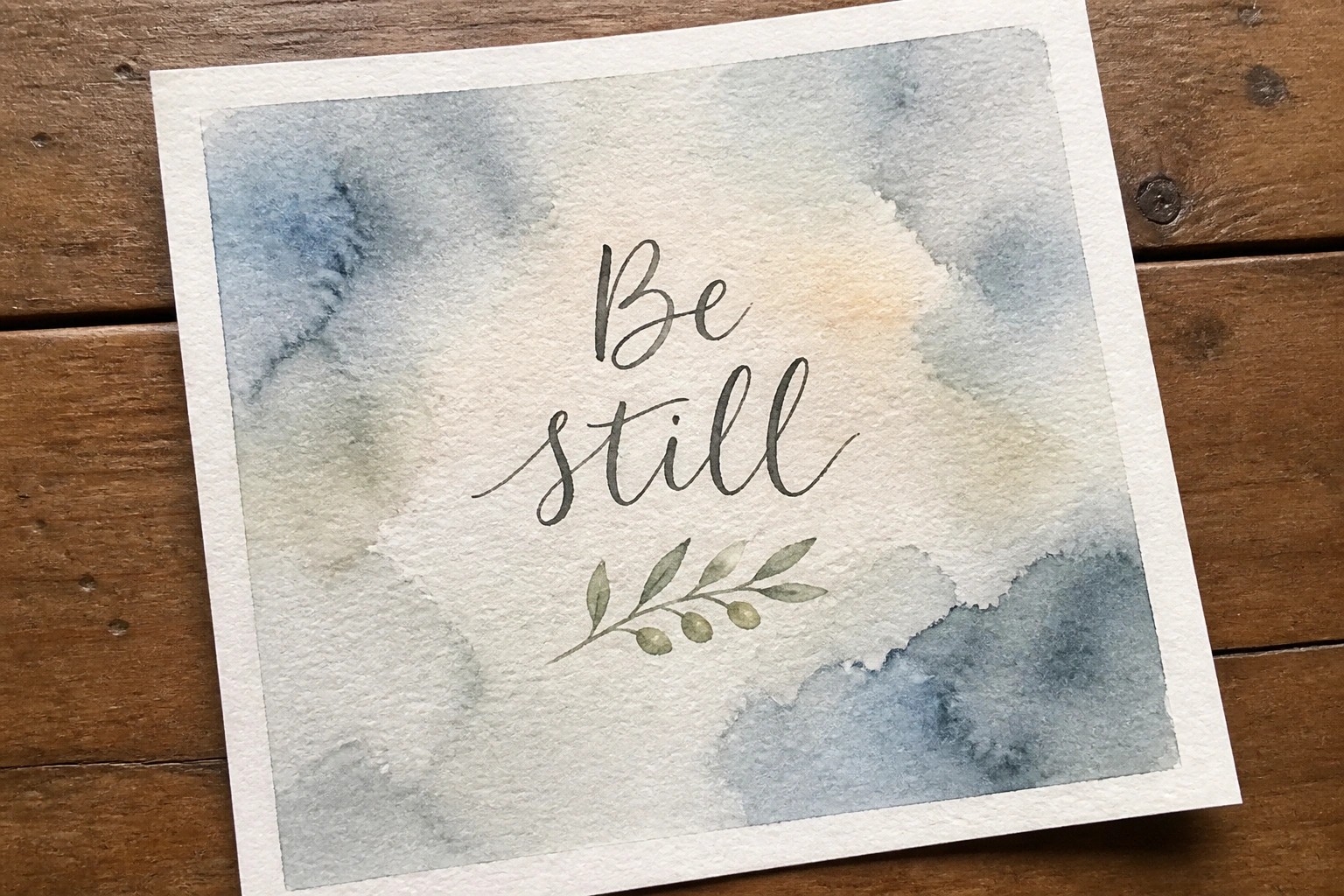
A “Be still” painting idea centers on pairing a short phrase in flowing script with one understated botanical element. The text sits centered on a soft, blended background while the olive branch rests below it as a quiet visual anchor. This keeps the focus on the words without crowding the space and lets the loose color washes create gentle contrast around the lettering.
The composition does a lot of the work here because the background handles the atmosphere while the branch adds just enough interest without extra detail. You can swap the branch for another simple plant or change the wash colors to match different rooms or seasons. For practice, this kind of piece works well because the lettering and the plant are both small enough to finish in one sitting yet still look complete on their own.
Cross with Floral Base on Neutral Canvas
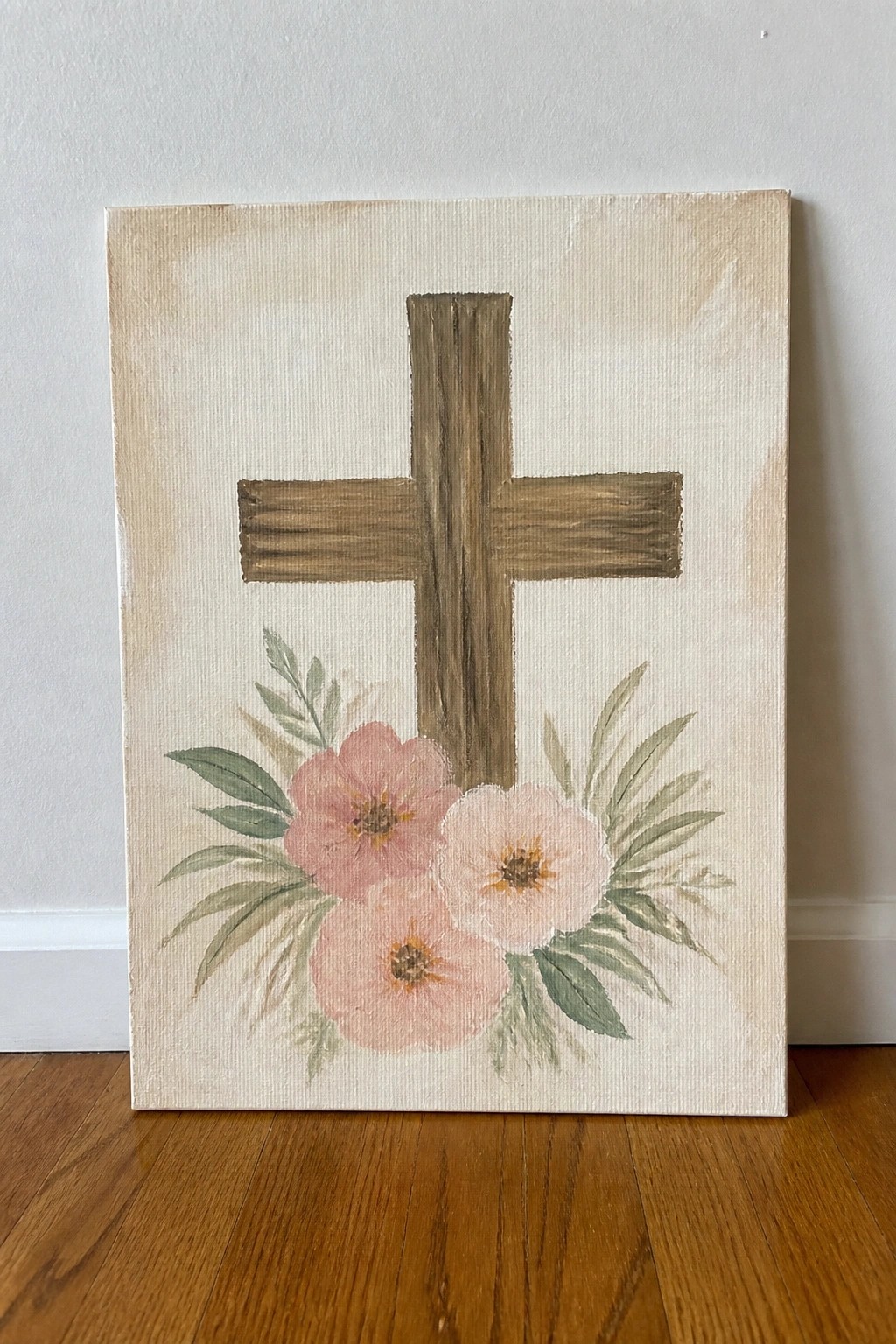
A wooden cross painted in brown tones sits centered on a light background, with a small grouping of pink flowers and green leaves clustered at the bottom. The idea combines a clear Christian symbol with a simple floral arrangement that sits low to balance the vertical shape of the cross. This approach works as decorative art because the plain background lets the cross stay prominent while the flowers add color without crowding the space.
What makes this idea useful is how the cross can be blocked in first with broad strokes before the flowers are added around the base. The limited color palette of soft pinks, greens, and browns on a neutral ground makes it easy to match with different wall colors or repeat in different sizes. For practice, the same layout can be simplified by using fewer flowers or swapped with other colors to fit a new room or season.
White Dove Carrying an Olive Branch

A white dove in flight with an olive branch in its beak forms the core of this painting idea. The subject sits centered against a pale blue sky dotted with soft clouds, which helps the figure remain the clear focus. This animal painting relies on simple shapes and a limited color range to keep the overall look clean.
The composition does a lot of the work here by placing the dove diagonally across the canvas. A painting like this works especially well for quick practice pieces or small wall art in a neutral space. You can easily adjust the sky tones or branch style to fit different canvas sizes without needing extra details.
Church on a Hill at Sunset

A church set on a low rise works as the main subject in a landscape painting when the sky and foreground stay simple. The idea uses the building’s vertical shape to break up the horizontal lines of the field and sky, with the sunset colors providing a clear gradient from warm to cool tones. This type of scene fits the landscape category where the structure gives the composition a focal point without extra elements.
The composition does a lot of the work here because the hill already places the church at a natural height. You can adapt it by changing the sky to softer pinks or deeper purples depending on the season you want to suggest. For practice this layout helps with practicing color blending and basic perspective on the roof and steeple lines. A painting like this also works well for prints because the balanced layout stays readable at smaller sizes.
Patterned Ichthys on a Matching Background
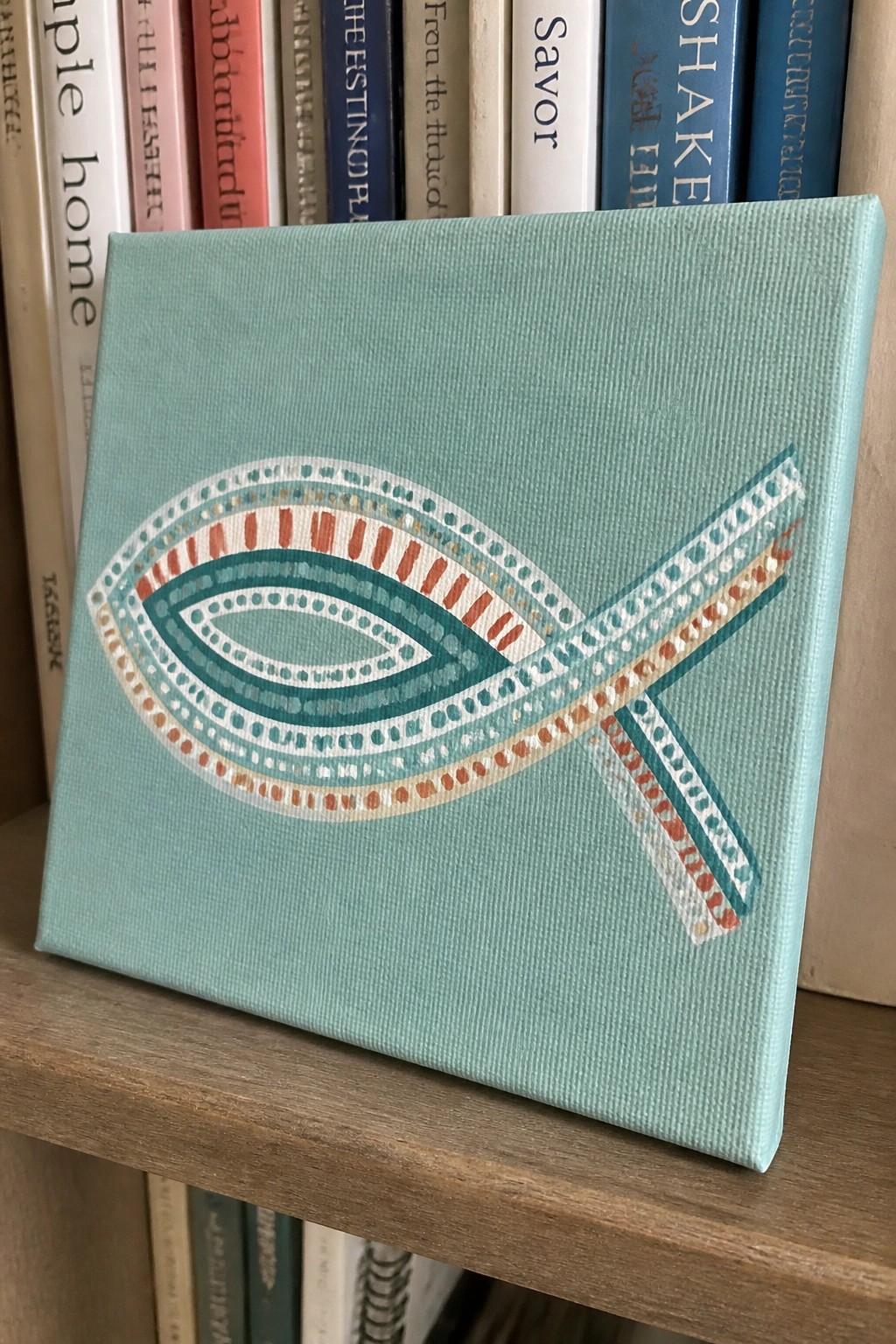
A simple Christian fish symbol works well as a painting idea when filled with repeating lines and dots instead of solid color. The design layers teal, coral, and cream marks inside the fish shape on a solid background that uses the same teal family. This keeps the whole piece unified and lets the pattern carry the interest without extra elements.
The composition does a lot of the work here because the symbol sits slightly off-center and the background blends with the main tones. You could change the accent colors to match a different room or shrink the canvas size for a quicker version. For wall art, the idea stands out on Pinterest when the pattern stays consistent and the background stays flat.
Prayer Hands as a Focused Study

A painting idea built around clasped hands in a prayer pose uses simple overlapping shapes to create natural depth and lines without extra elements. This approach fits into still life or devotional art categories and keeps the focus tight on the hands against a plain background. The warm earth tones paired with a muted base layer make the forms stand out while keeping the overall setup minimal.
The composition does a lot of the work here by letting the hands fill the center and guide the eye downward. You could adapt the same idea by changing the background color to fit a specific room or shrinking it for greeting cards and journal covers. For practice, this kind of subject helps with basic shading and edge control using a limited palette. The simple layout also makes it easy to try in different sizes without adding more details.
Rainbow Arching Over Hope and an Open Book
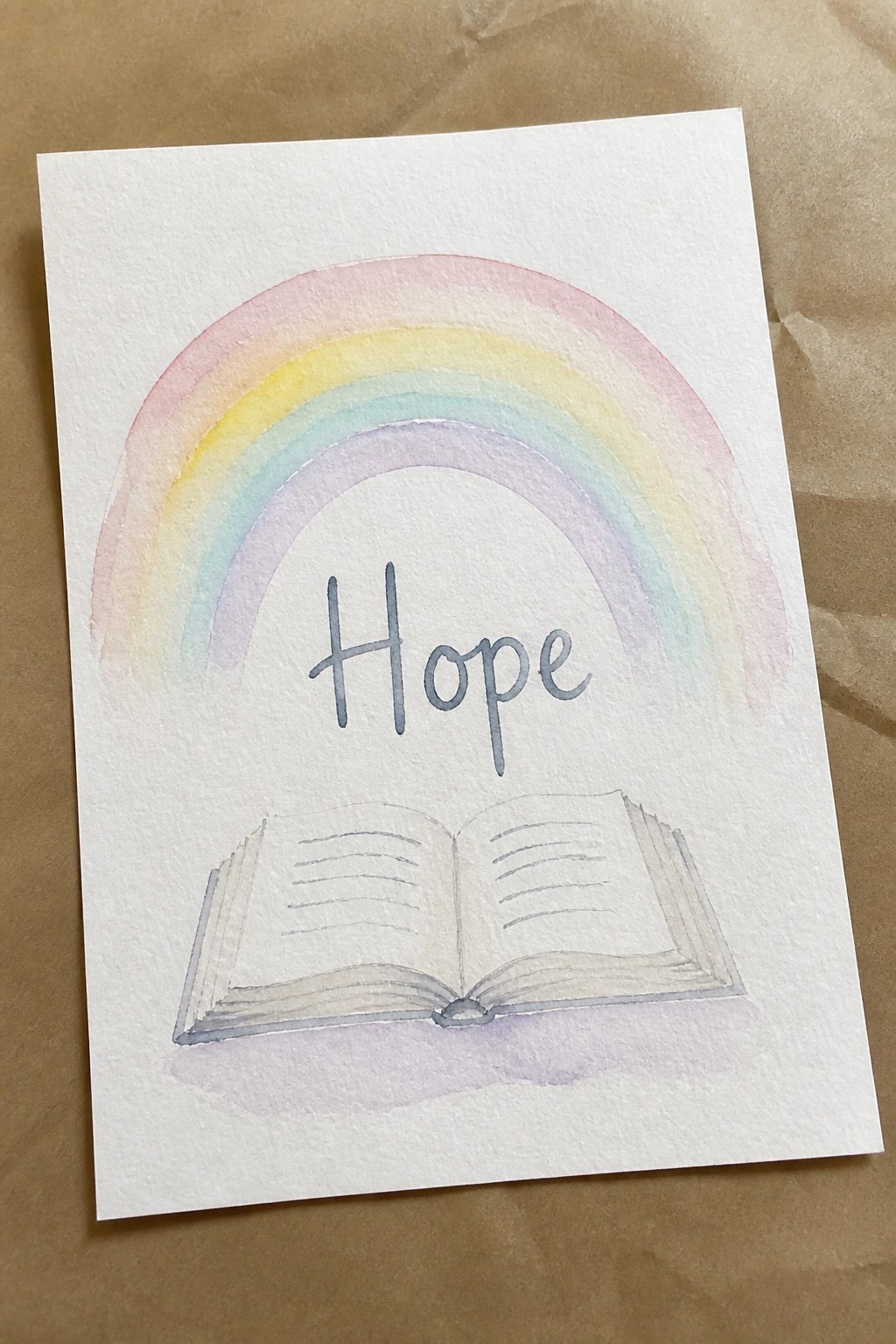
A rainbow painted in soft, blended bands sits above the word Hope in simple script, with an open book placed at the bottom to anchor the layout. The idea uses the curve of the rainbow to create a natural frame that leads the eye from the color bands down to the text and then to the book. This fits into decorative art that mixes text with a few everyday objects for a clean, centered result.
The composition does a lot of the work here by using the rainbow’s shape to hold everything together without extra elements. The open book stays minimal with just a few lines for pages, so the focus stays on the word and color. This would be easy to adapt by swapping the book for a different object or changing the word while keeping the same curved layout. For wall art, the soft edges and limited palette make it quick to repeat in different sizes.
Minimal Shepherd and Sheep on Open Hills
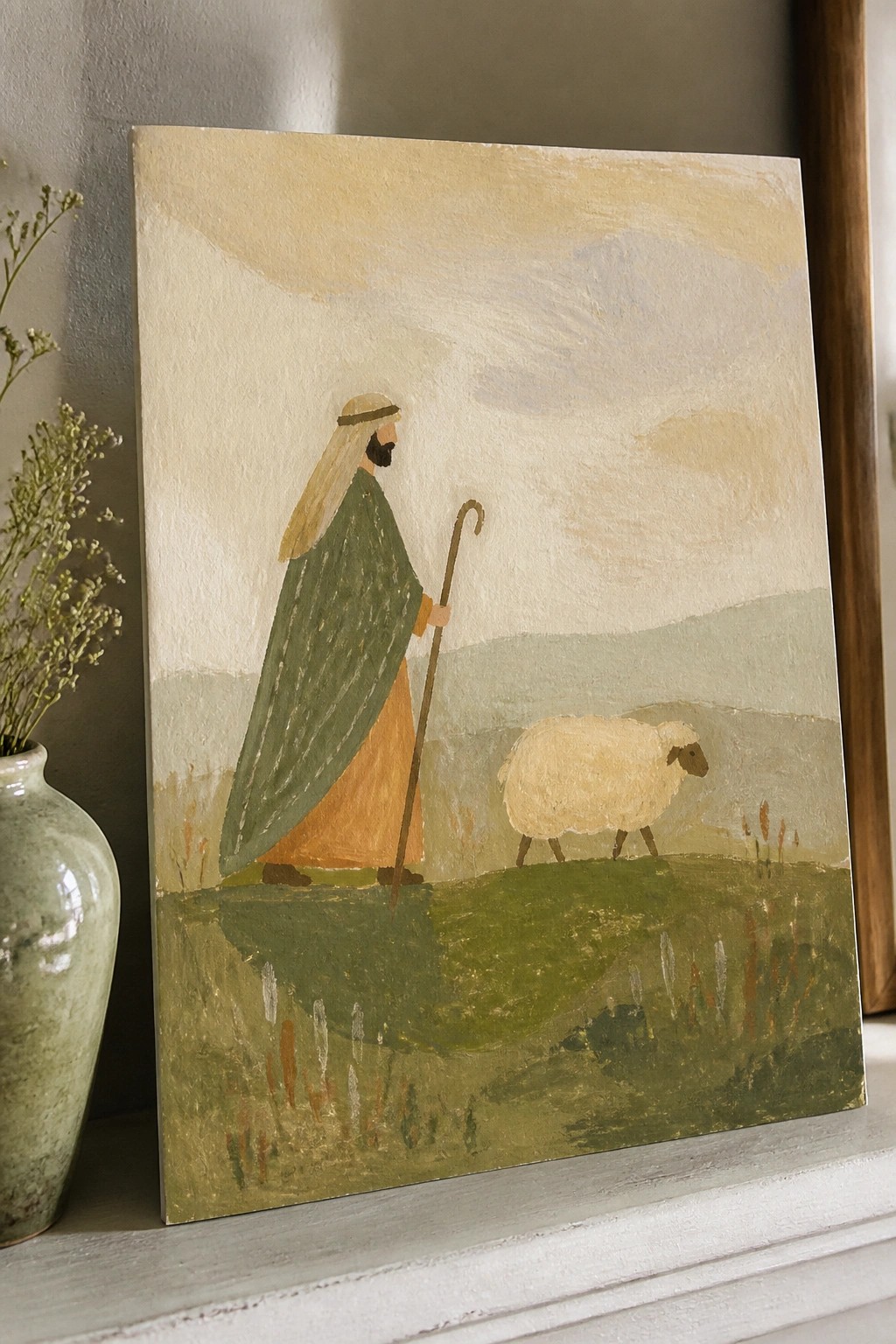
A simple Christian painting idea centers on a robed figure with a staff walking alongside a single sheep across rolling hills. The composition uses large flat shapes and a muted earth-toned palette to keep the focus on the two main subjects without extra detail. The figure takes up the left side while the sheep sits lower on the right, with the background hills and sky creating a gentle horizontal balance.
What makes this idea useful is how the basic shapes let you practice figure placement and color blocking at the same time. You could shrink the hills or swap the robe color to match a room’s existing tones. For wall art this layout works well because the empty space around the subjects keeps the piece from feeling crowded even on a medium canvas.
Minimal Crown of Thorns on Neutral Background
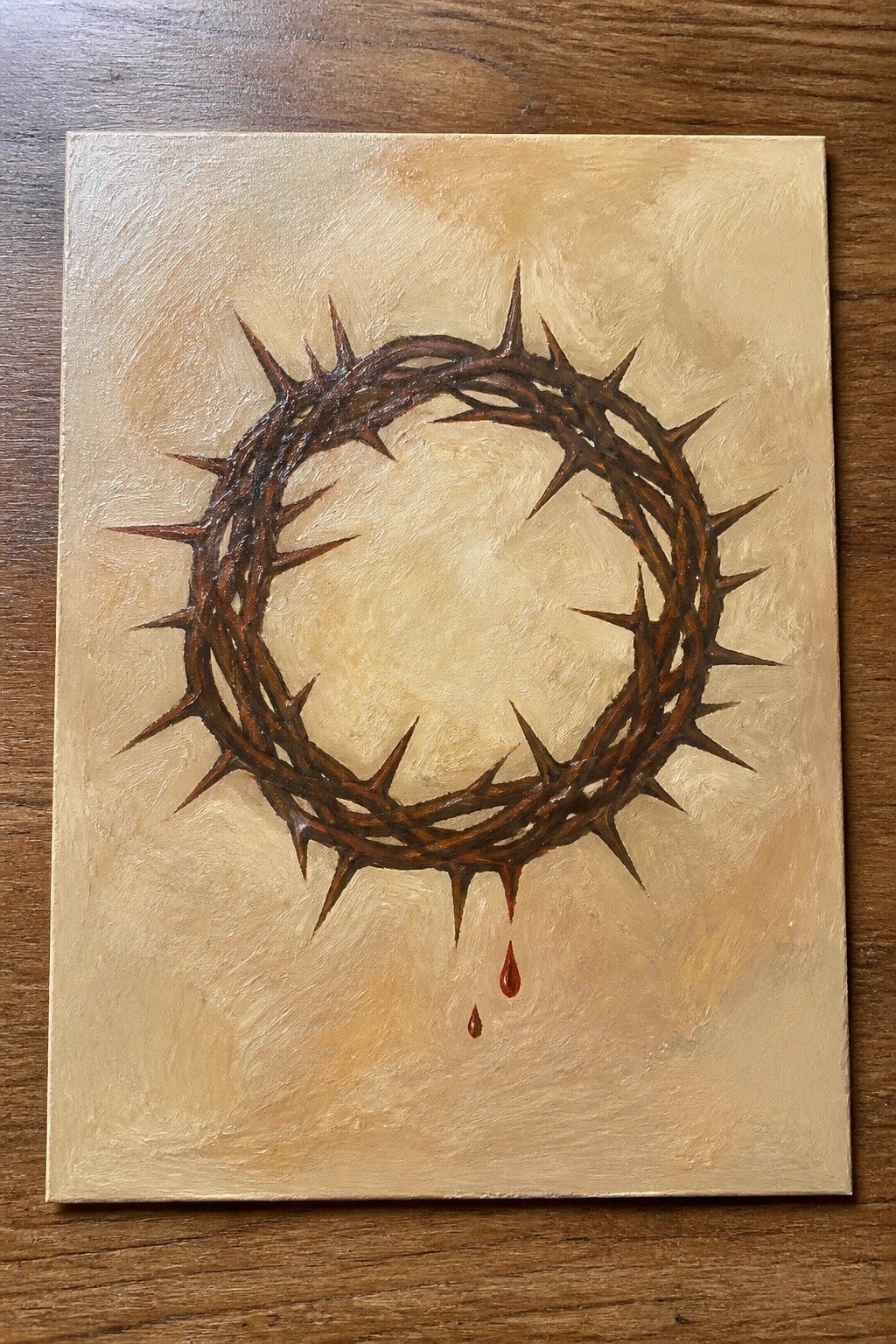
A centered crown of thorns painted in layered brown tones forms the main subject, with a few small blood drops falling from the lower edge. This symbolic still life idea relies on a simple circular arrangement against a flat, light beige field. The rough brushwork on the thorns creates texture while the empty space around the form keeps the composition balanced and contained.
What makes this idea useful is the single focal shape that stays readable even when scaled down for smaller canvases. The narrow color range of browns and beige lets you adapt it quickly with leftover paint or match it to existing wall tones. For practice, this kind of subject works well because the background requires almost no blending, leaving more time to focus on building the overlapping thorns and the drip details.
Three Crosses on a Hill at Sunset
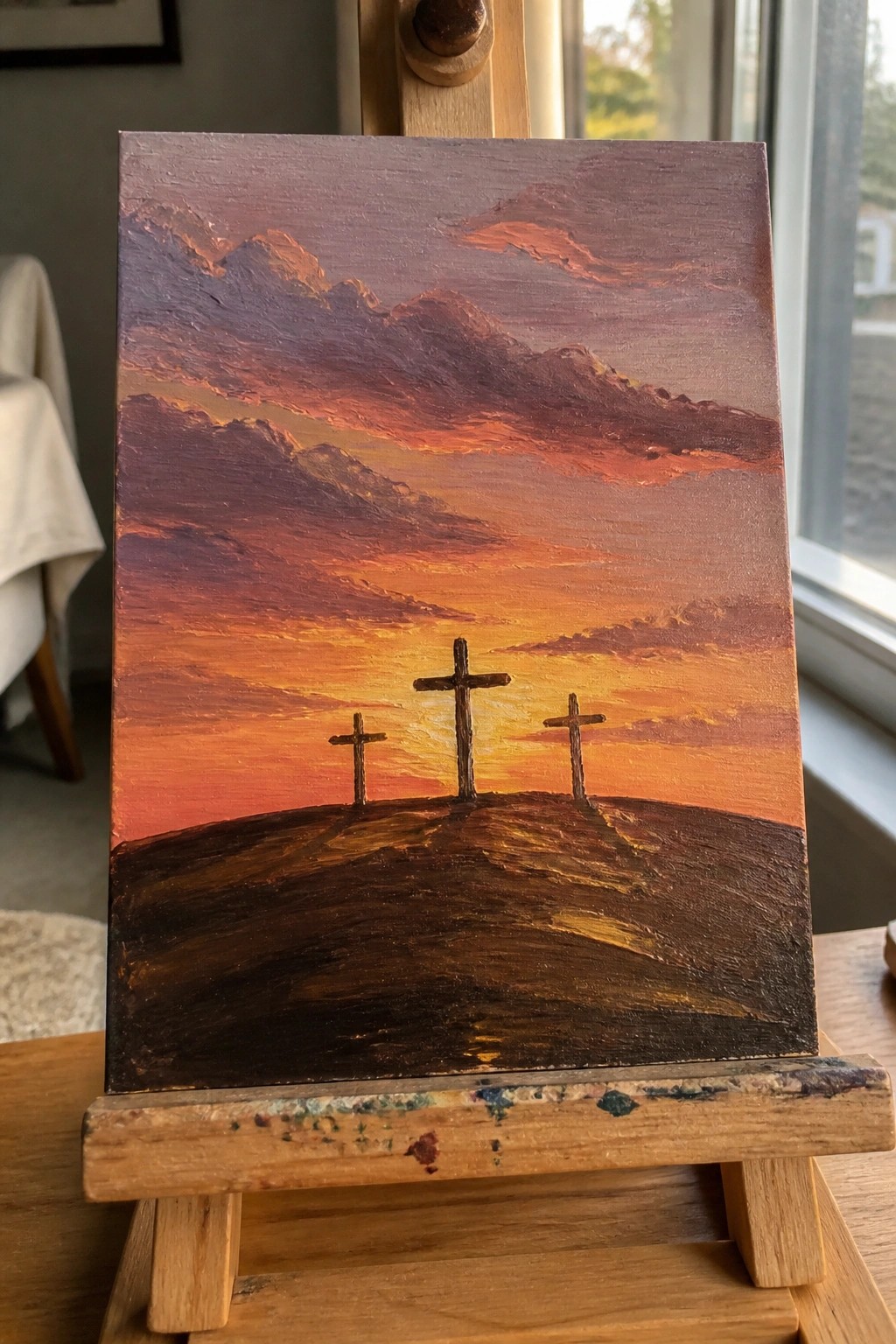
A landscape painting idea centered on three simple wooden crosses placed along a dark hill works well when the crosses stay small and dark so the sunset sky and mountain layers fill most of the canvas. The composition uses a low horizon line that leaves room for horizontal bands of orange, red, and purple sky above the ridges. This approach fits the Christian landscape category and stays effective because the strong color contrast keeps the crosses visible without extra detail or highlights.
The composition does a lot of the work here by letting the sky handle most of the visual interest while the crosses act as quiet focal points. A painting like this works especially well for practice because the main challenge is blending sunset colors and building depth with overlapping ridges rather than drawing fine shapes. The same idea can be adapted by swapping in different sky references or reducing the scene to one cross if a smaller canvas feels better. For wall art, the bold sky makes the subject easy to recognize even when the painting is kept small.
Lilies in a Glass Vase with a Faded Cross

A cluster of white lilies placed in a clear glass jar forms the main subject here. The idea combines a simple floral still life with a very light cross shape set in the background so the flowers stay front and center. Soft washes and minimal layering let the composition breathe while the vertical stems and open blooms create a natural focal point.
What makes this idea useful is how easily the cross can be adjusted in strength or left almost invisible. The limited palette works on small or large paper without needing many colors, and you can swap the lilies for any similar flower shape you already know how to paint. For practice, the setup lets you focus on basic shape and value rather than complex details, and the same layout adapts quickly if you want a version without the cross at all.
Open Bible with Rainbow Scripture Canvas

This painting idea centers on an open Bible illustration at the bottom of the canvas paired with centered scripture text and a rainbow arching overhead. The layout uses the book as a grounded still life element while the text and rainbow create a clear vertical flow. Soft, blended colors in the rainbow keep the overall piece light and balanced against the neutral background.
The composition does a lot of the work here by separating the text and illustration into distinct zones. You can easily swap the verse or adjust the rainbow width to fit different canvas sizes. This style works especially well for wall art because it stays readable from a distance without needing fine detail. For practice, the same idea could be simplified by using a single color for the book or skipping the rainbow layers entirely.
A Centered Angel Figure with Radiating Light
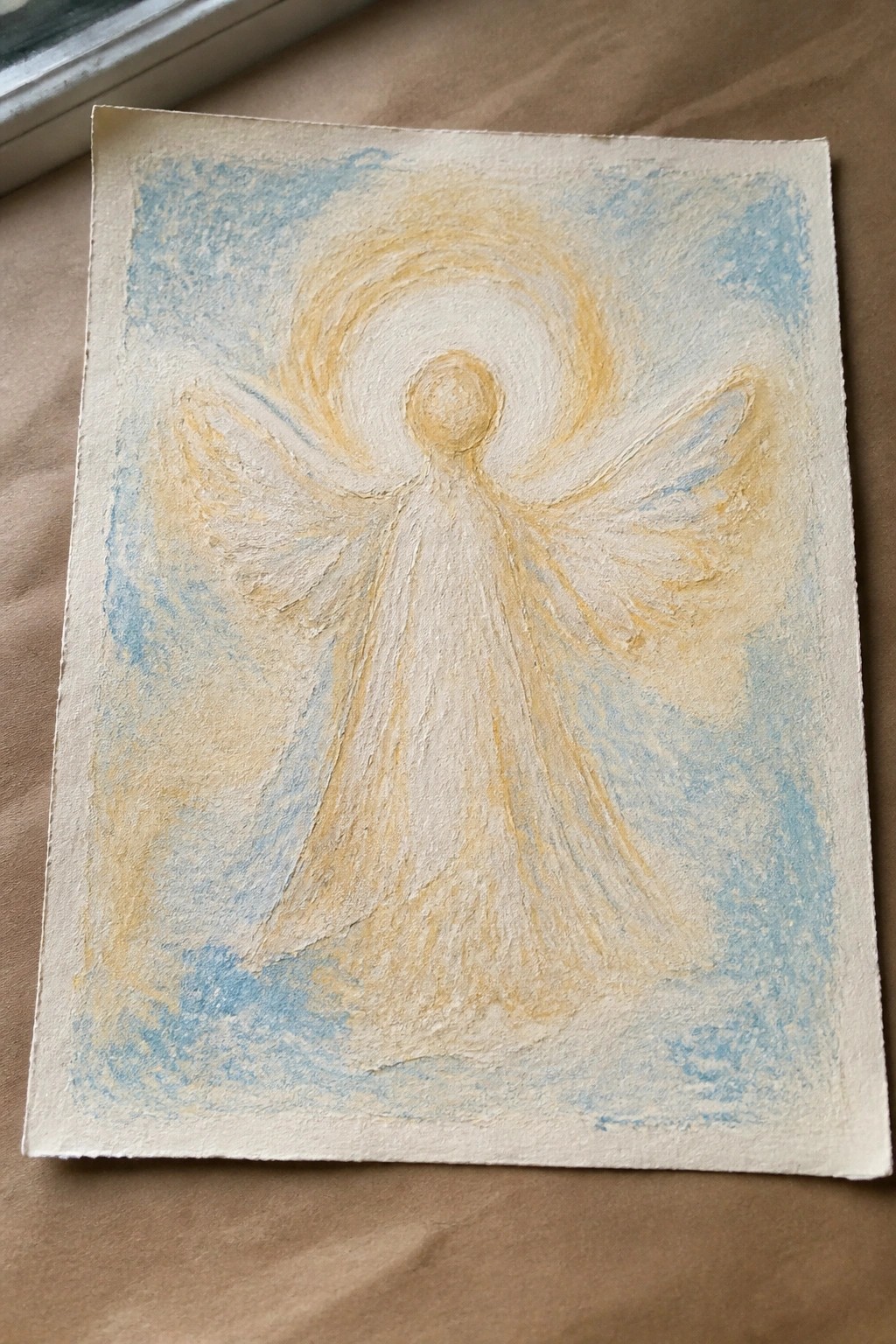
A simple angel silhouette with a small glowing head and broad wings works as the full painting idea here. The composition relies on a central placement and loose circular strokes around the head to create a sense of light without extra elements. Layered white over soft blue and yellow keeps the shape readable while the background stays minimal.
What makes this idea useful is how the centered layout and blended edges handle most of the interest. You can swap the yellow for cooler tones or shrink the wings if you want a quicker version on a smaller canvas. For wall pieces, the limited color range makes it easy to match existing decor without extra planning.
Geometric Cross in Stained Glass Panels

A cross built from straight-edged panels in teal, red, and gold creates a balanced design through repeating shapes that radiate from the center. The circular outer ring and vertical side strips keep the layout tight and symmetrical without extra detail. This approach works as decorative art that relies on color blocks and strong outlines rather than shading or texture.
The composition does a lot of the work here because the straight lines and repeated angles make it simple to lay out with basic tools. You can reduce the size for smaller canvases or cards and still keep the same structure. Changing the teal to a deeper blue or the gold to cream lets you match different room colors without redrawing the shapes. For practice, this kind of subject helps you focus on even paint coverage inside the sections.
Lone Boat on Reflective Waters
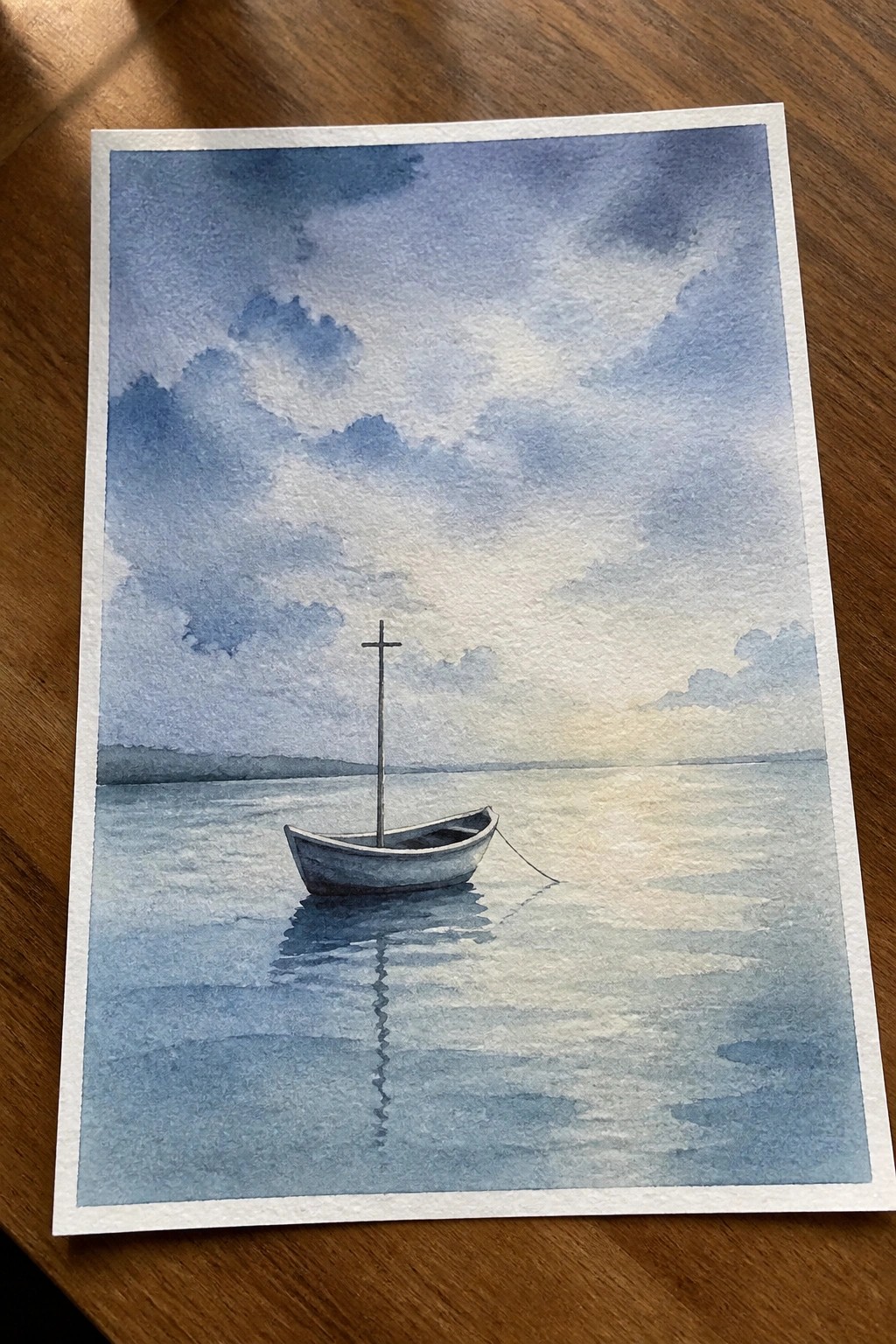
A small boat centered on flat water with a tall mast forms the main subject in this landscape idea. The low horizon and large sky area let the composition breathe while the boat’s reflection adds a clear vertical line that balances the scene. Soft blended washes in cool blues and muted yellows keep the overall effect simple and focused on the single object.
The composition does a lot of the work here because the empty space around the boat removes the need for complex details. You can adapt it by changing the sky colors for different times of day or by cropping the water lower for a taller format. This kind of subject works especially well for practice since the basic shapes stay easy to adjust while still looking complete on a wall.
Heart with Cross and Vine Border

A heart outline layered over a central cross forms the main subject, with vines and small flowers filling the space between the two shapes. The design uses a soft red palette for the heart that fades into the background, while the green foliage creates contrast without competing for attention. This fits into decorative Christian art, where simple repeated shapes and even spacing keep the layout readable at a glance.
The composition does a lot of the work here because the cross sits dead center and the vines follow the heart curve, so placement stays consistent even if your hand wavers. You could shrink the whole thing for a greeting card or swap the flower colors to match whatever paint you already have on hand. For practice, start with the heart and cross in one sitting, then add the border dots last to give it a finished edge that looks intentional on a shelf or in a photo.
A Beach Path of Footprints Ending at a Simple Cross
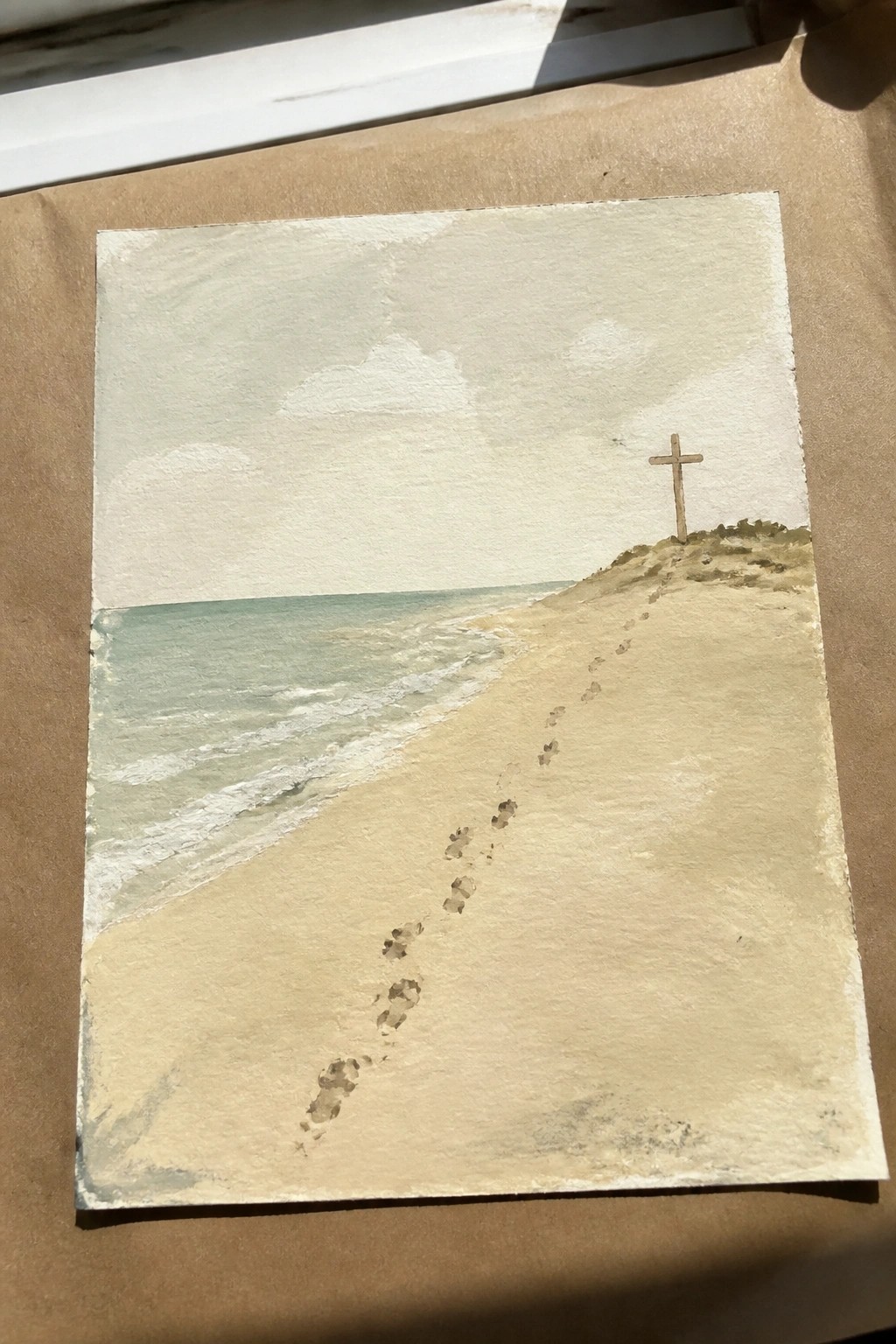
This painting idea uses a coastal landscape format with a clear focal point: a line of footprints running through the sand toward a wooden cross placed on a low dune. The composition relies on the diagonal path to guide the viewer while keeping the rest of the scene open with wide stretches of water and sky. Soft color shifts between the sea, sand, and clouds keep the layout balanced without crowding the main elements.
What makes this idea useful is how the footprints handle the leading line so the rest of the painting stays simple. You can adjust the dune height or swap the cross for a smaller marker to change the scale on different paper sizes. The color palette makes this easy to adapt by shifting the water to deeper blues or keeping everything muted for a quicker study session. For practice, this kind of subject lets you work on basic washes and a few texture marks without needing complex details.
Bible and Lamp Still Life
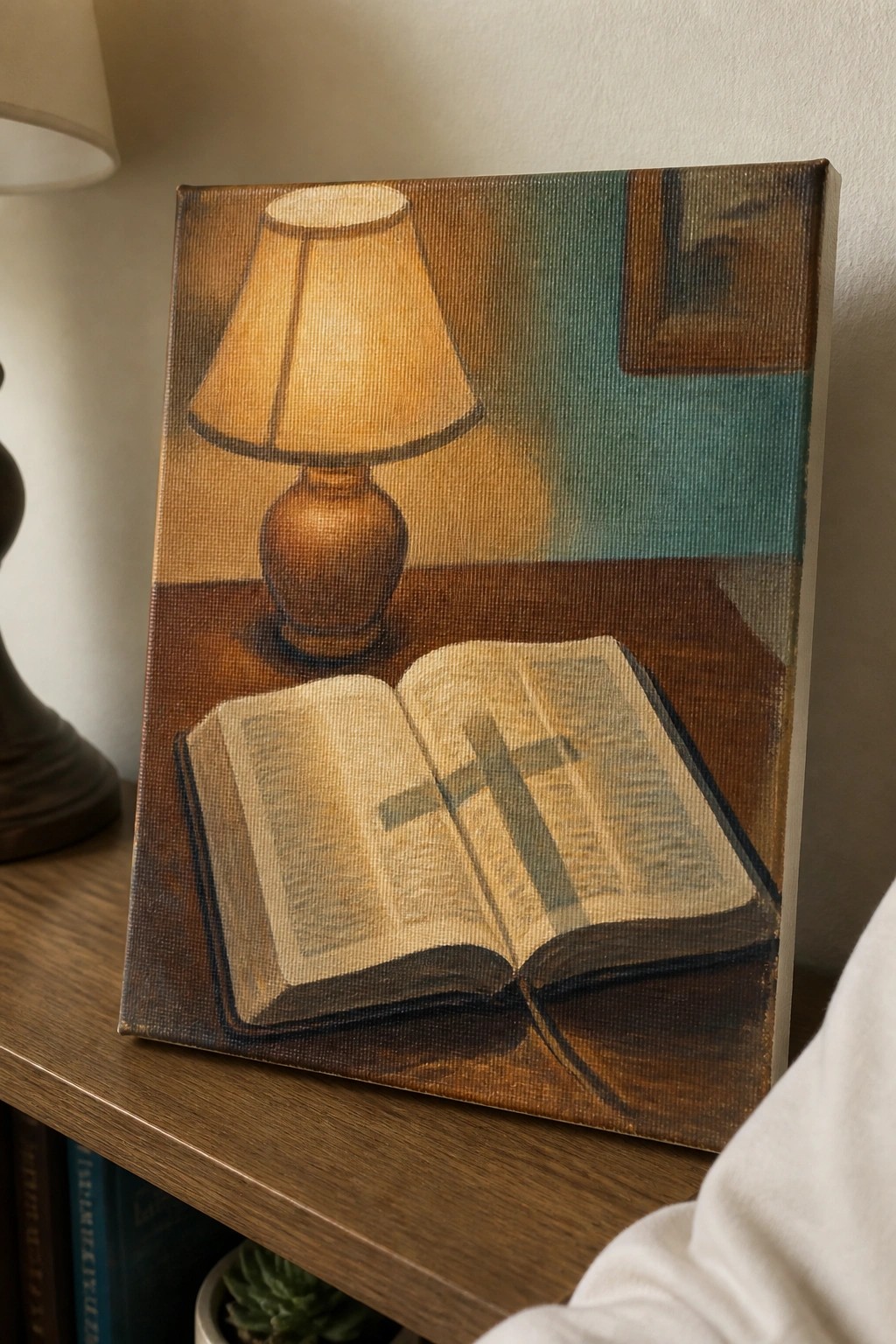
A still life idea built around an open Bible and a table lamp places the book in the foreground with the lamp positioned just behind it. The cross shape across the pages acts as the main focal point while the lamp’s glow defines the lighting and warms the surrounding tones. This kind of setup fits a classic still life category because the objects rest on a single surface with a simple background that keeps the arrangement contained and easy to compose.
The composition does a lot of the work here by stacking the lamp above the book so the eye moves naturally between the two. You can adapt the idea by changing the background wall color or shifting the book’s angle to suit different canvas sizes. For practice this subject works well because it uses basic shapes and a small color range that stays manageable even on a first try.
Watercolor Wreath Framing the Word Hope
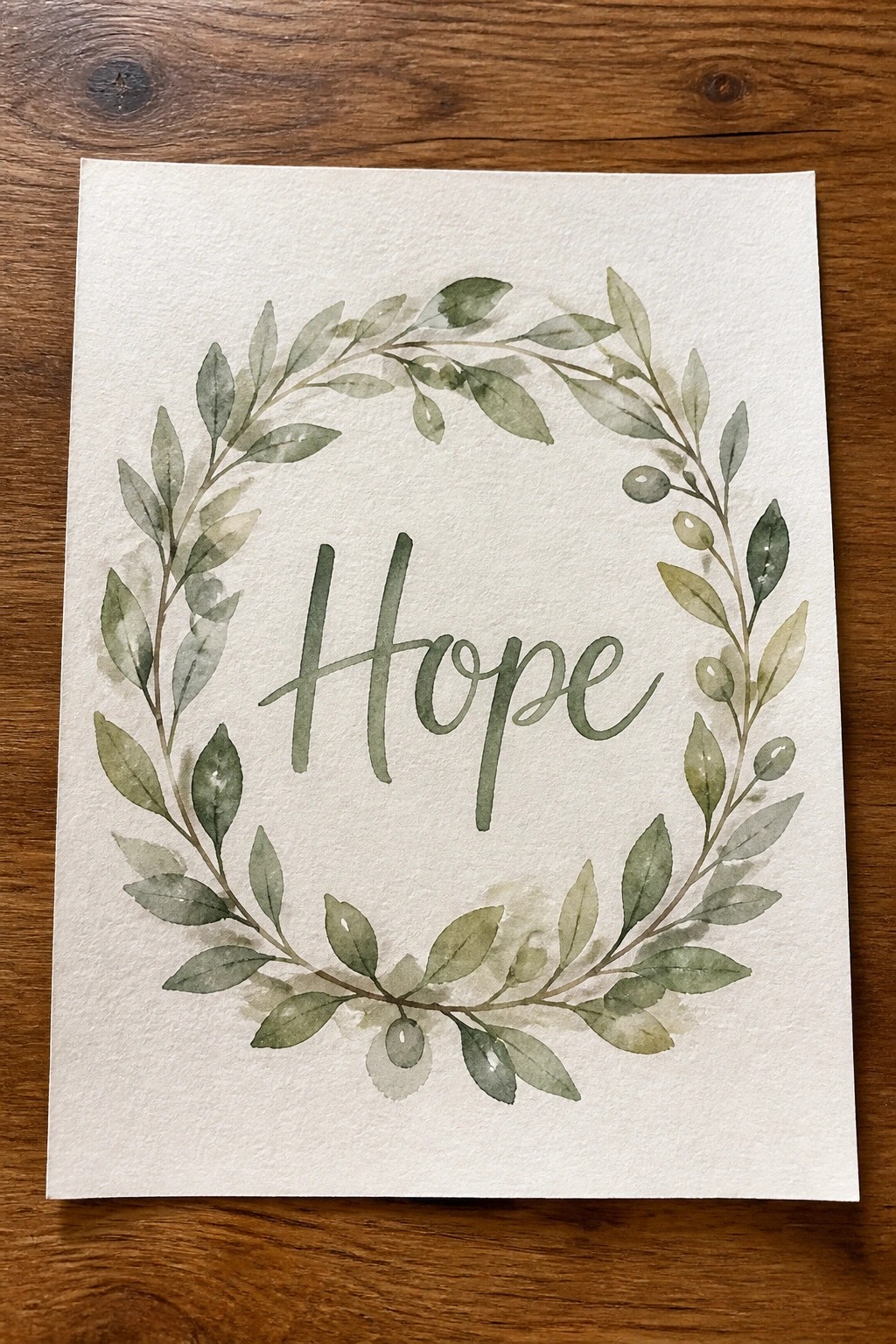
A leafy wreath painted in muted greens forms a loose circle around the handwritten word Hope. The branches vary in tone and density, with some leaves appearing lighter and others more defined, creating a natural frame that keeps the text as the clear center. This fits into the decorative art category, where simple natural shapes surround a short word to make a balanced, readable piece.
What makes this idea useful is how the circular layout handles the composition on its own, so you only need to focus on the leaves and lettering. The soft color shifts in the greens make it easy to adapt by using whatever shades you already have or by tightening the wreath for a smaller canvas. For practice or quick gifts, the same setup works well if you sketch the circle first and then add the word inside before painting the branches.
Shepherd Staff Against a Rock Formation
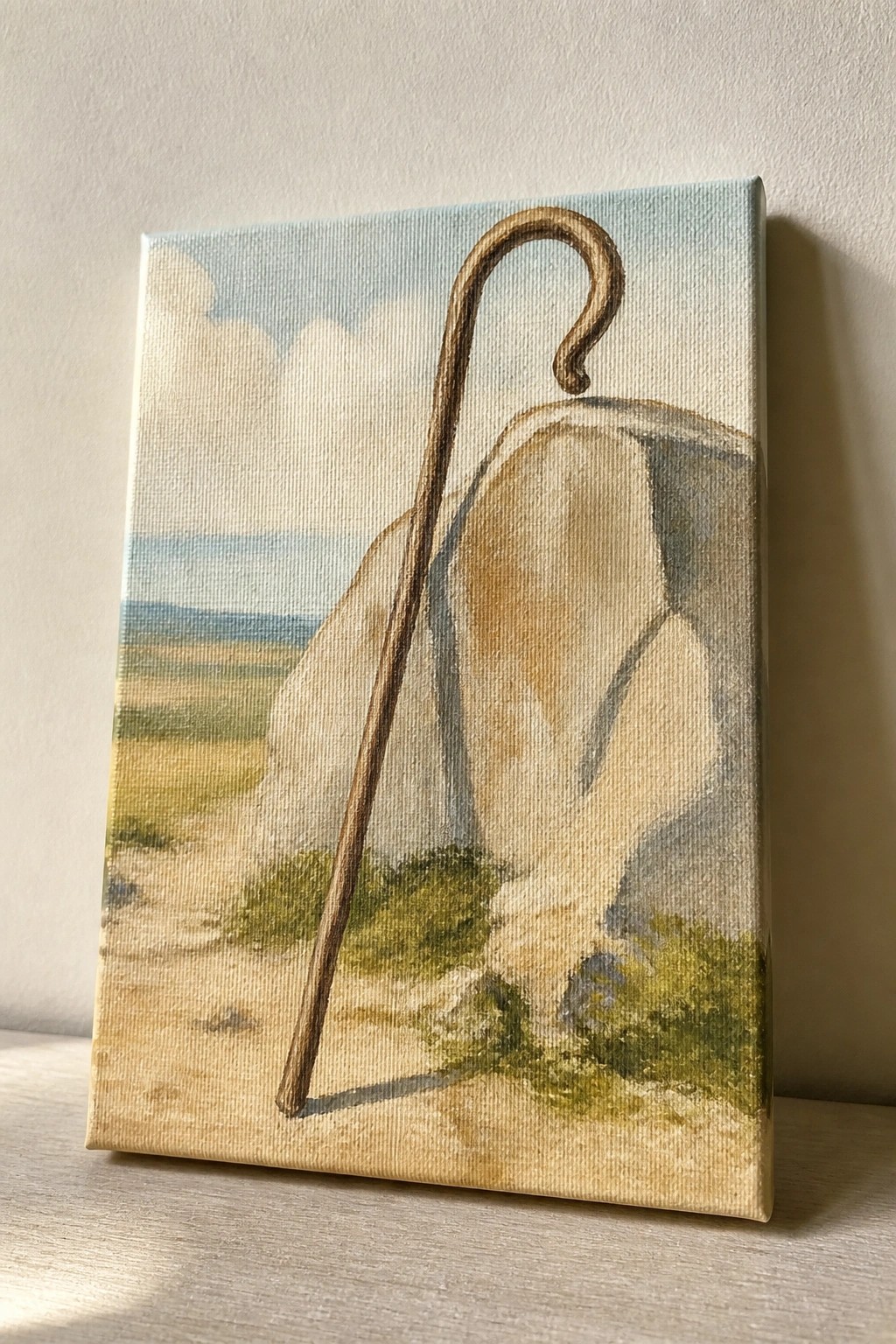
A shepherd’s crook placed against a large rock gives this painting a clear vertical element that anchors an otherwise open landscape. The idea centers on a single object in a sparse setting, using the staff’s curve to contrast with the blocky rock shapes and distant fields. Soft layers of earth tones and a pale sky keep the focus on the main subject without extra detail.
The composition does a lot of the work here because the staff creates an immediate focal line that connects the foreground to the background. You could adapt the rock shapes to be more or less detailed depending on the canvas size or swap the field colors for a different season. This kind of painting idea works especially well for small practice pieces or simple wall art where the limited elements keep it from feeling overwhelming.
Frequently Asked Questions
What are the best ways to display these simple Christian paintings in a home setting?
These paintings work well in quiet spaces like a living room or bedroom where they can serve as gentle reminders of faith. Hang them at eye level on a neutral wall with soft lighting from a nearby lamp to highlight their peaceful details without overwhelming the room. Pair them with minimal decor such as a small cross or a potted plant to keep the focus on the artwork itself.
How can I find affordable prints or versions of these Christian paintings?
Start by searching online art sites that offer high quality giclee prints of public domain or licensed religious art. Many platforms allow you to select sizes and framing options that fit your budget. Local Christian bookstores or church gift shops may also carry similar simple designs at lower prices and you can check for sales or bulk options if decorating multiple rooms.
What makes these paintings feel peaceful compared to more detailed religious art?
The simplicity comes from clean lines soft colors and minimal backgrounds that avoid clutter and let the viewer focus on elements like a calm figure or a gentle landscape. This approach reduces visual noise and creates a sense of stillness that aligns with themes of rest and reflection found in Christian teachings.
Can I use these paintings as inspiration to create my own versions at home?
Yes these simple styles lend themselves well to beginner friendly techniques using watercolor or acrylic on canvas. Begin by sketching basic shapes like a cross or dove then layer soft hues to build a serene mood. Practice on small paper first and refer to free online tutorials for Christian motifs to develop your own peaceful compositions.
How might these paintings support daily spiritual practices?
Place one near your prayer area or reading spot to encourage quiet moments of meditation on scripture. Their effortless peace can help shift your mindset during morning routines or evening reflections by serving as visual prompts for gratitude and trust rather than distraction.