I started painting scenes from the Bible a few years back because the stories always gave me something clear to work with.
The details in those old tales make it easy to decide on colors and figures without overthinking it.
Some of my attempts came out simple while others needed more time to get the lighting right.
I have put together 23 of them here that feel like they fit the main parts of the stories.
A few might be useful if you are looking for ideas on similar subjects.
Adam and Eve in the Garden of Eden

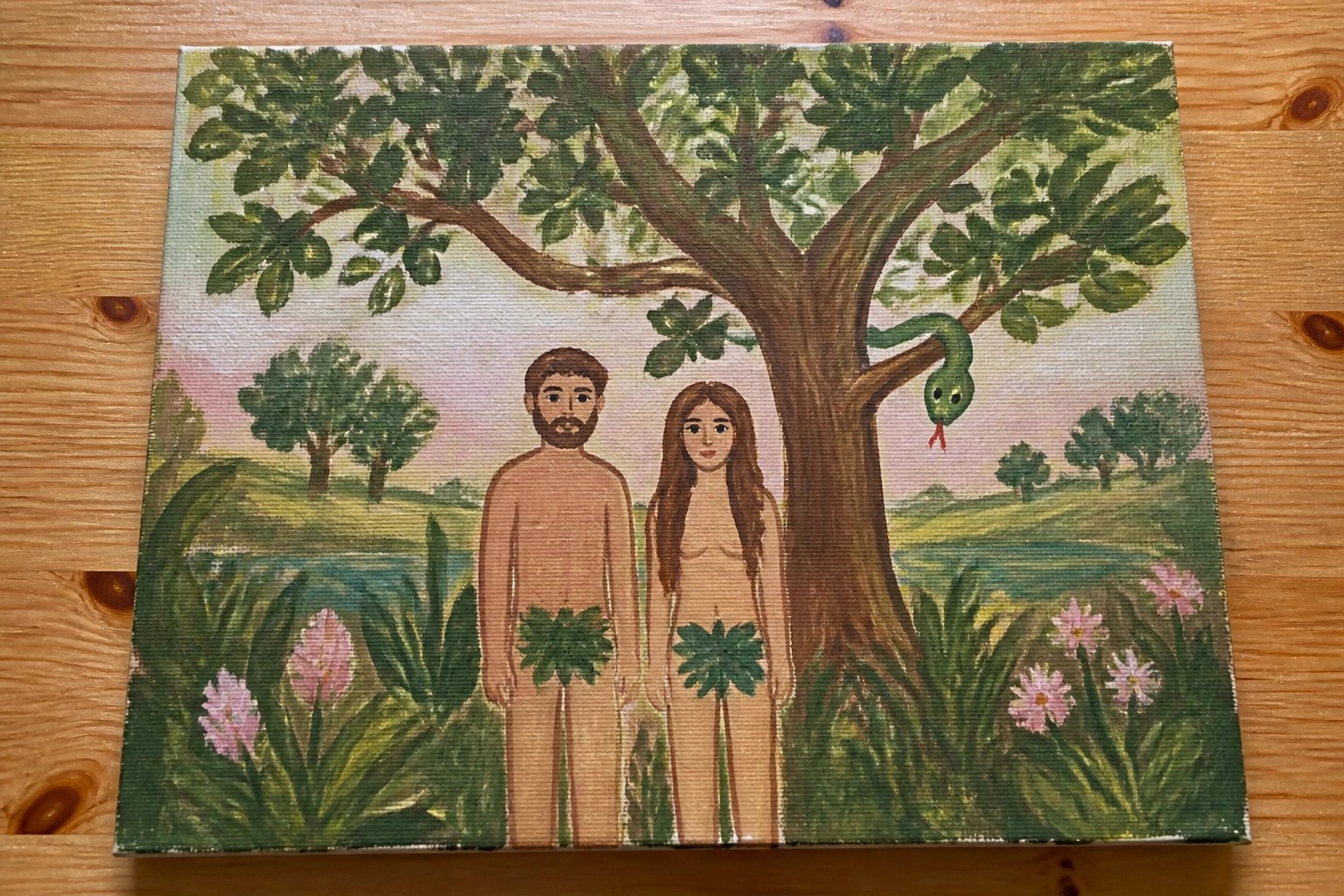
A painting idea based on the Eden story shows two nude figures positioned on either side of a large central tree that holds a coiled green serpent on one branch. The layout keeps the tree as the main anchor while the surrounding hills, scattered flowers, and ground cover fill out the rest of the scene. This type of work falls into narrative landscape painting where the story is told through simple figure placement and a full natural setting.
What makes this idea useful is the built-in vertical divider from the tree trunk that makes it easier to balance two figures without complicated overlapping. The foreground flowers and background hills can be reduced or expanded depending on canvas size or time available. For practice this subject works because the story is widely recognized so the focus stays on shape and color placement rather than inventing new content. The same layout can be adapted by changing the season of the foliage or limiting the flower details to just a few clusters.
Noah’s Ark Scene with Animals and Rainbow
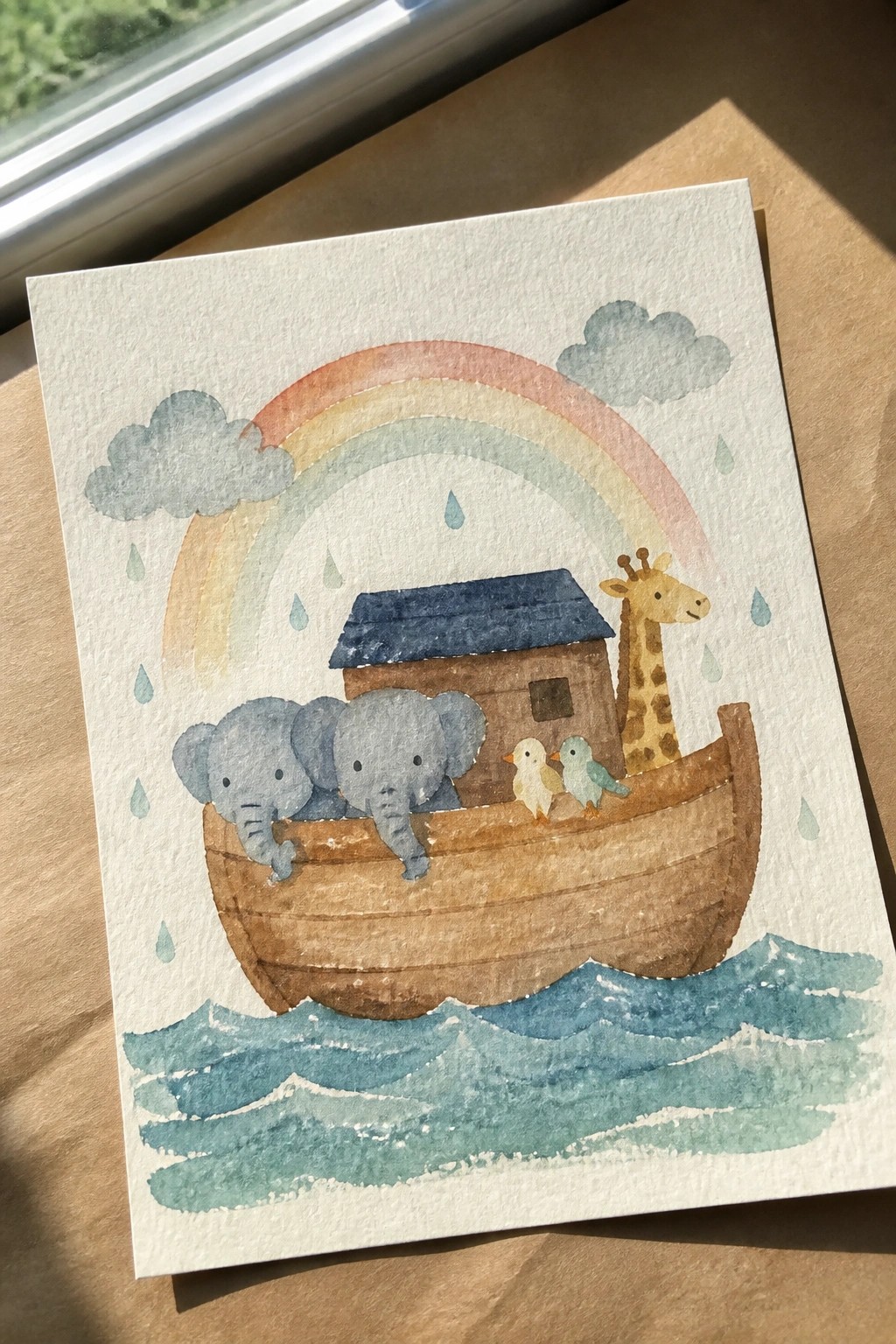
A watercolor painting idea based on the Noah’s Ark story places a simple wooden boat on rolling waves, with two elephants leaning over the side and a giraffe standing tall at the back. Small birds sit inside while a rainbow stretches across the top and light rain falls around the edges. The rounded animal shapes and curved boat lines create an easy-to-follow composition that works as a cute animal illustration within a biblical scene category.
What makes this idea useful is the clear focal point of the boat and animals that can be drawn first with basic shapes before layering color. The limited palette of browns, soft blues, and rainbow tones keeps mixing simple and works well for practice pieces or small wall art. This kind of scene can be adapted by dropping the rain or reducing the number of animals if you want a quicker version for a child’s room. The balanced layout with the rainbow on top helps it read clearly even at smaller sizes on Pinterest boards.
Moses Holding the Tablets on Rocky Peaks
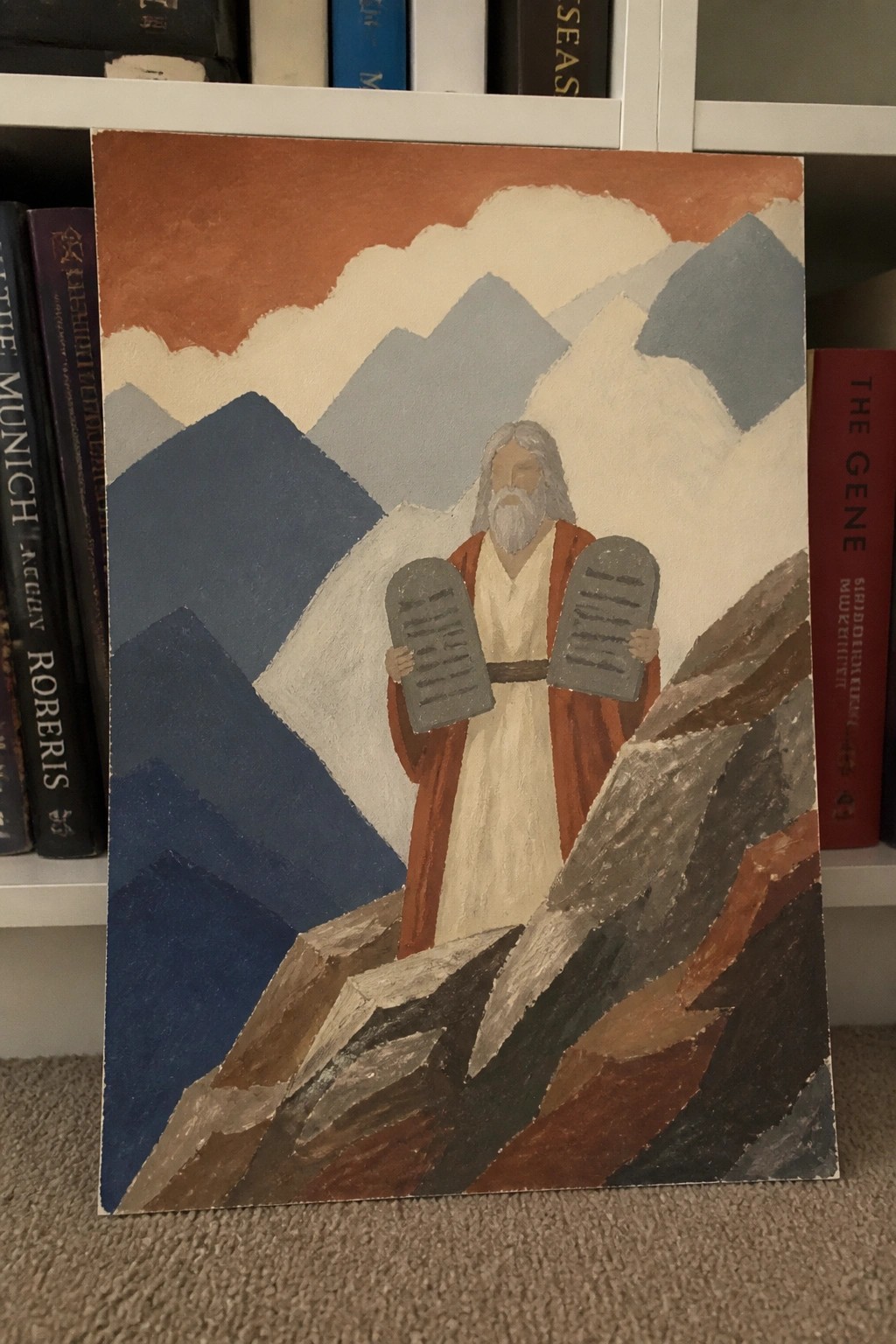
A biblical scene idea built around Moses standing on a mountain ridge with the stone tablets uses strong geometric shapes for the surrounding peaks. The figure stays centered while overlapping triangles in blue and brown create a sense of height and distance. This fits a landscape-with-figure category where flat color blocks and simple edges keep the focus on the main subject rather than fine detail.
The composition does a lot of the work here by using a few large shapes instead of many small ones. You could change the sky to a deeper red or swap the mountain colors for a cooler set if you want it to match different wall tones. This would be easy to turn into a medium-size canvas or a quick study on paper since the forms are already broken down into clear sections. For wall art the vertical layout helps the piece stand out without needing extra elements.
The Burning Bush with a Radiant Central Tree
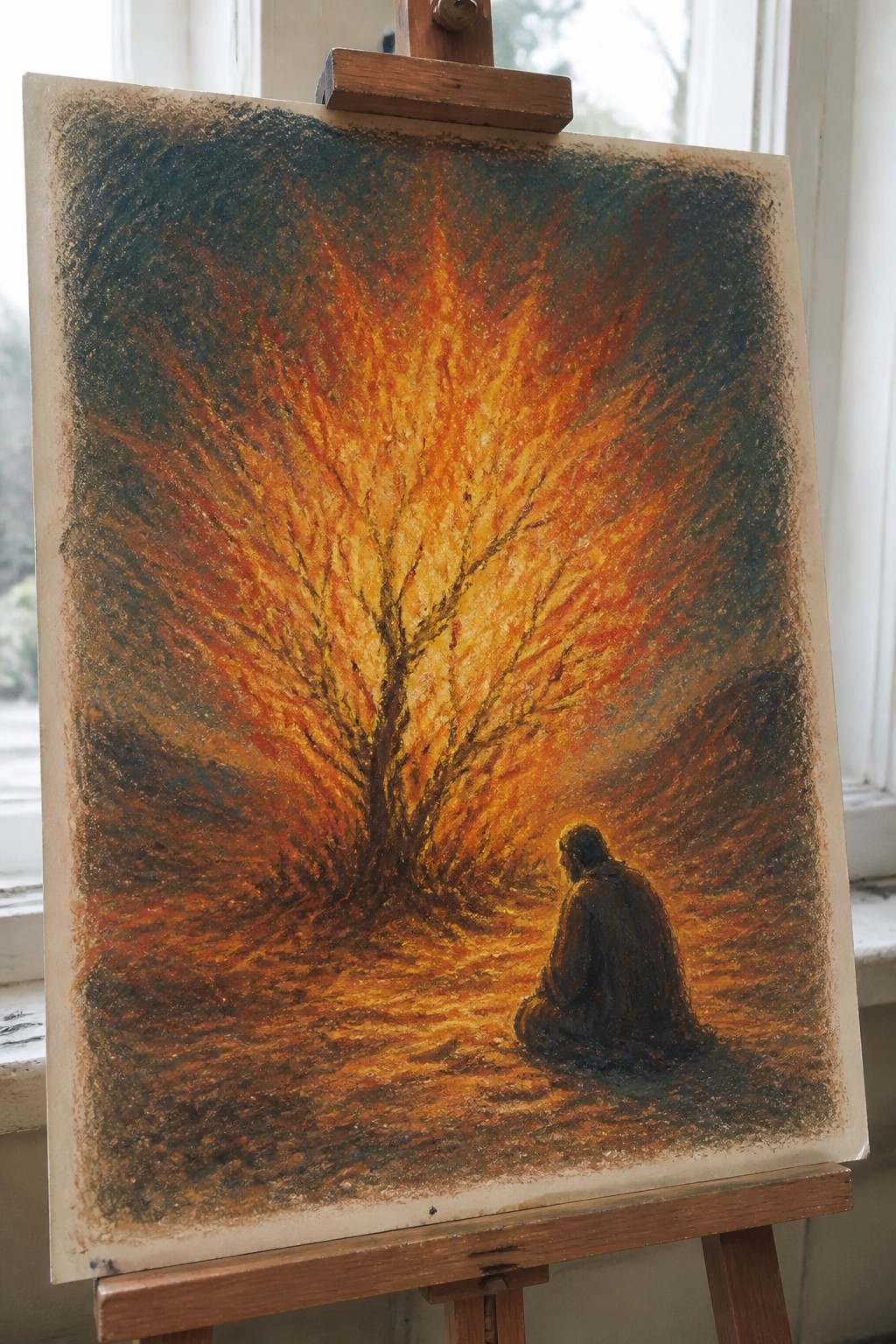
A biblical scene painting built around one seated figure facing a tree whose branches spread outward in strong orange and red strokes against a dark field. The idea centers on dramatic backlighting that makes the tree the clear focal point, with the figure placed low and to the side so it does not compete with the light. The radial brushwork and warm-over-cool layering keep the eye moving inward while the dark edges frame the whole composition.
What makes this idea useful is how the single strong light source does most of the work, so the rest of the canvas can stay simple. The limited palette of oranges, reds, and near-black tones scales down easily for smaller studies or quick practice sessions. For wall pieces, the vertical format and central glow translate well to prints or canvas prints without losing impact. The same setup can be adjusted by changing the tree shape or moving the figure slightly for different Bible stories that involve light or fire.
Crossing Between Towering Waves
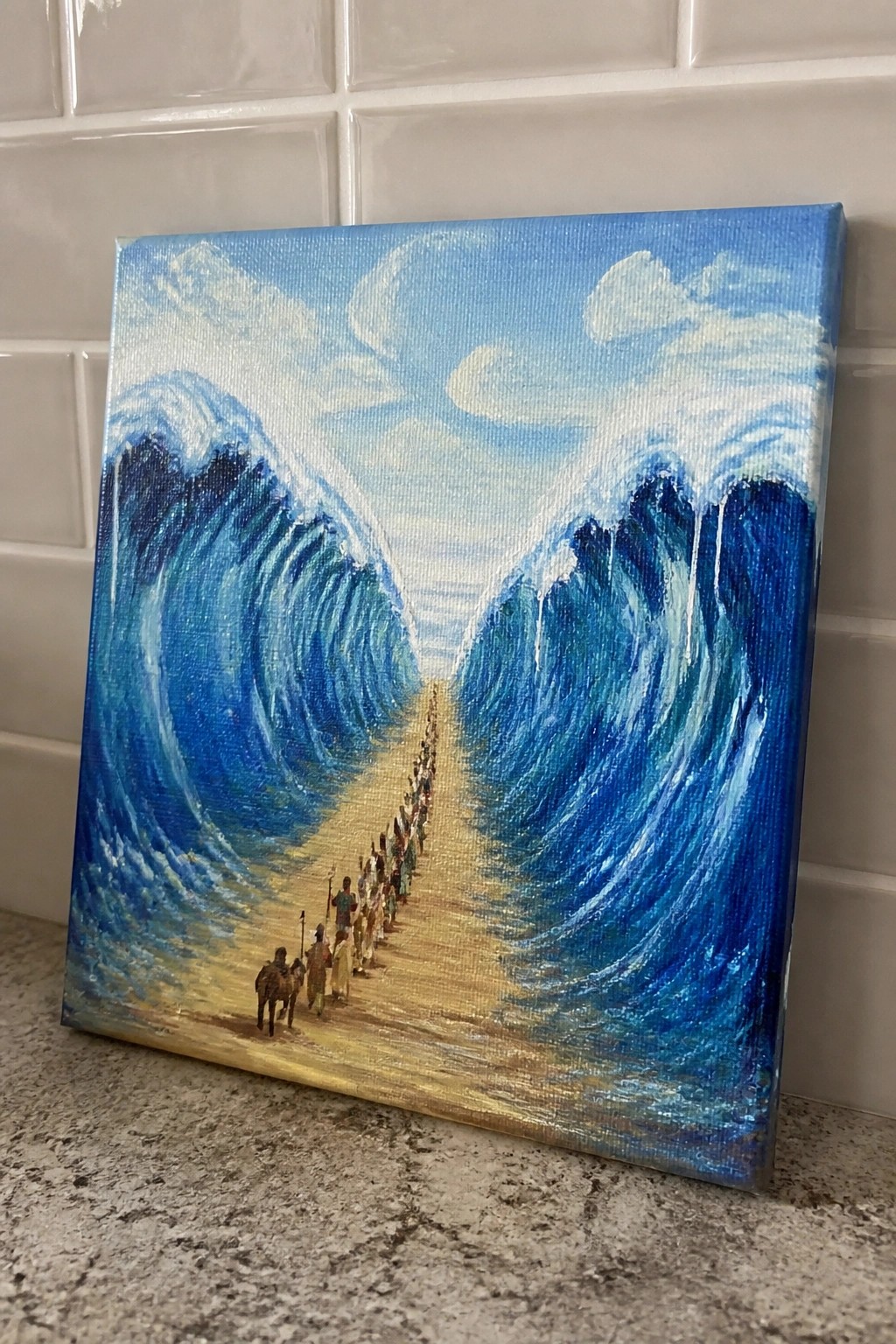
The painting idea captures the parting of the Red Sea as a narrow sandy path between two large curling waves. A line of figures moves down the center, giving the composition a clear vertical focus that draws the eye straight through the middle. Bold blue tones and symmetrical wave shapes make it a straightforward narrative landscape that relies on contrast rather than fine detail.
The composition does a lot of the work here by using the path to lead the viewer without extra elements. You could simplify the figures into basic shapes or shorten the line if you want a quicker version for practice. The limited palette of deep blues and sandy yellows also makes it easy to adapt for different canvas sizes while keeping the scene readable.
David and Goliath Confrontation Scene
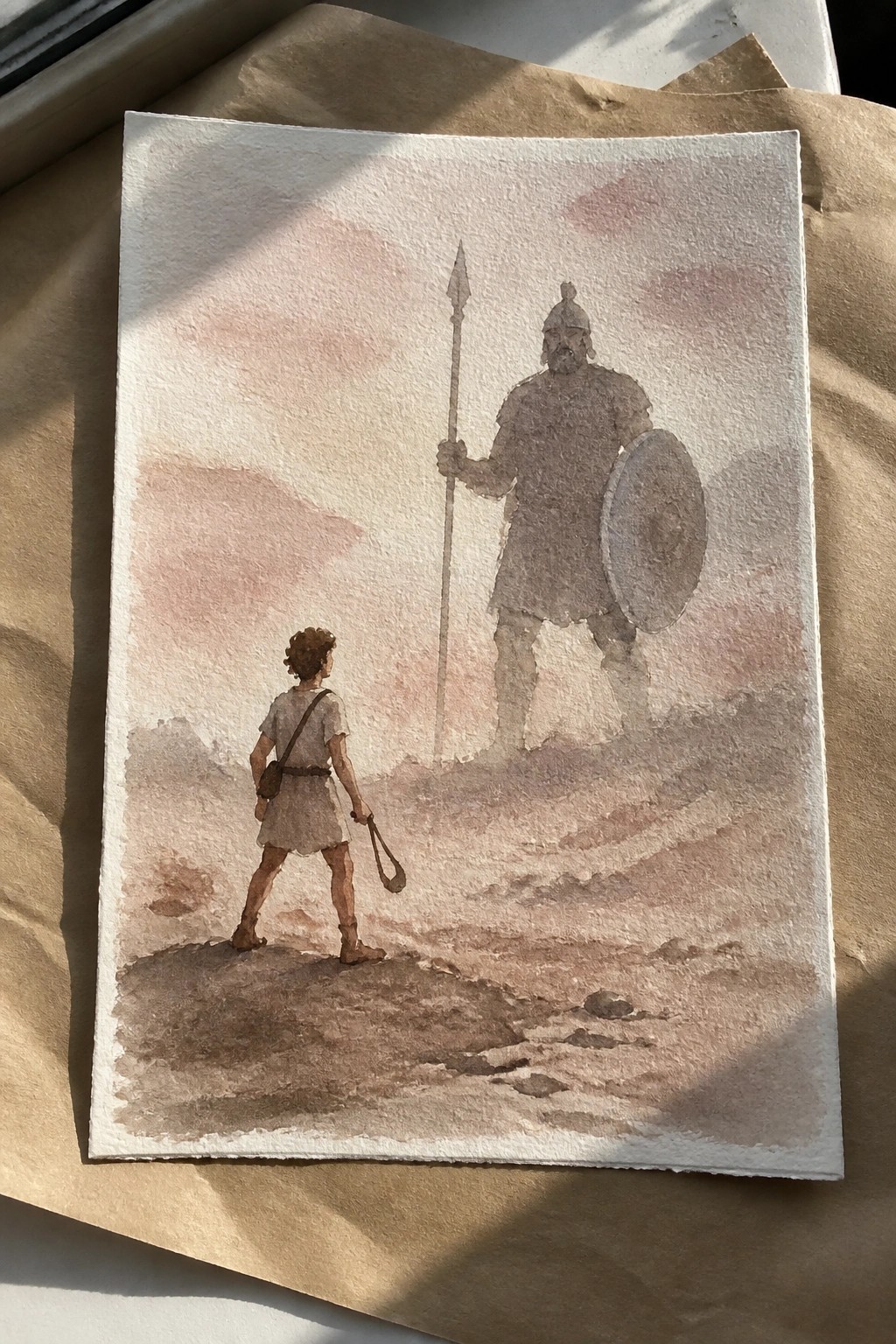
A biblical scene painting idea that shows David standing small before Goliath uses scale contrast as the main driver, with the boy positioned low on the left and the armored figure looming higher on the right. The idea works through a simple two-figure setup against soft, layered hills that recede into the distance, all rendered in a muted palette of browns and dusty pinks. This keeps the focus on the encounter itself rather than on extra props or bright color.
What makes this idea useful is the built-in story structure that needs almost no additional elements to read clearly. The limited color range and soft background make it straightforward to scale down for sketchbook practice or enlarge for a wall piece without losing impact. The same layout could be adjusted by changing the ground plane or swapping the landscape for a simpler horizon if a more minimal version is preferred.
Daniel Sleeping Among Lions
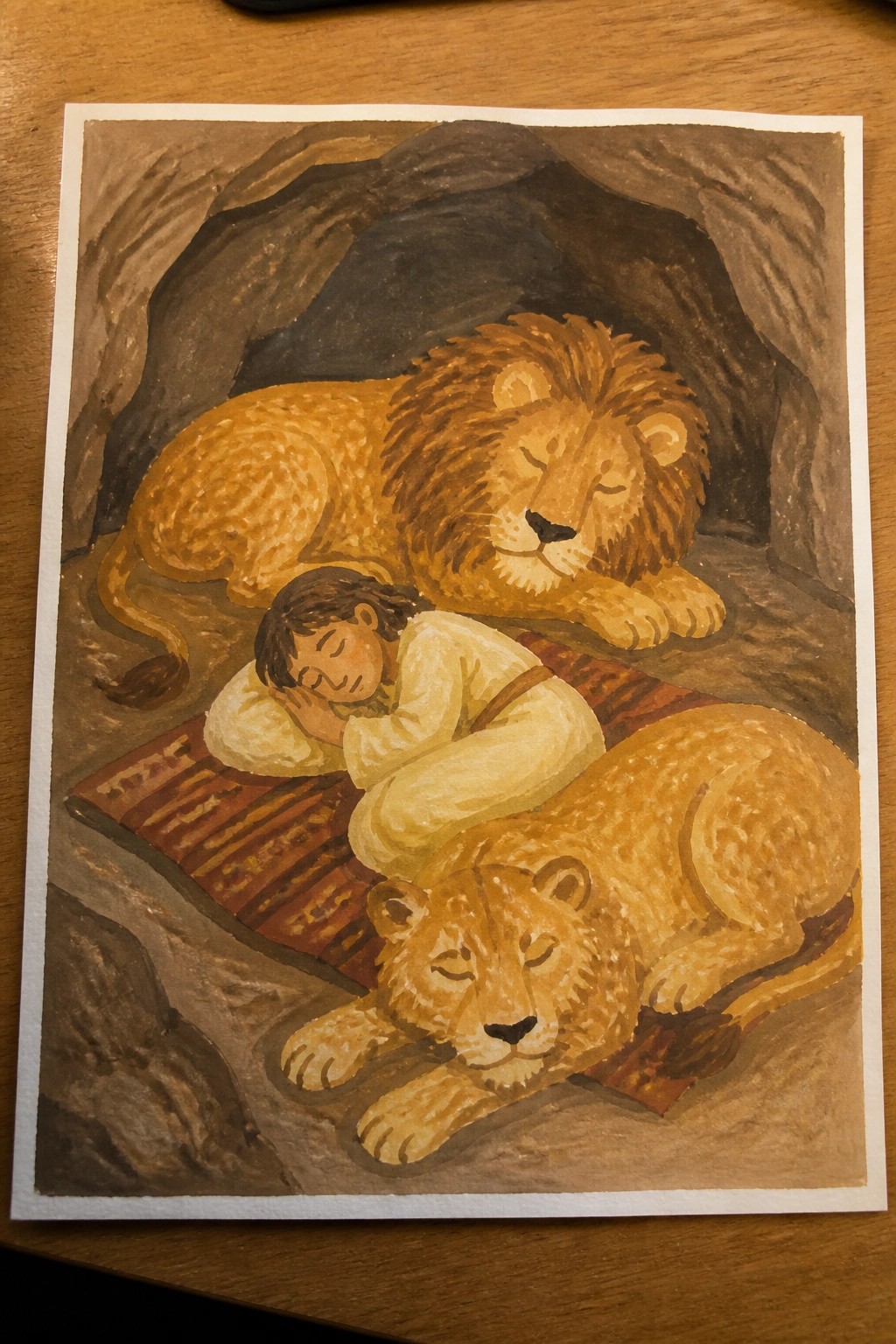
A painting idea built around a child resting beside two lions inside a cave uses simple animal shapes grouped closely together to suggest calm and connection. The idea relies on overlapping forms and a contained rocky setting to hold the composition together while keeping the color range limited to warm browns and golds. This approach fits the animal category for narrative scenes where the focus stays on relaxed poses rather than dramatic action.
What makes this idea useful is the way the cave walls naturally frame the group and reduce the need for extra background details. The color palette makes this easy to adapt by shifting the tones slightly warmer or cooler depending on the surface you choose. For practice, this kind of subject helps with layering soft shapes to create depth without requiring fine line work. A painting like this would also translate well to smaller formats for wall pieces or storybook-style prints.
Jonah and the Whale in a Simple Ocean Scene
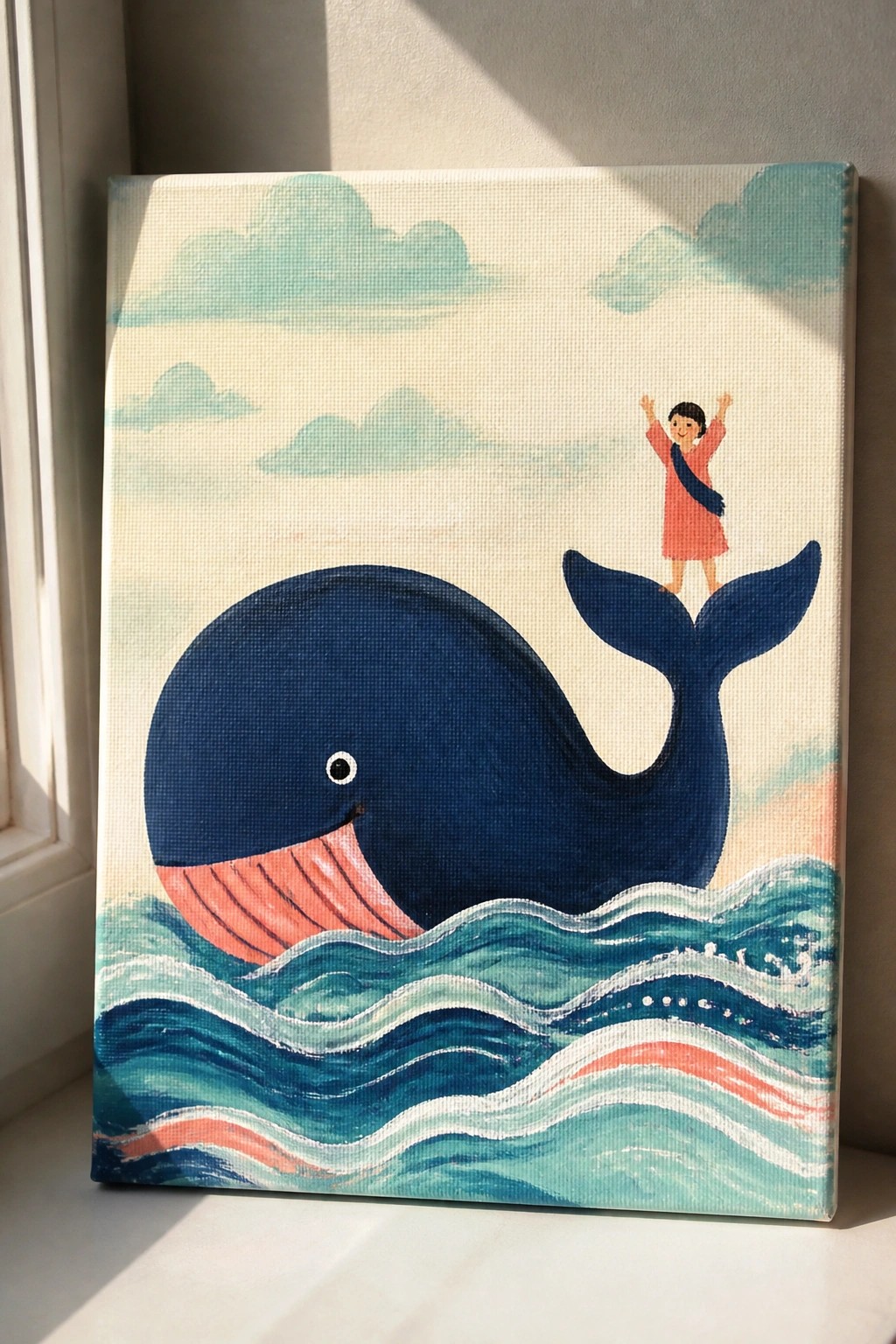
A painting idea like this captures the Jonah story through one large whale rising from layered waves with a small figure standing on the tail. The approach uses bold body shapes for the whale and horizontal wave lines to keep the layout balanced and easy to follow. A soft sky with loose clouds sits behind everything so the main subjects stay front and center without extra clutter.
What makes this idea useful is the limited number of main shapes that let you focus on color blocking first. The color palette of deep blue, coral, and teal can be swapped for other tones depending on the room or season. For wall art this works especially well as a clear biblical reference that still feels light enough for everyday display. You could simplify the waves further or enlarge the figure if you want to adjust the focus.
Nativity Scene with a Bright Star Overhead

A nativity painting idea like this focuses on the holy family gathered around the manger inside a simple wooden stable, with one large star providing the main light against a deep blue night sky. The idea works because the triangular roof and downward glow create a clear center point that keeps the three figures as the main focus. It fits the category of seasonal biblical scene art that stays compact and easy to frame.
What makes this idea useful is the limited color range of blues, browns, and soft yellows, which makes it simple to paint on a small canvas without needing many supplies. The composition already does most of the work by using the stable shape to frame the subjects, so you can scale it down for cards or keep the same layout on a larger board. For holiday decor, this kind of scene adapts well if you adjust the star size or swap the background to a slightly lighter tone. The straightforward shapes also help when you want to finish a piece quickly for gifts or mantel displays.
Angel Appearing to Mary in a Simple Interior
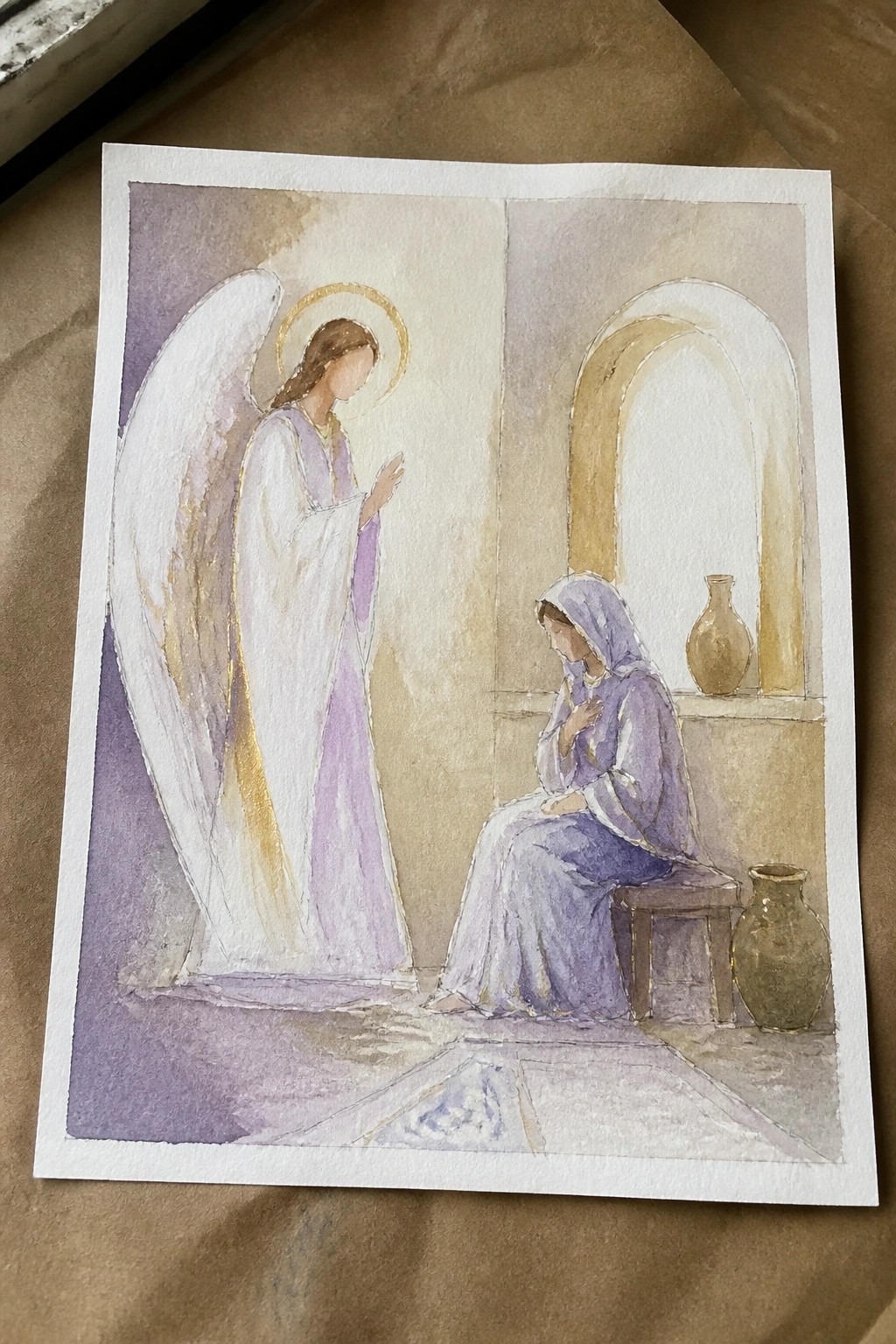
This painting idea captures the Annunciation through two figures positioned across from each other in a plain room. The standing angel faces the seated woman, with the composition relying on the contrast between the upright pose and the lowered head to guide the eye. Soft washes in purple and beige keep the background minimal so the interaction between the figures stays central.
What makes this idea useful is the clear vertical layout that fits tall canvas or paper sizes without needing extra elements. The limited props like the window and small vessels can be reduced or changed to match different room styles. For practice, the scene works well as a study in figure placement and gentle color blending, and the same setup can be adapted into a smaller card format by tightening the background shapes.
Jesus Teaching Followers on a Hillside
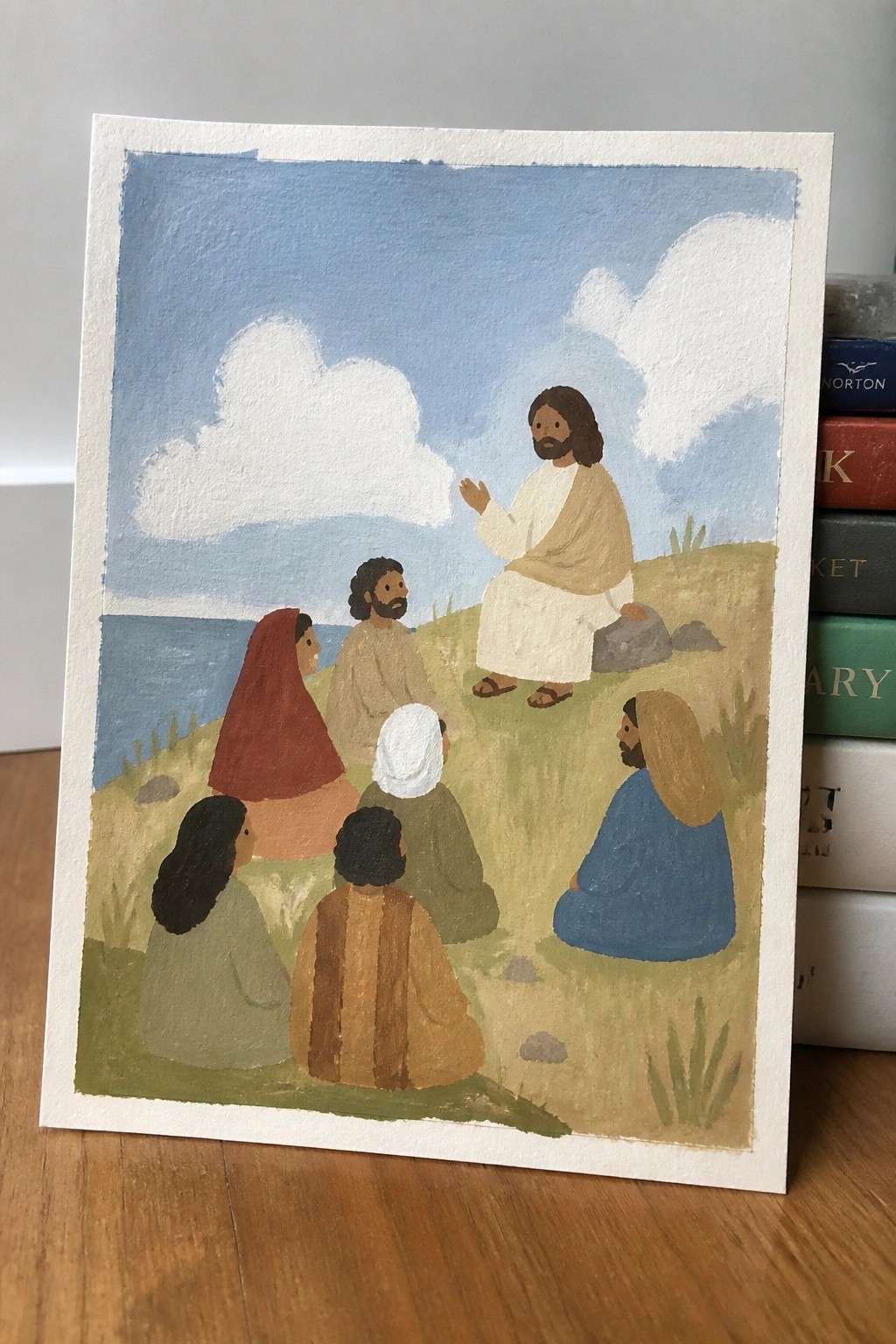
This painting idea shows a biblical teaching scene with one standing figure addressing a small group seated on a grassy slope beside the water. The approach uses simplified shapes and a clear arrangement where the speaker sits higher on a rock while the others form a loose half-circle below. The flat color areas and soft sky keep the focus on the gathering itself rather than on fine details or textures.
What makes this idea useful is the natural grouping of figures that works at different scales without losing clarity. The basic landscape elements like the hill and water can be reduced or expanded depending on canvas size. For practice, the idea lets you work on placing multiple people in relation to each other while keeping the background simple enough to finish in one session.
Jesus Walking on the Water
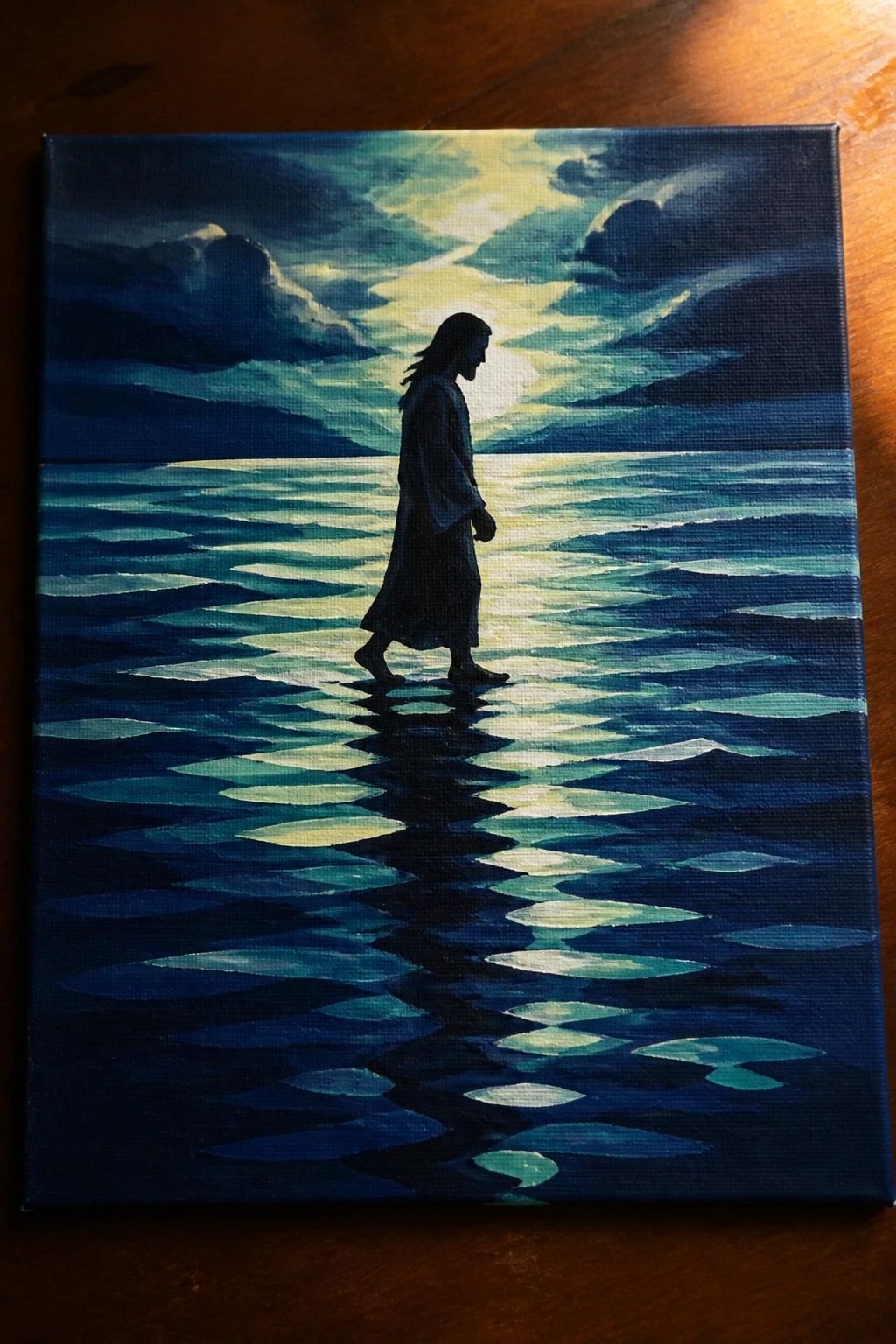
This painting idea shows a lone figure in robes crossing the sea with the horizon glowing behind dark clouds. The strong vertical placement of the figure against horizontal wave patterns creates a clear focal point and sense of movement across the water. It works as a landscape and figure combination that emphasizes light and silhouette to tell the story without extra detail.
What makes this idea useful is the high contrast between the dark figure and the bright sky, which helps beginners block in shapes quickly before adding wave layers. The repeating wave pattern can be simplified or stretched to fit different canvas sizes, and the color scheme adapts easily by shifting the sky tones for sunrise or storm effects. For wall pieces this layout stands out on Pinterest because the single figure and glowing horizon read clearly even in small thumbnails.
Last Supper with a Long Table Focus
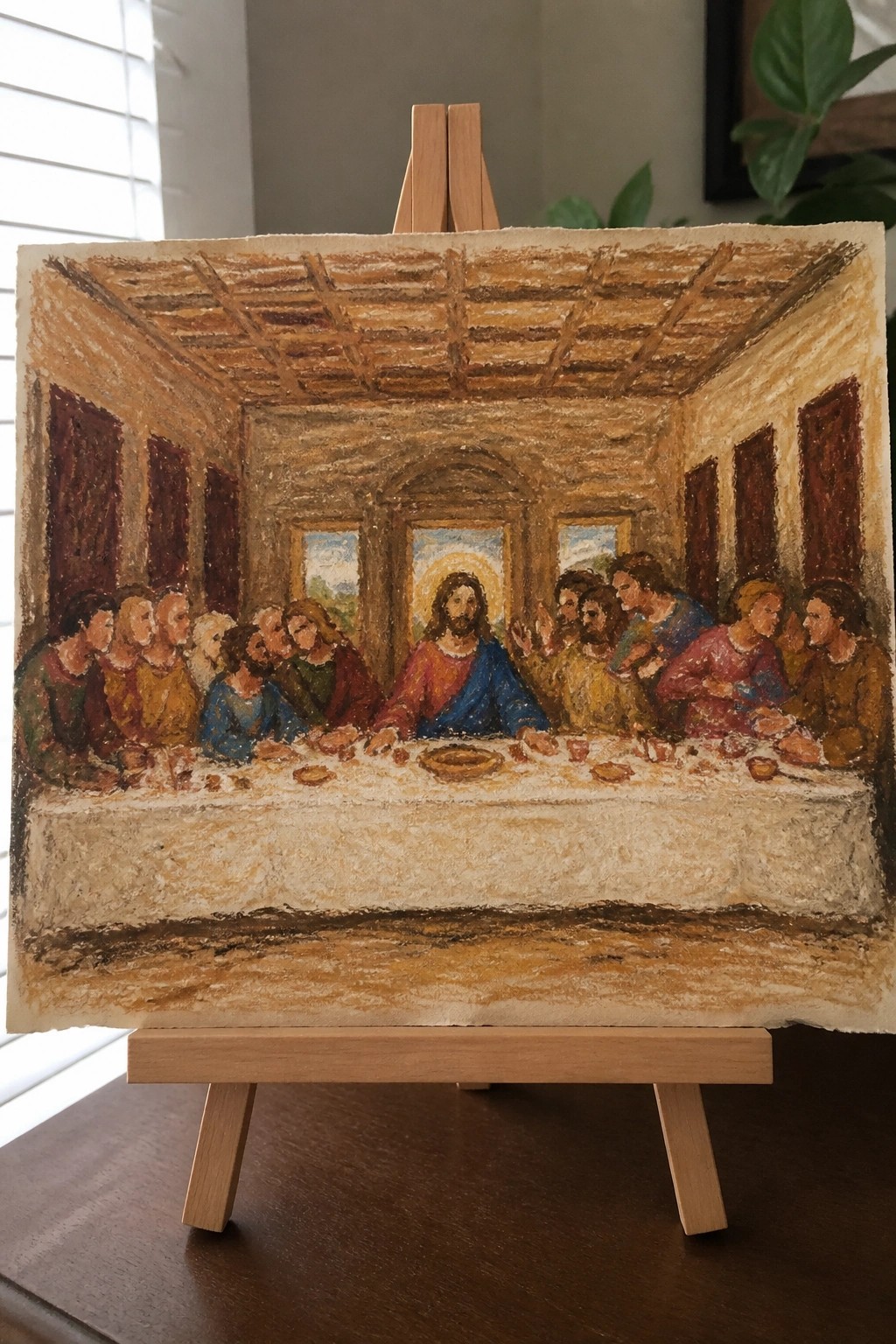
A long table running across the foreground with Jesus centered among the seated figures gives this biblical meal scene a clear horizontal structure that draws the eye straight to the middle. The enclosed room with its wooden ceiling and side panels creates a contained setting that keeps attention on the group rather than on elaborate surroundings. This approach fits the category of narrative religious painting where the arrangement of people and the table itself carries most of the visual weight.
The composition does a lot of the work here by lining the figures along one side of the table so the central figure stands out without extra effort. You could simplify the background to a single wall color or shorten the table to fit a smaller canvas while keeping the same lineup of people. For practice this kind of subject works well because the repeated shapes of heads and arms give you clear forms to block in first before adding any detail.
Empty Tomb Landscape at Sunrise

This painting idea focuses on an empty stone tomb with the round entrance stone rolled aside, placed in a desert landscape under a rising sun. The composition uses the path and rocky foreground to lead the eye toward the dark opening while the glowing sky fills the upper half of the frame. Soft color washes and layered rock textures keep the scene grounded as a landscape with a clear central subject.
What makes this idea useful is the way the sunrise handles most of the drama so the tomb itself does not need heavy detail. You can adapt the size of the hills or the amount of foreground brush to fit different paper sizes for practice or finished pieces. The simple shapes of the stone and path make it straightforward to paint in watercolor or switch to acrylic for quicker layers.
Apostles Receiving Flames at Pentecost
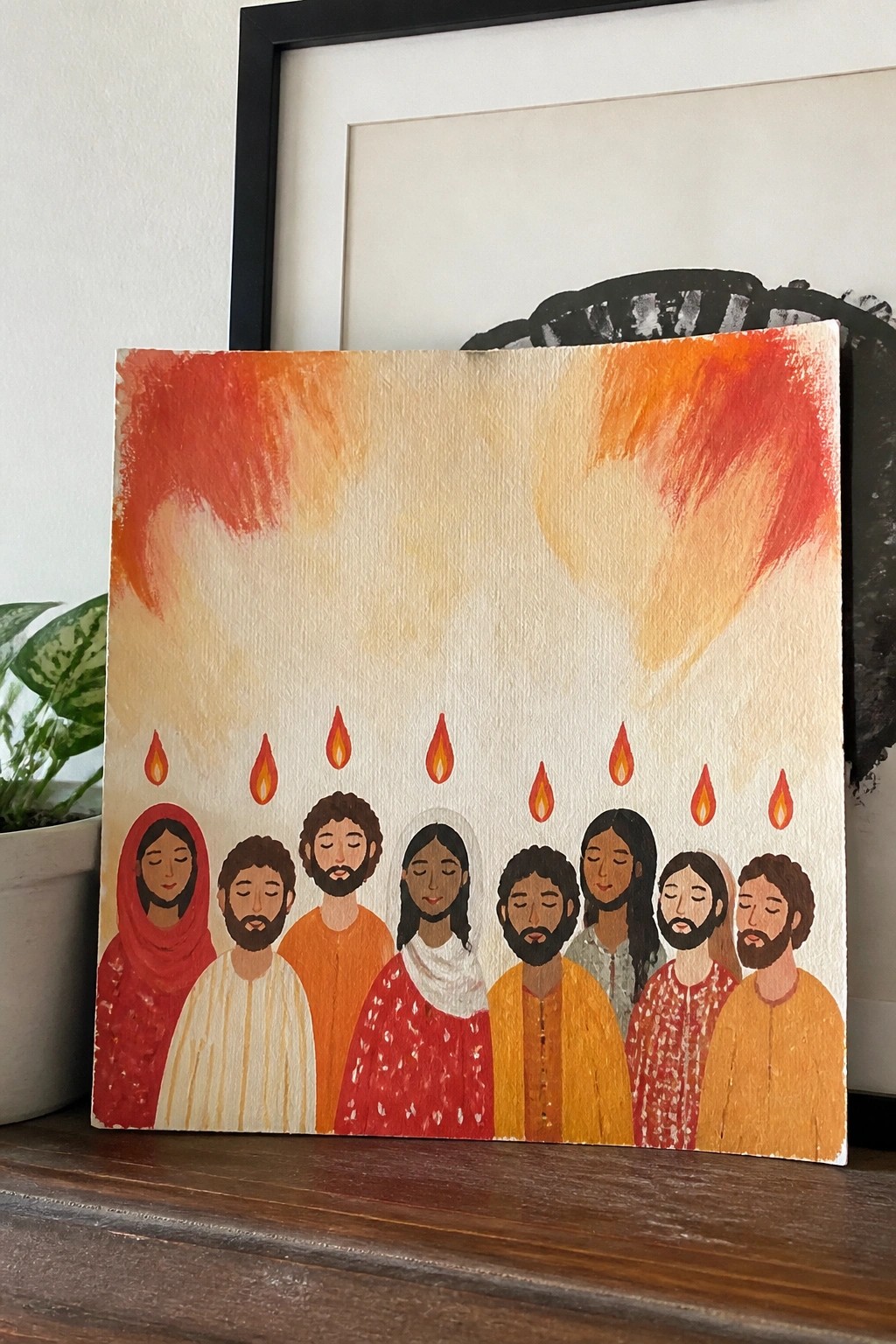
This painting idea shows a line of biblical figures standing together as the Holy Spirit descends, with a small flame placed directly above each person. The figures wear simple robes in red, orange, and yellow tones while the background uses broad red and orange brushstrokes to suggest fire without adding extra detail. The even spacing and repeated flame shape keep the focus on the shared event rather than on individual expressions or settings.
The composition does a lot of the work here by placing everyone in one row so the flames read clearly as the main symbol. You can scale the idea down to fewer figures or swap in different clothing colors to match other Bible scenes. This approach works well for wall pieces because the warm palette and repeating shapes stay recognizable even when simplified for smaller canvases or practice studies.
Good Samaritan Aiding the Wounded Traveler

The core idea here is a straightforward narrative scene from the Good Samaritan story, showing the moment one traveler stops to help another who has been attacked along a roadside. The painting idea works as a biblical illustration by placing the main action in the lower half of the frame, with the road and distant buildings creating a clear sense of place and distance. Earthy browns and greens keep the focus on the figures while the donkey and path add context without crowding the composition.
What makes this idea useful is the built-in storytelling through the positions of the three men, which translates easily to different canvas sizes. The simple background keeps attention on the central group, so the same layout works for a quick study or a larger piece meant for a hallway. You could adapt it by tightening the crop around the figures or swapping the landscape for a flatter backdrop if you want faster results for practice.
Prodigal Son Embrace Scene
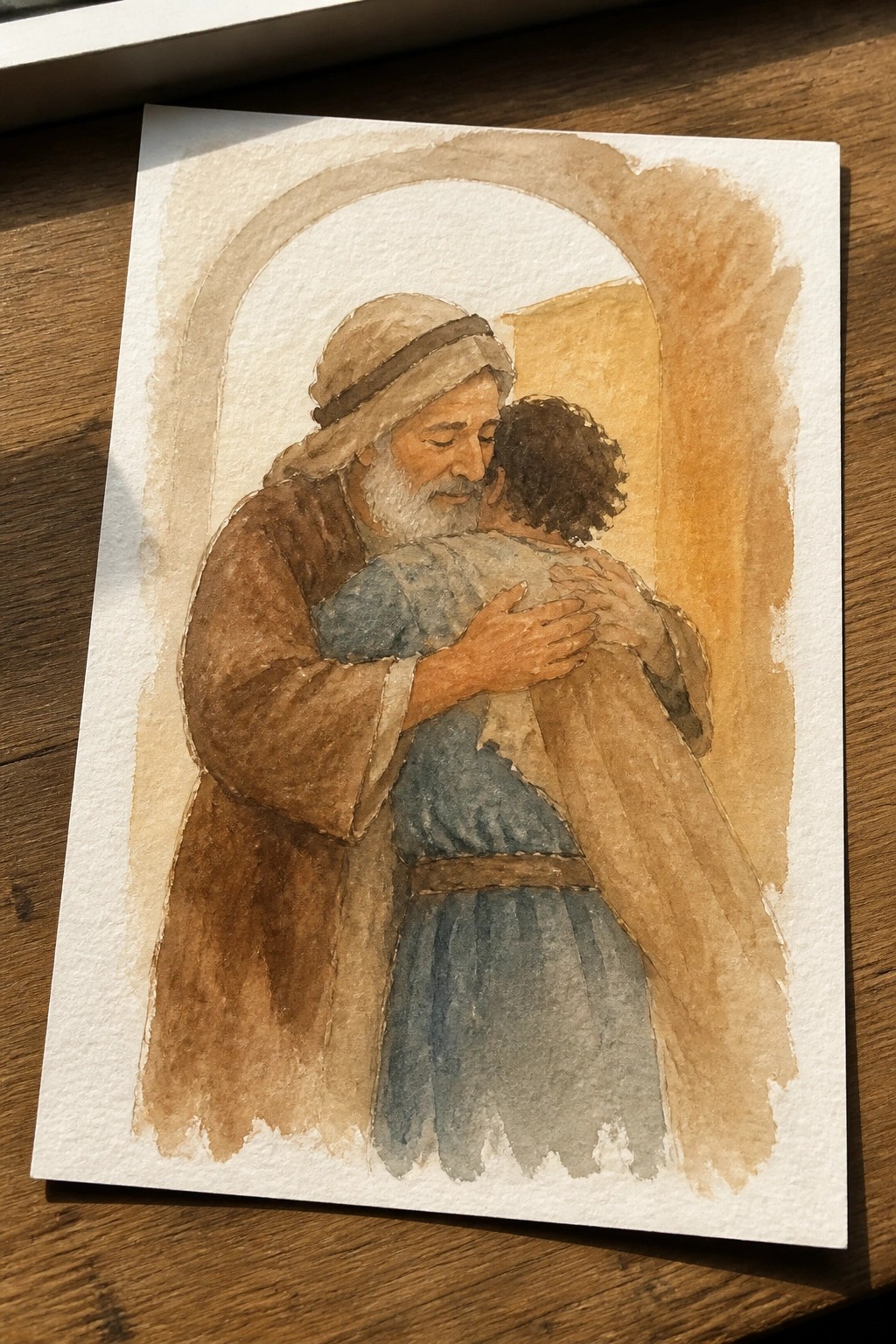
The core idea here is a close-up reunion moment between an older robed figure and a younger one, shown through their shared hug and simple clothing. This fits the category of narrative biblical scene painting, where the two figures occupy most of the space and the archway behind them creates a natural frame. The warm earth tones and soft edges around the edges let the central embrace stay clear without extra detail pulling attention away.
What makes this idea useful is the way the overlapping arms and bodies already create the main shape, so you do not need complex backgrounds to make it read. You could shrink the arch and test it in a smaller format or swap the brown palette for muted greens if you want a different mood. For practice this works because the subject stays recognizable even if the brushwork stays loose, and the vertical layout makes it easy to adapt for a greeting card or small wall piece.
Baptism of Christ with the Holy Spirit Dove
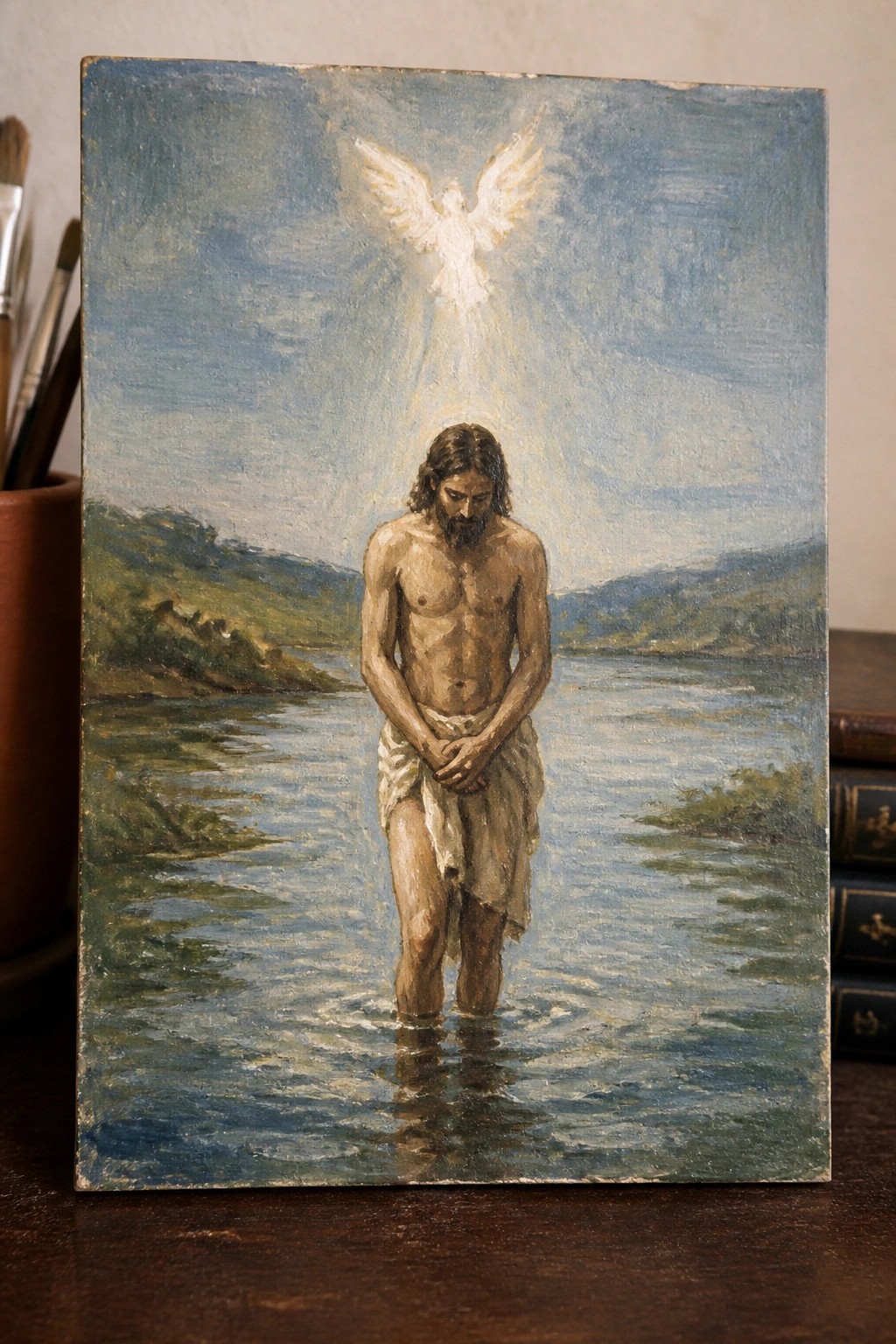
A clear painting idea for a biblical scene is the baptism of Jesus shown as a single standing figure in shallow water with hands clasped low. The white dove hovers overhead with simple light rays fanning down, and a wide river plus distant hills keep the background open and balanced. This approach works as a straightforward religious figure painting that uses a vertical center line to hold the composition together without extra figures or props.
The composition does a lot of the work here because the water reflections and soft sky already give depth while the central figure stays easy to sketch first. You can adapt the same layout to a smaller canvas by keeping the hills low and using a limited palette of blues, greens, and earth tones that mix quickly. For practice this subject helps with basic anatomy and light direction, and the idea shows up well on Pinterest when tagged under classic Bible stories because the dove and figure create an instant recognizable focal point.
Tower of Babel in Layered Color Blocks
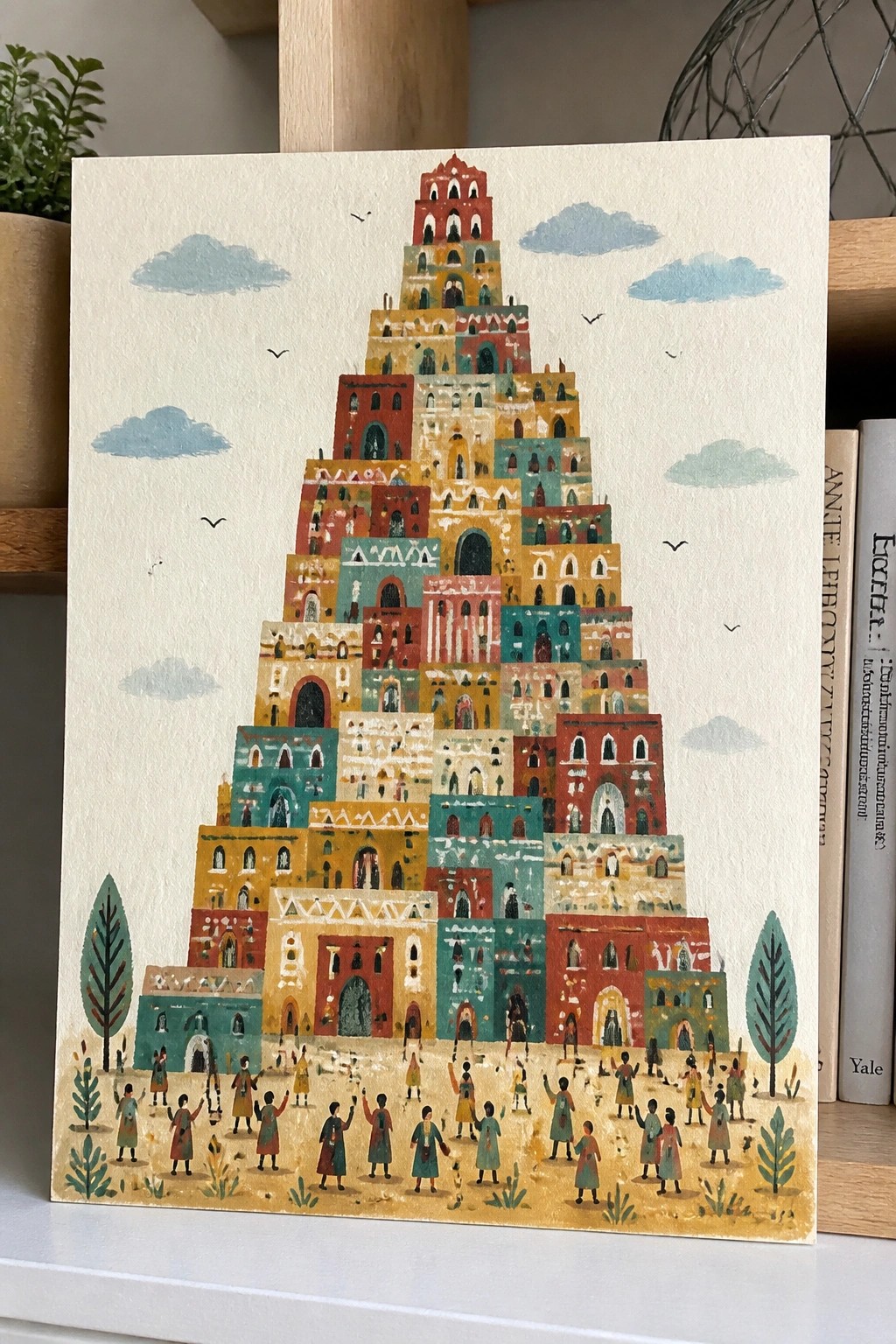
A stepped tower built from stacked rectangular sections forms the core idea here, with each level painted in a different color and pattern of windows and doors. The painting idea treats the Tower of Babel as a dense architectural stack that narrows toward the top, while a flat ground area at the base holds scattered groups of small figures. Warm reds and yellows mixed with teal and cream keep the eye moving up the structure without needing fine shading.
The composition does a lot of the work here because the pyramid shape stays readable even if some levels are removed or simplified. A painting like this works especially well for larger canvases where the base can hold more figures or extra trees without crowding the tower itself. The color blocks make it easy to swap palettes or reduce detail on the windows when scaling it down for a sketchbook page or a smaller decorative piece.
The Shepherd and the Guiding Star
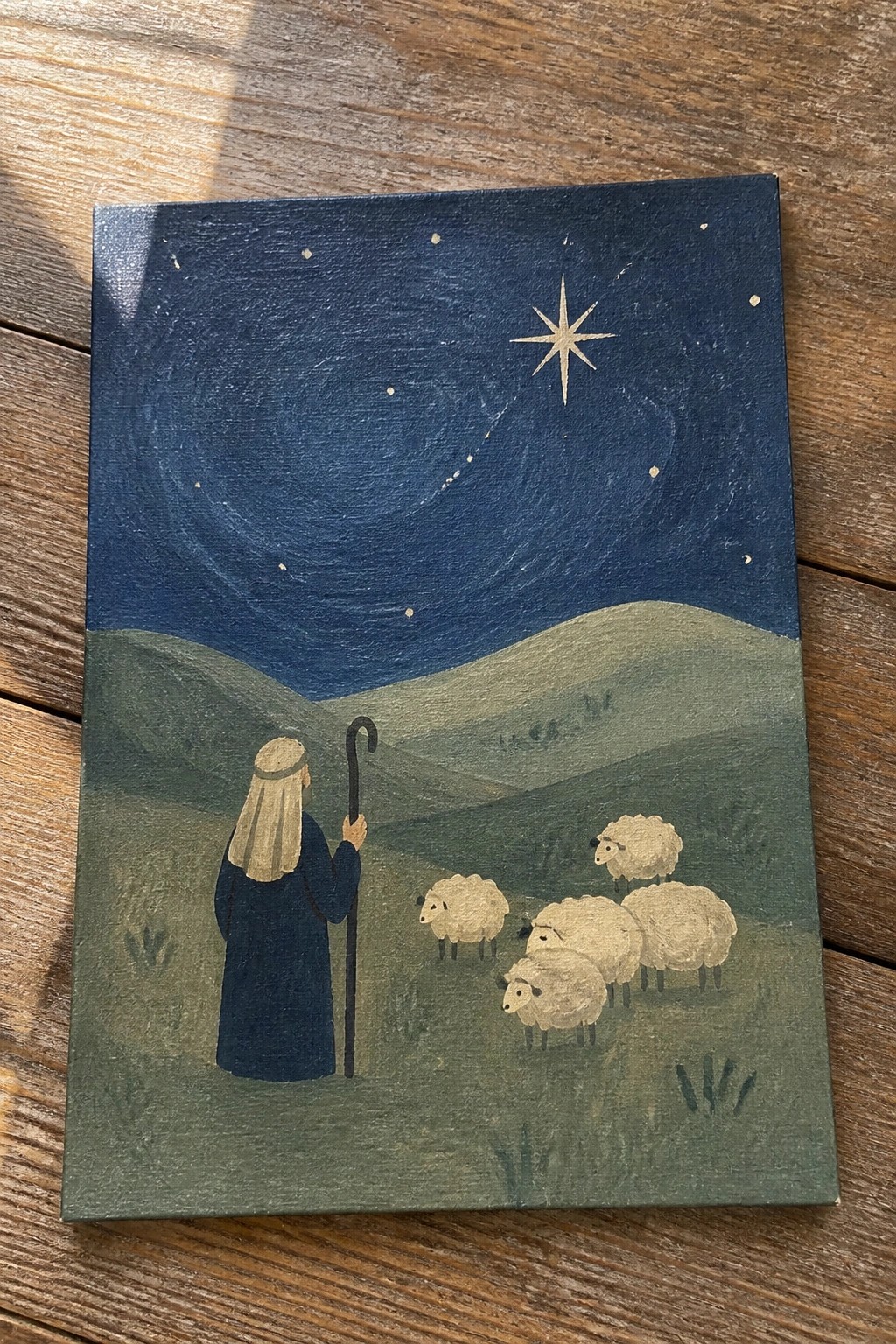
A biblical night scene works well here by placing a lone shepherd figure on one side of the canvas and a small flock of sheep on the other, with rolling hills creating a simple path between them. The deep blue sky filled with scattered stars and one large central star gives the whole piece a clear focal point without needing extra elements. This approach fits the landscape category with added animal and figure details, keeping the color palette limited to blues, greens, and soft neutrals.
The composition does a lot of the work here by using negative space in the sky and the line of hills to guide the eye. You can easily adapt the idea for a smaller canvas by reducing the number of sheep or simplifying the star details. The flat shapes and minimal texture make it a practical choice for practicing night skies or building a set of biblical scenes. For wall art, the vertical layout and strong horizon keep the subject readable even from a distance.
Silhouette of a Crowned Queen with Palace Arch

A silhouette painting of a crowned woman in profile creates a clear focal point for a biblical queen scene. The dark figure stands out against a blended purple and gold background, while the arched opening adds depth by framing a distant building. This style fits decorative biblical art because the strong shapes and limited palette keep attention on the profile and the architectural view.
What makes this idea useful is how the silhouette handles the figure without needing fine facial details. The color scheme can be swapped for other jewel tones or simplified by removing the gold accents for quicker versions. For wall pieces, the contrast between the solid subject and the lighter arch gives it good visual weight on Pinterest. You could also shrink the arch element to fit a smaller canvas or turn the whole thing into a greeting card design.
Solitary Sheep in Open Pasture
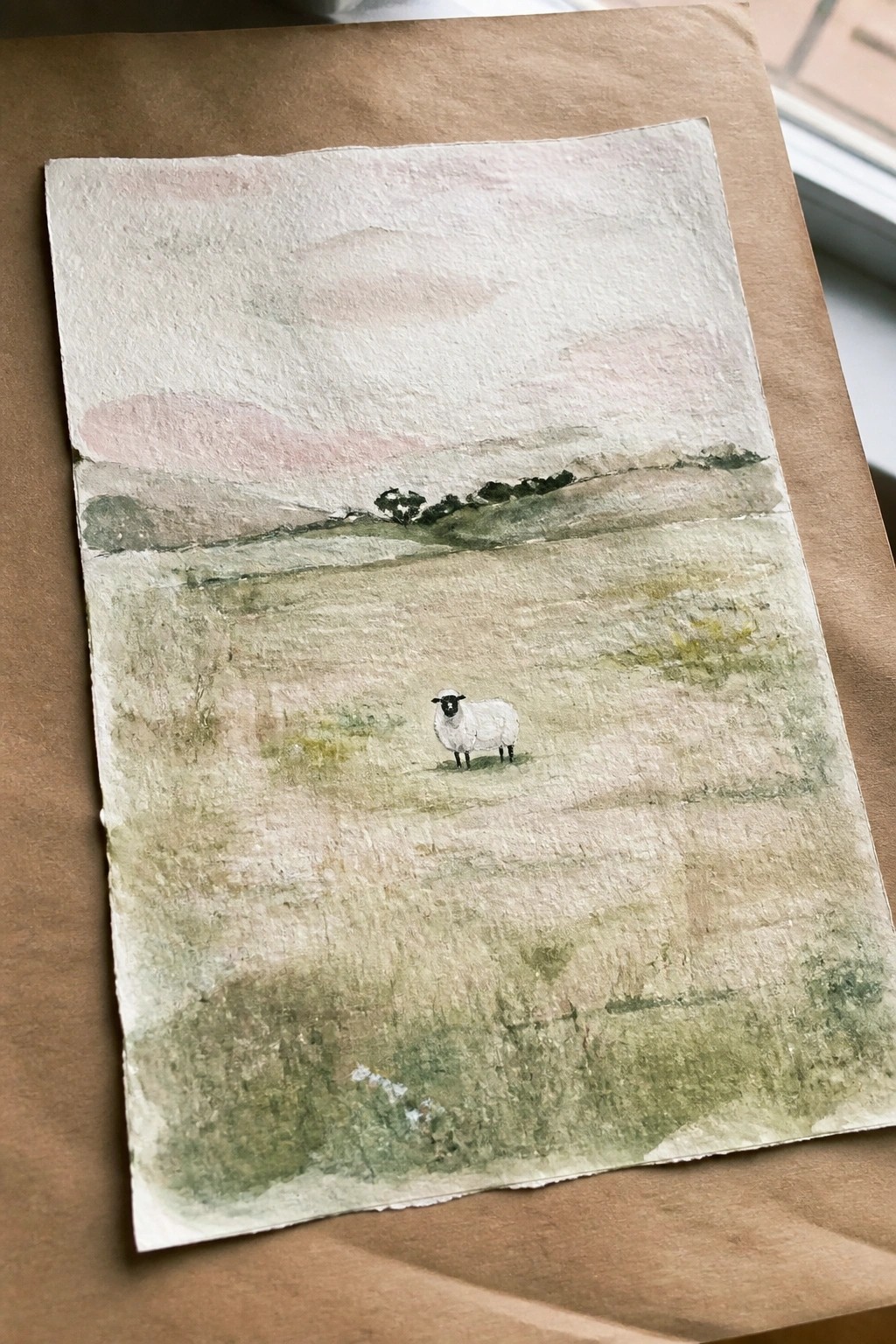
The core idea here is a single sheep placed low in the frame against a broad, layered field and distant hills. This creates a pastoral scene where the animal serves as a small focal point within a much larger landscape. The soft horizontal bands of color and minimal sky details keep the emphasis on space rather than on intricate elements.
What makes this idea useful is the way the empty field and low horizon give the composition breathing room without requiring complex drawing. You can easily change the sky tones or add subtle hill variations to shift the season or time of day while keeping the same basic layout. For practice the subject stays approachable because the sheep needs only simple shapes and the background works with loose washes. It also scales well for small prints or greeting cards where a quiet landscape element is wanted.
Transfiguration of Jesus on the Mountain
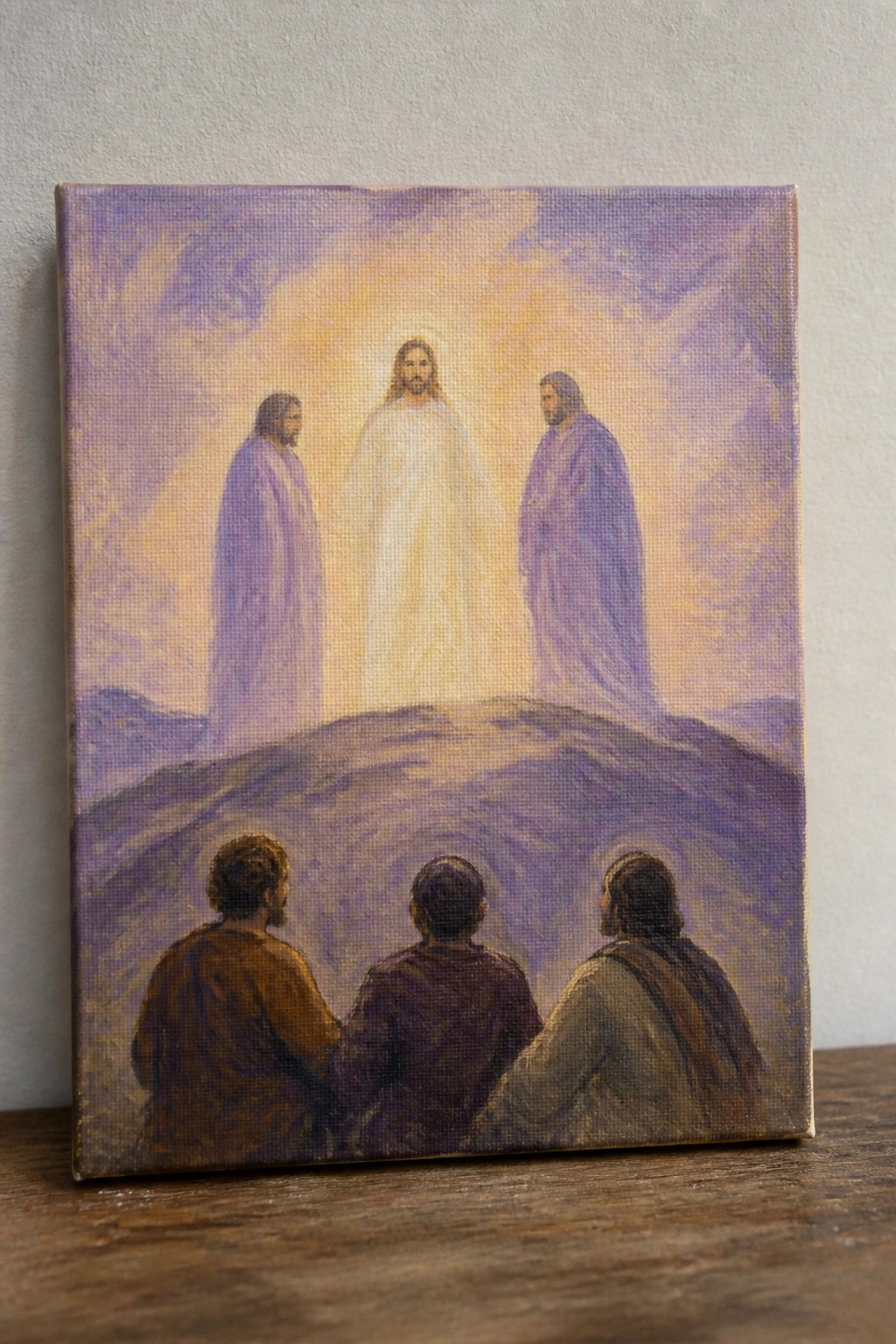
The core idea here is a biblical narrative scene showing Jesus glowing at the center of a mountaintop moment, flanked by two standing figures and observed by three seated witnesses below. This type of painting idea works as sacred story art because the strong vertical arrangement and bright central light create a clear focal point that guides the viewer through the event. The shift from cooler purples in the sky and robes to warmer yellows around the main figure keeps the composition balanced while separating the main subject from the background.
What makes this idea useful is the built-in contrast between the bright central area and the darker foreground, which helps the eye land quickly on the main action. You can adapt the scale easily by shrinking the hill or simplifying the robes if you want a smaller study piece. The color choices also translate well to a more muted palette if you prefer less dramatic lighting for a study wall or gift. For Pinterest, scenes like this perform when labeled directly with the Bible story name rather than generic terms.
Frequently Asked Questions
1. What classic Bible stories are represented in the 23 paintings? These paintings draw from well known stories such as the Garden of Eden, Noah’s Ark, the Exodus from Egypt, David’s victory over Goliath, the Nativity, the Sermon on the Mount, the Last Supper, the Crucifixion, and the Resurrection. Each one highlights moments of faith, redemption, and divine power to help viewers connect visually with the scriptural accounts.
2. Who are some of the renowned artists featured in this collection? The artworks include pieces by masters like Michelangelo, Rembrandt, Caravaggio, and Raphael, as well as other classical painters who focused on religious themes. Their styles range from Renaissance detail to Baroque drama, bringing emotional depth and technical skill to the biblical narratives.
3. How do these paintings help in understanding the Bible stories? Visual depictions let viewers see key details, emotions, and settings that text alone may not convey. Many include symbolic elements such as light for divine presence or specific colors for virtues, which can deepen personal reflection and make the stories more memorable during study or prayer.
4. Where can these sacred paintings be viewed in person? Several reside in major institutions including the Vatican Museums, the Louvre in Paris, the National Gallery in London, and various European cathedrals. Checking museum websites or planning visits around special exhibitions provides the best access, and some offer virtual tours for remote viewing.
5. Are there resources available for learning more about the symbolism in these paintings? Books on Christian art history, museum audio guides, and online lectures from universities explain the symbols, historical context, and artistic choices. Local church study groups or art appreciation classes also provide helpful discussions that tie the images back to specific Bible passages.