I have always liked paintings that show everyday details without making things look perfect.
These works focus on the wounds after the resurrection and they come across as quite straightforward.
When I work on my own pieces I pay attention to skin tones and small marks so these stood out for that reason.
It feels honest to see the subject handled in this way across different artists.
I think they give a clear view of what the painters chose to include.
Realistic Portrait of Christ with Open Hands Displaying Wounds

A realistic figure painting idea that places the focus on Christ with both hands extended forward, palms up, to show the small dark wounds from the crucifixion. The three-quarter torso angle and forward reach of the arms create a balanced composition that draws attention straight to the hands while keeping the face and upper body clearly visible. This fits the category of religious portraiture, using a warm earthy palette with blue accents on the robe to keep the overall look grounded and natural.
What makes this idea useful is the clear hand placement, which gives you an easy starting point for practicing skin tones and small details without needing a complicated background. The robe folds and muted backdrop adapt well if you want to simplify the clothing or change the color scheme for different lighting studies. For wall art, the centered figure and straightforward pose work at multiple sizes, and the same setup could be cropped tighter around the hands for a more focused study piece.
Realistic Close-Up of the Nail Wound in an Open Palm

The core idea is a tightly framed still life that isolates one hand with a central puncture wound and a single line of blood running toward the wrist. This category of painting works as a focused figurative study rather than a full scene, letting the injury and skin texture carry the entire composition. The dark, low-detail background and the natural spread of the fingers create strong visual weight on the wound without any competing elements.
What makes this idea useful is the simple single-subject layout that removes the pressure of painting complex clothing or settings. You can easily change the skin tone range or blood thickness to fit different lighting conditions or pair it with other wound studies in a series. For practice work or small devotional pieces, the contained scale and limited color range make it straightforward to adapt while still looking intentional on a wall.
Resurrected Jesus with Exposed Side Wound in a Garden

A realistic watercolor approach works well here by placing the central figure against soft foliage and flowers so the side wound stands out clearly through the open robe. The outstretched hand adds a direct focal point that draws the eye straight to the wound while the loose brushwork on the fabric keeps the overall look natural rather than stiff. This type of religious portrait combines figure work with light background elements to keep the emphasis on the post-resurrection detail.
The composition does a lot of the work here by using the open robe as a natural frame around the wound. You can adapt the color palette easily by shifting the greens and soft earth tones to match whatever paper or paint set you have on hand. For practice, this kind of subject lets you work on skin tones and fabric at the same time without needing a complicated setup. The simple background also means you can crop it tighter for a smaller study or stretch the foliage outward if you want a larger finished piece for display.
Jesus Portrait with Open Hands Showing Wounds

A straightforward portrait idea that places the resurrected Christ in the center with both hands extended toward the viewer to highlight the wounds. The dark teal background pushes the figure forward while the soft halo creates a natural focal ring around the head and shoulders. Earthy robe colors and visible brushstrokes keep the emphasis on the hands and face rather than on fine detail or dramatic lighting.
What makes this idea useful is the simple setup that lets you practice hand positioning and wound placement without building a full scene. The dark background does most of the work by removing the need for extra elements, so you can adjust the robe colors or halo intensity easily for different versions. This format also translates well to smaller canvases or sketchbook studies if you want to try the same pose from slightly different angles.
Torso Close-Up Revealing the Side Wound

A strong painting idea centers on a cropped torso view where the hands actively draw back the garment to expose the spear wound. This setup turns the composition into a clear focal study of the injury itself rather than a full figure scene. The limited color range and direct lighting keep the eye fixed on skin texture and the wound details without distraction.
What makes this idea useful is how the hand positions do most of the compositional work by framing the wound naturally. You can adapt it by changing the angle slightly or using a warmer or cooler skin tone depending on your palette. For practice, the subject pairs fabric folds with flesh tones in one contained area, which helps when working on larger religious pieces later. The same approach scales down easily for studies or stands alone as a tight, readable image for reference boards.
Jesus Seated with Palms Up to Display Resurrection Wounds

A realistic painting idea that places the resurrected Christ in a seated pose with both hands extended forward, palms turned upward to show the nail wounds. The open tunic reveals matching marks on the chest while the blue cloak drapes across the lap, and a soft glowing background isolates the figure without competing details. The composition relies on the direct presentation of the wounds combined with the upward gaze to create a clear focal point on the torso and hands.
The limited palette of warm skin tones against cooler blues and earth backgrounds makes this straightforward to adapt for different canvas sizes or to simplify for a tighter crop around the hands and chest. You can adjust the angle of the arms or reduce the amount of drapery if you want a quicker study focused mainly on the wounds themselves. Because the idea centers on clear, readable details rather than complex scenery, it works well for religious art collections or reference boards where viewers look for straightforward resurrection imagery.
Jesus Revealing His Side Wound to a Kneeling Woman in an Outdoor Setting

A post-resurrection scene centers on Jesus standing with his robe opened to display the wound in his side while a woman kneels in front of him and reaches toward the fabric. This type of painting idea combines a clear biblical moment with a soft landscape background of trees, distant hills, and scattered foliage. The vertical arrangement keeps attention on the two figures, and the muted greens and earth tones prevent the setting from pulling focus away from the central action.
What makes this idea useful is how the background stays simple enough to scale down for smaller studies or practice pieces without losing the main interaction. The color choices stay consistent across skin tones, clothing, and landscape, so the same palette works for quick color studies or full pieces. For wall art, the contained setting and clear subject make it straightforward to adapt into different sizes or crop tighter around the figures if needed.
Thomas Touching the Spear Wound on Christ’s Side
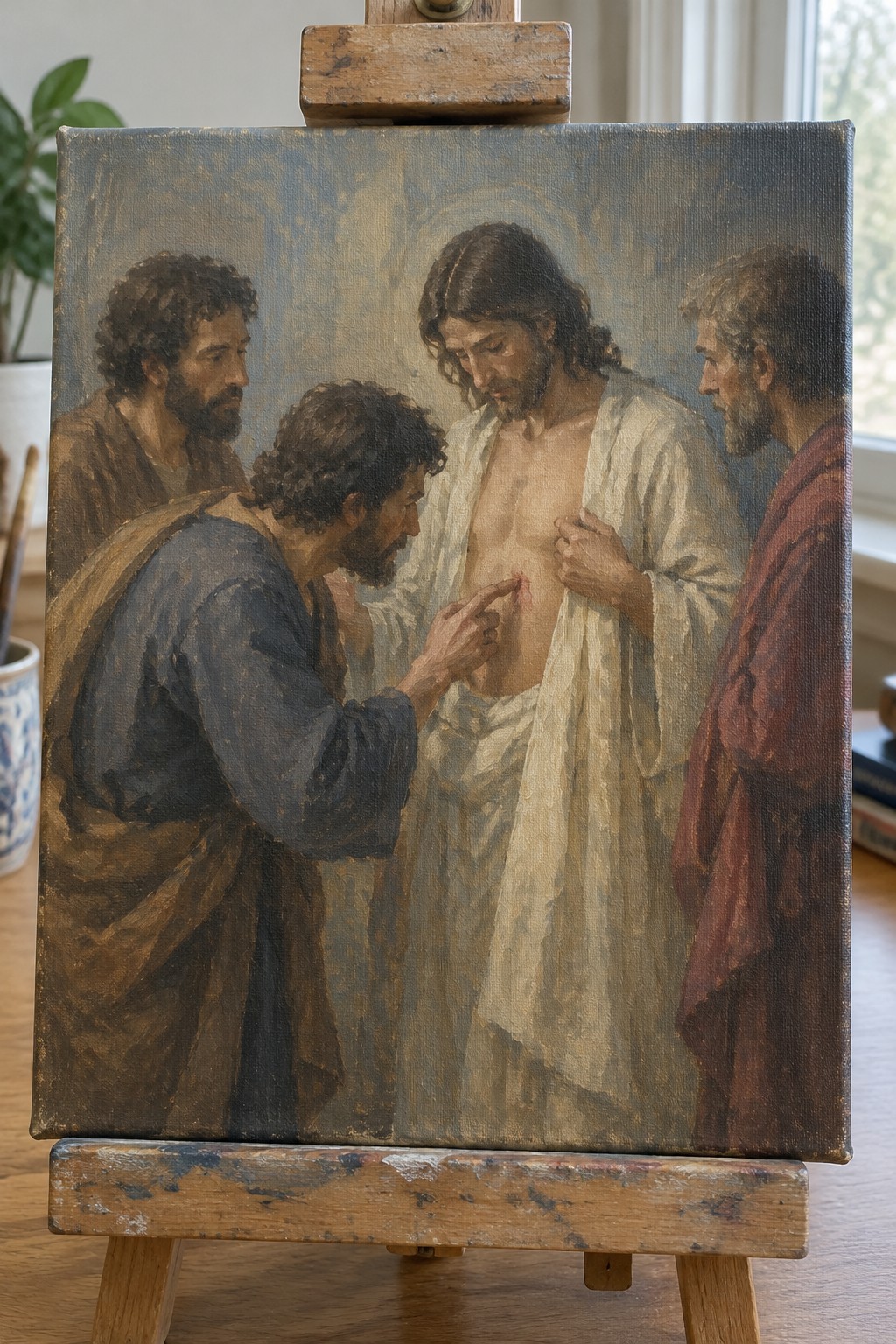
A realistic narrative painting idea centered on the biblical moment of physical proof after the resurrection, where one disciple extends a finger to the visible wound while three others gather close around Jesus. The composition places the light robe and exposed torso at the center to anchor attention on the gesture and the small red mark, using the surrounding darker robes to frame the action without extra background elements. This fits the category of historical religious figure painting with a tight group arrangement that keeps the focus on the interaction.
What makes this idea useful is the natural way the overlapping figures create depth and direct the eye straight to the key detail of the hand and wound. The limited color range of earthy tones and off-white fabric makes it straightforward to adapt for smaller canvases or studies by dropping one or two figures. For practice, the setup works well for building skills with skin tones, fabric folds, and multiple head angles in a single scene, and it can be personalized by adjusting the viewing angle or tightening the crop around the central pair.
Overhead View of Hands with Palm Wounds

A painting idea like this centers on two open hands shown from above to display the round wounds centered in each palm. The side-by-side placement and plain background let the skin folds, nail shapes, and soft color transitions define the forms without added elements. This approach belongs in the realistic figurative category where the focus stays on accurate anatomy and natural light.
The composition does a lot of the work here by keeping everything centered and uncluttered so the wounds read clearly. You could adapt the same layout for different skin tones or crop it tighter around the palms for a smaller canvas version. For practice, the idea works well because the subject is easy to reference and the limited background keeps the painting session straightforward.
Resurrected Christ with Extended Arms in Landscape

A realistic figure painting of the risen Christ stands barefoot on rocky ground with both arms held out, palms facing forward to show the wounds in his hands and side. The composition centers the robed figure against a layered landscape of hills and water under a soft sky, using the open pose to keep attention on the wounds rather than dramatic gestures. This approach falls into the realistic religious figure category, where the background supports the subject without competing for focus.
The composition does a lot of the work here by placing the figure high and using the low landscape to ground it without crowding the space. A painting like this works especially well for larger canvases where you want room to practice drapery folds and skin tones together. The limited color range of dusty blues, creams, and ochres makes it straightforward to adapt by swapping in different sky tones or simplifying the hills into broader shapes. For wall pieces, the upright format and clear focal point on the torso give it strong presence without needing extra elements.
Watercolor Bust Centering the Side Wound

This painting idea uses a tight bust view of Jesus to place the spear wound front and center on the chest. Soft blue and purple washes surround the figure so the eye moves naturally from the face down to the injury. The loose robe folds and gentle color shifts keep the focus on the realistic skin tones and the small but clear mark of the wound.
What makes this idea useful is how the plain background removes any need for extra details or scenery. You can scale it down to a smaller study by keeping just the head and chest, or change the background to a single muted wash if you want faster drying time. The same layout works well for practice because the wound becomes the main point of interest without requiring complex composition work.
Jesus Displaying His Side Wound to the Disciples

The core idea here is a direct scene of the resurrected Jesus lifting his robe to show the wound in his side while several followers gather close to look. The composition places the standing central figure higher than the surrounding people, creating clear sight lines that lead straight to the gesture. Earthy greens, browns, and off-whites keep the palette simple and grounded, letting the action and body language carry the moment.
What makes this idea useful is the built-in focal point of the raised hands and exposed torso, which works even if the surrounding figures stay loosely painted. The vertical layout adapts easily to a taller canvas or a cropped version that focuses just on Jesus and two onlookers. For practice, the loose brushwork approach lets you work on figure grouping and gesture without getting stuck on fine facial details.
Seated Christ Showing a Bandaged Side Wound

A realistic figure study of the resurrected Jesus seated on rocks, with his robe pulled aside to reveal a bandaged gash on his side and a smaller mark on his hand. The idea treats the wounds as the main focal point while keeping the pose natural and contained. The landscape background stays loose and secondary so the upper body and injuries remain clear.
What makes this idea useful is the bandage itself, which gives an obvious center to the composition without needing dramatic shadows or complex anatomy. The neutral clothing and soft outdoor setting make it easy to scale down for a smaller canvas or adjust the color temperature to match a room. For practice, you can block in the rocks and hills first, then focus the detail work on the torso and hands.
Resurrected Christ with Parted Robe and Raised Hand

This painting idea centers on a realistic half-length portrait of Jesus after the resurrection, with the white robe deliberately opened to show the wounds on his chest. The composition places the figure slightly off-center against a muted blue-green background, using the raised right hand and direct gaze to guide attention toward the exposed torso. The soft, blended brushwork and limited color palette keep the focus on the skin texture and fabric folds rather than dramatic lighting or extra details.
What makes this idea useful is how the open robe and single hand gesture create a clear focal point without requiring a full-body scene. The straightforward background and muted tones make it easy to adapt for different canvas sizes or to simplify further by reducing the halo and background texture. For practice, this kind of subject works well because it combines figure work, fabric rendering, and a specific narrative element in one contained composition.
Clasped Hands as the Central Focus for Wound Details

The painting idea uses a tight composition of overlapping hands to place the crucifixion wounds front and center as the main subject. This approach works because the natural lines of the fingers and knuckles create a built-in path that leads the viewer straight to the injuries without extra elements or props. It belongs to the category of realistic figurative studies, where the emphasis stays on accurate rendering of skin texture, subtle color shifts, and the physical marks themselves.
What makes this idea useful is how the close framing removes the need for a complex background, making it easier to practice realistic hand proportions and small details like bruising or dried marks. The neutral earth tones keep color mixing simple if you want to try the same layout in acrylic or oil. You could shrink it down for a quick sketchbook study or add a bit more space around the hands for a larger canvas version. For wall pieces or reference boards, this kind of direct subject stands out because it stays clear and purposeful without extra decoration.
Risen Jesus Showing Wounds in a Doorway at Night

The painting idea centers on a post-resurrection encounter where Jesus stands in an open doorway, parting his robe to reveal the spear wound and nail marks while a kneeling disciple looks up and reaches toward him. This is a realistic biblical narrative scene that uses the contrast between the warm golden light spilling from the doorway and the cool blue night landscape to keep the eye on the two figures and the wounds. The vertical door frame and the kneeling figure placed low in the left corner create a clear line of sight that moves from the disciple’s raised hands straight to Jesus’s torso.
What makes this idea useful is the built-in focal point created by the doorway and the light source, which lets you practice figure placement without needing complex background details. You could simplify the distant city lights into soft shapes or crop the scene tighter around the two men if you want a smaller canvas. The draped robe and skin tones give you a chance to work on fabric folds next to flesh, and the same setup could be adapted for other resurrection appearances by changing the kneeling figure’s pose or clothing. For wall pieces this kind of vertical composition holds up well even at modest sizes.
Lakeside Scene with the Resurrected Jesus
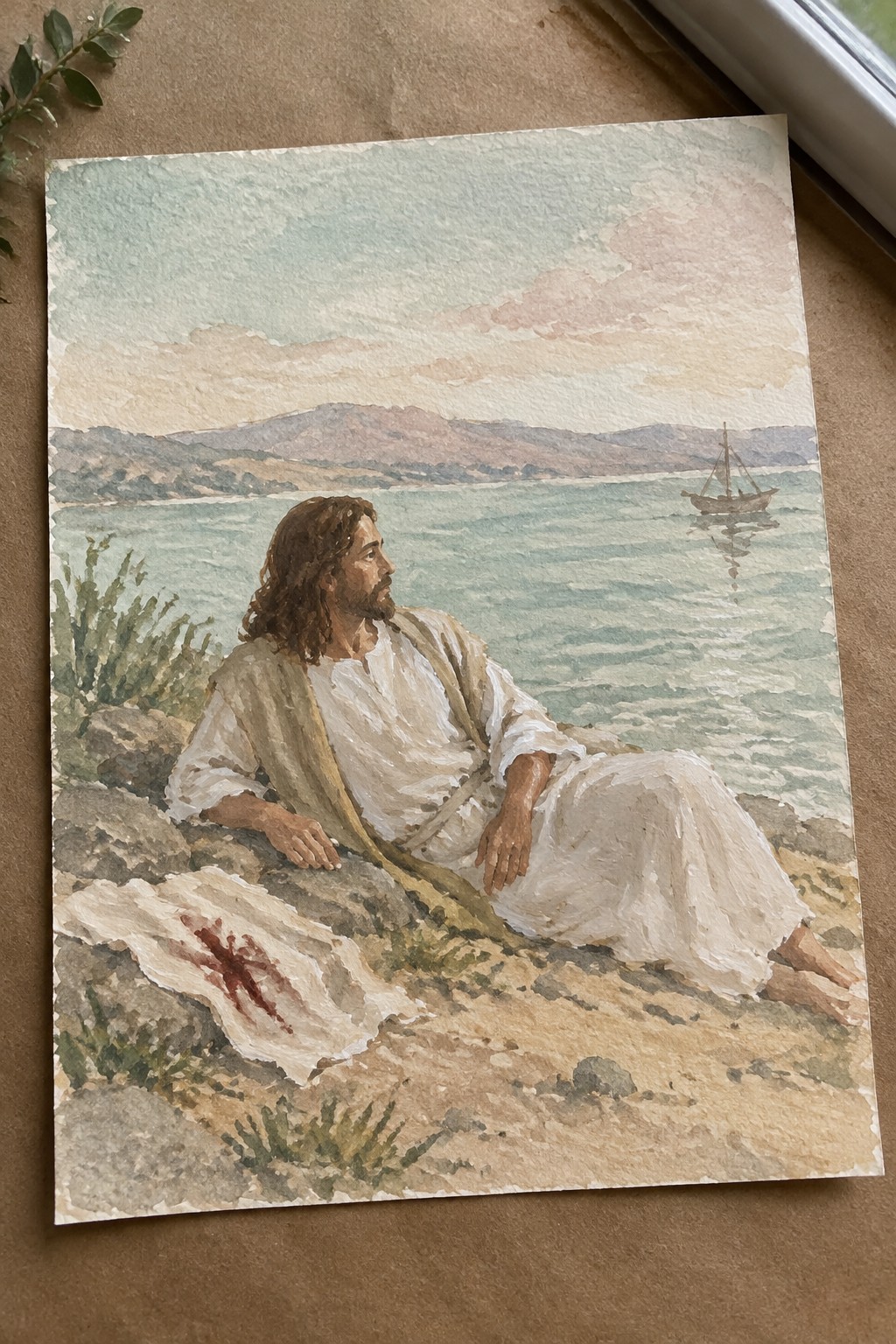
A painting idea that shows the resurrected Jesus seated on rocks beside calm water, with a small boat visible in the middle distance and a blood-stained cloth placed on the foreground rocks. The composition uses the low placement of the figure against the open water and distant hills to keep attention on his relaxed posture while the landscape fills out the rest of the space. This fits the category of realistic biblical narrative painting that combines a single figure with a simple outdoor setting.
What makes this idea useful is the way the background does most of the work, so the main effort goes into the figure and the cloth rather than complex details. The muted blues and earth tones are easy to shift toward warmer or cooler versions depending on the time of day you want. For practice, this kind of subject lets you work on water reflections and layered hills without needing a crowded scene, and the same layout can be scaled down by cropping tighter around the figure and cloth.
Resurrected Christ Extending His Hand While Showing the Side Wound

This painting idea focuses on a realistic half-length portrait of Christ after the resurrection, with one hand stretched toward the viewer and the other pulling aside his robe to reveal the spear wound on his side. The tight framing around the torso and hands, combined with the dark background, keeps the eye on the wounds and the gesture without any extra scenery. It belongs to the category of religious figure painting that emphasizes physical detail and direct engagement with the viewer.
What makes this idea useful is the clear two-part action that gives the composition a built-in focal point without needing extra elements. The dark background reduces the work of filling space, so the main effort stays on skin texture, fabric folds, and the small wound details. For practice or wall pieces, the same idea scales down easily by tightening the crop around the chest and hands, or by shifting the angle of the reaching arm to create a slightly different emphasis while keeping the core subject unchanged.
Outstretched Palms Showing the Marks of the Crucifixion
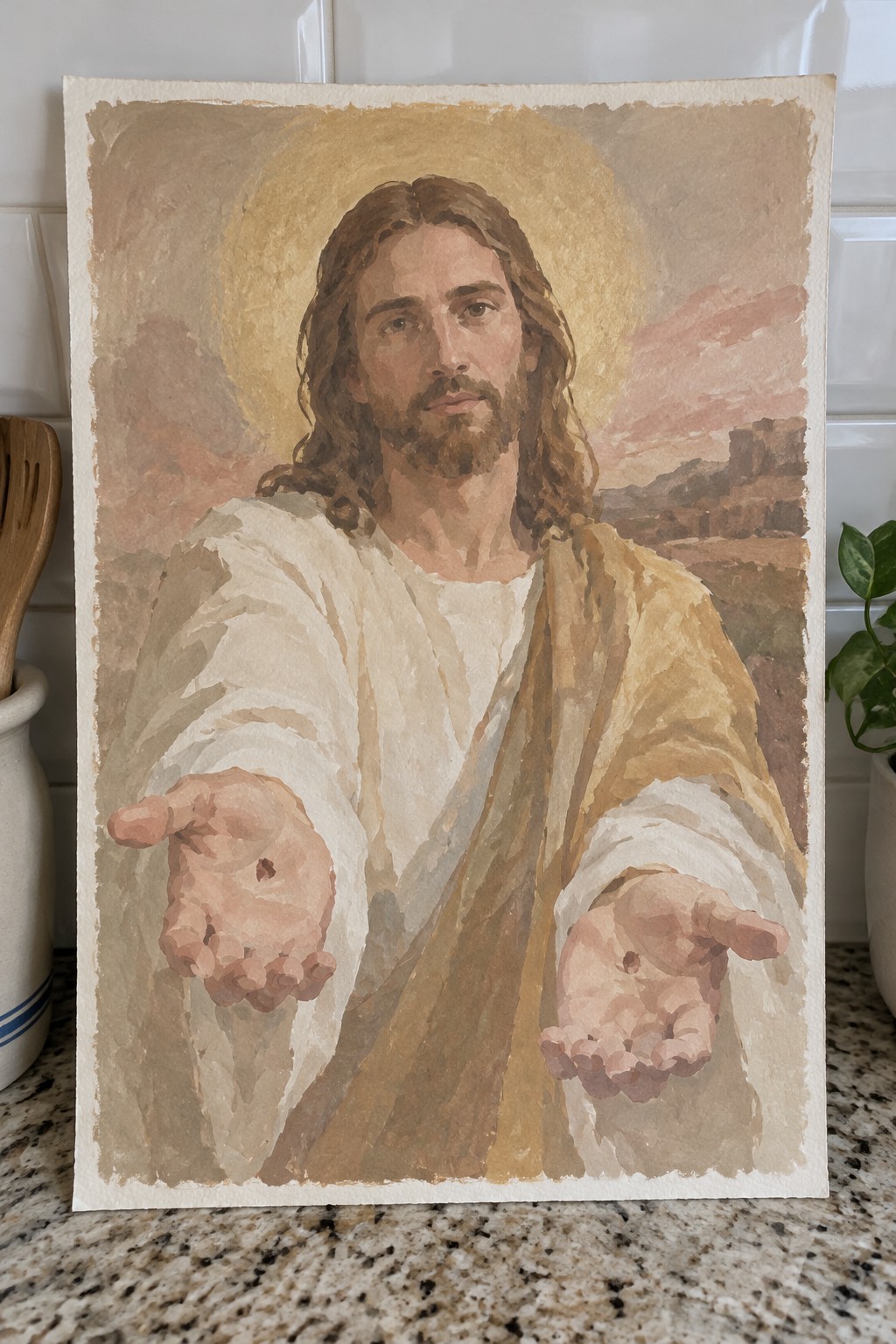
This painting idea places the focus on a risen Christ with both hands extended forward, palms turned up so the small dark wounds remain clearly visible. The warm, muted palette of browns, golds, and soft flesh tones keeps attention on the figure while the distant landscape and halo provide quiet context. The low placement of the hands in the frame makes them the natural center without needing extra emphasis or dramatic lighting.
What makes this idea useful is how the direct pose works for both large wall pieces and smaller studies. You can easily crop the composition tighter around the torso or simplify the background to a single wash if you want a faster version. The restrained color range also makes it straightforward to pair with other pieces in a series or adjust the skin tones to match different reference photos.
Resurrected Christ Revealing His Side Wound

This painting idea captures the moment after the resurrection when Christ opens his robe to show the spear wound on his chest while two followers stand close on either side. The composition places the wound area near the center and uses the open white garment to frame it, with the two men turned inward to keep attention on that spot. Earthy reds and blues in the clothing balance the pale skin tones and soft gray-blue background, making the whole scene read clearly even at a modest size.
What makes this idea useful is how the three figures create a natural triangle that guides the eye without needing extra props or landscape. The limited color range of off-whites, deep reds, and muted blues keeps mixing simple, and the upper-body focus means the idea works on a small canvas or as a study. You could easily adapt it by changing the angle of the robe or swapping one follower for a different pose while keeping the same central action. For Pinterest, the clear subject and readable wound detail make it stand out in a feed of softer religious scenes.
Realistic Watercolor Portrait Centering on Facial Wounds

A realistic portrait of Christ after the resurrection works well when the focus stays on the face, with small wounds placed across the forehead and around the eyes to show the marks without overpowering the expression. The loose, soft washes around the edges keep the background simple so the skin tones, hair strands, and fabric folds stay front and center. This type of figure painting idea fits the category of detailed portrait work where the composition draws attention to subtle surface details rather than dramatic action or scenery.
What makes this idea useful is how the muted palette and soft edges make it easy to scale down for smaller paper or simplify by softening some of the hair strands and cloth folds. The centered face and vertical layout work for both practice pieces and finished wall art, and the same approach can be adjusted by changing the angle of the head or reducing the number of visible wounds. For anyone building a series on this theme, the contained format helps the painting stay readable even when viewed as a thumbnail.
Realistic Close-Up of Christ’s Side Wound and Upward Gaze

A realistic figure painting idea that focuses on the resurrected Christ with the spear wound clearly visible on his torso and the crown of thorns still in place. The composition centers on the upper body with the head tilted back and the hand gripping the edge of the robe, creating a direct view of the injury while the strong light from above models the chest and face. Earthy skin tones, muted reds, and rough brushwork on the fabric keep the emphasis on the physical details rather than background elements.
What makes this idea useful is the tight crop that removes the need for a full scene or complex setting. The strong directional light makes it straightforward to practice shading on the torso and face without juggling multiple light sources. For wall art the same framing works at different sizes since the main shapes stay readable even when scaled down. You could swap the deep red robe for cooler tones or simplify the crown to test different levels of detail while keeping the core wound and gaze intact.
Christ Extending His Wounded Hands Forward
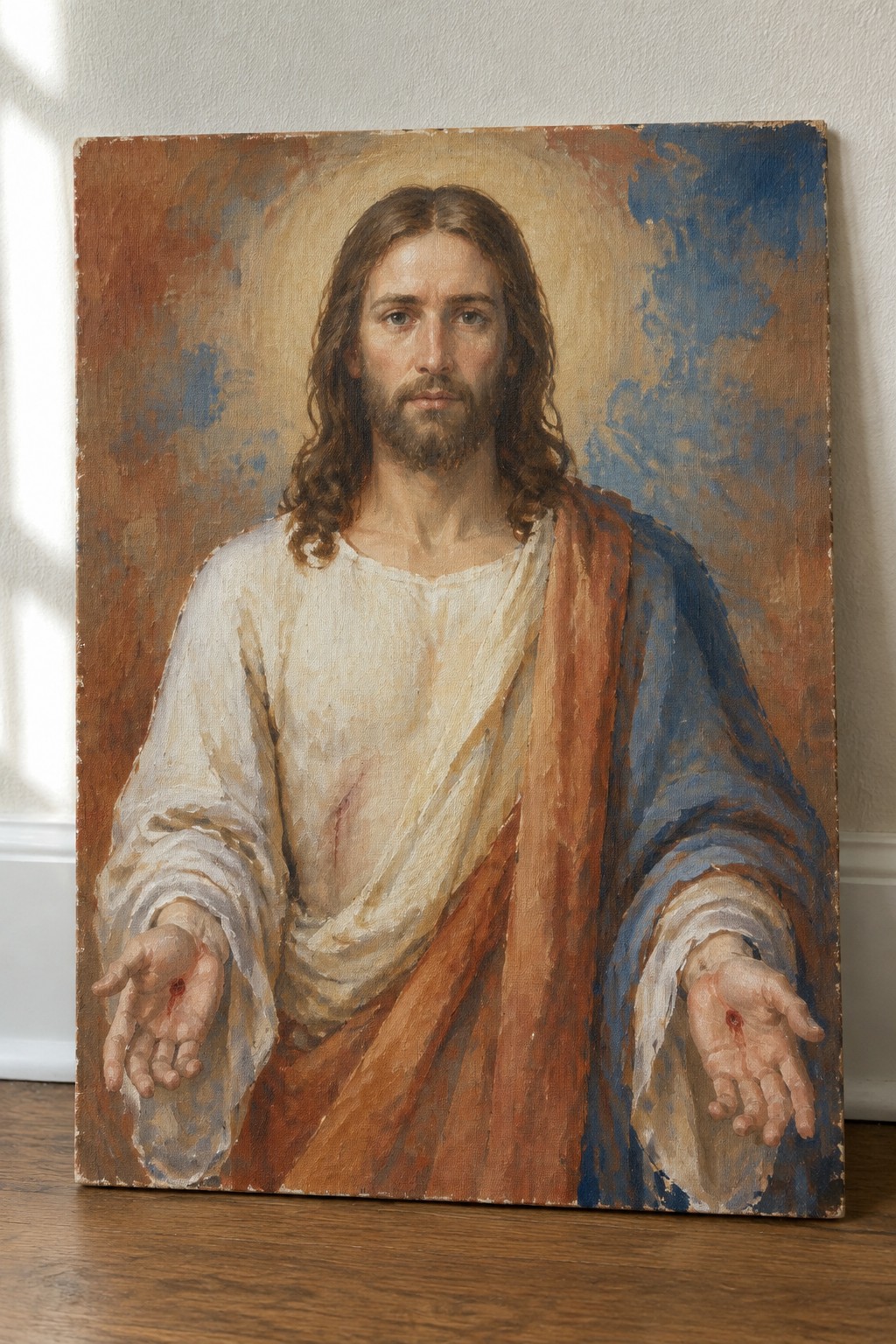
A realistic portrait of the risen Christ focuses on the physical wounds from the crucifixion, with both palms turned outward and the side wound visible through the robe. The idea centers on a direct, frontal pose that places the evidence of the resurrection at the center of the composition. The soft halo and layered robe colors create a simple but strong focal point without competing details.
What makes this idea useful is the straightforward vertical layout that works on a standard canvas size. The limited palette of warm neutrals and muted blues keeps mixing simple while still giving the robes enough depth. You could easily crop it tighter around the torso and hands for a smaller study or adjust the background texture to match whatever surface you have on hand. For Pinterest, the outstretched gesture stands out in a feed of more static religious portraits.
Frequently Asked Questions
What is the biblical basis for showing Jesus with wounds after his resurrection? The Gospels describe Jesus appearing to his disciples and specifically inviting Thomas to touch the wounds in his hands and side as proof of his identity and physical resurrection. This detail underscores that the risen Christ bears the marks of his suffering rather than appearing in a completely healed state.
How do artists achieve realistic details of the wounds in these paintings? Painters study historical accounts of Roman crucifixion, medical descriptions of nail and spear injuries, and human anatomy to render skin texture, dried blood, and tissue damage accurately. They often use layered glazes, precise brushwork for scars, and natural lighting to make the injuries look tangible without exaggeration.
Are these paintings meant to be historically accurate or symbolic? They combine research into first-century clothing, lighting, and body types with symbolic intent. The wounds serve as reminders of sacrifice and victory over death, so artists balance visual realism with theological meaning rather than creating literal snapshots.
Where can viewers find high-quality images or the original works from such a collection? Many of the paintings reside in major museums across Europe and the United States, while digital reproductions appear on museum websites, public-domain archives, and art-history databases. Searching by artist name or title usually leads to zoomable scans that reveal fine details of the wounds.
Why might some people find these realistic depictions unsettling? The visible wounds confront viewers with the physical cost of the crucifixion, which can evoke strong emotions. At the same time, the post-resurrection setting frames the injuries as signs of triumph, helping the images function as both devotional aids and meditations on suffering and hope.