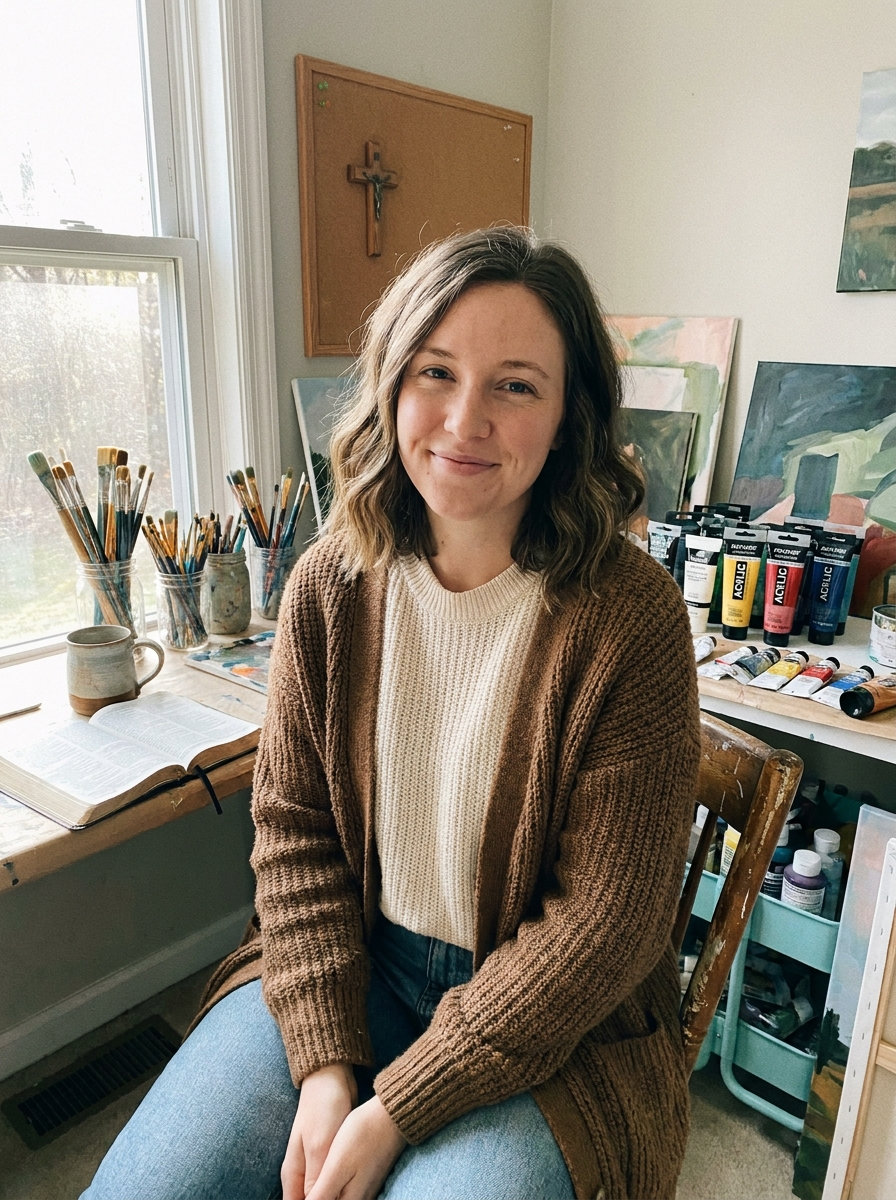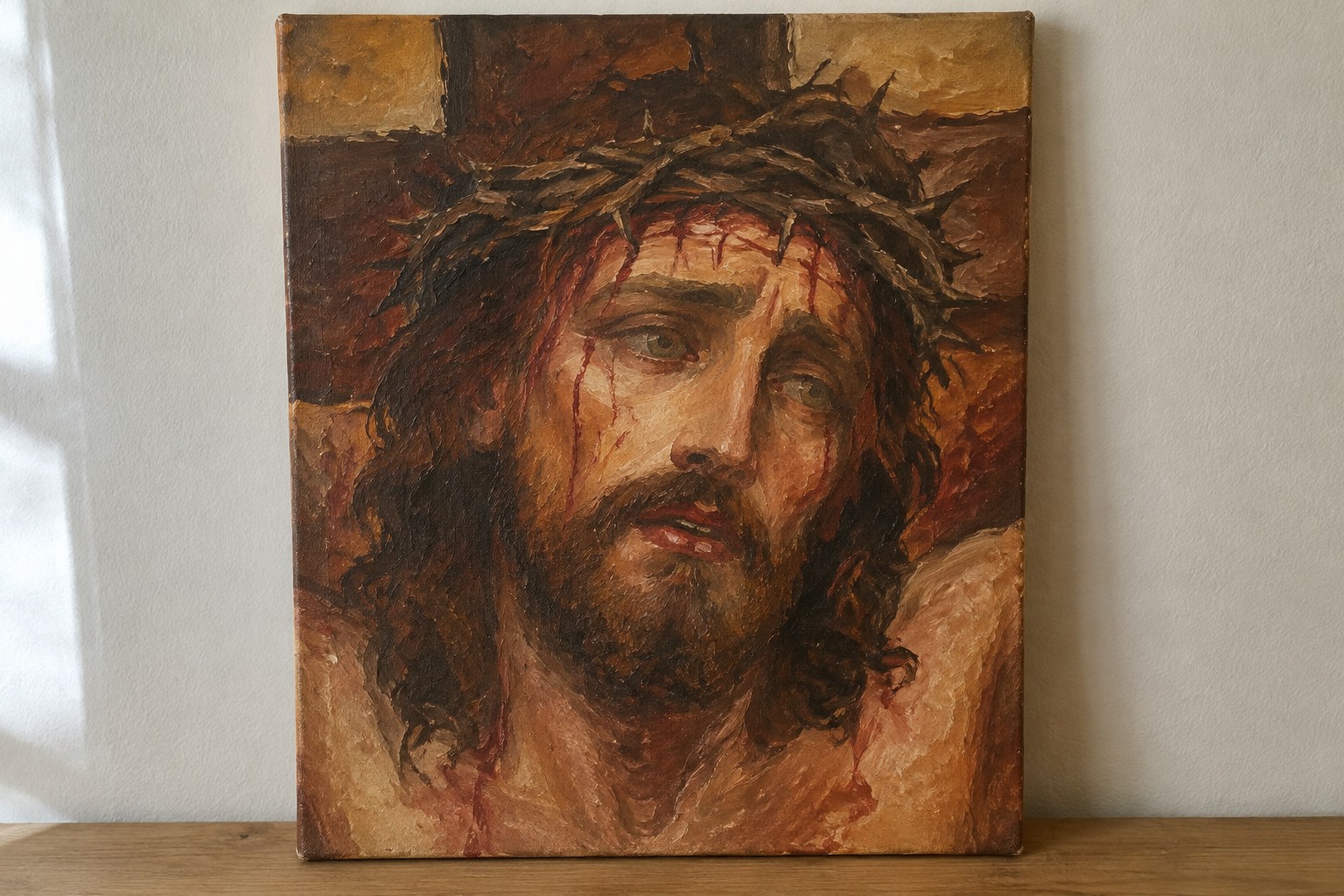
I like to paint scenes from the Bible now and then because they give me a chance to work with light and shadow in meaningful ways.
The crucifixion stands out as a subject that many artists return to again and again.
I have gathered some canvas paintings of Jesus on the cross that show a range of approaches.
Each one handles the details differently and that makes them interesting to look at side by side.
It is always useful to see how others interpret the same story through their brushes.
Close-Up Face Study with Crown of Thorns
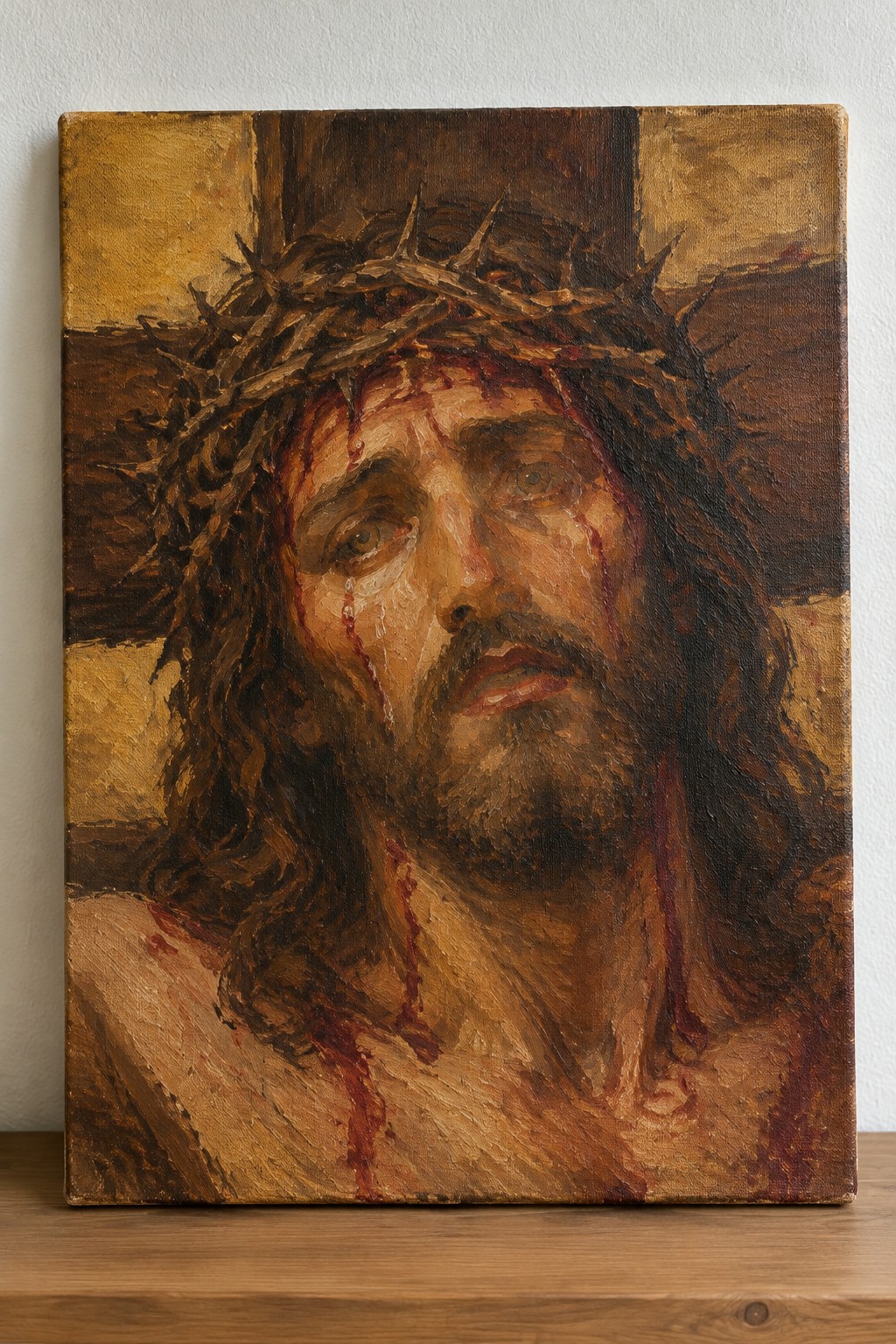
This painting idea centers on a tight portrait of Jesus wearing the crown of thorns, with blood running down the face and an upward gaze as the main focal point. It works as a religious portrait that relies on strong value contrast between the dark hair and crown against the lighter skin tones. The composition fills most of the frame with the head and shoulders, which keeps the eye on the facial details and the rough texture of the thorns without needing extra elements.
What makes this idea useful is how the cropped view removes the pressure to paint a full scene or background. You can adapt it by changing the lighting direction or shifting the color temperature toward cooler browns if you want a different mood. For practice, the subject lets you focus on skin tones, hair texture, and subtle blood details in one contained area. A painting like this also works well for wall pieces because the direct gaze and limited space make it easy to hang without competing with other decor.
Three Crosses Silhouetted on a Hill at Sunset
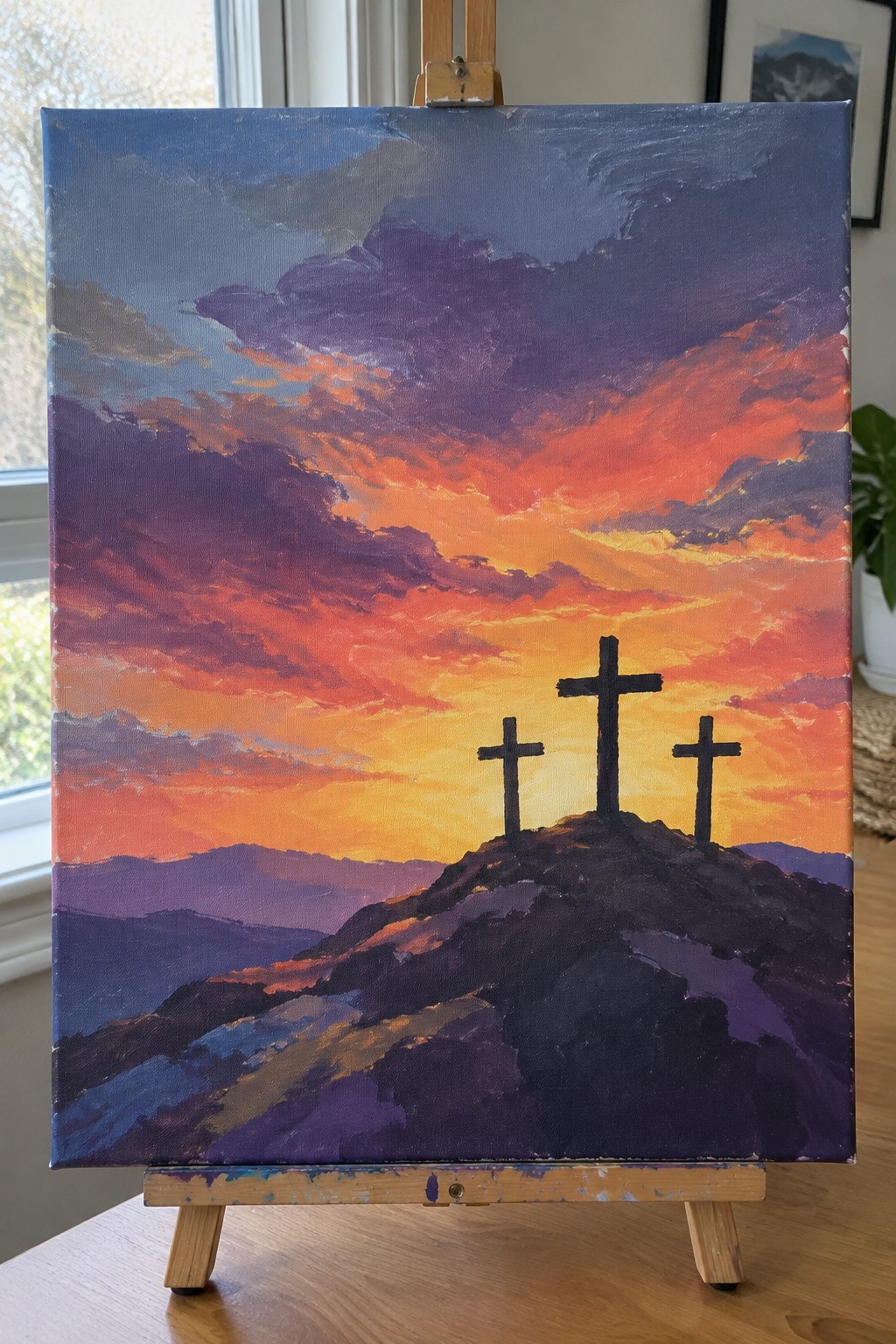
A strong painting idea here is to use a sunset landscape as the setting for the crucifixion, with three dark crosses placed along the ridge of a hill. The composition relies on the sky to carry the interest through bold bands of orange, red, and purple that stretch across the canvas, while the crosses stay simple and dark to stand out without extra detail. This approach fits the landscape category with a clear focal point created by the contrast between the warm sky and the shadowed foreground.
What makes this idea useful is how the sky handles most of the visual weight, so the crosses can stay basic shapes without losing impact. The color progression from bright orange near the horizon to deeper purples and blues above gives you a ready-made structure to follow or tweak for different moods. For practice, the setup works well because you can focus on blending the clouds first and add the hill and crosses afterward, and the horizontal layout translates easily to different canvas sizes for wall pieces.
Stormy Crucifixion Silhouette
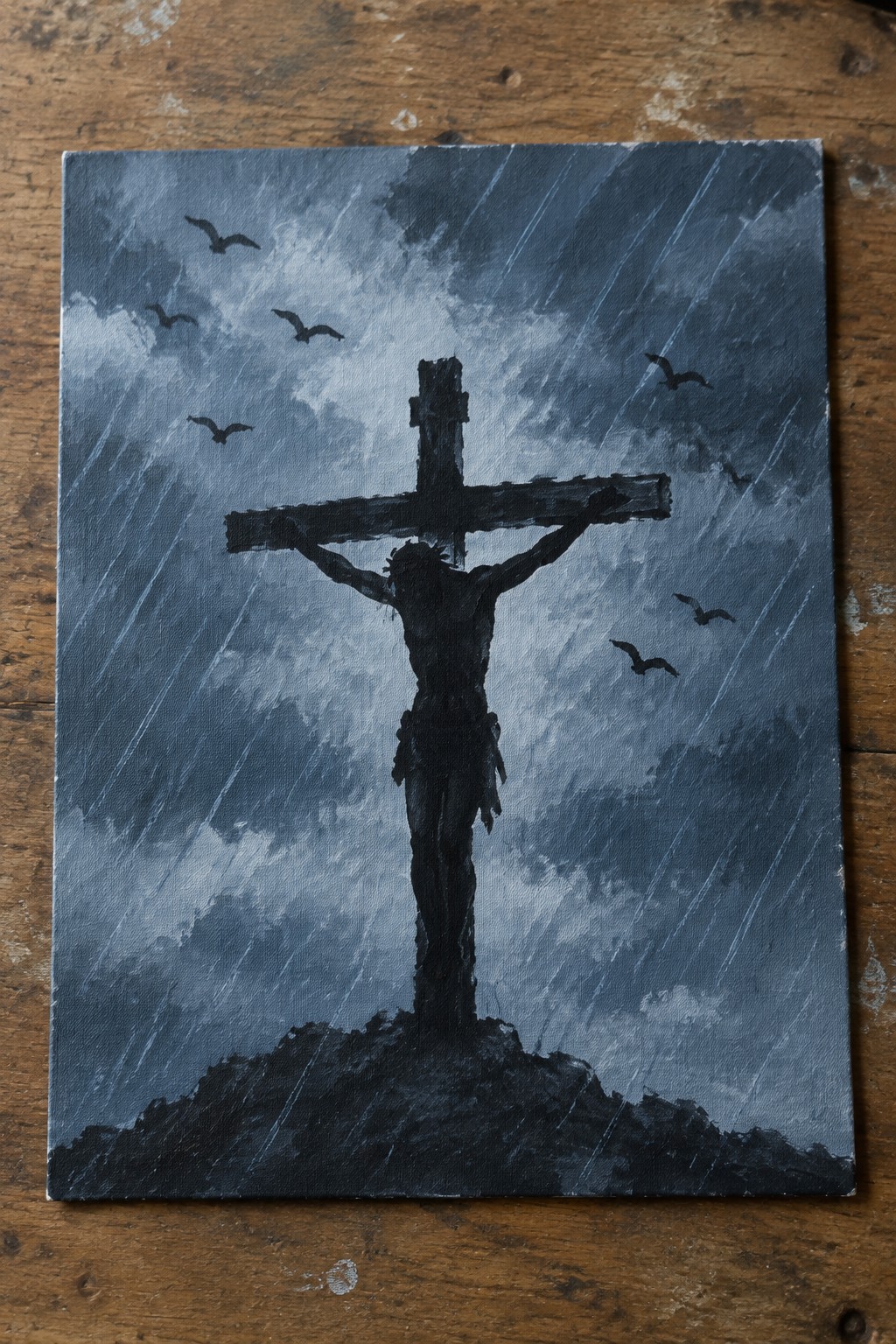
A central cross with the figure of Jesus stands against a dark sky filled with diagonal rain streaks and scattered birds in flight. The composition places the cross high on a rocky hill, using strong vertical lines and a limited dark palette to keep the focus tight. This approach works as a dramatic religious landscape painting that relies on contrast and simple shapes rather than fine detail.
The composition does a lot of the work here because the central placement and dark background make the cross stand out even if the figure is painted loosely. You could adapt it by changing the sky to a single wash of color or reducing the number of birds for a faster version. For wall art, the bold silhouette keeps the idea effective at smaller sizes, and the same layout could be tried in warmer tones or with a flatter style for a different mood.
Folk Art Crucifixion with Radiating Background
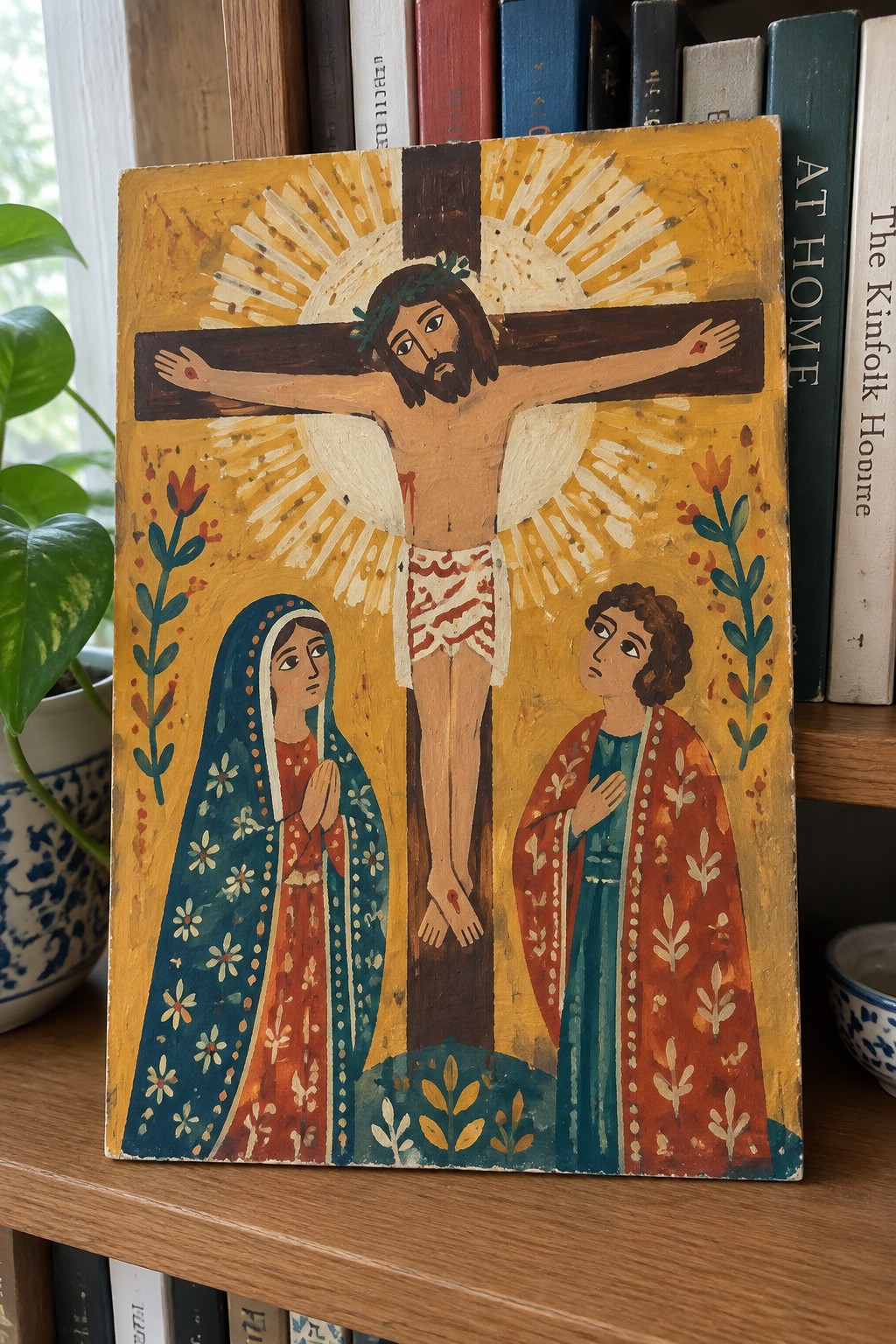
This painting idea centers on a crucifixion scene rendered in a flat folk-art style, where the cross sits against a strong golden yellow field with radiating white lines that act like a built-in halo. Two robed figures stand at the base, their patterned garments and simple hand positions creating a balanced lower half, while vertical floral stems on each side add height and frame the composition. The limited palette of ochre, teal, and rust keeps the focus tight on the central figure without needing complex shading or perspective.
What makes this idea useful is how the radiating lines and repeated decorative patterns carry most of the visual weight, letting you paint the figures with straightforward shapes. The warm background works across different canvas sizes and can be adjusted by swapping the side flowers for other simple motifs or changing the robe colors to fit whatever paints you have. For practice, the clear divisions between background, cross, and figures make it straightforward to block in first and add patterns later.
Simple Cross Over a Radiant Horizon

A centered cross sits above a large glowing semicircle, with radiating brushstrokes in yellow, peach, and soft orange spreading outward to suggest light coming from the base. The idea relies on minimal elements and a warm, blended color palette that keeps the cross as the clear focal point while the background strokes create movement and depth. This approach fits into symbolic religious painting, where basic shapes and loose brushwork do the work instead of fine detail or multiple figures.
What makes this idea useful is how the limited shapes and color range let you finish it quickly on a small canvas without needing advanced skills. You can shift the semicircle lower or higher, or change the stroke directions, to adjust the overall balance. For wall decor, the piece works in spaces that need a quiet faith element rather than a busy scene. The same layout could be simplified further by reducing the number of rays or adapted with different warm tones to match a room’s colors.
Expressive Crucifixion with Red and Blue Drips
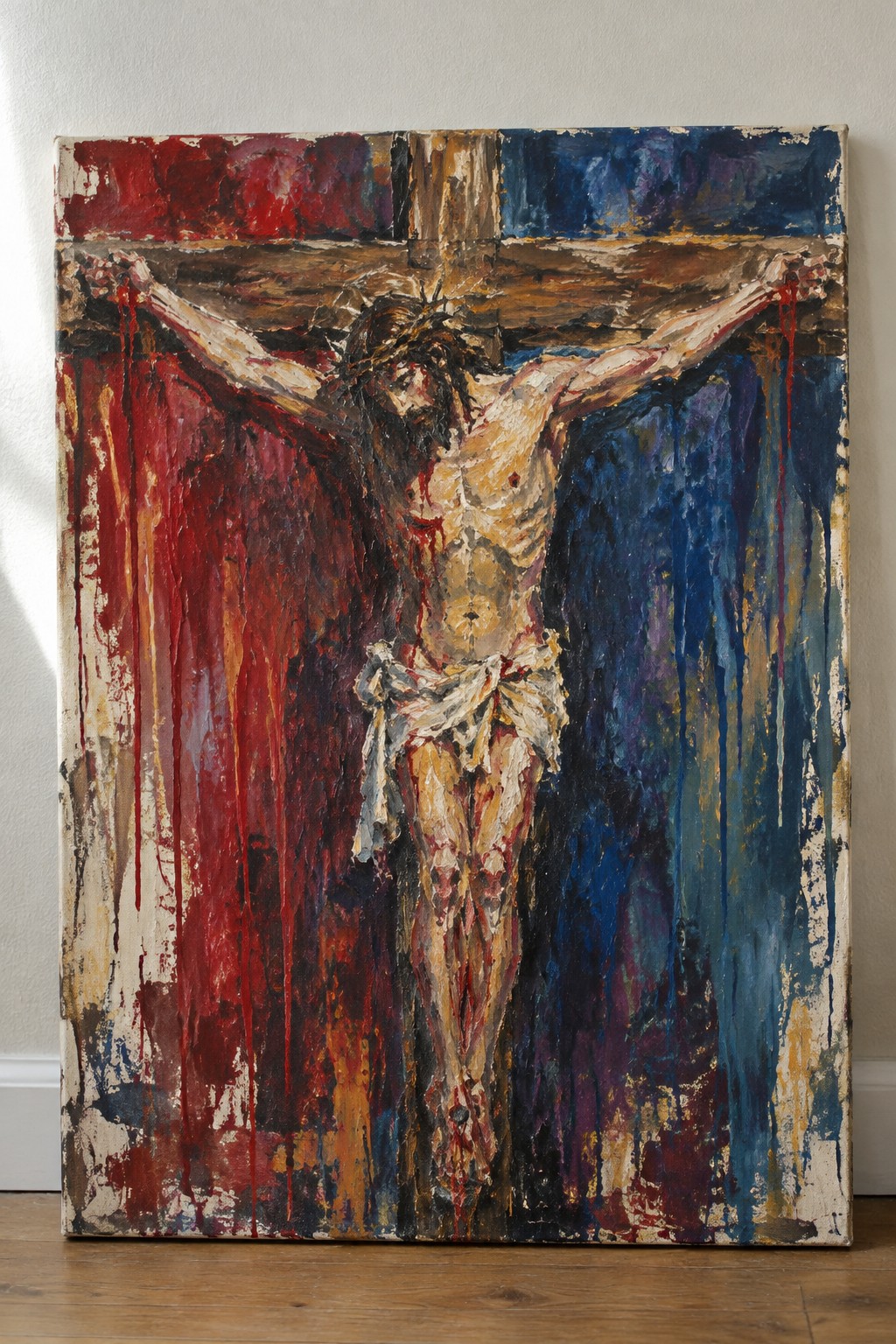
This painting idea centers on the crucifixion as a central figure study, using heavy texture and contrasting color blocks to frame the subject. The vertical drips on both sides create strong directional lines that pull attention to the cross and figure, while the rough, layered brushwork gives the whole piece weight without needing fine detail. It falls into the category of dramatic religious art that leans toward expressionist techniques rather than realism.
What makes this idea useful is the clear division of the background into two bold color zones, which makes it easy to adapt by swapping in different hues or simplifying the drips into flat shapes. The composition works well for larger canvases where texture can be built up over multiple sessions, and the subject stays recognizable even if the details around the figure are reduced. For wall pieces, the strong vertical layout fits tall spaces without needing extra elements to fill the frame. A painter could try this by blocking in the two side colors first, then adding the cross and figure on top.
Mixed Media Crucifixion with Hymn and Scripture Layers

A crucifixion painting that combines the central figure with hymn lyrics, musical notation, and Bible verses arranged in torn-paper sections around the cross. The idea uses a balanced layout where text blocks sit on either side of the figure, and a small cityscape anchors the bottom corner. This approach fits mixed-media religious art that layers text and image on a textured, distressed surface.
The composition does a lot of the work here because the text elements already create visual interest without needing complex backgrounds. A painting like this works especially well for wall pieces since the built-in lyrics and verses give it ready-made meaning. The same idea could be simplified by using fewer text blocks or swapped with different hymns to match a specific room or season. For practice, this kind of subject lets you focus on layering and edges rather than perfect anatomy.
Layered Crucifixion Scene with Foreground Crowd

This painting idea uses a landscape format to show the crucifixion from a distance, with three crosses placed on a hill and a group of figures viewed from behind filling the lower portion of the frame. The composition stacks simple layers—crowd, hill, crosses, city, and sky—to create depth without needing intricate details. A muted palette of teal, pink, and soft purple keeps the shapes readable and the overall arrangement balanced.
What makes this idea useful is the clear foreground-to-background structure that lets you block in large areas first before adding the crosses as the main focal point. The horizontal layout works well for standard canvas sizes and can be adapted by reducing the number of figures or shifting the sky colors to match different times of day. For practice, the basic shapes and limited detail level make it approachable to paint in one or two sessions while still producing a complete scene suitable for wall display.
Centered Crucifixion with a Large Golden Halo

A crucifixion painting idea that keeps the figure centered and fills most of the canvas with outstretched arms and a prominent cracked gold halo. The composition relies on a narrow earth-tone palette and visible brushwork to hold attention on the torso and face without extra background elements. This approach fits the category of religious figurative work where the main subject carries the visual weight.
The composition does a lot of the work here by using the halo as a clear focal point that still reads well even if the rest of the painting stays loose. A painting like this works especially well for a vertical canvas hung in a study or hallway where the scale stays close to the original proportions. The limited colors make it straightforward to adapt by swapping in different brown mixes or reducing the texture in the background. For practice, this kind of subject lets you focus on building form and subtle shading without juggling too many separate elements.
Abstract Crucifixion with Dripping Red on Neutral Texture
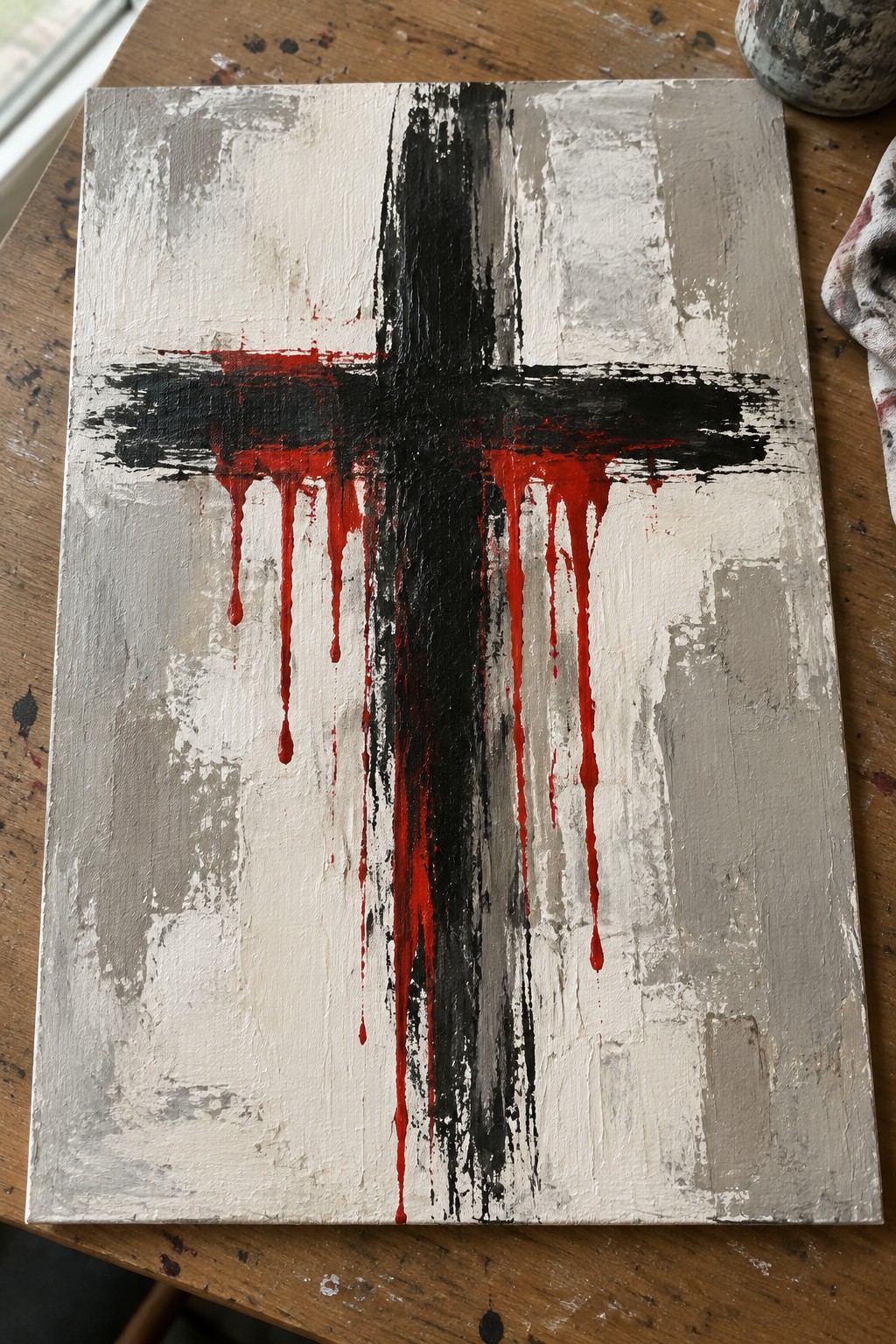
This painting idea uses a bold black cross centered on a heavily textured background of white and gray tones. Red paint drips from the horizontal bar to create vertical lines that pull attention downward and add a sense of motion. The approach fits into abstract religious art by relying on strong contrast, minimal shapes, and visible brushwork rather than realistic figures.
What makes this idea useful is how the dripping method creates impact with very few elements. The neutral background keeps the focus tight on the cross and red, so the same layout works at different sizes for wall pieces or practice canvases. You can adjust the drip length or thickness to change the overall feel, and the limited color palette makes it easy to test variations without buying extra supplies.
Profile View of Jesus with the Crown of Thorns
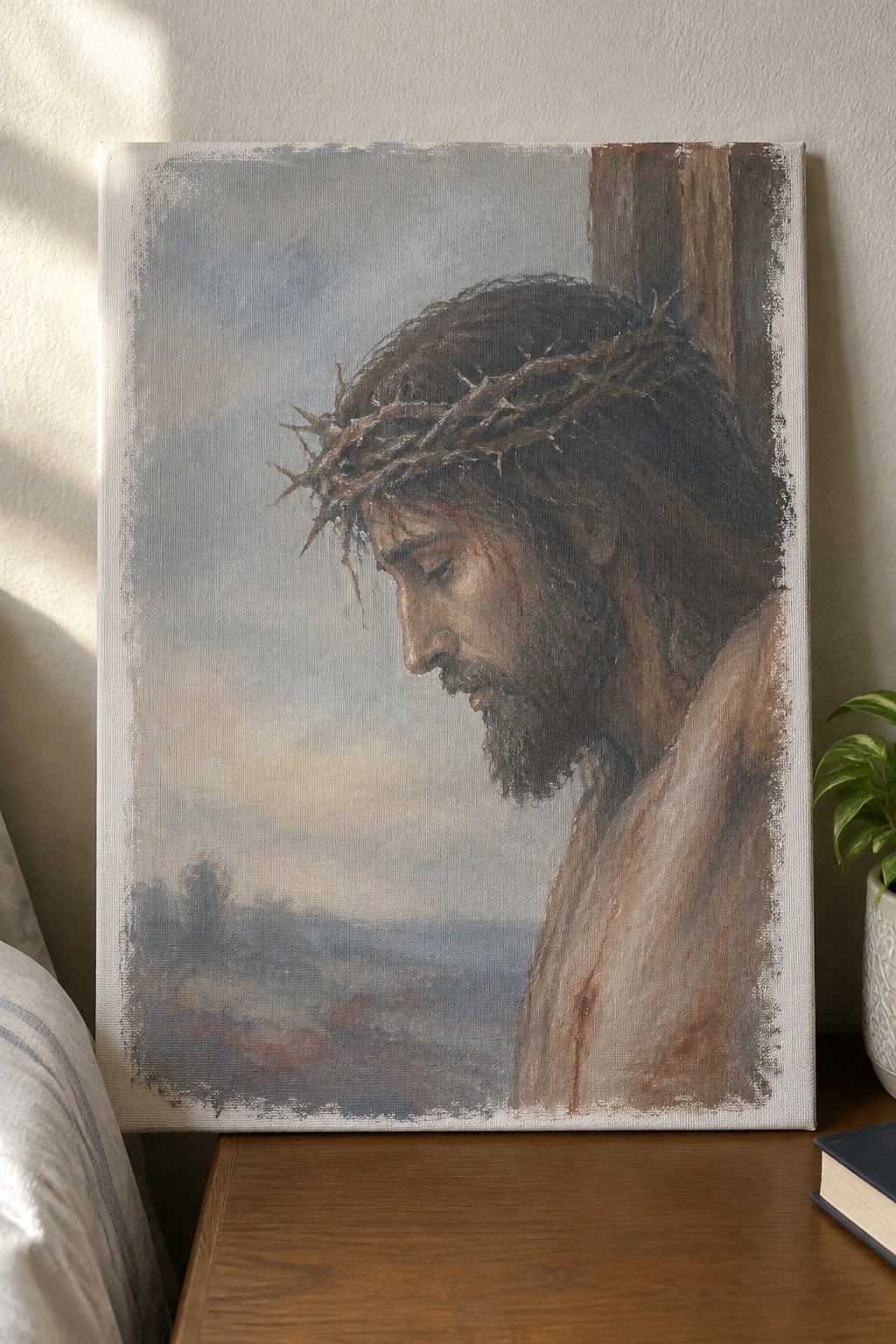
This painting idea focuses on a close profile portrait of Jesus wearing the crown of thorns, with the wooden cross structure visible along the right edge. The composition places the figure slightly off center against a soft, muted landscape that recedes into the distance, using a restrained earth tone palette and loose brushwork to keep attention on the face and shoulder. The approach fits the category of religious portraiture with an atmospheric background, where the side angle and gentle horizon line create a clear focal point without crowding the canvas.
What makes this idea useful is the way the profile simplifies facial details while still delivering a strong emotional subject. The soft background lets you practice blending and value shifts without tight control, and the vertical layout works well on a standard stretched canvas. You could easily swap in cooler tones or crop the scene tighter for a smaller study. For wall pieces or practice work, the limited color range and partial cross element make it straightforward to adapt without losing the overall impact.
Kneeling Figure at the Cross with Floral Border
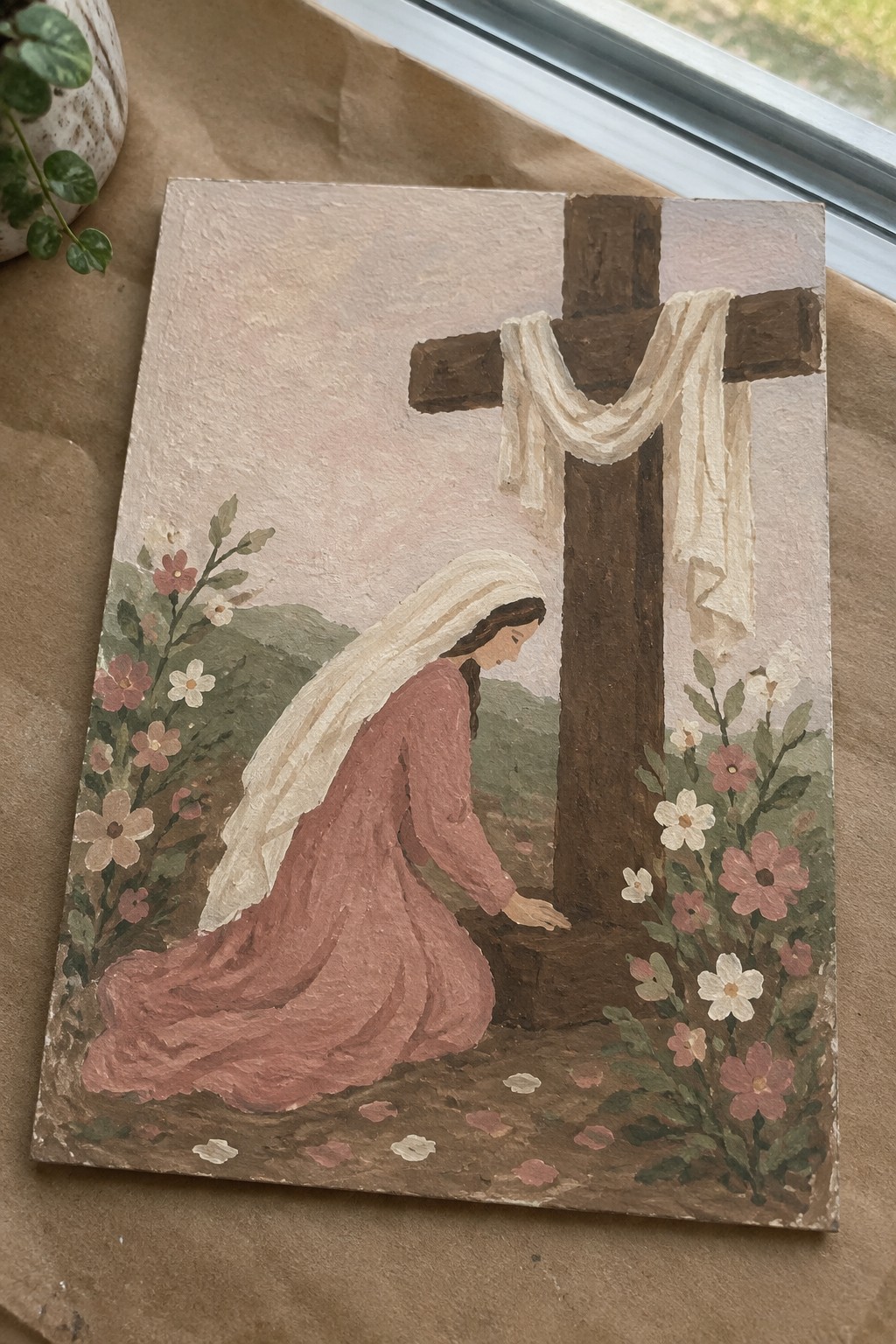
The painting idea centers on a crucifixion scene that places a single kneeling figure directly at the base of the cross, using the surrounding flowers and soft landscape to frame the central symbol without crowding it. The composition keeps the cross as the tallest element while the flowers on either side and the draped cloth create gentle visual balance and lead the eye downward to the figure. This approach combines a simple religious subject with decorative natural elements, making it suitable for a canvas that needs both a clear focal point and some added color at the edges.
What makes this idea useful is the straightforward vertical layout that fits easily on a standard portrait canvas without needing complex perspective. The flowers can be reduced to a few clusters or expanded into fuller borders depending on the time available, and the muted background keeps the main shapes easy to block in first. For wall art or seasonal pieces, the combination of the cross and flowers gives it a recognizable Easter connection while staying simple enough to finish in a few sessions. The same setup could be adapted by changing the figure’s clothing color or swapping the flower types to match a different room palette.
Close Focus on Nailed Hands

A crucifixion idea centered on the hands alone uses a tight crop to make the nail and wound the full subject. The arms angle inward to frame the dark spike while the streaky brown background suggests wood without extra detail. Earthy reds and browns keep the palette simple so the central element stays dominant.
The composition does a lot of the work here by turning the arms into leading lines. You can adapt it by changing canvas size or softening the blood for a less graphic version that still reads clearly from a distance. This kind of focused subject works well for practice because it limits the background work and lets you concentrate on skin texture and the nail itself.
Lightning Over the Three Crosses

The core idea here is a crucifixion scene built around three crosses placed on a rocky rise, with a strong lightning bolt cutting through heavy storm clouds as the main visual driver. This type of painting works as a dramatic landscape that places the religious subject within a stormy setting, using the vertical lines of the crosses against the angled lightning and layered clouds to hold attention. The limited dark blue and gray palette plus visible brushwork on the rocks and sky give the composition weight without requiring fine detail work.
What makes this idea useful is the built-in focal point where the lightning and tallest cross meet, which organizes the whole piece and reduces the need for extra elements. The vertical canvas shape supports larger wall pieces, while the rocky foreground adds grounding that keeps the eye from drifting. You could adapt it by swapping the storm for a simpler sky, dropping one cross, or testing it in a smaller size first to practice the cloud layering before committing to a full canvas.
Scripture Cross on a Layered Neutral Canvas
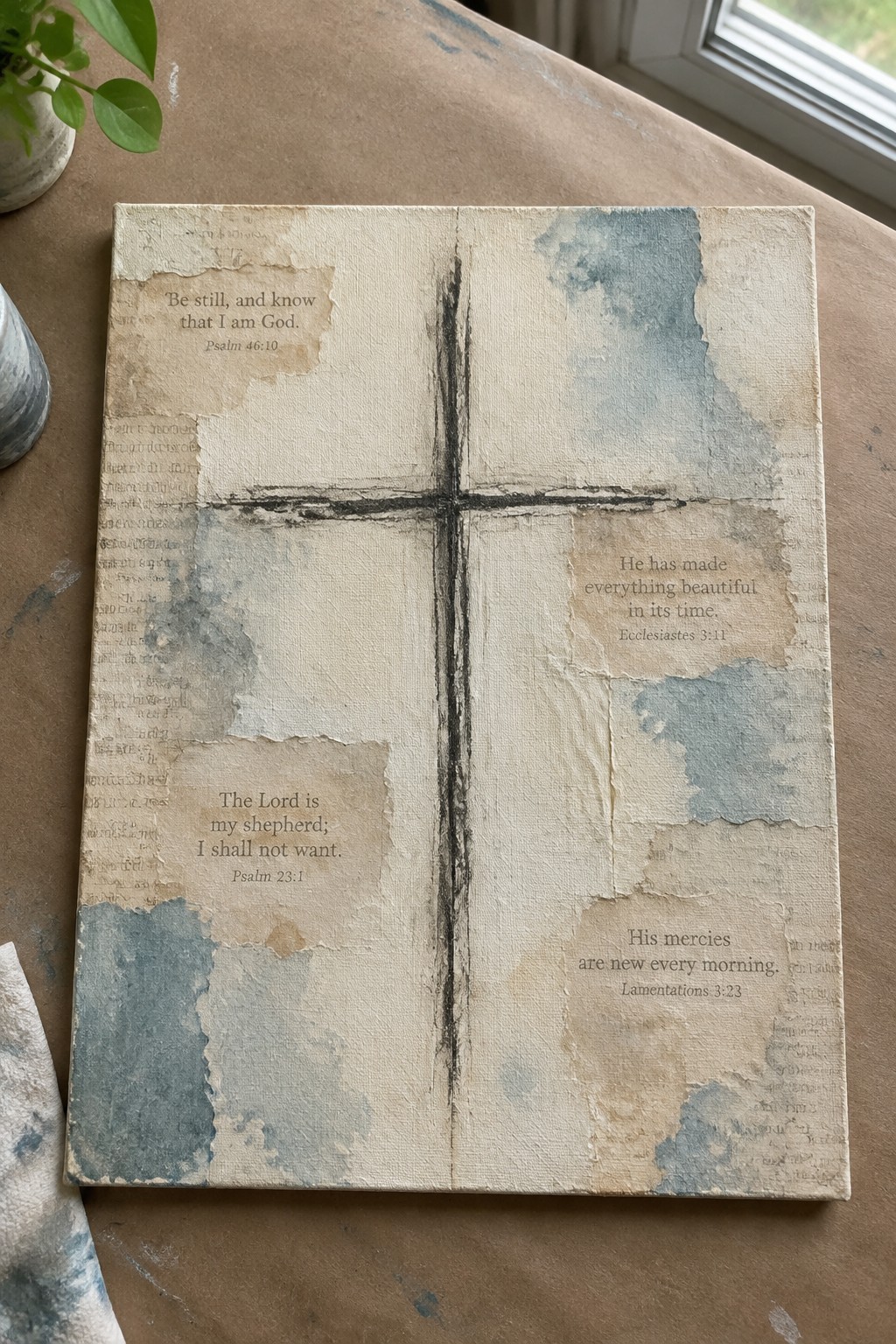
A cross painted in dark strokes divides the canvas into four sections, with a Bible verse placed in each quadrant against a background of torn paper layers in beige, cream, and soft blue. The idea centers on using the cross as both the main shape and the organizing structure so the verses sit in clear, balanced blocks without competing. This approach works as decorative religious art that blends text with simple mixed-media texture.
The composition does a lot of the work here by giving you built-in sections, which makes it straightforward to pick four verses and arrange them without worrying about layout. The neutral tones with blue accents adapt easily to different rooms or frames, and the distressed layers help cover uneven paint if you are still working on texture techniques. You could swap the verses for a different theme, reduce it to two sections on a smaller canvas, or keep the same cross layout but change the background colors to match a new space.
Rustic Wood Grain Crucifixion Canvas

A crucifixion scene built around a cross painted to look like real wood planks with visible grain and knots gives the piece its main visual weight. The figure of Jesus is kept simple and dark so it reads clearly against the textured wood, while the off-white background with subtle distressing keeps the focus tight on the cross itself. This approach turns the cross into both the subject and the texture layer, which works especially well on a rectangular canvas meant for wall display.
What makes this idea useful is how the wood grain does most of the visual work, letting you practice texture without filling the whole canvas with detail. The centered cross layout adapts easily to different sizes and you can shift the background to warmer beige or cooler gray tones depending on the room. For wall art, the combination of a traditional subject with a clean rustic finish tends to perform well on Pinterest because it reads as both familiar and updated.
Three Crosses on a Sloped Hill with Open Sky
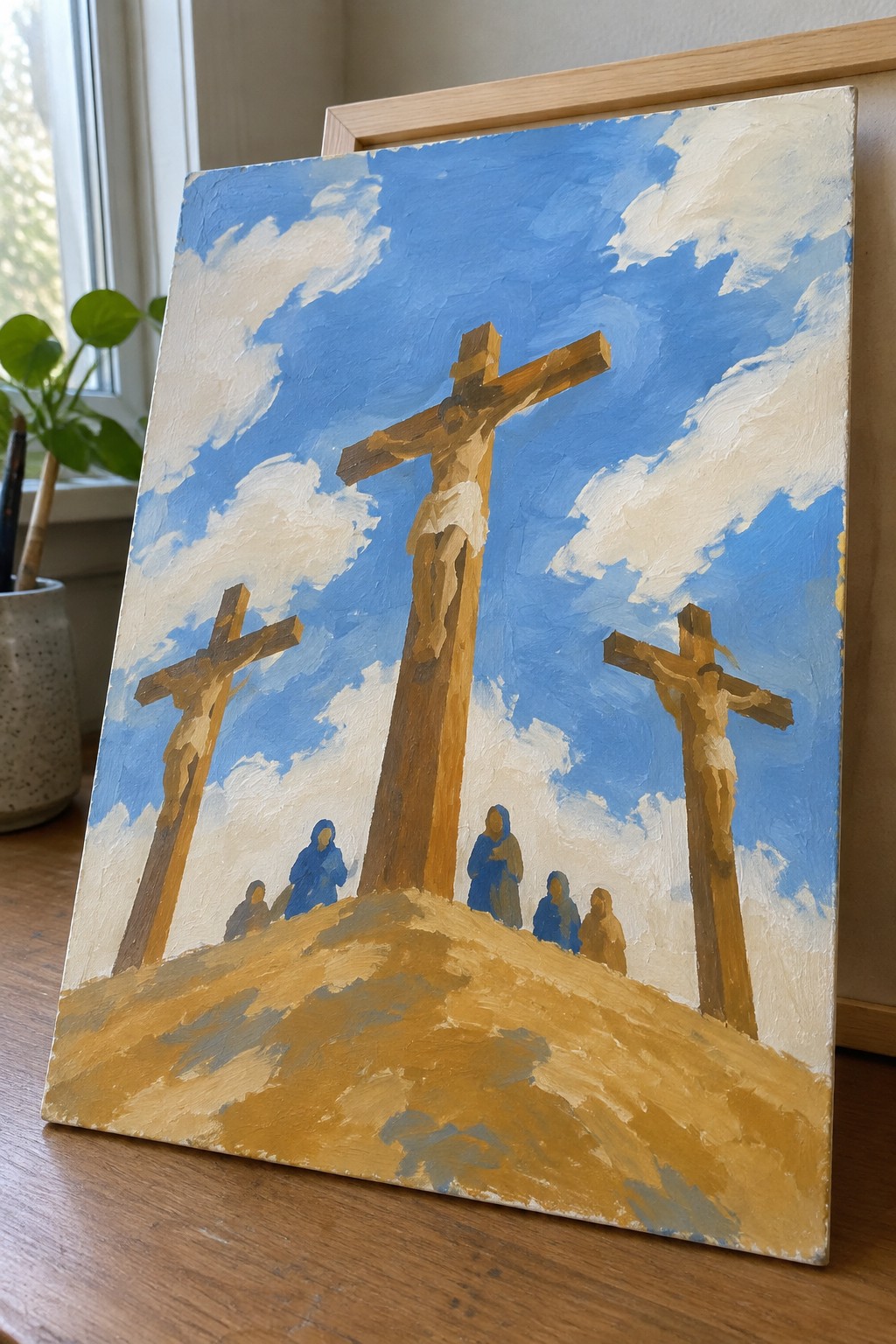
This painting idea focuses on a crucifixion scene built around three crosses placed across a raised hill, with the central cross larger and more prominent than the two on the sides. The composition treats the subject as a landscape first, using the slope of the ground and the wide blue sky to create clear horizontal and vertical divisions. Simple shapes and broad color areas carry the idea, with the figures kept small so the crosses remain the main visual anchors.
What makes this idea useful is how the basic layout works on different canvas sizes without needing extra elements. You can reduce the number of figures at the base or keep the sky mostly flat color if you want a quicker version. The strong vertical lines of the crosses against the angled hill give enough structure to hold the piece together even with loose brushwork. For wall art this format stays readable from a distance, and the same setup can be adapted by changing the sky tones or shifting the hill angle to fit a different room or season.
Sunset Cross with Dove Over Hills
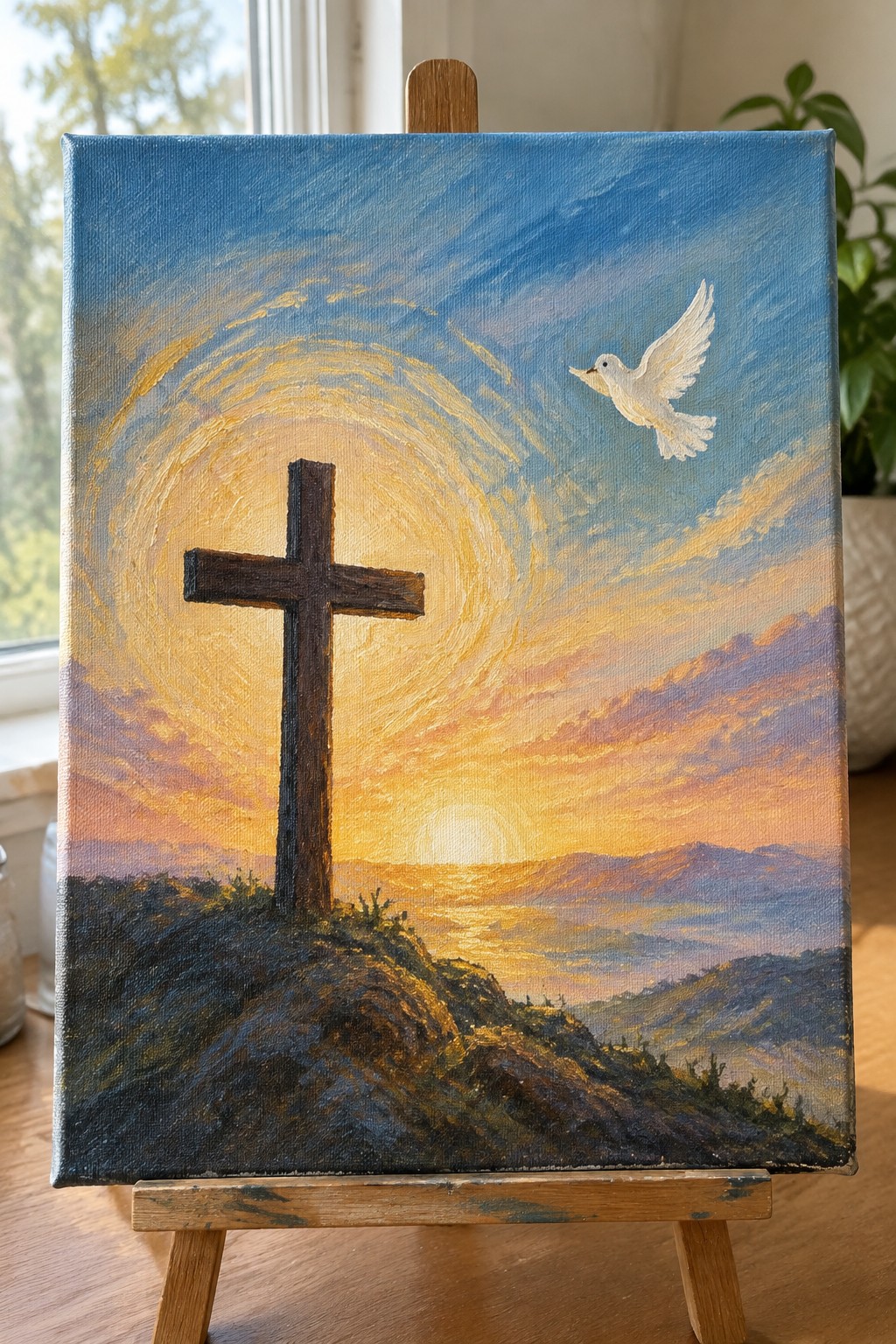
A landscape painting idea that places a simple dark cross on a hillside as the main subject, set against a glowing sunset with layered hills and a flying white dove. The composition works by using the bright swirling sky and horizon glow to create a natural frame around the cross, making the vertical shape stand out without extra detail. Warm oranges fading into cooler blues give the scene its visual pull while keeping the focus on the cross itself.
What makes this idea useful is how the background does most of the work, so the cross only needs basic dark shapes and a few highlights. You can adapt it by changing the sky colors to match paint you already have or by flattening the hills into simpler blocks for a faster version. For wall pieces this layout balances nicely because the wide landscape keeps the cross from feeling too heavy on its own.
Intimate Portrait Study of Jesus in Quiet Reflection
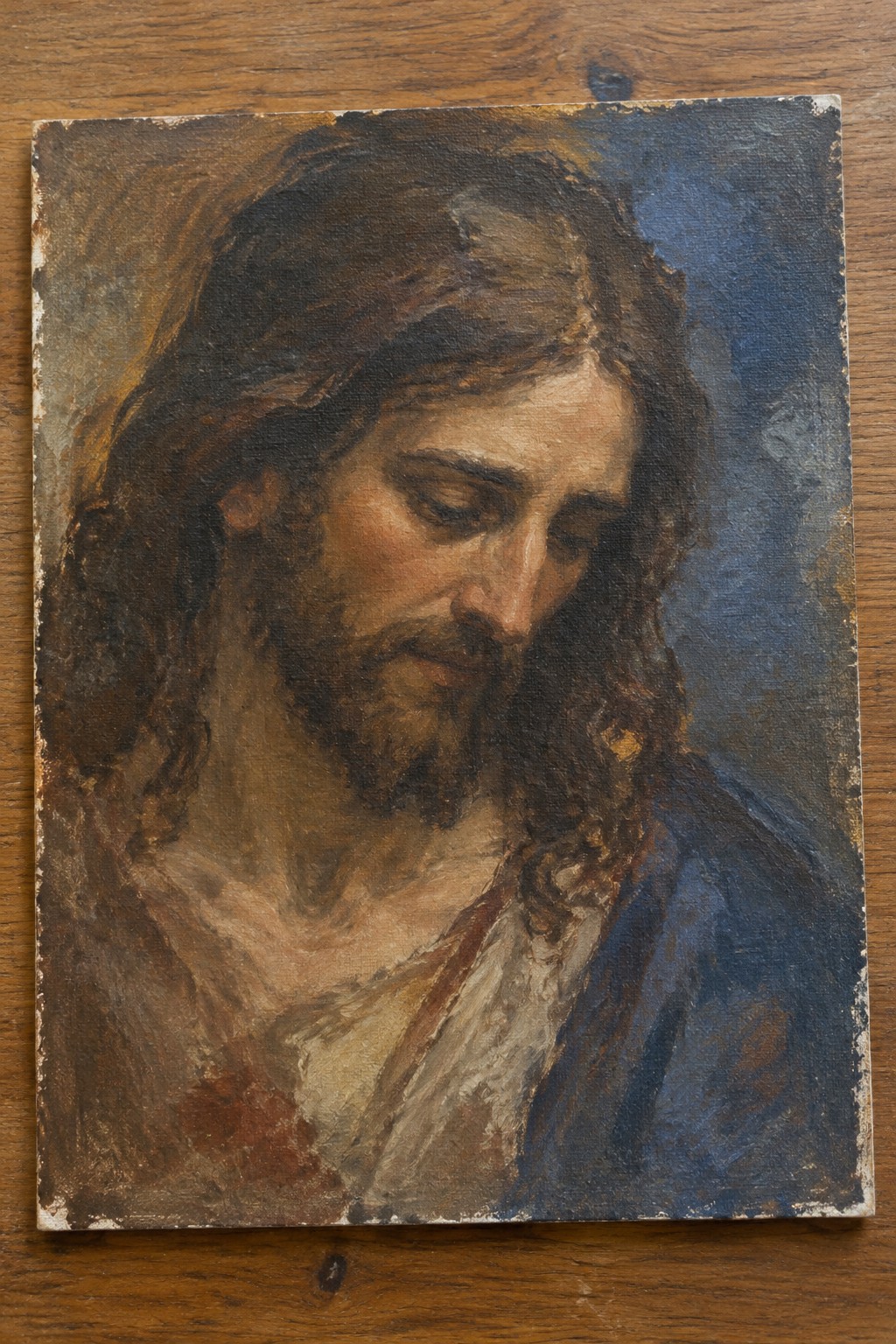
A portrait idea built around a close view of Jesus with long hair and beard, head tilted slightly down and eyes lowered. The tight crop on the face and shoulders lets the expression carry the piece while a simple mix of warm skin tones and cool blue fabric keeps the color scheme focused and restrained. Visible brush texture and soft edges give the work a traditional feel that suits religious subjects without needing extra symbols or scenery.
What makes this idea useful is how the limited background and close framing reduce the pressure to paint a full scene or complex setting. You can adapt it easily by shifting the head angle, trying different beard styles, or adding subtle details like a crown of thorns if you want to connect it more directly to crucifixion themes. For practice, the subject works well because the hair and facial planes give you clear areas to work on blending and value changes without requiring advanced composition skills.
Bold Crucifixion Scene Built Around Simple Shapes

A crucifixion painting idea that keeps everything centered on the cross with two standing figures placed at the base to create balance. The layout uses large flat color areas and clear outlines so the main subject stays easy to read even from a distance. This kind of composition works as a straightforward narrative piece that relies on placement and color blocks rather than fine detail.
The composition does a lot of the work here since the cross creates a strong vertical line and the side figures naturally fill the lower space without crowding. You could swap the bright yellow ground for a darker tone or adjust the sky color to match a room’s existing palette. For practice this subject helps with basic proportion and figure placement, and the same idea scales down easily for smaller canvases or greeting card versions.
Cross Reflected in Calm Waters

A landscape idea built around a single tall cross placed on a rocky outcrop works because the reflection in the water below creates a clean vertical line that runs through the middle of the painting. The distant hills and soft sky keep attention on the cross while the horizontal water adds balance and depth. This type of composition fits a realistic landscape category with a strong central focal point.
What makes this idea useful is how the reflection does most of the work for symmetry, so you do not need many extra details. You could paint it on a smaller canvas by keeping the hills simple and using the same muted blue-green palette, or shift the sky to warmer tones if you want a different feel. For practice, this subject helps with vertical alignment and water reflections without requiring complex figures.
Frequently Asked Questions
Question: How were the 21 paintings selected for this list? Answer: The selection focuses on works that combine strong artistic technique with deep emotional resonance. Artists were chosen for their ability to convey the intensity of the crucifixion scene through composition, color, and detail. Many pieces come from different historical periods to show how the theme has been interpreted over time.
Question: Where can someone purchase canvas prints of these crucifixion paintings? Answer: High quality canvas prints are available through reputable online art retailers and museum shops. Search for specific artist names or titles mentioned in the article to find matching reproductions. Look for options that offer acid free materials and UV protective coatings to ensure the print lasts for years.
Question: What elements make these crucifixion depictions especially powerful? Answer: Powerful paintings often use dramatic lighting, realistic expressions of suffering, and symbolic details like the crown of thorns or the surrounding figures. These choices draw viewers into the scene and highlight themes of sacrifice and redemption. The best works balance historical accuracy with personal emotional impact.
Question: How do modern artists approach the crucifixion compared to older masters? Answer: Modern interpretations may simplify forms or use bold colors to emphasize spiritual meaning rather than strict realism. Older masters tended to focus on intricate details and traditional symbolism. Both styles appear in the list and offer different ways to reflect on the event.
Question: What is the best way to display a canvas painting of the crucifixion in a home? Answer: Hang the canvas at eye level in a space where it can be viewed quietly such as a living room or study. Avoid direct sunlight to prevent fading. Use a sturdy frame or gallery wrap style for a clean look and dust the surface gently with a soft cloth when needed.