I have been trying out some simple ways to paint nativity scenes lately.
Using just basic shapes like squares and circles makes the whole thing feel lighter.
It is surprising how a few lines can still show the story clearly.
I put together twenty three of these ideas in different arrangements.
They work well if you want something quick for the holidays without a lot of detail.
Nativity Scene Anchored by One Large Star
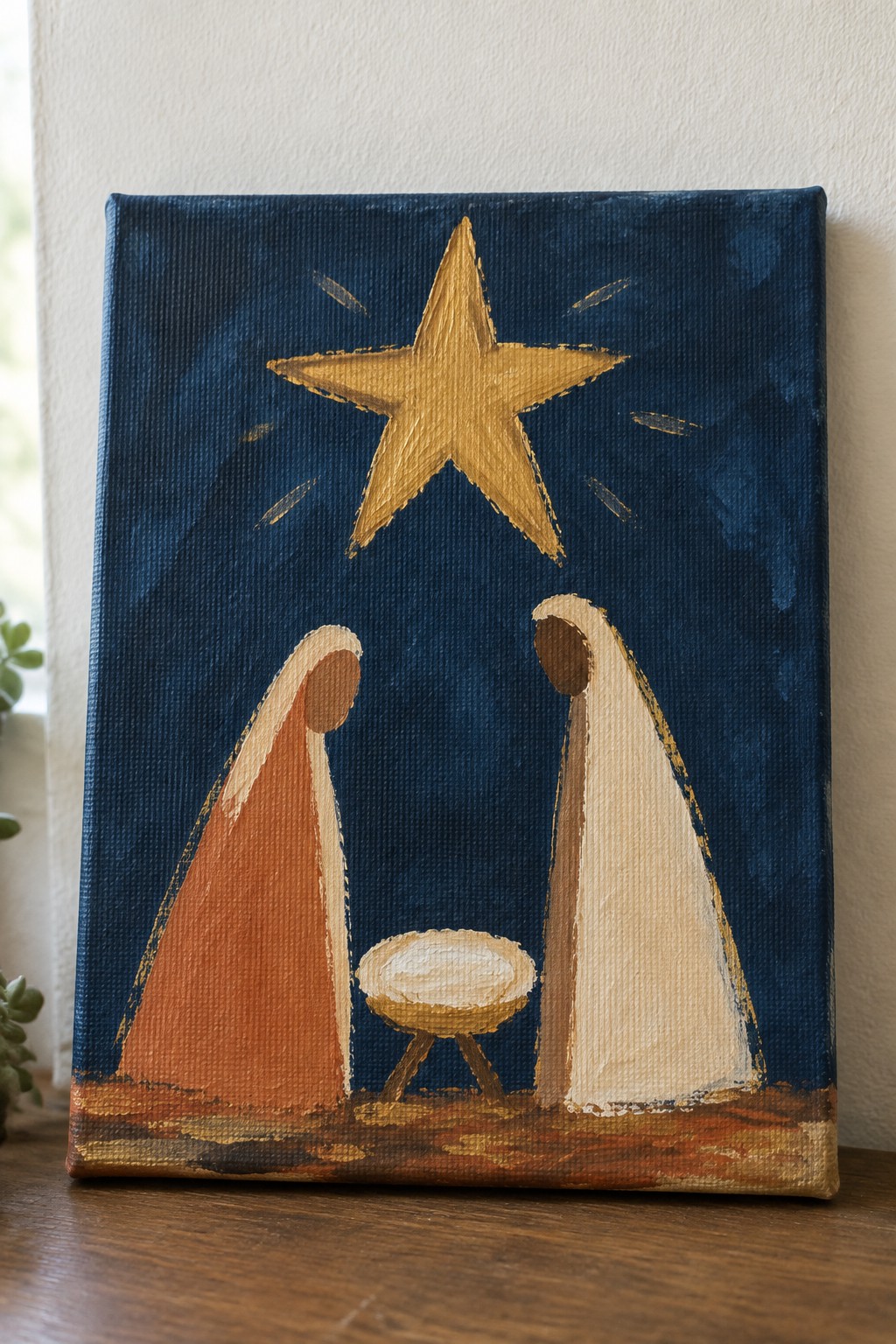
This painting idea reduces the nativity to a few strong shapes: two tall, simple robed figures and a small manger placed beneath a single oversized star. The star sits high and centered, with short radiating strokes that draw the eye immediately. A dark blue background and limited warm tones keep the focus tight on the main forms without added detail or scenery.
What makes this idea useful is how the oversized star does most of the compositional work, so you only need to place two figures and a manger below it. The flat shapes and restricted palette make it easy to resize for small canvases or even greeting cards. You could swap the blue background for black or deep teal and keep the star in gold or yellow ochre for quick seasonal pieces that still read clearly from a distance.
Overlapping Ovals Inside a Basic Stable
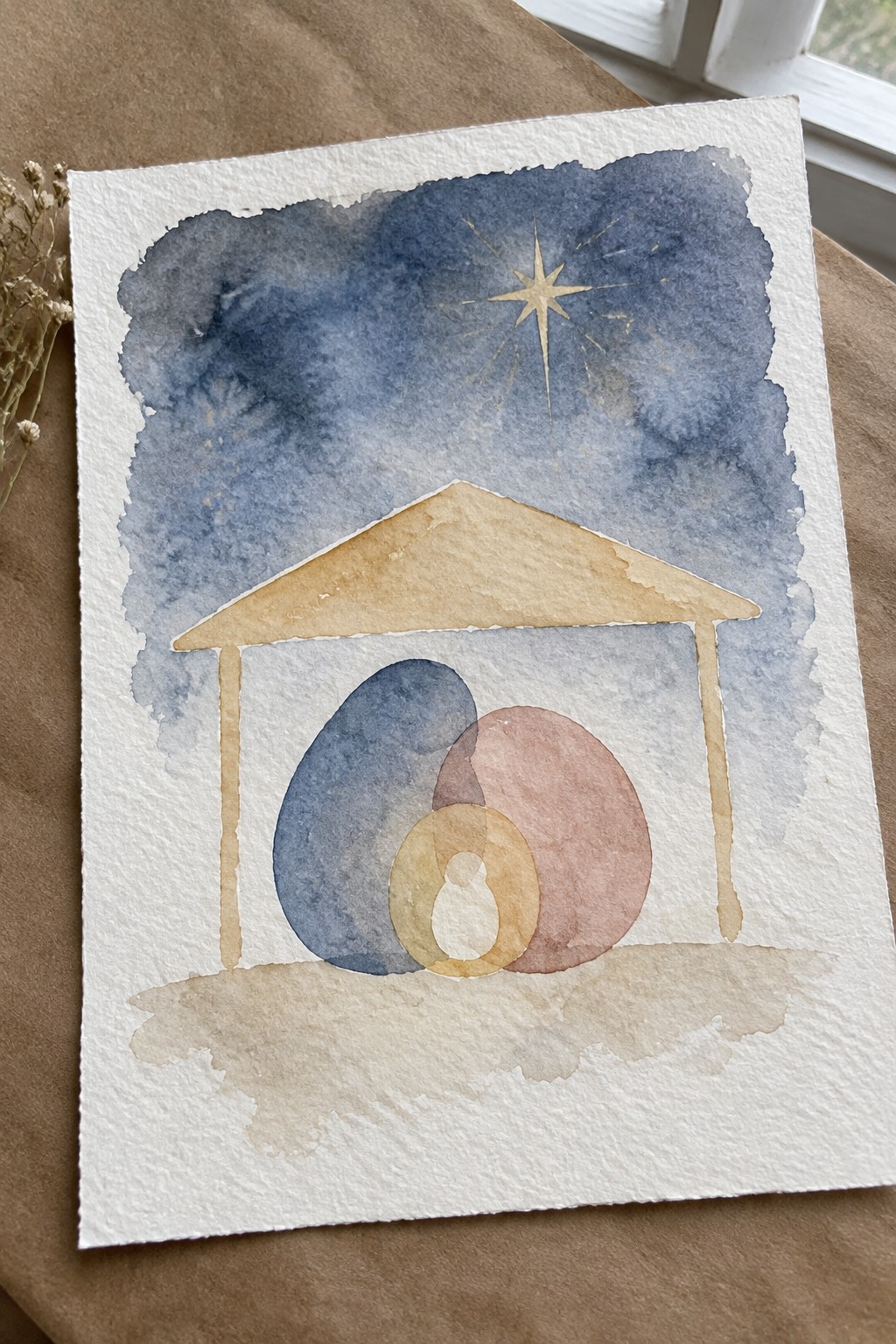
This painting idea uses stacked and overlapping ovals to represent the main figures, placed inside a shelter formed by four straight lines and a triangular roof. The single star and dark wash above pull the eye upward while the lighter ground anchors the bottom. The approach keeps the whole scene readable with flat shapes and very little line work, which suits seasonal decorative pieces.
What makes this idea useful is how the overlapping ovals handle the grouping without extra detail, so the same layout works on a greeting card or a larger wall piece. The muted color blocks make it easy to swap in different tones or reduce the palette further if you want a quicker version. For practice, this kind of subject helps test balance and negative space before trying more crowded scenes.
Curved Silhouettes in a Minimalist Nativity

This painting idea centers on a nativity built from large arched shapes for the main figures and small triangular forms for the three kings. The composition places the holy family as tall overlapping shapes in the center with a single gold circle above, while the kings stay small and grouped to one side. Flat color blocks and a deep teal background keep the focus on the simple geometry rather than fine details.
What makes this idea useful is the clear size contrast between the large central figures and the small kings, which adds visual balance without extra work. The limited palette of teal, gold, coral, and ochre translates easily to other color schemes or even a single background tone. For practice, this kind of subject works well as a quick acrylic study or a template for holiday cards where you can swap the king colors or adjust the arch heights. The background keeps the shapes readable even if you enlarge or shrink the whole layout for different formats.
Geometric Nativity Scene with Triangles and Circles
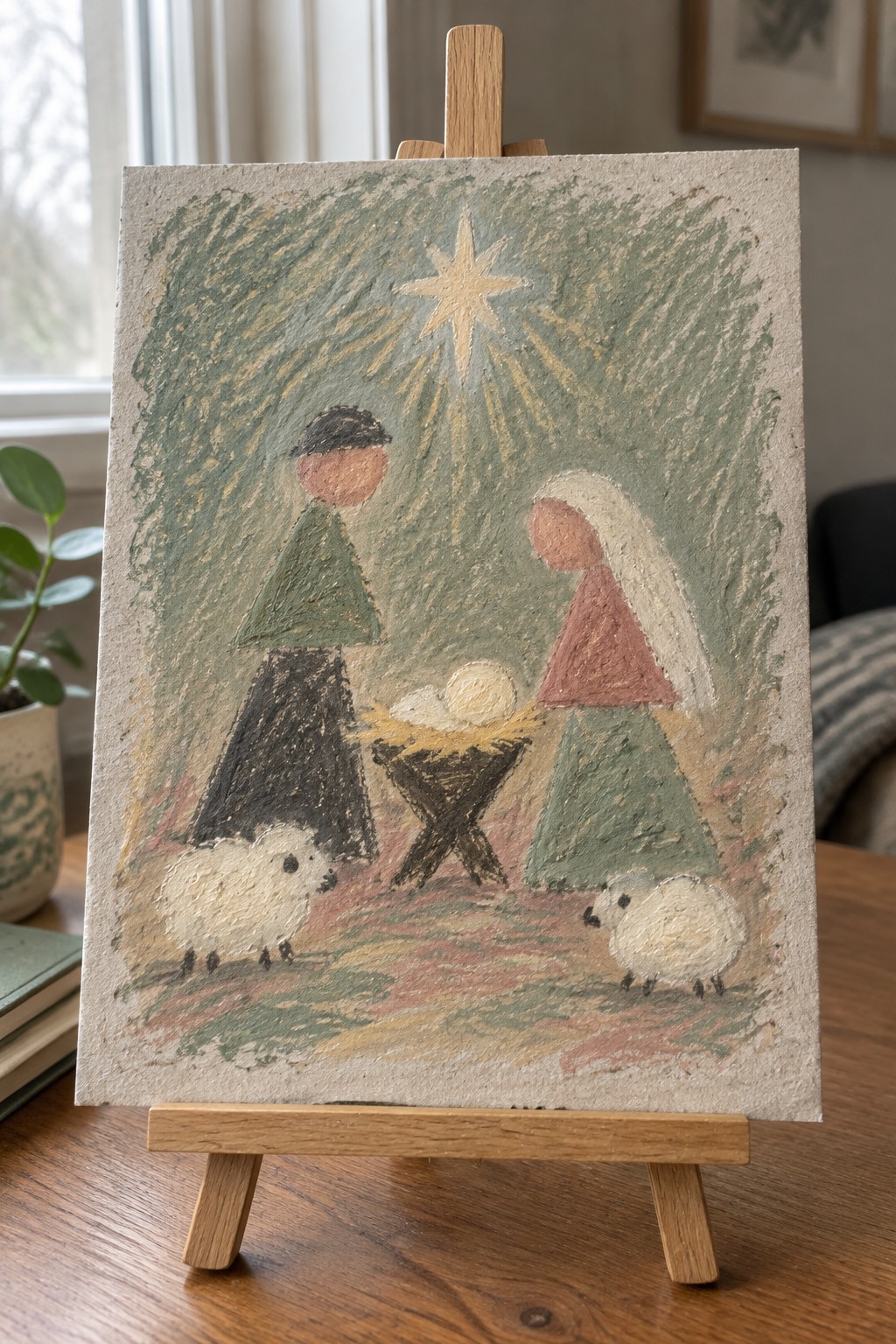
A nativity idea built from basic shapes uses stacked triangles for the figures’ bodies and robes, circles for heads, and a single large star to pull the whole arrangement together. The manger sits low in the middle with the two sheep placed at the sides to create a stable, balanced layout that keeps the focus on the central group. A loose, scribbled green background adds texture without competing with the clean forms.
What makes this idea useful is how quickly the main elements can be blocked in once the shapes are decided. The same triangle-and-circle method works for other holiday figures if you want to build a small series, and the muted green and earth tones are easy to swap for whatever colors you already have on hand. For wall pieces or cards, the strong star against the textured background gives it presence even at a small size.
Minimalist Nativity with a Centered Golden Star

A nativity idea that places a single large star above two tall triangles and a small central block keeps the focus on simple geometry rather than detail. The vertical layout and high contrast between the gold elements and the dark background make the composition read clearly from a distance. This approach belongs in the seasonal decorative category because it uses basic shapes to suggest the scene without adding figures or extra lines.
The composition does a lot of the work here by letting the star carry the visual weight while the shapes below stay minimal. You could easily adapt the palette by switching the background to black or deep green or by using different metallic tones for the star and block. The same idea works at postcard size or on a larger panel, and shortening the triangles gives a quick way to change the proportions if you want a tighter layout.
Geometric Shapes for a Flat Nativity Scene
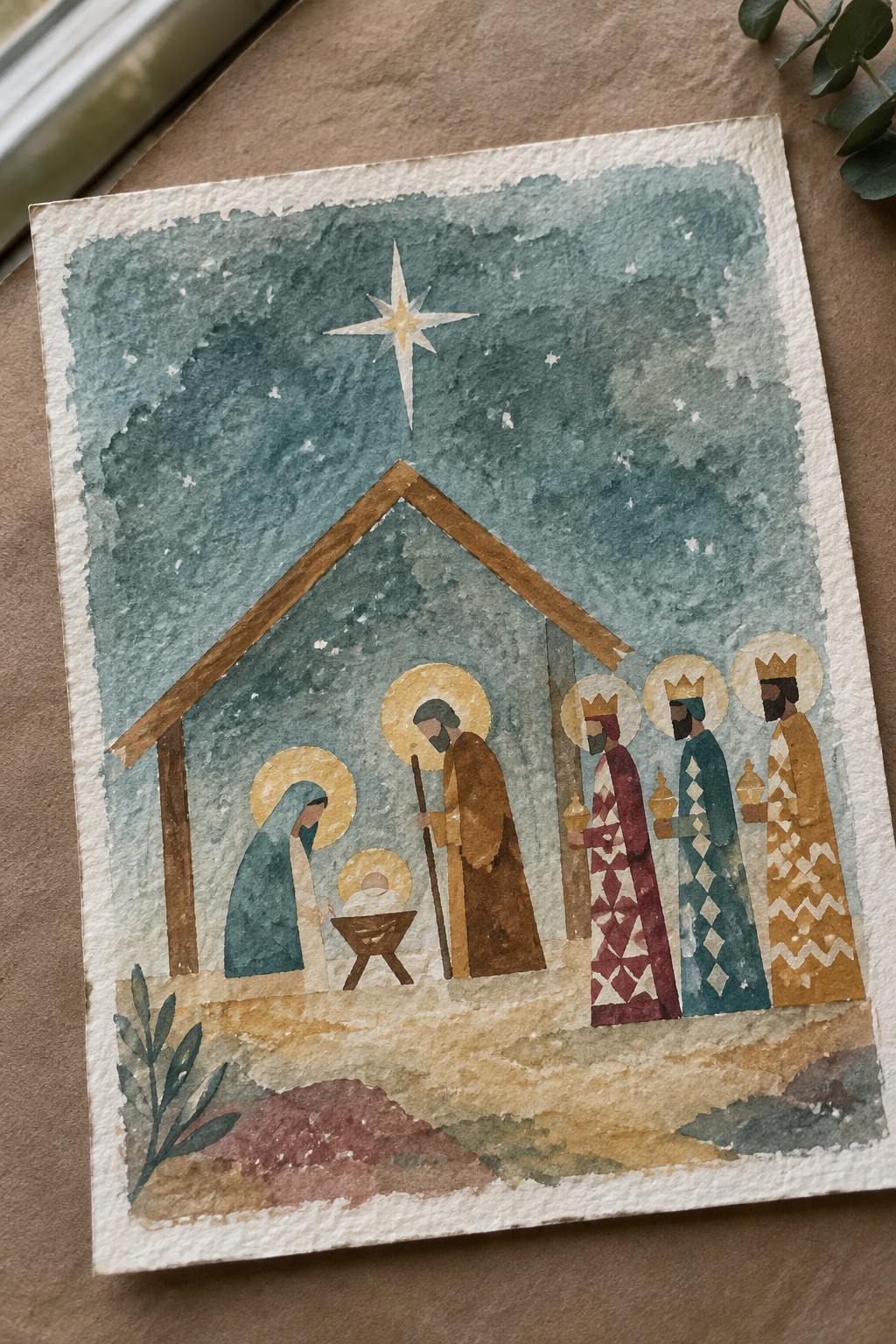
A nativity built from basic geometric forms keeps the focus on the stable, the star, and the row of figures without adding extra detail. The composition works because the roof lines and the bright star create a clear center while the halos and robe patterns give each shape enough variation to stand out. This style sits in the seasonal decorative category where flat shapes and a muted sky keep everything balanced and easy to read.
The composition does a lot of the work here since the stable and star already set the layout. You could swap the soft background for a darker wash or change the robe patterns to match whatever colors you have on hand. For practice this kind of subject helps you work on shape placement and simple repeats rather than blending or fine lines. It would also scale down well for a card or a small panel without losing the main idea.
Geometric Shapes Form a Clean Nativity Scene
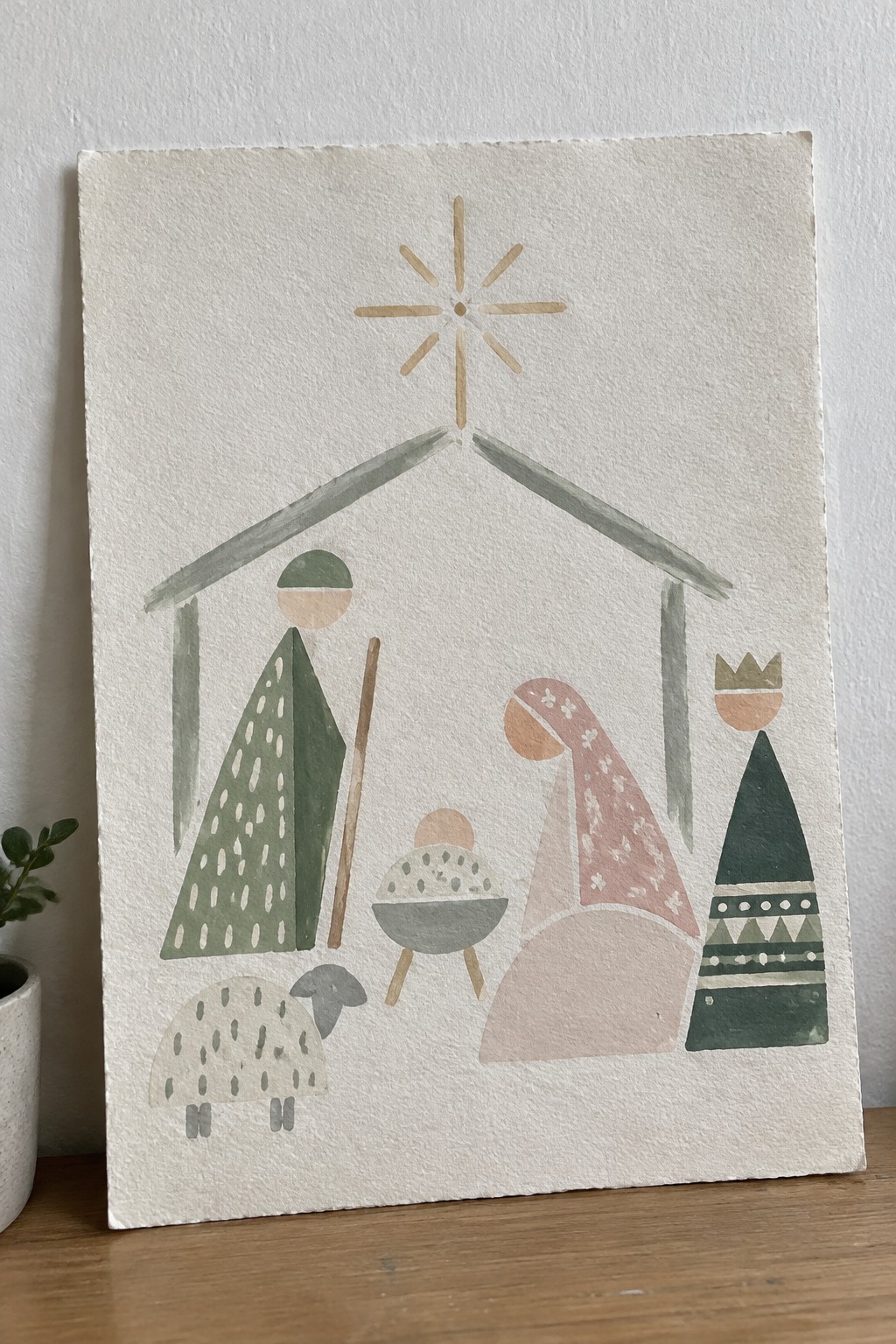
This painting idea uses basic triangles, circles, and a simple roof line to build a nativity scene. The figures stay flat and minimal, with just enough pattern on the robes and a small sheep to keep the layout balanced. A single starburst at the top and a muted palette of greens, pinks, and beige pull everything together without crowding the space.
What makes this idea useful is how the triangle-based figures let you change proportions quickly for different paper sizes. The limited color range makes it simple to swap in other tones or repeat the same shapes for matching pieces. For wall art or cards, the open background keeps the focus sharp even when the whole thing is reduced in scale.
Starry Minimalist Nativity with Triangular Forms

A nativity idea built around two basic triangular shapes and a small glowing base works well for seasonal work that stays abstract rather than literal. The large night sky with one strong central star and soft color blending keeps the composition balanced without extra detail. This approach falls into minimalist seasonal painting where the star and simple land mass do most of the visual work.
The composition does a lot of the work here because the big sky area lets the star stand out while the triangles stay small and easy to paint. The limited color palette of deep blues shifting into purple makes it simple to adapt for cards, small canvases, or quick practice pieces. You could change the triangle heights or swap the star size to fit different paper shapes without losing the overall idea. For wall art or gifts, the clean layout stands out on Pinterest because it reads clearly even at small thumbnail sizes.
Geometric Nativity Scene Using Basic Shapes

This idea builds a nativity scene from simple geometric forms like triangles for the stable roof and manger, circles and ovals for the figures and halos, and rounded bodies for the animals. The star sits at the peak of the roof to anchor the composition while the side animals create visual balance without crowding the center. The limited color palette and flat shapes keep the focus on the arrangement rather than fine details.
What makes this idea useful is how the clear shape breakdown lets you paint it quickly on a small canvas for seasonal decor. You can easily change the background color or swap the animal positions if you want a different layout. The same structure works if you scale it down for cards or enlarge it for a bigger wall piece. For practice, this kind of subject trains you to handle grouping and spacing with very few elements.
Geometric Stable with a Central Star

A nativity painting idea that relies on basic geometric blocks for the stable, manger, and figures keeps the focus on clean shapes rather than detail. The dark blue background and single gold star at the top create a strong vertical focal point that leads the eye straight to the scene below. This style fits seasonal decorative art because the flat forms and limited palette make the whole piece easy to read from a distance.
The composition does a lot of the work here by using the roof lines and vertical posts to frame the main elements without extra work. You could adapt the same layout to a smaller panel or swap the gold star for a lighter shade if you want less contrast. For practice, this kind of subject works well because the shapes stay simple while still forming a recognizable scene that holds up in thumbnails on Pinterest.
Vertical Panels with Flat Nativity Shapes

This painting idea breaks the nativity into three tall, narrow panels that each hold one main element. Large flat shapes form the robed figures and manger against solid background colors, with halos added as simple circles. The limited shapes and muted palette keep the focus on the overall layout instead of small details.
What makes this idea useful is how the separate panels let you adjust spacing on a mantel or shelf without committing to one large canvas. The same layout works in different sizes, and you can swap background colors to fit whatever wall or season you need. For practice, this format helps because the big shapes remove pressure on fine brushwork while still reading clearly as a nativity set.
Negative Space Nativity with Circular Sky

A nativity scene built from simple silhouettes and negative space creates a clean graphic look. The stable and figures appear as light shapes against a deep blue circular wash, with a single star placed at the top center. This approach works well as seasonal decorative art because the strong shapes and limited palette keep the focus on the overall composition.
The composition does a lot of the work here by using the circle to frame the scene tightly. You could easily adapt the same idea with a different sky color or try it at a smaller scale for cards or tags. For Pinterest, this kind of bold silhouette stands out because it reads clearly even as a thumbnail.
Overlapping Circles Shape a Compact Nativity

A nativity idea built from overlapping circles keeps the focus on shape placement and color blocks rather than on drawing figures. The largest circle sets the outer boundary while smaller rings nest inside it to suggest the grouped forms, all centered under one star. This works as minimalist seasonal art because the simple layout and limited color range hold the composition together without extra detail.
What makes this idea useful is how easily the circle sizes can be adjusted to fit square or rectangular canvases for wall pieces or small panels. The gradient background from teal down to warm orange gives a ready-made sky that works with most color choices for the rings, so you can swap in different shades without repainting the whole thing. For practice, this subject helps you test balance and overlap before adding any extra marks like the star.
Diamond Angels Above a Simple Manger

This painting idea reduces the nativity to a few large geometric shapes, with angels built from overlapping triangles and circles that dominate the upper half of the composition. A single bright star sits at the center top, drawing the eye downward to the small manger group at the base. The approach works well as minimalist seasonal art because the strong triangular forms and limited palette keep the whole scene readable even from a distance.
What makes this idea useful is how the oversized angel shapes handle most of the visual weight, so you only need to suggest the figures below rather than render them fully. The vertical layout with the star at the top gives you a clear structure to follow on any size paper or canvas. You could swap the blue and yellow tones for other seasonal colors or shrink the angels to fit a smaller frame without losing the impact.
Geometric Nativity Using Flat Polygons and a Dominant Star

This painting idea uses basic geometric shapes to build the entire nativity, with triangles and trapezoids forming the figures, manger, and stable structure. The large gold star at the top anchors the composition through its size and radiating lines, while the muted green background holds the elements together without adding extra detail. The approach works as seasonal decorative art by letting clean shapes and limited color do the visual work.
The composition does a lot of the work here by using the angled stable beams to frame the lower scene and keep attention on the central figures. You could adapt this easily by changing the background color or reducing the number of gold accents to match different room styles. For practice, the shapes are simple enough to block in quickly on a medium canvas, and the same layout scales down well for smaller pieces or cards.
Flat Shape Nativity with Earthy Blocks

A nativity built from basic geometric shapes works well when the stable, figures, and animals are reduced to clean silhouettes that still read clearly as a group. The idea relies on a tight palette of deep reds, mustards, olive, and browns plus one bright star to keep the eye moving from the top down to the manger without needing fine lines or shading. Horizontal stripes on the stable and patterned robes add just enough texture to separate the elements while keeping the whole piece simple enough for quick seasonal work.
What makes this idea useful is how easily the same layout can be resized for cards, small canvases, or larger wall pieces without losing its balance. The central stable and vertical star give you a strong structure to follow, so you can change the number of kings or swap sheep for other animals and it still holds together. For practice, this kind of subject lets you focus on color placement and shape overlap rather than drawing skill, and the limited palette makes it fast to test different background tones.
Two Simple Shapes Under a Single Star
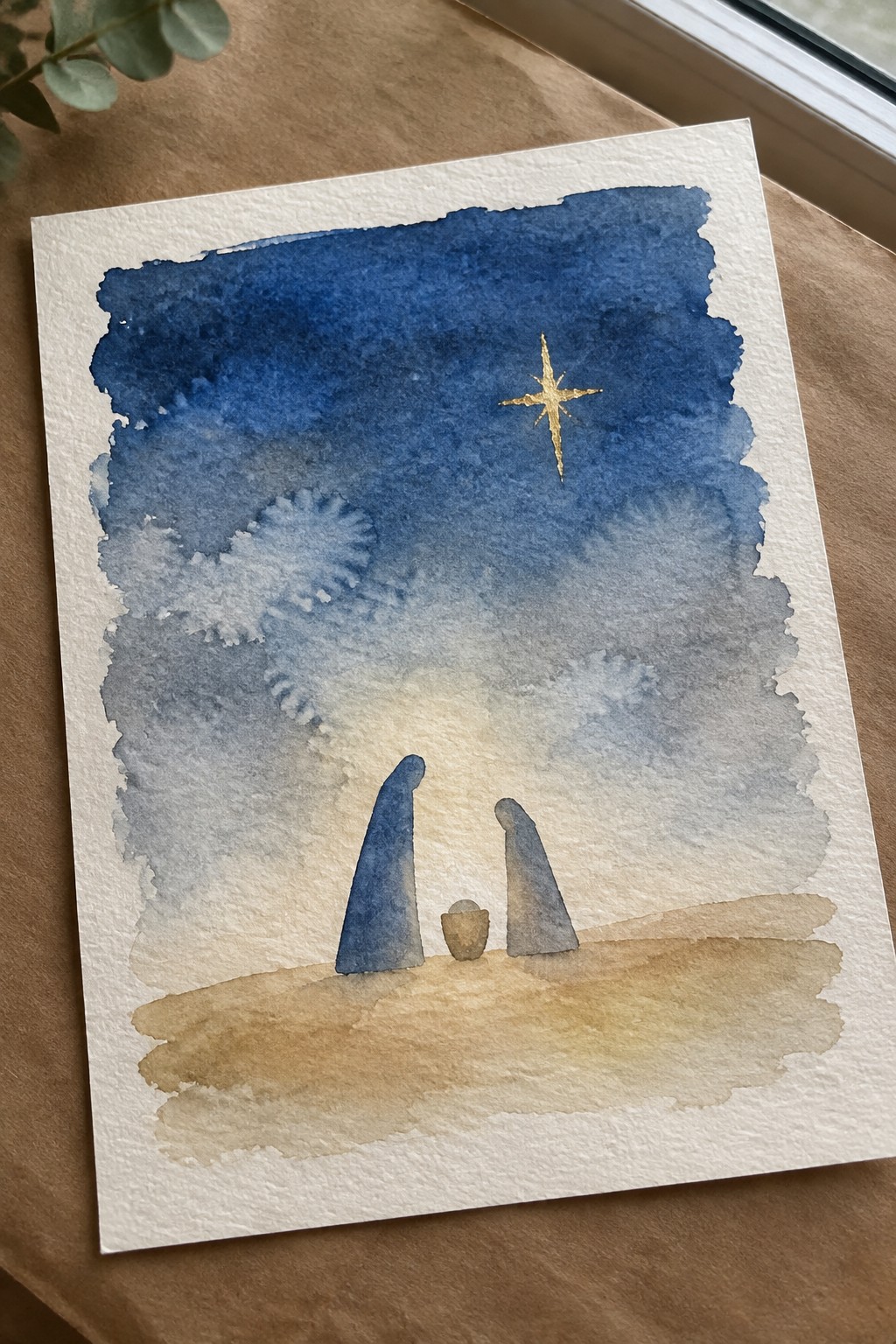
A minimalist nativity idea built around two basic triangular forms placed on a flat ground plane, with one small central object between them. The composition relies on a strong vertical contrast between the dark upper sky and the lighter lower area, plus a single bright star to anchor the eye. This approach fits the seasonal category and keeps the whole scene readable even when reduced to the fewest possible elements.
What makes this idea useful is how the limited shapes let you change the number of figures or the star size without redrawing the whole layout. The color split between the sky wash and ground strip works at different scales, so the same idea fits both a greeting card and a larger wall piece. For practice, this kind of subject helps you focus on placement and negative space rather than detail work.
Geometric Kings and Manger Scene
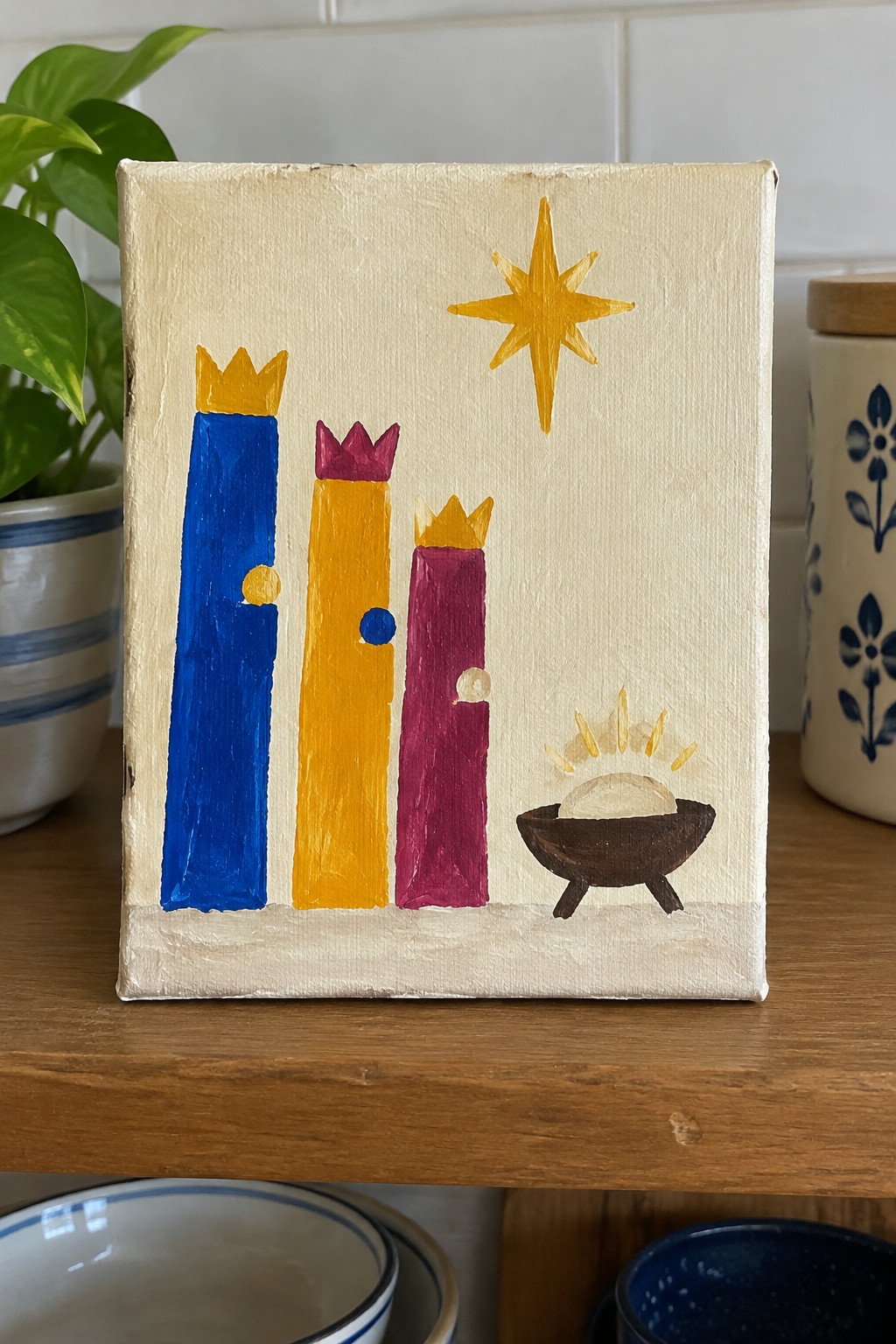
This painting idea uses three tall rectangles as the three wise men, each finished with a simple crown shape on top and a small colored dot as a detail. The composition places them on the left side with a star above and a basic manger form on the right, keeping the rest of the canvas open. The flat color blocks and minimal shapes make the nativity theme readable while staying within a strict geometric style.
What makes this idea useful is how the rectangle format lets you change the number of figures or their spacing without redrawing anything complex. The color palette can shift to match whatever paints you already have, and the open background means the piece stays legible even on a small canvas. For practice, this kind of subject works well because the main shapes are quick to block in and the layout can be copied onto other seasonal projects without much adjustment.
Geometric Nativity Scene Using a Golden Halo
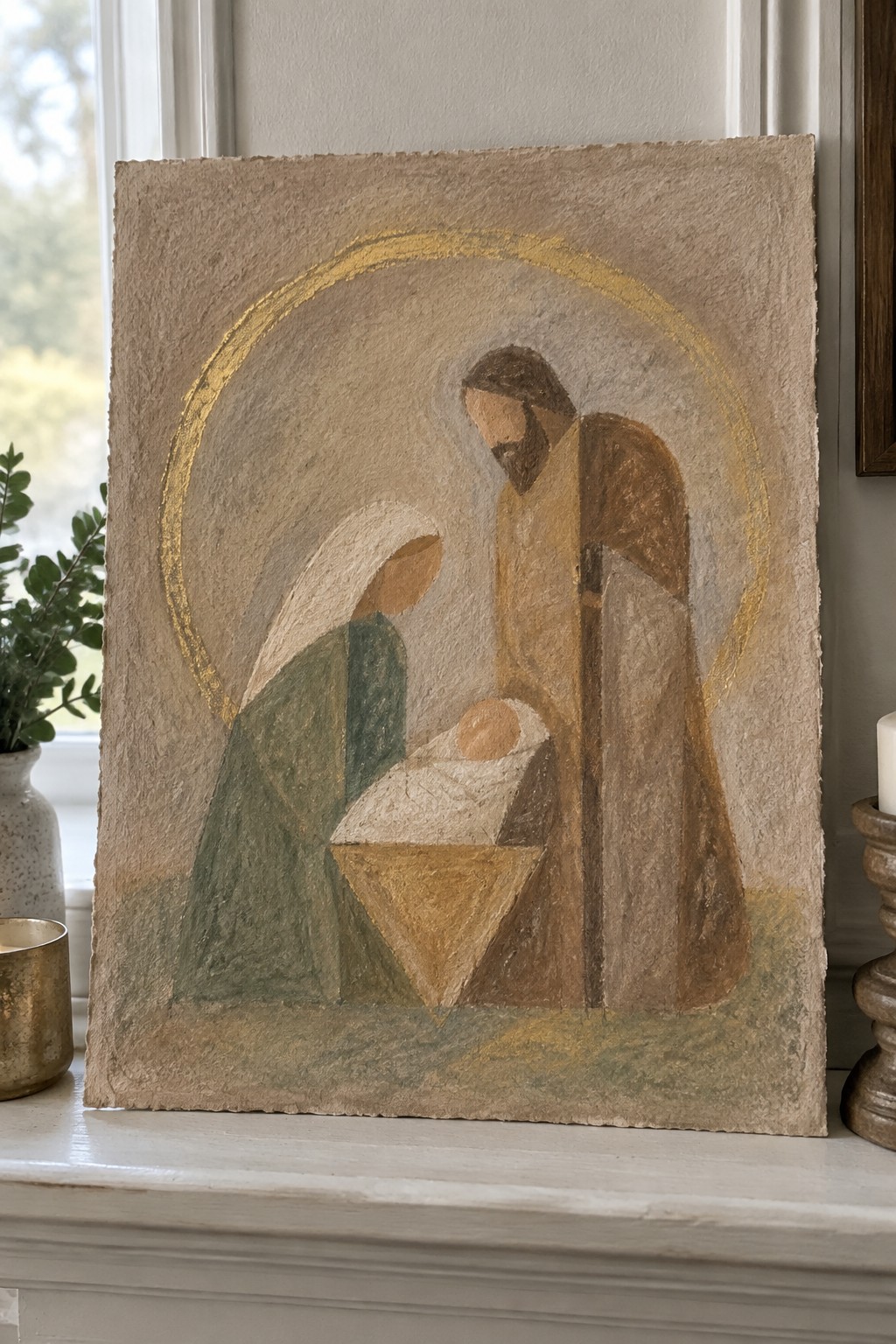
A Nativity painting idea built around large simplified shapes works by placing the three main figures close together and enclosing them with one strong circular element. The composition relies on flat color areas and minimal detail so the eye moves directly from the halo down to the manger. This approach fits the seasonal decorative category because the limited palette and clear structure keep the focus on the arrangement itself.
What makes this idea useful is how the halo organizes the whole piece without needing extra background elements. You can adapt the size of the circle or swap the earthy tones for whatever paints you already have when making holiday pieces. For practice or quick gifts, the same layout scales easily to smaller boards or canvas panels while staying readable from a distance.
Triangular Figures Led by a Single Star

This painting idea uses three simple triangular shapes to form the main figures of a nativity scene, with the baby positioned low in a small cluster of short lines suggesting straw. A single starburst sits high on the page with a dotted line running straight down to the manger, creating a clear vertical path that organizes the whole piece. The soft watercolor washes stay within each triangle without much blending between them, which keeps the shapes distinct while still feeling light.
What makes this idea useful is how the triangles carry most of the visual weight, so the focus stays on placement and color choice rather than fine details. The dotted line from the star gives an easy way to lead the eye without adding extra objects or texture. This layout adapts quickly to different paper sizes or color combinations, and it works especially well if you want a clean piece that still reads clearly from a distance for wall display.
Minimalist Nativity Built Around a Large Moon
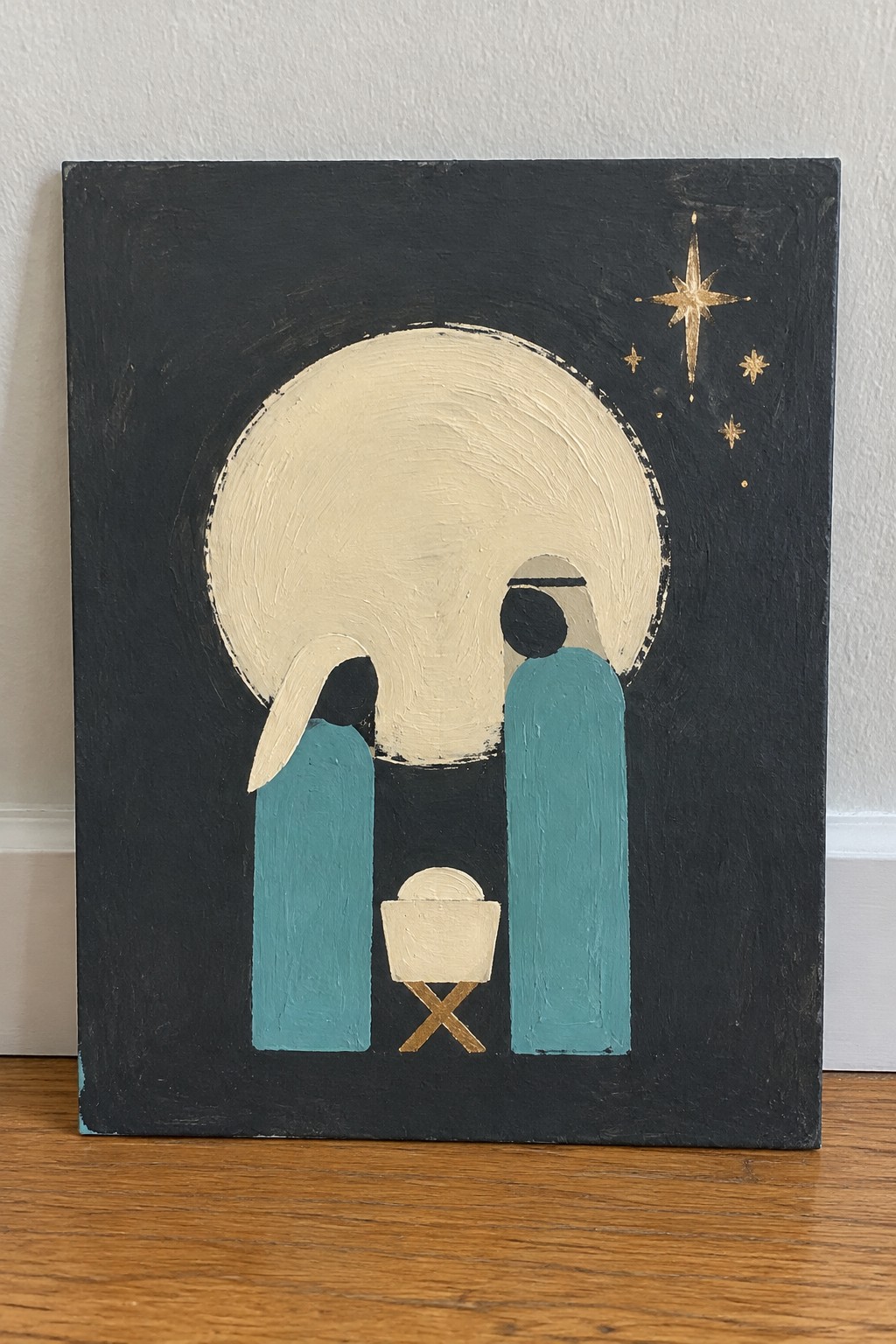
This painting idea reduces the nativity to three main shapes: two standing figures, a small manger, and one oversized moon that fills most of the upper space. The figures are formed from simple vertical rectangles with minimal head details, while the moon acts as both background and light source. The approach works as seasonal decorative art because the strong circular shape and limited color blocks keep the scene readable even when every element stays flat and geometric.
What makes this idea useful is how the moon does most of the compositional work, letting the figures stay small and uncomplicated. The dark background with a few gold stars keeps the focus tight and makes the piece easy to adapt to different canvas sizes without losing impact. For wall art, the layout works especially well when you want a quick seasonal painting that still reads clearly from across a room. You could swap the teal for other solid colors or shrink the moon slightly if you need a taller format.
Flat Shape Nativity with a Single Star

A nativity built from simple block shapes works well when the figures stay low and line up across the bottom edge under a wide roof. The limited palette of brown, blue, green, and ochre keeps the shapes distinct without extra detail, while the starburst at the top gives the eye one clear focal point. This approach fits the seasonal decorative category and relies on clean edges rather than shading or texture.
The horizontal layout makes it easy to adjust the width for different paper sizes or greeting cards. You can swap the animals or change the roof angle while keeping the same balance of space and color. The flat shapes also reproduce cleanly when scanned or photographed, which helps if you want to turn the painting into a repeatable print or template.
Minimalist Nativity with Crescent Moon and Star

A nativity idea built around three simple draped shapes gathered around a small golden circle, with a large crescent moon and single star placed above in the open space. The soft washes and limited palette of gray, beige, and gold keep the focus on the basic forms rather than detail, which makes the layout read clearly even at small sizes. This fits the seasonal decorative category because the high placement of the moon and star balances the lower cluster of figures without adding extra elements.
The composition does a lot of the work here by using negative space to separate the sky elements from the figures. You could swap the gold accents for other colors or adjust the moon size to fit different paper formats. For practice, this kind of subject works well for testing soft edges and shape balance, and the clean layout would stand out on Pinterest as an easy seasonal piece to recreate or simplify further.
Frequently Asked Questions
What is the best way to start creating my own minimalist nativity painting with geometric figures?
Begin by sketching basic shapes such as triangles for the stable roof, circles for halos, and rectangles for figures on paper or a digital canvas. Focus on reducing each element to its core form while keeping the composition balanced and recognizable. Experiment with limited colors like earth tones or soft pastels to maintain a minimalist feel, then refine the design until the nativity story remains clear without extra details.
Where can I find prints or digital versions of these 23 paintings for personal use?
Many artists who produce minimalist works offer high resolution digital downloads through platforms like Etsy or their personal websites. Search for the specific collection title along with terms like printable art or limited edition prints. If the article includes artist credits, reach out directly to inquire about licensing options for home printing or framing.
What supplies work well for making these paintings at home?
Acrylic paints on stretched canvas provide good coverage for clean geometric shapes, while watercolor paper suits lighter, more delicate versions. Use rulers, compasses, and stencils to achieve precise lines and angles. For digital creation, free tools like Inkscape or Procreate allow easy manipulation of basic shapes with layering options.
How do minimalist nativity designs using geometric figures convey the story effectively?
Simple shapes guide the viewer to focus on essential symbols such as a triangle representing the manger or overlapping circles suggesting the holy family. This approach strips away ornate details to emphasize emotion and narrative through form and color relationships. Viewers often find these designs meditative because they invite personal interpretation while still honoring the traditional scene.
Can these paintings be adapted for different cultural or seasonal displays?
Yes, adjust the color palette to match local traditions or holidays, such as using cooler blues for winter themes or warmer tones for diverse cultural settings. Scale the geometric elements up or down depending on the display size, and incorporate subtle patterns that reflect regional motifs without complicating the core minimalist structure.