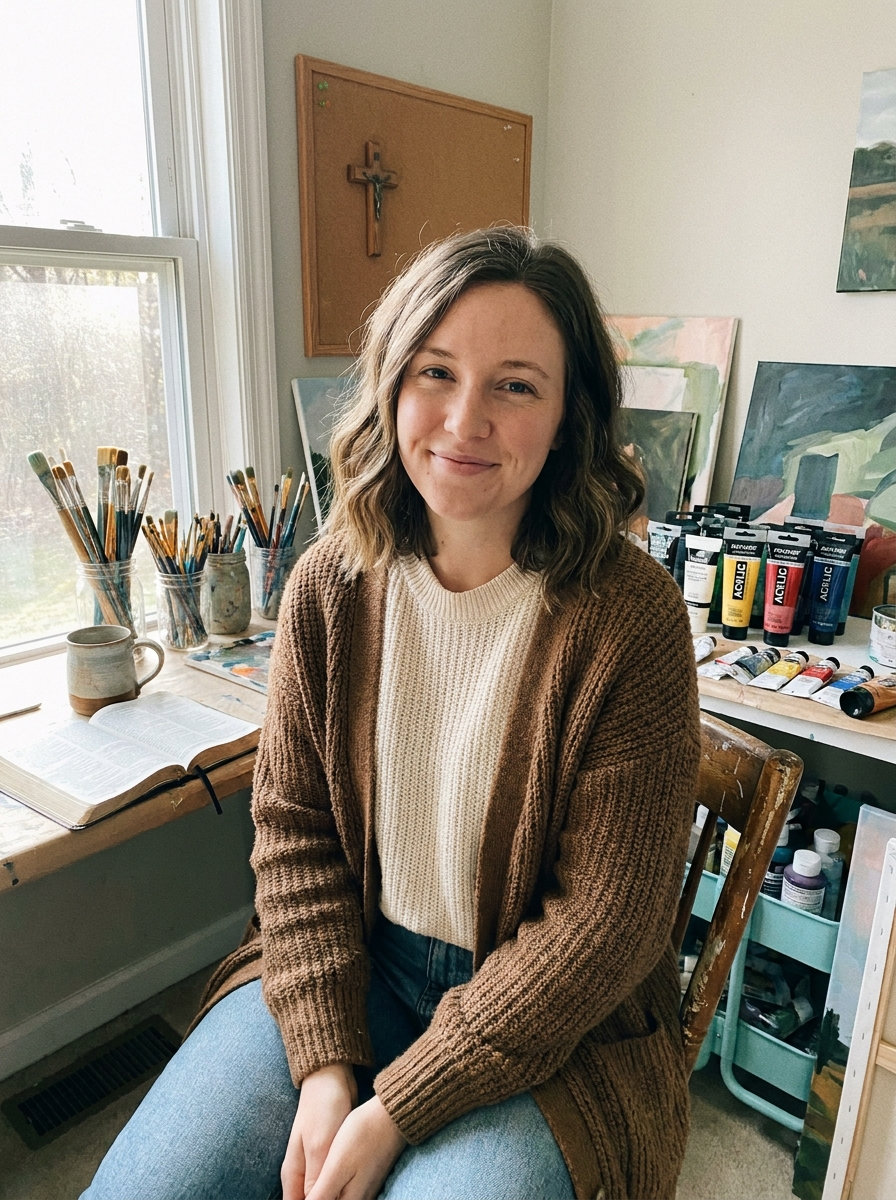
I like painting Bible verses because they give me something positive to focus on while I work.
Over time I have collected a few ideas that feel right for this kind of project.
The verses I picked are ones that remind me to stay steady during hard days.
I kept the styles basic with colors that do not overwhelm the words.
These are the ones I would actually hang up in my own home.
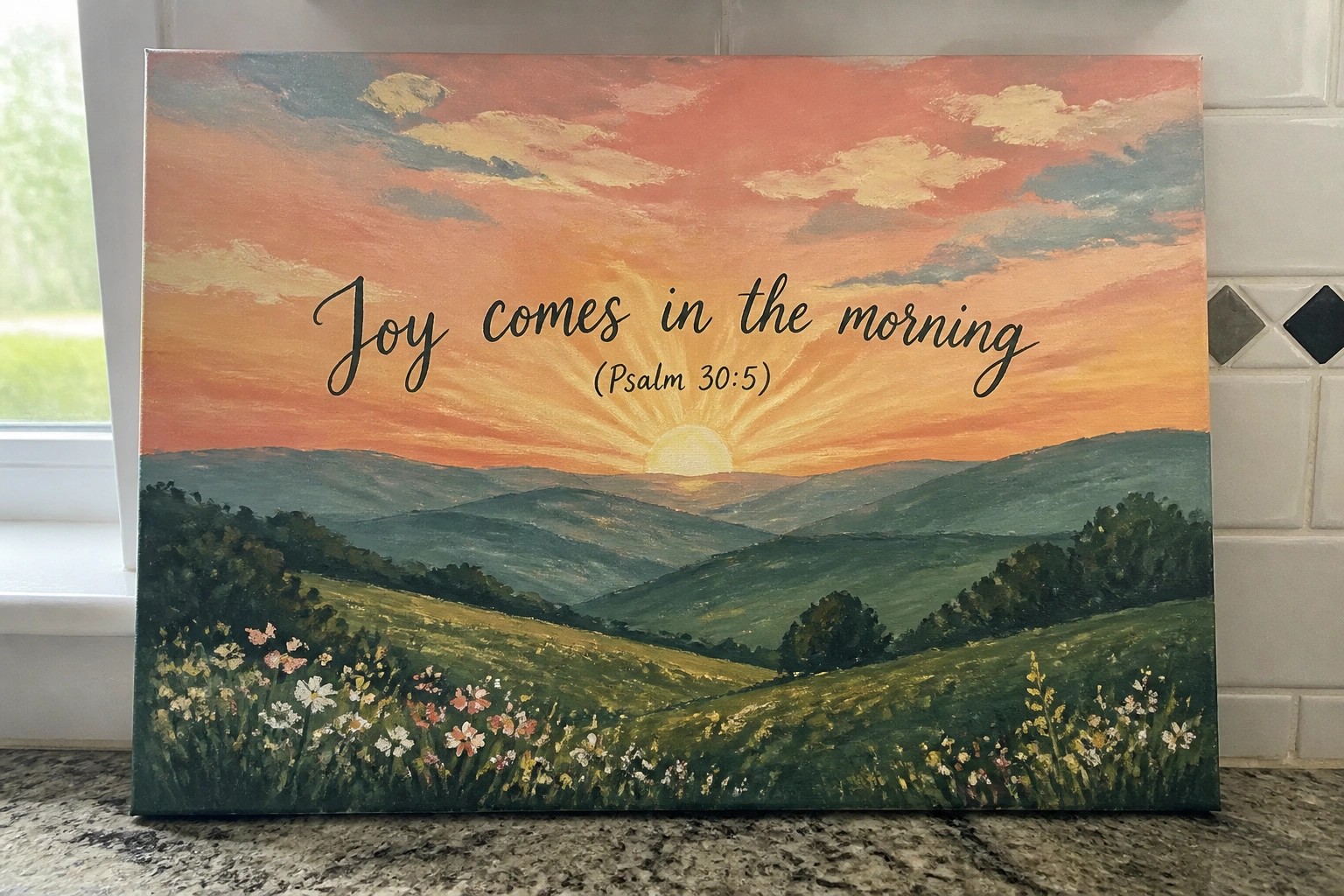
Sunrise Landscape With Psalm 30:5
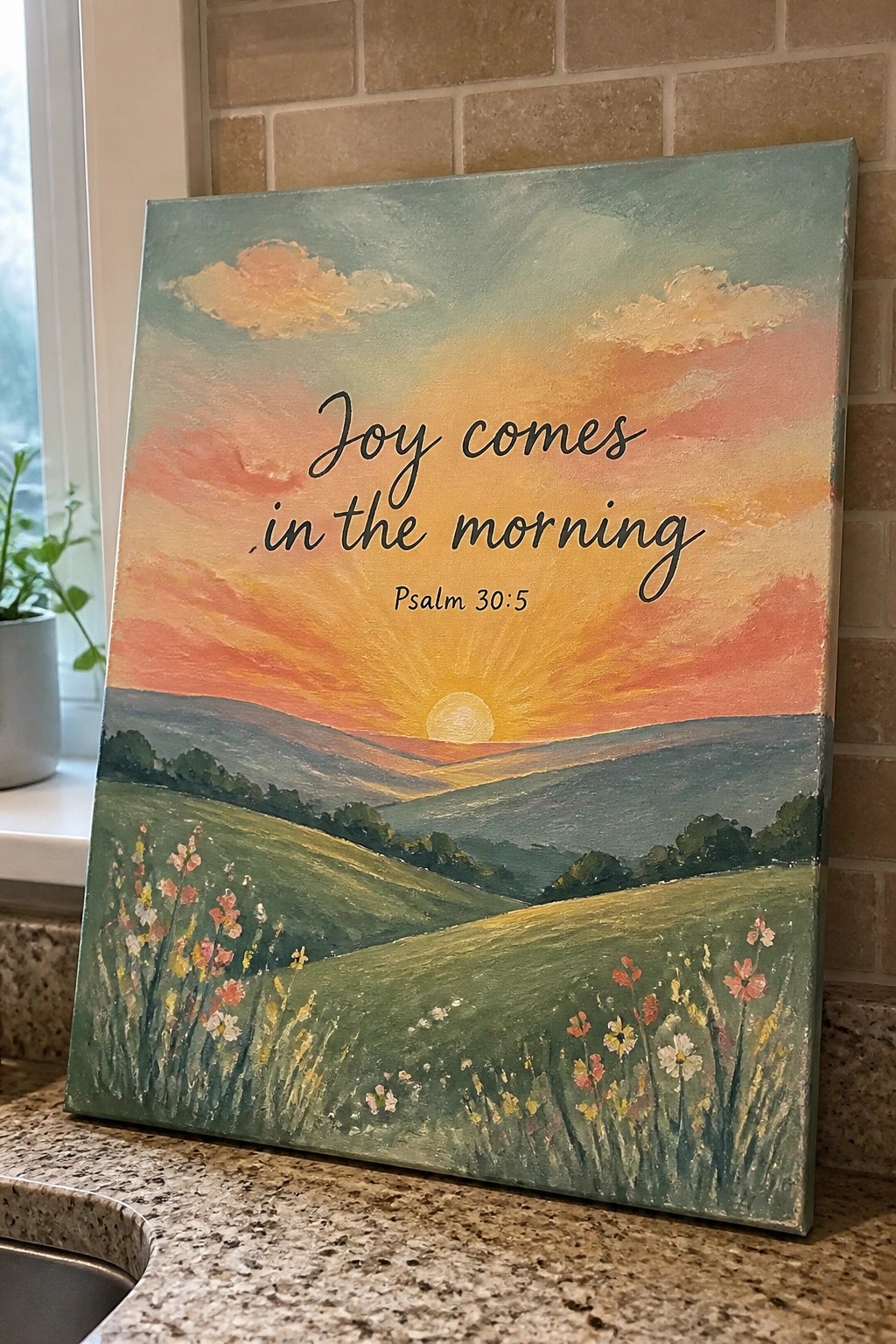
A landscape painting that centers on a sunrise over layered hills pairs naturally with a verse about morning joy. The sky takes up most of the upper space with blended warm tones, while the lower half shows fields and scattered wildflowers to keep the focus on the horizon. This setup places the text in the open sky area so it reads clearly without competing with too many details.
The composition does a lot of the work here because the horizon line creates an easy place to add text. A painting like this works especially well for wall decor since the simple hill shapes can be scaled to different canvas sizes without losing the effect. You could adapt the color range to match your supplies or reduce the number of flowers in the foreground if you want a quicker version.
Dove in Flight for a Scripture Quote
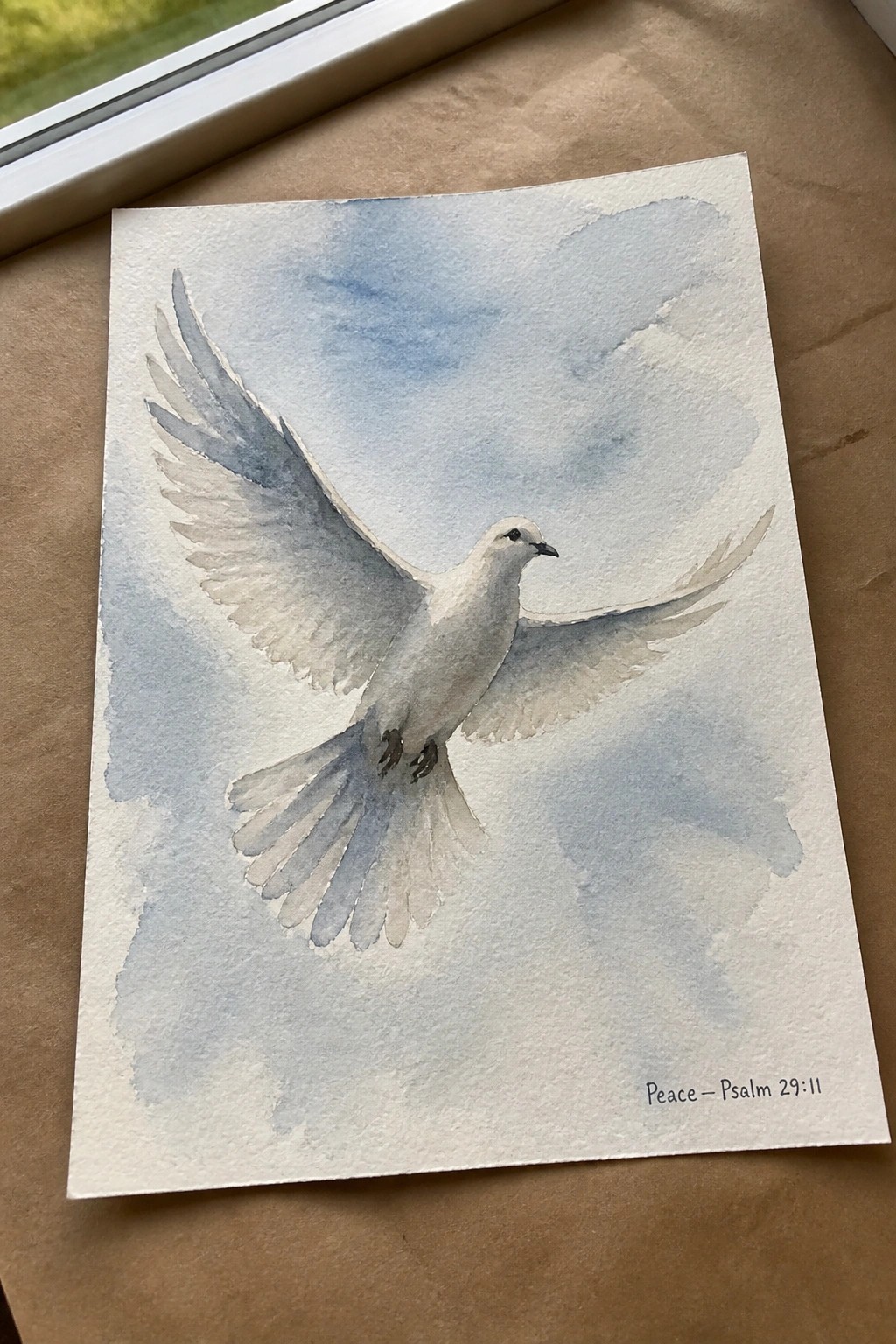
A white dove in mid-flight works as a clean animal subject for a verse-based painting. The idea uses a loose watercolor approach where the bird is built from soft gray and white layers while the background stays as a simple blue wash. Placing the dove across the center with open space on both sides keeps the focus on the wings and body without crowding the page.
What makes this idea useful is how the plain sky background removes the need for extra elements so you can practice wing shapes and body proportions first. You could swap the blue tones for a different palette or shrink the whole thing to fit a greeting card. Adding the verse text in one corner turns it into a finished piece ready for wall display or gifting. The layout stays flexible if you want to try it in acrylics or colored pencils later.
Floral Wreath Framing a Cross and Scripture
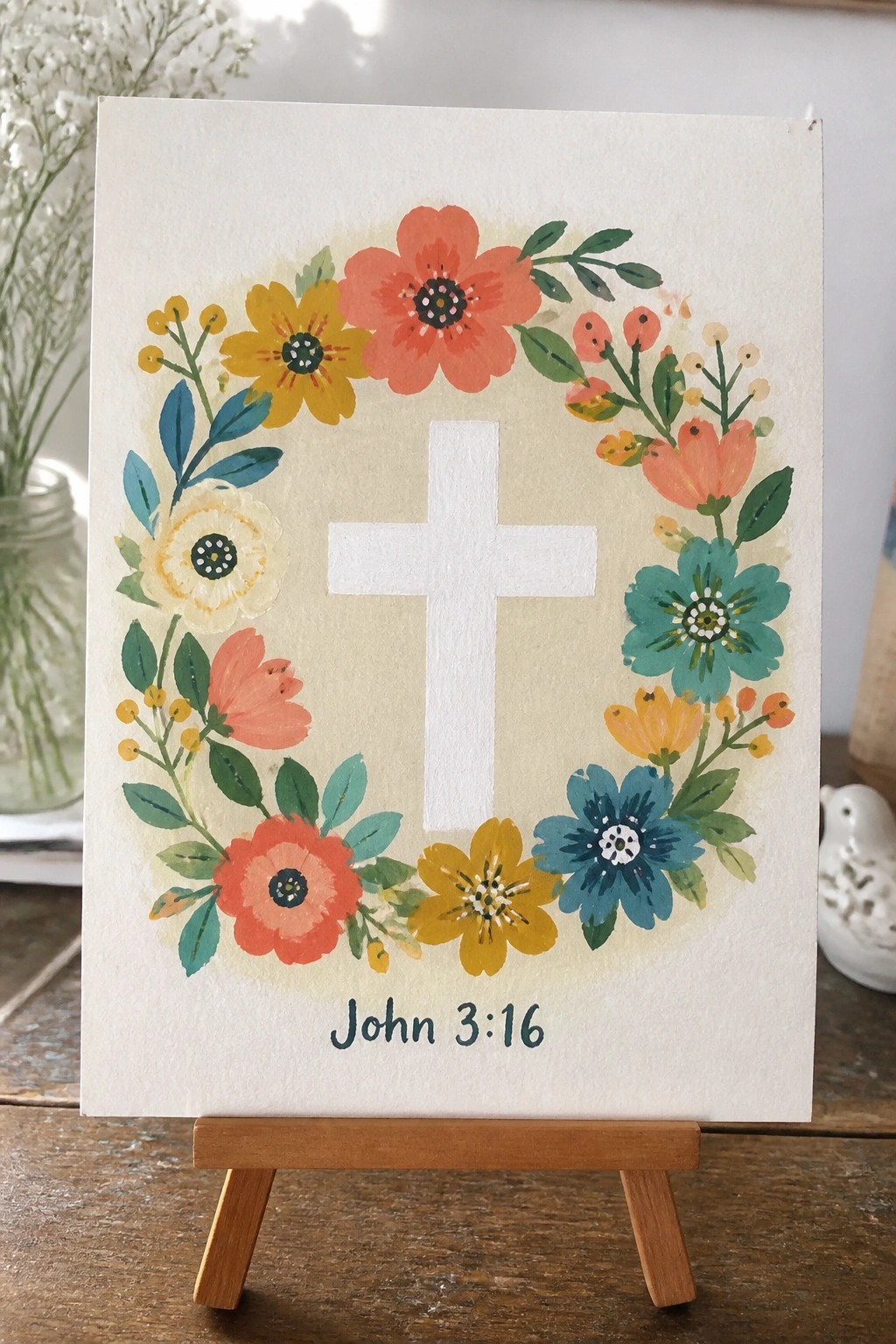
A circular wreath of mixed flowers makes an effective layout for pairing a central cross with a short Bible verse underneath. The flowers vary in size and color but stay grouped in a loose ring that leaves the cross as the clear focal point. Using both warm and cool tones in the blooms helps the design feel balanced while keeping the overall shape simple enough to paint in one session.
What makes this idea useful is how the wreath structure lets you change flower types or colors without losing the main focus on the cross. You can scale the whole thing down for greeting cards or keep it larger for a framed piece by adjusting the number of blooms. The open space at the bottom also gives a natural spot for the verse text so it does not compete with the painted elements.
Lamb Resting Under a Tree with Psalm 23 Text
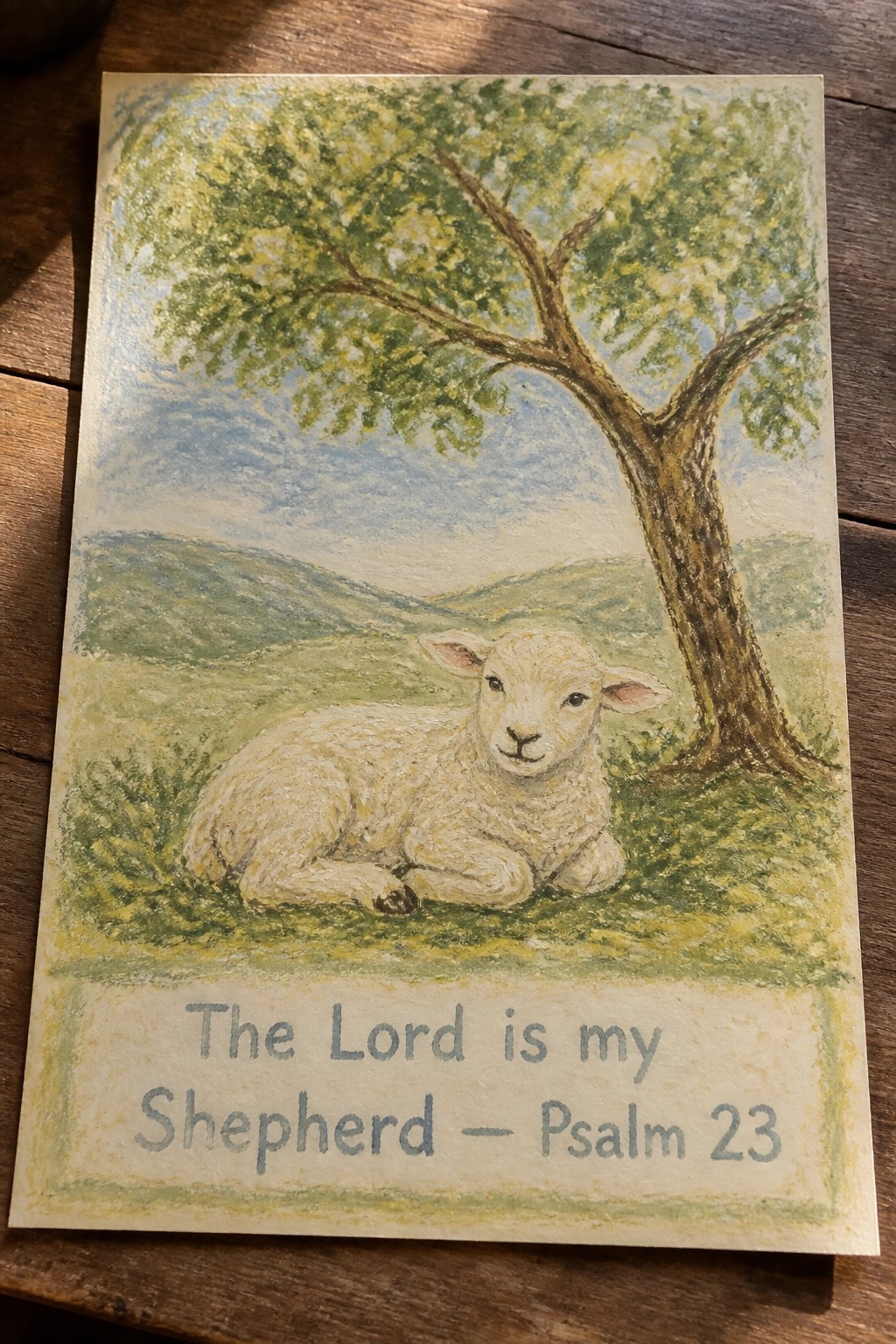
A landscape painting that centers on a young lamb resting in grass beneath a spreading tree works as a straightforward animal and nature scene. The lamb sits in the lower center while the tree anchors the right side, with rolling hills filling the background to keep the focus on the animal. Adding the verse text in a bordered panel at the bottom turns the piece into a combined scripture and illustration project rather than a pure landscape.
The composition does a lot of the work here because the lamb stays large and clear while the tree and hills add context without crowding the space. You can simplify the hills into softer shapes or swap the color palette if you want something lighter or more muted for a bedroom or entryway. This idea stands out for gifts because the verse is built right into the layout, so it feels finished without extra framing or lettering steps.
Anchor and Scripture Banner on Striped Canvas
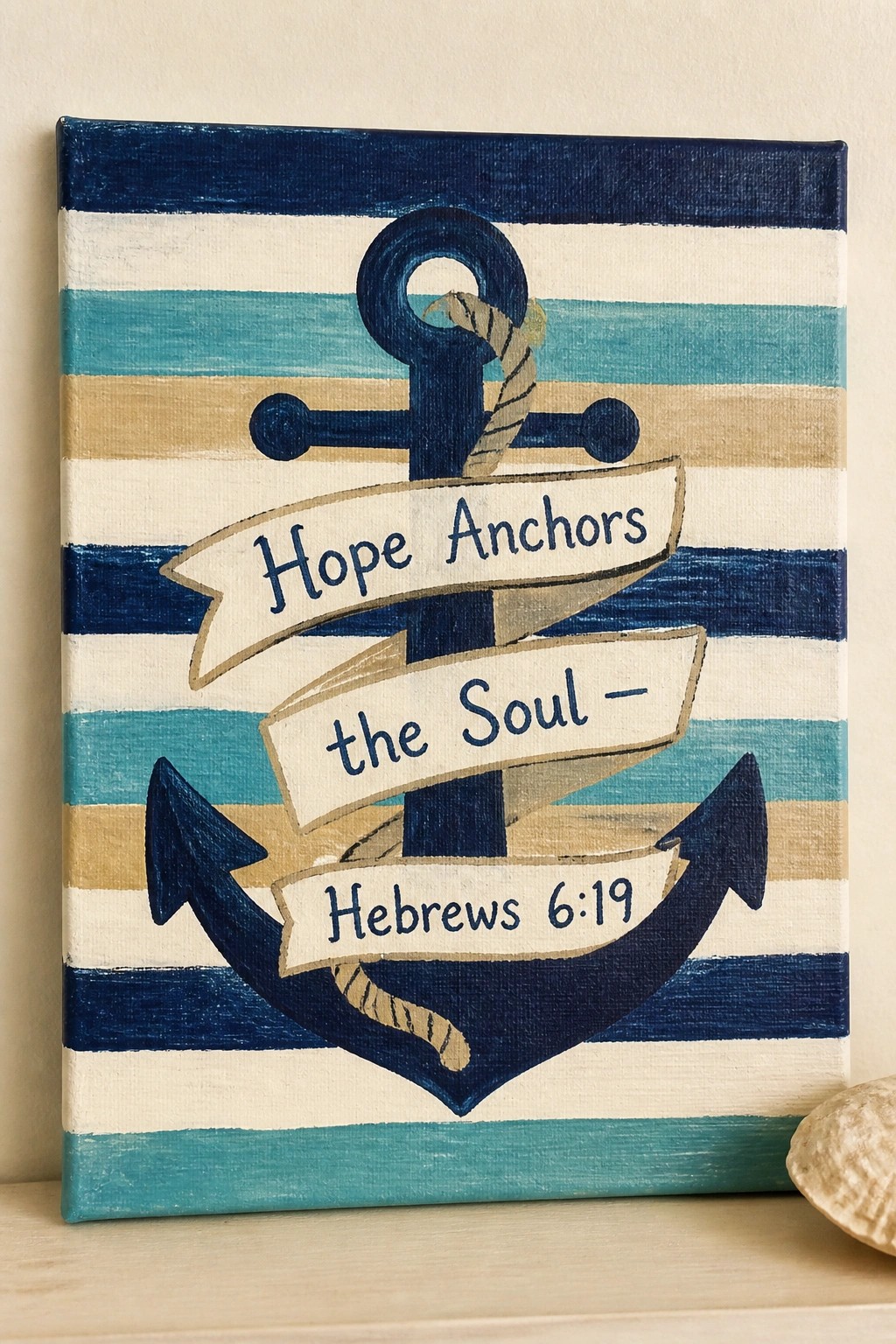
An anchor painting paired with a scripture banner makes a straightforward decorative piece built around a single strong shape. The idea places the anchor in the center over horizontal stripes that run in navy, teal, and beige, letting the banners cross in front without breaking the form. The rope wrapped around the anchor adds a small amount of texture while the stripes keep the background simple and structured.
The composition does a lot of the work here by using the stripes to guide the eye straight to the anchor and text. You can change the stripe colors to fit a room or shorten the verse if you want less lettering to manage. For wall art, this layout works on a standard canvas size and stays readable even when kept fairly large. The same setup could be simplified further by dropping the rope or using fewer stripes if you prefer a quicker version.
Winding Path Landscape With Proverbs Verse
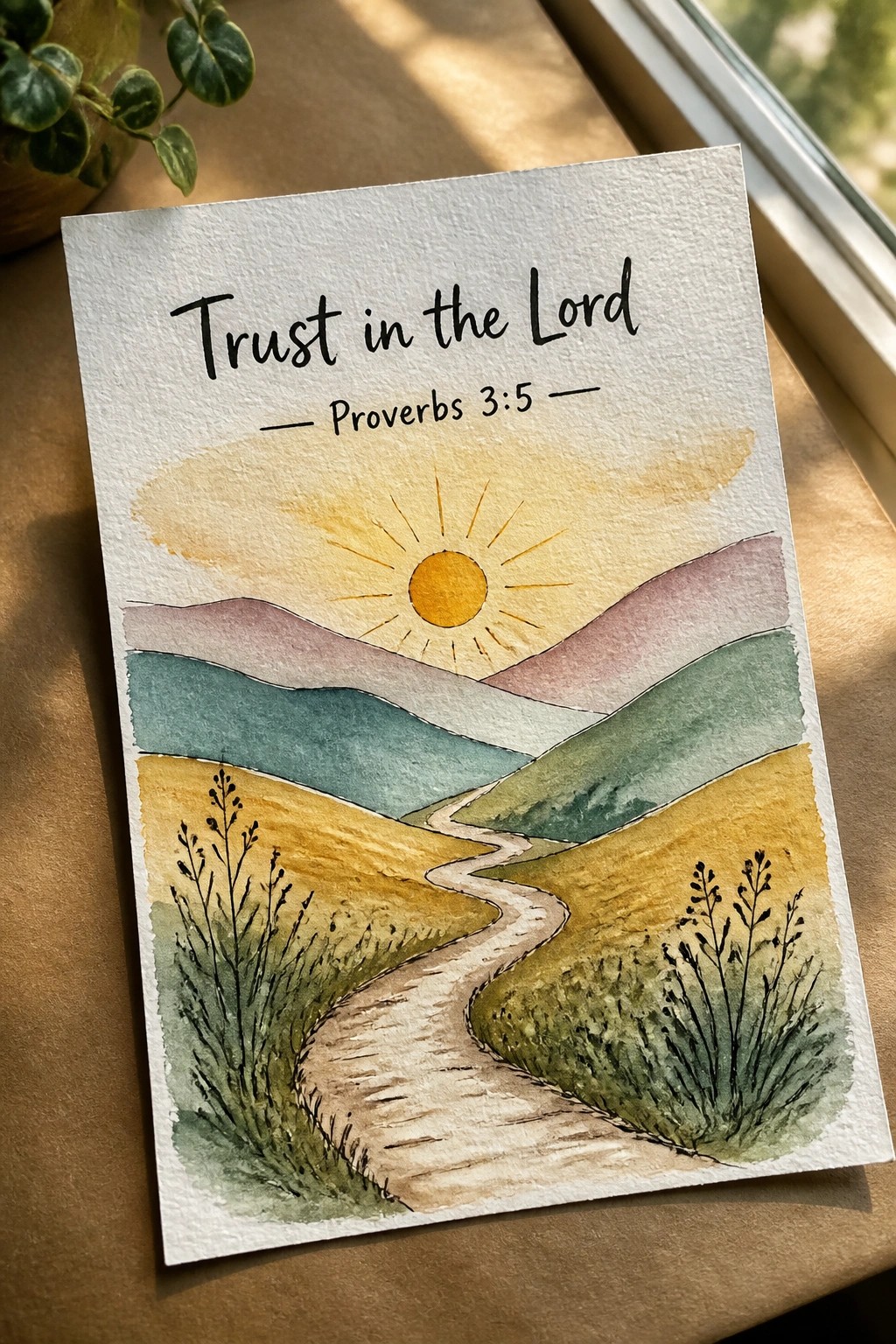
A landscape painting idea that layers soft hills in muted greens, golds, and pinks behind a winding central path and a simple sun. The verse sits above the scene in clear lettering, keeping the focus on the open sky and the path that leads through the hills. This approach works as a straightforward landscape with added text, using broad color blocks and minimal detail to keep the composition balanced.
The composition does a lot of the work here by using the path to guide the eye without needing complex details. You can swap the hill colors or shorten the path if you want a quicker version for a card or small canvas. It adapts well for wall pieces because the text and landscape stay readable even at smaller sizes, and the same layout works if you change the verse or adjust the sun placement.
Stacked Hearts with Matching Bible Verses
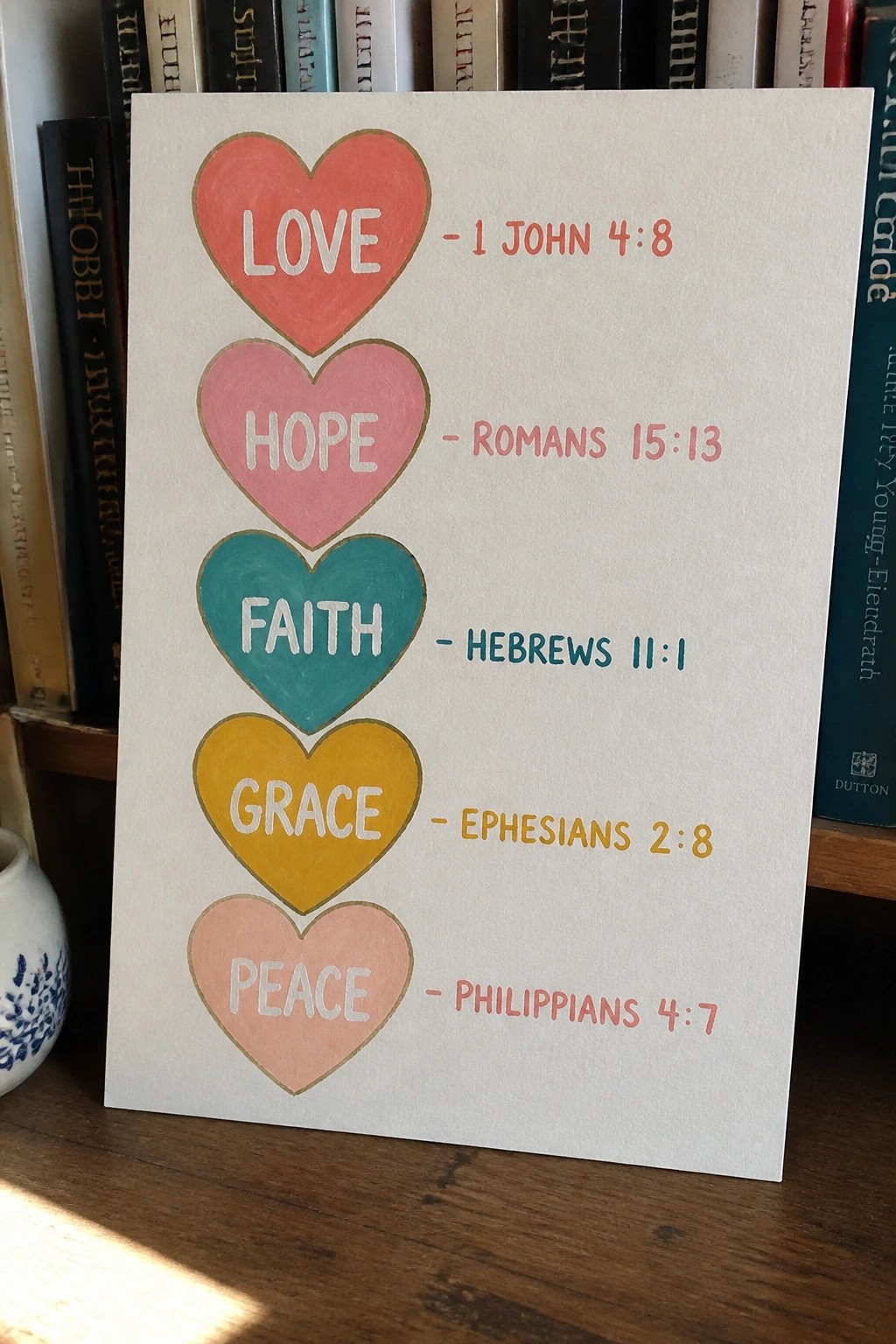
A vertical lineup of five hearts in different colors creates a simple grid for pairing short words with their Bible references. Each heart uses a solid fill and white lettering inside, with the verse citation placed to the right in a matching hue. The arrangement keeps the design balanced and easy to read while the gold trim around each shape adds separation without extra detail.
What makes this idea useful is how the fixed layout lets you change the color order or swap in different verses without redrawing the whole thing. The same stack works on canvas, wood, or even as a handmade card. For wall art something like this fits narrow spaces well and stays legible from a distance. The simple shapes help this feel more approachable for trying out lettering techniques.
Psalm Verse Over Layered Mountains
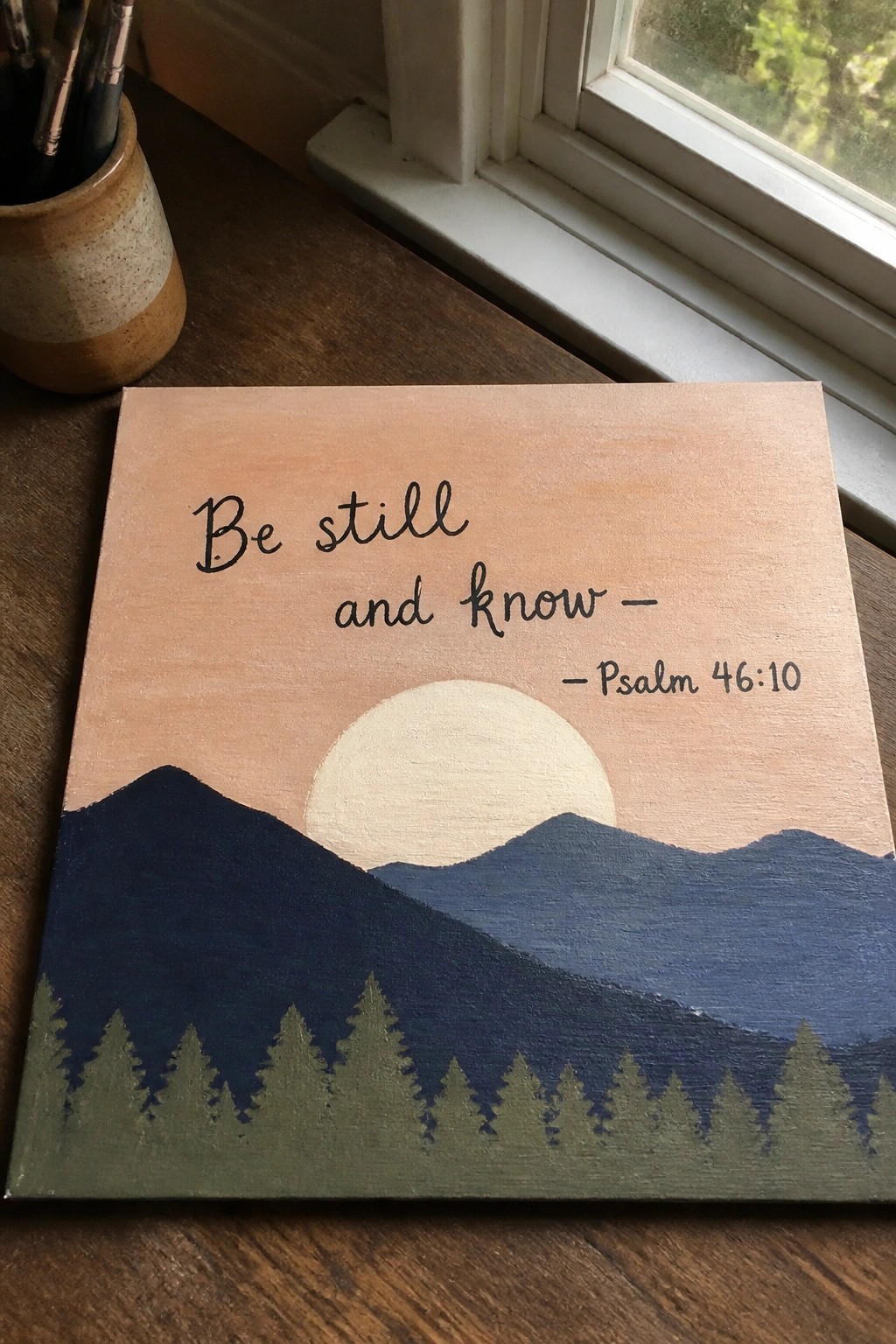
A painting idea that places a Bible verse in the upper half of the canvas above a landscape made of overlapping mountain shapes and a single row of trees. The large circular sun sits behind the mountains to create a simple focal point while the text balances the empty sky space. This approach falls into the decorative landscape category with integrated lettering.
The composition does a lot of the work here by letting the text occupy the open sky area so the mountains and trees only need to cover the lower third. The limited palette of peach, navy blue, and muted green keeps the color mixing straightforward and makes it easy to adapt the size for different wall spaces. You could swap in another short verse or stretch the mountain layers wider if you want to fit a longer canvas.
Mason Jar Bouquet with a Scripture Tag
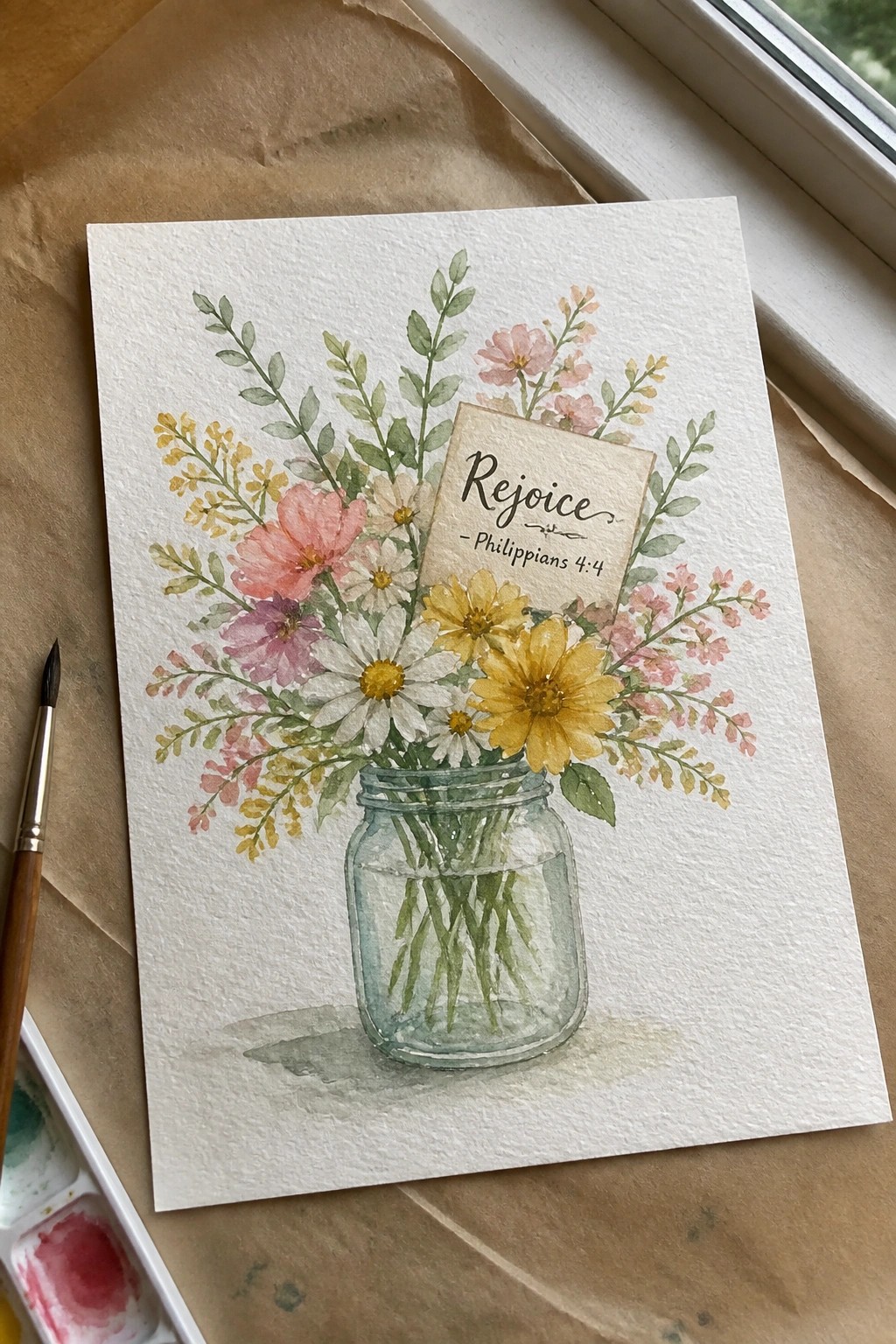
A floral still life that combines a mix of loose wildflowers in a clear glass jar with a small scripture card tucked into the blooms makes a straightforward painting idea. The varied flower heights and colors keep the arrangement from feeling too rigid, while the jar itself anchors everything at the bottom and gives the eye a place to rest. This still life style works because the card sits naturally among the stems without needing extra elements to balance the page.
What makes this idea useful is how the jar creates an automatic container that pulls the flowers together. You can swap the verse on the card or change the flower colors to fit a different season or another passage. The stems visible through the glass also give a simple way to practice layering without making the whole piece complicated. For gifts or small wall pieces, the format stays compact and easy to adapt with whatever flowers you have on hand.
Starry Night Boat with Psalm Text
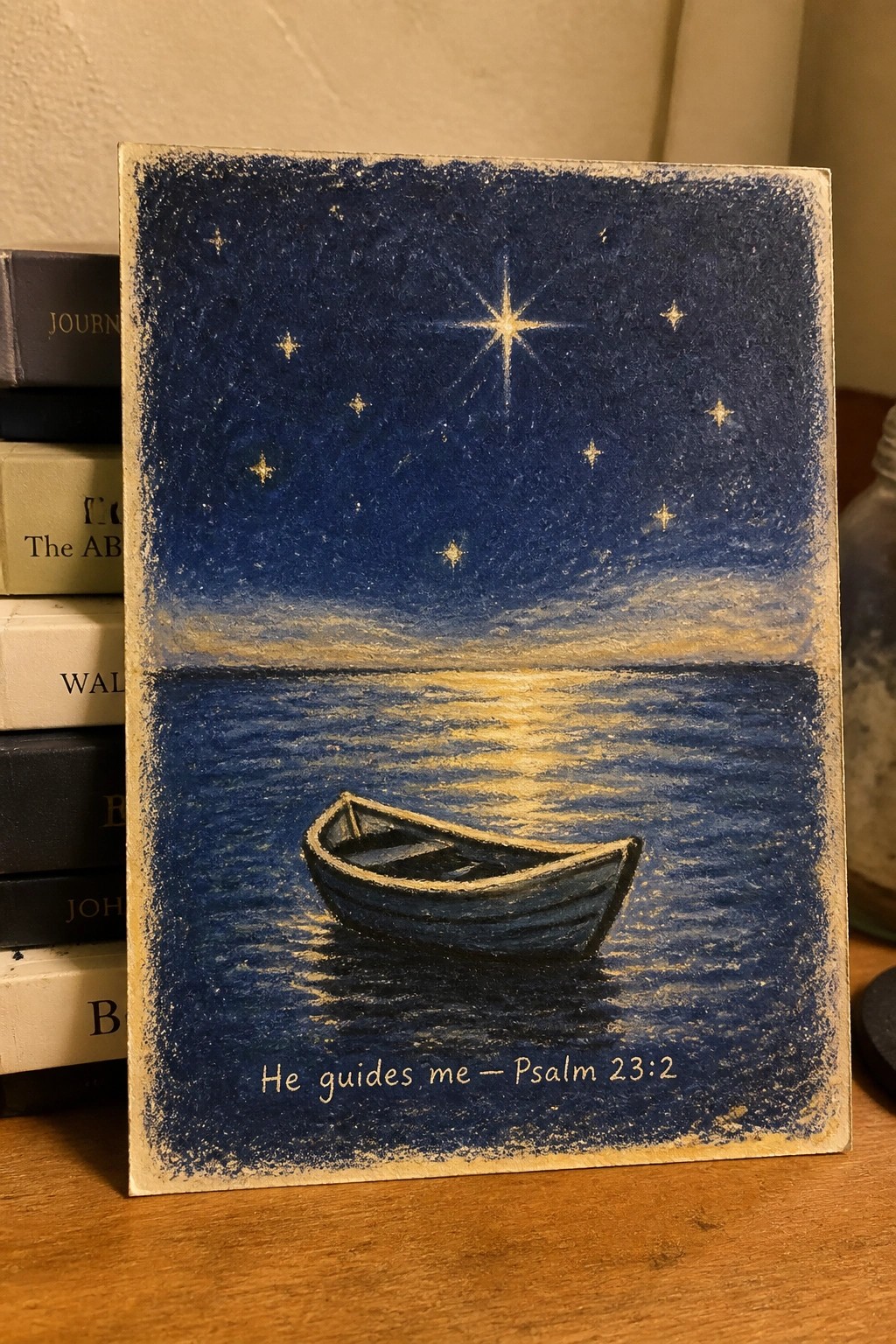
A lone boat floating on dark water under a night sky forms the core of this painting idea, with one large star casting a golden reflection across the surface. The composition splits the scene into a deep blue upper half filled with smaller stars and a lower water section where horizontal brushstrokes suggest gentle ripples. This landscape approach keeps the boat small and low in the frame so the bright reflection becomes the main focal point.
The simple boat shape and limited color range make it straightforward to paint on a small canvas or adapt into a greeting card. You can change the star color or move the reflection line to create different times of day without redrawing the whole scene. For wall pieces, the horizontal layout and centered subject leave room to add short text at the bottom while keeping the overall design balanced.
Tree with Scripture Banners on Branches
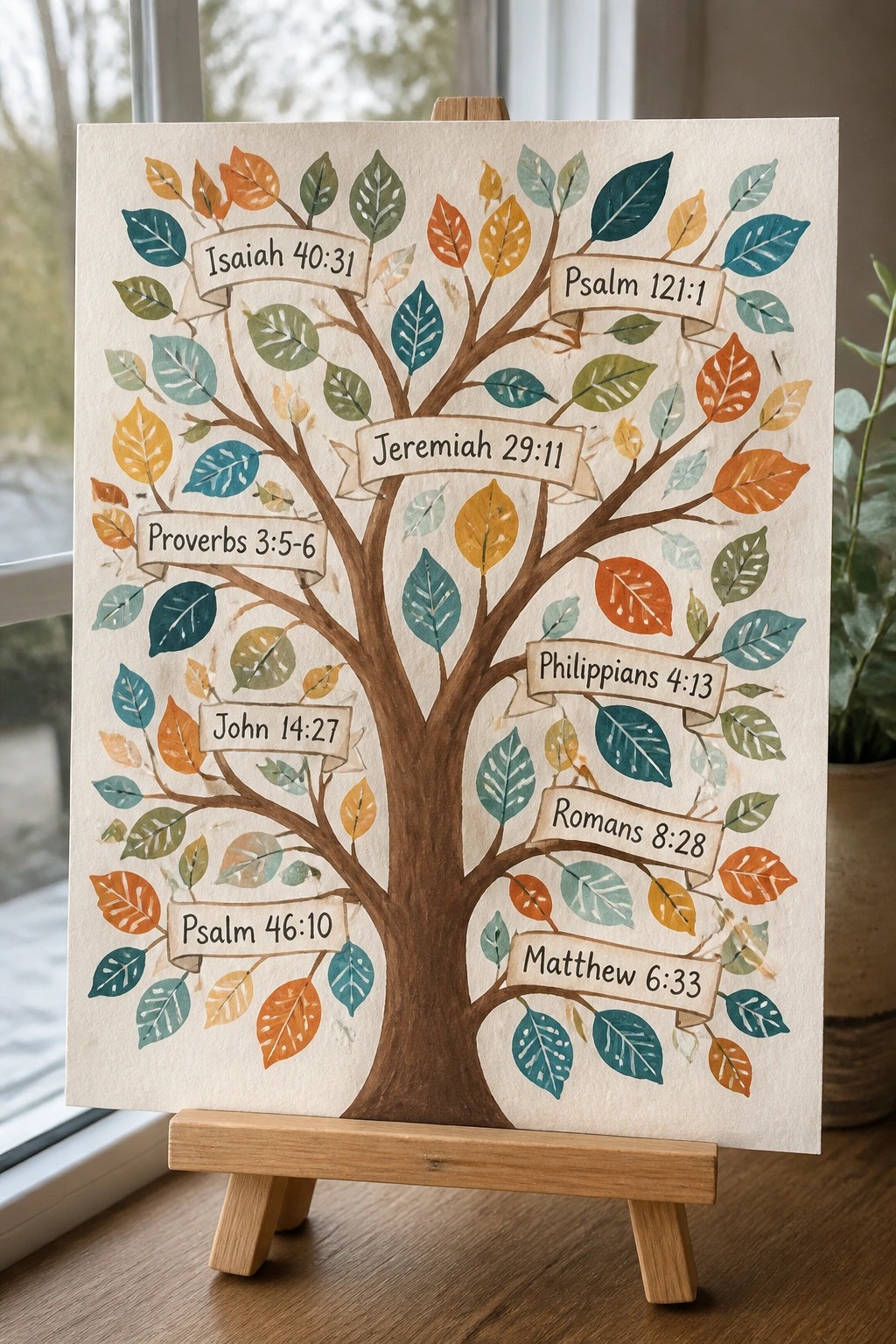
The idea uses a single tree as the main structure, with Bible verse references placed on banner shapes that sit along the branches at different heights. The branches spread evenly from a thick central trunk, and the leaves in mixed warm and cool tones fill the space without overlapping the text. This layout keeps the verses readable while the foliage adds color variation around them.
What makes this idea useful is how the branch arrangement already creates natural spots for the banners, so you do not have to design extra layout elements. You can swap verses easily or adjust the leaf colors to fit a room without changing the overall shape. The same tree can be painted smaller for a card or kept large for a wall piece, and the clear separation between trunk, branches, and banners makes it straightforward to plan before starting.
Sunflower with Give Thanks Scripture
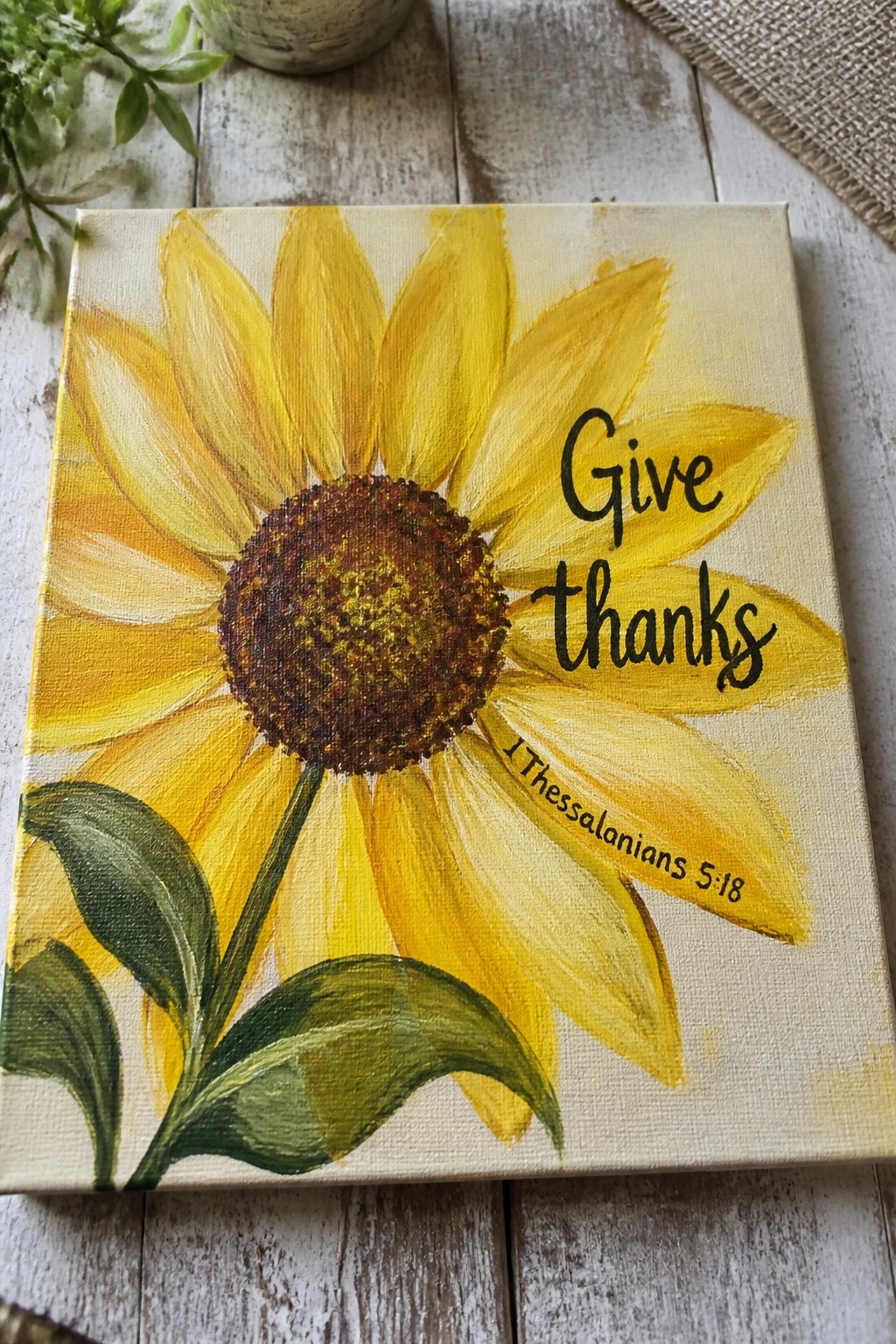
A sunflower painting paired with the words “Give thanks” and the reference 1 Thessalonians 5:18 creates a straightforward floral scripture piece. The idea centers on one large bloom filling most of the canvas, with the text positioned on the right side so it sits naturally among the petals. Yellow petals, a detailed brown and gold center, and a few green leaves at the bottom keep the design simple while the text adds the message without needing extra space or borders.
The composition does a lot of the work here by letting the flower shape guide where the lettering goes. You could swap the sunflower for another bloom or shift the text to the left side if that fits your layout better. This kind of piece works especially well for wall decor because the bright yellow stands out on a light background and needs no additional elements. For practice, try blocking in the petals first and adding the verse last so the lettering stays readable.
Birds on a Wire with Music Notes and Scripture
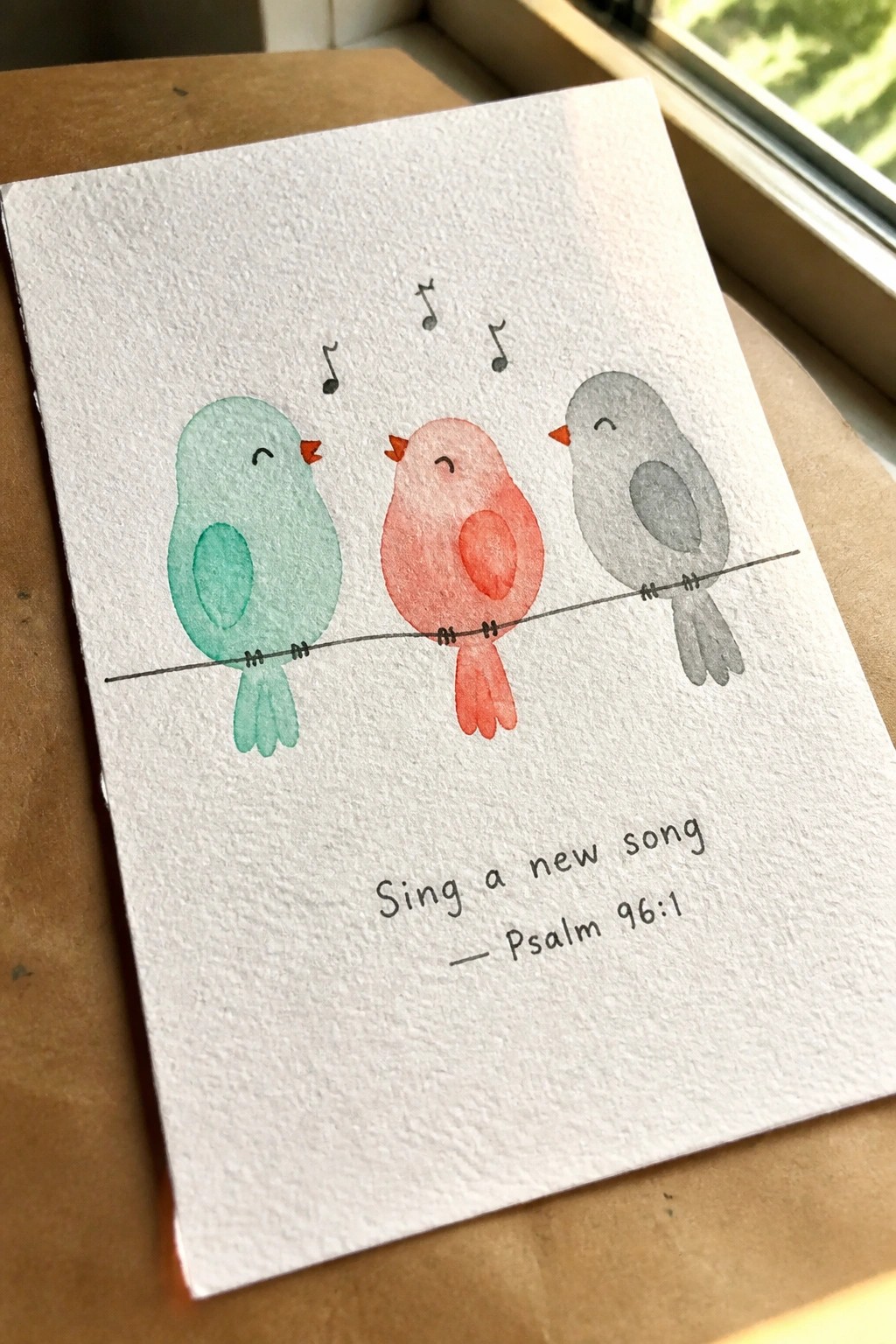
Three birds in soft teal, coral, and gray sit spaced along a single thin line that acts as their perch. Small music notes float above the center bird while the verse text sits centered below in a simple handwritten style. The idea combines a cute animal subject with scripture in a clean layout that keeps the horizontal line as the main organizing element.
What makes this idea useful is how the straight line and even spacing handle most of the composition work. The limited color palette and basic bird shapes make it straightforward to paint on small paper or scale up for a larger piece. You can swap the verse text or change the number of birds without losing the overall balance. This kind of layout works well for cards or framed wall art because the elements stay readable even at smaller sizes.
Lighthouse Landscape with Matthew 5:14
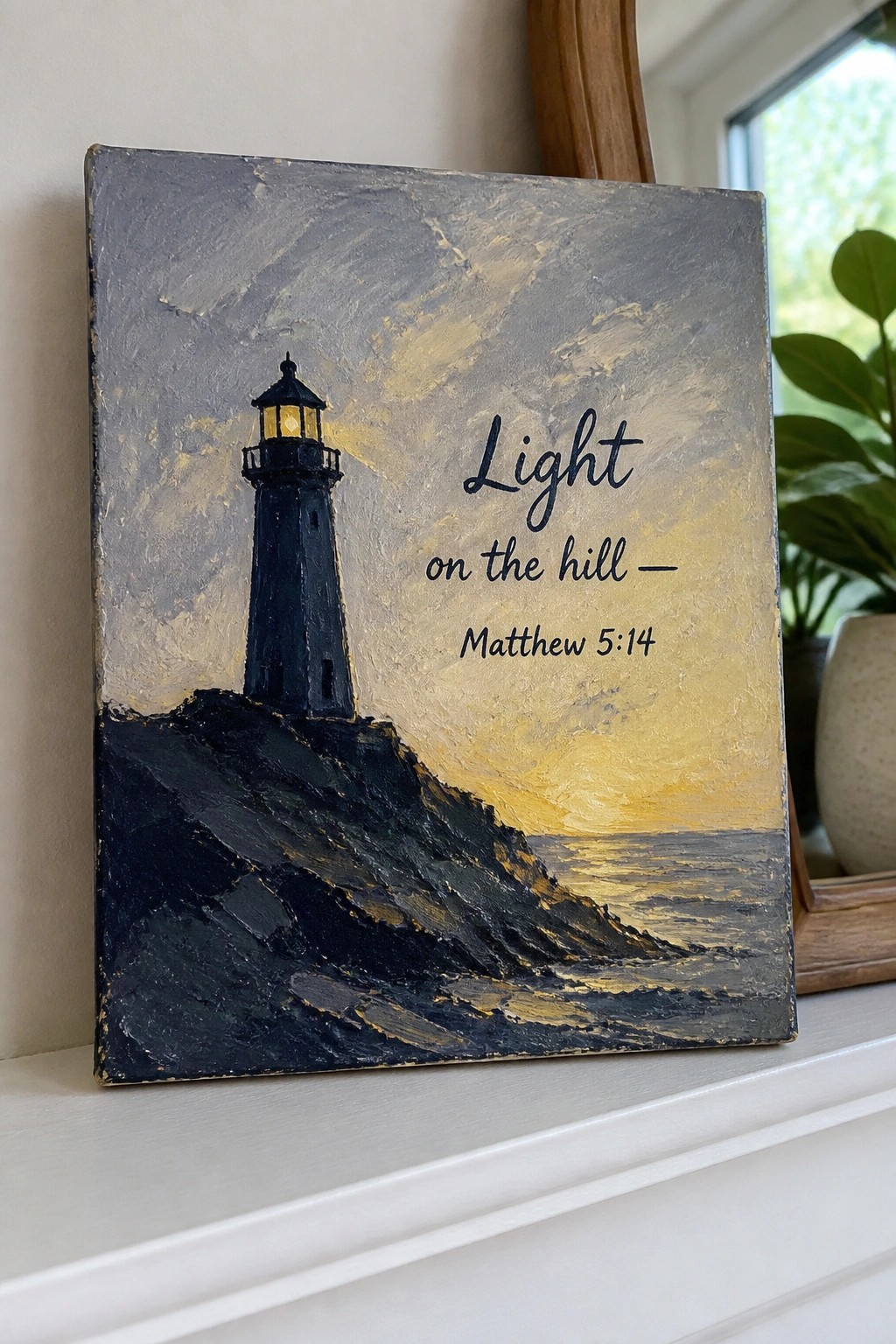
A lighthouse placed on a dark hill against a bright horizon gives a clear focal point while leaving room on the right for the verse text. The composition uses the strong vertical shape of the tower and the diagonal slope of the land to guide the eye, with the glowing sky area kept open so the words stay easy to read. This landscape approach works because the contrast between the dark foreground shapes and the lighter background keeps the whole piece balanced even when the text is added.
What makes this idea useful is the built-in space for lettering without crowding the main subject. The same layout can be adapted by changing the sky colors, swapping the lighthouse for another tall element, or adjusting the canvas size for different wall spots. For practice the simple large shapes make it straightforward to block in first, then refine the light area before adding the verse.
Butterflies Around a Central Bible Verse
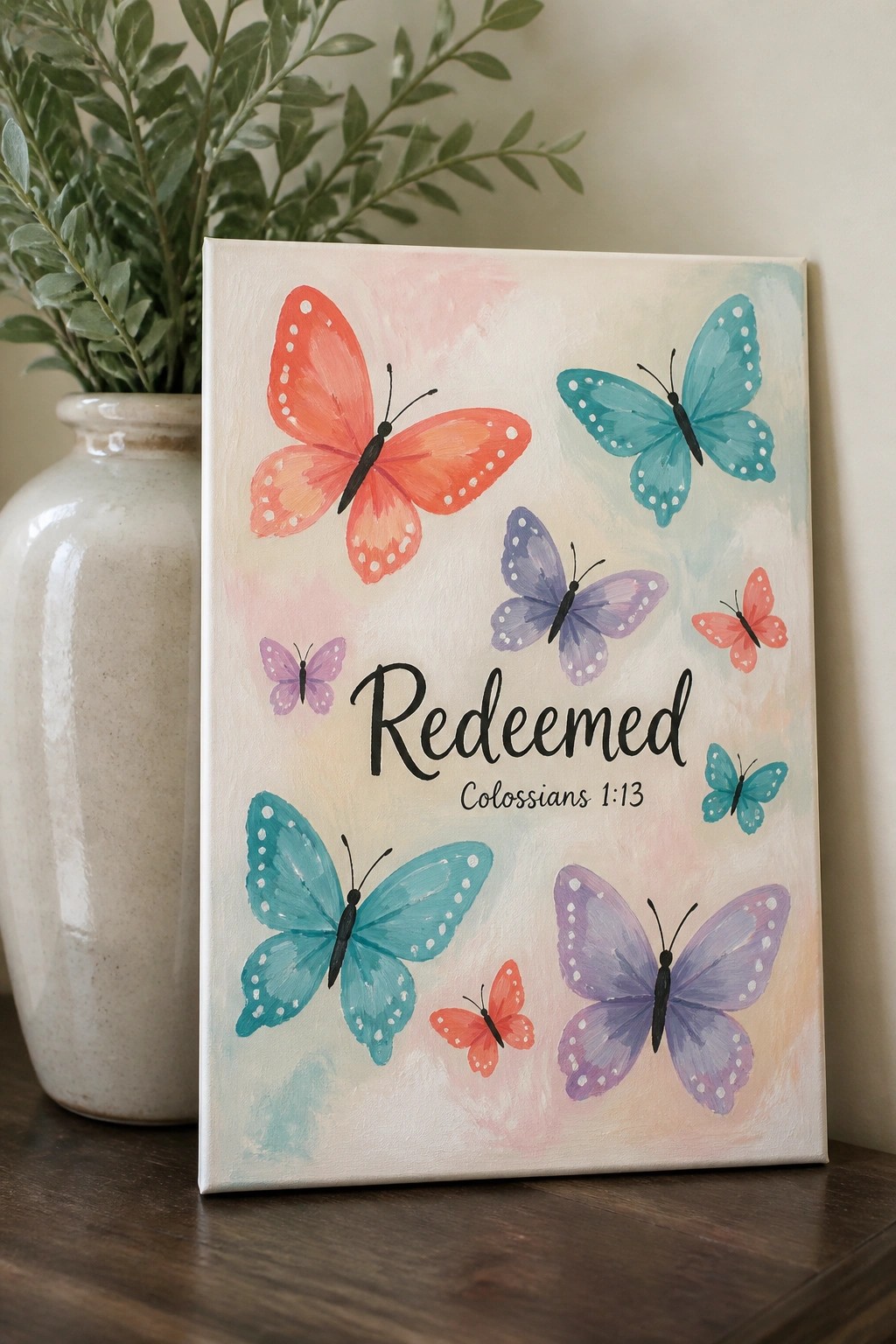
A butterfly canvas places several colorful butterflies of varying sizes around a central Bible verse to create an uplifting decorative piece. The idea relies on a soft pastel palette and scattered placement so the text remains the clear focal point while the wings add movement. This approach fits into inspirational quote art that combines simple animal shapes with scripture.
The composition does a lot of the work here by balancing empty space with the verse so nothing feels crowded. You could adapt the color palette to match a room or swap the verse for a different one without changing the layout. For practice, this kind of subject lets you repeat basic wing shapes at different scales while keeping the background light and simple. A painting like this works especially well for wall art or small gifts because the elements stay easy to adjust.
Mustard Seed Plant with Scripture
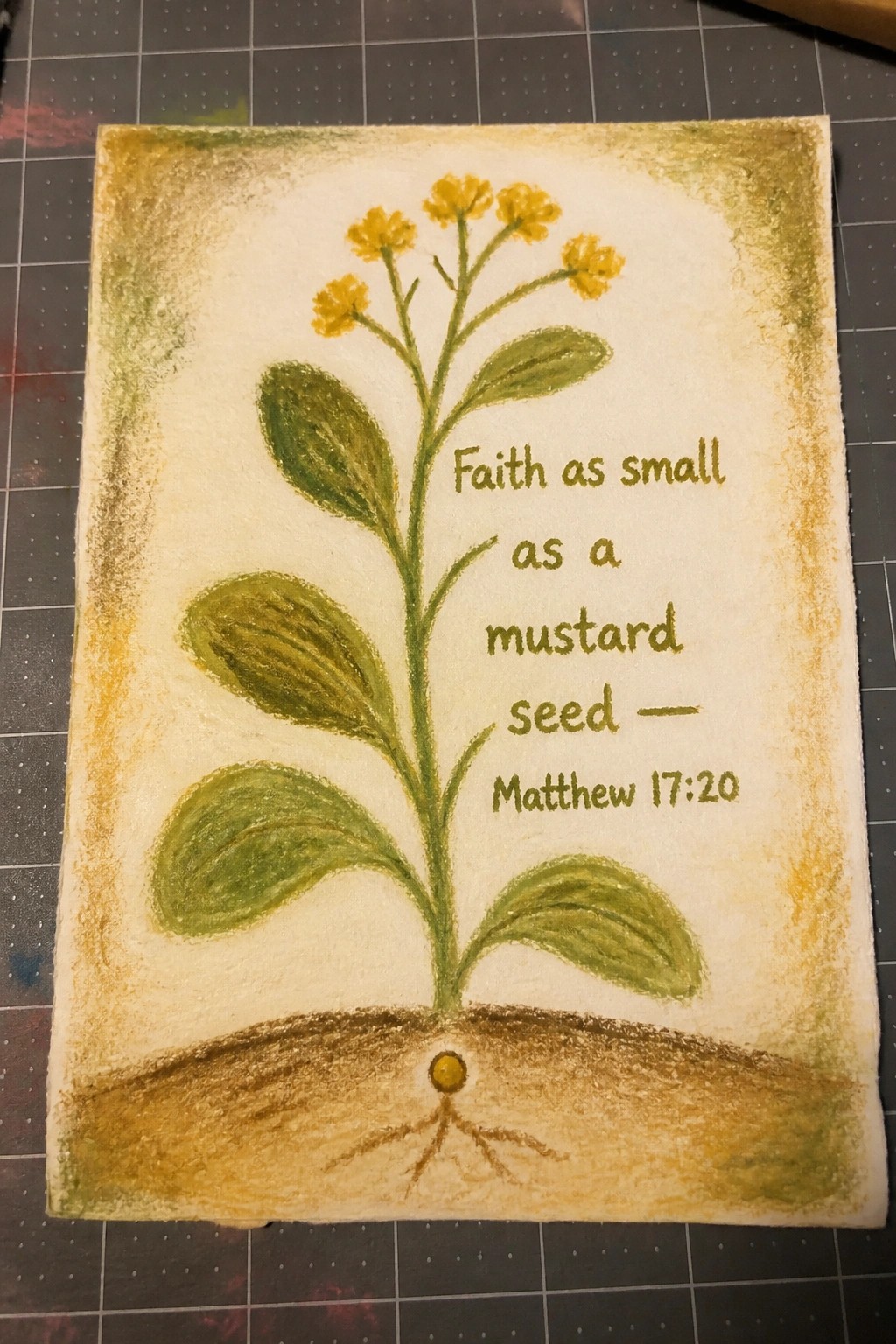
A botanical painting of a mustard plant shows the full growth cycle in one frame by placing the tiny seed and roots at the base while the stem rises through layered leaves to yellow flowers at the top. The idea works as a simple plant study that includes the verse text on the right side so the illustration stays balanced. Earthy brown soil at the bottom anchors the composition and keeps attention on the central stem and blooms.
The composition does a lot of the work here because the straight vertical stem makes it easy to copy even if your drawing skills are basic. This kind of painting idea works especially well for gifts since you can swap the verse or adjust the flower color without redrawing the whole plant. For practice, start with the seed and roots first, then build upward so the proportions stay consistent.
Sunrise River Landscape with Lamentations Verse

A landscape painting idea that pairs a low sun over a calm river with soft sky gradients and tree-lined banks works well when the verse text sits in the upper third of the composition. The water reflections and simple foreground grasses keep the focus on the horizon while the sky colors shift from warm orange to cooler blue. This approach fits the landscape category and uses the natural light source to anchor both the scene and the overlaid scripture.
What makes this idea useful is the clear horizon line that lets you place text without crowding the image. The color palette stays limited to a few washes so you can finish it in one or two sessions and still have enough contrast for the lettering to read clearly. You could shrink the tree details or swap the river for a field if you want a faster version, and the same layout translates easily to a greeting card or small canvas for a gift.
Cottage Scene with a Scripture Banner
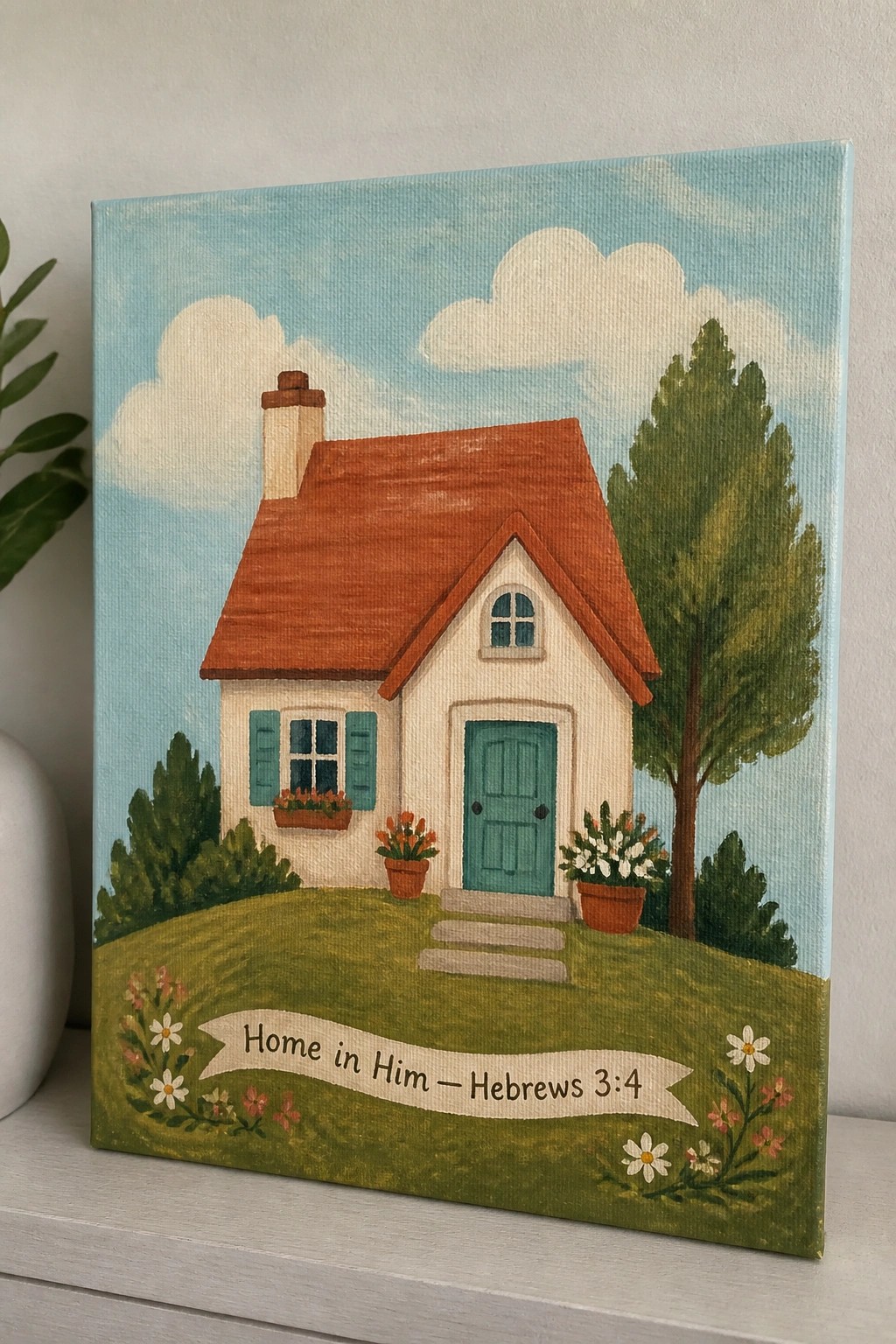
A house painting idea that centers on a simple cottage placed on a rolling hill, with a banner across the bottom holding a Bible verse. This fits into the decorative landscape category by using the building as the main shape and balancing it with trees on one side and flower clusters on the other. The flat color areas for the roof, door, and shutters make the structure easy to read from a distance while the sky and grass fill the remaining space without crowding the text.
What makes this idea useful is how the banner can be resized or moved lower to suit different canvas heights. The house shape itself can be redrawn with fewer windows or a different roof angle if you want to personalize it. For wall art, this layout works well because the verse stays readable even when the painting hangs at a distance. The same setup can be simplified by dropping the side trees and keeping just the hill and sky if you prefer a quicker version.
Frequently Asked Questions
How do I choose a Bible verse that feels personally uplifting for a painting project?
Start by reflecting on verses that have encouraged you during challenging times or that align with your current season of life. Popular choices include Philippians 4:13 for strength or Jeremiah 29:11 for hope. Read the full chapter around the verse to ensure it matches the positive message you want to capture in your artwork.
What supplies work best for creating these Bible verse paintings at home?
Acrylic paints on canvas offer vibrant colors and easy cleanup for beginners. Pair them with stencils for lettering if your handwriting is not steady, or use watercolor paper for softer effects. Add gold or metallic accents to highlight the verse text and create a sense of light and encouragement in the final piece.
How can I make sure the painting design stays focused on an uplifting message?
Keep the verse as the central element and surround it with simple symbols like open hands, rays of light, or blooming flowers that represent growth and joy. Avoid overcrowding the canvas so the words remain easy to read and the overall feeling stays hopeful rather than busy.
Where are good places to display these paintings once they are finished?
Hang them in areas where you spend quiet time such as above a desk, in a hallway, or near a reading chair. Many people place them in bedrooms or kitchens so the encouraging words greet them each morning and reinforce a positive mindset throughout the day.
Can these painting ideas be adapted if I have limited artistic experience?
Yes. Begin with printable templates of the verse and simple background washes of color. You can also use pre-stretched canvas boards and focus on one small detail like a border or subtle texture rather than complex scenes. Practice lettering on scrap paper first to build confidence before committing to the final canvas.