I have always liked painting angels on pottery pieces for my shelves and tables.
Figurative designs keep the look simple while still giving each piece some character.
Over time I put together a list of ideas that seem to work on different shapes and sizes.
These suggestions focus on basic angel forms that do not require advanced skills.
A few of them use soft lines and light shading to make the figures stand out without extra fuss.
Angel Figure with Flower Wreath on a Pot

A centered angel in a simple dress works well as a focal point on pottery when the wings and halo stay modest in size. The design pairs the main figure with a repeating border along the rim and a few small flowers on the sides to fill space without crowding the surface. This approach falls into decorative figurative painting where the character stays readable from a distance and the limited color range keeps the whole piece cohesive.
What makes this idea useful is how the centered layout transfers easily to other pot shapes or sizes with only minor scaling. You can drop the halo or shorten the wing details to finish faster on practice pieces, and the soft pink and green palette adapts without clashing against most home colors. The same structure also works if you want to swap in a different character while keeping the border and side accents intact.
Angel Holding a Star on a Round Plaque

A profile view of an angel holding a single star works well as a decorative piece on circular pottery. The light background keeps attention on the figure while the dotted wing pattern adds texture through simple repetition rather than fine detail. Soft blue for the robe and gold for the halo and star create a limited palette that stays easy to mix and apply.
The composition does a lot of the work here by placing the main elements along a gentle curve that fits the round shape without crowding. You can swap the blue robe for other colors or change the wing dots to match different seasons or gift themes. This idea translates easily to smaller ornaments or larger wall plaques since the side view and minimal background require little adjustment.
Three Angels in Simple Robes Circling a Ceramic Holder

Painting three standing angels around a cylindrical pottery piece creates a balanced band that works on any round form. Each angel uses a basic robe shape with a star accent, wings, and a halo, rendered in separate color blocks so the figures read clearly from a distance. The even spacing and limited details prevent the design from feeling crowded on the curved surface.
The composition does a lot of the work here because the round format already connects the figures into one continuous pattern. You could repeat the same three-figure layout on a mug, vase, or tile without changing the proportions much. The flat color areas and basic outlines also make it easy to adjust the palette or swap in different star and wing shapes if you want a quicker version for practice pieces.
Angel Face with Halo on a Ceramic Bowl

Painting a centered angel portrait onto a bowl or plate gives you a compact figurative design that fits neatly inside round pottery. The face takes up most of the space, with a thin gold halo floating above and small blue wings on either side, keeping the layout balanced without extra background elements. This approach works well for decorative tableware because the subject stays self-contained and readable even on smaller surfaces.
What makes this idea useful is how the round format already frames the portrait, so you can focus on placement rather than building a full scene. The soft washes and limited color range make it straightforward to adapt to plates, mugs, or tiles in different sizes. You could drop the wings for a quicker version or change the halo color to match other pieces in a set. For wall display, the same face painted on a flat tile would read just as clearly.
Guardian Angel Holding a House on a Plaque

This painting idea uses a central angel figure to frame a small house held in both hands, creating a clear home protection motif. Large wings on either side and a simple halo above keep the house as the focal point while floral clusters fill the borders without crowding the center. The limited palette of earthy oranges, greens, and off-white makes the shapes read clearly even from a distance.
The composition does a lot of the work here by letting the wings and hands create built-in framing around the house. You could adapt the same layout to a rectangular tile or smaller round plate by shortening the wings and using fewer flower clusters. For wall art, the idea works especially well because the oval shape and rope hanger already suggest a finished piece that needs no extra frame.
Angel Figure Holding a Heart on a Mug
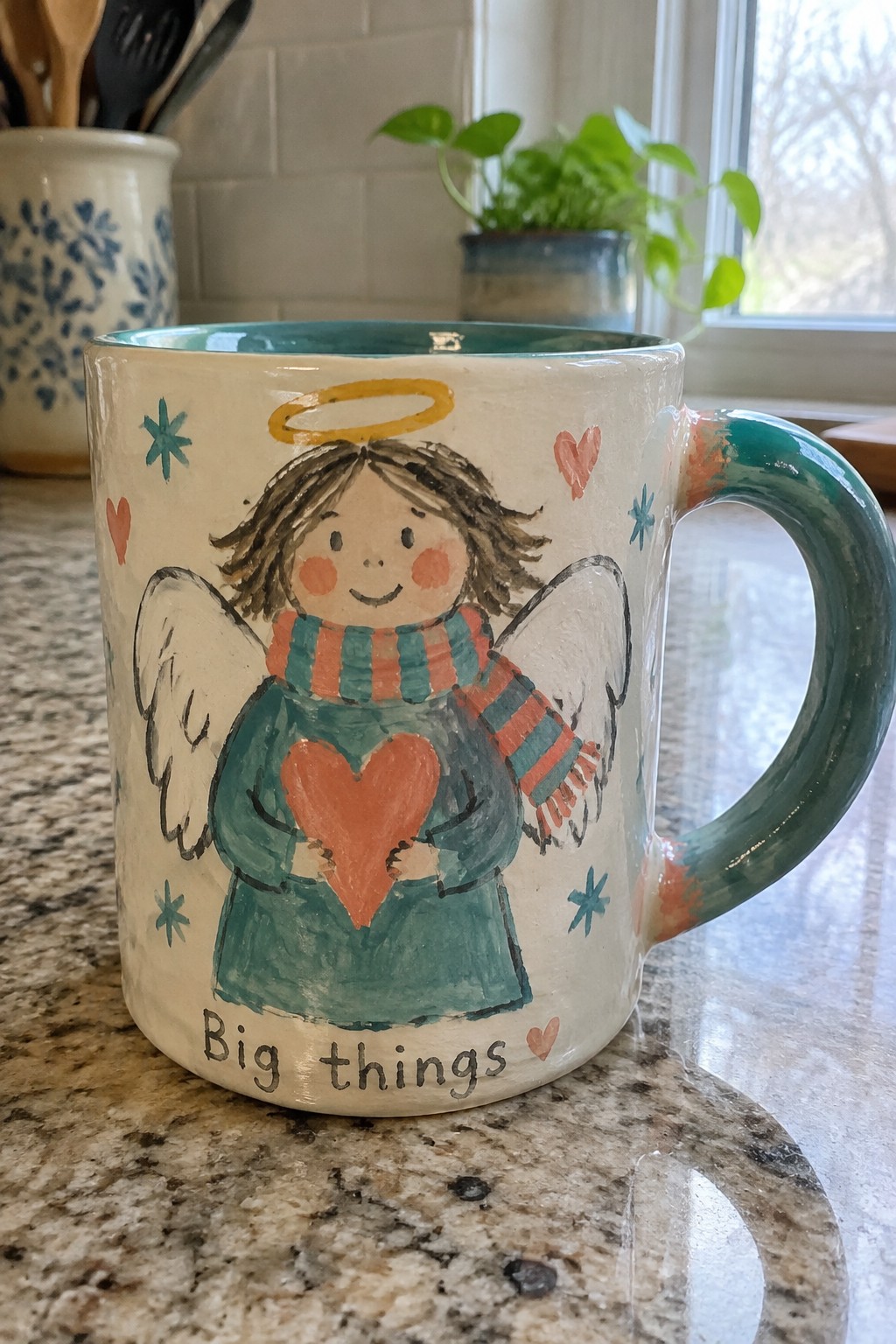
A simple angel figure works well as a central motif for pottery painting, shown here as a child-like angel in a teal dress and striped scarf, clutching a large red heart. Small hearts and stars scattered around the edges create balance without overwhelming the main shape, while the yellow halo and white wings add clear focal points. This approach fits the cute decorative art category and suits everyday items like mugs or bowls.
The composition does a lot of the work here by keeping the angel centered and using the heart as a strong visual anchor. You can adapt the scarf and wing details to match whatever colors you already have on hand, or simplify the face and hair if you want a faster version for multiple pieces. This kind of design stands out on Pinterest because it combines a recognizable figure with a short text element at the bottom, making it easy to personalize for gifts or kitchen decor.
Row of Angels with Patterned Wings on Terracotta

Painting a band of standing angels around a terracotta pot gives the surface a clear repeating structure that fits the cylindrical shape. Each figure wears a different colored dress while the wings stay consistent with dot and small flower fills, and the halos sit at the same height to tie the row together. Top and bottom borders of dots and leaves frame the figures and keep the design from feeling scattered on the curved clay.
The composition does a lot of the work here because the repeating figures naturally suit a pot that you can turn in your hands while painting. You could swap the dress colors to match existing dishes or simplify the wing patterns to just dots if you want to finish faster. This idea works well for beginners who want to practice figures without worrying about perfect symmetry, since the borders and halos help hide small differences in spacing.
Stylized Angel Bust on a Ceramic Tile

A figurative angel design painted on pottery uses large, simplified shapes and flat color areas to keep the focus on the wings and face. The teal wings with gold outlines create strong visual contrast against the red dress and cream background, while the yellow hair and minimal facial features keep the composition balanced and easy to read from a distance. This kind of decorative art works well on flat tiles because the bold blocks of color stay clean even after firing.
What makes this idea useful is how the wing shapes do most of the work, letting the rest of the design stay simple. The color palette of teal, gold, red, and cream can be swapped for other combinations without changing the layout. This approach works especially well for coasters, small wall pieces, or a series where each tile gets a different dress or wing color.
Angel Ornament Covered in Scattered Wildflowers

A painted angel ornament works well when the dress is treated as a surface for small repeating flowers instead of one large design. The blue base with white and pink blooms keeps the pattern light while the soft edges on the wings and face prevent the details from feeling crowded. This approach fits the decorative art category and lets the floral work carry the visual interest on a small three-dimensional piece.
The compact shape makes this easy to paint on any angel blank without needing a lot of space or time. You can change the flower colors to use whatever paints you have and still keep the same scattered layout. For ornaments or gifts, the praying hands give a clear center point so the pattern can wrap around the sides without competing for attention.
Reclining Angel with Bird on a Ceramic Jar

A reclining angel figure works well as a pottery design when the rounded lid shape guides the pose, with the body stretched across the surface and the wing following the curve. The small bird held in one hand adds a clear focal point without needing extra elements, while the halo and soft green base keep the layout balanced. Flowers scattered along the lower edge act as a light border that frames the figure without competing for attention.
What makes this idea useful is how the single-figure layout translates easily to different jar sizes or even plates. You can simplify the wing or reduce the number of flowers if the surface feels too small, and the muted green and pink tones adapt quickly to whatever underglaze or paint you already have on hand. The bird gives you a quick way to add interest without extra layers, making the design practical for testing new color mixes or trying out figurative work on curved forms.
Paired Angels with Central Floral Accent
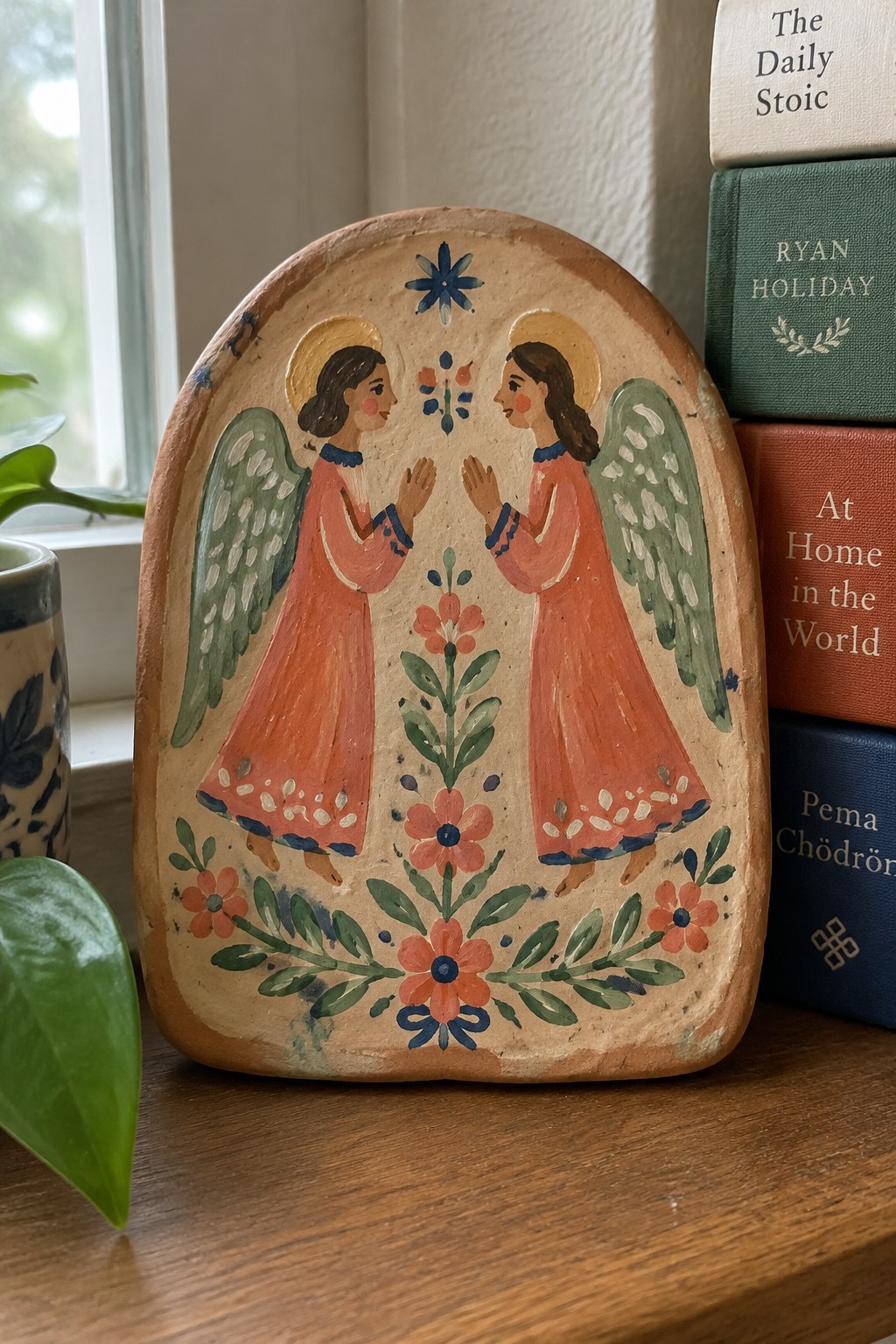
This painting idea uses two identical angel figures placed face to face on a rounded surface, each with a halo, wings, and a long robe. Their hands are raised in matching positions, creating a clear vertical line of symmetry down the middle. A column of flowers sits between them while a second floral band curves along the bottom, turning the empty space into a balanced frame rather than plain background.
The composition does a lot of the work here because the mirrored layout and central axis make placement decisions simple. You could paint the same pair on a smaller oval tile or stretch it across a wider platter by adding more flowers to the bottom border. The flat color areas and limited shading keep the focus on shape and repetition, so the design stays readable even when scaled down for ornaments or gift tags. This kind of paired figure works well for wall pieces because the symmetry holds attention without extra detail.
Navy Angel with Gold Stars on a Divided Plate

A central dark blue angel with a gold halo makes a strong focal point when placed in the middle of a round ceramic piece that has four empty wells around the edges. The idea uses a scattered arrangement of navy and gold stars of different sizes to fill the remaining space without overlapping the wells or the figure. This approach works as decorative art because the high-contrast colors and simple star shapes keep the overall design balanced and easy to read from a distance.
What makes this idea useful is how the four wells naturally guide the placement of the stars so the composition stays organized even on a busy surface. You could adapt the same angel and star layout to a standard dinner plate or a flat tile by shrinking the stars near the edges. The limited palette of navy, gold, and the base clay color also makes it straightforward to try on other pottery shapes without needing extra supplies.
Mother and Child with Winged Accents on a Vase
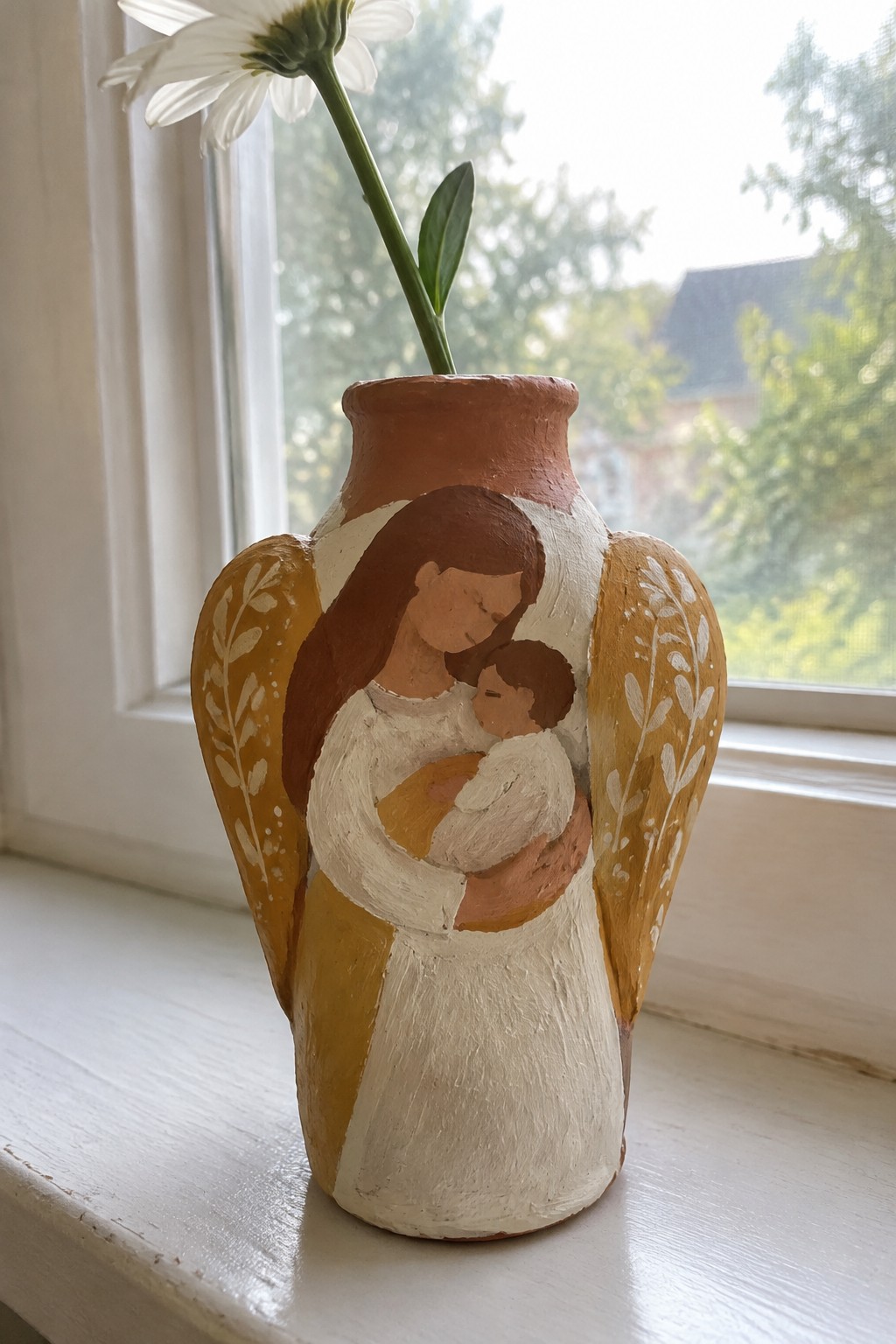
A mother cradling a child serves as the main subject on this vase, rendered through simple color blocks and curved outlines that follow the vessel’s shape. Large wing forms extend from both sides of the figures and carry repeating leaf patterns, creating a balanced decorative layout that uses the pottery’s natural contours as part of the design. The warm palette of ochre, white, and terracotta keeps the focus on the central figures while the wing shapes add width without extra detail.
The composition does a lot of the work here by turning the wings into built-in framing that fills space and guides the eye. You could adapt the same layout to a smaller jar or a flat plaque by keeping the figures as solid shapes and repeating the leaf motif in the same positions. This idea works especially well for gifts because the subject stays readable from across a room and the symmetrical wings make it simple to center on any rounded surface.
Chef Angel on a Spoon Rest
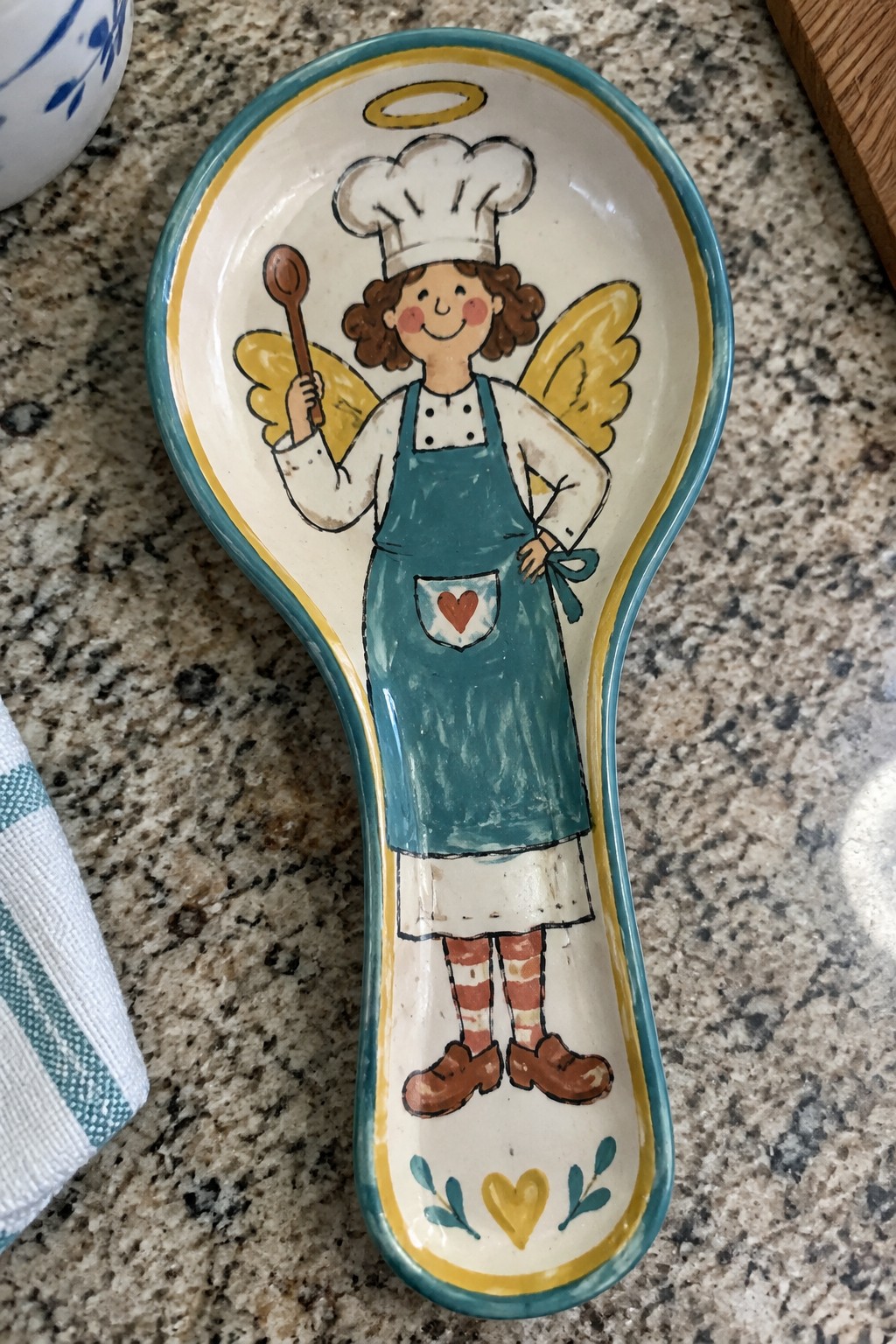
A chef angel works as a straightforward figurative idea by pairing wings with a full apron, tall hat, and a spoon in hand. The figure stands upright on a spoon-shaped piece of pottery, using the narrow handle area for legs and shoes while the wider bowl holds the torso and head. Teal and yellow blocks create clear separation between clothing and wings, keeping the design readable even on a curved surface.
The composition does a lot of the work here because the spoon shape already suggests the right proportions for a standing character. You can move the same outfit and spoon prop to a plate or tile by shortening the legs or dropping the halo if the space feels tight. This kind of kitchen angel holds up well for beginner pottery projects since the main shapes stay bold and the details like the heart pocket or striped socks can be added or left out depending on time.
Angel on a Blue Bell with Scattered Stars

An angel figure painted in the center of a bell shape creates a compact decorative pottery idea that fits well on rounded surfaces. The design places the figure with folded wings and hands together, then fills the remaining space with small stars instead of extra detail. A blue and white palette with a few gold accents keeps the whole piece balanced and easy to read from a distance.
The bell form already gives the composition a natural border, so the layout stays simple to transfer onto other pottery shapes like mugs or small vases. Scaling the angel down and repeating the star pattern would work on flatter pieces without losing the original feel. This approach stands out on Pinterest because the subject is recognizable even in thumbnail size and pairs easily with other neutral or metallic accents.
Angel with Patterned Wings and Border Flowers

This idea uses a central seated angel figure on a round pottery surface, with wings that carry repeating leaf and flower shapes in the same palette as the blooms placed around the edge. The wings act as a bridge between the figure and the border details, so the design feels connected rather than scattered. It fits the decorative pottery category where a single figurative subject gets support from simple repeating motifs.
The composition does a lot of the work here because the angel sits low enough to leave clear space for the outer flowers without crowding. You could scale the same layout down to a smaller plate or tile by reducing the number of border flowers while keeping the wing patterns. The warm red-orange figure against the cooler blue and green accents also makes it simple to swap colors for different seasons or room styles. For practice, this subject gives you a chance to handle both a basic figure and pattern work in one piece.
Angel Design on a Garden Stake with Stars and Flowers

A simple angel figure works well as the main subject on a tapered wooden stake, placed against a solid blue background scattered with yellow stars and a small halo. The lower half shifts into green stems and yellow flowers that rise from the pointed brown base, creating a clear division between sky and garden elements. This mix of a cute figurative angel with basic floral details fits decorative garden art and keeps the vertical shape easy to read from a distance.
What makes this idea useful is the built-in format that turns a plain stake into a finished piece without needing extra framing. The bright blue and yellow palette adapts quickly if you want to change the flower colors or swap stars for different shapes. You could shorten the angel’s dress or reduce the number of flowers to fit a smaller stake, and the same layout works for other themes like birds or butterflies. For Pinterest, a functional item with this kind of clear subject stands out because it shows both the painting and a practical use.
Angel Bust with Golden Halo and Floral Border

A central angel figure painted on a square ceramic surface uses a soft blue robe, white wings, and a prominent gold halo to create a clear focal point. The design fits the decorative art category by pairing a figurative portrait with a repeating border of blue flowers and green vines that frames the entire piece. This layout works well on pottery because the border contains the main image while the limited color palette keeps the focus on the face and halo.
The composition does a lot of the work here by balancing the angel in the center and letting the border handle the edges. You could adapt the idea by changing the robe color to match other pieces in a set or simplifying the wings for quicker versions on smaller tiles. For wall art or gift boxes, the gold halo adds enough interest without requiring complex shading. This style stands out on Pinterest because the clean framing makes it easy to photograph and replicate.
Profile Angel Blowing Hearts on a Pitcher

This painting idea uses a side-view angel in a simple dress as the main subject, with the figure blowing a line of small hearts from her hands. The design falls into the cute figurative category, where the angel takes up the center of the surface while smaller hearts and flowers fill the remaining space without crowding it. The composition works because the profile pose lines up naturally with the pitcher’s curve and the scattered elements keep the eye moving around the form.
What makes this idea useful is how the profile angle removes the need for a full face, so it stays approachable even on rounded pottery. You can scale it down for mugs or plates by keeping just the angel and a few hearts, or swap the pink dress color to match different seasons. The light background treatment also makes it easy to test on other surfaces like tiles or small canvases if you want to try the same layout elsewhere.
Sleeping Angel Framed by a Holly Wreath

A curled sleeping angel with folded wings sits at the center of a round pottery piece, enclosed by a loose circle of holly leaves and scattered red berries. The word Joy sits at the bottom in a simple script. This approach works well as a seasonal decorative painting because the wreath naturally follows the curve of the surface and keeps the figure contained without extra border work.
What makes this idea useful is that the wreath layout handles most of the outer design, letting you spend time on the angel shape and wings. The berry clusters can be added or reduced depending on how much detail you want, and the same layout adapts easily to different round items like plates or larger ornaments. The soft color mix of greens against the warm base keeps the whole piece readable even when painted at a smaller scale.
Angels in Simple Scenes on Rectangular Pottery Tiles

Painting angels on pottery tiles works well when you keep the figures small and centered against a dotted background. The idea here uses three separate tiles to show different moments, like an angel holding a heart, one singing from a book, and one helping a child. Soft blues and pinks with scattered dots tie the set together without needing complex shading.
The composition does a lot of the work here because the dots and halos add interest without extra detail. This approach suits anyone wanting to make matching wall pieces or gifts since each tile can stand alone or hang as a trio. You could easily change the clothing colors or background dots to fit a different room palette while keeping the same figure layouts.
Frequently Asked Questions
What are the best materials for painting figurative angel designs on pottery? Acrylic paints made specifically for ceramics or glass work well because they bond strongly to the surface and allow for fine details like wings and robes. Use fine tipped brushes for outlines and blending tools such as sponges for soft shading on faces and clothing. Always test colors on a scrap piece first to ensure they fire or seal properly.
How can beginners achieve professional results with these angel pottery ideas? Start with simple base sketches using a pencil on the pottery to map out proportions before adding paint. Practice layering thin coats rather than thick ones to avoid cracking, and focus on one section at a time such as the angel’s halo or hands. Many of the ideas include step by step breakdowns that build from basic shapes to full figurative elements, making them accessible even for new painters.
How do I protect the finished angel designs from fading or chipping? Apply a clear ceramic sealer or varnish after the paint dries completely, following the product instructions for curing time. For pieces that will be handled often, choose a food safe glaze if the pottery allows baking in a kiln. Avoid direct sunlight exposure during drying to keep colors vibrant longer.
Can these ideas be adapted for different pottery shapes like vases or plates? Yes, adjust the scale of the angel figures to fit the curve or flat area by using transfer paper for guidelines. On rounded surfaces, work in sections and rotate the piece as needed to maintain even lines in the figurative details. The core designs remain flexible across forms when you simplify wings or add background elements to balance the composition.
Where can I find additional inspiration to expand beyond the 21 listed ideas? Look to classical art references for angel poses and combine them with modern color palettes like soft pastels or metallic accents. Online craft communities often share variations on figurative themes, and experimenting with mixed media such as adding texture paste for raised details can create unique twists while staying true to the original concepts.