I have been trying out watercolor paintings based on Bible stories lately.
It gives me a chance to slow down and focus on the details in each one.
Some of the ideas I came up with turned out better than I expected.
I thought it might be helpful to put together a list of them here.
These are meant to be simple and approachable for anyone who enjoys painting.
Creation Story Panels in a Grid Layout
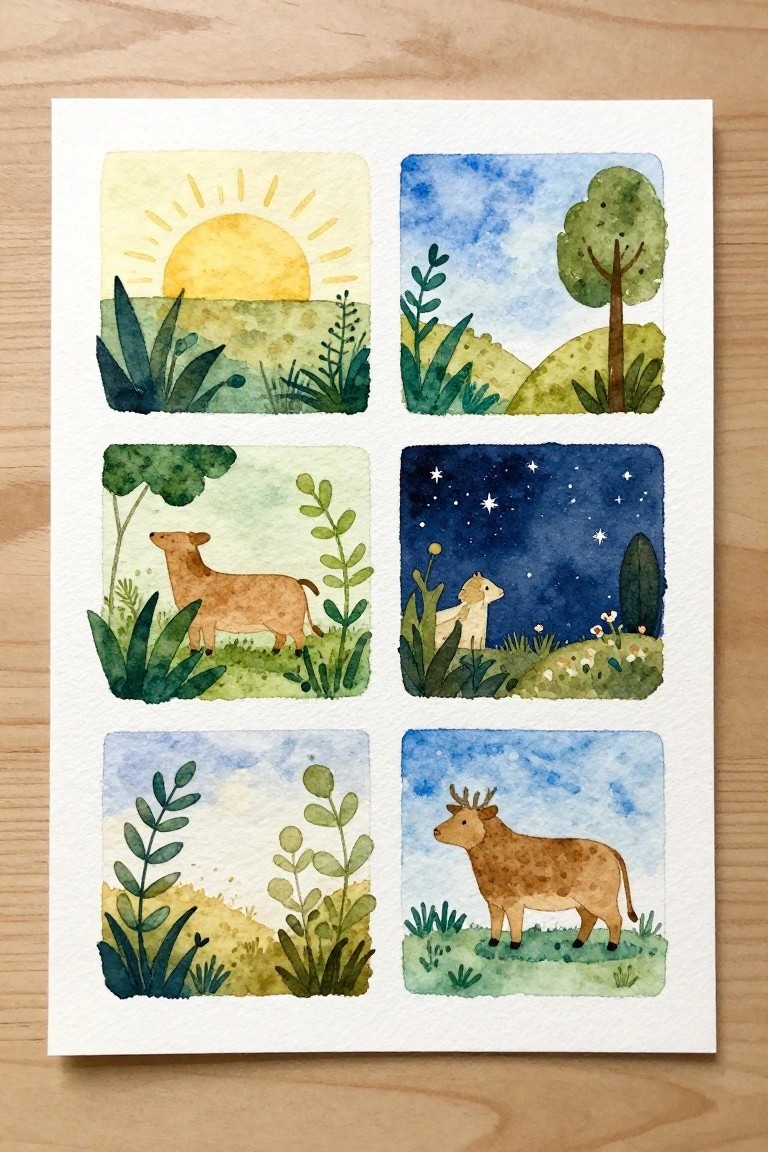
A set of six small square paintings can show separate parts of the creation account by focusing on the sun, plants, daytime hills, grazing animals, and a starry night. The layout keeps each panel simple with soft washes and basic shapes so the series reads as one connected idea rather than six separate pieces. This approach fits the landscape and animal category and works because the consistent square format and limited color range hold the group together visually.
What makes this idea useful is that the grid lets you practice several subjects at once without needing a big sheet of paper. You can swap the cows for other animals mentioned in Genesis or adjust the sky colors to match different days of creation. The small size also makes the set easy to scan for a blog post or turn into a set of cards. For wall art, something like this stands out on Pinterest because the repeated format looks neat and tells a clear story without extra text.
Noah’s Ark Animals in a Boat Under a Rainbow
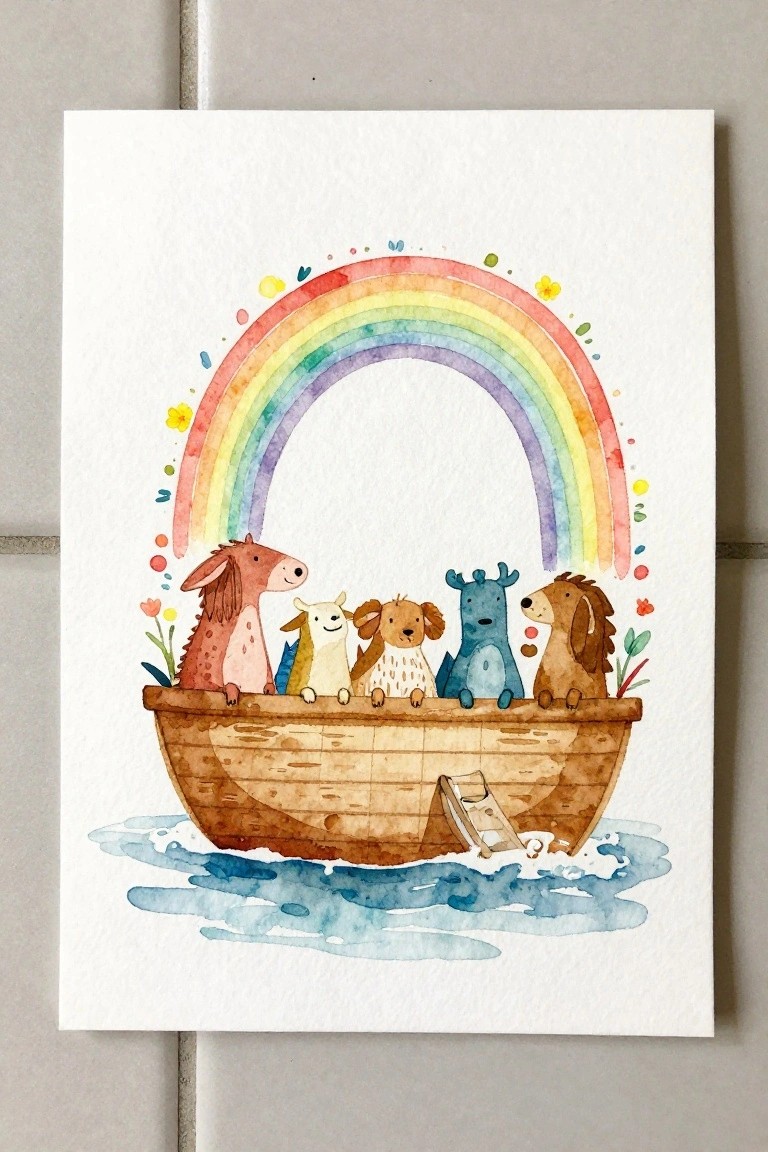
A Noah’s Ark painting idea centers on a group of animals arranged inside a simple wooden boat that sits on water. The rainbow overhead acts as a curved frame that pulls the eye downward to the boat while the scattered dots and small flowers add light color accents around the edges. This fits the animal category with straightforward shapes and a centered layout that keeps the boat as the main focal point.
What makes this idea useful is the way the boat and rainbow create clear boundaries that make the scene easy to sketch without needing complex backgrounds. The color palette can be swapped out by changing the rainbow order or water shade to match other pieces in a set. For practice, this kind of subject works especially well because the animals can be reduced to three or four if you want a faster version. A painting like this would stand out on Pinterest for faith-based nursery decor or simple Bible story collections.
David and Goliath Size Contrast Scene
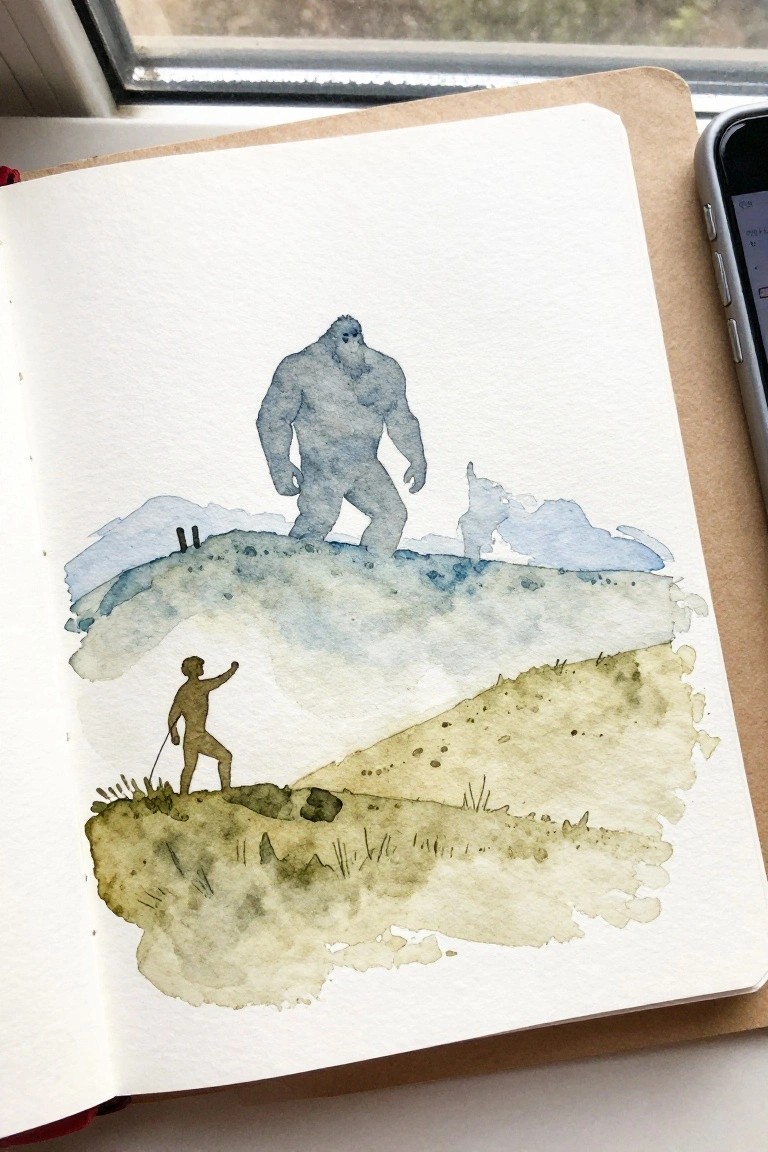
A useful approach for the David and Goliath story is to show the two figures at very different scales on a simple hillside. The larger figure stands on higher ground while the smaller one looks upward from below, which makes the story clear through placement and proportion alone. Soft watercolor washes for the ground and sky keep the focus on that size difference without adding extra elements.
What makes this idea useful is how the layout does most of the storytelling, so you do not need perfect anatomy or many details to get the point across. You can swap the hill colors or move the figures closer together if you want a tighter composition for a card or journal page. The same setup also works if you prefer to paint the scene larger for a wall piece or keep it small for quick practice.
Whale with a Tiny Figure in Watercolor
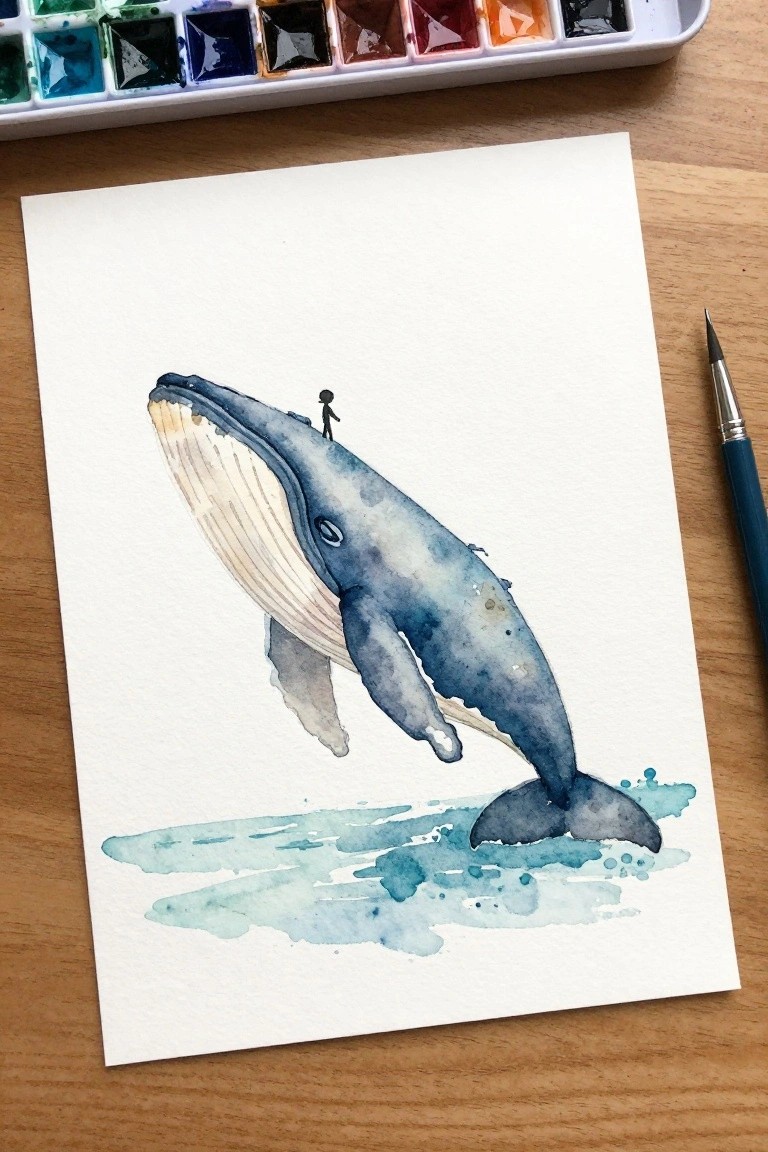
A large whale forms the central subject in this animal painting idea, with a small human figure placed on its back to create a clear size contrast. The composition places the whale on a diagonal so the head rises higher and the tail drops toward the water line, which keeps the eye moving through the piece. Loose blue washes and minimal line work define the whale while the water is suggested with a few horizontal strokes and scattered dots rather than a full background.
What makes this idea useful is the built-in focal point created by the scale difference, so you do not need many extra elements. You can adjust the figure size or swap the water details for a simpler wash if the paper size changes. The same layout works for practice with layering and wet-on-wet edges, and it can be adapted into a smaller card or a larger wall piece by shifting how much of the whale body is shown.
Simple Nativity Scene with a Star
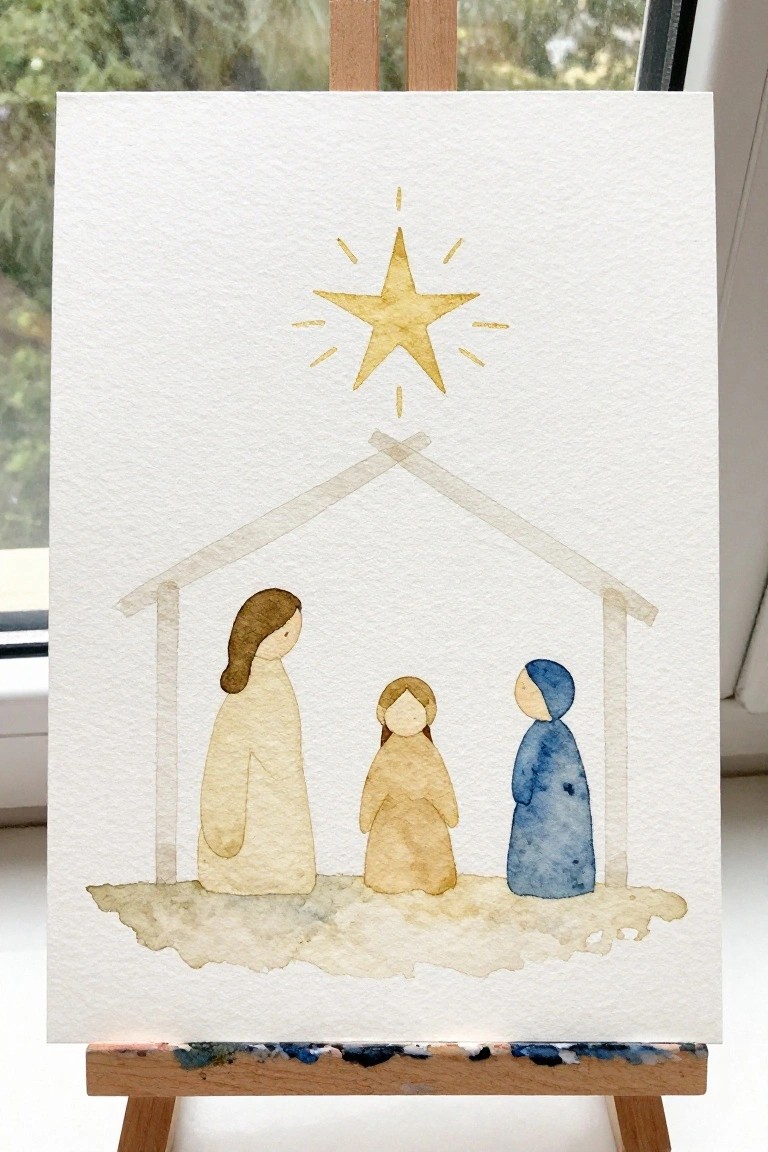
A basic nativity idea uses loose watercolor shapes to show the holy family inside an open stable frame with one large star above. The composition relies on a few soft figures, a simple roof line, and plenty of white space to keep the focus clear without extra details. Earthy beige and blue tones plus a single golden star create a clean Bible story scene that fits easily on small or large paper.
What makes this idea useful is how the minimal layout lets you practice figure placement and color mixing without getting stuck on faces or backgrounds. You can scale the stable smaller for cards or keep it larger for wall art, and it adapts quickly if you want to change the star color or add one more figure later. The open space also makes it a strong option for Pinterest because it reads clearly even as a thumbnail.
Disciples in the Boat on Rough Waters
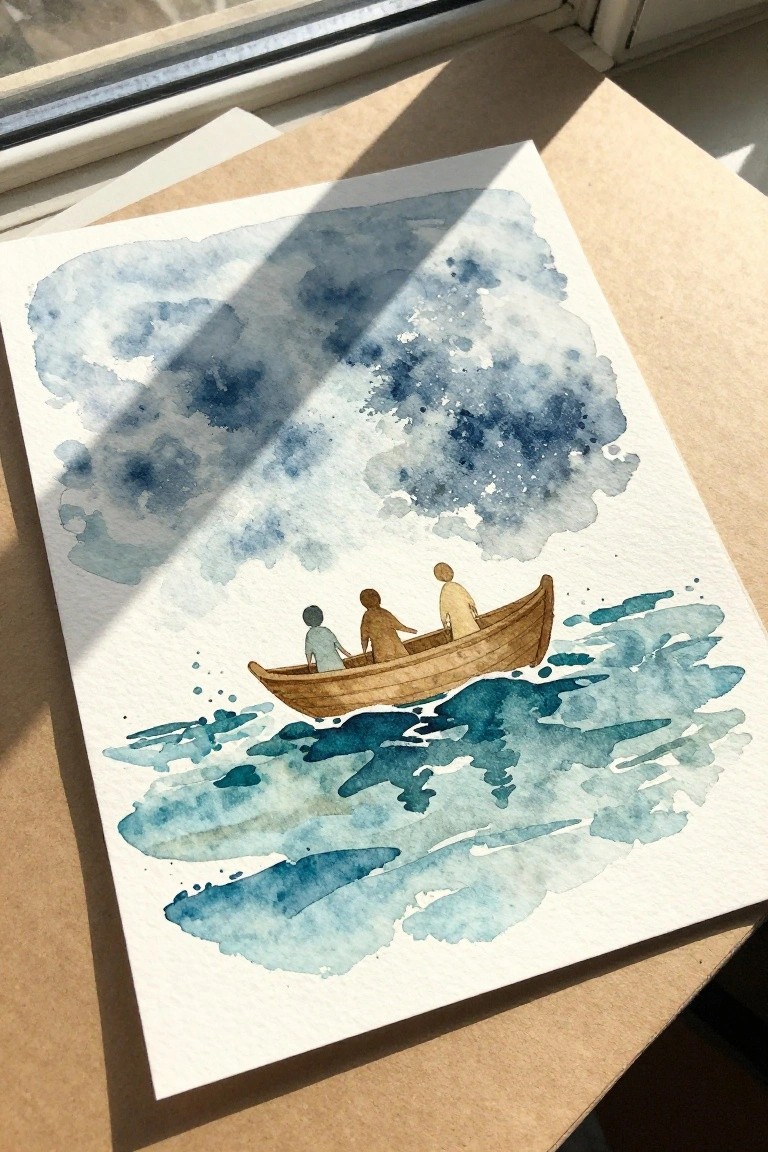
A watercolor idea centered on a small boat with a few seated figures works well as a narrative scene. The composition places the boat low in the frame so the loose blue washes of sky and water take up most of the space and create movement. Simple shapes and soft edges keep the focus on the boat without requiring detailed faces or clothing.
What makes this idea useful is how the large wet areas let you practice blending and lifting color before adding the boat and figures on top. You can shrink the scene for a greeting card or keep the paper size as is for a framed piece, and swapping the boat color or adding a fourth figure changes the story without redrawing everything. The limited palette also makes the whole painting quicker to finish and easier to repeat.
Loaves and Fishes Basket Still Life
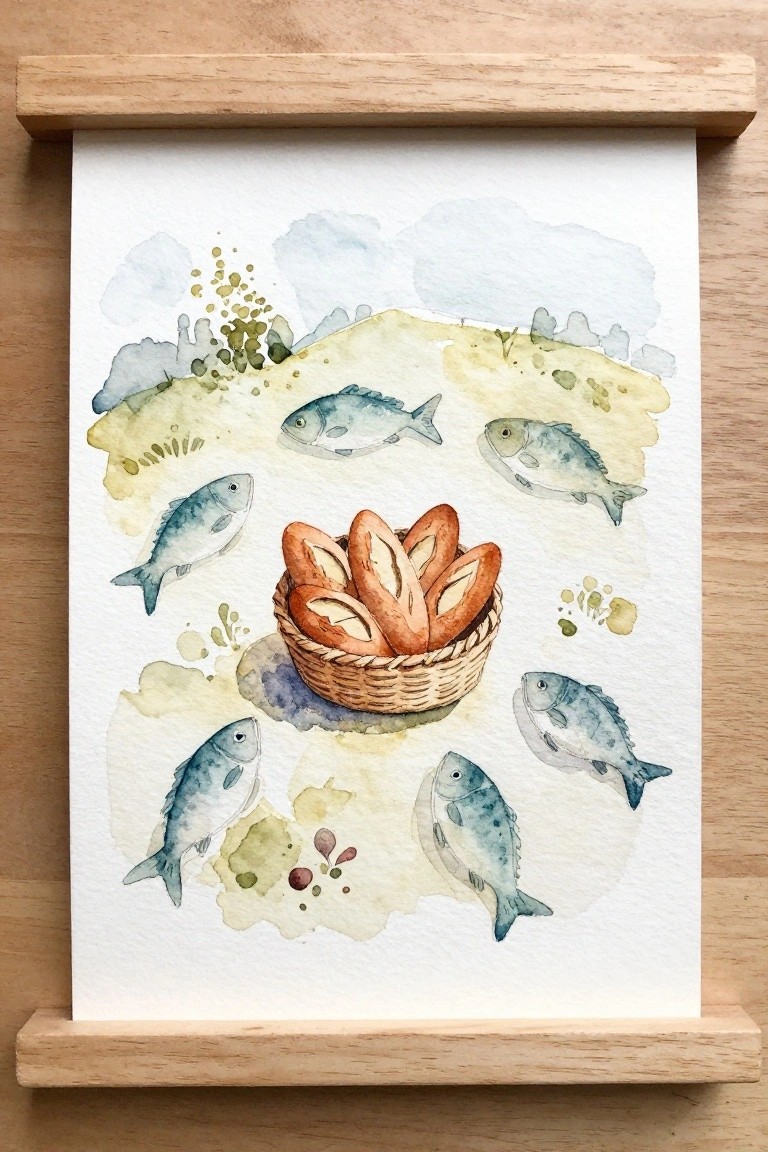
A basket of bread rolls placed in the center with fish arranged loosely around it creates a clear focal point for a Bible story painting. This still life idea uses soft background washes in yellow and green to frame the subjects without competing for attention. The circular placement of the fish adds balance while keeping the overall layout simple enough to paint on a single sheet.
What makes this idea useful is how the central basket and surrounding fish can be painted at different sizes depending on the paper you have. The background stays minimal so you can focus practice on basket texture and fish shapes first. This would be easy to turn into a small print or card, and the direct tie to a well-known story helps it stand out when shared online.
Road to Emmaus Watercolor Scene
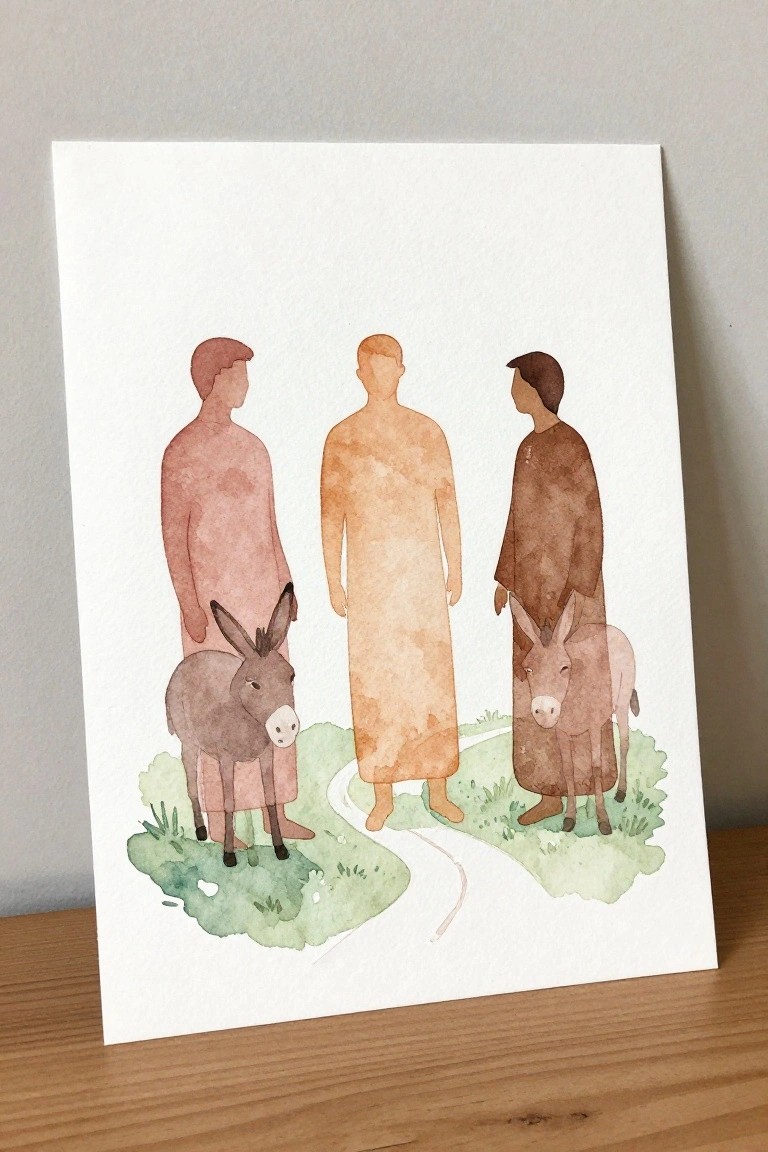
A painting idea centered on three robed figures standing with donkeys along a simple winding path works well for Bible journey stories. The composition lines up the figures across the page with the animals placed at their sides and a thin path running through the middle to suggest forward movement. Soft overlapping washes in muted earth tones keep the shapes readable while the small green patches at the base add just enough setting without crowding the scene.
What makes this idea useful is the way the flat shapes and limited palette let you finish the main elements quickly before deciding how much background to add. You can drop the donkeys or change the number of figures to match other travel stories without redrawing the whole layout. For practice this works because the white space around the path keeps the painting from feeling crowded even if your washes run a bit.
Jesus and a Child Beneath a Large Tree
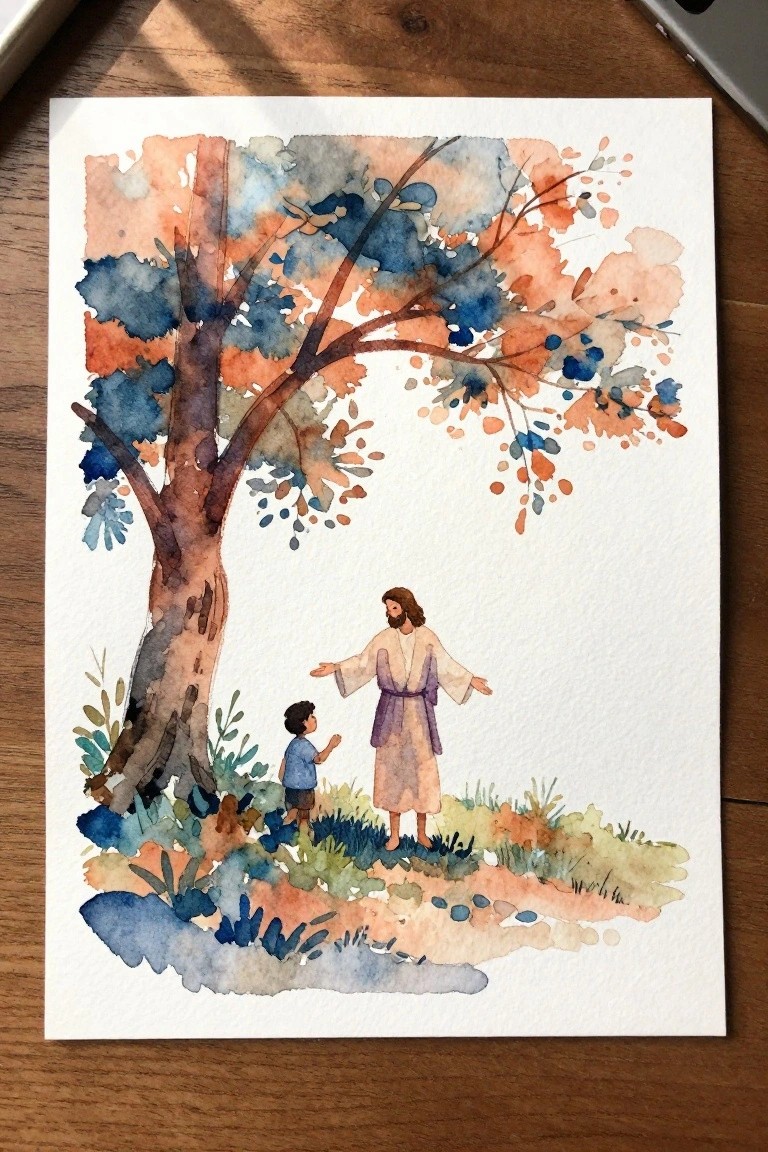
A Bible story scene of Jesus standing with open arms facing a small child works well as a simple narrative landscape. The large tree fills the upper left and balances the open space on the right, letting the two figures sit naturally at ground level without crowding. Soft layered washes in the foliage and ground keep the focus on the interaction rather than on fine details.
What makes this idea useful is how the tree does most of the compositional work, so you only need to place the figures in the remaining space. You could shrink the whole scene for a greeting card or enlarge the tree for a bigger wall piece. The limited color range also makes it easy to swap in different foliage tones if you want a fall or spring version. For practice, this kind of subject lets you work on loose background washes while keeping the figures straightforward.
Donkey and Palm Tree Bible Scene
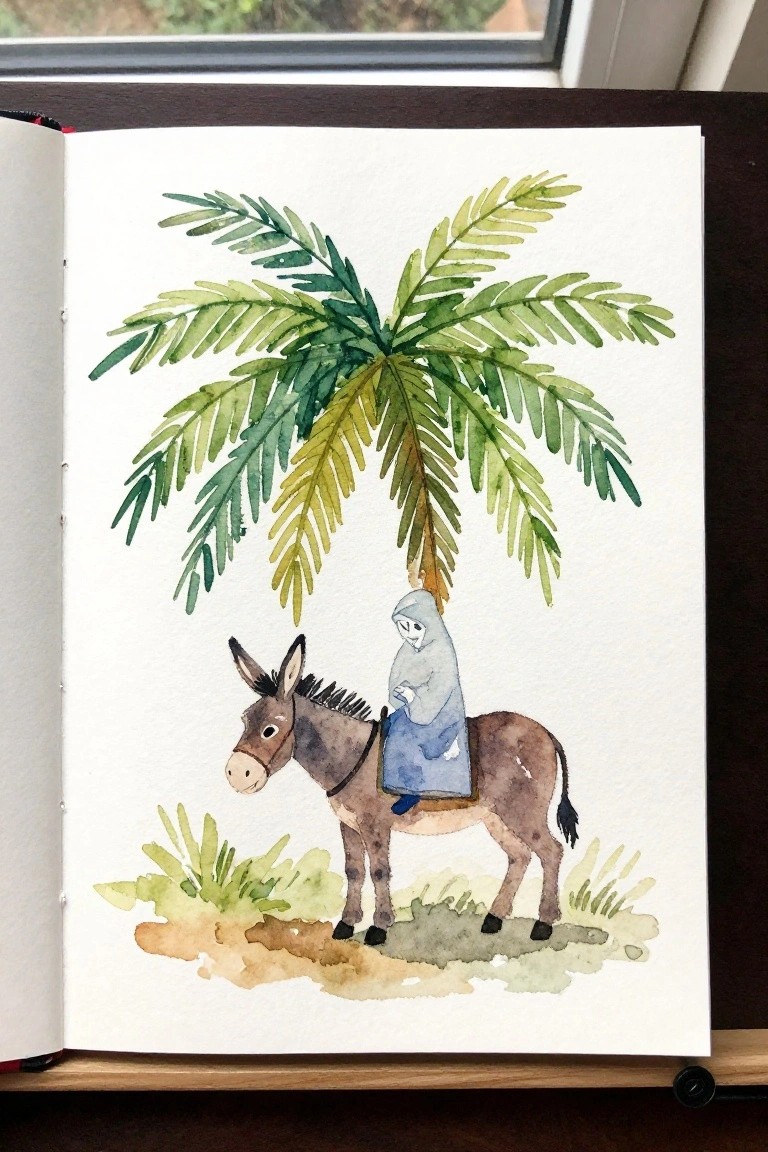
A compact Bible story painting idea that pairs a simple animal subject with one large plant element. The donkey and rider sit low on the page while the palm tree rises above to fill the upper space, creating a clear focal point without extra figures or background details. This approach works as a narrative illustration that stays easy to read from a distance.
What makes this idea useful is the straightforward layout that lets you practice basic animal shapes and leaf clusters in the same piece. You can swap the rider for a different Bible character or shrink the palm to fit a greeting card. The limited color range also makes it simple to recreate with a small set of paints while still looking finished enough for a framed piece or printable art.
Scripture in a Morning Meadow
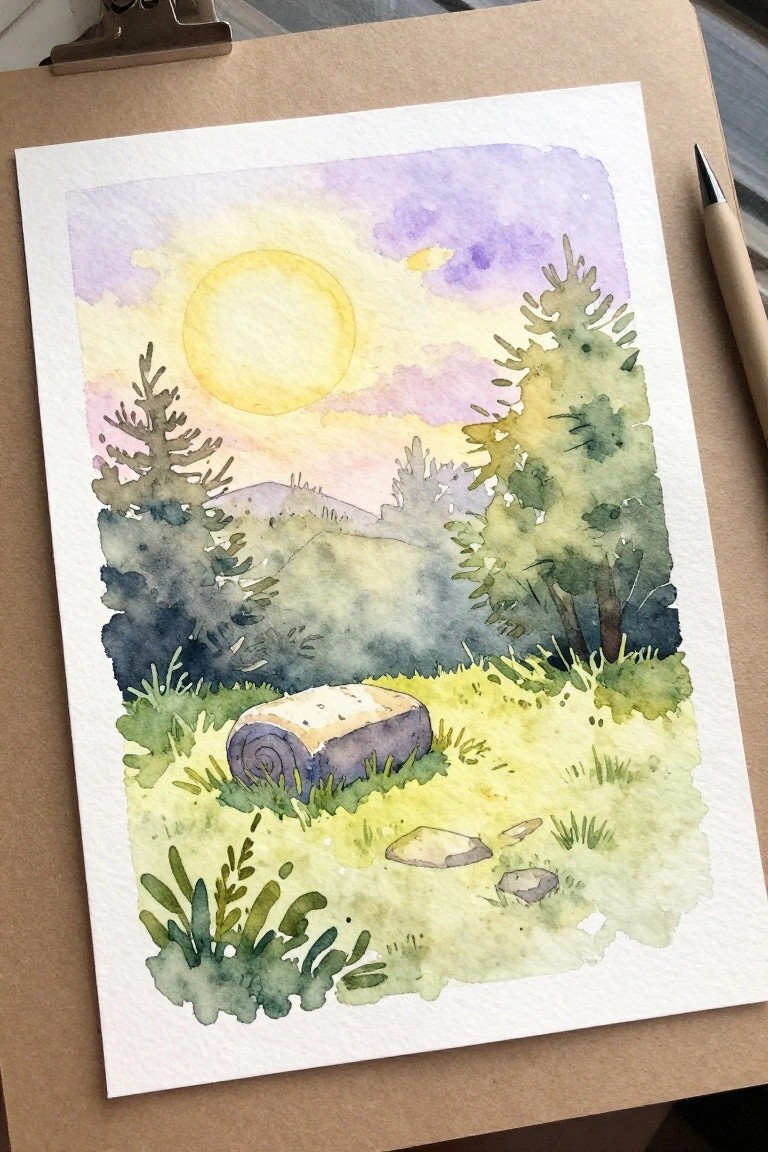
A landscape idea that places a rolled scroll or Bible in the foreground of an open field works well because it combines a simple natural setting with a clear focal point. The sun and layered trees create depth while the soft wash of sky colors keeps the overall feel light and balanced. This type of composition fits into the landscape category with a still life element added for meaning.
The composition does a lot of the work here by using the bright sun and tree line to guide the eye straight to the scroll. You can adapt it easily by changing the season, swapping the scroll for an open book, or shifting the color palette to cooler tones for a different mood. For practice, this kind of subject stays approachable since the shapes stay loose and the details stay minimal. It would stand out on Pinterest as a faith-based landscape that feels calm and ready to pin for inspiration.
Stone Tablets of the Ten Commandments in Watercolor
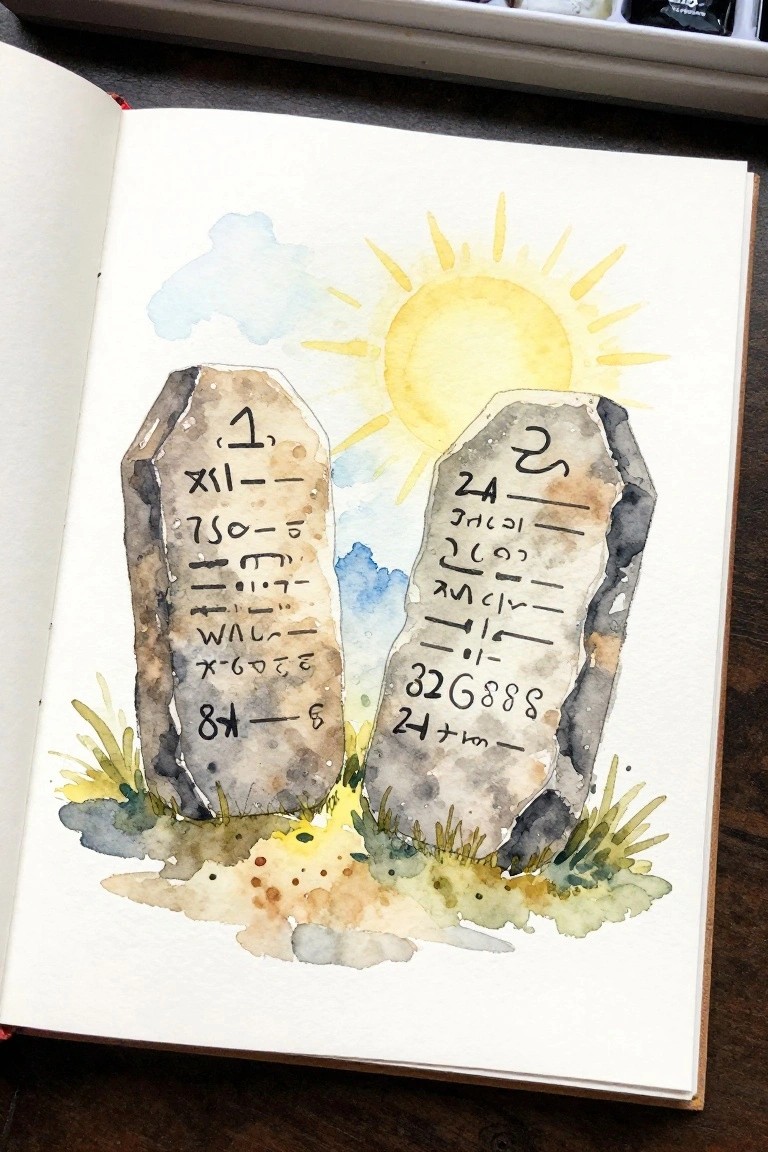
The idea centers on two upright stone tablets shown side by side with rows of stylized markings, set against a simple background of sun, one cloud, and grass at the base. This creates a clear Bible story reference through a still life style arrangement that places the main objects in a minimal outdoor setting. The composition works because the vertical tablets occupy the center while the sun and grass frame them without crowding the space.
What makes this idea useful is the limited color range and the way the two tablets create a balanced focal point that is easy to sketch first. You can swap the invented markings for actual text or numbers if you want a more literal version, or keep them loose for quicker painting. The grass and sun can be simplified further or expanded with extra foliage depending on the paper size. For practice, this setup helps work on rock texture and soft sky washes while staying contained enough to finish in one sitting.
Moses and the Burning Bush Scene
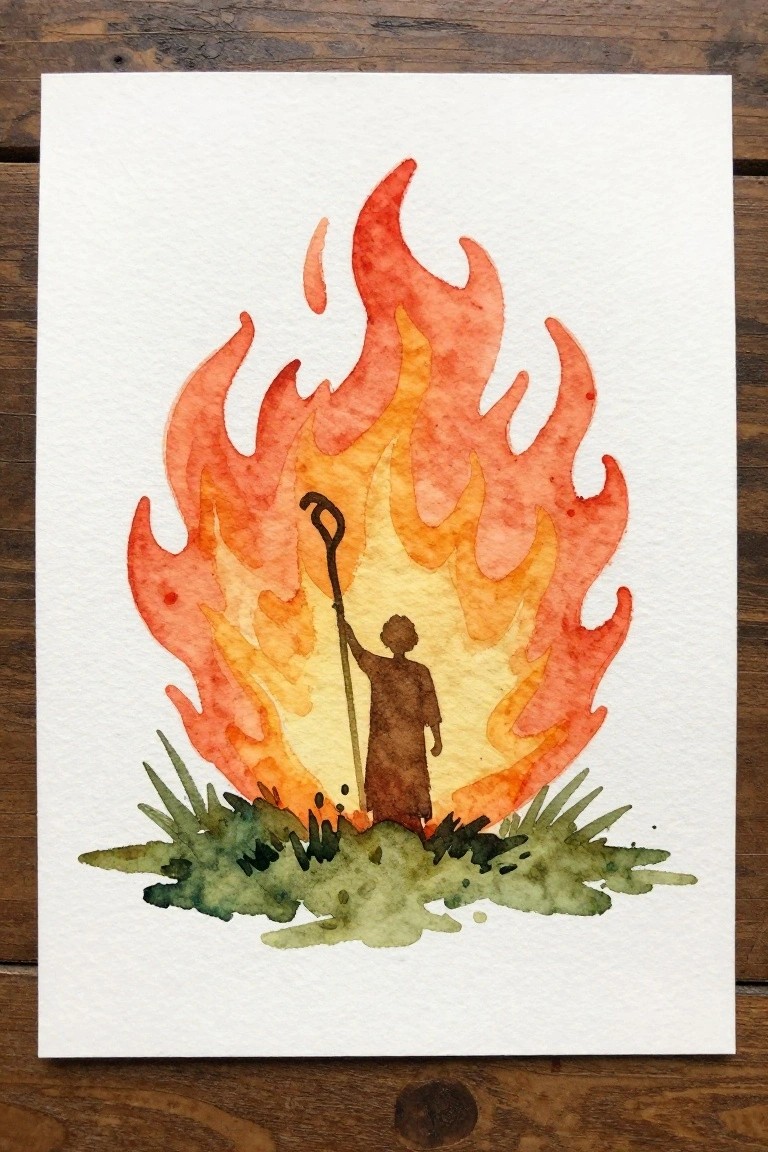
This painting idea shows the story of Moses at the burning bush by centering a small robed figure with a staff against a large mass of flames. The fire becomes the main visual element through overlapping layers of orange, red, and yellow that fill most of the page and leave only a narrow silhouette for the person. Placing the green base at the bottom anchors the scene and keeps the focus on the contrast between the dark figure and the bright fire shapes.
What makes this idea useful is how the big flame area can be built with simple wet washes while the figure stays small and easy to sketch last. You could scale the fire down for a smaller card or stretch the vertical layout for a taller canvas without changing the basic setup. The limited color range also makes it straightforward to repaint with different reds or add more yellow highlights if you want more variation. For practice this kind of subject works well because the fire shape hides small mistakes and still reads clearly from a distance.
Ruth and Naomi Walking Through the Harvest Fields
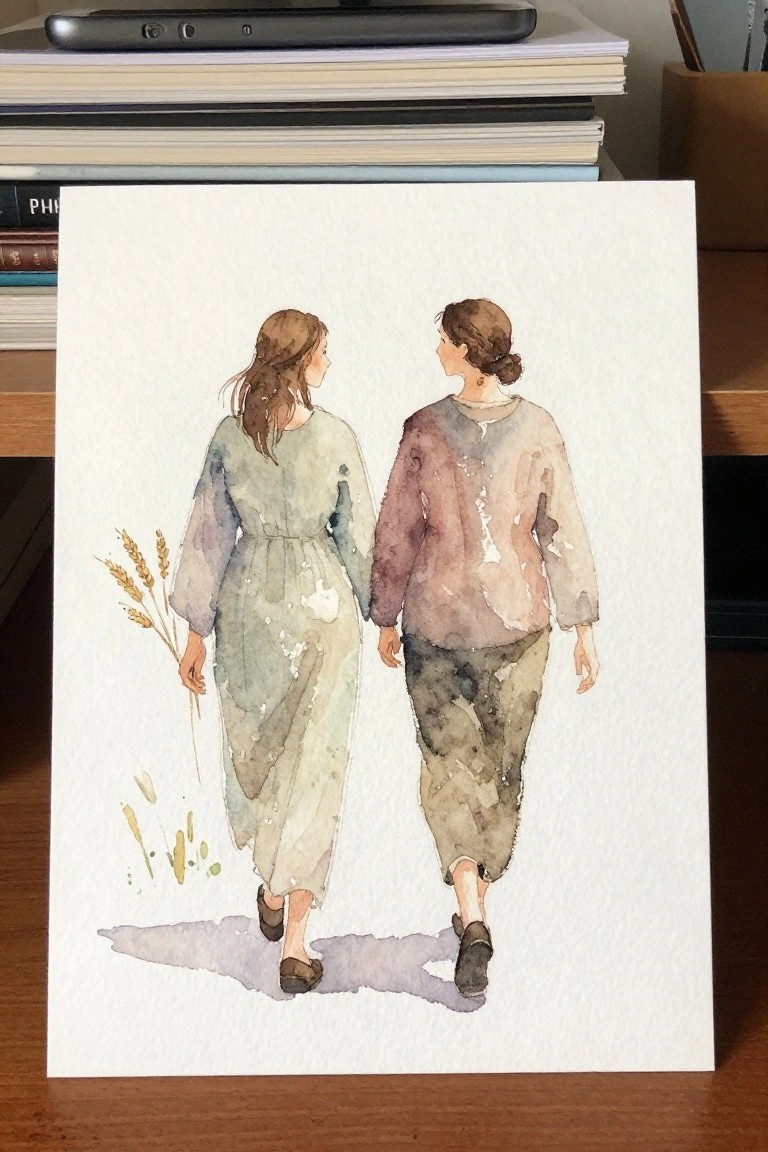
A painting idea centered on two women seen from behind as they walk side by side, one carrying stalks of wheat. Loose watercolor washes create the clothing shapes and a simple shadow grounds the pair on the page. The back view and minimal background keep the focus on the figures and the single natural element.
What makes this idea useful is the back-view composition that removes the need for faces or expressions. The muted earth tones and wheat detail can be swapped for other symbols to match different Bible stories or simplified by dropping the wheat entirely. For practice, this kind of subject helps build confidence with loose figure work while still producing a finished piece that works as wall art or a gift.
Feeding the Five Thousand with Bread and Fish
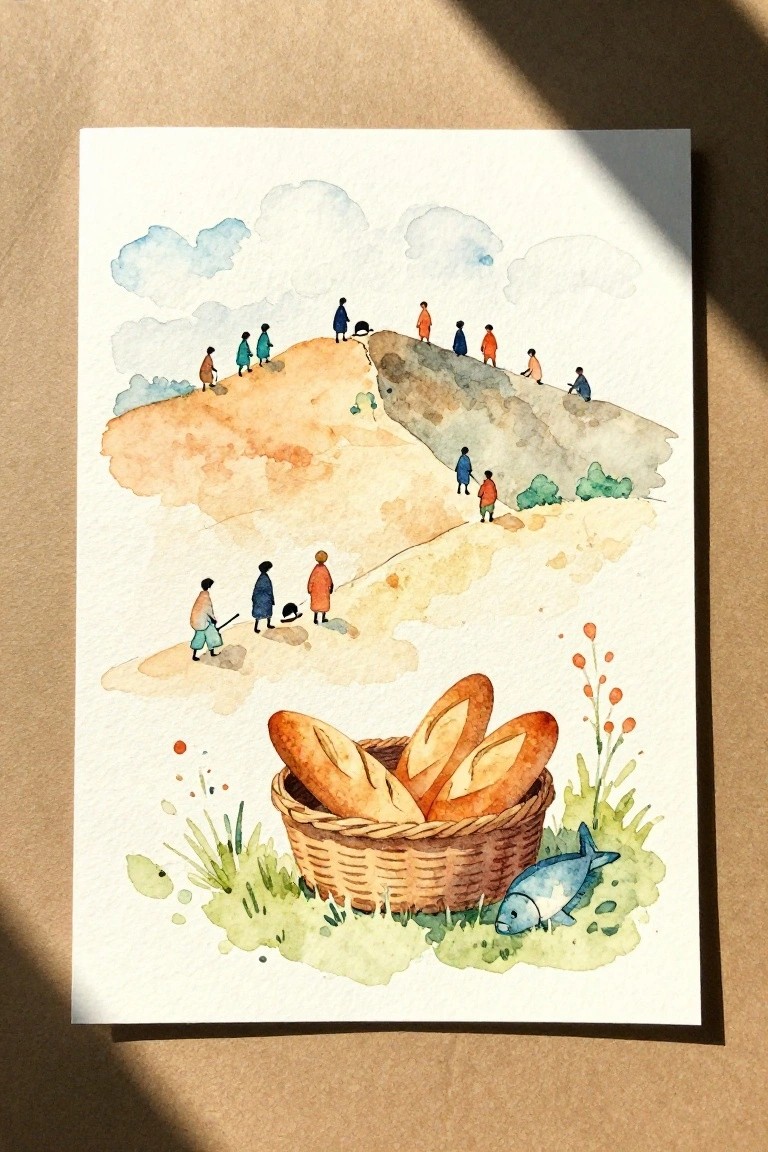
A painting idea that pairs a loose hillside landscape filled with small walking figures and a foreground basket of bread plus one fish works well for illustrating the feeding of the five thousand. The split layout keeps the crowd elements simple and distant while the bread and fish sit large and clear at the bottom to signal the miracle. Earthy hill washes and a few bright accent dots for flowers let the main shapes stay readable without tight detail.
What makes this idea useful is the way the still life anchors the story so the upper scene can stay minimal. You can easily scale the basket size or move it to a side corner if you prefer more room for the crowd. The same split approach adapts quickly to other miracle stories that center on a single object. For wall pieces this format prints cleanly because the strong bottom element holds attention even at smaller sizes.
Split-Color Armor of God Knight
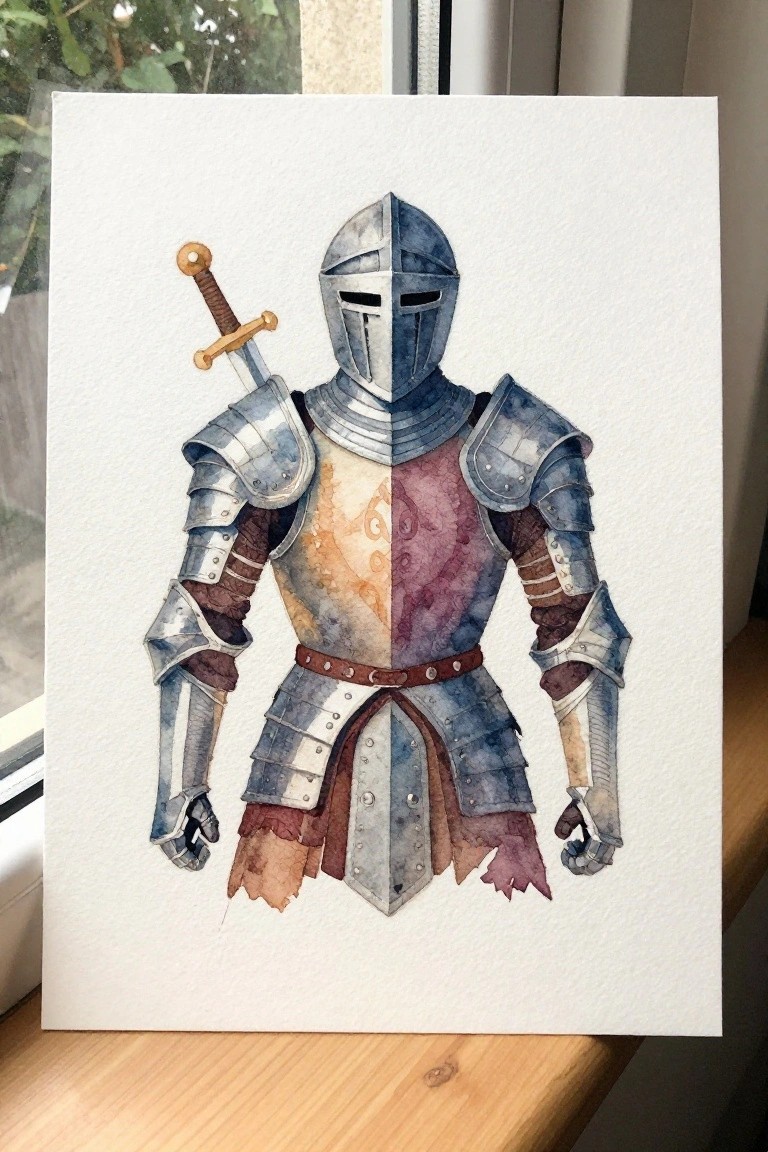
A watercolor painting of a full suit of armor with a sword positioned to one side makes a strong standalone piece when the breastplate is divided vertically into two distinct color zones. One side uses warmer tones with a simple cross motif while the other uses cooler tones with subtle decorative marks, creating immediate contrast without needing extra elements. The straightforward front-facing pose and clean white background keep the focus on the armor shapes and the color split.
What makes this idea useful is how the vertical division lets you experiment with two separate palettes on one subject. You can simplify the armor plates or reduce the number of straps and rivets if the full level of detail feels heavy. The same layout works well for wall pieces because the centered figure and limited background keep it easy to frame, and the color split gives you a built-in way to personalize it with different theme colors.
Sheep Grazing Along a Winding Stream
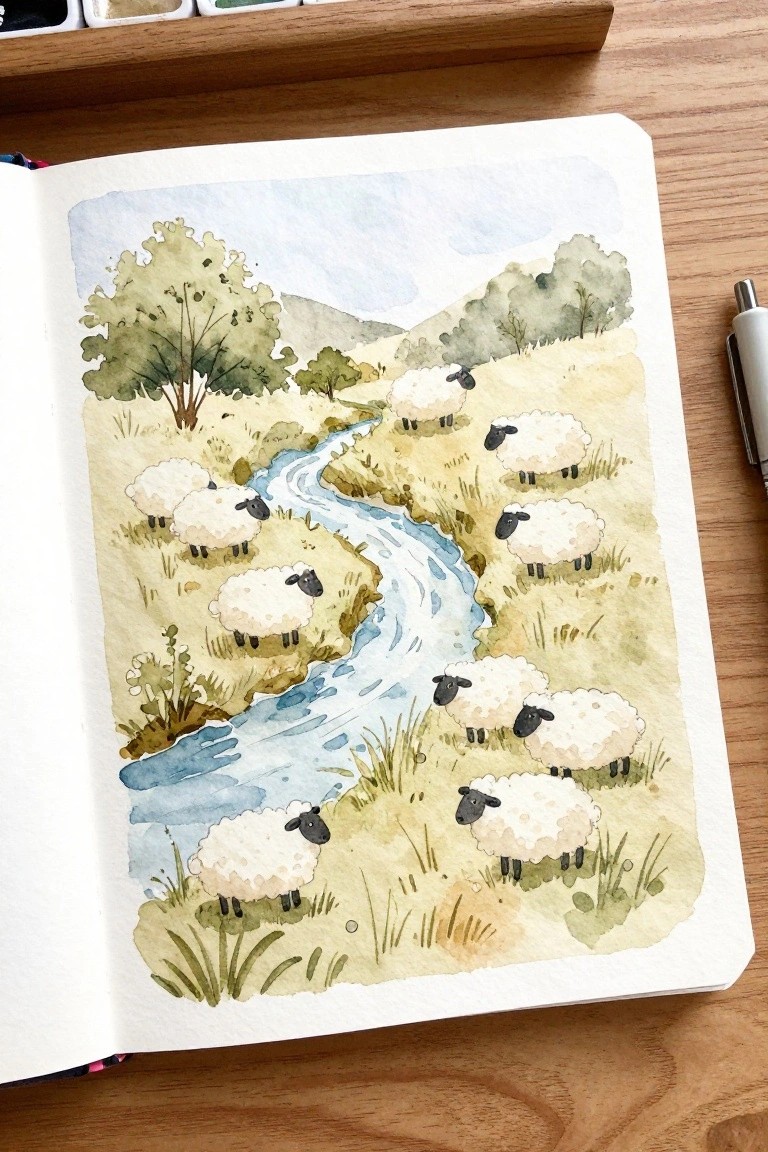
A landscape with a flock of sheep placed around a curving stream makes a straightforward Bible story painting idea that fits the category of animal and nature scenes. The water creates a clear path through the composition while the sheep are spaced at different distances to add depth without crowding the paper. Loose green and yellow washes for the hills keep the attention on the animals and the open setting rather than on fine details.
What makes this idea useful is how the simple rounded shapes of the sheep bodies stay approachable even when you add a few darker accents for heads and legs. You could reduce the number of sheep to make it quicker or shift the greens toward warmer tones if you want a different season. For practice this layout works well because the stream does most of the work directing the eye, and the same basic setup can be reused with different animal groupings or scaled down for cards.
Zacchaeus and the Sycamore Tree
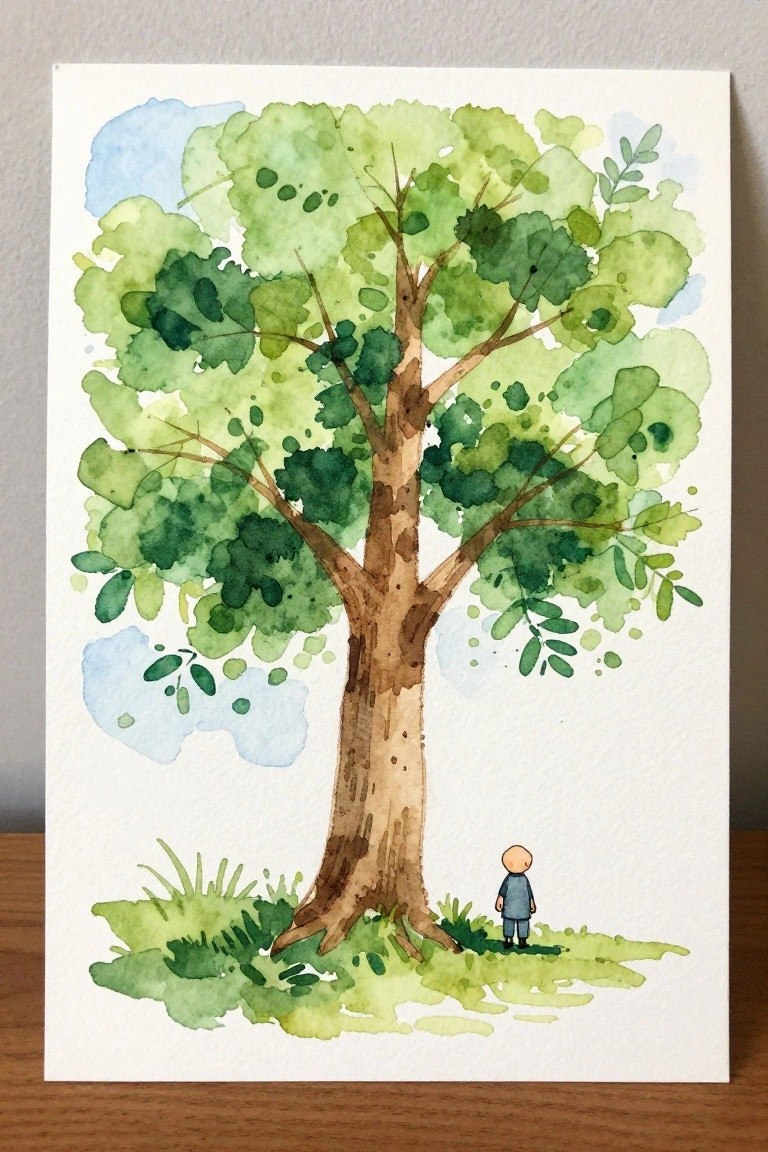
A tall tree with layered green foliage and a thick trunk creates the main subject when placed next to a small child standing at its base. This painting idea uses scale to represent the Zacchaeus story without needing extra figures or props. The loose brushwork on the leaves and the open space around the trunk keep the focus on the height difference while leaving room for the story to read clearly.
What makes this idea useful is how the size contrast between the tree and the child does most of the storytelling work. The color palette can be swapped for cooler greens or warmer browns depending on the season you want to suggest. This would be easy to turn into a quick series by changing only the child’s pose or adding a simple ladder shape. For practice, this kind of subject helps with controlling large washes while keeping the composition balanced on the page.
A Net Full of Colorful Fish
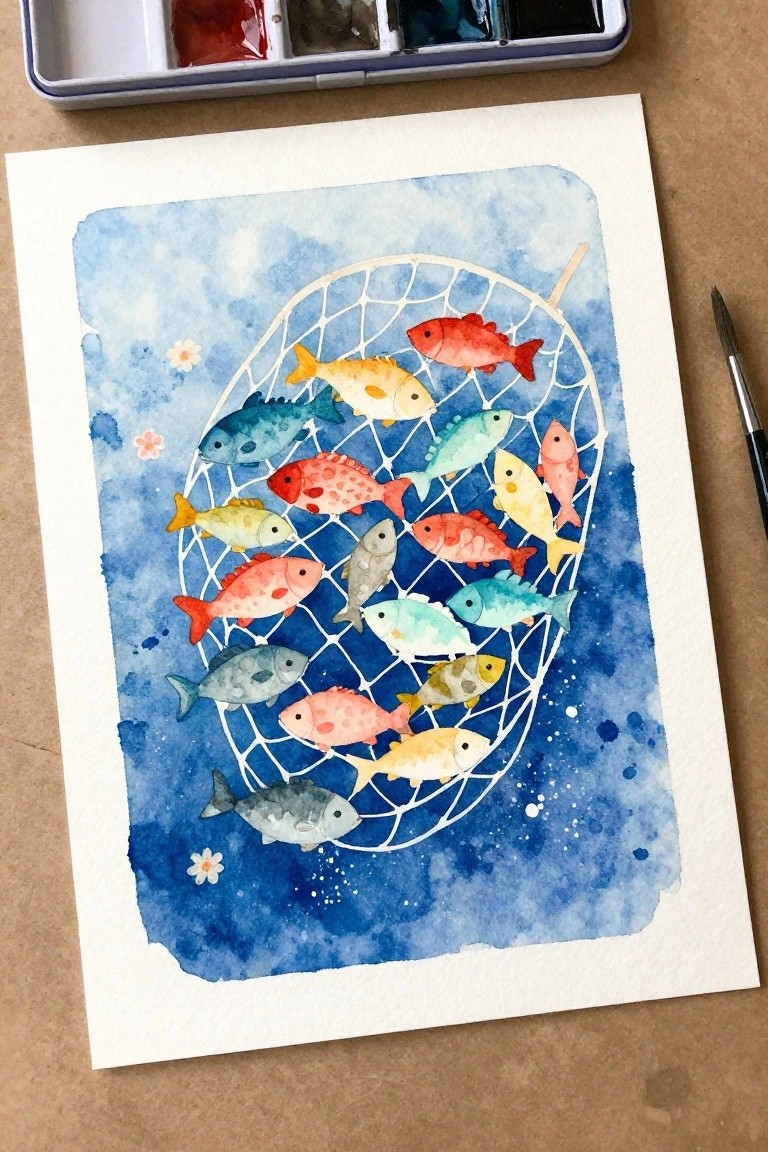
A net full of fish in varied colors forms a straightforward animal painting idea that centers on a single enclosed group. The round net shape pulls the scattered fish into one clear focal area while the blue background keeps the layout balanced. This style fits decorative art because the overlapping fish and simple net lines create interest through color and placement rather than fine detail.
What makes this idea useful is how the contained composition lets you adjust the number of fish or their colors without changing the overall layout. You could shrink the net for a greeting card or stretch it across a full page for a larger piece. The same approach works if you want to swap in different fish shapes or test a new background color while keeping the idea easy to follow.
Watercolor Dove Carrying an Olive Branch
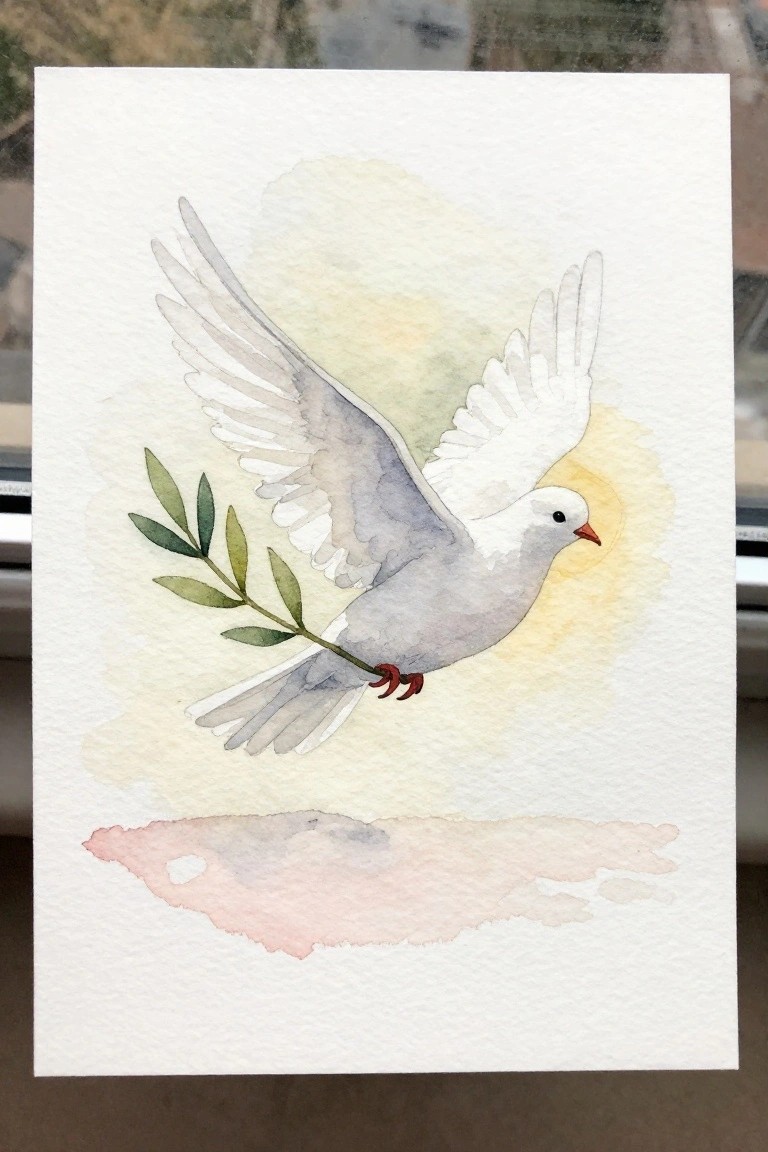
A flying dove with an olive branch makes a clean animal painting idea that focuses on basic shapes and negative space. The bird is positioned at an angle with wings extended, letting the branch extend naturally from the body without crowding the page. Soft background washes in pale yellow and green keep the emphasis on the subject while the loose edge work on the wings and tail feathers shows how minimal detail can still read clearly.
What makes this idea useful is the single subject that lets you practice controlled washes and simple layering without building a full scene. The limited palette of grays, greens, and warm background tones adapts easily to different paper sizes or slight color shifts if you want to try other birds. For practice, this kind of subject works well because the open space around the dove reduces the chance of overworking the paper.
Frequently Asked Questions
What basic supplies do I need to create these Bible story watercolor paintings?
Start with artist-grade watercolor paper that is at least 140 pounds to prevent buckling, a set of watercolor paints in primary colors plus earth tones, a variety of brushes including a large flat wash brush and smaller detail brushes, a palette for mixing, and clean water containers. Add masking fluid for highlights and a pencil for light sketches. These items allow you to experiment with the 20 ideas without frustration and help achieve soft blends suitable for scenes like the creation story or the calming of the storm.
How can beginners adapt the creative ideas if they lack advanced painting skills?
Focus on simple shapes and large washes of color first rather than intricate details. For example, use wet-on-wet techniques for backgrounds like skies or seas in stories such as Jonah and the whale, then layer dry brush strokes for elements like boats or figures. Practice on scrap paper to test color mixes before committing to the final piece. Many of the ideas work well with loose interpretations, so start with easier stories like the good shepherd and build confidence over time.
What are some ways to incorporate scripture into the artwork effectively?
Choose a short verse that matches the story, such as Psalm 23 for a shepherd scene, and letter it neatly in the margin or along the bottom using a fine brush or waterproof pen after the paint dries. Leave white space or a soft border around the text to keep it readable. You can also paint the verse in a subtle tone that blends with the background or stamp it lightly for texture. This approach turns the painting into a complete faith-based piece that encourages reflection.
How do I choose colors that enhance the spiritual message of the Bible story?
Select a limited palette that reflects the mood and symbolism, such as deep blues and teals for water-related miracles like the parting of the Red Sea to convey depth and divine power, or warm golds and soft yellows for resurrection themes to suggest hope and light. Test colors on a separate sheet to ensure they create the right emotional tone without overpowering the composition. Consider the time of day in the story too, like using cooler tones for nighttime scenes such as the angel visiting the shepherds.
What tips help preserve and frame these watercolor paintings for long-term display?
Allow the painting to dry completely for at least 24 hours, then apply a light coat of archival fixative spray to protect against dust and fading. Use acid-free mats and UV-protective glass when framing to prevent yellowing. Store finished pieces flat in a portfolio if not displayed right away, and avoid direct sunlight or humid areas. These steps keep the colors vibrant and the paper intact so the artwork continues to inspire faith for years.