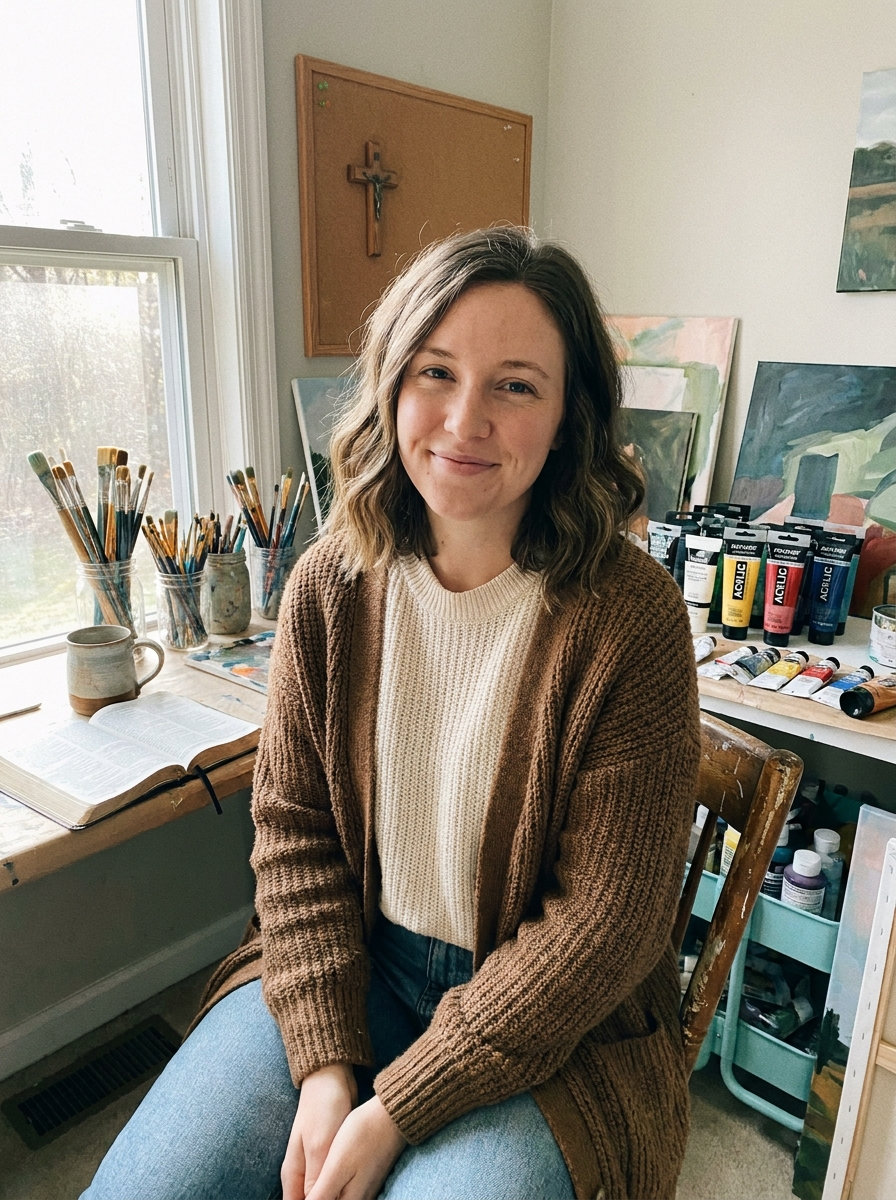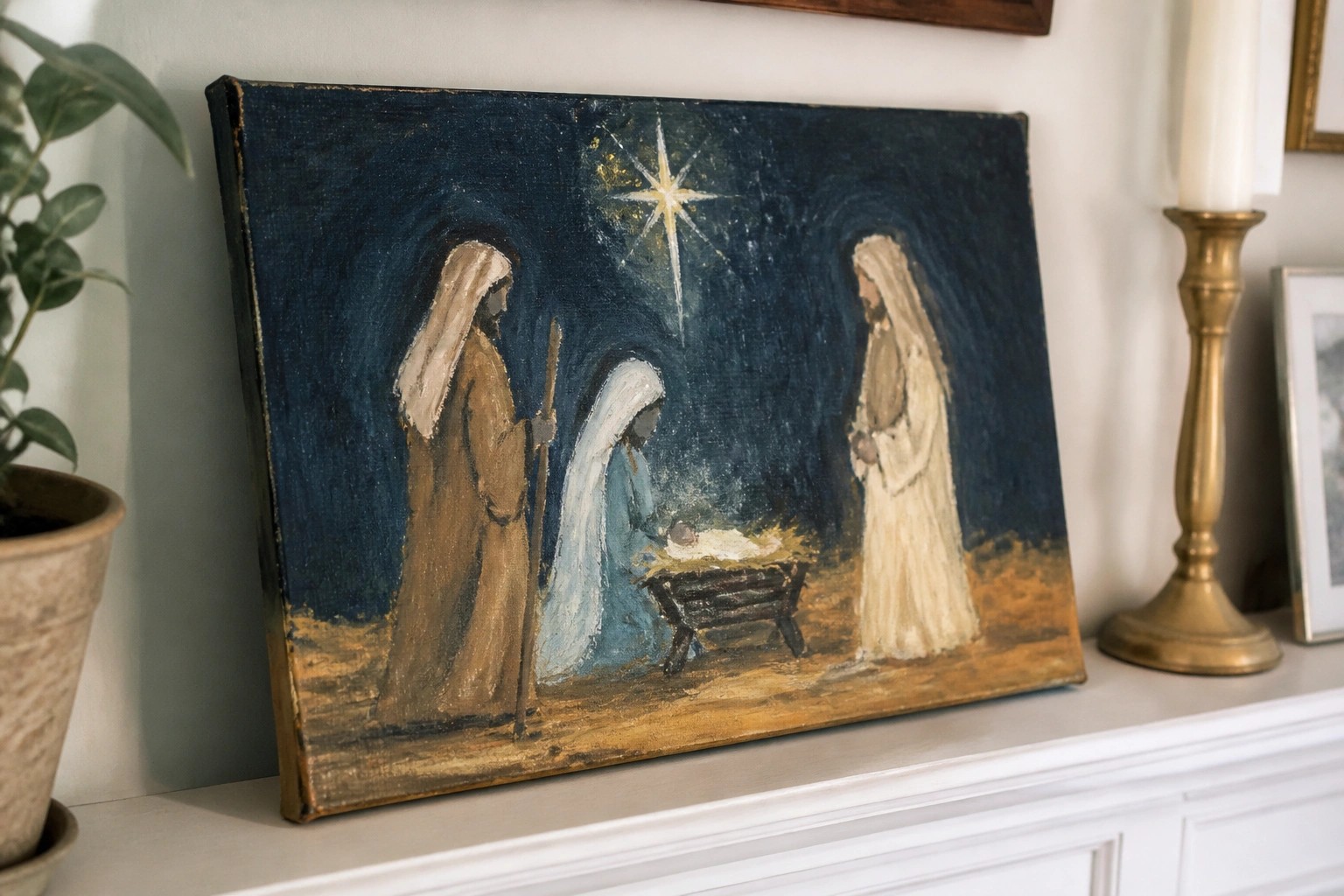
I have painted a few Bible scenes myself over the years and I know how tricky it can be to show the story clearly.
Looking at these examples made me think about different ways to approach the same ideas.
Some of them use colors and shapes in ways I had not considered before.
I wanted to share the ones that stood out to me for how they focus on the main parts of each story.
A couple even reminded me of small choices I make in my own work when I try to keep things simple.
Nativity Scene Built Around a Dominant Star
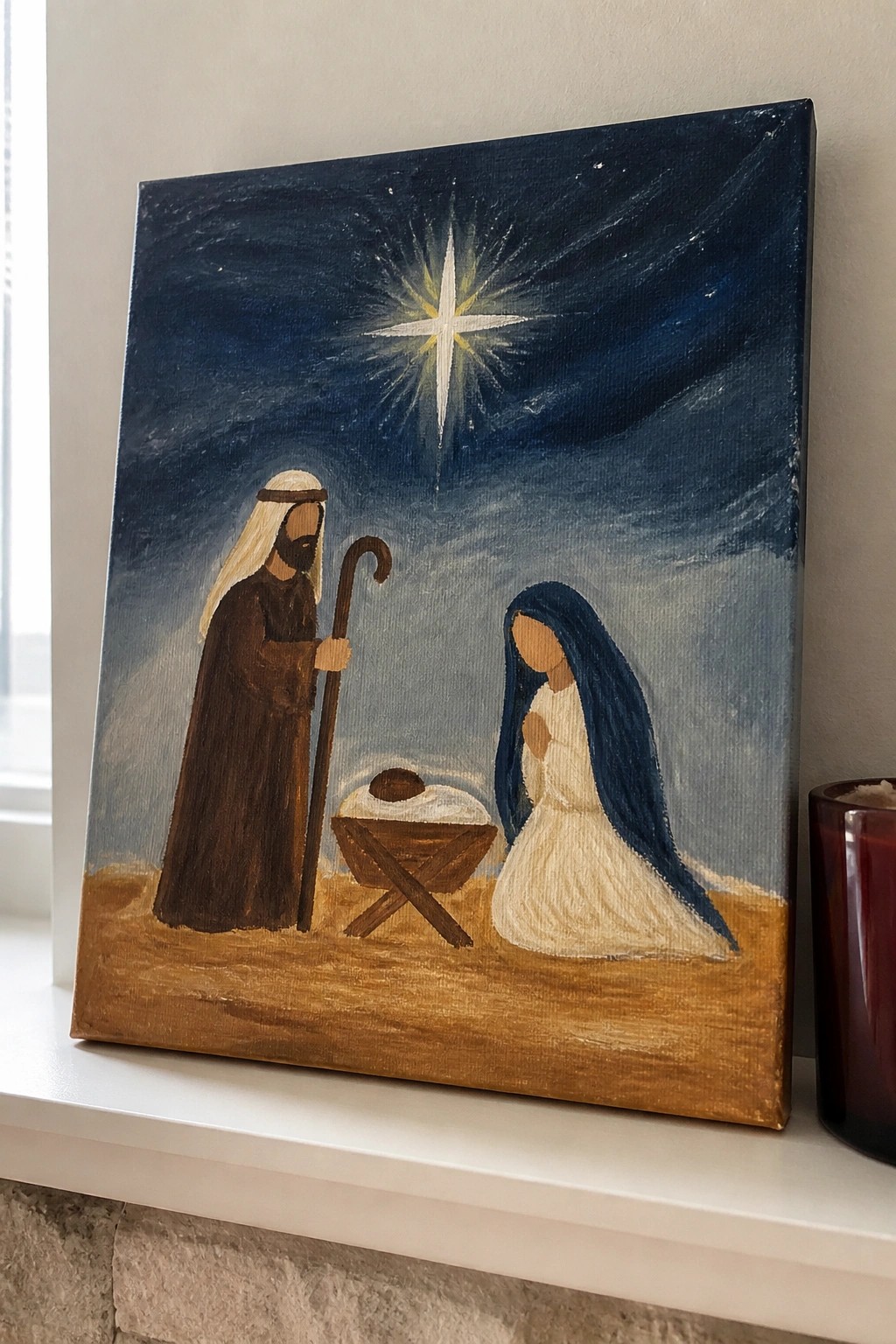
A nativity painting idea that places the star as the main element works by using its bright rays to pull attention upward while the figures and manger stay grounded below. The concept keeps the shapes simple and the color split clear, with deep blues filling the sky and warmer earth tones holding the lower section. This approach fits seasonal Bible scene work where the star does most of the storytelling without needing extra details.
What makes this idea useful is the built-in focal point that lets you skip complex backgrounds. You can change the star size or swap the blue tones for other dark shades to match different room colors. The layout adapts easily to smaller canvases for practice or larger ones for wall pieces, and the limited shapes make it quick to finish while still reading clearly from a distance.
Jonah and the Whale in Dramatic Scale
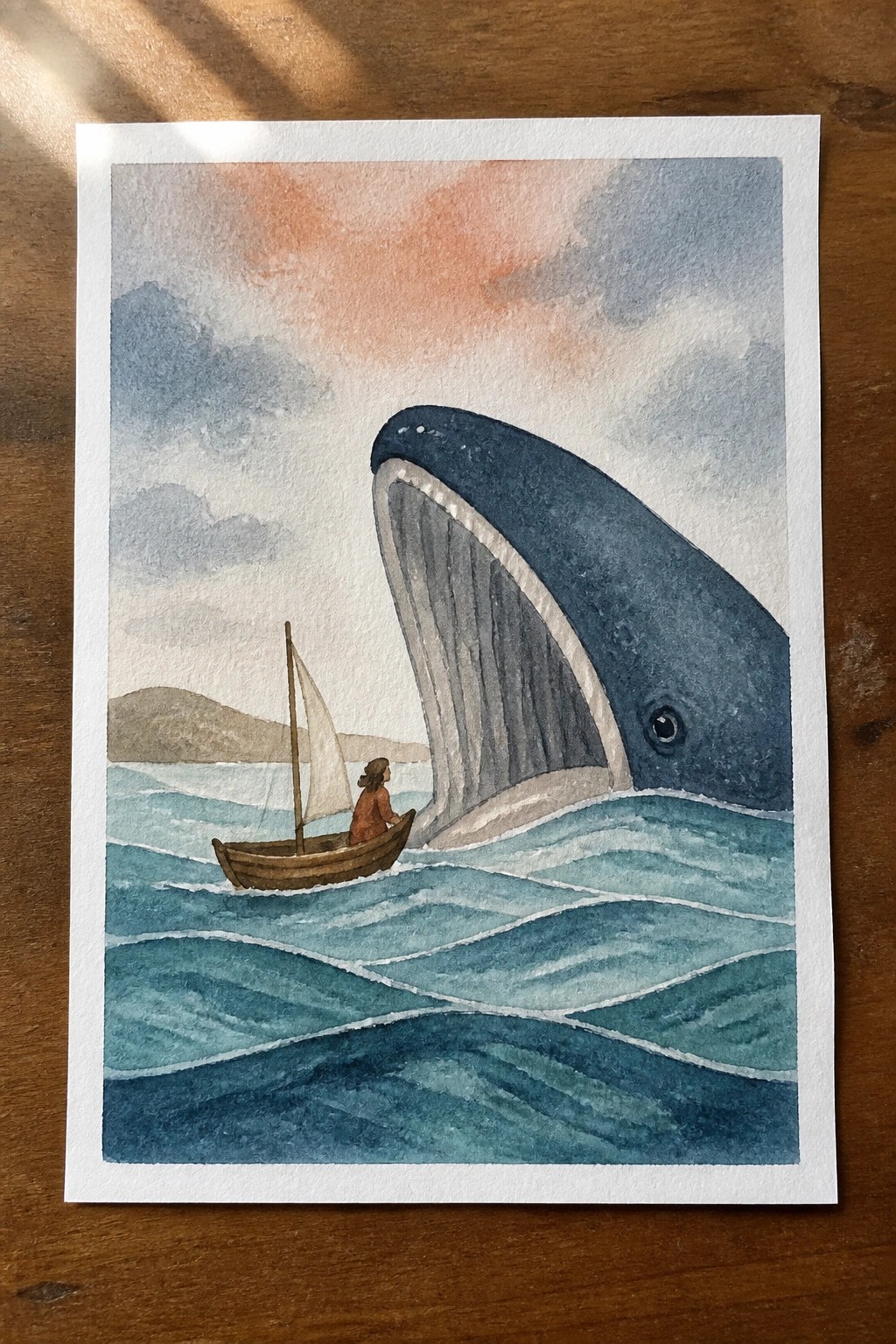
A large whale rising beside a small sailboat forms the core idea here, using the contrast in size to tell a clear biblical moment without extra figures or props. This animal and seascape approach succeeds because the whale’s open mouth and eye sit at the center of the frame while the layered waves lead the eye toward the boat and the distant hills. The muted blue and gray tones in the water and sky keep the main shapes readable and balanced.
What makes this idea useful is the built-in scale contrast that does most of the visual work. The color palette of deep blues against a soft sky can be swapped for warmer or cooler tones depending on the mood you want. For practice, the subject helps with painting large curved forms and simple wave lines, and it could be adapted into a tighter crop that shows only the whale’s head and part of the boat.
David and Goliath Using Strong Size Contrast in a Landscape
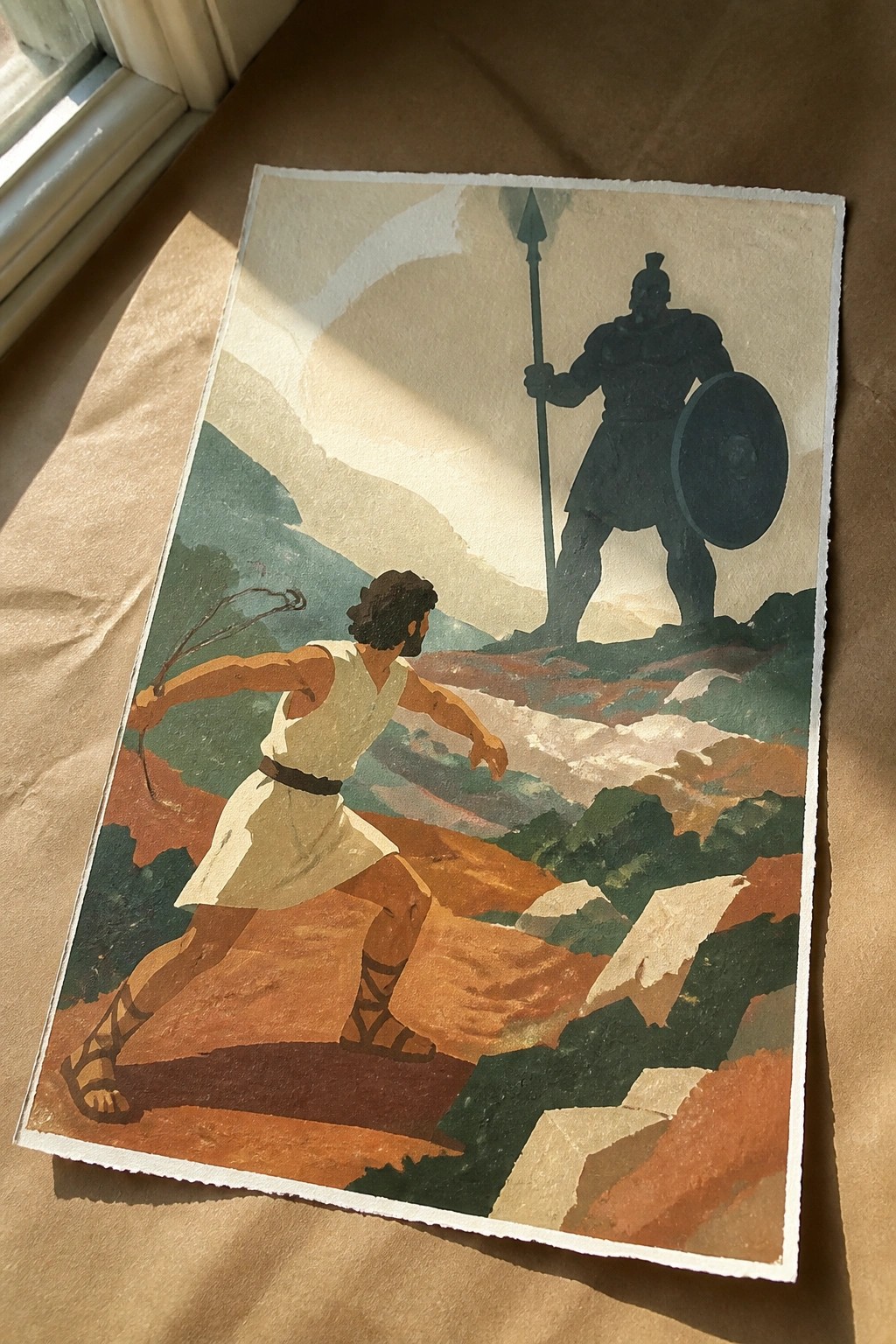
A painting idea that highlights the David and Goliath story through extreme scale difference, with the smaller figure shown in motion in the foreground and the giant rendered as a solid silhouette against the sky. The rocky terrain and layered hills create depth while keeping the focus on the power imbalance between the two figures. This approach fits narrative scene painting with a landscape base, where bold shapes and limited detail on the distant figure carry the impact.
The composition does a lot of the work here by letting the size contrast handle the storytelling. The silhouette on the larger figure removes the need for detailed armor or anatomy, which makes the idea easier to adapt for different skill levels or canvas sizes. A similar layout could work for other biblical confrontations or even non-biblical themes by swapping the figures while keeping the same foreground-to-background scale. For Pinterest, the clear visual hook of one tiny person against one massive form tends to stand out in feeds.
Noah’s Ark Painting with Animals Lined Up in the Boat
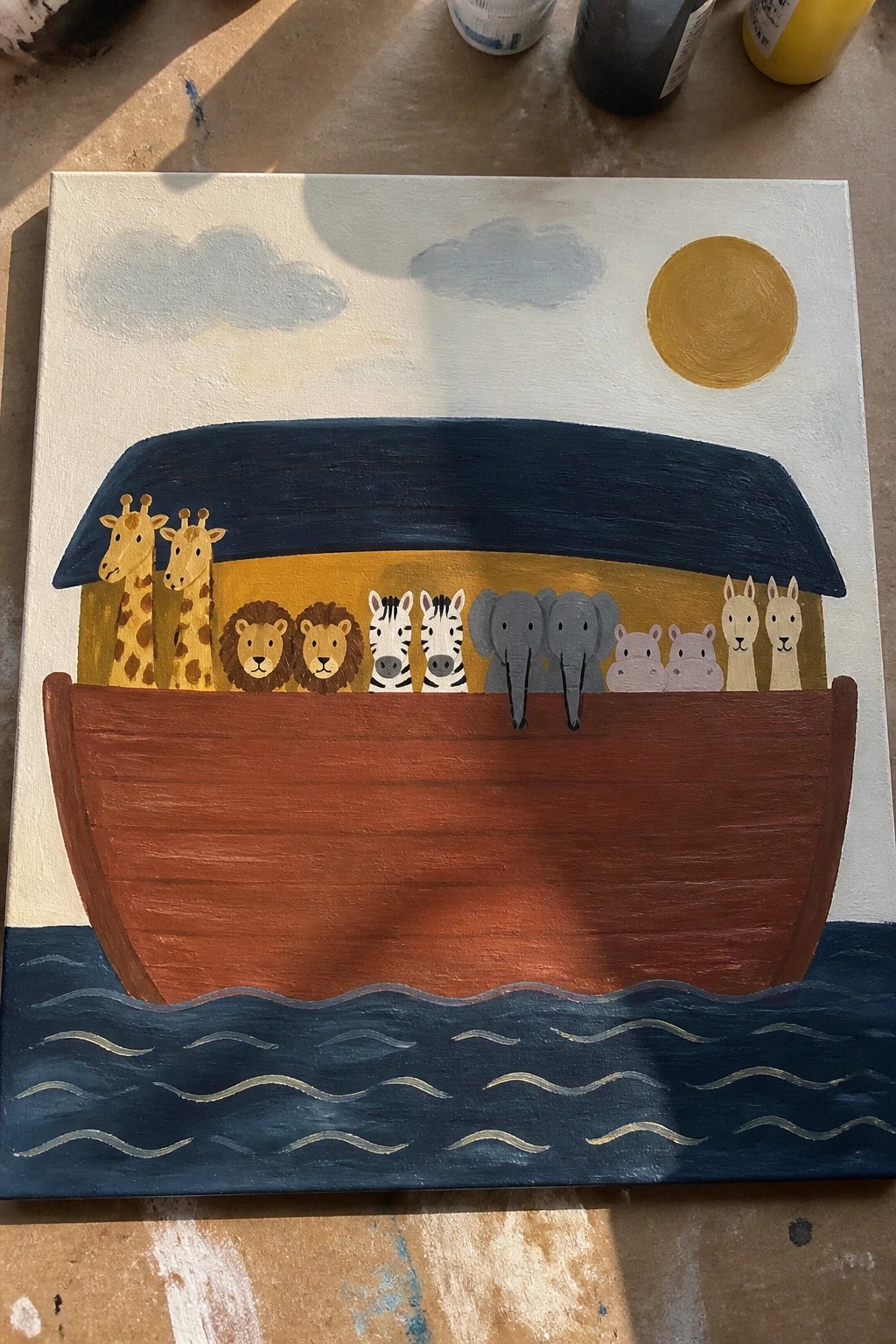
A Noah’s Ark painting idea that shows a row of animal heads along the top edge of the boat so they all face forward in a single line. The idea centers on a brown boat sitting in blue water with simple wave lines and a plain sky above that includes a yellow sun and a few clouds. This approach fits into the animal and decorative art category because the flat shapes and limited colors keep the focus on the lineup of animals rather than on detailed scenery or shading.
The composition does a lot of the work here by turning the story into an easy horizontal arrangement that can be copied at different sizes. You could replace some animals with others or change the boat and water colors to fit a specific room without needing to redraw the layout. For wall art this kind of piece works well because the subject is clear but the style stays simple enough to finish in a few sessions.
Path Between Parted Waves
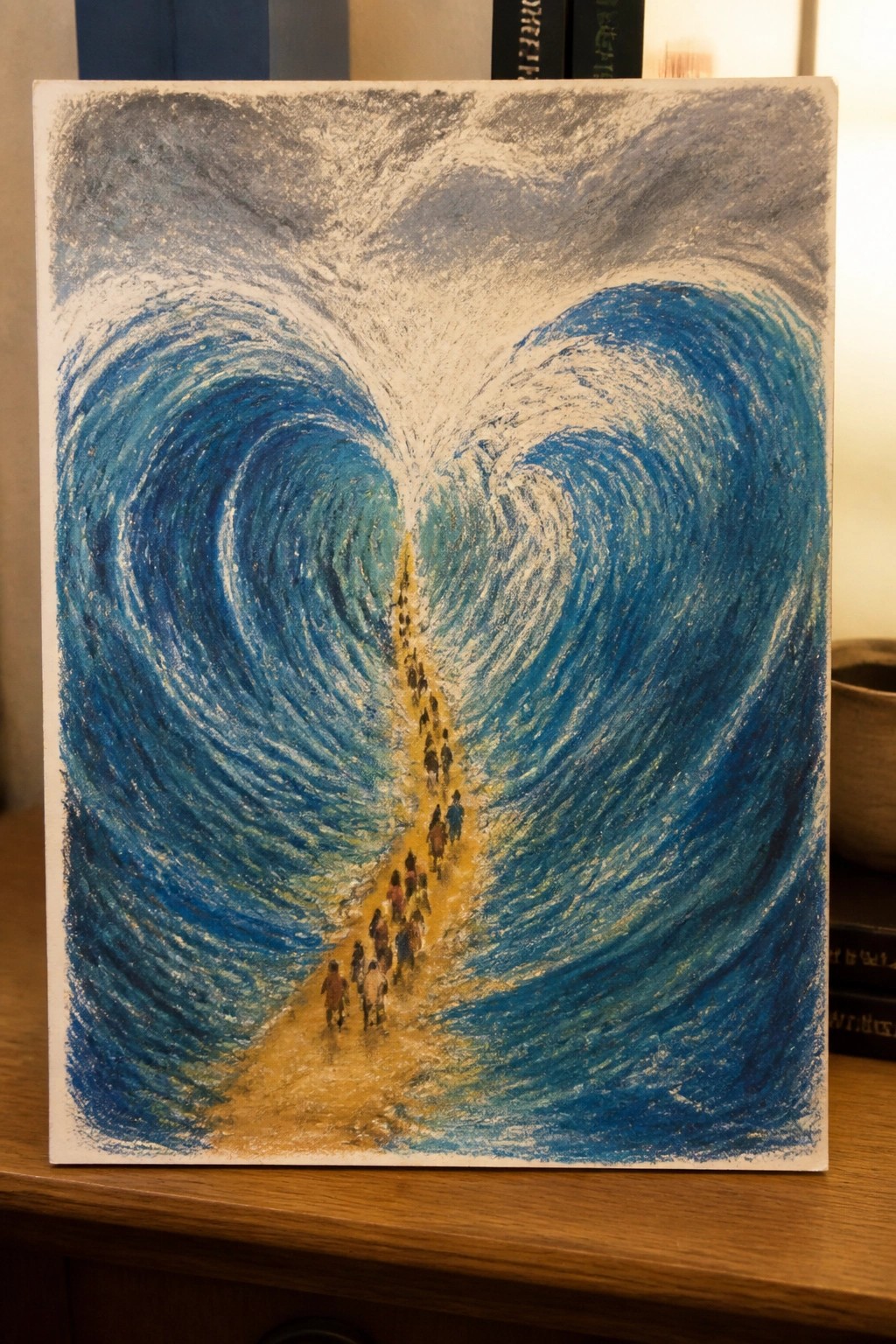
A line of figures walking down a narrow golden path forms the core of this idea, with two large curling waves rising on either side to create a clear corridor. The painting idea uses a strong central path and opposing wave shapes to guide the viewer forward while keeping the sides balanced through repeated curved lines. Deep blues against warm yellows and the bright opening at the far end keep the focus on the path itself.
What makes this idea useful is the built-in framing from the waves, which handles most of the composition work. You can scale the waves down for a smaller canvas or reduce the number of figures if you want a quicker version. The limited color range also makes it easy to mix and test without needing many shades, and the vertical layout works well for taller boards or prints.
Loaves and Fishes with Lakeside Crowd

This painting idea captures the feeding of the five thousand by centering a basket of bread and fish on open ground while a large group of people forms a loose circle around it near a body of water. The lakeside hills in the distance and the spread of figures across the middle ground give the scene its scale without needing intense action or facial detail. It works as a biblical narrative landscape where the story comes through the arrangement of the main objects and the surrounding crowd rather than dramatic gestures.
What makes this idea useful is the strong central basket that holds attention and lets the rest of the composition build around it. The simple color range of browns, greens, and soft blues makes it easy to adjust for different paper sizes or to try in acrylics or gouache. For practice, the repeated small figures offer a good way to work on grouping shapes without getting lost in details, and the same setup could be adapted by moving the basket to one side or reducing the crowd for a smaller canvas.
Good Samaritan Roadside Assistance Scene
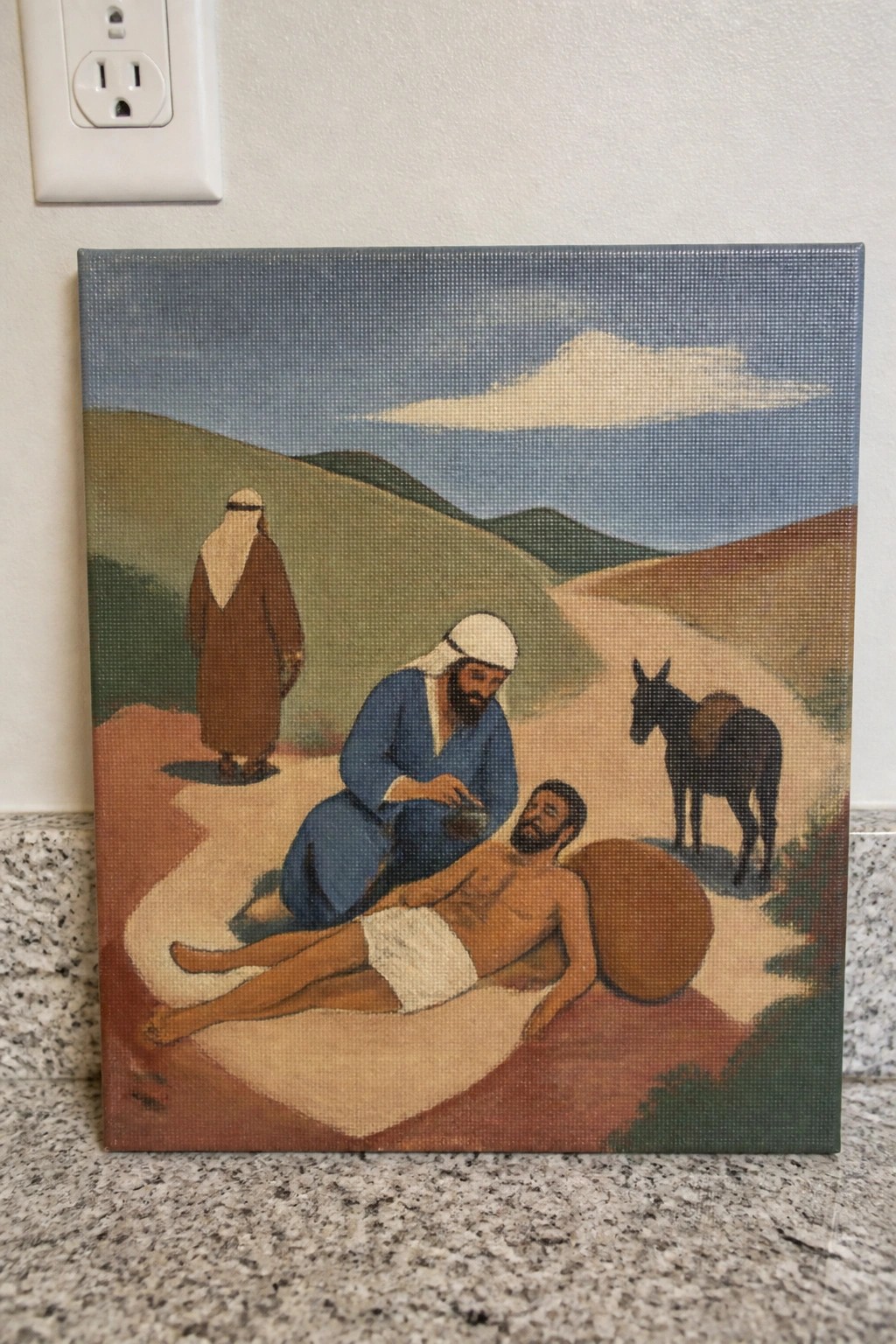
This painting idea captures the core moment from the Good Samaritan parable by placing the helper and the injured man along a simple dirt path with hills rising behind them. It works as a narrative scene painting that uses the landscape to guide the eye from the distant walking figure toward the central action and the waiting donkey. The limited color palette of earth tones and soft sky keeps the focus on the figures without extra clutter.
What makes this idea useful is the clear left-to-right story flow that translates easily to different canvas sizes. You can reduce the background detail to broad hill shapes for a faster version or keep the path and sky simple if you want to practice figure placement. The same layout works well for other helping or rescue themes by changing the clothing and props while keeping the basic arrangement.
Moses Holding the Commandments Before a Mountain Range
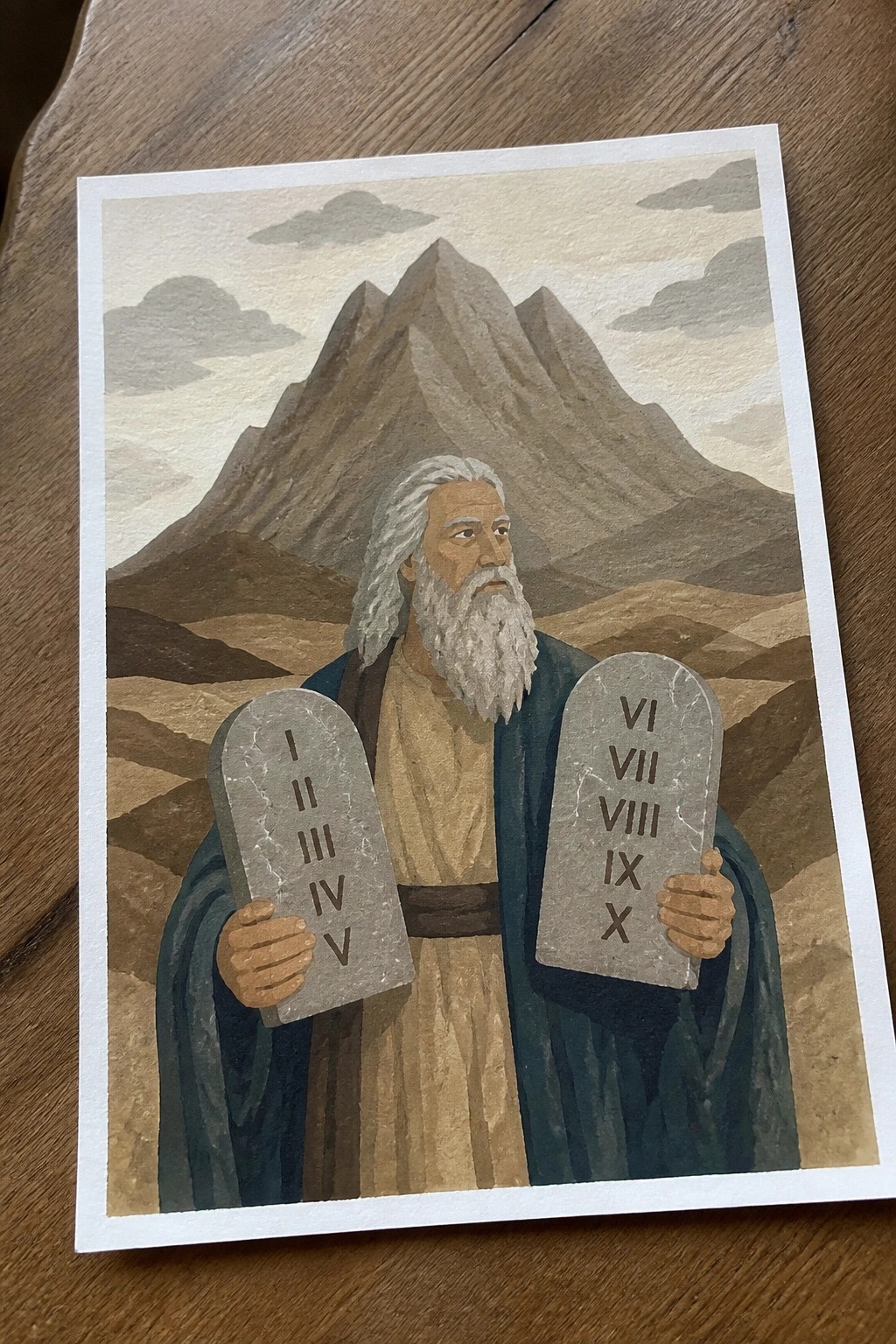
A biblical scene centers on a robed figure gripping two stone tablets etched with Roman numerals while standing against a layered desert mountain backdrop. The idea uses a straightforward vertical split between the figure and the peaks to keep the tablets as the clear focal point. Earth tones and soft cloud shapes in the sky give the composition balance without crowding the main subject, fitting the category of narrative religious landscape painting.
The composition does a lot of the work here by placing the tablets at mid-height so they stay readable even in smaller prints. A painting like this works especially well for practice because the mountain layers can be simplified into basic shapes while keeping the figure and tablets intact. The color palette makes this easy to adapt by swapping in warmer or cooler browns depending on the room it is meant for. For wall art, something like this stands out on Pinterest when paired with other Old Testament scenes in the same muted style.
Christ Raising His Hand in a Boat on Rough Seas
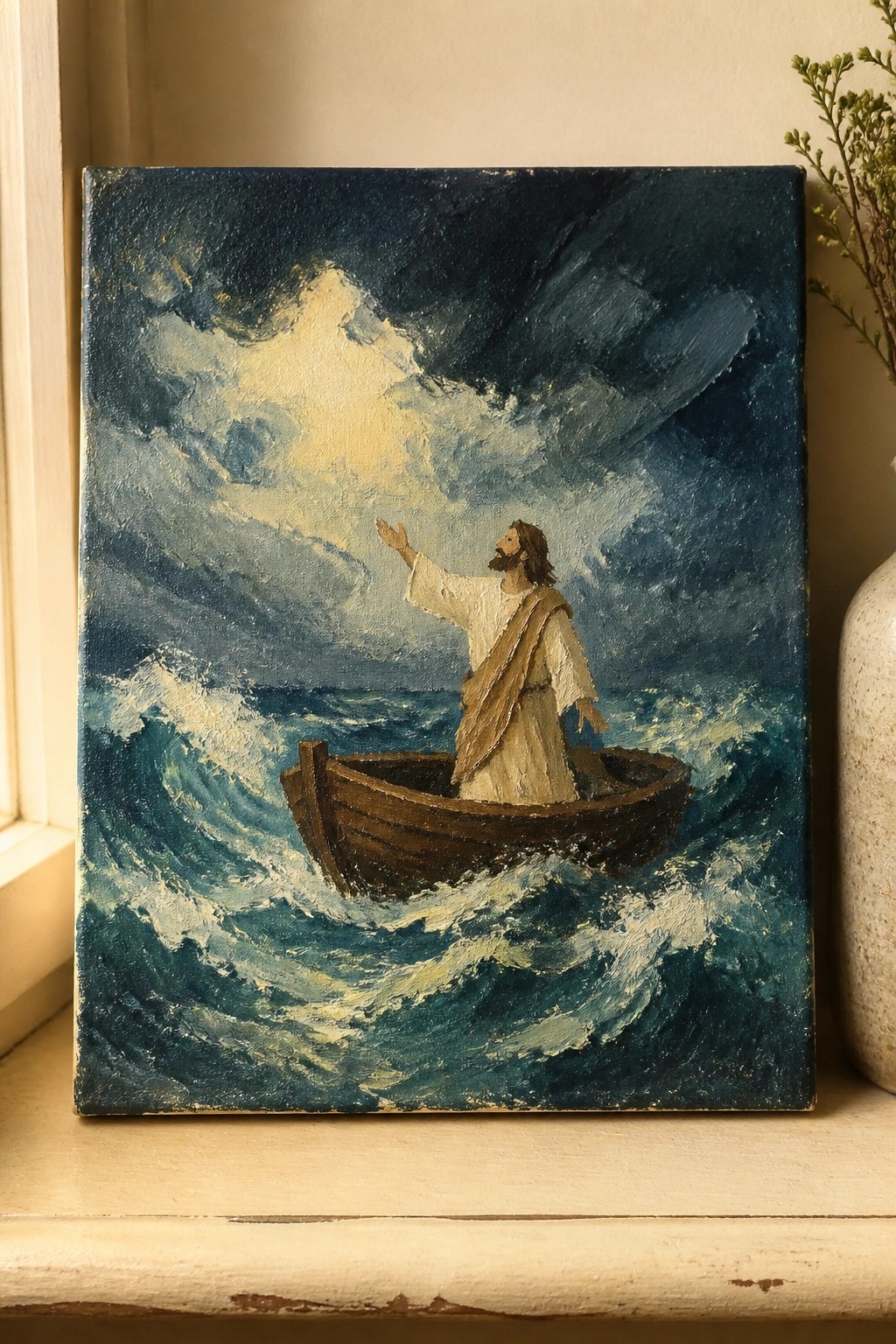
A painting idea centered on the biblical moment of Jesus standing in a small wooden boat during a storm. The composition places the figure slightly off center against churning waves and a heavy sky with light breaking through the clouds, which keeps the eye moving between the water and the raised arm. This approach works as a narrative seascape that combines a human subject with strong weather elements.
What makes this idea useful is the built-in contrast between the small boat and the large waves, which gives the scene structure without needing extra objects. The cool blue and white palette can be adjusted by swapping in warmer tones or toning down the sky for a simpler version. For practice, the idea scales easily to a smaller canvas by focusing on the main shapes first, and it translates well to wall art because the story reads clearly from a distance.
Embracing Figures on a Rural Path
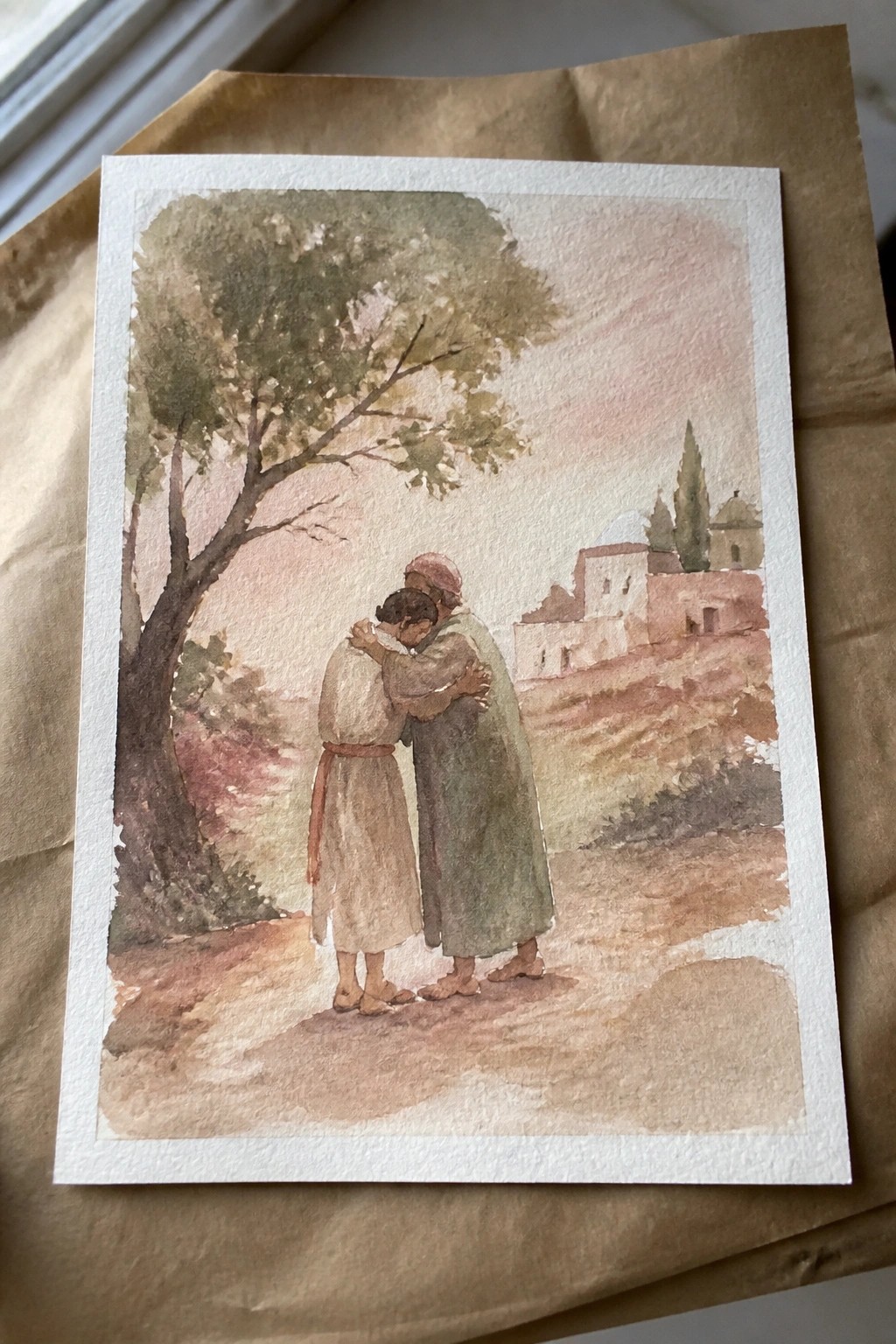
A strong painting idea here is a quiet reunion scene between two robed figures placed low in the frame, with a large tree on one side and simple buildings on the other to balance the view. The soft, warm color washes create a gentle depth without crowding the space, letting the path and sky remain open. This fits into the biblical narrative category where the focus stays on human interaction set against a minimal landscape.
What makes this idea useful is how the figures take center stage while the background stays loose and secondary. You can adapt the same layout with fewer details by keeping the tree and buildings as flat shapes and using just three or four earth tones. The approach works especially well for practice because the main shapes are straightforward and the scale stays small enough to finish in one sitting. For wall pieces it gives a calm focal point without needing extra elements.
Colorful Tiered Tower with Desert Base
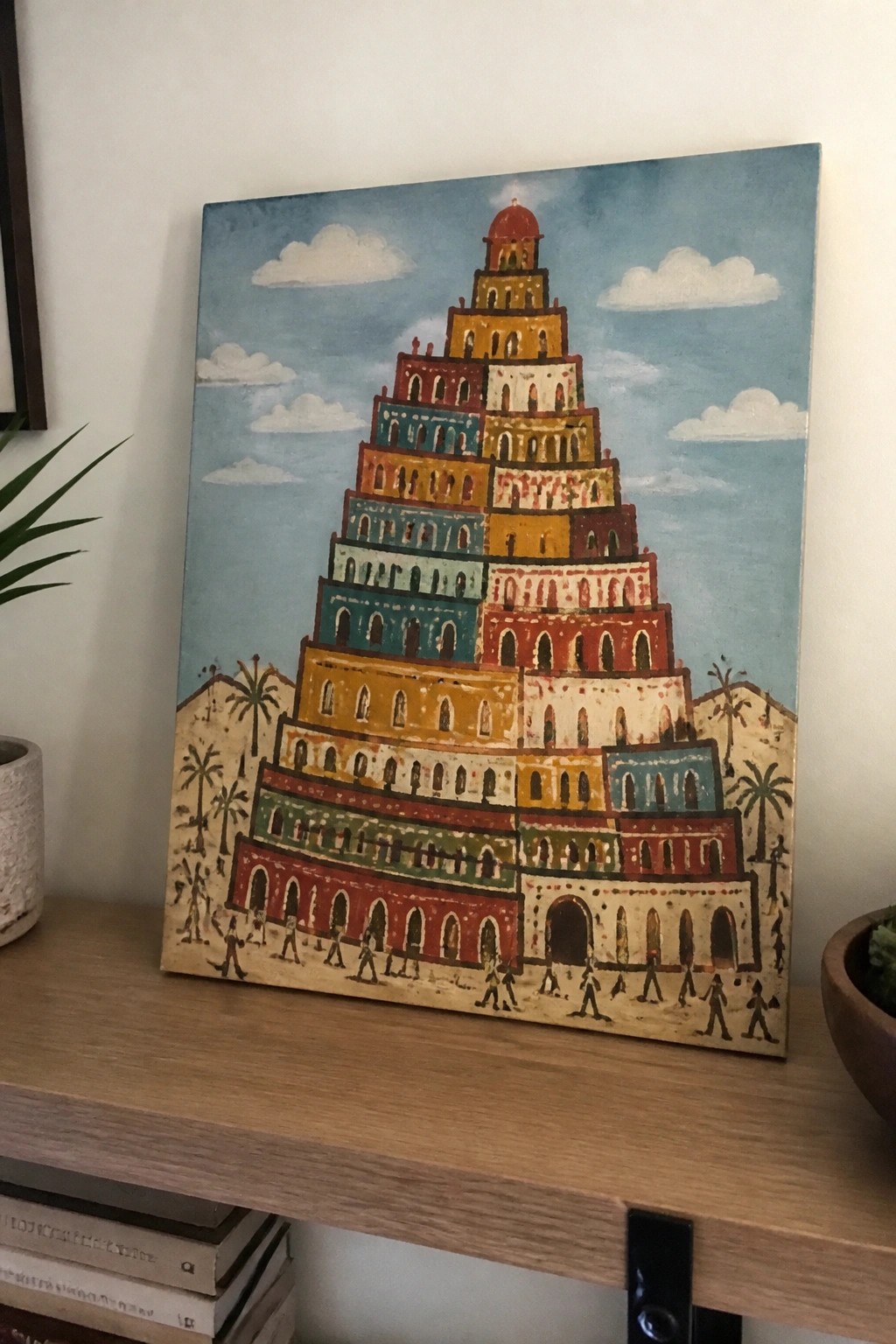
A stacked tower built from horizontal bands of different colors forms the core idea here, with each level slightly narrower than the one below and marked by rows of simple arches. The repeating shapes create a clear vertical rhythm that keeps the eye moving upward through the structure. This approach fits decorative art with architectural focus, relying on flat color blocks and minimal background detail to hold the composition together.
The horizontal layers make it straightforward to paint section by section and adjust colors as you go. You could shrink the base figures or swap in different earth tones to fit a smaller canvas or a more muted palette. For wall pieces, the tall format stands out on a shelf or narrow wall space, and the same stacked layout works just as well simplified into a quick study or expanded with extra windows on each level.
Daniel Seated Calmly Among Lions in a Den

The core idea here is a biblical narrative scene that uses a group of lions as the main visual element around a single seated figure inside a simple cave space. This falls into the animal and story illustration category, where the lions are positioned at different heights and angles to create an enclosed, balanced layout. The warm gold and brown tones on the animals stand out against the muted rock background, letting the composition guide the eye without extra details.
What makes this idea useful is the way the lions’ resting and standing poses naturally frame the center without requiring complex perspective work. The limited color range makes it straightforward to try in acrylic or watercolor on different sized canvases for wall pieces or practice. You could reduce the number of lions or flatten the background further if you want a quicker version while keeping the same story focus.
Two Women Walking a Path Through Harvest Fields
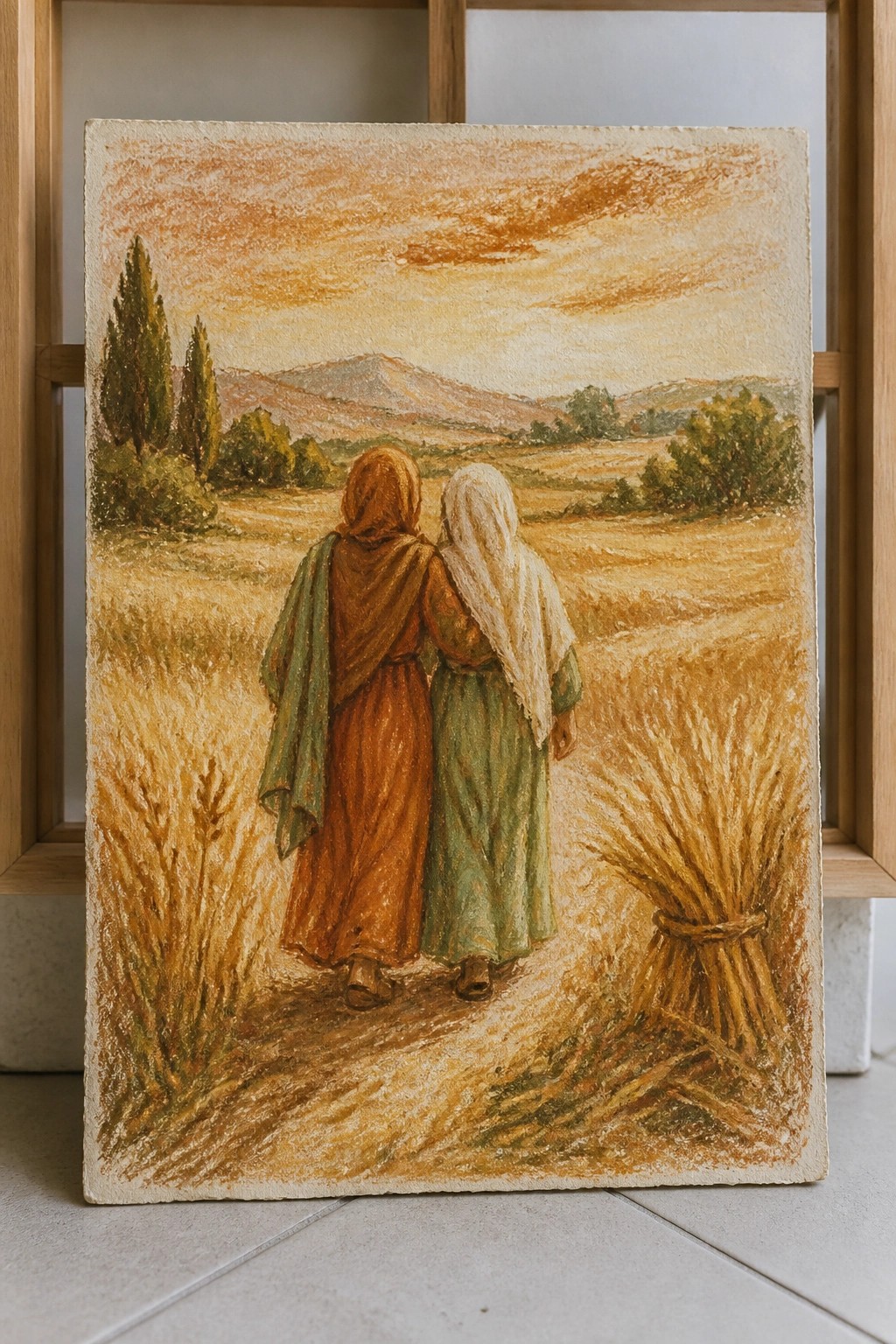
A painting idea centered on two figures in simple robes moving away along a dirt path in a wide grain field creates a strong narrative landscape. The composition uses the path and a bundled sheaf of wheat in the foreground to pull the eye forward while the distant hills and sky fill the upper half with soft layers of color. Warm ochres, golds, and muted greens keep the focus on the land and figures without extra detail.
What makes this idea useful is the clear foreground anchor that balances the open background and makes the scene easy to scale down. The limited color range works well for practice pieces or quick studies since it relies more on value shifts than precise drawing. This would be easy to adapt by swapping the robes for different clothing or tightening the crop to just the path and wheat bundle for a simpler version. For wall art the harvest setting gives it seasonal flexibility that stands out in a set of landscape prints.
Joseph’s Coat Built from Bright Patchwork Blocks
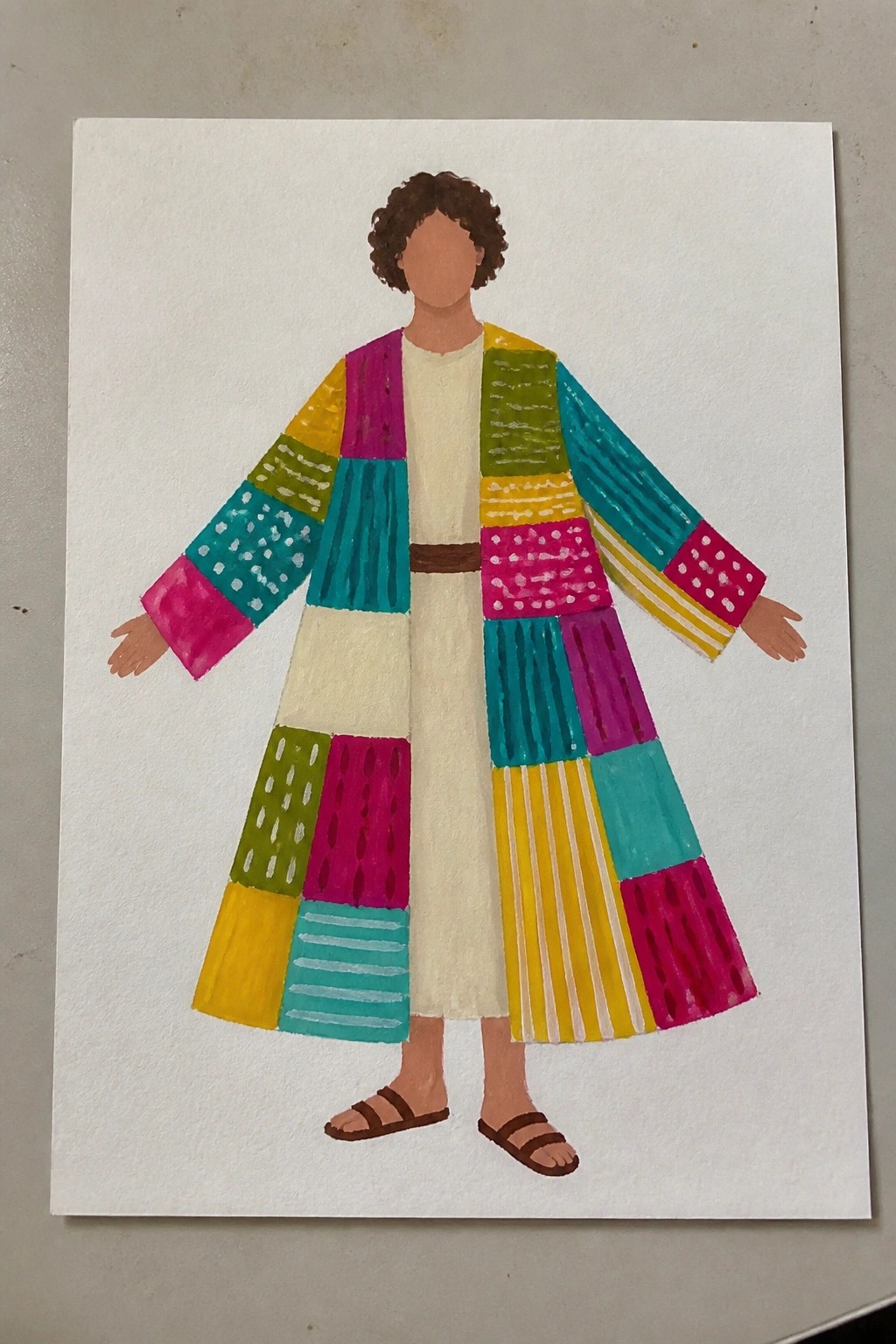
A biblical scene idea centered on Joseph wearing a long robe made entirely of colored rectangles in pink, teal, yellow, green, and magenta, placed over a plain tunic with a simple belt. The figure stands facing forward with arms slightly out and feet in basic sandals, letting the repeating color blocks carry the visual weight instead of detailed facial features or shading. This approach works as a decorative character painting where the pattern itself becomes the main focus.
What makes this idea useful is that the robe can be built with quick rectangles and stripes, so the composition stays balanced even if the shapes vary slightly. The even spacing of the patches and the neutral background make it easy to adapt for different canvas sizes or to swap in your own color order. For practice or wall pieces, the same layout works if you keep the tunic simple and let the coat stay the strongest element.
Baptism Scene with Overhead Light
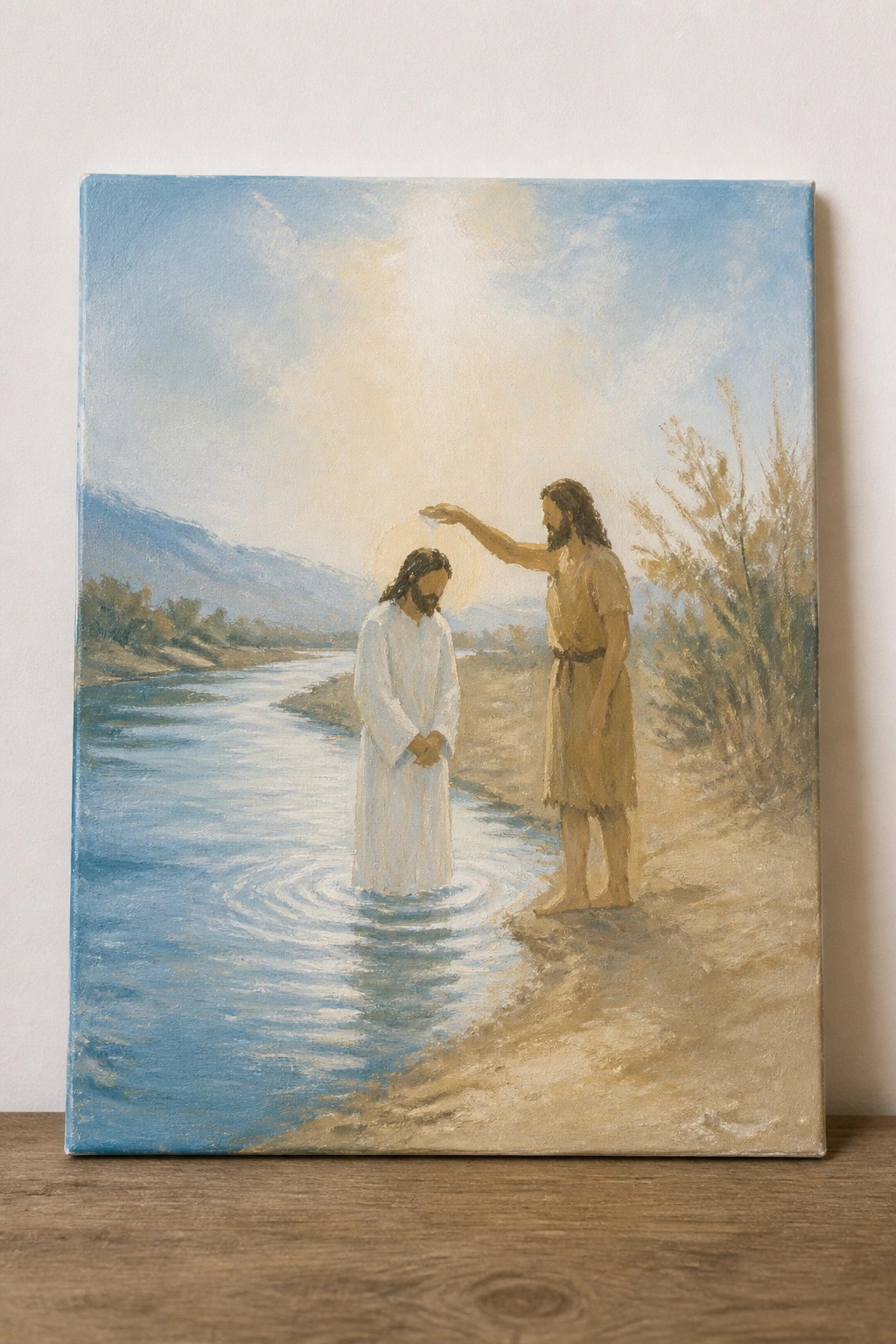
A baptism painting idea places two figures at the edge of a river, one standing in the water and the other on the bank with an arm raised. The idea works through a simple horizontal layout that keeps the river and sky open while the light rays create a clear center point. Soft blue and warm earth tones separate the water from the land, and the distant mountains give the scene depth without extra detail.
What makes this idea useful is how the light and figure placement already organize the composition, so beginners can focus on shapes rather than complex details. The wide river and sky areas make it easy to change the canvas size or simplify the background for a smaller piece. For wall art, the same setup can be adapted by shifting the figures slightly or using a narrower color range to fit different room styles.
Sunrise Over the Empty Tomb
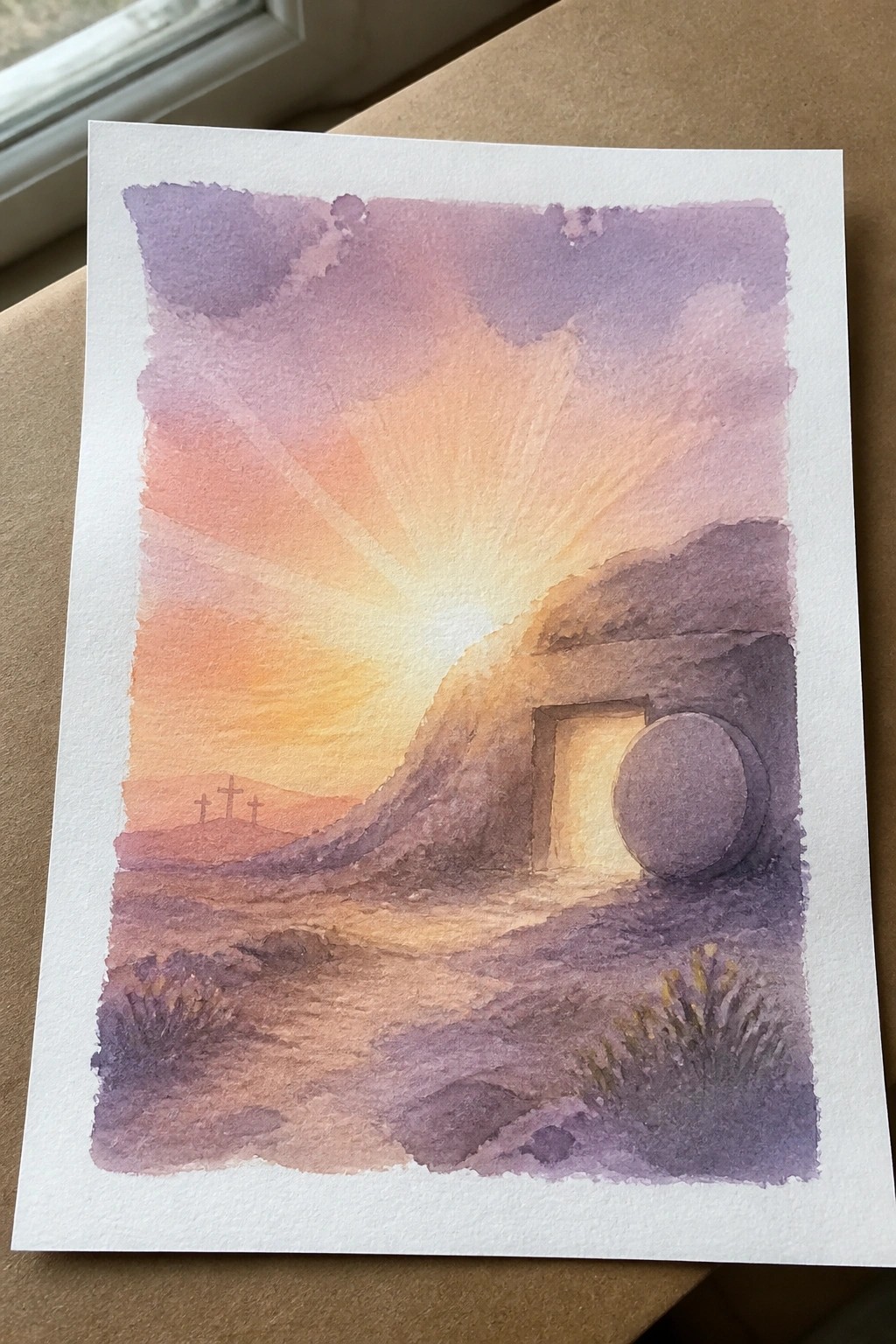
A landscape painting idea built around the empty tomb uses a low horizon line and strong radiating light rays to pull focus straight to the open doorway and the round stone pushed to the side. The sky shifts from deep purple at the top through warm peach and orange near the center, creating a clear dawn moment while three small crosses sit on a distant hill for context. This approach works as a narrative landscape that combines sky work with simple rock and path shapes.
The color wash from cool to warm tones makes the sky the main element to practice, while the tomb and stone stay as solid dark shapes that do not require much detail. You can shrink the background hills and crosses to fit a smaller paper size or crop the foreground path if you want a tighter vertical piece for a card or print. The strong light rays also give an easy way to add contrast without adding extra objects.
Palm Sunday Procession with Crowded Figures and Palm Fronds
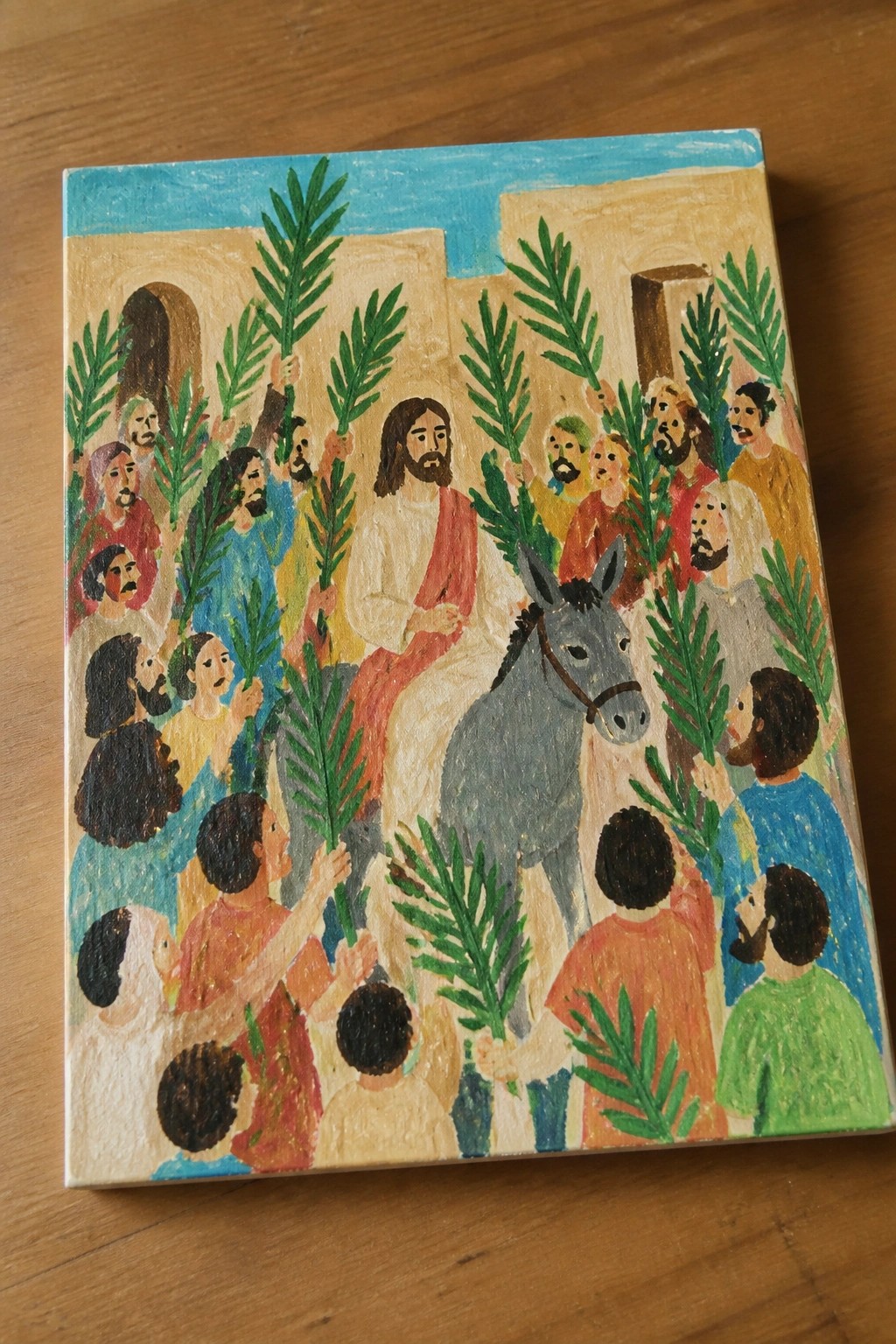
A biblical procession scene works well as a narrative painting idea, with a central rider on a donkey surrounded by overlapping figures holding up tall palm branches. The repeated vertical leaf shapes create natural leading lines that pull attention through the crowd while filling the space without needing complex backgrounds. Warm earth tones paired with strong greens keep the composition balanced and easy to read from a distance.
What makes this idea useful is the built-in crowd structure that lets you adjust the number of figures based on your canvas size or skill level. You could scale it down to just the rider and a few people for a quicker version or expand the background buildings if you want more depth. The clear pattern of palms also makes it straightforward to adapt into other mediums like watercolor or even cut paper for a different texture effect.
Sunburst Composition for a Hillside Teaching Scene
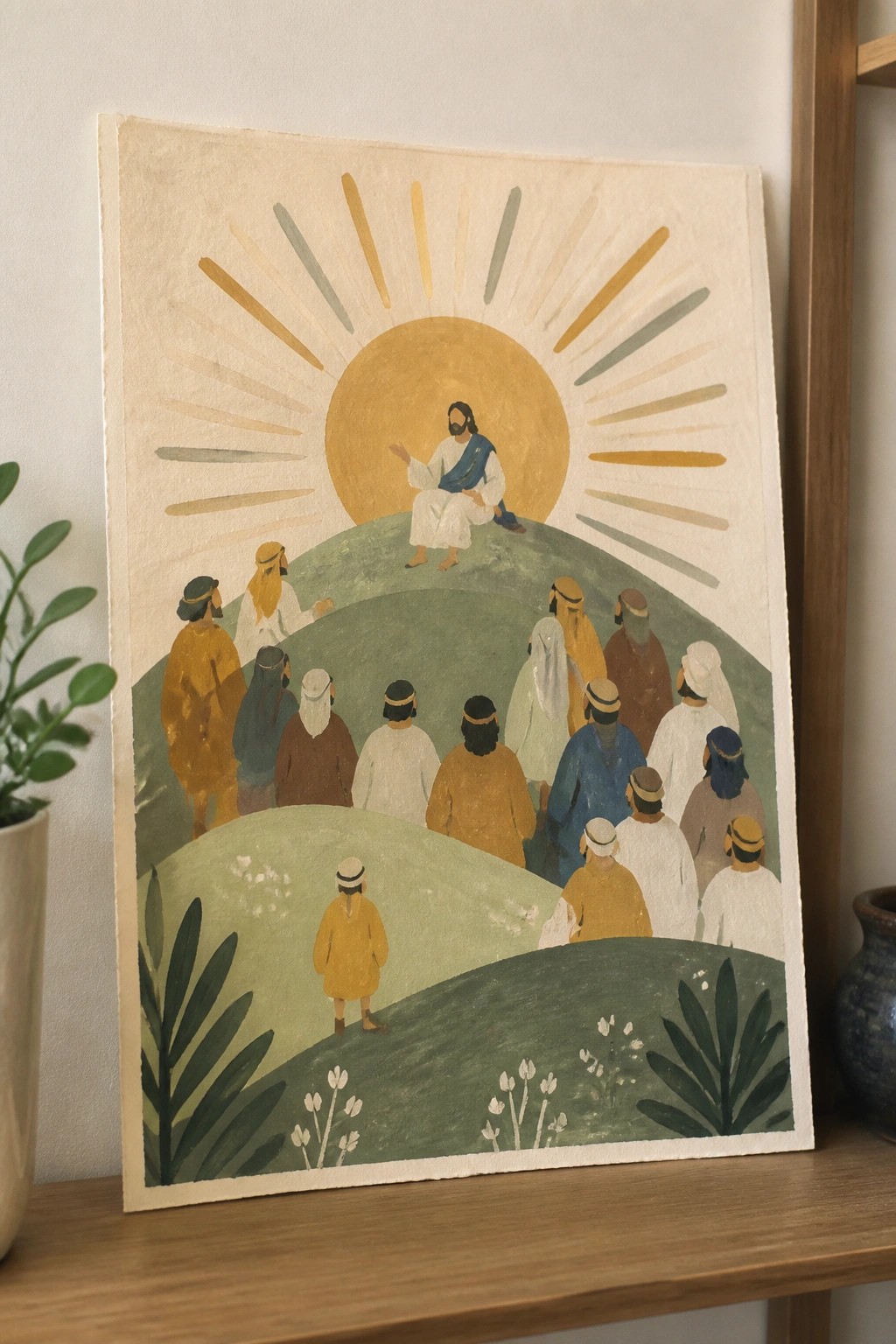
A painting idea built around a central teaching figure on a hill uses a large sun with radiating lines to anchor the whole layout, with listeners placed along the slopes to create a natural sense of gathering. The approach works as a narrative landscape that keeps shapes simple and the color palette limited to warm yellows, soft greens, and earth tones so the eye moves straight to the main subject. Layered hills and flat color blocks give the scene enough depth while staying easy to read.
What makes this idea useful is the way the sun and hill structure do most of the compositional work, so the focus stays on the central figure without needing fine details. The color palette makes this easy to adapt by changing the sun’s tone or reducing the crowd to fewer figures for a quicker version. For wall art, something like this stands out on Pinterest because the bold sun shape creates instant visual interest. This would be easy to turn into a smaller study by keeping only the top half of the hill and three or four people.
Zacchaeus in the Tree
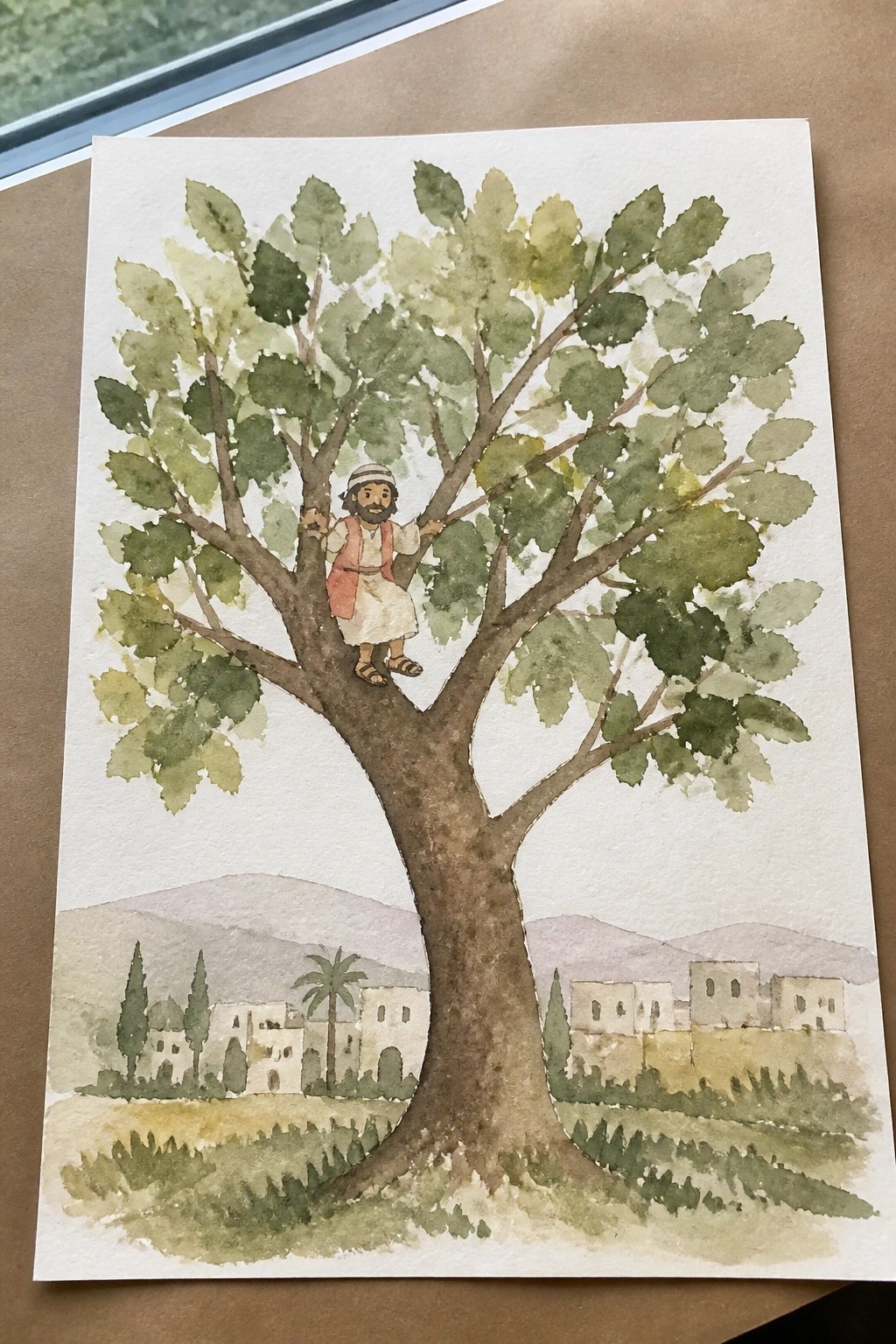
A figure seated in the upper branches of a large spreading tree creates the main focus in this biblical scene idea. The painting idea centers on a single dominant tree with soft layered foliage that partially hides the character while still showing the pose clearly. A low village and hills in the background add context without pulling attention away from the tree and figure.
The composition does a lot of the work here by letting the tree fill most of the space and keeping the background loose and small. You could simplify the village into just a few shapes or change the foliage colors to match a different season. For practice this kind of subject builds skill with tree structure and layering while still leaving room to add or remove details depending on the size of the paper.
Annunciation Scene with Angel and Mary
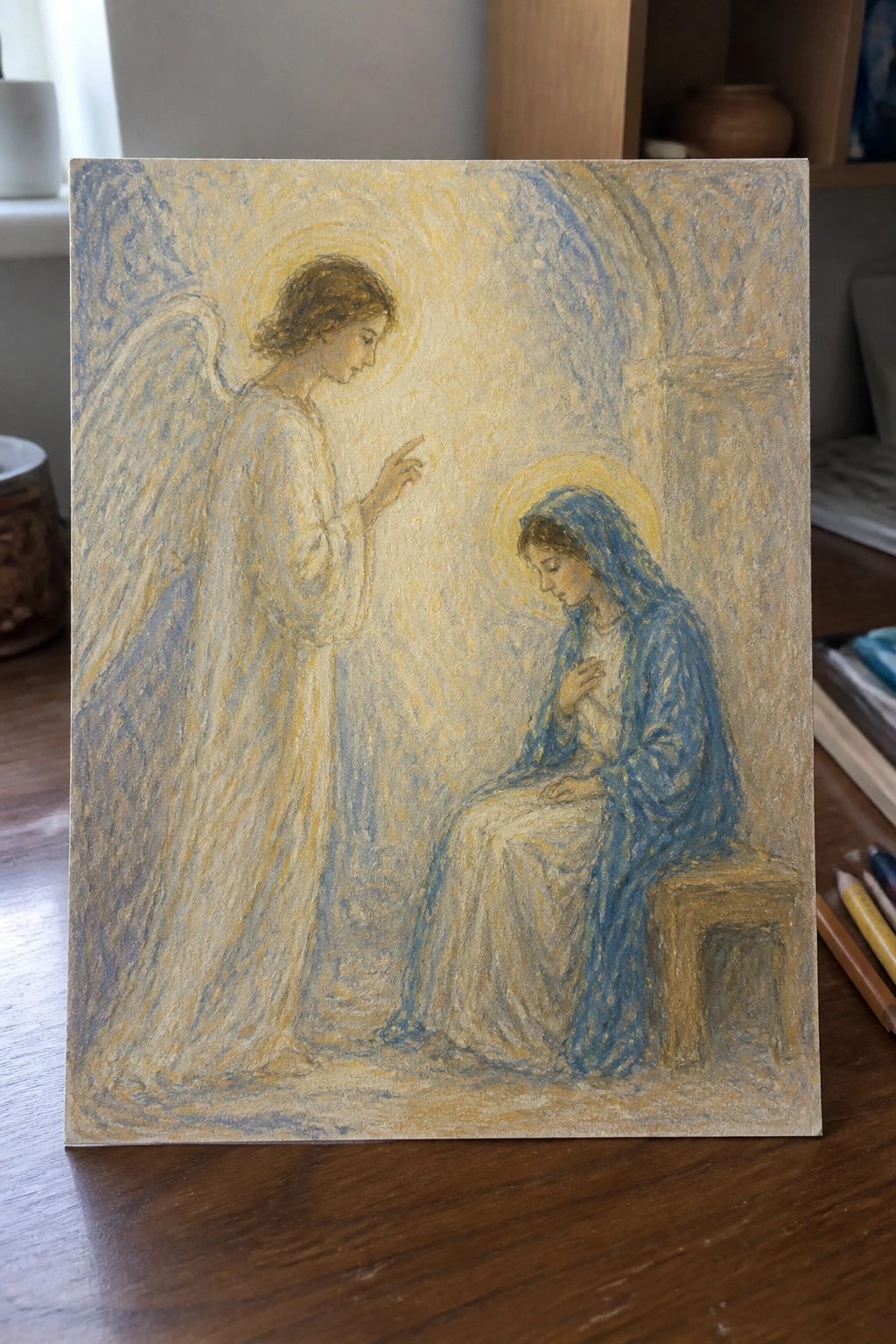
The painting idea captures the biblical moment of an angel delivering a message to a seated woman using two main figures placed in a simple vertical arrangement. One figure stands and gestures while the other sits with a hand near the chest, both framed by soft halos and an arched background that keeps attention on their interaction. The limited color palette of yellows and blues with visible strokes gives the scene a calm, readable quality that suits narrative religious art.
What makes this idea useful is the straightforward left-to-right layout that guides the viewer without extra props or busy details. You could swap the background arches for a plain wall or adjust the halos to different sizes depending on the canvas scale. For practice, the two-figure setup works well for studying basic gestures and proportions, and the recognizable story makes it easy to personalize with slight changes in clothing folds or light direction.
Narrative Still Life with Bread and Silhouettes
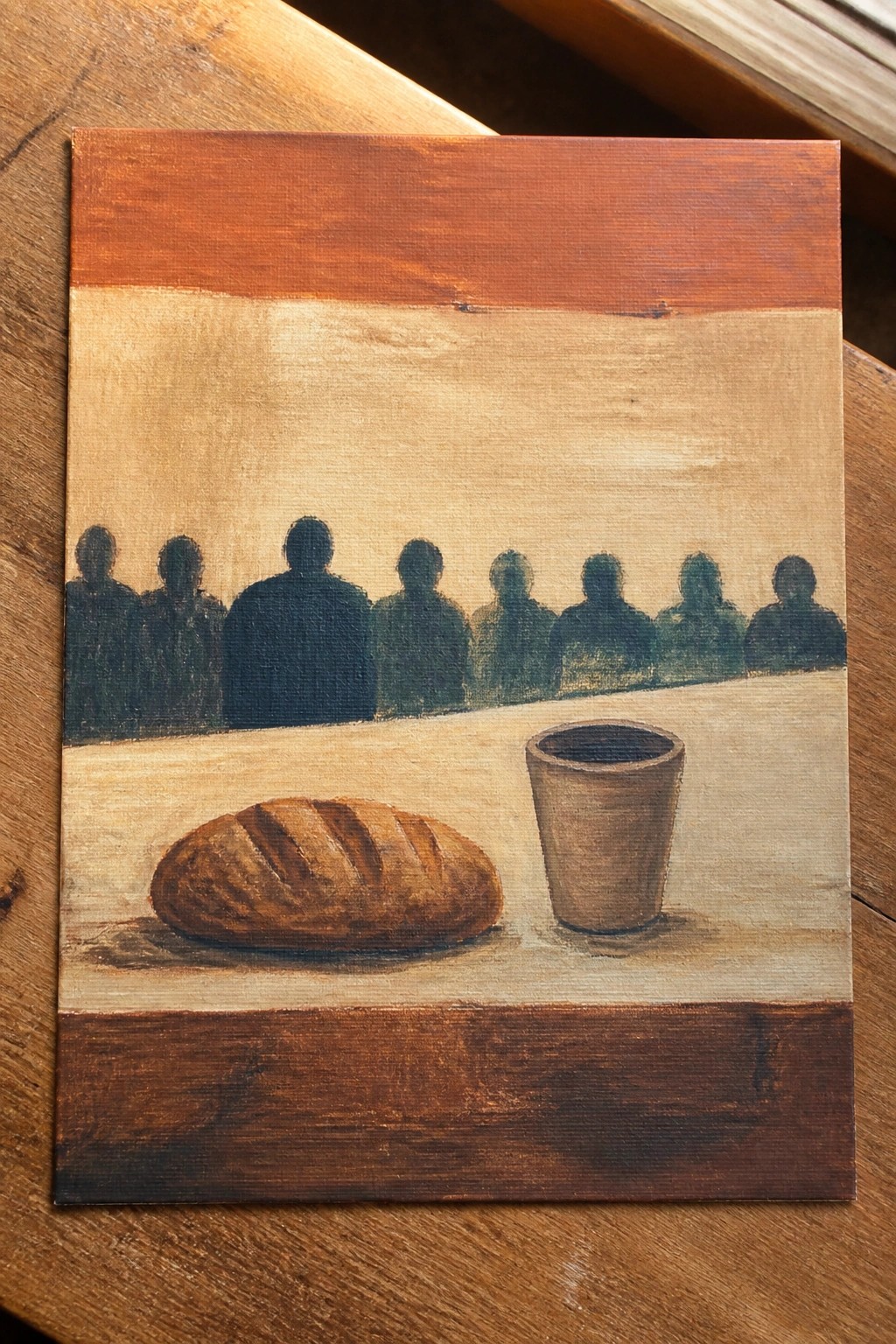
A still life idea that places a loaf of bread and a cup in the foreground while using a row of simple dark silhouettes to suggest a group gathered at the table behind them. This approach turns a basic food setup into a scene that hints at a larger story without needing detailed figures. The horizontal layout and limited earth-tone palette keep the composition balanced and easy to read from a distance.
What makes this idea useful is how the silhouettes let you add context without extra detail work. You could adapt it by varying the number of shapes or adjusting the table height to fit different canvas sizes. For wall pieces the clean lines and muted colors make it suitable for kitchen or dining areas. The same layout also works if you swap the bread and cup for other simple objects while keeping the background group.
Parable of the Sower Split Ground View
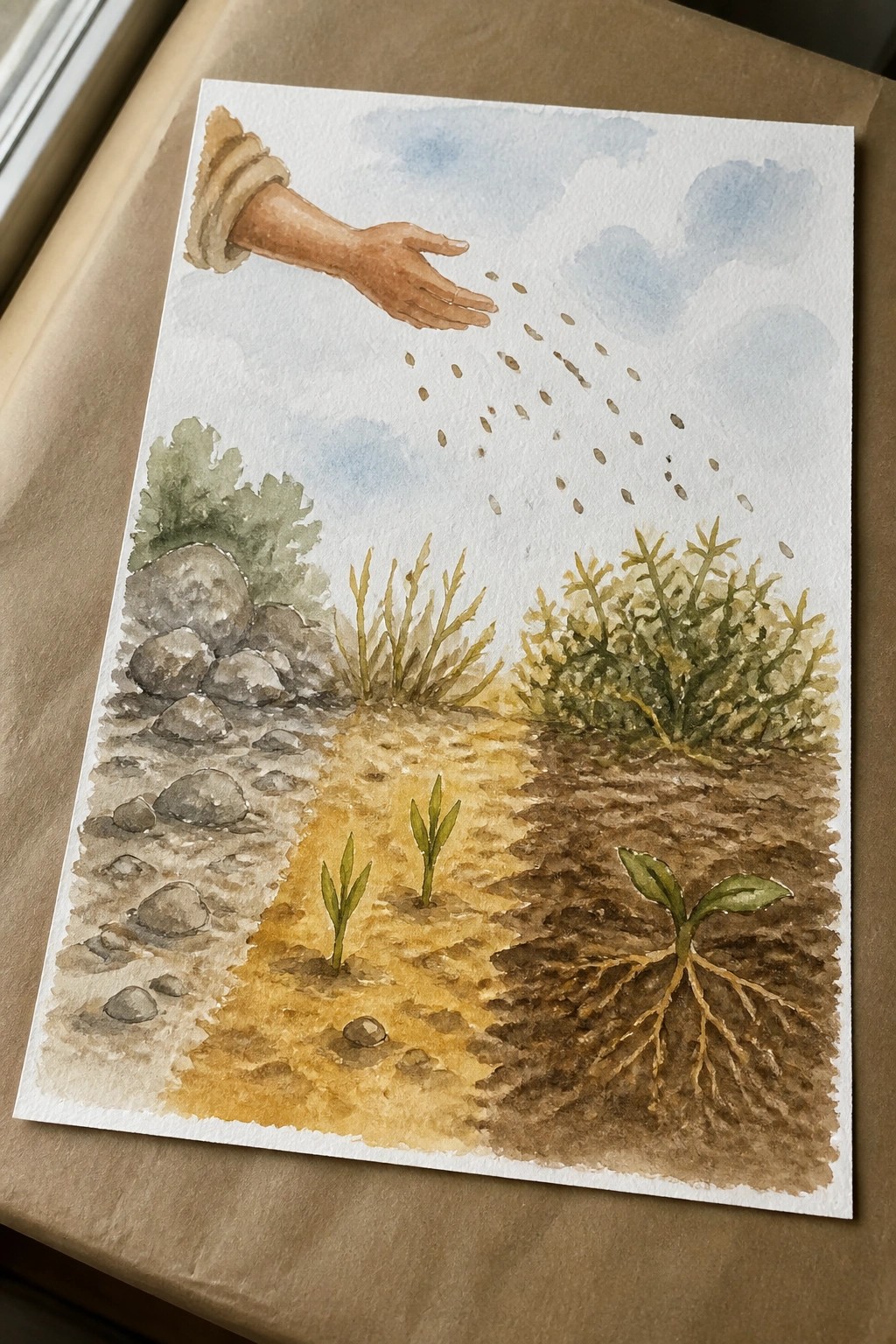
The core idea is a landscape painting that depicts seed sowing across two side-by-side soil conditions to show how the same action produces different results. A hand scatters seeds above a clear horizontal split where the left side stays rocky and dry while the right side shows deeper soil with exposed roots and stronger plant growth. The composition works because the vertical roots and the path of seeds create a direct visual comparison without needing extra elements.
What makes this idea useful is the built-in contrast that does most of the storytelling through layout alone. You can adapt it by changing the color temperature between the two halves or by cropping tighter around the ground split if the hand feels like too much detail. For practice this subject works well because the root lines and simple plant shapes give clear structure to follow while still leaving room to adjust scale. The same split idea could be reused for other seed or growth themes by swapping the background textures.
Three Crosses Silhouetted on a Hill at Sunset
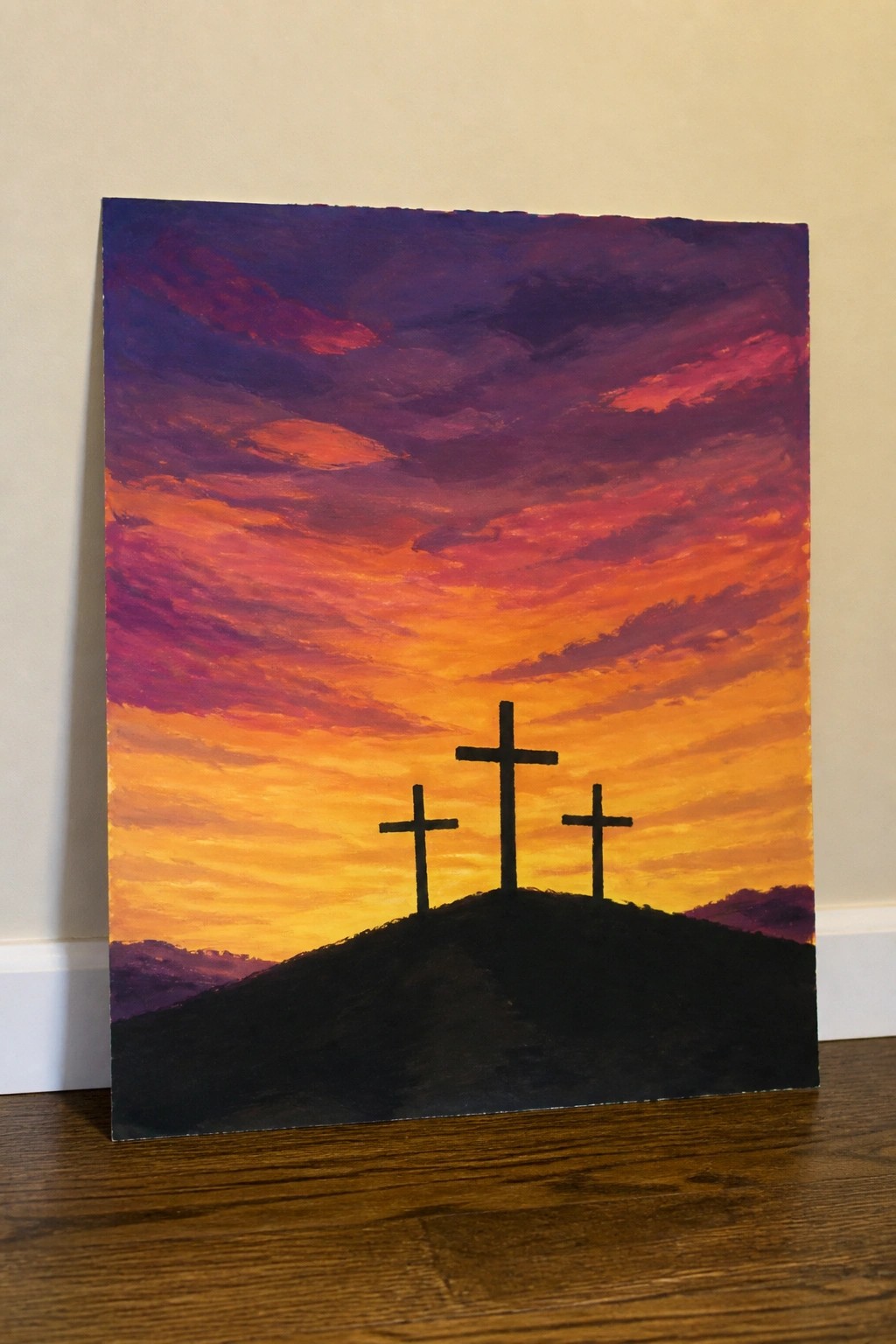
A painting idea built around three crosses on a hill uses a sunset sky as the main focus while treating the foreground as simple dark shapes. The concept works as a landscape with strong contrast, where the hill line sits low enough to let the sky fill most of the space. Blended bands of orange, red, yellow, and purple create the sky, and the crosses stay flat and black so they read clearly against the color.
The composition does a lot of the work here by keeping the hill and crosses as easy-to-paint silhouettes. You could adapt the idea by shifting the sky toward cooler tones or changing the spacing of the crosses to fit a different canvas size. For wall art this kind of piece works especially well because the bright sky against the dark shapes gives it clear visual weight even from across a room. The same approach can be simplified further by using fewer colors or scaled up by adding more subtle cloud layers.
Frequently Asked Questions
What makes these Bible scene paintings more creative than traditional religious art?
These paintings stand out because they often blend modern artistic styles, unexpected perspectives, or symbolic elements with classic Bible narratives to make the stories feel fresh and relatable. For example, an artist might use vibrant colors or abstract forms to highlight themes like redemption or faith, helping viewers connect emotionally rather than just seeing a literal scene.
Who are the artists behind the 23 creative Bible scene paintings mentioned?
Many of the featured artists come from diverse backgrounds, including contemporary Christian creators and those who draw from personal spiritual experiences. Their inspirations often include both scripture and current events, resulting in works that interpret stories like the Good Samaritan or the Prodigal Son in innovative ways that spark discussion.
How can I view or obtain prints of these specific Bible paintings?
You can start by searching online art platforms such as Fine Art America or Etsy using the painting titles or artist names from the article. Many of these works are available as high-quality prints, posters, or digital downloads, and some artists offer direct sales through their personal websites to support their creative process.
What Bible stories appear most frequently in this collection of creative paintings?
Stories involving Jesus miracles, such as the feeding of the five thousand or calming the storm, along with Old Testament accounts like Noah’s ark or David’s battle with Goliath, tend to dominate the list. These scenes are chosen for their dramatic potential and ability to convey messages of hope, courage, and divine intervention through visual storytelling.
How might these paintings enhance personal Bible study or family discussions?
Displaying or studying these artworks can provide visual anchors for key verses, making abstract ideas more memorable during quiet reflection or group talks. Families often use them as conversation starters to explore the emotional layers of the stories, encouraging deeper understanding and application of biblical principles in daily life.