I like to paint from the Bible every now and then because the stories stay with me.
It is not always easy to find the right way to show them but I keep trying different things.
Some of the ideas in this post are ones I’ve used myself and others are just thoughts I’ve had over time.
Maybe one of them will give you a starting point for your own painting.
They are all pretty simple and work with basic supplies.
Wooden Cross with Draped Cloth and Branch
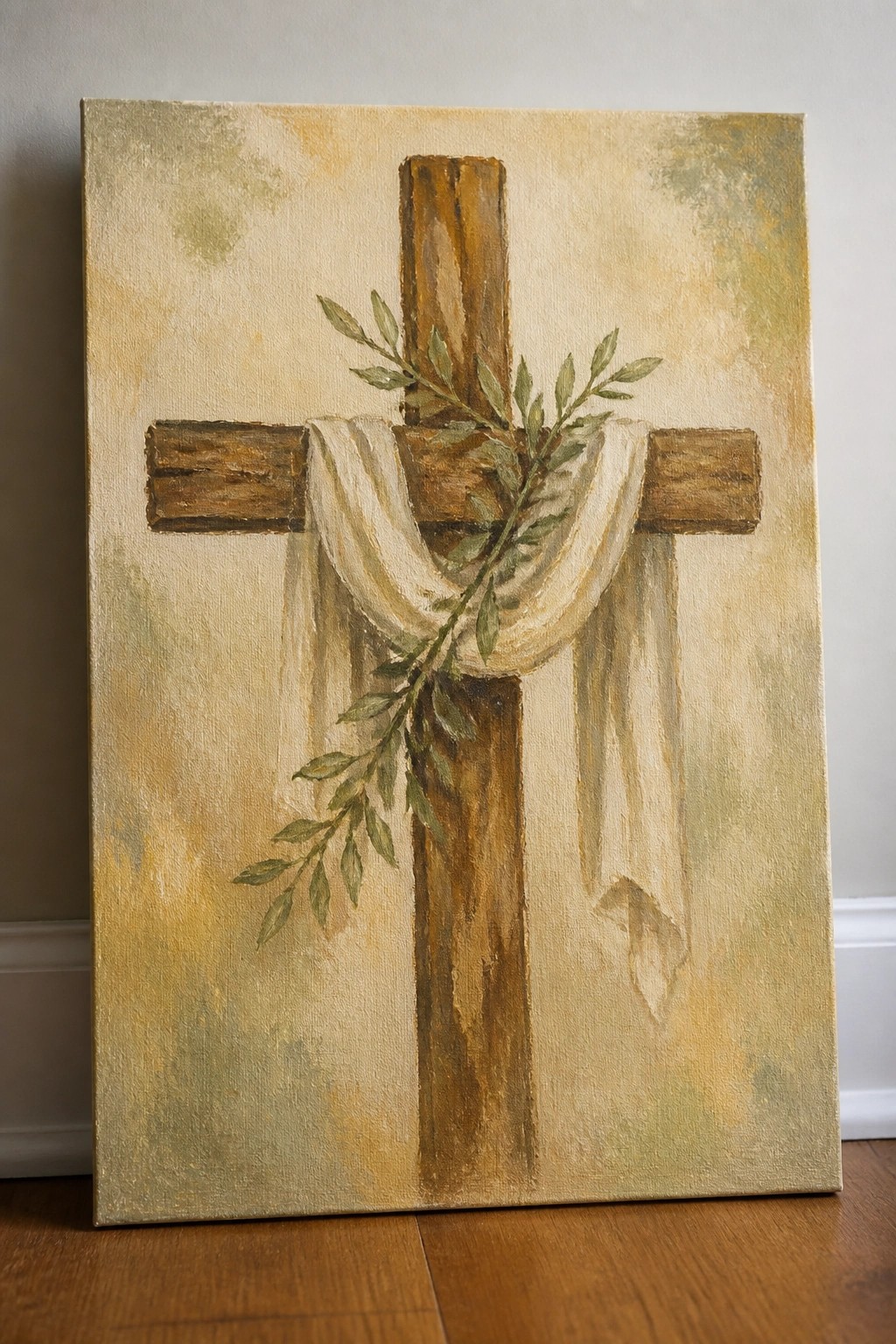
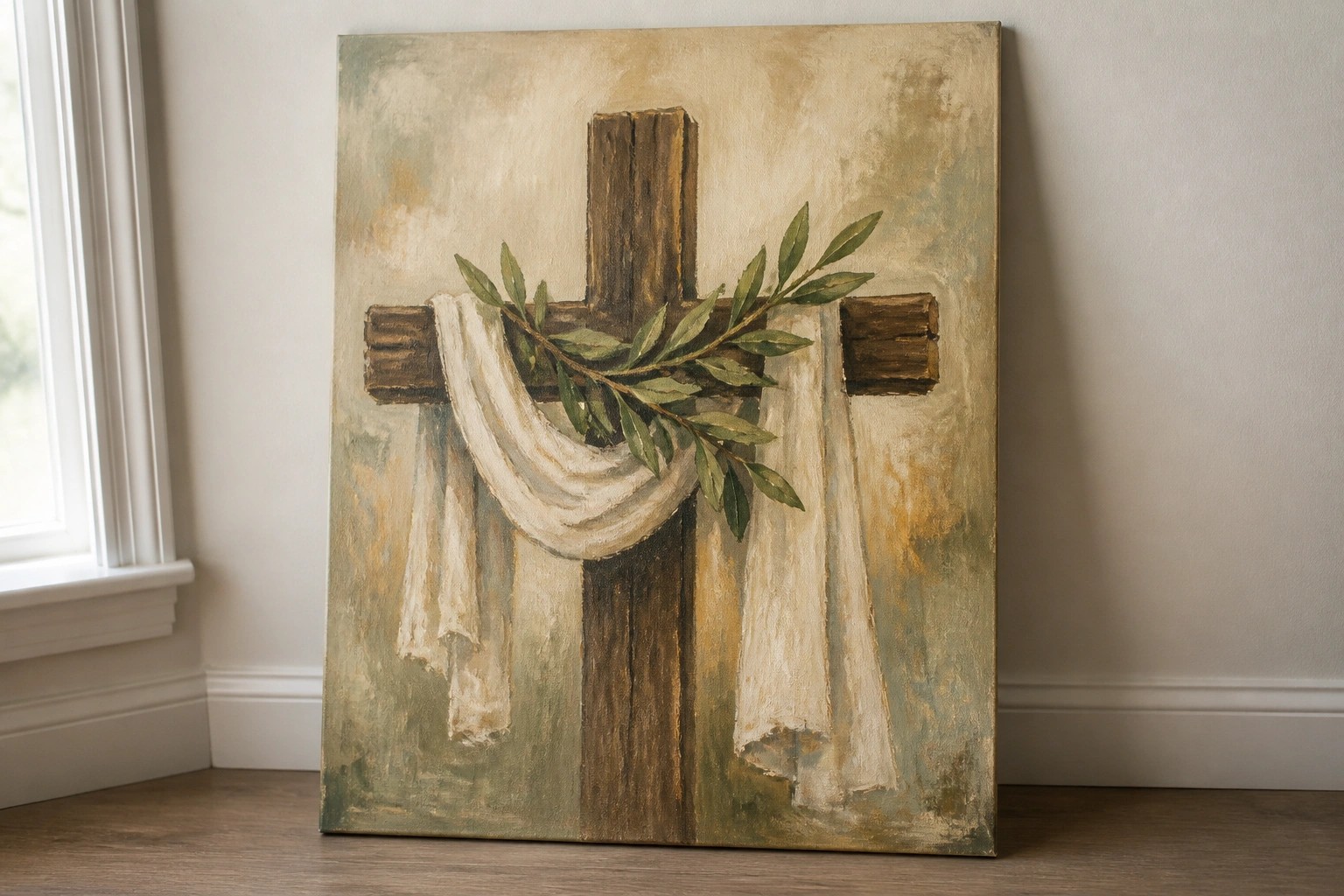
This painting idea uses a centered wooden cross as the main subject, with a white cloth draped over the arms and a leafy branch laid across the middle. The vertical format and simple layering keep the focus on the cross shape while the fabric folds and branch add natural texture. Muted earth tones in the background help the brown wood and soft whites stand out without competing elements.
What makes this idea useful is the clear central layout that breaks down into separate parts like painting the wood grain first and the cloth folds next. You can swap the branch for different greenery or shift the background colors to fit a room. For wall decor, the design works at different sizes and stays easy to adapt by keeping the cross solid and adjusting only the added details.
Star of Bethlehem Over a Nighttime Town
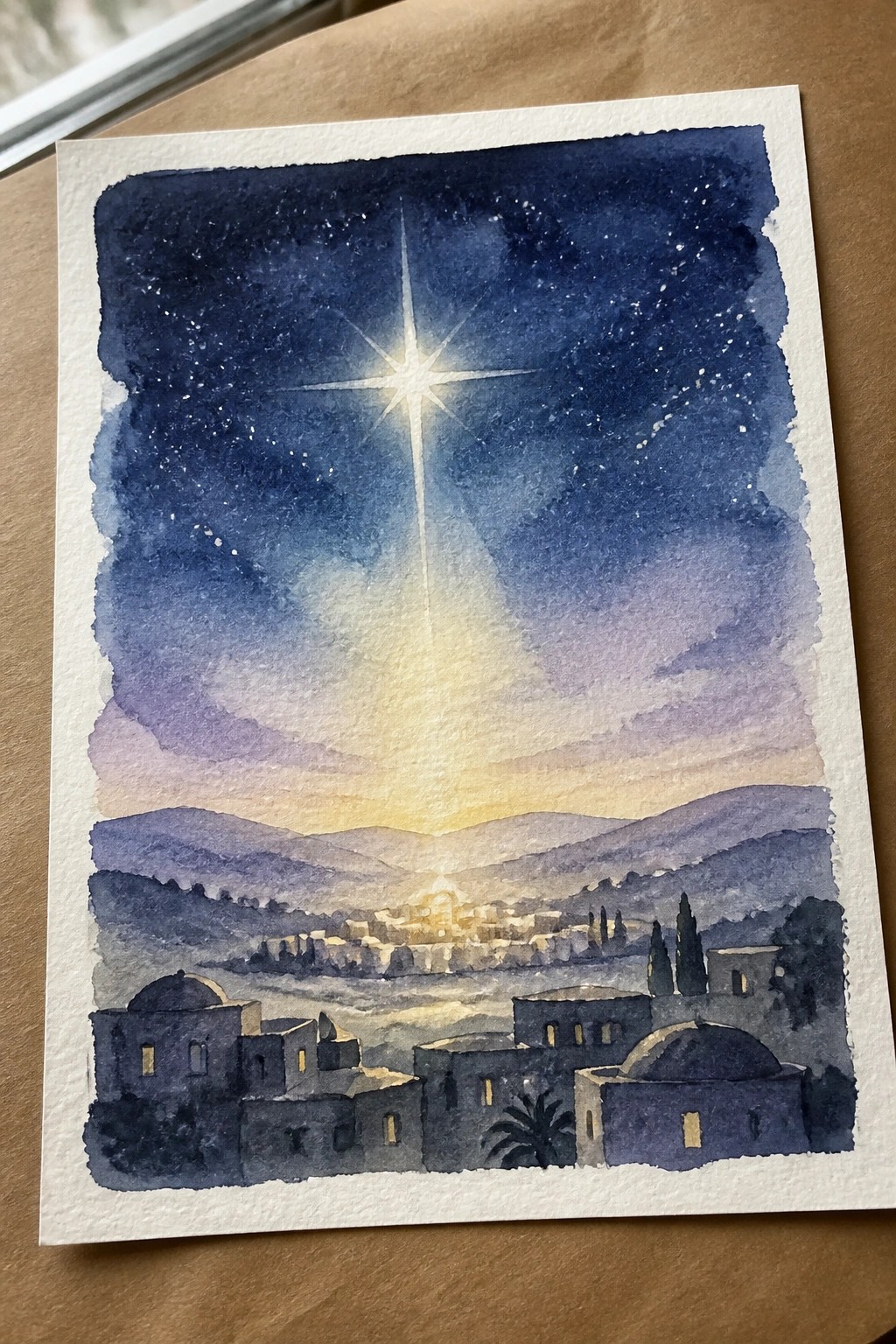
A night landscape with a single bright star above a cluster of buildings and hills forms a clear biblical painting idea. The star sits high in the center with light spreading downward, while the town and hills occupy the lower third to create a simple horizon line. A dark blue sky fading into warmer tones near the star helps keep attention on the main focal point without extra detail.
The composition does a lot of the work here because the strong vertical light path guides the eye straight to the town. You can adapt the idea by changing the sky colors or making the buildings more or less detailed depending on your style. For wall art this works especially well at medium sizes where the contrast between the dark background and the star stays easy to see. The same layout could be simplified by using fewer buildings or a smaller hill range if you want a quicker version.
Fish Motifs in Alternating Colors with Patterned Borders
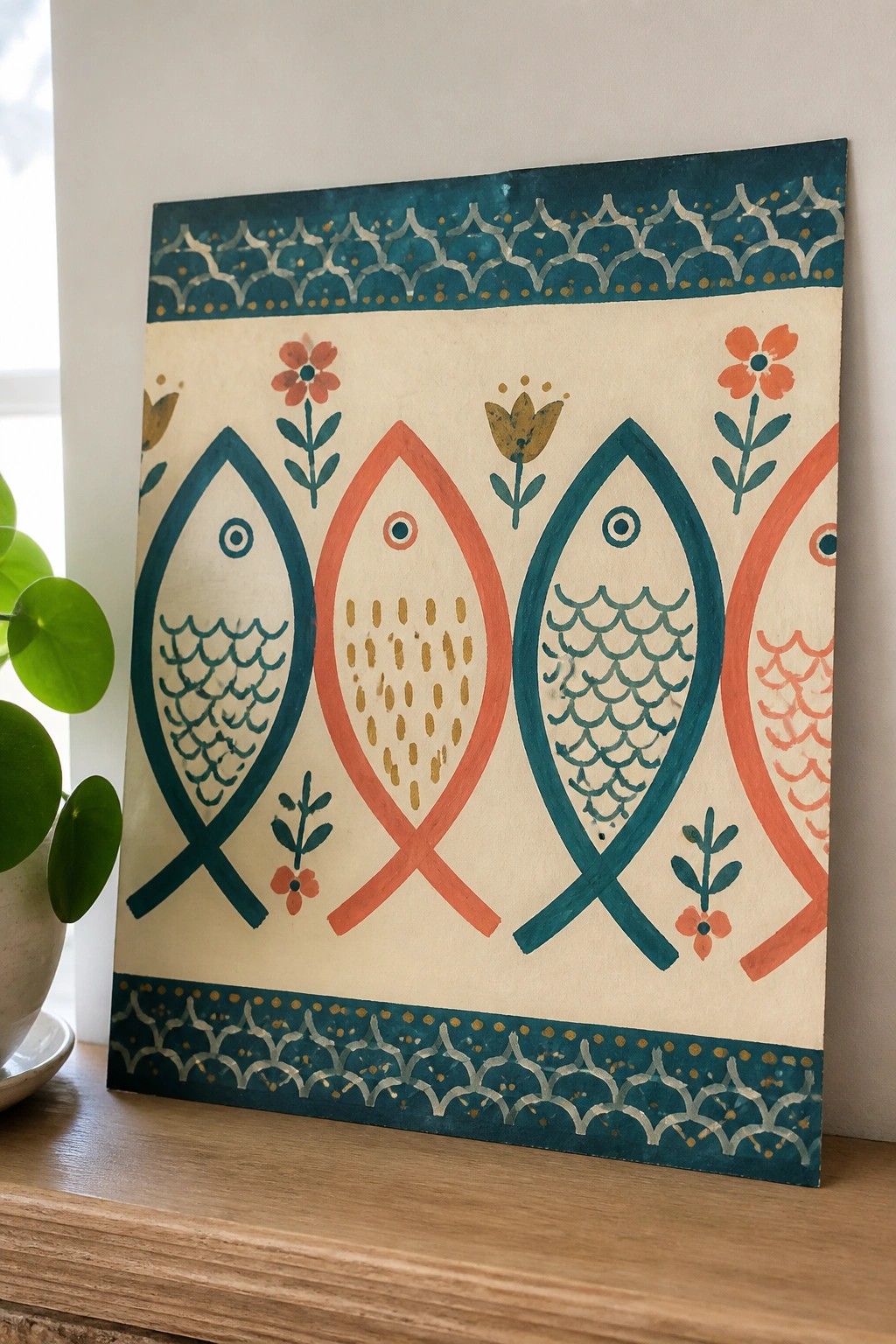
A straight row of overlapping fish shapes painted in two alternating colors forms the core of this decorative piece. Small flowers and leaves sit between the fish while matching scalloped borders run along the top and bottom edges. The idea relies on simple outlines, flat color blocks, and a repeating layout that keeps the design balanced without needing complex shading.
The composition does a lot of the work here by lining everything up in one clear band that fits most rectangular canvases. You could swap the fish for birds or leaves and keep the same borders and spacing. The limited palette also makes it easy to test new color pairs or shrink the whole pattern for smaller projects like cards or fabric prints.
Resting Lamb in a Meadow Setting
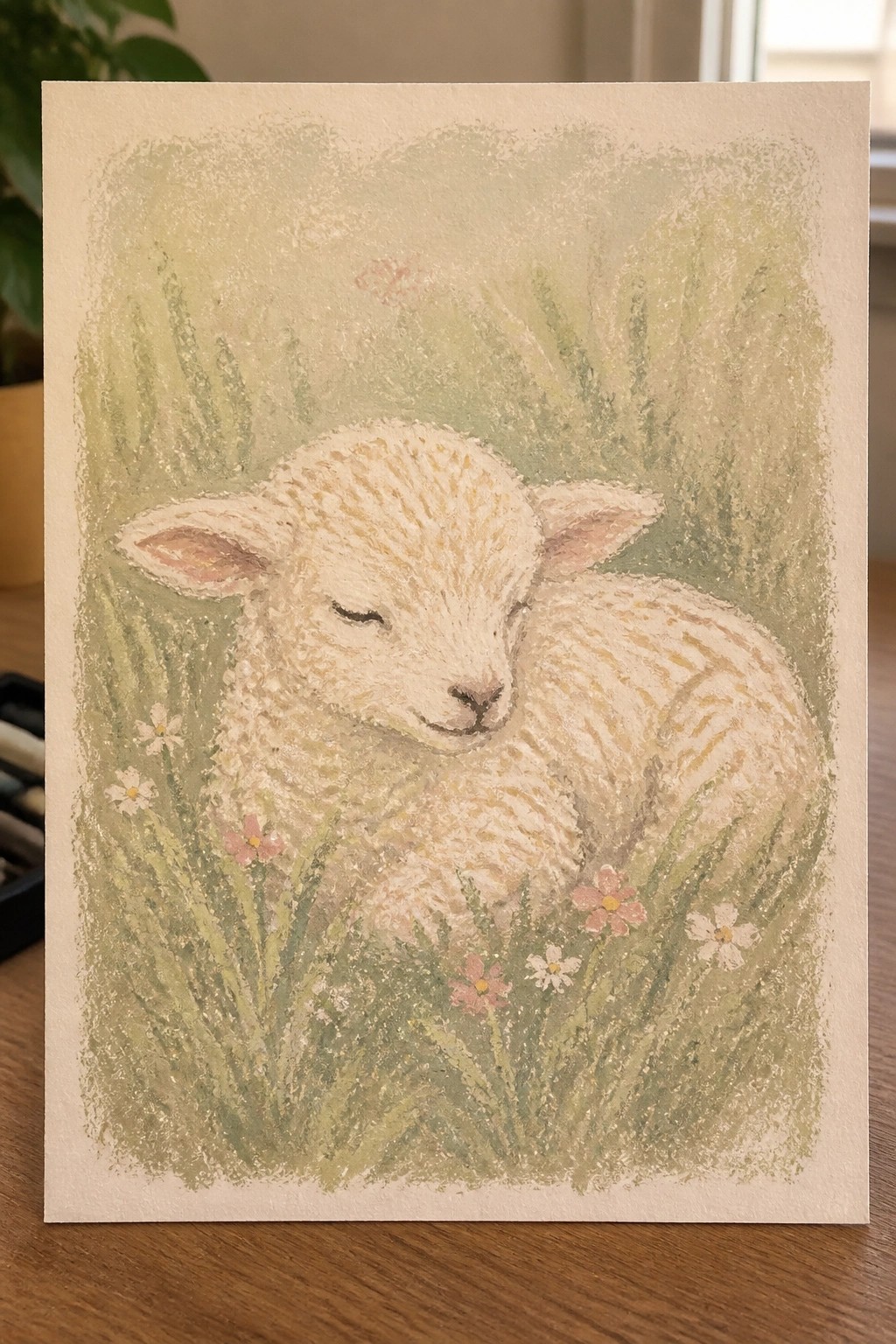
A painting of a lamb curled up asleep in grass works as a straightforward animal study that relies on soft edges and a limited palette. The main subject sits centered with the surrounding greenery and small flowers providing just enough context without pulling attention away. Short directional strokes build the texture of the wool while the muted greens in the background keep the whole piece calm and contained.
What makes this idea useful is how the lamb can be blocked in with basic oval shapes first before adding the fur details. The narrow color range makes it easy to try on different paper sizes or scale it down for cards. You can simplify the flowers to just a few or expand the grass if you want to adjust the composition for a larger piece or a different season.
Bread and Fish Still Life
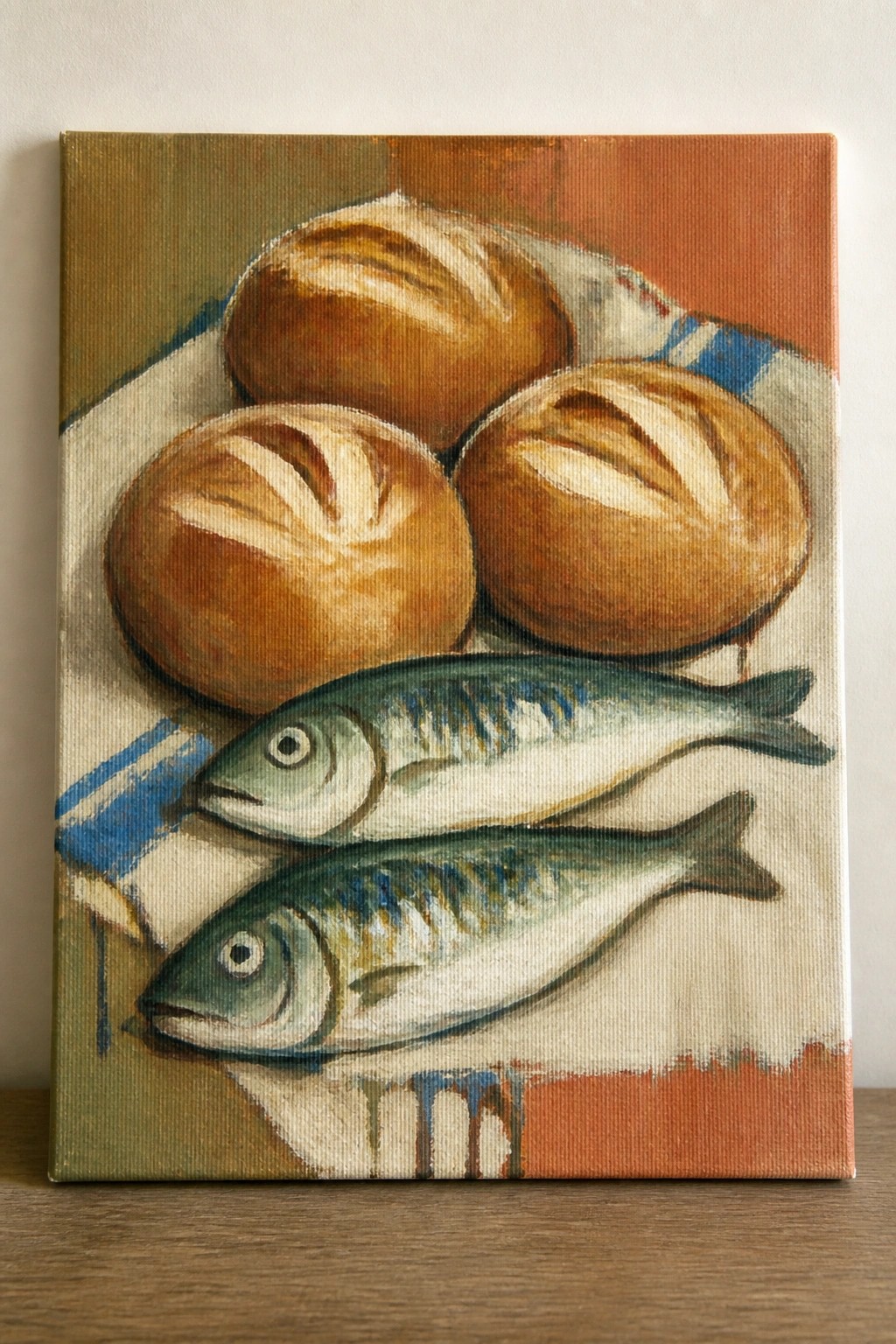
A still life painting idea built around loaves of bread and whole fish placed on a draped cloth. The rounded bread sits higher in the frame while the fish extend below, creating a clear vertical stack that keeps the eye moving through the arrangement. Warm brown tones on the bread contrast with the cooler greens and blues on the fish, and the striped cloth adds simple lines that tie the objects together without crowding the space.
The composition does a lot of the work here by using basic overlapping shapes that stay readable even if the brushwork stays loose. You can adapt the idea by reducing it to two loaves or one fish for a smaller canvas, or by changing the cloth color to match a room. For wall art this subject works especially well because the biblical reference stays clear without needing extra symbols. A tighter crop around the bread would keep the same idea while making it faster to paint.
Jonah and the Whale with Layered Ocean View
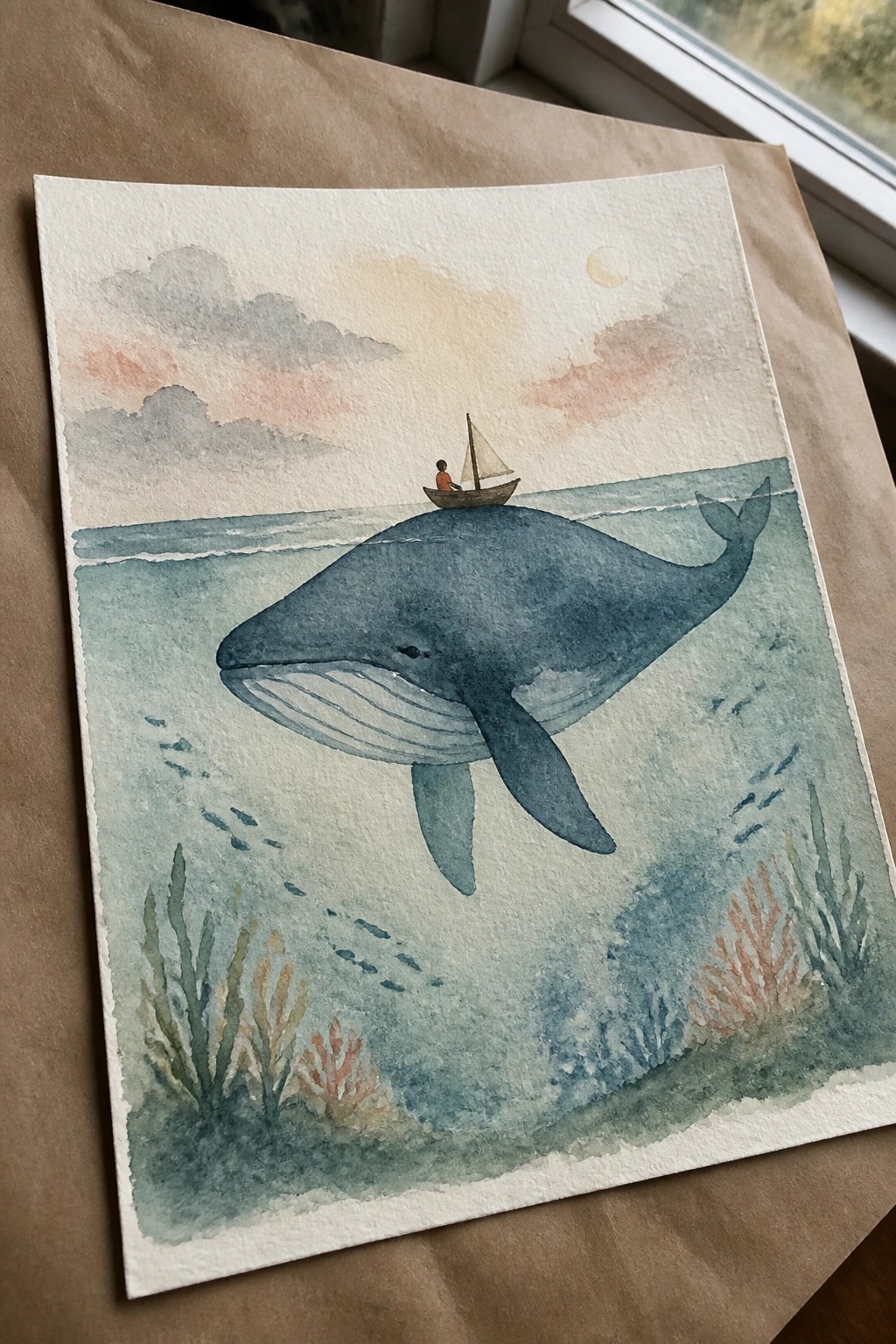
A large whale forms the main subject in this biblical scene, with a small sailboat resting directly on its back to reference the Jonah story. The idea combines an animal focus with a split seascape that shows both the water surface and the underwater area below. The horizontal water line and balanced placement of the whale keep the composition steady while the smaller details like fish and plants fill the lower section without competing for attention.
What makes this idea useful is how the whale’s solid shape handles most of the visual weight, leaving the boat and underwater elements as easy additions. The clear separation between sky, surface, and seabed makes it simple to change the color palette or crop the layout for different frame sizes. For wall art, this kind of piece works because the main subject reads clearly from a distance, and you could simplify the plants or remove the fish if you want a quicker version.
Minimalist Nativity with Bold Shapes and Gold Accents
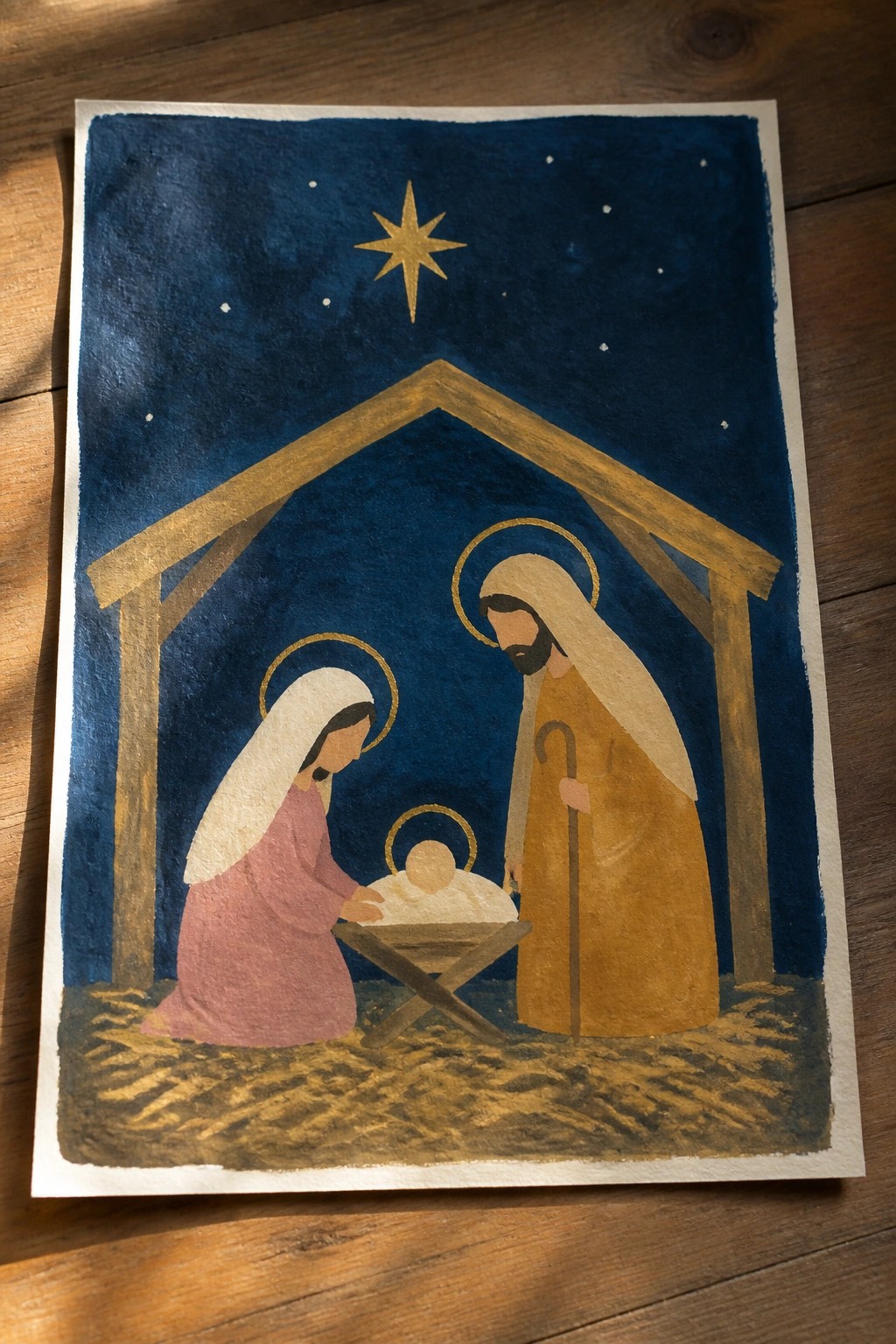
A nativity scene built around simplified figures and a clear triangular stable structure works well as a biblical painting idea. The dark blue background holds the composition together while the gold star and halos create strong focal points without needing fine detail. This approach fits the category of decorative holiday or religious art that relies on flat shapes and limited colors rather than realistic rendering.
What makes this idea useful is how the stable roof and central grouping do most of the compositional work, so the painting stays readable even at small sizes. You can swap the robe colors or scale it down for cards without losing the impact. The high contrast between the night sky and the gold elements also makes it easy to adapt for prints or canvas pieces that need to stand out in a seasonal collection.
A Shepherd on the Path Toward Distant Hills
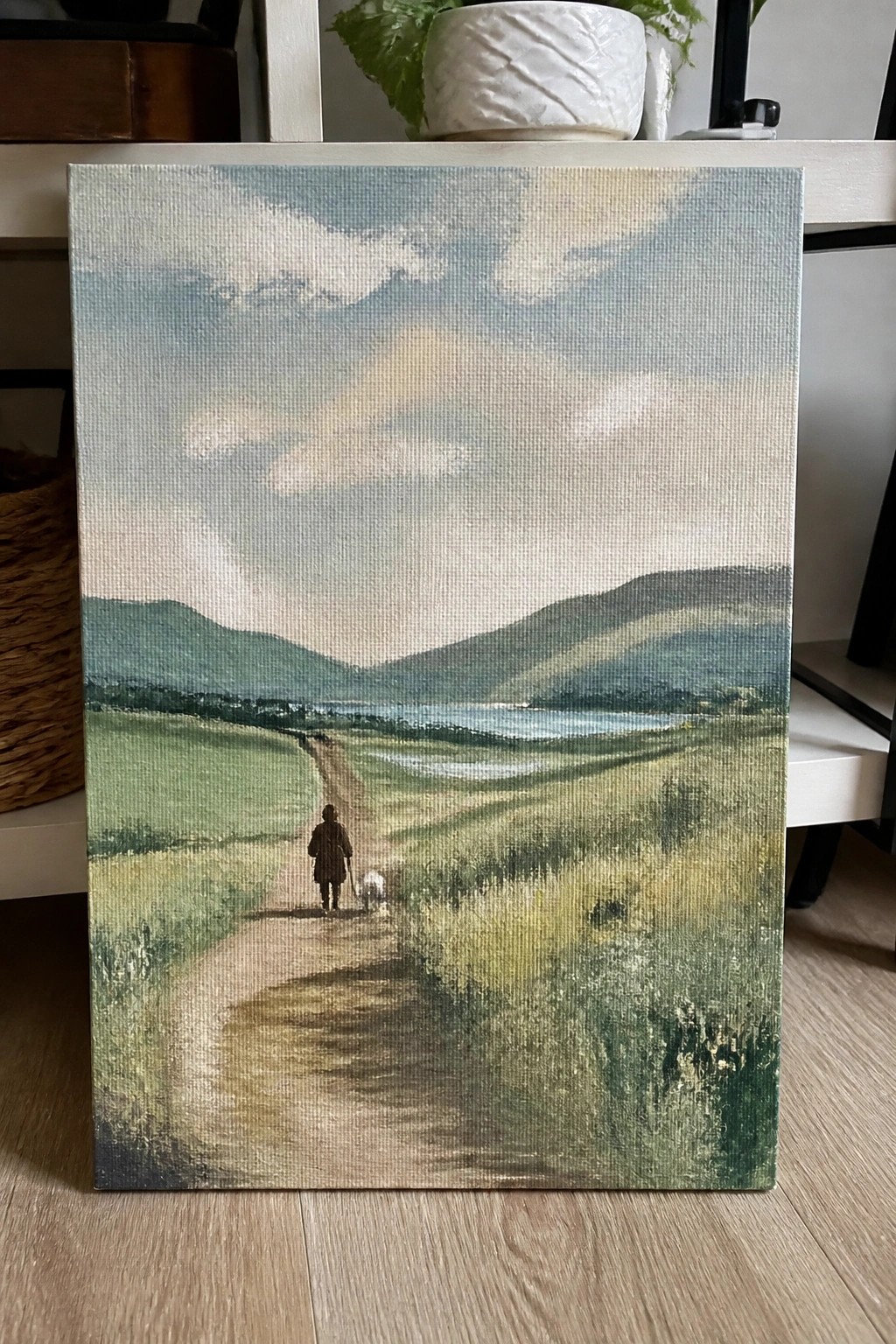
A landscape painting idea built around a lone figure walking a dirt path through open fields, with a small animal following close behind. Rolling hills and a stretch of water sit in the middle distance, framed by a soft sky with gentle cloud layers. The composition uses the path as a leading line that pulls the eye forward while keeping the human and animal elements small against the larger countryside.
The composition does a lot of the work here by using distance and scale to create interest without needing fine detail on the figure. You could easily swap the animal for a sheep to lean more directly into a biblical theme or simplify the hills into broader shapes for a faster version. This kind of scene works especially well for wall art because the muted greens and blues stay calm across different room styles, and the path gives you a clear structure to follow or adapt.
Burning Bush in Fiery Autumn Leaves

A painting idea for the burning bush uses overlapping autumn leaves in reds, oranges, and yellows arranged so their shapes and wet color blends form a central flame effect. The composition stays effective because the brightest reds sit in the middle while the surrounding leaves create natural edges and movement without hard outlines. This approach works as seasonal botanical art with an abstract layer that emphasizes color flow over fine detail.
The composition does a lot of the work here by letting the color blending suggest fire rather than requiring separate flame shapes. You can adapt it easily by swapping in different leaf types or tightening the palette to just three colors for faster versions. This would be easy to turn into a smaller study for practice or a larger piece for fall decor, and the strong warm tones help it stand out on Pinterest compared with more muted biblical scenes.
Crown of Thorns Still Life

A crown of thorns works as a still life subject when the focus stays on the twisted branches and pointed spikes arranged in overlapping layers. The painting idea uses a narrow range of browns and grays against a soft, textured neutral background so the sharp edges and forms remain clear. This approach keeps the composition simple while letting the natural shapes of the thorns create interest through repetition and overlap.
What makes this idea useful is how easily the same layout can be scaled down or cropped tighter for smaller canvases. The limited color palette helps it fit with many wall styles without extra adjustments. For practice, the subject gives clear shapes to work on without requiring complex backgrounds or multiple elements.
Stacked Angels with Patterned Wings
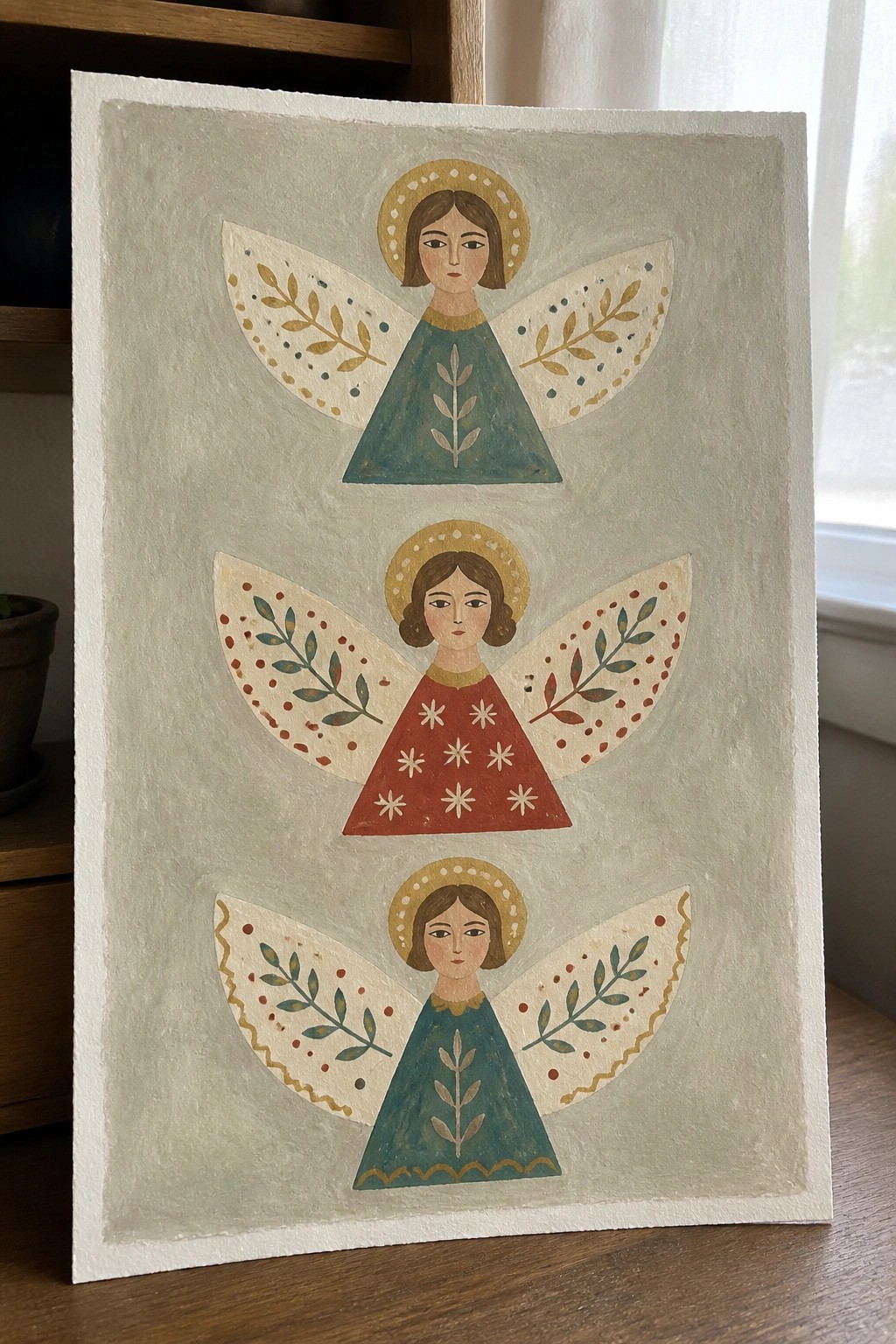
A vertical stack of three angels makes a clean decorative piece where each figure uses a simple triangle for the body and wings filled with repeating leaf shapes. The halos and wing borders add just enough detail to keep the design interesting while the muted background keeps the focus on the figures themselves. This approach fits decorative art that leans on repeated shapes and limited color blocks rather than complex scenes.
What makes this idea useful is the built-in repetition that lets you paint one angel and then adjust the colors and wing patterns for the others. You could swap the teal and red tones for different seasons or shrink the whole layout to fit a smaller canvas. The composition does a lot of the work here by balancing the figures evenly so the piece still reads well even if your brushwork stays basic. For wall art this kind of stacked layout holds attention without needing extra elements around it.
Three-Stage Mustard Seed Parable Painting
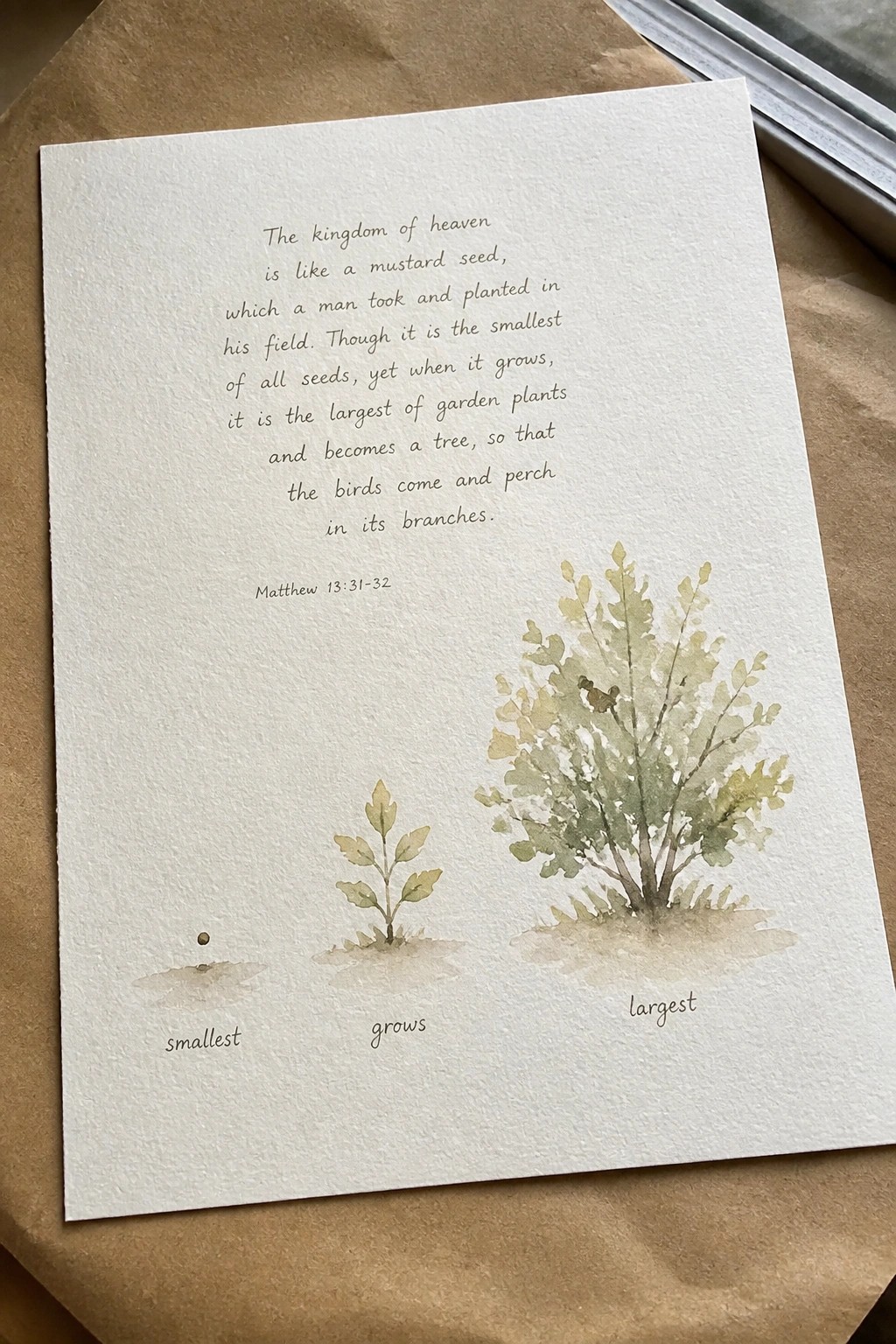
The core idea is to show the mustard seed parable as a simple left-to-right sequence of growth stages, starting with a single seed, moving to a small sprout, and ending with a larger bush. This approach works as botanical scripture art, where the horizontal layout and short labels underneath make the progression easy to follow at a glance. The soft, limited color washes and generous white space keep the emphasis on the three main forms rather than background elements.
What makes this idea useful is the built-in storytelling that translates well to greeting cards, journal pages, or small wall pieces. The spacing between stages does most of the compositional work, so you can easily change the verse text, swap the plant for another parable subject, or adjust the scale to fit different paper sizes. For practice, the limited number of elements lets you focus on basic shape and wash control without needing complex layering.
Palm Frond Botanical Canvases

A botanical painting idea built around overlapping palm fronds creates a strong decorative piece through loose, directional brushstrokes. The composition keeps the background light and open so the leaves stand out without crowding the space. Mixing deeper greens with softer yellow tones adds variation while the repeated leaf shapes tie everything together.
What makes this idea useful is how simply the layout can be adjusted by changing the number of fronds or the size of the canvas. The neutral color range works for matching existing decor without needing new accents. For practice, starting with a few large leaves first helps build the basic shapes before adding smaller ones for balance. This kind of pattern also translates well to smaller studies or repeated prints.
Dove Carrying an Olive Branch Against a Blue Sky

A white dove in flight with an olive branch in its beak works well as a biblical painting subject because the bird becomes the clear center while the branch adds a simple directional line. The idea relies on a diagonal placement of the dove with wings extended to fill the space, paired with a soft blue sky that uses gentle blending to suggest clouds without competing details. This setup fits into animal painting but stays focused on clean shapes and a limited palette of whites and cool blues.
What makes this idea useful is how the sky can be painted first as a loose wash, letting the dove stand out without extra layers. The same layout adapts easily to different sizes, whether you want a small piece for a card or a larger canvas where the wing spread becomes the main feature. For practice, blocking in the body oval and wing angles first keeps the process straightforward before refining the branch.
Star Over Layered City Rooftops
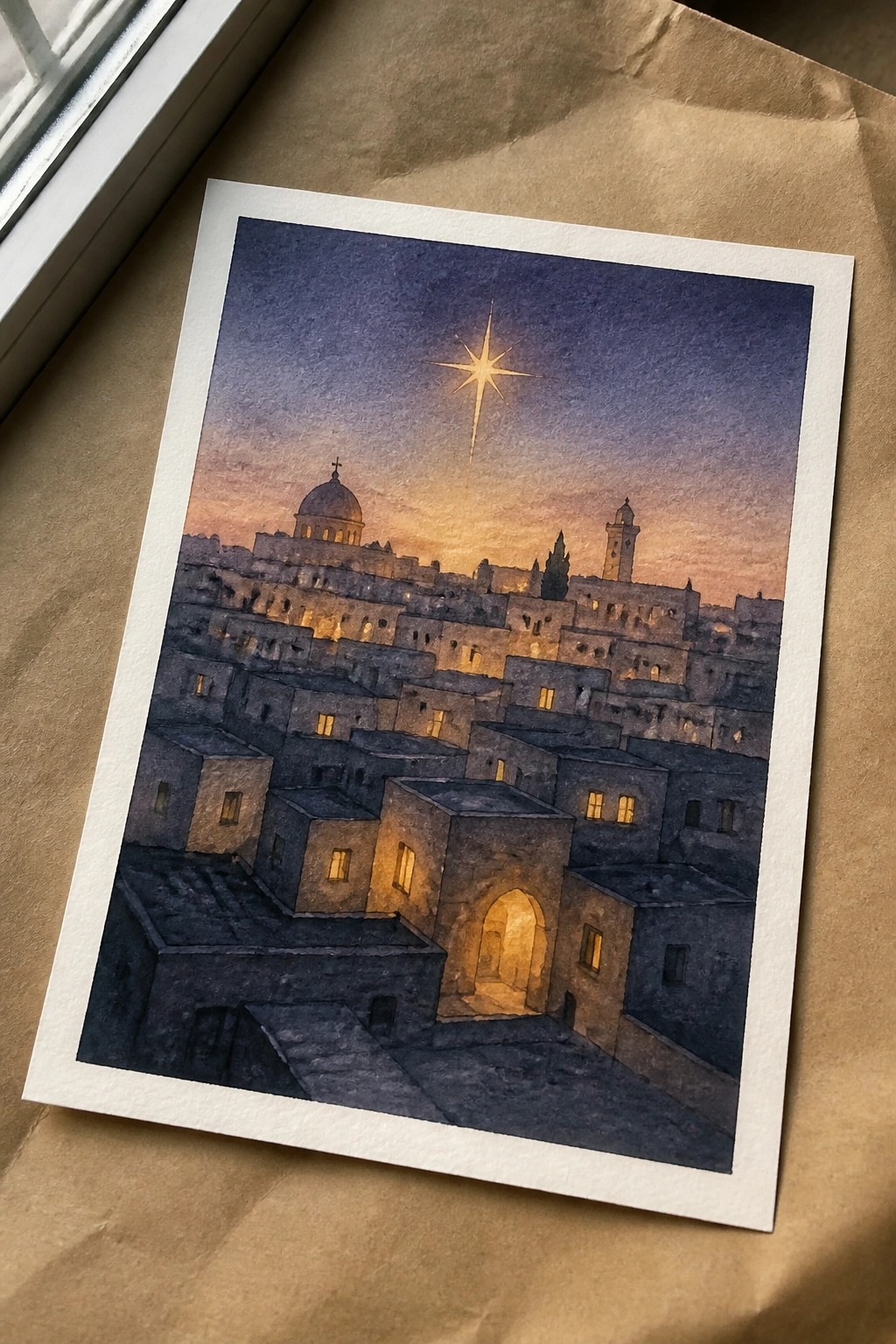
A painting of stacked stone buildings with small lit windows under a dark sky makes a strong biblical landscape idea. The bright star sits high as the main focal point while the warm glow from the windows and horizon balances the cool blue and purple tones. This approach fits the landscape category with added architectural layers that guide the eye from the foreground archway up toward the star.
What makes this idea useful is how the overlapping rooftops handle depth with simple block shapes instead of tricky angles. You can keep the same layout but shift the palette to deeper blues for a later night feel or crop it tighter around the star for a smaller canvas. For wall pieces this kind of scene works well because the star gives it quick biblical recognition without extra symbols. The same idea scales down easily by flattening some building details into larger shapes.
Ten Commandments on Distressed Stone Tablets
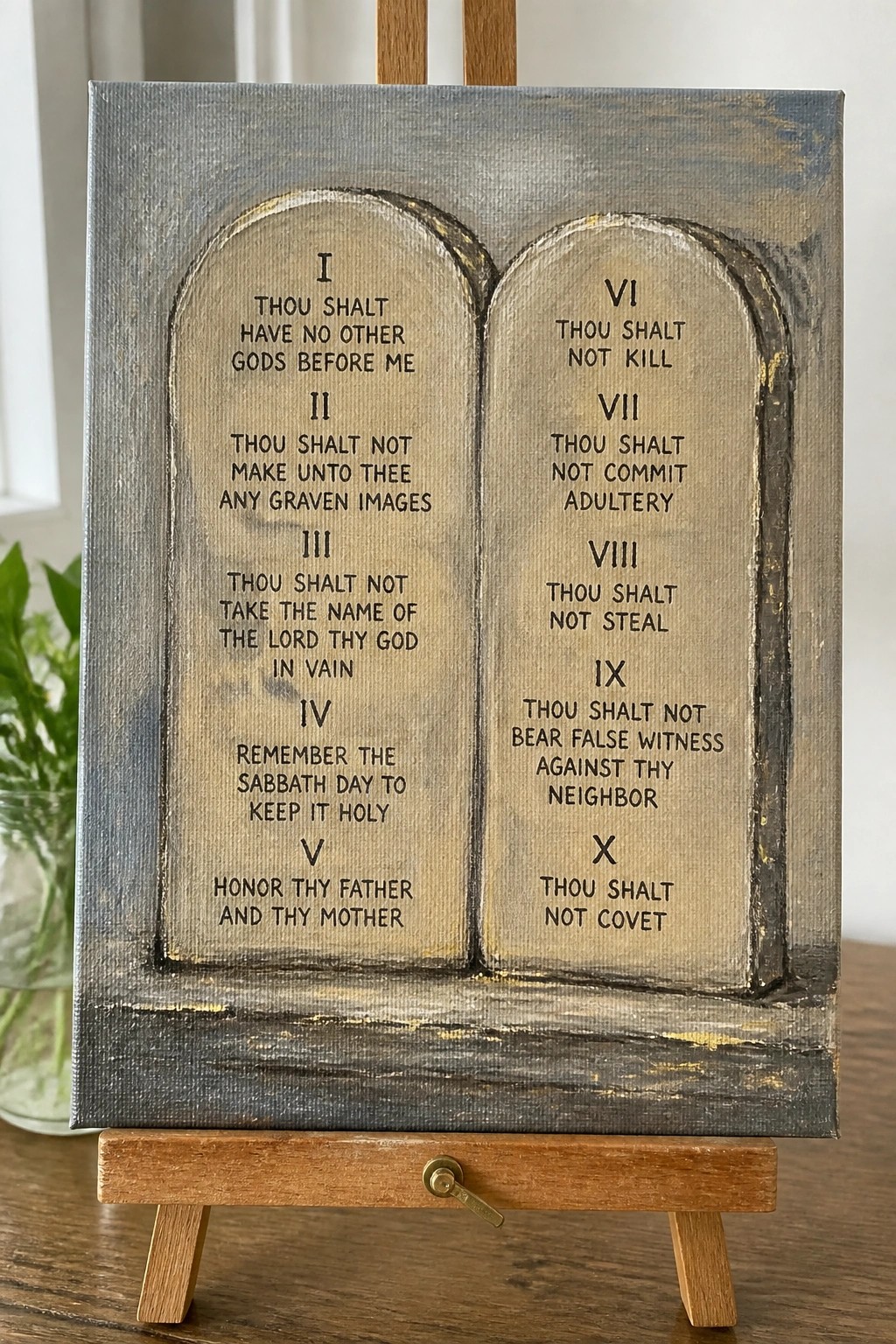
This painting idea uses two arched tablets placed side by side to display the full list of the Ten Commandments in clear block lettering. The left tablet holds the first five and the right holds the last five, creating an even split that fills the canvas without crowding. A neutral beige base with gray distressing and faint gold edges gives the flat text a worn, solid look that works as simple decorative art.
What makes this idea useful is how the text itself carries the design. You can shrink the whole layout onto a smaller canvas or swap the background to a warmer tone if the gray feels too cool for your space. The arched shapes and even spacing make it easy to trace or stencil, so the same format works for other short passages if you want a matching pair or a single verse version for a shelf.
Minimalist David and Goliath Scene
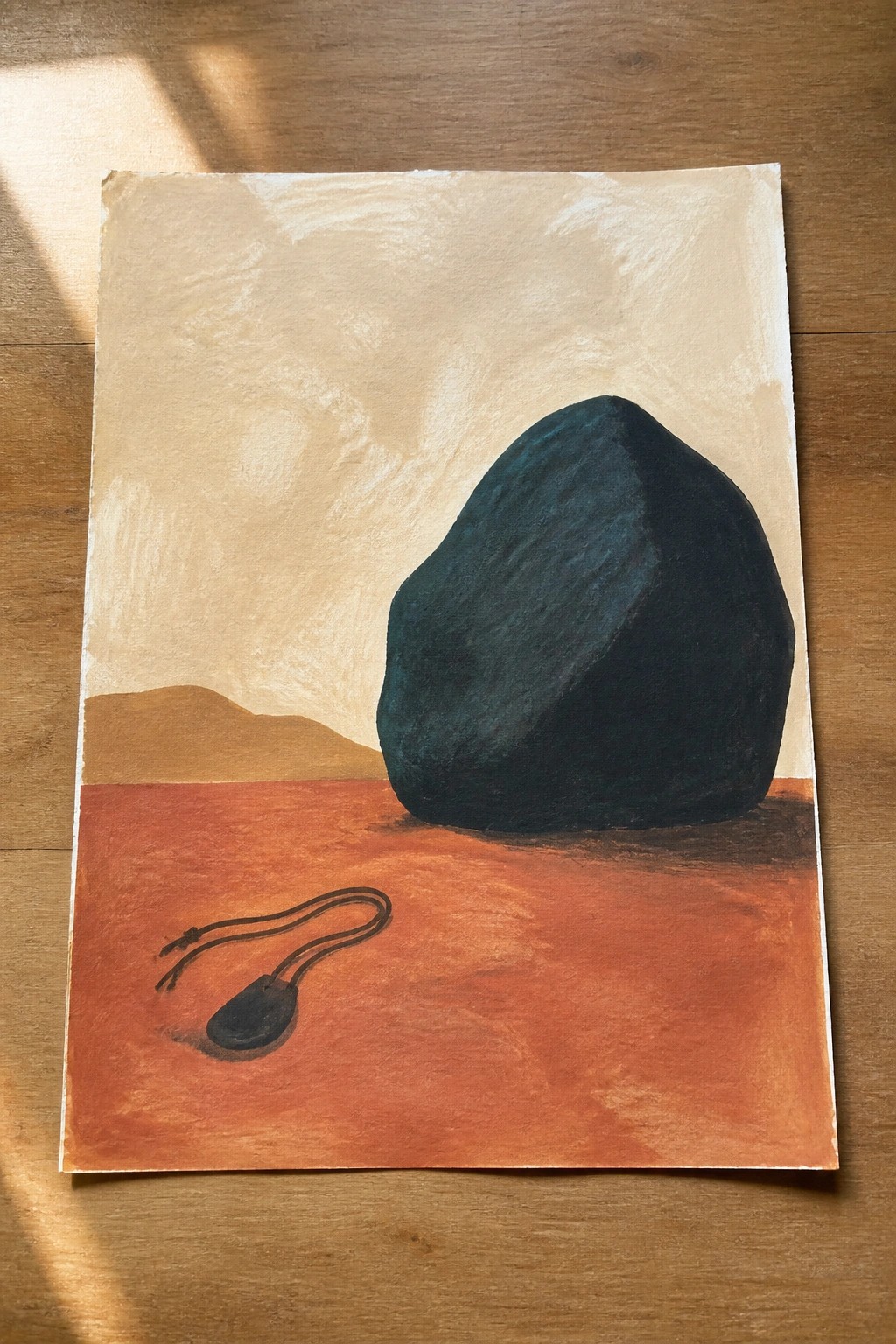
A large dark boulder set against a warm red ground and pale sky forms the core of this painting idea, with a small sling placed in the foreground to reference the David and Goliath story. The idea uses simple flat shapes and a limited palette of earth tones plus deep teal to keep the focus on the scale contrast between the massive rock and the tiny object. This approach fits a biblical narrative style that relies on composition and color blocking rather than fine detail.
The composition does a lot of the work here by placing the sling low and to the left so the eye moves naturally to the boulder. The warm ground and muted background make the dark rock stand out without needing extra texture or shading. A painting like this works especially well for beginners who want to practice large shapes and color mixing before adding any smaller elements. The same idea could be adapted by changing the sling to another small biblical symbol or shifting the ground color to match a different setting.
Lone Figure on Layered Water and Sky

A single small figure placed in the middle distance against broad horizontal washes of blue creates a simple landscape idea built around scale and reflection. The composition uses stacked layers of lighter and darker tones to suggest sky above and water below, with the figure’s vertical shape breaking the horizontals just enough to anchor the view. The reflection directly beneath the figure adds symmetry without adding extra elements.
What makes this idea useful is how the limited palette and large negative space let the viewer focus on placement and value changes rather than detail. You can shift the colors toward warmer tones for a different time of day or enlarge the figure slightly if you want more presence on the page. For wall pieces the same layout works at multiple sizes because the soft edges and open middle keep it from feeling crowded.
Bread in the Wilderness Scene
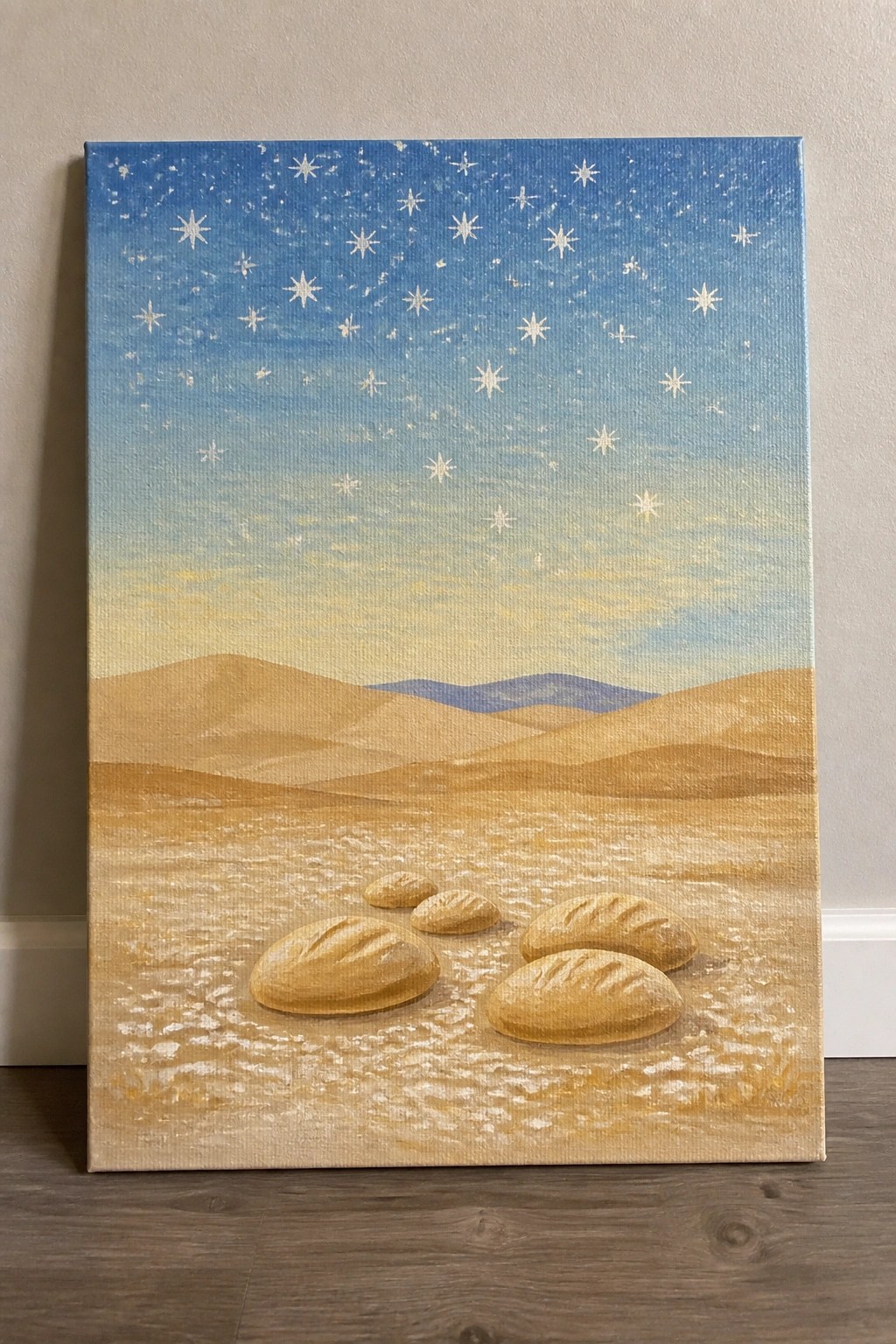
This painting idea places several loaves of bread directly onto a desert floor as the main subject, blending a still life element with a simple landscape. The low horizon and gradual sky gradient keep the focus on the bread while the distant hills add just enough depth. It works as a food and landscape hybrid that leans into biblical themes without extra detail.
The composition does a lot of the work here by using the open sand to make the bread shapes stand out clearly. You could swap the warm palette for cooler tones or reduce the number of loaves to simplify the layout for a smaller canvas. For wall art, this approach stands out on Pinterest because the everyday subject gains interest from the empty setting.
Noah’s Ark with Paired Animals in Rows
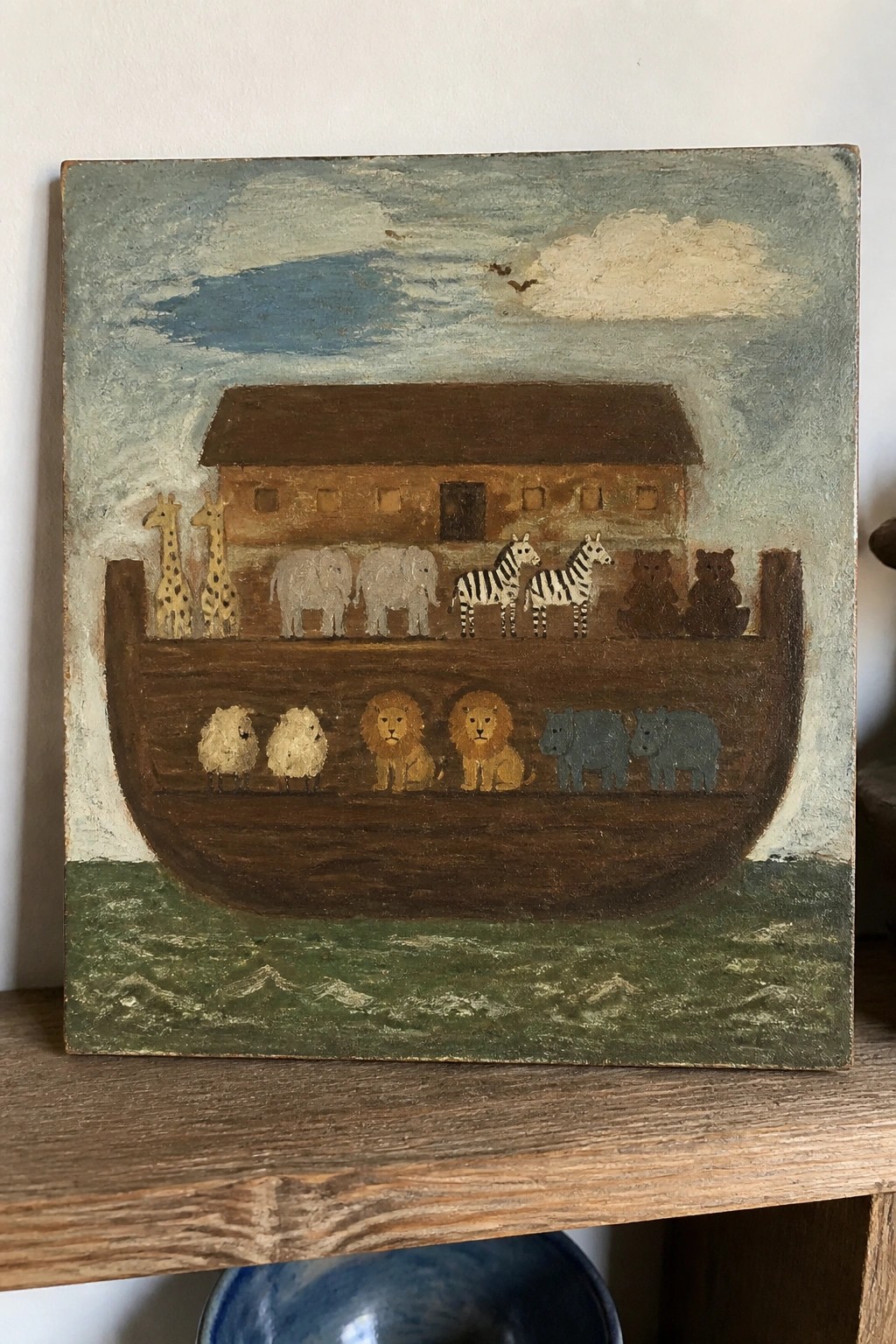
A biblical animal scene works well as a series of paired creatures lined up across a simple wooden ark. The idea uses horizontal bands to separate species like giraffes at one end, elephants and zebras in the middle, and lions with rhinos lower down, all set against a basic sky and water background. This keeps the painting idea in the animal or decorative category, where flat shapes and muted earth tones create a balanced, easy-to-read layout.
The composition does a lot of the work here by repeating the pair pattern, which makes it simple to adapt with different animals or fewer rows if you want a smaller canvas. You could try this on wood for a slightly textured surface or keep the color palette limited to browns, soft greens, and blues so the animals stay the main focus. For wall pieces, the rectangular format and even spacing help it fit nicely without needing extra details.
White Lilies in a Patterned Vase Still Life

A still life built around white lilies in a vase gives a straightforward floral painting idea that centers on a single cluster of blooms. The flowers sit at different heights with leaves and buds mixed in, which creates a natural shape that leads the eye from the base upward. A plain background and a flat colored surface below the vase keep the attention on the arrangement without extra layers or details.
What makes this idea useful is how the vase itself becomes the anchor point while the flowers fill most of the space above it. You could change the surface color or simplify the vase pattern to match whatever supplies you have on hand. For wall pieces this layout works because it stays vertical and needs no extra scenery. The same idea can be scaled down easily or repeated with another flower that has similar open petals.
Scripture Text Framed by a Loose Watercolor Floral Wreath
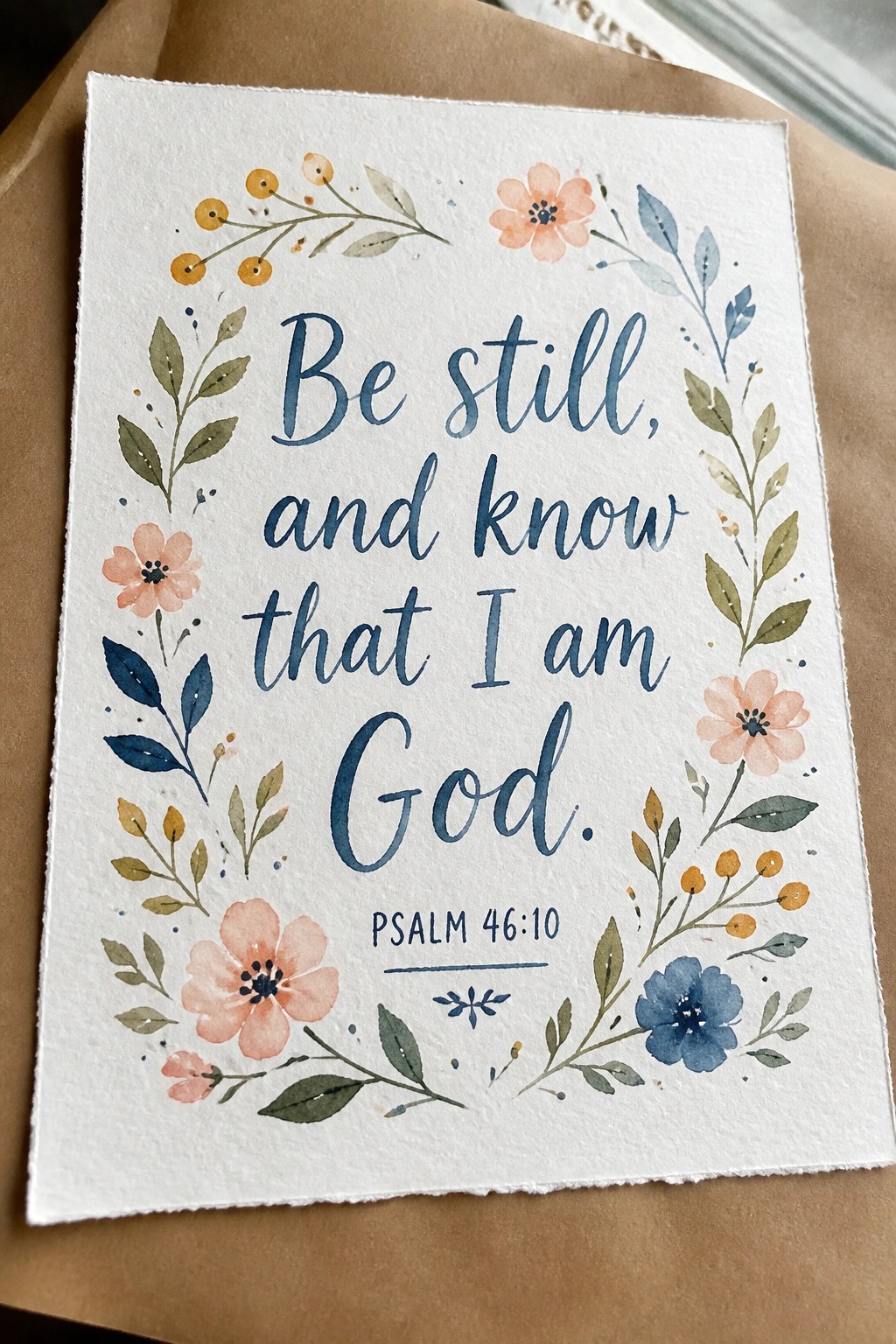
This idea pairs a centered Bible verse with a soft floral border that forms an incomplete circle around the words. The text uses a flowing script style while the surrounding flowers and leaves in peach, blue, and green sit at varying heights to create visual balance without crowding the message. It fits the category of decorative text art that blends simple lettering with botanical accents.
The composition does a lot of the work here by letting the wreath shape direct attention straight to the verse. You can change the flower colors to match a room or swap the verse for another short passage without needing to redesign the layout. This kind of piece works well for wall prints or greeting cards because the open spaces keep it from feeling heavy. For practice, try blocking out the text first then building the border around it in sections.
Leaf Wreath in Layered Greens with Gold Highlights

A wreath built from overlapping leaves creates a strong circular focal point that stands out on a plain background. The idea uses varying shades of green along with small gold accents to give the ring shape depth while keeping the overall design simple. Different leaf sizes and slight color shifts help the wreath look full without crowding the center space.
What makes this idea useful is how the round layout guides the placement of every element. You can change the green tones to fit a room or reduce the number of gold details if you want a quicker version. For wall decor, the open center and light background make it easy to scale up or down depending on the canvas size. The same wreath shape also works well for practice since it repeats similar strokes around the circle.
Frequently Asked Questions
What are some beginner friendly biblical art ideas from the list?
Start with straightforward options like a simple cross illustration paired with a short verse or a watercolor depiction of a biblical scene such as the Good Shepherd. Gather basic supplies including canvas boards, acrylic paints, and brushes, then follow step by step tutorials to build confidence without feeling overwhelmed.
How can I make my biblical art feel more personal and inspiring?
Select verses that resonate with your own life experiences and add subtle custom touches like handwritten elements or symbolic colors that reflect your journey. Spend time reflecting on the scripture before beginning to ensure the finished piece carries deep emotional and spiritual significance.
Where should I display these timeless biblical art pieces?
Place them in areas where they can uplift daily routines such as above a dining table for mealtime gratitude, in a home office for encouragement during work, or near a reading chair for quiet meditation. Good natural light enhances their beauty and draws attention to the details.
What materials work best for creating durable biblical artwork?
Choose sturdy options like primed canvas, wood panels, or high quality paper along with lightfast paints and a clear protective varnish. For added longevity frame finished pieces with UV resistant glass to shield against fading from sunlight exposure.
How do I involve my family in creating these art ideas?
Assign age appropriate tasks such as having children select colors while adults handle lettering or composition. Work together on a shared canvas to encourage conversation about the chosen scripture and create a meaningful family keepsake that strengthens bonds and faith.