I have always preferred nativity scenes that do not crowd the canvas with too many elements.
In my studio I tend to work with just the holy family and maybe one or two animals.
The paintings in this collection follow that same idea of keeping the composition clean and direct.
They show how much can be said with limited shapes and muted tones.
Silhouette Nativity with One Central Star
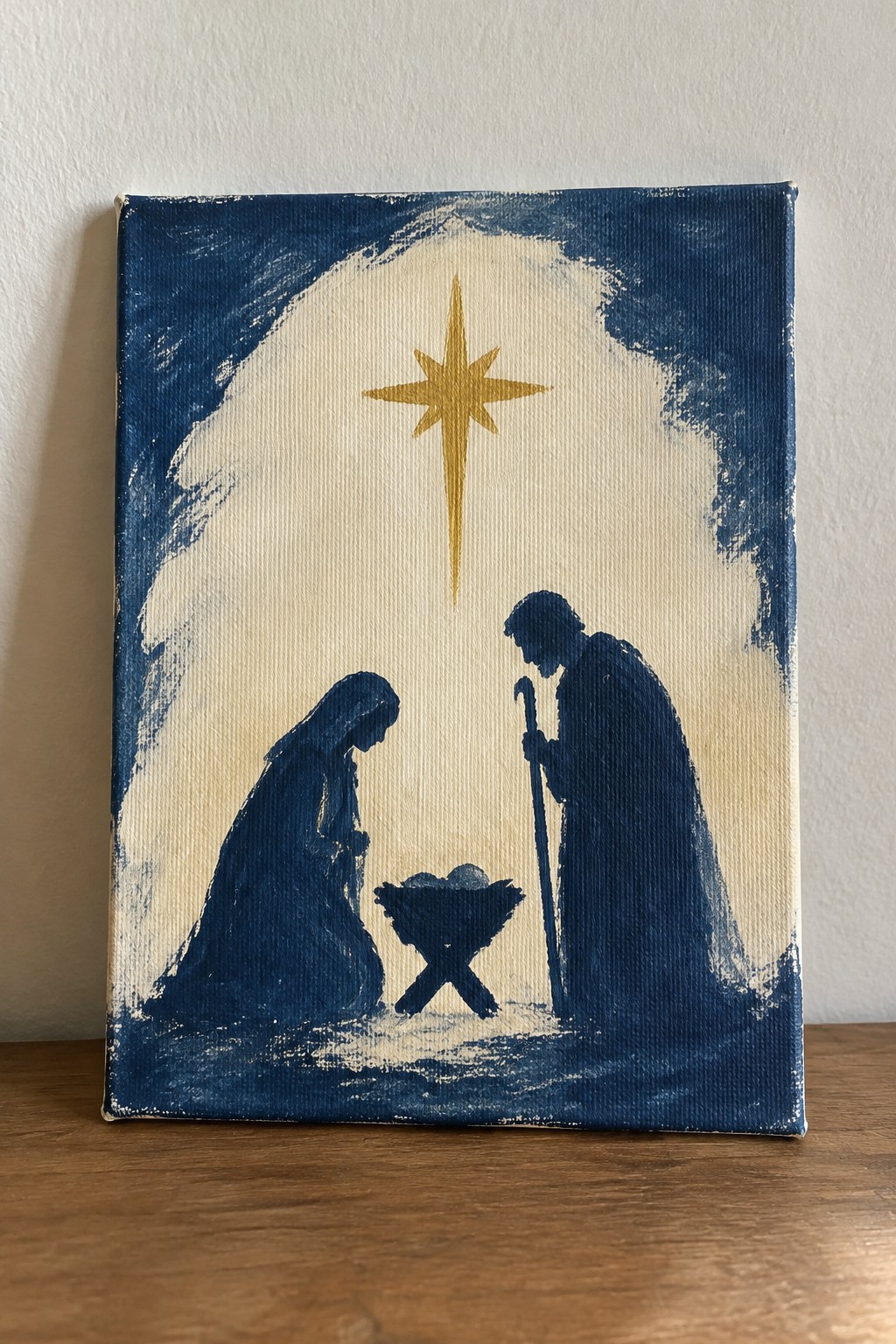
A silhouette nativity idea reduces the scene to dark figures against a lighter field, using a single bright star to pull the whole composition together. The approach relies on strong contrast and open space rather than fine detail, which keeps the layout balanced and easy to read from a distance. This kind of seasonal painting works well when the goal is a clean, graphic result instead of a fully rendered scene.
The composition does a lot of the work here by letting the star handle the focal point, so the figures can stay simple without losing meaning. You could shift the color palette to other dark and light pairings or scale it down for cards and small panels. For wall art, something like this stands out because the bold shapes and limited palette photograph cleanly for Pinterest without needing extra decoration.
Nativity Scene Built Around One Bright Star
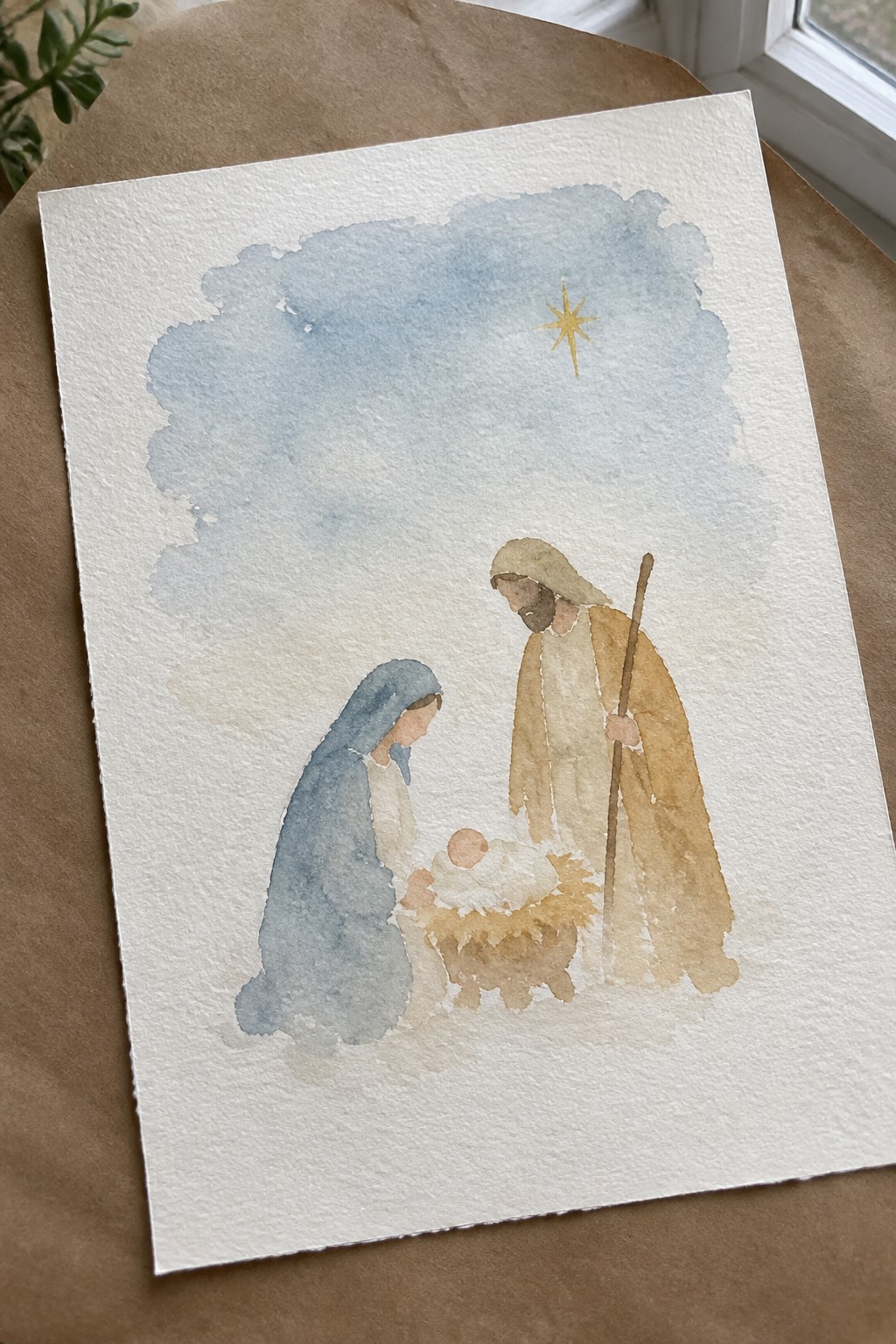
The core idea is a low, grounded nativity group placed beneath a broad sky wash that leaves most of the page open. A single star sits high and alone, giving the whole piece its focal point without any extra landscape or architecture. The approach works because the figures stay small and contained while the sky area carries the mood through simple color shifts rather than detail.
What makes this idea useful is how the large negative space and single light source let you finish the piece quickly without overworking the figures. You could easily change the sky to a night gradient or crop it tighter for a card-size version. The same layout also translates well to line drawings or limited-palette studies when you want a clean seasonal piece that still reads from across a room.
Horizontal Blocks Frame a Silhouette Nativity
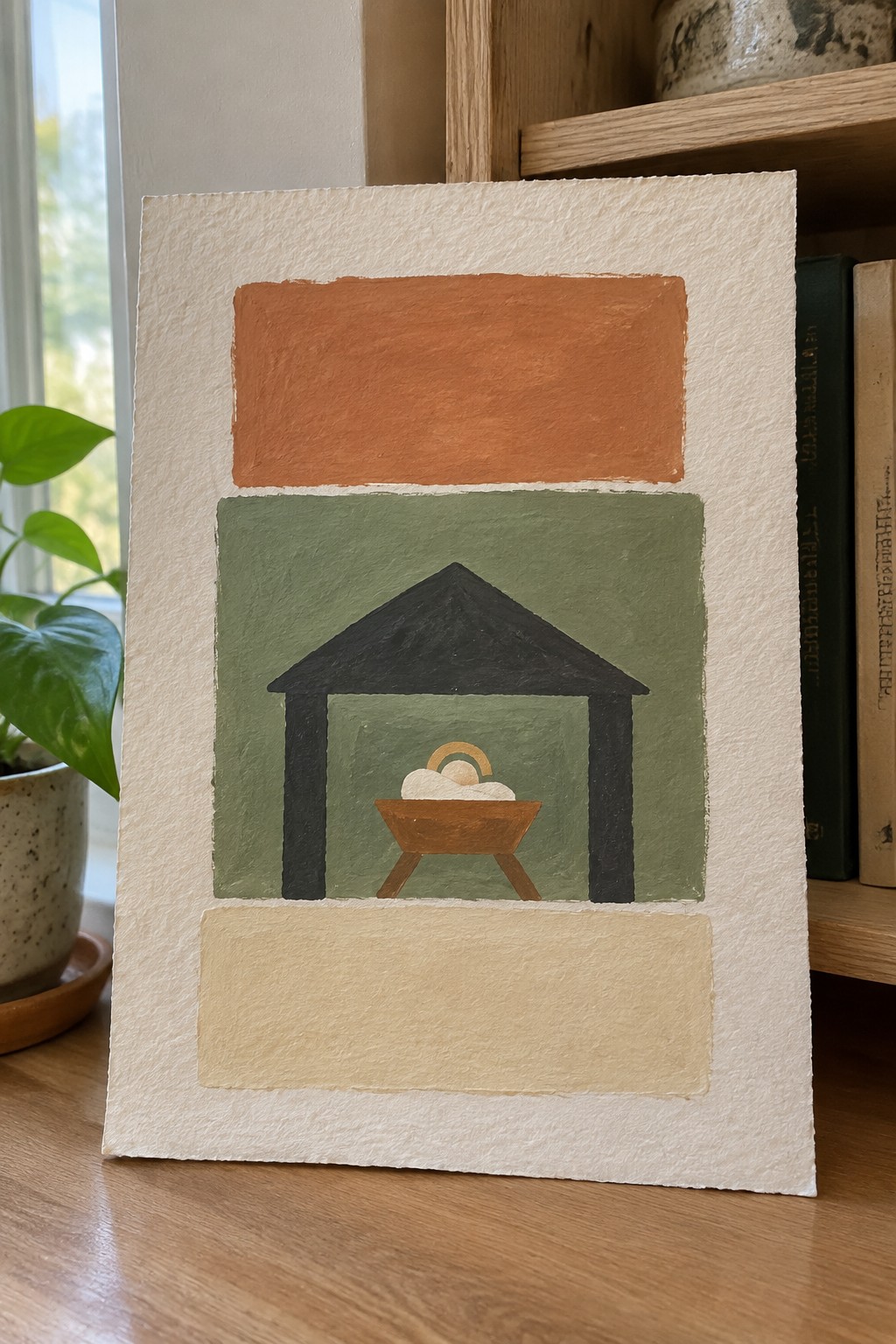
The core idea here is a nativity reduced to flat color fields and one clear silhouette. A black stable shape sits centered in a green rectangle, with a small brown manger holding simple white forms and a thin arc above it. Solid terracotta and beige rectangles sit above and below to create a clean, stacked layout that keeps everything balanced without extra detail.
The composition does a lot of the work here because the three horizontal bands naturally pull attention straight to the stable. This setup stays approachable since it relies on basic shapes and limited colors rather than fine brushwork. You could swap the terracotta for a deeper rust or shift the green to a cooler tone to match different room palettes. The same structure would translate easily to a smaller canvas or a set of cards with minor color changes.
Bright Star Over a Lone Manger
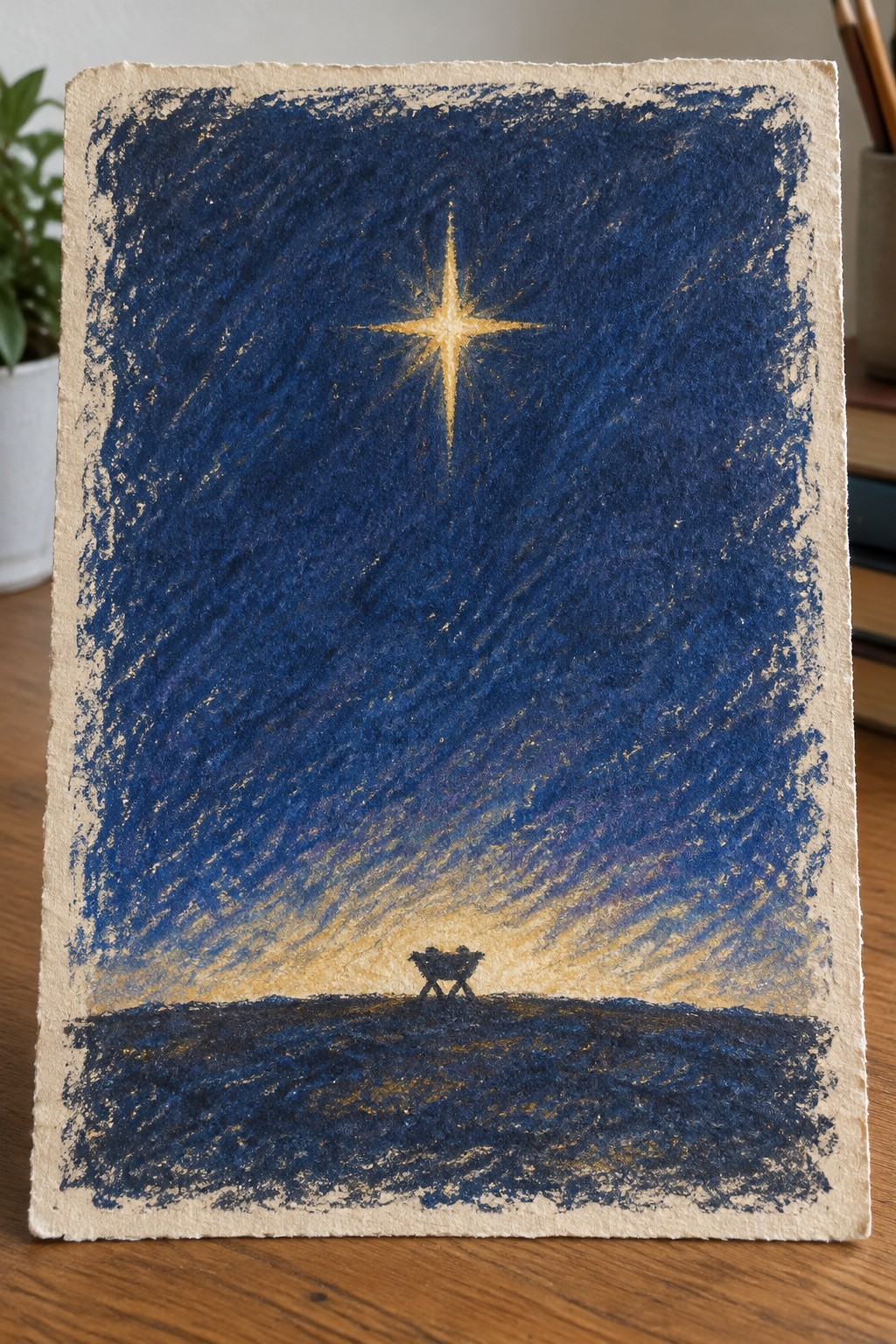
The main idea uses one oversized star as the sole focal point in a dark blue sky that blends down into a narrow band of warm yellow near the horizon. A tiny manger silhouette sits low and centered on the darker ground plane, keeping every other element minimal. This seasonal landscape approach works because the strong vertical placement of the star against the horizontal horizon creates clear contrast with almost no added detail.
The composition does a lot of the work here by making the star large and the manger small, so the eye moves straight to the light source. You could shrink or enlarge the star, or soften the horizon blend, to adjust the mood while keeping the same basic layout. For wall art or quick seasonal pieces, this kind of setup stays easy to paint because it needs only a few colors and no complex shapes.
Nativity Scene Reduced to Simple Shapes and Earth Tones

This painting idea centers on a nativity told through three main elements: two standing figures simplified into tall rounded shapes and a small manger placed between them. The composition works by keeping the figures large and the details minimal, with just a single gold dot for the star and a few lines to suggest the manger structure. It falls into seasonal decorative art where the focus stays on balanced placement and a tight color palette rather than added scenery.
What makes this idea useful is how the large shapes do most of the visual work, so you can finish it quickly without worrying about fine details. The muted palette of terracotta, sage, and beige makes it easy to adapt with whatever paints you already have, and the same layout could be stretched taller or made smaller depending on your canvas size. For practice, this kind of subject lets you work on shape balance and negative space without needing advanced technique.
Loose Watercolor Nativity Under a Single Star

A minimalist nativity idea built around a soft blue wash sky and a basic stable structure that frames three small figures. The composition works by keeping the star as the clear center point while the stable, manger, and family stay low and understated in brown and gray tones. This fits seasonal art because the limited line work and blended background let the simple arrangement carry the whole piece without extra detail.
What makes this idea useful is how the wash background handles most of the setting so the figures can stay small and quick to sketch. You could swap the star for another single element or shift the wash color to match different seasons while keeping the same low placement and open space. The scale works well on standard paper for quick practice or small wall pieces that still read clearly from across a room.
Stacked Crescents to Show the Magi Approaching

The painting idea uses three descending crescent moon shapes to place the three wise men in a single vertical line that leads straight down to the manger. Each moon holds one figure holding a gift, with the lowest crescent sitting closest to the stable and a single star positioned above to complete the path. The approach keeps the whole scene compact by repeating the same curved form in different colors against a solid dark background.
What makes this idea useful is how the repeated moon shapes do most of the layout work, so you only need to add small patterns and flat color blocks to finish it. The vertical stack fits narrow spaces well, which makes it practical for cards, small canvases, or prints. You could swap the background color or simplify the patterns further if you want a quicker version for practice or gifts.
Bold Line Nativity with One Gold Star
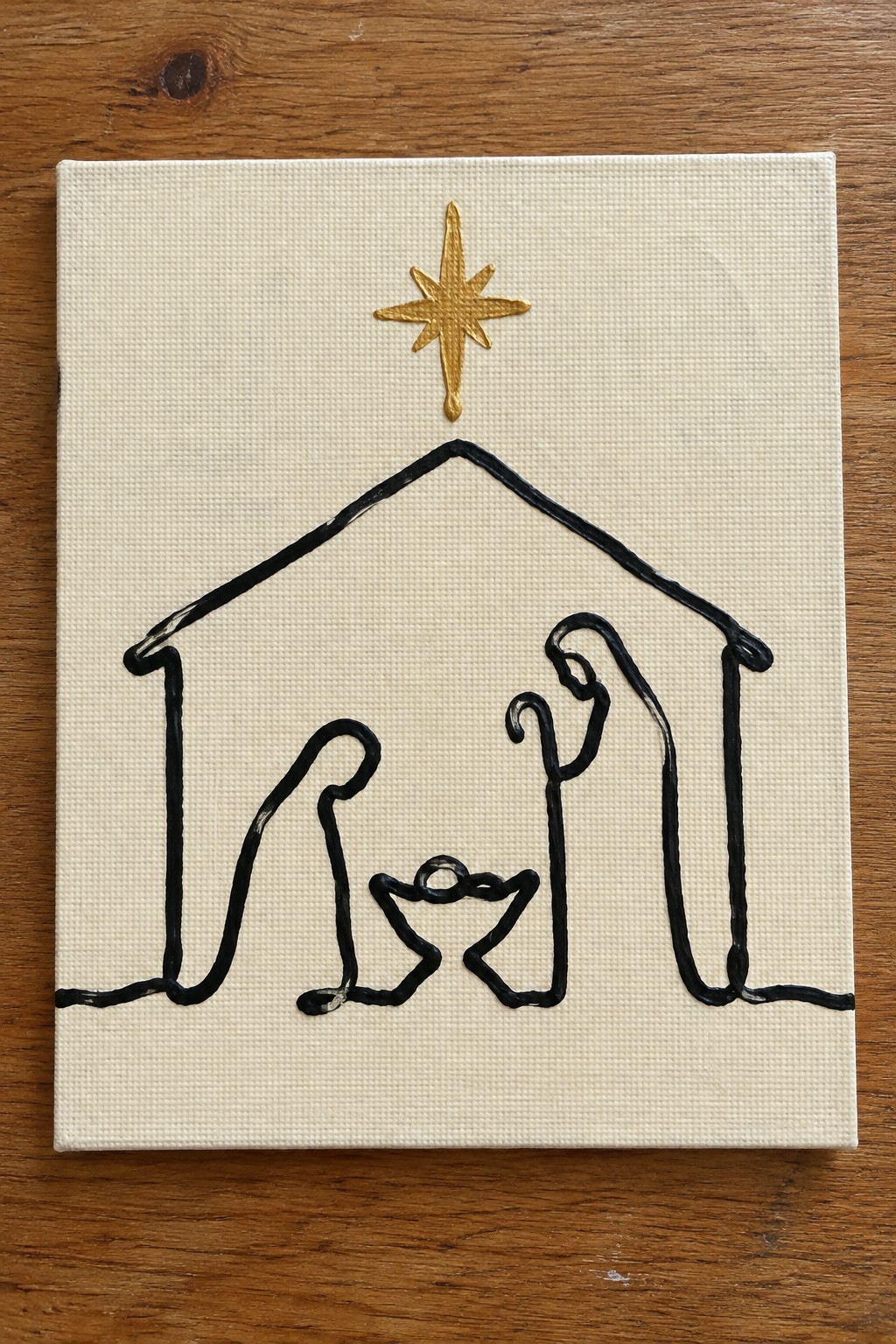
This painting idea uses thick black outlines to shape a stable, three figures, and a manger into one connected scene. A single gold star placed above the roof serves as the only color accent against the plain background. The approach works because the limited elements and open space let the shapes define the subject without added detail or shading.
What makes this idea useful is how the outline format scales easily to smaller canvases or sketchbooks. You can keep the black lines and swap the gold star for any single accent color to match different decor. For wall pieces, the clean layout stays readable even from a distance, and the same structure can be adapted by changing the figure positions or adding a second small accent if needed.
Moonlit Nativity with Layered Hills
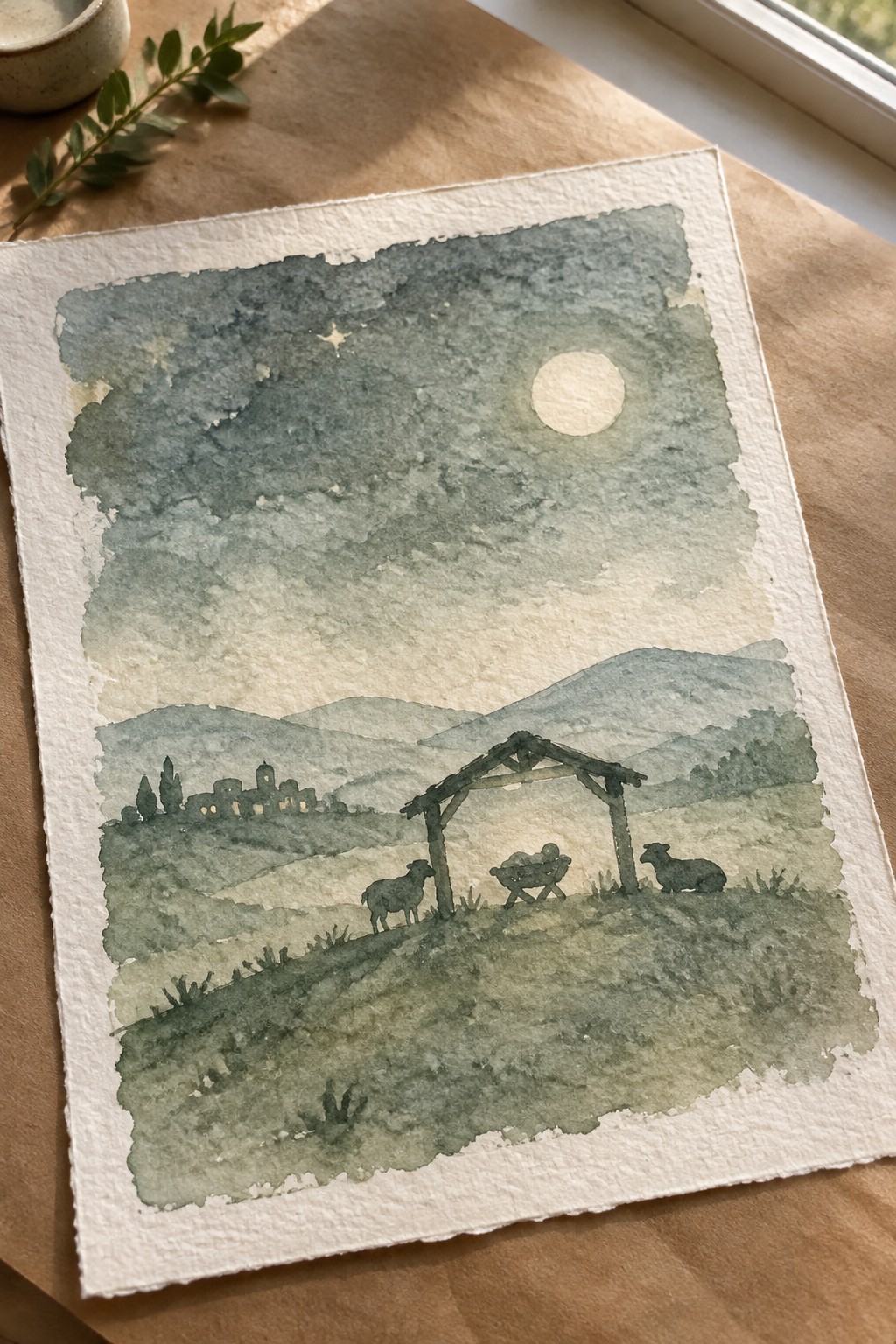
This painting idea uses a low horizon line and a simple shelter to place the nativity figures against a wide sky. The composition keeps the stable and animals small while letting soft washes of green and blue suggest distant hills and open fields. A single moon and star provide the only light, which keeps the overall scene minimal and easy to read.
The composition does a lot of the work here by letting the sky and hills carry most of the visual weight. You could simplify it further by dropping the village or change the palette to cooler tones for a winter feel. For practice this setup works well because it trains you to balance a few small shapes against large areas of wash without needing many details.
Three Kings and a Single Guiding Star
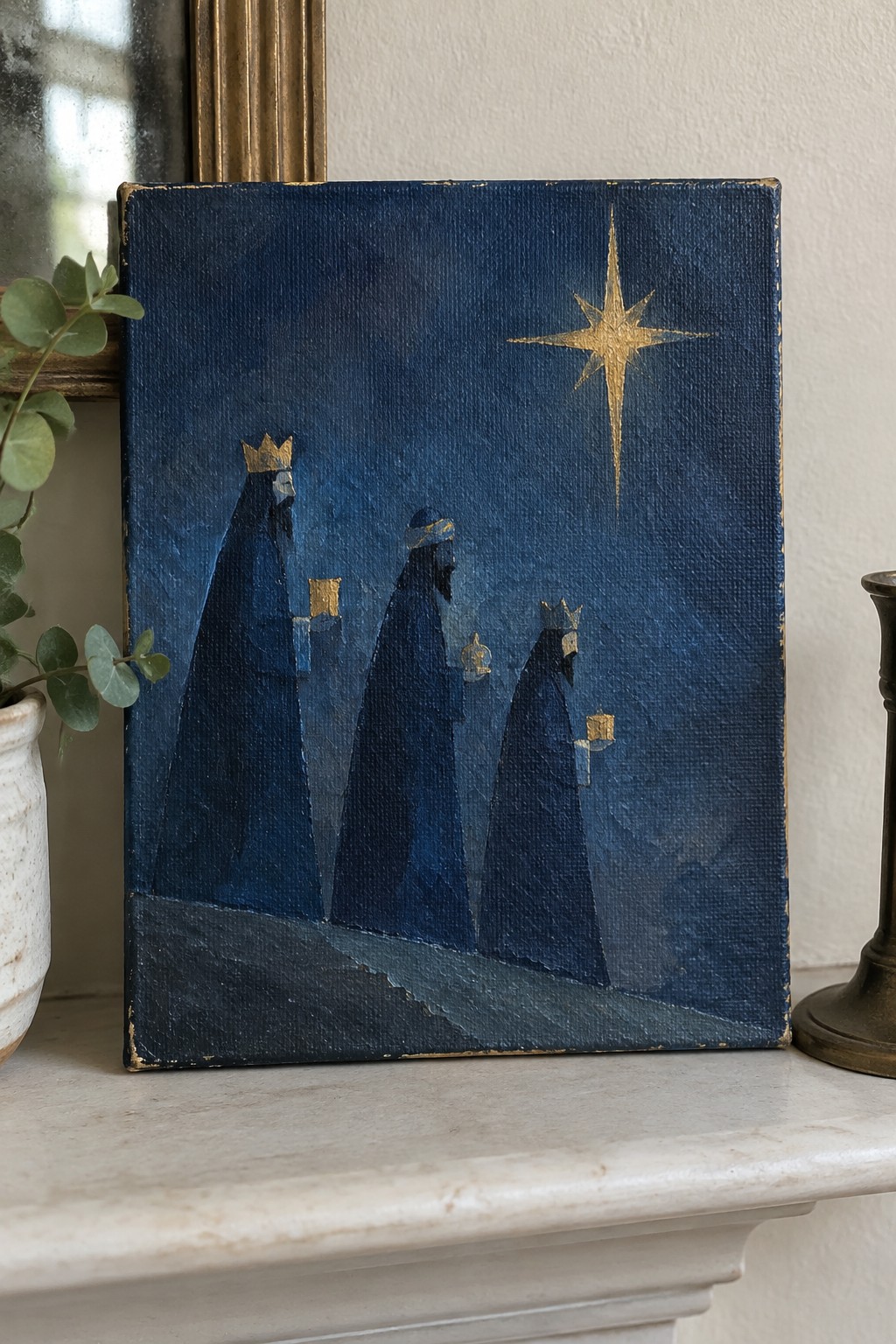
This painting idea uses three simple robed figures with crowns and gifts moving along a dark path under one large gold star. The composition relies on flat shapes, a narrow blue palette, and minimal detail to keep attention on the line of figures and the star overhead. It belongs to the minimalist seasonal category because it reduces a familiar nativity scene to its most basic visual elements.
What makes this idea useful is how the tall star and low path line create clear structure that works even at small sizes. The color palette makes this easy to adapt by shifting the blues slightly warmer or cooler depending on the rest of your decor. For practice, this kind of subject lets you focus on shape placement and limited layering without needing fine brushwork. You could also turn the same layout into a quick sketch by using colored paper and metallic pens instead of paint.
Circular Nativity with Radiating Lines

A nativity reduced to three figures arranged around a central manger inside a single circle, with lines radiating from the middle to create the whole composition. The idea relies on symmetry and a narrow warm palette to keep the scene readable at a small scale. This format works as decorative seasonal art because the circle and rays replace the need for any background or extra props.
What makes this idea useful is how the radiating lines do most of the visual work once the three shapes are blocked in. You can scale the whole thing down for cards or keep it larger for a wall piece without adding more elements. The limited color range also makes it simple to repaint in whatever tones you already have on hand, and the clean layout tends to photograph well for sharing.
Small Nativity Anchored by Open Space

This painting idea uses a single small stable and two figures placed low in the frame, leaving most of the canvas as a soft wash of muted greens and beiges. The composition relies on negative space above the scene and a simple warm glow from inside the stable to hold attention. It fits the category of minimalist seasonal landscape, where the subject stays tiny against a quiet background.
What makes this idea useful is how the large empty area handles the mood, so the painter only needs to suggest the stable and figures rather than render them in detail. The soft color blocks make it easy to change the palette for different times of year or room styles without repainting the whole thing. For practice, the layout trains control over scale and placement, and the same approach works for quick pieces meant for gifts or seasonal wall displays.
Dove Over a Simple Manger
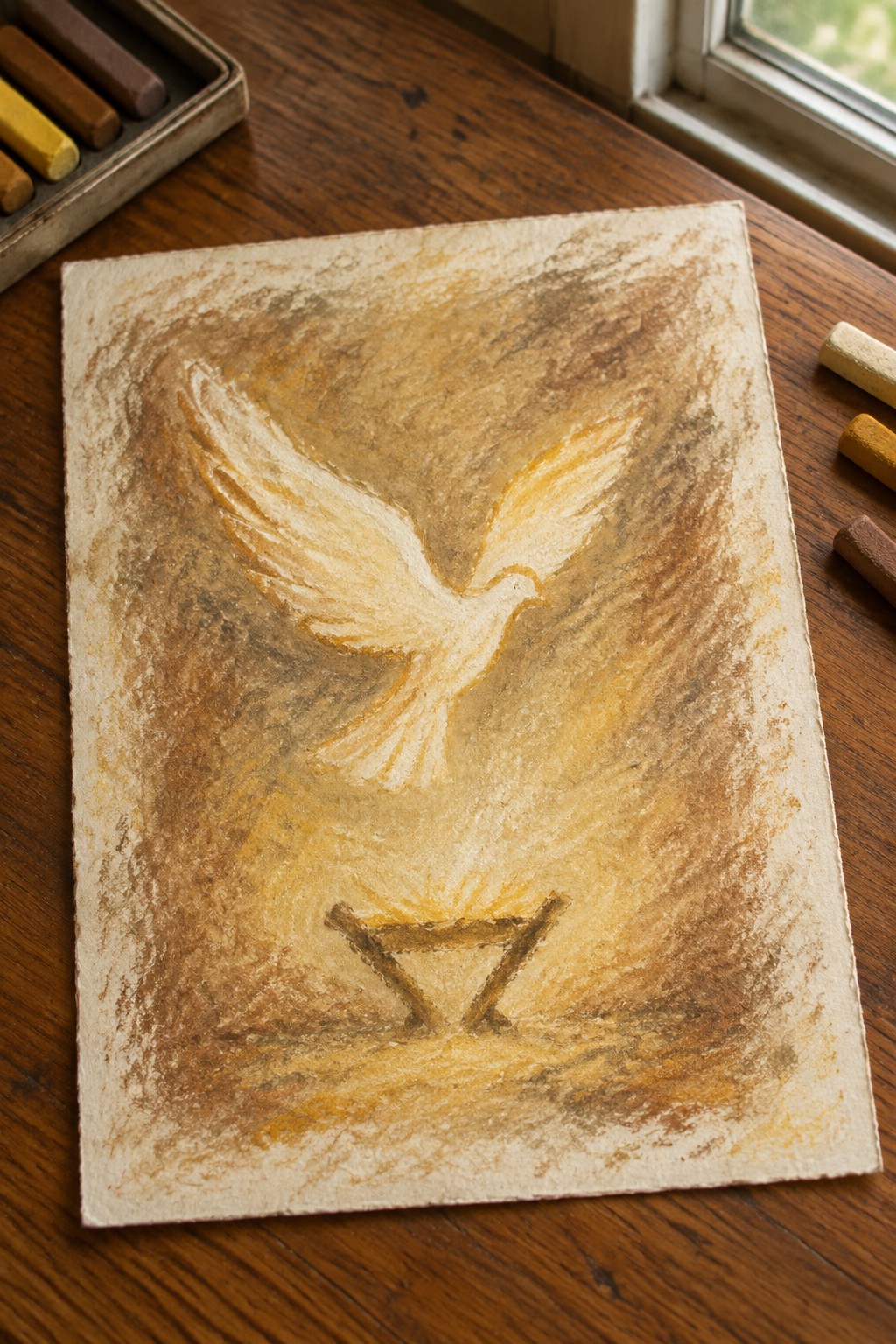
This painting idea uses a single white dove with spread wings as the main subject, placed above a basic geometric manger shape that sits low in the frame. Light radiates upward from the manger area, creating a focal point without any additional figures or structures. The muted brown and gold background keeps the emphasis on the central dove and the clean negative space around it.
The composition does a lot of the work here by relying on a strong vertical center line and a limited palette that makes it easy to adapt to different paper sizes. You could swap the earth tones for cooler shades or shrink the whole thing into a small square format for cards. For practice, this kind of subject helps you focus on soft blending and simple shapes without needing to draw multiple figures or complex details.
Vertical Panels of Star Stable and Manger

A three-panel vertical layout keeps the nativity story minimal by separating the star, the stable, and the manger into their own soft watercolor bands. Each section uses a pale blue sky wash over a narrow strip of sandy ground, with the star rendered as a simple eight-point shape, the stable built from a few thin brown strokes, and the manger shown as crossed sticks with a small hay bundle. The stacked format removes any need for perspective or crowding while still guiding the eye downward through the sequence.
What makes this idea useful is how the divided panels let you paint one small area at a time without worrying about overall balance. The limited palette of cool sky tones and warm earth colors works for quick practice pieces or small prints, and you can easily change the stable shape or swap the manger for another single object. For wall art or cards, the clean breaks between panels give the composition breathing room that a single full scene would lack.
Curved Minimalist Figures for a Nativity Scene

This painting idea centers on three simplified figures formed from large, overlapping curves to show the nativity without fine details. The main shapes use a limited palette of dusty rose, warm brown, and cream with one small gold circle as the only bright point. The soft background wash and textured paper keep the focus on the bold silhouettes rather than any added elements.
The composition does a lot of the work here by relying on negative space and rounded forms that stay readable even at small sizes. You could swap the rose and brown tones for other muted shades to match different room colors or try the same layout on canvas instead of paper. For seasonal decor, this kind of painting works well because the simple shapes make it quick to repeat or resize for cards and prints while still looking intentional.
Stable Outline with a Single Donkey and Manger
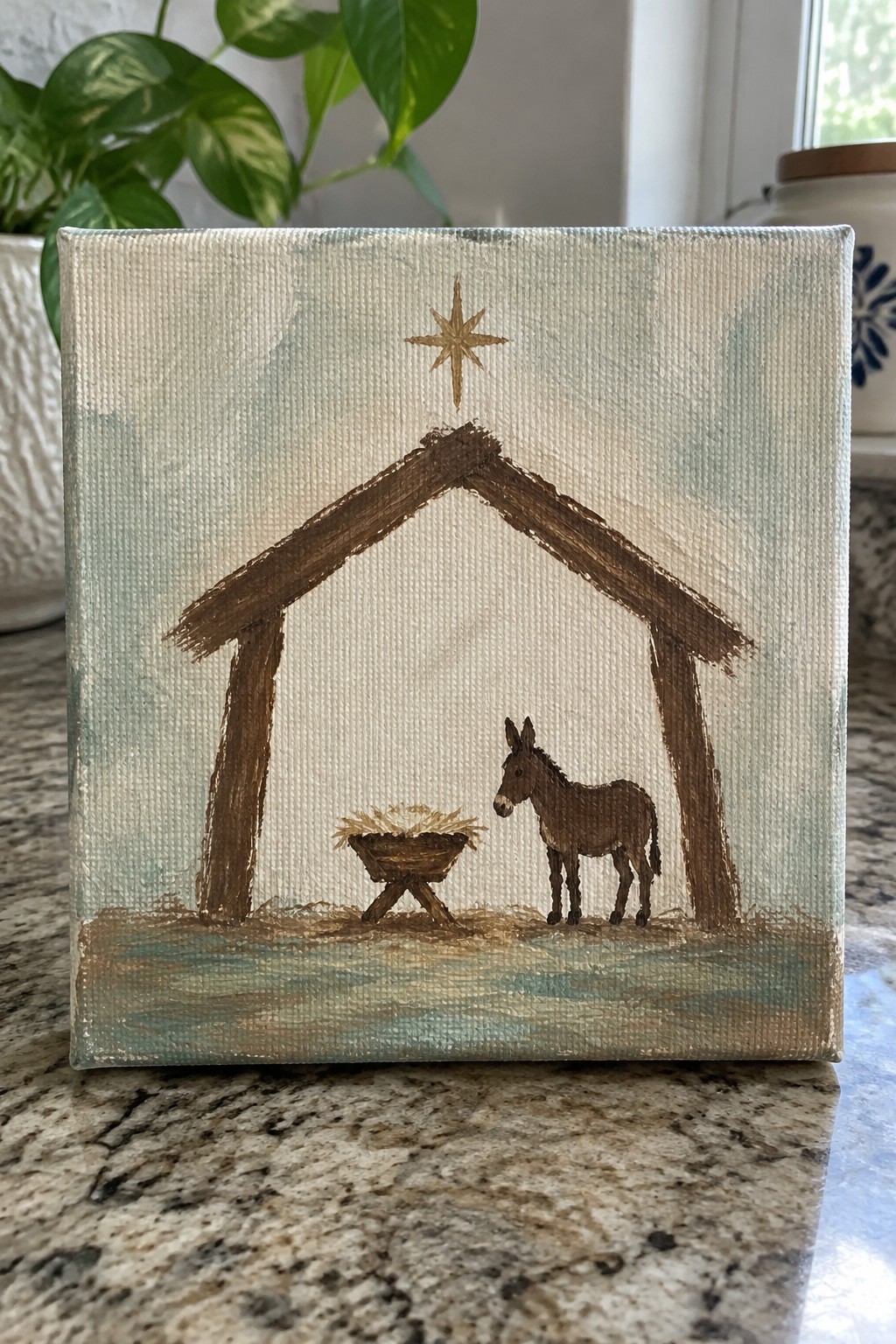
A basic nativity idea built around a triangular stable shape, one animal figure, and a small manger placed off-center. The composition stays effective because the open space inside the stable keeps the eye moving between the donkey and the manger without crowding. This approach fits into seasonal animal paintings that rely on a few clear shapes rather than many details.
The composition does a lot of the work here since the stable posts and roof already create a frame. You could swap the background wash for any soft color you have and still keep the same layout. This would be easy to turn into a small canvas for a shelf or to simplify further by dropping the star if you want fewer steps. For practice, the limited number of elements makes it a good subject to repeat with different animals.
Three Kings Following the Star

This painting idea shows three crowned figures in simple robes positioned at the base of a night scene, with one large star placed high in the center to lead the eye. The composition keeps the figures small and grouped together against a large wash of dark blue that fades into lighter tones near the ground. It works as minimalist seasonal art that relies on placement and contrast rather than detail to suggest the nativity story.
What makes this idea useful is the clear focal point created by the star, which lets the rest of the painting stay loose. The vertical layout and limited color range make it easy to adapt for different paper sizes or to try in acrylics or gouache. For practice, the same idea can be reduced to just the star and one figure if you want a quicker study.
Shepherd and Manger Under One Bright Star

This painting idea uses a shepherd with a small group of sheep walking toward a single lit manger in an open field, set against a night sky with one dominant star. The composition stays minimal by placing the figures low in the frame and letting the gradient sky and distant hills fill most of the space. The light from the star and manger becomes the main focus, with everything else kept dark and understated to keep the scene simple.
What makes this idea useful is how the low horizon and large sky area make it easy to adapt to different canvas sizes without crowding the subject. The limited palette of deep blues shifting into warm yellows near the horizon means fewer color decisions, and the scene can be simplified further by dropping one or two sheep if needed. For Pinterest, the single bright star gives the composition a clear focal point that reads well even at small sizes.
Circular Nativity Wreath Layout
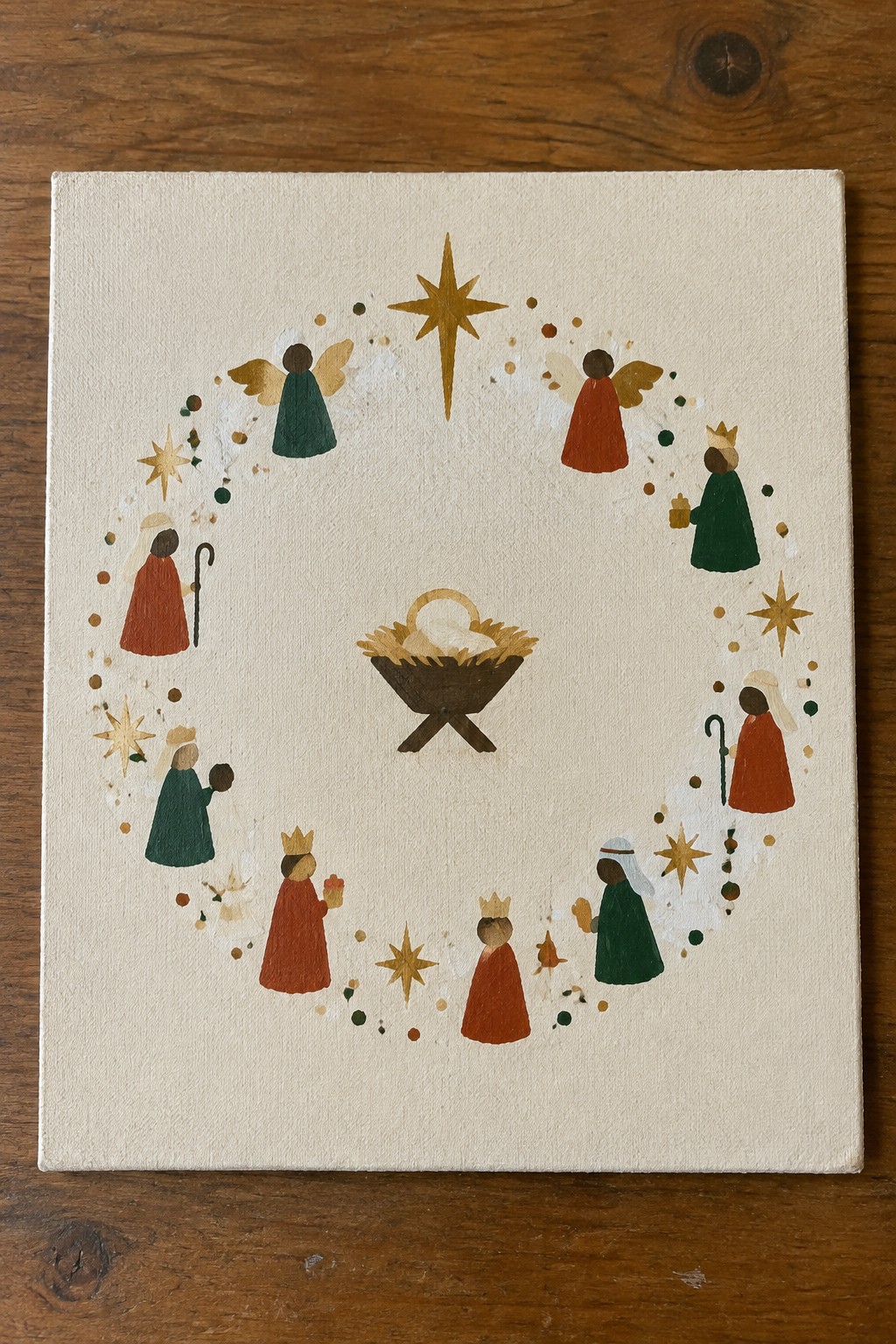
A nativity idea built around a circular wreath format keeps the manger as the clear center point while figures and stars form a loose ring around it. Simple flat shapes for the people, angels, and animals reduce the scene to basic silhouettes that still read clearly from a distance. The light canvas background and scattered gold accents let the composition breathe without extra layers or shading.
What makes this idea useful is how the wreath structure handles the arrangement for you, so you do not need to plan complex spacing. You can swap in different earth tones or limit the palette further if you want a quicker version for cards or small canvases. The same layout works for wall decor because the empty space in the middle and around the edges keeps it from feeling crowded.
Split Color Fields with Star and Manger
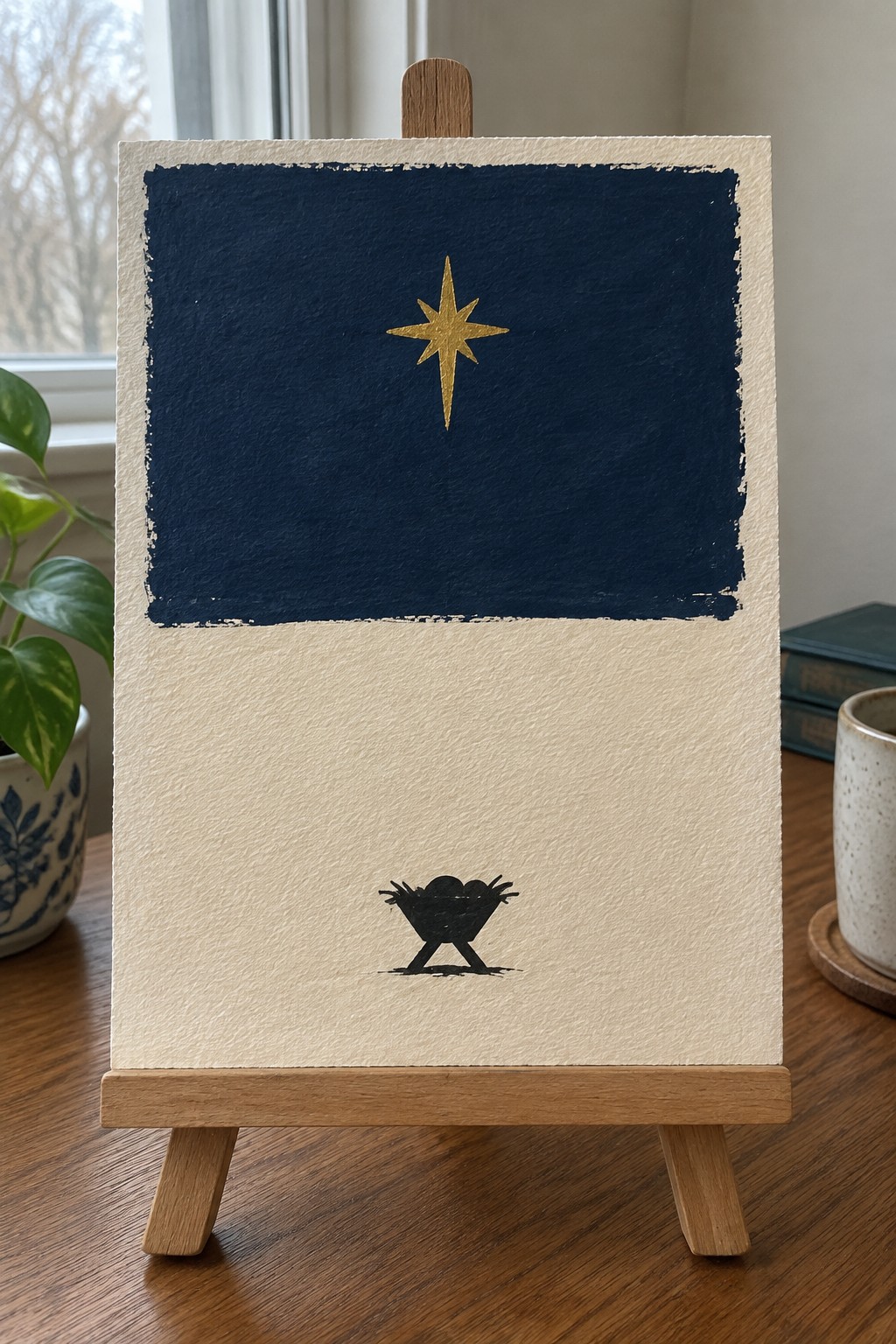
This painting idea uses a simple horizontal divide to separate a dark upper section from a light lower one, placing a single gold star above a basic black manger silhouette. The approach strips the nativity down to two shapes and two background blocks, letting the contrast between the sections carry the composition. It works as seasonal decorative art that relies on clear shapes and limited elements instead of added detail or blending.
What makes this idea useful is how the divided layout lets you finish the main areas fast before adding the star and manger as final marks. You can change the color blocks to match other decor or shrink the format for smaller panels and cards without losing the balance. The straightforward shapes also make it easy to adjust the star size or manger placement if you want to personalize the spacing.
Minimalist Nativity in an Open Field with Guiding Star

This painting idea places the nativity figures low in the frame against a broad sky and distant hills, letting a single large star and a few smaller ones carry the focus. The soft wash that moves from muted green through peach to pink creates depth while keeping the scene uncluttered. It works as a seasonal landscape approach where the story is told through placement and a restrained sky rather than detailed forms.
What makes this idea useful is how the wide sky and simple hill bands let you change the color gradient to suit different lighting without redrawing the figures. You can shrink the whole layout for a greeting card or keep the open space for a larger wall piece, and moving the star cluster gives you easy variations. The low placement of the group also makes it straightforward to practice figure proportions against a simple background first.
Frequently Asked Questions
What defines minimalist Nativity paintings in this collection? These works reduce the scene to core elements such as the infant, mother, and a guiding light using basic shapes, limited colors, and empty space to highlight the story without extra details or ornate backgrounds.
Which artists created the featured paintings? The list draws from both established and emerging creators who specialize in reductive styles, often working in acrylics or digital media to keep the focus on form and emotion rather than realistic textures.
How can these paintings fit into everyday home settings? Their clean lines and neutral tones allow easy pairing with modern furniture or simple holiday displays, making them ideal for small spaces where traditional crowded scenes might feel overwhelming.
Where can someone locate prints or further information on these artworks? Check online galleries, artist websites, or print-on-demand services that carry contemporary religious art, and search by the painting titles or artist names provided in the article for exact matches.
What practical steps help someone create similar simple compositions? Begin by sketching only the essential figures with straight lines and circles, apply a restricted palette of three or four colors, and leave generous white space to let the viewer complete the narrative.