I enjoy painting flowers in my free time because they bring a soft touch to any room.
Christian symbols work well with these designs and give them a deeper feel.
I have gathered some pieces that show this combination nicely.
They offer an elegant look that fits with nature themes.
Some of them might inspire your next project if you like this style too.
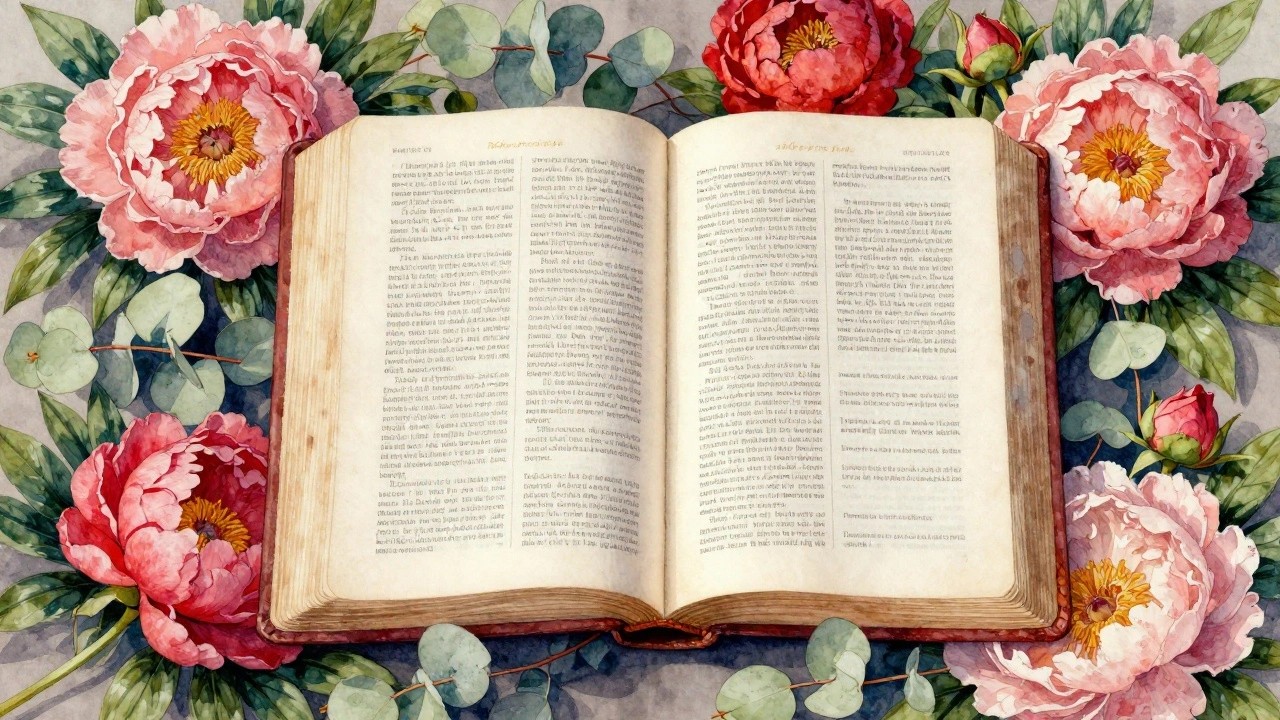
Open Book Framed by Peonies
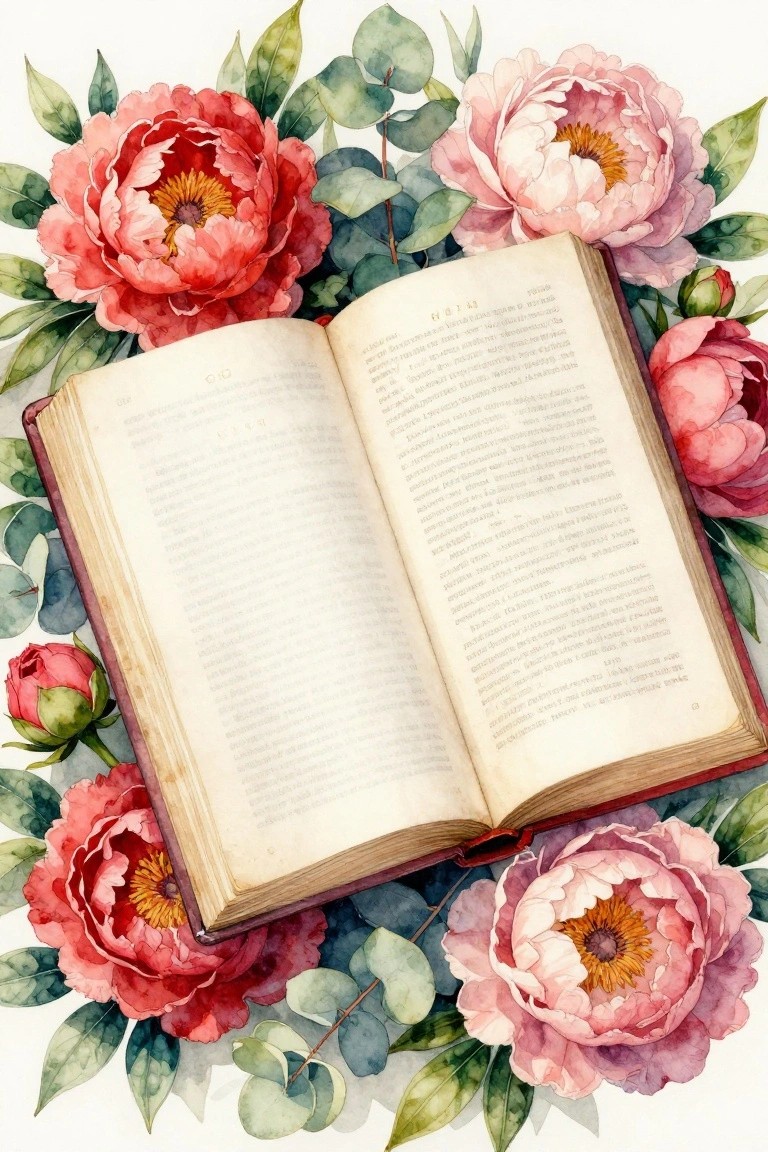
A still life painting idea that centers on an open book with peonies and leaves arranged around the edges to form a loose border. The flowers sit at different heights and angles so the eye moves naturally from the pages outward, while the soft edges of the blooms keep the focus on the text area. This approach fits a floral still life category where the book provides structure and the flowers add color and shape without crowding the middle.
What makes this idea useful is how the open book creates a clear center that stays readable even if the surrounding flowers shift in size or number. The color mix of deep reds, soft pinks, and muted greens works across different paper tones, so you can swap in other blooms or adjust the frame width for a vertical or square canvas. For practice this layout helps with balancing a solid object against loose shapes, and it translates well to prints or cards where the book area can hold a short quote or verse.
Dove Among Lilies in Watercolor
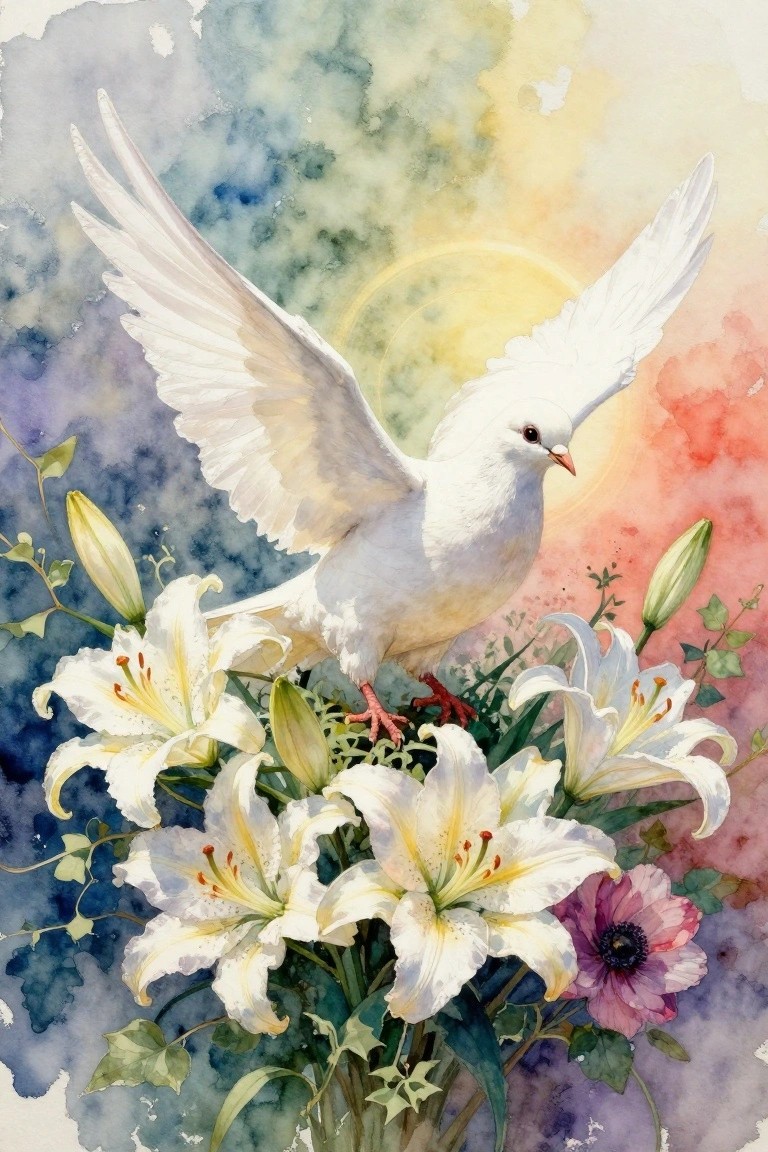
A dove positioned among clusters of white lilies creates a clear focal point when the background stays loose and blended. The idea centers on overlapping the bird’s wings with the open flowers so the shapes connect without needing extra lines or outlines. It fits the animal and floral category where a soft sky wash lets the lighter subjects stand out.
The composition does a lot of the work here by placing the dove higher and letting the flowers fill the lower half. You can adapt the sky colors to whatever washes you already have since the main subjects stay white with only small touches of detail. For practice this subject helps with building layers from light to dark while keeping edges soft. It would stand out on Pinterest as a nature scene that combines two common motifs in one balanced layout.
Ornate Cross with Red Roses
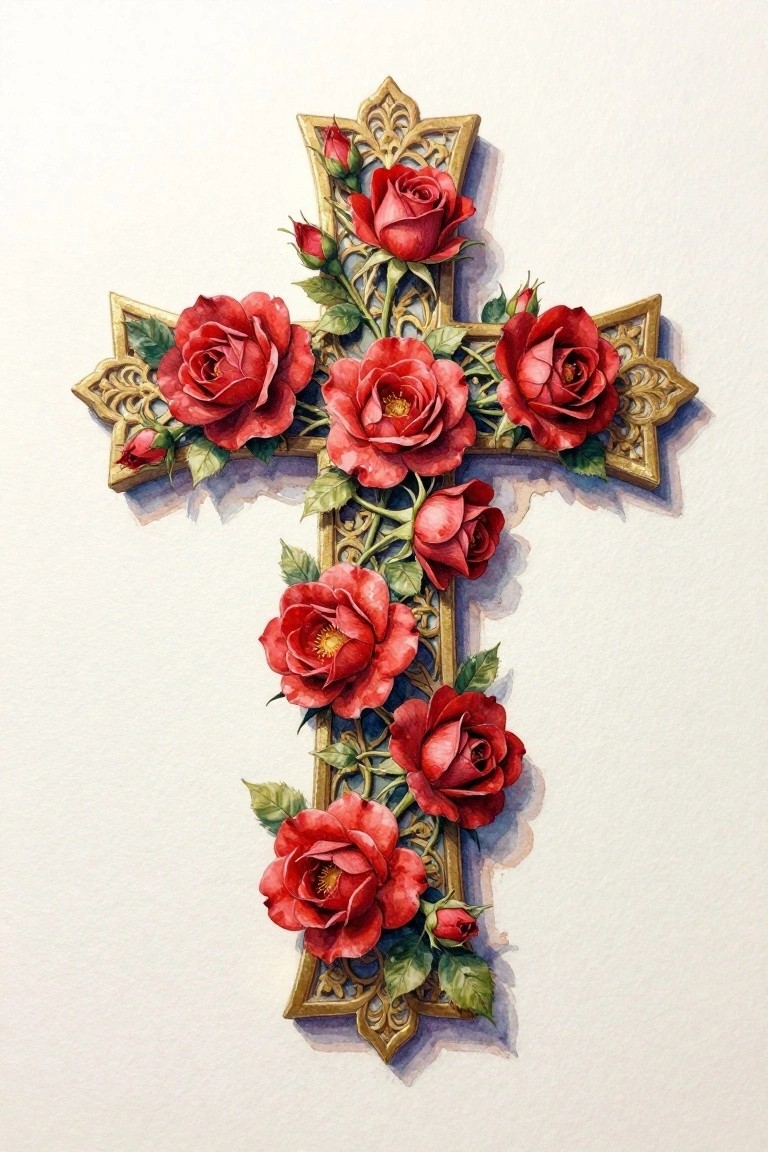
A cross with ornate gold detailing forms the structure for clusters of deep red roses that wind along its arms and vertical beam. The painting idea centers on layering the flowers so they follow the cross shape while leaving enough negative space to keep the overall form clear. This approach fits into decorative Christian floral work where the contrast between the metallic gold and rich red tones creates a strong focal point without needing a busy background.
The composition does a lot of the work here by giving the roses a fixed path to follow along the cross arms. You can adapt the idea by reducing the number of blooms or simplifying the gold patterns if you want a quicker version for practice. For wall art this kind of piece works especially well because the central cross shape makes it easy to scale up or down depending on the frame size. The same layout could be personalized by changing the rose color to match a room palette while keeping the gold accents.
Young Lamb in a Lavender Field
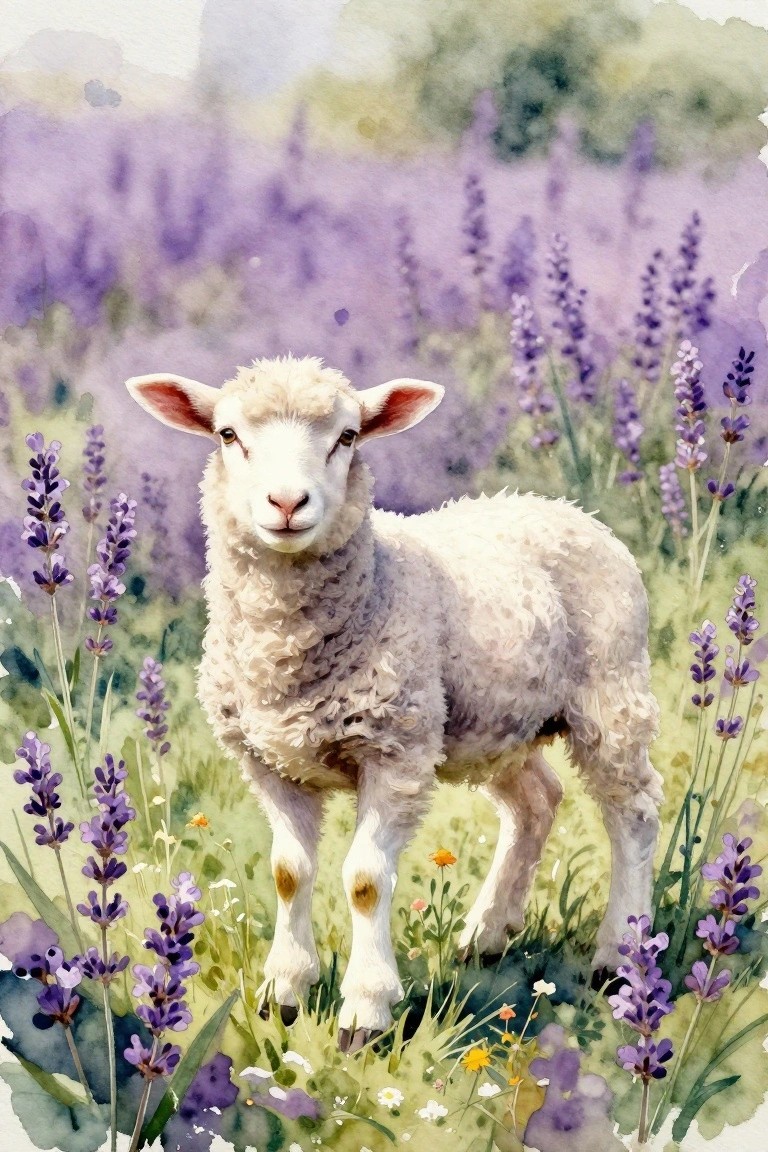
A centered lamb against rows of lavender creates a straightforward animal portrait mixed with floral elements. The soft edges and muted greens keep the focus on the animal while the purple stalks add height and rhythm on both sides. This idea fits the category of gentle nature scenes that combine a single animal subject with a seasonal flower setting.
What makes this idea useful is how the vertical flowers naturally frame the lamb without needing extra details. You could swap the lavender for other tall blooms or crop the scene tighter to make it simpler for a smaller canvas. For wall art, the balanced layout prints well at different sizes and pairs easily with similar pieces of other meadow animals. The color choices stay easy to adjust if you want a different season or a more muted background.
Golden Chalice with Wheat and Summer Blooms
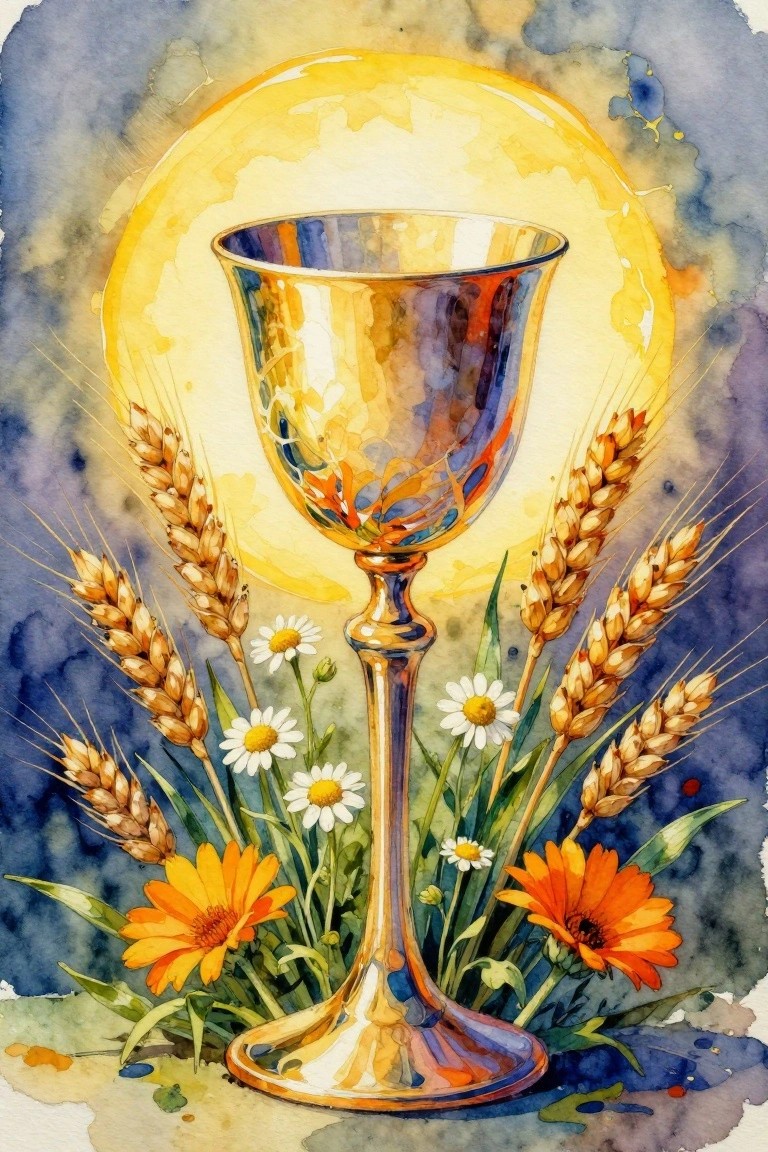
A still life idea built around a tall reflective chalice placed in the center, with wheat stalks rising on both sides and clusters of daisies plus orange flowers at the base. The large glowing circle behind the chalice creates a clear focal point and separates the main object from the darker background. This type of composition blends a single strong subject with simple natural accents to keep the arrangement balanced and easy to read.
What makes this idea useful is the way the circular backdrop handles most of the background work so you only need to focus on the chalice and the plants. You can simplify it by reducing the number of wheat stalks or change the flowers to match whatever is in season. For practice, this kind of subject helps with painting reflections on metal while keeping the overall layout straightforward enough for a medium-size canvas or print.
Arched Floral Frame Over a Garden Path to a Church

A floral arch idea uses layered vines and blooms in reds, oranges, and purples to create a framed window view that leads the eye down a garden path toward a distant church. The mix of close flowers with a softer landscape background gives the piece its depth while keeping the focus on the natural frame. This fits the decorative floral category with a built-in landscape element.
The arch structure carries most of the composition, so you can easily swap the church scene for another simple background like trees or a meadow. Bright flower colors against the blue-green tones make palette changes straightforward for different seasons or room styles. For practice, start with fewer blooms around the edges and build outward, which keeps the idea workable on both small cards and larger wall pieces.
Beaded Lily Circle Composition
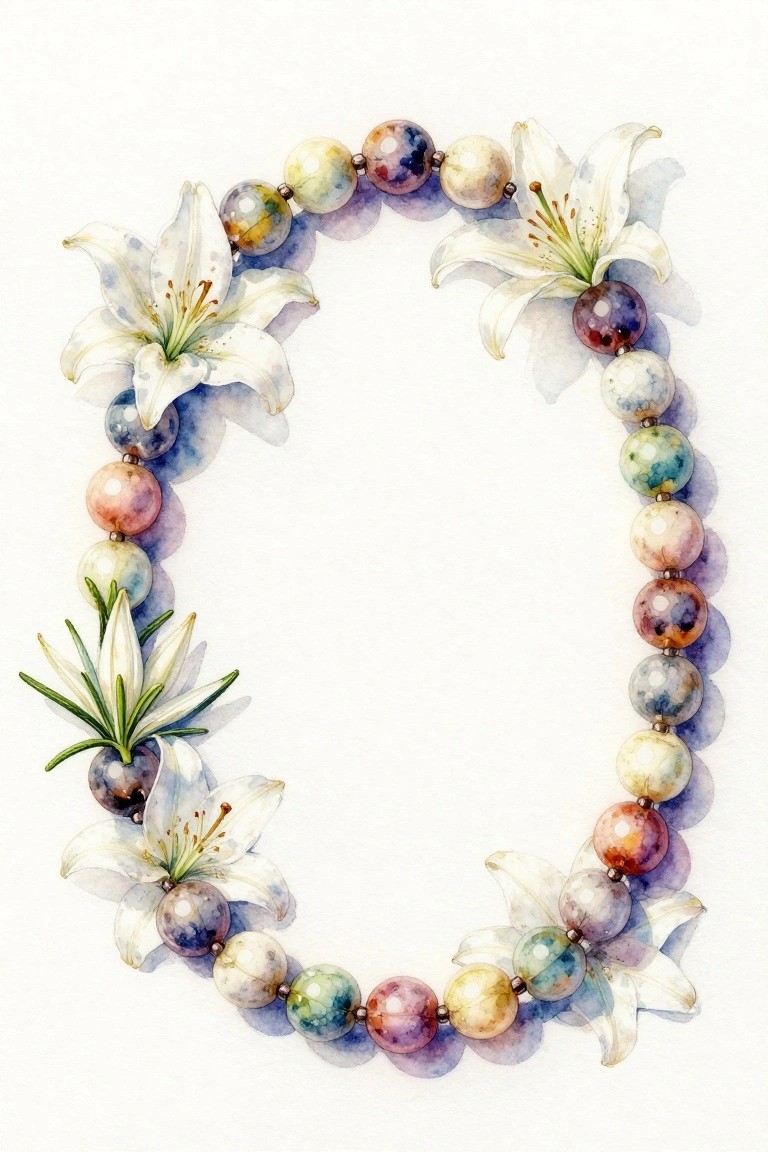
A circular arrangement of multicolored beads forms the main structure here, with white lilies inserted at intervals to interrupt the pattern and add organic shape. The idea centers on a decorative still life where the beads create a repeated rounded motif and the flowers provide contrast through their open petals and stems. The open center and soft color blending keep the composition balanced without overcrowding any area.
What makes this idea useful is how the bead repetition gives an easy framework to build around while the flowers add natural variation. You can swap the bead colors or change the lily placements to fit different spaces or seasons for wall pieces or greeting cards. The layout also helps with practicing even spacing and soft edges, and the same circle format works if you simplify it to fewer beads or add a second flower type for more interest.
Silhouette Figure Among Sunflowers at Sunset
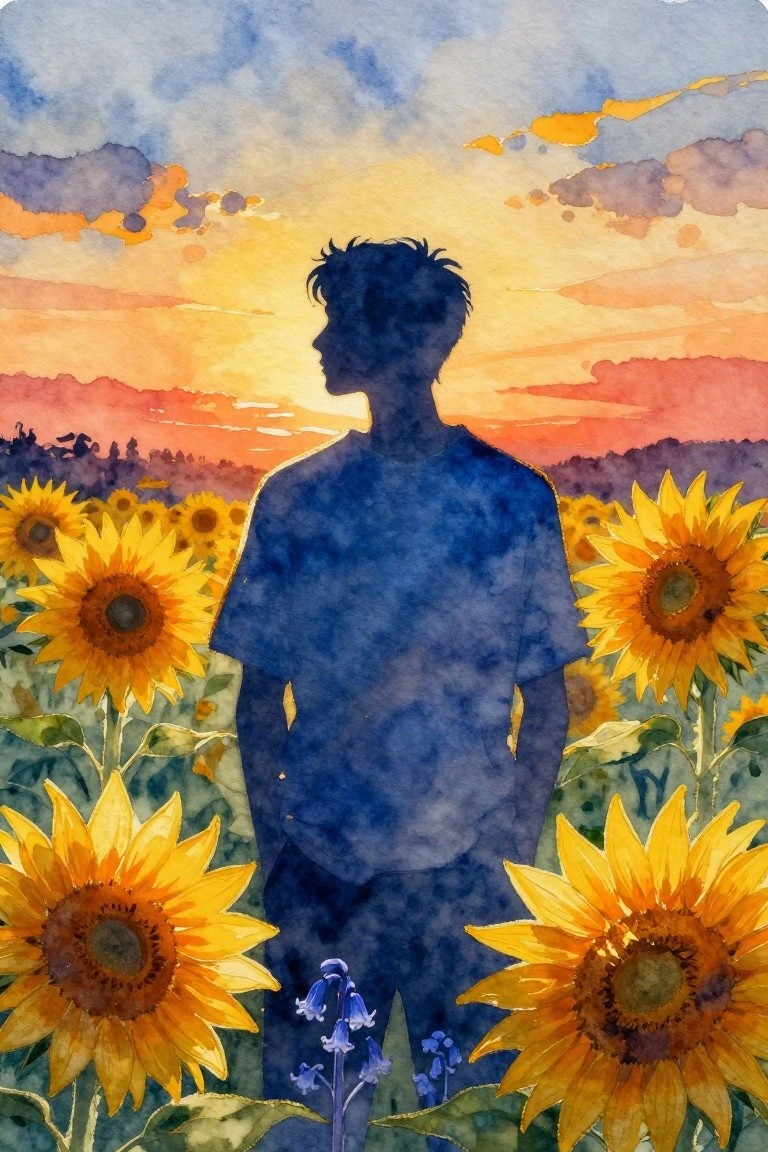
A single dark silhouette stands centered in a field of sunflowers with a layered sunset sky stretching across the background. The painting idea relies on a strong contrast between the solid figure shape and the bright floral foreground plus the warm sky tones. Sunflowers of varying sizes frame the lower and side edges while a few small blue flowers add a subtle break near the base.
What makes this idea useful is how the silhouette removes the need to paint facial details or clothing folds. You can change the flower type or shift the sky colors to cooler tones without redrawing the figure. For wall pieces the vertical layout works well because the sunflowers keep the eye from drifting to the edges. This approach also scales down easily for smaller canvases or sketchbook studies.
Crown of Thorns Resting Among Wildflowers
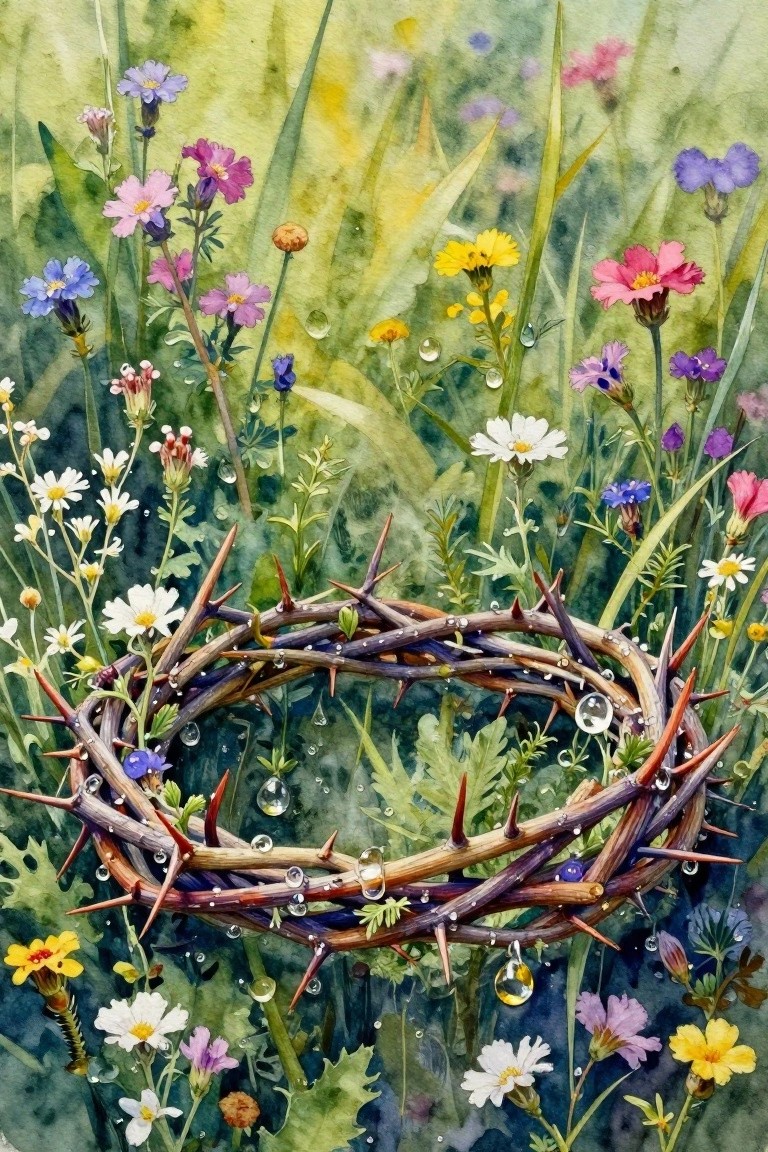
A crown woven from thorny branches forms the central circle in this painting idea, set low against a loose meadow of multicolored wildflowers and tall grasses. The idea works by letting the structured thorns contrast with the scattered petals and stems around it, creating a natural still life that mixes a single bold object with an open floral background. Dew drops on the branches add small reflective points that break up the rough texture without overpowering the overall layout.
What makes this idea useful is the clear focal point created by the circular form, which stays readable even if you reduce the number of flower types. The green and muted background tones make it easy to adapt the color palette to match existing decor or try in a smaller size for practice. For wall art, the horizontal spread of blooms around the center gives the piece good balance without requiring tight symmetry.
Angel Figure Built from Layered Floral Shapes

A central figure with outstretched wings offers a clear painting idea where the body, wings, and clothing are formed entirely from overlapping leaves and flower petals in mixed bright colors. The composition places the figure upright with flowers clustered at the edges to create a natural frame that draws attention inward. This approach fits decorative floral art that merges a simple human outline with botanical elements for a unified design.
The layered wing construction makes it straightforward to practice color blending and shape repetition without needing precise facial details. You can scale the surrounding flowers down or repeat the same petal clusters on a smaller canvas to fit different frame sizes. The idea also adapts easily by swapping the color mix for a single dominant hue while keeping the same overlapping layout. For Pinterest, the bright central shape against a softer background tends to stand out in searches for nature-themed Christian art.
Underwater Fish with Integrated Floral Scales
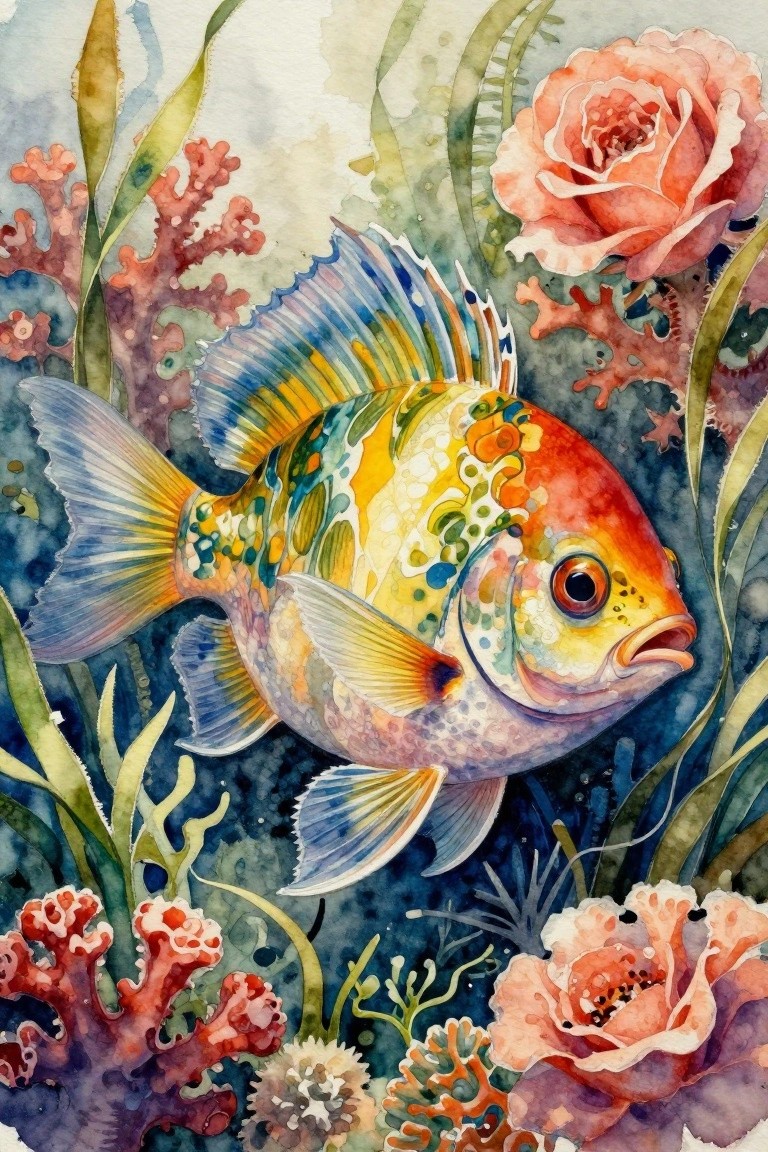
A decorative animal painting idea centers on a single fish whose body carries repeating floral motifs in warm oranges and yellows that blend into its natural coloring. This approach combines an animal subject with decorative art elements, using a central composition that lets the fish occupy most of the space while coral clusters and soft green stems fill the edges. The layered arrangement of fins, petals, and background shapes creates depth through overlapping forms and a balanced mix of cool and warm tones.
What makes this idea useful is the way the floral patterns on the fish give a clear starting point for color choices without needing complex shading. The composition does a lot of the work here by keeping the main subject large and the supporting elements smaller, which makes the piece easy to adapt for different canvas sizes. For practice, this kind of subject helps with pattern placement on curved surfaces, and the same idea could be simplified by removing some of the coral or swapping the roses for other flower types to match a specific room.
Floral Arch Over a Chapel Path

A garden path lined with dense clusters of hydrangeas creates a natural arch that frames the entrance to a small chapel. The idea centers on using layered blooms and curving branches to form a strong visual tunnel that pulls attention toward the door at the end. This approach works well as a floral landscape because the repeated flower shapes and varied colors build depth without needing intricate details in every area.
What makes this idea useful is the clear path and arch structure that handles most of the composition work. You can adapt it by changing the flower types to match different seasons or by tightening the color range to just two or three hues for faster practice pieces. For wall art the vertical flow from foreground blooms to the distant chapel gives it good balance on a tall canvas.
Rose Corner Border with Gold Accents

A floral border idea that uses clusters of roses placed only in the corners, linked by curving gold lines to form a loose frame around an empty center. This approach keeps the design contained to the edges while still creating clear structure through the repeating flower groups and vine details. The color mix of coral, pink, and deeper rose tones against the gold gives the border enough weight to stand out without crowding the page.
What makes this idea useful is how the corner layout lets you scale the flowers up or down depending on the page size. You could drop some of the smaller buds or shorten the gold swirls to finish it faster, or repeat the same corner pattern on multiple pages for a matching set. For practice, this kind of border works well because the empty middle area gives you room to test different flower angles without committing to a full scene.
Decorated Goat with Floral Garlands in a Meadow
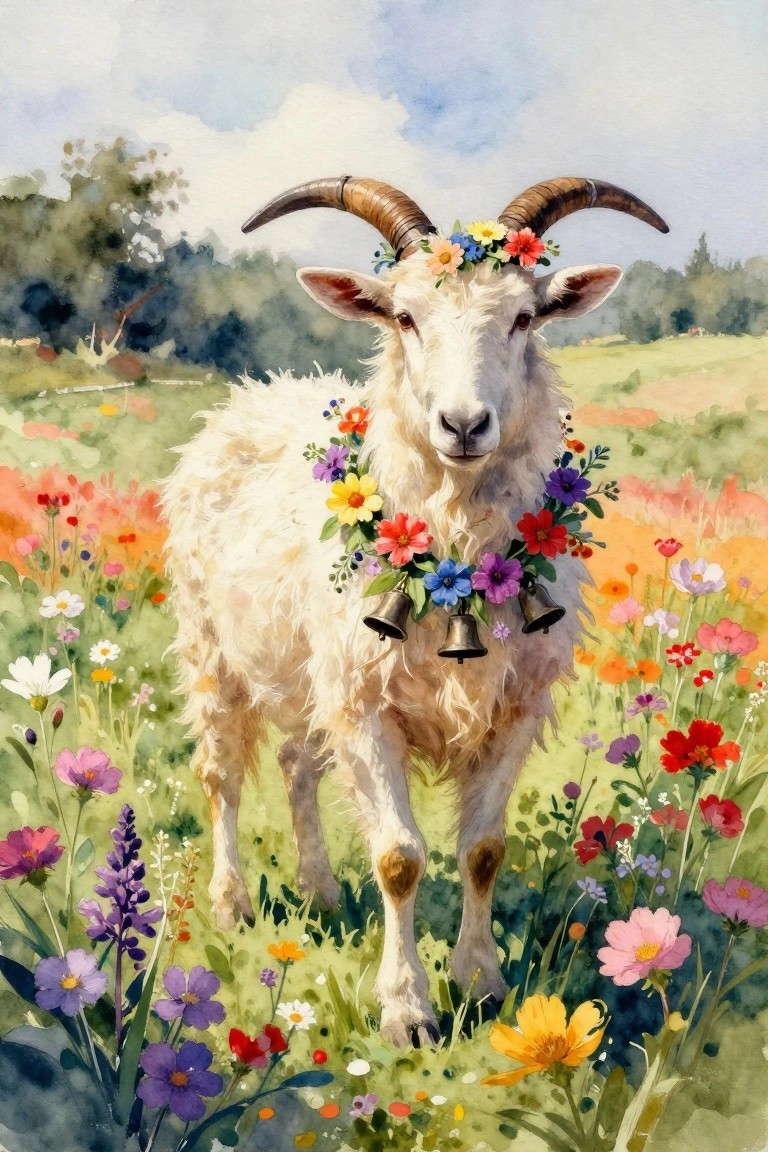
A goat portrait paired with layered floral elements creates a simple animal subject that gains interest through the added flower garlands and bells. The idea works as decorative nature art because the centered animal is framed by a loose field of wildflowers that fills the lower half without competing for attention. Soft edges and a gentle color spread across the petals and grass keep the focus on the goat while still showing plenty of variety in the surrounding blooms.
The composition does a lot of the work here by placing the main shape in the middle and letting the flowers act as accents rather than the full scene. You can adapt the same idea by changing the flower colors to match a room or swapping the bells for other small details that fit your style. For practice, this kind of subject helps with basic animal proportions while giving you an easy way to add color without needing complex backgrounds. A painting like this stands out on Pinterest because the combination of an animal and bright flowers is less common than pure flower studies.
Christ Portrait with a Floral Crown
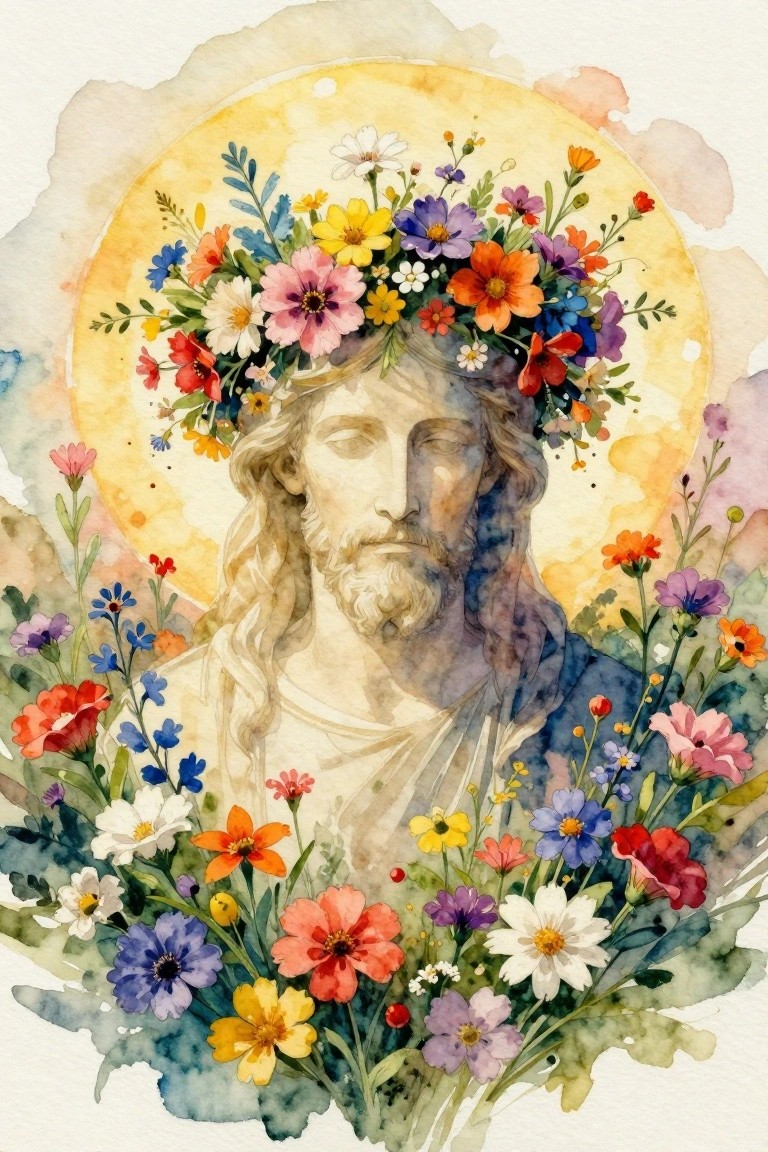
A portrait of Jesus forms the central focus, with a full crown of mixed wildflowers resting on his head and more blooms filling the space around the shoulders. The glowing circular background keeps the eye on the face while the flowers add layers of color and texture that balance the composition. This approach blends a religious portrait with decorative floral work, making the idea suitable for anyone who wants to combine figure work and nature elements in one piece.
What makes this idea useful is the way the flowers act as both crown and frame, so you can scale the arrangement up or down without losing the main subject. The mix of bright and soft tones gives room to swap in whatever blooms are in season or match a specific color scheme for home decor. For practice, this kind of subject works well because the face stays simple while the flowers give you freedom to loosen up on detail and experiment with layering.
Open Book Framed by Garden Anemones
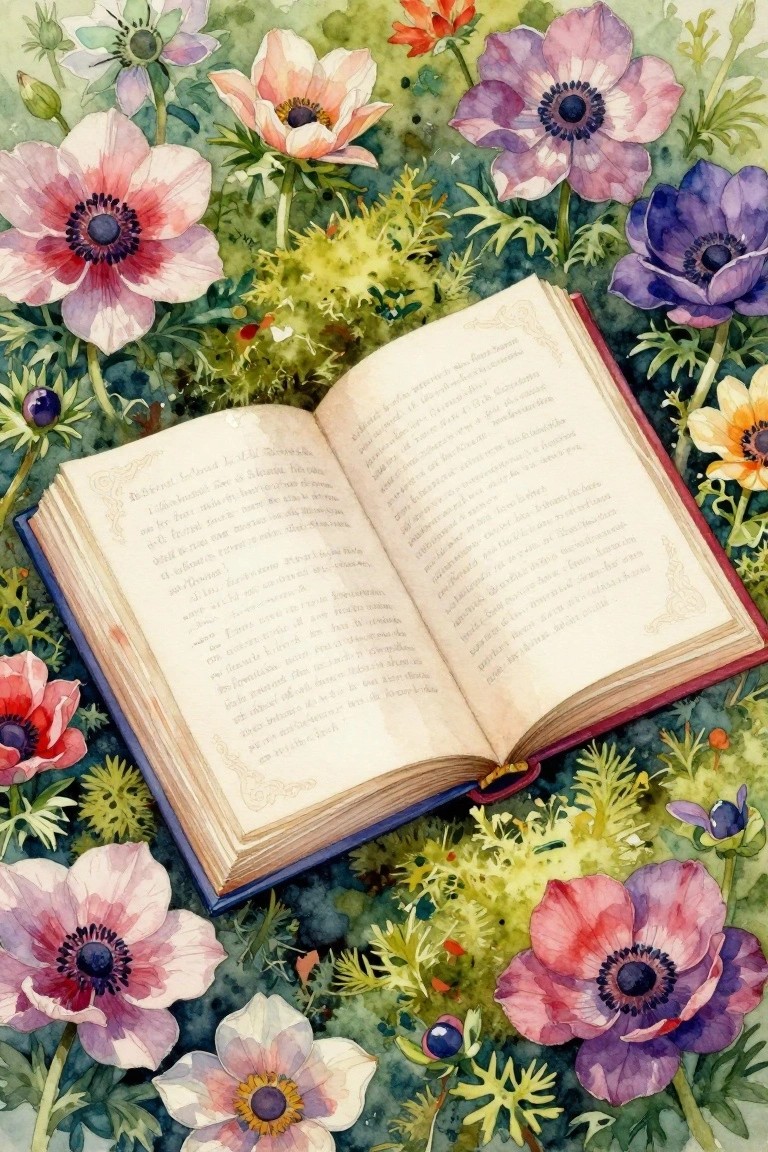
A still life that places an open book at the center of a cluster of anemones creates a clear focal point while letting the flowers and foliage form a loose natural border. The idea works because the flat pages contrast with the rounded blooms and uneven greenery, keeping the composition balanced without needing strict symmetry. It falls into the floral still life category, where soft color layering and varied flower sizes guide the eye across the page edges and into the surrounding greenery.
What makes this idea useful is that the book gives you an easy starting shape to build around, so you can add or remove blooms without losing the main subject. The color palette stays approachable since you can swap in any flower tones that match your existing supplies or room decor. For practice or a quick wall piece, this layout lets you adjust scale by cropping tighter around the pages or extending the greenery for a fuller scene.
Anchor Wrapped in Chain with Surrounding Blooms

This painting idea uses an anchor as the main subject in a floral still life, with the chain wrapped around the shank and flowers arranged at the base and sides. The composition works by keeping the anchor shape clear while letting the blooms and greenery overlap parts of it to create depth without clutter. Soft background washes in muted greens and yellows help the darker anchor stand out against the brighter pinks and purples of the flowers.
What makes this idea useful is the way the anchor gives the layout a fixed center point so the flowers can be added freely around it. You can simplify the chain details if you want a quicker version or change the flower types to match whatever is in season. For wall pieces this works well because the vertical shape of the anchor fits nicely on taller canvases or prints. The color mix of cool metal tones with warm florals is easy to adjust by swapping in different bloom shades.
Prayer Hands Ringed by Layered Blooms
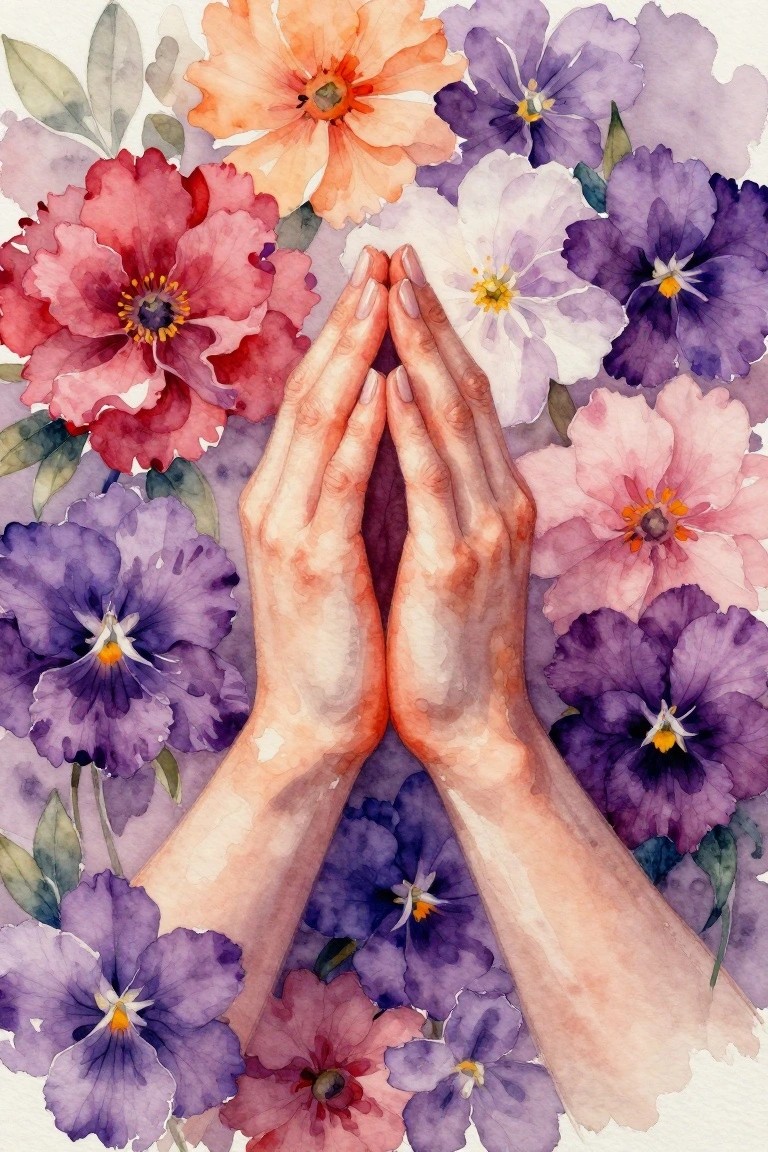
A painting idea built around two hands held in prayer and framed by overlapping flowers combines a clear central gesture with a full floral surround. The hands act as the vertical anchor while the blooms in varying sizes and colors wrap around them to fill the space without crowding the middle. Cool purples and pinks next to warmer orange and peach tones create contrast that keeps the eye moving between the skin and the petals.
What makes this idea useful is the strong central shape that stays readable even if you simplify the outer flowers or change their scale. The same layout works for a small card design or a larger wall piece because the hands give it instant focus. You can swap the color groups for spring pastels or deeper autumn shades while keeping the prayer pose and the layered arrangement intact. For practice, blocking in the hands first then adding the blooms around them makes the composition easier to control.
Climbing Roses Around an Arched Brick Window
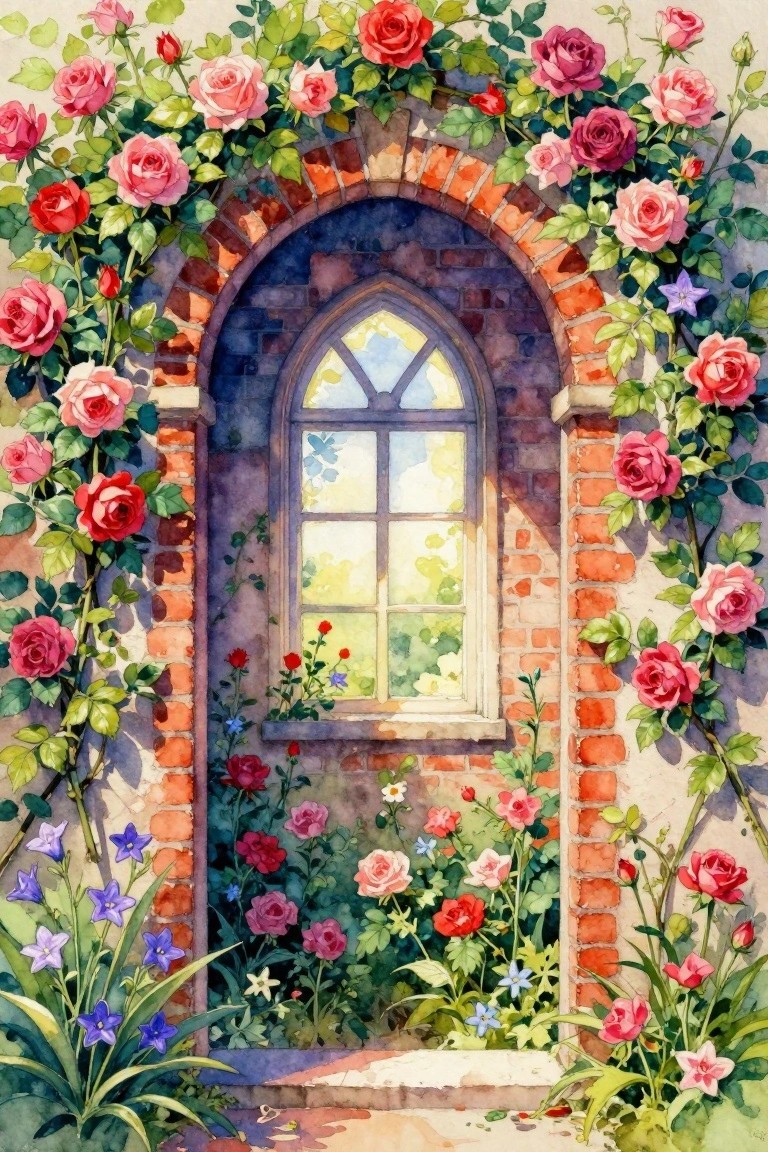
A painting centered on an arched brick window with roses climbing the sides and spilling across the base gives a clear structure that still feels full of movement. The idea relies on placing the window as the main shape while letting the flowers frame it on both sides and gather at the bottom. This approach works well as a floral architectural piece because the straight lines of the bricks and panes keep the composition from becoming too busy even with many blooms.
What makes this idea useful is the built-in border created by the arch, which helps contain the flowers and makes the layout easier to plan. The color palette can be swapped by changing rose shades or adding more small wildflowers at the base without losing the overall balance. For wall art the contained shape prints or frames cleanly, and the same setup can be simplified by reducing the number of side blooms or keeping the window view more open.
Hand Cradling Colorful Wildflowers
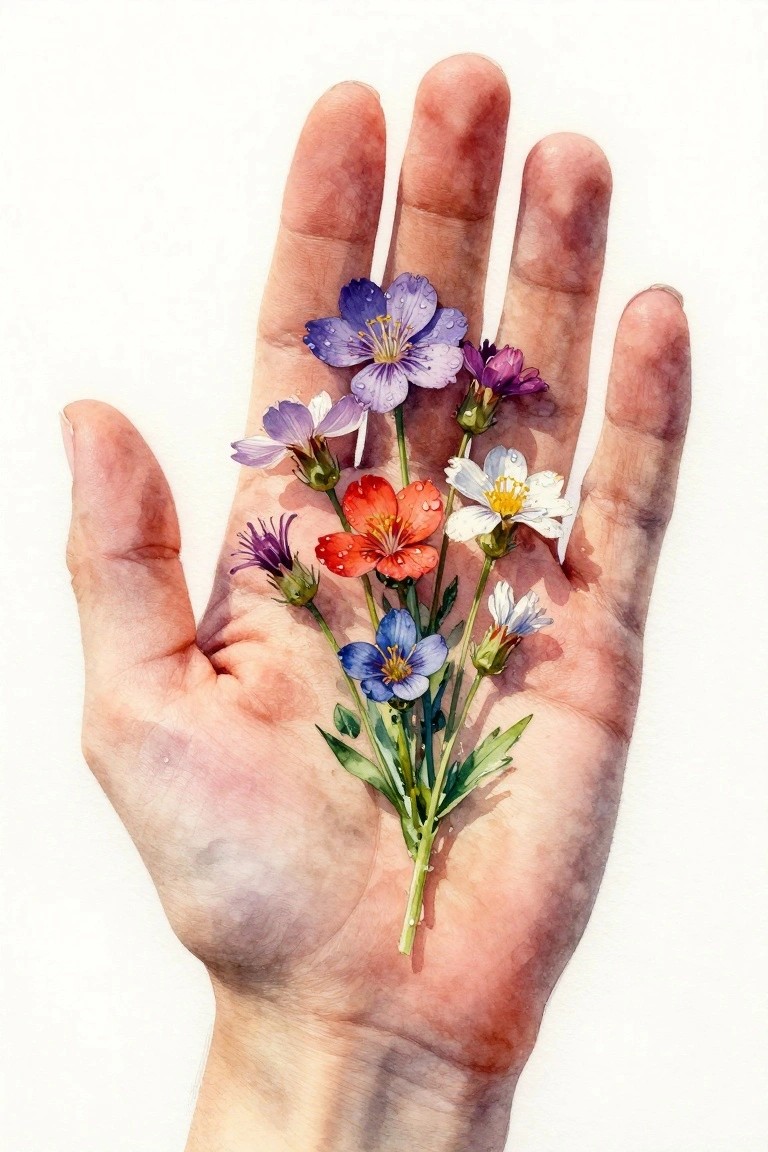
A painting of an open hand holding a small mixed bouquet of wildflowers places the blooms directly against skin tones for a simple still life setup. The flowers sit clustered in the center of the palm with stems hanging downward, creating a natural focal point while the hand itself frames the arrangement without extra props. This approach works as a floral still life that combines botanical detail with a human element in one compact scene.
What makes this idea useful is how the hand already sets the scale and keeps the flowers from floating in empty space. The mix of red, blue, purple, and white blooms against the skin gives a ready color contrast that can be adjusted by swapping in different flower types or reducing the number of stems. For practice, this kind of subject builds skills in both figure work and flower painting at the same time, and the vertical layout makes it easy to adapt for greeting cards or small framed pieces.
Floral Tree Made from Layered Orchids and Roses
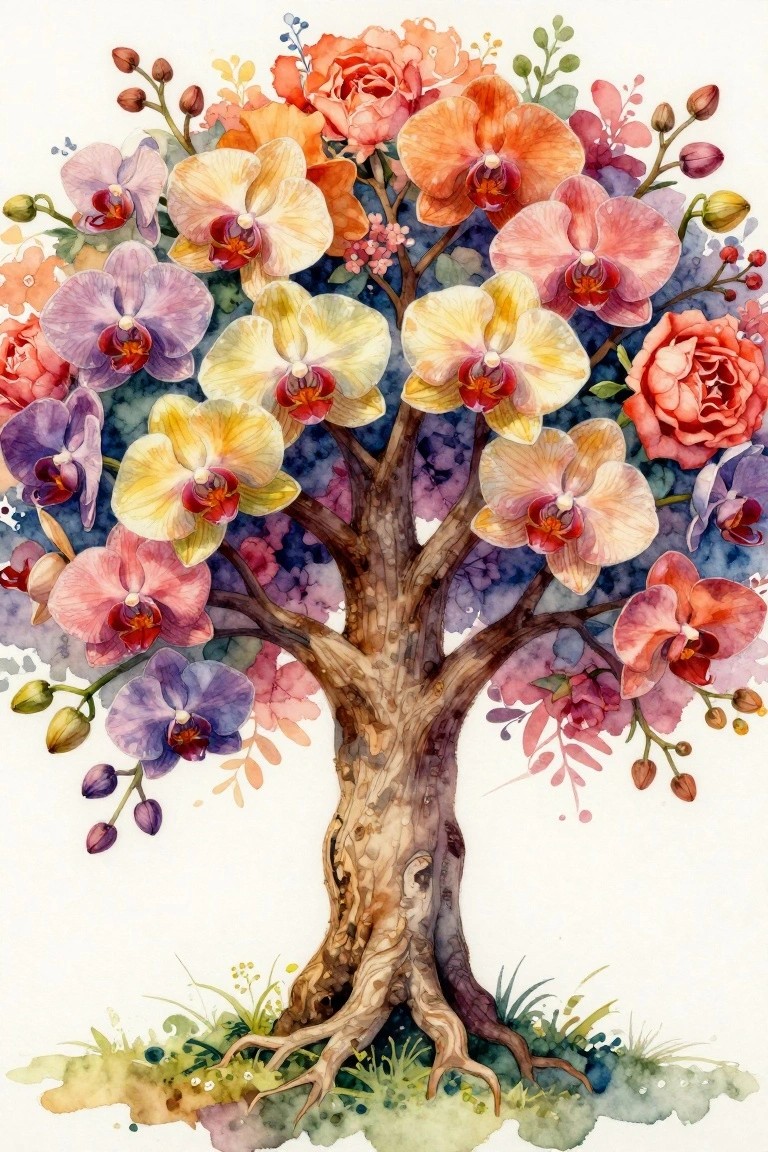
This painting idea replaces the usual canopy of leaves with dense clusters of orchids and roses arranged along the branches of a central tree. The main subject is a decorative floral composition that uses the tree’s natural shape as a framework for blooms in shades of purple, pink, yellow, and coral. The visual effectiveness comes from the contrast between the textured brown trunk and the overlapping flower layers that fill the upper space without needing a detailed background.
What makes this idea useful is the built-in structure of the trunk and roots, which lets you focus on grouping flowers rather than inventing a full scene. You could simplify it by using just two or three flower types or change the palette to match a specific room. For practice, this kind of subject works well because the overlapping shapes hide small mistakes and let you build gradually. The result also translates easily to different sizes for prints or greeting cards since the strong central form holds up at any scale.
Mixed Wildflower Bouquet with Wheat Stalks
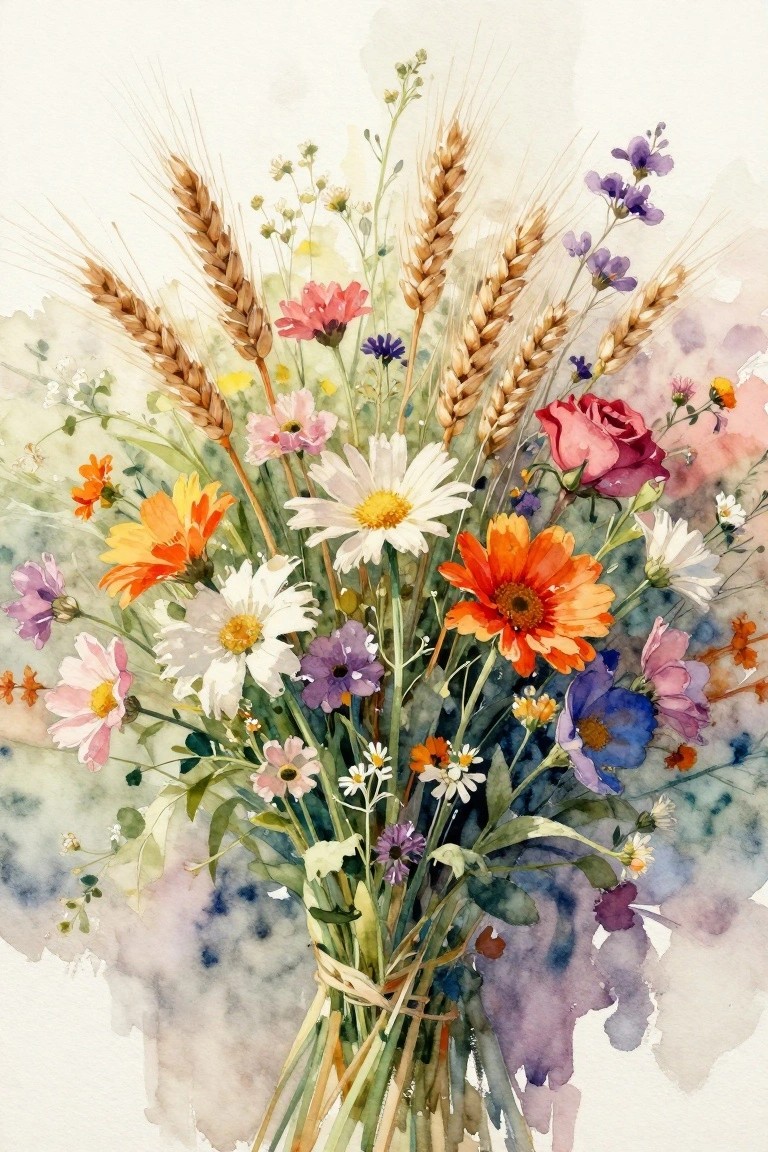
A gathered bundle of meadow flowers and wheat stalks makes a strong floral still life idea that plays with height and variety in one piece. The main concept is tying together different bloom shapes and grain stems so they fan out naturally at the top while staying compact at the base. This layout creates visual balance through the mix of rounded petals, spiky centers, and upright wheat that adds vertical lines without extra elements.
What makes this idea useful is the built-in variety of shapes that lets you practice several flower types in a single session instead of separate studies. You can adapt it easily by swapping in whatever blooms are in season or trimming the wheat shorter if the tall stalks feel too dominant. For wall art the tied base keeps the whole thing looking finished and contained, so it works on a medium canvas without needing complex background work. This would be easy to turn into a small series by shifting the color mix while keeping the same bundled format.
Frequently Asked Questions
What makes these Christian floral paintings a good choice for home decor? These paintings combine meaningful Christian symbols like crosses or doves with soft floral designs to create a peaceful and uplifting atmosphere. They work well in living rooms, bedrooms, or prayer spaces because the nature-inspired elements add warmth and elegance without overwhelming the room. Choosing pieces that match your existing color scheme helps them blend seamlessly into your decor.
How can I decide which of the 22 paintings best fits my space? Start by considering the size of your wall and the mood you want to create. Lighter floral tones suit smaller rooms while bolder designs with deeper colors make strong focal points in larger areas. Think about the Christian themes that resonate most with you, such as hope or renewal, and select paintings that feature those elements. Viewing the full collection online or in a catalog allows you to compare options side by side.
Are prints or original versions available for these artworks? Many of the 22 paintings come as high-quality prints on archival paper or canvas that capture the original details accurately. Originals may be offered through select artists or galleries depending on availability. Prints provide an affordable way to enjoy the collection while still delivering a refined look that enhances any nature-inspired setting.
What steps should I take to properly care for these paintings? Keep the artworks away from direct sunlight and high humidity to prevent fading or damage to the floral details. Dust them gently with a soft cloth on a regular basis and avoid using harsh cleaners. If framed, ensure the glass or protective layer stays clean so the Christian motifs and elegant designs remain visible and vibrant over time.
Can these paintings serve as meaningful gifts for special occasions? Yes, they make thoughtful presents for baptisms, weddings, or housewarmings because they pair spiritual significance with beautiful natural imagery. Select a piece that reflects the recipient’s favorite flowers or a particular Bible verse often included in the designs. Adding a personal note about why the artwork was chosen increases its sentimental value.