I started painting with acrylics a couple of years ago and found that adding simple Christian themes made the process feel more personal.
These ideas are ones I came up with when I wanted projects that did not require much experience.
Acrylics are easy to handle and fix if something goes wrong so they suit beginners well.
I chose subjects like crosses and short verses that can be painted in a few steps.
They have become regular pieces in my own sketchbook when I want something calm to work on.
Cross on a Hill at Sunset
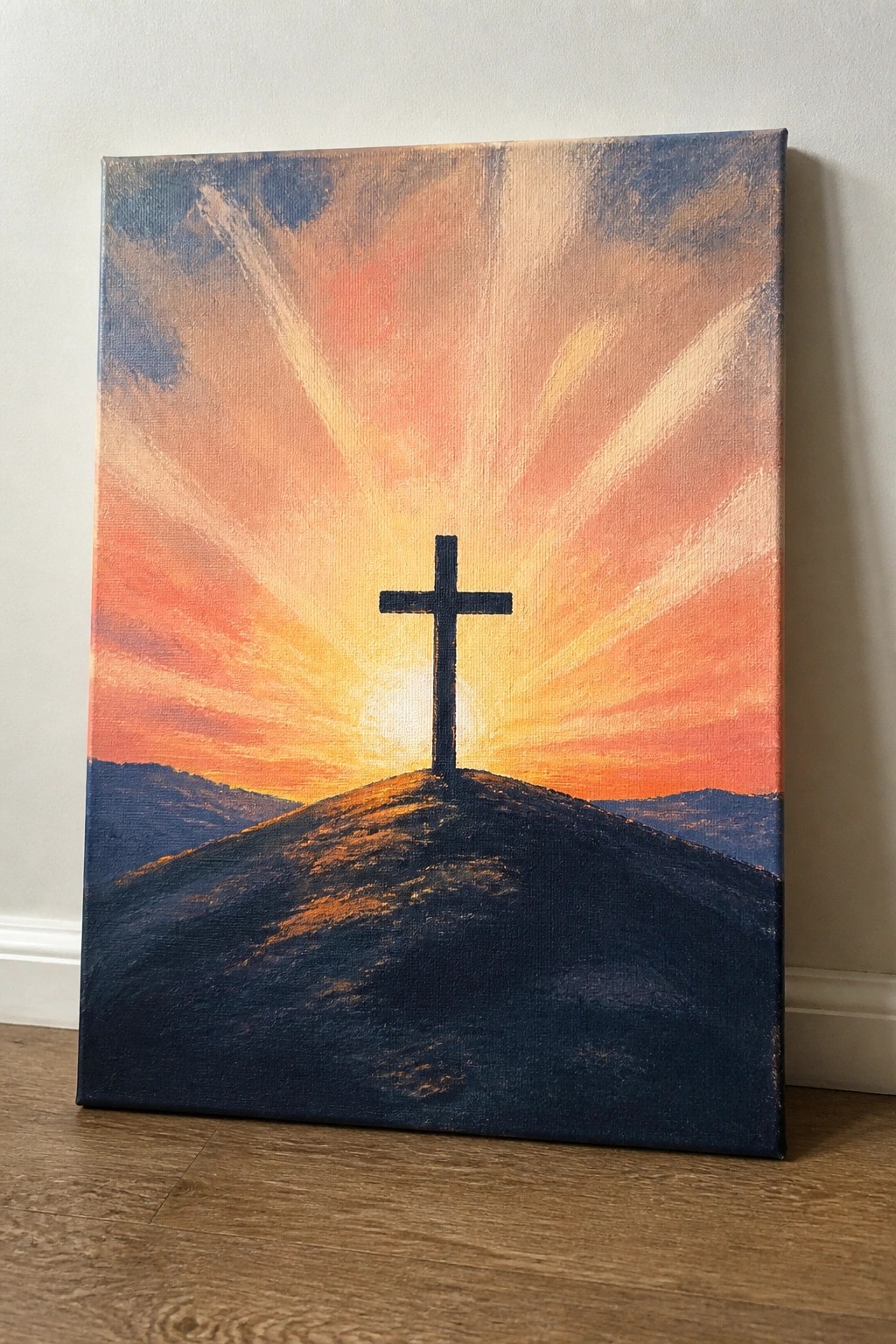
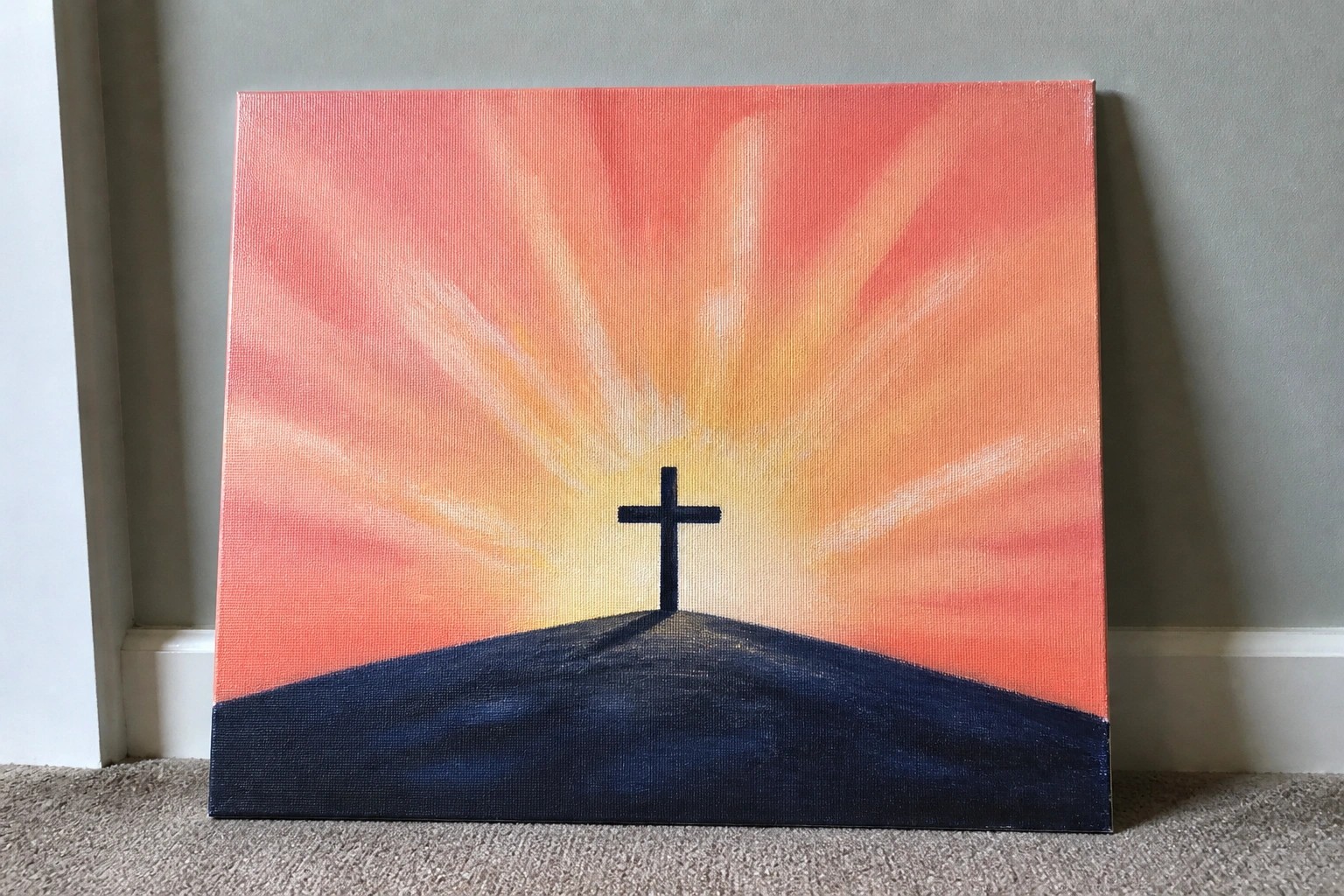
A cross placed on a hilltop against a sky with radiating light streaks forms the core of this painting idea. The warm orange and pink tones spread outward from the center while the dark hill and distant mountains create a strong base that anchors the scene. This approach belongs to symbolic landscape paintings that rely on contrast between a bright sky and a solid foreground shape.
The simple hill shape and bold sky lines do most of the work, so the idea stays approachable even for newer painters. You can easily change the color mix in the sky or stretch the rays wider to fit different canvas sizes. For wall pieces or gifts this layout stands out because the high contrast makes the cross readable from a distance. The same idea works if you add a second smaller hill or keep the background flatter for quicker practice sessions.
Dove Carrying an Olive Branch
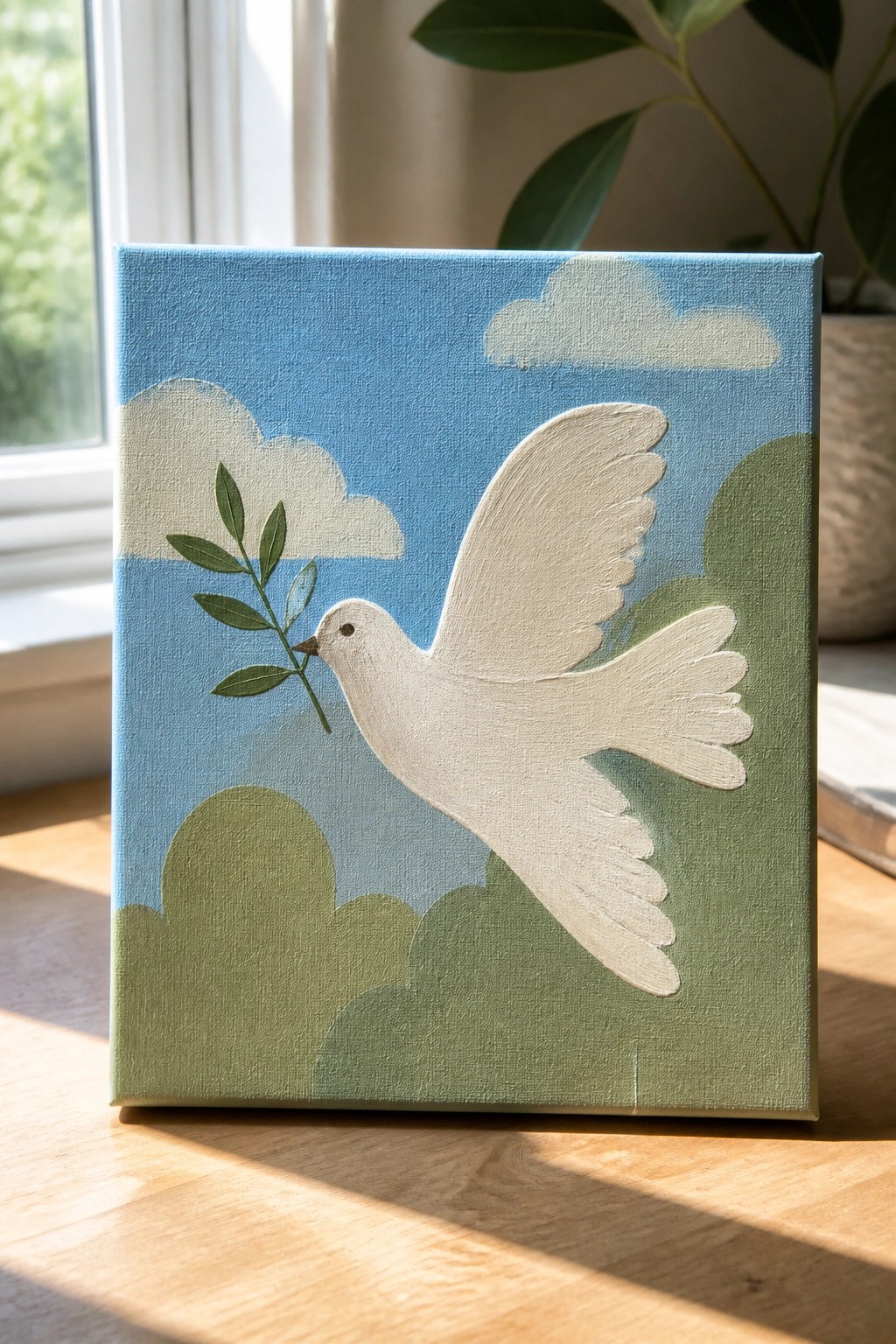
A dove in flight with an olive branch gives a clear Christian symbol that stays easy to paint. The bird sits in the middle of the canvas with wings extended, set against a blue sky and green hills that keep the focus on the white shape and the branch. Simple color blocks and rounded forms make the layout balanced without needing fine detail.
What makes this idea useful is how the large shapes let you start with broad strokes and build from there. You can shift the green areas to a different tone or drop the hills entirely if you want a plain sky background. This works well for a small canvas meant for a desk or shelf, and the same dove can be repeated in different sizes for cards or grouped pieces.
Open Bible Still Life with Psalm Verse
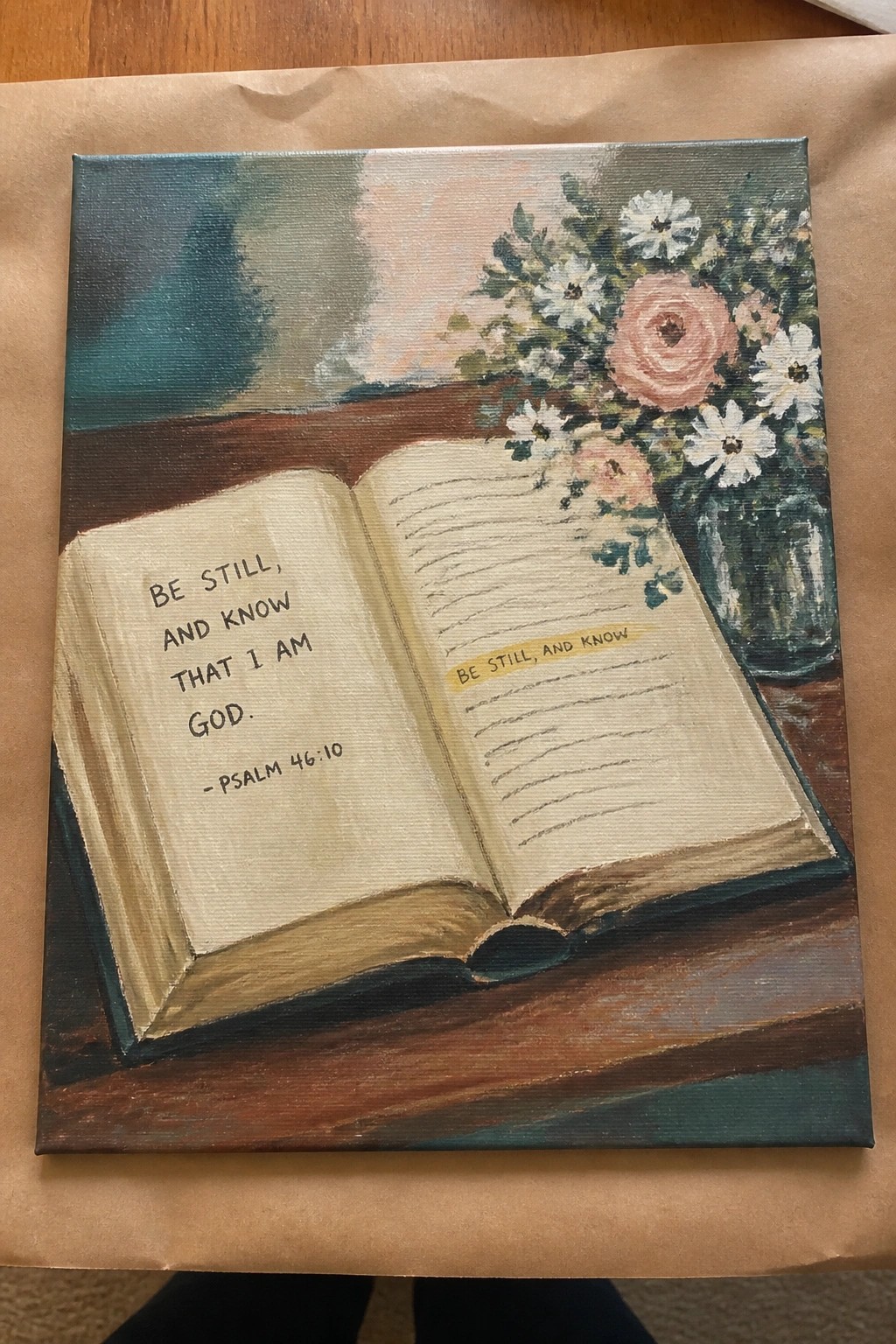
A still life centered on an open book works well when the pages carry a clear verse like Psalm 46:10, paired with a simple cluster of flowers in a glass jar. The idea keeps the layout straightforward by placing the book at an angle on a wooden surface and letting the blooms fill one side without overlapping the text. Soft blended tones in the background prevent the scene from feeling flat while the flowers add natural color and shape.
What makes this idea useful is that the text itself becomes the focal point, so you do not need complex details to make the piece feel complete. You can change the flowers to match the season or swap the verse for another short passage without changing the overall arrangement. The loose background and limited color range keep the project approachable for practice or quick gifts, and the same layout works on a smaller canvas for desk decor or a larger one for a shelf.
Repeating Ichthys Symbols in Coral Teal and Yellow

Painting multiple ichthys symbols across a canvas in different sizes and angles creates a simple repeating pattern. The symbols sit at varying heights with some overlap, using a soft background that lets the shapes stand out. Coral, teal, and yellow keep the palette limited while the textured surface adds subtle depth without extra work.
The composition does a lot of the work here because the repeating shape fills the space evenly without needing precise placement. You can scale it down to a smaller canvas or swap in different colors to match a room. This approach works well for quick decorative pieces since the basic shape stays easy to repeat even if you adjust spacing or add a second layer of symbols.
Praying Hands with Soft Background Wash
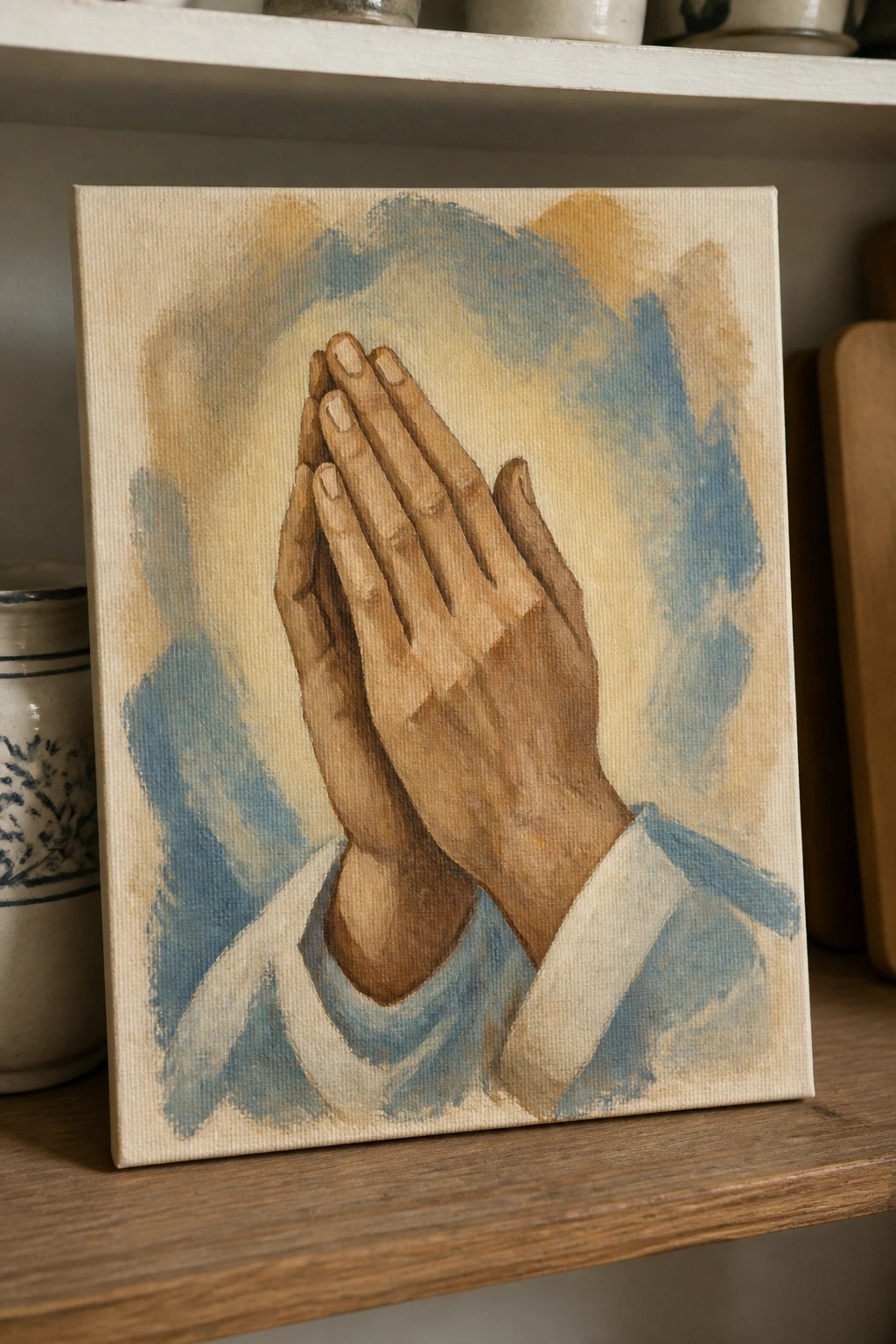
A painting idea built around praying hands focuses on a single clear gesture that fits easily into Christian acrylic projects. The hands sit centered with fingers stacked to show natural overlap and simple shading, while the sleeve cuff adds a bit of structure at the bottom. A loose wash of blue and yellow around the edges keeps the background from competing with the main subject.
What makes this idea useful is how the background can be changed to any soft color mix or even left mostly blank. The composition works well for practice because the hands give you a defined shape to follow without requiring fine detail everywhere. You could shrink the same layout for a greeting card or keep the canvas size for a small shelf piece, and swapping the sleeve color makes it simple to match different rooms or gifts.
Silhouette Nativity Scene with the Guiding Star
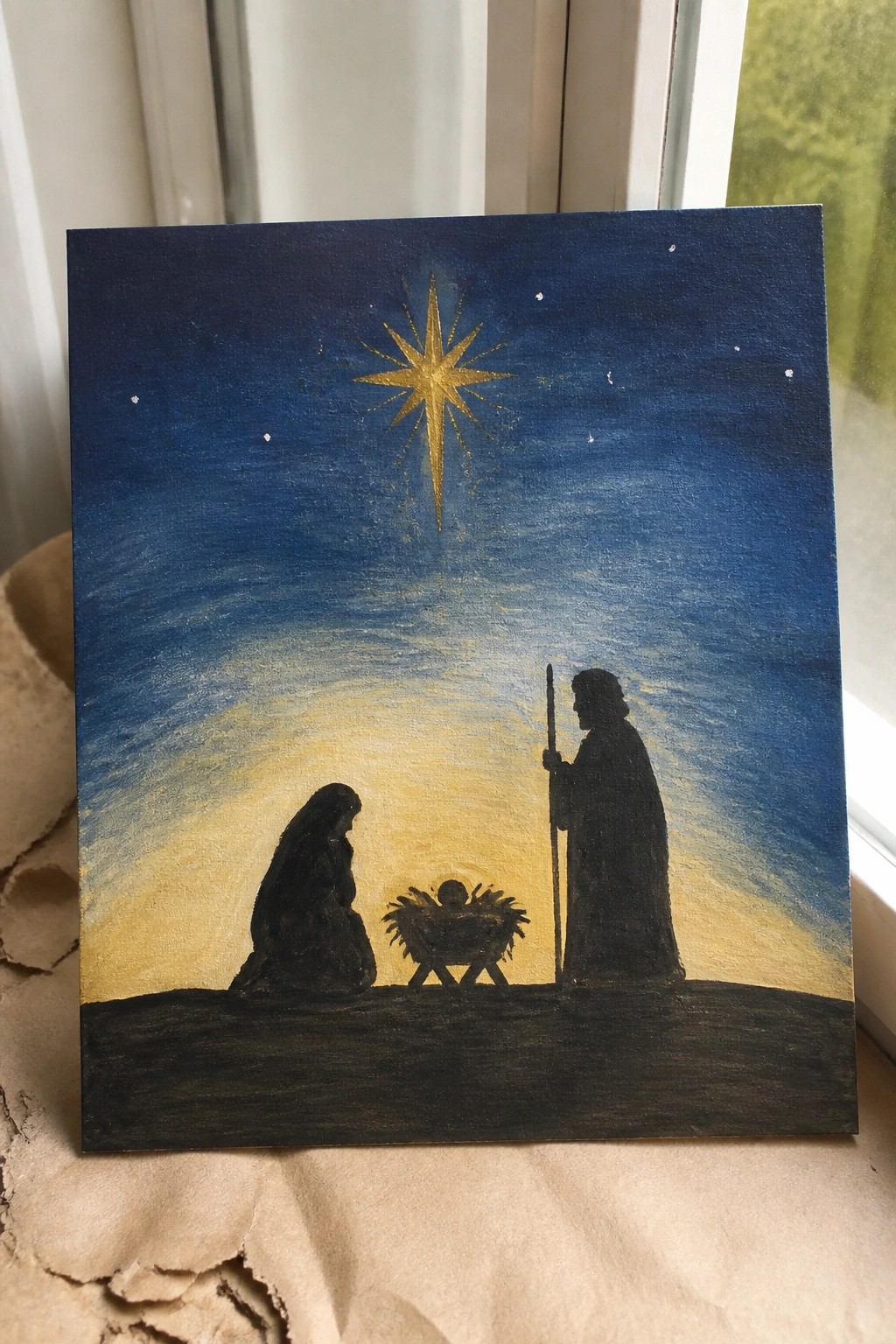
A nativity painting built around dark figures and a manger set against a simple sky gradient gives beginners a clear focal point without needing fine details. The large star at the top anchors the whole piece and draws the eye downward to the three main elements below. Using a limited color shift from deep blue to warm yellow keeps the background easy to paint while letting the silhouettes carry the subject.
What makes this idea useful is how the flat shapes remove pressure on facial features or fabric folds. You can adjust the star size, swap the sky tones for cooler blues, or crop the canvas tighter around the figures if you want a smaller piece. For practice or quick gifts, the layout stays readable even when brushwork is basic, and the strong vertical star makes the finished work stand out in a feed.
Crown of Thorns with Central Cross

A crown of thorns painted in layered browns and muted greens creates a rough circular frame around a simple gold cross. The idea sits in the decorative art category and uses a centered focal point with plenty of negative space around it to stay balanced. Rough brushwork on the thorns and a textured off-white background keep the whole piece from feeling flat or overly polished.
The composition does a lot of the work here because the circle naturally leads the eye to the cross without extra elements. You could swap the gold for silver or copper, or change the background to a soft gray if you want it to match different rooms. This kind of subject also works as a quick practice piece since the main shapes are basic and the details can be simplified without losing the idea.
Good Shepherd with Two Sheep
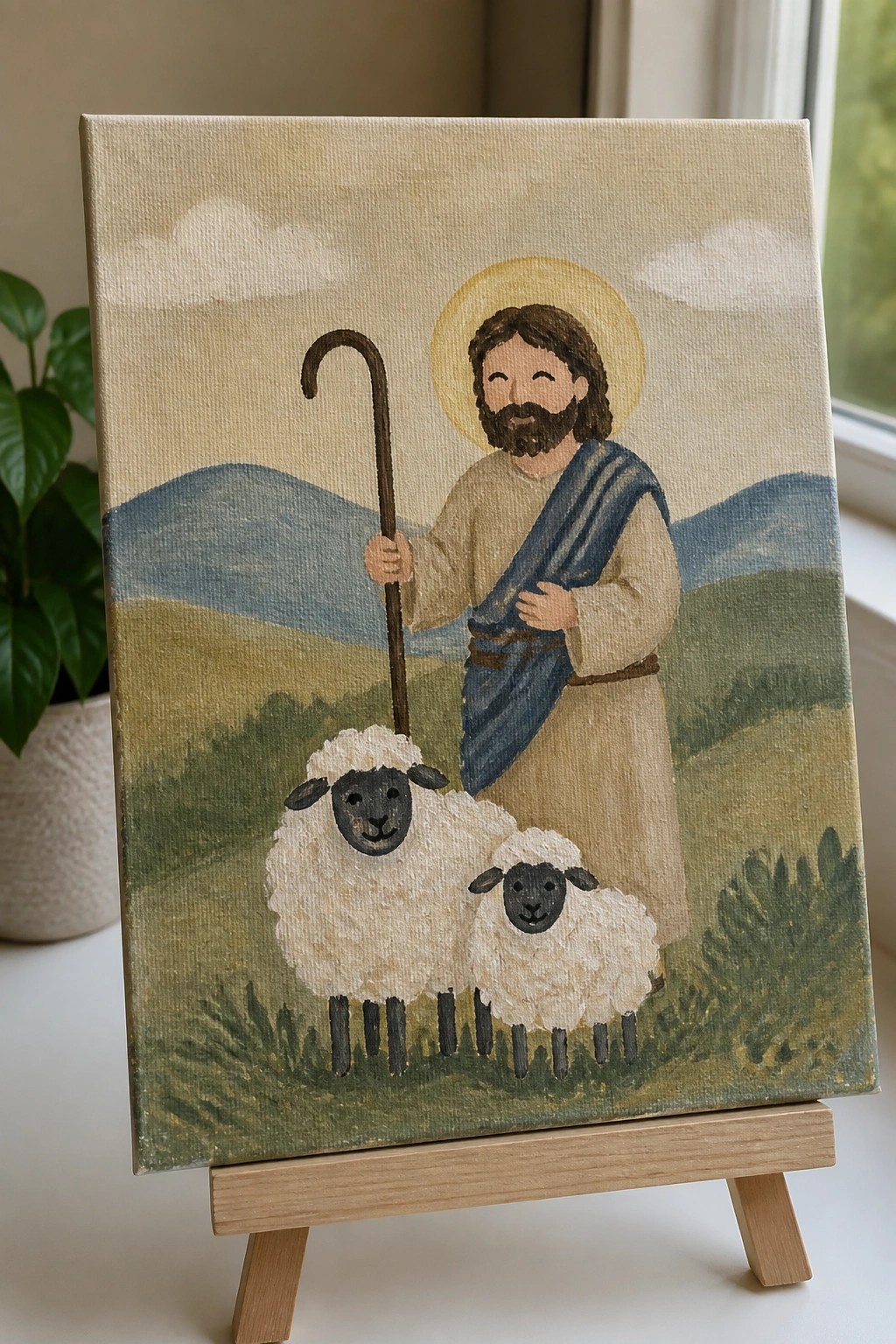
A painting of Jesus the Good Shepherd places the central figure in simple robes holding a staff, with two sheep positioned in the foreground against a backdrop of rolling hills. The idea relies on basic shapes for the animals and soft, blended areas for the landscape to keep the focus on the main subject. Rounded forms and a limited range of earth tones and blues make the scene straightforward to block in before adding small details like faces and wool texture.
The composition does a lot of the work here by keeping the sheep low so the figure remains the clear focal point. You can scale the hills up or down depending on canvas size or swap the blue sash for another color to match a room. This kind of subject works especially well for practice because the elements stay separate and can be painted in stages without needing fine detail everywhere.
Patchwork Cross with Patterned Blocks
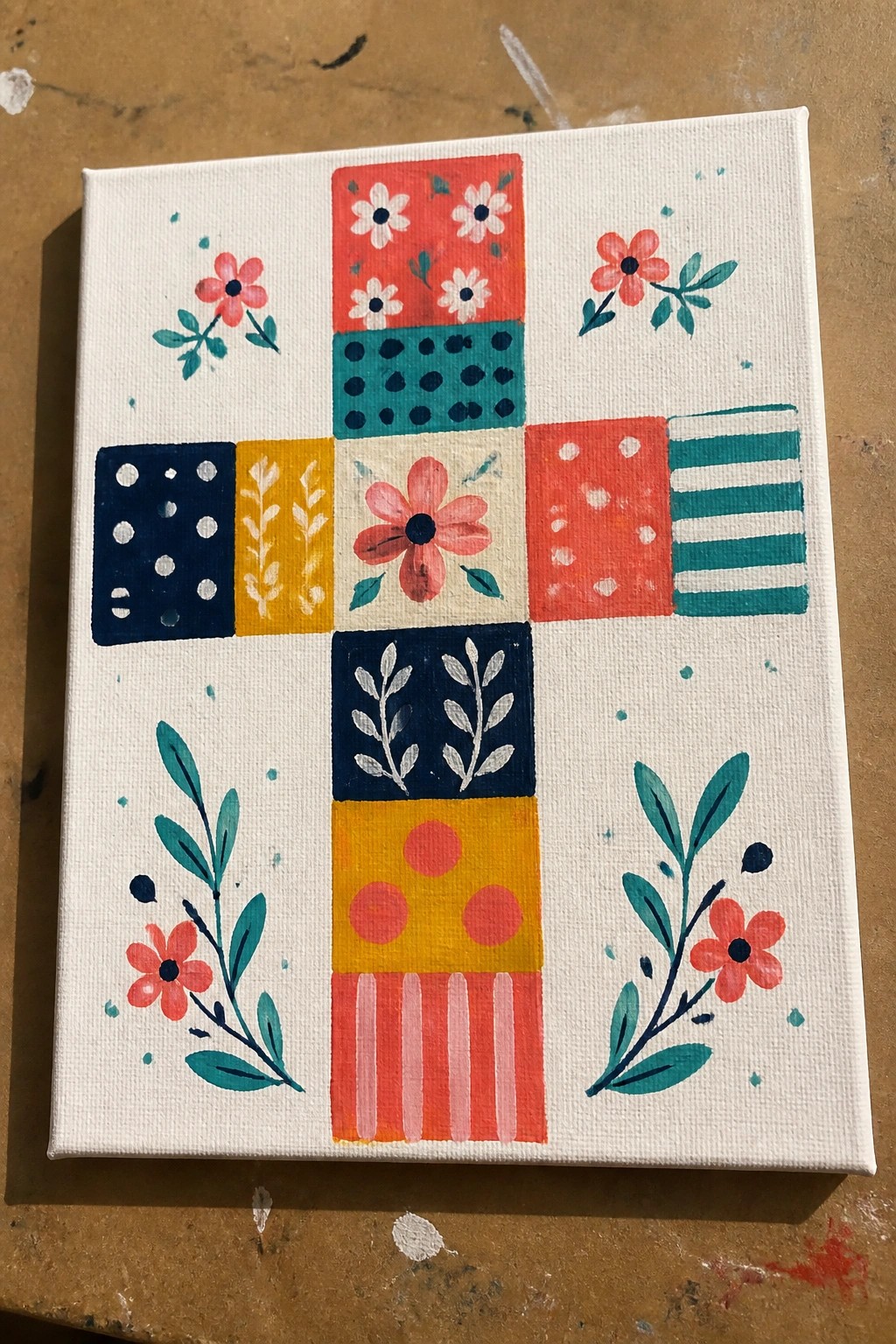
A cross formed from a grid of separate squares lets you fill each section with its own pattern such as dots, stripes, small florals, or solid shapes. The surrounding loose flower branches on the sides keep the layout balanced while leaving plenty of white space around the edges. This approach combines a clear central shape with varied surface marks so the design stays interesting without needing fine detail work.
The grid format makes it simple to test different brush marks or color combinations in one sitting. You can shrink the whole thing to a smaller canvas or swap in new patterns if you want to personalize it for a gift or room. The solid white background helps the cross stand out clearly, which works well when you need a quick piece that still reads as intentional.
Three Crosses on a Hill at Sunset
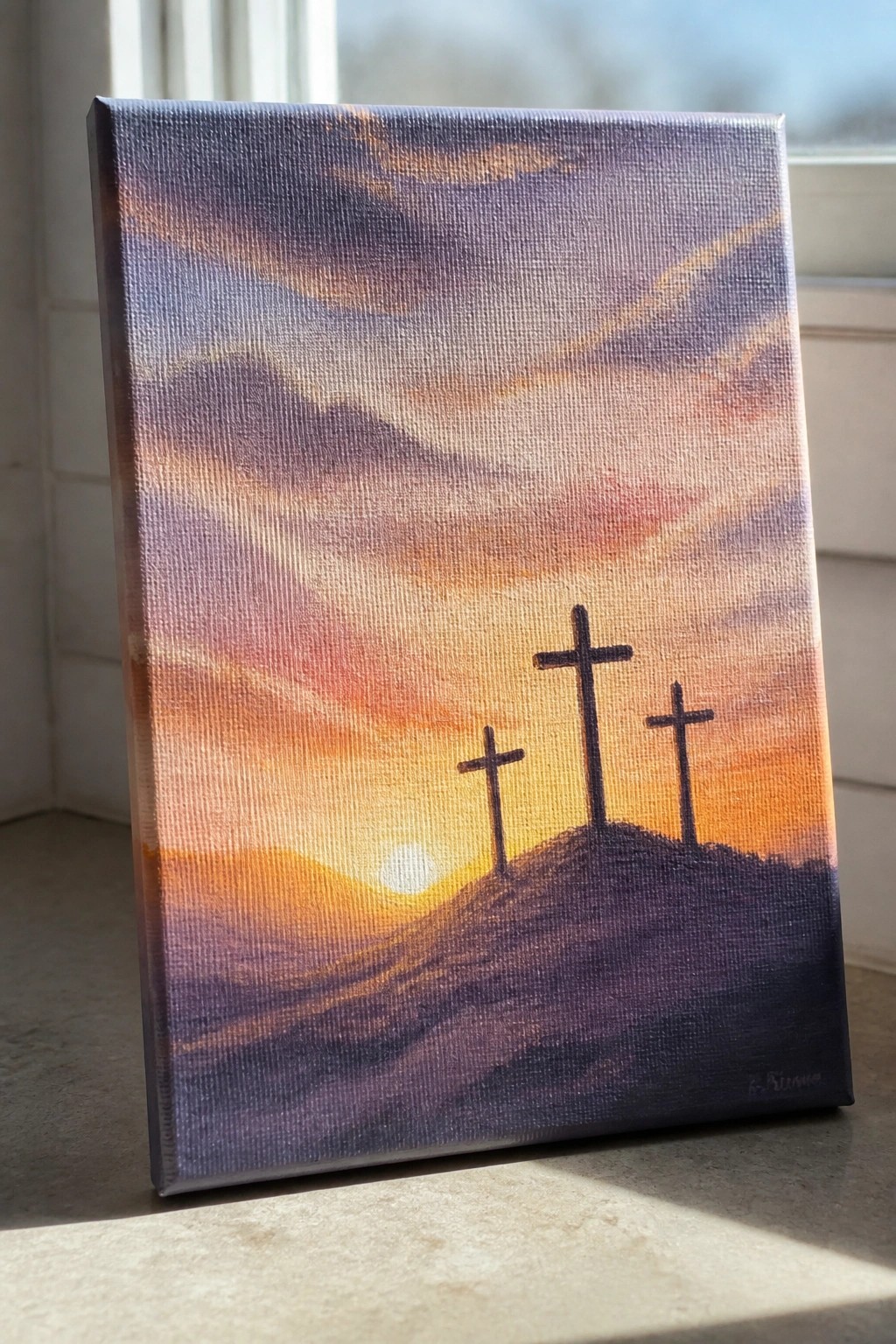
A landscape painting centered on three crosses silhouetted against a sunset sky uses strong contrast to make the main shapes stand out clearly. The sky is built with blended bands of orange, pink, and purple that draw the eye downward to the low sun and the dark hill. Placing the crosses at different heights on the slope adds a bit of visual interest without complicating the layout.
What makes this idea useful is how the simple cross shapes let you focus on practicing sky gradients and basic layering instead of fine details. The color palette can be swapped out easily depending on what paints you already have, and the overall size works well for a small canvas that can hang in a hallway or office. For practice, this kind of subject can be painted again with a different sky or just two crosses to see how the balance changes.
Heart and Cross with Floral Border

A heart shape with a cross centered inside works well as a direct Christian symbol for acrylic painting. The surrounding ring of flowers, leaves, and berries frames the main shape without competing for attention. Using a limited palette of warm pinks, terracotta, and soft greens keeps the layers simple while the even spacing around the edge gives the composition balance.
What makes this idea useful is how the large central shapes let you block in color first before adding smaller details. You can change the flower count or swap leaf styles to fit a smaller canvas or different season. The layout also translates easily to different color schemes if you want to match existing room colors or make matching pieces for gifts. For practice, starting with the heart and cross gives clear guidelines before moving to the border elements.
Geometric Cross Over Color Block Background
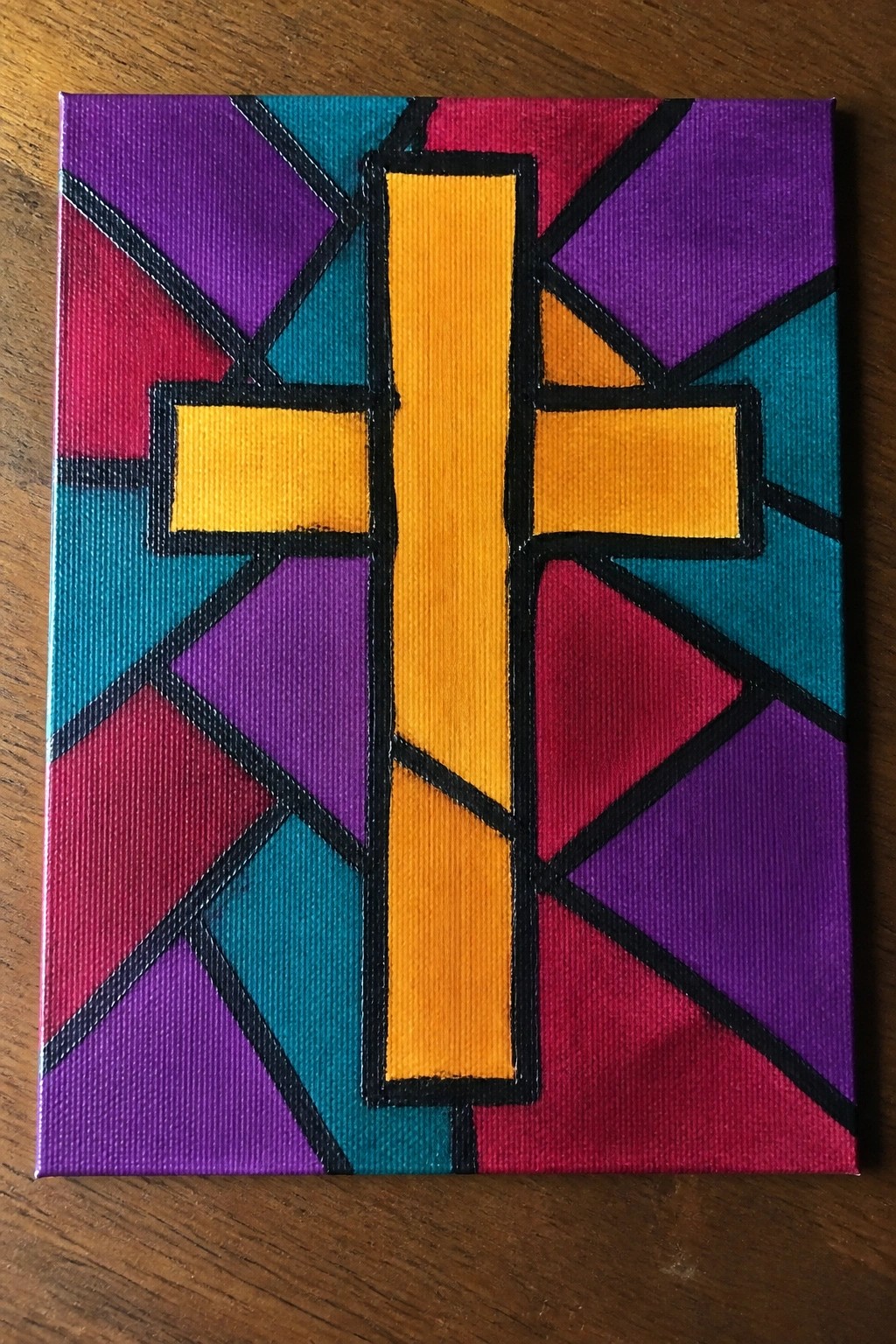
A cross painted in a single bold color stands out cleanly when placed over a background of irregular geometric shapes. The black outlines create separation and give the whole piece a stained glass effect without requiring any shading or blending. This style works as decorative religious art and relies on flat color areas and strong contrast rather than detailed brushwork.
What makes this idea useful is how the background can be redrawn to fit any canvas size or shape while keeping the cross centered and the same size. The limited color palette makes it easy to adapt by swapping in different bright shades or toning the background down to fewer colors. For practice, this kind of subject lets you focus on clean edges and even paint coverage instead of complex forms.

Palm Frond on a Soft Abstract Background
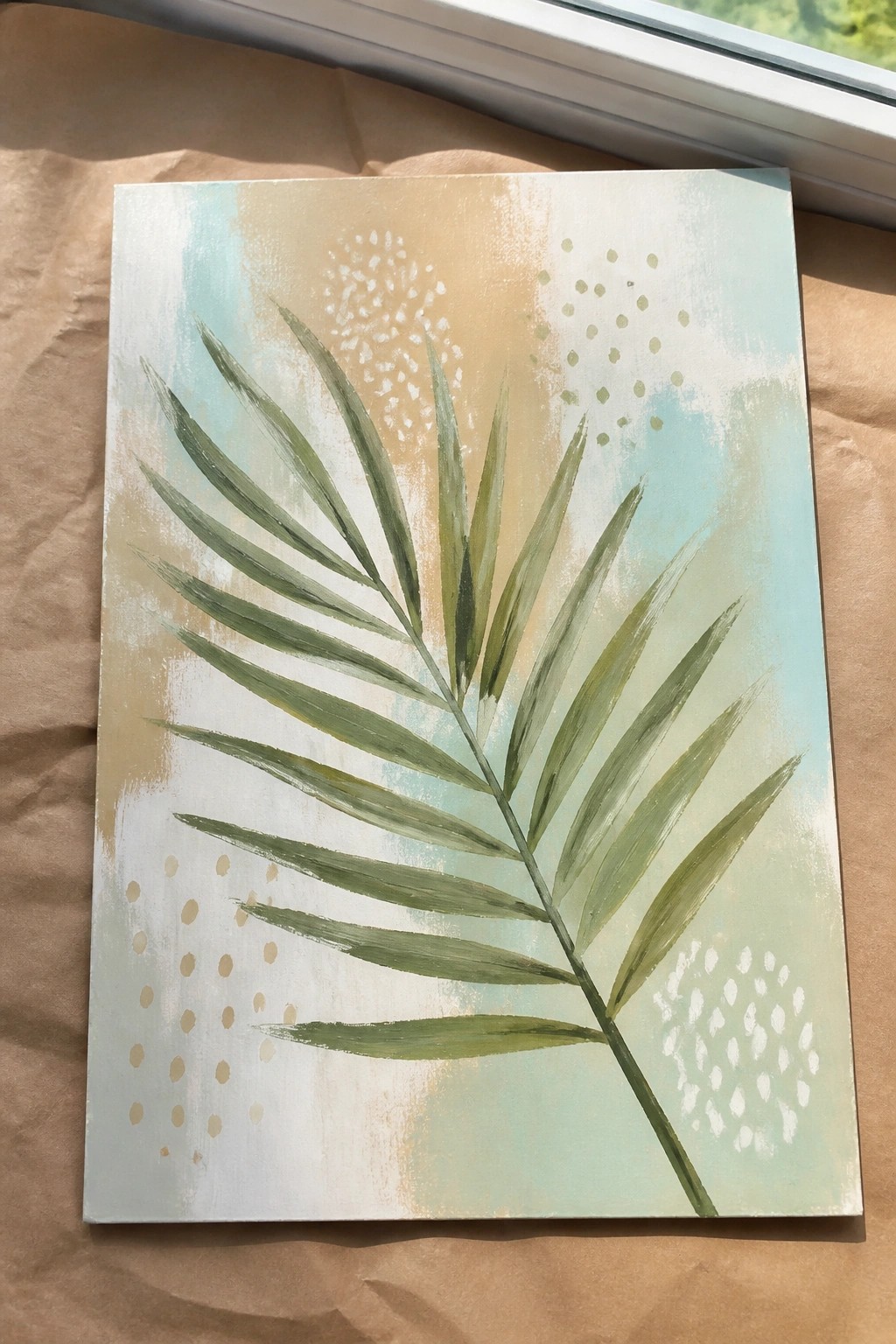
A single palm frond painted in varying shades of green with visible brushstrokes serves as the central focus of this decorative piece. The background uses blended sections of beige, light blue, and white with small scattered dot clusters to create gentle contrast without competing for attention. This setup keeps the composition balanced by placing the leaf diagonally so it fills the space while leaving breathing room around the edges.
What makes this idea useful is how easily the leaf shape can be scaled up or down depending on canvas size. The background layers allow simple color swaps to match different home styles or seasons without changing the main subject. For practice, this kind of subject helps build brush control on the frond while the dots and washes stay low pressure. The composition does a lot of the work here by using negative space to make the leaf stand out.
Simple Angel Silhouette with Halo

A basic angel shape built from a rounded head, flowing body, and spread wings sits centered on the canvas with a thin halo above. The idea relies on broad brushstrokes and a muted mix of beige, soft blue, and pale pink to keep the focus on the figure while the background stays loose and textured. This approach fits decorative Christian art that uses simple forms and visible brushwork instead of detailed realism.
What makes this idea useful is how the single central shape fills the canvas without needing precise drawing skills. The background can be made with quick layers or even leftover paint, and the angel can be scaled up or down depending on the canvas size. The neutral palette also makes it easy to match existing decor or repeat in different color mixes for gifts.
Church Silhouette Over a Gradient Sunset Sky
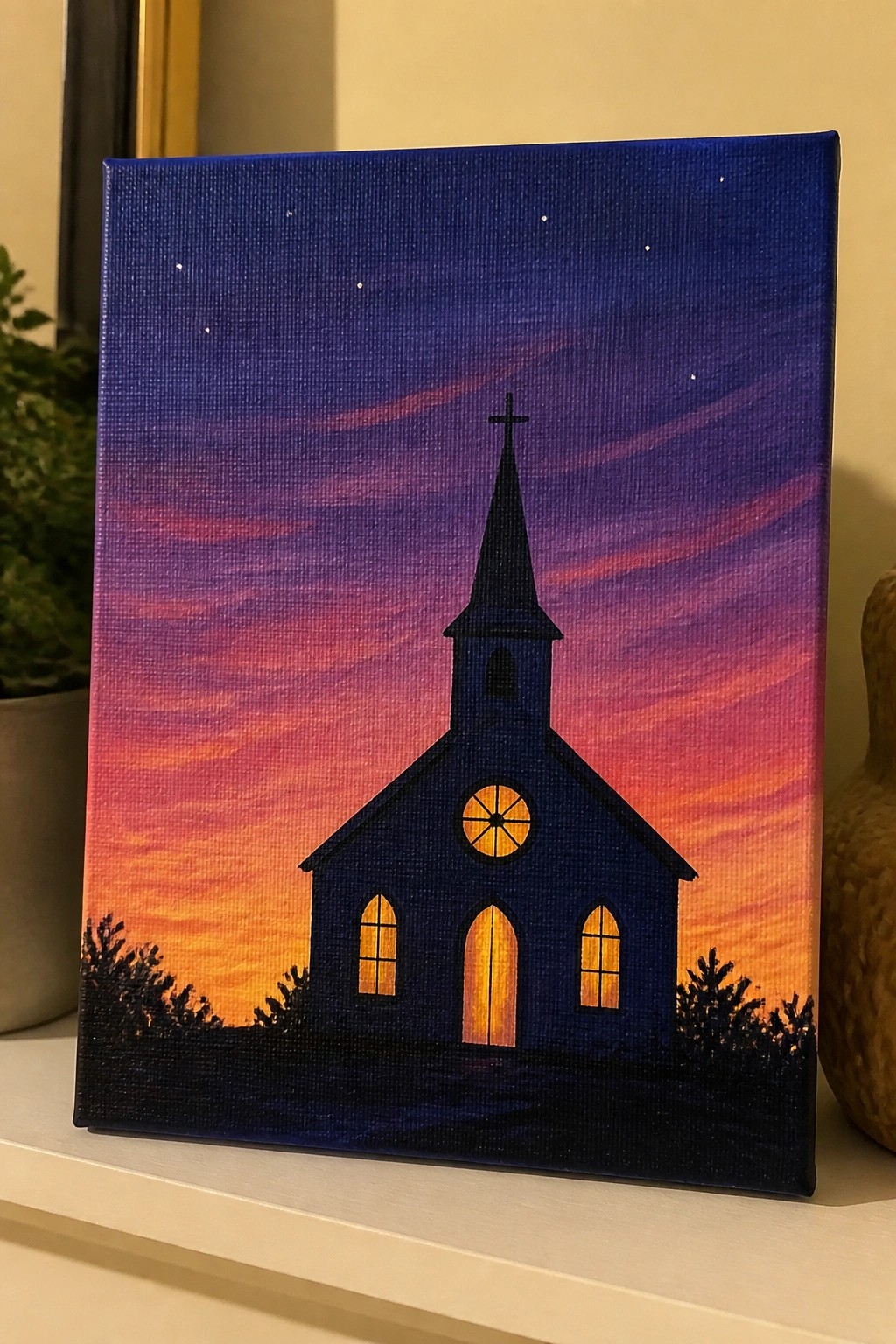
A church silhouette placed against a blended sunset sky gives beginners a clear focal point built from basic shapes and a strong color contrast. The idea relies on a dark central structure with simple window cutouts set over layers of orange, pink, and purple that shift upward into deep blue. This fits the scenic landscape category where the sky does most of the work and the building stays minimal.
The composition does a lot of the work here because the sky gradient creates interest while the church outline stays easy to block in with one color. You can change the building style, swap window shapes, or shift the sky from sunset to night without much extra effort. For wall pieces this format scales well to small canvases and still reads clearly from a distance. It also works as a quick practice piece if you want to test blending techniques before adding more detail.
Floral Scripture Quote on Canvas
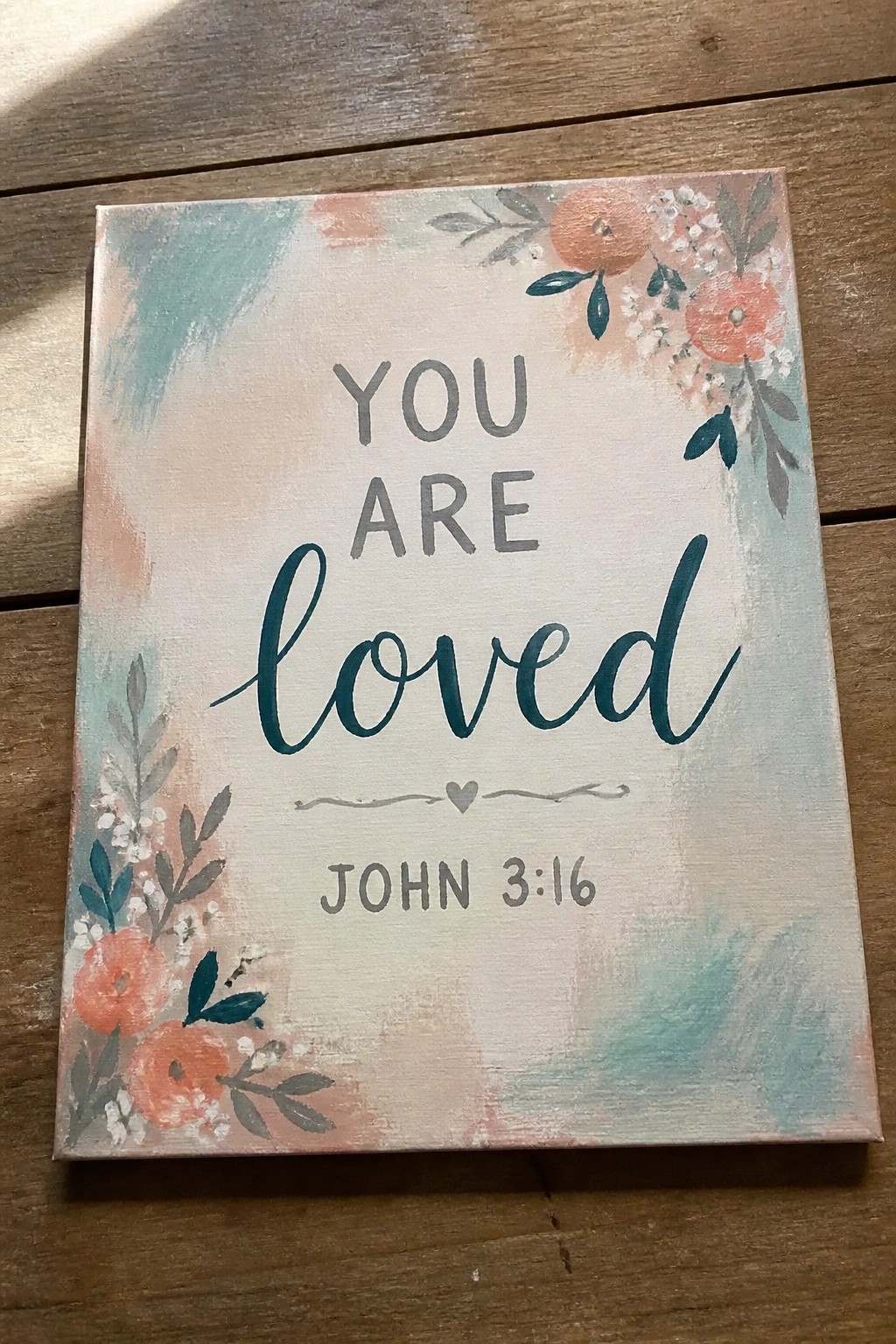
A central text message sits on a soft wash background with flowers and leaves clustered only in the corners. This decorative approach keeps the lettering as the main focus while the blooms add color and shape without overwhelming the space. The mixed fonts and simple color pairing of peach, teal, and gray give the piece a balanced look that works for wall display.
What makes this idea useful is how the corner-only floral placement leaves plenty of room for the text and makes the layout easy to resize on different canvas sizes. The background can be changed to match a room’s colors or a different verse without redesigning the whole thing. This would be easy to turn into a gift by swapping the scripture or adjusting the flower shades to fit personal taste.
Frequently Asked Questions
What basic supplies will I need to create these Christian acrylic painting ideas as a beginner?
Start with a few stretched canvases in sizes like 8 by 10 or 11 by 14 inches, a set of acrylic paints in primary colors plus white and black, and a handful of synthetic brushes in round and flat shapes. Add a palette for mixing, water cups, paper towels, and a pencil for light sketching. Many of the ideas use simple symbols such as crosses, doves, or open Bibles, so you can begin with just these items and expand later if you want to add details like gold leaf or textured mediums.
How do I choose colors that fit the spiritual tone of each painting idea without overcomplicating the process?
Focus on a limited palette of three to five colors that evoke peace or hope, such as soft blues for trust, warm golds for light, and deep greens for growth. For example, when painting a scene with a cross, use earthy browns and creams first, then layer in highlights with white to create depth. Test mixes on scrap paper before committing to the canvas, and remember that acrylics dry darker than they appear when wet, so build layers gradually to keep the message clear and uplifting.
What should I do if my brushstrokes look uneven or I make a mistake on one of these beginner projects?
Acrylic paint is forgiving because it dries quickly yet can be reworked while wet. Simply wipe away errors with a damp paper towel within the first few minutes, or let the area dry and paint over it with a fresh layer. To avoid uneven strokes, work in thin coats and use a larger brush for backgrounds before adding finer details with smaller ones. Practice each technique on a separate sheet first so your finished Christian-themed piece stays smooth and intentional.
How can I adapt these 17 ideas if I want to paint with children or in a small group setting?
Simplify the designs by breaking them into basic shapes, such as outlining a fish symbol or a heart with a verse inside, and assign each person a section to complete. Provide pre-mixed colors in small cups and use larger brushes to reduce frustration. Set up a shared table with reference images from the article so everyone can follow along at their own pace while discussing the meaning behind the symbols, which turns the activity into both an art session and a time of shared faith.
Where can I display or share the finished paintings to encourage others in their faith?
Place smaller canvases on shelves, mantels, or in home offices where they catch the light and spark conversation. For larger pieces, consider framing them simply with neutral mats and hanging them in church hallways or classrooms. You can also photograph the work and share it on social media with a short note about the verse or theme that inspired it, or gift prints to friends as reminders of hope and grace.