I often turn to painting when I want something quiet to do in the afternoons.
Christian themes give me a sense of peace while I work on them.
I have put together some easy ideas that do not take much time or fancy supplies.
Some use just paper and pencils while others involve a bit of watercolor.
These are the ones I come back to again and again when I need to slow down.
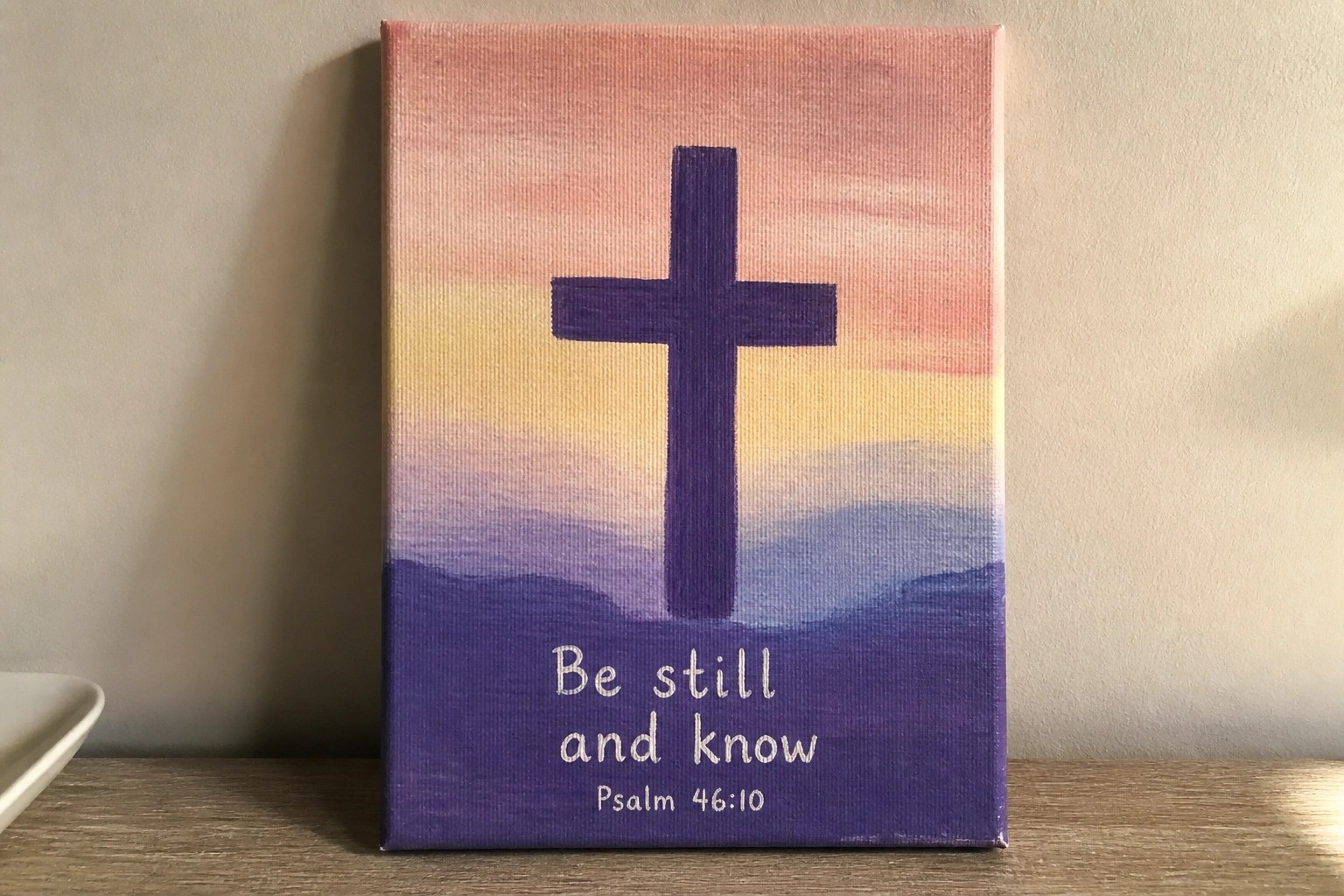
Cross and Scripture on a Blended Gradient Background

A single cross painted in a solid color sits centered over a smooth gradient that moves from warm peach and yellow tones at the top into softer pinks and purples near the bottom. The verse text is placed below the cross in a simple handwritten style, keeping the layout balanced and easy to read. This type of painting idea belongs to decorative faith-based art where the emphasis stays on the central symbol and short message rather than added details or scenery.
The composition does a lot of the work here because the gradient background can be recreated with just a few blended colors and the cross shape stays straightforward to paint. You can swap the verse for a different one or adjust the color palette to match a room without changing the overall structure. For wall pieces, this format works well because the text and symbol stay visible even when the canvas is viewed from a distance. The same idea scales easily to smaller sizes if you want to make a set or gift version.
White Dove with Olive Branch in Watercolor
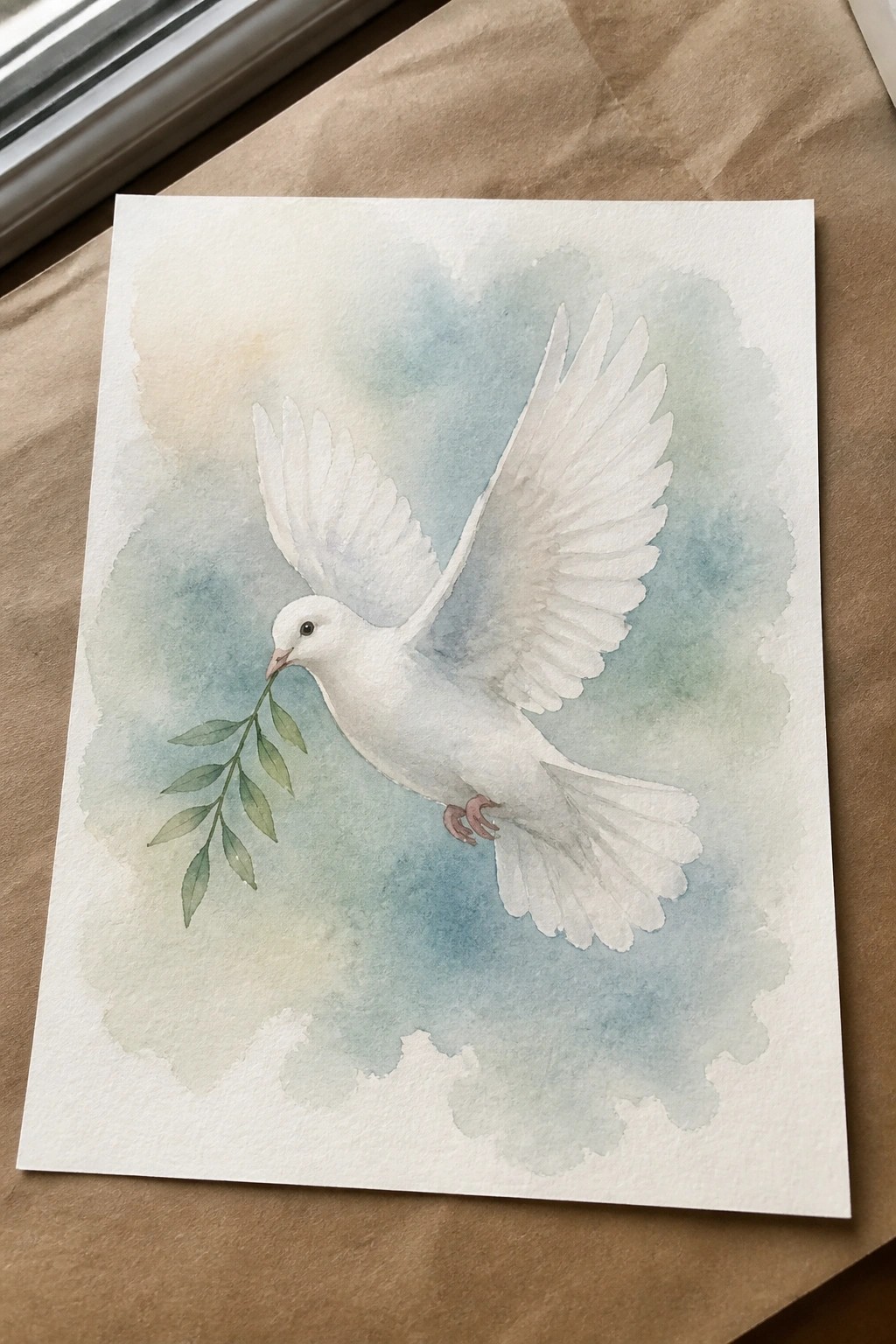
A white dove in mid-flight holding a leafy branch works as a straightforward animal painting idea. The bird sits slightly off center with wings extended, set against a loose wash of blue and green that fades into the paper edges. This layout keeps the focus on the clean shape of the dove while the soft background handles most of the color work.
The limited palette and single main subject make it simple to resize for cards or small canvases. You can change the background wash to cooler tones or add a faint border if you want a different look for wall decor. The composition stays balanced even if you simplify the wing feathers or adjust the branch angle to fit your paper.
Leaf Wreath with Hope and Fish Symbols
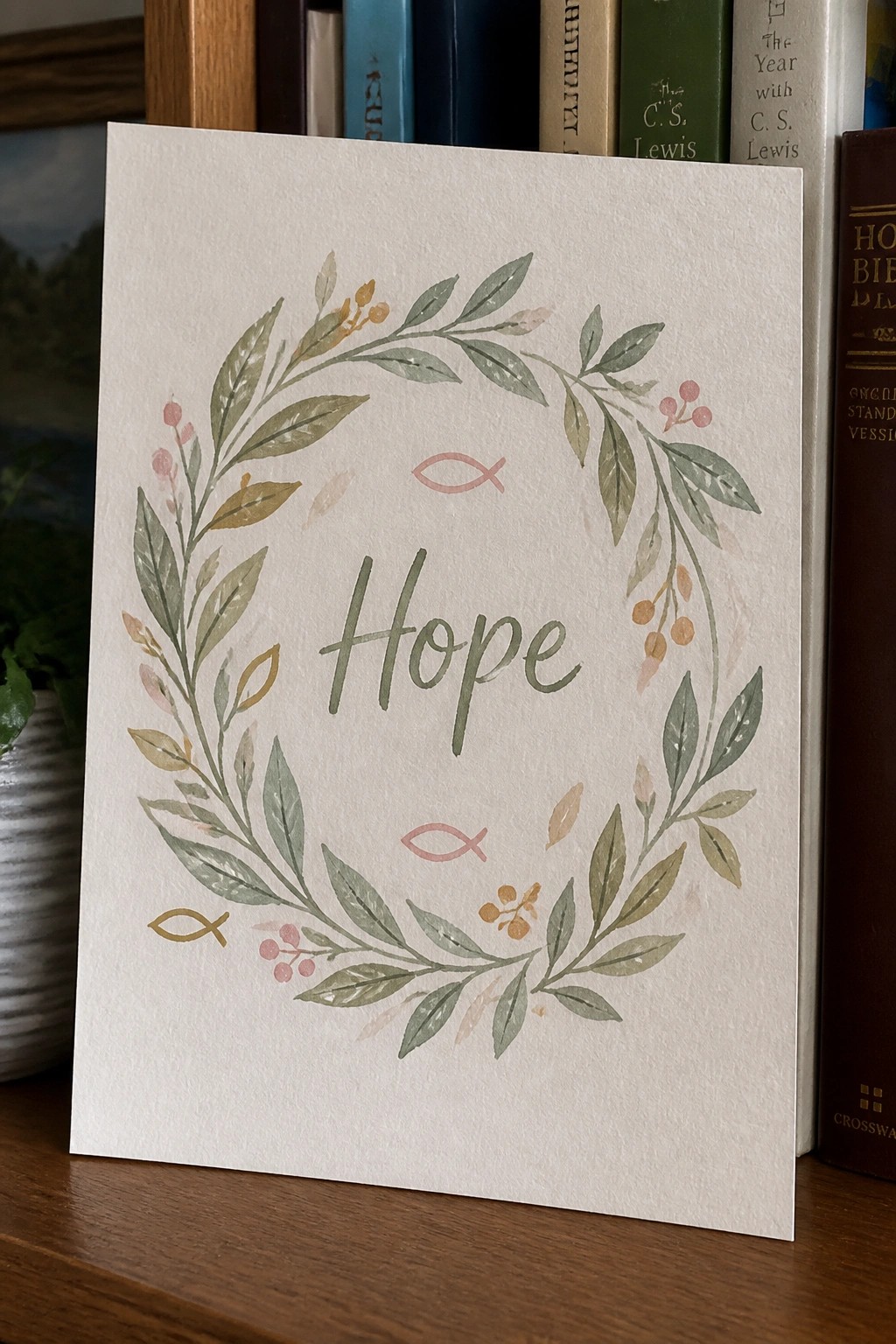
A circular wreath built from layered leaves and small berry clusters frames the word Hope at the center. Tiny fish symbols sit at different points around the ring to add a quiet Christian touch. The even spacing of the foliage and the plain background let the lettering stay readable while the natural shapes give the whole piece structure.
What makes this idea useful is how the wreath layout already handles most of the composition work. You can swap leaf colors or berry shades to match a room or season without redrawing the whole design. This would be easy to turn into a greeting card, journal cover, or small framed piece. For practice, the repeated leaf shapes let you focus on brush control and balance rather than inventing new elements each time.
Lamb Resting in a Meadow with a Cross on the Hill
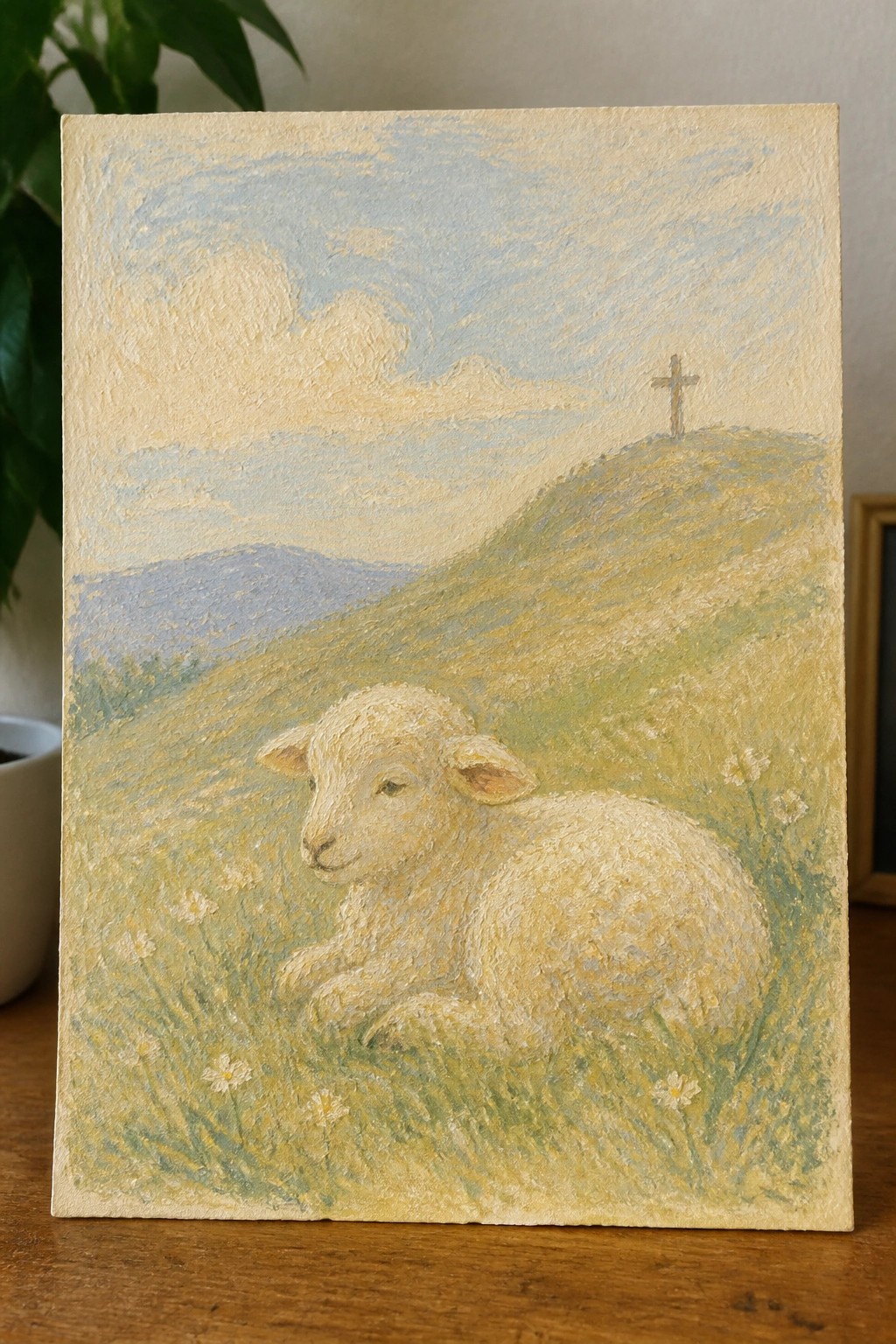
A lamb positioned in the foreground of a grassy field forms the core of this painting idea, paired with a small cross placed on a rising hill in the background. The layout uses layered hills and a pale sky to create distance while keeping the animal as the main focus. Soft greens, yellows, and muted blues tie the elements together without crowding the scene.
The composition does a lot of the work here by using open space around the lamb so the cross reads as a quiet detail rather than the center. You can easily change the flower colors, shift the hill height, or drop the mountains if you want a simpler version on a smaller canvas. This approach works well for wall pieces because the subject stays recognizable even when scaled down or painted with fewer details.
Church in a Sunset Landscape
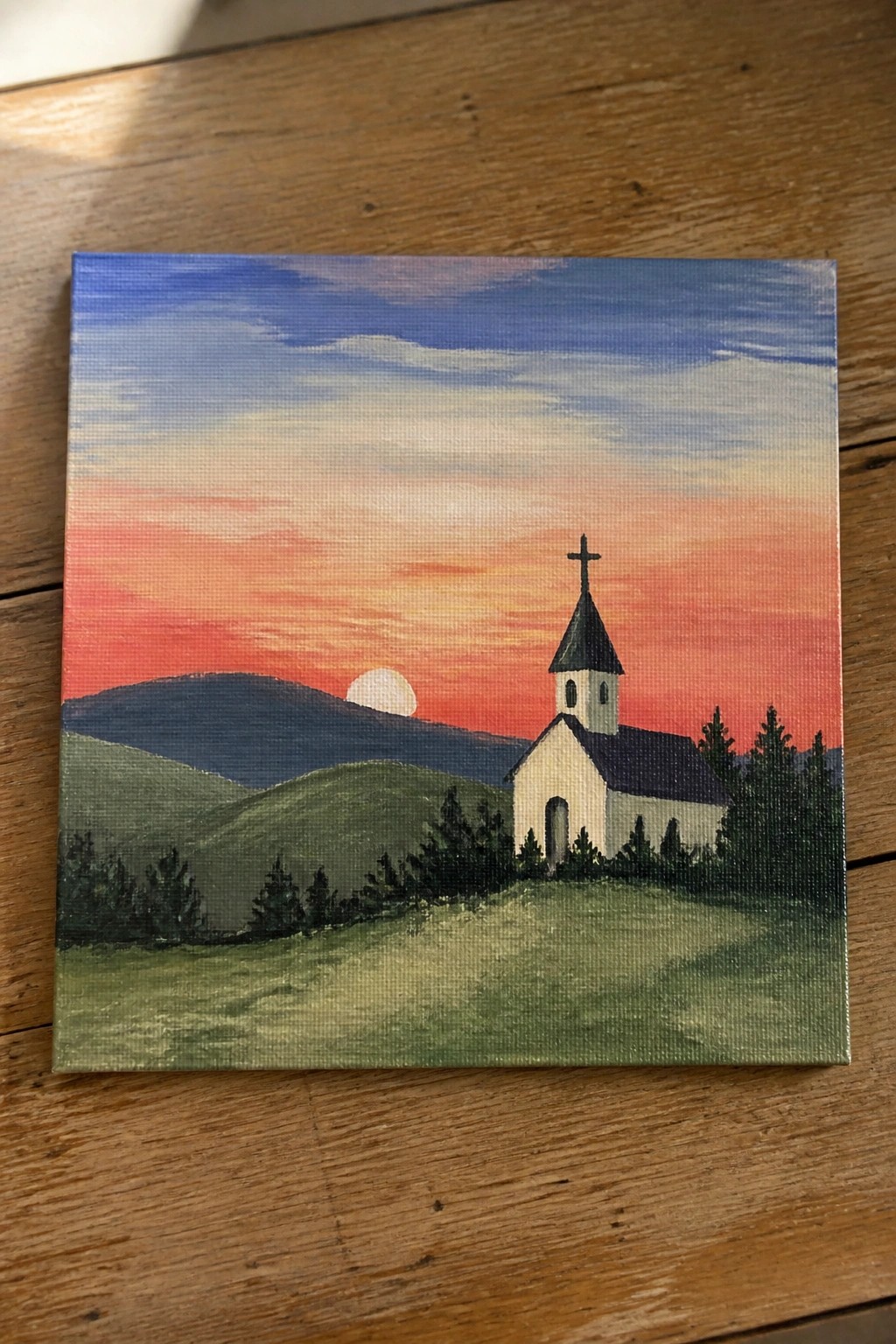
A church placed to one side of a wide landscape creates a simple Christian art idea that still feels complete. The white building and its steeple stand out against layered green hills and a sky that shifts from blue at the top into orange and pink near the horizon. This layout uses the open space on the left and the gradient sky to keep attention on the structure without adding extra elements.
The composition does a lot of the work here by balancing the church against the hills and sky so the cross remains visible from a distance. You can change the sunset tones to softer daytime colors or crop the scene tighter for a smaller canvas. For practice, this kind of subject helps with basic shapes and color blending while still producing a finished piece that works for wall art or a gift.
Scripture Book Still Life with Lavender Sprig
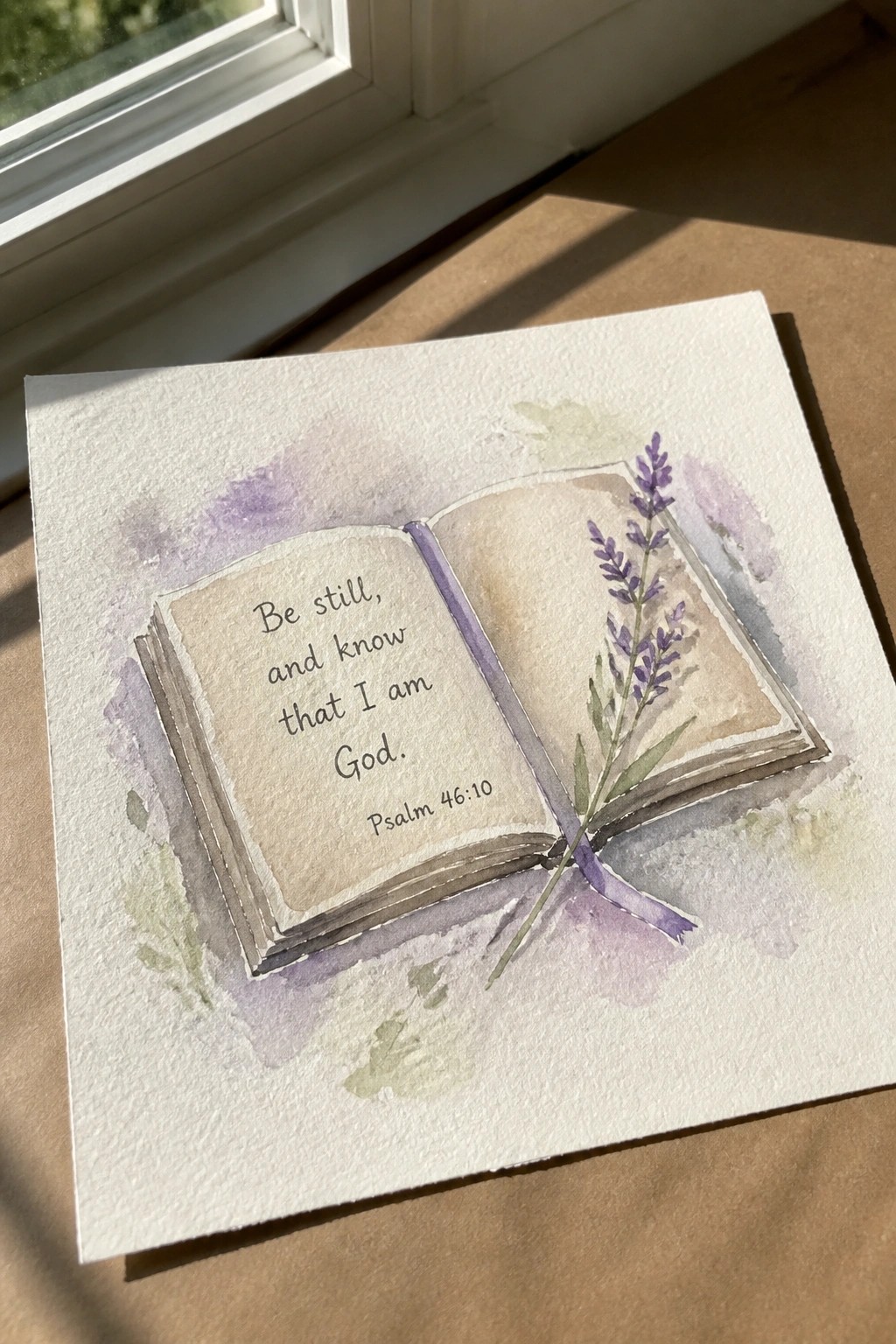
An open book showing a short Bible verse works well as a still life when combined with one botanical stem laid across the pages. The composition places the text on the left page and lets the lavender extend toward the right, while soft background washes in muted purple and green keep the edges from feeling too rigid. This setup balances the rectangular book shape with the natural lines of the plant without adding extra elements.
What makes this idea useful is how easily the layout can be adjusted to different paper sizes for prints or cards. The loose washes let you focus on placement and value rather than fine detail, and you can swap the lavender for any simple stem that fits the same angle. For wall pieces, the centered book keeps the verse readable even when the painting is viewed from a distance.
Three Doves in a Simple Gradient Sky
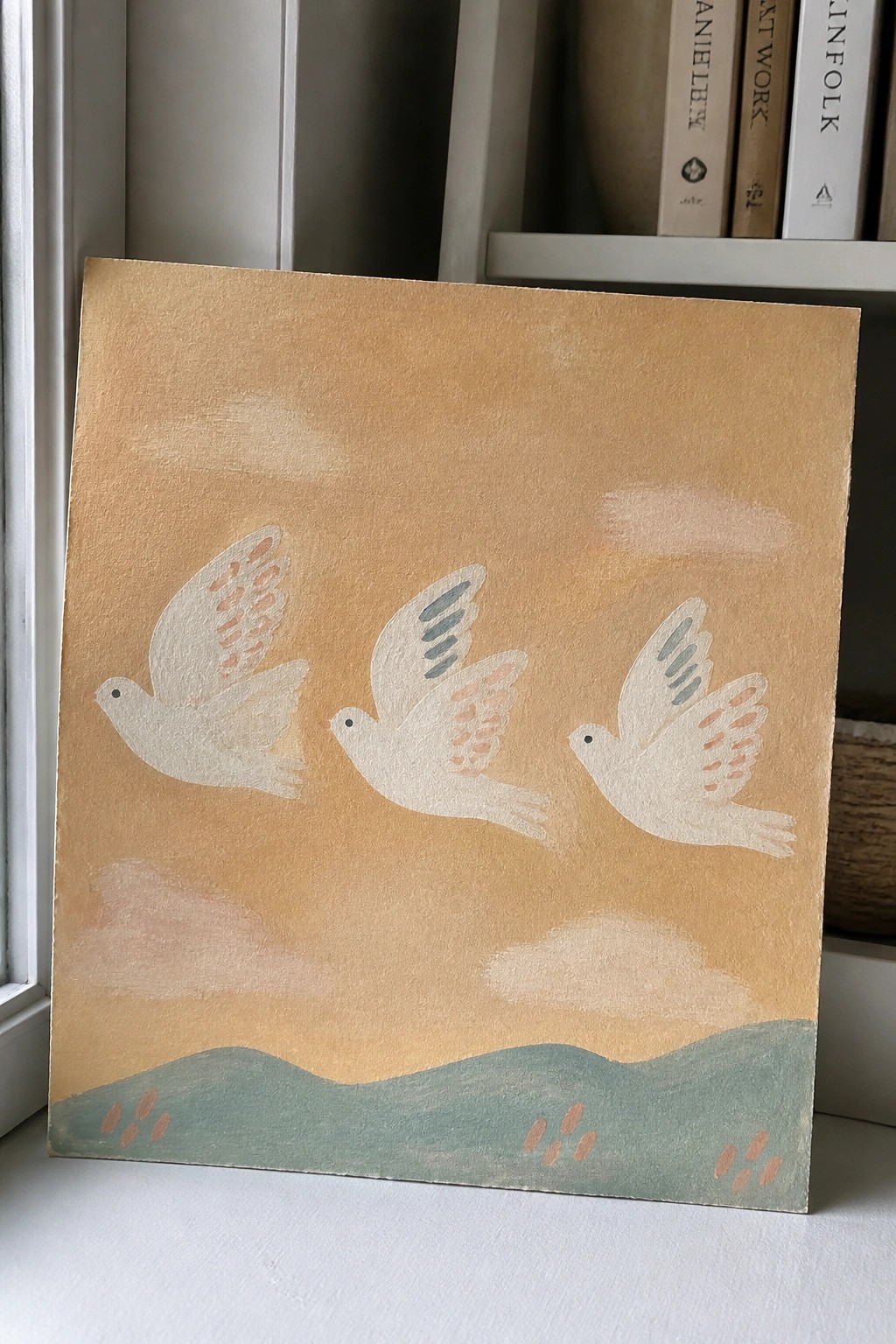
Three doves in flight form the main subject here, spaced evenly across a warm orange and peach background. The painting uses flat shapes with minimal wing shading and a low horizon line of teal green at the bottom. This approach fits a basic animal painting style that relies on repetition and a limited color range rather than fine detail.
What makes this idea useful is the straightforward layout that lets you focus on shape and color blocking without needing advanced drawing skills. You can easily change the sky to cooler tones or shrink the whole thing for a smaller canvas or card. Repeating the same dove shape three times keeps the composition balanced while still leaving room to adjust spacing or add a few more birds if you want a different count.
Praying Hands with a Halo and Verse
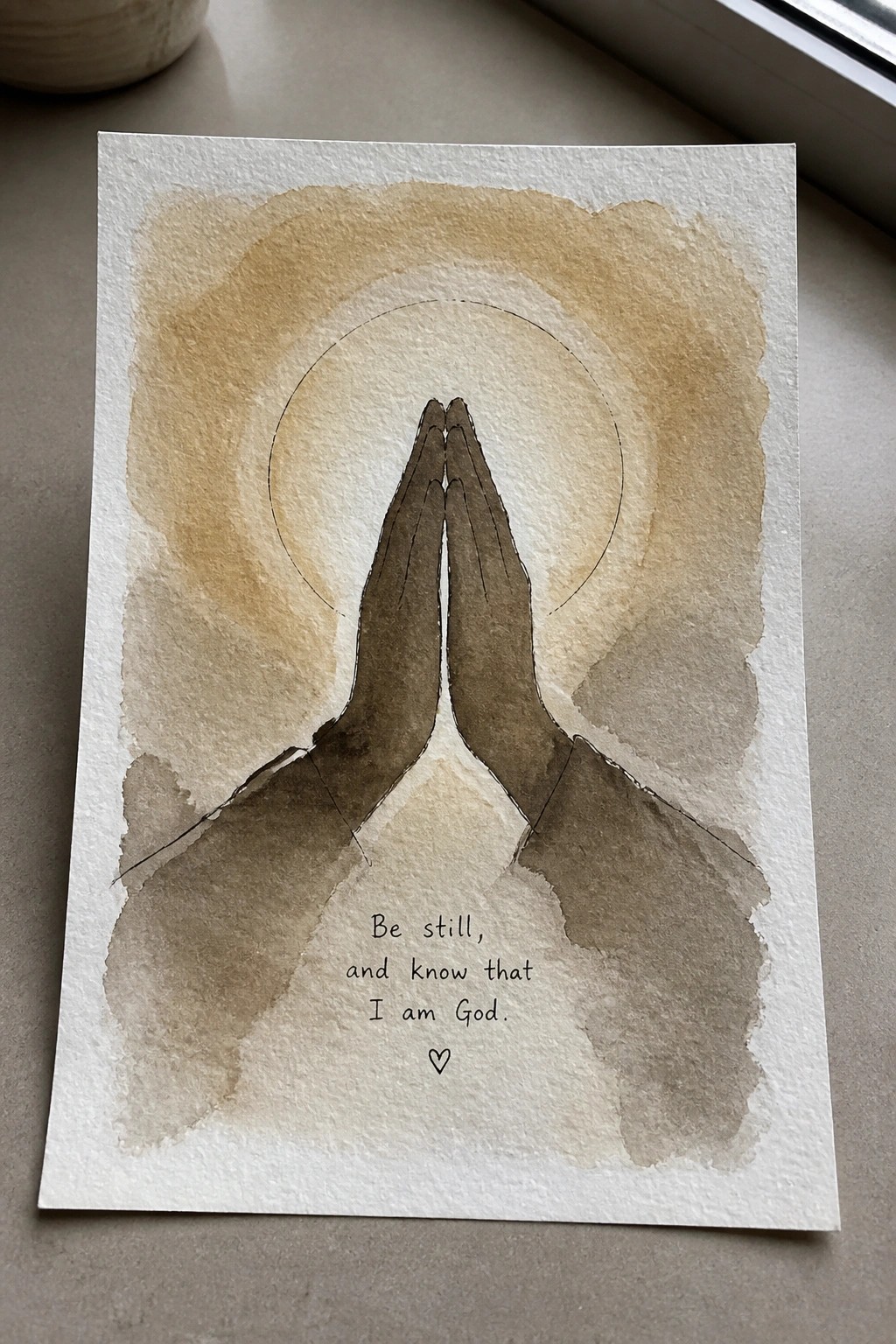
A watercolor approach that pairs praying hands with a simple circular halo as the central focus. Earthy washes build a soft background that frames the hands without competing for attention. The verse is placed directly underneath in modest lettering to complete the balanced layout.
What makes this idea useful is how the halo shape organizes the composition and keeps the hands as the clear main subject. You can change the verse wording or shift the background tones to suit different spaces. For wall pieces this works especially well because the limited details let you scale it up or down without losing the look.
Anchor and Cross in Beach Sand
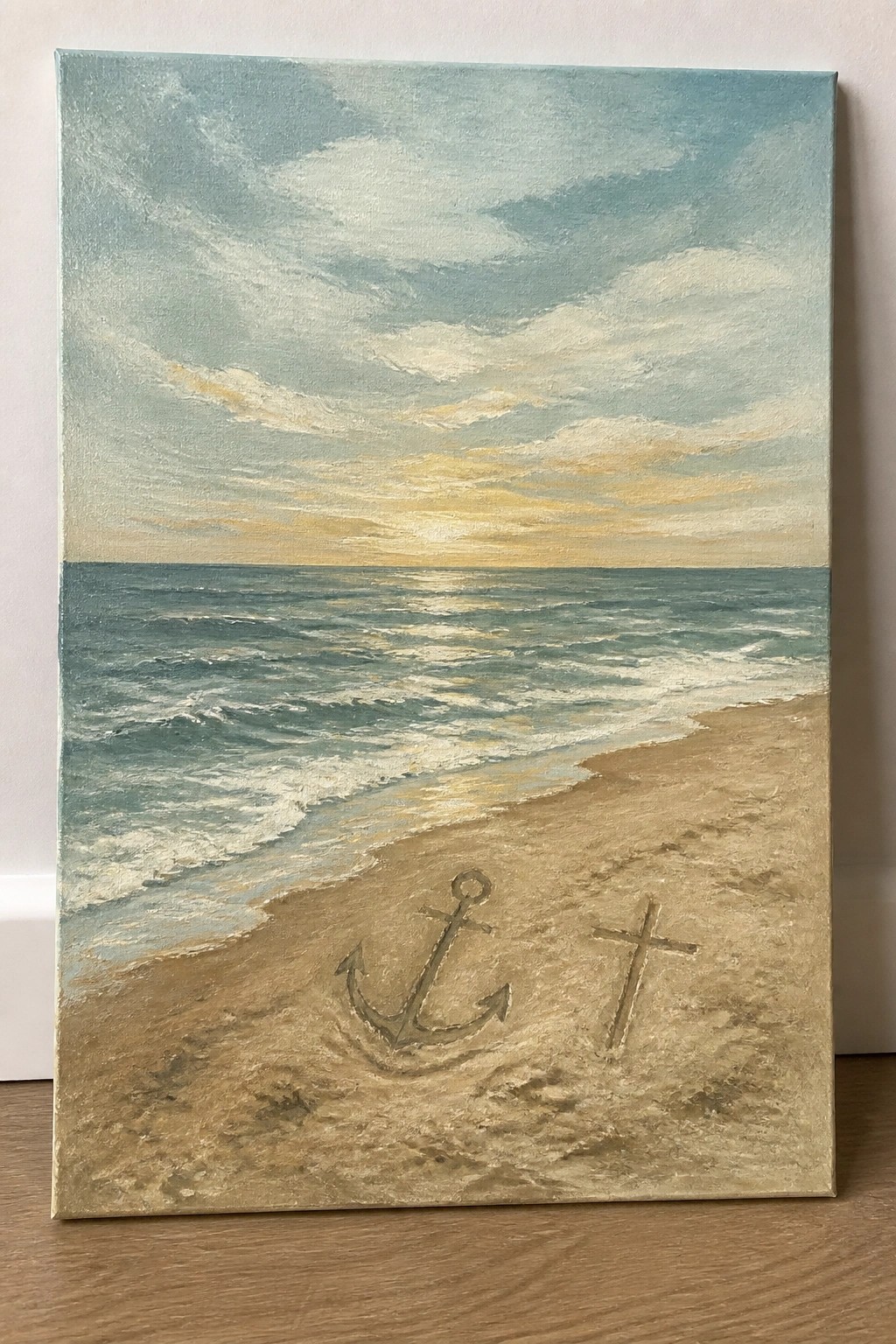
A landscape painting that combines a simple beach view with an anchor and cross drawn in the sand works as a straightforward idea for adding subtle symbols to a seascape. The horizon sits roughly in the middle, the water shows gentle wave patterns with light reflecting off the surface, and the symbols sit low in the frame on the sand to anchor the composition. Soft blues and greens in the water contrast with the warmer sky tones, keeping the overall layout balanced and easy to follow.
The composition does a lot of the work here by letting the horizon and wave lines lead the eye straight to the symbols without extra elements. You can swap the time of day by shifting the sky colors or change the symbols to fit a different theme while keeping the same sand-and-sea layout. For wall art this stays practical because it needs only basic layering of sky, water, and sand before adding the foreground details.
Three Crosses Reflected at Sunset
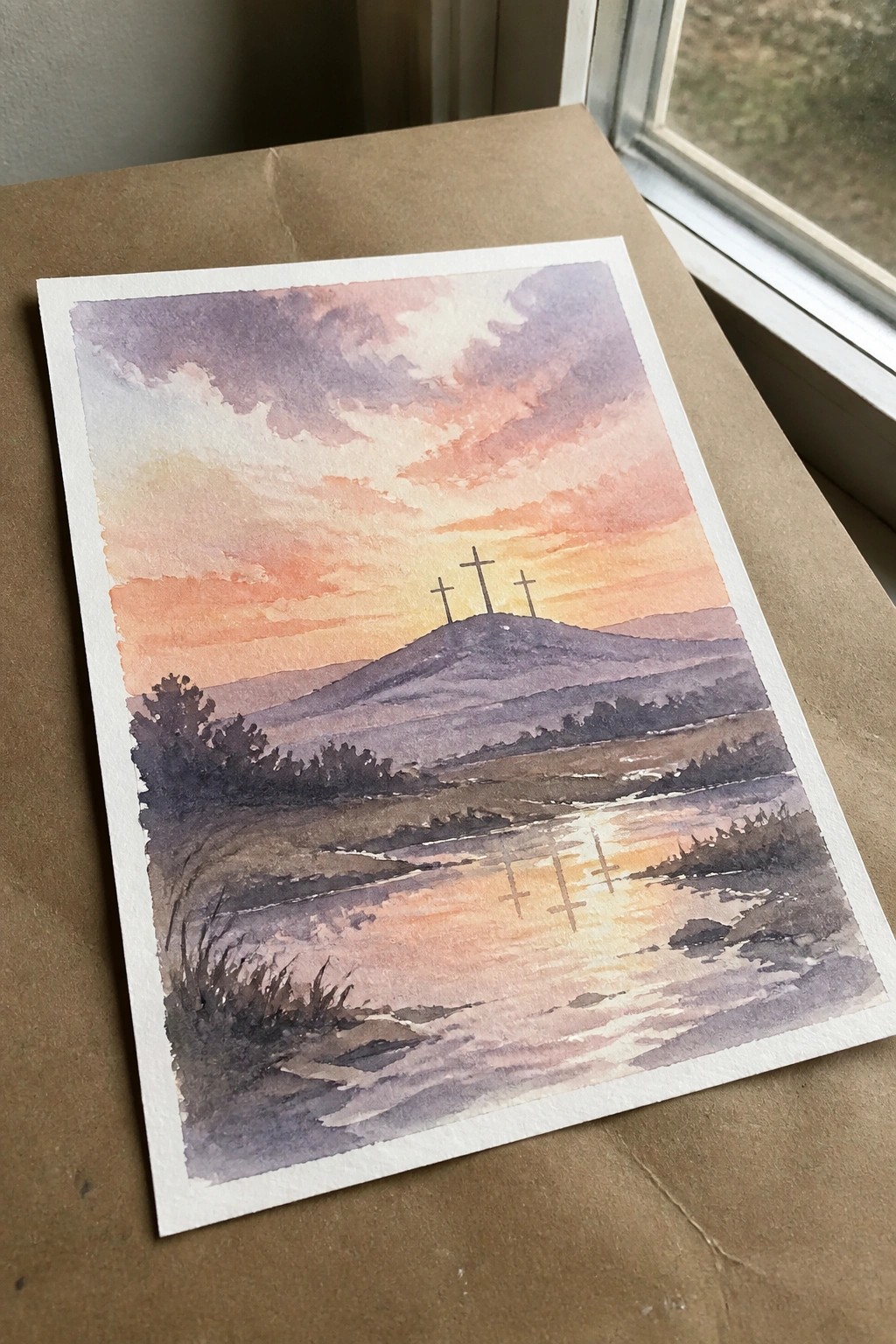
A landscape idea built around three crosses on a hill uses the water below as a natural mirror to repeat the main shapes. The horizontal layers of hills and sky keep the eye moving across the scene while the vertical crosses provide a clear focal point. This type of painting works as a straightforward landscape with a central motif that relies on color blending in the sky and water rather than fine detail.
The composition does a lot of the work here by letting the reflection carry half the visual interest. You can shift the sky colors to match different times of day or reduce the number of hill layers if you want a faster version. For wall pieces this setup stands out because the symmetry and horizon line make it easy to frame without extra elements. The same idea could be painted smaller for cards or practiced in different color schemes to test how the reflection changes with the palette.
Grace Script Over a Blended Horizon Background
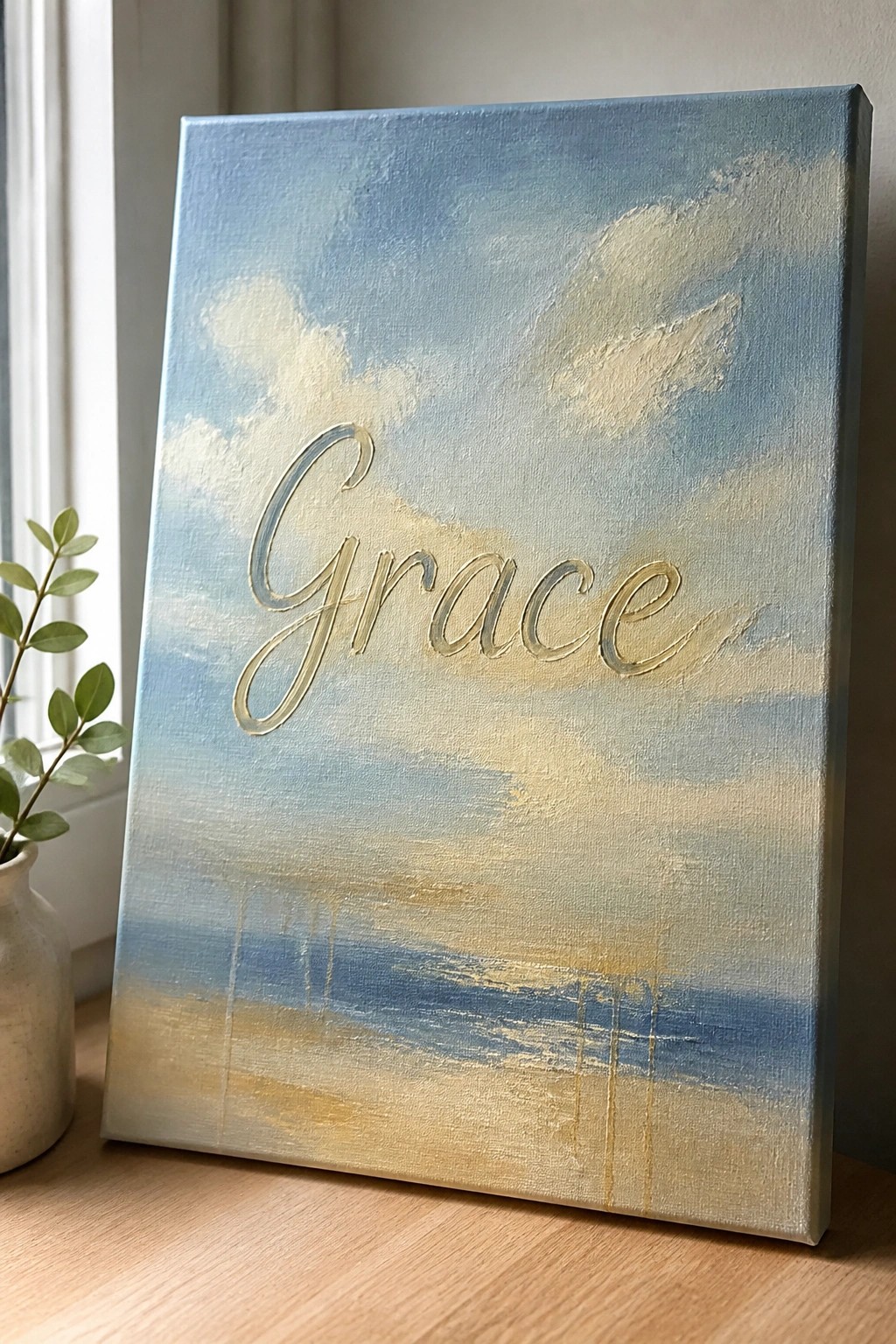
A canvas featuring the word Grace in raised cursive script layered over a soft sky and water scene. Horizontal brushstrokes create a simple horizon with blues shifting into warm golds and creams. This decorative word art approach keeps the text centered and prominent while the background stays loose and supporting.
What makes this idea useful is how the text carries the composition while the gradient background fills space without needing detail. The color mix stays neutral enough to fit most rooms and can be swapped for other tones or words easily. You could scale the canvas size or change the script style to match different spaces. For quick wall pieces this format works well because it relies on basic layering rather than complex shapes.
Watercolor Lilies Framing a Scripture Quote
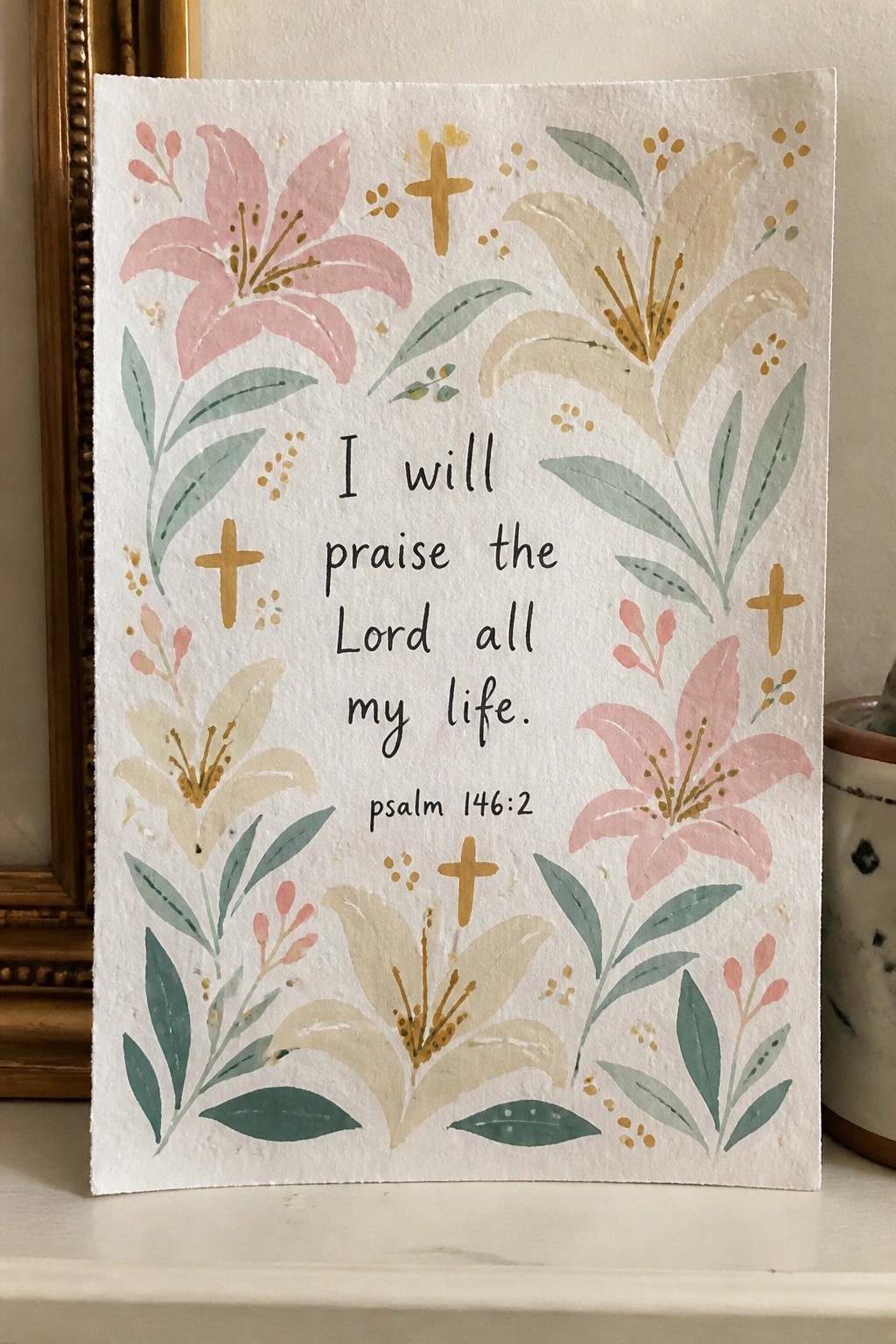
A straightforward painting idea is to arrange soft watercolor lilies in pink, beige, and cream around a short Bible verse, then tuck in a few small gold crosses and scattered leaves for balance. The flowers sit at different angles and sizes so the text in the center stays clear and easy to read. This approach works as decorative art because the loose floral shapes create a natural border without crowding the words.
The composition does a lot of the work here by placing flowers evenly on all sides so nothing feels lopsided. You could swap the verse for another short passage or change the flower colors to fit different seasons or room tones. This kind of piece translates well to greeting cards or small wall prints since the layout stays simple enough to finish in one session.
Lantern Still Life with Inner Cross
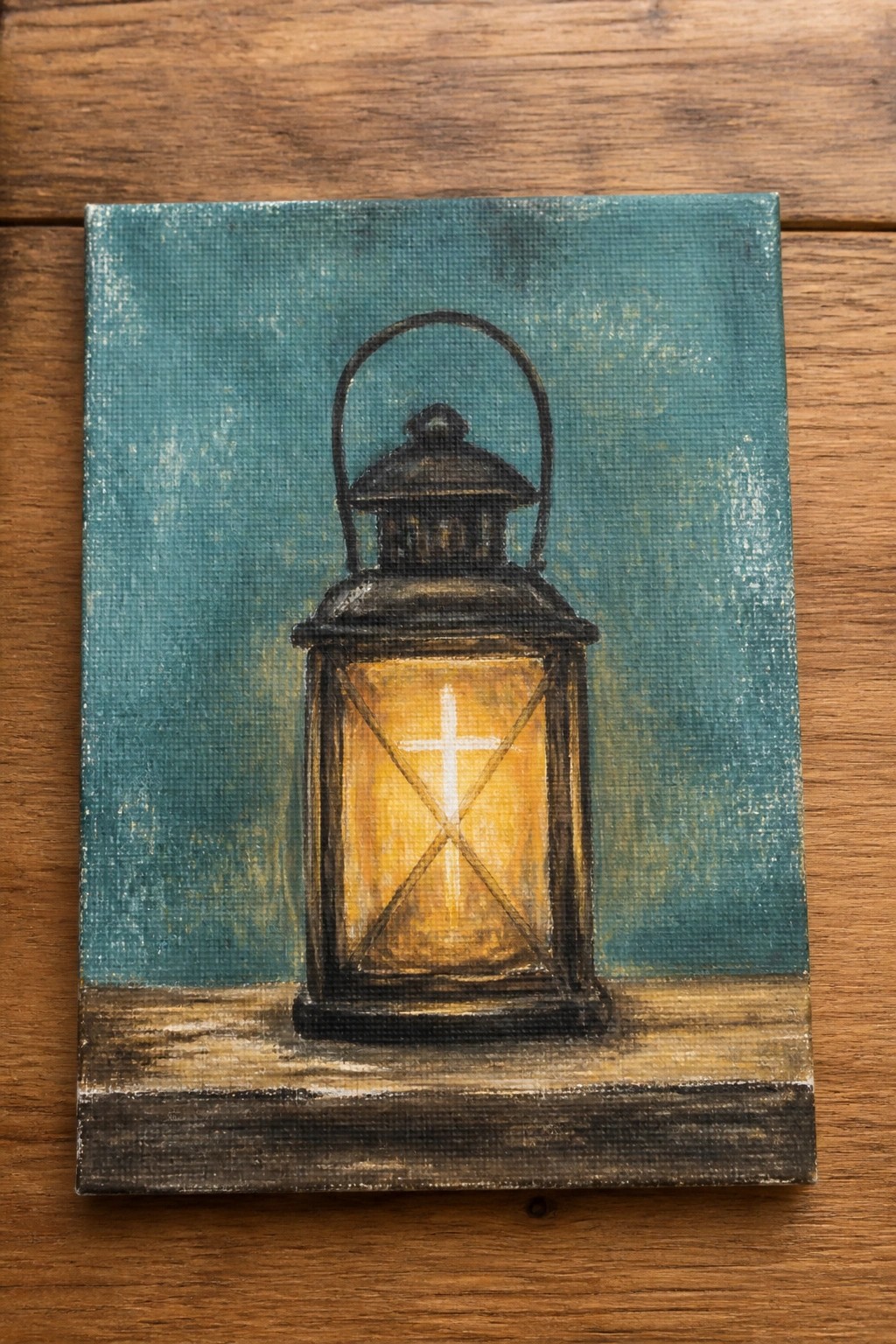
A lantern still life centers on one main object placed against a simple background to keep the focus tight. The idea uses a centered vertical composition where the warm glow from inside the lantern contrasts with the cool teal backdrop and darker base. The cross is added as a small, clean shape visible through the glass, which keeps the painting readable even at small sizes.
What makes this idea useful is how the single subject and limited color range make it straightforward to paint on a small canvas without extra layers or details. You could change the background to a soft gray or deep blue and still keep the same layout, or swap the cross for another small symbol if you want a different version. For practice, the setup works well because the shape is easy to block in first and the light effect can be built up gradually with a few layers of yellow and orange.
White Lilies with Scripture Text

A floral painting idea that pairs a loose cluster of white lilies and buds with a short Bible verse works well as a calm Christian art piece. The main subject stays on the flowers, arranged with stems spreading outward and the text tucked into the lower right corner to keep the page balanced. This type of idea falls into scripture-based floral work where the blooms stay soft and the verse adds the message without taking over.
What makes this idea useful is how the open space around the flowers leaves room for the text without crowding the page. You could adapt it by using fewer blooms or shifting the verse to the bottom center if you want a more centered layout for a card. The color palette stays easy to match with basic watercolor sets, and the same arrangement could be simplified to just one or two flowers for a quicker version. For wall art, the vertical shape makes it straightforward to frame or scan for prints.
Heart with Cross
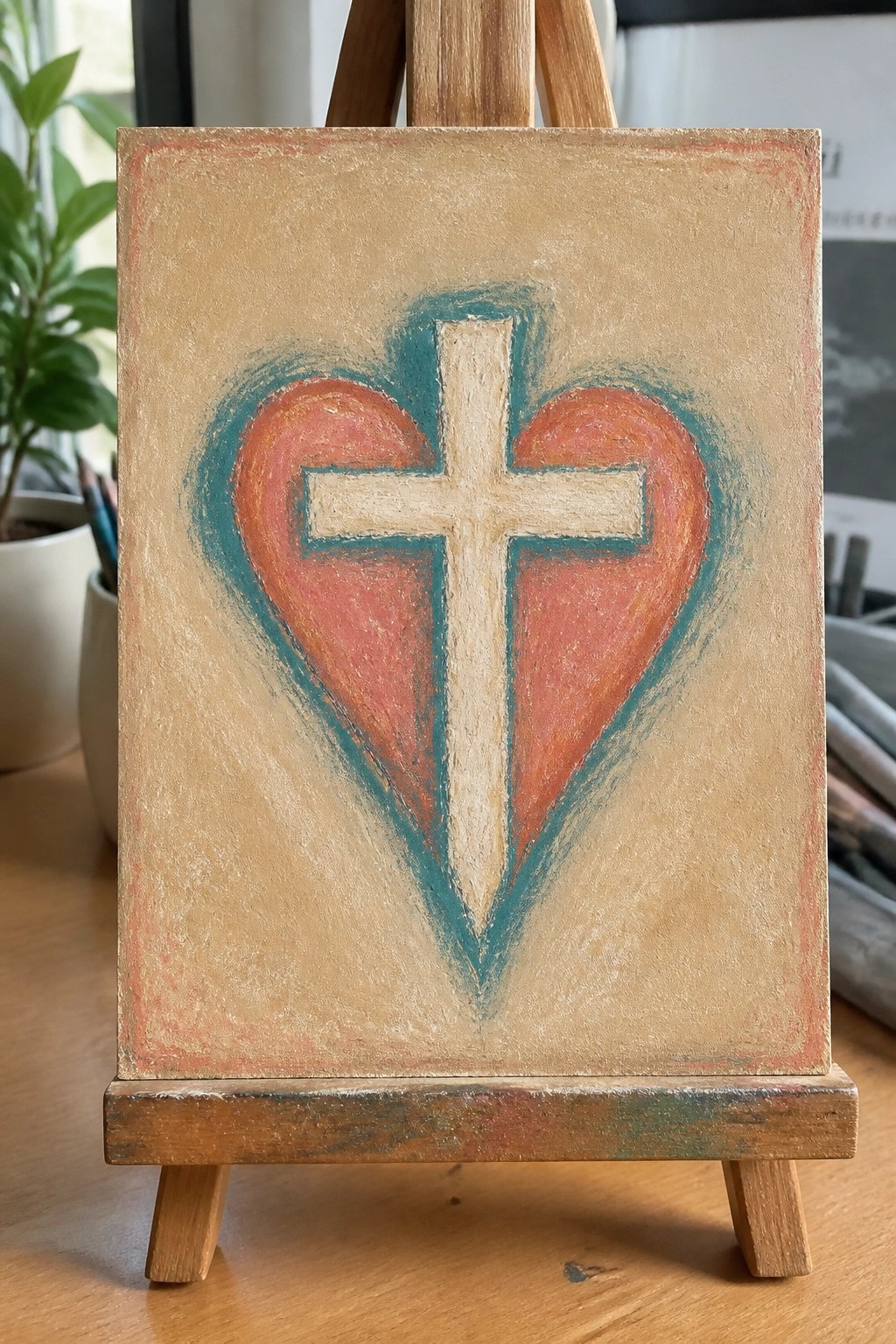
A heart shape paired with a centered cross creates a simple symbolic painting idea that stays easy to paint. The heart uses a soft coral fill while the cross stays light and slightly textured, and a teal outline blends the two shapes together against a neutral background. This approach relies on basic forms and gentle color contrast rather than fine detail.
The composition does a lot of the work here because the centered layout keeps everything balanced even if the edges stay loose. You could swap the coral for another warm tone or change the outline color to match different room colors. For wall art, this subject works especially well on small canvases where the shapes stay readable from a distance.
Geometric Sunrise with Dove in Stained-Glass Style
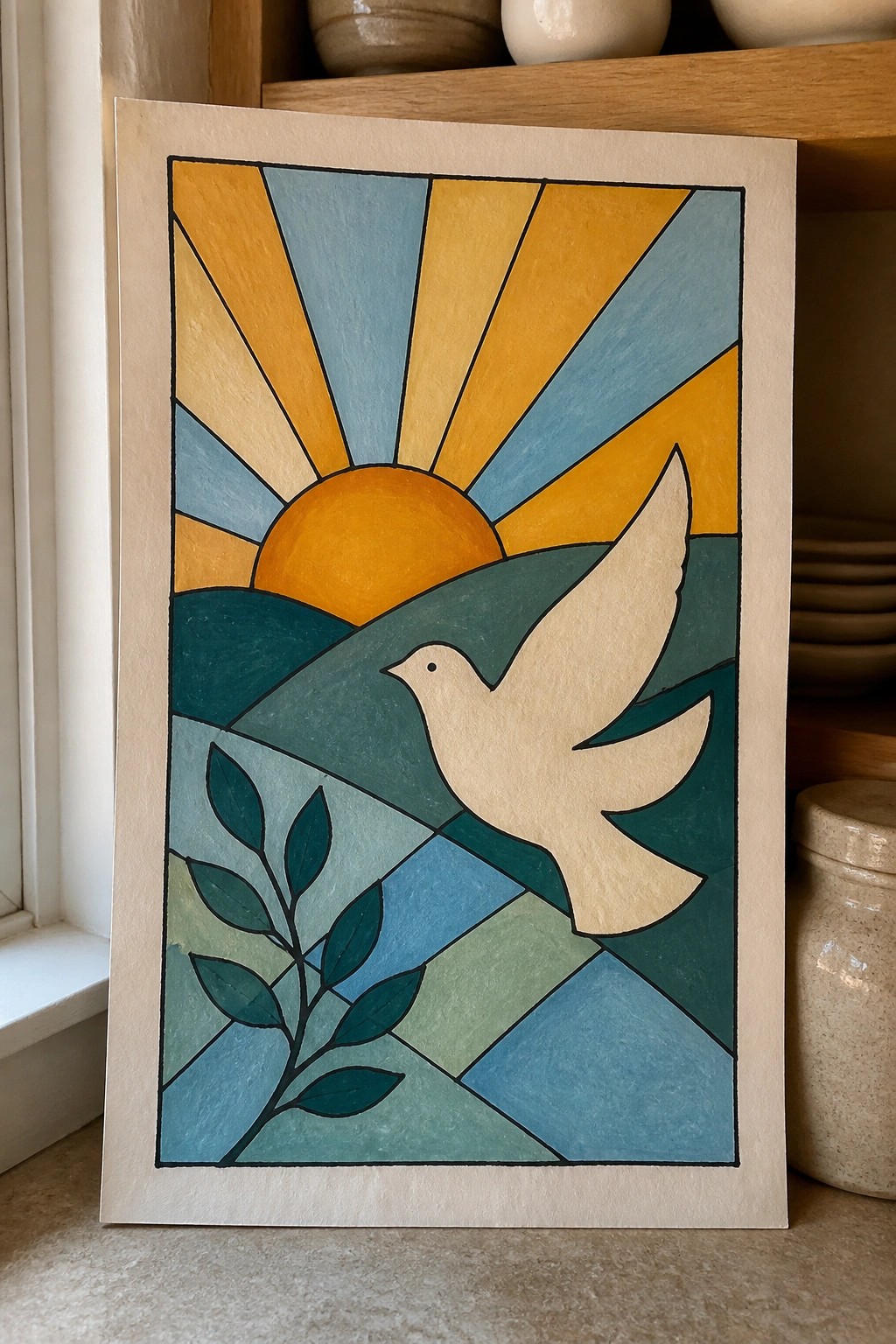
A sunrise scene built from bold geometric sections works well here, with a central sun sending out straight rays across hills and a dove placed in the middle ground. The composition balances the radiating lines on the top half with the plant and angled shapes below, keeping the eye moving without overcrowding any area. This type of painting idea falls into decorative landscape art that uses flat color blocks and clear outlines rather than soft blending or fine detail.
The composition does a lot of the work here because the straight lines and repeated shapes make it straightforward to sketch out on paper or canvas first. You could swap the dove for a different bird or adjust the hill angles while keeping the same sun-and-ray layout. For wall pieces, this approach stands out on Pinterest because the limited color range and strong divisions give it a clean, finished look even at a medium size.
Wildflower Path to a Country Church
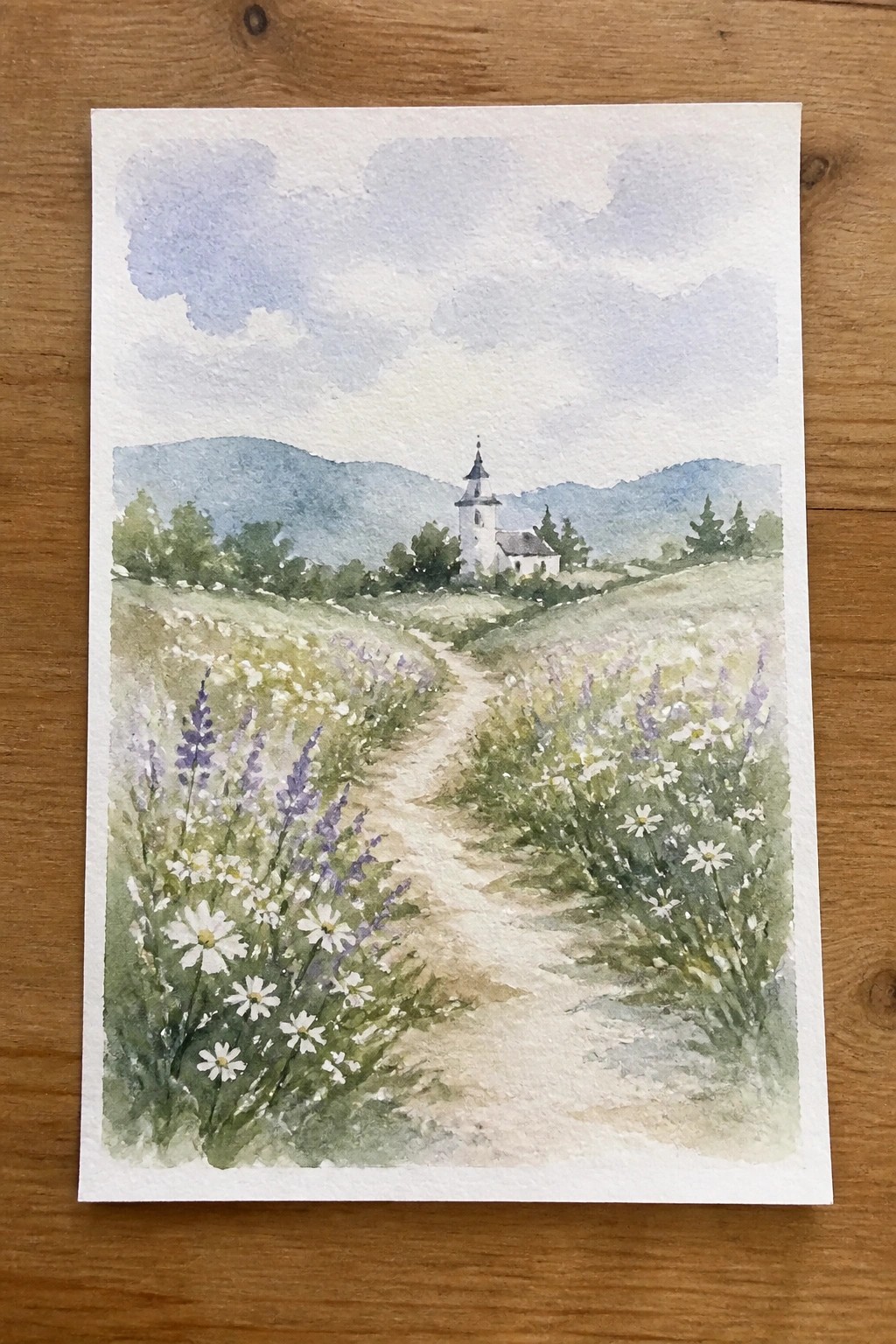
A landscape painting idea that places a winding dirt path through fields of white daisies and purple wildflowers as the main focus, with a small white church and its steeple positioned at the end of the path. Rolling hills and scattered trees form the background while the flowers frame the lower edges of the scene. The composition works because the path acts as a clear leading line that keeps the eye moving toward the building without overcrowding the middle ground.
What makes this idea useful is how the path and distant church give the scene built-in structure that holds together even with loose brushwork. The color palette of soft greens, muted purples, and pale blues is easy to adjust if you want a different season or a simpler background. For wall pieces this kind of view stays calm without needing fine detail, and you could shrink the church or remove the hills entirely if you want a quicker version for practice.
Prayer Canvas Framed by Painted Leaves

A prayer canvas centers short handwritten text with leafy stems painted along the left and right edges. The idea keeps the lettering large and clear while the foliage creates a loose border that narrows toward the middle. Soft background washes in muted tones help the text remain the main focus without competing with the leaves.
What makes this idea useful is how easily the leaf placement can shift to fit different canvas sizes. You could repeat just one or two leaf shapes across both sides instead of varying them, or change the color mix to match existing room tones. The layout also translates well to smaller panels for gifts since the text stays legible even when the overall piece is reduced.
Frequently Asked Questions
What supplies do I need to get started with these Christian art ideas?
Most projects use basic items like canvases, acrylic paints, colored pencils, glue, scissors, and cardstock that you can find at any craft store or online. Many ideas also incorporate free or low-cost elements such as leaves from nature, printed Bible verses, or old magazines for collages. Start with a small kit of versatile supplies to try several of the 18 ideas without much expense.
How can I make these art projects if I have no drawing skills?
Focus on the simpler techniques highlighted in the article, such as stamping verses with letter stamps, layering torn paper for landscapes, or tracing outlines of crosses and hearts. These methods rely on repetition and basic tools rather than freehand art, allowing anyone to create calm pieces that feature uplifting scripture without frustration.
Are these ideas suitable for children or group activities?
Several of the 18 projects work well for families or church groups, including making prayer rocks with painted words, creating verse bookmarks, or assembling gratitude jars with drawn symbols. Adjust for age by using washable paints and pre-cut shapes for younger kids, turning the activity into a shared time of reflection and bonding.
How do these calm art projects help strengthen my faith?
Creating the pieces encourages slow, meditative focus on scripture and positive imagery, which can reduce stress while reinforcing uplifting messages from the Bible. Displaying the finished work in your home serves as a daily reminder of peace and hope, making the creative process itself a form of quiet worship.
Where can I display or use the finished art in meaningful ways?
Place items like painted canvases near your reading chair or small sculptures on a nightstand to keep encouraging verses in view during quiet moments. Some ideas, such as framed collages or hanging mobiles, also make thoughtful gifts that share the calming Christian themes with others.