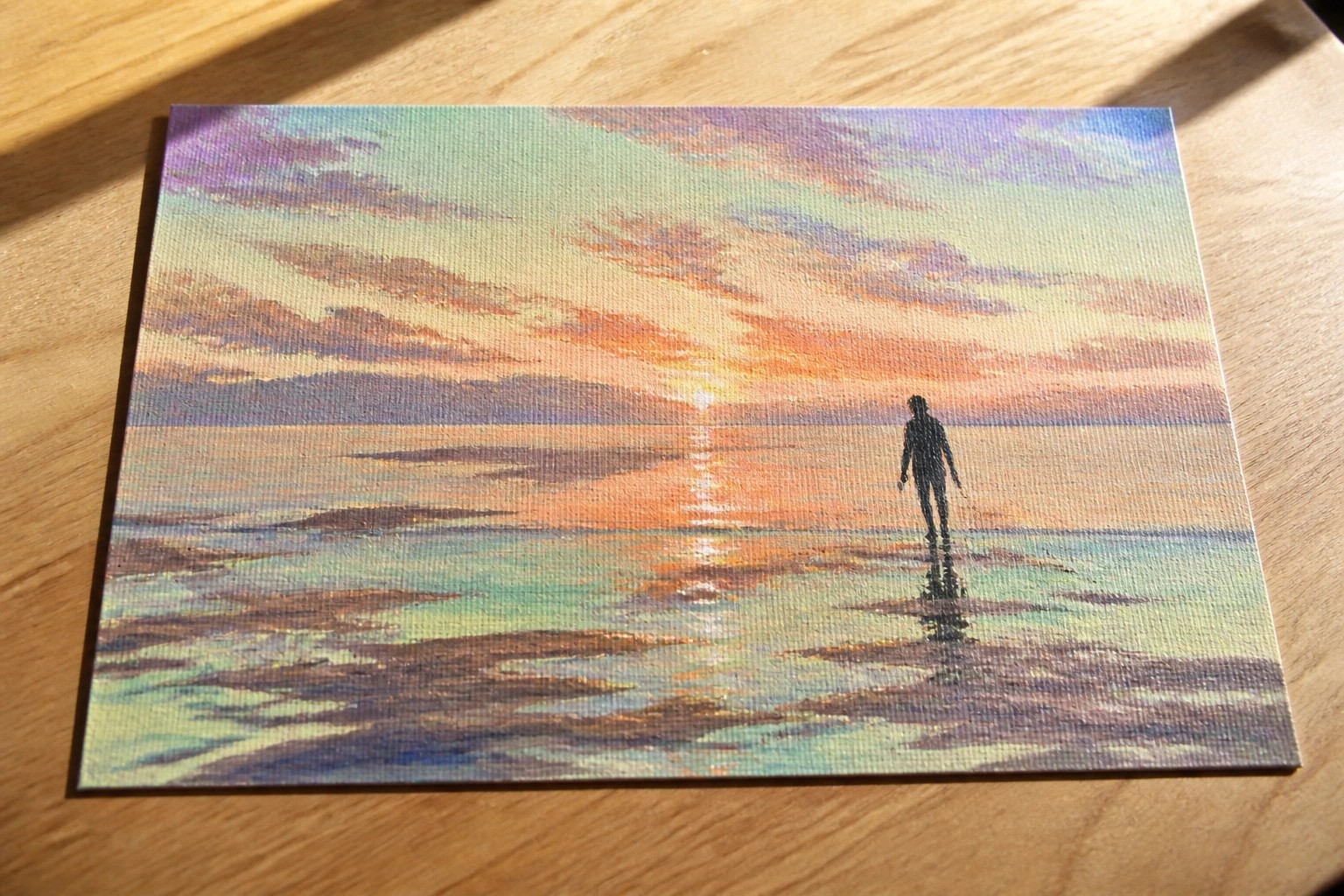
I like painting coastal views and recently I started adding people who look like they are walking on the water.
It is a simple idea but it changes the whole feel of the picture.
I have tried a few versions in my sketchbook and they all turned out quite calm.
These ideas use soft blues and gentle lines to keep things peaceful.
I put together 22 different takes on this theme for anyone who wants to try something similar.
Silhouetted Figure Walking Toward Sunset on Water
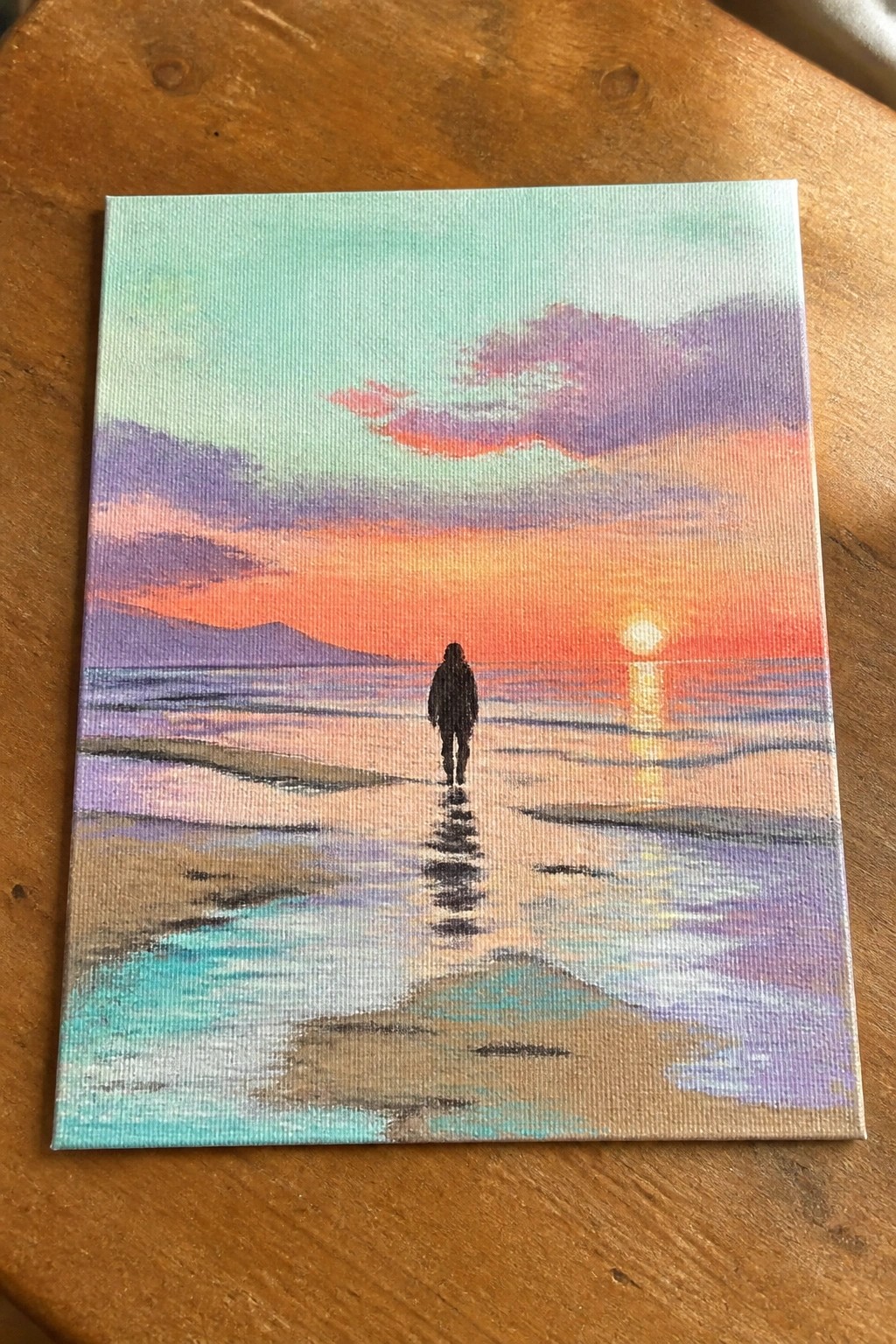
A lone dark silhouette walking straight toward the sun turns this into a simple but effective landscape idea. The reflection on the water acts as a natural line that pulls the eye from the bottom of the canvas up to the horizon, while the layered bands of orange, purple, and teal in the sky keep the background interesting without extra detail. This approach fits into the broader category of sunset landscapes that rely on strong contrast and basic shapes rather than precise rendering.
The composition does a lot of the work here because the centered figure and its reflection create balance even when the brushwork stays loose. You could adapt the idea by changing the sky colors to match a different season or by keeping the water area smaller if you want a quicker version on a sketchbook page. For wall art, the high contrast makes it stand out on Pinterest even at small sizes, and the silhouette means you can try it without worrying about painting faces or clothing details.
Kids Walking Hand in Hand on Reflective Waters
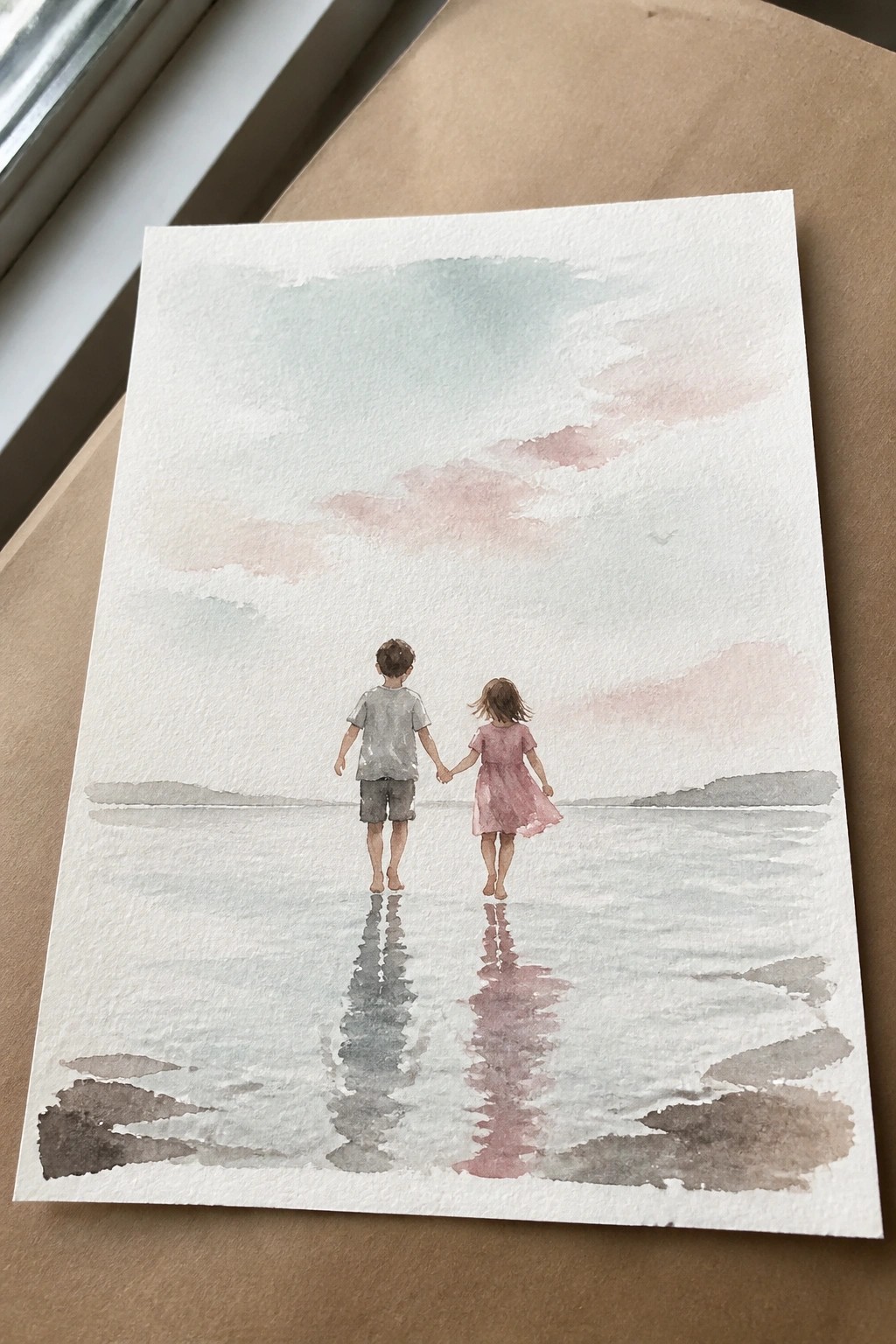
A painting idea built around two children walking away from the viewer across a flat water surface. The main subject is the pair of figures connected by joined hands, with their reflections placed directly below to create a clear vertical axis in the lower half of the composition. Loose color washes in the sky and a simple horizon line keep attention on the figures and the mirrored shapes beneath them.
What makes this idea useful is how the reflections carry the composition without requiring tight detail on the children themselves. The color palette can be swapped for warmer or cooler tones depending on the time of day you want to suggest. This layout works especially well for smaller wall pieces because the balanced shapes hold up even when the painting is scaled down. For practice, you can start with the water and reflections first, then add the figures on top once the background is dry.
Nighttime Paper Boat Crossing
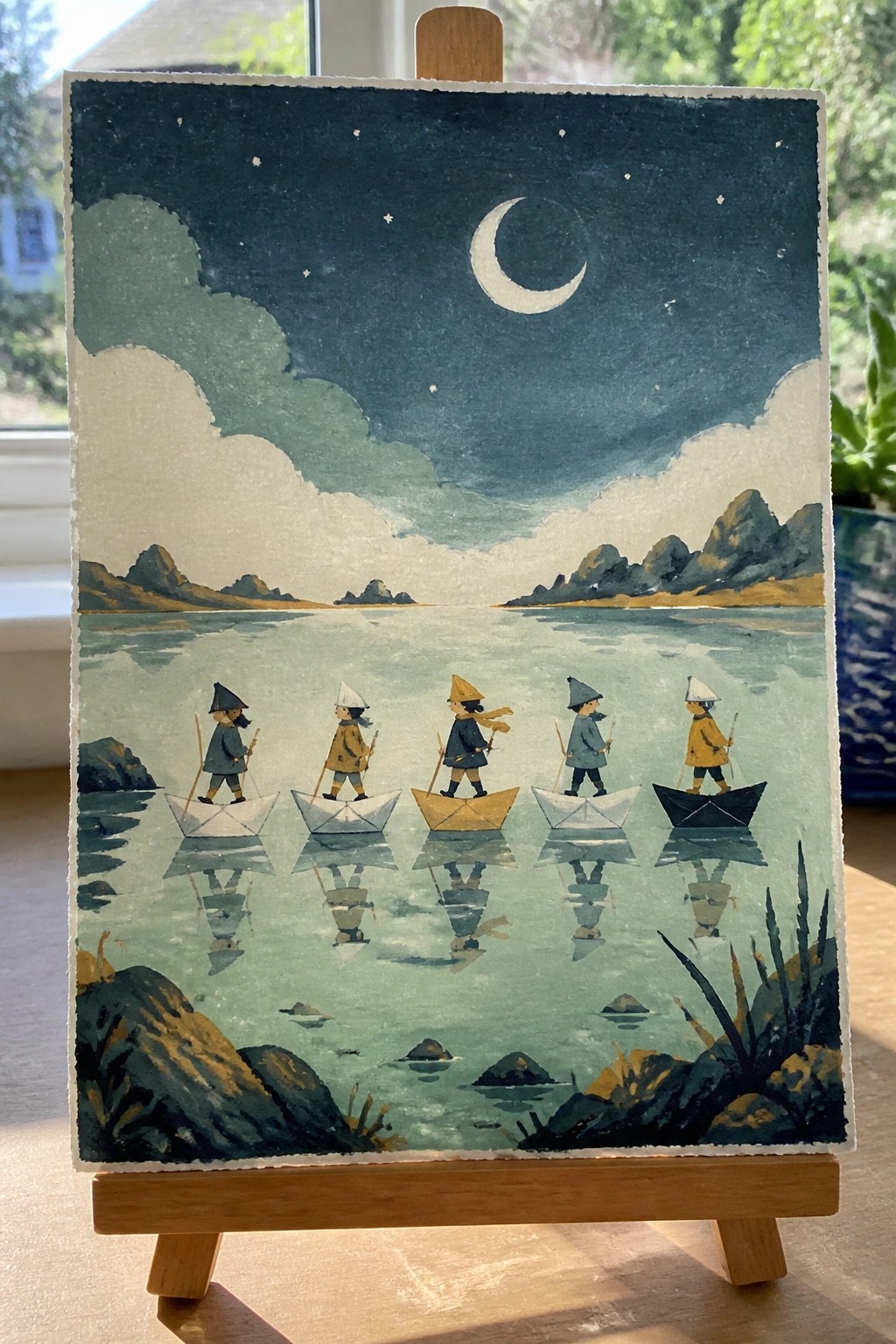
A row of figures in simple folded paper boats creates the main subject, turning a basic landscape into a scene of steady movement across water. The idea works as a figurative landscape where the horizontal line of boats leads the eye while the dark sky and pale water create a clear top-to-bottom contrast. Reflections placed directly under each boat add visual weight and keep the composition balanced without extra elements.
What makes this idea useful is the repeated boat shape that makes the layout easy to plan on any canvas size. You can swap the night colors for a daytime version or reduce the number of boats if the surface feels too wide. The background stays minimal so the focus stays on the line of figures, which also makes the same idea quick to adapt for a greeting card or a small practice piece. For Pinterest this kind of clear, repeating subject tends to get saved because it reads well even as a thumbnail.
Golden Retriever in Shallow Surf
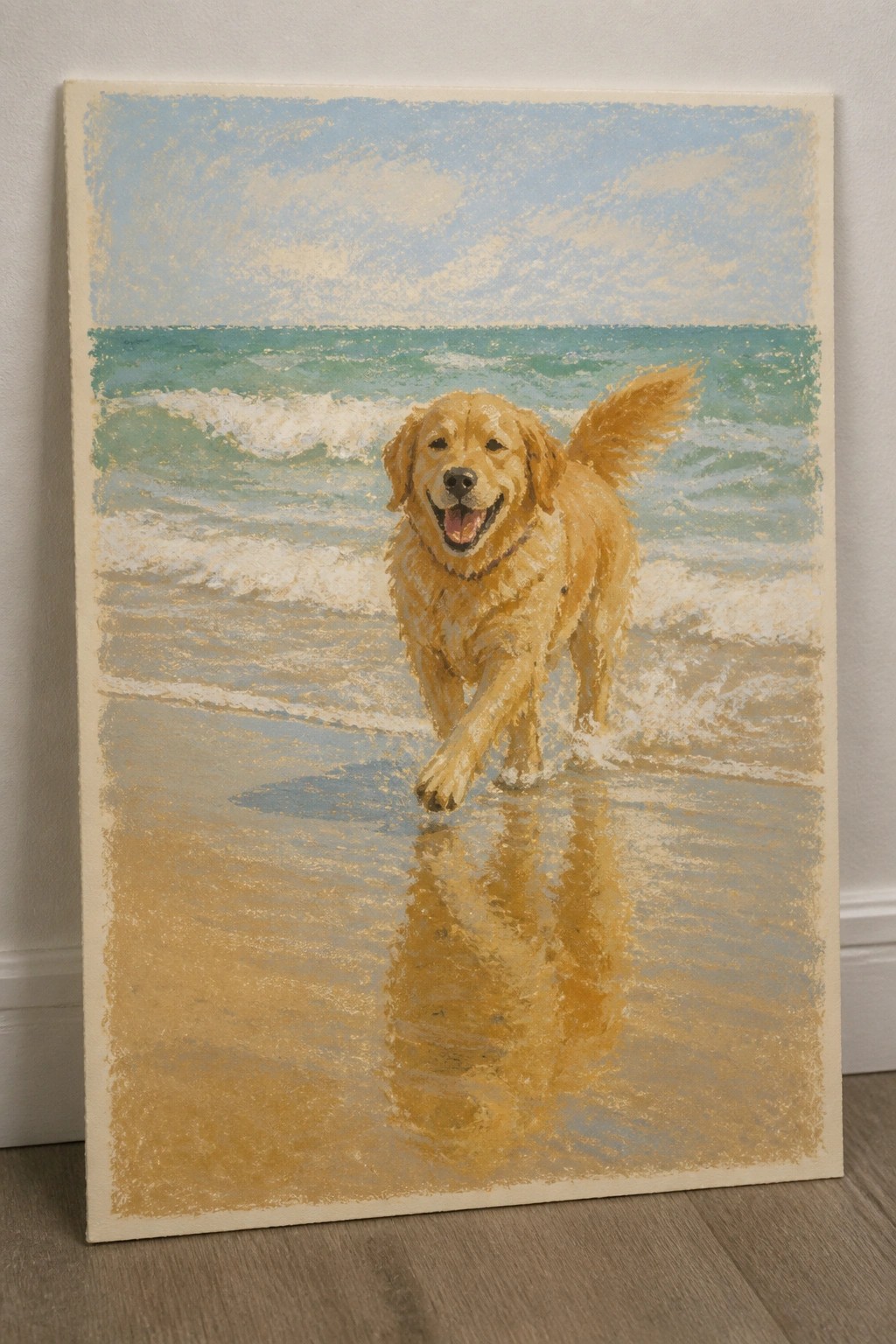
A painting of a golden retriever walking through the edge of the surf works well as an animal subject paired with a simple coastal setting. The dog is shown mid-stride with its front legs extended, set against low waves and a pale sky. The wet sand reflection under the dog gives the composition a clear focal point while the horizontal lines of the water and horizon keep the layout balanced.
What makes this idea useful is the straightforward layout that lets the dog stay the main focus without needing complex details. You can swap in a different breed or change the angle of the legs to personalize it. The limited color range also makes it easy to scale down for smaller canvases or practice pieces. For wall art, the horizontal format fits nicely above furniture without overwhelming the space.
Lantern Path with Floating Lights
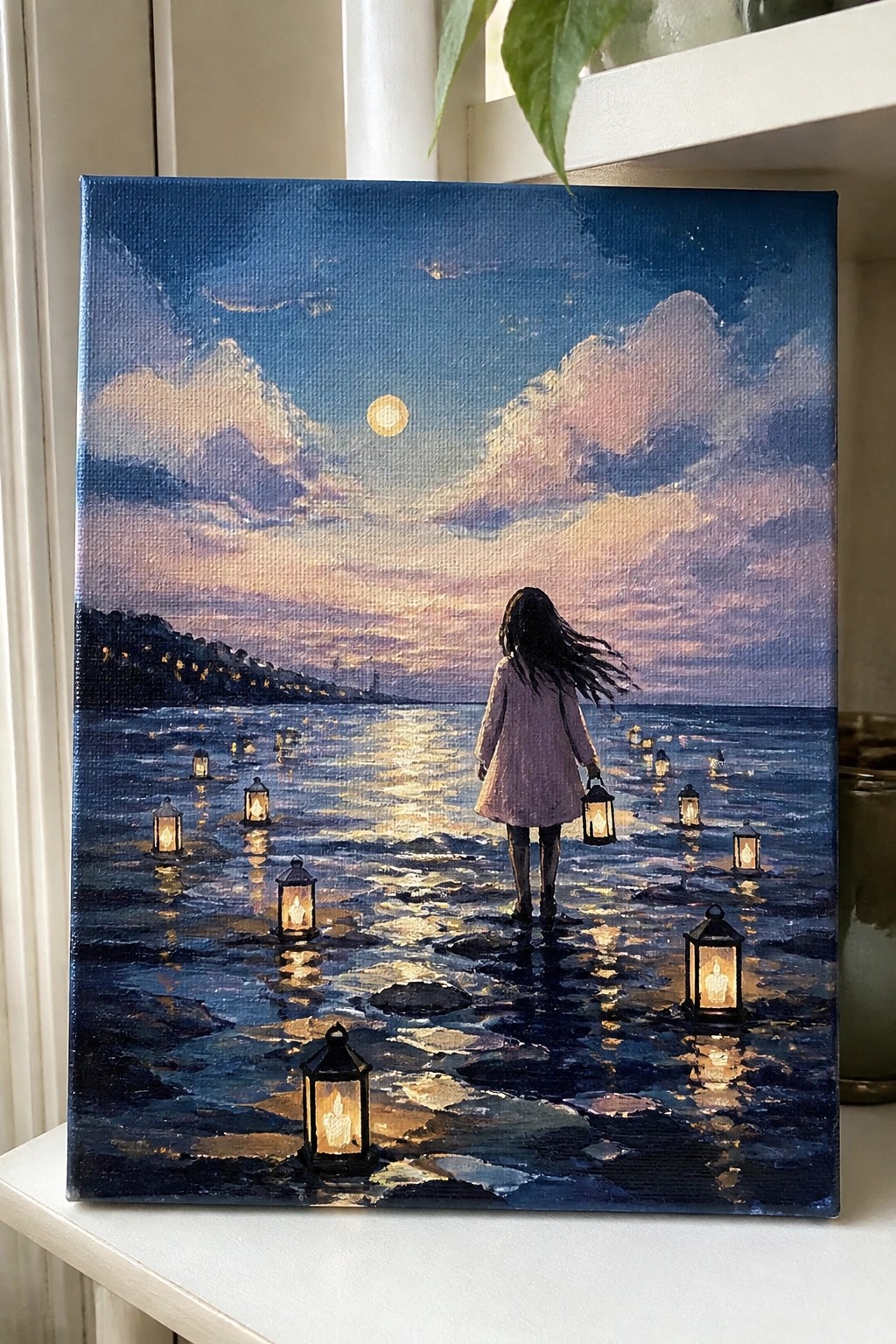
A figure walking across water forms the core of this idea, with scattered lanterns creating a loose path that leads the eye toward the horizon. It works as a coastal landscape that mixes a single human shape with reflective surfaces and repeated light points to build depth. The balance between the dark water, glowing lanterns, and soft sky keeps the focus on the movement across the scene rather than on fine details.
The composition does a lot of the work here by using the lanterns as stepping stones that guide both the figure and the viewer. The color palette makes this easy to adapt for different times of day or simpler versions with fewer lights. For wall art, something like this stands out on Pinterest because the repeating lantern shapes give structure while leaving room to change the sky or figure clothing. A smaller canvas version could drop the distant hills and still read clearly.
Footprint Trail Through Shallow Sunset Water
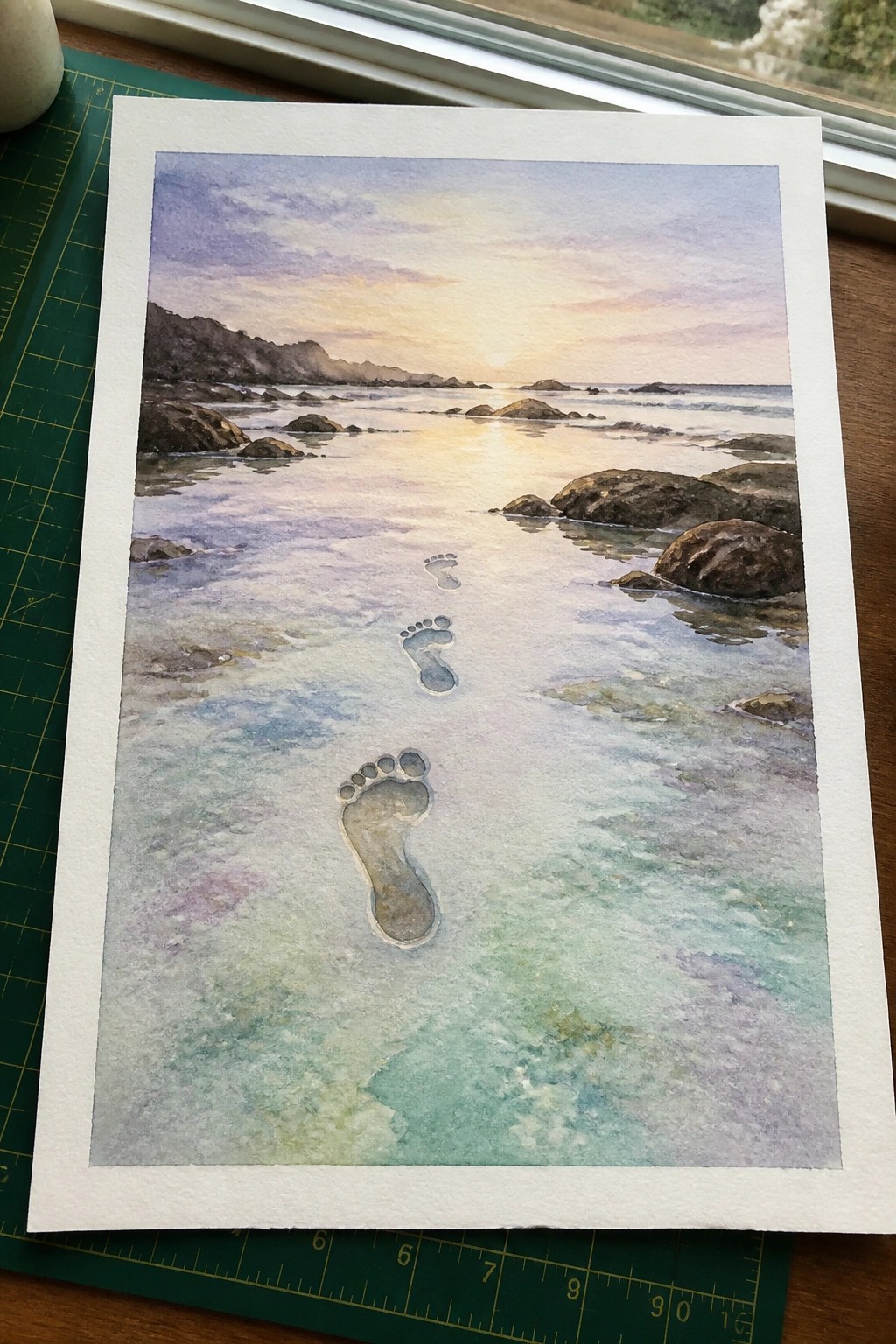
This landscape idea shows a line of footprints leading through shallow water toward the horizon at sunset. The composition uses the prints as a clear path that pulls the eye forward while the low sun lights up the water surface and creates soft reflections around the rocks. It fits into coastal landscape painting with a focus on simple natural elements like wet sand, gentle waves, and distant hills.
What makes this idea useful is how the footprints give an instant sense of movement without needing extra figures or details. The color mix of muted blues, greens, and warm sky tones can be changed for different lighting or simplified by reducing the number of rocks. For practice this works well because the water areas let you test blending and soft edges while the overall layout stays easy to follow. It could be scaled down for a card or repeated with slight changes in print spacing for a small series.
Stepping Stones Through Shallow Beach Water
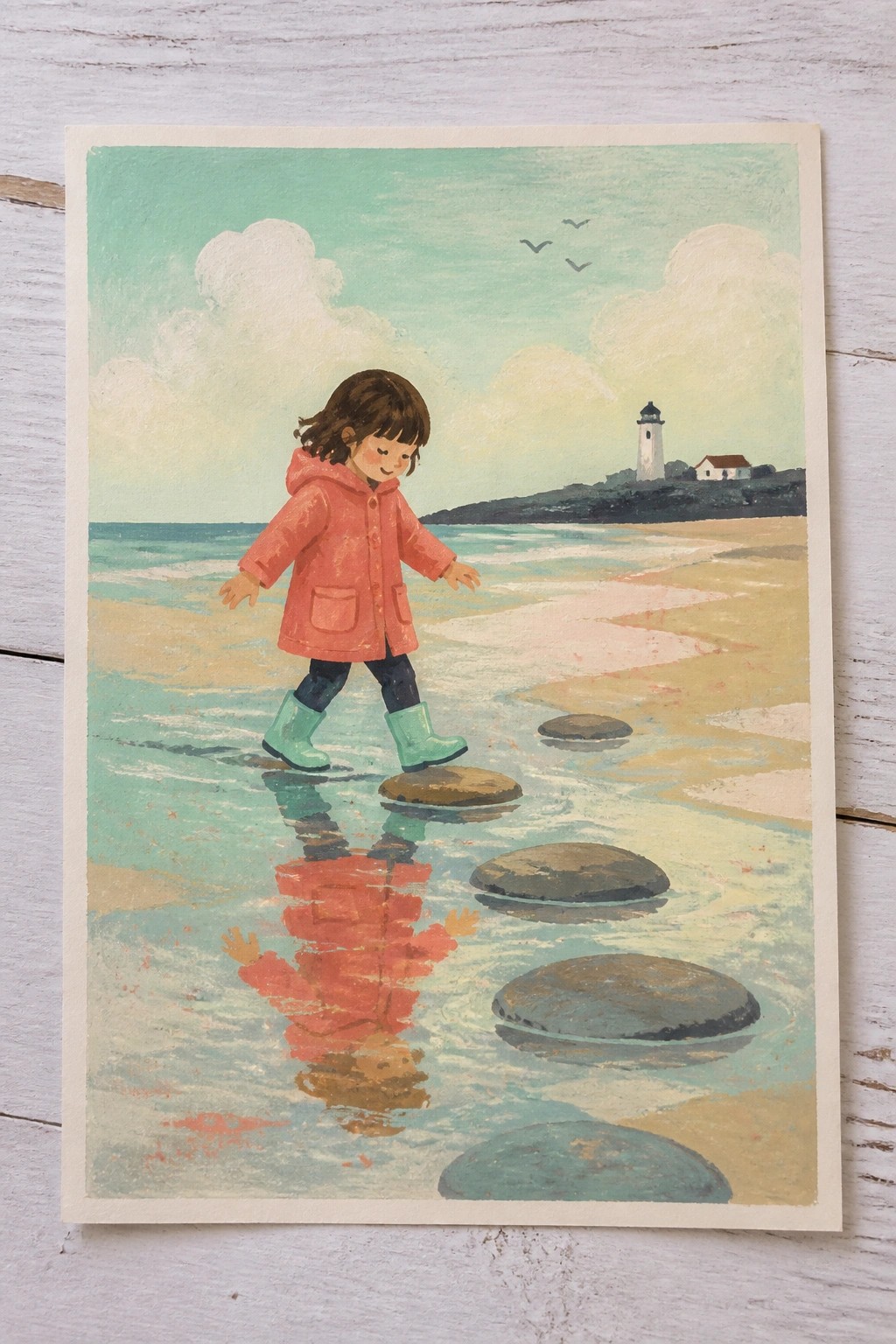
A child walking across flat stones set in shallow water forms the core idea here, with the lighthouse and low horizon keeping the focus on the foreground action. The reflections on the wet sand and water add a simple layer that makes the scene feel connected without extra detail. This approach works as a cute coastal landscape that balances a clear subject with open space around it.
The composition does a lot of the work here by keeping the figure off-center and using the stones to guide the eye toward the background. You could swap the red coat for different seasonal colors or simplify the lighthouse into a basic shape if you want a faster version. This would be easy to turn into a small series by changing the number of stones or the water level for each piece.
Moonlit Beach Walk with Reflection
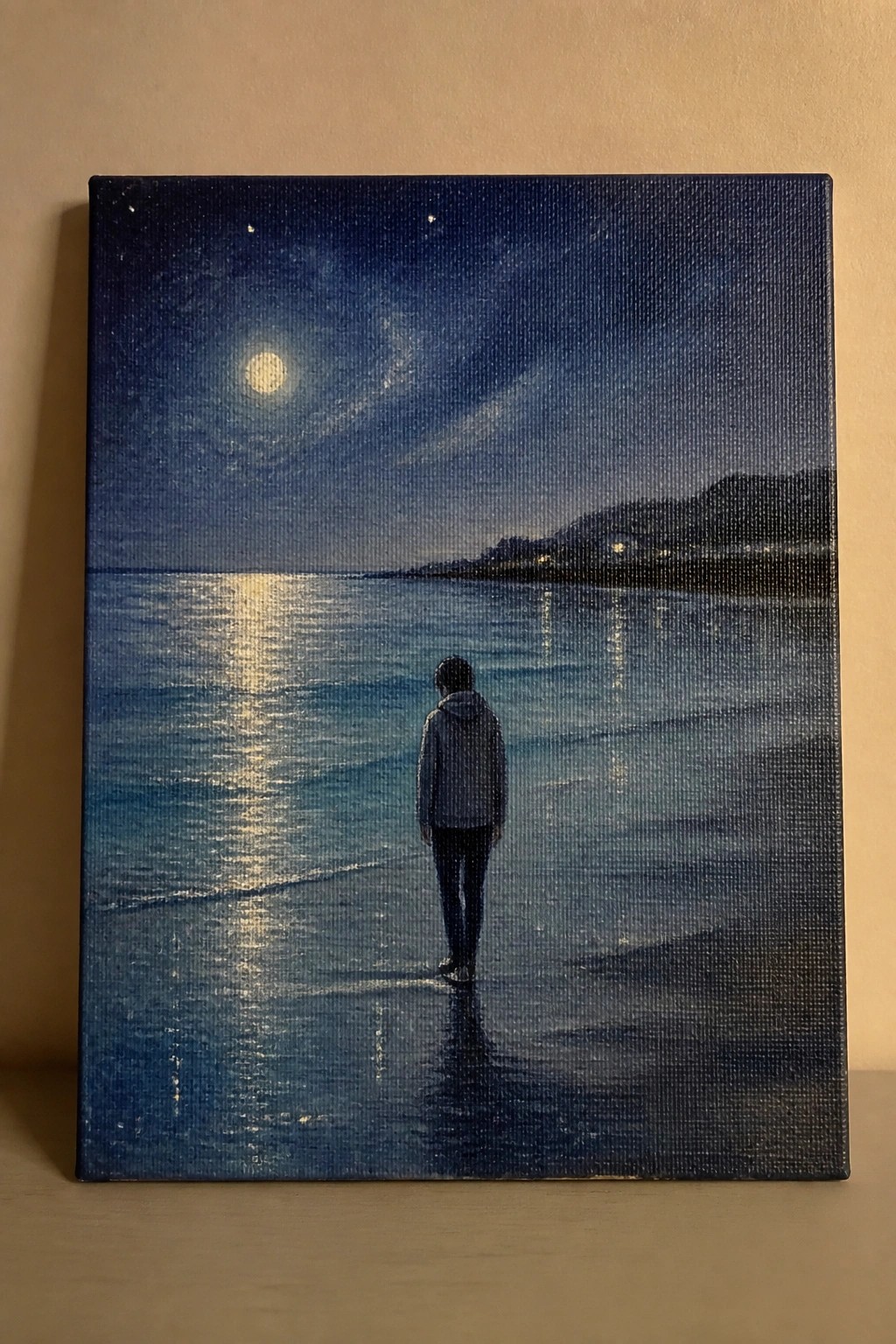
A lone figure walking away along the shoreline at night serves as the main subject in this painting idea. The scene uses a simple vertical composition with the person placed slightly off-center against a wide stretch of water where the moon creates a direct line of light on the waves and wet sand. This landscape style relies on the contrast between the dark upper sky and the glowing horizontal reflection to hold the viewer’s attention without extra elements.
The composition does a lot of the work here by letting the moon’s reflection act as a built-in focal path that draws the eye straight to the figure. You could easily adapt the idea by changing the moon phase, removing the distant lights, or keeping the palette to just three or four tones for faster practice. For wall art this works especially well in a medium canvas size where the light path stays visible from across the room.
Sandpipers Scattered Across Reflective Shoreline
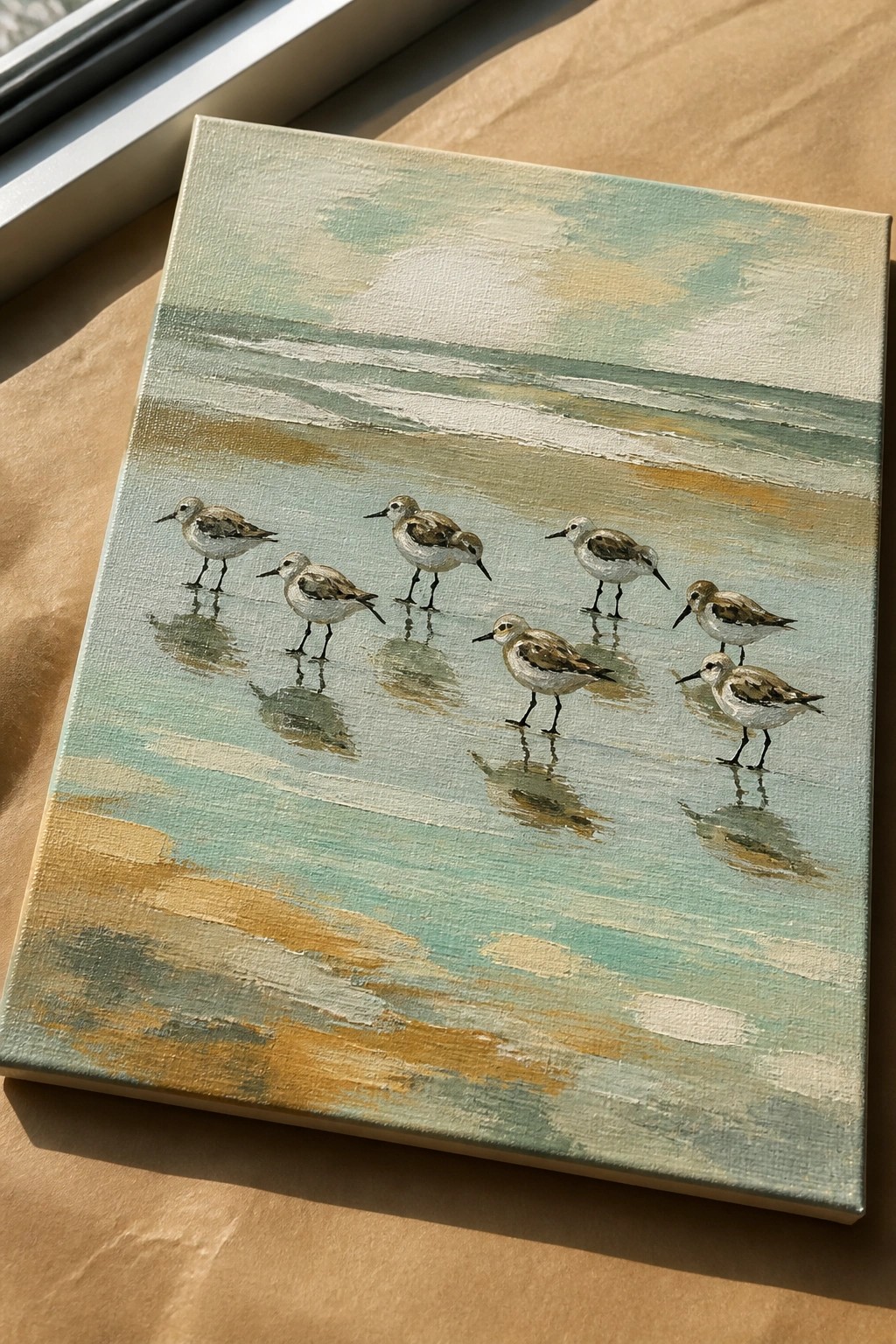
A group of small shorebirds spaced across wet sand forms the core of this painting idea. The birds are kept simple in shape and color while their reflections add a clear sense of water and depth. Horizontal layers of muted blue, green, and sand tones in the background keep the focus on the birds without competing details.
The composition does a lot of the work here by spreading the birds out so none feel crowded. This kind of subject works especially well for practice because the shapes stay basic and the reflections can be adjusted with just a few brushstrokes. The color palette makes this easy to adapt by swapping the background tones for warmer or cooler shades to match different rooms. For wall art, the same layout can be scaled down to a smaller canvas or turned into a series with varying numbers of birds.
Lone Figure Striding Across Reflective Water
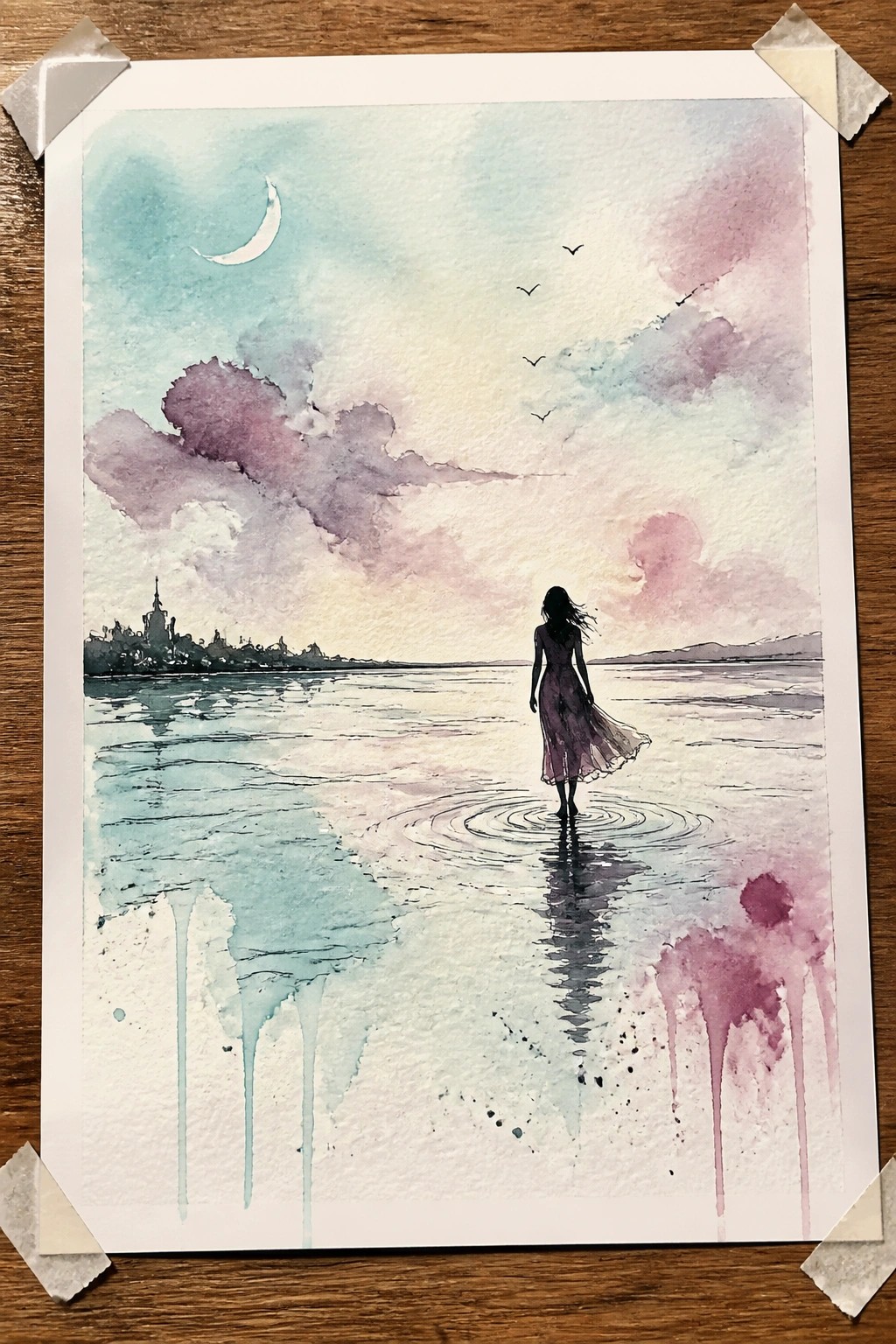
A figure walking straight across a flat water surface creates the core idea here, with concentric ripples marking each step and a distant city skyline holding the horizon steady. The composition works because the figure sits slightly off center while the water reflections and soft sky layers keep everything balanced without crowding the space. This approach falls into coastal landscape painting with a figurative focal point.
What makes this idea useful is how the open water area lets you adjust the scale easily for different paper sizes. You could swap the city silhouette for simpler hills or remove the birds if you want a faster version. For practice, the limited color range and single main subject help you focus on value shifts and edge control rather than filling every corner. The vertical layout also translates well to smaller canvases or sketchbook pages.
Stepping Stone Path Under Moonlight with Fox
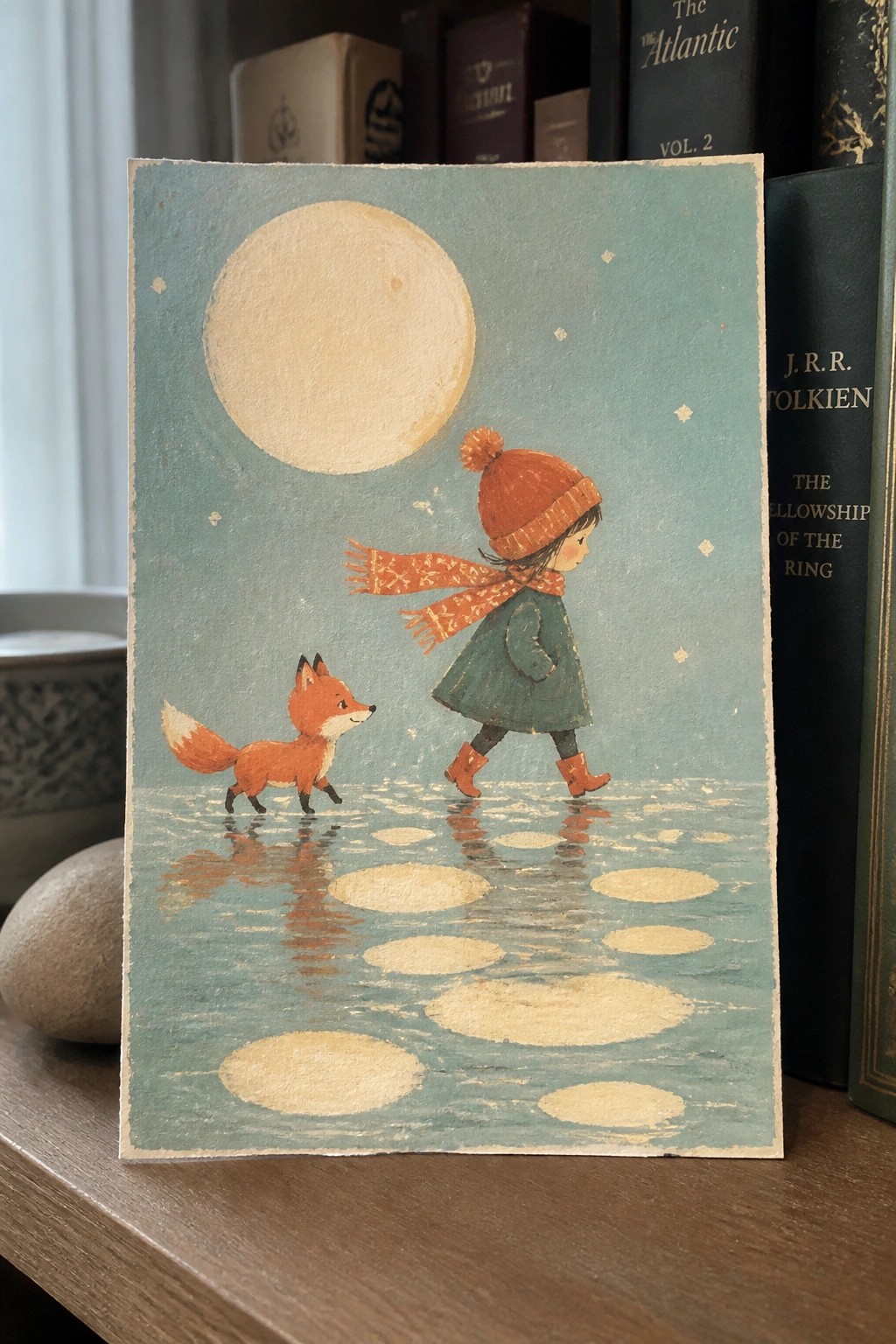
A child and fox crossing water on round stepping stones under a large moon forms the core of this painting idea. It works as cute seasonal art that pairs an animal figure with a simple landscape. The round shapes of the moon and stones create repeating forms that move the eye across the scene while the cool background keeps the warmer figures easy to separate.
The composition does a lot of the work here by using the stones as a built-in path that organizes the space without extra lines. This kind of subject works especially well for practice because the limited palette of blues and warm accents reduces color mixing decisions. You could swap the fox for another small animal or adjust the clothing colors to fit a different season while keeping the same layout.
Walking Beside a Boat in Shallow Coastal Waters
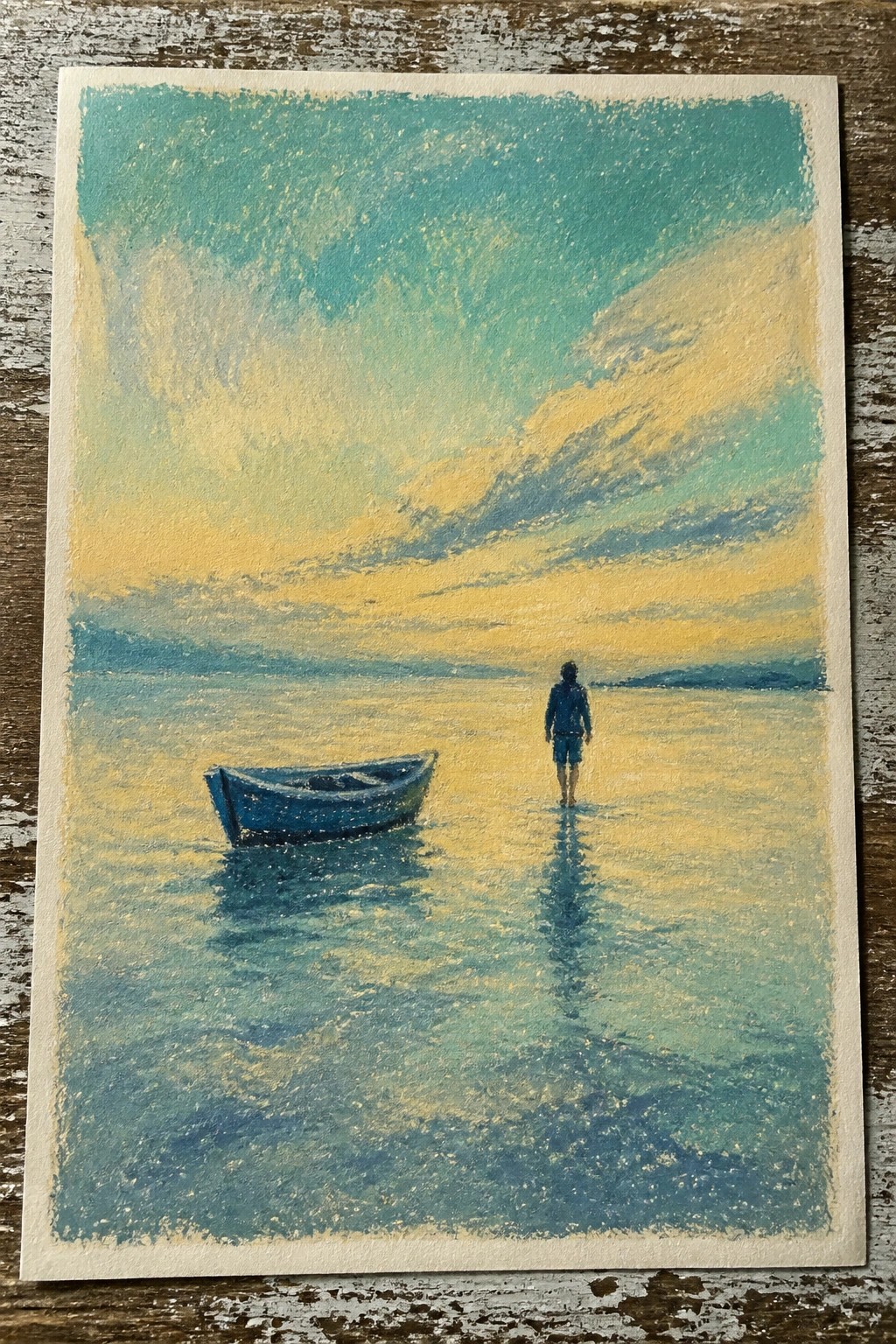
A landscape painting idea built around a single figure crossing shallow water next to a small boat. The composition balances the boat on the left with the figure farther right, using the large sky and its soft color transitions to create depth without adding extra objects. This approach fits a straightforward coastal scene that relies on simple shapes and open space to hold the viewer’s attention.
The color palette makes this easy to adapt by changing the sky tones to match different times of day or seasons. What makes this idea useful is how the water reflection gives a clear focal point for practicing light and surface details without needing complex elements. For wall art, the open layout allows scaling the figure smaller or adding faint land in the distance if the original balance feels too empty.
Figures Spaced Across a Reflective Horizon
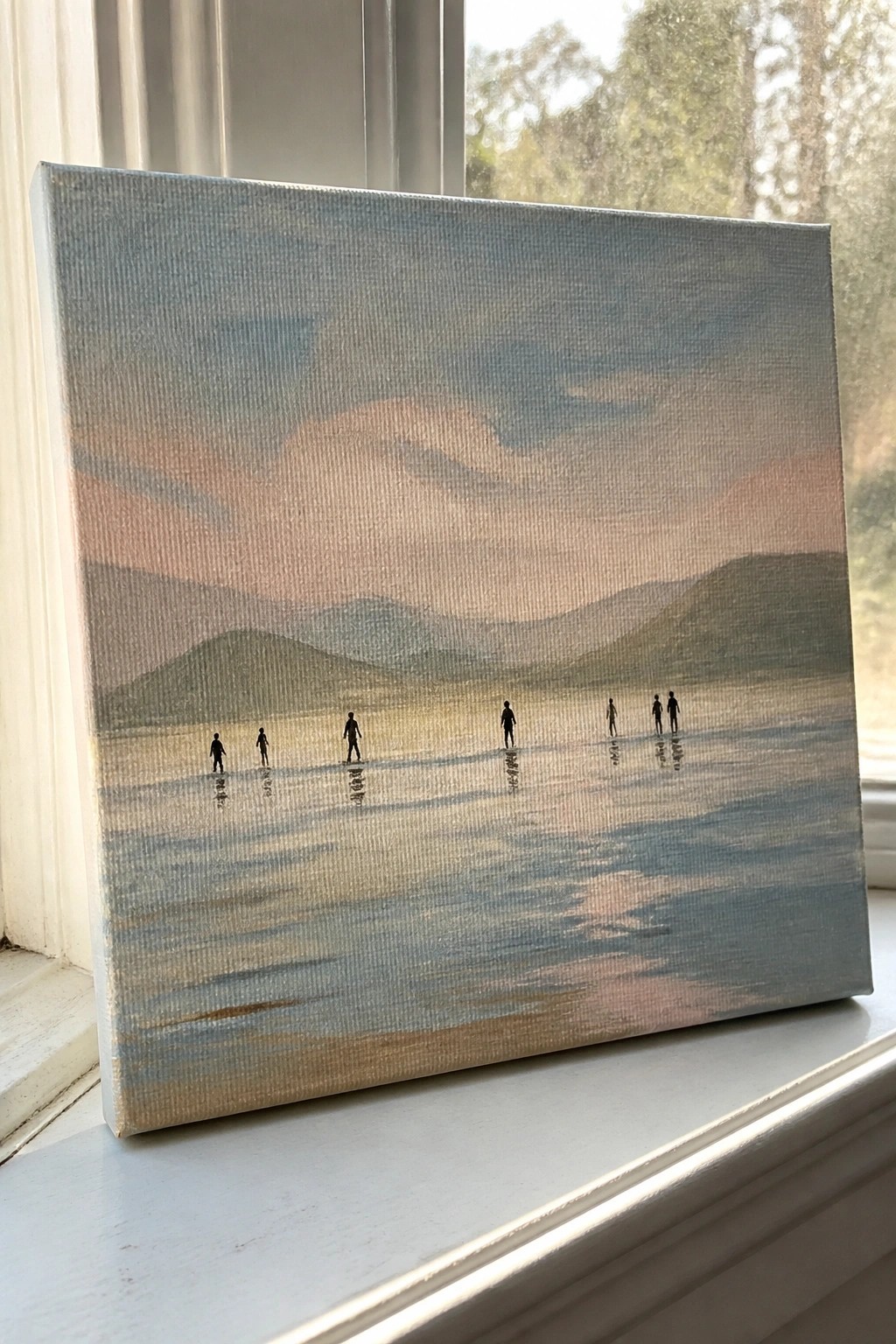
This painting idea uses a series of small silhouetted figures placed at even intervals across a wide, flat surface to suggest people walking on water or wet sand. The landscape relies on soft horizontal bands of color for the sky, distant hills, and foreground to create depth with minimal detail. The reflections under each figure and the muted color layers keep the composition balanced and easy to read from a distance.
What makes this idea useful is how the even spacing of the figures does most of the work in creating movement across the canvas. You can adapt it by changing the number of figures or swapping the hills for a simpler sky line if you want a faster version. For wall pieces, the low-contrast palette makes it simple to match with existing coastal decor, and the same layout works in both square and wide formats without needing extra elements.
Kids Stepping Across Lake Ripples at Sunset
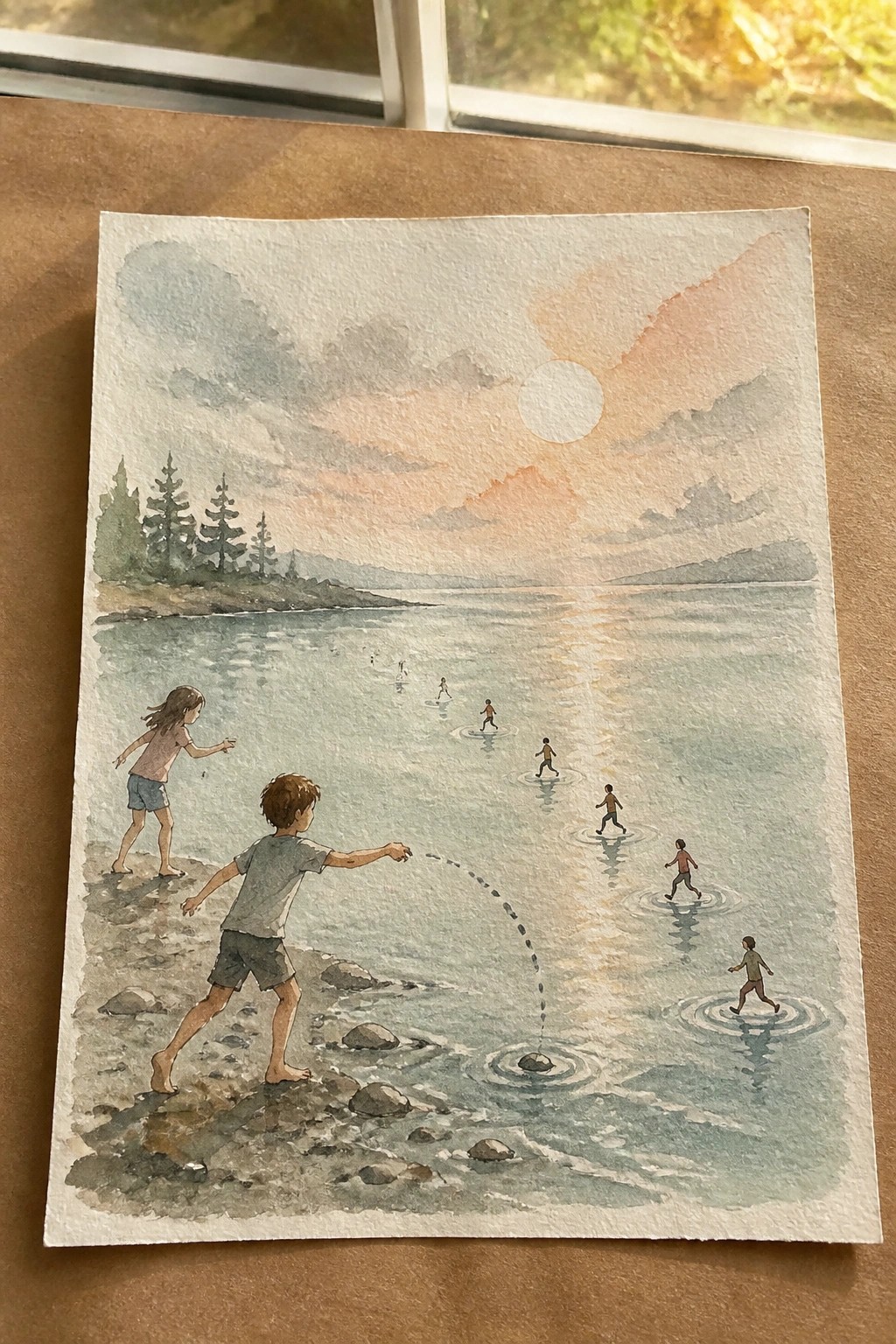
This painting idea shows a line of children moving across calm water as if walking on its surface, created by placing figures inside ripple circles that suggest stepping stones. One child on the shore throws stones along a dotted path that leads into the scene, while the rest of the group stretches into the distance. The composition works because the low horizon, soft sky wash, and repeated circular ripples keep the eye moving along the figures without extra detail.
What makes this idea useful is the built-in path that guides the whole layout, so you can add or remove figures without changing the balance. The warm sky against cool water tones adapts easily to different paper sizes or even a simpler version with fewer kids. For wall art this kind of scene holds up well because the main shapes stay clear even if the brushwork stays loose.
Walking on Water Through Layered Pastel Reflections
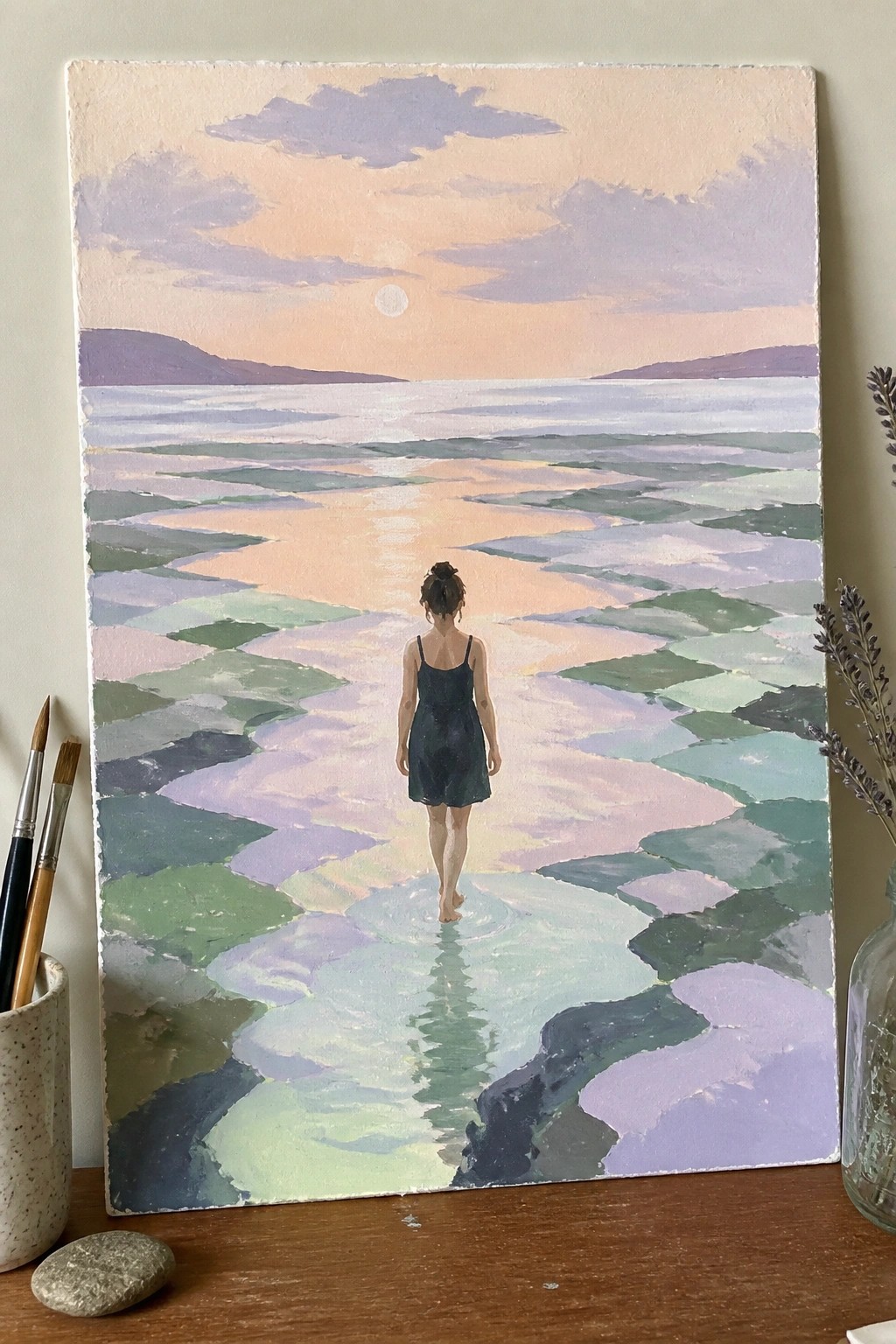
A lone figure walking away along a shallow path of water makes a strong focal point for a coastal landscape. The idea relies on overlapping color shapes in soft peach, mint, and lavender to suggest ripples and reflections without needing fine detail. A low sun or moon on the horizon and distant hills keep the view open and balanced.
The composition does a lot of the work here by using a clear central path to guide the eye. You can adapt the color blocks to match whatever paint you already have or scale the whole scene down for a smaller canvas. This type of piece works well for practice with value shifts and also translates easily into a simple wall piece for a bedroom or hallway.
Wet Boardwalk Reflections Along the Coast
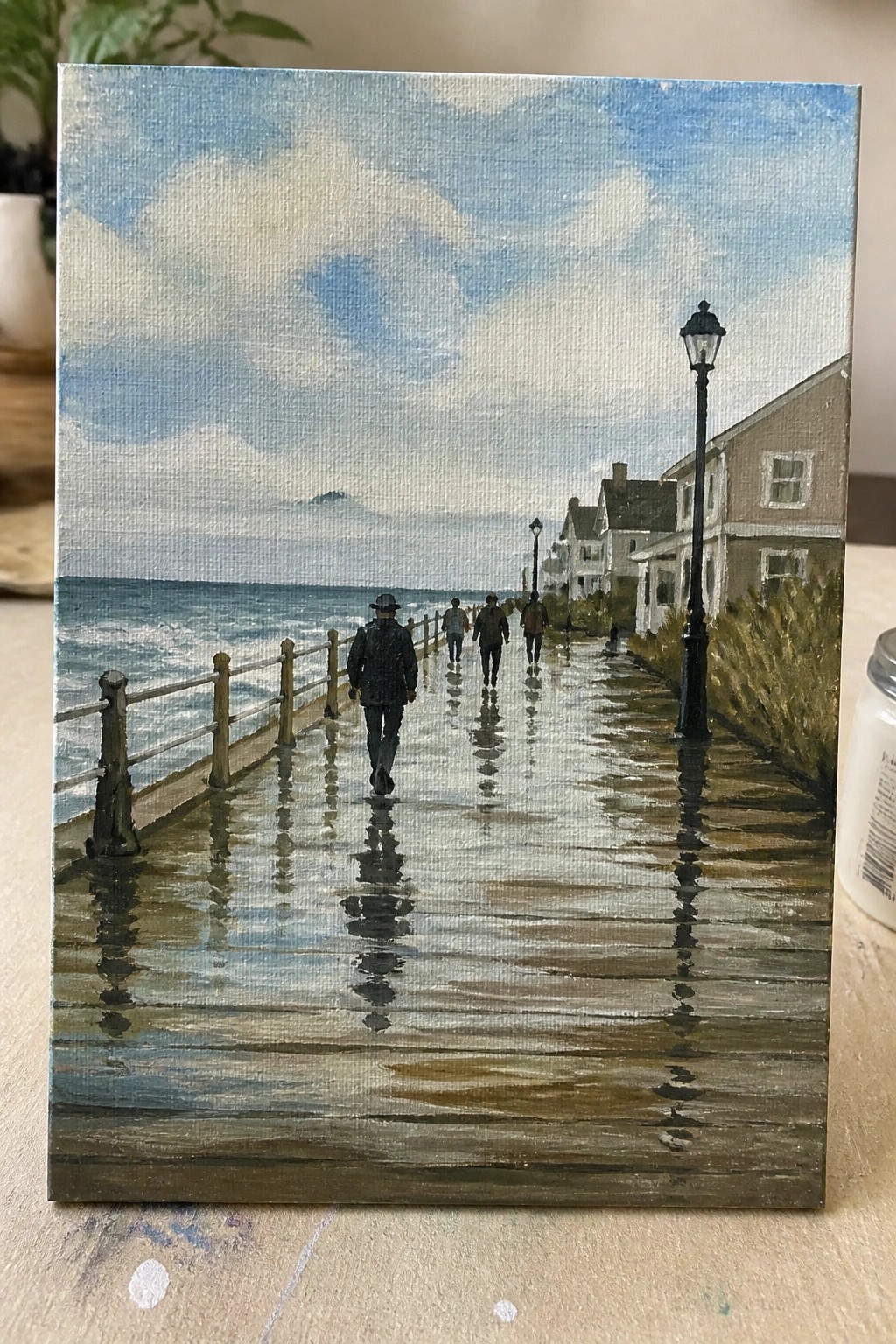
A landscape idea that places a wet boardwalk between the ocean and a row of houses creates a strong sense of depth through the repeating lines of the planks and railings. The reflections on the damp wood pull the eye forward while the figures walking ahead act as simple anchors that guide the viewer down the path. This approach fits the classic coastal landscape category and works because the side-by-side placement of water and buildings keeps the scene balanced without extra elements.
What makes this idea useful is how the wet surface naturally adds contrast and interest with basic brushwork. You can easily adapt it by reducing the number of figures or softening the sky if you want a quicker version for practice. For wall art the horizontal layout fits well above a sofa or desk, and the same setup could be painted smaller on paper to test different color choices before committing to canvas.
Moonlit Beach Footprints With Sandals in the Foreground
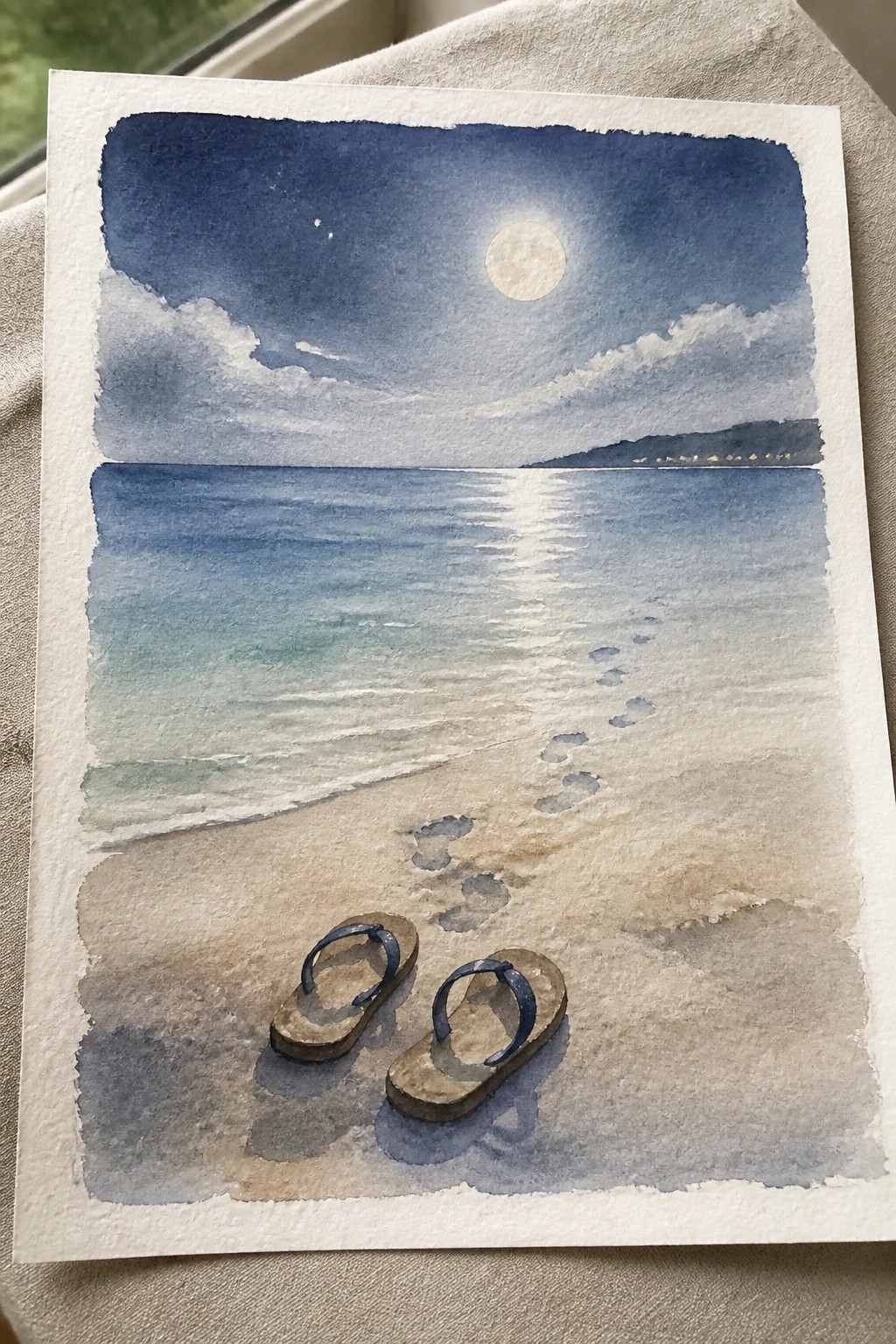
A landscape painting idea that centers on a pair of sandals placed near the bottom edge, with a line of footprints running across wet sand and disappearing into the water under a full moon. The idea relies on the path of prints to connect the foreground object to the distant horizon where the moon reflects on the sea. It works as a straightforward coastal scene built around night lighting and a limited blue and sand color range.
What makes this idea useful is the clear path created by the footprints, which handles most of the composition without extra elements. The sandals give a simple focal point that can be moved or resized depending on the paper or canvas shape. For practice, the scene lets you work on sky and water gradients while keeping the main subject easy to adjust or simplify for smaller studies or wall pieces.
Legged Seashell Walkers Along the Coast
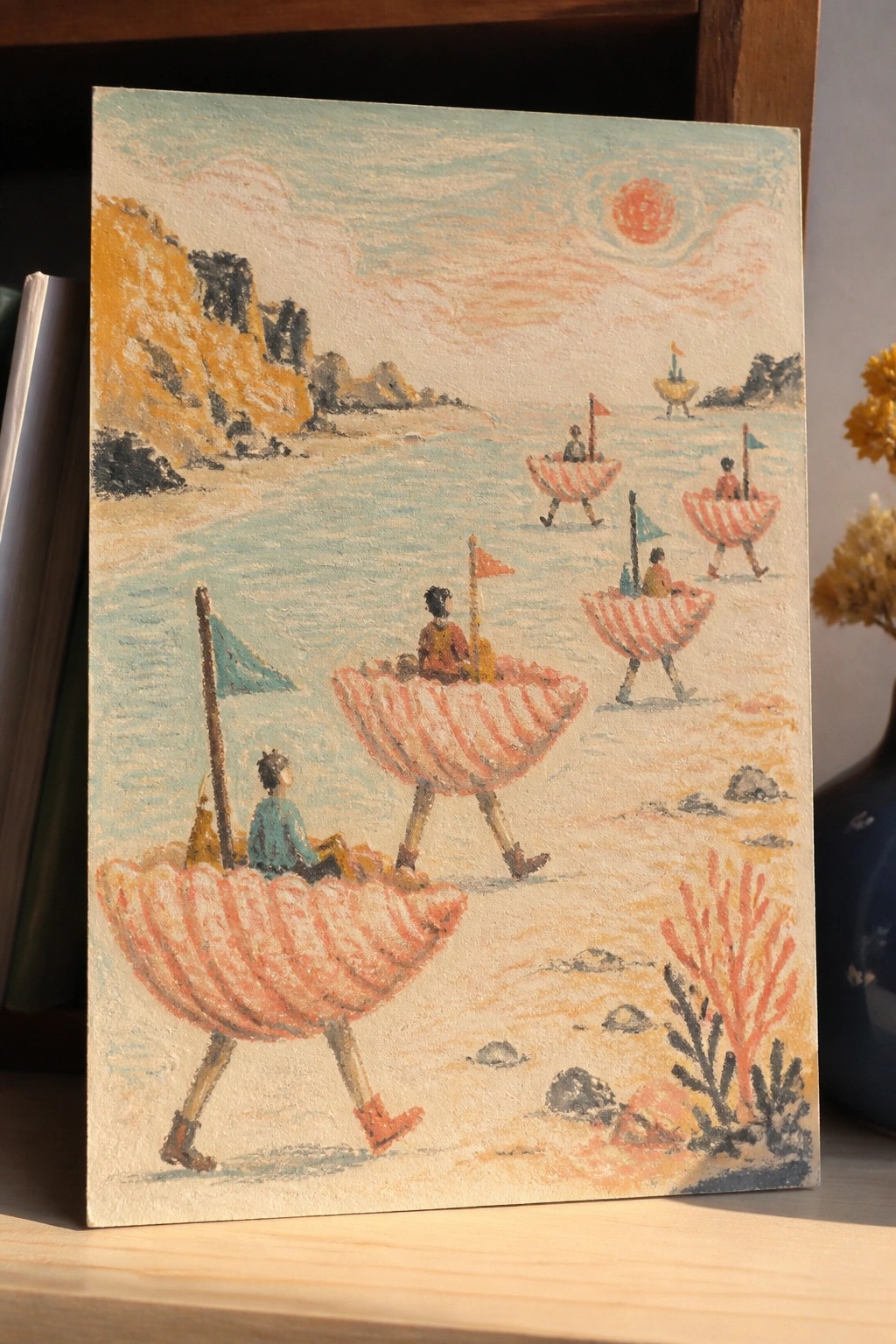
A coastal scene built around oversized striped seashells mounted on legs lets figures move across shallow water in a line. The idea works as a landscape with a clear focal point created by the repeating shell shapes and their staggered placement from foreground to background. Warm pinks and oranges against a pale sky and sandy shore keep the composition balanced without crowding the main subject.
The repeating shell forms give you an easy way to practice drawing the same object at different angles and distances. You could simplify the background cliffs or reduce the number of shells to fit a smaller canvas while keeping the core idea intact. For wall art the bright stripes create instant visual interest that stands out even in a modest frame.
Lantern Walk Across Reflective Water at Dusk
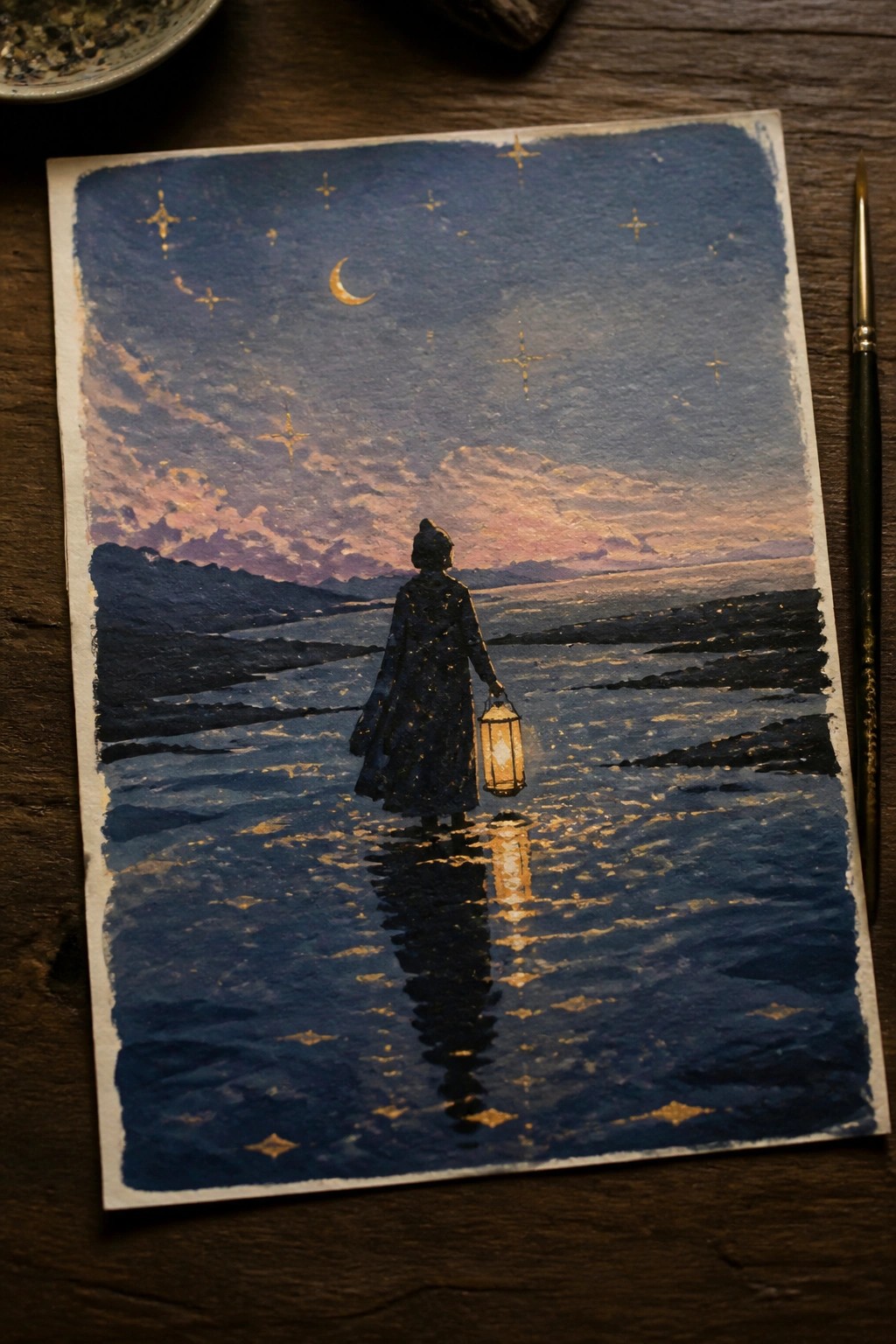
A lone figure holding a lit lantern moves across a flat stretch of water toward a distant horizon line. This landscape idea centers on the contrast between the dark surroundings and the single point of warm light that creates a clear path and reflection below. The sky uses layered blues and purples with scattered stars and a thin moon to keep attention on the figure rather than on extra details.
What makes this idea useful is the straightforward central placement of the figure and the simple water plane that needs little texture work. You can swap the night palette for early morning colors or drop most of the stars if you want a faster version for practice. For wall pieces the tall format and single light source make it easy to frame without competing elements, and the same layout works if you change the clothing or add distant hills.
Reflected Figures Along a Calm Shoreline
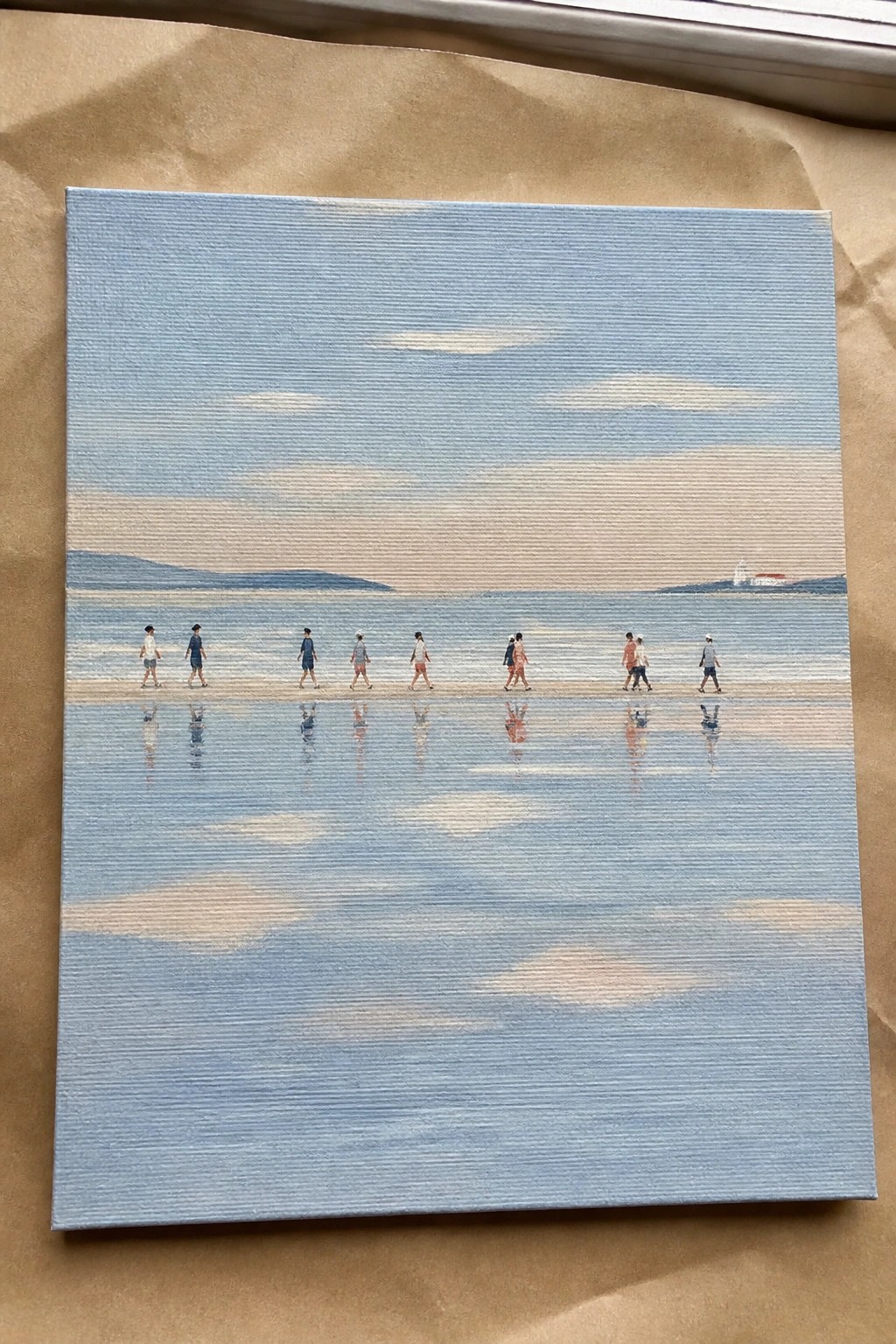
A row of small walking figures placed across shallow water forms the core idea here, with their reflections creating a clean horizontal line that mirrors the sky above. This landscape approach relies on a wide, balanced layout where the open sky takes up the top half and the water fills the bottom, keeping the figures as the main point of interest. The soft blue palette and minimal background details make the idea easy to read from a distance while still holding attention up close.
What makes this idea useful is how the reflections do most of the visual work without requiring detailed faces or clothing on the figures. The wide format works especially well for wall pieces because it fills space without feeling crowded. You could simplify the number of people for a quicker version or swap the distant hills for a different horizon to fit another location. The straightforward shapes also make it a good Pinterest candidate since the idea reads clearly even in a small thumbnail.
Figure Walking Along a Shell-Covered Shore
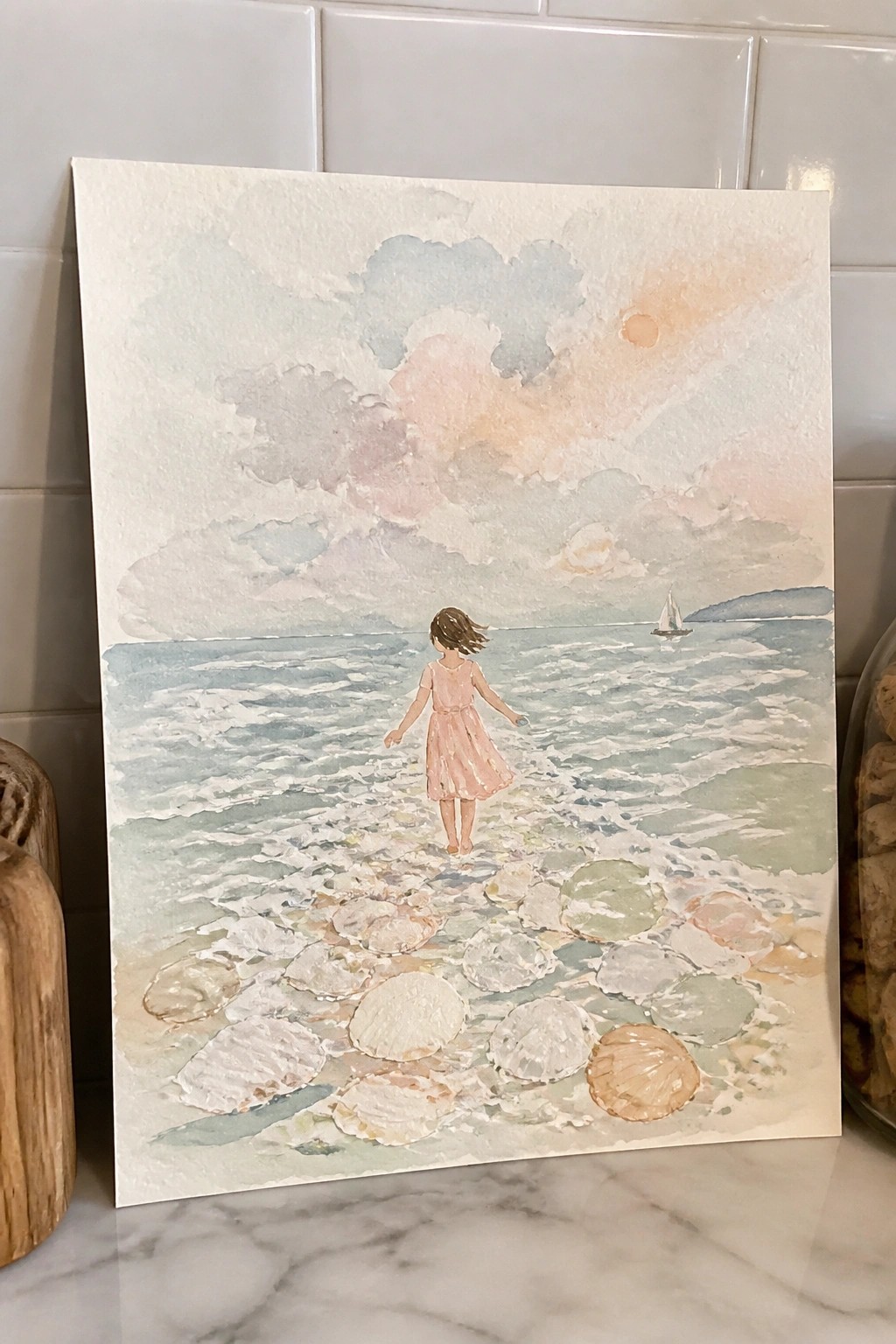
A single figure moving through shallow water on a beach lined with oversized shells forms the core of this idea. The painting places the shells across the lower half to create a textured path that leads the eye straight to the person and then out toward the sailboat on the horizon. Soft layers in the sky and water keep the background simple so the shells and figure stay the main focus.
What makes this idea useful is how the scattered shells give the foreground instant interest without requiring complex shapes. You can change the number or color of the shells to fit a different beach or season while keeping the same basic layout. For practice, the wide open water and sky make it easy to test loose washes and still have a clear subject in the middle. The same setup works well as a vertical piece for a narrow wall space.
Minimal Coastal Scene with a Single Figure and Reflection
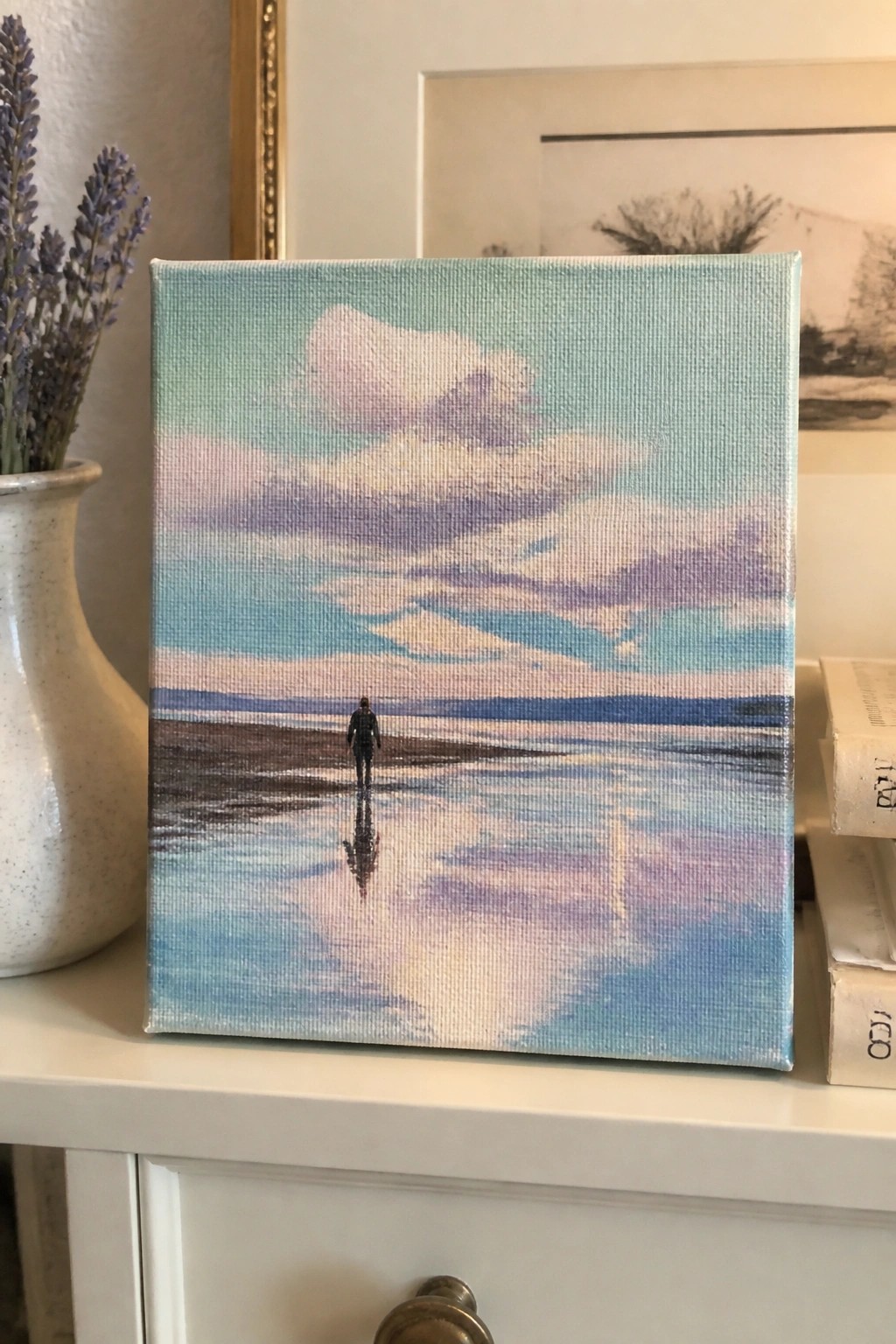
A lone figure walking across a reflective wet surface under a sky of soft horizontal bands in blue, purple, and cream makes a clean coastal landscape idea. The composition relies on simple layered stripes for sky and water, with the dark figure placed slightly off center to create a focal point and a mirrored shape below. This approach fits the category of minimalist landscape painting where negative space and color bands do most of the work.
What makes this idea useful is how the limited palette and flat horizon let you practice blending without adding extra elements. You can paint it small on a stretched canvas like this one or enlarge the same layout for a bigger piece while keeping the same soft color transitions. The central figure also leaves room to swap in different clothing colors or omit it entirely if you want a quieter version for wall decor.
Frequently Asked Questions
What supplies work best for creating walking on water art with coastal elements? Start with watercolor paper or stretched canvas for traditional pieces, along with soft brushes, acrylics or watercolors in blues and soft pastels, and fine liners for details. Add sand, shells, or textured gels to build realistic shorelines. For digital work use a tablet with blending tools and layers to simulate reflections on water. Gather reference photos of calm beaches to guide the peaceful mood.
How can I achieve the dreamy walking on water effect without it looking unrealistic? Build the water surface first with layered translucent colors and gentle highlights to show subtle ripples. Place the figure slightly above the water line with soft shadows that blend into the surface rather than sitting on top. Use light haze or glow effects around the feet to suggest floating. Keep the background simple with muted horizons and soft clouds so the focus stays on the serene action.
Are these ideas suitable for beginners or do they require advanced skills? Many of the 22 concepts start with basic compositions like a single figure on calm water, which beginners can handle with practice in perspective and color mixing. Start small on paper to test the walking pose and water reflections before moving to larger works. Advanced artists can add details such as distant boats or changing light. All levels benefit from breaking each idea into steps like sketching the pose, then adding water layers.
How do I adapt the coastal vibes for different art mediums like photography or sculpture? For photography capture reflections in shallow tide pools at sunrise and edit in soft filters to create the dreamy walk. In sculpture use resin to mimic clear water over a base and position a figure so it appears to stand on the surface. Combine with real beach sand or driftwood for texture. Adjust colors to stay soft and peaceful regardless of medium so the coastal calm remains the main feeling.
Where can I find more inspiration or references to expand on these 22 ideas? Look at coastal photography sites and art communities for images of misty shorelines and still water. Visit local beaches during low tide to sketch real wave patterns and light. Online galleries often feature surreal water scenes that can spark new variations. Keep a folder of color palettes and poses to mix with the original ideas while preserving the peaceful atmosphere.