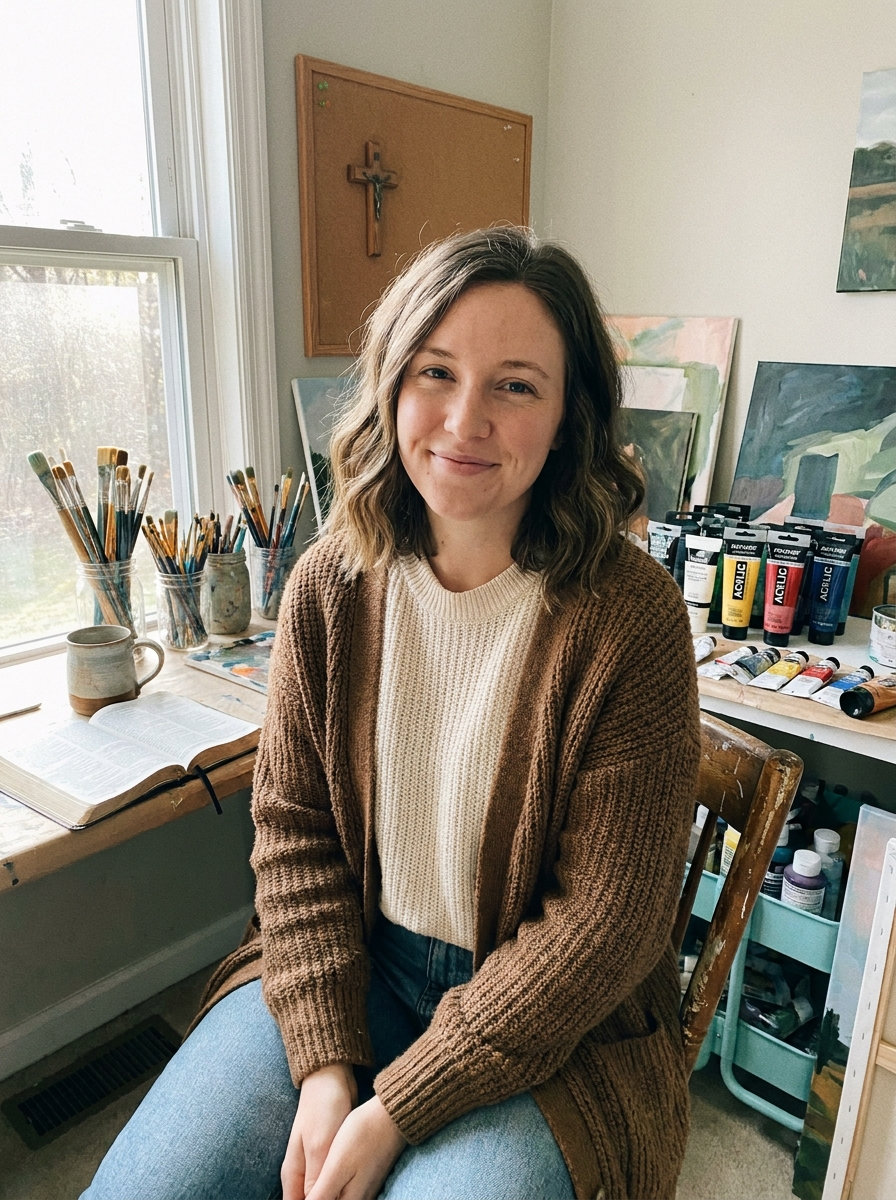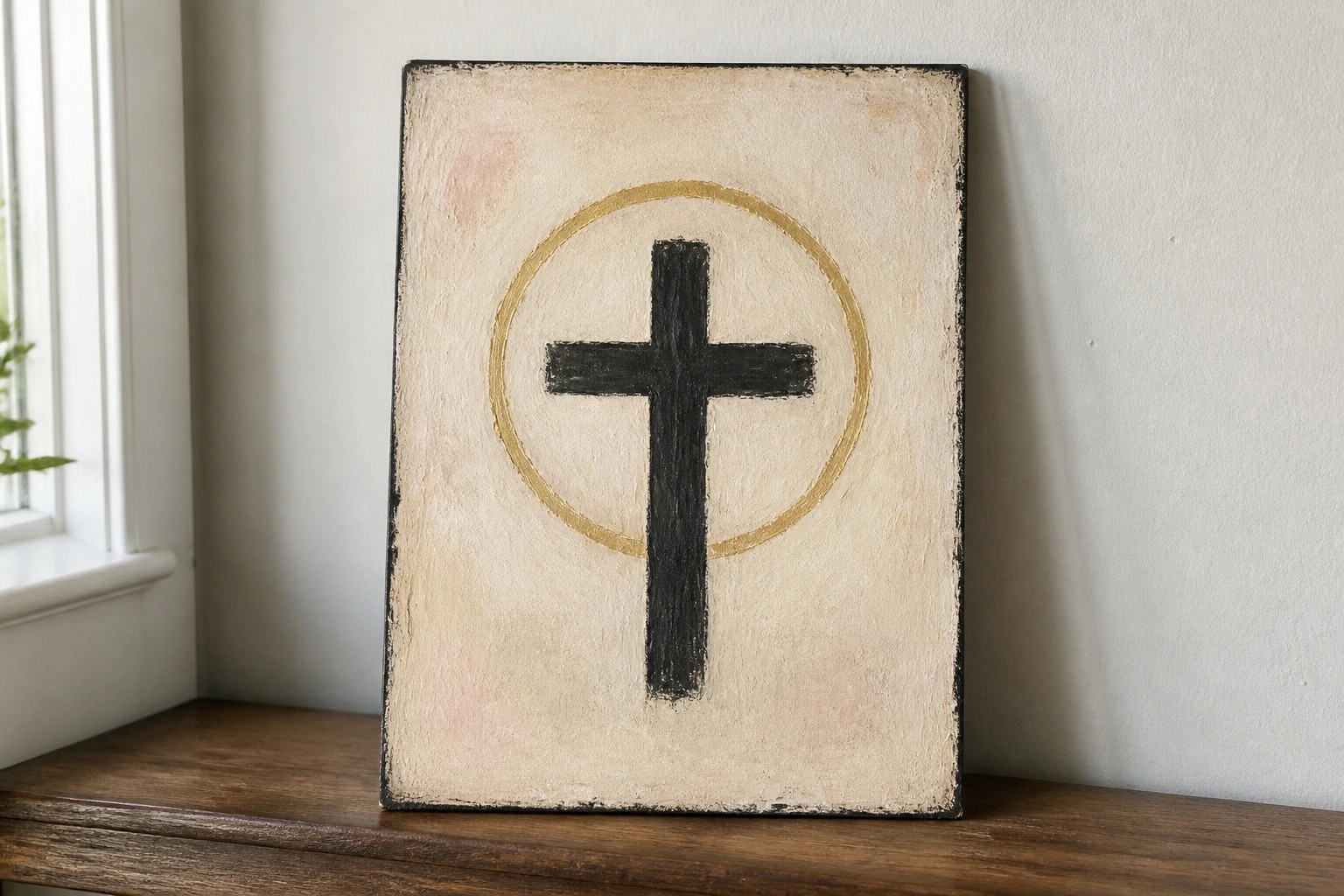
I have been painting small pieces with Christian themes to add to my home.
Minimalist designs work well because they do not overwhelm the space.
I started with simple crosses and scripture words on canvas.
These ideas came from wanting something quiet and personal rather than flashy.
Over time I found that less detail often feels more meaningful in a modern setting.
Bold Cross Inside a Gold Circle
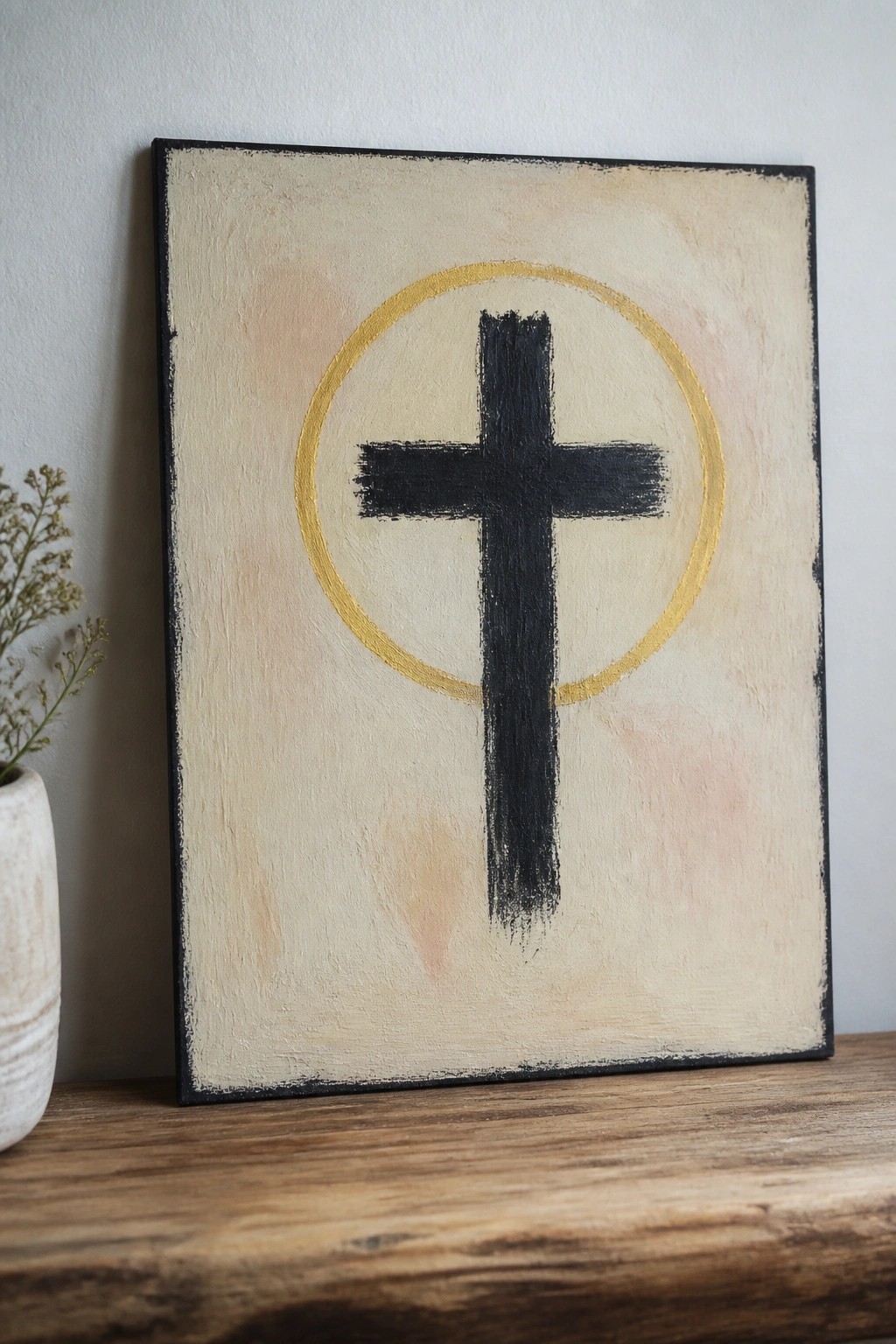
A thick black cross with rough brushstrokes forms the center of this painting, enclosed by a thin gold ring on a textured neutral background that blends beige with faint warm undertones. The idea relies on strong contrast between the dark vertical shape, the metallic circle, and the plain field to hold attention without extra details. It belongs to minimalist symbolic art that uses basic geometric forms to create a clear focal point.
What makes this idea useful is how the centered layout and limited palette reduce the need for precise drawing skills while still producing a finished look. The composition adapts easily to different sizes or background colors, and the gold ring can be swapped for another shade or omitted if you want a simpler version. For wall decor, the neutral tones fit modern spaces without clashing, and the same setup works as a quick practice piece before trying variations with added texture or different line weights.
Cross on a Hill at Sunset
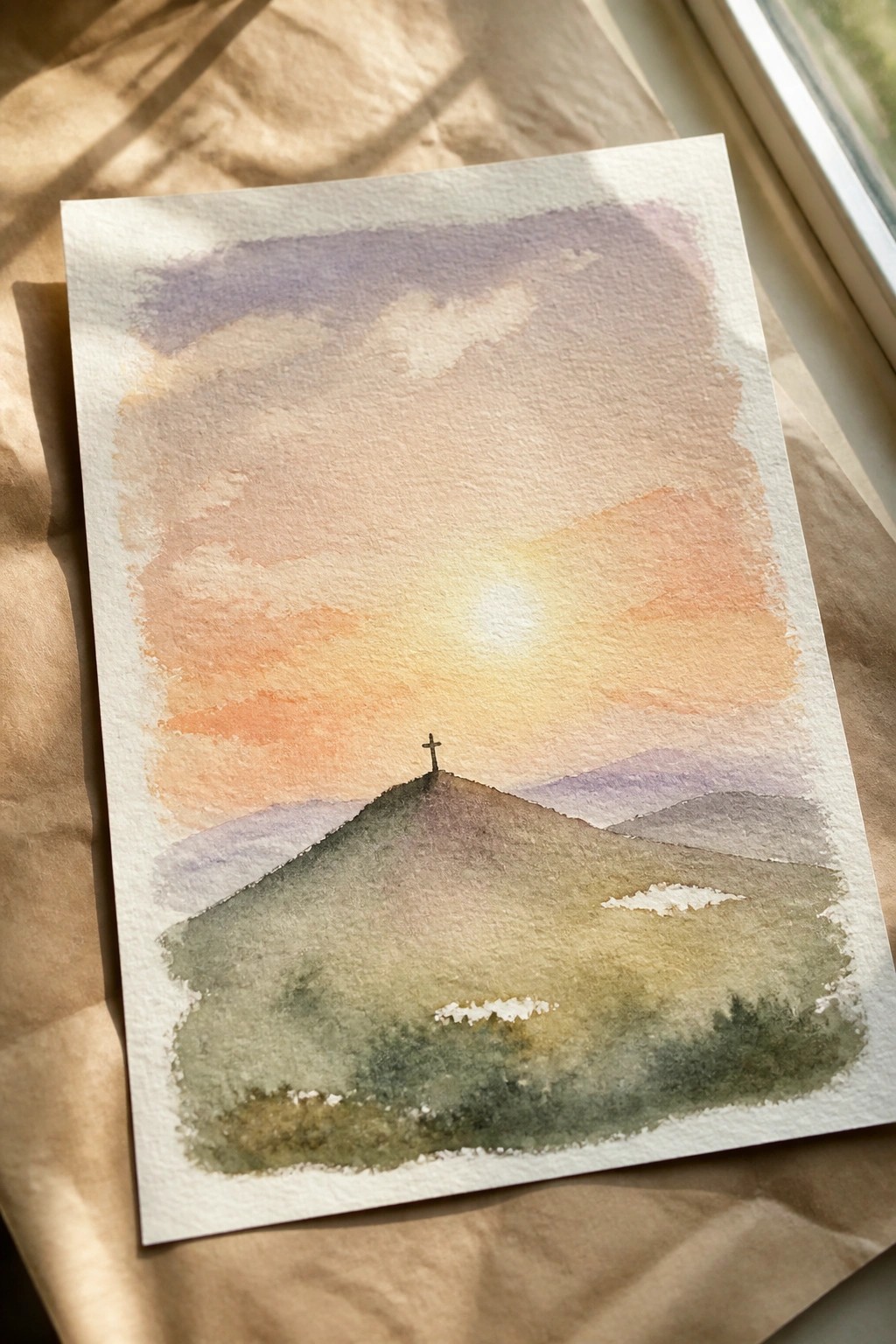
A single cross placed at the top of a rounded hill forms the core of this landscape idea. The painting uses broad sky washes that shift from warm orange near the sun to softer purples higher up, letting the cross stand out as the only defined shape. This approach works because the hill and distant ridges stay low and simple, so the eye goes straight to the cross without extra elements competing for attention.
What makes this idea useful is how the large sky gives you room to test color blends while the hill itself needs only a few layers. You can shrink the whole scene for a small frame or stretch the sky higher if you want more wall coverage. The same layout adapts easily if you swap the sunset for cooler tones or add a second smaller cross on a distant ridge.
Faith Typography with Ichthys Symbol

A painting idea like this pairs one large word in script lettering with a small fish symbol placed directly below it. The background uses layered neutral tones and scattered gold marks to create texture without competing with the text. This setup keeps the focus on the word and symbol while the soft palette and uneven brushwork add visual interest through contrast.
What makes this idea useful is how the large lettering does most of the work, so even simple brush lettering can look finished. You can easily change the background colors or swap the word for another short term to fit different spaces. For wall decor, this format works well because the centered layout stays balanced at any size and needs only a few supplies to try.
Minimalist Dove With Light Rays
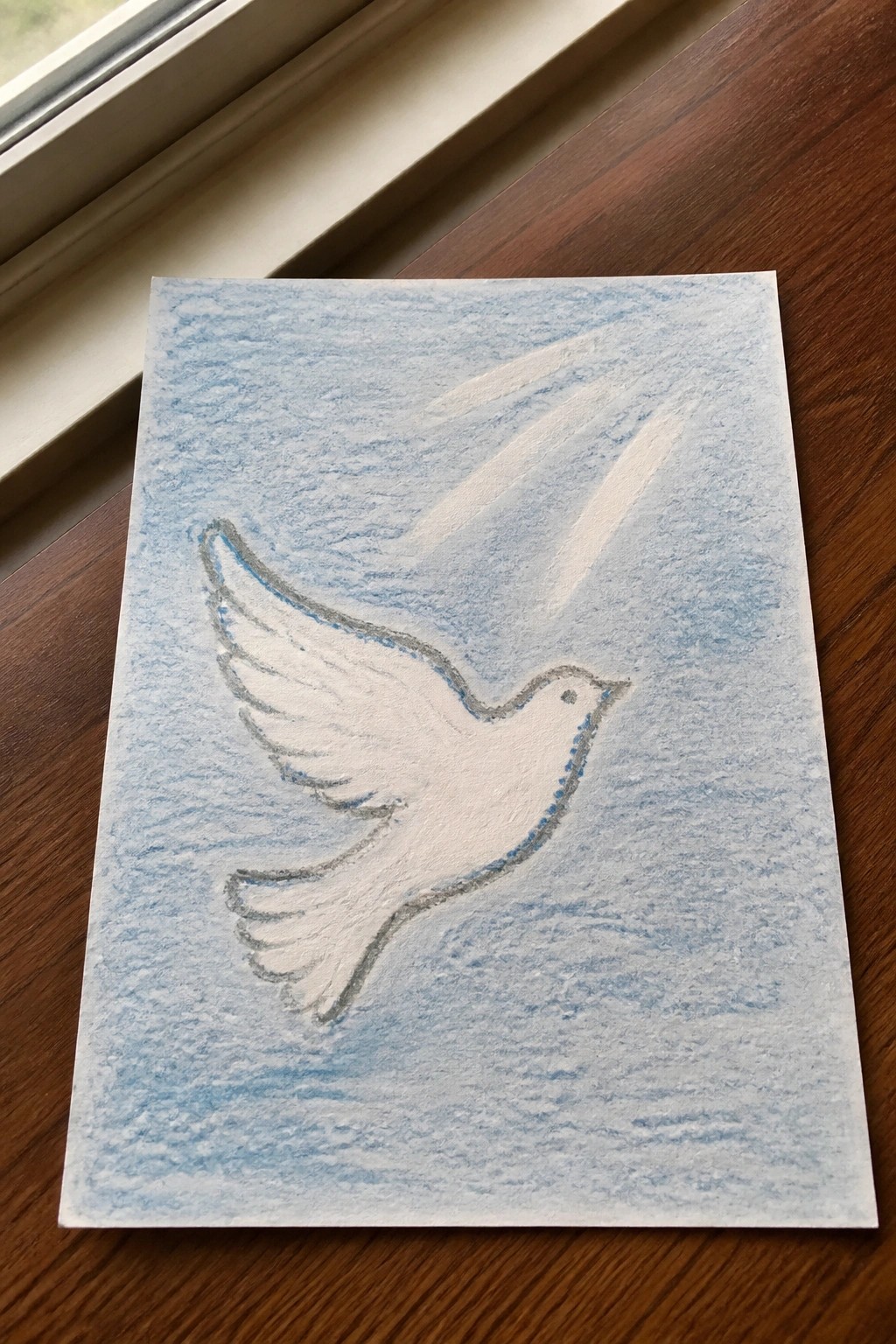
A white dove in flight forms the main subject, shown in a simple outlined shape against a light blue background. Light rays extend downward from the upper right, creating a sense of movement and space without adding extra elements. The limited color palette and clean separation between the bird and sky keep the composition focused and easy to read from a distance.
What makes this idea useful is how the light rays give the piece structure while still leaving plenty of empty space. The same layout works at different sizes, so you can paint it small for a desk or larger for a wall. You could swap the blue tones for warmer shades or keep the rays white against a darker sky if you want more contrast. For practice, this kind of subject helps with basic shape control and simple layering before moving on to more detailed work.
Muted Grid of Color Blocks

A grid painting built from simple rectangles creates an abstract idea that relies on color placement and proportion. The layout divides the surface into vertical and horizontal bands using cream, terracotta, and two shades of green to form repeating blocks. This approach works as decorative art because the even spacing and limited palette keep the result balanced without added detail.
What makes this idea useful is how the grid can be resized or recolored to match any room while still using just a few paint mixes. The straight divisions make it straightforward to lay out with basic tape or a ruler, and the same structure can be simplified to fewer blocks if needed. For wall art, something like this fits modern spaces because the neutral tones blend easily with existing furniture.
Lone Church in Open Landscape
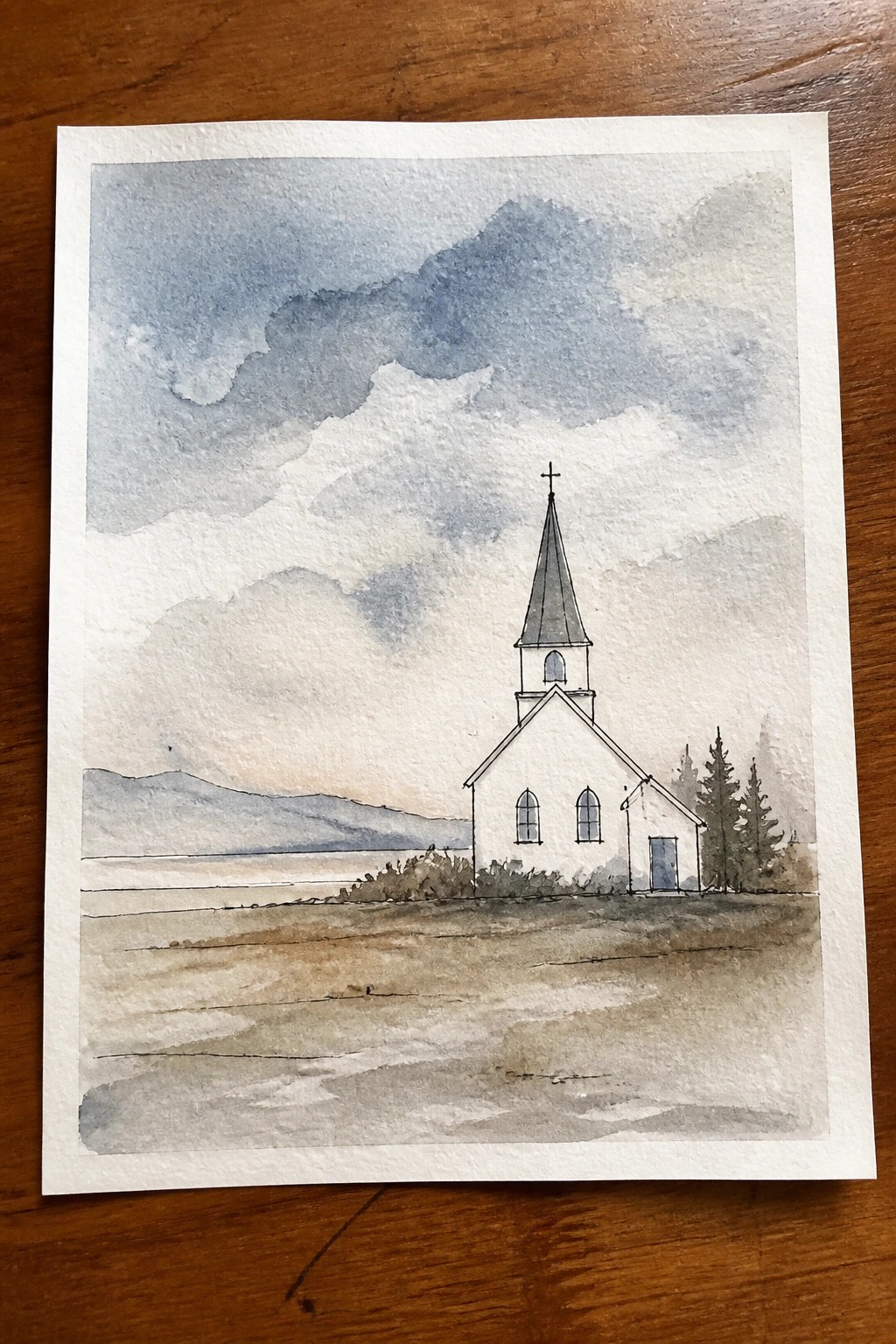
A minimalist church painting idea centers on a simple white building with a tall steeple placed against a low horizon and muted sky. The composition relies on clean outlines and a restrained palette of blues, grays, and earth tones to let the structure stand out without extra detail. This approach fits a landscape category that blends architecture with open space.
The composition does a lot of the work here by using negative space to frame the church. You can adapt it easily by shifting the sky colors or adjusting the horizon height to match different wall sizes. For practice this subject works well because the main shapes stay basic while still looking complete. It would translate directly into a series by repeating the same building with small changes to the background fields or trees.
Minimalist Leaf Wreath with Cross
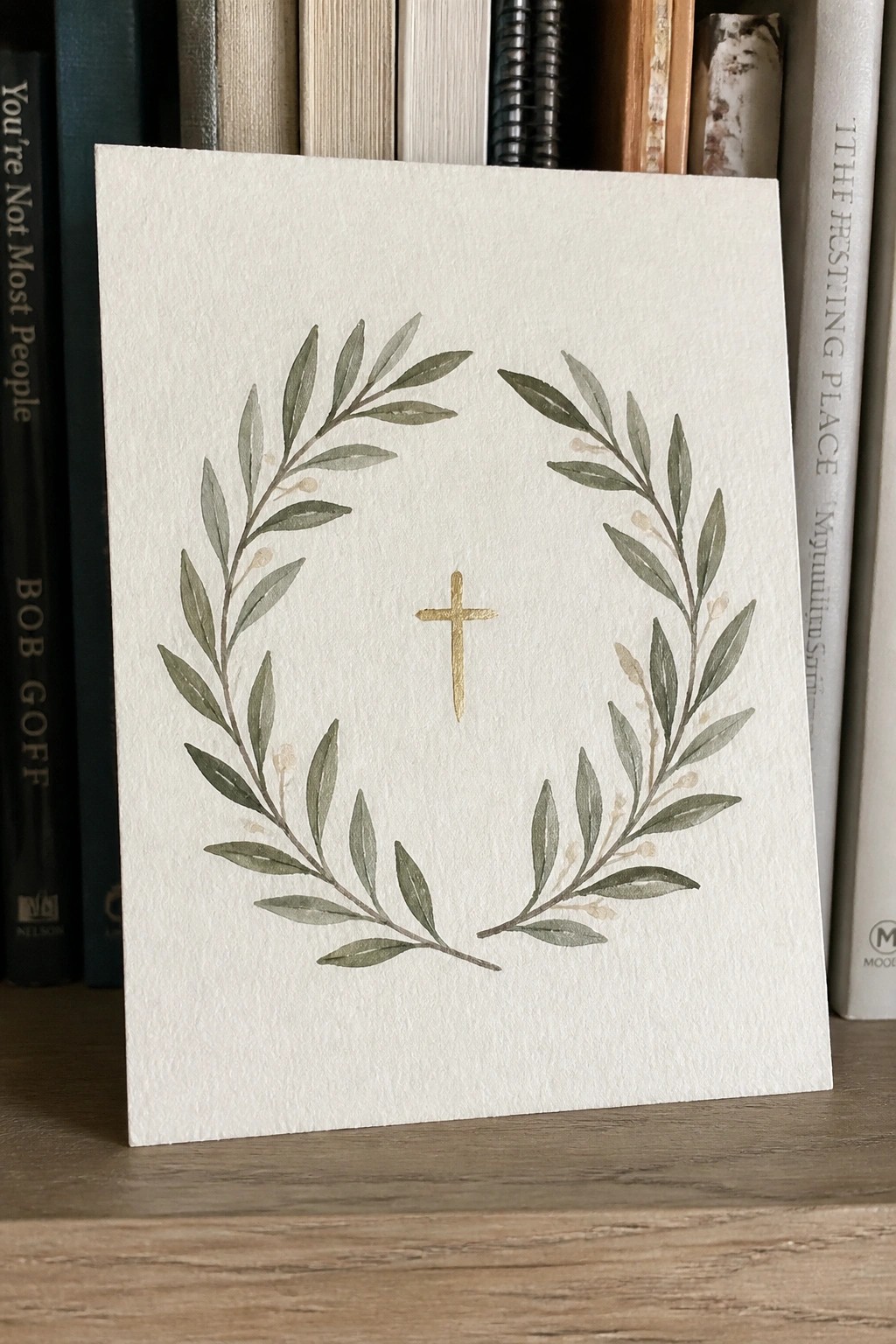
A loose circle of green leaves with small gold accents frames a single small cross in the center. The idea keeps most of the space open so the cross stays the main focus without extra layers or detail. Soft brushwork and a limited palette of greens and gold on white create a balanced, open composition that reads as decorative rather than busy.
What makes this idea useful is the clear negative space in the middle that lets the cross stand out even at small sizes. You can adapt the leaf count or spacing to fit a square canvas, a round one, or a greeting card without changing the overall layout. The simple color scheme also works if you want to swap the greens for a single tone or try it in line work first before adding color.
Minimalist Open Book with Psalm 23
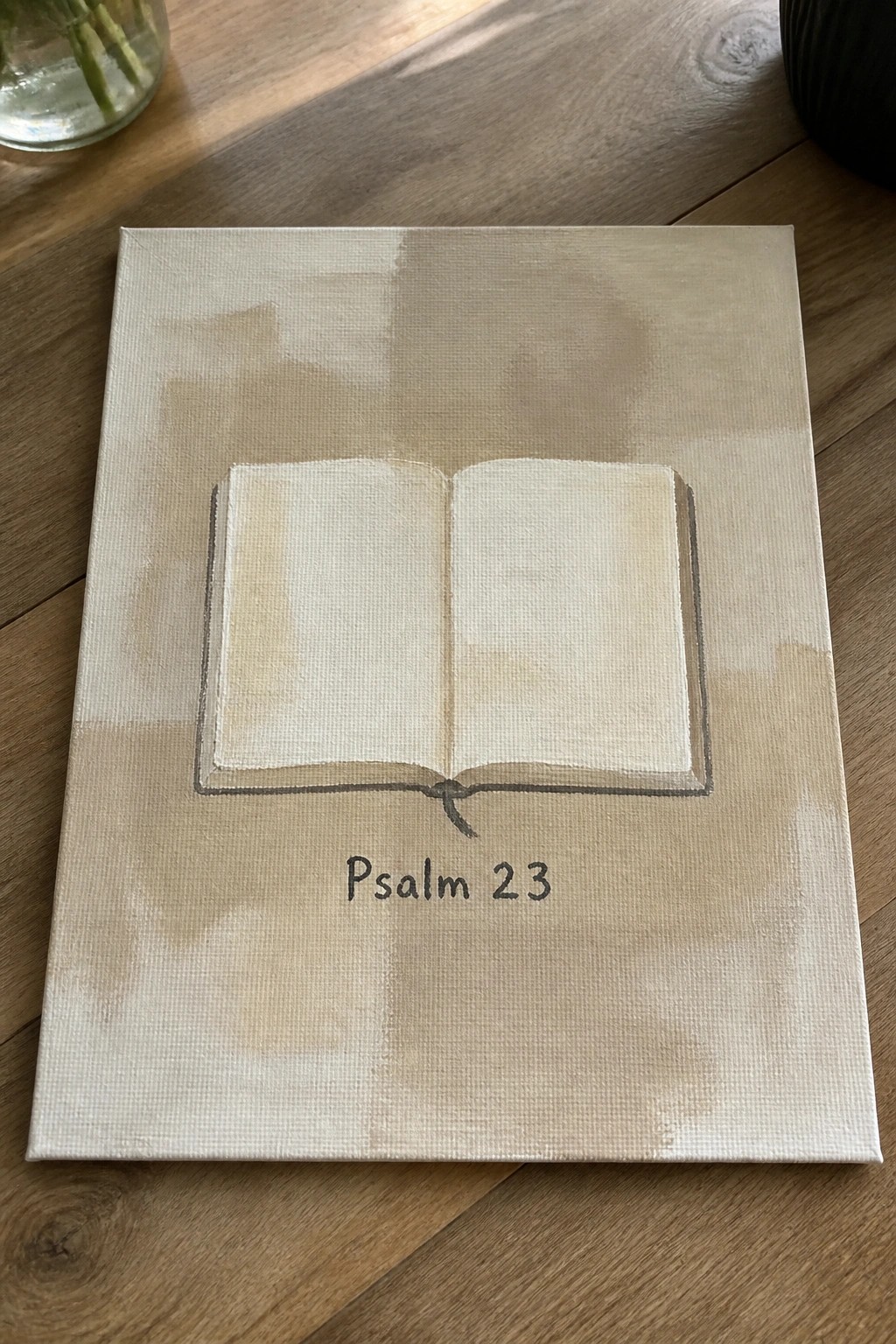
An open book serves as the core subject in this painting idea, paired with the text “Psalm 23” centered underneath. The layout keeps the book shape simple with basic outlines and a soft neutral background that fades in subtle washes. This approach works as minimalist still life or decorative scripture art, where the centered placement and limited detail keep the focus tight.
What makes this idea useful is how the plain background and straightforward book shape reduce the need for precise detail or complex layers. You could change the scripture reference, shift the book size, or test different wash tones to fit your space. For wall decor, the clean composition makes it easy to adapt across canvas sizes without adding extra elements. The simple shapes help this feel more approachable for quick practice pieces or small gifts.
Praying Hands with a Halo

A painting idea built around clasped hands in prayer, a simple halo above, and the word PRAY centered below works well for minimalist faith decor. The soft background washes keep the focus on the hands and text while the centered layout makes the whole piece feel balanced without extra details. This approach falls into devotional art that stays simple enough for modern spaces.
What makes this idea useful is how the limited elements let you adjust scale or color easily for different rooms. You could swap the word for a short verse or try a cooler background tone if the warm washes do not match your style. For wall pieces, the straightforward symbol keeps it readable from a distance and easy to repeat in different sizes.
Minimalist Lamb and Shepherd Staff

A lamb paired with a shepherd’s crook creates a straightforward Christian-themed animal painting. The idea centers on simple rounded shapes for the lamb and a single curved line for the staff, set against a soft arched background that keeps the focus narrow. A limited palette of white, pale blue, and beige holds the composition together without extra layers or detail.
What makes this idea useful is how the arched background does most of the framing work, so you can paint it on any size surface without measuring guides. The same layout adapts easily by changing the background color or shrinking the staff to fit a smaller canvas for a set of matching pieces. For practice or quick decor this subject stays approachable because the forms stay basic and the color choices reduce the chance of clashing tones.
Minimalist Candle Still Life
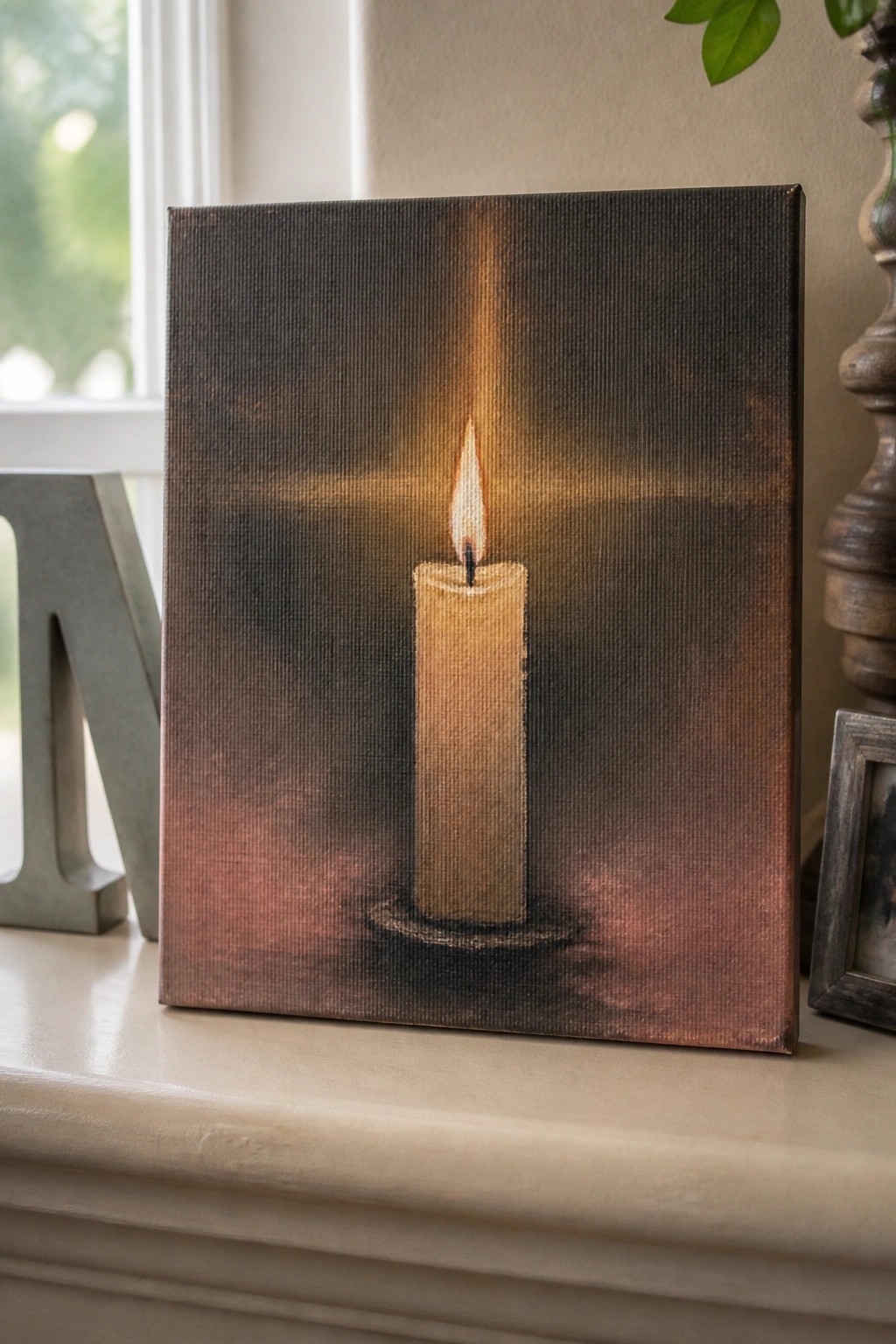
A single lit candle works well as a still life subject when the goal is a clean, focused piece for modern faith decor. The centered placement on a dark background lets the flame and its soft glow stand out without extra elements. This setup relies on simple vertical shapes and a narrow color range to keep the whole composition balanced and easy to read from a distance.
What makes this idea useful is how quickly it translates to different canvas sizes for shelves or gallery walls. The limited palette means you can paint it in one or two sessions while practicing basic light effects. For a more personal version, shift the background tone slightly or change the candle height to match other pieces in a set.
Vertical Trio of Patterned Crosses

Paint three crosses in different colors and fill each with its own simple motif such as flowers, leaves, or stripes. The vertical stack keeps the shapes balanced while the repeating cross form gives the piece structure. Limited color choices and flat shapes make the idea easy to read from a distance.
What makes this idea useful is the built-in variety across the three pieces without extra composition work. You can swap the patterns or colors to fit a room or shrink it to two crosses if you want less space on the wall. The clean layout also translates well to smaller canvases or even greeting cards.
Sunset Cliff Cross Landscape
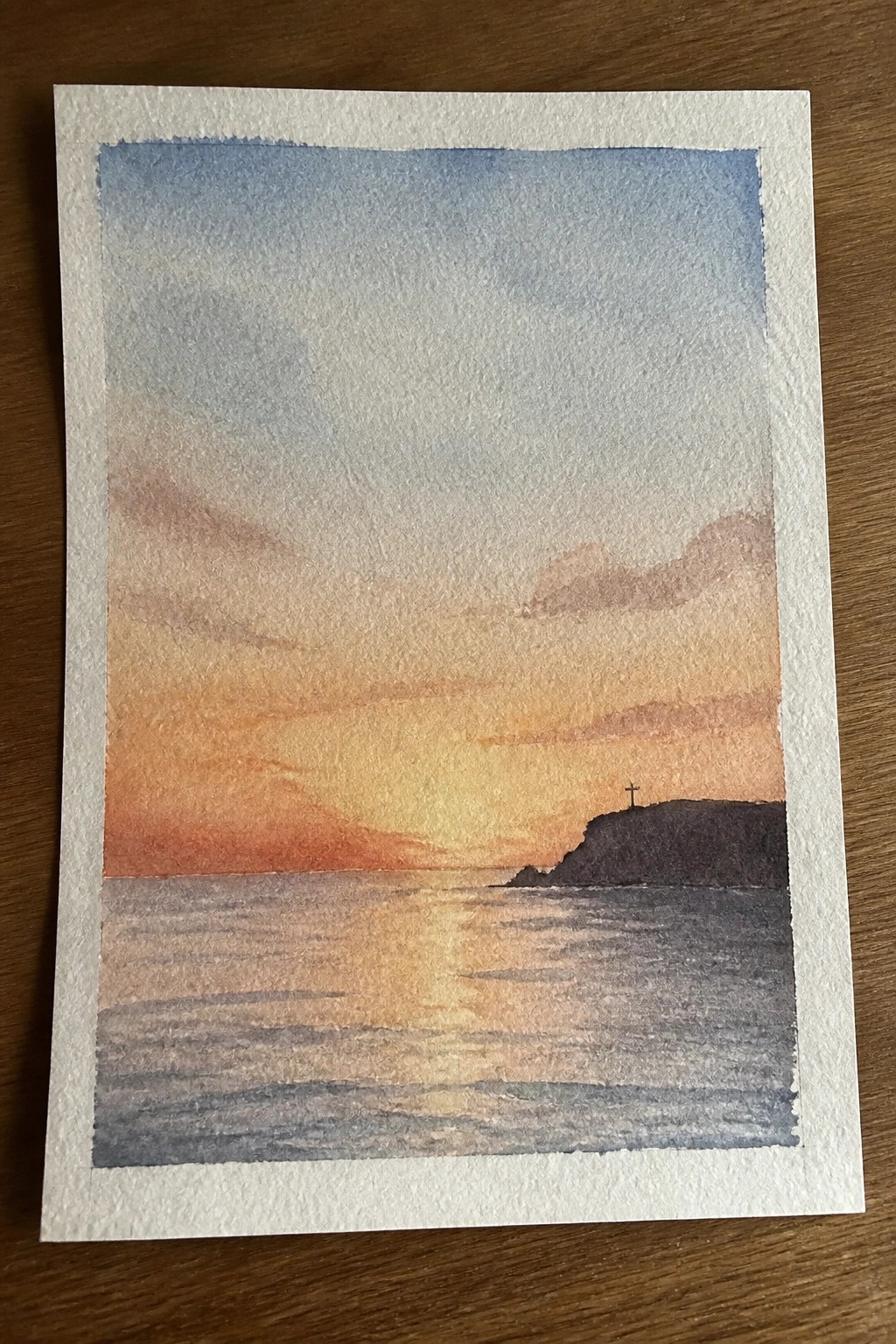
A minimalist landscape painting centers on a small cross placed atop a dark cliff overlooking water at sunset. Broad horizontal washes of sky and sea create layered bands of color that guide the eye straight to the cross as the only distinct focal point. The idea relies on a simple silhouette and soft color blending to keep the scene uncluttered while still suggesting depth through the water reflection.
The composition does a lot of the work here by using empty space above and below the cliff to let the cross stand out without extra detail. You can shift the sky colors toward cooler tones or warmer oranges depending on the room, and the same layout works at different sizes for a single canvas or a small set. This approach stays approachable because the main shapes are large and forgiving, making it easy to adjust the cliff height or reflection strength for a personalized result.
Crown of Thorns with Soft Center Glow
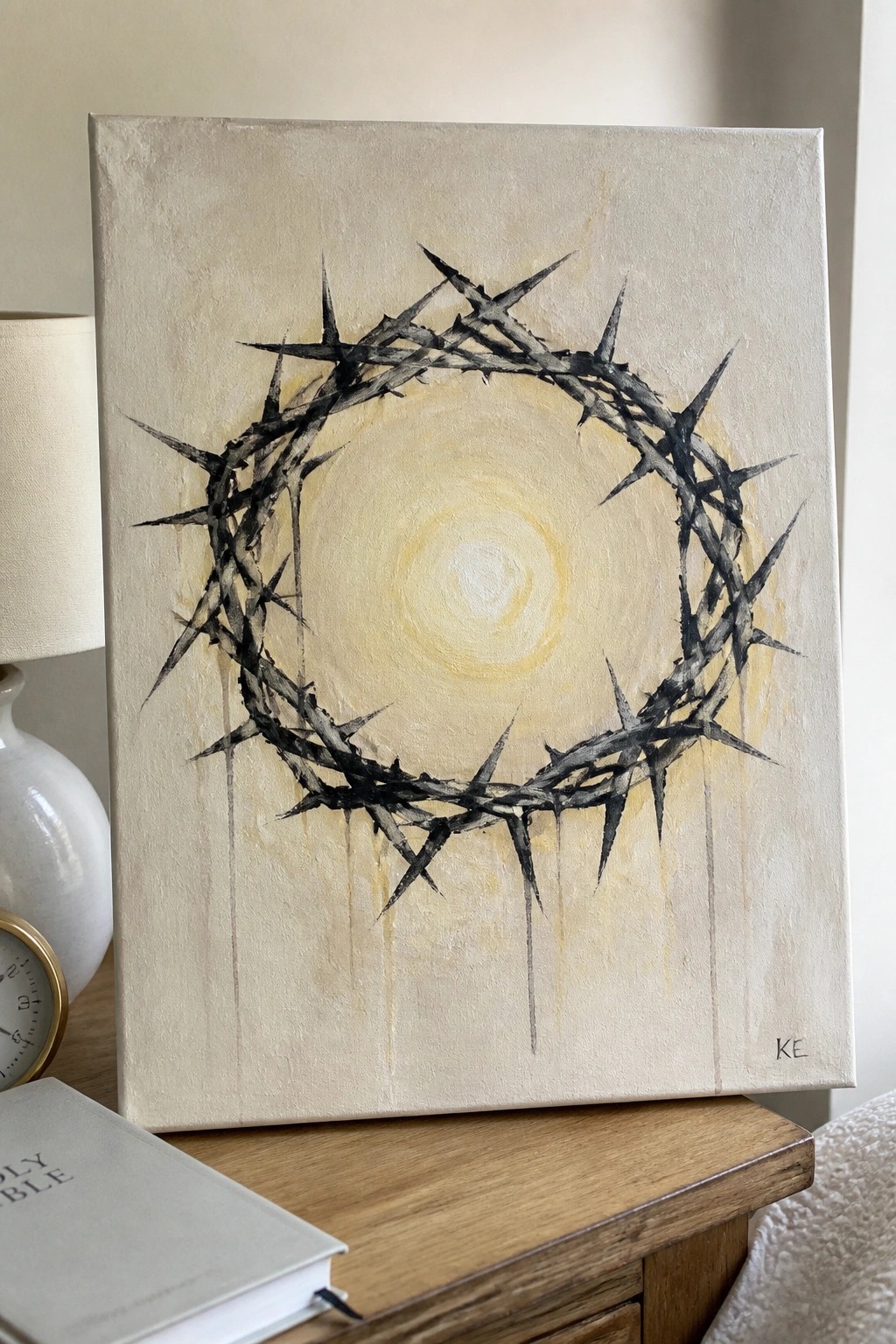
A crown of thorns painted in dark, uneven strokes forms a rough circle on a light neutral ground, with a faint yellow ring behind it to suggest light without adding extra shapes. The composition keeps the focus on the single symbol through loose brushwork and a few downward drips that break the circle slightly. This approach works as minimalist decorative art where the contrast between the dark form and plain background does most of the visual work.
What makes this idea useful is how the centered circle and limited color range make it simple to resize for different walls or frames. You could paint the thorns with fewer layers or shift the glow to a different soft tone to fit your space. The background keeps the focus on the symbol itself, so the same layout works whether you want a small practice piece or a larger statement for a shelf or entryway.
Continuous Line Dove with Peace Script
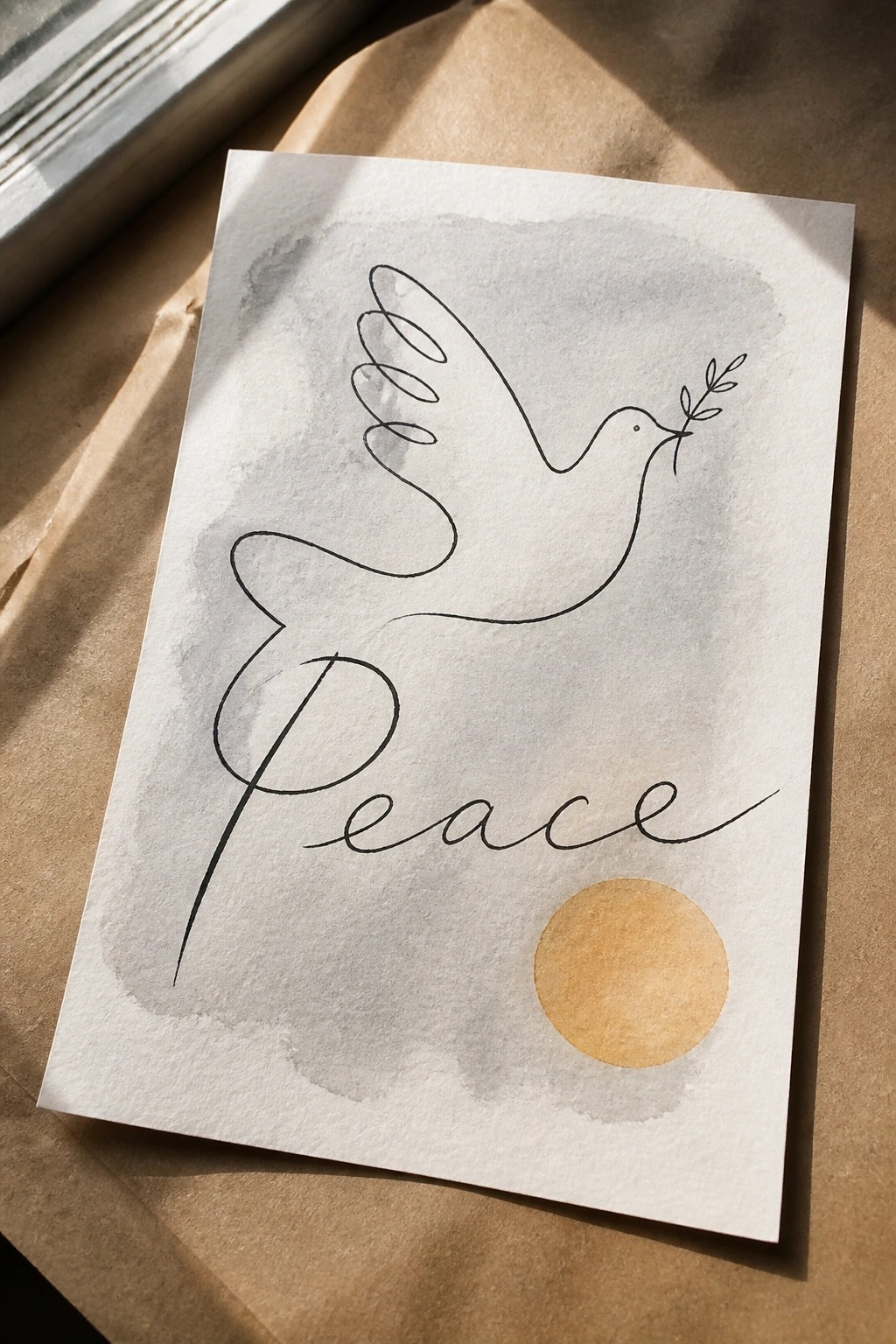
A continuous line drawing of a dove in flight holding an olive branch sits above the word Peace rendered in flowing script. The idea keeps the focus on the single unbroken line while a soft gray wash fills the space behind the elements and a small warm circle sits in the lower right for visual balance. This approach turns a well-known Christian symbol into a simple decorative piece that works on paper, canvas, or as a print.
The composition does a lot of the work here because the connected line and limited shapes reduce the need for extra detail. You can change the wash color to match any room or skip the background entirely for an even cleaner look. This would be easy to turn into a small framed piece or a set of note cards, and the minimal layout helps it stand out on Pinterest without competing with busier designs.
Lone Cross on a Sunset Hill

A minimalist landscape painting idea places a single cross on a rounded hill as the sole focal point. Layered hills in soft overlapping shapes sit beneath a sky that moves through blended bands of orange, pink, and purple toward a small bright sun. The approach keeps the design clean by using broad color areas and limited detail so the cross remains easy to read from a distance.
The composition does a lot of the work here since the hill layers create depth without extra elements. You can adapt the idea by changing the hill colors to match a room’s palette or by simplifying the sky into fewer stripes for quicker painting. This kind of piece works well for modern wall decor because it stays small in scale while still reading clearly as faith-based art.
Minimalist Branch with Integrated Cross
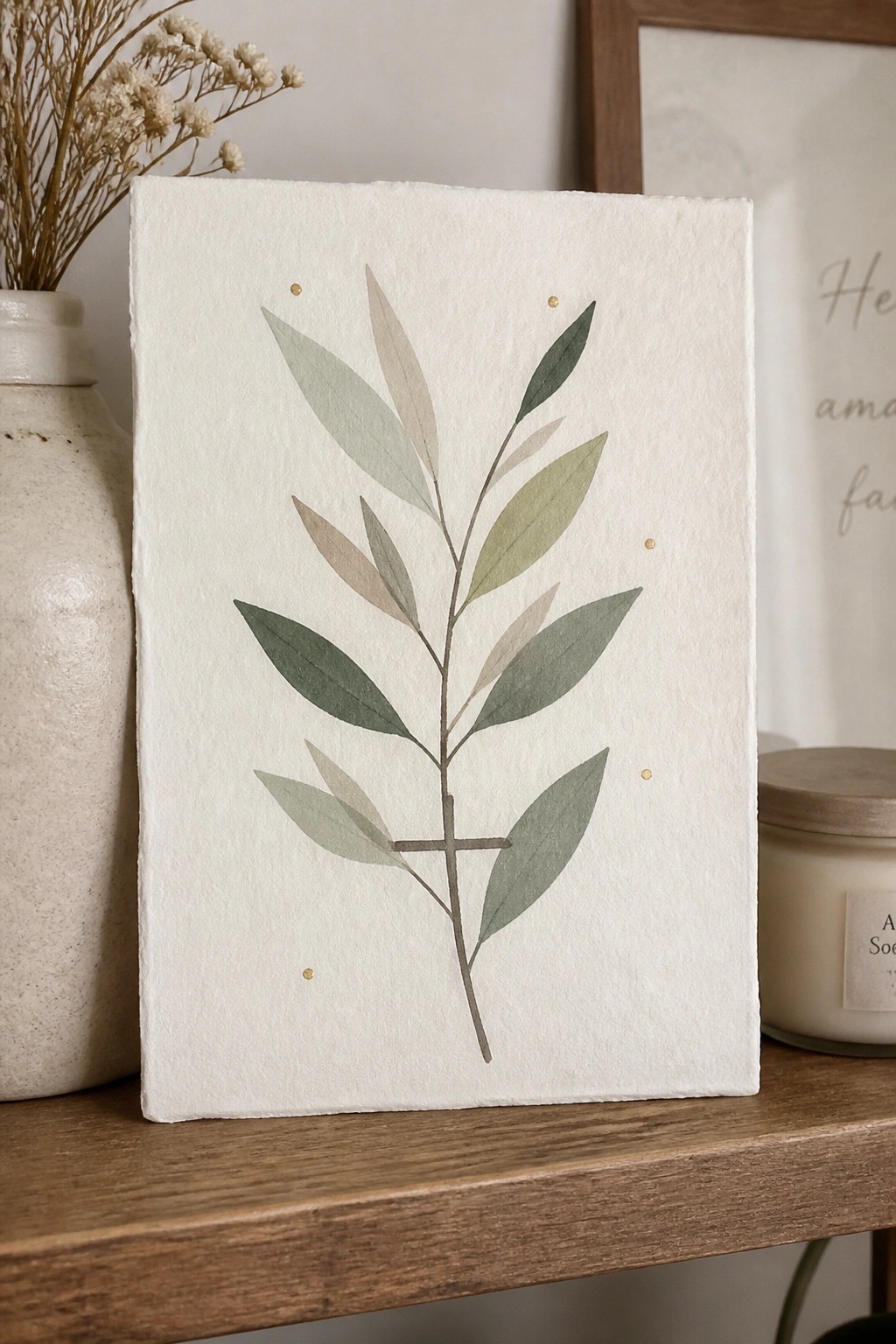
A single leafy branch in muted greens and soft taupe tones makes up the main subject, with a small cross placed low on the stem. Scattered gold dots provide light accents around the composition. This creates a botanical painting idea that folds a Christian symbol into a simple, modern layout without overpowering the natural shapes.
The low cross placement keeps the focus on the leaves while still adding the faith element. You can adjust the greens to cooler or warmer shades depending on your space, or reduce the dots to just two or three for an even cleaner version. This style works well for quick practice on paper or as a small canvas piece that fits neutral modern decor without needing advanced detail work.
Minimal Cross on a Hill with Radiating Light

A cross placed on a simple hill with soft light rays spreading upward creates a focused minimalist Christian painting. The idea relies on a limited color range of warm neutrals and gentle peach tones, using straight radiating strokes to suggest light without extra elements. The centered cross and low hill keep the layout balanced and easy to read from a distance.
What makes this idea useful is how the ray pattern can be shortened or lengthened depending on the canvas size. The neutral palette adapts quickly to different wall colors or room styles without needing new supplies. For practice, the straight strokes and basic hill shape let you test blending techniques while still ending up with a finished piece suitable for modern faith decor.
Minimalist Nativity with Simple Neutral Shapes
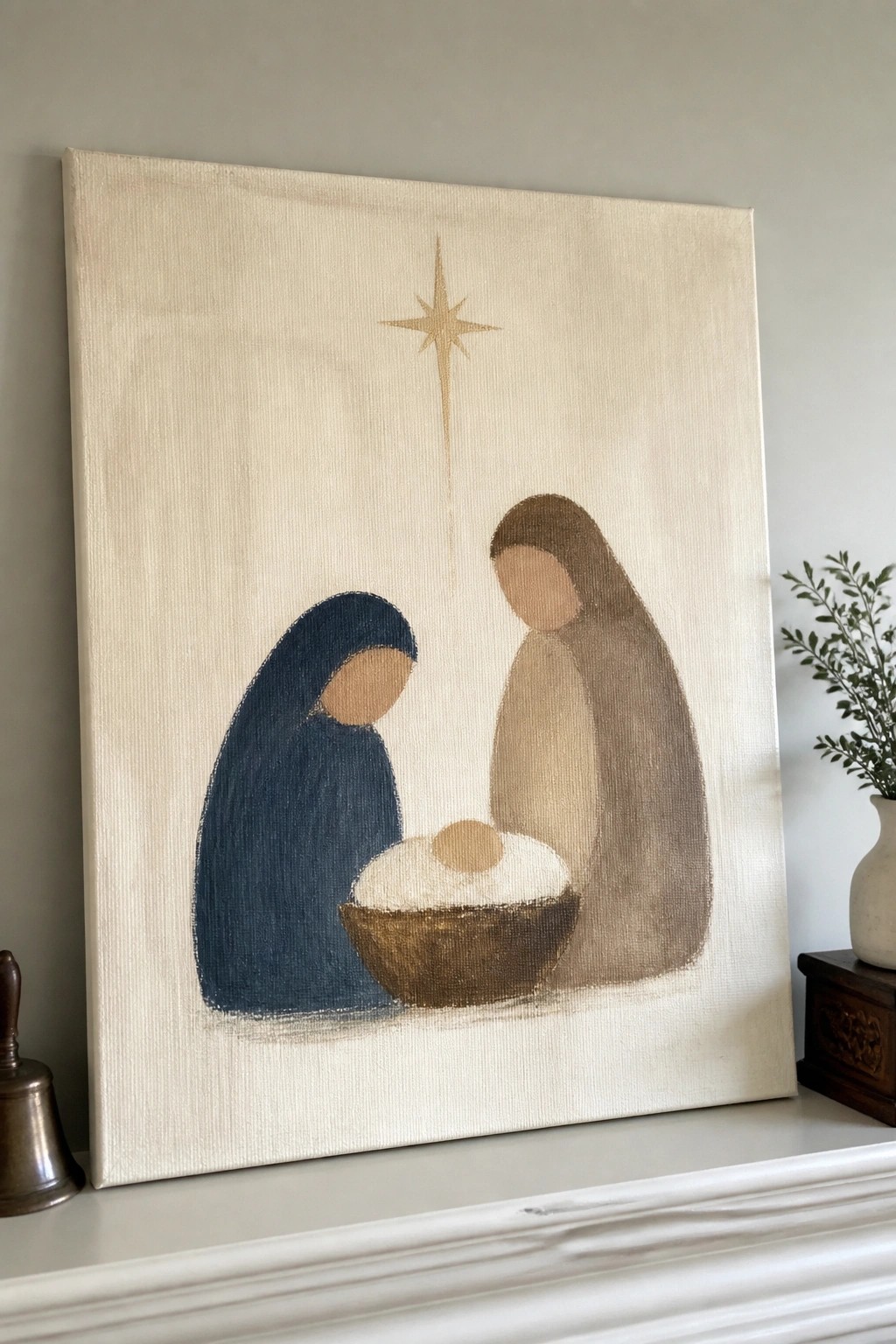
A nativity idea built around reduced figure shapes works well when the goal is clean, modern Christian decor. Large blocks of color form the robed figures and manger while a single star sits centered above, keeping the layout balanced without extra detail. The limited palette of deep blue, warm browns, and soft beige against the light canvas background lets the main elements stand out clearly.
What makes this idea useful is how the basic shapes remove the need for fine facial or fabric work, so the painting stays approachable even on a larger canvas. You can shift the brown tones warmer or cooler to match existing room colors or crop the star placement slightly for different frame sizes. The same layout also translates easily to smaller panels if you want a matching pair for a mantel or entryway.
Frequently Asked Questions
What are some easy ways to display these minimalist Christian paintings in a small apartment?
Start by selecting one or two smaller pieces that fit your available wall space and hang them at eye level in high traffic areas like the entryway or above a desk. Use simple floating frames in neutral tones to keep the focus on the artwork itself. Consider grouping them with other subtle decor items such as a small cross or a stack of books on a shelf to create a cohesive look without adding clutter.
How can I choose a painting that reflects my personal faith journey?
Reflect on key moments or verses from your own experiences and match them to simple symbols like a lone cross or an open book. Look for designs that use muted colors or clean lines to represent themes such as peace or hope. Test options by printing small versions first and placing them temporarily in your space to see how they resonate with your daily routine.
What materials are best for creating or printing these minimalist designs?
Use high quality canvas or matte paper for prints to achieve a clean modern finish that avoids glare. For DIY projects opt for acrylic paints on stretched canvas or digital tools like vector software to ensure sharp lines. Pair these with archival inks if printing to prevent fading over time and maintain the subtle aesthetic.
Are there ways to combine multiple paintings without overwhelming the space?
Arrange three to five pieces in a balanced grid formation on one wall using consistent frame styles and spacing of a few inches between each. Select works that share a similar color palette or theme such as variations on the fish symbol to create unity. Rotate them seasonally to refresh the display while keeping the overall look simple and intentional.
How do I maintain the minimalist aesthetic while adding Christian elements to my decor?
Focus on quality over quantity by limiting additions to one or two meaningful items per room and ensuring they complement rather than compete with existing furniture. Choose subtle symbols rendered in soft tones and position them near natural light sources to enhance their impact. Regularly assess the arrangement and remove anything that disrupts the clean lines or visual calm.