I’ve been trying out water soluble oil pastels for some nativity scenes over the past couple of months.
They mix easily with water and help create soft layers for the sky areas without too much effort.
I collected eighteen of my own attempts that focus on those starry backgrounds and put them together here.
The medium gives the figures a loose expressive look while keeping the night sky as the main part.
It was useful to compare how small changes in color and blending affected each one.
Nativity Scene With a Dominant Central Star
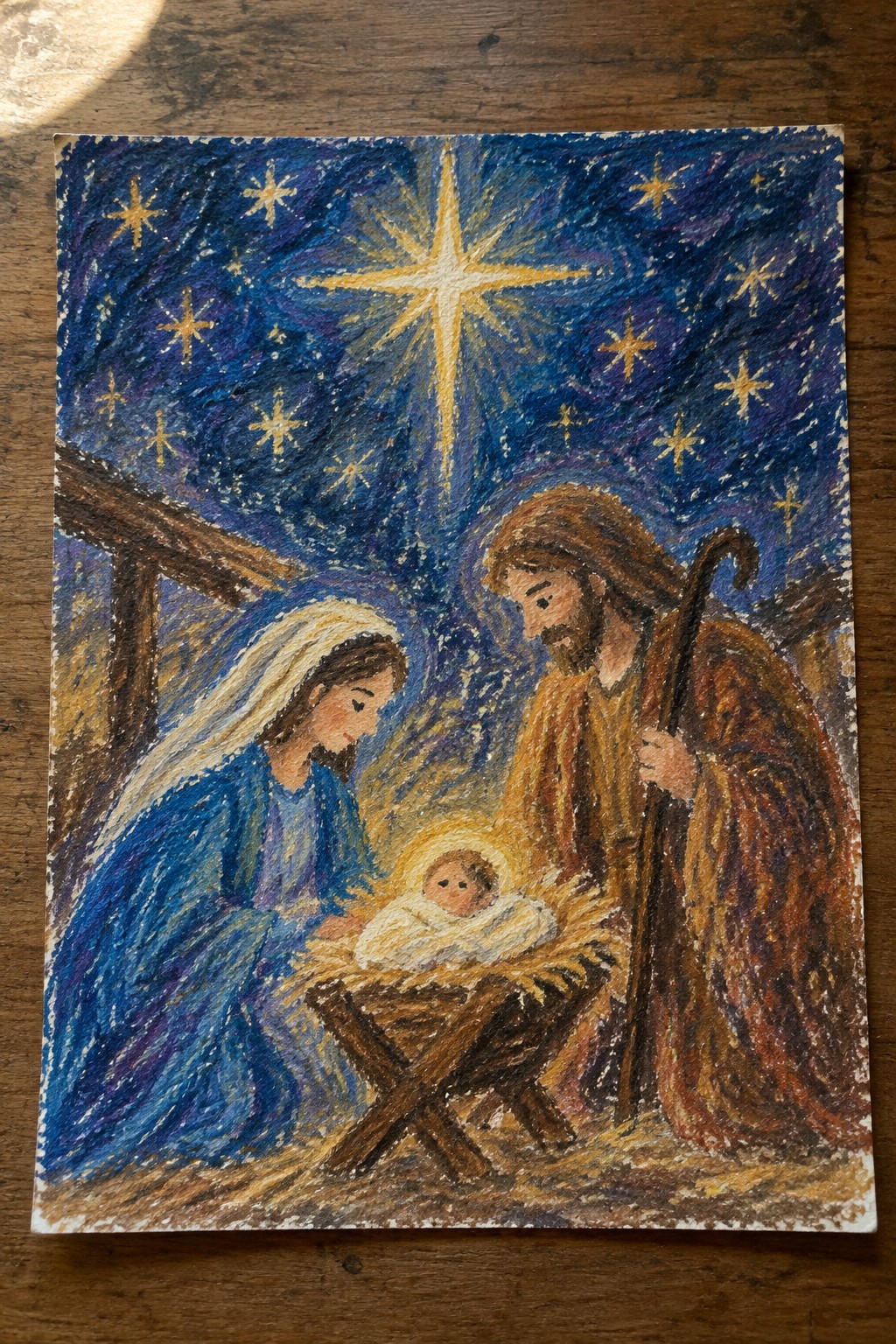
A nativity idea built around a tight grouping of the holy family placed directly beneath one oversized star. The figures create a stable triangular shape that keeps attention on the manger while the dark sky filled with smaller stars adds height and contrast. This approach fits seasonal or devotional art where the sky serves as a simple backdrop rather than the main focus.
The composition does a lot of the work here because the strong vertical line from the star down to the manger makes the layout easy to scale for cards or small panels. A limited palette of deep blues, browns, and one bright yellow keeps mixing straightforward and helps the star pop without extra detail work. You could simplify the robes or reduce the number of background stars if you want a quicker version for practice or gifts.
Dramatic Starry Sky Over a Hillside Nativity

A nativity scene placed on a hillside uses the stable as the main anchor while the surrounding shepherds and sheep fill the lower slopes. The idea centers on letting a large, swirling sky with oversized golden stars dominate the upper portion and create contrast against the warmer earth tones below. This layout keeps the figures grounded and readable while the patterned sky adds movement without needing extra detail in the landscape.
What makes this idea useful is the clear division between the busy sky and the simpler hill shapes, which makes it straightforward to resize or crop for different formats. The color split between cool blues above and warmer ground below can be adjusted by swapping star sizes or hill tones to match other projects. For seasonal wall pieces, the recognizable stable and sheep work well as a base that still leaves room to personalize the sky pattern or add extra stars.
Manger Scene with Donkey and Sheep Beneath a Bright Star
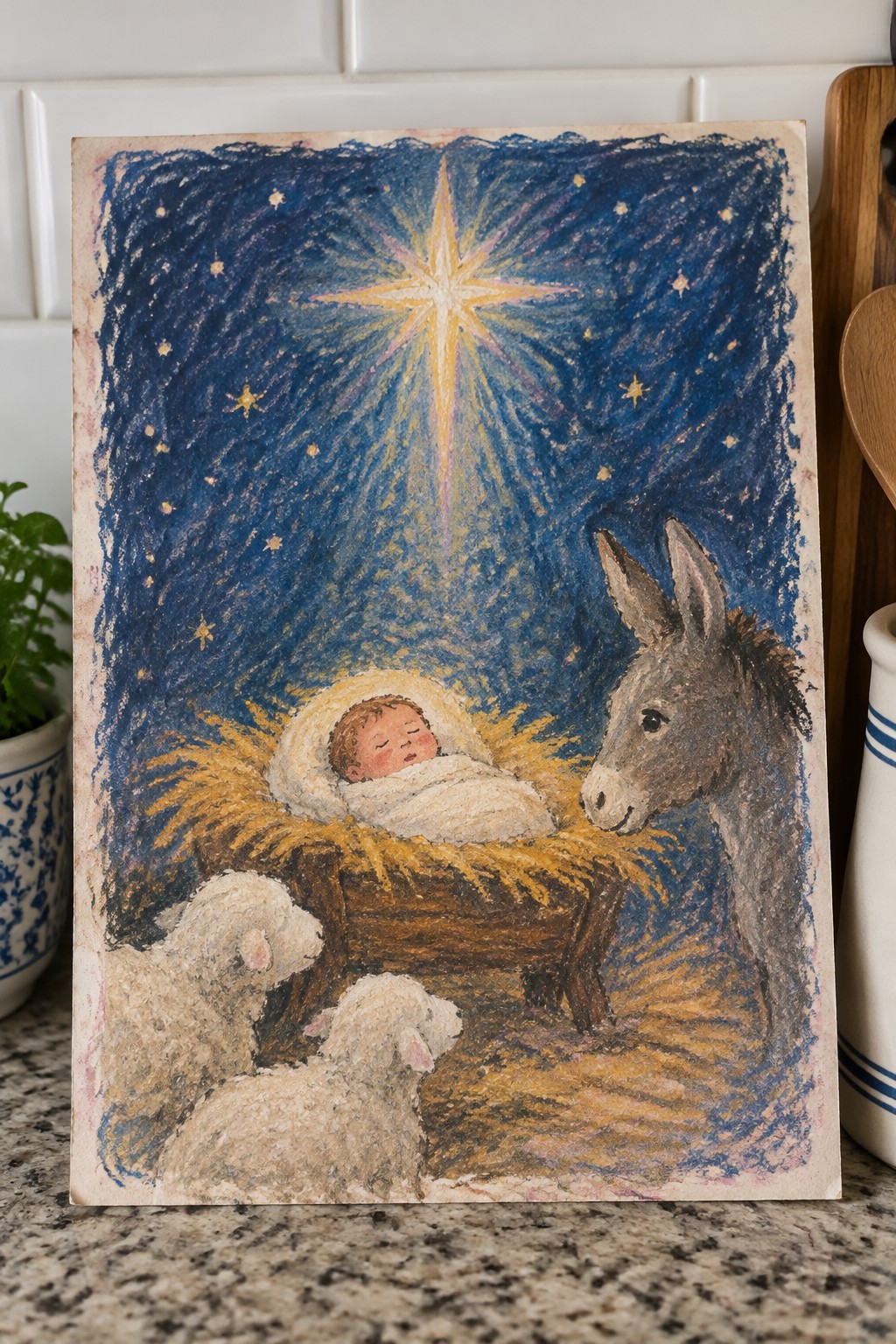
A nativity idea built around a central manger works by using the large star to anchor the upper half of the composition and guide attention straight to the infant below. Grouping the donkey on one side and the sheep on the other creates a balanced frame without crowding the middle. The dark sky filled with smaller stars provides contrast that keeps the main subjects clear while adding simple depth through color layering.
What makes this idea useful is how the star and manger placement handle most of the visual weight, so the rest of the scene can stay minimal. The layout adapts easily to different sizes by dropping one or two animals or shifting the sky to a lighter value. For seasonal pieces this arrangement stays readable even when simplified for cards or small panels, and the strong vertical pull from star to manger helps it stand out in a feed without extra detail.
Triptych Nativity With Repeated Stars

A triptych format works well here by splitting the nativity story into three connected panels that share the same deep blue sky and oversized yellow stars. The first panel shows the manger, the middle follows the wise men traveling, and the final panel places a shepherd with his sheep against a distant town. The golden ground running across the bottom of all three panels helps tie the scenes together visually while keeping the focus on the figures.
The composition does a lot of the work here because the matching sky and star shapes make the panels read as one piece even when hung separately. This kind of layout adapts easily if you want to swap in different story moments or change the number of panels. For seasonal wall art the bold stars and limited color palette keep it simple to paint while still looking finished from a distance. You could shrink the idea down to a single wide panel or turn just the middle section into a quick practice study.
Star-Centered Nativity with Strong Sky Contrast

A nativity idea that puts most of the visual weight on a single bright star and the blended night sky around it. The stable and figures stay small and low in the frame so the radiating light and color shifts from deep blue to warm horizon tones carry the composition. This fits the seasonal landscape category where the sky itself becomes the main subject rather than detailed figures.
The composition does a lot of the work here by using the star as a natural focal point that guides the eye straight to the manger. You could adapt the same layout with water-soluble oil pastels by blocking in the sky first and keeping the foreground shapes dark and simple. For practice pieces or quick seasonal decor, this approach works because the idea still reads clearly even if the figures stay minimal. The vertical format also makes it easy to adjust for different canvas sizes without losing impact.
Nativity Scene Framed by a Stable with a Bright Star
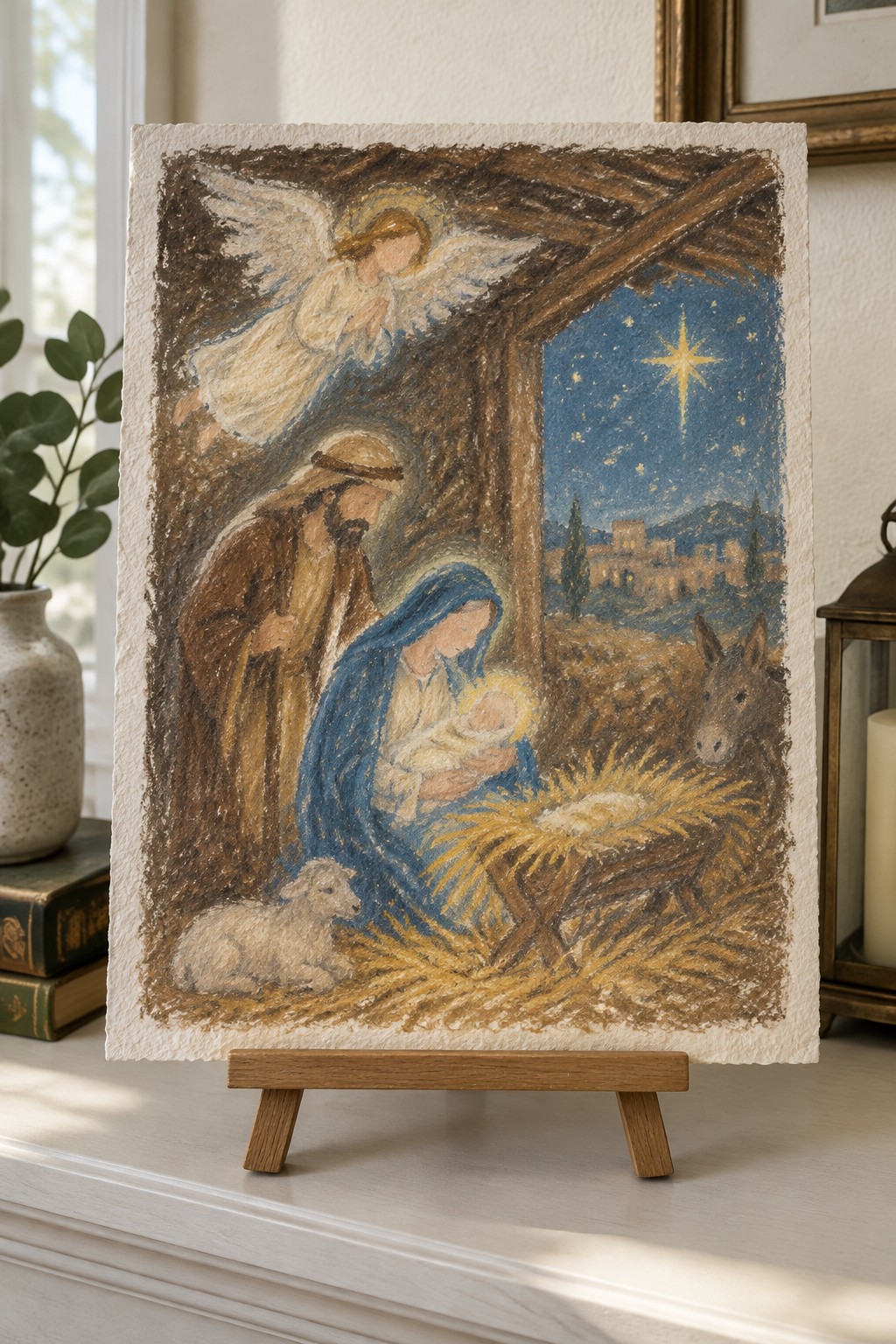
A Nativity painting idea that places the holy family inside a simple wooden stable at night while keeping the focus on the manger and the star overhead. The open side of the stable reveals a distant town under a dark blue sky, and the angel positioned above adds height without crowding the central group. Animals placed around the edges help balance the lower part of the composition and keep the eye moving between the figures and the background.
What makes this idea useful is how the stable structure does most of the work by framing the main subjects and separating the warm tones inside from the cooler night sky. You can easily adapt it by reducing the number of animals or softening the distant buildings if you want a faster version for cards or small decor. The strong vertical line of the star also gives you a clear focal point to build around when planning seasonal pieces.
Star Constellation Nativity in a Night Landscape
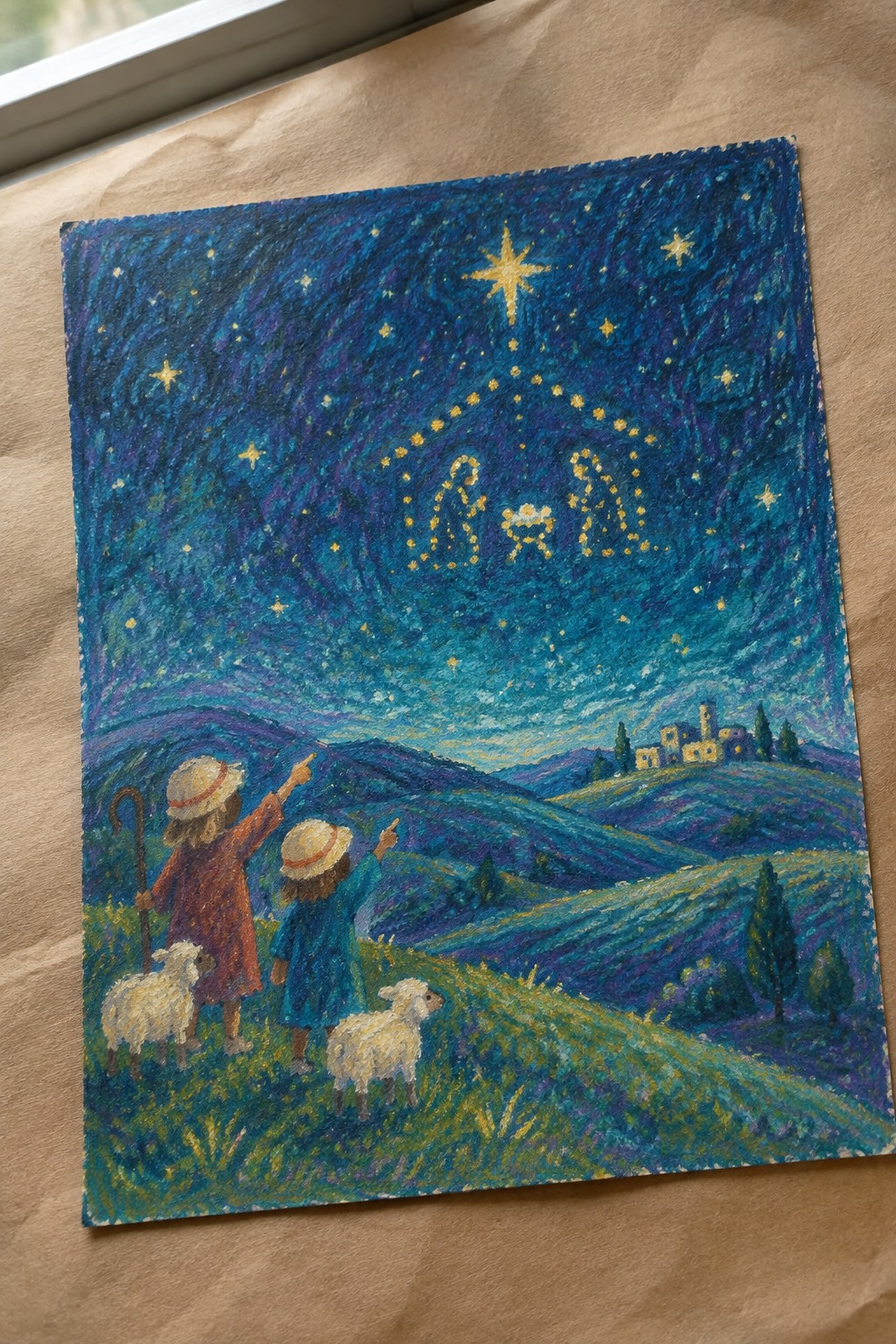
The main idea here is to turn the night sky into the main storytelling element by arranging stars into simple nativity shapes like a shepherd, sheep, and manger above a quiet landscape. The painting idea works as a seasonal landscape with the bright star figures placed high in the composition so they stand out against the dark blue and purple sky. The lower section stays simple with rolling hills, a small village, and two children with sheep, which keeps the focus on the star arrangement without competing details.
What makes this idea useful is that the star shapes carry most of the subject, so the landscape below can stay loose and easy to paint. You could change the village size or remove the children to make a cleaner version for cards or smaller canvases. The vertical layout also adapts well for prints or social media since the glowing stars still read clearly even when the image is cropped.
Wise Men Journeying Under a Dominant Star
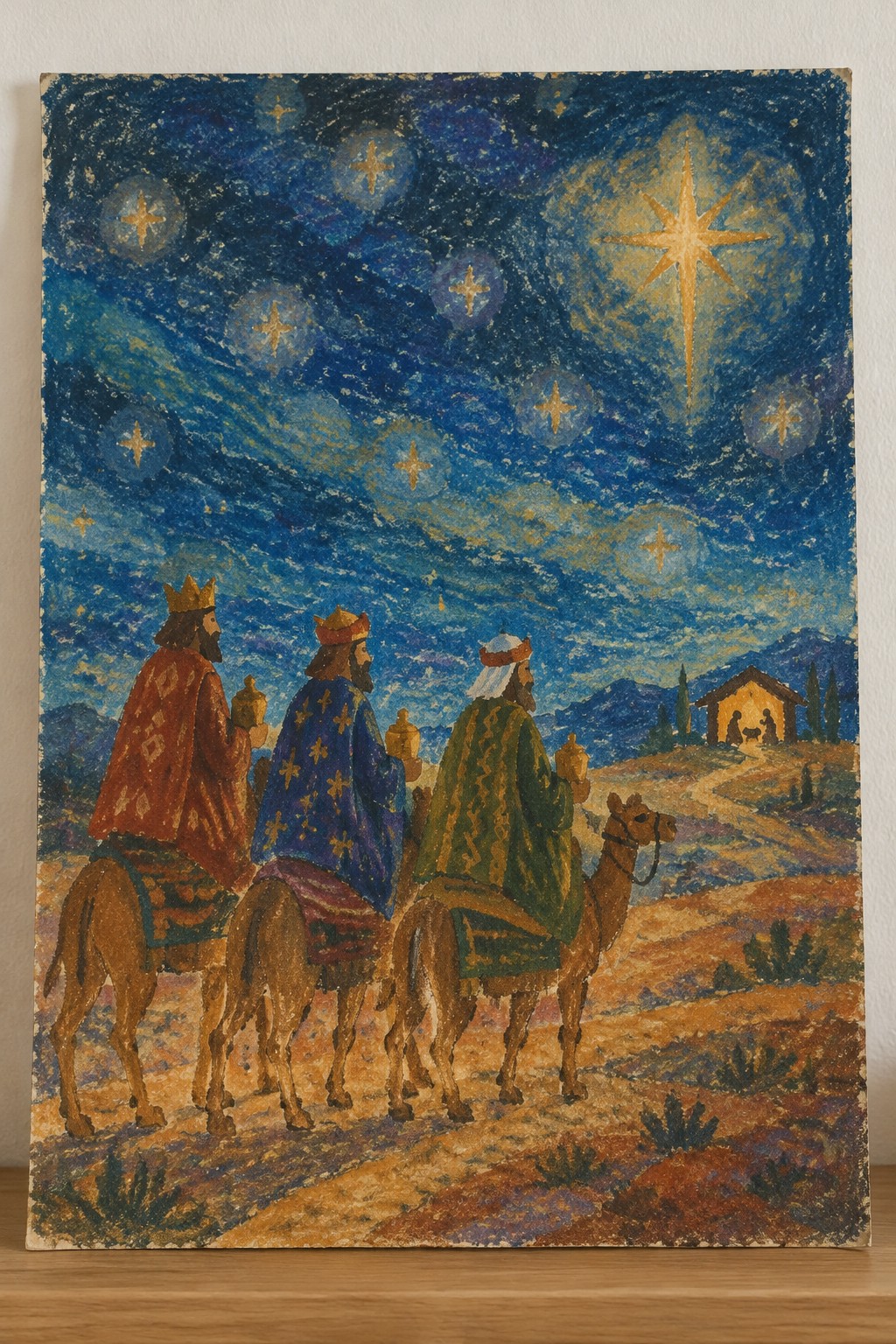
The core idea here is a night landscape showing three figures on camels traveling along a winding path toward a small lit stable, with one oversized star anchoring the upper sky and smaller stars scattered across the rest. The composition works because the path and the bright central star create a clear visual line that moves the eye from the riders in the foreground straight to the destination in the distance. This type of seasonal narrative painting blends landscape and storytelling elements without needing fine detail on every figure.
What makes this idea useful is the strong horizon and path that do most of the compositional work, so beginners can focus on shapes and placement rather than complex perspective. The limited color range of deep blues, warm earth tones, and gold accents makes it easy to adapt by swapping in different sky hues or simplifying the camel and robe shapes for quicker studies. For holiday decor or small canvas pieces, the subject stays readable even when scaled down or when the sky texture is reduced to basic strokes.
Starry Sky Nativity with Strong Central Focal Point
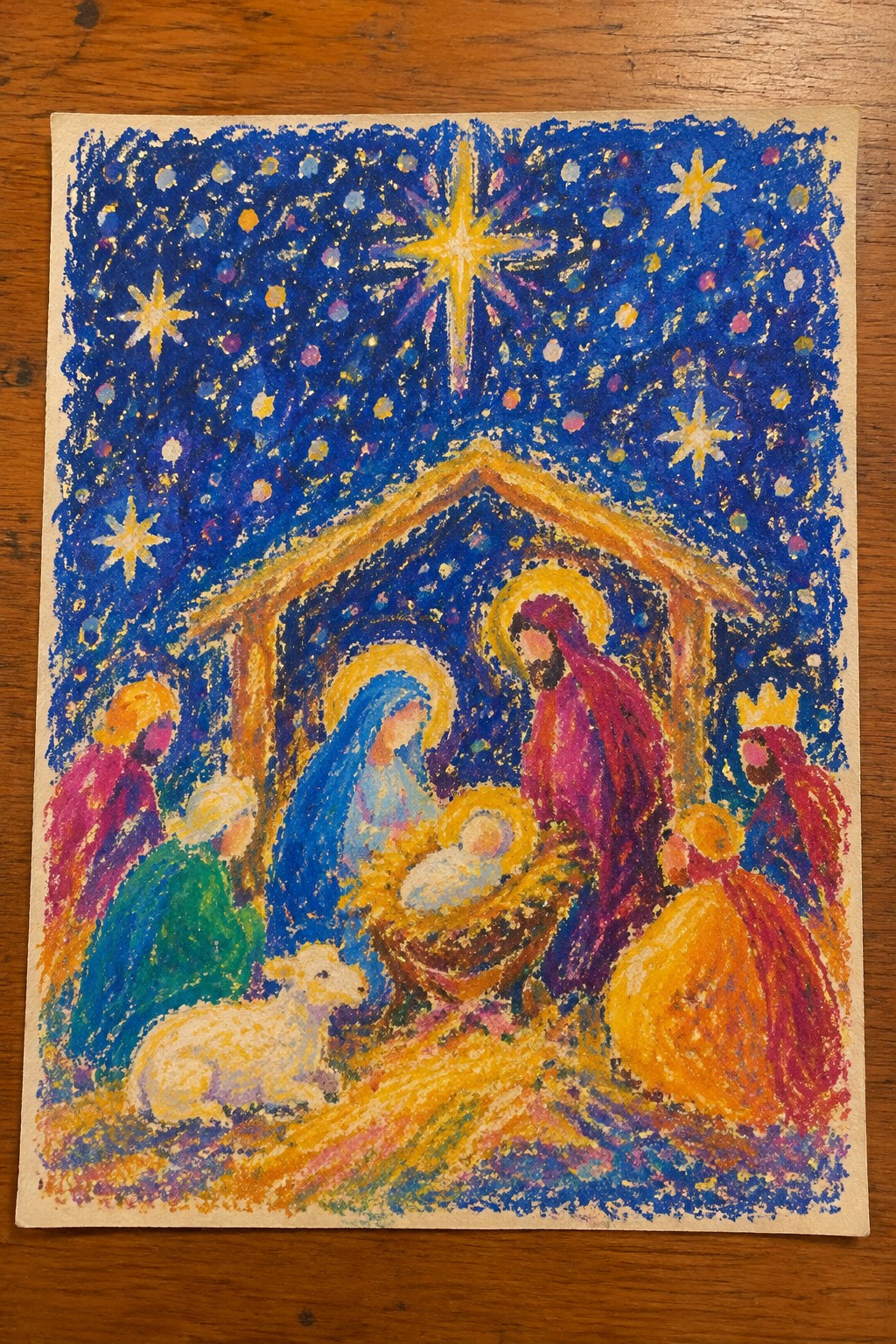
A nativity scene idea that keeps the stable and figures in the bottom half while filling most of the upper space with a deep blue sky and a large bright star surrounded by smaller ones. The peaked roof of the stable creates a clear triangle that directs attention straight to the manger, and the bright robes against the dark background help the figures stand out without needing precise lines. This approach fits the seasonal decorative category and works because the sky takes up enough room to let the star dominate the whole piece.
The big sky area makes it simple to adjust star placement or try different color mixes in the background without changing the main subject. This layout works especially well for wall art because the high contrast between the dark sky and the glowing star keeps the image readable even at smaller sizes. You could reduce the number of figures or swap in different colors for the robes to match the pastels you already have.
Starry Night Nativity in an Open Field
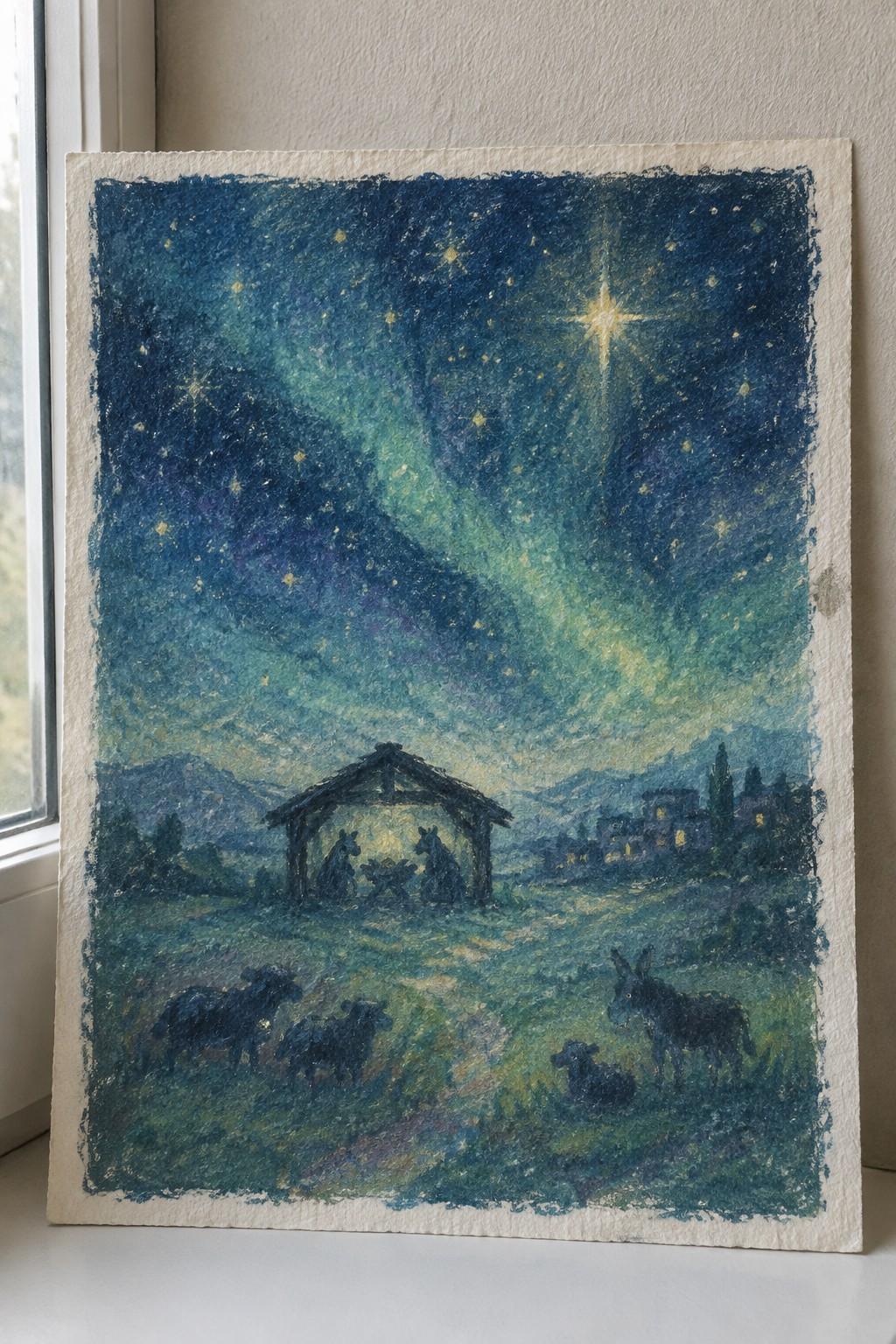
A nativity scene set in a wide landscape uses a single bright star and swirling sky colors to balance the quiet stable area with the dramatic night above. Animals placed at different distances in the field create a loose path that leads the eye toward the manger without overcrowding the middle ground. This type of seasonal painting combines landscape and animal subjects by letting the sky take up most of the space while the foreground stays simple.
The open layout leaves plenty of room to adjust the sky colors or swap in different animals depending on what references you have. You could shrink the village lights or remove a couple of cows to make the piece smaller for cards or ornaments. For practice work the clear separation between sky and ground makes it straightforward to test blending on one half while keeping the other half more controlled.
Bold Star Nativity with Heart and Tree Borders

A nativity scene built around a large glowing star at the top center works well for water-soluble oil pastel because the bright yellow star stands out sharply against the dark blue night sky and pulls the eye straight down to the stable below. The idea combines the traditional holy family with simple animal figures and a decorative border of hearts and trees that frames the whole piece like a finished greeting card. This approach fits the cute seasonal category where the focus stays on clear shapes and strong color contrast rather than fine detail.
What makes this idea useful is the way the border contains the scene so it reads cleanly even at smaller sizes for cards or prints. The high contrast between the star and sky means you can keep the stable and figures fairly simple while still getting a complete holiday look. For practice or gifts this layout adapts easily by swapping the heart border for snowflakes or leaving it plain if you want a quicker version.
Starlit Hillside Nativity with Approaching Procession

A wide landscape view of the Nativity works well when the stable sits off to one side and multiple small groups travel along winding paths toward it under a dominant central star. The idea centers on showing the journey itself rather than a close-up of the manger, with the bright star and lit stable acting as the main focal points that pull the eye across the scene. Deep blues in the sky against warmer ground tones and scattered lights from a distant town help separate the layers without needing complex detail in every figure.
What makes this idea useful is how the paths naturally organize the composition and give you places to add or remove groups as needed. You could paint just the three wise men and the stable for a simpler version or expand the number of shepherds and animals if you want more activity. The strong contrast between the dark sky and the single bright star also makes the subject readable even at smaller sizes, which works for cards or prints. For practice, the layout lets you focus on placing figures at different distances before worrying about fine faces or expressions.
Mother and Child with a Guiding Star
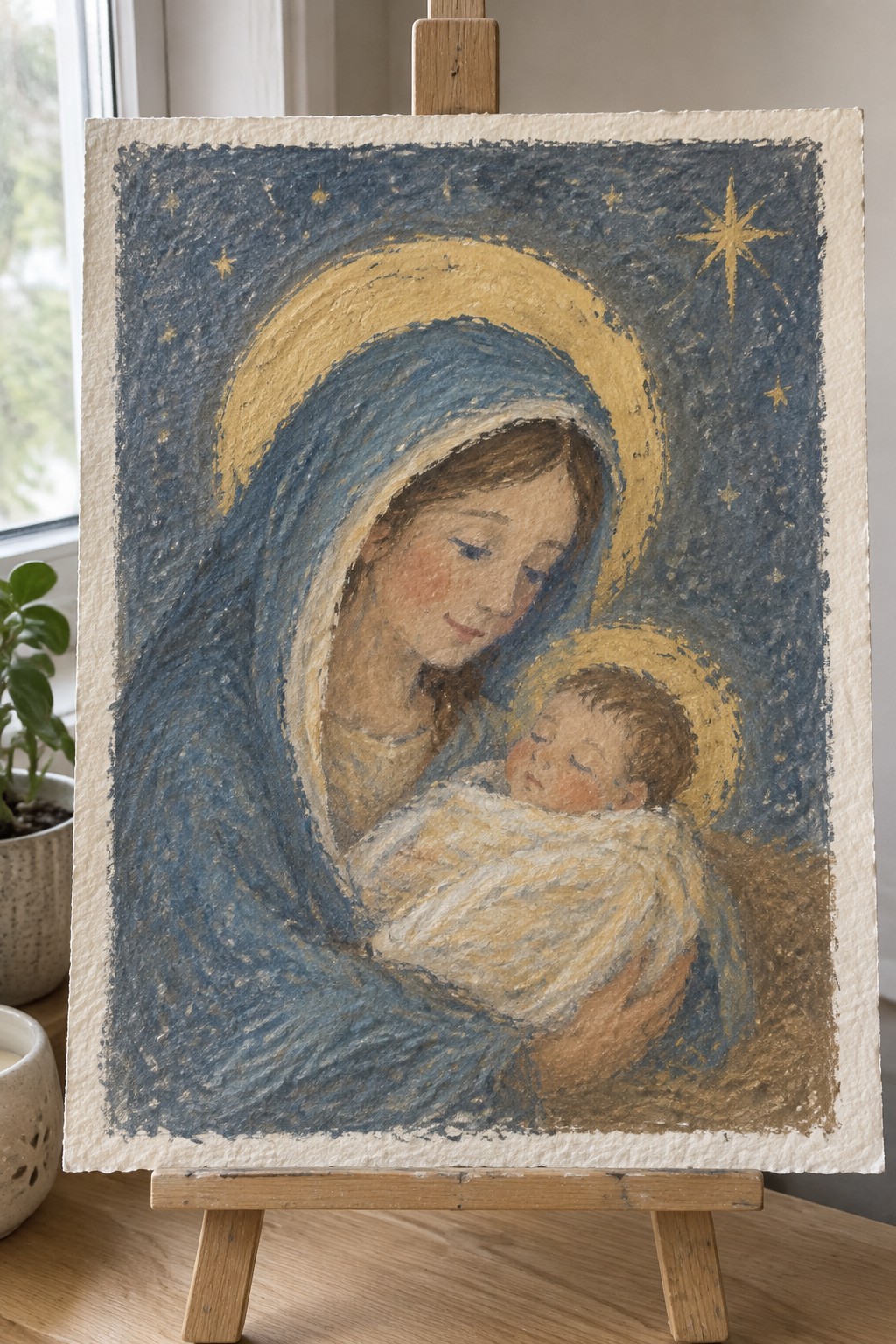
A mother and child nativity idea works well when the figures stay close together under a dark sky filled with scattered stars and one large central star. The soft curve of the blue veil and the warm halo around both heads create a clear focal point while the cool background keeps everything grounded. Rounded forms and gentle layering of the blanket folds make the whole scene feel balanced without extra details.
The composition does a lot of the work here by pushing the figures forward against the simple night sky. You could adapt this easily by using a smaller canvas or swapping the gold halos for thinner light rings if you want a quicker version. This kind of piece stands out for holiday wall art because the main shapes remain forgiving while the star and halos give it instant seasonal recognition.
Donkey Resting in a Starlit Stable

A resting donkey on straw inside a wooden stable forms the core of this nativity painting idea, with the open roof revealing a dark blue sky filled with stars. The composition uses the low placement of the animal against the angled beams and lantern to direct attention upward, while the warm brown tones of the interior contrast with the cool night sky. This approach fits the seasonal animal category and works because the stable structure frames the donkey without crowding it.
What makes this idea useful is the built-in contrast between the enclosed space and the visible sky, which adds depth without needing complex perspective. You could crop the scene tighter around the donkey or reduce the number of stars to finish it faster for a small canvas. For wall pieces or gifts, the stable setting makes it easy to pair with other nativity elements while keeping the focus on one main subject.
Circular Nativity with Patterned Rings

A nativity scene sits at the center of multiple concentric rings filled with repeating motifs like stars, trees, houses, and doves. The radial layout keeps the main figures contained in the middle while the surrounding bands create a structured frame that guides the eye inward. This approach fits decorative seasonal art, where the circular format and repeating border elements give the composition balance without needing complex perspective.
The composition does a lot of the work here by separating the central scene from the decorative rings, so you can focus detail on the figures and keep the borders simpler. You could swap the color palette for warmer tones or reduce the number of rings if you want a faster version for practice or gifts. This kind of layout stands out for wall pieces because the round shape and clear central focus translate well to prints or cards.
Clustered Farm Animals Around a Manger Nativity
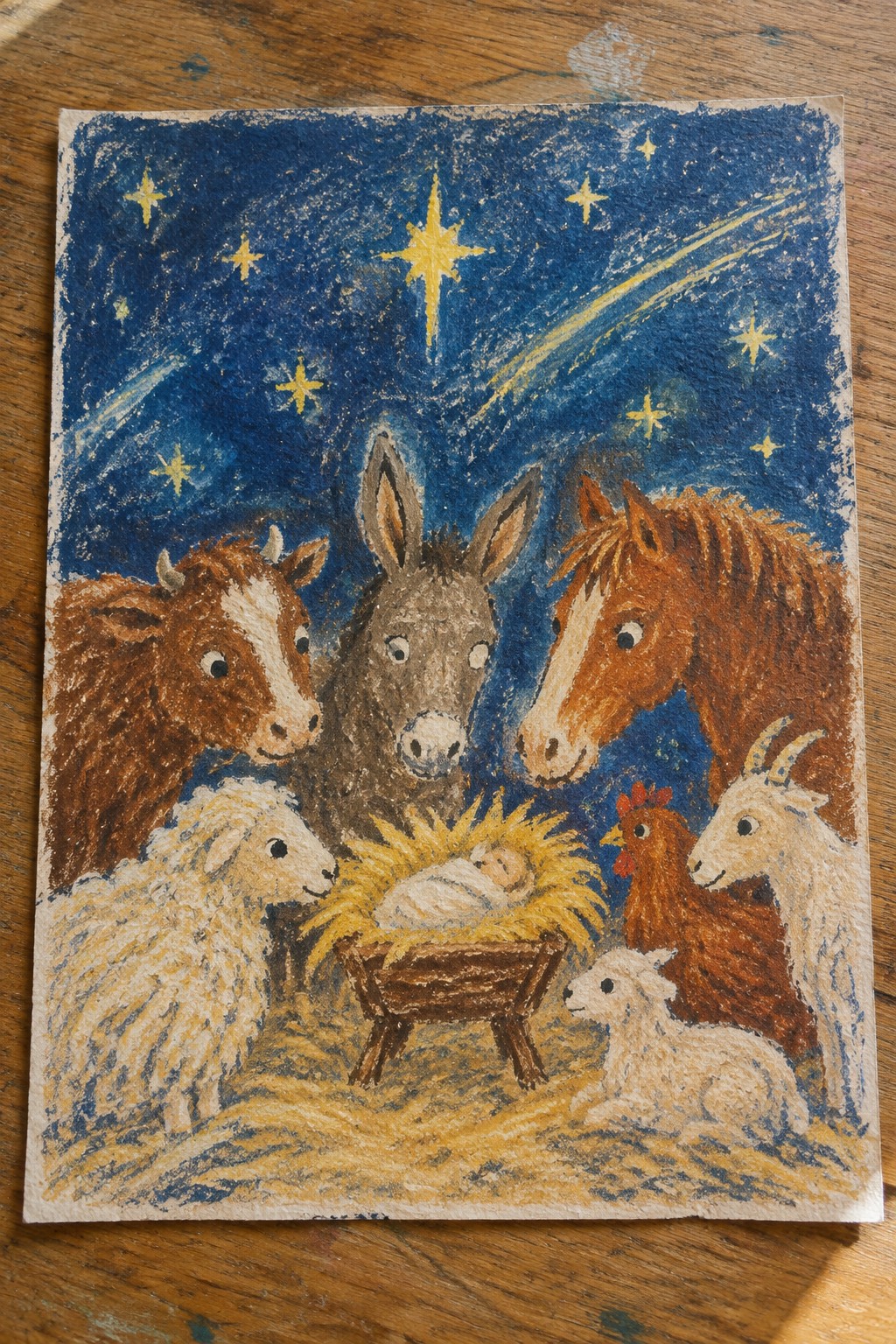
A nativity painting idea that places several farm animals in a close half-circle around a central manger, with their heads turned inward and a deep blue sky filled with scattered stars and one bright streak overhead. The idea relies on overlapping the larger animal forms to build a stable base while the bright yellow straw and manger create a focal point that contrasts with the cooler sky tones. This approach fits seasonal animal painting projects where the animals carry most of the visual weight rather than detailed figures or architecture.
The composition does a lot of the work here by keeping the animals large and grouped so the layout stays readable even if proportions shift slightly. You can adapt the idea by swapping in different animals or trimming the star count for a faster version on smaller paper or greeting cards. For practice this subject helps with building texture on fur and sky areas without requiring tiny details, and the strong sky-to-ground contrast makes the finished piece hold up well as simple wall decor.
Starry Night Nativity with Distant Travelers
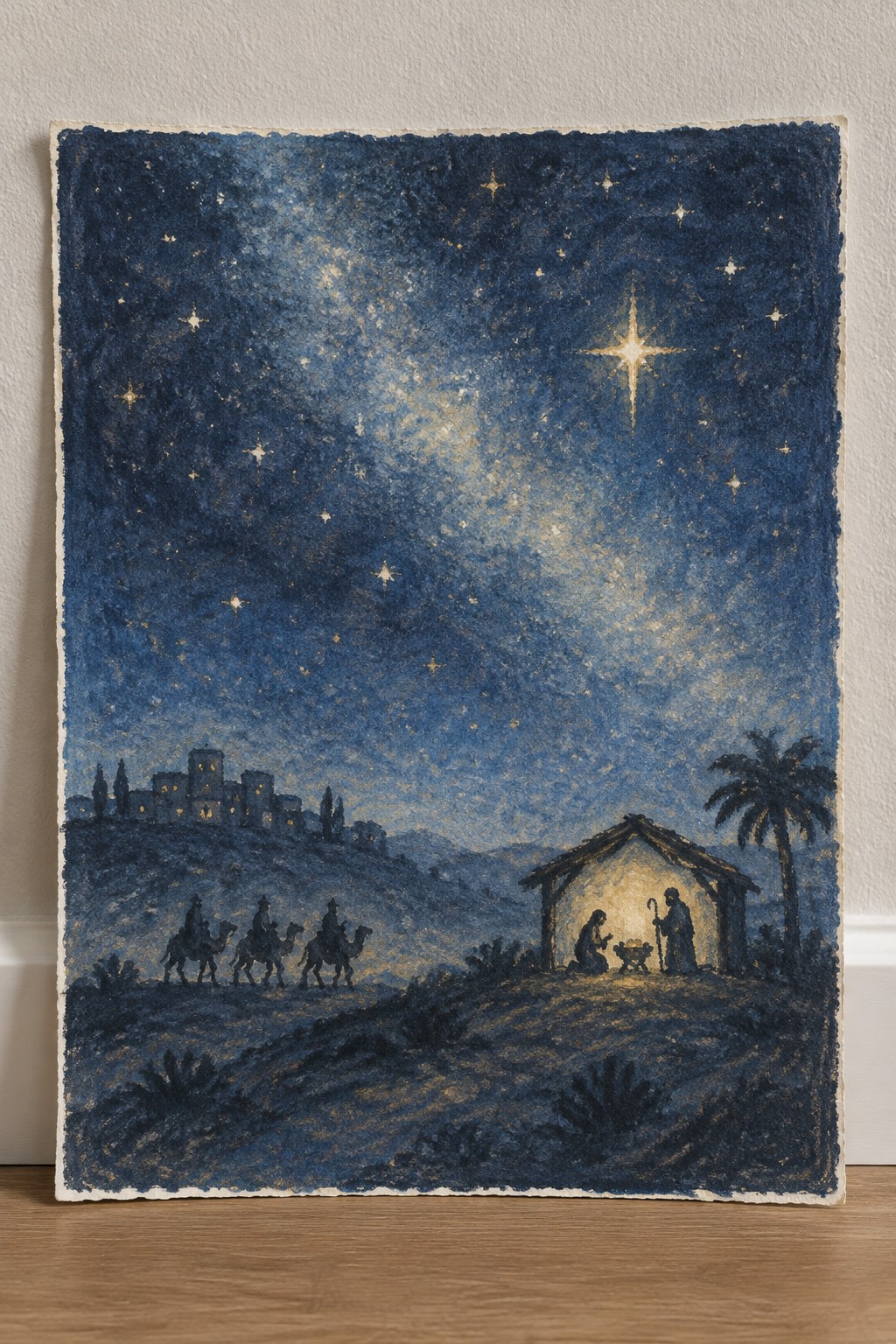
A night Nativity idea that places the stable low in the frame so the dark blue sky and bright central star dominate the view. Three riders on camels move across the foreground toward the lit structure while a small hill town sits farther back on the left. The layout works as a seasonal landscape because the large sky area creates contrast and keeps attention on the simple stable grouping below.
What makes this idea useful is how the sky carries most of the visual weight, so the figures and stable can stay small and loosely painted. You could shrink the whole scene for a card or stretch the sky even higher for a taller format. The color shift from deep navy at the top to lighter tones near the horizon also gives an easy way to practice blending without needing many layers. For wall pieces this kind of wide sky keeps the focus clear even when the painting is viewed from across a room.
Nativity Scene with a Dominant Starry Sky
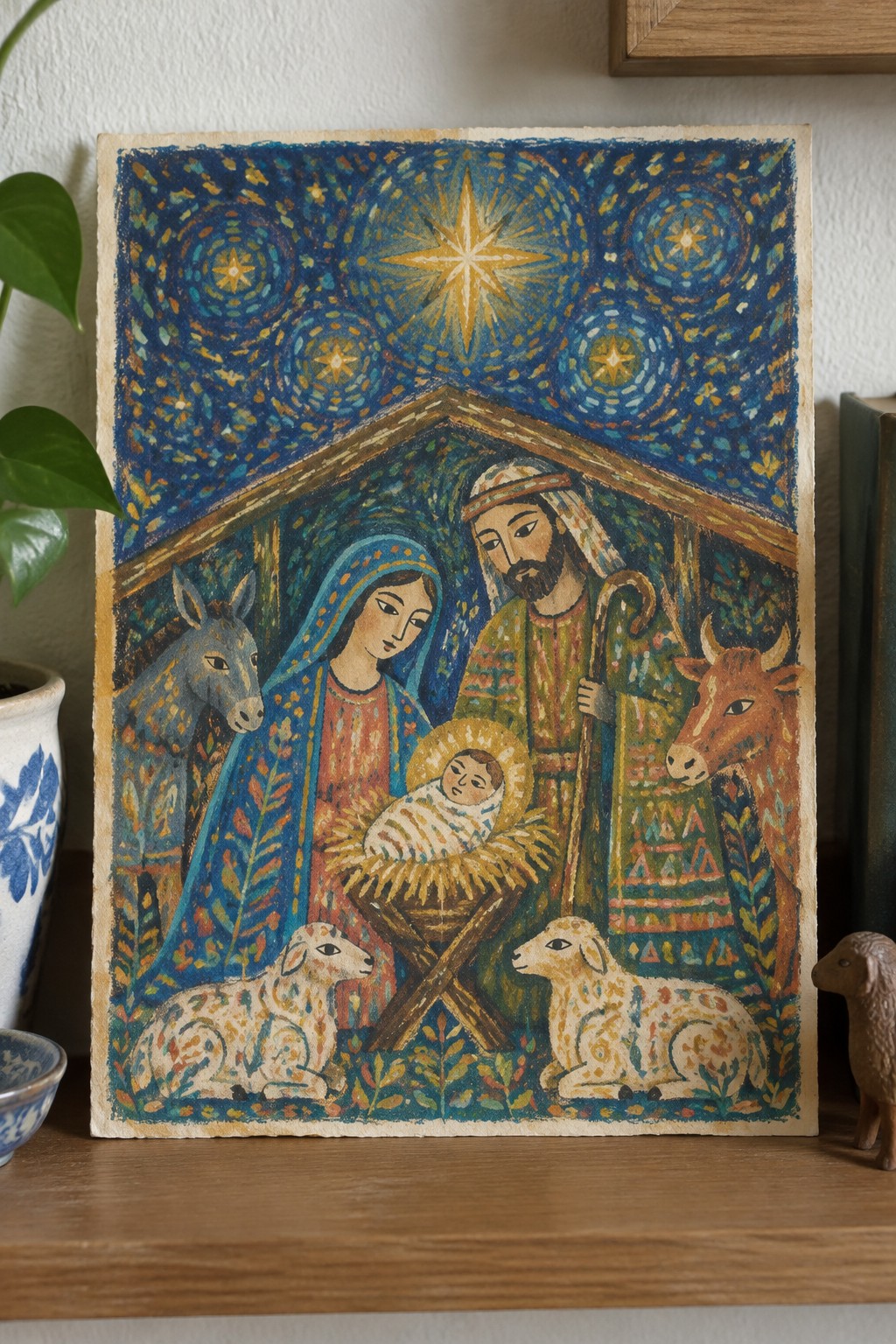
A nativity painting idea works by placing the holy family and manger at the center of a stable while filling the upper half with a bold starry sky that includes one large radiating star. The animals sit on both sides to create side framing that keeps the eye moving inward toward the manger without crowding the middle. This approach fits the seasonal decorative category because the layout stays readable even when the sky uses dense patterns and multiple colors.
What makes this idea useful is the strong top-to-bottom structure that lets the sky do most of the visual work while the figures stay simple. The color contrast between the dark blue background and warmer tones below makes it easy to adjust the sky intensity or reduce the number of stars if you want a faster version. For holiday decor this layout scales well to different canvas sizes and still reads clearly from a distance.
Frequently Asked Questions
What are water-soluble oil pastels and how do they work for creating nativity scenes with starry skies?
Water-soluble oil pastels combine the rich pigment and blendability of traditional oil pastels with the ability to mix and soften colors using water. Artists apply them directly to paper or canvas and then use a wet brush to create smooth gradients in skies and expressive details in figures. This makes them ideal for nativity paintings because they allow quick layering of deep blues and golds for dramatic starry effects while keeping the work vibrant and textured.
How do artists achieve the expressive starry skies in these water-soluble oil pastel nativity paintings?
Artists often start by laying down dark background colors for the night sky and then add small dots or strokes of white, yellow, and light blue for stars. They follow up with water blending to soften edges and create a glowing halo effect around the stars. Layering multiple colors and using a dry brush for highlights helps build depth and emotion, making the skies feel alive and connected to the nativity figures below.
What supplies are recommended for someone wanting to try similar nativity paintings with starry skies?
Start with a set of water-soluble oil pastels in a range of blues, yellows, whites, and earth tones. Pair them with heavyweight watercolor paper or mixed media paper that can handle water without buckling. Add a few soft brushes for blending, a water container, and paper towels for control. Many artists also use a fixative spray at the end to protect the finished work from smudging.
How can beginners capture the emotional feel of nativity scenes in this medium?
Focus on loose, expressive strokes rather than precise details to convey warmth and wonder. Use the water-soluble feature to blend colors softly around the central figures like Mary, Joseph, and the baby Jesus. Experiment with starry skies to add a sense of hope and light by contrasting bright star colors against darker backgrounds. Practice on small studies first to build confidence in blending and layering.
Where can viewers find or purchase prints or originals of these 18 expressive paintings?
Check online art marketplaces, the artist’s personal website if listed in the article, or galleries that specialize in contemporary religious art. Some creators offer limited edition prints through platforms like Etsy or their own shops. Contacting the artist directly through social media or email often yields details on availability, commissions, or upcoming exhibitions featuring similar starry nativity works.