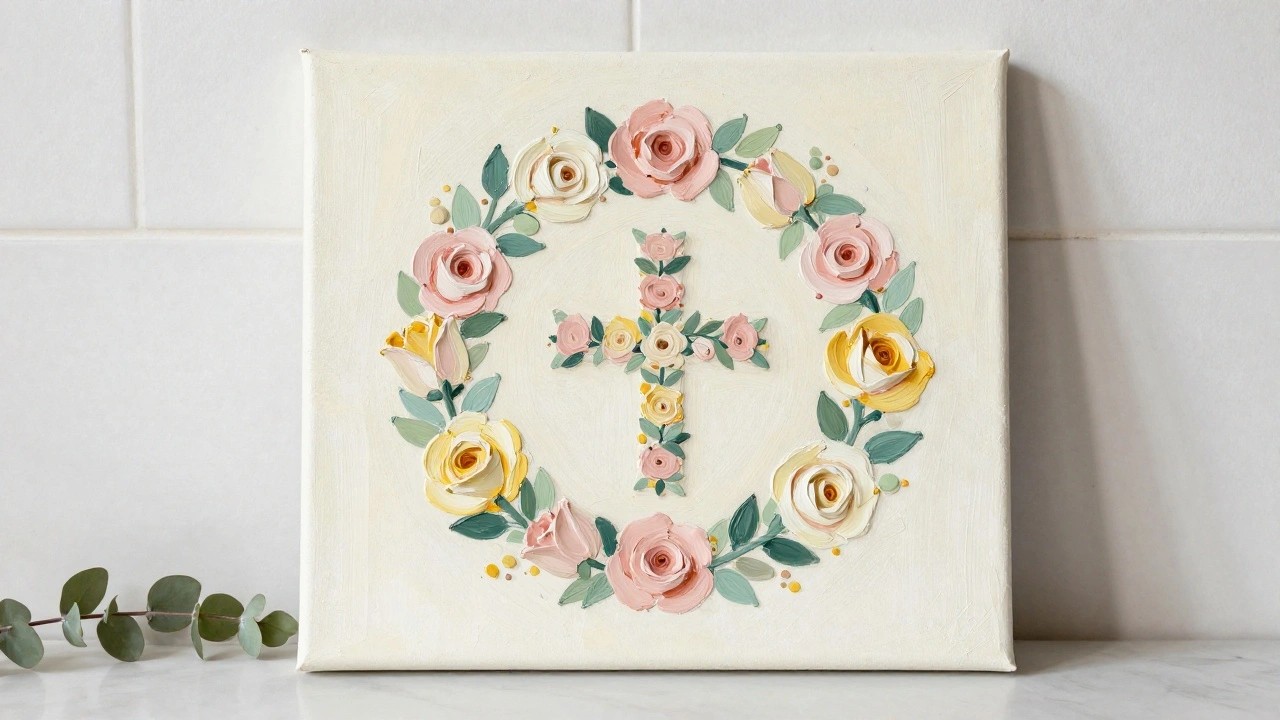
I like to add some handmade touches to my Easter decorations each year.
Cross painting is something I turn to because it feels straightforward and satisfying.
I came up with these 18 ideas using colors and patterns that seem fitting for the season.
Most of them rely on acrylic paints and simple brushes that I already have on hand.
They are easy to set up on a shelf or hang on a wall once they are done.
Layered Rose Cross on Cream Canvas
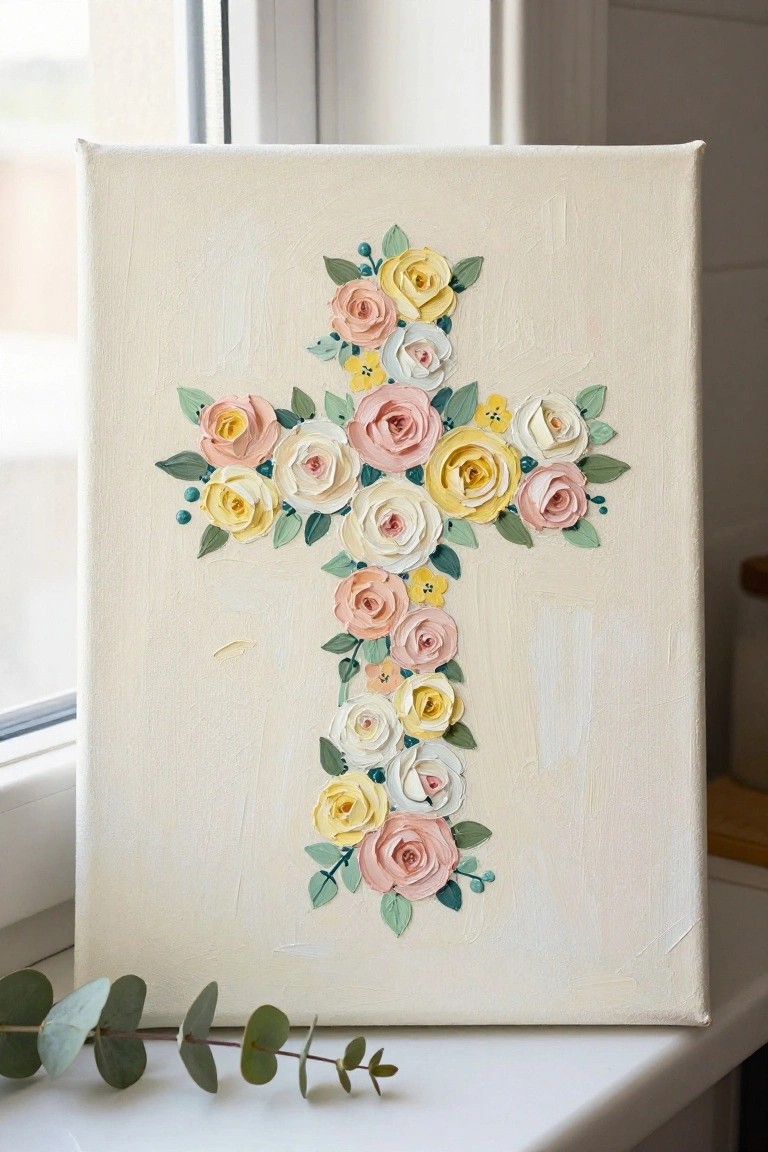
A floral cross painting builds the shape entirely from clusters of roses in soft pink, yellow, and white, with green leaves and small accents filling the gaps between blooms. The vertical layout lets the flowers define the arms and stem of the cross while the neutral background keeps the focus on the arrangement itself. This approach falls into decorative floral art that suits seasonal wall pieces.
The color palette makes this easy to adapt by switching the rose shades to match other spring tones or by using fewer blooms for a simpler version. What makes this idea useful is how the open space around the cross prevents it from feeling crowded on a canvas. For Easter displays, the design works well because it turns a familiar symbol into something fresh using only flower shapes and soft tones.
Symmetrical Tulip Cross with Dot Borders

A decorative cross idea built around a central orange outline filled with repeating tulip shapes and simple dot clusters. The design places flowers evenly on all four sides with a single large bloom at the center and smaller ones along the edges to keep the layout balanced. This fits the decorative art category and works because the flat shapes and repeated motifs create clear structure without needing shading or fine detail.
The composition does a lot of the work here by using symmetry to guide placement and keep the canvas from feeling crowded. You could adapt the same layout on a smaller scale for cards or swap the tulips for other spring flowers while keeping the same color groups. For Easter home displays this kind of piece stands out on a mantel or shelf because the bright blocks of color read well from a distance.
Soft Pink Cross with Wildflower Bundle

A painted cross in muted pink holds a cluster of small wildflowers gathered at the center point where the beams meet. The flowers sit in a loose bunch and are secured with a matching ribbon that hangs down the front. This approach pairs a bold geometric shape with light floral details to make a simple decorative piece suited for seasonal displays.
The composition does a lot of the work here because the cross shape gives instant structure while the flowers add color without requiring a busy background. You can swap the ribbon color or change the flower mix to fit different wall palettes or other holidays. For practice this layout stays approachable since the main elements use basic shapes and the plain background keeps the focus tight. A painting like this works especially well for quick Easter decor or small canvas projects that can be finished in one or two sessions.
Rainbow Striped Cross with Bunny Row
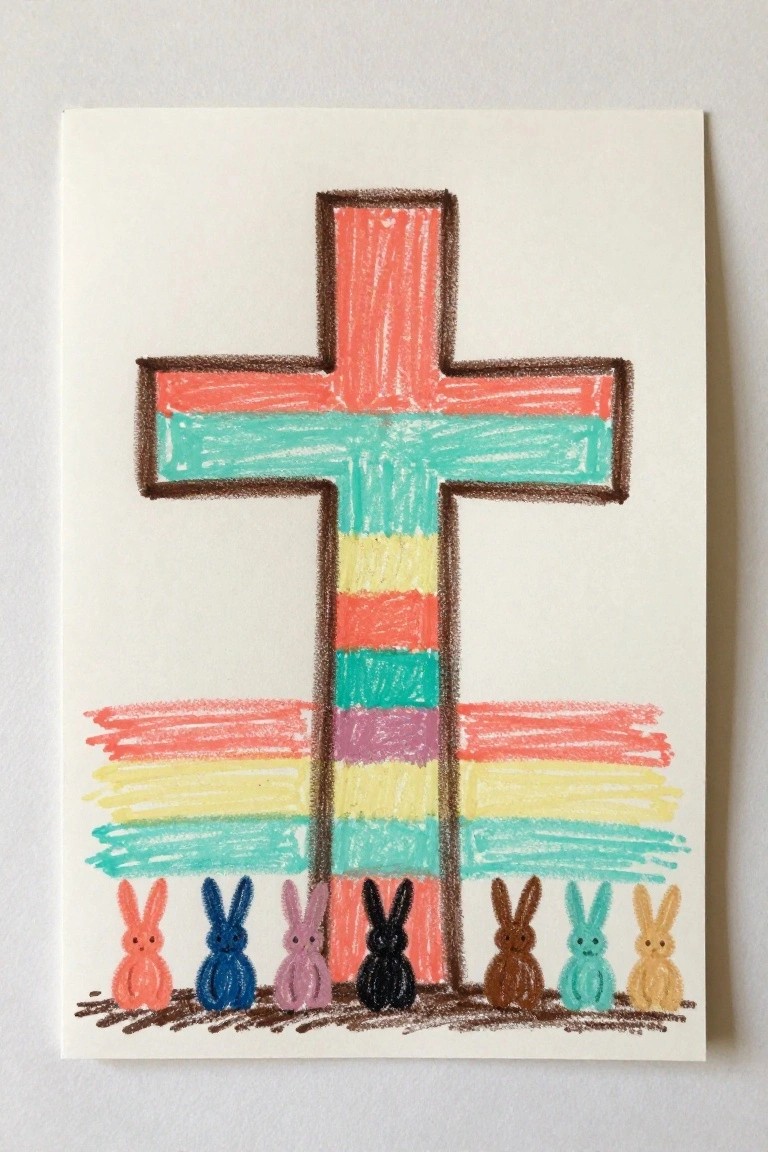
A cross built from wide horizontal color bands in red, teal, yellow, and purple creates a bold vertical shape that stands out against a plain background. The addition of a matching rainbow stripe section below the cross and a row of small bunnies in the same colors turns the piece into a simple seasonal decoration. The flat shapes and repeated color blocks keep the composition balanced without needing fine detail or shading.
What makes this idea useful is how the stripe pattern can be changed to match whatever paint colors you already have on hand. The bunnies can be reduced to three or four if you want a smaller version, or their colors can be swapped to fit a different palette. For wall displays this layout works because the strong vertical line of the cross draws attention while the low row of figures adds just enough extra interest without crowding the space.
Bold Teal Cross with Heart and Branch Accents

A large central cross in deep teal forms the main element, with simple leaf shapes painted along its center and arms. Golden branches with oval leaves sit on either side of the lower half, while pink and mustard hearts are placed around the top and bottom to create visual balance. The layout keeps the cross as the clear focus while using repeated shapes and a limited palette to hold the composition together.
The composition does a lot of the work here because the cross stays centered and the surrounding elements stay evenly spaced. You can easily change the heart colors or shorten the branches if you want a smaller version for a shelf or card. This kind of design works well for Easter displays since the shapes stay readable even from a distance and the color choices adapt quickly to different room palettes.
Striped Color Block Cross with Rounded Forms

A cross made from stacked horizontal stripes in bright colors like purple, orange, yellow, teal, and red forms a simple yet eye-catching Easter decoration. The oval shapes used for the arms and body soften the overall look while keeping the focus on the clean color bands. A thin gold line running down the center adds a small contrast without complicating the design.
The repeating stripes make this easy to paint by working one band at a time and allow quick color swaps if you want to match different decor. You can scale the same layout down to a smaller canvas or stretch it taller depending on where it will hang. The white background keeps the colors sharp so the piece works well as a quick seasonal accent or a practice canvas for trying new color combinations.
Daisy Wreath Cross with Central Accent

A decorative cross idea built from a full ring of daisies and greenery that surrounds a smaller upright cross made from the same flowers. The circular layout creates a wreath effect while the inner cross stays clearly visible as the main focal point. This approach works as seasonal floral art because the repeated white and yellow blooms keep the design cohesive without extra layers or shading.
What makes this idea useful is how the wreath structure lets you adjust the size of the circle and the thickness of the cross separately. You can simplify it by using fewer flowers around the edges or swap in different spring blooms if daisies are not available. For Easter wall displays the white flowers show up clearly on light backgrounds so it needs minimal color work to look finished.
Layered Cross with Floral Borders and Script Text
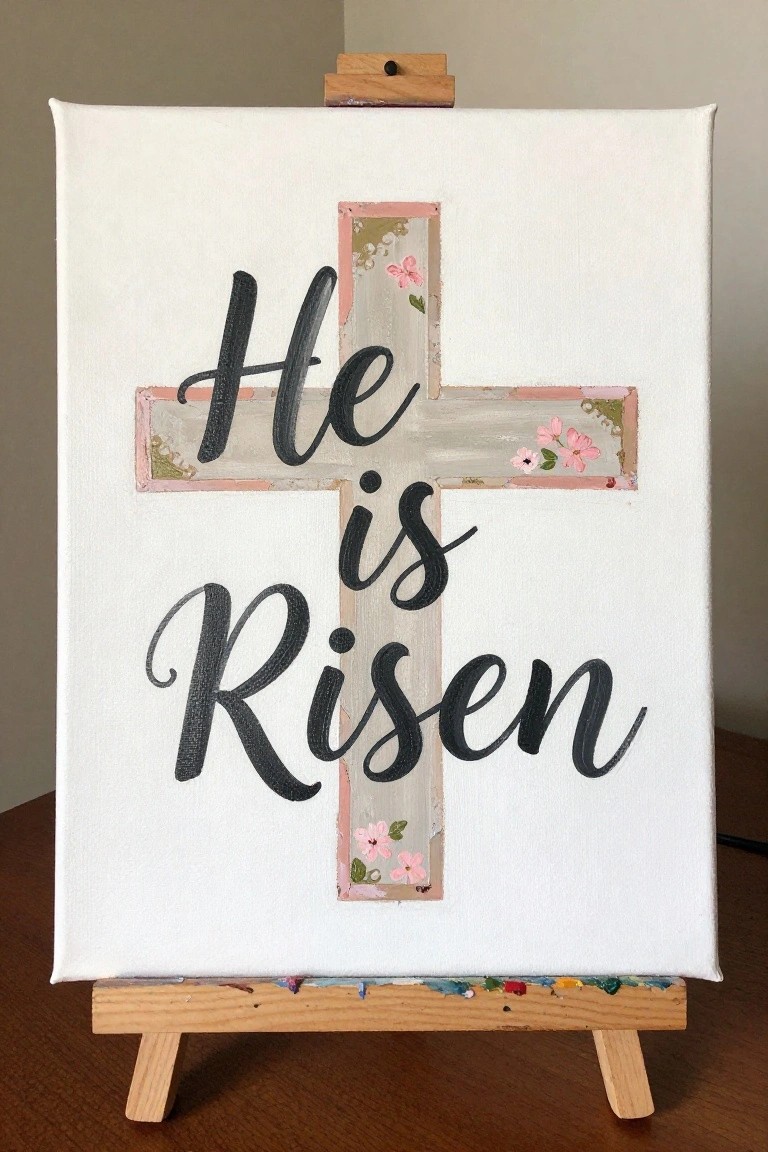
A decorative cross painting combines a central cross shape with soft pink edging and scattered floral motifs to support the overlaid message “He is Risen”. The lettering uses a mix of script and print styles that follow the cross arms, keeping the text as the main focal point while the patterns fill the borders. This setup creates a clean seasonal piece that blends typography with simple decorative accents.
What makes this idea useful is the built-in structure of the cross, which guides placement of both the text and the smaller floral details. You can adapt it by changing the border color, using printed paper scraps for the cross instead of painting patterns, or resizing the canvas to fit different wall spaces. For Easter displays, the approach stands out because it keeps the message clear while adding just enough detail to feel finished.
Grid of Patterned Easter Eggs
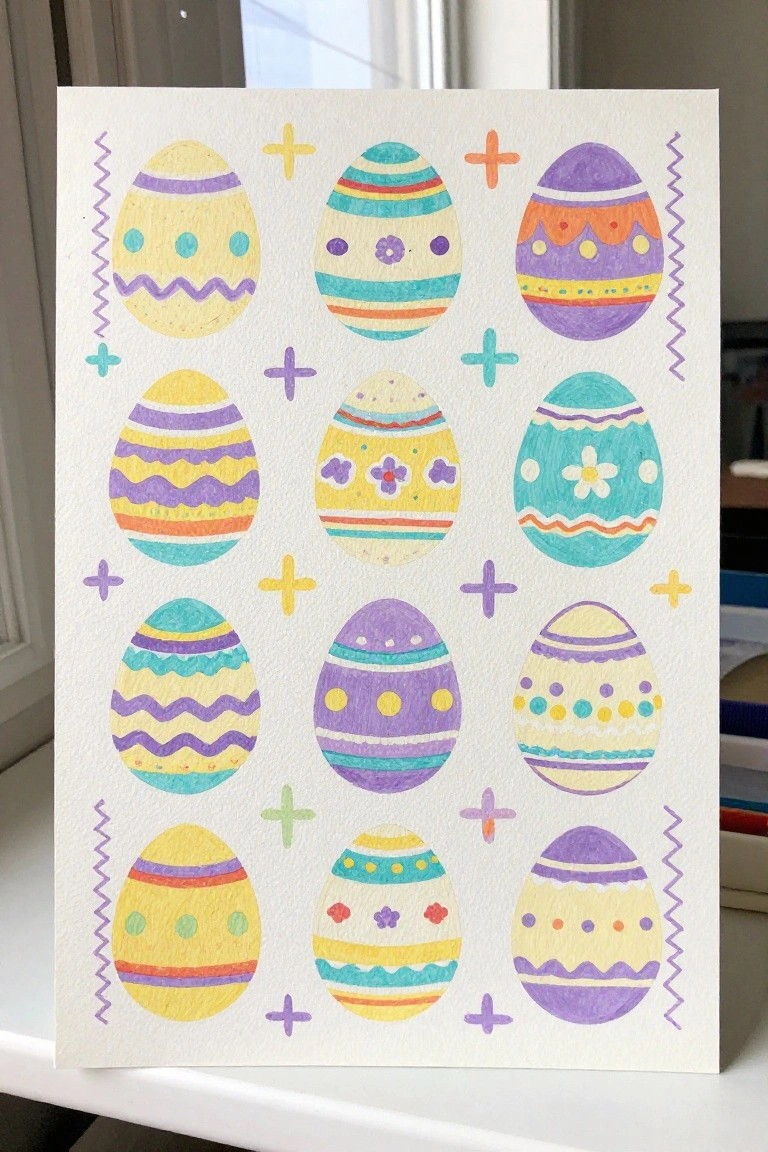
A grid of decorated Easter eggs works well as a seasonal display when each egg carries its own simple pattern of stripes, waves, dots, or small flowers. The idea relies on repeating the same oval shape across rows while varying the color combinations and surface details to hold interest. Small plus signs and zigzag lines placed between the eggs keep the overall layout balanced and prevent empty space from feeling flat.
What makes this idea useful is that the uniform egg shape removes the need to invent new outlines for every section. You can paint as many or as few eggs as your surface allows and swap in different color groups without changing the basic structure. The layout also translates easily to smaller formats like greeting cards or larger canvases for wall display.
Sunset Cross Against a Blended Sky
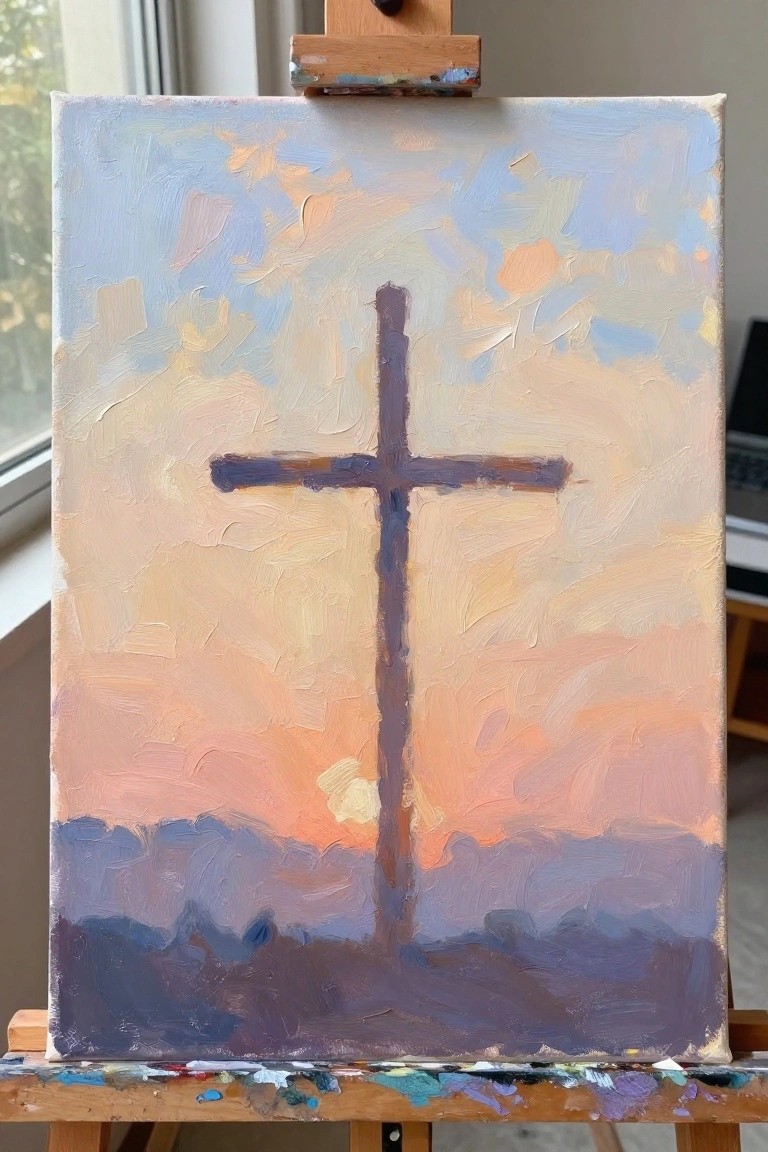
A cross painting set against a sunset gradient gives you a straightforward seasonal piece that works for Easter displays. The idea uses a centered cross shape with a warm-to-cool sky behind it and a darker band across the bottom to anchor the composition. Loose brushwork and overlapping colors create the sky effect while keeping the cross as the clear focal point.
The composition does a lot of the work here because the strong vertical and horizontal lines let you spend most of your time on simple color blending. You can change the sky tones to match whatever paints you already have or shrink the whole thing for a smaller canvas. This kind of painting adapts easily if you want to add subtle cloud shapes or keep the background smoother. It also photographs well for sharing because the contrast between the dark cross and bright sky reads clearly even in smaller images.
Loose Watercolor Easter Egg Cluster
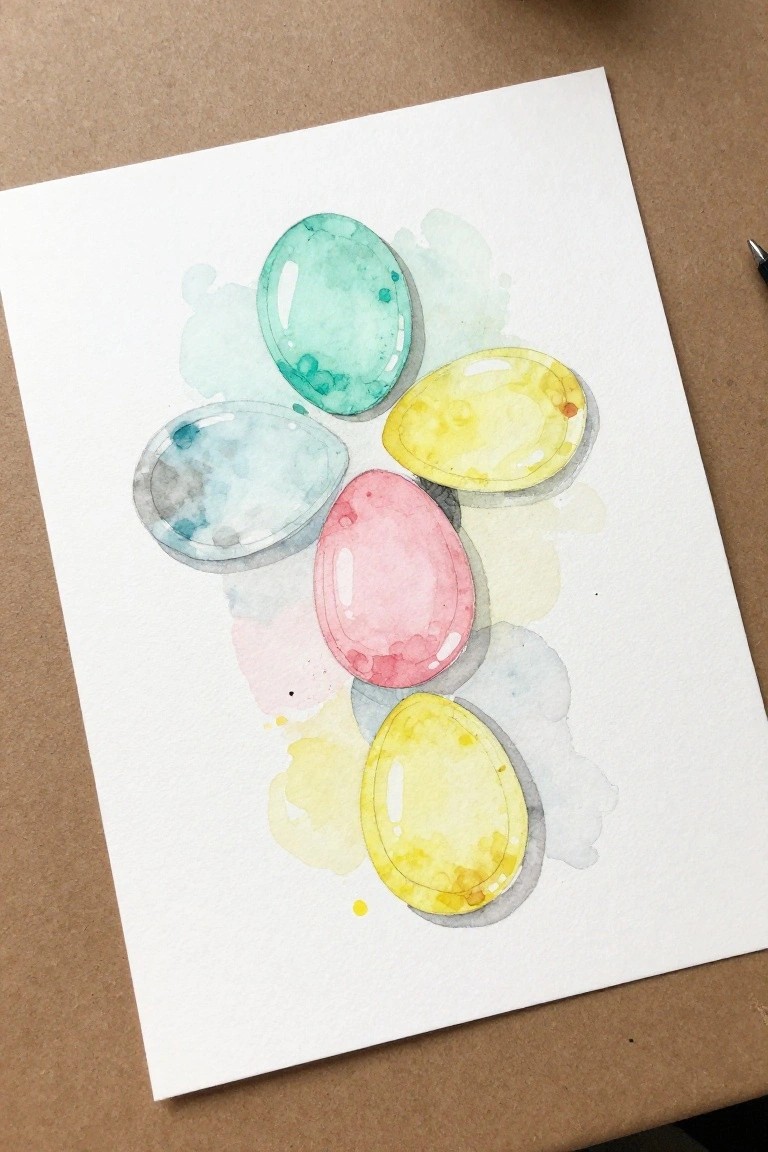
A painting idea like this uses simple overlapping ovals in soft pastel tones to create a seasonal display piece. The eggs sit in a loose grouping with light washes that let colors blend at the edges and a few background spots to suggest shadow and depth. This approach works as decorative seasonal art because the shapes stay easy to repeat while the muted palette keeps the overall look balanced.
The composition does a lot of the work here by letting the ovals overlap just enough to feel natural without needing precise placement. A painting like this works especially well for quick Easter wall art or small framed pieces since the scale can shrink for cards or grow for larger canvases. The color palette makes this easy to adapt by swapping in different pastels or adding one accent hue to match existing home decor. For practice, this kind of subject lets you focus on wash control and highlights without complex drawing.
Chicks Placed Around a Simple Cross
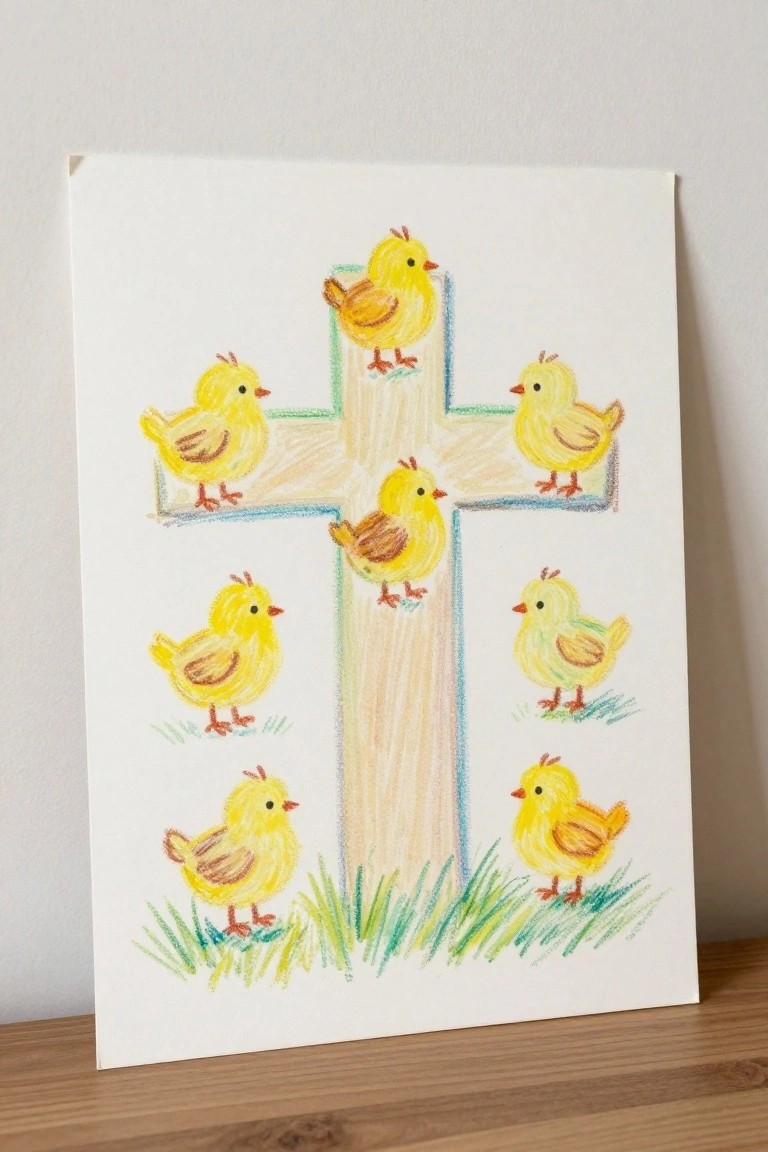
A wooden-style cross serves as the main structure with yellow chicks positioned at different spots around it. Some chicks sit on the arms while others stand below on patches of green grass. The idea works because the chicks stay small and repeated so the cross remains the clear center without needing extra elements.
What makes this idea useful is how the chicks can be painted in stages so you can move them around until the spacing looks balanced. You could reduce the number of chicks for a smaller frame or skip the grass and keep the background plain white. The layout stays flexible for different canvas sizes and works well when you want something seasonal without a lot of layers or shading.
Watercolor Cross Layered Over Berry Branches

A cross shape left in white space sits directly over a cluster of green leaves and purple berries painted in soft watercolor washes. The foliage flows around the cross arms so the plant and symbol share the same space instead of one sitting on top of the other. Loose brushwork and varied green tones keep the focus on the natural shapes while the clean edges of the cross create clear contrast.
What makes this idea useful is the option to paint the plant first and then add the cross as a paper cutout or masked area. The berry colors give a simple seasonal detail that works for Easter without extra elements. You could shrink the whole layout for greeting cards or repeat the same leaf shapes in different sizes to fill a larger frame. The background stays plain so the idea stays easy to adapt for quick projects.
Cross with Pink Accent and Rabbit Silhouette

A cross painted in soft off-white covers most of a gray canvas, with the horizontal section tinted pale pink to create a quiet color shift. The rabbit silhouette sits low on the right side, leaving the rest of the background open so the cross remains the clear focal point. This layout uses simple blocks of color and one small animal shape to give the piece an Easter feel without adding extra detail.
The composition does a lot of the work here by placing the rabbit off-center so it supports the cross instead of competing with it. You could swap the gray for any neutral tone or change the pink to another pastel if it fits your room better. This idea suits quick Easter decor because the shapes stay basic and the rabbit can be traced or painted freehand. For wall pieces, the same layout works at different sizes since it relies more on placement than on fine brushwork.
Speckled Egg Cross Arrangement

A cross built from individual egg shapes painted in soft pastel tones with speckles and light shading creates a clean seasonal decoration. The arrangement places eggs along both axes to form the cross while keeping the background plain so the colors stand out. This fits the decorative art category and works because the repeated oval forms and gentle color shifts give the whole piece a balanced, orderly look without extra detail.
The composition does a lot of the work here since the grid-like placement makes the cross shape easy to read at a glance. You can adapt the idea by changing the egg patterns to stripes or dots or by switching to a bolder color set for more contrast. For Easter home displays this layout stays simple enough to finish in one session while still looking finished on a wall or shelf. The same idea scales down easily for greeting cards if you keep the same spacing.
Layered Floral Cross in Pastel Tones

A cross made from small raised flowers in soft pink, blush, and white creates a simple seasonal piece for Easter. The flowers sit directly on a loosely brushed background of pink and gray tones that gives the cross clear definition without sharp edges. This turns a standard cross shape into a floral arrangement that stays easy to read from a distance.
The background brushwork does most of the work by keeping the focus on the flower cross while adding subtle depth. You can swap the flower colors to match existing room tones or reduce the number of blooms if you want a quicker version. The same layout also works on a smaller canvas or as a practice piece before trying larger decorative projects.
Cross Filled With Patterned Easter Eggs
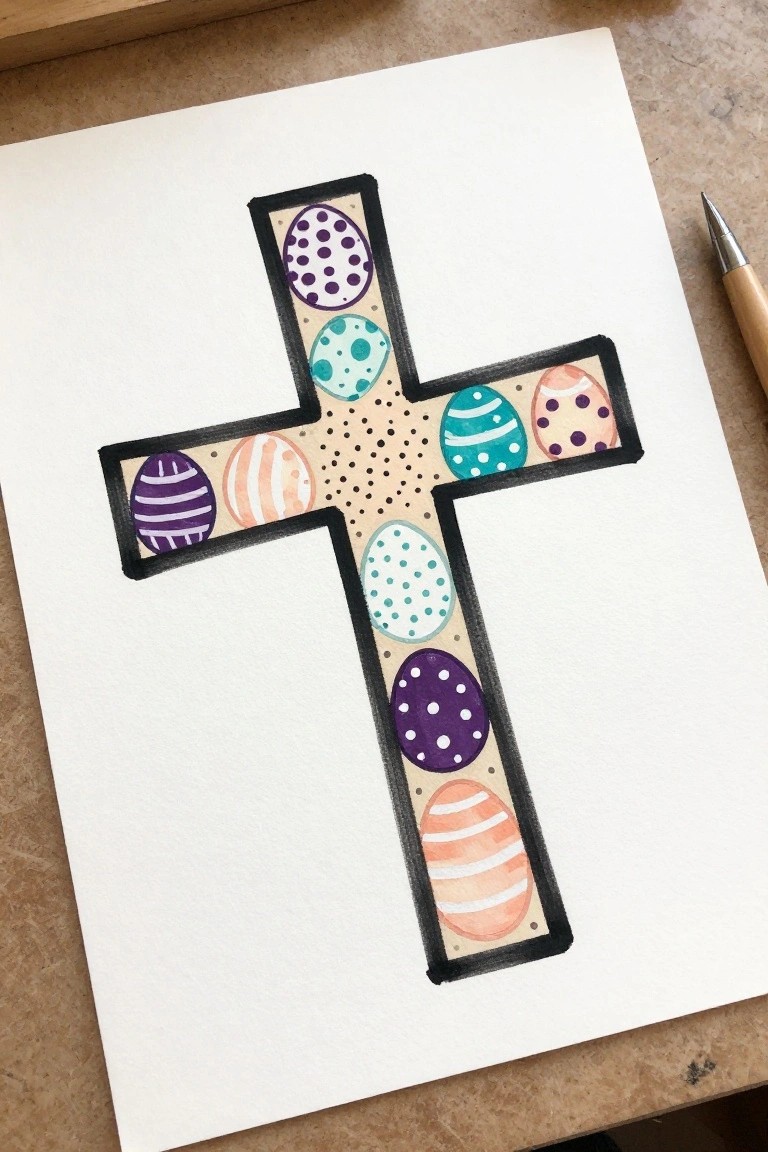
Fill the arms of a cross with individual Easter eggs, each painted in a different pattern of stripes or dots. Use a limited set of pastel colors across the eggs and add small dots along the inner edge of the outline to connect the sections visually. The black border around the whole shape keeps the scattered egg designs from looking busy.
What makes this idea useful is how the egg patterns can be swapped out for whatever colors or styles you already have on hand. You can paint it larger for a framed piece or shrink the same layout for place cards or tags. The repeating egg shape also makes it simple to practice consistent sizing and spacing without needing extra elements.
Fresh Green Cross with Easter Sprigs and an Egg

A large cross painted in soft blended greens and teals sits at the center with a pale yellow border that helps it stand out. Small line-drawn leaves, one patterned egg, and a patch of grass at the base add an Easter touch while keeping most of the page open and simple. The loose watercolor wash inside the cross gives it a light, fresh feel that works well for seasonal wall pieces.
What makes this idea useful is how the cross remains the clear focal point even with just a few scattered accents around it. You could easily change the greens to other soft spring colors or drop the egg if you want a more general look. The simple line elements also make it quick to adapt for cards or smaller canvases without losing the overall balance. For practice, this kind of layout helps you work on watercolor blending while the surrounding details stay low-pressure.
Frequently Asked Questions
What supplies do I need to get started with these cross painting ideas?
Start with wooden or canvas crosses available at craft stores, along with acrylic paints in Easter colors like pastels and metallics, brushes of various sizes, sandpaper for smoothing surfaces, and sealants such as varnish for protection. Add optional items like stencils for patterns, glitter for accents, or ribbons for hanging to match the 18 ideas in the article. Buying in bulk from online suppliers can reduce costs if you plan multiple projects.
How can beginners achieve professional-looking results with these designs?
Begin by sketching your chosen design lightly with a pencil before painting to avoid mistakes. Work in thin layers of paint and allow each to dry fully, using a hairdryer on low heat to speed the process if needed. Practice on scrap wood first to test color blends, and follow the article’s simpler ideas like floral motifs or cross outlines before attempting detailed scenes. This builds confidence while creating durable pieces for your Easter display.
Can these painted crosses be used in other seasons or holidays besides Easter?
Yes, many designs adapt easily by changing color schemes, such as using autumn tones for Thanksgiving or red and green for Christmas. Repurpose floral or nature themes from the article into spring or summer decor by adding seasonal elements like leaves or stars. Store them properly in a cool dry place to reuse yearly, which saves time and adds personal touches to year-round home displays.
What are some tips for displaying the crosses in a home setting?
Arrange them on mantels, walls, or tabletops in groups of three or five for visual balance, using stands or hooks that match your decor. Incorporate them into centerpieces with flowers or candles to enhance the Easter theme without overwhelming the space. Ensure they are placed away from high-traffic areas or direct sunlight to prevent fading, creating an inviting atmosphere that ties into the article’s creative concepts.
How do I ensure the paint adheres well and lasts over time?
Prepare surfaces by cleaning and lightly sanding them to create texture for better grip. Apply a primer coat before painting and finish with multiple thin layers of sealant after the design dries completely. Avoid exposing the crosses to moisture or extreme temperatures, and touch up any chips with matching paint as needed. These steps help the pieces remain vibrant for future holidays.