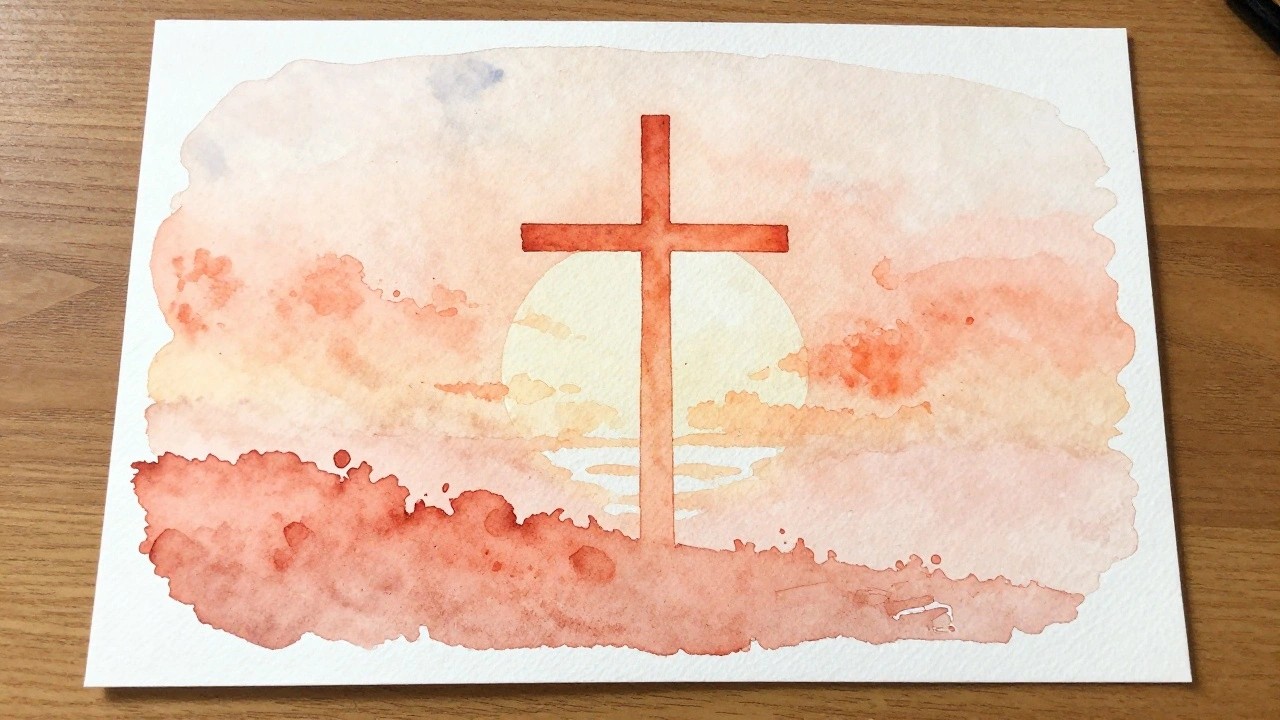
I have been trying out some watercolor paintings of Jesus and found that simple wash techniques make the process much easier for beginners.
They help create soft layers without needing a lot of control or detail work.
I came up with 16 ideas that stick to basic supplies and steps anyone can follow.
Most of them focus on gentle backgrounds and simple figures rather than complex shading.
These are the ones I keep coming back to when I want a low pressure project.
Cross Silhouette at Sunset
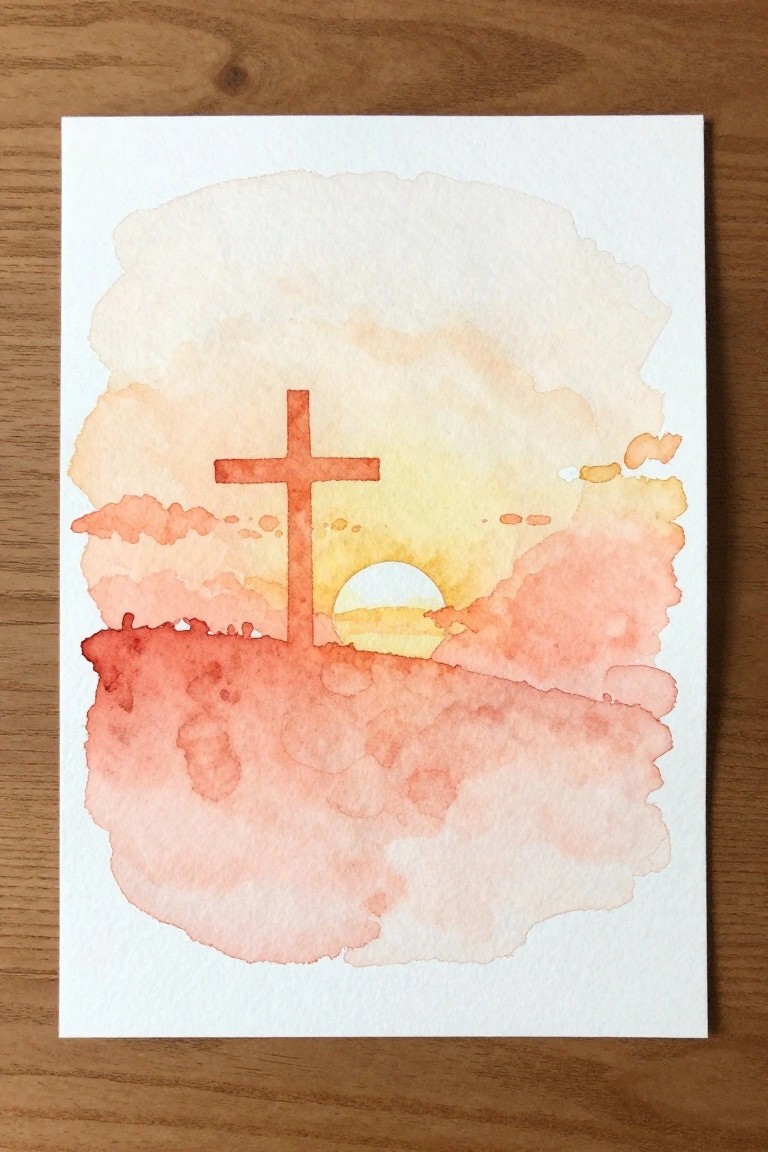
A cross centered in front of a setting sun forms the core of this painting idea, built around a single wash that blends yellow into orange and red. The sky wash handles most of the color work while the cross remains a flat shape that stands out without extra shading. Soft cloud edges around the wash give the scene depth without requiring precise brush control.
The composition does a lot of the work here because the cross naturally divides the sky and keeps the focus in the middle. You can swap the warm palette for cooler tones or stretch the wash higher or wider depending on your paper size. This approach works well for quick practice pieces or small wall prints since the main shapes stay easy to adjust.
Jesus Portrait with Flowing Hair and Subtle Halo
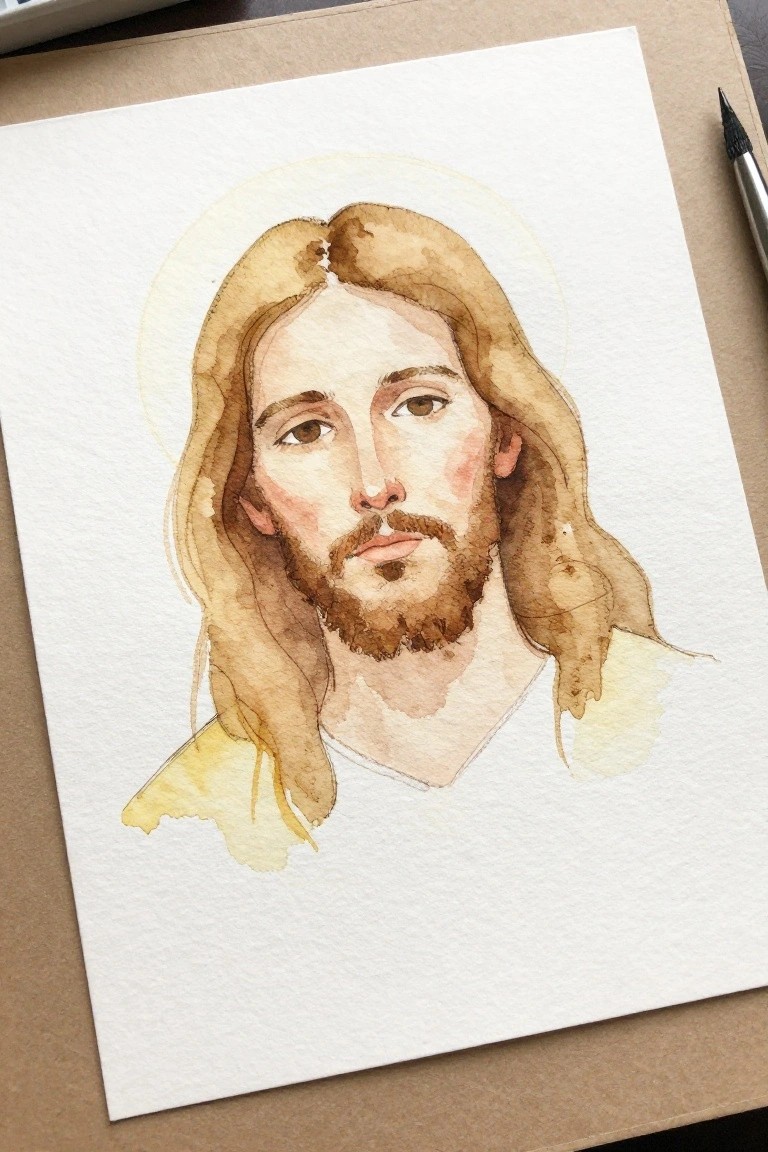
A close-up portrait of Jesus makes a strong subject for wash techniques because the face stays centered while the hair and shoulders can be built with loose, overlapping layers. The composition works by letting the hair frame the features on both sides and keeping the halo as a faint outer ring rather than a bold shape. This type of religious portrait relies on simple value shifts in skin and hair tones instead of fine line work.
What makes this idea useful is the way the hair can be painted in a few broad strokes that follow natural direction without needing individual strands. The limited palette of browns and soft yellows keeps mixing straightforward and helps beginners focus on placement rather than color choices. You could easily adapt it by changing the angle of the head or shortening the hair length for a different look while keeping the same wash approach. For practice, this subject stays approachable because the main shapes are organic and forgiving.
Jesus Standing Among Sheep in a Green Field
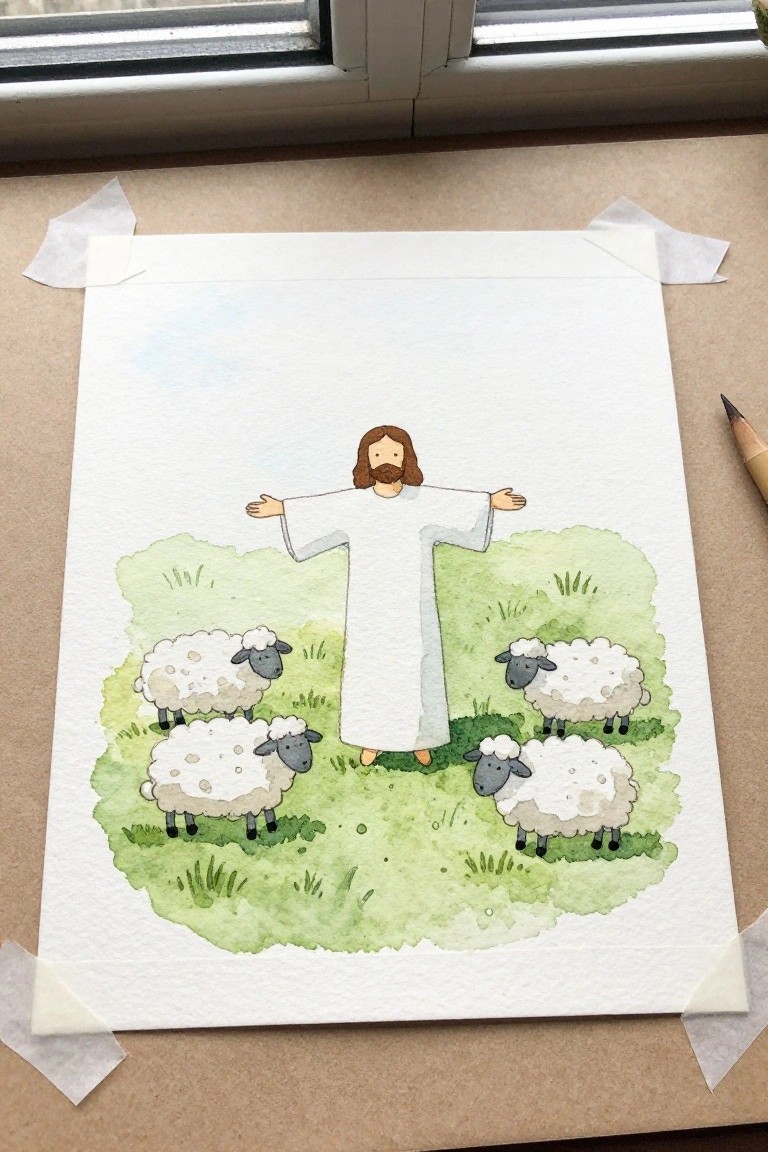
A central figure of Jesus with arms extended stands in a grassy area with a small group of sheep placed around the lower section. This idea relies on simple shapes for the figure and animals paired with a soft green wash for the ground to form a basic biblical scene. The layout keeps the white robe as the main visual anchor by spacing the sheep unevenly across the foreground.
What makes this idea useful is how the open background and limited sheep count let you finish the painting quickly while still filling the page. You can adjust the number of animals or shift their positions to match different paper sizes without redrawing the whole scene. For wall art or greeting cards the clean layout leaves space to add text later if needed. The wash technique for the grass also works well if you want to swap in a different background color.
Lone Boat with Light Reflection Path
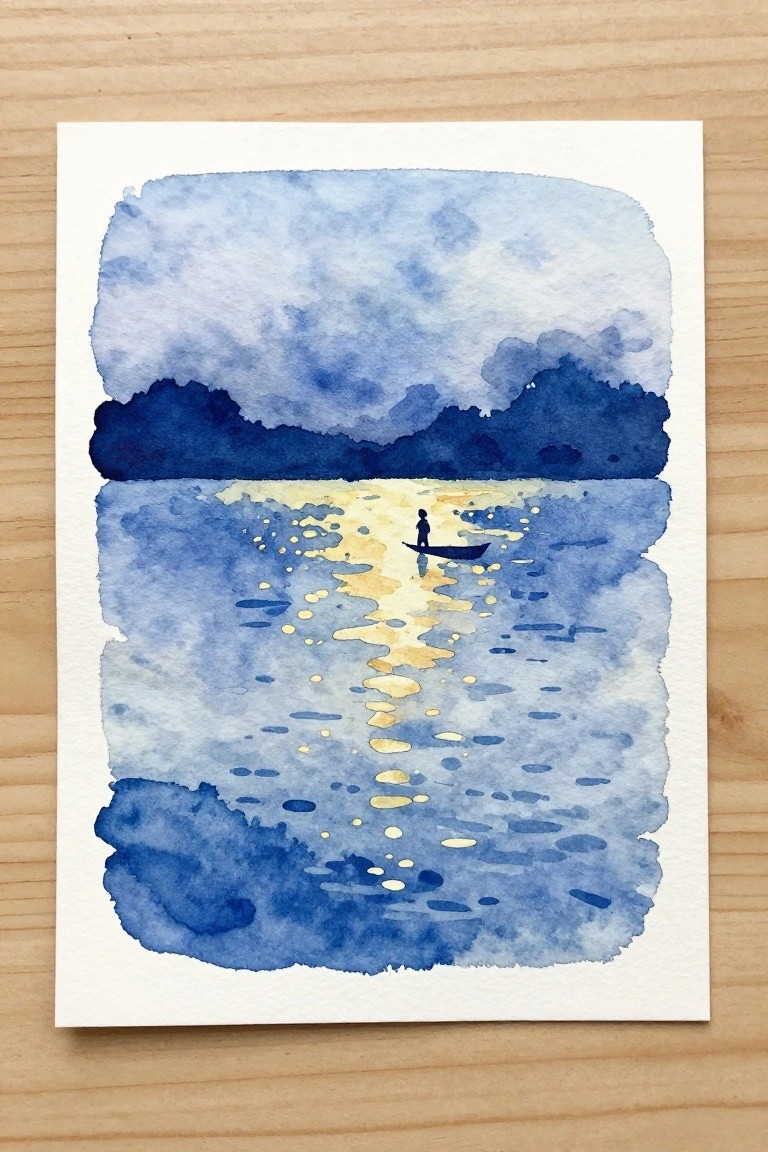
A lone figure in a small boat on open water creates the core of this painting idea. Broad horizontal washes set up the sky and water areas first, then a narrow band of lighter color runs down the center to suggest a reflection that leads the eye to the boat. The simple silhouette of the boat and person sits right where the light path meets the middle ground, keeping the whole scene balanced without extra elements.
What makes this idea useful is how the washes do most of the work, so only the boat needs a few quick strokes at the end. The same layout works in different color combinations, such as swapping the yellow path for orange at sunset or keeping the cool blues for a daytime version. For practice, the idea helps focus on placing one small shape against large soft areas rather than building lots of detail. It also scales easily from a small card to a larger piece by stretching the water section.
Jesus Sitting with a Sheep on a Grassy Hill
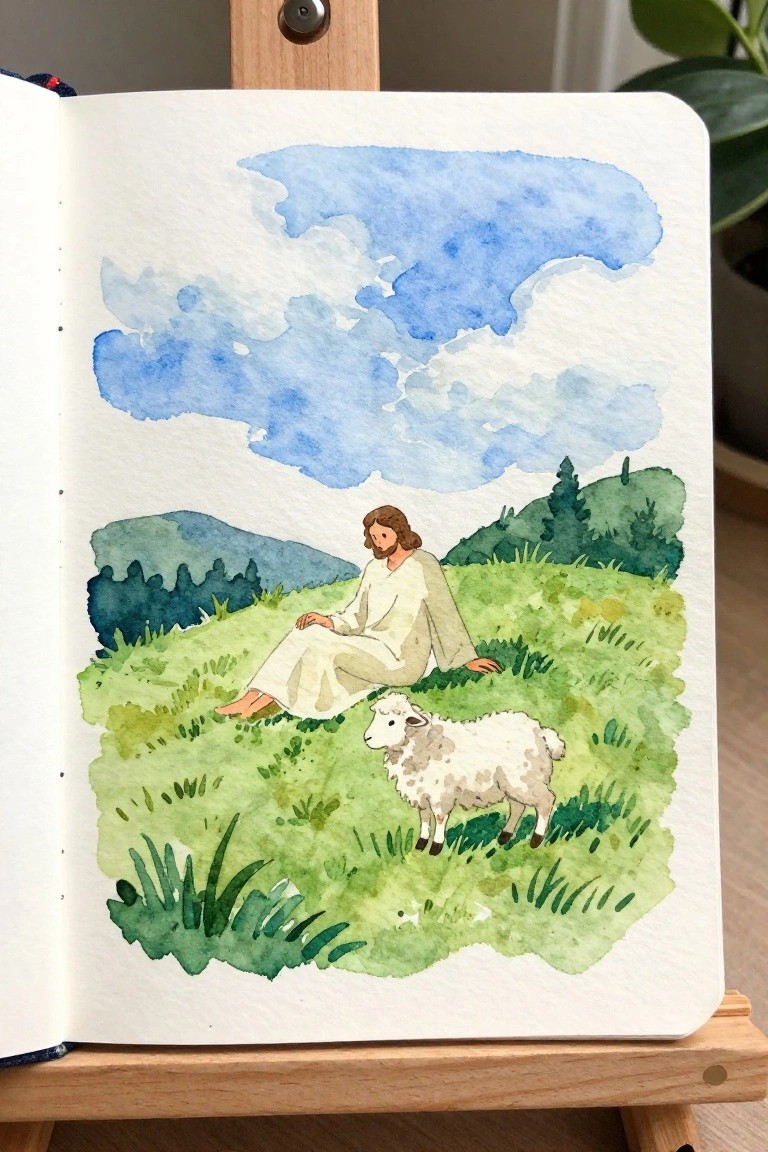
A landscape scene with Jesus seated on a hillside beside a sheep gives a clear central subject while using simple layered shapes for the grass, hills, and sky. The figure sits slightly off-center with the sheep placed lower in the frame, which keeps the eye moving between the two without crowding either one. Broad sky washes above and soft green layers below create separation that makes the main elements stand out.
What makes this idea useful is how the open field layout lets you practice large wash areas first before adding the figure and animal. You can shrink the sheep or shift the hill colors to change the season without redrawing the whole scene. For practice, this kind of subject works well because the background stays simple enough to keep the focus on placing one main figure.
Christian Fish Symbol Using Simple Washes
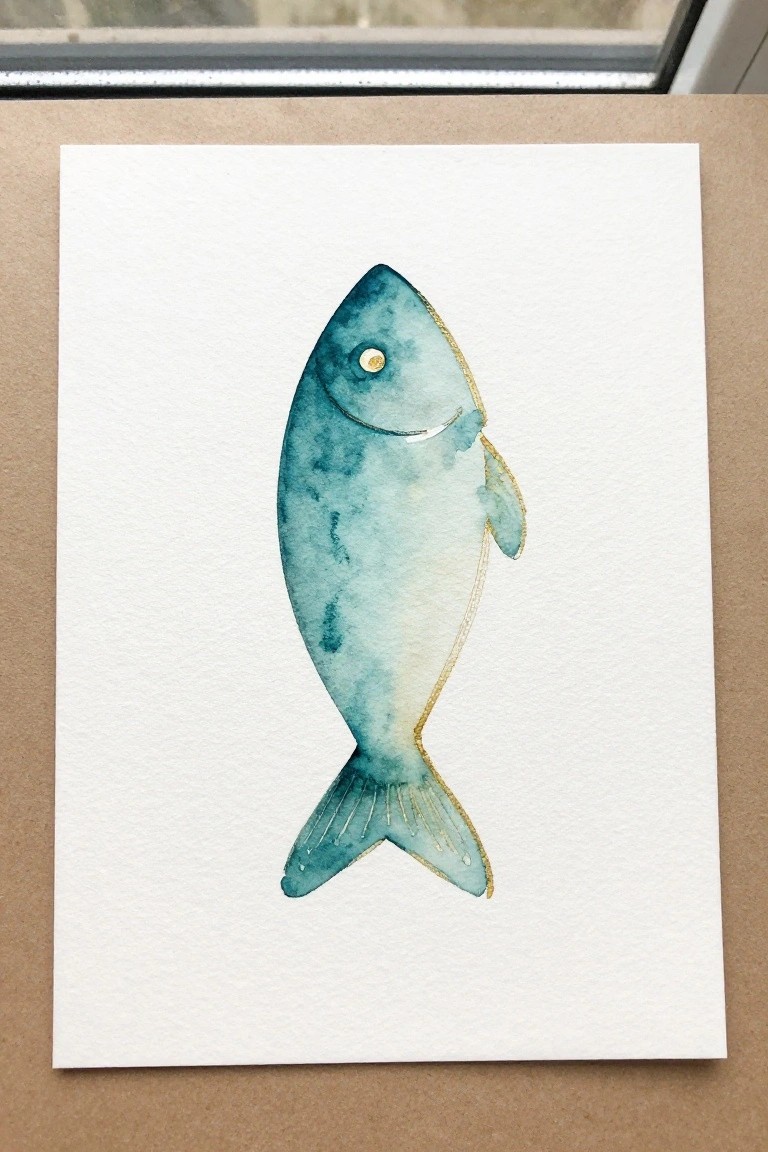
A fish shape built from blended blue and teal washes gives beginners a clear subject for practicing soft color transitions without needing precise details. The centered vertical placement and light gradient from head to tail keep the form readable while the thin gold line defines the edges cleanly. This approach fits the animal category with a symbolic twist that stays minimal.
What makes this idea useful is how the basic shape supports quick practice sessions or small finished pieces for cards and desk art. You can swap in different blue tones or skip the gold line if you want an even simpler version. The open background also makes it easy to crop for social media posts or add a short phrase underneath later.
Crown of Thorns Branch
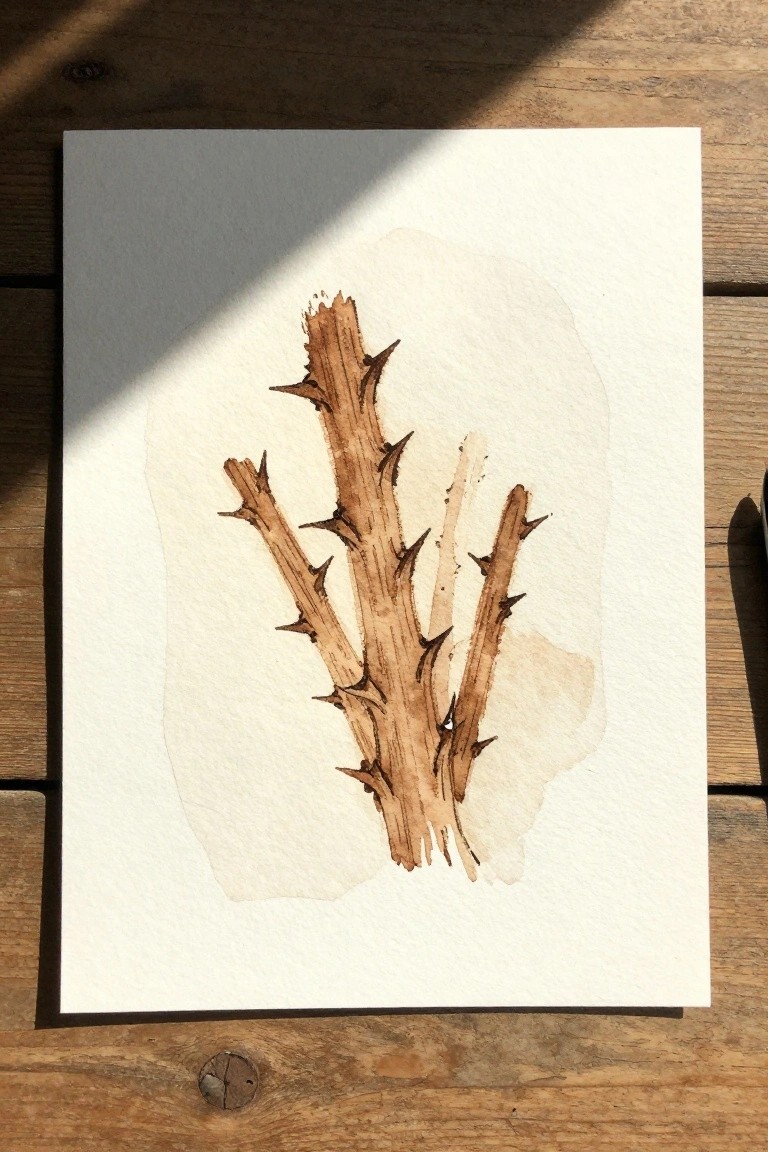
A crown of thorns works well as a subject built around simple wash techniques. The idea centers on a tight cluster of rough branches with prominent spikes that fan outward from a central point. Brown tones handle both the main forms and the soft background wash, letting the spiky shapes stand out through contrast rather than fine detail.
What makes this idea useful is how the basic branch shapes give you an easy starting point for practicing washes while adding texture with just a few darker strokes. The color palette makes this easy to adapt by shifting to deeper reds or keeping it minimal for a quick study. For practice, this kind of subject works especially well because the composition stays balanced even if your lines are loose, and the same layout scales down easily for cards or bookmarks.
Jesus Praying Under a Tree
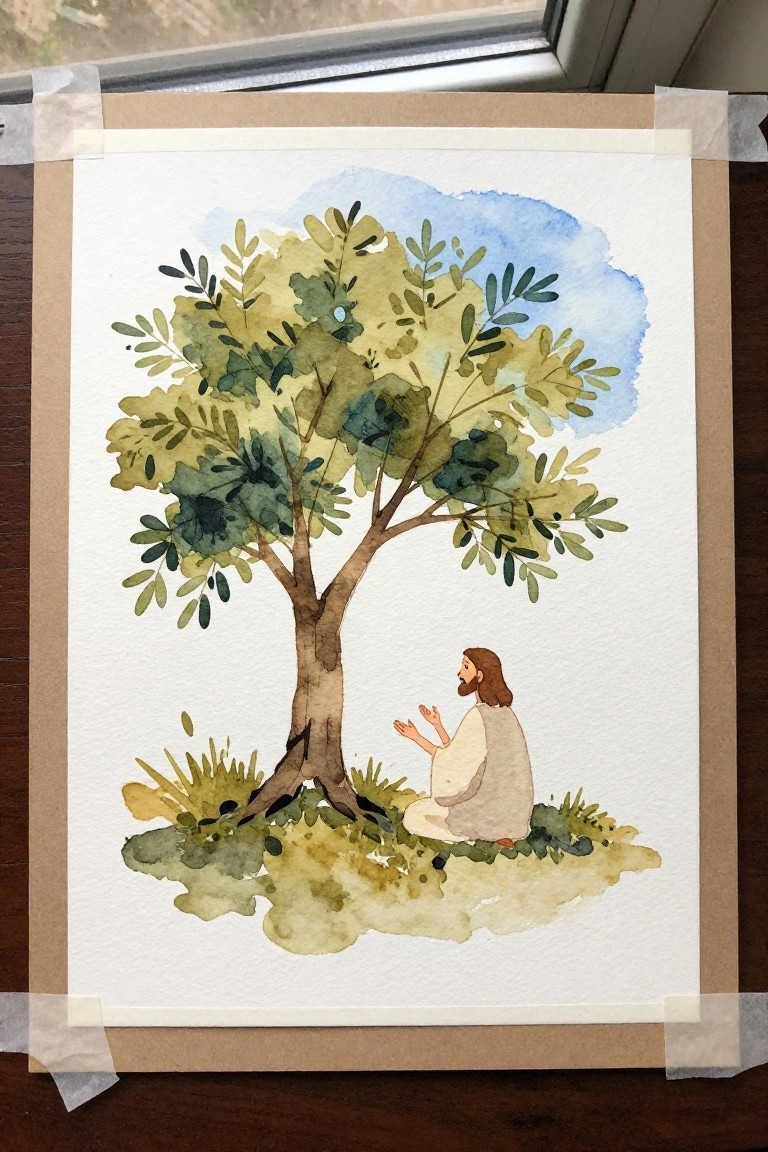
A simple scene of Jesus kneeling in prayer next to a large tree makes an easy subject for watercolor. The tree takes up most of the left side with loose washes of green and blue-green for the leaves, while the figure sits on the right with minimal detail. The ground uses a single soft wash that connects both elements without adding extra layers.
What makes this idea useful is how the tree acts as a natural frame that keeps the figure from floating in empty space. You can change the leaf colors for different seasons or shrink the tree to fit a smaller page. For practice this layout works well because the washes stay broad and the figure stays small enough to avoid complicated proportions. The same setup can be adapted into a greeting card by cropping the tree closer to the edge.
Simple Jesus Face with Circular Wash Halo
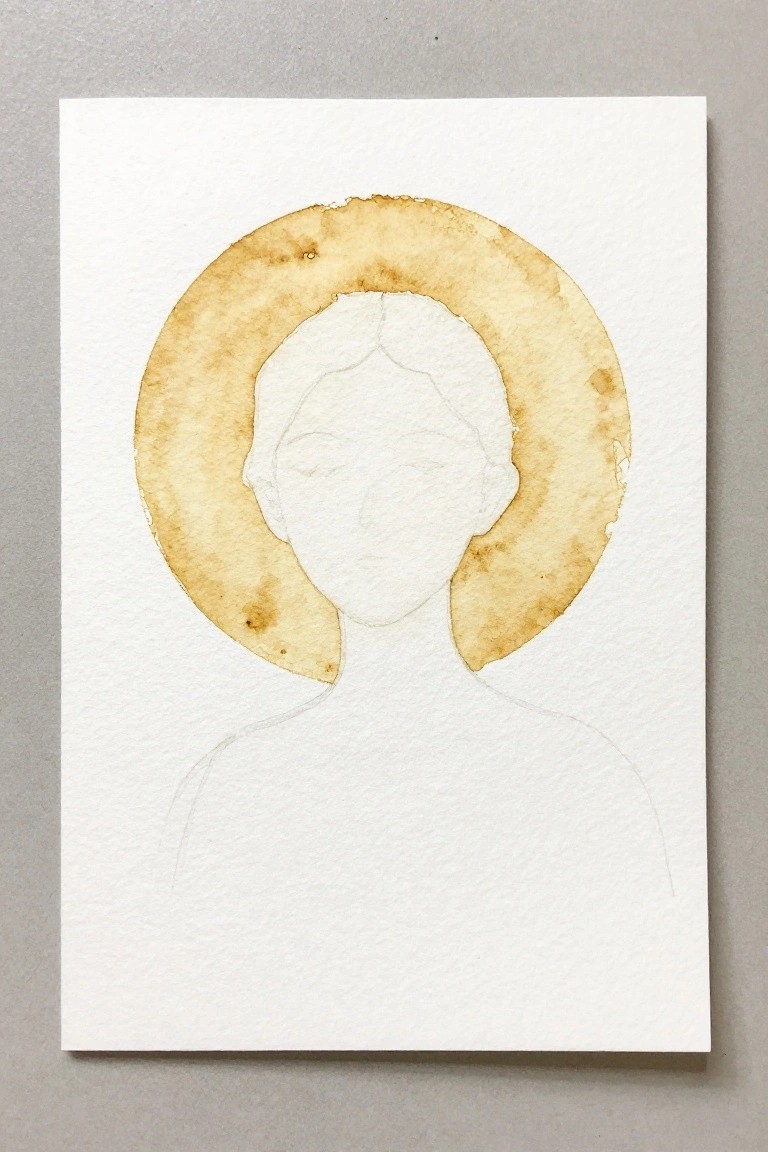
A basic line drawing of Jesus with closed eyes sits inside a large circular wash that doubles as the halo. The idea keeps the face minimal with soft pencil lines while the wash supplies the main shape and texture through its uneven edges. This approach fits decorative religious art that uses one dominant wash element to anchor the composition.
What makes this idea useful is how the wash does most of the work, so only light sketching is needed for the face. The circle shape can be sized up or down depending on whether you want a small card or a full page piece. Try varying the wash color slightly or adding a second faint wash layer around the shoulders if you want a quick variation.
Circle of Children Watercolor Scene
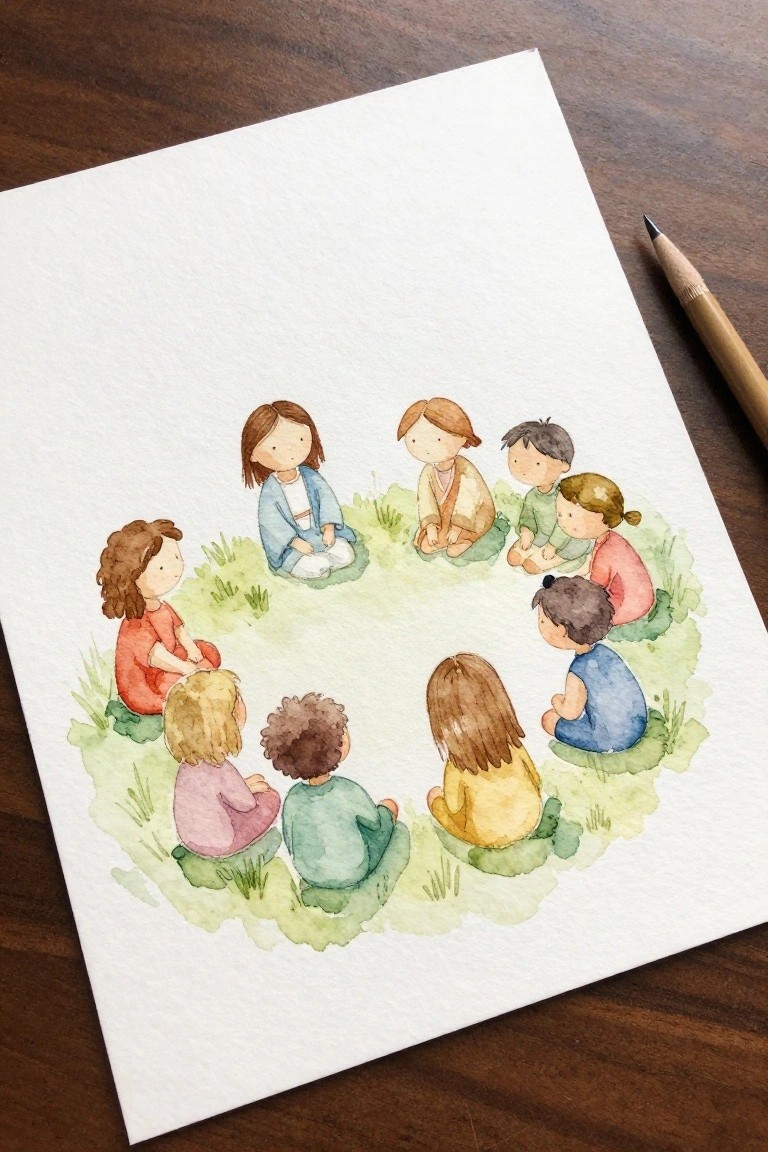
Painting a group of children seated in a circle on grass uses basic figure shapes and light washes to build a balanced scene without much detail. The circular arrangement keeps the composition simple while the soft green wash underneath connects the figures and adds a natural setting. This approach fits the cute illustration category and works well for practicing how to place multiple figures together.
The composition does a lot of the work here by guiding the eye around the circle so you do not need extra background elements. You can easily change the clothing colors or reduce the number of children to make it quicker to paint. This would be easy to turn into a story illustration or adapt for different paper sizes when making prints or cards. For practice, this kind of subject helps you focus on shape repetition and wash control at the same time.
Praying Hands with Loose Background Washes
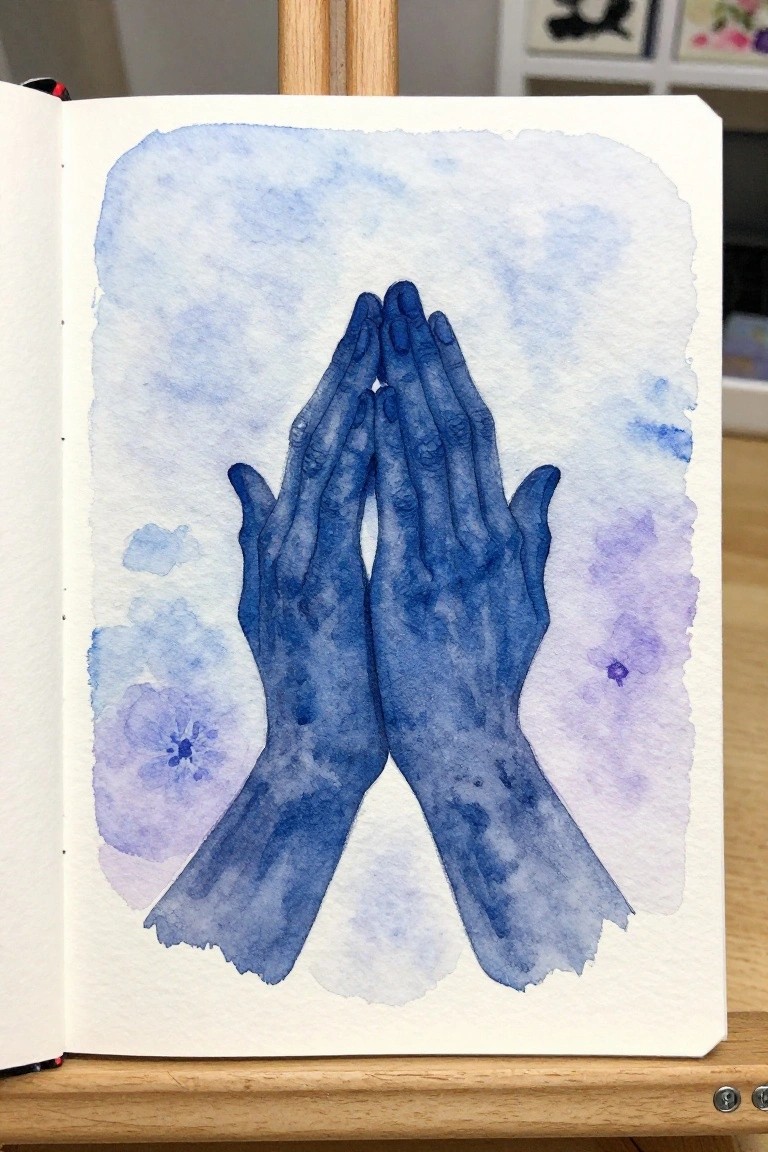
A pair of hands held together in prayer serves as the main subject for this painting idea. The vertical composition keeps the focus tight on the joined palms and fingers while the surrounding space stays open and minimal. Cool blue tones on the hands contrast with softer background washes and scattered shapes to keep the overall layout balanced and simple.
What makes this idea useful is how the central placement and negative space do most of the compositional work. The same layout works with different color choices or even a single flat wash if you want to reduce steps. For practice this kind of subject lets you focus on value changes and edge control without needing complex details or multiple layers.
Jesus Portrait Built from Loose Wash Layers
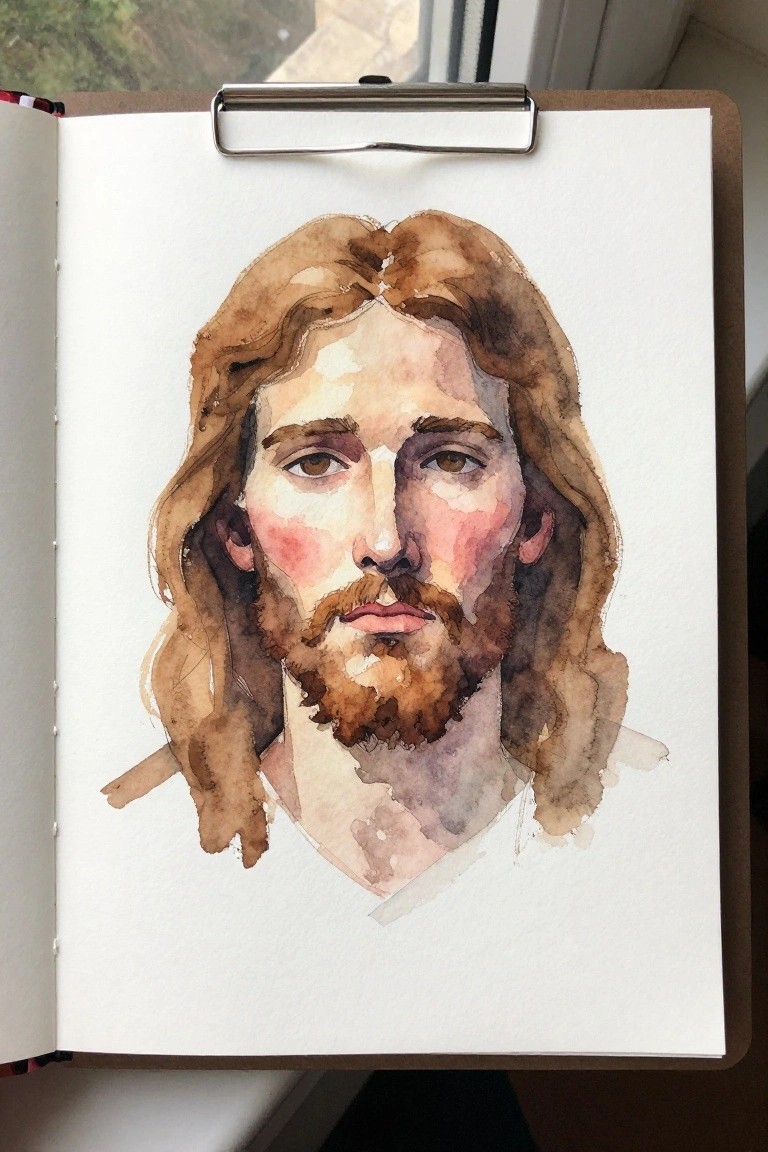
A close-up portrait of Jesus works well when the face and hair are shaped mostly through overlapping watercolor washes instead of detailed line work. The composition keeps the features centered while letting the hair flow outward in broad, uneven strokes that soften the edges. This creates a simple but recognizable figure using just a few color shifts and minimal background.
What makes this idea useful is how the washes do the heavy lifting on texture and shape so beginners can focus on value rather than outlines. The same approach adapts easily to smaller paper sizes or different skin tones by swapping a couple of pigments. For practice, it is a strong choice because the loose hair and soft transitions hide small mistakes while still producing a clear result.
Jesus by the Lantern Boat at Dusk
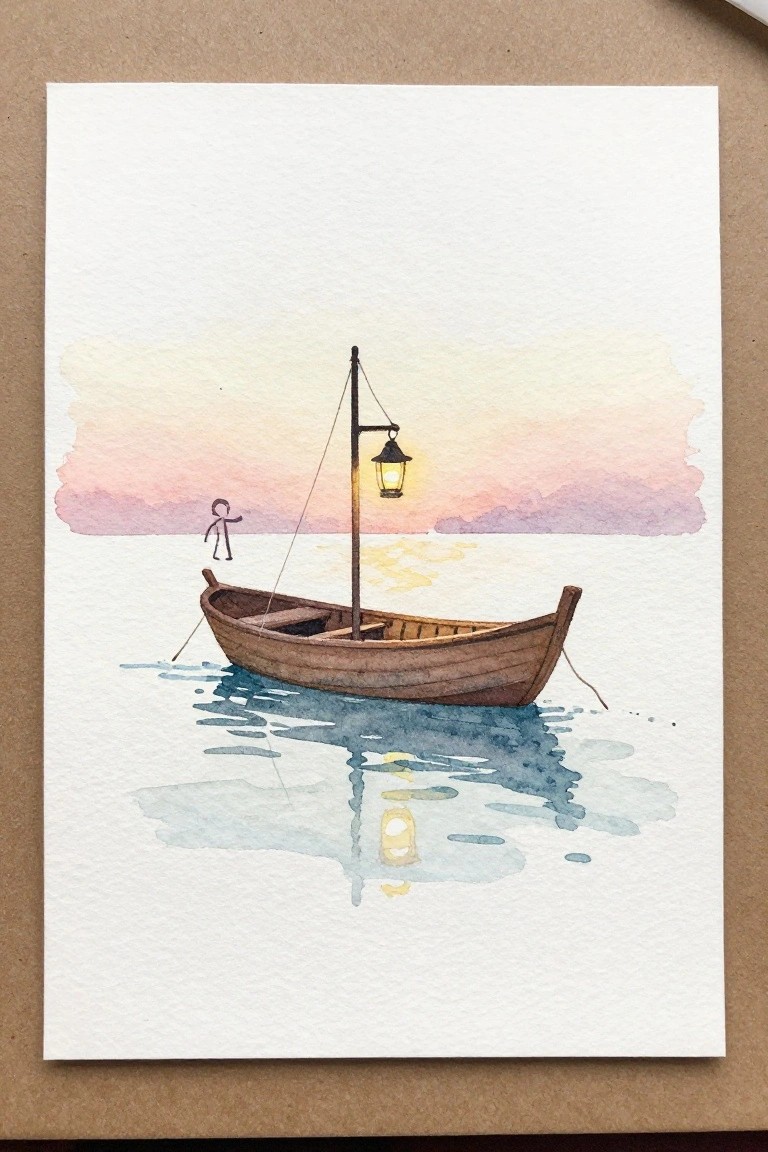
A simple biblical scene with a wooden boat carrying a single lit lantern and a small figure of Jesus standing on the water nearby makes an effective subject for wash techniques. The idea relies on a soft sky gradient in warm sunset colors, a few clean boat lines, and the lantern’s reflection to hold the composition together without extra detail. This fits into a landscape category that stays minimal while still suggesting a story moment.
The composition does a lot of the work here by leaving plenty of negative space around the boat and figure. You can swap the sky colors for cooler tones or shrink the boat even more if you want a quicker version. A painting like this works especially well for practice because the main shapes stay large and the washes handle most of the background. It also translates nicely to small prints or cards since the contrast between the lantern glow and the sky reads clearly at any size.
Jesus with Lambs Using Loose Wash Backgrounds
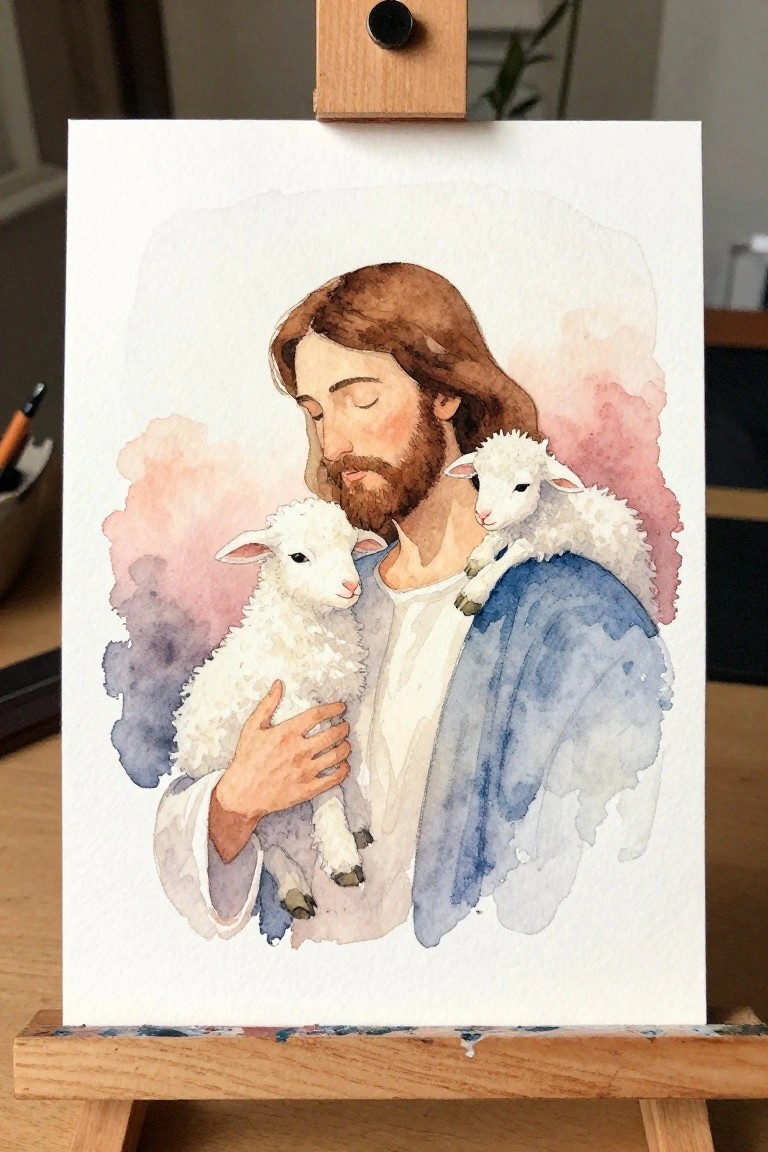
A portrait of Jesus holding lambs works well as a beginner watercolor project because the main shapes stay simple. The figure can be built with a few washes for skin, hair, and clothing while the animals add small details that fit inside the larger form. Placing the lambs close to the face and shoulders keeps the composition balanced without needing complex perspective.
What makes this idea useful is how easily the background can be adjusted with one or two loose washes to change the mood. You can start with just the figure and add the lambs later if you want less detail at first. For practice, this kind of subject lets you focus on soft edges and layering without worrying about perfect outlines. The same layout also scales down nicely for greeting cards or small prints.
Figure Approaching an Open Doorway with Light
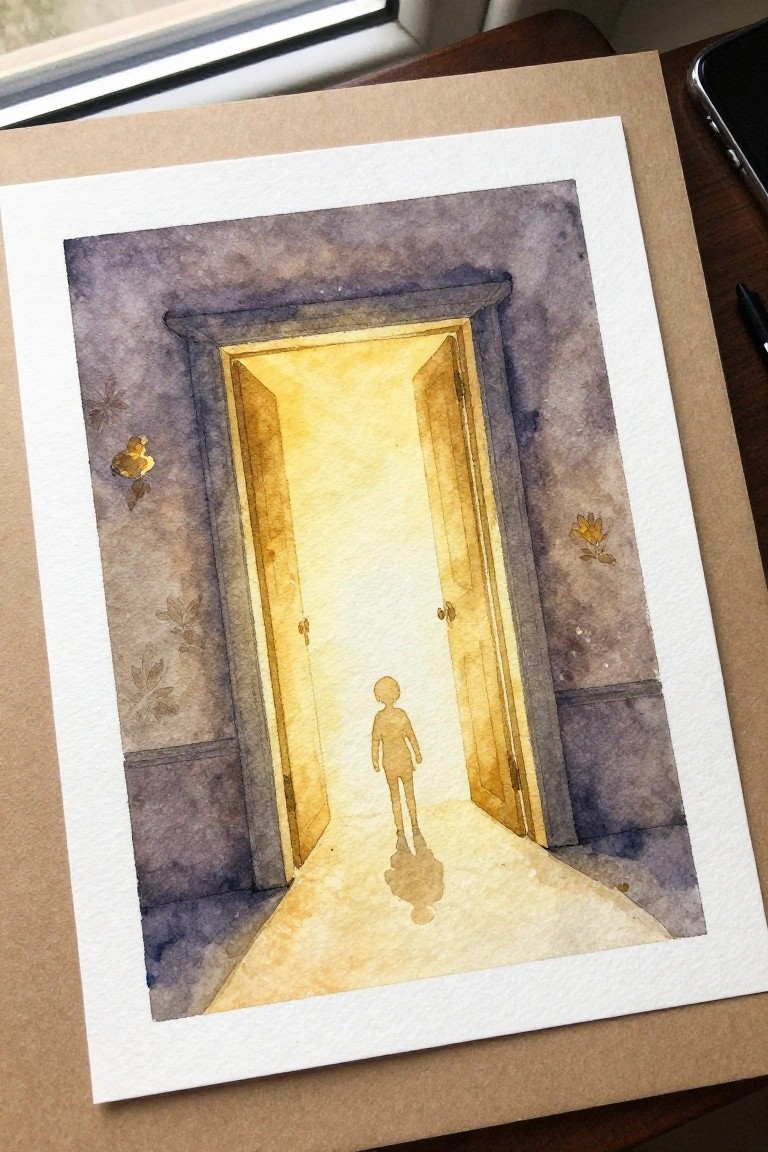
A simple standing figure placed in the center of an open double doorway uses a bright wash to suggest strong light coming from beyond the frame. The surrounding walls stay darker with a single wash layer, and small leaf shapes add minor detail on either side without crowding the space. This setup works as a light study that relies on contrast between the glowing center and the muted background rather than detailed rendering.
What makes this idea useful is the clear division between the light area and the rest of the page, which lets beginners practice controlled washes without needing fine lines. The vertical door frames and floor shape already create depth, so the composition stays balanced even if the figure is kept minimal. You can swap the background color or change the figure to a different size while keeping the same light effect. For practice, this kind of subject builds skill with value contrast that transfers easily to other scenes.
Bread Loaf Watercolor Series
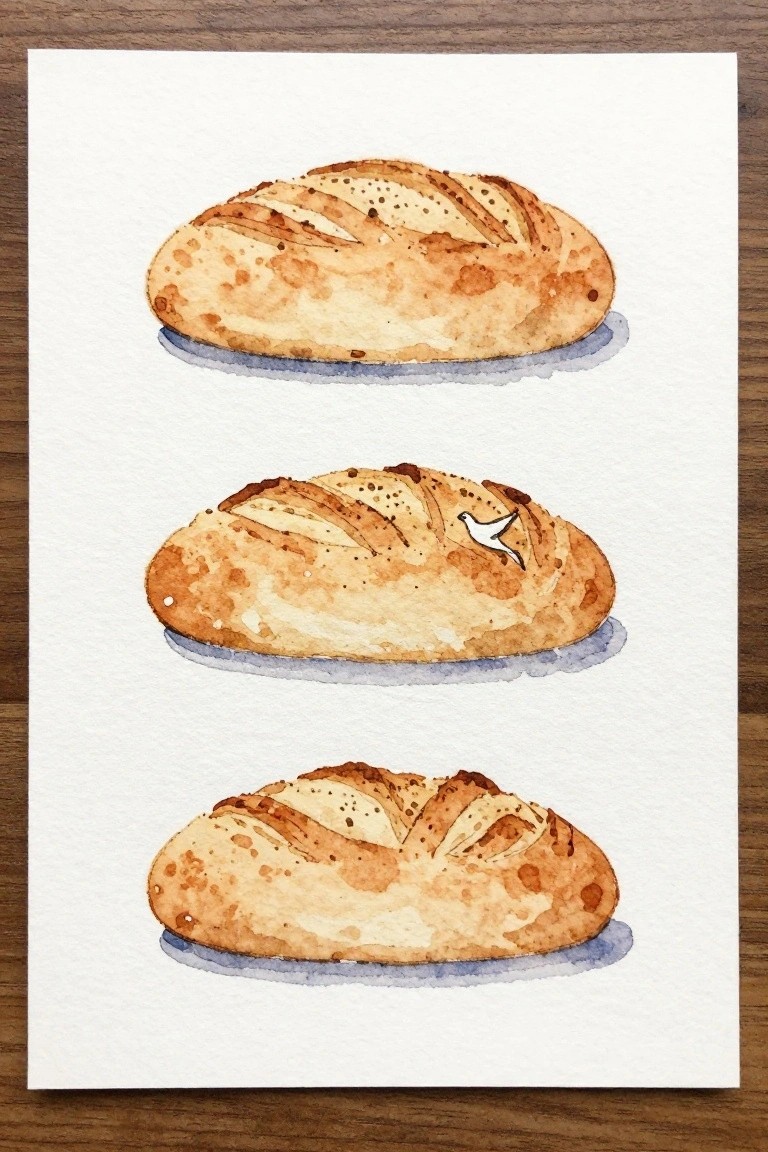
A row of bread loaves painted with overlapping washes creates a straightforward still life exercise built around simple oval forms and warm earth tones. The idea centers on repeating the same subject with minor changes in scoring lines and crust shading so each version feels connected but distinct. A small accent like a bird silhouette on one loaf adds a single point of interest without shifting the focus away from the main shapes.
What makes this idea useful is how the repeated subject gives you multiple chances to test wash control and edge softening on the same basic form. You can swap the blue shadows for another neutral or drop the accent entirely if you want a cleaner look. For practice, this kind of food subject works well because the shapes stay forgiving while still letting you build texture through light layering. The vertical stack also translates easily to a sketchbook page or a set of greeting cards.
Frequently Asked Questions
What supplies do beginners need to try these Jesus watercolor ideas with simple wash techniques? Start with watercolor paper that has at least 140-pound weight to handle moisture, a basic set of watercolor paints including blues, earth tones, and soft pinks, a few round brushes in sizes 4, 8, and 12, a palette for mixing, and clean water containers. Keep a roll of paper towels nearby for blotting. These items let you create the soft backgrounds and gentle figures described in the ideas without needing advanced equipment.
How do you prevent streaky washes when painting large background areas for a Jesus portrait? Wet the paper evenly with clean water first using a wide brush, then apply diluted paint in one smooth stroke from top to bottom. Work quickly while the surface stays damp and tilt the paper slightly to let the color flow evenly. Avoid going back over areas that have started to dry, and use a light touch with the brush to keep the wash transparent and calm, which suits the peaceful mood of the subjects.
What is a good way to paint Jesus’ face using only simple wash techniques? Begin with a very light wash of skin tone across the entire face shape, let it dry, then add a slightly deeper wash for the shadows under the eyes and along the nose. Use a small round brush to drop in soft color for the hair and beard while the paper is still damp so the edges blend naturally. Keep details minimal by relying on value changes rather than lines, which keeps the look gentle and beginner-friendly.
Which colors work best to create a reverent feeling in these Jesus paintings? Choose soft blues and lavenders for backgrounds to suggest sky or light, warm earth tones like burnt sienna and raw umber for hair and robes, and very pale yellows or creams for highlights on the face and hands. Layer thin washes of these colors to build depth without strong contrast. This palette helps the figure feel calm and spiritual while staying easy to control with basic wash methods.
How should finished watercolor paintings of Jesus be protected and displayed? Let each piece dry completely for at least 24 hours, then spray it lightly with an archival fixative if you plan to handle it often. Place the painting in a frame with acid-free matting and UV-protective glass to guard against fading. Store extra pieces flat in a portfolio away from direct sunlight and moisture so the soft wash effects remain clear over time.